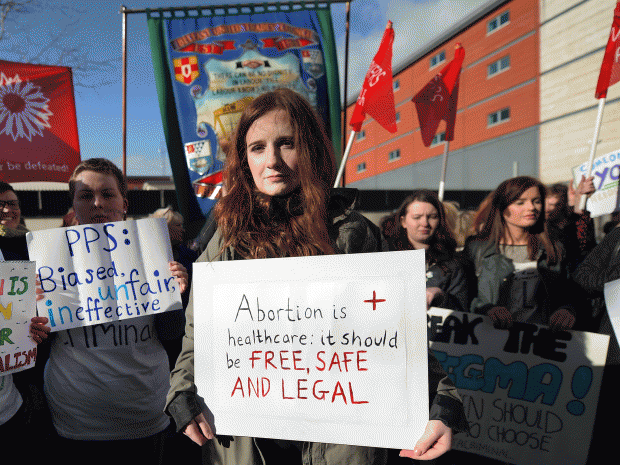
A pro-choice supporter carries a placard which reads ‘Abortion is healthcare, it should be free, safe and legal’ / Getty
Countries where abortion is illegal have slightly higher abortion rates than countries where the procedures are legal, the research found
Making abortion illegal does not reduce the number of terminations women have, a study has concluded.
The research, published in the Lancet medical journal, analysed the abortion rates of countries around the world where abortion is legal and those in which terminations are a criminal offence. It found that rates of the procedures were similar regardless of the legal status of abortions.
In countries where abortions are legal on a woman’s request, 34 women in every 1,000 have one. In countries where abortions are always illegal or legal only if a woman’s life is in danger, 37 women in every 1,000 have one.
The slight increase in rates where abortion is illegal may be due to these countries also tending to have more restricted access to contraception which increases conception rates.
The obvious interpretation is that criminalising abortion does not prevent it but, rather drives women to seek illegal services or measures.
Professor Diana Greene Foster
Professor Diana Greene Foster from the University of California said of the findings: “The obvious interpretation is that criminalising abortion does not prevent it but, rather drives women to seek illegal services or measures. But this simple story overlooks the many women who, in the absence of safe and legal services, carry unwanted pregnancies to term. Women who live in countries where abortion is illegal often have little access to the whole range of family planning services, including contraceptive supplies, counselling, information and safe abortion.”
A spokesperson for Marie Stopes International said: “This study reinforces the fact that restricting access to abortion makes no significant difference to the number of women who choose to have one. Instead, restrictions make it more likely that women will turn to unsafe practitioners, whose methods range from counterfeit drugs to industrial poisons or wire coathangers. Every 11 minutes, a woman dies from complications related to unsafe abortion. In 2016, this is unacceptable and entirely preventable.”

 Abortion - Abortion Clinics, Abortion Pill, Abortion Information
November 25, 2017 at 6:46 pm
But it does raise their average income level, I bet! First, in being able to afford to get one; second, in having to spread out what little money they have among too many children in need.
LikeLike
November 26, 2017 at 4:44 am
You killers’ helpers will say anything: Driving 90 in a 30 mph zone doesn’t increase your chance of having an accident. Drinking a liter of vodka in ten minutes doesn’t increase your chance of getting sick. Making pederasty illegal does not reduce the number of children getting sexually abused.
Absurdity, thy name is “pro-choice.”
And then you finish with one of those lies that should make even you blush: “study concludes,” “science discovers,” “experts say.”
LikeLike
November 26, 2017 at 10:30 am
Making abortions illegal does not result in so called “pro-lifers” caring more for unwanted children. Although Mr. Dunkle was appalled by videos of the Roumanian orphanages (overfilled with unwanted children), even their horror was not sufficient to move him to adopt a child. Considering he’s the best they have, it doesn’t say much for the entire movement.
LikeLike
November 27, 2017 at 12:20 pm
I don’t think it raises their average income. It does for those seeking safe abortions, but it also increases the number of women who get less expensive and less safe back ally abortions (and more of the women dying). But JD is fine with that.
LikeLike
November 27, 2017 at 3:08 pm
I should have said “per capita household” rather than “average.” Sorry.
I was raised in a family which had a per capita income of $3,300 in 2006 dollars. If my parents could do that, then the average so-called “pro-lifer” couple who make $50,000 a year ought to have adopted at least 14 unwanted children.
In 2006, New York state had 25,000 of those children. Unfortunately, they were also unwanted by so-called “pro-life” households as well. And, last I heard, that hasn’t changed.
LikeLike