April 2018


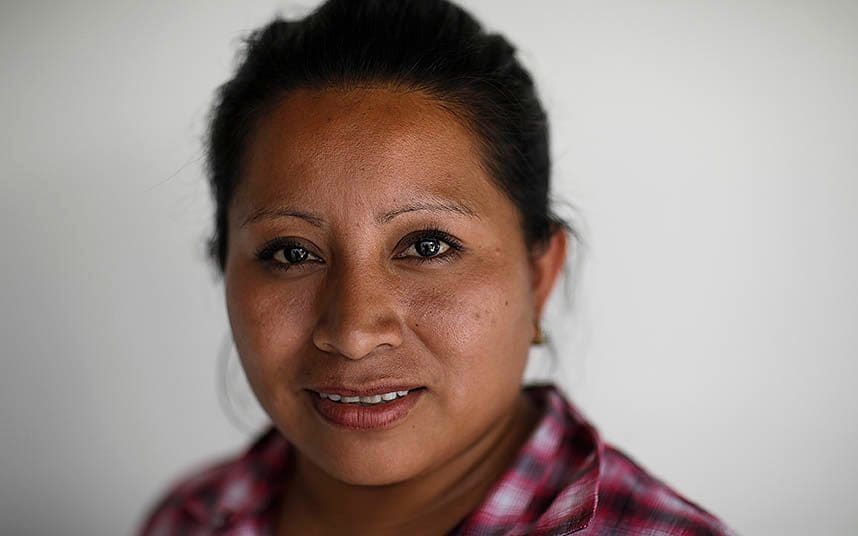
Teodora Vásquez spent 10 years in jail after giving birth to a dead baby girl CREDIT: JOSE CABEZAS/REUTERS

Nine months pregnant, Teodora Vásquez woke up on the day she would lose her second child concerned that the baby wasn’t moving. By early evening she was crumpled under searing pain as she finished her shift at the cafeteria of a private school in San Salvador.

Ms Vásquez called for an ambulance but waited for three hours and by that time she had given birth to a dead baby girl in the toilet. When she staggered out to look for help she was met by a police officer who accused her of murder.

Six months later Ms Vásquez was sentenced to 30 years for aggravated homicide. After 10 years and seven months in jail she walked free in February, her sentence commuted, and finally hugged the teenage boy she had barely seen since he was a toddler.

“My son gave me the strength to keep going while I was inside even though I didn’t see him,” the softly-spoken 35-year-old told the Daily Telegraph a month after her release. “I had lost one child, and I was not prepared to lose the other.”

Her son, who she describes as beautiful, was brought up by his grandparents while she was in jail.

“He says is that he is proud of me. Proud to have a mother like me. And we want to make the most of the time we now have together.”

They committed a real injustice with me but I don’t want to feel resentment. I don’t want revenge. I want to enjoy what I have now.Teodora Vásquez

Ms Vásquez was jailed because of El Salvador’s anti-abortion legislation that outlaws all terminations without exception. The country implements the legislation with a crusading zeal that seems intent on equating not just abortions, but any obstetric emergencies, with murder.

There are no official statistics on the number of women imprisoned for such crimes leaving the activist organisation that helped secure Ms Vásquez’s release, known as the Citizen’s Group, to rely primarily on word of mouth to identify cases.

Monica Herrera, who heads the group, says there are currently 24 women in prison serving sentences ranging from six to 35 years, and another 19-year-old accused of attempted homicide and facing a possible 15-year sentence after she gave birth to her stepfather’s child in a latrine. The baby was found alive.

But while El Salvador may be an extreme case many countries clamp down on women’s reproductive rights, limiting access to abortion, contraception and sexual and maternal healthcare. A recent report by US women’s rights organisation the Guttmacher Institute highlights the 64 other countries around the world that either prohibit all abortions, or only allow them to save a woman’s life.

Figures from Family Planning 2020, a global coalition of partners including the UK Department for International Development, the United Nations and US Aid, show that more than 220 million women in developing countries who don’t want to get pregnant have no access to contraception and voluntary family planning information and services.

Reproductive rights | In numbers

  • More than 220 million women in developing countries who don’t want to get pregnant cannot get hold of contraceptives
  • Less than 20 per cent of women in Sub-Saharan Africa and one-third of womenin South Asia use modern contraceptives
  • In 2012, an estimated 80 million women in developing countries had an unintended pregnancy
  • In the same year around 20 million women in developing countries had an unsafe abortion
  • There are on average 56 million abortions performed every year
  • There are 220 deaths for every 100,000 abortions

Source: WHO and Bill and Melinda Gates Foundation

The coalition says that enabling women to make informed decisions about whether and when to have children reduces unintended pregnancies as well as maternal and newborn deaths. It also increases educational and economic opportunities for women.

For women in countries which restrict access to reproductive health care the stigma attached to abortion or stillbirth is great. For five years Ms Vásquez told nobody why she was in prison for fear of being beaten up. She only realized she was not alone when lawyers from Citizen’s Group sought her out along with other prisoners in similar situations.

“We began to lose our fear a little because there were more of us,” she recalled, her voice cracking just a little. “We started to talk about it and that helped. It helped me to get those feelings out so that when I finally left prison I wasn’t eaten up by anger, resentment, and hate.”

And poverty also made things worse. Vásquez didn’t see her son for the last four years of her incarceration because her family couldn’t afford the time or money to do the onerous paperwork required, or make the long journey from their small village to the prison in the capital.

“Every one of us who was in prison for these crimes was poor and came from a rural area,” she said. “Every one.”

In December last year she returned to court for a review of her case but the same judge who handed down the original verdict reconfirmed the sentence.

“It felt the same as the first time. Even if you don’t want to you get your hopes up. You start hoping that you will get out. Especially when you know you didn’t do anything wrong. I was full of hope that I would be leaving prison, but instead I was sent back with the same sentence.”

And when she finally did hear that she had been released it took a while for the news to sink in. “I couldn’t believe it. I read that piece of paper about 20,000 times until I was absolutely sure that I hadn’t read it wrong,” she says.

In El Salvador attempts are being to made to reform the country’s strict abortion laws, with a proposal to permit abortion to save a woman’s life and in cases of rape.

Vásquez says she bears no grudges and seeks no revenge because she is too busy enjoying her freedom. But, she leans forward to emphasize the point, she also feels an obligation to try to change things so that younger women can avoid the kind of suffering she endured.

“I changed in prison and now I think that we women have the right to decide what happens to us,” says the woman who entered prison with three years of primary schooling and now plans to become a lawyer. “Now I think that if somebody gets pregnant and doesn’t want to have the child, then that is something personal to them.”

She adds: “They committed a real injustice with me but I don’t want to feel resentment. I don’t want revenge. I don’t want any of that, because it would take away the time I have now.”

Source: https://www.telegraph.co.uk/news/0/revealed-woman-jailed-having-miscarriage/

Many of the questions answered in the Congressional Research Service’s report speak directly to talking points used by anti-choice lawmakers to demonize later abortion care.

New analysis about Republicans’ proposed 20-week abortion ban says the common medical procedure is safe, and that delays in care caused by restrictions are why some are forced to seek abortion care later in pregnancy.

The Congressional Research Service (CRS), a division of the Library of Congress that provides policy analysis to members of the U.S. Congress, sought to respond to common questions about the ban in a report published last week. It did not address issues of constitutionality or state regulations on abortion at 20 weeks, nor did it “provide an ethics or morality discussion of second trimester abortion or whether a fetus is a person and has a right to life.”

Dr. Diana Greene Foster, director of research at University of California, San Francisco’s Advancing New Standards in Reproductive Health (ANSIRH), who was cited in the report, called it “very good” in an in email to Rewire.News. “It succinctly compiles a lot of the recent research on later abortions,” Foster said. “I hope that policy makers read it.”

Many of the questions answered in CRS’ report speak to talking points used by the GOP to demonize later abortion care.

For example, Republicans have long pushed a ban on abortion at 20 weeks, or 22 weeks’ gestation, based on the dubious claim that a fetus can feel pain at this point in a pregnancy. But CRS’ report pointed to a fact sheet from the American College of Obstetricians and Gynecologists (ACOG) as the authority on the matter, quoting a 2013 statement that said a “human fetus does not have the capacity to experience pain until after viability.”

“Rigorous scientific studies have found that the connections necessary to transmit signals from peripheral sensory nerves to the brain, as well as the brain structures necessary to process those signals, do not develop until at least 24 weeks of gestation,” the statement said.

The CRS report addressed how mental health can be affected by having abortions. In particular, it pointed to research finding that having an abortion does not increase the risk of mental health disorders.

Abortion rights opponents often claim that the procedure can have harmful long-term psychological effects, though there is no evidence to support that charge. A 20-week ban authored by the anti-choice group Americans United for Life and adopted by the GOP-majority Arizona legislature in 2012 falsely suggests that those who have abortions are at risk for  “psychological or emotional complications.”

When it comes to whether later abortions are safe, the report says that “for women in the United States, the mortality rate associated with childbirth or continuing the pregnancy is higher than the abortion mortality rate.” Though it notes that the risk of mortality goes up as gestational age increases, CRS pointed to research from the National Academy of Sciences, Engineering, and Medicine that found the risk of death from abortion care to be less than the risk of death during colonoscopies, dental procedures, and adult tonsillectomies.

The report mentioned how often later abortion care is performed due to fetal anomaly and life endangerment, speaking to pro-choice advocates who say that later abortions are often for these reasons. Here, CRS again pointed to Foster’s work.

“Based on limited research and discussions with researchers in the field, Dr. Foster believes that abortions for fetal anomaly ‘make up a small minority of later abortion’ and that those for life endangerment are even harder to characterize,” it said.

Though she referred to it as “an extremely minor point in an otherwise excellent report,” Foster noted a small difference between her opinion and how it was characterized in CRS’ analysis.

“What I really believe is that nobody knows what fraction of later abortions are for these reasons,” said Foster. “I wouldn’t state that fetal anomaly and life endangerment are a small minority of later abortions because nobody has statistics on this.”

The report addressed the question of why some may experience delays in seeking or receiving abortion care. Along with factors such as a delay in finding out about a pregnancy and difficulty finding funds for care, the report pointed to federal and state-level restrictions on abortions as a factor.

CRS’ analysis noted recent iterations of the Pain-Capable Unborn Child Protection Act and the Born-Alive Abortion Survivors Protection Act “would require that infants born alive following an abortion procedure be transferred to a hospital for treatment.”

But, the report says, “the legislation makes no provision for the treatment costs or subsequent care needed to support these children, who could become wards of the state.”

“Infants born at 23 weeks’ gestation do not have sufficiently developed lungs and cannot breathe on their own; such infants will die at birth if not given life-sustaining therapies,” it goes on, later explaining that the long-term costs associated with premature infants may also be higher.

“In addition to the health care costs that extremely premature infants will generate post-NICU, other costs—such as day-care services, respite care, school—are likely to be much greater than those for full-term babies,” it said.

CRS’ report did not address whether there is evidence of infants “born-alive” after an abortion, another myth perpetuated by anti-choice activists, though it did address the “medical issues” premature infants face.

Source: https://rewire.news/article/2018/04/18/congressional-report-debunks-anti-choice-talking-points-gops-20-week-abortion-ban/

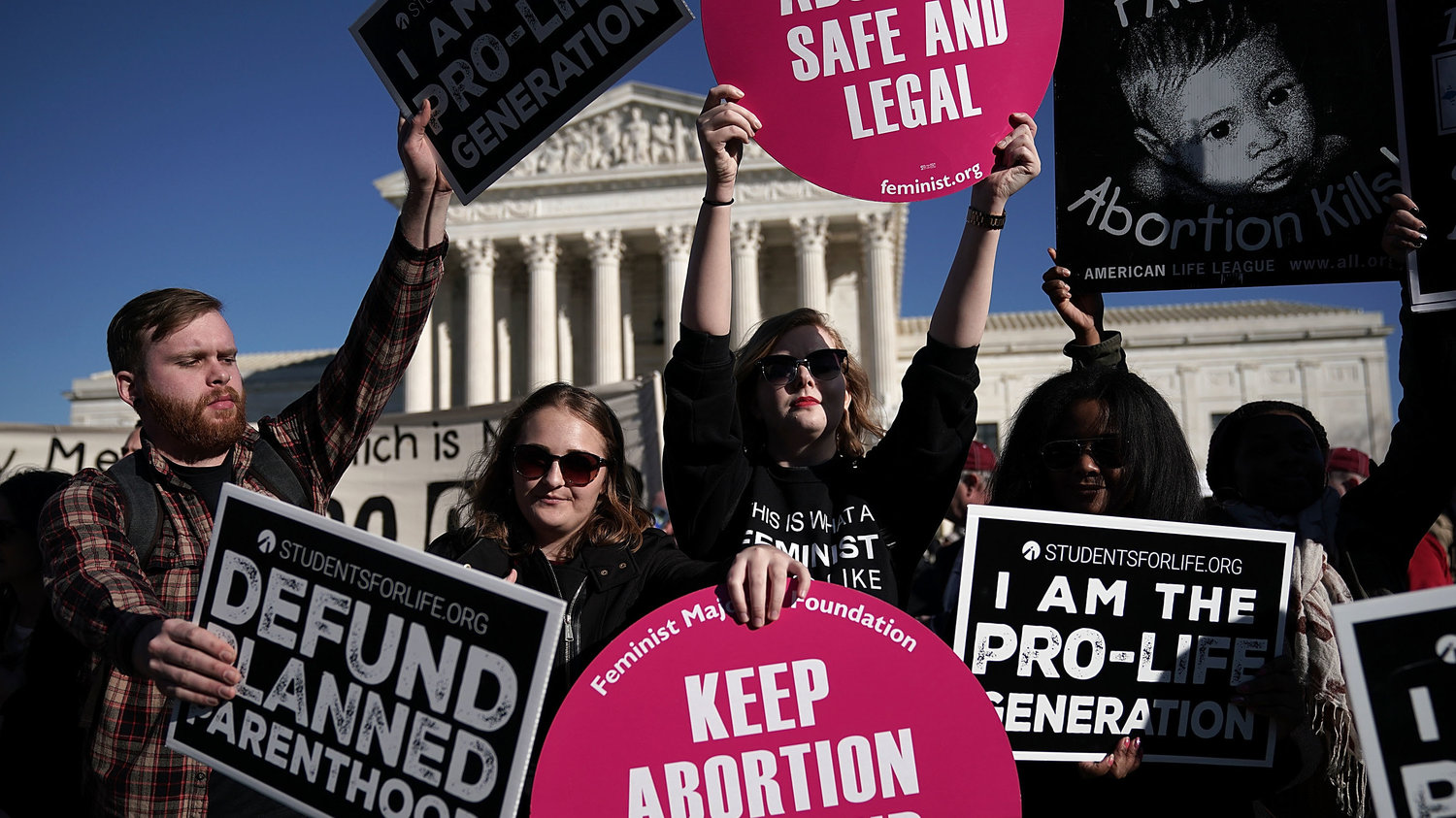
Activists both supporting and opposing abortion rights gathered in front of the the Supreme Court during the March for Life on Jan. 19.

Alex Wong/Getty Images

A new national poll finds a growing divide between younger and older Americans on abortion and reproductive health care — a shift that may be driven in large part by changing attitudes toward religion.

In the survey from the Public Religion Research Institute, or PRRI, respondents between the ages of 18 and 29 were more likely to report that their views on abortion had changed in recent years — and when they moved, they tended to move in favor of abortion rights. Of those young people whose opinions had changed, 25 percent said they became more supportive of legalized abortion compared to 9 percent who became less supportive.

Older respondents, meanwhile, were less likely to report they had changed their opinions; those who had changed their minds were more likely to have shifted towardopposing abortion rights.

“This moving in opposite directions has led us to a greater polarization between the generations on this issue,” said PRRI CEO Robert Jones.

The poll also looked at personal beliefs about abortion — in other words, opinions on the morality or ethics of abortion apart from the legal or political status of the procedure. More than half of Americans, 54 percent, said abortion “goes against my personal beliefs,” while 44 percent said it did not.

A substantial number of respondents appeared to separate their personal views from their public policy position; 34 percent said that while abortion violates their personal beliefs, they believe it should be legal in most or all cases.

Here, too, a generational divide was apparent: 60 percent of older respondents said abortion violates their personal beliefs, compared with 44 percent of younger people.

Jones said he believes the generational divide on abortion is explained at least in part by a larger shift among young people away from religion, particularly among white evangelical Protestants.

While some religious traditions support abortion rights, Jones notes that white evangelicals have consistently opposed abortion in larger numbers than other religious groups. In the PRRI poll, 78 percent of white evangelical Protestants said abortion goes against their personal religious beliefs compared with 59 percent of Catholics, 56 percent of black Protestants and 54 percent of white mainline Protestants.

But while white evangelicals remain a dominant religious group in America, the tradition is losing younger members.

Taken together, Jones said that may help to account for generational shifts in attitudes toward abortion.

Americans under 30 also were more likely than their elders to say that health insurance should cover abortion services and that the procedure should be available in their local communities.

“I think part of that is a clue to how younger people are seeing this, I think, less as a culture war, political issue, and more really as a health care issue,” Jones said. “And that I think puts it in different political terrain for younger people today.”

Overall, more than half of respondents, 54 percent, said abortion should be legal in “all or most cases,” while 43 percent said it should usually or always be illegal. A majority, 51 percent, said publicly funded health insurance programs, such as Medicaid, should not cover abortion.

The survey found one point of broad agreement: nearly two-thirds of Republicans and three-fourths of Democrats said elected officials are spending too much time talking about abortion rather than focusing on other issues.

The survey was conducted in March 2018 among 2,020 adults ages 18 and older living in the United States. Respondents were contacted by telephone, including cellphones, and the interviews took place in English and Spanish. The margin of error is 2.6 percentage points.

Source: https://www.npr.org/2018/04/17/603050482/young-people-more-likely-to-shift-toward-supporting-abortion-rights-poll-finds

“I stand with a chorus of women who say … ‘Why did I have an abortion: It’s none of your business,’” said state Rep. Athena Salman (D-Tempe).

UPDATE, April 16, 10:28 a.m.: Arizona Gov. Doug Ducey (R) last week signed SB 1394.

Controversial Arizona legislation expanding the amount of information collected about abortions performed in the state and questioning patients about their abortions is one step away from the governor.

The bill adds requirements for abortion care providers to report medical complications to the state health department, and it asks patients to explain whether their reason for getting an abortion was rape, incest, fetal or maternal health, domestic violence, sex trafficking, or coercion.

An earlier version had asked if one of the reasons for the abortion was an extramarital affair. Abortion patients can choose not to answer these questions.

SB 1394, which cleared the GOP-majority house Monday on a party-line vote, needs a quick approval in the Republican-controlled state senate before going to Gov. Doug Ducey (R), an abortion rights foe.

The Republican backers of SB 1394 maintain the bill safeguards women’s health, but Democratic lawmakers during a floor vote on Monday called the legislation burdensome, intrusive, and politically motivated.

“I stand with a chorus of women who say … ‘Why did I have an abortion: It’s none of your business,’” said state Rep. Athena Salman (D-Tempe).

Laws in nearly every state require physicians to send a report every time they perform an abortion. Arizona law already requires abortion care providers to ask patients about their marital status, race, ethnicity, and education, past miscarriages, and prior abortions.

Some state laws hew to draft legislation from the influential anti-choice group Americans United for Life, which maintains that “American abortion data is inaccurate and often misleading.” Mostly Republican-controlled states have advanced 80 new abortion reporting requirements since January 2017, with mixed success.

Rep. Kirsten Engel (D-Tucson) questioned the motivation for adding a new layer of regulation on abortion, which is safer than childbirth.

Championing the bill was the state’s influential Center for Arizona Policy, a lobbying group behind dozens of abortion restrictions. Opposing it were representatives from the American Congress of Obstetricians and Gynecologists, Arizona Public Health Association, Arizona Chapter of the American Academy Of Pediatrics, and Arizona Medical Association.

“Why don’t we have docs in favor of this? They don’t want to do more reporting,” suggested Rep. Eddie Farnsworth (R-Gilbert), when a member noted that medical groups oppose the bill.

Democrats attempted to amend the bill to roll back existing abortion restrictions. Salman introduced an amendment to impose reporting requirements on crisis pregnancies centers, or fake clinics, which are unregulated even though, Salman said, the facilities often look like health clinics and typically offer pregnancy tests and ultrasounds.

Responding to Salman’s amendment, Farnsworth said fake clinics were not medical providers. “They’re not practicing medicine. If they are, then they’re already breaking the law.”

Rep. Daniel Hernandez (D-Tucson) suggested if the bill’s sponsors were serious about protecting reproductive health, then patients should also be asked whether the reason for the abortion was that they lacked inadequate access to affordable birth control or comprehensive sexual education. He offered an amendment to do so.

The Democrats’ amendments were defeated.

An earlier Republican-led amendment would’ve required a fetal tissue sample from patients who said the reason for the abortion was sexual assault. But the fetal-tissue provision didn’t make the final cut.

“This is not about women’s health,” Salman said before the vote. “This puts the government in the room with a woman and her doctor in a decision that is intimate and private that the Supreme Court has found constitutional.”

Source: https://rewire.news/article/2018/04/10/arizona-republicans-want-know-want-abortion-care/

The Together for Yes campaign says the removal of the Eighth is needed to regulate the use of abortion pills.

“I HAVE BEEN ashamed to be a doctor practicing in this country.”

Consultant obstetrician and gynaecologist in the Coombe Women’s and Infant University Hospital and Tallaght Hospital, Dr Cliona Murphy says the Eighth “is punitive to women”, particularly poorer ones.

My experience in active practice has been that those with means can travel, the have-nots are discriminated by our laws.

The Together for Yes campaign published a position paper this morning stating that the removal of the Eighth Amendment is needed to regulate the use of abortion pills.

Two consultant obstetrician and gynaecologists spoke at the launch.

8436 Yes Campaign_90541957

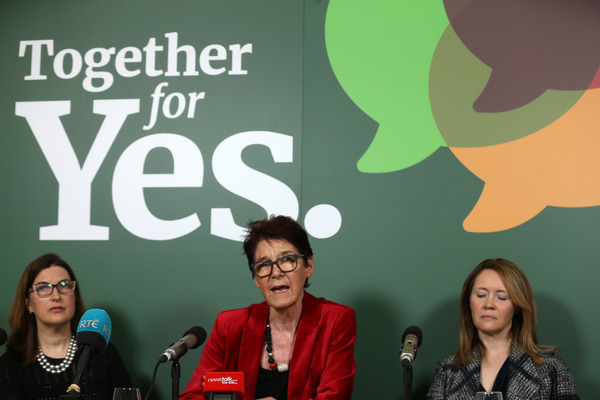
Dr Cliona Murphy (left) with Ailbhe Smyth (centre) and Dr Aoife Mullally (right) during a press conference for the Repeal the Eighth groupSource: Sam Boal via RollingNews.ie

Dr Aoife Mullally, consultant obstetrician and gynaecologist in the Midlands Regional Hospital and the Coombe Women’s and Infant University Hospital said:

“When women take abortion pills under medical supervision it is extremely safe and extremely effective but the complications of taking it without supervision include heavy bleeding, retained pregnancy tissue, infection, ongoing pregnancy and the psychological stress of taking medication and undergoing a medical procedure without any medical backup.”

Dr Mullally added that without medical supervision, women tend to take more than they need as they are desperate for it to work and if it doesn’t they are then terrified for the rest of the pregnancy.

She added that women can also delay getting a check up as they fear they will be judged.

They then present with a failed abortion at an advanced stage and they have to spend their entire pregnancies terrified that they baby may be born with awful health complications.

“We know the use of abortion pills is happening every single day and it needs to be regulated and Irish women and girls need to be able to access their doctors.”

Doctor Murphy echoed this stating that travel is not an option for many women. ”We need to acknowledge that abortion is in Ireland.

If you’re not for safe abortion, you’re for unsafe abortion.

“For those with complex medical histories whose health would be impacted by pregnancy, it is not true to say the Eighth doesn’t impact how we practice.

She said that instead of offering women options and being able to discuss the risks of continuing or not – there is a “cumbersome practise under the protection of life during pregnancies act”.

“We need to organise multidisciplinary team meetings between ourselves and other medical physicians and then a decision is made as to whether the woman deserves the right to safe abortion care in her own country.

Whether she does earn this right is depended on this meeting and, in my experience, her voice isn’t heard. We have this meeting, the risks of her life and her health is discussed but her actual voice is not really heard. In no other area of medicine is this acceptable.

“In no other area of medicine do we pass judgement like this and doctors do not want to be judge and jury on patients.”

She said she has found it hard to look women in the eye and say she cannot help.

“Whether abortion is legally restricted or not the evidence shows the likelihood a woman will have an abortion for a crisis pregnancy is about the same. Countries with a more liberal regime have a lower instance of abortion than those with restrictive ones.”

Source: http://www.thejournal.ie/ashamed-to-be-a-doctor-repeal-the-eighth-abortion-campaign-3951452-Apr2018/

More than an extra star on the U.S. flag, establishing the District of Columbia as the fifty-first state would have a real impact on thousands of families.

“D.C.” is often shorthand for describing government excess, out-of-touch politicos, and decisive power. It’s also a place where political activists convene their big march or rally.

But the District of Columbia is more than ground zero for the resistance. For starters, it’s home to almost 693,000 people (more than Vermont and Wyoming). It’s also the city of “taxation without representation,” as it says on our license plates. We have no representation in the U.S. Senate, only one member in the House with no real voting power, and meager accountability for the mayor and D.C. Council to enact even popular policies promised to their voters.

It’s outrageous that residents of the city where national policy is made get little more than empty gestures from local politicians and virtually no attention on the national political scene. We battle reproductive injustices, overpolicing of Black and immigrant communities,  and neglect of low-income parents and families of color, all of which are systemic issues in our society, but are compounded when we lack a political voice. Sovereignty for D.C.—the ability to control our budget, guard against federal infringement, and demand accountability from local elected officials—would help residents to have more control over the quality of our lives.

Lisa Hunter, a former U.S. Department of Health and Human Services appointee, parent, and D.C. Council candidate for Ward 6, noted in an interview that, “The worst-kept secret in D.C. politics is that the council is great at passing bills, having parties, and declaring victory. The secret they hope you don’t consider is that passing bills means almost nothing in D.C.”

For a bill to become a law here, Congress has to approve it during a 30-60 day period, and members can kill a bill on the spot, regardless of constituent support or D.C.’s ability to fund and implement it. Congress must also approve the D.C. budget—how city government spends revenue residents generate ourselves—as part of yearly federal appropriations bills. Statehood would change that, solidifying the D.C. population’s place in discussions about social justice issues, where it is often missing.

One of the most disturbing infringements of federal power over D.C.’s local finances in recent years was on funding for abortion care. In 2011, congressional Republicans threatened to shut down the governmentuntil Democrats conceded to end public insurance funding for abortion in the District, playing the health care of thousands of low-income women as a leverage point in partisan politics. Jeryl Hayes, president of the D.C. Abortion Fund (DCAF), explained the provision’s unpopularity in an emailed statement: “D.C. residents overwhelmingly support abortion access and the notion that the type of insurance you have should not dictate whether or not your insurance covers your health care needs.”

DCAF before and since has stood in the gap for people unable to cover out-of-pocket fees for abortion care. However, the sovereignty offered by statehood would allow D.C. to join states like neighboring Maryland to provide Medicaid funding for abortion care.

House Republicans—led by the now-disgraced former Arizona Rep. Trent Franks (R)—have tried on multiple occasions to impose unconstitutional 20-week bans on abortion care in the District. Franks’ bills repeatedly failed to pass the Senate, but served as a jarring reminder that forces in the federal government view pregnant people in D.C. as a bargaining chip, at best, and as objects to control, at their most insidious.

The preoccupation with restricting abortion access often correlates with poorer health-care standards for pregnant people, and this disproportionately falls on women of color. D.C. has the highest maternal mortality rate in the country. According to a 2016 report by the Centers for Disease Control and Prevention, an average of 39 women per 100,000 died annually of causes related to pregnancies after live birth, nearly double the national average. But the rates for non-Hispanic Black women in D.C. were about 71 per 100,000 over the same period. Relatedly, infant mortality in predominantly Black Southeast D.C. is twice the national average and 10 times that of the city’s wealthiest quadrant.

The D.C. Council responded by giving preliminary approval to the establishment of a maternal mortality review committee in early February, which is a nice idea in theory—establishing a process to conduct research and analyze data can be helpful down the line—but it’s far too late, does not include study of maternal morbidity (longer-term effects of pregnancy, labor, and delivery that could have adverse impact on health), and provides no next steps for pregnant people trying to navigate D.C.’s maternal health care disaster now. As Hunter pointed out, “There are very clear things we can act on right now in order to make D.C. a safer place to give birth … We could ensure women in Southeast have a network of providers—midwives, doulas, doctors, nutritionists, and nurses alike—visiting them in their homes, if they’d like,” she added. “Expecting mothers can’t afford to wait for proposed solutions to be unearthed by our bureaucracy a few years from now.”

In this instance, Congress has actually taken more intentional consideration of the crisis than city government, requesting an immediate response to questions about how providers and D.C.’s Medicaid program and local hospitals will ensure safety and quality of care. These actions came on the heels of two local obstetrics wards closing, both of which were in predominantly Black, Latinx, and immigrant neighborhoods.

Local birth workers who serve those communities were long aware that these wards were not providing the highest standard of care for pregnant people, and frequently referred their patients to faraway hospitals in mixed- and higher-income neighborhoods rather than their local provider. But not everyone can access care far away from their home. Somesha Ayobo, a pregnant Black woman from Southeast D.C., was taken to one of these hospitals in June 2017 and experienced a litany of botched treatments that killed her that day and her newborn four days later.

The corrosion of hospitals serving people of color, immigrants, and low-income patients is due to the city’s decades of neglect for these communities’ broader health needs in favor of serving wealthier communities, and efforts to build more of them. The 20001 zip code near downtown was recently rated the second-most gentrified in the nation (measuring changes in neighborhood demographics since the year 2000), and the pollution created by this excessive development literally leaves native residents in the dust.

Combating gentrification may be a futile effort in some respects, but statehood might give folks dipping their toe in our city for a few years and pricing out native residents more reason to treat D.C. like a homeinstead of an experience. Paradoxically, it’s often social-justice or progressive-leaning folks who move into gentrifying communities, price out original residents, but don’t bother to become registered D.C. voters because the city will hold a temporary place in their lives. The trappings of statehood—voting rights, national representation, legitimacy, and accountability for local electeds—would be a step toward improving the transients’ engagement with our communities.

This wave of gentrification makes it no surprise that D.C. also has the most expensive child care system in the country. Jeremiah Lowery, director of the Universal Childcare NOW Coalition and at-large candidate for D.C. Council, argues, “With so many other budget demands, our child care system is never fully funded to meet the needs of parents in D.C. With voting representatives in Congress, we would have elected leaders who have more power to shift federal money to help fund our child care system and help get us on a pathway to high-quality universal access for all parents.”

Statehood would help address issues of sovereignty over our budget and policy priorities, but possibly more importantly would also afford citizens more power to hold our local elected officials accountable for promises made and shirked. The Neighborhood Engagement Achieves Results (NEAR) Act, which employs a public health approach to combating violence and reducing overpolicing of communities, unanimously passed the D.C. Council in February 2016. Although features of this popular law have proven successful in other cities, securing funding and full implementation have been a long haul for community organizers in part because of foot-dragging by the mayor and some council members. As a state, we could call foul on elected officials’ excuses of the city’s current nontraditional lawmaking structure and congressional oversight to push for implementation of the policies that best serve our communities.

Becoming a state wouldn’t even be a difficult path: D.C. statehood advocacy groups have mapped out a plan, but for the most part, it would require a simple majority vote in Congress, just like all other states have had to do since the original 13 colonies. While Democrats did include statehood in its 2016 party platform, there’s still plenty of work to do to convince residents of other states that it’s worth it to push their elected officials to fight for our autonomy.

D.C. won its right to elect a city government when Congress passed the Home Rule Act of 1973, the same year the U.S. Supreme Court decided Roe v. Wade. Inseparable from the struggle for reproductive justice and individual bodily autonomy is our city’s fight for the rights held by other citizens of this country: to hold our elected officials accountable—at the federal and local levels—for representing our values and delivering the resources we need to foster safe and healthy communities. We can’t afford to wait for equality any longer.

Source: https://rewire.news/article/2018/04/13/d-c-statehood-reproductive-justice-issue/

“Under his leadership—if we can call it that—American women suffered while billionaires took their tax cuts to the bank.”

U.S. House Speaker Paul Ryan (R-WI) announced Wednesday that he won’t run for reelection this year, ending a billionaire-backed career in Washington spent peddling myths and inflammatory rhetoric about abortion rights and those living in poverty.

Pro-choice organizations swiftly celebrated Ryan’s departure. “People across America can now look forward to a time where Paul Ryan is not working every day to undermine our fundamental freedoms, including reproductive freedom,” NARAL National Communications Director Kaylie Hanson Long said in a statement.

“Good riddance,” Stephanie Schriock, president of EMILY’s List, said in a statement. “Paul Ryan loved nothing more than pushing viciously anti-woman budgets that slashed women’s access to health care, gutted assistance to low-income families, and dismantled Medicare. Under his leadership—if we can call it that—American women suffered while billionaires took their tax cuts to the bank.”

As Ryan prepares to end his time in Congress, join Rewire.News for a look back on some of his most memorable moments.

The Lie That Won’t Die: Ryan’s Claim That Planned Parenthood Uses Taxpayer Money for Abortion Care

Ryan didn’t just push laws to restrict access to reproductive health care—he also advanced falsehoods about the issue. Among them was his provably wrong claim that Planned Parenthood uses taxpayer funding for abortion care.

After Ryan made that suggestion during a CNN town hall in January 2017, host Jake Tapper pressed Ryan on the issue, pointing out that the Hyde Amendment blocks federal funding for abortion care. “Right,” Ryan replied. “But, they get a lot of money and—and you know, money is fungible and it effectively floats these organizations which then use other money. You know, money is fungible.”

As Amanda Marcotte explained in Slate, “Republicans who tout the ‘money is fungible’ line want you to imagine that Planned Parenthood draws on one big pot of government money for all its services. But since medical services are billed and funded individually, that’s not actually how this works. For instance, if subsidies that discount contraception disappear, the price of contraception goes up, but the price of abortion will stay the same.”

Ryan used his claim to argue in favor of diverting Planned Parenthood’s funding to community health centers. However, according to an analysis from the Guttmacher Institute, it’s “simply unrealistic to expect other providers to readily step up and restore the gravely diminished capacity of the family planning safety net were Planned Parenthood defunded.”

Ryan’s Quest for ‘Conscience Protections’ and ‘Religious Liberty’

Ryan has been an unabashed supporter of so-called conscience protections, which would allow health-care providers and organizations to refuse to provide services in the name of “religious liberty,” or religious imposition.

Ryan’s own health-care plan parroted provisions in the Conscience Protection Act, as Rewire.News reported in 2016. “Both would give health-care providers a private right of action to seek civil damages in court, should they face alleged coercion or discrimination stemming from their refusal to assist in abortion care,” Christine Grimaldi wrote.

Ryan defended the legislation on the House floor, claiming that “the federal government has not been protecting people’s right.”

“I think we can all agree, that in this country, no one should be forced to perform an abortion,” Ryan said, though these protections already exist in federal and state law.

During the 2018 State of the Union Address, Ryan again took up the issue when he chose to bring Cathy Cenzon-DeCarlo, who he deemed “a fighter for faith and the unborn,” to the event. Cenzon-DeCarlo was part of a lawsuit brought by the anti-choice litigation mill Alliance Defending Freedom claiming that the nurse had been forced to assist in an abortion procedure despite her religious views against abortion rights. Ryan had used Cenzon-DeCarlo’s story when speaking in favor of “conscience protections” in his aforementioned 2016 speech in the House.

‘Makers and Takers’: Ryan’s Stigmatization of Those Living in Poverty 

Ryan’s departure comes as an executive order was announced Tuesday by the Trump administration pushing for work requirements in federal welfare programs.

The Wisconsin Republican has long advocated to make public assistance less accessible and less generous, including work requirements and cuts to programs intended to alleviate poverty. Speaking in March 2017 at an event for the conservative outlet National Review, Ryan said cutting Medicaid had been something he and his allied colleagues had been “dreaming of,” telling host Rich Lowry that he’d been thinking about doing so “since you and I were drinking out of kegs.”

Years prior, Ryan utilized stigmatizing rhetoric about families with low incomes who rely on federal programs, framing the discussion of those who use them as “takers” while others were “makers.” He apologized in an August 2014 op-ed in the Wall Street Journal for throwing around the terms, writing that the “phrase gave insult where none was intended.” He nevertheless continued promoting policies that were recognized by advocates for alleviating poverty and journalists as having similarly stigmatized those with low incomes.

Source: https://rewire.news/article/2018/04/11/good-riddance-paul-ryan-calls-quits-years-lies/

Republican lawmakers in Arizona are pushing the state’s latest abortion bill,which would require doctors to ask women seeking an abortion why they want the procedure. The bill passed through the state House on Monday, and supporters are touting it as a way to protect women’s health. But local reproductive rights organizations say the measure would just shame women for their health care choices.

“This is about making the abortion experience as shaming and degrading as possible for people, to thereby discourage them from following through with their decision. Nothing more,” Jodi Liggett, executive director of Planned Parenthood Advocates of Arizona, tells Bustle. She noted that no pro-choice advocacy organization supported the bill.

The legislation, SB 1394, would require abortion providers to submit a form to the Arizona Department of Health Services detailing why each patient wanted an abortion. The list of reasons patients could choose from initially included economic reasons and the woman not currently wanting children, but those questions were removed by the state House. However, the bill still instructs doctors to ask women seeking an abortion if they are victims of sex trafficking, domestic violence, rape, or incest. It returns to the state Senate next for a vote on amendments the House added to the bill.


Arizona already requires people seeking abortions to disclose their age, race, marital status, and educational background, as well as prior pregnancies, miscarriages, and abortions. Yet SB 1394’s questioning would be far more intrusive.

Liggett says the language Republican lawmakers used in support of SB 1394 proves its not meant to help women. When the bill was brought for a vote in the state House on Monday, Republican Rep. Eddie Farnsworth said, “Sex education is not a health care issue. Having access to contraception is not a health care issue.” He called sex education and birth control “pre-health care issues.”

“The pure anti-choice intention of this bill was revealed in denying what major medical organizations regard as health care,” Liggett tells Bustle.

As Planned Parenthood Advocates of Arizona pointed out in a tweet, SB 1394 could actually have little impact on the rate of abortions in the state. In fact, countries with the most abortion restrictions had the highest rates of abortionbetween 2010 and 2014, according to reproductive rights non-profit the Guttmacher Institute. The difference is that more women self-induce abortions in countries with harsher restrictions, which can be much more dangerous. “Abortion tends to be safer where it is broadly legal than in more legally restrictive settings,” Guttmacher’s website reads.

Although Rep. Farnsworth claimed birth control isn’t a health care issue, it’s proven that access to birth control lowers abortion rates. Abortion rates in the United States dropped 14 percent from 2011 to 2014, Guttmacher found in a 2017 report — a decline largely attributed to increased access to reliable forms of birth control.


The anti-choice Center for Arizona Policy that backed the state bill wrote on its website that “reporting abortion statistical data is not a pro-life or pro-choice issue” because the data will be “helpful to everyone who cares about women’s health.” The site also argues that the bill would not violate patients’ privacy, as the forms wouldn’t personally identify them.

Still, pro-choice advocates believe the extensive questioning is intended to dissuade women from seeking an abortion and/or make them feel bad for their choice.

“This law was not created to protect women, but rather to shame and intimidate them,” Shauna Trinidad, a volunteer with the Abortion Fund of Arizona, tells Bustle. “Why a patient is seeking or in need of a medical procedure should be between the doctor and that patient.”

Source: https://www.bustle.com/p/how-arizonas-latest-abortion-bill-is-trying-to-shame-women-out-of-getting-the-procedure-8744884

The appeal was expected after a federal district court ruled the administration could not “nullify” the abortion rights of minors in its custody.

Attorneys from the U.S. Department of Justice on Monday appealed a lower court ruling ordering the Trump administration stop blocking abortion access for undocumented, unaccompanied pregnant minors in its custody.

The appeal came in Garza v. Hargan, a lawsuit brought by attorneys from the American Civil Liberties Union on behalf of pregnant undocumented minors in federal custody who attorneys claim had their requests for abortion care thwarted by members of the Trump administration.

In late March, U.S. District Court Judge Tanya Chutkan ruled that the administration’s policy of requiring Scott Lloyd, the virulently anti-choice director of the Office of Refugee Resettlement (ORR), to personally sign off on any action that “facilitates” an abortion was an attempt to “nullify” a minor’s right to an abortion. “ORR’s policy vests the power to decide the future of [an undocumented minor]’s pregnancy in one man: Director Lloyd,” Chukan wrote.

Chutkan ordered the administration stop “interfering with or obstructing” any undocumented pregnant minor in its custody from accessing a judicial bypass; medical appointments related to pregnancy dating; objective and unbiased pregnancy counseling; abortions; and other pregnancy-related care. Chutkan also ordered the administration to stop forcing minors in its custody to reveal either the fact of their pregnancy or their abortion decision to anyone, and to stop revealing those facts itself.

Judge Chutkan also certified the Garza v. Hargan litigation as a class action. That means her ruling blocking the administration’s policy and ordering officials to stop thwarting abortion access applies to every undocumented minor in federal custody who seeks an abortion, and not on a case-by-case basis.

The appeal follows a request by the administration to stay the March decision while the appeal continues. The court has not yet ruled on that request.

https://rewire.news/article/2018/04/09/trump-officials-appeal-class-action-ruling-fight-abortion-access-undocumented-immigrant-minors/

A federal lawsuit looks to build on the 2016 ruling in Whole Woman’s Health v. Hellerstedt and knock down some Mississippi anti-choice laws that have been on the books for years.

Reproductive rights advocates on Monday filed a lawsuit to challenge a patchwork of Mississippi abortion restrictions they claim are among the most onerous and blatantly unconstitutional in the United States.

The lawsuit builds on a recent challenge to the Mississippi GOP’s 15-week abortion ban. That anti-choice law is blocked by a federal court.

The restrictions challenged in Monday’s lawsuit include laws that target both abortion access and procedures. Those include Mississippi Republicans’ targeted abortion clinic licensing “scheme” and the state’s requirement that only physicians provide abortion care.

The litigation challenges the state’s 24-hour forced waiting period, a requirement that makes a patient take two separate trips to and from a clinic before receiving abortion services. The lawsuit also challenges the state’s ban on telemedicine abortion.

Attorneys from the Center for Reproductive Rights; the law firm Paul, Weiss, Rifkind, Wharton & Garrison LLP; Mississippi civil rights attorney Robert B. McDuff; and the Mississippi Center for Justice brought the lawsuit on behalf of the state’s only abortion provider, the Jackson Women’s Health Organization.

“At some point it’s the straw that breaks the camel’s back,” Nancy Northup, president and CEO of the Center for Reproductive Rights, said in a call with reporters, explaining why some of these laws that have been on the books for years are now being challenged.

Northrup told reporters during that call that the U.S. Supreme Court’s 2016 decision in Whole Woman’s Health v. Hellerstedt, which struck as unconstitutional two Texas abortion restrictions, has helped provide both clarity for the courts when judging abortion restrictions and a new tool for advocates to challenge longstanding abortion restrictions that do not advance pregnant people’s health.

“The precipitous drop in access to abortion in Mississippi over the past 25 years is the result of a coordinated strategy to undermine or eliminate women’s constitutional rights to legal abortion with deceptive laws and unnecessary regulations,” Northrup said in a statement.

“Mississippi’s regulations have nothing to do with women’s health, and everything to do with shaming women and blocking access to abortion care.”

Northrup promised more litigation from advocates like the lawsuit filed Monday in Mississippi.

“We’re taking Mississippi and other states to court to protect abortion access and make it clear to anti-choice politicians across the U.S. that they are not above the law—and that in a court of law, facts, evidence, and the Constitution still matter,” Northrup said.

Attorneys for the State of Mississippi have not yet responded to this latest lawsuit.

Source: https://rewire.news/article/2018/04/09/lawsuit-challenges-host-mississippi-anti-choice-laws/

« Previous PageNext Page »