The language of Thursday’s order suggests the Supreme Court was simply unwilling to make any decision in an abortion case three weeks after Justice Ruth Bader Ginsburg died and just days before Judge Amy Coney Barrett confirmation hearings. J. Scott Applewhite/AP
The U.S. Supreme Court has refused, for now, to reimpose FDA regulations that require women seeking medication abortion to pick up the prescribed pills in person at a clinic instead of by mail.
The court’s decision came Thursday night on a 6-to-2 vote that rejected an emergency appeal from the Trump administration.
The challenge to the Food and Drug Administration regulation was brought by the American College of Obstetricians and Gynecologists after the the agency relaxed similar regulations for other drugs — including opioids — in order to limit patients’ exposure to COVID-19 during the pandemic. The FDA refused to relax the same rule for those with prescriptions for abortions with pills in the first 10 weeks of pregnancy.
Federal Judge Theodore Chuang in Maryland ruled in favor of ACOG, declaring that requiring such in-person pickups of pills during a pandemic posed “a substantial obstacle to women seeking an abortion.” The Supreme Court has long ruled that such substantial obstacles unconstitutionally interfere with a woman’s right to terminate a pregnancy.
On Thursday night, the Supreme Court turned down the Trump administration’s attempt to block the lower court order. But the decision was more of a punt than a long-lasting decree.Article continues after sponsor message
The high court said it would hold the Trump administration’s request “in abeyance” to permit the district court judge to promptly consider other efforts by the administration to “dissolve, modify, or stay” its previous order if “relevant circumstances have changed.” And the justices said that their decision did not indicate their views on the merits of the case should it come to them again.
The language of the one-paragraph order seemed to suggest that the court was simply unwilling to make any decision in an abortion case three weeks after Justice Ruth Bader Ginsburg died, and just days before the U.S. Senate is scheduled to take up the nomination of Judge Amy Coney Barrett as Ginsburg’s replacement.
“It is a relief that for the next few weeks, the Trump administration cannot force abortion patients to needlessly risk contracting a life-threatening disease as a condition of obtaining care,” said Julia Kaye, lead counsel for ACOG in the case. But, she added, “When President Trump is trying to rush through a third Supreme Court justice with the express goal of overturning Roe v. Wade, the court’s delayed ruling in this case gives little comfort that the right to abortion is secure.”
But Marjorie Dannenfelser, president of the Susan B. Anthony List, which opposes abortion rights, said her group was “disappointed by the lack of a ruling.”
“We thank the Trump administration for fighting for vitally important health and safety protections and are confident we will ultimately prevail,” she said.
Dissenting from Thursday night’s decision were Justices Samuel Alito and Clarence Thomas. Writing for the two, Alito said that “for all practical purposes there is little difference between what the court has done and an express denial” of the Trump administration’s emergency motion to block the lower court order.
Alito went on to blast his colleagues for other actions it has taken during the pandemic in upholding bans on large church gatherings, decisions that he characterized as “unimaginable restraints” on the “free exercise of religion.”
Justice Ruth Bader Ginsburg was one of American Civil Liberties Union’s (ACLU) most illustrious alumni. She founded the ACLU’s Women’s Rights Project and in the weekend following her passing, the ACLU renamed its Center of Liberty to the Ruth Bader Ginsburg Center of Liberty.
When Justice Ginsburg embarked on her legal career at the ACLU, there were hundreds of laws on the books that discriminated on the basis of sex. Ironically, these laws were predicated on “protecting women.” For example, women were prohibited from jobs that required them to work at night or to work where she would be required to carry or lift more than 15 pounds.
Before Justice Ginsburg, arguments to get rid of sex discrimination never prevailed in the court. She changed that; she changed history. In her short tenure at the ACLU, Justice Ginsburg played a significant role in 34 Supreme Court cases. She argued six cases before the court herself and prevailed in five of them. In her first oral argument before the Supreme Court, there was not one single question from any of the nine justices. Many observers described the justices as “transfixed.”
Justice Ginsburg was a person ahead of her time — a visionary architect of legal protection for women’s rights and gender equality. She possessed the then-radical belief that laws steeped in gender stereotypes hurt both women and men. Laws derivative of patriarchal notions of what it means to be a man or a woman deprive us all of the freedom to control our own lives. Significantly, she viewed reproductive freedom as a necessary component of true gender equality and dedicated her life’s work to ensuring law was used as a tool to advance equality.
Like many, I thought that between her work ethic, her workout routines and the many health bouts where she came out ahead, Justice Ginsburg would live longer than she did. Her loss comes at a pivotal time for reproductive freedom, in particular, as opponents of reproductive freedom and gender equality work strategically to roll back abortion rights nationally and here in Colorado. If Republicans retain control of the nomination and confirmation process, Justice Ginsburg’s replacement will without doubt wear their hostility to reproductive rights as a badge of honor. The recently named nominee, Judge Amy Coney Barrett, has vowed to overturn Roe v. Wade if confirmed. And a newly configured Supreme Court won’t stop there. Health care, climate protection, voting rights, and immigrant rights all hang in the balance now that Justice Ginsburg is no longer on the bench.
Here in Colorado, we are fighting our own reproductive freedom battle at the ballot: Proposition 115. This measure bans abortion later in pregnancy and denies women the ability to make their own personal medical decisions. The proponents of this initiative are clear — they want to force a woman to continue a pregnancy with no exceptions for health or individual circumstances — even in cases of rape, risks to the woman’s health, or a lethal fetal diagnosis. Prop 115 is a one-size-fits-all mandate that fails to acknowledge that every pregnancy is unique and shows no compassion for Colorado women and families faced with unimaginably complicated circumstances.
Let me be clear: all abortion bans — whether in Alabama or Colorado — are political attacks. They are not about health or medicine. They are about controlling women and taking away decision-making power. This is evidenced by the fact that Proposition 115 is being pushed by many of the same politicians and groups who have tried — and failed — to ban abortion altogether in Colorado every year for the last decade. If Proposition 115 succeeds in Colorado this November, it will embolden the proponents to pursue bans even earlier in pregnancy, with the ultimate goal of restricting all abortion access in Colorado and across the country.
In the landmark 1973 Supreme Court case Frontiero v. Richardson, the then-ACLU attorney and future Justice Ginsburg argued in favor of striking down a law that prevented women in the military from receiving dependent benefits for their husbands. Quoting famed abolitionist and equal rights advocate Sara Grimke, Ginsburg said “I ask no favor for my sex. All I ask of our brethren is that they take their feet off our necks.” Proposition 115 bestows no special right or favor for women, but it certainly advocates controlling women’s choices and constraining their autonomy.
These are the freedoms that Justice Ginsburg worked tirelessly to achieve for the last half-century. Now that she is gone, let us honor her legacy by fighting to protect gender equality and reproductive rights. Vote “NO” on Proposition 115.
Denise Maes is public policy director of the American Civil Liberties Union in Colorado.
Proposition 115 would ban abortions after 22 weeks except when the pregnant person’s life is immediately threatened.
If Proposition 115 were to pass, it could have ripple effects far outside of Colorado. For one thing, people out of state travel there for abortions later in pregnancy. Michael Ciaglo/Getty Images
Amy Lynn learned about a severe neural tube defect during her 20-week ultrasound in 2008. She got an appointment with a perinatologist in Denver the next day and saw a pediatric neurosurgeon the day after that. In her 21st week of pregnancy, she had a dilation and evacuation abortion.
Lynn said she and her husband were “incredibly lucky”: to get the specialist appointments so quickly, to live near those providers, and to have family help pay for the procedure when insurance initially denied it. Even so, her procedure was just a day or two before the abortion cutoff that a November ballot initiative seeks to impose in Colorado.
“The day that my son died, I was 21 weeks and five or six days,” Lynn said. “And that was only because we were able to get appointments back-to-back; that’s so incredibly highly unusual.”
Lynn said she knows people who’ve had normal scans at 20 and 22 weeks only to face tragedy. “And then, bam, at 24 or 25 weeks, all of a sudden the [fetus’] brain matter is gone and their skull is full of fluid. And those families would be left with absolutely zero option” if Colorado voters approve the ballot measure, Lynn said. “To be blunt, they’re screwed.”
Colorado is one of seven states that doesn’t have a gestational limit on abortion care. Proposition 115, which mirrors a Colorado House bill that failed in committee this session, is a citizen-led ballot initiative that would create a state law banning abortions after 22 weeks except when the pregnant person’s life is immediately threatened. It has no exceptions for fetal anomalies or pregnancies resulting from rape or incest.
People have later abortions for several reasons: fetal anomalies diagnosed in the second and third trimesters, life-threatening pregnancy complications, pregnancies resulting from rape or incest, and logistical or financial barriers to getting care in hostile places like Texas and Louisiana that push pregnant people past the gestational limit in their state.
Proposition 115 is Colorado’s fourth anti-choice ballot initiative in 12 years. The previous three, efforts to establish fetal “personhood” in the state constitution, were roundly defeated. After those failures, anti-abortion lawmakers and activists refocused on a new type of ban that could potentially succeed with voters, said Elisabeth Smith, chief counsel for state policy and advocacy at the Center for Reproductive Rights.
Organizers of the ballot initiative call it a “reasonable limit” on abortion. But providers, patients, and advocates point out that an arbitrary ban is harmful and cruel.
“I cannot convey enough how medically inappropriate a one-size-fits-all, line-in-the-sand ban is,” said Dr. Kristina Tocce, medical director at Planned Parenthood of the Rocky Mountains. “Every patient and every pregnancy is unique, and care needs [to be] individualized.” Further, some pregnancies will never be viable, Tocce said.
Dusti Gurule, executive director of Colorado Organization for Latina Opportunity and Reproductive Rights (COLOR), the state’s only Latina-led reproductive justice organization, urged people to consider the lives of those who will be hit hardest if Proposition 115 passes.
“At the end of every policy decision is a person who lives with it, who makes the decision with their families, friends, medical providers,” she said.
The impact of abortion bans fall hardest on women of color, who are paid less than white women and are more likely to lack health-care coverage in the first place, Gurule noted. People who have low enough incomes to qualify for Colorado’s Medicaid program already cannot use their insurance for an abortion. The obstacles to getting care can multiply: possible language barriers, no paid time off work, lack of transportation, childcare for kids they may already have, fear of seeking care due to anti-immigrant rhetoric.
Empathetic people should be able to understand why someone wasn’t able to afford an abortion until 22 weeks, Gurule said. “We can’t assume that people are living a life as easy as maybe it is for some of us.”
‘Place of last resort’
If Colorado residents had to travel out of state for later abortions, the costs would only increase, putting care out of reach for many.
Dr. Warren Hern, whose Boulder Abortion Clinic has operated since 1975, is the only Colorado provider specializing in later abortion care. Hern said he treats people from all over the United States; about ten percent of his patients are from Canada, while others come from Europe. In mid-September, his clinic cared for a woman from Australia.
“These are complicated situations, and people who have nothing to do with the patient have no business interfering with their access to abortion care,” Hern said. “A lot of people think, ‘Oh, it’d be reasonable to limit abortion [after 22 weeks].’ Well wait a minute, this ignores the woman’s situation, and the anti-abortion people make it all about the fetus, which they call a baby, an unborn child, which of course it’s not. … I think that they see the woman as simply a passive vessel for the fetus.” He called Proposition 115 a “repressive, totalitarian measure.”
While the personhood amendments were easily defeated, Hern said he’s worried about this vote since many don’t know the reasons why people need abortions later in pregnancy.
“Unless people understand how bad it is, the anti-abortion religious fanatics will go out in droves and get it passed,” Hern said. “We need to help people understand why it’s so critically important for women to be able to make this choice.”
Karen Middleton, president of Cobalt (formerly NARAL Pro-Choice Colorado), said the advocacy group is trying to educate voters on both why people have later abortions and why the opposition is targeting Colorado specifically—and using misleading tactics to do it.
“For people all over the country, this is often their place of last resort,” Middleton said. Anti-choice activists’ “big-picture political scheme is to shut off access in states where abortion care is available to try to eliminate access to abortion altogether.”
Three Colorado women who’ve had later abortions said they’re angry that anti-choice activists are politicizing the difficult decisions they made and trying to interfere with people’s health and lives.
Rhonda Pohlman, who ended her nonviable pregnancy in 2006 at 21 weeks and six days, called Proposition 115 “absolutely terrifying.” Her son had a large cyst separating the two halves of his brain, and she was told that he would likely suffocate in utero. If the 22-week ban were to become law, then in cases like hers, the state would essentially be taking the position of “too bad, but we’re just gonna let the baby die in utero and then hope to god you don’t get sick,” she said.“These are complicated situations, and people who have nothing to do with the patient have no business interfering with their access to abortion care.” -Dr. Warren Hern
Pohlman is a pharmacist, but she said that even with a medical background, she had to read the text of the ballot measure two or three times before understanding it. She worries that voters will glance at it and vote yes.
“If they just look at the surface and they don’t think of the decisions that go into it, and the people that they potentially are affecting, I absolutely can see how people will be like, ‘Oh, well yeah this [proposition] makes total sense,” she said.
Lynn noted that a ban on later abortions with no exception for fetal diagnoses would be unspeakably cruel for visibly pregnant people interacting with well-meaning strangers asking about due dates and the baby’s sex.
“To have that happen knowing that my baby is dying would add just an incredible level of trauma—I can’t even explain that,” Lynn said. “I would not have wanted to leave my house, I would have become a hermit.”
Even in cases that don’t involve fetal anomalies, Lynn said people have ideas about later abortion that are detached from reality. In fact, these procedures are difficult to schedule and astronomically expensive. Plus, she pointed out how anti-choice clinics, commonly known as crisis pregnancy centers, mislead people by giving them incorrect gestational ages or telling them they have lots of time to make a choice.
“No decision to have an abortion, especially later in pregnancy, is taken lightly,” Lynn said. “And the further along you are, the more expensive that procedure is. It’s not $500 or $600 at the local Planned Parenthood—it’s $10,000 to $25,000 at a clinic out of state. That’s a huge amount of money.” People are not waking up 30 weeks into pregnancy and deciding they want an abortion.
If Christina Taylor had still lived in Texas when she learned at 20 weeks pregnant that the fetus she was carrying had no kidneys or bladder and there was no amniotic fluid in her uterus, she wouldn’t have been able to have an abortion in her state. She would have had to travel or continue carrying the pregnancy until the fetus was likely crushed by her organs, her doctor told her.
But she had moved to Colorado a few years prior and was able to have an abortion at 21 weeks. So many things fell into place: She got second-opinion appointments immediately, her insurance covered the procedure, and her retired mom could come take care of her other kids.
“It really scares me that they have this [proposed ban] at 22 weeks,” Taylor said. Though she is Latina, she acknowledges some privileges from being middle class and seeking this care alongside her white husband. She sees how barriers to abortion could put care out of reach for other people who look like her.
“I am very able to imagine if my life was a little bit different, how much more difficult this would be—having financial ability to do this, having the insurance, having the family support,” Taylor said. “It could be so much worse.”
Taylor said she has a certain level of guilt knowing later abortion in the case of a nonviable pregnancy is “the more palatable one” to some voters, but she doesn’t think her abortion is any more justified than anyone else’s; she fully supports other people’s freedom to choose when or when not to be pregnant.
Preparing for the worst-case scenario
If Proposition 115 were to pass, it could have ripple effects far outside of Colorado. For one thing, people out of state travel there for abortions later in pregnancy; any federal lawsuits challenging the measure could lead courts to revisit the central holding of Roe v. Wade: that states can’t ban abortion before fetal viability, thought to be around 24 weeks.
Cobalt is doing everything it can to get people to vote no, including text banking, phone calls, mailers, digital ads, and several weeks of TV ads. Still, if the proposition succeeds, the group’s abortion fund has become more nimble during the COVID-19 pandemic by helping people with practical support like rides and grocery deliveries. Middleton acknowledged that as a worst-case scenario the group would help people try to get care nearby. (Neighboring New Mexico is one of the other states without a gestational limit.)
COLOR plans to contact close to 200,000 Latinas and their families by phone and mail to educate voters about abortion later in pregnancy and explain why states shouldn’t be banning any kind of health care.
If Proposition 115 were to pass, Gurule said COLOR would be interested in challenging it and even bringing the issue back to the ballot if necessary. But the group, she added, would also support abortion funds to help people who would need to leave the state to get care.
If the measure passes, legal challenges will be fraught.
“We’re in a very precarious position,” Smith said. Following the death of liberal Justice Ruth Bader Ginsburg, “we are potentially looking at a 6-3 majority on the court of justices opposed to abortion rights.”
While 22 weeks is before fetal viability and any abortion ban at that point is thereby unconstitutional, “we get back to the question of what the Supreme Court will look like and who will fill Justice Ginsburg’s seat,” Smith said. Depending on what happens with the Court, advocates might choose to challenge the law at the state rather than federal level.
Middleton said the makeup of the Supreme Court gives her pause on whether Cobalt would challenge a successful ballot measure. But Hern, the Colorado doctor who provides later abortion care, pledged to fight the ban if it passes: “I will be there with attorneys to challenge this in court on the first day.”
The American Medical Association is asking the Supreme Court to strike down a Trump administration rule that’s had a far-reaching impact on the nation’s family planning program
WASHINGTON — The nation’s largest doctors’ group on Thursday asked the Supreme Court to strike down a Trump administration rule that’s had a far-reaching impact on family planning by prohibiting taxpayer-funded clinics from referring women for abortions.
The American Medical Association acted after two U.S. appeals courts issued conflicting rulings on the legality of the Trump administration restrictions, which apply to clinics that mainly serve low-income women.
“We do think this conflict needs to be resolved and we need to figure out how to deliver services under a program that has had bipartisan support for decades,” said AMA President Dr. Susan Bailey.
The AMA’s move will raise the profile of a reproductive rights issue overshadowed by bigger election-year battles. The recent death of liberal Justice Ruth Bader Ginsburg has prompted speculation that a more conservative court could overturn the Roe v. Wade decision that legalized abortion, as well as the Obama health law that expanded coverage and made birth control free for most women.
But the changes to Title X, as the federal family planning program is known, are already in effect — and getting much less attention.
Last year the Trump administration finalized a rule that prohibits clinics from referring pregnant women for abortions and imposes other restrictions, including a requirement for strict financial and physical separation of family planning facilities from ones that provide abortions.
As a result, more than 900 out of nearly 4,000 clinics receiving federal funds left the program, including Planned Parenthood and its affiliates. Advocates say the exodus has disrupted care for women who receive birth control and routine medical attention from the clinics. The program usually serves some 4 million clients, and the AMA says that was down about 20% last year.
The Trump administration’s regulation “warps and decimates” Title X, the AMA said in its petition asking the Supreme Court to take the case.
An appeals court based in San Francisco upheld the Trump administration’s regulations, but a second court based in Richmond, Virginia, ruled in a Maryland case that the restrictions were invalid. The AMA says that means the administration’s abortion referral rule is in effect everywhere but Maryland.
Casting the case as an issue of free speech and medical ethics, the AMA said the administration’s rule attempts to control communication between clinicians and patients by prohibiting abortion referrals, while at the same time compelling clinics to refer pregnant women for prenatal care, even if a woman has decided that she wants to have an abortion.
“The patient-physician relationship is the cornerstone of good medical care, and patients must be able to believe and completely trust that their physicians are giving them all of their options, and that communication is not being blocked in any way,” said Bailey. “It is frankly against our code of medical ethics.”
In response, the Health and Human Services department rejected the accusation that the regulation amounts to a “gag rule” and noted that the federal appeals court in politically liberal San Francisco upheld it. Nonetheless, it was a conservative mix of appellate judges who decided the case.
HHS also says it is trying to increase the number of patients served and improve quality.
Longstanding laws prohibit the use of federal funds to pay for abortions, but the family planning rule is part of a broader Republican effort to shut down various streams of taxpayer money still available to Planned Parenthood, the nation’s largest provider of abortions. That’s been a critical priority for religious and social conservatives in President Donald Trump’s political base.
Abortion remains a legal medical procedure, but the number and rate of abortions is at its lowest point in nearly 50 years. Improved access to birth control is seen as one of the reasons.
Democratic presidential candidate Joe Biden promises to rescind the Trump administration’s family planning rule and also supports allowing federal programs to pay for abortions. But the AMA says regardless of who wins the election, it believes the Supreme Court should address the issue and overturn the Trump administration rule.
“Title X has contributed to a 30-year low in unintended pregnancies,” said Bailey. “We can’t afford to walk away from that progress.”
Joining the AMA’s petition are the ACLU, Planned Parenthood, the National Family Planning & Reproductive Health Association, and Essential Access Health, which administers the Title X family planning program in California.
Sixty-six percent of adults say they don’t think the Supreme Court should overturn Roe v. Wade, according to an NBC News|SurveyMonkey Weekly Tracking poll.
Abortion rights activists protest outside the Supreme Court on March 4.Saul Loeb / AFP – Getty Images
A majority of American adults say they don’t support the Supreme Court’s completely overturning Roe v. Wade, according to new data from the NBC News|SurveyMonkey Weekly Tracking Poll.
Sixty-six percent of adults say they don’t believe the Supreme Court should completely overturn the decision that established a woman’s right to an abortion nationwide in at least the first three months of a pregnancy. Twenty-nine percent of adults say they do want the court to completely overturn the ruling.
The landmark 1973 decision found that a woman’s constitutional right to privacy protected her choice of whether to have an abortion, although it also allowed states to more heavily regulate access to abortion after the first trimester. Before Roe v. Wade, states were largely unrestricted in regulating access to abortion at any point in a pregnancy.
Democrats are overwhelmingly in favor of preserving the decision — 86 percent say it shouldn’t be overturned, while 12 percent believe it should be overturned.
Independents feel similarly — 71 percent want to preserve the ruling, while 25 percent want to see it overturned.
Republicans are virtually split, with 50 percent supporting overturning Roe and 47 percent saying it shouldn’t be overturned.
In a 2013 article in the Texas Law Review, Barrett cited Roe v. Wade when she wrote, “If anything, the public response to controversial cases like Roe reflects public rejection of the proposition that [precedent] can declare a permanent victor in a divisive constitutional struggle rather than desire that precedent remain forever unchanging.”
Barrett, however, has said that she doesn’t believe the Supreme Court would ever fully overturn abortion rights — rather that the court may change how much power states have to regulate abortions.
In a speech at the University of Notre Dame in 2013, Barrett said, “The fundamental element, that the woman has a right to choose abortion, will probably stand.” And in 2016, she said: “I don’t think abortion or the right to abortion would change. I think some of the restrictions would change.”
After he nominated her, Trump said in a “Fox and Friends” interview that with Barrett on the court, overturning Roe v. Wade was “certainly possible.”
“And maybe they do it in a different way. Maybe they’d give it back to the states. You just don’t know what’s going to happen,” he said.
Many conservatives have pushed for the court to re-examine Roe — Sen. Josh Hawley, R-Mo., tweeted this month that he would vote only for Supreme Court nominees who believe “Roe was wrongly decided.”
The new data tracks with other polls that show that the majority of Americans don’t want to see Roe v. Wade completely overturned and generally agree with a women’s right to have an abortion with certain restrictions.
The timing of Barrett’s nomination is also controversial. Last week, a Washington Post/ABC News poll found that 57 percent of Americans thought the candidate who wins the Nov. 3 election should fill the vacant seat. And two NBC News/Marist College polls showed that a majority of likely voters in Michigan and Wisconsin agreed that the election winner should make the nomination.
The chair of the Senate Judiciary Committee, Lindsey Graham, R-S.C., announced that Barrett’s confirmation hearings would begin Oct. 12 — just 22 days before the election. Democrats have criticized Republicans for moving forward with the nomination and the confirmation process so close to the election after having blocked President Barack Obama’s nomination of Merrick Garland in March 2016.
While Democrats have promised to try to block Barrett’s confirmation, only two Republican senators — Susan Collins of Maine and Lisa Murkowski of Alaska — have joined with them to say a nominee shouldn’t be confirmed until after the election, so there’s little that Democrats can do to delay the process.
While people worry about a world in which abortion access is no longer protected, the women of Mississippi are already living it.
“I would drink bleach right now.”
Kate shakes her head, and her long, sun-streaked brown hair, piled high in a messy bun, shivers. “That’s so bad, and I don’t mean it,” she quickly adds.
She’s exhausted; shadowy crescents frame her bright eyes. Just a few weeks ago, she graduated from the University of Mississippi. “My one goal, as pathetic as it sounds, was do not walk across that stage pregnant,” she says. “Everything I worked for…I’m going to remember graduating and being pregnant.” Kate has been trying to get an abortion since March. It’s a Friday evening at the end of May, and she was just turned away from an Arkansas clinic, about 200 miles from home.You can also listen to Becca Andrews’ story read aloud:https://audm.herokuapp.com/player-embed/?pub=mojo&articleID=roe-doesnt-reach
In the morning, she’ll have to go back home to Oxford, Mississippi, where she’ll wait yet another week, and return to the clinic in Little Rock for the third and hopefully final time.
Her day began at 3 a.m., with a text from Laurie Bertram Roberts. Roberts helms the Mississippi Reproductive Freedom Fund, the nonprofit that was helping Kate get her abortion. Around 7:45 a.m., a white medical transport van arrived at her apartment, and Kate climbed in to join two of Roberts’ daughters, Sarah and Aolani, as well as Roberts’ partner, who was driving but did not want to be named. The crew journeyed northwest, through Mississippi, then Tennessee, then Arkansas. Traffic on the interstate slowed them down; by the time they made it for her 10:45 a.m. appointment, it was nearly noon.
Kate at home.
Tired and dusty—the van’s air conditioning was broken, so the windows stayed down—the foursome stepped out into the humid Arkansas air. About 15 protesters hemmed in the clinic, and Kate kept her head down as a man bellowed that God would not judge her, if only she would turn around. Another protester, a woman with an infant, shrieked that Kate should carry to term and give the baby to her. It was that image—the baby nestled in the stroller, in the edge-of-June heat—that Kate says was seared into her mind the rest of the day.
After rushing into the clinic cocooned by her companions, Kate faced the metal detector, putting her wallet in a dish. The strict security was jarring the first time she visited, even though it’s pretty typical in clinics. Still, she couldn’t bring herself to unclasp the vintage necklace she almost never takes off; she breathed a sigh of relief when it didn’t trigger the alarm. Her cellphone was left in the van—another security measure, meant to protect patient privacy and stymie anti-abortion activists who pose as patients and film inside clinics—making her feel even more alone. She hadn’t told her mother, who was battling a serious illness, about her pregnancy, or her new boyfriend. Just about everyone she had told was in the clinic with her.
Kate’s memory of the rest of the appointment is blurry. She remembers some complication with payment and a sharp admonishment from an administrator about her tardiness, which brought forth the tears she had successfully held in until then. Called back to the exam room, she was relieved to see her favorite clinic staffer there. At a prior appointment, the staffer had made Kate feel comfortable and reassured. But now, performing the ultrasound, the energetic, warm woman grew quiet. “What’s wrong?” Kate demanded, her body tightening with fear.
Early morning in Mississippi.
“Oh, things are just going to go a little differently today,” the staffer replied, trying to keep her tone light. Kate clenched her jaw against the rising bile in her throat.
The ultrasound was showing the fetus at 20 weeks, but Kate’s appointment was for someone who was 18 weeks along. That meant Kate couldn’t get her abortion. The extra two weeks triggered a 48-hour waiting period and state-mandated counseling about fetal pain—a concept that’s been widely debunked for more than a decade. She would have to make the journey all over again for an appointment next week. That would be her final chance to get the procedure in Little Rock; abortions after 22 weeks are illegal in the state. It was already too late to get one in Mississippi, where abortion is not available after 16 weeks.
As a nurse explained the situation and began the required monologue about fetal pain, Kate’s eyes filled with bright white light, and she gagged.
I first meet Kate, a pseudonym to protect her identity, by the pool at a Little Rock hotel a few hours after she was turned away by the clinic. Her fingertips are stained bright orange-red, courtesy of a bag of Flamin’ Hot Cheetos, and she is wearing the summertime uniform of college girls in the South—oversize T-shirt, athletic shorts, sandals. She greets me with a warm familiarity and says she hopes I can explain what just happened to her, because she has been too afraid to Google much of anything.
Kate tells me repeatedly that she’s passionate about helping people. She wants kids someday, with the right person. The man who impregnated her is not that. They were only sexual the one time; she had been drinking and she doesn’t remember how they ended up at her apartment that night. When she told him she was pregnant and that she wanted an abortion, he said it was her choice.
Kate worried she would be judged if she went to the clinic in Jackson—the only one in the state. “Ole Miss is apparently the most liberal area in Mississippi, and it is not open-minded,” she says. It took her some time to find an alternative, sifting through search results for crisis pregnancy centers—anti-abortion establishments that aim to convince women to carry to term based on religious conviction. She called a legitimate abortion clinic in Memphis, but the receptionist sounded overwhelmed, and it made Kate’s anxiety swell. Finally, she made an appointment in Little Rock for early March.
The man who impregnated her drove her to the clinic that day, and he promised to pay for her procedure, Kate says. They were in the car by 4 a.m.; Kate wanted an early appointment so she could make it back in time for a night class. She was later surprised when the clinic asked for payment upon her next visit. Apparently, the man declined to pay for the appointment while she was in the exam room.
He later asked Kate to keep the baby and give it to him. She refused. The morning of her third appointment, she found her tires slashed. That’s when she decided she needed help. That’s when she found Laurie.
Laurie Bertram Roberts’ life is chaotic. A 41-year-old woman with seven children, she lives below the poverty line. Her family cobbles together a modest life with the help of food stamps, government assistance, and the odd jobs they do to survive. Roberts spends much of her time bedbound due to painful fibromyalgia, but her phone and laptop are never far, basically operating as digital appendages. As a co-founder and the executive director of the Mississippi Reproductive Freedom Fund, the only abortion fund in the state, Roberts has run an organization for the past six years that’s neither seamless nor neatly organized, but it is powerful. Its budget grew to $110,000 this year and it helps at least 10 or so individuals each month get abortions, sometimes smuggling those in abusive relationships out of their homes for the procedure.
Laurie Bertram Roberts, co-founder of Mississippi Reproductive Freedom Fund orders books for their lending library while recovering from a sinus infection.
The fund doesn’t just pay for abortions and coordinate logistics. Roberts, a woman of color, is a true believer in the reproductive justice framework—a term coined by a group of black women in the ’90s, detailing, as their organization now puts it, the “human right to maintain personal bodily autonomy, have children, not have children, and parent the children we have in safe and sustainable communities.” The Mississippi Reproductive Freedom Fund helps women pay for health care, diapers, food, contraception—wherever there’s a need, the fund will fill it. Roberts delightedly shows me several boxes of Barbies, in every shape, size, and color, that she purchased for a playroom for her clients’ children. “No one comes to us just needing one thing. Needing abortion funding is usually one part of their greater struggle of being a low-income person,” she says.“I don’t think [outsiders] understand that the structural barriers are at every turn of care, that it starts before people even have sex,” Roberts says.
When I visit the house in West Jackson where Roberts lives and eventually plans to host clients overnight, it is teeming with activity. The one-story “fundshack,” as she and her family call it, is modest, with a front porch framed by lacy white iron posts, shot through with rust, and bars clamped protectively over the windows. Roberts’ daughters Kayla, Sarah, and Aolani—who grew up with social justice at the center of their lives the way most kids here grow up with religion—drift in and out, as do local activists from youth empowerment and LGBTQ organizations. An unexpected donation of several mattresses is delivered, while fund volunteers intermittently pop into the room where Roberts sits in bed, chatting with me, her lower half wrapped in a blue sheet. Roofers work in the hot sun to replace the worn-down shingles. Roberts tells me it took her a few tries to find a reliable crew who didn’t mind working for a group that funds abortion care and were willing to work in a poor “black” part of town. She seems to have hit it off with these guys. A day or two prior, the subject of condoms came up when she was talking with them, as it tends to around Roberts, and soon enough she was using a wooden penis to demonstrate how to properly put one on. She says the men left that day with a generous bag of free condoms.
“I’m very plainspoken about sex,” she says, shrugging.
Roberts is actually plainspoken about almost everything—she doesn’t much care for bullshit, and she’s not afraid to let you know it. She knows firsthand there are worse things than appearing abrasive: like being denied an abortion when your back is against a wall. Like nearly dying in a Catholic hospital because the doctor is more interested in saving the fetus than the woman with children at home. Like being a low-income woman of color in a state with a long record of denying the humanity of those who look like you. All of these factors, all this personal history, contribute to why she’s doing this work and why it is messy and frenzied—such is the life of someone who lives with the odds stacked against them, and such are the lives of those who come to her for help.
The Mississippi Reproductive Freedom Fund in Jackson, Mississippi.
“We’re all poor women and femmes and people of color, for the most part. We have a couple of low-income queer white folks working for us,” she says. “To be part of our leadership, you have to be a low-income or working-class person, period. We’re not apologetic about that at all, and we’re unapologetically black as fuck. You can either rock with it or kick rocks, we don’t care.”
That’s a revolutionary attitude for Mississippi, the state with the second-highest poverty rate in the nation, where, in many ways, post-Roe America is already a reality. In a study of 47 states there were 11.8 abortions per 1,000 women of reproductive age in 2015, but in Mississippi there were just 7.8. Even so, a year earlier an estimated 47 percent of all pregnancies in the state were unintended, while nationally it was 41 percent. Also, in 2017, Mississippi’s birthrate among 15- to 19-year-olds was 65 percent higher than the national average.
In recent years, the state has twice attempted to place a severe gestational limit on abortion—first, a 2018 law that would have banned abortions after 15 weeks, and this past May, another law that would have banned abortions after six weeks. The measures were signed by Gov. Phil Bryant, who famously said his “goal is to end abortion” in Mississippi, but a federal judge struck down or blocked the laws.
The Jackson clinic’s capacity has been slowly whittled down by an onslaught of legislative attacks—it’s now only open three days a week. It is required to meet the onerous standards of an ambulatory surgical center. The state mandates every patient undergo medically inaccurate counseling and be subjected to an ultrasound and a 24-hour waiting period, which means two separate trips to the clinic. Nearly half of Mississippians seeking abortion care travel out of state to get it, but even then, its neighbors in the Bible Belt aren’t much better off. While Tennessee has seven clinics operating as of recently, Alabama and Louisiana have just three each, and Arkansas was down to two this summer. These states feature a patchwork of Targeted Regulation of Abortion Providers (TRAP) laws, policies aimed at limiting access to abortion care through seemingly harmless provisions about hallway widths or expensive medical equipment unnecessary to abortion.
Low-income women suffer the most in the state’s abortion desert, making Roberts’ job all the more crucial. According to 2017 data from the Kaiser Family Foundation, more than 1 in 10 women in Mississippi receive health care coverage through Medicaid and likely can’t afford to pay for an abortion or nonemergency contraception on their own. In 2016, the state health department closed nine clinics; the following year, two-thirds of the department’s regional offices were shuttered due to a series of budget cuts. According to Roberts, some women she knows who rely on Medicaid have had to wait up to six months to get birth control. The state has a single Planned Parenthood, in Hattiesburg, that distributes birth control but does not provide abortion care—which, according to Barbara Ann Luttrell, director of communications for Planned Parenthood Southeast, “is because the state of Mississippi intentionally has made it next to impossible to be an abortion provider.” Planned Parenthood Southeast is also one of the most under-resourced affiliates in the country.
Aolani Jefferson outside the Mississippi Reproductive Freedom Fund.Sarah Roberts, abortion doula and daughter of Laurie Bertram Roberts, at the Mississippi Reproductive Freedom Fund.
“I don’t think [outsiders] understand that the structural barriers are at every turn of care, that it starts before people even have sex,” Roberts says.
Roberts wishes her fund could overcome some of these obstacles by helping women like Kate manage their own abortions at home, in peace—largely with medication abortion. She sees misoprostol and mifepristone as equalizers for anyone seeking an abortion, particularly rural women who live hundreds of miles from a clinic. But in Mississippi and 33 other states, it is a crime to use medication to induce an abortion if that medication is not administered by a licensed clinician. Mississippi also bans the use of telemedicine, in which doctors see a patient remotely, despite a 2017 study finding that telemedicine is as safe as an in-person doctor visit for medication abortion.
Above all, Roberts fears what seems like the next big battle in the war on abortion: criminalizing women by giving fetuses the same rights as people. This is already happening, most frequently when pregnant women use drugs. While Mississippi doesn’t have a law that criminalizes drug use while pregnant, prosecutors in at least one county, Jones County, have fashioned a loophole through which approximately 20 women have been charged under a “felonious child abuse statute”—reasoning that if a woman uses drugs, she is poisoning the fetus, and therefore is criminally liable. Roberts has put up bail for one woman who was jailed under the statute. “I knew Jones County was bad when we called the bail bondswoman to get her out, and the bail bondsperson told me, ‘I’m so glad y’all are helping her, because I have so many women that I bail out every year in her same situation and it’s horrible, it’s ridiculous, and someone needs to stop it,’” Roberts says, laughing darkly. “Bail bondspeople aren’t usually on the side of the people they’re bailing out.” Roberts also got involved in a widely publicized case in Alabama, in which a black woman named Marshae Jones was charged with manslaughter when she was shot in the stomach while pregnant. Though the charges were ultimately dropped, Roberts helped a local abortion fund raise money to pay Jones’ bail and hire a lawyer.
Despite this excruciating landscape, Roberts is proud that Mississippi is where she came into her own—it’s where she fled her abusive partner when she was 27; it’s where she went to college; it’s where she raised her kids. It’s where she grew into a hellraising activist, surrounded by other activists, many of whom had a history in the civil rights movement. It was the first place in her life where she found herself in a majority-black space. “I generally talk about Mississippi being the Broadway of activism,” she tells me. “If you can make it here, you can make it anywhere.”
Kate spends most of the journey home from Little Rock curled up on the floor of the van. She hadn’t been sleeping much since she found out she was pregnant a few months ago, and last night was no better. After lunch, Sarah and Aolani stop at a Walmart for a thin foam mattress pad and a cheap tie-dye blanket to make a bed for Kate. As the van hurtles down the interstate, Roberts’ partner behind the wheel chugs energy drinks, slinging expletives out the window every so often at other motorists. Air roars through the open windows, and a vent in the top of the van clatters, making it impossible to talk much. Kate quietly lies there, occasionally picking up her phone only to set it back down. Sweat has pasted her two-sizes-too-big T-shirt to her back, and the folds of the blanket have left creases on her legs. Sarah passes her phone around every so often to share an amusing Tumblr meme. Kate humors Sarah, but her smile hardens into more of a grimace.
“I can’t believe I have to do this all over again in a week,” Kate mumbles as we wait to use the restroom in a grimy gas station near the Tennessee state line. She is eager to see her dog, who has been her devoted companion throughout this ordeal, sleeping in the bathtub on nights when Kate was too sick to move from the toilet. When we pull into her apartment’s parking lot, she tries to quickly exit the van but has to wait for a nosy neighbor to go inside. “Let us know if you need to talk,” Sarah calls after Kate.
As I watch Kate hurry away, I wonder if she’ll be able to steel herself to repeat the trip. I would have understood if she couldn’t; she had pushed through a series of grueling obstacles only to be met with still more. But less than a week later, on a rainy Thursday morning, the group began the process all over again. This time, Kate got her abortion. If she had waited even a few days longer, she would have been rendered ineligible for the procedure, which would have meant a journey to Florida or Colorado. What’s more, if she had started this arduous process just a few weeks later, she might not have been eligible for an abortion in Arkansas at 20 weeks. This year, legislators passed a law banning abortions past 18 weeks there, shaving four more weeks off the window for the procedure, but its opponents sued the state and a federal judge has temporarily blocked it from going into effect.
When we speak a few days after the abortion, Kate sounds lighter. She says she finally feels calm and ready to move forward. She’s considering a couple of internship options, one of which would take her out of Mississippi altogether. “When I got into my apartment, I literally just laid down with [my dog], and finally, I felt like I had a sense of control again.”
The sun rises on a church in Oxford, Mississippi.Coldwater, Mississippi.
wonder when the IUD tweets are going to start,” I texted to a friend on Sept. 18, the night that Justice Ruth Bader Ginsberg died. The phenomenon, which was recently covered by Marie Solis at Jezebel, distinctly marks the Trump era; the tweets happened after he was elected, during Brett Kavanaugh’s Supreme Court confirmation hearings, and they’re happening now that President Trump has nominated conservative federal judge Amy Coney Barrettto the Supreme Court.
People who consider themselves pro-choice send a frenzy of posts with one main message: “Go and get an IUD! Our abortion rights are about to be snatched away! We now live in Gilead!”
But this type of reaction falsely implies that everyone in the United States currently has access to affordable reproductive healthcare and that everyone has access to legal and safe abortion care. But, uh, they don’t.
This content is imported from {embed-name}. You may be able to find the same content in another format, or you may be able to find more information, at their web site.
Consider this: If people were relying on an 87-year old woman with pancreatic cancer to stay alive, at least for a couple more months, in order to hold on to the rights afforded by Roe v Wade, what does that say about the state of reproductive rights in the first place?
I’m not trying to discount the seriousness of what President Trump and a Supreme Court packed with his nominees could do. But let’s be real. Your ability to get an abortion depends on your race, class, and zip code, even though, yeah, the practice is technically legal under Roe v Wade. But state laws push abortion access out of reach for poor people and people of color. Abortion rights activists have been sounding the alarm on the damagingconsequencesoftheserestrictions for years.
The crisis isn’t lurking in the shadows, waiting for Barrett to sit on the highest court of the land before it launches an attack. It’s already here.
Just take a look at the way reproductive rights are currently being restricted…
Pro-choice activists outside of the Supreme Court, March 2020.
SAUL LOEBGETTY IMAGES
Public Health Insurance Doesn’t Cover Most Abortion
Passed three years after Roe in 1976, the Hyde Amendment blocks any public health insurance from covering abortion except in life-threatening cases or if the pregnancy is a result of sexual assault. This means that if you get your healthcare through Medicaid, the military, or the federal government, you can’t get abortion care covered, says Sarah Christopherson, Policy Advocacy Director for the National Women’s Health Network. This disproportionately affects poor people and women of color, says Candace Gibson, Associate Director of Government Relations for the National Latina Institute for Reproductive Justice. “In many ways, Hyde was the original abortion ban for many in our communities, making care completely inaccessible to them,” she says.
TRAP Laws Put Unessential Restrictions on Abortion Providers
And obviously, having fewer clinics means that people who need abortions have to travel longer distances and pay more to cover transportation and time off work, making abortion care basically impossible for them.
Outright Abortion Bans Are 100 Percent a Thing
In November, Louisiana citizens will vote on an amendment that would declare there’s no right to abortion in their state’s constitution. West Virginia, Tennessee, and Alabama have already passed similar laws. They don’t immediately impact abortion access, but they could help defend future abortion bans in those states. According to Christopherson, anti-abortion activists passed these Hail Mary laws, even though they know they’ll be challenged, with the hope that they can force courts to rule on laws that chip away at Roe.
Telemedicine Access Is Often Blocked
In 32 states, abortion providers can meet with patients remotely, mail them pills for a medication abortion, and then follow up with them afterwards to see how they’re doing. According to Christopherson, more people are interested in using telemedicine as their preferred abortion method right now because of the pandemic. Some people also prefer the remote option because they don’t have to travel hours to go to a clinic or deal with the harassers outside of them. But right now, access to this abortion method is in danger—the Supreme Court could rule on a case that challenges this soon, and if they say it’s unconstitutional, millions of people will lose access to a safe abortion.
Some States Will Prosecute You for Feticide
Feticide laws are meant to protect pregnant people and their fetuses from assault, but anti-abortion groups use them as a way of giving a fetus the same rights as a human being. As a result, these laws end up criminalizing pregnant people while also disproportionately affecting people of color, according to legal analysesof thesecases. In 2015, Kenlissia Jones, a Black woman, faced charges for delivering a stillborn child after a social worker told police that she had taken medication for an abortion. In 2018, Latice Fisher, a Black woman, was also charged for delivering a stillborn after investigators discovered that she’d searched online for medication for an abortion. And in 2019, Marshae Jones, a Black woman, faced manslaughter charges when she miscarried after being shot in the stomach. This list of women who have been punished for ending their pregnancies could go on and on and on.
Pro Choice Demonstration Outside Dr Emily Women’s Health Center in Bronx, NY, March 2011.
ROBERT NICKELSBERGGETTY IMAGES
So…what do we do now?
If these attacks and restrictions make you feel outraged (hi, same), here are a few things you can do RTFN.
Whether or not Roe is repealed, because abortion access is so patchy nationwide, we need a strong federal standard. Both Christopherson and Gibson mentioned the Women’s Health Protection Act—it’s currently in front of Congress right now, and if passed, it would secure the right to an abortion, no matter what state you live in.
2. SUPPORT GRASSROOTS ORGANIZATIONS—NOT JUST THE BIG SHINY ONES
There are abortion providers, care networks, and abortion funds that fight to bridge the gap between the legal right to an abortion and the actual reality of getting one. Donating to these instead of high-profile women’s healthcare orgs can ensure your $$ does directly to helping people gain access to abortion. The National Network of Abortion Funds has a list of orgs that provide financial aid to help people afford contraception and abortion services—you can donate to the one in your state. The National Abortion Federation and The Abortion Care Network both help to financially support providers across the country.
3. PAY ATTENTION TO LOCAL POLITICS
According to Gibson, “the battle for reproductive justice will not be won in the courts, but in our communities.” This means that we need to pay more attention to the local elections that have a great impact on our lives, not just the presidential one that happens every four years (though, yeah, pay attention to that one, too). Local legislators, judges, and officials have a lot of power to either restrict, or expand, reproductive rights. Read up on the candidates and where they stand on the issues before you head to the ballot box—so you can have a say in WTF is going on no matter who sits on the Supreme Court.
Congresswoman Ayanna Pressley (D-Mass.) speaks at a #StopTheBans rally in front of the Supreme Court in Washington, DC on May 21, 2019. Photo: Stephanie Kenner (Shutterstock)
As a Black woman, I’ve spent much of this year watching my own people suffer. Black women are grieving the loss of their fathers, mothers, and children in mounting numbers because of COVID-19. Black women are facing catastrophic job losses due to the pandemic. And we continue to watch our fathers, sons, brothers and daughters die at the hands of racist police.
I’ve been fighting for reproductive justice my entire adult life, and I know that the deep inequities exposed in the last several months stretch far beyond the crises of this moment. Black women have experienced racism and oppression in our health care and economic policies for decades, and this year’s combination of the pandemic with nationwide anti-racist uprisings have made it abundantly clear: the old days of maintaining the status quo are over. Enough is enough.
One status quo policy that must go is the Hyde Amendment, which has been in place for 44 years as of this month and has always disproportionately impacted Black women. For 44 years, this policy has denied insurance coverage for abortion for people struggling financially, who are more likely to be women of color. For 44 years, women of color have been denied the agency to decide their own futures simply because of how much money they have and how they get their health insurance.
If we want justice in our communities, equity in our health care system, and liberation and autonomy for all, ending abortion coverage bans like Hyde is a crucial starting point.
Lack of abortion coverage means too many women of color, who are more likely to struggle financially and more likely to seek abortion care, may be unable to afford the care they need to control their lives and plan their families and futures. Research has shown that when politicians restrict Medicaid coverage for abortion, they force one in four poor women on Medicaid to carry an unwanted pregnancy to term.
2020 must be the last year that the Hyde Amendment denies abortion coverage to people who are struggling. Years of leadership by women of color champions in Congress, young people, and Black women reproductive justice leaders—raising our voices and putting it all on the line to fight for justice in our communities—have resulted in the greatest momentum to end Hyde yet. Today, after years of organizing, not only does the majority of national voters support Medicaid coverage for abortion, a record number of elected officials in Congress have signed on to the EACH Woman Act, a bold piece of legislation that ensures each of us—however we get our health insurance—has abortion coverage.
Voters and politicians know that right now, amid a public health and economic crisis, health care coverage for all is an essential piece of the fight for racial justice. And now more than ever, that coverage must include abortion.
From being targeted by police violence, to being denied living wages and health care, to being unable to reach the abortion and reproductive care we need, all of these are rooted in systemic racism, oppression and state violence. There is no way forward without uprooting this status quo and ensuring everyone has the resources they need to parent, not parent, live, and thrive in safe and healthy communities. We can start by putting an end to Hyde and its harmful legacy once and for all.
QAnon isn’t just a threat to reproductive rights—it’s a threat to the integrity of our democracy.
QAnon memes live through hashtags like #SaveOurChildren. Joseph Prezioso/AFP via Getty Images
On January 7, 2018, Cheryl Sullenger, the senior vice president of the radical anti-choice protest group Operation Rescue, posted an entry on her organization’s website entitled, “These people are SICK!” #QAnon Takes on Planned Parenthood.” The post included a statement from Operation Rescue president Troy Newman thanking the anonymous chan poster “Q” for linking approvingly to a Republican-led congressional investigation into bogus allegations that Planned Parenthood trafficked in baby parts for profit. The investigation was sparked by an undercover operation by anti-choice activist David Daleiden of the Center for Medical Progress, a group Newman co-founded.
“We are grateful to Q and the Trump Administration for taking the evidence against Planned Parenthood seriously and bringing it to the attention of an audience that may otherwise never have been exposed to the truth,” Newman said. “We hope the QAnon exposure helps wake up Americans to the barbarity of abortion.” In other posts, Sullenger elaborated on the conspiracy theory that Planned Parenthood traffics in human organs with the political protection of liberal philanthropist George Soros.
Sullenger gave Q another shoutout after the conspiracy theorists linked to remarks by Susan Hirschmann, the executive director of the conservative Eagle Forum, presented during Ruth Bader Ginsburg’s 1993 Supreme Court confirmation hearings. Hirschmann accuses Ginsburg of being in favor of child trafficking because of a report Ginsburg co-wrote for the federal government; she was hired to review the federal code and flag everything sexist. One obvious candidate was the Mann Act, also known as the White Slave Traffic Act, which criminalized taking women and girls (but not men or boys) across state lines for “immoral purpose” a catchall that punished consensual sex between adults. Sullenger falsely claimed, citing Hirshmann, that Ginsburg sought to lower the age of consent to 12 years in order to facilitate sex trafficking.
Sullenger’s Twitter feed is full of references to Qanon, and the door swings both ways: On February 20, Q linked to one of Sullenger’s tweet. She commemorates this milestone in her Twitter bio, listing herself as “Q’d #3848,” a reference to the number of the breakthrough Q post.
Anyone who spends time in right-wing spaces has seen the proliferation of QAnon memes and hashtags like #WWG1WGA, #TrustThePlan, and #SaveOurChildren. Most movement leaders prefer to tread carefully, though, reluctant to give a full-throated endorsement to an ideology the FBI has identified as a domestic terror threat.
It might seem odd that the president of a prominent anti-choice group would openly thank a fictional character at the heart of an explosive conspiracy theory. But it starts to make sense when you understand the history of anti-Clinton conspiracy theories and the role that the religious right has played in developing and disseminating them—and how it all connects to the anti-abortion movement.
A conspiracy theory goes mainstream
While it may be tempting to dismiss QAnon as the delusions of a radical fringe, Q is going mainstream. Awareness of the conspiracy theory has surged during the pandemic. An astonishing 56 percent of Republicans told Kos/Civiqs pollsters that QAnon is at least partly true. Only 13 percent of Republicans and 72 percent of Democrats said the theory was completely false. At least 24 Q-friendly congressional candidates are on the ballot in November, and many more are running as write-in candidates. Most have no hope of winning, but Marjorie Taylor Greene is all but guaranteed to win her House race in Georgia’s 14th District, thanks in part to Trump’s endorsement.
To properly describe QAnon, one must paint a picture, ideally in the style of Rubens—full of lurid sex and graphic violence but styled to make base voyeurism feel like Christian virtue. QAnon’s is a maximalist aesthetic—more is always more. Here are the critical points: The three evil Houses of Rothschild, Soros, and Saud are the hidden motive forces of history. Beneath the Houses, but still awesomely powerful, is a cabal of celebrity cannibal pedophiles that controls Hollywood and the media. That celebrity cabal colludes with the Clintons, Joe Biden, Bill Gates, and the “deep state.”
There are more layers. Planned Parenthood trafficks in fetal tissue, under the protection of George Soros. Bill Gates wants to put that fetal tissue in a COVID-19 vaccine, even though the virus is a hoax, or possibly caused by 5G. As if that wasn’t horrific enough, antifa is setting forest fires on the West Coast, and Democratic officials are encouraging riots and scheming to steal the election.
Standing against these evil forces is Q, short for “Q-Clearance Patriot.” According to followers, Q is an intelligence official or a small group allied with Donald Trump in his war against the deep state and the cannibal pedophiles. Q has ostensibly been communicating with the faithful through cryptic posts on anonymous image boards: first 4chan, later 8chan, and finally 8kun. These missives, known as “Q-drops” are usually brief dispatches filled with rhetorical questions, meaningless strings of symbols, and clues for unraveling the conspiracy. Q promises that “the Storm,” in which Donald Trump will kill or imprison his enemies, is coming.
Q does not claim divine inspiration per se, but his prophecies are heavily laced with Christian scripture references. The Rothschild-Soros elements and the Hollywood cannibal pedophile elements sound a lot like the “blood libel,” the medieval antisemitic myth that Jews drain the blood of Christian children for ritual purposes, and the classic antisemitic text, the Protocols of the Elders of Zion, a bestselling early 20th-century forgery that was passed off as the secret machinations of a clique of Jewish leaders trying to take over the world.
After falsely predicting the imminent arrest of Hillary Clinton in 2017, Q took a turn for the cryptic, churning out strings of meaningless symbols, insinuating rhetorical questions, and B-movie references. These “crumbs” read like gibberish to the uninitiated and had to be decoded by legions of faithful researchers, known as “bakers.” Many bakers developed large audiences and offered their own divergent interpretations of what Q was really saying. In recent months, Q has reasserted control over the narrative, stoking fear about chaos, violence, and the left—in terms that leave little room for interpretation.
So, why is Operation Rescue hyping QAnon, which, judging by Q’s body of work, is only casually interested in abortion?
Jeff Swensen/Getty Images
Taking root in politics
Conspiracy theories have united the religious right and more mainstream Republicans ever since evangelists and D.C. think-tankers bonded over the particulars of Bill Clinton’s penis. These narratives are a tool that the religious right uses to mobilize support for the larger Republican political project. QAnon is also attracting a new and suggestible audience, who represent a recruiting opportunity for anti-choice organizers.
The religious right was a leading purveyor of anti-Clinton conspiracy theories in the 1990s—and QAnon is an anti-Clinton conspiracy theory on hallucinogens. “Hillary Clinton will be arrested between 7:45 AM – 8:30 AM EST on Monday,” claimed the very first Q-drop. QAnon grew out of Pizzagate, the baseless theory that Hillary Clinton and the chair of her 2016 presidential campaign, John Podesta, were running a child sex-trafficking ring out of Comet Ping Pong, a family restaurant in Washington D.C. A huge cast of Trump campaign staffers, family members, and hangers-on hyped Pizzagate in the final days before the election.
Social movements need shared narratives, stories that explain who the group is and what it wants. The anti-Clinton conspiracy theories that flourished throughout the ‘90s developed these key storylines through right-wing newsletters, documentaries, and talk radio. These myths illustrated what the right wing hated about Bill and Hillary Clinton: liberalism, self-indulgence, sexual deviance, and women’s liberation. In telling these stories, promoters of anti-Clinton conspiracy theories cast themselves as defenders of the traditional family, chastity, and tradition.
In April 1994, Operation Rescue founder Randall Terry (who has since left the group) launched the Loyal Opposition bus tour calling for Clinton’s impeachment. The tour visited seven Southern state capitals, where Terry gave speeches calling for investigations into the president’s crimes. These accusations—like the baseless claim that the Clintons murdered their close friend Vince Foster, who had died by suicide a year earlier—appeared that year in a video, The Clinton Chronicles, directed by the late evangelical filmmaker Patrick Matrisciana. The Chronicles popularized the concept of the “Clinton body count,” a list of people allegedly murdered by the first couple.
Some of the biggest names in the religious right lent their support to the Clinton conspiracy cause: Pat Robertson promoted Vince Foster conspiracies on the 700 Club, and Jerry Falwell distributed tens of thousands of copies of The Clinton Chronicles.
Jeremiah Films, Matrisciana’s production company, also distributes the documentary Baby Parts for Sale, which hypes the false concept of “live birth abortion.” Produced in 2001, the video features anti-choice activist Mark Crutcher, the man who pioneered the concept of “spies for life”—undercover activists infiltrating abortion clinics—and inspired Daleiden’s work. In 2002, Crutcher’s organization Life Dynamics Inc. accused Planned Parenthood and the National Abortion Federation of “operating an illegal pedophile protection racket” based on stings in which a caller pretended to be a 13-year-old girl pregnant by a 22-year-old man.
Caryl Matrisciana, who was married to Patrick, was an evangelical architect of the Satanic Panic of the late ‘80s through the mid-’90s, a time when evangelicals, therapists, and unscrupulous journalists, including Geraldo Rivera, convinced Middle America that daycare centers were havens for satanic pedophiles. The blurb for Jeremiah Films’ 1991 documentary Doorways to Satan claims that “law enforcement agencies are unable to keep up with the increasing numbers of heinous, Satanically inspired crimes.”
During the Clinton years, the religious right also had plenty of support from mainstream Republican operatives in its bid to depict the president and the first lady as murderers for hire, drug smugglers, and worse. One of the leading establishment Republican operatives to promote the Clinton conspiracies was Floyd G. Brown, who is better known today for his racist “Willie Horton” campaign ad and his central role in the Citizens United Supreme Court case. In the ‘90s, Floyd edited the Clintonwatch newsletter, which trafficked in conspiracy theories.
Floyd went on to dominate Facebook with far-right fake news. His Western Journal site amassed more than 36 million readers and followers, and three-quarters of a billion shares, likes, and clicks on the social network, according to the New York Times.
Brown’s career illustrates the longstanding interdependence of mainstream Republican politics, right-wing media, and conspiracy theories. When Barack Obama ran for president, Brown produced a “birther” ad questioning whether Obama had been born in the United States. Brown also served on the board of Joseph Farah’s WorldNetDaily, which became a nexus of birtherism and other conspiracy theories. Like Trump confidante Christopher Ruddy of NewsMax, the fervidly anti-choice Joseph Farah made his name with Vince Foster conspiracy theories.
Many people remember Hillary Clinton denouncing a “vast right-wing conspiracy,” but few remember what she was actually talking about. She was referencing the findings of a 332-page White House report called “The Communication Stream of Conspiracy Commerce,” which described how far-right think tanks popularized conspiracy theories that would otherwise be too sensational to get a hearing in prestigious national media outlets like the New York Times. Right-wing think tank operatives would germinate these stories, often in newsletters or magazines like the American Spectator. These tales would then migrate to indiscriminate online outlets like the Drudge Report. Sometimes they’d be picked up by the British tabloids, where Wall Street Journal editors got story ideas. Republican members of Congress would ultimately read the stories in the Journal and initiate investigations, which the newspapers of record would then happily cover.
Over a decade later, the Planned Parenthood sting came to prominence through a similar trajectory, with a few modern-day twists. The Center for Medical Progress distributed the footage and commentary online and stoked the phony controversy until it attracted mainstream media attention; congressional Republicans conferred mainstream credibility upon it by opening an investigation. Then, in 2018, a link to the investigation was distributed in a Q drop, imbuing it with mystical significance to the faithful. Trump also provides flashes of validation to the QAnon base, whether it’s retweeting the false claim that Joe Biden is a pedophile, or recently signing a “born alive” executive order that peddles in anti-choice tropes from the “baby parts” scandal.
Other anti-choice groups are also dabbling in conspiracy rhetoric. The extremist anti-abortion group Operation Save America refers to the coronavirus outbreak as “the Plandemic,” a nod to the discredited independent documentary that found an audience of millions through QAnon social media groups. OSA says it chose to hold an upcoming event in South Dakota because Gov. Kristi Noem stood up to “federal tyranny” and the “pandemic hoax” by refusing to shut down the state. OSA ties this to its “doctrine of the lesser magistrate,” which is an attempt to convince state and local officials, including sheriffs, to defy federal laws and Supreme Court rulings they deem immoral, including Roe v. Wade, gun laws, and gay rights legislation.
Kyle Grillot/AFP via Getty Images
Threat to our democracy
The FBI flagged QAnon and other fringe conspiracy theories as a domestic terrorism threat last year, warning that QAnon narratives “tacitly support or legitimize violent action.” Q doesn’t tell his followers to hurt people—he just accuses named individuals of heinous crimes, including pedophilia. Lurid tales about pedophiles legitimize violence in many people’s minds, people who are already primed to believe in them, just as anti-choice rhetoric about baby murder legitimizes violence against abortion providers.
One follower murdered his neighbor, a mob boss, then drew a large “Q” on his hand at a court hearing; another armed himself with 900 rounds of ammunition before blocking the Hoover Dam bypass bridge with his homemade armored car. An unemployed actor and wellness coach tried to burn down Comet Ping Pong in 2019. (Three years earlier, the restaurant had been the site of a Pizzagate-inspired armed raid by a man believing he was freeing trafficked children.) In August, a woman rammed in her car into vehicles she suspected were being driven by pedophiles. This month, armed vigilantes set up illegal road blocks and harassed journalists based on the rumor that antifa was setting forest fires. That’s all to say: Q-boosted rumors can get people with guns into the streets.
Operation Rescue and OSA are also openly trying to mobilize their followers: Operation Save America leader Jason Storms filmed himself in Kenosha, Wisconsin, extolling Kyle Rittenhouse as a hero just days after the teenager shot and killed two Black Lives Matter protesters. Operation Save America is still trying to convince sheriffs to make up their own laws.
With the election approaching, many Q supporters believe that Trump’s final battle between good and evil is at hand. With Trump refusing to commit to a peaceful transition of power and the Republican National Committee stepping up efforts to intimidate voters at the polls, the potential for violence is real.
The QAnon conspiracy is spreading throughout the right wing, and the anti-choice movement is no exception. The ideology has already driven people to commit acts of real-life violence. The history of anti-choice terrorism in this country shows what can happen when large numbers of people become convinced that they are defending innocents in a battle between pure good and ultimate evil.
QAnon is a powerful recruiting mechanism for the extreme right, seducing previously apolitical people into an emotionally charged ideology that validates any conspiratorial beliefs they already have and seeds new ones. QAnon isn’t just a threat to reproductive rights—it’s a threat to the integrity of our democracy. We can’t govern ourselves if we no longer inhabit the same reality.
The justice was famously critical of the landmark decision and wanted more for women.
Jeffrey Markowitz/Getty
Supreme Court Justice Ruth Bader Ginsburg wanted more for women.
While everyone has been screaming about Roe v. Wade since her death Friday night, it’s worth remembering that the beloved justice was famously critical of the landmark ruling, which was based on the right to privacy rather than a woman’s right to bodily autonomy. She was also frustrated that subsequent judicial decisions put the right to an abortion in the hands of lawmakers and (mostly male) physicians, rather than the women who needed care. Ginsburg, simply put, cut through the bullshit from the get-go; she would never be satisfied with anything less than complete, perfect equity.
We shouldn’t be, either.
In 2020, it’s not exactly novel to say that the Roe decision is terrible. Even though it has been canonized in the zeitgeist as shorthand for “legal right to abortion,” it’s pretty widely acceptedthat the decision is poorly constructed on weak doctrine, especially considering the historical heft of the thing. But Ginsburg was critical of the ruling before it was cool.
In fact, she was so reproachful of the court’s reasoning in Roe that a lecture she gave at New York University in 1992 alarmed the president of the National Abortion Rights Action League (NARAL), prompting her to call on senators, who were then considering Ginsburg’s nomination to the Supreme Court, to discern “whether Judge Ginsburg will protect a woman’s fundamental right to privacy, including the right to choose, under a strict scrutiny standard.” It’s almost comical now—the idea that Ruth Bader Ginsburg, the Notorious RBG herself, our patron saint of feminism, could possibly be anything less than pro-choice. But at the time, her words were radical. Even her allies weren’t sure what to make of them. “Measured motions seem to me right, in the main, for constitutional as well as common law adjudication,” she argued. “Doctrinal limbs too swiftly shaped, experience teaches, may prove unstable. The most prominent example in recent decades is Roe v. Wade.”
A couple beats later, she elaborated: “The idea of the woman in control of her destiny and her place in society was less prominent in the Roe decision itself, which coupled with the rights of the pregnant woman the free exercise of her physician’s medical judgment. The Roe decision might have been less of a storm center had it both homed in more precisely on the women’s equality dimension of the issue…”
She was never one to identify a problem without also bringing up a potential solution, or, in this case, a model for a one. In her 1993 Senate confirmation hearing, when she was asked about abortion and this lecture about Roe, she cited a case she argued in the 1970s for the ACLU, Capt. Susan Struck v. Secretary of Defense. In the case, a female Air Force captain became pregnant while serving, and she was given the option to either terminate the pregnancy or lose her job. In her defense, Ginsburg argued that the Air Force’s decision violated the Equal Protection Clause in the Fourteenth Amendment—after all, men were not forced to choose between procreation and military service. The other two key elements of Ginsburg’s argument were that the Air Force was violating Struck’s religious freedom—she was Catholic—and her liberty as established in the due process clause, because a woman’s choice is paramount to her freedom. (Ultimately, Struck’s discharge was waived, and the case did not make it up to the Supreme Court.) But as Ginsburg noted in ’93 and many times after, the Struck case could have established a real right to reproductive choice; it wasn’t that she thought Roe’s grounding in privacy rights was bad, per se, it was that it would be stronger if it also included the equal protection defense. In those Senate hearings, she put her thoughts on abortion this way: “This is something central to a woman’s life, to her dignity. It’s a decision that she must make for herself. And when Government controls that decision for her, she’s being treated as less than a fully adult human responsible for her own choices.”
We like to boil Supreme Court justices down to their votes, using their positions to interpret their partisan leanings. But Ginsburg didn’t really think like that—her legal mind transcended party and expectation and milieu. For her, reproductive freedom was always about equality, the right women have to be respected in the world the same way that men are, which means the ability to make reproductive decisions on one’s own terms without fear of loss of income or job stability.
By signing up, you agree to our privacy policy and terms of use, and to receive messages from Mother Jones and our partners.
Ginsburg’s death now amplifies the threat to abortion access—and equality more fundamentally—to an ear-splitting degree. President Trump has already irrevocably reshaped the federal courts, stacking them with judges who value conservatism above the constitution and legal precedent. When the Supreme Court bench shifted further to the right after the retirement of Anthony Kennedy in 2018, there were two threads of hope left for abortion rights: precedent—particularly as laid out in Planned Parenthood v. Casey and Whole Woman’s Health v. Hellerstedt—and Ruth Bader Ginsburg.
Without Ginsburg, there is little standing in the way of a new Supreme Court case that questions the legality of abortion access. Her death swings open a locked door for anti-abortion legal advocates to rush through—and they will. And so people who hold abortion rights dear will need to fight like hell. But we also need to remember what Ginsburg, who could not just accept the “win” of Roe, taught us. She had more foresight and legal aptitude than to simply be complacent with Roe; she wanted something stronger, a ruling that could withstand future challenges and that centered women’s agency and health above all else. So as we fight for Roe and for our rights, remember Roe is not the gold standard of abortion law. Our work will not be done in just saving Roe. It feels impossible right now, but perhaps opportunity will rise amid the chaos. And anyway, a woman’s work is really never done—so let’s make sure RBG’s was not in vain.



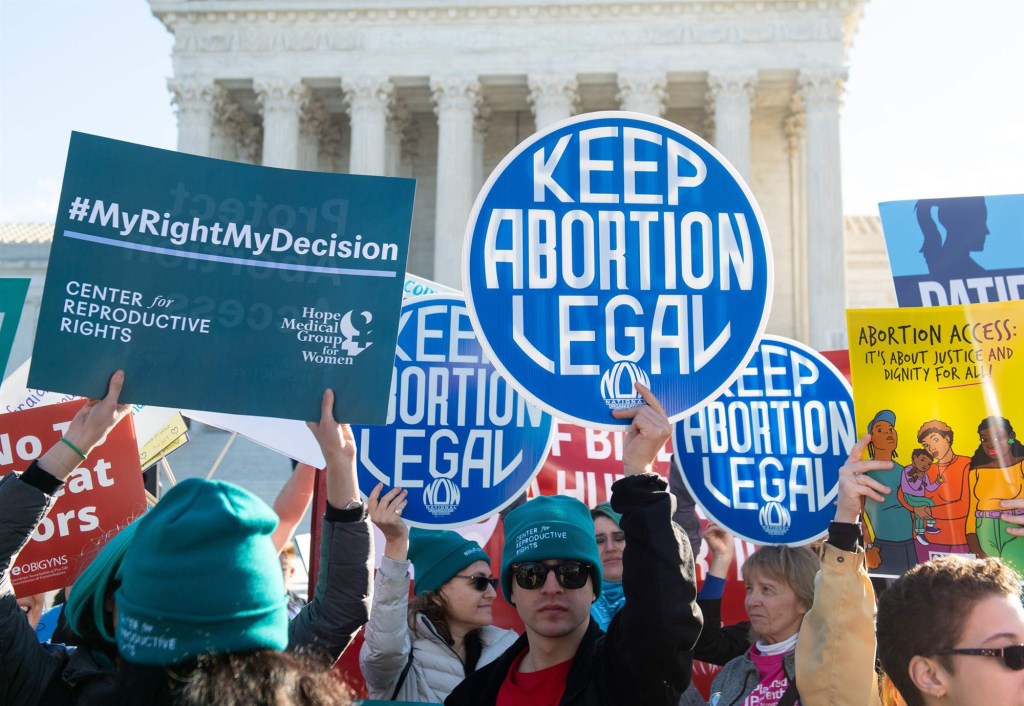
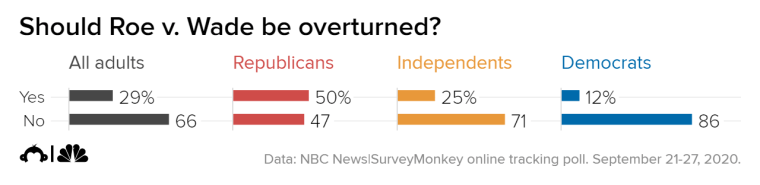



 Kate at home.
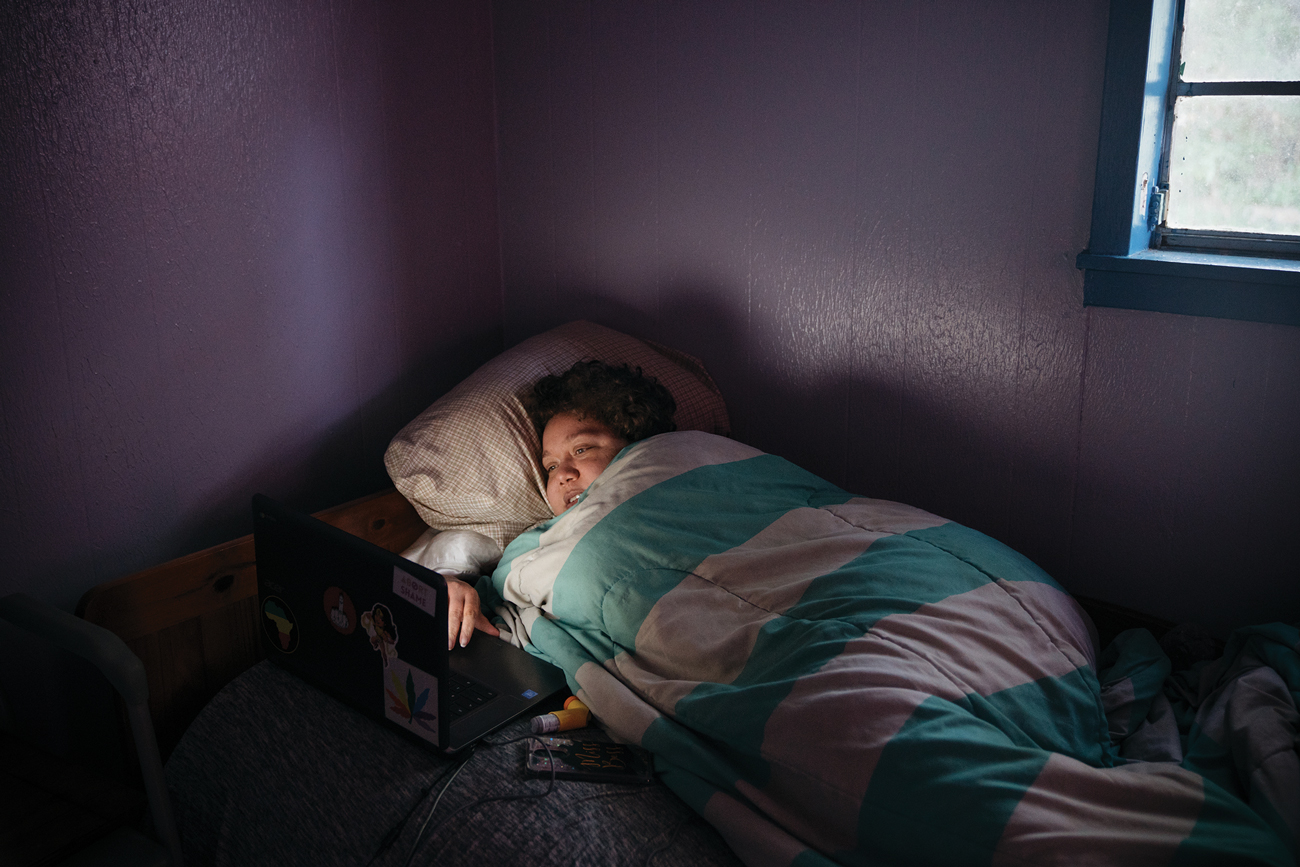
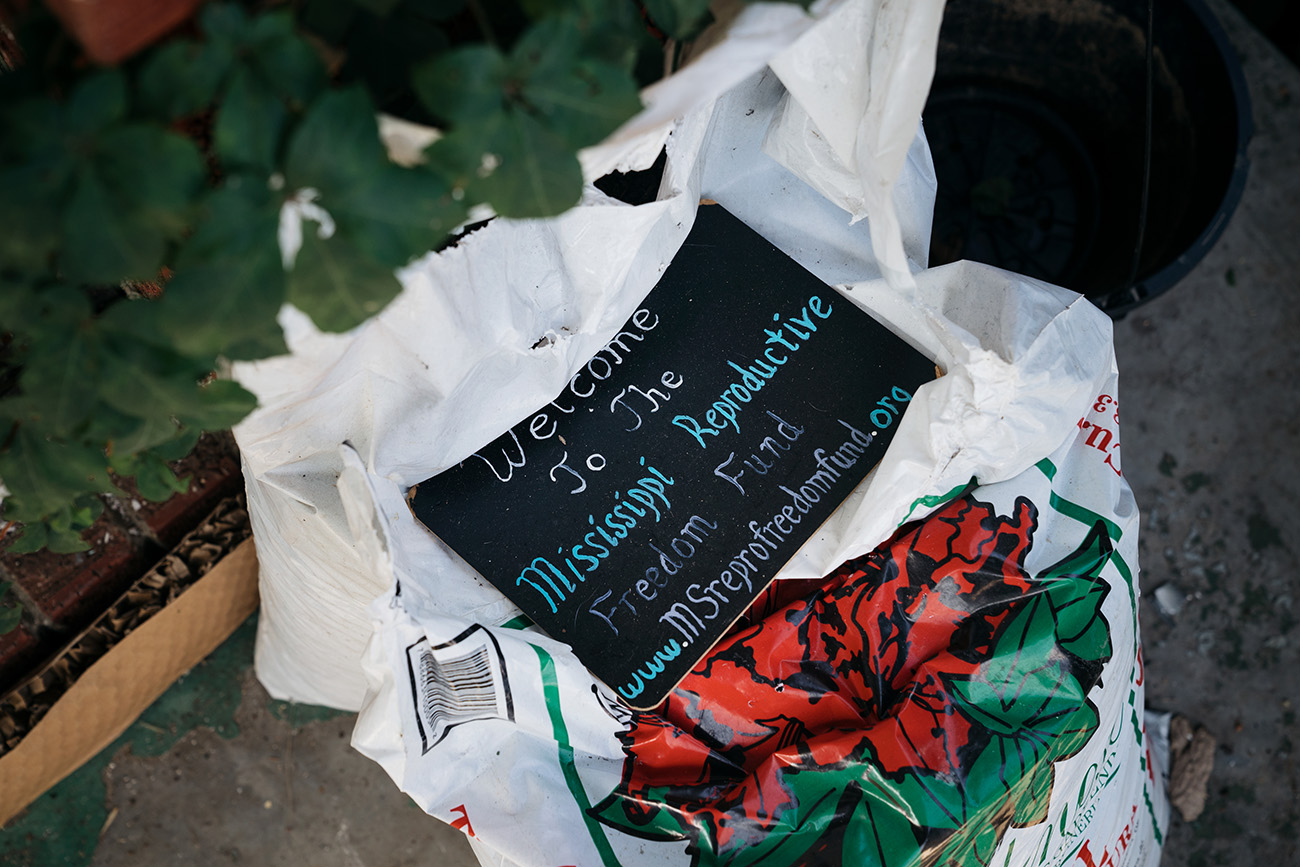
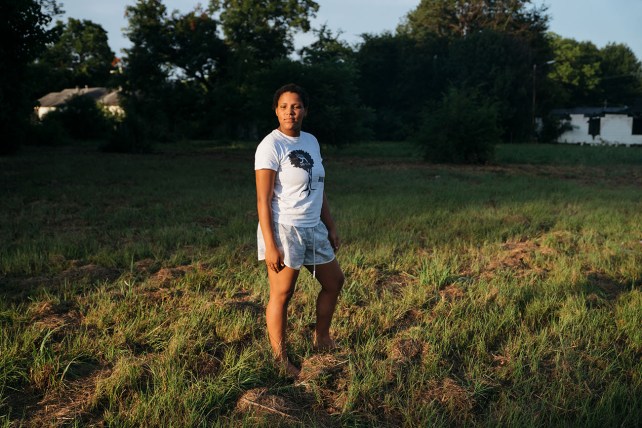
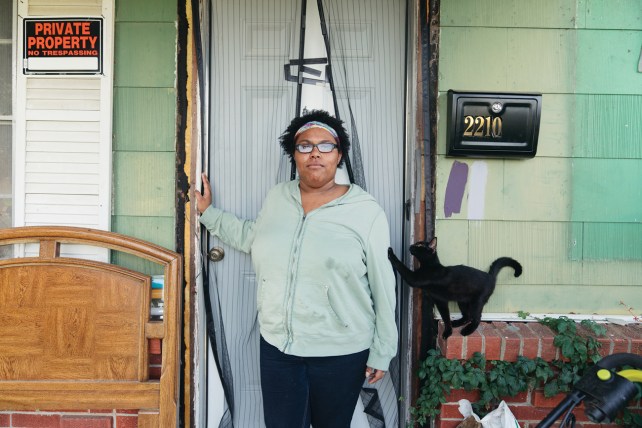



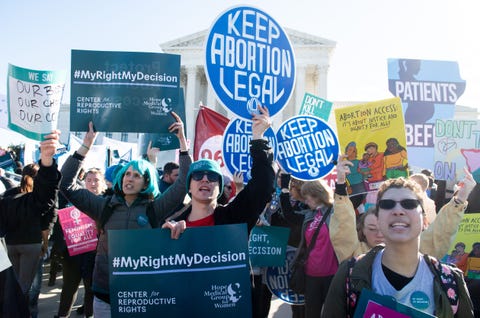
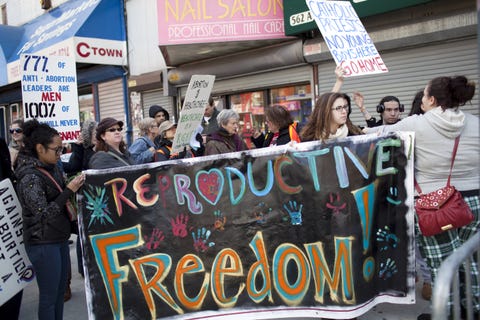

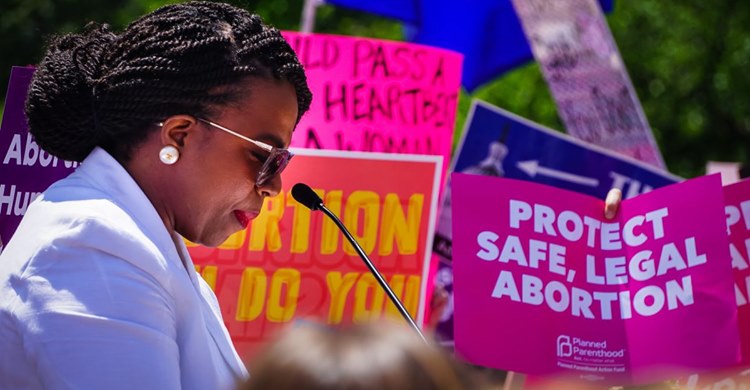


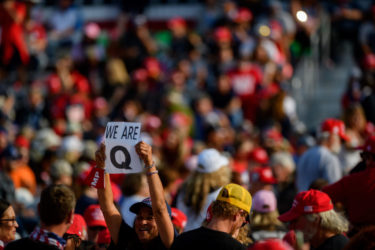
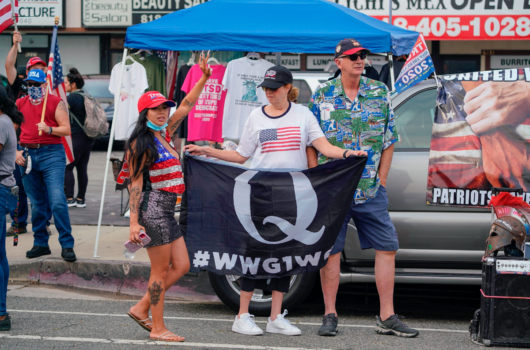


 Abortion - Abortion Clinics, Abortion Pill, Abortion Information