Self-managed abortion is the process of self-sourcing abortion pills and managing one’s own abortion outside a formal health-care setting. LightFieldStudios/Envato
Safe use of misoprostol for self-managing an abortion can be revolutionary.
In June 2020, Carol’s life changed.
“I found out I was pregnant, and then my husband, who is an alcoholic, left very soon after,” said Carol, 33, whose name is a pseudonym for privacy reasons. “He left; disappeared. I have three kids already.”
It was several months into the COVID-19 pandemic in the United States, and uncertainty was at an all-time high. “Being pregnant during COVID and having a baby by myself—with everything going on, I couldn’t deal with that,” Carol said. She needed an abortion.
Carol had heard about Aid Access, an Austria-based online telemedicine nonprofit providing medication for self-managed abortion to people in the United States.
After filling out an online consultation and receiving approval from Aid Access doctors, Carol was sent misoprostol. Typically, Aid Access prescribes mifepristone and misoprostol, a two-step regimen that involves a progesterone blocker (mifepristone) and a medication that causes the uterus to contract and expel the contents (misoprostol). But because of shipping disruptions due to the pandemic, mifepristone was difficult to acquire at the time, and Aid Access was relying on the effectiveness of misoprostol alone.
Carol had previously worked as a doula and was familiar with using misoprostol for miscarriage management. She received the medication and opened an email from Aid Access with step-by-step instructions for self-managed abortion. The instructions included information on how to take the medication, what to expect, and signs of a potential complication. While rare, Aid Access advises people to be aware of severe and persistent abdominal pain, heavy bleeding of more than two maxi pads an hour for more than two hours, a fever of 102 degrees Fahrenheit or more, and discharge with a bad odor, which could be a sign of an infection. If a complication arises, Aid Access doctors advise people to seek follow-up care at a hospital.
Later that day, Carol’s friend came over to watch her children and offer support. Carol read through the directions one more time and, at ten weeks’ gestation, successfully self-managed her abortion at home using misoprostol.
When I asked about her experience, she was calm. “I’m just happy to pass along whatever information that can possibly help somebody else,” she said.
Since the Supreme Court released its ruling in Dobbs v. Jackson Women’s Health Organization and overturned Roe v. Wade, the legal landscape surrounding abortion has evolved daily. “Trigger” laws have gone into effect in some states, while temporary state-level actions in others have kept clinics open.
Meanwhile, the public has started to learn more about the medication abortion pills mifepristone and misoprostol, while activists and academics alike are sharing information on how to protect your digital footprint when searching for abortion care.
This is a public health emergency, and we have a duty to inform people of the robust body of scientific evidence regarding safe methods for self-managed abortion.
Safe use of misoprostol for self-managed abortion can be revolutionary.
Misoprostol was originally created to treat stomach ulcers; Brazilian feminists in the 1980s discovered the medication could also induce abortion. Since then, misoprostol has transformed access internationally by providing people with a safe, effective, and cheap method for abortion.
Echoed by some is the notion that we are going back to the “pre-Roe times” of “back-alley abortions.” But because of advances in pregnancy detection, the accuracy of individual assessment of gestation, and medication abortion pills, this new era will likely be very different.
Like Carol, many people will turn to self-managed abortion—the process of self-sourcing abortion pills and managing one’s own abortion outside a formal health-care setting. This process has been found to be safe and effective, especially when people source medication from valid online sources and are guided through the process by physicians or feminist accompaniment groups.
Newly released World Health Organization guidelines recommend self-managed abortion as a safe option alongside clinical management, and organizations like Plan C make it easy for people to learn about authentic sources for medication.
Misoprostol in particular, which some refer to as the original medication abortion pill, has long been used throughout the world for early abortion care. In the United States, when people refer to medication abortion, they typically refer to the two-medicine regimen of mifepristone and misoprostol.
However, recent evidence on the safety and effectiveness of misoprostol alone has reinvigorated the conversation. Studies of self-managed abortion using misoprostol alone have found extremely high levels of effectiveness, ranging from 93 percent to 99 percent of participants reporting complete abortions without surgical intervention.
The history of misoprostol is one of ingenuity, liberty, creativity, and an ongoing collaborations across international feminist movements. In Mexico, misoprostol is readily available over-the-counter in pharmacies, and Mexican feminist activists are motivated to assist people in the United States. Due to its wide range of applications, it is stocked in U.S. pharmacies as well, and it is not regulated by the onerous FDA Risk Evaluation and Mitigation (REMS) classification that makes mifepristone only available from certified clinics, providers, and via telehealth models and qualified pharmacies in a handful of states.
However, people in the United States still need a prescription for misoprostol. For those who acquire it for self-managed abortion and live in states where abortion is now illegal, it holds the heightened risks of criminalization and surveillance. Most recently, in the case involving a Texas woman who was arrested for allegedly self-inducing an abortion, state laws have been used to intimidate and confuse people—part of a long history of prosecutors using laws associated with pregnancy and reproduction to police and criminalize.
This is a public health emergency, and we have a duty to inform people of the robust body of scientific evidence regarding safe methods for self-managed abortion. Although these methods are certainly not a panacea and may not be feasible or preferable to many seeking care, we do have evidence for their safety and efficacy. The moment to share this life-saving public health information is now.
In states with partial or total abortion bans, providers are facing threats and patients are struggling to access potentially lifesaving care.
Since Roe v. Wade, the 1973 ruling that legalized abortion across the nation, was overturned by the Supreme Court just over one month ago, there have been medical emergencies, guttural screams, celebrations, legal battles, and… emails. A lot of emails.
Laurie Bertram Roberts has been on the receiving end of plenty of them, mainly from people wanting to give money. Bertram Roberts helps run an abortion fund, The Mississippi Reproductive Freedom Fund, which aids people in paying for abortions and related costs. The fund has received an outpouring of support since the decision in Dobbs v. Jackson Women’s Health Organizationgave states the power to limit or straight-up ban abortions.
Bertram Roberts has been doing this work for over a decade (and predicting the fall of Roe v. Wade for much of that time), and they worry the emails and donations will only keep coming for so long before the attention wanes. They’ve seen waves of supporters from blue states passionately rallying around an issue like abortion rights when a threat to access is nigh, only to abandon ship for another cause when the news cycle changes. Although Bertram Roberts says they’re incredibly grateful for the crucial support their fund has been receiving, they worry the contributions and well-wishes will only last so long. Bertram Roberts compares vying for allies’ attention to dating “fuckbois” who are everything you need one day, but out the door the next. “They love you today, but tomorrow, they’ll leave you for climate change,” Bertram Roberts said.
Meanwhile, in a world where 26 states are expected to ban or limit abortion, if they haven’t already, Bertram Roberts’ biggest fear is that limited access to abortion is already becoming too commonplace. That people are shrugging and moving on as though abortion access has always been so constrained (to be fair, politicians have been restricting abortion for years, especially since the 2010 midterm elections) and as though there’s no use fighting them. “I already hear people normalizing people traveling these great distances to have an abortion,” they said. Although self-managing an abortion through pills (which can be obatined without a provider — for example, you can buy them online through a platform like Aid Access) is still a generally safe, cheap and effective way for many people to have abortions up to about 12 weeks in pregnancy, the option isn’t fit for everyone, medically or generally. There are also worries of future criminalization, which leaves some people in the lurch with only the option to travel.
Trying to quickly sum up all that’s happened in the chaotic 30-some days since Roe v. Wade was overturned—to hear all the stories of people who couldn’t get access to abortions, of those who had to jump through hoops to get life-saving medical care, who lost their jobs, fought against a ban in court, or who feared prosecution after self-managing an abortion—would strip the stories of the nuance they need. Instead, we asked a few people within the movement what they’ve seen on the ground since the Roe reversal—and why they believe we can’t abandon the fight.
What’s happened at abortion funds since the Roe v. Wade Reversal?
On July 6, Jackson Women’s Health Organization carried out its last abortion. The Mississippi clinic—which was at the heart of thecase that reversed Roe after the clinic challenged a Mississippi abortion ban—is now closed for good. Bertram Roberts said the official closure was one of the most challenging days they’ve faced in the past month. “There’s so much grief, and I don’t mean just grief, I mean grief,” they said.
There had been reports in the media and on social media that the clinic “was about to close” for years. Because of that drumbeat of misinformation, some Mississippi residents already thought it had shuttered. “For some people, it didn’t change anything,” Bertram Roberts said. “But then what did change was, Oh, no—now there are no clinics in Memphis. Now there’s no clinics in Little Rock.”
Another shift: Since Roe’s fall, the Mississippi Reproductive Freedom Fund has fielded calls and chats from a new group of people needing abortions, whom they hadn’t heard from before: “People who have a little higher income, who would have been able to make it to Jackson, but they can’t make it to Atlanta without help,” Bertram Roberts said. (In a fact-checking call, Bertram Roberts said they actually would no longer send abortion fund clients to Georgia, due to the six week ban that went into effect last week. Now, they’re most likely to help folks travel to Illinois, showing how options are disappearing by the week.}
And there are the people the fund hasn’t been able to help for myriad reasons—minors with unsupportive parents who can’t get out of school to travel, people with disabilities, caretakers, those with inflexible work schedules, or people with abusive partners. “We’ve already had callers who—it doesn’t matter how much money we have available—they’re not going to be able to go,” Bertram Roberts said. “It’s too far away, they can’t be away that long… There’s really nothing else to say but, ‘I’m sorry and we’re here to support you, whatever your next step is.’ We virtually handhold.”
Meanwhile, at funds like Bertram Roberts’, supporting those who need abortions often has to take precedence, even over processing donations, especially after such a hectic past month, Bertram Roberts said. This brings us back to the emails. Bertram Roberts said their inbox has requests from people wanting to give money from a month ago that they haven’t gotten to yet. “We’re asking for people’s patience because I know people think we’re ignoring them, and we’re not, but we just have to triage what we get to in a day,” Bertram Roberts said. “That even includes people offering us money… We [have been] working on abortion requests or media requests that were time-sensitive first before [getting] to even money emails. Which sounds absurd, because we need the money.” Bertram Roberts estimates the fund has received double the typical support since Roe’s reversal.
Meanwhile, Bertram Roberts is constantly consulting lawyers about how the Mississippi Reproductive Freedom Fund can help people post-Roe. What can and can’t they fund now? For years, they’ve helped lower-income folks pay for abortions and associated costs like gas, planes, hotels, childcare, and food. In this new world, are they allowed to provide possibly life- and definitely dollar-saving information about how to self-manage abortion?
“We’re not ending our services in any way,” Bertram Roberts said. “We might have to change them, but we’re not closing.”
Not every fund in the U.S. has been able to adapt. “We have made the deeply difficult decision to temporarily pause our services for the safety and security of our clients, our supporters, and our staff,” The Yellowhammer Fund wrote in an email announcement. “During this time, we will consult legal experts to reassess how best to continue doing our work in the immediate future.” (The Yellowhammer Fund, which had been known for helping folks who needed abortions in the Deep South, has not responded to email and phone requests for comment from VICE.)
What have doctors seen since the Roe v. Wade reversal?
Dr. Bhavik Kumar, MD, an abortion provider in Texas, has noticed an uptick in harassment from anti-abortion protesters happening outside of the Planned Parenthood Center for Choice where he works in Houston. “The shouting, the things they’re saying, just feel more aggressive than usual, more intense,” Kumar said. “It just seems like they feel they have more of a right to be there now.”
Kumar said he and others walking into the clinics receive “threats to report us to the state. [Demonstrators are] telling us we don’t need to work here, [and that we are] killing babies. They’re videotaping us, including our license plates, [and] misleading our patients and increasing their anxiety.”
This kind of intimidation isn’t new for the clinic, but the fact that protestors keep showing up to the Houston center is almost ironic: The center hasn’t performed any abortions since Roe fell. As soon as the decision came down, they halted any abortions they had still allowed to carry out under SB 8, a Texas law that went into effect on September 1, 2021 that effectively banned abortion after six weeks.
The health center team didn’t continue abortions in the brief period of access after a lower court judge blocked a pre-Roe abortionban from going into effect in Texas (a decision which was swiftly undone). “We chose not to provide [during that small window,]” Kumar said. “Given the intense way that pre-Roe law was written 100 years ago, and given the pattern of behavior from our attorney general, Ken Paxton, and his ruthless, relentless attempts to target folks that provide abortions and to try to ban everybody from accessing it, we were hesitant to move forward and provide that care at that time.”
Physicians like Kumar are in a unique position: They’re most commonly the people who are actively punished by the law when state abortion bans go into effect. “You’re thinking about multiple lawsuits, about losing your medical license, about ultimately going to jail for providing health care, and it’s very, very scary to think about that,” he said.
The impact on people who need abortions is sometimes harder to quantify than years of jail time abortion providers may face, though the famous “Turnaway Study” out of the University of California, San Francisco, is a good start. The long-term research, which began over a decade ago, found that those who were turned away from abortion clinics and who carried pregnancies to term instead were four times more likely to end up living below the federal poverty line than those able to have their abortions. Those who were denied a wanted abortion had worse health outcomes and serious complications with their pregnancies, such as eclampsia anddeath.They were also more likely to stay connected to abusive partners.
Kumar added that the Dobbsdecision now in effect is having a chilling effect on access to all kinds of health care. Abortion bans like the one in Texas are typically vague as to what kind of emergency care is and isn’t allowed. The laws and their language can be murky, and they’re often not tailored to modern medicine. Doctors don’t know for sure if they can be punished for even providing resources to someone who needs care, like information on self-managed abortion.
How have abortion bans impacted real people since Roe was overturned?
There are already too many examples of confusing laws leading to devastating outcomes playing out across the country just in the last month.
One person with a life-threatening ectopic pregnancy reportedly had to travel across state lines to the University of Michigan Hospital because doctors where they lived worried that they could be sued if they provided care to the patient because a fetal heartbeat was present. (In response to a request for comment, the University of Michigan Hospital’s OB/GYN team confirmed: “We have seen patients with ectopic pregnancies referred from other states because of restrictions on abortion care. We cannot provide further details due to patient privacy.”)
In Wisconsin, the Washington Post reported that a woman bled for 10 days after an incomplete miscarriage. The staffers in the emergency room treating her wouldn’t remove fetal tissue due to the confounding state of abortion laws.
As was widely publicized throughout the country, a 10-year-old rape survivorfrom Ohio had to travel to Indiana for abortion care.
These are just a few examples of so-called “exceptions” to abortion bans (some abortion bans make exceptions for rape, incest, and life-threatening medical issues, but these caveats to bans are not always practical in effect; proving the that you are the exception to the rule is often laborious and emotionally taxing, if not impossible) that made national news. Abortion can be life-saving or life-changing no matter why you need one, advocates like Bertram Roberts said, whether or not you’re having a medical emergency, and no matter where you live. “The impacts [of Dobbs] are still unraveling,” Kumar said. “Stories will continue to come out, and I think, unfortunately, they will become more intense and serious. In time, we’ll start to see more statistical differences in maternal morbidity and maternal mortality… We already see that maternal mortality is higher among folks of color, specifically among Black women. We’re going to see more Black and Brown people dying because of the bans on abortion.”
As we look ahead to the coming months—whether or not we keep donating to abortion funds and sending angry emails and yelling about abortion rights—Kumar said that every day, real people will be impacted. They’ll keep coming into emergency rooms. Keep continuing unwanted pregnancies. And, the sad truth is, the more all this happens, the more commonplace these stories will become. As Bertram Roberts says, the more bans and restrictions are put in place, and the more exhausted people get, the more this will become, yet again, our “new normal.”
After Texas’ Senate Bill 8, which banned any abortions after the detection of embryonic cardiac activity, was allowed to go into effect last year, Dr. Bhavik Kumar, a physician at Planned Parenthood Center for Choice in Houston, said interstate travel was often the only recourse he could suggest for patients seeking to terminate their pregnancy.
But for one patient, that wasn’t possible.
Due to her pending immigration case, the patient could not travel more than 70 miles or would risk jeopardizing both her ability to remain in the country and the security of her two children, he said.
“I didn’t know what to say. I was speechless because I had nothing else left,” Kumar, who himself is an immigrant and was undocumented for 11 years, told ABC News. “At that point, it felt like medicine was no longer the issue.”
He never learned what happened to this patient. Kumar, who tried helping her navigate a law he called “so heavy and looming and intense and insurmountable,” said he thinks about her often, fearing she was ultimately forced to carry her pregnancy to term.
Now, with a near-total abortion ban in Texas and trigger bans going into effect across the country following the Supreme Court’s overturning of Roe v. Wade, many more pregnant individuals could find themselves in situations like Kumar’s patient.
Colorado Organization for Latina Opportunity and Reproductive Rights (COLOR) has seen a recent uptick in the volume of frantic out-of-state calls they’ve received, especially from Spanish speaking immigrants, according to Aurea Bolaños Perea, COLOR’s strategic communications director. Some callers have sought clarity from COLOR on how their immigration status would impact their ability to access abortions.
Residents of states with abortion bans have resorted to interstate travel to obtain care, increasingly discussed as a go-to solution. States like Colorado, where abortion is still legal, have become havens for people seeking abortions, particularly across the restrictive regions of the South and Midwest.
But this option provides little comfort to immigrants navigating the complex maze of reproductive health care. Organizers and physicians say barriers to accessing abortions — an already convoluted process in a post-Roe world — are exacerbated by limited English proficiency and immigration status, which may hinder or completely bar immigrants from traveling across state lines, leaving them to slip through the cracks.
“Our immigrant community, our monolingual communities are disproportionately impacted in ways that I don’t think any of us are prepared to fully manage just three weeks into this decision being made,” Bolaños Perea told ABC News.
With the power to decide abortion’s legality in states’ hands, people seeking abortions must now confront a rapidly evolving landscape of care made more confusing by state-specific technicalities, including limits on gestational age and mandatory ultrasounds.
Difficult enough to comprehend for native English speakers, this esoteric legal and medical terminology is often unintelligible for those with limited English proficiency, assuming they are aware these laws exist in the first place, according to Nancy Cárdenas Peña, Texas director for policy and advocacy at the National Latina Institute for Reproductive Justice.
Information coming out of the Texas Legislature, for example, is rarely if ever offered in Spanish, Cárdenas Peña said.
Without access to accurate information in their own language, immigrants can become misled by dubious sources on the safety of medication abortion or controversial pregnancy crisis centers that aim to steer people away from abortions, for example, according to Seri Lee, national campaign and membership director at the National Asian Pacific American Women’s Forum (NAPAWF).
“That’s something that is prevalent in every community, but particularly in the [Asian American and Pacific Islander] community with misinformation and false news that gets really easily disseminated through social media channels like WhatsApp or WeChat,” Lee told ABC News.
Understanding the legality and availability of resources is only the first of many steps in the labyrinthine process of getting to an appointment, according to Dr. Kristyn Brandi, an abortion provider in New Jersey who serves as board chair of Physicians for Reproductive Health.
“Information that people are seeking in order to make an appointment may all be in English, and so they may not be able to make an appointment or have difficulty finding the place that they’re going to access care,” she told ABC News. “They may not know what kind of care is available to them.”
Then there is travel, which can be financially prohibitive for immigrants, who are disproportionately low-income, and which presents further logistical hurdles.
With abortion now illegal in Texas, Kumar said he often directs patients to travel elsewhere to seek care — only to learn they had never previously left the state, let alone been on a plane.
“If you think about somebody who has low English proficiency — or zero English proficiency — and having to navigate traveling and the airport, and finding childcare, if they don’t already have it, and taking time off of work, if they’re working, getting to another state where they’re checking into a hotel and they don’t speak English,” he said. “They need to have somebody with them that can help them navigate that.”
“That’s not always an option,” he added.
Assuming an individual successfully makes it to their appointment, they run up against the final obstacle of communicating with a physician and staff regarding their needs and treatment plan.
Kumar and Cárdenas Peña said it was standard for abortion clinics in Texas to have translation services and a bilingual staff, given the state’s ethnic and linguistic diversity.
“People from the Rio Grande Valley are used to this cultural component of their health care that they probably wouldn’t be able to find elsewhere,” Cárdenas Peña said.
When they travel across state lines to access care, there is no guarantee patients will receive the same accommodations after leaving their familiar communities.
Bolaños Perea said in Colorado, there is not always a Spanish-speaking physician or translator at every clinic in the state, despite recently seeing an influx of Hispanic patients from Texas. Clinics also do not always have available resources to capture the diversity of languages represented in their patient base, including Vietnamese, Arabic, Somali and Amharic speakers in Colorado.
Lee noted that language access is especially complicated for Asian Americans and Pacific Islanders, who speak more than 100 distinct languages or dialects. As the only English speaker in her family growing up, she said she often shouldered the burden of translating complicated medical jargon to her parents.
While interpreters and translator phone lines are becoming more commonplace in clinics, Brandi said it’s still extremely rare to find abortion providers fluent in the languages spoken in their communities, which can be critical to developing trust with patients who can be in vulnerable situations.
“Unfortunately, there are a lot of barriers to people that may have backgrounds that are representative of the communities that we serve. There are barriers to those people becoming doctors and becoming health care providers,” Brandi, who is Puerto Rican and Panamanian, said.
“I’m really fortunate to be able to talk to my patients in Spanish,” she added. “It’s hard to have that conversation if you don’t speak the same language.”
Before the June Supreme Court decision, reproductive health care could be difficult to access for immigrants, who are more likely to be uninsured given residency and immigration status restrictions on Medicaid eligibility.
Now, given increasing reliance on crossing state lines to obtain abortions, undocumented immigrants are left with few to no options.
Some people cannot travel to receive abortions as they are stuck in immigration detention or immigration proceedings. Undocumented immigrants confront further daily obstacles hampering their ability to travel.
For example, only 16 states and the District of Columbia currently permit undocumented immigrants to obtain driver’s licenses, excluding many of the states where abortion is banned and interstate travel is necessary.
Furthermore, border regions with large immigrant populations like the Rio Grande Valley, where Cárdenas Peña lives, are peppered with internal Border Control checkpoints 100 miles in, meant to identify people in the U.S. unlawfully.
“In order to leave these communities, they must pass through the checkpoints and answer questions about their immigration status,” Lee said. “If they lie about their immigration status, they can put themselves in danger and at risk of detainment and deportation.”
With the legality of abortion in flux across the country, the risk of encountering law enforcement authorities may also frighten undocumented immigrants into avoiding seeking care, Lee said.
These fears are made worse by rumors about the presence of Immigration and Customs Enforcement agents at abortion clinics, according to Brandi.
Lee noted that states where law enforcement has “considerable discretion” to target immigrants are often the same states that are “hostile to abortion access,” with Texas as a prime example. The state has recently come under fire for its Operation Lone Star initiative, which has authorized the detainment of thousands of migrants on misdemeanor trespassing charges.
“Every single time there is an immigration law that gets passed in Texas or at the federal level, we receive so many calls from the community members who are scared to go to simple health care appointments because of that fear that they would be placed in deportation proceedings,” Cárdenas Peña, who grew up in a mixed-status family, said.
“We would definitely be naïve to believe that immigration enforcement — DHS, Border Patrol, ICE, the surveillance and the capacity of surveillance under all of these agencies — would not affect access to reproductive health care,” she added.
An ICE spokesperson said in a statement to ABC News in response to Wall Street Journal reporting last week that the agency will “continue to comply with federal law and abide by current detention standards which ensure that pregnant detainees in custody have access to pregnancy services, including routine and/or specialized prenatal care, pregnancy testing, comprehensive counseling and assistance, postpartum follow up, lactation services and abortion services.”
Last week, President Joe Biden signed an executive order aimed at protecting access to abortion nationwide, including instructions to the Justice Department to ensure people can travel out-of-state for abortion care.
Kumar said he has stopped providing abortions in Texas. But given his deep roots in the state and longstanding ties to its communities, he currently has no plans to leave.
“These are folks that have a difficult time accessing this care because it’s so marginalized, and me moving is not going to make it any easier for them,” he said.
Kumar continues to provide other reproductive health services and offers support to local patients traveling out of state. He has traveled in the past to provide abortion care and is exploring continuing that work.
While continuing to endorse legal battles against state abortion bans, many organizers have also ramped up efforts to assist immigrants in obtaining care.
NAPAWF’s Texas chapter created a guide on its website to explain new and existing abortion laws in Texas, offering the guide in six different Asian languages, including Korean, Tamil, Telugu, Tagalog, Vietnamese and Chinese.
COLOR hosts a Spanish radio show, Mujeres de COLOR, to provide essential information on reproductive health care and continues to field phone calls and questions from within and outside Colorado. The National Latina Institute for Reproductive Justice in Texas continues to translate all materials that come out of the Texas Legislature, as well as host public education meetings.
NAPAWF and the Latina Institute’s members are also educating their communities on medication abortion, especially for individuals who may be undocumented and for whom out-of-state in-office procedures are not an option.
Brandi noted that abortion funds can also help overcome some of the barriers immigrants face by footing the hefty bill for procedures not covered by insurance as well as coordinating logistics on patients’ behalf, like booking travel and scheduling appointments.
But there’s no silver bullet that will promise broad access to abortions for all individuals in this new environment, short of a federal protection, according to Lee.
“We’re not just talking about one angle of, ‘Oh, it’s a matter of immigration status, or it’s a matter of limited English proficiency,'” Lee said. “Oftentimes, those are compounded.”
Abortion rights demonstrators protest the US Supreme Court’s decision on June 24, 2022, in Austin, Texas.
In more than a dozen states, legal fights are underway over abortion bans and other laws that greatly limit the procedure after the US Supreme Court ended a constitutional right to an abortion on June 24.
Abortion rights proponents have taken legal action, challenging several states’ abortion restrictions and have seen some success in temporarily blocking bans in at least five states: Idaho, Kentucky, Louisiana, Michigan and Utah.
Here’s where some states’ abortion bans stand as courts consider legal challenges:
Arizona: state seeks to lift hold on pre-Roe abortion ban
Arizona’s Republican Attorney General Mark Brnovich is asking a state court to lift a 1973 court injunction against an abortion ban enacted in 1901.
In a filing Wednesday with the Arizona superior court in Pima County, Brnovich pointed to the US Supreme Court’s recent ruling in Dobbs v. Jackson Women’s Health, which ended federal constitutional protections for abortion rights.
“It is beyond dispute that Dobbs represents a change in the very law that was the sole and express basis for the Second Amended Final Judgment,” Brnovich wrote, referring to the 1973 injunction.
The fight over the pre-Roe abortion ban comes after Arizona federal Judge Douglas L. Rayes blocked a “personhood” provision in an existing abortion ban in the state, forbidding the state from using it to impose penalties for abortions that would otherwise be legal under existing Arizona law.
“A preliminary injunction will not leave Arizona hamstrung. If Arizona wants to extend legal protections to the unborn—including, it seems, before medically recognized conception—nothing in this order precludes it from doing so clearly and explicitly, by amending the definition of ‘person’ in those discrete statutes where Arizona wants the change to operate, and by clearly and explicitly stating whether those applications exempt otherwise lawful abortion care,” Rayes wrote in his decision, which also noted that the provision could conflict with a state law set to take effect in September that bans most abortions after 15 weeks.
The injunction was granted following a motion filed by the Center for Reproductive Rights and the American Civil Liberties Union of Arizona.
Abortion rights advocates had worried that the state would use the language to prosecute providers or patients. “The personhood law classifies fetuses, embryos, and fertilized eggs as ‘people’ starting at the point of conception. The vague provision placed both providers and pregnant people at risk of arbitrary prosecution,” the ACLU of Arizona said in a news release Monday night.
Florida: state appealed, ban in effect
In Florida, a law banning abortions after 15 weeks took effect on July 1. A state judge on June 30 said he would issue a temporary statewide injunction and signed a written order on July 5. But the state also filed an appeal, a move that automatically stayed the judge’s order that temporarily blocked the ban. With the appeal, the law remains in effect while litigation continues. The plaintiffs in the case, Florida abortion providers, said they plan to file a motion seeking to reinstate the injunction.
Georgia: 6-week abortion ban in effect
A federal appeals court ruled on July 20 that Georgia’s law banning abortions as early as six weeks of pregnancy with some exceptions could take effect immediately.
The 11th US Circuit Court of Appeals on Wednesday stayed a federal district court’s order that had blocked the abortion law from going into effect.
“It is the constitutional duty of the Georgia Attorney General to defend the laws of our state. Today, our arguments have prevailed, meaning the Eleventh Circuit has allowed Georgia’s LIFE Act to take effect immediately,” Georgia Attorney General Chris Carr, a Republican, said in a statement.
The federal district court in 2020 had blocked state officials from enforcing the law, which bans abortion when early cardiac activity is detected. The challenge to the law, which was signed in 2019 by Republican Gov. Brian Kemp, was brought by Georgia abortion providers, abortion rights advocacy groups and practitioners.
The appeals court on Wednesday vacated the lower court’s order, saying in its opinion that the US Supreme Court’s decision in Dobbs v. Jackson last month “makes clear that no right to abortion exists under the Constitution, so Georgia may prohibit them.”
Idaho: ban temporarily blocked and another lawsuit filed
The Idaho Supreme Court is holding a hearing on August 3 to consider arguments on two abortion challenges.
In April, the Idaho Supreme Court temporarily blocked the state’s six-week abortion ban that allows private citizens to enforce the law in the state with civil action. Abortion providers filed suit a week earlier saying the law violates several provisions of the state constitution.
Providers in Idaho have also challenged the state’s so-called trigger law that is set to go into effect on July 19 at the earliest. The law would make providing abortions a felony punishable by up to five years in prison, with exceptions for cases of rape or incest or to prevent the death of the pregnant person. The state Supreme Court is set to hear the case during the same August 3 hearing.
Kentucky: ban temporarily blocked
A state court in Kentucky on July 22 continued a block on the state’s trigger law and a law restricting abortions at around six weeks of pregnancy. The court on June 30 had granted a temporary restraining order, halting enforcement of the two laws and allowing abortion services to continue. The state’s Attorney General Daniel Cameron, a Republican, appealed to reinstate the enforcement of the abortion laws while legal challenges to them move through the courts, but Kentucky’s Supreme Court on July 5 denied the request.
Louisiana: ban temporarily blocked
A Louisiana state judge on July 21 granted a preliminary injunction against the state’s abortion trigger law.
The order bars Louisiana Attorney General Jeff Landry and the head of the state’s health department, Courtney Phillips, from implementing and enforcing the state’s abortion ban until a trial on plaintiffs’ request for a permanent injunction.
It’s the third time Baton Rouge District Judge Donald Johnson has stopped the law from going into effect after issuing and extending a temporary restraining order earlier in the month.
Landry previously warned in a tweet that “anyone performing abortions, pending outcome, will be culpable when the case is closed in favor of the laws of our State.”
The fight over Louisiana’s ban has seen some legal twists after a judge ruled earlier in July that the New Orleans court did not have the authority to pause the law as the case was transferred to a Baton Rouge state court. The move cleared the way for the state’s trigger law to briefly take effect and, for a time, blocked abortion clinics in the state from operating.
Michigan: ban temporarily blocked
In Michigan, the state’s pre-Roe ban — a 1931 abortion ban, which was invalidated by the decision in Roe v. Wade but remained on the state’s books — was put on hold by a state court in May, before the US Supreme Court decision was handed down. Nearly a month later, Michigan Gov. Gretchen Whitmer, a Democrat who’s supportive of abortion rights, filed a lawsuit asking the state Supreme Court to declare the law unconstitutional under the Michigan Constitution.
Mississippi: lawsuit withdrawn
Mississippi’s trigger law went into effect on July 7, after a Mississippi judge declined to temporarily block the ban. The trigger ban prohibits abortions in the state with exceptions only in cases of rape or if the pregnant person’s life is endangered. The state’s last abortion clinic, Jackson Women’s Health Organization, which challenged the trigger law, was forced to close its doors.
After filing an appeal to try and resume services and the state Supreme Court declining to hear the appeal on an emergency basis, the Mississippi Center for Justice, on the clinic’s behalf, withdrew its lawsuit on July 19. Diane Derzis, the clinic’s owner, sold the building “in light of the dim prospects for a speedy and meaningful ruling that would allow the clinic to reopen,” Rob McDuff, one of the attorneys for Jackson, said in a statement.
Derzis previously told CNN that they were planning to move to a new clinic in Las Cruces, New Mexico.
North Dakota: lawsuit filed
North Dakota’s only abortion clinic, Red River Women’s Clinic, and its medical director sued on July 7 to block enforcement of the state’s trigger ban, which would ban abortion except in cases to save the life of a pregnant person. The lawsuit filed Thursday in state court argues that the trigger ban is unconstitutional under the North Dakota Constitution.
The ban is designed to take effect 30 days after the law is certified by the state attorney general to the legislative council. Attorney General Drew Wrigley wrote to the legislative council at the end of June, saying that the ban would take full effect on July 28.
In their lawsuit, the plaintiffs argue that Wrigley’s certification is “premature” because the US Supreme Court has not issued a judgment separate from the opinion in the Dobbs case.
Ohio: emergency hold denied
The Ohio Supreme Court denied state abortion providers’ request for an emergency hold on the state’s prohibition on abortions performed after fetal cardiac activity is detected, typically around six weeks into a pregnancy. The court’s ruling means the abortion ban can continue to be enforced as the case plays out.
Oklahoma: lawsuit filed
Provider groups have challenged Oklahoma’s 1910 pre-Roe abortion ban along with an abortion law enacted this year that goes into effect in August. Before the US Supreme Court overturned Roe, abortion providers had already brought separate challenges to different abortion laws in the state.
South Carolina: lawsuit filed
Abortion providers in South Carolina are challenging the state’s six-week abortion ban with a lawsuit filed in state court Wednesday.
The lawsuit alleges that the six-week prohibition violates several clauses of South Carolina’s Constitution. It also targets the design of the ban’s narrow exceptions for life of the mother, rape or incest. For instance, the lawsuit alleges that the rape exception runs afoul of the state constitution’s privacy protections because the exemption requires the provider report the abortion-seeker’s information to law enforcement.
The lawsuit was filed by Planned Parenthood South Atlantic and Greenville Women’s Clinic, as well as two individual providers. The providers filed with the lawsuit an emergency request for the court to quickly block the ban while the litigation plays out.
The six-week ban, passed by lawmakers in 2021, had been blocked by a federal court previously, however that hold was lifted after the US Supreme Court issued its ruling last month ending federal abortion rights protections, allowing for the ban’s revival.
Texas: pre-Roe abortion ban allowed to be civilly enforced
Texas’ nearly century-old abortion ban is allowed to be civilly enforced while the state waits for its trigger ban to kick in. A state court had issued a temporary restraining order against the pre-Roe law on June 28, which allowed abortions up to around six weeks into pregnancy to resume. But on July 1, Texas’ Supreme Court partially granted Republican state Attorney General Ken Paxton’s request to stay the lower court’s order.
Utah: ban temporarily blocked
A Utah judge has continued an injunction blocking the state’s trigger law from taking effect, siding with Planned Parenthood in allowing the procedure to continue while the case plays out in the courts. Judge Andrew Stone in Salt Lake City’s 3rd District Court previously granted a two-week injunction in the case, preventing the trigger law from being enforced.
West Virginia: 19th century pre-Roe abortion ban blocked
A state court judge on July 18 indicated that she had decided to block a West Virginia abortion ban dating to the 1800s, according to news releases from both sides of the case.
The decision was announced from the bench, both sides confirmed. A copy of the order was not immediately available, a court clerk told CNN. West Virginia plans to appeal the decision.
“Today’s decision is a sigh of relief, and means we can once again serve the people who reach out to us for abortion services,” Katie Quiñonez, executive director of Women’s Health Center of West Virginia and one of the plaintiffs in the lawsuit, said in a statement.
Quiñonez, the clinic and other individual providers had asked for the preliminary injunction in a lawsuit filed in June, alleging the legislature implicitly repealed the law with the abortion regulations the lawmakers passed recently. The lawsuit, filed in Kanawha County Circuit Court, also claimed the ban violated the state constitution.
West Virginia’s Republican Attorney General Patrick Morrisey said the court’s decision to block the law was “a dark day for West Virginia.”
On July 19, Morrisey filed a motion for a stay of injunction with the state Supreme Court of Appeals, saying: “We believe it’s critical to file for an immediate stay in light of this flawed decision and seek this emergency measure to prevent immediate loss of precious life.”
Wisconsin: lawsuit filed
Democratic state officials in Wisconsin have asked a state court to block Wisconsin’s pre-Roe abortion ban, which was allowed to take effect after the high court overturned the federal holding. The 1849 law criminalizes abortion in the state, including in cases of rape and incest.
The lawsuit asks a state court to “clarify that Wisconsin’s 19th century abortion ban with no exceptions for rape or incest has not gone back into effect,” and to deem it unenforceable.
PEOPLE MARCH THROUGH CENTENNIAL OLYMPIC PARK DURING A PROTEST AGAINST THE SUPREME COURT’S RULING IN THE DOBBS V JACKSON WOMEN’S HEALTH ORGANIZATION ON JUNE 25, 2022 IN ATLANTA, GEORGIA. (PHOTO BY ELIJAH NOUVELAGE/GETTY IMAGES)
The new ruling has serious implications for everything from criminal to tax law.
Georgia isn’t just the latest state to ban abortion in the wake of Roe v. Wade’s overturn last month. It’s also the latest state to advance one of the anti-abortion movement’s greatest goals: to legally redefine embryos and fetuses as people, granting them rights and protections that may even outstrip those given to pregnant people.
On Wednesday, hours after a federal appeals court paved the way for Georgia to ban most abortions as early as six weeks into pregnancy later this summer, the court stepped in yet again and let Georgia’s abortion ban take effect imminently. Abortion access is now gone across almost all of the South and is rapidly disappearing in the Midwest.
“This is a highly unorthodox action that will immediately push essential abortion care out of reach for patients beyond the earliest stages of pregnancy,” read a joint statement from the ACLU, the ACLU of Georgia, Center for Reproductive Rights, Planned Parenthood Southeast, and Planned Parenthood Federation of America. “Across the state, providers are now being forced to turn away patients who thought they would be able to access abortion, immediately changing the course of their lives and futures.”
But the legal repercussions of this ban will ripple far beyond abortion. Legally recognizing fetuses as “people” would likely dramatically rewrite enormous swaths of U.S. law.
“Fetal personhood is kind of an infinitely complicated topic with potentially infinite unintended consequences, because once you recognize a fetus as a person, they could have rights in all kinds of contexts,” Mary Ziegler, a professor at University of California, Davis, School of Law who studies the legal history of reproduction, told VICE News shortly after the Georgia ban was first passed in 2019. (Until Roe’s fall, it was blocked by a court challenge.) “So you would have to work out what it meant for everything from inheritance law to tax law to civil liabilities rules to criminal law.”
Tax law will certainly be impacted by the Georgia ban, according to the Atlanta Journal-Constitution. Technically, abortion is outlawed once a fetal “heartbeat” can be heard, normally at around six weeks of pregnancy. (Despite the law declaring this sound a “heartbeat,” the embryo does not have a developed heart at that stage of pregnancy.) At that point, people can claim their fetus on their state income taxes as a dependent, the Atlanta Journal-Constitution reported.
People can also file for child support at the point in pregnancy, while state officials must include the fetus in population determinations.
In 2019, one Republican legislator told the Atlanta Journal-Constitution that private accountants had estimated that the ban could cost the state between $10 million and $20 million in tax dollars. However, state officials didn’t perform a formal evaluation of the potential cost.
Georgia is far from the only state with “personhood provisions” embedded in its once-dormant abortion laws. Earlier this month, an Arizona judge blocked that state’s “personhood” law, ruling it was too vague to enforce.
Abortion-rights supporters in Georgia had also sought to argue that their law’s definition of “personhood” was unconstitutionally vague. The law uses a domino effect to redefine fetuses as people. First, it redefines “[n]atural person” to include “any human being including an unborn child.” Then, it goes on to redefine “an unborn child” as “a member of the species of Homo sapiens at any stage of development who is carried in the womb.”
But in its ruling Tuesday, the 11th Circuit rejected that argument about vagueness—although the three-judge panel also admitted, “There might be vague applications of that definition in other provisions of the Georgia Code.”
As abortion bans roll out across the country and anti-abortion legislators, freed from Roe’s protections, rush to push their agenda, states are likely to see even more “fetal personhood” measures and even more arcane applications of these laws. Earlier this month, a Texas woman tried to get out of a traffic ticket by arguing that, because she was pregnant, she was entitled to use the HOV lane.
DEMONSTRATORS DURING A WOMEN’S MARCH RALLY IN WASHINGTON, D.C., US, ON SATURDAY, JULY 9, 2022. (VALERIE PLESCH/BLOOMBERG VIA GETTY IMAGES)
It’s too late to save Roe. The question now is whether abortion will finally become—and stay—a priority for Democratic politicians and voters.
Three weeks after the fall of Roe v. Wade and the end to the national right to have an abortion, abortion-rights activists have been sorely disappointed with the slow-moving Democratic Party’s response.
Abortion legislation in Congress has stalled, and the White House has shot down measures such as building abortion clinics on federal land, infuriating activists. Democrats have instead focused on keeping control of Congress in the November midterms, even as Republicans are heavily favored to take back the House of Representatives.
But we did not get to this point overnight.
While Republicans have spent decades chipping away at the right to abortion, Democrats have helped them by spending decades de-prioritizing it, thanks to a big-tent approach at the expense of ideological consistency, a hostility toward “litmus tests,” and an assumption that the Supreme Court would always remain a bulwark against Republican attacks on abortion rights.
“There was a certain feeling we had before [Supreme Court Justice] Sandra Day [O’Connor] left that the court would never, never, never, never, never overturn Roe, because as the years went on, it became precedent,” former Sen. Barbara Boxer told VICE News, referencing the first woman on the Supreme Court, who co-authored the court’s plurality opinion in the case Planned Parenthood of Southeastern Pennsylvania v. Casey.
Ironically, Congressional Democrats are now—finally—closer than they’ve ever been to codifying Roe v. Wade. In September 2021, the House passed the Women’s Health Protection Act, which would prohibit state and local restrictions on abortion, on a nearly party-line vote with just one House Democrat opposing, Rep. Henry Cuellar of Texas.
But it’s too late to save Roe. The question now is whether abortion will finally become and stay a priority for Democratic politicians and voters—and what the consequences will be if it doesn’t.
Biden entered the Senate just weeks before the Roe decision was handed down in January 1973, and soon said that the decision went “too far.”
Throughout the four Democratic presidencies between the Roe decision and now, the Democratic Party chose not to enshrine or reinforce the protections granted by Roe—in part because it owed those majorities to anti-abortion Democrats.
For much of the history of abortion rights since the landmark 1973 ruling, the Democrats have had a loud caucus of abortion opponents, a remnant of the New Deal coalition. For example: The “Casey” in the 1992 Caseycase where the Supreme Court weakened Roe by allowing states to implement onerous restrictions on providers and people seeking abortions, was Pennsylvania’s Democratic governor at the time, Bob Casey Sr.
President Jimmy Carter, who took office four years after the Roedecision, wrote in a 2006 memoir that “every abortion is an unplanned tragedy, brought about by a combination of human errors” and said that while he “accepted my obligation to enforce the ‘Roe v. Wade’ Supreme Court ruling,” he also “attempted in every way possible to minimize the number of abortions.” (The Carter Center, which Carter and former First Lady Rosalynn Carter founded in 1982, denounced the Dobbs ruling last month.)
Roe decision ‘too far’
Biden entered the Senate just weeks before the Roedecision was handed down in January 1973, and soon said that the decision went “too far” and that women shouldn’t have the “sole right” over their own bodily autonomy. Biden, a Catholic, voted for a 1982 bill that would have overturned Roeand returned the issue of abortion to state legislatures, but later began to embrace a more moderate line.
Boxer, who served with Biden in the Senate for 15 years, told VICE News that she and other women in the Senate persuaded Biden to support legal abortion rights, even though he was still personally opposed. “We worked very hard to explain to him that we totally understood his personal religious objection to abortion, but then saying not everyone shares that religion or shares that view,” Boxer said. “And he changed totally.”
But this evolution appears to still be ongoing. When the president first announced his campaign in 2019, he reiterated his support for the Hyde amendment, which bans the use of federal funding for abortions, including women receiving coverage and healthcare through Medicaid, the Indian Health Service, and the Department of Veterans Affairs. It was only after severe backlash that Biden revoked his long support of the regulation limiting abortion access, saying he “can no longer support an amendment that makes that right dependent on someone’s zip code.”
Even after his election, Biden only publicly uttered the word “abortion” for the first time since becoming President in May, according to didbidensayabortionyet.com, a website operated by the abortion storytelling organization We Testify.
After the Casey decision was handed down, some Democrats in Congress began pushing harder to defend the basic protections that were then still provided by Roe. In 1993, two years before Republicans took control of Congress, 41 senators (including Biden) and 142 House members, mostly Democrats but several Republicans, signed onto the Freedom of Choice Act, a bill that would have effectively made Roe’s protections federal law.
“Bill Clinton and his allies said, ‘OK, well, it would be great if we could codify abortion rights, but if we can’t, the Supreme Court isn’t going to overturn Roe.’”
But the bill was never brought to the floor for a vote, despite the insistence of then-Senate Majority Leader George Mitchell. Mary Ziegler, a Florida State University professor and legal historian of reproductive rights, said that Democrats were not alarmed by the weakening of Roe in the Casey decision, but rather relieved that the Supreme Court had once again affirmed Roe’s basic principles.
‘It wasn’t a priority’
“There was this idea that the Supreme Court would salvage things, and so it wasn’t a priority,” Ziegler told VICE News. “So Bill Clinton and his allies said, ‘Okay, well, it would be great if we could codify abortion rights, but if we can’t, the Supreme Court isn’t going to overturn Roe.’”
Boxer began reintroducing the Freedom of Choice Act during the early 2000s, feeling a renewed sense of urgency following the election of George W. Bush, an abortion opponent. After the passage of the inaccurately-named Partial-Birth Abortion Ban in 2003 (which was supported by dozens of Democrats), and O’Connor’s retirement and replacement by Justice Samuel Alito in 2006, Boxer felt there was real need to pass the bill, she told VICE News.
“When [O’Connor] retired, my heart sank,” Boxer told VICE News. “And when Alito got her seat, I voted against him. I knew he would be terrible on this, but I didn’t know just how cruel he would be.”
But Boxer’s Democratic colleagues didn’t necessarily feel the same way. She introduced the bill in three sessions between 2003 and 2007, but the bill never had more than 19 co-sponsors in the Senate. An amendment to the Partial-Birth Abortion Act expressing support for the Roedecision, authored by Iowa Sen. Tom Harkin and described by Boxer as a way to “test” support for a national abortion rights law, passed with 52 votes—eight short of the filibuster-proof majority.
“We didn’t have the votes,” Boxer said of a bill to legalize abortion at the federal level. “We never had the votes.”
“We didn’t have the votes. We never had the votes.”
It wasn’t just apathy stonewalling an abortion rights bill, however. In the 2000s and early 2010s, the Democrats still had a minority anti-abortion element within the party, which still held substantial sway in Congress.
The Democratic Party has only recently caught up to the remarkably steady popularity of abortion in America. In 1975, two years after the Roe decision, 75 percent of Americans supported abortion rights in at least some circumstances, according to Gallup. After Casey in 1992, that number was 82 percent. In May, before the Dobbs decision came down, 85 percent of Americans supported abortion rights in some circumstances, and nearly three times as many people said it should be legal in all circumstances—35 percent vs. 13 percent saying it should be completely illegal.
“Abortion is always popular with people who need abortion,” Dr. Jamila Perritt, the president and CEO of the nonprofit Physicians for Reproductive Health, told VICE News. “It’s something that those who need the care support, and I think that’s the missing piece in the way we talk about it and the way it’s been politicized.”
Anti-abortion Democrats
The vast majority of the anti-abortion conservative Democrats in Congress were wiped out after the 2010 and 2014 elections. The Democrats’ current majority and nearly uniform vote for the WHPA in the House is evidence of how the party has coalesced around choice. Shuler retired from Congress after his district was redrawn; Casey has steadily moved left on the issue in the past 16 years, and in May, announced his support for the Women’s Health Protection Act.
“When you get rid of anti-abortion Democrats, you make space for candidates who have lived experiences that the rest of us have,” Renee Bracey Sherman, the founder and executive director of We Testify, told VICE News.
Rep. Judy Chu, the primary sponsor of the Women’s Health Protection Act, came to Congress in 2009 after winning a special election. She told VICE News that “the caucus has changed tremendously” from where it was then until now.
“It’s true that we had a majority of Democrats in the House and the Senate,” Chu said. “But we did not have a majority of pro-choice Democrats.”
The Democratic campaign committees have still, in recent years, recruited anti-abortion candidates. The DCCC spent years trying to recruit conservative New Jersey state legislator Jeff Van Drew to run for the House before finally succeeding in 2018. Drew had once backed an effort in New Jersey to require parental approval for abortions. Van Drew won his general election, but a year into his term, he switched parties. Despite previously supporting some abortion rights, Van Drew praised the Dobbs decision and said the Supreme Court “made the right decision to return this issue to the states.”
After the North Carolina primary in May, the DCCC endorsed state Sen. Don Davis for a House seat in eastern North Carolina and added Davis to its program focusing on candidates in swing districts. Davis had been criticized by abortion rights groups for several votes he took in the legislature, including one to override Gov. Roy Cooper’s veto of a “born alive” bill requiring medical professionals to treat babies born after failed abortion attempts, something which already required by existing federal and state law. (After the leak of the Dobbs opinion in May, Davis denounced the decision and said the ruling “demonstrates the urgent need to codify Roe v. Wade and protect fundamental freedoms like abortion”).
Abortion vs. the ACA
The last best chance to codify abortion rights, before now, was during the first two years of the Obama administration. In 2008, then-presidential candidate Barack Obama told a crowd at an event hosted by Planned Parenthood that signing the Freedom of Choice Act would be “the first thing I’d do.” But during a press conference three months after he was sworn in—when Democrats had enormous congressional majorities—Obama said the bill was “not my highest legislative priority.” At the same press conference, he announced a plan to convene a task force including people both supportive and opposed to abortion rights with the explicit goal of reducing the number of abortions in America.
There was also no bill for him to sign. Boxer and Rep. Jerry Nadler, who sponsored the bill in the House, didn’t even bother to re-introduce the Freedom of Choice Act in 2009, when the Democrats briefly had a filibuster-proof majority in the Senate and a 30-plus seat majority in the House.
Boxer said that the fight over abortion within the Affordable Care Act, Obama’s signature healthcare law, showed her that trying to codify abortion rights at the time would be an exercise in futility.
“Just when we were about to vote, we got word that my Democratic colleague [Nebraska Sen.] Ben Nelson was not going to vote for the [ACA], which would have killed it, because insurance on the exchanges was going to pay for abortion,” Boxer said. “He said, ‘I can’t do it, and I’m not voting.’”
Nelson finally acquiesced after what Boxer described as the “most brutal negotiation,” forcing a provision into the bill that people with plans purchased on the healthcare exchanges would have to pay the part of the premium used to pay for an abortion separately from the rest of the plan.
“We knew if we had to struggle this much, with such a small, insignificant piece, what would happen,” Boxer said. “We wouldn’t have been able to get [the Freedom of Choice Act] passed.”
Obama also signed an executive order banning federal funding for abortions in the ACA, as a way to win support from anti-abortion House Democrats led by Michigan Rep. Bart Stupak. “They traded abortion away for healthcare,” Bracey Sherman says. “And here we are.”
But Boxer ultimately pins the failure to codify Roe on voters.
“Don’t blame Obama, and don’t blame Democrats,” she said. “Blame the whole country that cares about this, that cares about gun [control], and voting rights, for sitting on its rear end.”
“When you get rid of anti-abortion Democrats, you make space for candidates who have lived experiences that the rest of us have.”
This time, there should have been zero expectation that the Supreme Court would save Roe v. Wade. Just a few months before the 2020 election, the Supreme Court’s 5-4 conservative majority became a 6-3 conservative majority when Amy Coney Barrett–who indicated during her Senate confirmation hearing that she didn’t see Roe as a settled precedent–replaced the late Ruth Bader Ginsburg on the Supreme Court.
But even after the draft of the Dobbs opinion leaked in May, Congressional leaders and the White House still, somehow, appeared to be caught off-guard when the ruling was handed down.
In the immediate aftermath of the leak, Democratic House leadership rallied around Cuellar, the one House Democrat who had voted against the Roecodification bill. Cuellar was locked in a tight primary battle with pro-abortion rights lawyer Jessica Cisnero, which he ultimately won by less than 300 votes. House Speaker Nancy Pelosi publicly reiterated her support for Cuellar after the leak, and Majority Whip Rep. Jim Clyburn went to San Antonio to stump with him, where Clyburn made the case that the Democratic Party should have more Cuellars, not fewer.
“We have a big-tent party, and if we’re gonna be a big-tent party, we got to be a big-tent party,” Clyburn told reporters after the rally. “I don’t believe we ought to have a litmus test in the Democratic Party.” (When the Dobbsdecision came down last month, Clyburn called it “anticlimactic.”)
Boxer echoed Clyburn, saying that while she likely would have prefered Cisneros in the primary, it’s time to “move on.”
“I believe in primaries, and my attitude in primaries is, ‘let’s see what the people want,’” Boxer said. “If I lived in that district, I would probably support the pro-choice woman. But the people spoke. I don’t believe in having litmus tests, because you could lose the House.”
The DCCC, Democratic Senatorial Campaign Committee, and Democratic Governors Association did not respond to questions asking whether they would stop recruiting and supporting anti-abortion candidates in the future.
“To them, abortion is a divisive bargaining chip, instead of the core belief that everyone deserves access to healthcare,” Bracey Sherman said of Democrats who support anti-abortion candidates. “Abortion is not a divisive issue, it’s a gerrymandered issue.”
“As much as advocates are disappointed with the Democratic Party, a lot of them will come home when the alternative is Republicans potentially passing a nationwide abortion ban.”
Still, Ziegler said Biden—whose approval rating has plummeted to 33 percent while two-thirds of Democrats don’t want him to run for a second term in 2024, according to a recent New York Times poll—risks ceding ground to Republicans if he’s perceived as not doing enough to preserve access.
“The danger for Biden and Democrats and doing nothing is that Republicans will essentially message, ‘they had the White House and Congress, and nothing happened, so if abortion is your issue, do you really want to vote based on that?’”
For Bracey Sherman, the Democrats have to make a more positive case for what they’ll do if they expand their majorities. “There’s been a really bad rupture,” Bracey Sherman said. “I think a lot of people are feeling let down. It can be repaired, but they have to do the hard things.”
“They have to use the word ‘abortion,’ and they have to show up.”
Inside an abortion clinic in Albuquerque, New Mexico, on June 23, the day before the Supreme Court overturned Roe v. Wade. Gina Ferazzi/Los Angeles Times via Getty Images
Why medical emergency exceptions for abortions aren’t enough.
Even before the Supreme Court overturned Roe v. Wade on June 24, stripping Americans of their right to an abortion, the United States had an abysmally high maternal mortality rate, ranking last in a survey of 10 similarly wealthy countries. For doctors in states implementing restrictive abortion bans, the ruling is a crisis of care: In many cases, the only way to treat life-threatening conditions such as ectopic pregnancies is with medical or surgical termination. The fear among many physicians is that the ruling in Dobbs v. Jackson Women’s Health Organizationwill make mortality rates creep even higher.
States that are enacting the most stringent abortion bans — like Missouri, where a “trigger law” went into effect the day of the ruling — do make exceptions for medical emergencies. But huge questions remain: How might someone in a medical emergency get a lifesaving abortion in a state with no, or few, providers? And who gets to decide what counts as a “lifesaving” emergency?
Nobody seems to know for sure. But one thing is clear: The ruling raises far more questions than it answers. And while the answers are deliberated, patients around the country stand to suffer unnecessary, debilitating pain or death.
“We’re venturing into unknown territory,” said Lori Freedman, a sociologist and associate professor of obstetrics and gynecology at the University of California San Francisco.
There are a few big categories of unknowns here: how doctors will act if they fear prosecution for providing care, how hospital lawyers will interpret state laws, and who will provide abortions in cases when they are legally allowed to save the life of the pregnant person.
Maternal health care in America is at an inflection point. And with every unknown there is danger.
Fear of prosecution could alter medical decision-making
A pregnancy can be dangerous even in the best of circumstances. “Carrying a pregnancy is more dangerous than not carrying a pregnancy. Birth is riskier than an abortion,” said Jody Steinauer, a physician and director of the Bixby Center for Global Reproductive Health at UC San Francisco. Pregnancy causes a panoply of physiological changes to a person’s body, and problems can arise throughout the process.
The American College of Obstetricians and Gynecologists recommends early abortions for patients with some heart conditions, while patients with diabetes whose fetuses will develop severe anomalies can spend time focusing on controlling their diabetes before trying to get pregnant again. Some complications are apparent far before they begin to affect the vital signs of a pregnant person, Steinauer said. Patients with poorly controlled diabetes are at a higher risk of having fetal anomalies, for example, and patients with mental health issues or cardiac disease can be in serious danger if they carry a pregnancy to term.
The Dobbs ruling will make responding to those problems more difficult. One major source of uncertainty lies in how physicians will respond to the threat of prosecution for performing abortions, even in cases where their patient’s life is in danger. That fear of criminalization could lead doctors to put off care for longer than they would otherwise.
For doctors, a big component of that fear is that determining what’s “lifesaving” isn’t perfectly cut and dried.
“At what point do we say that danger has been triggered?” asked Carmel Shachar, executive director of the Petrie-Flom Center for Health Policy Law, Biotechnology, and Bioethics at Harvard Law School. “That’s really unclear, and it’s very hard for providers because they want to provide timely medical care.”
What constitutes danger, and when, varies patient by patient. If a patient has a missed miscarriage, for example, where the fetus has stopped developing but the pregnant person hasn’t experienced any symptoms such as bleeding, they can develop sepsis, which is when their body starts damaging itself as an extreme response to an infection. The treatment for a missed miscarriage is removing the fetal tissue — in other words, an abortion — and is best done as early as possible.
But without the protections of Roe, doctors may be forced to wait to take action until their patient’s condition deteriorates. “Do you need to wait for the patient to become septic before you can act?” Shachar asked.
As Anna North wrote for Vox in 2019, some abortion opponents argue that complications like missed miscarriages and ectopic pregnancies should be left to “resolve on their own.” Doctors in states with abortion bans may feel they have no choice but to stand back and wait.
“What’s really important and sad is that you really can’t keep the patient’s best interest in mind,” said Freedman. “Her suffering is not accounted for at all. Even if they can keep her from having long-term harm, she’s still going to have worse care. She’s still going to be stalled and scared for longer.”
Do doctors get to make the call, or do lawyers?
Even before the Dobbs ruling, deciding whether to perform an abortion, especially in states with restrictive abortion laws, would often become a discussion that went beyond the physician and patient to include a hospital’s legal team and sometimes even a department chair or board of administrators. But those discussions happened with the knowledge that, fundamentally, Roe v. Wade guaranteed that patients had a right to an abortion and doctors faced minimal risk of prosecution for performing them in response to a medical emergency. Now hospitals will be left on their own to interpret the laws of their states, which could lead to even more confusion.
Physicians and hospital lawyers have a difficult job ahead in figuring out how to comply with the law, partly because the language used in the abortion debate and the laws that come out of it have little basis in medical science, said Louise Perkins King, a physician at Brigham and Women’s Hospital in Boston and director of reproductive bioethics at Harvard Medical School’s Center for Bioethics.
When lawmakers talk about heartbeats and fetal viability, for example, they do so in a way that is totally different from how physicians use those words. Texas law, for example, mentions the “dead, unborn child,” but “that’s a word that means nothing to me as an obstetrician, because I deal in the words of ‘embryo,’ ‘fetus,’ and perhaps ‘neonate,’” King said.
That disconnect between medical science and policy means that without clarification from state attorneys general, hospital lawyers will have to make case-by-case decisions on whether their physicians can provide abortions — and they’ll probably err on the side of extreme caution, delaying or denying patients the care they need. Many of these debates may simply come down to a matter of personality: If a hospital has a director who strongly supports abortion rights, for example, they could be more permissive. This is, of course, ludicrous — a patient’s right to care should not depend on the whims of hospital management.
Even if there is legal clarity, there may not be ethical clarity. “It may be that in your state, what is legal is in direct conflict with providing the best health outcomes for your patients,” said Shachar. “I think it’s going to be really complicated and really hard for providers to work through what happens when they know what the standard of care is, but they’re legally not able to provide it.”
Where will abortions even occur?
Before the Dobbs ruling, doctors at hospitals with restrictive abortion policies had the option to send their patients to other facilities, like abortion clinics or different hospitals, that could perform emergency abortions instead. That’s what would happen at Catholic hospitals, said Freedman, who has extensively studied abortion policies in Catholic hospital systems. “But that was a very different context,” she said. Before June 24, those doctors were protected by Roe; even if they ran the risk of losing their jobs, they were never at risk of being criminally prosecuted for doing their jobs.
That has changed.
Some doctors have already indicated they’re willing to provide abortions to their patients, even if it means they risk being prosecuted, said King. But that could present even more problems: If a doctor is charged with a crime, their license will be suspended, which means their patients — even those who might not need abortions — won’t get the care they need.
Steinauer is also concerned about what will happen if and when freestanding abortion clinics are forced to close. “Many communities have these great independent abortion clinics that are providing wonderful care for our patients, and the local hospital does not necessarily need to be involved, especially in earlier abortion care,” Steinauer said.
In the past, those clinics would often handle abortion care in the first trimester of pregnancy, including cases where patients had to get abortions for conditions like cardiac disease, while hospitals and academic institutions would usually take patients in their second or third trimesters. Without those clinics providing support, hospitals might become overloaded with patients they aren’t used to seeing. Care for those patients could then be delayed or even denied, based on the decisions a hospital’s legal team comes to.
The Food and Drug Administration has approved drugs that can be used to induce an abortion, and it may be possible to continue receiving them via telehealth across state lines even if states pass sweeping bans on surgical abortions (an ongoing federal lawsuit may provide more clarity on this soon). US Attorney General Merrick Garland has promised to protect Americans’ access to these medications, which means it could remain a good option for many patients and may help reduce the burden of those clinics closing, but it’s still not a perfect solution.
Abortion pills can cause complications in rare circumstances, and King worries patients may choose to delay care or be afraid to tell their doctors about what medicines they took. That’s going to disproportionately affect people of color, who already face medical bias. “My biggest fear is that somebody’s going to take those meds at home because they don’t have any other choice and then have a hemorrhage and be too scared to come in,” said King.
It’s likely many of these questions will only be answered once they make their way back to the Supreme Court, which Shachar says is an inevitability. But that will take months, if not years.
It’s hard to predict what kind of damage will be done in the meantime. “It’s hard to imagine Americans will tolerate women dying,” said Freedman. “I feel like doctors will get loud if it’s truly causing deaths. But there’s so much we don’t know. We never thought we would see this day.”
Google said Friday it will continue to push back against improper or overly broad government data demands. Photograph: Ben Stansall/AFP/Getty Images
The company said that sensitive places including fertility centers, clinics and addiction treatment facilities will be erased
Google will delete location data showing when users visit an abortion clinic, the online search company said on Friday, after concern that a digital trail could inform law enforcement if an individual terminates a pregnancy illegally.
As state laws limiting abortions set in after the US supreme court decided last month that they are no longer guaranteed by the constitution, the technology industry has fretted police could obtain warrants for customers’ search history, geolocation and other information revealing pregnancy plans.
Google on Friday said it would continue to push back against improper or overly broad demands for data by the government, without reference to abortion.
The company said the location history of a Google account was off by default.
Effective in the coming weeks, for those who do use location history, entries showing sensitive places including fertility centers, abortion clinics and addiction treatment facilities will be deleted soon after a visit.
A Google spokesperson did not immediately answer how the company would identify such visits or whether all related data would be wiped from its servers.
Google is the first tech company to publicly say how it will handle user data in response to concerns over the court ruling and how it can be weaponized and imposed by law enforcement.
In another update, Google said on Friday it would designate US advertisers as providing abortions even if they dispense pills by mail after a virtual consultation, but lack their own facilities.
A link for antenatal classes led to a directory providing counselling to “victims of abortion” from a British group.
The NHS website has been advertising services falsely labelled as antenatal classes from an anti-abortion group, which led people to links for the group’s phone line and “counselling” for “victims of abortion”.
The British Pregnancy Advisory Service has said it was “extraordinary” SPUC (Society for the Protection of the Unborn Child) had been able to advertise their services on the NHS. It added that the health service should not “advertise ideological campaign groups under the guise of healthcare services.”
The page has since been removed.
SPUC describes itself as the oldest and largest anti-abortion group in the UK, and has been heavily involved in recent campaigns to reverse abortion rights across the country. It has a history of providing scientifically inaccurate information.
In May, VICE World News revealed that SPUC has been accepting over £70,000 of donations in the last two years from a donor in the US to campaign in British schools and medical institutions.
A listing for SPUC was on the NHS website stating that it offered local antenatal classes in Rutland and Melton, a region in the English Midlands. The NHS page carried a link to Netmums, a resource website for parents that has a directory of antenatal services around the UK.
The description on Netmums made no mention of antenatal classes in Rutland and Melton, but said it instead offered “abortion counselling”.
“Obviously a group in favour of continuing pregnancy,” the description by an unnamed user read, “but if you are here and have been distressed by abortion in the past, they offer a referral service to ‘British Victims of Abortion,’ offering counselling to women and men.”
The Netmums page also gave contact information for SPUC and added that parents who wanted to continue a pregnancy but had been given the option to terminate could be referred “to SPUC’s ‘handicap’ division.”
This is part of the organisation that devotes itself to supporting disabled people who it claims are being “targeted for abortion” and challenges laws that protect those who wish to terminate pregnancies after discovering certain disabilities. The UK sets a 24-week time limit for abortions unless there is “substantial risk” of the child being “seriously handicapped”.
The page has since been removed both from Netmums and the NHS website after VICE World News brought it to their attention earlier this week.
A spokesperson for NHS Digital said it removed the page because “this organisation does not provide the services relevant to this section.” They said the NHS website uses Netmums to provide a directory of antenatal services in England because it is considered “the most reliable organisation to provide a directory of these services given their remit.”
After someone is considered a suitable contributor to the NHS’ online directory services, there is no approval process for the content posted. In this instance, the content appears to have come from a Netmums user.
A spokesperson for Netmums said that the page “clearly contravened” its own site’s terms and conditions around user-generated material.
Katherine O’Brien, a spokesperson for the British Pregnancy Advisory Service, said: “The Society for the Protection of Unborn Children is an anti-abortion campaign group, with a history of providing scientifically inaccurate, and potentially damaging, information about a healthcare procedure that one in three women will undergo in their lifetime. They are not a provider of antenatal care, and it is deeply concerning that this group was listed in this category on an NHS website.
“It would be completely understandable for a woman to assume that this was a group endorsed by the NHS, or in the very least vetted in some way before being included on the site. This is a group with the primary aim of ending women’s ability to access safe, legal, NHS-funded abortion care. It is extraordinary that they were able to advertise on an NHS website.”
She added: “The impact that groups like SPUC can have on vulnerable women cannot be overstated. These organisations tell women that abortion causes serious, long-term health conditions, causing significant anxiety and fear. We hope that there is a better process in place going forward so that the NHS website does not advertise ideological campaign groups under the guise of healthcare services.”
A spokesperson for the Royal College of Obstetricians and Gynaecologists said: “We are pleased that the NHS and Netmums have removed this organisation from their list of antenatal providers as they do not provide relevant services. We have also previously expressed concern that this organisation is known to provide biased and incorrect information about abortion.
“It is vital that women and people have access to high-quality and non-judgemental services throughout their pregnancy and their lives to support them making informed decisions about their care.”
Following the Supreme Court decision to overturn Roe v. Wade, there are ways to support those affected.
The tragic aftermath following the United States Supreme Court’s decision to overrule the landmark 1973 opinion in Roe v. Wade on June 24 has begun to unfold. Without the federal protection for abortion from Roe that was established law for nearly 50 years, states now have the ability to further regulate and restrict abortion access. Moves to do exactly that in some states have been swift.
In fact, several states have “trigger” laws, which are laws that effectively banned medical abortion as soon Roe fell. Other states are expected to ban or severely limit access to abortion in the next month. These bans come after decades of existing barriers for people to access abortion care. Many states have struggled to meet the need for abortion access due to lack of clinics, restrictions on where clinics could be, and interference from anti-choice groups long before the opinion in Dobbs v. Jackson, authored by Justice Samuel Alito.
Reproductive justice advocates have been sounding the alarm about the potential for Roe v. Wade’s demise for decades, cautioning that it was insufficient policy to guarantee reproductive healthcare to everyone in the US in the first place. Poor people, Black people, and people from other or intersecting marginalized communities in certain regions of the country have never had equitable access to abortions or reproductive healthcare. Without federal protections for abortion, even more people will be in jeopardy. Regardless of your state, the overturning of Roe will affect us all.
“Make no mistake: The right to choose is absolutely essential. Only the woman knows her physical and mental health, her job, her income, and how much more she can or cannot bear,” said Vangela M. Wade, president and CEO of the Mississippi Center for Justice, which was co-counsel on Dobbs v. Jackson, in a statement shared with Thrillist. “She is also the only person who knows whether her partner will be supportive, will abandon her, or will abuse her and her child. She, not a politician, needs the autonomy to decide whether to move forward with a pregnancy.”
Below are ways to get involved, whether you’re coming into the fight for abortions for the first time in your life, or are looking for ways to expand the activism you’ve been doing.
Donate
This is arguably the most important action you can take. If you do nothing else to support the abortion rights movement, give some money. Money is essential to the operation of clinics, for distributing educational resources, and for helping people who need abortions out of state.
“Abortion funds are uniquely positioned to meet this moment, as they have been supporting their communities for decades in navigating barriers to abortion access. But they are woefully under-resourced compared to larger organizations,” Debasri Ghosh, the managing director of the National Network of Abortion Funds, told Thrillist via email. “By supporting your local abortion fund with a monthly donation, whatever the amount, you are directly supporting your own neighbors and ensuring funds can plan for upcoming shifts and help more people get their abortions.”
“Right now, abortion funds need you to invest your time, your money, and your resources into the work that they’ve already been doing, and they need us to follow their leadership and expertise,” Ghosh continued.
Below is a list of abortion funds and resources Thrillist has compiled so you can join this fight for the long hall.
National Reproductive Health Funds
Indigenous Women Rising According to the website, “this abortion fund is open to all Indigenous people in the United States and Canada who have the capacity to become pregnant and seeking an abortion in the United States.” In the US, Indigenous women are twice as likely as white women to die from complications caused or made worse by pregnancy. A study published in 2014 found that access to 85% of facilities on federal land serving Indigenous people in the US were not providing abortions.
National Latina Institute for Reproductive Justice Operating in five states and supporting the Latinx community nationwide, the National Latina Institute fights for equitable access to reproductive healthcare. “For too long, complex systems of oppression have robbed us of the resources we need to make informed decisions about our bodies,” the website states.
National Network of Abortion Funds If one were to think of abortion funds as an interconnected web, NNAF would be pretty close to the center. NNAF is a network of more than 90 organizations. According to the site, the orgs work “to remove financial and logistical barriers to abortion access. Some of them work with clinics to help pay for your abortion. Some of them offer support such as transportation, childcare, translation, doula services, and somewhere to stay if you have to travel to get your abortion.” A donation to this fund will be spread throughout its network.
Keep Our Clinics This national organization helps fund independent clinics across the country. About three out of every five people who have an abortion are served by an independent clinic. A donation to Keep Our Clinics will support keeping these clinics open and operating.
Plan C Plan C intends to keep safe abortions accessible to as many people as possible. Donations will “directly support our research, pilot projects and communications campaigns to change the landscape of abortion access in the US,” the website states. You may have seen infographics shared on Instagram about Plan C, but here is a quick explainer: Plan C assists in getting medication abortion to people who want to safely end an early pregnancy, by sending the medication by mail. There are two variations of the medication, which can be taken orally and at home. Plan C has a comprehensive guide on how to self administer the pills, and how to contact medical professionals for added guidance.
Local and Regional Reproductive Health Funds
“Local abortion funds often work to cover the costs of abortion care and related expenses in addition to what larger organizations provide,” Maureen Scott and Jakki Durón, board members at Wild West Access Fund, told Thrillist. “We do not fundraise for the purpose of collecting wealth or to hold onto for future lobbying, rather, we are always working to redistribute funds to our community members who need it when they seek abortion care.”
ARC-Southeast This organization supports Southerners in Alabama, Florida, Georgia, Mississippi, South Carolina, and Tennessee, who need funding or logistical support in seeking an abortion. “We envision a world where all Southerners have full access to care and support around their reproductive health decisions without biases or barriers,” the organization’s website states.
Yellowhammer Fund The Yellowhammer Fund is an abortion fund and reproductive justice organization that serves Alabama, Mississipi, and the Deep South. Beyond providing financial assistance, Yellowhammer focuses on community education and empowerment, policy advocacy, and mutual aid.
Arkansas Abortion Support Network This organization is an all-volunteer, nonprofit, organization that has a mission to reduce barriers to abortion access in Arkansas. The organization provides assistance to cover costs associated with the procedure, travel and lodging, and childcare, as well as coordinates clinic escort volunteers, and provides community outreach and education.
Emergency Medical Assistance, Inc. This organization, based in West Palm Beach, Florida, has been operating since 1975. Emergency Medical Assistance, Inc provides funding for about 300 women and girls per year in Palm Beach County and the Treasure Coast.
Florida Access Network Florida Access Network advocates for reproductive justice, funds abortion care, and provides logistical support to people seeking abortions.
Kentucky Health Justice Network This organization directly helps people who are seeking abortion by providing financial assistance, transportation, interpretation, and more. The organization also supports transgender people seeking healthcare, including affirming healthcare. In addition to direct services, Kentucky Health Justice Network also works to educate and advocate for the communities it serves.
Carolina Abortion Fund This fund supports people seeking abortions in North and South Carolina who aren’t able to pay for the care themselves. The fund provides financial, practical, and emotional support to people seeking abortions and believes in using practices of radical care.
Roe Fund The Roe Fund supports people in Oklahoma with emotional support, financial assistance for reproductive services, and connections to other health resources. In the past five years, the organization has assisted 1,600 people.
Magnolia Fund This group supports people seeking abortions in Georgia. The fund provides assistance with funding, transportation, and housing.
Lilith Fund “We provide financial assistance and emotional support while building community spaces for people who need abortions in Texas—unapologetically, with compassion and conviction,” the Lilith Fund website states. It’s the oldest abortion fund in Texas, and plans to continue its mission through legal ends.
Kansas Abortion Fund Founded in 1996, the Kansas Abortion Fund has been removing barriers and assisting Kansans in need of financial support. “Very simply, we are the last resort for financial assistance to Kansans who are seeking abortion services, wherever they obtain an abortion in the US,” the website states.
Wild West Abortion Fund This is a newly formed abortion fund that serves the people of Nevada. The fund assists with helping people pay for abortions and the associated costs, and help Nevadans find clinics and other resources as they need them. “Wild West Access Fund of Nevada is a fund that works towards making abortion care free and accessible to all,” the website states.
Women’s Medical Fund Since 1972, the Women’s Medical Fund has been serving people in Wisconsin who seek abortions. In 2021 alone, the fund supported 1,500 people who were seeking an abortion, whether that was inside or outside of the state.
Birthmark Doula Collective This organization exists to help any birthing person. Based in Louisiana, Birthmark Doula Collective “is a birth justice organization dedicated to supporting, informing and advocating for pregnant and parenting people and their families in New Orleans.”
601 for Period Equity In the organization’s own words, “601 for Period Equity is a Black woman-led, grassroots organization based in Vicksburg and Jackson, Mississippi. We are dedicated to ending period shame in the Black community and uplifting marginalized menstruators who typically get left out of the mainstream movement for period equity.” The group focuses on providing education, advocacy, and mutual aid.
SisterSong This is a Southern-based organization that operates nationwide. Its purpose is to “build an effective network of individuals and organizations to improve institutional policies and systems that impact the reproductive lives of marginalized communities.” This includes everything from doula training, reproductive justice education, and programming.
Holler Health Justice This group practices mutual aid in Appalachia, offering free emergency contraception, as well as rapid response mutual aid. “Organizing at the intersections of racial, economic, and reproductive justice, Holler Health Justice builds power with Appalachian communities and individuals most disproportionately affected by health inequities, including people of color, those in rural areas, those with low income, and LGBTQIA+ folk,” the Holler Health Justice website states.
Get Informed
Listen, reading is never the sexiest step to take, but it’s an important one. Reproductive justice organizing didn’t begin the day that Roe was overturned in 2022. It’s been going strong for decades. The first big step in getting involved is being informed. You aren’t going to reinvent the wheel when it comes to fighting for abortion rights.
“It’s important to understand and acknowledge the origin of reproductive justice, which is a framework coined by Black women in 1994 and is defined as ‘as the human right to maintain personal bodily autonomy, have children, not have children, and parent the children we have in safe and sustainable communities,’” Ghosh told Thrillist.
Ghosh recommends checking out resources from SisterSong to learn more. Consider attending a training from Abortion Access Front, where you’ll learn the history of abortion activism and how to fight to protect abortions now. The Center for Reproductive Rights has a handy glossary on the language around abortion legislation. Digital Defense Fund provides digital security for the abortion movement, and the group has dozens of resources on how to operate online without putting yourself or others at risk.
You don’t need to become an overnight expert on the entire history of the reproductive justice movement in order to help, but it makes you a better advocate to have a lay of the land and to be familiar with the work of the people who were in this fight before us.
“Engage with your communities on these issues as this is not something an individual can carry or solve, and strong communities will allow for support networks for those who need abortions even while restrictive laws are in place,” Durón and Scott said. “Please don’t try to re-invent the work that is already happening. If your state doesn’t already have an abortion fund, by all means, reach out to the National Network of Abortion Funds and see if members of your community are able to build one with you. Otherwise, check out your area’s existing organizations for both your safety and those that seek abortion. Especially in restrictive states, it’s important that you are able to do this work, and winging it leaves you open to being affected by these new, unjust laws.”
Volunteer
If you want to give your time to the reproductive rights movement, you can volunteer with many of the funds listed above, if they are located in your area or have online opportunities. The NNAF has a list of more than 90 abortion funds in the US, and if you find one in your area, Ghosh recommends joining its email list and following the fund on social media. That way, when the fund needs volunteers, you’ll be notified.
You can also volunteer to be a part of a clinic defense team and work as a patient escort through organizations like Planned Parenthood and Abortion Care Network. This is a way to help people seeking abortions feel safer as they go into doctors appointments. Clinics are sometimes surrounded by anti-choice protesters holding signs and yelling at people who enter and exit the building.
You can also have conversations with people in your life to build empathy and understanding around the subject of abortion. NNAF has a Heart-to-Heart resource, which can help facilitate conversations that can break down stigma.
“The most important thing to remember is that there are organizations and networks that have been helping their communities navigate barriers to abortion for decades,” Ghosh said. “It’s critically important to look to their leadership and guidance in this moment of crisis and listen to what they need. It’s also the busiest abortion funds have ever been, so if you reach out to your fund and they can’t get back to you, please be patient! This is going to be a very long haul and we’ll need you beyond this initial surge of outrage and interest.”





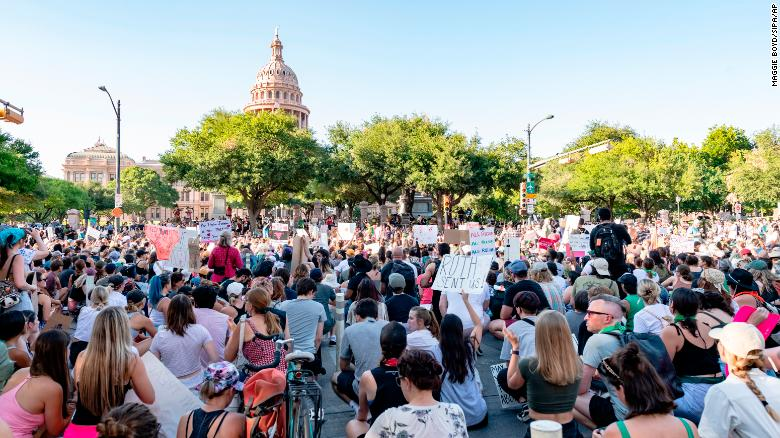

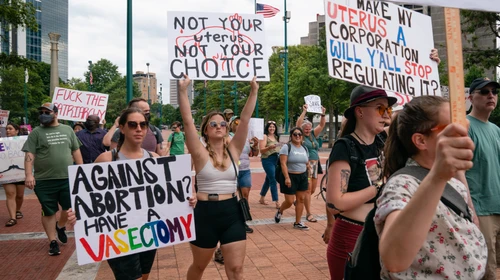

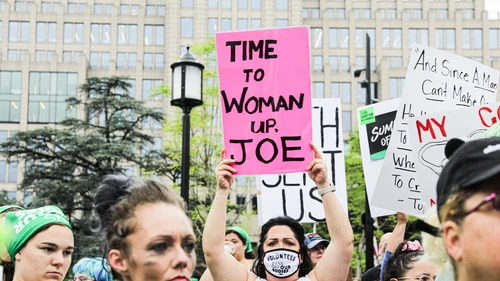






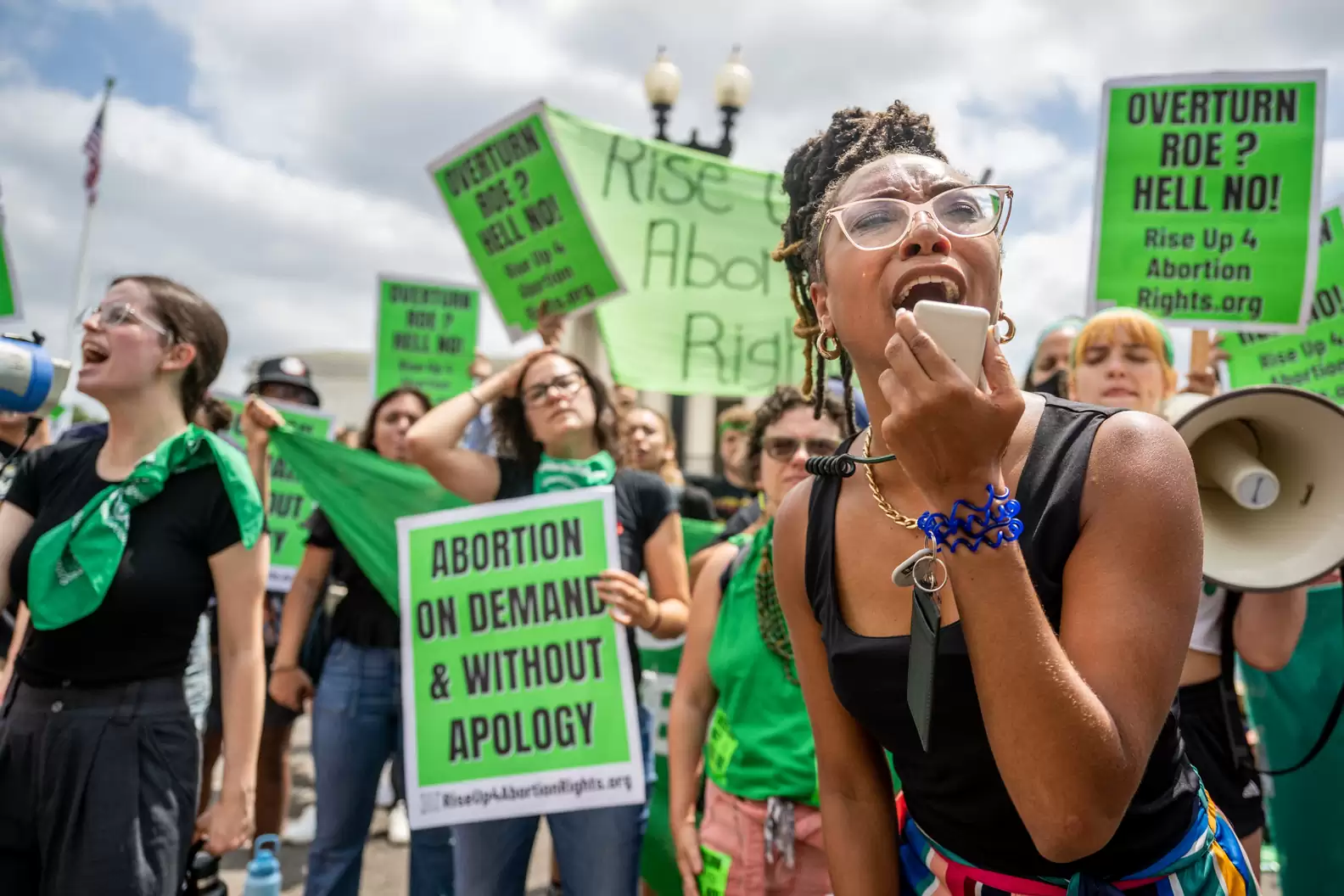


 Abortion - Abortion Clinics, Abortion Pill, Abortion Information