Abortion clinics across the country were taking extra precautions Wednesday after the anti-abortion activist who shot Wichita physician George Tiller in 1993 and committed a string of clinic attacks in several states was released from prison.

Rachelle “Shelley” Shannon, the Oregon woman whose actions once triggered a federal investigation into the possible existence of a national conspiracy of anti-abortion terrorists, had been living in a halfway house in Portland, Ore., since May. She has spent 25 years in custody.

“We’re extremely concerned,” said Katherine Spillar, executive director of the Feminist Majority Foundation. “We’re alerting providers, briefing them and making sure they have enough security precautions in place.

“We know by her own writings and the writings of those who went on to commit violence that this is a woman who inspired three murders.”

Shannon’s release was confirmed Wednesday by the U.S. Bureau of Prisons. She will be on supervised release for three years, but the conditions of her release are not public information, the bureau said.

“She’s going on probation,” said the Rev. Donald Spitz, an anti-abortion activist who has remained in regular contact with Shannon. “She said the conditions of release are going to be very strict.”

Spitz, leader of Pro-Life Virginia and sponsor of the Army of God website, which supports those who have committed violence against abortion clinics and doctors, said the fears of abortion-rights advocates are unfounded.

“I don’t think she’ll be doing anything violent,” he said. “Of course, no one knows, but I’d be very surprised.”

Spitz said he had an hour-long phone conversation with Shannon on Monday.

“She’s very upbeat,” he said. “She’s glad to be getting out, she’s going to church again. Just doing everyday things.”

He said Shannon told him she will likely be prohibited from communicating with anti-abortion extremists for some time.

“It’s a very common thing that they do that,” Spitz said. “So I won’t be able to speak to her again once she leaves the halfway house for 2½ years. I don’t know how closely they monitor that, but she’s not going to take any chances. She’s not going to contact anybody.”

Spitz said he had no details on Shannon’s plans: “She’ll probably be trying to get her own place to live and looking for a job.”

Shannon, now 62, was sentenced to 11 years in prison for shooting and wounding Tiller and 20 years for six firebombings and two acid attacks at abortion clinics in California, Oregon and Nevada.

The former assistant U.S. attorney who prosecuted Shannon also has concerns about her being released.

“She’s completely unrehabilitated and totally incorrigible,” said Stephen Peifer, the lead prosecutor on Shannon’s federal case in Portland in 1995. “She has the same mentality and goals that she had when she was convicted.

“She may do something violent herself,” he said, “but that’s not as likely as her counseling and advising other people to do it. That’s her track record.”

That’s why stringent conditions will be placed on her during her probation period, he said.

“The probation office is going to be very careful in terms of her associates and naming people that she specifically cannot associate with,” he said. “I’m sure she’ll have strict supervision. They were very concerned.”

News of Shannon’s release has clinic operators on edge. In addition to showing no remorse for her actions, they say, Shannon has been visited in prison by several activists who believe that killing abortion doctors is an act of justifiable homicide. Clinic supporters also note that Tiller, a regular target of abortion protesters because he was one of a handful of doctors in the country who performed late-term abortions, was shot to death in 2009 by Kansas City-area anti-abortion extremist Scott Roeder, who had admired Shannon and visited her many times in prison.

Among Shannon’s other prison visitors in recent years: Kansas City-area activist Regina Dinwiddie, who made headlines in 1995 when a federal judge ordered her to stop using a bullhorn within 500 feet of any abortion clinic. Dinwiddie attended Roeder’s murder trial and spoke on his behalf at his sentencing, telling the court that “Scott loved our country and he knew the terror of our Lord regarding the shedding of innocent blood.”

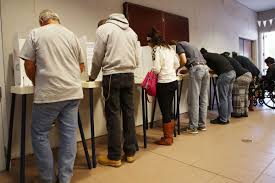
Another of Shannon’s visitors was Dave Leach, an activist from Des Moines, Iowa, and another advocate of the “justifiable homicide” position. Leach, speaking to The Star on Tuesday as he worked at an Iowa polling booth, said he visited Shannon once a year when she was incarcerated at the Waseca Federal Correctional Facility in Minnesota.

Some prison visits for Shannon’s supporters, he said, were funded by a doctor from Ohio who opposes abortion.

“He gave a bunch of money to allow several of us to go visit her,” Leach said.

Leach said he last spoke to Shannon about a month ago. He said the concerns that she might commit violence again were “silly,” then added, “Well, I guess anything’s possible with human beings.

“But I can’t imagine Shelley, after all this time,” he said. “They’ll be watching her pretty closely.”

So will clinic operators.

“Shelley Shannon’s release absolutely makes us nervous,” said The Very Rev. Katherine H. Ragsdale, interim president and CEO of the National Abortion Federation. “She’s not only committed multiple acts of violence herself, but has encouraged violence in others.”

Ragsdale said clinics have seen a spike in violence and disruption of services in the past year.

“Trespassing more than tripled, threats of harm have nearly doubled, and incidents of obstruction rose from 580 in 2016 to more than 1,700 in 2017,” she said. “They’re testing the waters, checking to see what they can get away with. And that emboldens the Shelley Shannons of the world.”

Julie Burkhart, a former employee of Tiller’s and founder and CEO of Trust Women Foundation, which operates the Trust Women Wichita clinic as well as clinics in Oklahoma City and Seattle, said Shannon’s release “raises deep concerns.”

“She tried to murder my boss,” Burkhart said. “And I absolutely do not believe under any circumstances that Shelley Shannon is reformed. She is still as dangerous today as she was in August of 1993.”

Shannon was a 37-year-old Oregon homemaker when she boarded a Greyhound bus in her hometown of Grants Pass and went to Oklahoma City. There, she rented a car and headed to Tiller’s clinic in Wichita. The clinic, Women’s Health Care Services, had been the target of numerous protests, was bombed in 1986 and was the focus of Operation Rescue’s 46-day “Summer of Mercy” campaign in 1991 that resulted in more than 2,600 arrests.

Shannon shot Tiller as he drove out of the clinic parking lot, striking him in both arms. Tiller was injured but returned to work the next day.

The shooting was the second attack on an abortion doctor in five months. In March 1993, Michael Griffin shot a physician to death outside a clinic in Pensacola, Fla.

Shannon was arrested in Oklahoma City several hours after shooting Tiller as she tried to return her rental car. When she was booked into jail, police found a letter she’d written to her daughter describing what she’d done.

“I’m not denying I shot Tiller,” she wrote. “But I deny that it was wrong. It was the most holy, most righteous thing I’ve ever done. I have no regrets.”

Five weeks later, authorities dug up an assortment of documents in Shannon’s back yard. Among the documents were her diary, books and manuals about bomb-making, letters from other anti-activists and several “Army of God” manuals.

The anonymous author of “The Army of God” document describes it as “a How-To Manual of means to disrupt and ultimately destroy Satan’s power to kill our children, God’s children.”

Shannon was cited in the manual, going by the name “Shaggy West.” In her house, investigators discovered Shannon’s computer files describing clinic arsons and acid attacks she had committed.

In July 1994, less than a year after Shannon shot Tiller, Florida anti-abortion activist Paul Hill killed an abortion doctor and his bodyguard outside another Pensacola clinic. Hill had attended Shannon’s trial in Wichita and held a news conference in the courthouse to defend her actions.

Another fan of Shannon’s was Roeder, the man who killed Tiller in 2009. At his murder trial, Roeder testified that he admired Shannon and had visited her in prison about two dozen times. After Roeder was found guilty in 2010, Shannon issued a statement of support from prison.

“Abortionists are killed because they are serial murderers of innocent children who must be stopped, and they will continue to be stopped…,” Shannon wrote in an e-mail to Leach, the Iowa anti-abortion activist. “May God bless Scott for his faithfulness and brave actions and stand.”

Talk like that has abortion-rights advocates convinced that Shannon will continue to encourage others to commit violence against doctors now that she’s out of prison.

“Why would she follow the restrictions of her release now when she so flagrantly violated the law and attempted to commit murder before?” Spillar said. “Even from prison, she kept inciting more violence.”
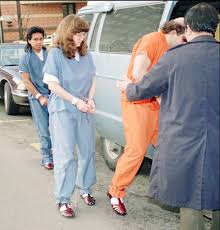
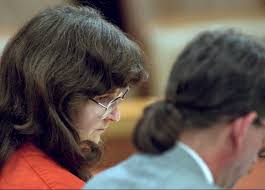
Shelley Shannon, second from left, who was convicted of shooting a Kansas abortion doctor, leaves federal court in Portland, Ore., in December 1994. Associated Press

Source: https://www.kansascity.com/news/local/crime/article221194600.html?fbclid=IwAR0v61V2yqF0BdvKsDV_k2qYk1jwBBO1UrFoEWMFdTAa2r4UPvQ7_AmDHQE


A judicial storm is brewing.

Changes in the U.S. Senate make the end of Roe ever so slightly more likely now than it was before the election.
Zach Gibson/Getty Images

There was so much change to celebrate on Election Day: the Democratic takeover of the House and several state governments, the historic firsts in all of the women of color elected to state and national office, and the voting rights advances in many jurisdictions. But, there was one thing that remained constant on Tuesday, or even took a step backward—abortion rights, which are hanging by a very old and precarious thread.

Voters passed anti-abortion constitutional amendments in Alabama and West Virginia this week. These were major disappointments and, especially once West Virginia takes action to ban public funding for abortion, will have serious effects on abortion access. But neither of these developments takes either of those states closer to actually banning abortion. That will only happen when Roe is overruled, which with the changes in the U.S. Senate, is ever so slightly more likely now than it was before the election.

As everyone knows, with the addition of Brett Kavanaugh to the Supreme Court, conservatives hold a 5-4 majority. It’s no secret that this new majority could, if the right case comes along, result in severely cutting back or even overturning Roe v. Wade. Since the Supreme Court wasn’t on the ballot, nothing that happened Election Day changed this balance.

What did change, though, was the Senate. Not who controls the Senate—the Republicans controlled the Senate before the election and will continue to control the Senate after the election. Rather, what changed was by how much. Right now, three races are still undecided, but we know for sure that the Republicans hold 51 seats. The Democrats failed to pick up seats they had been eyeing in Texas or Tennessee, and they lost seats in North Dakota, Indiana, and Missouri. The only Democratic gain was in Nevada.

The bad news for Democrats is that the three seats where results aren’t final look tough. The Republican candidate is ahead in Arizona and Florida, and the third state is Mississippi, which has a runoff next month. It is very likely that the final tally for the next Senate will be that the Republicans hold an eight-seat margin: 54 to 46.

So why does this change matter? The margin makes a difference because Justices Ruth Bader Ginsburg and Stephen Breyer are already at the age that many Americans are long retired. Those two liberal abortion-rights supporters are 85 and 80, respectively. Much to liberals’ chagrin, they aren’t going to be on the Court forever. (Just this morning, Justice Ginsburg landed in the hospital after reportedly fracturing her ribs during a fall.) And when they retire or when they pass away in office, the Senate has the constitutional power to confirm whoever is nominated to replace them.

If one of them leaves the Court over the next two years, President Trump will have the authority to nominate a successor. With a 54-46 Republican controlled Senate, if that’s what it winds up being, the chances of blocking a sixth conservative from the Court are somewhere between slim and impossible. After all, if Brett Kavanaugh can be confirmed when the Republicans had only a two-seat majority, another conservative justice will easily be confirmed with an eight-seat majority.

This majority would also give “moderate” Republican senators in purple states, like Susan Collins in Maine or Cory Gardner in Colorado, more freedom to vote against a Trump nominee. These Senators and any others like them won’t face the same pressure from their party because their votes matter less. Without that pressure, they could vote against the nominee to try to convince their constituents that they are more moderate than they actually are in the run-up to their re-election campaigns in 2020.

Where the election this week gets even more consequential is after Trump’s first term is over. Let’s say these two justices survive the remaining two years of Trump’s first term. If President Trump wins re-election in 2020, he will be president through ages 91 and 86 for Ginsburg and Breyer. There’s almost no chance they can both stay on the court that long. The Democrats’ only hope in that scenario is being able to stop the nominee in the Senate, but the Democrats’ chances of winning the Senate back in 2020, when they have a much more favorable map, got that much harder this week. They now have to pick up a net of five seats in that election. If they don’t do that, which seems unlikely if Trump wins again, a second-term President Trump could potentially add another two justices to the Court.

Even if Trump is a one-term president, a Democratic president probably needs a Democratic Senate to get a new justice on the Court. After the Merrick Garland debacle and the Brett Kavanaugh dumpster fire, no one would be surprised if a Republican-controlled Senate refuses to confirm a Democratic nominee at all, no matter if nominated in the first or last year of the presidency. This would leave the five-justice conservative majority, with only three or possibly two liberal justices as a check.

And that’s just the Supreme Court. With a larger GOP majority in the Senate, President Trump will be able to continue to, as he has been doing with much success so far, pack the lower federal courts with young right-wing judges with no check whatsoever. These lower court judges will be the first to address state-level abortion restrictions and, with the conservatives Trump has already put on these courts, they are more likely to allow states to restrict abortion. When this happens, the Supreme Court doesn’t even have to get involved. It just has to allow these lower court decisions to stand, and abortion rights will suffer without the Kavanaugh court even touching the case.

Not all is lost though. There is some good news about abortion from this election. Oregon voters rejected a constitutional amendment that would ban public abortion funding. There are now 14 states where Democrats control the governor’s office and both chambers of the legislature, and four fewer states where Republicans do. This should prevent anti-abortion legislation in the latter states and maybe even mean proactive abortion rights legislation in the former. And on the national level, a Democratic House of Representatives means there will be no anti-abortion legislation from Congress for the next two years.

These are definitely reasons to celebrate this week. But not without recognizing the brewing storm clouds from the increased Republican majority in the Senate.

Source: https://rewire.news/article/2018/11/08/republican-voters-just-handed-the-u-s-senate-more-control-over-the-future-of-roe/

British women seeking an abortion are being directed by Google to centres that try and persuade them not to have a termination, a Sunday Telegraph investigation has found.

Search results for abortion clinics across the country suggest addresses and phone numbers to make appointments at “pregnancy crisis centres”, which are often linked to religious organisations, across England, Scotland and Wales.

One link directing women to a Pentecostal church in Llanelli, Wales has been taken down after the church was contacted by this newspaper. Another centre linked to the same church remains on Google Maps.

Other centres also appear in searches for clinics in Aberdeen, Loughborough, Bridgend, Burgess Gate and Horsham.

The trend appears to have come from the United States, where a network of centres, funded by private donors and religious organisations, are increasingly using technology to target women looking for medical help in order to further the pro-life cause.

When a business requests to be listed on Google the owners will be asked which category their service fits into and which search terms they want their website to come up for.

We found pro-life centres had categorised themselves as abortion clinics to appear on Maps. Their websites are expertly peppered with keywords and phrases like “abortion advice” and “abortion help” and the names of legitimate clinics to appear higher in Google’s search engine.

The Sunday Telegraph also found more than 50 pregnancy crisis centres that appeared as abortion clinics on the digital map in the US.

Many websites give the impression they offer terminations, but several are linked to adoption agencies and will try to convince women to carry their children to full term.

Katherine O’Brien, head of media and policy research at the British Pregnancy Advisory Service, said it could become more common in Britain. “Pro-life organisations in the UK see what works in the US and then they adopt those tactics,” she said.

“I wouldn’t be surprised to see more of this activity taking place online because as we’ve seen, it has been very effective in America.”

Ms O’Brien called on search engines to do the “morally right thing” and make a clear distinction between real abortion providers and the crisis pregnancy centres.

She said: “They tell women completely inaccurate, scientific nonsense, that having an abortion will cause breast cancer, can lead to eating disorders, will leave them unable to love or look after their current children.”

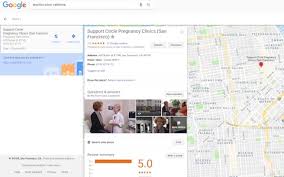
This clinic to someone searching for a nearby abortion service in California CREDIT: MARGI MURPHY


The actual “clinic” is a room where volunteers suggest women consider adoption and warn about the dangers of abortion procedures, while offering free pregnancy tests and ultrasounds CREDIT:MARGI MURPHY

Bill Chapman, senior pastor of Myrtle House Elim Church in Llanelli, which has since removed the crisis pregnancy centre’s Google Maps listing, said it had been closed for a decade.

“The centre’s core aim was to support women and their partners with the challenges associated with unplanned pregnancy – helping them to weigh up all the options and make an informed decision, while supporting them at all stages of the process, regardless of the outcome,” he said.

A centre in Loughborough also founded by Elim, a national network of Pentecostal churches, is still active. Olivia Amartey, Elim’s executive director, said the service was “small and low-key”, did not describe itself as an abortion clinic on its website, and saw between three and six clients each year on average.

“It is not the centre’s policy to persuade anyone to keep an unwanted baby, but simply to provide a listening service and support for those who are in crisis, struggling, or need a safe place to talk.

“In the case of an unplanned pregnancy the centre’s clear policy is to always offer a non-directive listening and support service, enabling clients to make their own informed choice after having taken the time to explore the options available,” she said.

Emily Loen, director of campaigns at the Abortion Access Hackathon, which uses technology to help abortion providers and pro-choice organisations, said search engines were behaving in a “negligent” way.

“They need to have teams to work on this specific issue, because it really is affecting people’s health across the country,” she said.

“They have a responsibility to have a neutral website that isn’t easily manipulated – it doesn’t bode well for their service if people can just manipulate the results.”

Accidentally attending one of the clinics, which are often staffed by volunteers with minimal qualifications, can leave women feeling confused, traumatised and guilty, as well as delaying their access to qualified medical care, campaigners said.

In one instance a centre Options For Pregnancy tried to book a Telegraph reporter who called to ask whether they offered abortion, into a “consultation” at Alpha Pregnancy Center, claiming that it was best to visit a “clinic” before “going ahead with a very expensive abortion”.

Upon attending the clinic, the reporter would get a free pregnancy test and ultrasound “to hear the baby’s heartbeat”.

Abortions cost between $500 and $1000, although some are covered by medical insurance.

The employee said getting a free ultrasound and pregnancy test would drive down costs if a woman did eventually decided to terminate a pregnancy.

Several US states require a woman to undergo an ultrasound before they can have an abortion, though California is not one of them.

They sent messages to the reporter two days later to follow up on the appointment, asking “how you are doing lately in the pregnancy?”

Almost all legitimate clinics cover pregnancy tests and ultrasounds in the total cost and would not accept a test that was taken by another clinic.

A number of the websites for the fake clinics include pictures of families and women with babies and in one example the clinic had laid out children’s toys in the waiting room.

A Google spokesman said: “We work hard to surface business results that are relevant, accurate, and help users find what they’re looking for.

“If someone believes a business on Google is misrepresenting itself or its services, they can report the listing for correction or removal. We address issues flagged for us as quickly as possible.”

Pro-life groups defended the centres. A spokeswoman for the UK-based society for the protection of unborn children said: “Women facing crisis pregnancies are typically in a state of panic and may make all sorts of searches when trying to think what to do.

“Abortion is a path that many women feel is their only option and it can only be right that they learn that alternatives are available – society is doing a grave disservice to women otherwise. If crisis pregnancy clinics are offering help and more choice when women are considering abortion, it is difficult to understand why those who call themselves pro-choice would object to it.”

Nola Leach, chief executive of Christian Action Research and Education, said the centres do “invaluable work” and “help to counter the narrative that when faced with a crisis pregnancyabortion is the only option”.

“Clearly, crisis pregnancy centres have a duty not to exert unfair pressure on women and advice given should always be accurate and sensitive,” she added.

“The centres list all the options available to women so that the women themselves can make up their own minds about what to do next. They also have great links to other support services if the woman decides she would like to keep the baby or place it for adoption.”

Source: https://www.telegraph.co.uk/technology/2018/11/04/google-maps-lead-women-fake-abortion-clinics/?fbclid=IwAR2rDF4rCAQ-cv9DFtmTloCFPISrZ0o8rm-NWkDKIohN8TYD7sac76621vA

Some Native American voters in North Dakota are likely to be disenfranchised at the ballot box tomorrow.

In the days before Election Day, courts around the country have been ruling on voter identification measures that may be a factor in Election Day outcomes.

Voting Rights

A federal judge last Thursday declined to issue an injunction in a lawsuit filed by Native Americans that challenges a North Dakota voter ID law they say disenfranchises them. The law requires residents in North Dakota to present identification with a current street address in order to vote, but Native Americans living on reservations mostly rely on P.O. boxes. Now thousands of Native Americans might not be able to votetomorrow all because North Dakota Republicans don’t want them to.

Now, some better news. A Missouri appeals court last week revived a 2017 lawsuit challenging the state’s voter ID law. The lawsuit, which was previously dismissed, claimed the state failed to provide adequate public education and funding regarding the new photo ID requirements. A separate ruling earlier this month struck down portions of the law that required voters without a photo ID to provide signed affidavits attesting to their identities.

In another win against voter suppression, the U.S. Supreme Court refused to hear an appeal brought by Pennsylvania Republicans challenging the state’s new congressional district map, which replaced the gerrymandered map drawn by the state’s GOP-controlled legislature back in 2011. The Pennsylvania Supreme Court had ruled earlier this year that the map was unconstitutional and needed to be replaced because it was drawn to give an advantage to one party over the other.

And finally, Ohio voters kicked off registered voting rolls will be able to cast a provisional ballot tomorrow. A federal appeals court last week ordered the state to count provisional ballots in Tuesday’s midterm elections for individuals who were purged from the rolls between 2011 and 2015 as long as they live in the same county where they were last registered. So if this is you, get to the polls!

Actually, this goes for everyone. If you haven’t already taken advantage of early voting—and haven’t been stripped of the right to vote—get to the polls. And take a friend.

Abortion

Just a month into Brett Kavanaugh’s tenure at the U.S. Supreme Court (SCOTUS), a second state has turned to the court in hopes of stripping pregnant people of their reproductive rights and upending Roe v. Wade. The state of Alabama has announced its intent to ask SCOTUS to review the state’s effort to ban the most commonly used second-trimester abortion procedure. Alabama Attorney General Steve Marshall asked the nation’s highest court last week to grant the state an additional 30 days to file its petition for review. The law, which bans dilation and evacuation procedures, was signed in 2016 by former Gov. Robert Bentley (R). A federal judge blocked the law as unconstitutional, and the U.S. Court of Appeals for the 11th Circuit in August upheld the decision. This isn’t the first abortion rights challenge to potentially come before the newly formed conservative Supreme Court majority; the court is currently deciding whether to hear arguments over a separate anti-abortion law in Indiana.

Courts

Voters in Alabama this week will get to decide if they miss having someone like former state Supreme Court Chief Justice Roy Moore presiding over the state’s highest court. Republican Tom Parker, one of Moore’s former aides and current associate justice on the Alabama Supreme Court, is running for Moore’s old seat as chief justice. Parker holds many of the same terrible views as Moore—nostalgia for the Confederacy, opposition to same-sex marriage, the desire to jail pregnant people who terminate pregnancies—you know, the usual. While Alabama voters ultimately rejected the U.S. Senate candidacy of Moore—who was accused of sexually assaulting young teenagers—they did so just barely. With no polling data available and in an election where abortion rights are literally on the ballot, it’ll be interesting to see what motivates voters this time around.

Source: https://rewire.news/article/2018/11/05/gavel-drop-before-election-day-a-flurry-voting-lawsuits/

When Donald Trump was asked about abortion access in a November 13 interview with 60 Minutes, he said that if the Supreme Court overturns Roe v. Wade, women seeking abortions will simply “have to go to another state.” His vice-president-elect, Mike Pence, was even more blunt. Speaking at a campaign event in July, he told supporters, “We’ll see Roe v. Wade consigned to the ash heap of history where it belongs.”

Whether or not Trump and Pence will take away a woman’s legal right to get an abortion remains to be seen, but it’s clear that neither appreciates the implications of banning the procedure. In fact, outlawing abortion doesn’t actually reduce the abortion rate — in countries were abortion is illegal, the number of abortions per woman is slightly higher. Instead, it forces women to seek out secretive, unsafe, unregulated abortions and in some cases to pay hundreds of dollars to get them. If Roe v. Wade is overturned, only women of means — women who can afford to “go to another state” — will be able to get an abortion. In many states, women’s health care will look much as it did before 1973.

Which means that the stories told in Back Rooms: Voices From the Illegal Abortion Era will be depressingly apt. Joanne Michaels, a New York–based journalist and publisher, decided to release an updated, revised edition of the book — which was written by Ellen Messer and Kathryn May and originally published in 1988 — months before the election. But under the Trump administration, the stories it contains will serve to remind readers what it was like to get an abortion in “the bad old days.” Below are four excerpts from Back Rooms, which is available upon mail-in request.*

***
Caroline, 44, on her abortion in 1963:

When it happened, I knew right away that I was pregnant. It was the summer between my junior and senior year of college. I didn’t really know what to do. I knew, though, that having a baby would ruin my whole life.

I don’t know when I really started to think about an abortion. I had earlier helped a friend get an abortion. It had seemed to be a fairly easy thing to do. [But] things at that time in Cleveland were very tight. It was 1963, and when I followed up on the few leads there were, it seemed that it was absolutely the worst possible time in about five years to have an abortion in Cleveland. I finally located an abortionist in Youngstown, Ohio. It was going to cost $100.

This so-called doctor — this man who called himself a doctor — had two businesses. He was a bookie and he was an abortionist. He was an elderly man in a ramshackle little house in a disreputable, shabby section of Youngstown. It in no way fit my image of a doctor’s house and office. But that was my only option, and I was very desperate to go through with it. He had a room with a chair and stirrups set up. I went in and it was all very, very secretive. I do know that when I finally aborted I was alone in my room at the dormitory at school. I went through at least twelve hours of labor alone in my room. It was more terrible than I ever imagined. I was timing the contractions and I just didn’t think I could bear any more. I didn’t feel I could cry out for help, and I just remember thinking, I’m going to get through this.

I know it went on for at least twelve hours. I remember noticing that the contractions were getting more frequent, and then there was a lot of blood and there was a fetus. I was really beside myself, and terrified. I didn’t know what to do. There was more blood than I ever imagined. I was terrified of someone discovering me, of being arrested.

I managed to get through that night and morning. Somehow I thought then it would be over, but it wasn’t over. I kept hemorrhaging and it just wouldn’t stop. It went on for days and days and I didn’t know what to do. I had become pregnant in August, and it was close to Thanksgiving, and I continued to bleed. When I finally saw [a] doctor, I got really frightened. He was so appalled at my condition that he said, “Do you realize you could’ve killed yourself?”

Emily, 50, on her abortion in 1955:

It was the end of 1955. I was living in Philadelphia, alone in a basement apartment. I was working part-time in Horn & Hardart to support myself. I was going to high school at night to get a diploma to qualify for college. I was, I guess, 20. I was having a relationship with a young man — my first actual experience with a man — and I found myself pregnant. I knew that I could not take care of a child. I knew that I was frightened and alone and impoverished. I had dreams about my life, so there was absolutely no way that I would give up what I was going to become. I didn’t feel I could take care of a child — I was a baby myself.

At that time it was impossible to get an abortion in Philadelphia because there had been a recent tragedy. The daughter of an upper-middle-class family had just died on the abortionist’s table. Everyone was terrified. There was absolutely nothing to be done. [So] I went to New York looking for an abortionist. I happened to bump into someone on the street that I had gone to high school with, so I asked her if she knew of an abortionist, not for me, of course, but for my friend. She had a friend who was going to Cuba to have an abortion, and maybe my friend wanted to go with her friend. So I did.

I went to the abortionist with her. She had hers first, and I heard her screaming and I was absolutely terrified. I said I simply did not want to go through that without some medication, and they did give it to me. I was sure that I was never going to wake up again.

I cannot believe that a 16- or 17-year-old knows how to raise a child — I think babies deserve better. I don’t have feelings of admiration for these young kids who decide to keep their babies, I really don’t. They can only raise miserable children, and I feel bad about that. They can have an abortion now without the pain and fear that I had. They don’t know what it was like before, and what it might be like if it’s taken away. They just don’t know what it was like.

Ann, 60, on her abortions in the late 1950s:

I had two illegal abortions. The first was in 1956 when I was 25. I had lived with my husband for about two years before we went to Europe, and we got married because we wanted to go to Europe. In those days, it was not common for unmarried people to travel together. I had gotten pregnant after we were married just a few months. My husband wasn’t opposed to keeping the child, but you know who the burden would have fallen on. It would have changed my life more than his.

I don’t know how, but we found out about a place in Germany. It was a maternity hospital. We had to give the doctor $300 in cash, which in those days was a lot of money. He pretended I was bleeding and told a nurse it was an emergency and performed a D&C. I was in the hospital for five days and was treated quite well. It was just that: $300 not to have a child.

Then, when we got back to New York, about two or three years later I got pregnant again. I found out through a friend about a doctor in West New York, New Jersey. It was hard at the time to find someone who would perform an abortion. It was all very secretive, like they had a code name “Charlie” and you had to call at a certain time on a certain day. It was really bizarre that in New York it was more difficult to find somebody than it was in Europe.

I remember going to this doctor’s office on a Saturday, and the office was empty and he didn’t use any anesthesia. It was very painful, but in a way I was lucky because the woman who told me about him had to have an abortion a few months later, and she had all kinds of terrible complications from it. So even though I had two abortions, I think I was really lucky not having any side effects. It sounds really simple now, but it was not simple. It was like I wasn’t being allowed to decide my own future, and that seemed really important to me — that I could decide when I wanted to have a child.

Lila, on her illegal abortion:

I had been dating Joseph almost a year — I met him in the spring of my freshman year, and I was still dating him in the fall. He was a Catholic also, and black Catholics were really hard to find. Joseph and I had gone to dinner. We started fooling around and fell into bed. We fell into his bed and had sex, and my period did not come the next time.

I was determined not to have the baby. Joseph told me that it was my choice because he was ready to get married. I liked the guy, but I wasn’t ready. I wanted to finish my education. I didn’t want to be a married student with a baby trying to finish up college for two years. I really couldn’t imagine having a baby by this guy. I decided to ask my stepmother in Des Moines if she could help me. I told my stepmother I was pregnant and that I didn’t want to have the baby, and she says, “Fine, I’ll call you back.” In two hours she called me back. She said, “Come to Des Moines this weekend.” I said, “How much will it be?” and I think she said $100. I felt nothing.

It was a kitchen table, coat-hanger abortion. It took maybe six minutes. I got on the kitchen table. I think my stepmother gave me a drink of brandy or something, and she said, “Now this may hurt a little bit.” She held my hand and this woman stuck a piece of coat hanger into my vagina. And then my stepmother said, “Okay, now get dressed.” And what you were supposed to do was leave that in there until you started to abort. I remember walking out with this coat hanger between my legs.

That evening I started bleeding and I think I was feeling cramps. I got up very early in the morning and went to the bathroom, and there was just this passage of blood and a clot that was slightly bigger than the clots I usually passed during my menstrual period. I realized that that was the fetus. The next month my period came on time.

I think it was rarer for black women to have chosen to have an abortion back in the bad old days. One reason people cite is that having a child enhanced a black woman’s self-esteem. I would suggest that another reason is because many black women didn’t know where to find one. If it was difficult for a white woman to find one, it was impossible for a black woman to find one, especially a poor black woman.

Source: https://www.thecut.com/2016/11/4-women-on-getting-an-abortion-before-roe-v-wade.html?utm_medium=s1&utm_source=fb&utm_campaign=thecut&fbclid=IwAR2sm3HX1vd3VAkCmvoFx2EO3v-5FgfSXwWpjz4bYf1TFUOnqohSRM8di7Q

Oregon’s Measure 106 is on the wrong side of history, and must not be allowed to pass. Not in Oregon. Not now. Not ever.

Oregon voters on November 6 will decide if new abortion care restrictions will be put into place in the pro-choice state.
Shutterstock

Constitutional amendments should protect our rights and liberties, not restrict them. But restricting rights—namely those of people with the capacity to become pregnant—is exactly what Oregon’s Measure 106 purports to do.

This ballot measure would amend the state constitution to require Oregon, in its publicfunding of health care, to discriminate against only one medical procedure: abortion.

Oregon is one of only 17 states to have expanded its Medicaid program to cover abortion care; it’s also one of the 28 statesthat allow abortion coverage in insurance plans for public employees. Last year, state lawmakers passed the Reproductive Health Equity Act, which ensures access to abortion care for all people in Oregon—with no out-of-pocket costs—regardless of their insurance provider, gender identity, or immigration status. At a time when liberty is under attack by our own federal government, it is up to states like Oregon to continue charting the path forward, not to retreat.

Those for Measure 106 argue that the measure is justified because it only prohibits funding for abortions that are “elective” rather than “medically necessary,” as though the decision to have an abortion is just like the decision to undergo teeth whitening, or Botox, or a facelift. Their argument goes something like this: If abortion is a “choice,” shouldn’t taxpayers be able to “choose” whether to fund it?

Even looking beyond the co-optation of the term “choice,” this argument falls flat. Because abortion isn’t merely a choice.

Consider those who lack access to basic reproductive health care, such as contraception and medically accurate sex education. Or those who do not have adequate housing or a job that pays a living wage (much less one that offers paid parental leave). Or—considering that nearly 60 percent of women who have abortions are parents—think about those who are struggling to care for the children they already have. Or victims of domestic violence, for whom unintended pregnancies could lead to further violence and forever tether them to their abusers. For these women and so many others, an abortion may not be medically necessary, but it surely isn’t “elective” either. For these women, access to abortion is a matter of survival.

In fact, abortion is never really “elective,” even for those who simply don’t want a child or have things they want to accomplish before becoming a parent. Truly elective procedures are those for which the consequences of forgoing them would be relatively inconsequential. Carrying a pregnancy to term has significant physical, emotional, social, and economic consequences.

To characterize abortion as an “elective” procedure is to deny the lived experiences of all women, and particularly young women, low-income women, and women of color. The truth is that one in four womenin the United States will have an abortion by the age of 45—and this includes women who have a religious or moral objection to abortion.

Seeing abortion care as “elective” makes it easier to ignore those who would be harmed by Measure 106. This includes the estimated 250,000 women of reproductive age who receive health care through Oregon’s Medicaid program; or the thousands of teachers, nurses, firefighters, city workers, and other public service members who receive health care through state insurance plans; or the countless others who would be affected by abortion being further stigmatized and made inaccessible.

It also makes it easier for state lawmakers to assert power over pregnant people’s bodies more generally. Doing so diminishes people’s experiences, and minimizes what is at stake when we push abortion care out of reach. And if we cannot talk about the reality in which abortion happens, we can’t begin to address the many forms of oppression that lead to one in four women needing abortion care in the first place.

Abortion is not like plastic surgery. Abortion is essential health care. It is a fundamental right under the United States Constitution; international law recognizes abortion, including the means by which to access it, as a basic human right. Yet this right means nothing if it is only available to the privileged.

People who seek abortion care, and those who have had abortions, are unique, multifaceted individuals; they share only a singular decision for their bodies, their futures, and their reproductive health.

Measure 106 is on the wrong side of history, and must not be allowed to pass. Not in Oregon. Not now. Not ever.

Source: https://rewire.news/article/2018/11/02/oregons-anti-choice-ballot-measure-is-dangerous-and-discriminatory/

The partisan struggle over abortion has been an enduring feature of American politics. But the parties have not prioritized it equally — the issue has consistently animated Republican voters more than Democrats. Two new surveys, however, reveal a remarkable shift in how important the issue of abortion is to Democrats and Republicans ahead of the 2018 midterm election.

First, a recent PRRI survey found that nearly half (47 percent) of Democrats said abortion is a critically important issue to them personally; 40 percent of Republicans said the same. That represents a dramatic swing since 2015, when 36 percent of Democrats and 43 percent of Republicans said abortion was a critical concern. Democrats are almost twice as likely today to rate the issue as critical as they were in 2011.

Democrats are also increasingly likely to say abortion is an important votingissue. A recent Pew poll showed that abortion is a far more central voting concern for Democrats today than it has been at any point in the last decade — 61 percent of Democratic voters said abortion is very important to their vote this year. In 2008, only 38 percent of Democratic voters said the same. That’s roughly the same percentage of Democratic voters who say terrorism, taxes, immigration, the federal budget deficit or trade policy is an important voting issue.

Why do Democrats care more about abortion now?

The most obvious answer is that the right appears imperiled in a way that it hasn’t been in recent years. Even before Justice Anthony Kennedy announced his retirement in June, Democrats were expressing concerns about whether abortion could become illegal in the U.S. More than 4 in 10 Democrats, including 45 percent of Democratic women, said it was at least somewhat likely that abortion would become completely illegal within their lifetime, according to a March PRRI poll.

Brett Kavanaugh’s confirmation to the Supreme Court appears to have elevated the perceived threat level. A PRRI poll conducted during his confirmation process found that nearly two-thirds (64 percent) of Democrats believed that Kavanaugh would vote to overturn Roe v. Wade. And elected Democrats sounded the alarm over the fate of reproductive health access. For example, Sen. Kirsten Gillibrand, in a call with reporters, said that with Kavanaugh on the bench, “the Supreme Court would take away and criminalize women’s reproductive freedom.”

Another likely reason for the rising concern among Democrats is the years-long campaign to curb abortion access at the state level. Access to abortion has been systematically curtailed for nearly a decade as Republican-controlled legislatures have introduced restrictions on whenwhere and how an abortion can be provided, which has resulted in the shuttering of clinics that provide abortion services. From a high of 2,900 in 1982, the number of abortion providers in the U.S. has dropped to 1,671 as of 2014, according to the Guttmacher Institute. Between 2010 and 2016, more than 300 state-level restrictions on abortion access have been enacted. There is a growing perception among Democrats that abortion is becoming less available. Nearly half (45 percent) of Democrats said it is somewhat or very difficult to get an abortion in their community, according to a PRRI pollconducted earlier this year, while only about one-third (34 percent) expressed that view in 2011.

Democrats increasingly think it’s hard to get an abortion

Share of Democratic respondents by how easy or hard they think it is to access abortion in their community

SHARE OF DEMOCRATS
2011 2018 DIFFERENCE
Very difficult 16% 16% 0
Somewhat difficult 18 29 +11
Not too difficult 29 22 -7
Not at all difficult 23 18 -5
Don’t know/refused 14 15 +1

SOURCE: PUBLIC RELIGION RESEARCH INSTITUTE

A final factor that may be contributing to the sharp rise in concern about abortion is that reproductive health care has taken a more central place in the Democratic agenda as women, particularly young women, have taken on more prominent roles in the party. Young women have become more Democratic-leaning in recent years and more supportive of legal abortion. Many Democratic women see abortion access inextricably linked to the financial security and autonomy of women. It’s a view that was articulated by Hillary Clinton during the 2016 presidential election; in a speech at a Planned Parenthood event, Clinton argued that reproductive health issues could not be separated from other concerns: “Yes, these are women’s issues. They’re also family issues. They’re economic issues. They’re justice issues.”

With all that said, polls show that when most Democrats make voting decisions, they still weigh the issue against a diverse constellation of competing concerns, such as other health care issues and the environment. It is not a litmus-test issue for most Republican or Democratic voters. Only 21 percent of Republicans and 30 percent of Democrats say they would only ever support a candidate whose views on abortion align with their own, according to a PRRI poll. Even among Democratic women, only about one-third (35 percent) say they would only vote for a candidate who shares their views on the issue. At the same time, more Democrats report that the issue is a deal breaker for them than did so just a few months earlier, when only 22 percent expressed this view.

Whatever the immediate political fallout from the 2018 election, Democrats are likely to continue to prioritize the issue of abortion so long as its legal status appears to be threatened and access is limited. In the short term, this may mean that fewer Republicans campaign on their uncompromising opposition to abortion. Conservative Christians, a group that has worked for decades to overturn Roe v. Wade, have been conspicuously tight-lipped about abortion in recent months — an indication that they are worried about the possible political fallout of discussing their views. The 2018 election will tell us if that strategy comes too late and the abortion issue has given Democratic voters an additional reason to head to the polls.

Source: https://fivethirtyeight.com/features/abortion-may-be-mobilizing-more-democratic-voters-than-republicans-now/?fbclid=IwAR0iHvP1_2hQpPmzQ6-jBmZDD5QzEhINo6lzVmPTWzQgcMYLZNjBDgKupeA

In less than two weeks, voters in three states will weigh in on measures that are designed to restrict access to abortion and take away a woman’s right to make her own decisions about her reproductive health care.

In West Virginia and Oregon, voters will consider ballot proposals that could immediately ban state Medicaid insurance coverage for abortion, making this essential reproductive health care inaccessible for low-income women. In Alabama, politicians are attempting to enshrine, via ballot, anti-abortion rhetoric in the state constitution and assign legal rights to fetuses.

What’s worse, the measures in West Virginia and Alabama would exclude the right to abortion from those states’ constitutions. This step, in combination with the fact that both states still have pre-Roebans criminalizing abortion on their books, could lead to abortion being completely outlawed should the Supreme Court overturn Roe v. Wade and return the matter of the legality of abortion to the states. Not only would the Alabama measure lead to the criminalization of abortion, but it could also potentially outlaw certain forms of birth control as well once Roe’s protections are gone.

In other words, the proponents of these measures are trying to hoodwink voters into giving away their rights now and avoid the messy legislative battles sure to come in the wake of a Roe reversal.

Indeed all three proposals are part of a broader strategy by the anti-abortion movement to test just how far it can go in restricting reproductive health care, and they come at a time when the future of legal abortion in the United States is at unprecedented risk. By some estimates, nearly half the states would either outlaw abortion entirely or severely restrict it should the Supreme Court overturn or gut Roe.

Four states have so-called “trigger laws” on the books that would immediately outlaw abortion if the courts allow it. Another nine states, including West Virginia and Alabama, have pre-Roe laws still in place that would criminalize women, doctors, or both for abortion. And this doesn’t include other state legislatures controlled by anti-abortion politicians, who since 2011, have passed more than 400 restrictions designed to put abortion care out of reach.

The consequences of abortion restrictions fall hardest on women of color, poor communities, rural women, LGBTQ individuals, and young people. A woman’s ability to decide when and whether to become a parent should never be tied to how much money she makes, how she is insured, or where she lives. Anti-abortion politicians’ relentless attempts to restrict abortion care will only result in more women being forced to carry unwanted pregnancies to term, either because they can’t afford to pay for their procedure out of pocket or because clinics in their communities have closed.

For years, the ACLU and our state affiliates have been fighting these restrictions in the courts and in state legislatures. But this election season, we’re working hard to defeat these initiatives at the ballot box. In West Virginia, the ACLU is working with a strong coalition on the ground to ensure people Vote Against Amendment 1; the ACLU of Oregon is a founding member of the No Cuts to Carecampaign in Oregon to tell people to vote No on Measure 106; and the ACLU of Alabama is a member of the Alabama for Healthy Families campaign, which urges people to “Vote No on Amendment 2.”

While we continue to push back against these unjust laws, it’s up to all of us to make our voices heard at the polls this year, not just in Alabama, West Virginia, and Oregon, but across the country. That’s why we’re asking you to vote like your rights depend on it — because they do.

https://www.aclu.org/blog/reproductive-freedom/abortion/abortion-restrictions-are-ballot-3-states-election?fbclid=IwAR1Fr5mD9yoRyUvV87mGOcTZoTqKhQil18j0XqinaFE81EDuSixN_fIrtAA

Newly released review sets out way to make abortion a health rather than criminal matter

Andrew Little, New Zealand’s justice minister, is overseeing changes to abortion laws. Photograph: Pool/Getty Images

Pro-choice advocates in New Zealand have welcomed a law review exploring ways to decriminalise abortion and treat it as a health issue instead.

Advocates called the report “amazing” and said its recommendations were long overdue.

The review recommends three alternative approaches to abortion law. The first – called model A and favoured by pro-choice campaigners – would remove all specific regulation of abortion and see it treated like any other health service. A further two options include a “statutory test” that would require a health professional to be convinced an abortion “is appropriate”.

Terry Bellamak, director of ALRANZ Abortion Rights Aotearoa, said model A was the only option that would make accessing abortion a more streamlined and dignified experience for women, many of whom found the existing system “degrading”.

“Model A is clearly superior because it treats abortion as a health issue like any other, and does not place unnecessary barriers between pregnant people and abortion care,” Bellamak said.

The review found health practitioners and professional bodies were “almost unanimous” in their support for model A.

Under New Zealand law, abortion is a crime and legal only in cases of incest, “mental subnormality” or foetal abnormality, or where the physical or mental health of the mother is at serious risk. Other factors that may be taken into consideration but are not grounds in themselves include “sexual violation” and “extremes of age”.

The justice minister, Andrew Little, said on Friday the legislation governing abortion was “outdated” and New Zealand needed to follow reforms elsewhere such as Ireland and the Australian state of Queensland in making abortion easier to access.

Compared with other countries New Zealand women face long delays in obtaining abortions. Little said it was “disturbing” to read of women being forced to go through with unwanted pregnancies.

In England and Wales in 2017, 77% of abortions were carried out before 10 weeks, the safest period in which to terminate, while in New Zealand in the same year only 59% of abortions met that criterion.

A 2009 study found New Zealand women were waiting an average of 25 days for an abortion.

Opposition to the government’s reform plans was “a certainty”, said Little, but starting the debate was also necessary for women’s wellbeing. “It is a very sensitive issue and it does tend to generate a fairly polarising debate, and it’s a conscious issue for MPs and even within parties there are very different views,” Little said.

“But I think it is very timely to look at the law and ask ourselves whether it is fit for the 21st century. Other countries have been doing it [reform] and are doing it, and I think it’s right for New Zealand to be doing it now.”

Other reforms suggested by the review include allowing women to access abortion services directly rather than being referred by a doctor, removing restrictions on who can perform abortions and where, and removing the requirement for two “certifying consultants” to approve it.

Despite the restrictions, abortion is common in New Zealand but rates have been steadily declining for more than 10 years, which is thought to be due to wider use of long-term contraceptives and significantly fewer teenage pregnancies.

International evidence suggests restrictive abortion laws do not reduce the number of abortions taking place but increase the proportion that are unsafe, the report states.

In countries with highly restrictive abortion laws the risks associated with illegal abortions are high. The World Health Organization estimates 47,000 woman die each year from unsafe abortions, with a further five million suffering permanent disability.

Source: https://www.theguardian.com/world/2018/oct/26/new-zealand-pro-choice-campaigners-hail-move-towards-abortion-law-reform?fbclid=IwAR3ppmJj4Gq-Oq-Yq5IQD80-WveJjG1Z0FNgB7SjI1i1UQPFsl7LCVr-tAw

Because they have “notorious opinions” that support things like abortion rights.

The Family Leader previously targeted three Iowa state Supreme Court justices over the court’s unanimous ruling to legalize same-sex marriage in the state.
Shutterstock

Courts

An evangelical advocacy group may fight to remove Iowa Supreme Court justicesover their “notorious opinions,” such as finding pregnant people in Iowa have a fundamental right to abortion. The anti-choice, anti-LGBTQ religious right organization The Family Leader was responsible for the 2010 campaign to oust three Iowa state Supreme Court justicesover the court’s unanimous ruling to legalize same-sex marriage in the state.

Retired U.S. Supreme Court Justice Sandra Day O’Connor announced last week that she was recusing herself from public life after being diagnosed with dementia. O’Connor was appointed to the court by President Ronald Reagan, was the first woman Supreme Court justice, and the last true swing vote the court had (we’re looking at you, Justice Kennedy). Following her retirement, O’Connor launched iCivics, a tool for teaching civic engagement to public school children. She’s a dedicated public servant and class act, and we wish her and her family nothing but the best.

Dahlia Lithwick has this thoughtful piece on what Democrats can do to salvage the federal courts now that Republicans have packed the judiciary with ideologues and partisans.

Abortion

Robert Lewis Dear Jr., the man who admits to attacking a Colorado Springs Planned Parenthood in a shooting spree that killed three people and wounded nine, has once again been found not legally competent to stand trial. Dear, who has been diagnosed with delusional disorder, has been found incompetent multiple times now, by two different judges.

LGBTQ Rights

Anti-LGBTQ activists have sued the Houston Public Library over a city-sponsored “Drag Queen Story Hour,” claiming the event violates their religious freedom. The plaintiffs describe themselves as “‘Christ followers,’ taxpayers and card-carrying library patrons” and include Chris Sevier, the anti-marriage equality activist who once sued to marry his laptop because he believes so strongly in “traditional” marriage. Advocates have filed a similar lawsuit in Louisiana.

Immigration

Activist groups are suing Immigration and Customs Enforcement (ICE) in federal court on First and Fifth Amendment grounds over its alleged retaliatory policy of selecting certain immigrants for arrest, detention, and deportation. The lawsuit—filed last week in Seattle by the Northwest Detention Center (NWDC) Resistance, the Detention Watch Network, and the Coalition of Anti-Racist Whites—claims ICE officials are targeting immigrant activists who speak out about immigration policies and practices. Such practices, the suit claims, violates the groups’ right to speak, assemble, and associate. The suit further argues that the retaliatory practices are a violation of their due process rights because “they further no legitimate purpose, much less a compelling government interest.” This isn’t the first time the agency has been called out for its retaliatory practices. ICE, which is currently facing numerous lawsuits—including complaints over its unlawful detention practices—was called out for its targeting policies earlier this year. Reproductive justice activist Alejandra Pablos was detained back in March in what immigrant rights advocates called an act of “retaliation” for protesting.

Source: https://rewire.news/article/2018/10/29/gavel-drop-evangelical-group-hints-that-it-may-target-iowa-judges/