Voter suppression, gerrymandering, and campaign finance loopholes have resulted in a decision at odds with the will of the people.

There is a straight line from Amer­ica’s broken systems of demo­cracy to the Supreme Court’s cata­strophic major­ity ruling in Dobbs v. Jack­son Women’s Health. That’s because both abor­tion access and systems of civic parti­cip­a­tion and repres­ent­a­tion are essen­tial for autonomy and equal­ity.

Abor­tion enables people to exer­cise self-determ­in­a­tion over their bodies and their family lives so that they are not rendered second-class citizens by the unique burdens of preg­nancy and child­bear­ing. A func­tion­ing demo­cracy protects these very same values: polit­ical self-determ­in­a­tion requires voters to be able to effect­ively choose who governs, and the ballot lets voters defend them­selves against policies that threaten their rights. 

Below, Bren­nan Center experts exam­ine these fail­ings and what lies ahead.

Fair Elections and Reproductive Freedom Go Hand in Hand

By Ian Vandewalker

The move­ments to elim­in­ate abor­tion and restrict the vote are both under­girded by many of the same power­ful forces. Before it over­turned Roe v. Wade, the conser­vat­ive major­ity on the Supreme Court spent the past decade slash­ing campaign finance laws, hobbling the Voting Rights Act, and allow­ing partisan gerry­man­der­ing.

Today, many states that have enacted restrict­ive voting laws, like Arizona, Geor­gia, and Texas, have also pushed constraints on abor­tion access. And major corpor­a­tions like AT&T and Coca-Cola have made dona­tions to state lawmakers who advance both voter suppres­sion and abor­tion restric­tions.

Anti-abor­tion rhet­oric is even show­ing up in campaigns for secret­ary of state, a posi­tion that has no role in the regu­la­tion of health care. In Arizona and Michigan, elec­tion denial candid­ates running on lies about the 2020 race being “stolen” from Trump have also weighed in on the abor­tion debate.

In our post-Roe, post-Dobbs future, protect­ing and expand­ing access to abor­tion neces­sar­ily entails parti­cip­at­ing in the fight for fair elec­tions. Every­one who values autonomy and equal­ity must redouble their commit­ment to both.

In Many States, Gerrymandering Blocks the Abortion Policy the Public Wants

By Sonali Seth and Michael Li

The major­ity opin­ion in Dobbs asserts that women need not worry about the impact of the decision on repro­duct­ive autonomy because they can turn to the polit­ical process and vote out lawmakers who pass abor­tion restric­tions and bans. But the real­ity is that by fail­ing to rein in partisan gerry­man­der­ing and consist­ently gutting voting rights protec­tions, the Supreme Court has rendered that impossible.  

Consider Texas, home to one of the nation’s most restrict­ive and contro­ver­sial abor­tion laws. Partis­ans there aggress­ively redrew legis­lat­ive maps during last year’s redis­trict­ing to trans­form a once compet­it­ive state legis­lature into a safely Repub­lican one. Before, Demo­crats only needed to win a little more than half the vote to be favored to win control of the Texas House. After brazen redraw­ing of the maps, they now need to win more than 56.2 percent of the vote to be favored to win even a bare major­ity. Mean­while, Repub­lic­ans only need 43.9 percent for a major­ity.  

Such game rigging to create unac­count­able endur­ing partisan major­it­ies — green­lit by the Supreme Court in 2019 in Rucho v. Common Cause — stands in stark contrast with maps drawn by more neut­ral bodies.

For instance, in Michigan, the inde­pend­ent commis­sion created by voters conver­ted maps that had been biased in favor of Repub­lic­ans into ones where both major parties have a reas­on­able chance to win control. Like­wise, in North Caro­lina, state courts rely­ing on the state consti­tu­tion threw out maps designed to guar­an­tee Repub­lic­ans a super­ma­jor­ity and put in place a balanced altern­at­ive, making it much less likely that Repub­lic­ans will be able to over­ride a gubernat­orial veto.  

Unfor­tu­nately, the Supreme Court has abdic­ated respons­ib­il­ity for making sure that the checks and balances in our demo­cratic system work. It is now up to voters to fight for reforms — at both the state and federal level — to ensure voters can, in fact, make their voices heard when politi­cians get it wrong.

The Supreme Court Has Undermined the Tools It Says Can Be Used to Protect Abortion Rights

By Madiba Dennie

The Supreme Court has dealt a crit­ical blow to both bodily and polit­ical autonomy. Recog­niz­ing the over­whelm­ing popular­ity of abor­tion rights and public support for the preced­ent of Roe v. Wade, the Court’s major­ity offers the fran­chise as a rotten olive branch of sorts: the opin­ion para­dox­ic­ally suggests citizens in each state can vote about the legal­ity of abor­tion while simul­tan­eously ignor­ing the Court’s own role in dismant­ling crucial voting protec­tions and making people’s full citizen­ship condi­tional on their repro­duct­ive status. 

Among a host of damaging decisions, two stand out. In Shelby County v. Holder, the Supreme Court hollowed out Section 5 of the Voting Rights Act, dramat­ic­ally weak­en­ing the federal govern­ment’s abil­ity to prevent discrim­in­at­ory laws from going into effect. Then in Brnovich v. DNC, the Court gutted Section 2, hinder­ing voters from chal­len­ging these laws in court after enact­ment. 

The Supreme Court’s open hostil­ity toward voting rights and abor­tion rights has enabled a surge of laws under­min­ing both. Last year, for instance, 18 states passed 34 laws making it harder to vote, account­ing for over one-third of all restrict­ive voting laws passed in more than a decade. These state laws are curtail­ing the polit­ical parti­cip­a­tion of people of color. And at least 16 states have passed laws banning abor­tion before viab­il­ity, inten­tion­ally defy­ing the consti­tu­tional stand­ard espoused in Roe.

Perversely, communit­ies of color are dispro­por­tion­ately harmed by both forms of restric­tions. And the consequences are troub­lingly connec­ted. As the Supreme Court once recog­nized — and as data has since borne out — abor­tion is essen­tial to “the abil­ity of women to parti­cip­ate equally in the economic and social life of the nation.” Voting, too, is crit­ical for people’s abil­ity to parti­cip­ate in their soci­opol­it­ical community and exer­cise some say over the governance of their lives. Voter suppres­sion and state repro­duct­ive control are, there­fore, mutu­ally rein­for­cing, work­ing in tandem to curb civic and polit­ical parti­cip­a­tion, espe­cially for women of color.
Source: https://www.brennancenter.org/our-work/analysis-opinion/supreme-courts-abortion-ruling-shows-what-happens-when-democracy-thwarted?fbclid=IwAR2GOGRClMUzprXF99X9JPYG6Q7NDpIw7ktyeYGPRXLTzb2tD5JrwlDsAAE

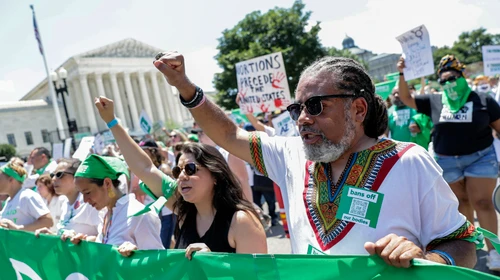
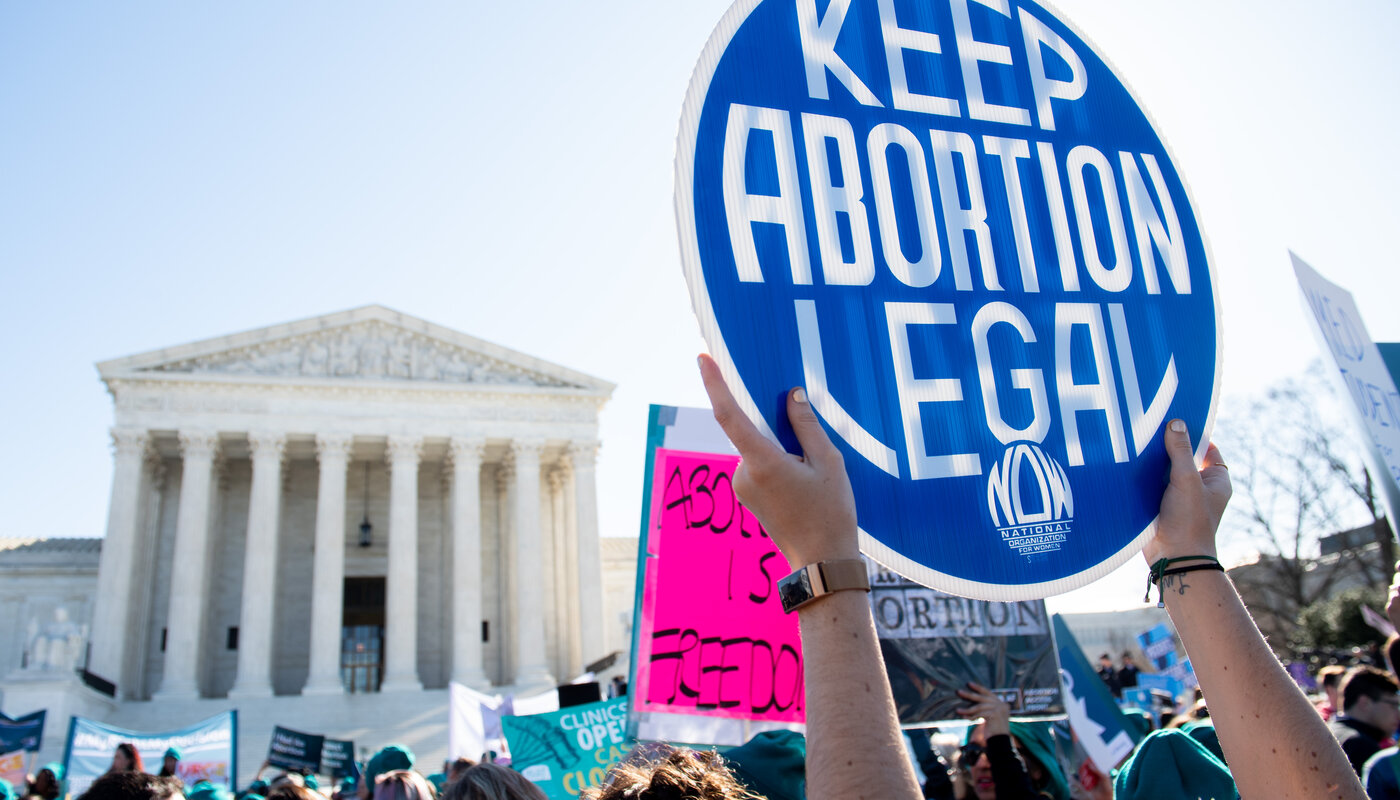
ABORTION RIGHTS ACTIVISTS PROTEST OUTSIDE THE U.S. SUPREME COURT ON THE LAST DAY OF THEIR TERM ON JUNE 30, 2022 IN WASHINGTON, DC. (KEVIN DIETSCH/GETTY IMAGES)

And this is only the beginning.

How quickly a year, and a single Supreme Court term, can change things. 

All of Democrats and the left’s worst fears about the makeup of the Court have come true in the last six years: Republicans blocking Merrick Garland from even having a Senate hearing; Donald Trump’s win in the 2016 election and the confirmation of Neil Gorsuch instead; the retirement of Anthony Kennedy and Brett Kavanaugh as his replacement; and finally, the extremely inopportune death of Ruth Bader Ginsburg just weeks before the 2020 election, and her rapid replacement with Amy Coney Barrett.

And over the past several weeks, as the Court has handed down one opinion after another, the consequences of the new right-wing supermajority have become very, very real: The death of the national right to have an abortion, the effective end to the executive branch’s ability to fight climate change, the hamstringing of state efforts to regulate gunsan erosion of the separation of church and state and tribal sovereigntyMiranda rights turning into Miranda privileges, and more. 

And if the cases the Court has already chosen to take up next year are any indication, it’s not getting better anytime soon. But first, let’s assess the damage.

Abortion

Almost from the time the Roe v. Wade decision was handed down in 1973, religious conservatives have slowly but steadily ground away at the protections afforded by the decision, by increasingly limiting access to abortions. They’d been successful at dramatically weakening the right—in cases like Planned Parenthood v. Casey—but on Friday, the 6-3 conservative majority killed the whole thing. 

Writing for the 6-3 majority in Dobbs v. Jackson Women’s Health Organization, in an opinion effectively identical to the draft that leaked in May, Justice Samuel Alito wrote that the Constitution “does not confer a right to abortion,” and that “the authority to regulate abortion must be returned to the people and their elected representatives.” 

The decision threw abortion rights in America into pure chaos. Several states had pre-existing bans they argued were now back in effect, while more than a dozen had banned abortion in recent years in preparation for the day Roe was overturned. Numerous states, including Texas and Louisiana, have seen bans blocked temporarily by courts. 

The Dobbs decision could also portend the Court trampling over more rights. In a solo concurrence to the decision, Justice Clarence Thomas also fired a warning shot at other cases decided on the basis of “substantive due process” found in the 14th Amendment, as Roe once was: Griswold v. Connecticut, which guaranteed the right to use contraceptives without state interference; Lawrence v. Texas, which overturned homophobic anti-sodomy laws; and Obergefell v. Hodges, which made same-sex marriage legal nationwide. 

Ken Paxton, the hard-right Texas attorney general, has already said he is “certainly willing and able” to defend the state’s sodomy ban, which was never formally removed from Texas law. 

Oh, and about that “people’s elected representatives” thing: The Court announced Thursday that it’s taking up a case from North Carolina in its next term that would make state legislatures the sole authority on federal election laws, superseding the authority of state courts (and thus state constitutions). Such a ruling would harken back to Jim Crow, and would mean that pretty soon, it might not even matter how hard you vote

Gun control

While the Supreme Court believes that “the people’s elected representatives” are the only body to be trusted with women’s health choices, the same apparently does not apply to guns.

In the 6-3 New York State Rifle and Pistol Association v. Bruen decision, Thomas wrote that New York’s concealed carry law, which has existed for more than a century, violates both the Second and 14th Amendments by “preventing law-abiding citizens with ordinary self-defense needs from exercising their right to keep and bear arms in public.” 

The decision came down on the same day that the Senate passed a bipartisan gun safety bill, the first time it had done so in decades—in response to mass shootings in Uvalde, Texas and, yes, Buffalo, New York. Now-retired Justice Stephen Breyer noted as much in his dissent: “Since the start of this year (2022), there have been 277 reported mass shootings—an average of more than one per day. Gun violence has now surpassed motor vehicle crashes as the leading cause of death among children and adolescents.”

In response to the ruling, the Democratic-controlled New York state legislature, backed by Gov. Kathy Hochul, is preparing a ban on carrying concealed weapons in government buildings, playgrounds, public transit, and more.

Climate change

In West Virginia v. Environmental Protection Agency, handed down on the final day of the Court’s term, the majority struck down the Obama-era EPA’s Clean Power Plan, ruling that the only way the EPA can regulate greenhouse gases is with the explicit approval of Congress—effectively arguing that Congress is responsible for both making laws and directing exactly how they should be enforced. 

“Capping carbon dioxide emissions at a level that will force a nationwide transition away from the use of coal to generate electricity may be a sensible ‘solution to the crisis of the day,’” Chief Justice John Roberts wrote in the opinion, joined by the five other conservatives. 

“But it is not plausible that Congress gave EPA the authority to adopt on its own such a regulatory scheme…a decision of such magnitude and consequence rests with Congress itself, or an agency acting pursuant to a clear delegation from that representative body.”

On a practical level, little will change immediately — the Clean Power Plan was stayed by the Supreme Court and ultimately never even implemented, as Motherboard noted when the decision came down Thursday. But this means that to specifically target climate change, Congress would have to specifically pass a plan to regulate greenhouse gas emissions, something it’s never done–and probably never will do, so long as the filibuster exists and coal shill Sen. Joe Manchin is key to the Democratic Senate majority. 

In her dissent, Justice Elana Kagan noted the absurdity of the decision. “The subject matter of the regulation here makes the Court’s intervention all the more troubling,” Kagan wrote, joined by liberal Justices Sonia Sotomayor and Breyer. “Whatever else this Court may know about, it does not have a clue about how to address climate change.”

“Yet the Court today prevents congressionally authorized agency action to curb power plants’ carbon dioxide emissions The Court appoints itself—instead of Congress or the expert agency—the decisionmaker on climate policy. I cannot think of many things more frightening.”

Separation of church and state

The Court decided two cases in the last few weeks that continue the top its crusade of tearing down the very clear Constitutional barriers between the state and religion in the name of religious freedom. 

In Carson v. Makin, the conservative majority struck down a decades-old Maine law prohibiting public funding for “sectarian” schools. In Maine, the most rural state in the country, some communities have no public secondary schools, and so they were able to choose between sending their children to private, “nonsectarian” schools or a public school in another community.

But in a 6-3 decision, the Court said that this law was a violation of the First Amendment. (The schools in question, by the way, are openly discriminatory towards LGBTQ people.) 

And in Kennedy v. Bremerton School District, a school prayer case handed down earlier this week, the Court found that the government could not prohibit a high school assistant football coach in Washington from publicly praying at the 50 yard line. 

The coach, Joseph Kennedy, was placed on paid leave after several warnings and attempts from the school to find a solution respecting his religious freedom as well as the district from a lawsuit. Ultimately, his contract was not renewed. The school’s principal later testified in court that a parent complained that their son “felt compelled to participate” because if he didn’t, “he felt he wouldn’t get to play as much.”

The Supreme Court couldn’t even agree on the facts of this case. Justice Neil Gorsuch wrote that the coach “lost his job as a high school football coach because he knelt at midfield after games to offer a quiet prayer of thanks,” while in her dissenting opinion, Justice Sonia Sotomayor said that “misconstrues the facts.”

“The court ignores this history [of the case],” Sotomayor wrote. “The court also ignores the severe disruption to school events caused by Kennedy’s conduct.”

Rights of criminal defendants

If you’ve ever been arrested or even watched a cop show, you likely know what Miranda rights are. Miranda v. Arizona, a case decided in 1966, required police to inform arrestees of their rights to counsel and to not self-incriminate (“You have a right to remain silent,” etc). 

The ruling in Vega v. Tekoh, handed down last week, does not completely eliminate Miranda rights. But one of the only ways that a defendant who’s been deprived of this right can enforce it is by suing a police officer, and in Vega v. Tekoh, the Court—led by Alito—found that “a violation of Miranda is not itself a violation of the Fifth Amendment,” and that “we see no justification for expanding Miranda to confer a right to sue”—effectively restricting the potential consequences for a cop who violates a defendant’s civil rights.

“Sometimes, as a result [of a statement obtained without informing the defendant of their rights], a defendant will be wrongly convicted and spend years in prison,” Kagan wrote in her dissent. “He may succeed, on appeal or in habeas, in getting the conviction reversed. But then, what remedy does he have for all the harm he has suffered?”

It gets worse. In another case decided in May, Shinn v. Martinez Ramirez, a 6-3 majority led by Thomas ruled that federal courts can’t order evidentiary hearings on whether a convicted defendant had ineffective counsel if those claims of ineffective counsel weren’t first raised during the state criminal proceedings. 

This effectively means that the Supreme Court believes at least some form of wrongful convictions are OK now. At the very least, if you’re wrongfully convicted because your lawyer is bad, you better figure that out while your case is in the state courts. In her dissent, Sotomayor called the decision “perverse” and “illogical,” and said the decision “makes illusory the protections of the Sixth Amendment.”

“Many, if not most, individuals in this position will have no recourse and no opportunity for relief. The responsibility for this devastating outcome lies not with Congress, but with this Court.”

Tribal sovereignty 

In 2020’s McGirt v. Oklahoma, the Supreme Court ruled that the state government could not prosecute a member of a federally-recognized tribe for crimes that occurred within the jurisdiction of that tribe’s reservation. In the process, the Court—led by Gorsuch, an ally of liberals on tribal rights cases—ruled that roughly half of Oklahoma is tribal land, including much of the city of Tulsa. 

But Barrett’s elevation to the Supreme Court has tilted the balance of the Court, even on tribal cases, back to the conservatives. And this week, in Oklahoma v. Castro-Huerta, the Supreme Court narrowed the McGirt decision by holding that the state can, in fact, prosecute non-Native Americans for crimes allegedly committed on tribal land. 

In his dissent, joined by the three liberals, Gorsuch blasted the decision, which was authored by Kavanaugh. “Now, at the bidding of Oklahoma’s executive branch, this Court…defies Congress’s statutes requiring tribal consent, offers its own consent in place of the Tribe’s, and allows Oklahoma to intrude on a feature of tribal sovereignty recognized since the founding,” Gorsuch wrote. 

“One can only hope the political branches and future courts will do their duty to honor this Nation’s promises even as we have failed today to do our own.”

Source: https://www.vice.com/en/article/epzd94/supreme-court-term-abortion-climate-change-guns

I work daily with religious leaders and people of faith across the country who are alarmed by this imminent threat to pregnant people’s health and safety.
 Austen Risolvato/Rewire News Group

The values of Christianity call on us to support reproductive rights and advocate for the health and rights of our neighbors.

Everyone has a reproductive story. About one-fifth of pregnancies in 2020 ended in abortion. My story, which includes four pregnancies, two children, and two abortions, has made me intimately familiar with the unpredictability of fertility, the fragility of gestational development, and the sacred responsibility of parenting.

I am a professor of Christian ethics, a Presbyterian minister, and an advocate for abortion access and reproductive justice. My Presbyterian tradition affirms people’s ability and responsibility to make moral decisions about their pregnancies. My abortions were morally responsible. My abortions are part of my reproductive story.

The Supreme Court overturning Roe v. Wade and eliminating the federal constitutional right to an abortion after nearly 50 years represents a moment of deep despair for many people of faith. A vocal minority of people of faith try to assert abortion as immoral. Yet, the values of Christianity that teach us to love one another, care for our communities, and respect personal decisions also call on us to support reproductive rights and advocate for the health and rights of our neighbors.

While the American people hold a range of beliefs about the morality of abortion, the minority theological position that “human life begins at conception” is a matter of personal faith. No one religious position should be codified into law. The Presbyterian Church stated quite clearly in 2018 that “personally choosing not to have an abortion or use birth control … is religious freedom. Making that choice for someone else, on the basis of one’s own religious principles, is religious oppression.”

Religious people are troubled by this profound assault on human dignity, as the Supreme Court decision makes our bodies subject to the will of the state and jeopardizes access to abortion care for more than 36 million people in over 20 states. As the Spiritual Alliance of Communities Supporting Reproductive Dignity (SACReD) movement affirms, “the dignity of sacred bodies and the moral agency of all people deserve respect.”

I live and work in North Carolina, which is surrounded by states that will now likely criminalize or significantly reduce access to abortion. Studies anticipate that as many as 70,000 patients from nearby states could flood North Carolina’s health-care system. In 2018, 18 percent of abortion patients seen by the more than a dozen abortion providers in seen by the more than a dozen providers in North Carolina were from out of state. That number could soon increase by 2,200 percent, quadrupling the number of patients needing abortion care in North Carolina. Overflow patients will inevitably increase wait times at clinics, pushing abortions later into pregnancy.

The fall of Roe has initiated an unprecedented, targeted attack on the human dignity and moral agency of some of the most vulnerable people in our society. Let us be clear about the consequences: Pregnant people in our country will be forced to bear children against their will. Families will fall deeper into poverty. Reproductive health and people’s lives will be at risk. Caring for the most marginalized people in our society is one of the foundations of religious teachings and communities.

I work daily with religious leaders and people of faith across the country who are alarmed by this imminent threat to pregnant people’s health and safety. Support for banning abortions is a minority position. Most religious people support legal access to abortion, and very few think it should be illegal in all cases.

Recent moves to organize religious voices in support of abortion include SACReD congregations and Rabbis for Repro. These efforts reflect the need and desire for religious communities to talk more openly and honestly about abortion and the reproductive needs of their members.

One religious group cannot control the rights and freedoms of the rest of us. Denying the constitutional right to control one’s own body is harmful, cruel, and deeply antithetical to our cherished values of bodily autonomy and human dignity. Recognizing and affirming that reproductive dignity and abortion access are respected religious values is essential in a pluralistic democracy and electing legislators that respect that distinction is necessary for a just society.

Source: https://rewirenewsgroup.com/article/2022/06/29/abortion-bans-are-against-my-religion/

We Testify Executive Director Renee Bracey Sherman wears an “I had an abortion” T-shirt on Friday outside the Supreme Court.
 Austen Risolvato/Rewire News Group

As people who have abortions, we will always show up for one another. We are often all we’ve got.

Dear Beloved Abortion Storytellers,

We collectively grieve the Supreme Court’s decision to reverse its own half-century of precedent, paving the way for abortion to become a crime again across the country. This heartless decision ignored our voices and abortion stories. Last year, over 6,000 people told the Supreme Court that we had abortions and we wanted access to remain for us, our loved ones, and generations to come. They turned their back on us.

This moment is crushing. For those of us who’ve had abortions, we are so deeply heartbroken and grief-stricken because the moment we always knew would come is actually here. For those of you who are actively trying to have your abortions right now, we cannot imagine the pain, confusion, and uncertainty you are feeling right now. We know what access to our abortions meant to our lives and our ability to decide if, when, and how to grow our families.

The pain you feel inside is very real. Your heartache is real. This moment is especially painful for all of us who must continue on with our day, hiding deep despair because we’re not ready to tell our loved ones that we need abortions. It’s hard for all who are still trying to get our abortions, navigating this chaotic and confusing moment.

We deserve a moment to cry, scream, yell, and catch our breath. We deserve a moment to be furious with a nation that prides itself on freedom, yet took ours in an instant. We deserve a moment to be angry with people who built careers off depicting our abortion decisions with disgust and frivolity. We deserve a moment to wail in agony because this is one more attack on our decisions alongside the ongoing genocides of our communities by white supremacists, politicians, and police officers. This nightmare is too much for any of us to hold. We deserve a moment to process this pain.

There are so many calls for us to vote and take action—we should do those things, but first, we must tend to our hearts and to each other.

We’ve been having abortions for over 3,000 years. In this moment, we must look toward the past to journey safely into the future. We must carry the wisdom of our ancestors who have had abortions and provided one another with loving, healing abortions for thousands of years. We are often all we’ve got. Share your abortion wisdom with your community. Pay it forward: Offer all the things you needed for your abortion to someone else in need, whether it was a smiling face, a kind word, a hand to hold, a place to stay, a meal to nourish you, or money to make it through. When you get to the clinic, it’s OK to meet the eyes of the others in the waiting room and smile. We’re in this together. Together, we must help each other navigate the system to get our abortions.

As people who have abortions, we are a brilliant, intuitive, and innovative community. We instinctively know what we need and how to show up for each other. We need that tenacity and courage now. Move with the grit and determination of all who came before us to provide safe abortions to one another.

Refuse to be silenced. Our abortion stories deserve to be heard. Your story deserves to be listened to. You deserve to be loved. When you feel ready and safe, tell everyone in your life about your abortion. Make them realize that everyone loves someone who had an abortion—and they love you! And, as Rihanna says, if they want to break bread with you, this is the moment they need to pull up and show up for all of us who have abortions.

This moment calls for the leadership of people who’ve had abortions to lift our voices and demand abortion care for ourselves and our loved ones. We will always show up for one another because people who have abortions are the future, and we deserve to be loved and protected. We can do this.

Take a breath. When you’re ready to take action, we’ll be ready for you.

Love,
The We Testify Abortion Storytellers

Source: https://rewirenewsgroup.com/article/2022/06/27/a-love-note-to-people-in-this-moment-who-are-having-and-had-abortions/

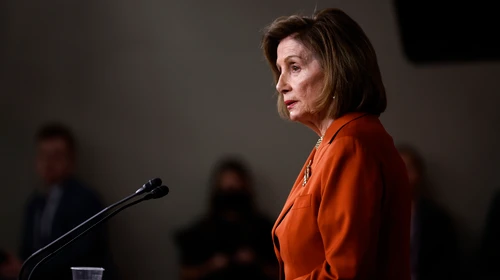
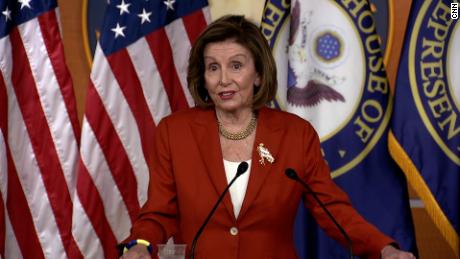
SPEAKER OF THE HOUSE NANCY PELOSI (D-CA) TALKS TO REPORTERS MINUTES AFTER THE U.S. SUPREME COURT STRUCK DOWN ROE V WADE, WHICH GUARANTEED A WOMAN’S RIGHT TO AN ABORTION, IN THE CAPITOL VISITORS CENTER ON JUNE 24, 2022 IN WASHINGTON, DC. (CHIP SOMODEVILLA/GETTY IMAGES)

Songs, poems, fundraising pleas, even yoga—but no real plan to deal with the existential crisis brought on by the Dobbs decision.

After the Supreme Court killed the national right to have an abortion while nodding toward its intention to further attack bodily autonomy as a human right, leading Democrats responded by begging for money, reading poems, and singing “God Bless America.”

The decision in Dobbs to overturn nearly 50 years of precedent and once again give repressive state legislatures the right to ban abortion and other forms of reproductive health care was made possible by the three newest Supreme Court Justices, all of whom were nominated by former President Donald Trump: Amy Coney Barrett, Brett Kavanaugh, and Neil Gorsuch. While most Democrats voted against those justices, conservative West Virginia Democrat Sen. Joe Manchin voted to confirm both Kavanaugh and Gorsuch.

On Friday, following the decision, Manchin confirmed he had been taken for a ride when he voted for two conservative judges with the understanding that they wouldn’t overturn Roe v. Wade, since both of them called it a “precedent” and Kavanaugh referred to it as a “precedent on a precedent” after the Planned Parenthood v. Casey decision in 1992. Manchin also said that he’s personally “pro-life,” but repeated his “support” for codifying the protections of Roe into law—although in May, he opposed a bill to do exactly that.

“I trusted Justice Gorsuch and Justice Kavanaugh when they testified under oath that they also believed Roe v. Wade was settled legal precedent and I am alarmed they chose to reject the stability the ruling has provided for two generations of Americans,” Manchin said.

While Democrats broadly rejected the ruling, however, they chose some bewildering ways to register their disapproval. As protesters rallied at the Supreme Court, House Democrats stood on the steps of the Capitol and sang “God Bless America,” the worst possible version of the band that kept playing as the Titanic sank

Prior to the decision, House Speaker Nancy Pelosi repeatedly said the Democratic party should have no “litmus test” on abortion. She endorsed and donated to the campaign of Texas Rep. Henry Cuellar, the House’s last vocally anti-abortion Democrat, as he barely fought off a primary challenge this month from progressive pro-choice lawyer Jessica Cisneros.

So how did Pelosi respond to the Dobbs ruling? At her first press conference after the decision, she read a poem. And it wasn’t even a new poem, but the same one she read after Jan. 6

Meanwhile, Rep. Jim Clyburn, the third-ranking House Democrat—whose job in leadership is to rally and count votes for Democratic causes, and who not only endorsed Cuellar but actually went to Texas to campaign for him in the race’s final days—was very underwhelmed by the Dobbs decision. 

“It’s a little anticlimactic, I think we all expected this,” Clyburn told CNN just minutes after the ruling. “And I’m hopeful, you know I have to read the decision to see exactly the extent to which we can move legislatively to respond to it.”

Rep. Andy Levin, a Michigan Democrat, posted a tweet of himself doing yoga, while acknowledging the Dobbs decision and congratulating himself for voting to pass last week’s gun control bill. Levin later deleted the tweet. 

And since it wouldn’t be a crisis without an opportunity to raise campaign cash, leading Democrats and Democratic candidates almost immediately started sending pleas to potential contributors. “Our ONLY option is to marshal a response so historic – 100,000 gifts before midnight – that we DEFEAT every anti-choice Republican that made this happen, EXPAND our Majorities, and FINALLY codify our reproductive rights into law,” said a text from Pelosi’s campaign to potential “pro-choice champions” Friday. 

(While Democrats have passed a bill codifying Roe in the House, Manchin’s opposition to the bill and other Democrats’ opposition to ending the filibuster means this will likely be Pelosi’s second stint as Speaker without those protections passed.)

A protester at the Supreme Court Saturday spoke for millions when she voiced her frustration at the Biden campaign for sending a fundraising text after the decision.

“I received a text message from Joe Biden’s campaign yesterday saying that the Supreme Court had overturned Roe v. Wade and that it was then my responsibility to then rush $15 to the Democratic national party, and I thought that was absolutely outrageous,” protester Zoe Warren said.

“My rights should not be a fundraising or campaigning point. They have had multiple opportunities to codify Roe into law over the last 20, 30, 40, 50 years, and they haven’t done it. If they’re going to keep campaigning on this point they should do something about it.”

Biden, who while serving in the Senate voted for a bill that would have ended Roe v. Wade and repeatedly backed a ban on federal funds for abortion before renouncing his support during the 2020 Democratic primary, said Friday his administration would fight any efforts to prevent people from traveling across state lines to obtain an abortion. He called the decision a “sad day for our country.” 

Biden also pleaded for “peaceful” protests in the wake of the decision, as riot cops marched to the Supreme Court. 

There were numerous reports over the weekend of attacks on pro-choice protesters by both civillians and police, LAPD officers shoving actress Jodie Sweetin to the ground in Los Angeles

A minority of prominent Democrats called on their party to aggressively fight the Dobbs decision, and the near-certain flood of anti-abortion laws coming in its wake. The Democratic governors of the West Coast states released a video pledging to make their states sanctuaries for people seeking abortions. “We will resist intrusions by out of state prosecutors, law enforcement, or vigilantes trying to investigate patients receiving services in our states,” Oregon Gov. Kate Brown said.

Rep. Alexandria Ocasio-Cortez, meanwhile, called for the impeachment of Supreme Court justices, alleging Kavanaugh and Gorsuch lied under oath, as well as expanding the court and restraining judicial review. She also demanded that Biden to take a more active role in protecting abortion rights in red states.

“There are also actions at President Biden’s disposal that he can mobilize,” Rep. Ocasio-Cortez said during a rally in New York Friday. “I’ll start with the babiest of the babiest of the baby steps: Open abortion clinics on federal lands in red states right now. Right now.”

Source: https://www.vice.com/en/article/qjkpbv/democrats-dobbs-decision-roe-v-wade

The global “gag rule” literally gags overseas nongovernmental organizations that receive U.S. federal funding from speaking about, advocating for, or performing abortion care.
 Austen Risolvato/Rewire News Group

The global “gag rule” shows how deeply rooted the politics of health care is in a country that has championed reproductive health care around the world.

Feminists like myself—and anyone who cares about human rights—are still reeling from last month’s leaked draft opinion from the Supreme Court revealing what advocates have long known: We’re going to lose our constitutional right to abortion.

But while we all rightfully panic and prepare for a post-Roe world on the domestic front, it’s imperative that we not lose sight of the fact that the reverberations of people losing bodily autonomy in the United States will be felt everywhere.

This is not only because the United States is the world’s largest donor to global public health, but because the country’s dirty little secret is that we export our domestic abortion politics around the world. And we’ve been doing it for decades.

The Mexico City policy is dubbed the global “gag rule” by advocates because it literally gags overseas nongovernmental organizations that receive U.S. federal funding from speaking about, advocating for, or performing abortion care. This is how the United States plays a huge role in restricting—and even denying—safe abortion access in countless countries in the Global South.

Organizations that do not comply with this U.S. foreign policy risk losing much-needed U.S. financial and technical assistance, such as sonogram machines and computers. Who can afford to lose that kind of support?

The global gag rule is a policy I know well because early in my career as a feminist policy analyst on Capitol Hill, I spent years lobbying to permanently repeal a rule that has become a favorite partisan political football, despite costing real people’s lives in countries most Americans have never heard of.

And that’s a big problem because with the looming reversal of Roe v. Wade, reproductive health and rights have never been more intertwined. While human rights lawyer and senior fellow at the Aspen Institute Stephanie Musho points out in Al Jazeera that a Supreme Court decision on Roe does not mean a Democratic U.S. government reinstating the policy, “the repercussions would be deleteriously dire with a change of administration to the Republicans.”

Musho also writes that overturning Roe would only be the beginning of the attack on our rights both in the United States and globally, stating that it’s possible that “an unfavourable ruling by the highest court on American soil could be used to permanently codify the gag rule.”

We must not lose sight of the regression of our reproductive freedoms because it’s not merely a glimpse into a future where the U.S. is no longer a leader in reproductive rights but also a warning.

The decades-long back and forth between Republicans and Democrats over this policy only reinforces how deeply rooted the politics of health care is in a country that has championed women’s health care around the world. I know this firsthand because I grew up in Bangladesh in the 1980s and saw the crucial role the United States played in making nations invest in women’s health and rights, and how it lifts up a country’s economy.

Restrictions put in place on reproductive health through the gag rule also often end up even preventing abortions that are legal in other countries, forcing pregnant people to turn to unsafe abortion procedures which leave thousands permanently mutilated or worse, according to the United Nations.

It’s an important reminder that when we are denied legal access to abortion, it doesn’t stop us from getting one. It just prevents pregnant people from accessing safe abortions.

“This is where we have exported our domestic politics in the most callous way,” Serra Sippel, chief global advocacy officer for the sexual reproductive health advocacy alliance Fòs Feminista, said in an interview with Prism.

But what truly breaks my heart—and makes me terrified for my two young daughters—is that at a time when many countries are moving forward on reproductive health and rights, the United States is going in the opposite direction. In 2014, Mozambique opened abortion access with exemption, and Ireland, where abortion was long outlawed, repealed its ban in 2018.

In 2020, Argentina legalized abortion. Last year, Mexico’s Supreme Court ruled that criminalizing abortion was unconstitutional, and soon after, Colombia decriminalized abortion during the first 24 weeks of pregnancy.

So what’s going on with reproductive health care in the world’s richest democracy?

While all countries are still trying to get back on their feet in year three of a global pandemic, we must not lose sight of the regression of our reproductive freedoms because it’s not merely a glimpse into a future where the United States is no longer a leader in reproductive rights but also a warning.

Source: https://rewirenewsgroup.com/article/2022/06/23/without-roe-at-home-can-the-us-champion-reproductive-health-globally/

The Supreme Court overturned Roe v. Wade on Friday, holding that there is no longer a federal constitutional right to an abortion. 

The opinion is the most consequential Supreme Court decision in decades and will transform the landscape of women’s reproductive health in America.  

Going forward, abortion rights will be determined by states, unless Congress acts.  Already, nearly half of the states have or will pass laws that ban abortion while others have enacted strict measures regulating the procedure.  

“Roe was egregiously wrong from the start,” Justice Samuel Alito wrote in his majority opinion. “Its reasoning was exceptionally weak, and the decision has had damaging consequences. And far from bringing about a national settlement of the abortion issue, Roe and Casey have enflamed debate and deepened division.”

The vote was 5-3-1. In a joint dissenting opinion, Justices Stephen Breyer, Sonia Sotomayor and Elena Kagan heavily criticized the majority, closing: “With sorrow — for this Court, but more, for the many millions of American women who have today lost a fundamental constitutional protection — we dissent.”

The opinion represents the culmination of a decades-long effort on the part of critics of abortion seeking to return more power to the states.  It was made possible by a solid six-member conservative majority — including three of Donald Trump’s nominees.  

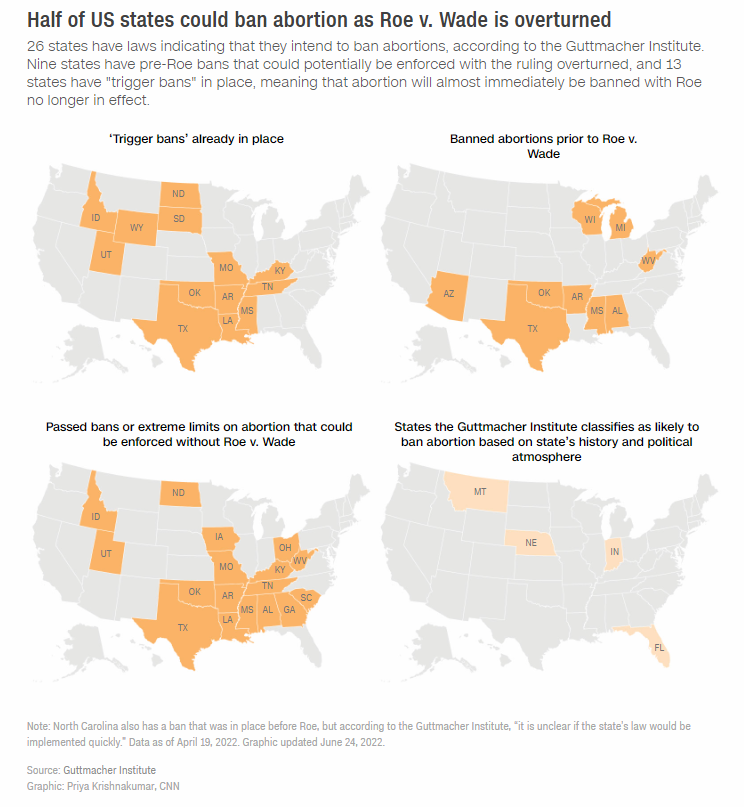
At least 21 states have laws or constitutional amendments already in place that would make them certain to attempt to ban abortion as quickly as possible, according to the Guttmacher Institute, which favors abortion rights. And an additional four states are likely to ban abortions as soon as possible without federal protections.

Chief Justice John Roberts did not join the majority, writing in a concurring opinion that he would not have overturned Roe but instead would have only uphold Mississippi’s law banning abortions after 15 weeks.

Biden: Ruling casts a ‘dark shadow’

President Joe Biden said Friday “the health and life of women in this nation are now at risk” after the Supreme Court overturned Roe v. Wade and eliminated the constitutional right to an abortion.

“It’s a sad day for the court and for the country,” Biden said, speaking from the White House, calling for Congress to codify the right to an abortion — something that’s unlikely given the split balance of power in the Senate.

“It was three justices named by one president, Donald Trump, who were the core of today’s decision to upend the scales of justice and eliminate a fundamental right for women in this country. Make no mistake, this decision is a culmination of a deliberate effort over decades to upset the balance of our law,” Biden said.

“It’s a realization of an extreme ideology and a tragic error of the Supreme Court in my view,” he added.

“The court has done what it’s never done before, expressly take away a constitutional right that is so fundamental to so many Americans that had already been recognized. The court’s decision to do so will have real and immediate consequences,” he said.

Political response is swift

Pelosi calls Roe v. Wade ruling a 'slap in the face' to women

House Speaker Nancy Pelosi called the ruling “such an insult, a slap in the face to women.”

“There’s no point in saying good morning, because it certainly is not one,” she said. “This morning the radical Supreme Court is eviscerating women’s rights and endangering their health and safety.”

“Today the Republican-controlled courts achieve their dark, extreme goal of repealing a woman’s right to make their own health decisions.”

Former President Barack Obama criticized the decision, saying the high court not only reversed nearly 50 years of precedent but it “relegated the most intensely personal decision someone can make to the whims of politicians and ideologues — attacking the essential freedoms of millions of Americans.”

Former Vice President Mike Pence praised the ruling, saying the high court has given the “American people a new beginning for life” and commended the justices in the majority “having the courage of their convictions.”

“Now that Roe v. Wade has been consigned to the ash heap of history, a new arena in the cause of life has emerged, and it is incumbent on all who cherish the sanctity of life to resolve that we will take the defense of the unborn and the support for women in crisis pregnancy centers to every state in America,” Pence added.

Sen. Susan Collins, the Maine Republican who voted to confirm Justices Brett Kavanaugh and Neil Gorsuch, said she objected to the decision.

“This decision is inconsistent with what Justices Gorsuch and Kavanaugh said in their testimony and their meetings with me, where they both were insistent on the importance of supporting long-standing precedents that the country has relied upon.

Similar to leaked draft

The final opinion was strikingly similar to the draft written by Alito that was leaked earlier this year. It repeats his scornful language towards the original Roe v. Wade decision that enshrined abortion rights.

Like the draft opinion, Alito included a list of cases that also rested on a right to privacy, as Alito asserted that Roe was distinct from those cases.

“What sharply distinguishes the abortion right from the rights recognized in the cases on which Roe and Casey rely is something that both those decisions acknowledged: Abortion destroys what those decisions call ‘potential life’ and what the law at issue in this case regards as the life of an ‘unborn human being,'” Alito wrote, in a line that was also present in the draft.

What’s new is Alito’s response to the dissent, jointly written by the three liberal justices. The dissent would not have been written at the time that the leaked draft was circulated around the court.

“The dissent is very candid that it cannot show that a constitutional right to abortion has any foundation, let alone a ‘deeply rooted’ one, ‘in this Nation’s history and tradition.'” Alito wrote. “The dissent does not identify any pre-Roe authority that supports such a right — no state constitutional provision or statute, no federal or state judicial precedent, not even a scholarly treatise.”

In that four-page section, Alito said that the dissent’s failure “engage with this long tradition is devastating to its position.”

Dissent points to potential impact on women

The dissenters said women’s rights are under attack.

“Whatever the exact scope of the coming laws, one result of today’s decision is certain: the curtailment of women’s rights, and of their status as free and equal citizens.”

Friday’s opinion, the dissent said, “says that from the very moment of fertilization, a woman has no rights to speak of.”

“Across a vast array of circumstances, a State will be able to impose its moral choice on a woman and coerce her to give birth to a child,” the liberal justices added.

The dissent also stressed how the decision will impact poor women who now will have to travel in order to obtain the procedure. “Above all others, women lacking financial resources will suffer from today’s decision.”

The dissent also lashed out at Justice Brett Kavanaugh for suggesting that the decision simply returns the abortion question to the states. As the three liberal Justices wrote, “no language in today’s decision stops the Federal Government from prohibiting abortions nationwide, once again from the moment of conception and without exceptions for rape or incest. If that happens,” they explained, throwing Kavanaugh’s words back at him, “‘the views of [an individual State’s] citizens’ will not matter. The challenge for a woman will be to finance a trip not to ‘New York [or] California’ but to Toronto.”

Challenge brought by Mississippi

Championed by supporters of abortion and long reviled by critics, Roe v. Wade was decided in 1973 establishing a constitutional right to abortion before fetal viability which most experts say occurs now at around 23-24 weeks of pregnancy. The decision was reaffirmed in 1992, in Planned Parenthood v. Casey. 

A majority of the court in that case replaced Roe’s framework with a new standard to determine the validity of laws restricting abortions. The court said that a regulation cannot place an “undue burden” on the right to abortion which is defined as a “substantial obstacle in the path of a woman seeking an abortion before the fetus attains viability.”  

Before the court was Mississippi’s Gestational Age Act, passed in 2018 but blocked by two federal courts, which allows abortion after 15 weeks “only in medical emergencies or for severe fetal abnormality” and has no exception for rape or incest. A district court blocked the law, holding that it is in direct violation of Supreme Court precedent legalizing abortion nationwide prior to viability, which can occur at around 23-24 weeks of pregnancy. 

A panel of judges on the 5th US Circuit Court of Appeals agreed with the district court holding that in an “unbroken line dating to Roe v. Wade, the Supreme Court’s abortion cases have established (and affirmed and re-affirmed) a woman’s right to choose an abortion before viability.” The court said states may “regulate abortion procedures prior to viability” so long as they do not ban abortion. “The law at issue is a ban,” the court held. 

Mississippi appealed the decision to the Supreme Court, and after the justices agreed to hear the case, the state raised the stakes and argued that the justices should not only uphold the law but also invalidate Roe and Casey. 

Mississippi Solicitor General Scott Stewart was blunt at oral arguments.  

“Roe vs. Wade and Planned Parenthood versus Casey haunt our country,” Stewart said. “They have no basis in the Constitution. They have no home in our history or traditions. They’ve damaged the democratic process. They poison the law. They’ve choked off compromise. For 50 years they’ve kept this court at the center of a political battle that it can never resolve and 50 years on, they stand alone. Nowhere else does this court recognize a right to end a human life.” 

Solicitor General Elizabeth Prelogar argued on behalf of the Biden administration in support of the clinics. She urged the justices to uphold precedent and avoid a ruling that would disproportionally harm women who have come to depend upon the decision. 

“For a half century, this Court has correctly recognized that the Constitution protects a woman’s fundamental right to decide whether to end a pregnancy before viability,” she argued. “That guarantee, that the state cannot force a woman to carry a pregnancy to term and give birth, has engendered substantial individual and societal reliance. The real-world effects of overruling Roe and Casey would be severe and swift.” 

She added: “The court has never revoked a right that is so fundamental to so many Americans and so central to their ability to participate fully and equally in society.

Julie Rikelman, a lawyer for Jackson Women’s Health Organization, the only licensed abortion clinic in Mississippi and Sacheen Carr-Ellis, the clinic’s medical director, told the justices that Mississippi’s ban on abortion “two months before viability” is “flatly unconstitutional under decades of precedent.”  

Public opposed to overturning Roe

A broad majority of Americans did not want to see Roe vs. Wade overturned, polling taken before the Supreme Court’s decision shows.

In a May CNN poll conducted immediately after the leak of the draft opinion, Americans said, 66% to 34%, that they did not want the Supreme Court to completely overturn its decision. In CNN’s polling dating back to 1989, the share of the public in favor of completely overturning Roe has never risen above 36%.

In the CNN poll, 58% of US adults said that, if Roe were overturned, they’d want their state to set abortion laws that were more permissive than restrictive. About half (51%) said they’d like to see their state become a safe haven for women who wanted abortions but couldn’t get them where they lived.

But not everyone was aware in advance how their own state would be affected. Of Americans living in states with trigger laws to immediately ban abortion after the overturn of Roe, only 45% realized that was the case, according to a Kaiser Family Foundation poll conducted in May. Another 42% living in those states were unsure what the impact of the ruling would be where they live.

Source: https://edition.cnn.com/2022/06/24/politics/dobbs-mississippi-supreme-court-abortion-roe-wade/index.html

Male anti-sexist peer education is one way to produce the next generation of abortion rights or anti-gender violence advocates— or just cishet men who will stand up for women and sexual and gender minorities in their daily lives.
 Austen Risolvato/Rewire News Group

Abortion bans and restrictions perpetuate beliefs that women’s “proper” role in society is caregiving and motherhood.

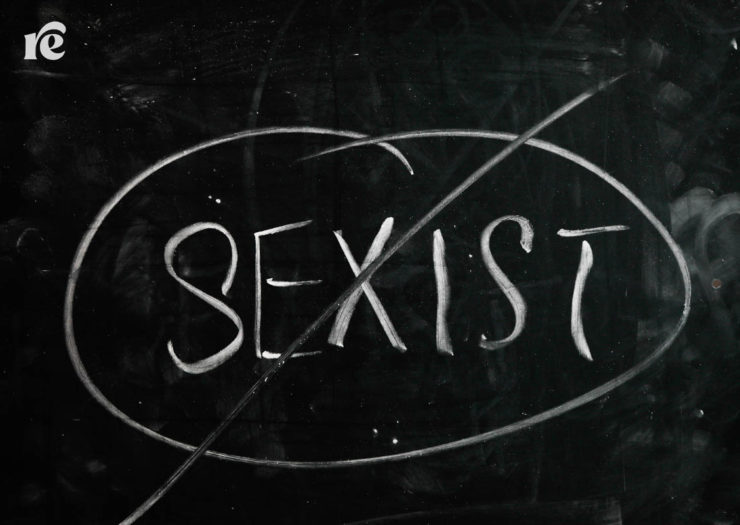
Several recent tragedies in the United States have a common factor: rampant misogyny and sexism against women and sexual and gender minorities. In May, Before killing 19 children and two teachers at a Texas elementary school, the Uvalde shooter shot his grandmother. He also had a history of violently threatening teen girls online.

The mass shooter’s misogyny and history of violence against women is not an outlier: A study published in Injury Epidemiology in 2021 reported that in two-thirds of mass shootings committed between 2014 and 2019, the perpetrator either killed at least one partner or family member, or they had a history of domestic violence.

In contrast with the violent misogyny of mass shootings that takes people’s lives, the violence of anti-abortion activism robs women and sexual and gender minorities of their self-determination and bodily autonomy. The leaked draft opinion in Dobbs v. Jackson Women’s Health Organization, which signals that the Supreme Court will overturn Roe v. Wade, vindicates a concerted effort by anti-abortion activists and policymakers to undermine and eradicate the constitutional right to abortion.

Abortion bans and restrictions perpetuate gender essentialist and benevolent sexist (paternalistic and “positive” thoughts about women that places them on a pedestal) beliefs that women’s proper role in society, as dictated by their reproductive autonomy, is caregiving and motherhood. Negative beliefs about women and other marginalized gender identities, also known as hostile sexism, predicts a man’s endorsement of controlling another person’s reproductive health decision-making.

Blatant misogynistic violence and discrimination permeating our cultural zeitgeist are nothing new—the infamous leaked Access Hollywood tape from 2005 depicted the eventual 45th president bragging about sexually assaulting women, kissing and groping them without their permission because of his celebrity status. Trump’s comments were sexist on several levels: They not only normalized sexual violence but also perpetuated sexist gender stereotypes about women as weak and lacking autonomy. Given that at least 26 people have accused Trump of sexual misconduct, sexist comments become the bedrock of and justification for sexist behaviors.

To create a society where people of all genders can live without the fear of gender grievance-motivated violence and have the right to bodily autonomy, we must confront sexism. Ultimately, it should be the responsibility of men to create an anti-sexist society via male anti-sexist peer education that disrupts this socialization and teaches boys and young men about sexism’s societally corrosive effects.

Because men are responsive to other men, peer education is a good avenue to pursue an anti-sexist society. Traditional male gender socialization facilitates the introduction of cis boys into cultural norms of masculinity via fraternities, the manosphere, and other communities. These enclaves of gender policing demonstrate that cishet young men look up to each other and seek each other’s approval and confirmation of their individual masculinity. Sociologists and masculinities studies researchers have proposed the male peer support theory, which posits that men who perpetuate various types of gendered violence are encouraged by and find community with others who engage in similar behaviors. In the abortion rights context, men lead the anti-abortion movement and author anti-abortion policies.

With the imminent overturning of Roe before the Supreme Court term ends, some reproductive rights supporters have reflected on the lack of abortion rights advocacy from a powerful group in our country: cisgender, heterosexual (cishet) men. Cishet men who openly and vocally advocate for abortion rights are scant (with a few exceptions). Anti-abortion policies obviously affect cis and/or heterosexual men, who have sex with people who can get pregnant. Under 6 percent of young men under the age of 20 who were involved in a teen pregnancy that resulted in the birth graduated from college, while nearly 59 percent of their peers who were involved in an unplanned pregnancy that ended in abortion obtained a college degree, according to a study published in the Journal of Adolescent Health. Regardless of abortion’s positive effects on cishet men’s educational achievement, cishet men should advocate for abortion rights because of bodily autonomy and self-determination concerns.

Researchers have thoroughly documented the detrimental effects of sexism on women. Having college-aged women witness an instance of benevolent sexism, a form of sexism where the perpetrator holds positive yet paternalistic views towards women, made them report high levels of body surveillance and shame. A study published by Sex Roles demonstrates that when women experience sexism, they start smoking for weight control. Sexism in the state in which a woman is born may affect her later career and salary. Because of all these negative effects of sexism, we need interventions, like male peer education groups, that will prevent and mitigate further sexism.

There are a variety of male peer education groups across the United States targeted toward college students. Some focus on confronting negative gender socialization, like Brown University’s Masculinity Peer Education, or preventing sexual violence, like Penn State University’s Men Against Violence and Michigan State University’s Collaboration of Male Peer Educators Against Sexual Assault and Stereotypes (COMPASS). Their collective curricula comprises lessons about male privilege, gender socialization, gender stereotypes, intimate partner violence, assisting survivors of gender violence, and more—crucial topics for young adult men to learn. Yet, none of these male peer education groups focus directly on educating men about sexism, connecting sexist beliefs to sexist behaviors like interpersonal violence, and teaching them how to confront these sexist biases.

Additionally, these male peer education groups are inaccessible outside of the ivory tower of the university and unavailable to teenage boys, who greatly need these interventions.

Thankfully, anti-sexist peer education is starting to become available at the secondary school level: Some high schools in Iowa utilize a program called Mentors in Violence Prevention, where older students discuss relationships, intimate partner violence, and gender violence with younger students. Despite these drawbacks, male peer education has been successful in challenging sexist attitudes: After undergoing presentations by male and female peer educators that underscored male responsibility in preventing gender violence, high school boys in a Detroit suburb exhibited a decrease in rape-tolerant attitudes.

Psychological research has demonstrated that men are sometimes willing to confront sexist bias. Men who espouse a more masculine ideology are more likely to confront sexism perpetuated against women who have some type of relation to them; the researchers thus concluded that paternalism could motivate some anti-sexist confrontation. For male anti-sexist peer education to be successful, though, there needs to be intrinsic yet less problematic motivations for participating. Luckily, there are many incentives for young men to participate in peer education groups: Male peer educators gain intrapersonal and interpersonal development skills, including having a positive self-concept and talking with a friend about risky behaviors, communication skills, and an awareness of the importance of promoting diversity. Additionally, these male anti-sexist peer education must help all women and marginalized gender identities, not just those associated with the male peer educators.

I was a member of my college’s peer education group for anti-gender violence, Pards Against Sexual Assault, which is primarily staffed by students who are women or nonbinary. I found the presence of cishet male peer educators refreshing, especially those who were in fraternities, because of the powerful changes they can make with their same-gender peers. Their participation demonstrates to me that there are cishet men who acknowledge their responsibility in creating an anti-sexist society that is safer for people of all genders.

Perhaps with greater societal investment in anti-sexist peer education groups for cis boys and men, we won’t have any more Billy Bushes, who laugh instead of confronting sexism, or Jonathan Mitchells, the lawyer behind Texas SB 8. Male anti-sexist peer education is one way to produce the next generation of abortion rights or anti-gender violence advocates— or just cishet men who will stand up for women and sexual and gender minorities in their daily lives.

Source: https://rewirenewsgroup.com/article/2022/06/18/how-male-anti-sexist-peer-education-can-help-create-more-abortion-allies/

Wisconsin Gov. Tony Evers tried calling a special session to overturn a pre-Roe law criminalizing abortions, but the state GOP vowed to close the session immediately.
 Stephen Voss/Getty Images

Democratic Gov. Tony Evers tried calling a special session to overturn the law, to no avail.

Good morning to everyone except the GOP lawmakers in Wisconsin who shut down Democratic Gov. Tony Evers’ attempt to bring the Badger State into the 21st (heck, even the 20th) century. Here’s looking at you, Wisconsin.

Last week, Evers issued an executive order calling for a special session to overturn the 1849 state law criminalizing abortion with no exceptions for rape or incest.

“The rights Wisconsinites have relied upon for nearly 50 years are in jeopardy, and our neighbors, families, and friends could soon be unable to access the healthcare they need and deserve if we don’t take action,” Evers tweeted. “We cannot and will not go backwards.”

The GOP-controlled legislature vowed to close the session without any action, with Republican Senate Majority Leader Devin LeMahieu declaring, “We will gavel out of another blatantly political special session call from this partisan governor.”

Although Wisconsin’s attorney general Josh Kaul has said he won’t enforce the archaic law that was passed even before women had the right to vote, there are some more recent abortion statutes that will likely see their day in court once the Supreme Court reverses Roe v. Wade.

The battle between the Democratic executive and Republican legislature is likely to continue well through the Wisconsin gubernatorial election in November, raising the stakes for the future of abortion access in the state. Of course, conservatives have been working for years to keep Wisconsinites from all their constitutional rights—including the right to vote.

For now, the draconian law blocked by Roe v. Wade remains on the books—a threat to the already limited access to abortion and reproductive care in Wisconsin.

Source: https://rewirenewsgroup.com/article/2022/06/13/wisconsin-gop-blocks-effort-to-overturn-anti-abortion-law-from-1894/

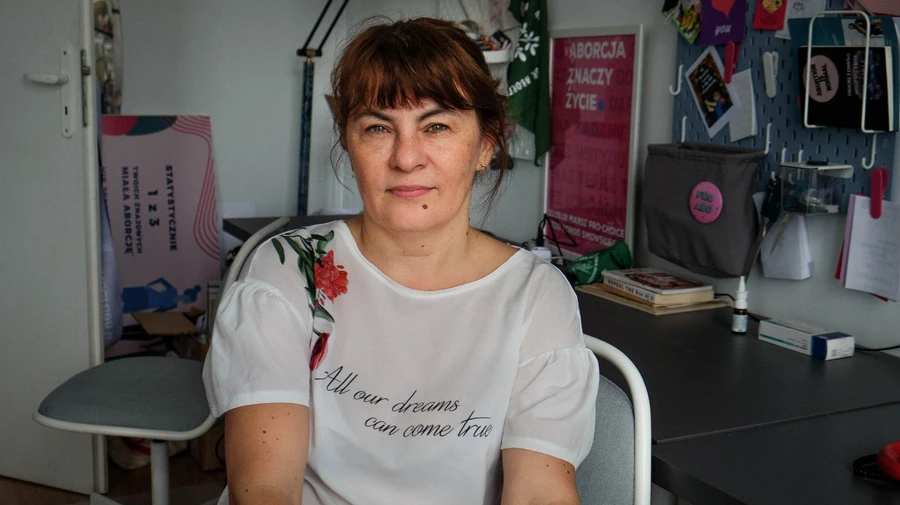
JUSTINA WYDRZYŃSKA AT ADT’S OFFICE IN WARSAW. ALL PHOTOS: NINA ZABICKA.

Justyna Wydrzyńska is the first activist charged under Poland’s incredibly strict abortion laws. She tells VICE World News it won’t stop her helping people who need abortions.

WARSAW, Poland – The woman said she needed an abortion. She said she had already tried to leave Poland to get one, but her abusive husband had stopped her, threatening to go to the police. Across the world, a new virus was closing borders, restricting travel and trapping people inside their homes, and Justyna Wydrzyńska, sensing a chilling desperation, decided to send the woman a packet of abortion pills that she’d been keeping for her own personal use. 

A year passed. Then out of nowhere, police arrived at Wydrzyńska’s door to search her home – some officers finding more than they anticipated. 

“He opened one drawer and there was underwear, and then he closed it…I have a bunch of vibrators,” Wydrzyńska says with a laugh. “It was really funny. Now I know where to hide things.”

Wydrzyńska, 47, hasn’t lost her sense of humour, but her situation is serious. In July, she will be the first activist in Europe to face a criminal trial under Poland’s incredibly strict abortion laws, which permit the termination of a pregnancy only in the case of rape and incest, or if the mother’s life is in danger, though both can be hard to prove. 

Wydrzyńska is charged with “helping with an abortion” and “possession of medicines without authorisation for the purpose of introducing them into the market” for sending another woman abortion pills. If she is found guilty, she faces up to three years in prison. Her trial comes at a time when abortion rights are facing a renewed threat: Any day now, the US Supreme Court could overturn Roe v. Wade, the case that gave women in the US the right to abortion care nearly 50 years ago. Without Roe v. Wade, 26 US states are certain or likely to ban abortion. In the last 25 years, more than 50 countries have increased access to abortion, while just three – Poland, the US, and Nicaragua – have scaled it back. Observers and activists are keenly watching the outcome of Wydrzyńska’s case as another indication of the growing attack on abortion.

Poland is ground zero in the battle for abortion rights in Europe, where abortion is largely legal apart from the island nation of Malta and Poland. Activists here have been working within the confines of Poland’s extremely restrictive abortion laws for the past three decades, but in 2020 things became particularly bad after a court removed one of the most significant exceptions allowing abortion to legally take place. It was a move that sparked massive protests and created a hugely different reality for activists like Wydrzyńska. As a consequence of Poland’s recent restriction of abortion laws, at least two women have died. Last November, a woman named Izabela lost her life after doctors refused to remove a foetus without enough amniotic fluid to survive, eventually leading to fatal sepsis. The day before she died, Izabela texted her mother saying, “Because of the abortion law, I have to stay in bed and they can’t do anything.” In January, a woman known as Agnieszka T died from suspected sepsis after doctors refused to remove a foetus after its heartbeat had stopped and a twin foetus was still alive.

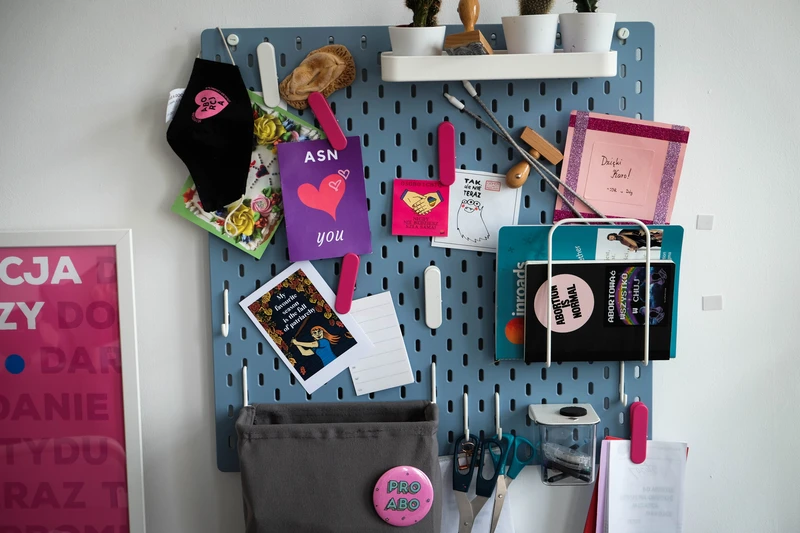
A NOTICE BOARD IN ABORTION DREAM TEAM’S OFFICE IN WARSAW.

The dangers facing women at almost every stage of pregnancy in Poland’s anti-abortion climate – and the strong tactics of its ultra-Catholic anti-abortion groups – has bolstered the important work carried out by Wydrzyńska and the organisation she co-founded and volunteers for, Aborcyjny Dream Team (Abortion Dream Team in English, or ADT). While their work is vast and wide-reaching, Wydrzyńska and other volunteers occupy a simple office space – one small room, to help thousands and thousands of women coming forward every year for help. “THANK GOD FOR ABORTION”, reads one sign inside the ADT’s office, on the top floor of an unassuming building in Warsaw. “Abortion rights are human rights,” reads another.

It’s here that Wydrzyńska has volunteered since 2016 to raise awareness about abortion, provide emotional support, and help coordinate access to abortion via other charities. Through ADT’s helpline, Wydrzyńska and the other volunteers help around 1,000 people a month with advice and around 20 people a day with info on how to get medical abortions. With a large social media presence, they are often bombarded with messages on Facebook and Instagram, where they also provide advice. 

“We mostly focus on destigmatising abortion,” says Wydrzyńska, speaking from ADT’s offices on a sunny June day. “But ADT is very popular on social media, so we receive a lot of messages and questions about how to do abortion and what is happening when you take pills. Sometimes people just need information on how to order pills, and they manage everything by themselves. Sometimes they want to be supported through the whole process. Some of them want to travel to the Czech Republic or Slovakia or Germany and really need our help with organising everything, even financial support.”

JUSTINA WYDRZYŃSKA SMILES AT ADT’S OFFICE IN WARSAW.

ADT’s comprehensive support is a necessity. There has been limited access to abortion in Poland throughout the 20th and 21st century as a result of a strong Roman Catholic tradition and little separation between church and state. In the 1970s and 80s during Communist rule, access to abortion was at its highest, with women sometimes travelling from more-restrictive European countries to Poland for an abortion. In the 1990s, however, after the fall of the Communist government, abortion was once again banned, with some exceptions. Since 2015, the ruling, right-wing populist party Prawo i Sprawiedliwość (Law and Justice in English, or PiS) has endeavoured to restrict abortion further, along with other limitations to reproductive rights, like reducing access to contraception.

Up until 2020, abortion was only legal in three cases: when the pregancy was from incest or rape; when there is a risk to the mother’s life; and when there was a foetal abnormality – the latter of which made up over 95 percent of legal Polish abortions. In October 2020, foetal abnormality was removed as an exemption following a ruling by a Polish court, sparking massive street protests and a huge surge in calls to abortion helplines. This month, the Polish government announced it will track those who are pregnant to further police people’s fertility. 

There’s been an explosive and powerful response to Poland’s erosion of reproductive rights both nationally and internationally, with organisations carefully skirting the edges of legality. While Polish women who access abortions are not criminalised – such as in countries like El Salvador, where women have been sentenced to 30 years – anyone “providing” abortion outside the exceptions is breaking the law. ADT has managed to avoid breaking Polish law for years by coordinating with an international network of abortion activists, such as Netherlands-based Women Help Women, which will send abortion drugs mifepristone and misoprostol from outside the country to those in need. 

When Wydrzyńska directly sent pills from her own house to the woman, who has not publicly been named, she crossed for the first time into grey legal territory now being exploited by authorities seemingly hoping to make an example of her. Wydrzyńska’s mistake, she jokes, was leaving her contact details on the package, which was eventually found by the woman’s husband and reported to the police. Despite never being able to take the pills, the woman eventually miscarried from the stress of the situation, Wydrzyńska says. 

Wydrzyńska’s trial is scheduled to begin on the 14th of July in Warsaw. The hearing was meant to take place in April, but it was delayed after the husband, who has also not been named, did not show up to court.

Irrespective of the risks, Wydrzyńska sees her actions as a no-brainer. 

AN EMBROIDERY IN THE ADT OFFICES THAT READS “WE HELP EACH OTHER WITH ABORTION.”

“She was really begging [and] was telling me that she would do everything that to stop the pregnancy,” says Wydrzyńska. “This is why I decided to send the pills, because I also have experience with domestic violence. My husband was also an abuser and a very controlling person.”

“I knew exactly what she was feeling, and what probably she had in her mind,” she adds. “I knew that she is so desperate that she will do even unsafe things, so I really had no choice, no other choice than just share the pills.”

Despite the looming trial, Wydrzyńska is relaxed: At her office, she cuddles her dog,  chuckles about the situation, and says she wants to face the woman’s husband in court. 

“It doesn’t affect the way I work,” she says. “I am much calmer. I really want to look at the face of him. I hope the media and everybody will ask him, ‘Why did you call the police for your own wife?’”

JUSTINA WYDRZYŃSKA WITH HER DOG IN THE ADT OFFICES.

Wydrzyńska’s case is rare in Europe, and due to the unprecedented nature of the trial, it’s hard to predict what the outcome will be. While ADT’s team expects a probationary sentence of six months, Wydrzyńska’s lawyers are cautious. Technically she could be handed a three-year prison sentence. 

“I wouldn’t be so quick about what we are expecting,” says Katarzyna Szwed, one of Wydrzyńska’s lawyers. “The six-month probation thing is the most common sentence in criminal cases like this, but this case is special as Justyna is an activist and human rights defender. We also have a lot of media attention, including international media, so this is something that might affect the case both ways.”

“It is hard to predict because it is the first case when someone who has helped with abortion is an activist,” says Sabrina Mana-Walasek, another lawyer for ADT. “We are afraid that the judge could use Justyna as an example and punish her because of activism.” 

Although Wydrzyńska has admitted to police that she did send the pills to the woman, her lawyers argue that this does not mean she aided an abortion – wording meant to restrict medical professionals from giving abortions. If she is found not guilty, it could set a positive legal precedent for those fighting for legal abortions. 

“We want this case to show three things,” says Szwed. “One, if you decide to stop the pregnancy, you are not prosecuted. The second thing is that we should really support each other and we shouldn’t be afraid. The third thing is that [abortion] shouldn’t be a crime.”

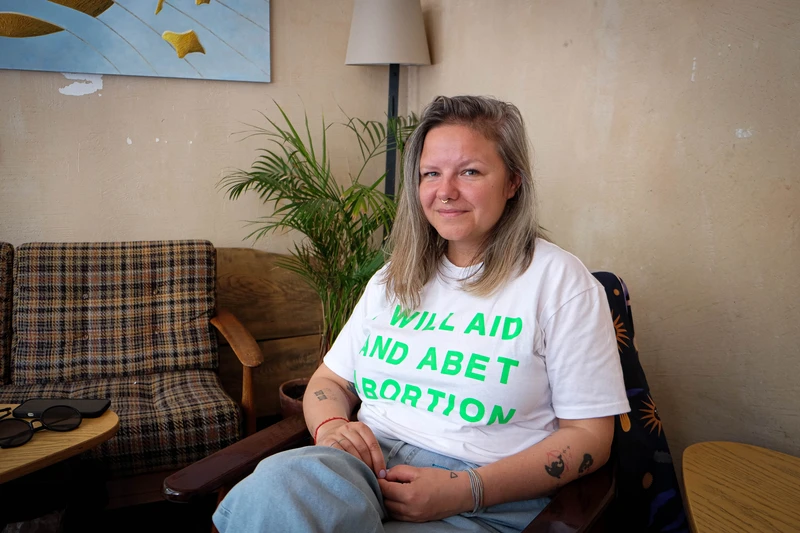
In a coffee shop in Warsaw, Natalia Broniarczyk – another ADT activist – sips a juice. She is one of the three faces of ADT, and is primarily responsible for their TikTok page, where she makes videos that show people how to safely take abortion pills. Broniarczyk became involved in abortion activism after working in sexual health, During this time, she needed an abortion and – despite working in the industry – barely knew how to get help. 

Broniarczyk is primarily involved in the communication and social media side of ADT, working to destigmatise abortion. 

“After my abortion, I decided to help people,” says Broniarczyk. “I did it in secret for three or four years. I was even meeting people here in this very coffee shop.”

ADT’s original aim was to change the narrative around abortion in Poland. “We decided to be open about our experience,” she says. “It’s not about other women. Like, look, this is me, I had an abortion. I have one head, two legs. I’m a normal person and I go to work every day. You can speak to me.”

NATALIA BRONIARCZYK, A MEMBER OF ADT IN A COFFEE SHOP IN WARSAW.

For Broniarczyk, she feels it could have been herself or any of the other activists getting charged with these offences – Wydrzyńska just was the unlucky one. But, there’s something meaningful and effective in having Wydrzyńska’s story at the front of this debate, says Broniarczyk, when those who seek abortions or help others with them are often painted as outsiders. 

“I think that Justyna is the best person to be in front of the court because she’s had a normal life,” says Broniarczyk. “She’s a mother, she has had this experience of violence. She’s a normal woman. You can imagine her perspective – her life experiences are very common.”

“But it could have been me,” she says. “It was a decision of the group to take this risk, and Justyna just had bad luck.”

If Wydrzyńska is sentenced to prison, it could send shockwaves through Poland, where huge protests and collective actions have defined reactions to the country’s clampdown on abortion rights. 

With a prison sentence looming over Wydrzyńska, what motivates her to keep helping women in Poland, and to keep taking risks like that one she took in February 2020?

“There is so much support coming from individuals, and that is a big thing for me because it makes me think that we are doing a really good job,” says Wydrzyńska. 

“We shouldn’t be afraid of what could happen even if I really do go to jail. We should do our work no matter what. Because if we don’t, who will?” 

Source: https://www.vice.com/en/article/akezek/poland-abortion-justyna-wydrzynska