“This is the Trump administration’s true agenda laid bare: restrict and control how women access basic health care for the sake of an extreme political agenda.”
Planned Parenthood supporters gather near the U.S. Capitol on March 1.
Lauryn Gutierrez / Rewire
Abortion is among the safest medical procedures in the United States. Yet, myths about its safety abound. False Witnesses reveals the individuals behind these lies.
The Trump administration could soon prioritize millions of taxpayer dollars for anti-choice goals rather than providing evidence-based family planning, including contraception and cancer screenings, to a diverse, low-income population.
Advocates expect the U.S. Department of Health and Human Services (HHS) this week or next to open up the grant application process for Title X, the federal family planning program for people with low incomes. Title X is perhaps best known for covering “a broad range of effective and acceptable contraceptive methods” and offers much more in the form of contraceptive education and counseling; breast and cervical cancer screenings; sexually transmitted infection and HIV testing, referral, and prevention education; and pregnancy diagnosis and counseling, according to the program’s 2016 annual report.
HHS solicits Title X providers through a “funding opportunity announcement” that outlines the terms to obtain grant money. The agency hasn’t yet posted the announcement, but it’s coming, according to a grants notice acting as a placeholder on a federal website, grants.gov. The notice lists an estimated $260 million on tap, with grants ranging from $150,000 to $22 million. Applications will be due in early January and awards distributed on April 1.
By all appearances, HHS is following routine procedures for soliciting Title X grants. But matters of reproductive health are anything but routine in the Trump-era HHS, stacked from top to bottom with anti-choice extremists. Among them is Teresa Manning, the deputy assistant secretary of the Office of Population Affairs charged with administering the Title X program despite her beliefs that “contraception doesn’t work” and that “family planning is something that occurs between a husband and a wife and God.”
Under Manning’s leadership, the Office of Population Affairs in July shortened the grant cycles for Title X recipients, forcing them to reapply en masse upon the release of the funding opportunity announcement. Title X providers will now have to meet whatever new terms an avowedly anti-choice administration outlines in the funding opportunity announcement—or risk their future in the family planning arena.
“These are folks who understand women’s health, who’ve been doing it, who get it,” according to Mara Gandal-Powers, senior counsel for reproductive rights and health at the National Women’s Law Center (NWLC).
In an interview, Gandal-Powers underscored advocates’ “huge concern” that the announcement could unlock federal money for grantees that previously wouldn’t have been eligible to apply or otherwise lack women’s health experience.
Like crisis pregnancy centers—anti-choice fake clinics that lie to pregnant people to persuade them against having an abortion?
“Like a crisis pregnancy center, or something that even has an innocuous name that doesn’t actually know what it’s doing on women’s health, or a state that then would try to administer it in a way that would be preferable to this administration but not helpful for women,” Gandal-Powers said.
Attacks on Title X are an issue not only of reproductive health and rights but also of reproductive justice, a framework created by Black women around core principles: the right to have children, not have children, and parent in safe and healthy environments. Of the 4 million Title X patients, 30 percent self-identified as Black or African American, Asian, Native Hawaiian or Pacific Islander, or American Indian or Alaska Native; 32 percent self-identified as Hispanic or Latino; and 13 percent had limited English proficiency, according to HHS’ 2016 annual report on the program. Many patients live at the intersections of multiple oppressions; for example, 64 percent have incomes at or below the 2016 federal poverty level of $24,300 for a family of four in the 48 contiguous states and Washington, D.C., the report found.
Audrey Sandusky, director of advocacy and communications for the National Family Planning & Reproductive Health Association, which represents Title X providers, voiced concern for the program’s patients.
“We could see restrictions that could really pull the rug out from under the existing Title X network and disrupt health care providers’ ability to deliver high-quality, evidence-based care millions of people rely on,” Sandusky said in an email.
Advocates don’t know exactly what will be in the final call for Title X grants. But the administration’s repeated attempts to undermine the program, and reproductive rights and health writ large, don’t bode well for their best guesses. Could HHS favor “fertility awareness” providers aligned with a leaked White House memo promoting the so-called rhythm method over far more effective forms of birth control? Or will it reinstate the Reagan-era “domestic gag rule” to exclude Title X providers that offer abortion care with their own funds, in accordance with the federal Hyde Amendment, or even those that refer patients for abortion care as part of reproductive health care?
Could HHS officials ban certain patient categories eligible to receive care under Title X in an effort to steer teens and adolescents away from birth control? HHS in October led the administration’s rollback of the Affordable Care Act’s birth control benefit based in part on the claim that no-copay contraception “could, among some populations, affect risky sexual behavior in a negative way.” To the administration, “some populations” include “teenagers and young adults who are not already sexually active and at significant risk of unintended pregnancy.”
Curtailing reproductive health-care access through the funding opportunity announcement is an easier lift than doing so through the federal rulemaking process. There are, however, limits to what the agency can and can’t do in countering federal law. And the Title X statute, posted under the umbrella of the Office of Population Affairs’ Title X information, requires grants to fund “a broad range of acceptable and effective family planning methods and services” for people who otherwise couldn’t afford it.
“From a legal perspective, the idea that you would take the time to write a funding opportunity that is not in alignment with the statute is just ridiculous. It’s a ridiculous way to run an agency,” the NWLC’s Gandal-Powers said. “You’re opening yourself up to lawsuits.”
HHS ultimately may roll substantive Title X attacks into the federal agencies’ larger regulatory war against women’s health-care benefits, which advocates have similarly charged runs counter to the intent of federal law. But don’t discount administration officials using the funding opportunity announcement as yet another last-ditch effort to undermine their sworn enemy: Planned Parenthood.
Planned Parenthood in the GOP’s Crosshairs—Again
Planned Parenthood is an open target on the Title X front. The health-care organization’s affiliates serve about one-third, or 1.5 million, of the program’s 4 million patients, according to data from the end of last year. Could the Trump-era HHS wield the funding opportunity announcement against Planned Parenthood’s Title X funding—about $60 million, according to a nonpartisan Congressional Budget Officeestimate from 2015?
The first 11 months of Trump’s presidency lean toward the affirmative. Trump in April delivered the final blow to the Obama administration’s federal safeguards intended to stop state-level interference in Title X funding for Planned Parenthood and other providers that offer abortion care with their own funds. Trump’s doomed fiscal year 2018 budget proposal, a “pro-life” wish list, excluded Planned Parenthood from participation in any HHS program, including Title X.
“A woman’s ability to decide whether and when she becomes pregnant should not be up for debate. We have historically low rates of pregnancy among teenagers, of unintended pregnancy, and of abortion in this country because of expanded access to birth control,” Dawn Laguens, executive vice president of Planned Parenthood Action Fund, said in a statement.
“This is the Trump administration’s true agenda laid bare: restrict and control how women access basic health care for the sake of an extreme political agenda.”
“It is the work of a bully and a coward to pick on the most vulnerable demographic you can imagine: pregnant undocumented refugees.”
Scott Lloyd has a history with so-called crisis pregnancy centers, or fake clinics, which provide people with false information to dissuade them from seeking abortion care. Drew Angerer/Getty Images
Texas has seen some of the nation’s most regressive abortion restrictions in recent years. This series chronicles the fall-out of those laws, and the litigation that has followed.
While Jane Doe, the unaccompanied immigrant minor “held hostage” by the Office of Refugee Resettlement (ORR) because she wanted an abortion, was eventually able to access care on October 25, the legal battle surrounding ORR’s anti-choice policy is ramping up.
The Trump administration implemented a revised policy in March 2017 “that allows [shelters] to wield an unconstitutional veto power over unaccompanied immigrant minors’ access to abortion,” according to court documents. This directive prevents unaccompanied immigrant minors in their care from obtaining abortion care by prohibiting federally funded shelters from taking “’any action that facilitates’ abortion access to unaccompanied minors in their care without ‘direction and approval’” from ORR Director Scott Lloyd.
Lloyd told the Christian Broadcasting Network on October 30 that ORR’s policy was “under review.” ButBrigitte Amiri, a senior staff attorney with the American Civil Liberties Union’s (ACLU) Reproductive Freedom Project, told Rewire there is “no evidence in court proceedings that the policy is under review in any way.”
“People may think we got this victory for Jane Doe and that everything is great and OK now,” Amiri said. “Yes, Jane Doe was able to get the abortion she had the constitutional right to access, but it’s important to understand that the policy she was subjected to is still in place, and it will be in place until the court allows us to proceed as a class action and gives us a preliminary injunction as a class to prevent the federal government from imposing the policy on other girls going forward. Make no mistake: This policy still exists and is still being enforced.”
The ACLU filed a brief this week to proceed with its class action suit on behalf of unaccompanied immigrant minors in ORR custody being blocked from accessing abortion care, like Jane Doe. The ACLU is asking that Jane Doe be the class representative.
The federal government, which has taken unusual steps surrounding the case—including seeking to penalize the attorneys working on Jane Doe’s behalf—says that Jane Doe is an inappropriate class representative because she was eventually able to access abortion care.
Referring to its own policy on information sharing, ORR says that Section 8.101 of the agency’s policies and procedures “in no way prevents ORR from using and disclosing a minor’s information as ORR carries out its custodial duties on the minor’s behalf, including information the minor’s medical care providers and potential sponsors regarding important and relevant personal and medical facts.”
Jane Doe has now been in ORR custody for months and has had multiple sponsors denied by the agency. Amiri told Rewire she doesn’t know the exact reason the teen is still in custody. A federal appeals court on October 20 gave the teen until October 31 to secure a sponsor so that she could access abortion care, and the federal government said it could find Jane Doe a sponsor by that date. But as of November 30, Jane Doe is still without a sponsor. This means that had Jane Doe’s attorneys not continued to fight for her to access care sooner than the October 31 deadline, she would have passed the 20-week mark and been forced to carry an unwanted pregnancy.
ORR operates within the Department of Health and Human Services (HHS), which contracts with local shelters to care for unaccompanied immigrant minors. Amiri said that young people on average spend 34 days detained in these shelters before being released to sponsors in the United States. But the length of detainment can vary for a number of reasons,including the nationwide backlog on adjudicating immigration cases and the lengthy nature of the asylum process. But there may be more nefarious reasons at play.
Advocates say there is reason to believe ORR is dragging its feet trying to find sponsors for unaccompanied immigrant minors so they can be transferred to Immigration and Customs Enforcement (ICE) custody and placed in detention once they turn 18. In Jane Doe’s case, ORR’s inaction may be retaliatory.
Susan Hays, legal director for Jane’s Due Process, an organization providing legal representation to pregnant minors in Texas, told Rewire that she suspects Jane Doe’s sponsorship opportunities have been “sabotaged.”
“They want to tell any potential sponsor she’s had an abortion, that is what the federal government is fighting for. And let’s say a potential sponsor [for Jane Doe] is a beloved family member who is against abortion and they would reject her if they knew—that’s the risk [the federal government] wants Jane Doe to run. It is absolutely retaliation,” Hays said.
According to court documents, the federal government has taken great pains to inform the parents of unaccompanied immigrant minors in ORR custody that their child is seeking abortion care, even when these young people have received a judicial bypass and their parents remain in their country of origin. The federal government says there may be medical reasons for telling a potential sponsor that Jane Doe has had an abortion procedure. The fallacy behind that, Hays said, is that having an abortion doesn’t affect one’s health, despite a sustained anti-choice propaganda campaign stating otherwise.
Immigration advocates see Lloyd as an ideological pick by the Trump administration as it ushers “anti-choice fanaticism” into the immigration system. Lloyd’s personal beliefs mirror those of anti-choice extremists and men’s rights activists, as evidenced by his published writings.Emails recently released by the ACLU as part of court proceedings reveal how deeply entrenched anti-choice extremism has become within ORR.
One emails says a shelter must confirm a minor will receive anti-abortion counseling as a condition of her release. In another email, HHS officials are informed that shelters are required to alert ORR before doing anything to facilitate an abortion. A memo from Lloyd reveals that another teen received a judicial bypass to obtain abortion care, but her shelter was instructed to hinder her from moving forward. It remains unknown if the minor was able to access the medical procedure.
Lloyd has a well-documented history with so-called crisis pregnancy centers (CPCs), or fake clinics, which provide people with false information to dissuade them from seeking abortion care. Lloyd instructed ORR Deputy Director Jonathan White via email to ensure a minor in custody in Arizona get an ultrasound and counseling at Choices Pregnancy Centers, an anti-choice fake clinic. These clinics comprise almost all of the approved counseling centers listed by ORR for minors requesting abortion care. An investigation by Reveal found that this list came from the anti-abortion advocacy group Heartbeat International, whose mission is “to make abortion unwanted today and unthinkable for future generations.”
Hays told Rewire she is worried that young people in ORR custody who want abortion care may not realize they are being funneled into anti-choice fake clinics. They may be too afraid to voice their desire to have an abortion, given that so many come from countries where abortion is criminalized.
Government documents indicate Lloyd “receives, or for some time this year received, weekly updates concerning each pregnant [unaccompanied child]’s location, the circumstances of her pregnancy, her gestational age, and whether she requested information regarding abortion,” according to the brief filed by the ACLU. Amiri, who has worked on issues related to ORR since 2008, said she has “never seen anything like this.”
Amiri told Rewire that Lloyd is “literally inserting himself” into the patient-provider relationship, forcing girls to not only obtain permission from the federal government before they access abortion care, but to consult the federal government about every aspect of their pregnancy. Hays said her overarching concern is that teens in custody will be forced to carry unwanted pregnancies and the “world may never know.”
There were around 726 pregnant unaccompanied minors in ORR custody in 2014, 450 in 2015, and 682 in 2016, according to court filings by the ACLU. A court filing filling from the federal government revealed that there were 43 unaccompanied immigrant minors in ORR custody as of October 16, 2017.
Hays said ORR officials put “their boot down on shelter’s necks,” when they implemented the new anti-choice policy in March. What she means is that shelters depending on contracts with the agency were faced with a choice: Help a young person get an abortion and risk getting funding removed, making it impossible to care for any other immigrant minors. Or toe the line and prevent a young refugee from getting the abortion care she wants. Hays said it’s easy to see “who got sacrificed.”
“It is the work of a bully and a coward to pick on the most vulnerable demographic you can imagine: pregnant undocumented refugees,” Hays said. “Scott Lloyd is fixated on the reproductive capacity of adolescent refugees to the point of being creepy. The fact that Scott Lloyd is flying across the country, presumably on the taxpayer’s dime, to sit down with a teen girl he’s never met and talk to her about her reproductive status is so inappropriate it’s mind boggling.”
I got the call from my husband. The genetic counselor he’d spoken to over the phone had shared our files with other geneticists in the obstetrics office who all confirmed our baby’s fatal condition. He also said, with confusion and disbelief in his voice, the counselor had mentioned Colorado as a possible option for obtaining our termination. His voice grew raspy as he said it again into the phone: Colorado.
We lived in Brooklyn. Our world-class maternal fetal medicine doctors were in Manhattan.
It is hard to overstate the shock upon realizing your government has the final say over whether or not you can receive a medical procedure and, therefore, what you can do with your body. It is actually a little embarrassing to admit my naiveté now since, as a 35-year-old college-educated woman, I should haveknown.
But to know this kind of thing, you need to be paying attention.
Last month, we learned of a pregnant 17-year-old girl being held in the state of Texas after fleeing to the U.S. from Central America. This young Jane Doe was firm in her decision to seek an abortion, which she was repeatedly denied. And to be clear, she was not asking the government for an abortion. She was simply asking for a brief leave to receive an abortion paid for by private funds. Ultimately, a D.C. appeals court ordered the Trump administration to stop blocking Jane’s health care, and she was finally able to receive an abortion, albeit weeks after she first sought it.
“
IT IS HARD TO OVERSTATE THE SHOCK UPON REALIZING YOUR GOVERNMENT HAS THE FINAL SAY OVER WHETHER OR NOT YOU CAN RECEIVE A MEDICAL PROCEDURE AND, THEREFORE, WHAT YOU CAN DO WITH YOUR BODY.
”
It also turns out that Jane is kind of a badass. In a statement, she said, “No one should be shamed for making the right decision for themselves. I would not tell any other girl in my situation what they should do. That decision is hers and hers alone.”
As we watched this situation unfold in horror, we also learned the Trump administration is forcing deliberate anti-abortion policy and that there are more Janes.
While, at first glance, it might seem I have nothing in common with this young girl, and indeed I have absolutely no idea what it is like to flee my home under unfathomably abusive conditions and travel to a foreign country in search of amnesty only to be taken hostage and denied a private, personal medical procedure while a bunch of white men in suits preach to me about Jesus. But I do know what it is like to be denied abortion care by the state, in my case the state of New York. And it is horrifying.
In April of last year I was pregnant for the second time with a very wanted baby boy after my first pregnancy ended in a devastating miscarriage at 10 weeks. I finally reached the third trimester of pregnancy after what felt like an endless litany of complications, an experience I recounted to Jezebel last year. Our baby had bilateral clubbed feet, velamentous cord insertion, and his hands were tightly clenched in every ultrasound. He rarely moved.
As the bad news racked up, we were also given small crumbs of hope in the form of growth — incremental, but growth nonetheless.
At 30 weeks, we went into our high-risk maternal fetal medicine office for a routine appointment, excited that we were getting close. We believed we were finally “out of the woods” and ready to be parents to a little baby boy, who we knew would have some issues, but we were so ready to meet. He was our little fighter already.
But now our doctor found a new, alarming condition. I had developed severe polyhydramnios, or high fluid levels and, most crucially, our baby had stopped growing. Completely. All of the complications taken together told our doctors our baby had a fatal muscular condition that prevented him from being able to swallow. Swallowing is how a fetus practices breathing.
We asked our doctor what this would mean for our baby boy if we made it to term. He explained that the baby would live a very short time, likely minutes, before choking to death.
All of the hope we’d been desperately clinging to for eight months was gone in an instant.
Please hear me: If you have not been in this situation, you have no fucking clue what you would do. If you have never been told that the baby you’ve been carrying for eight months and want more than anything is so sick that there is no future, no hope, no life for him possible, then I assure you: You have no possible idea what you would do.
We could not imagine a scenario where I would carry this pregnancy for another two months only to watch a little baby suffer and die. And listen, maybe your religion or your personal philosophy does not allow you to see this situation as we did. But again, are you speaking from a place of first-hand knowledge or a theoretical? Because if it’s theoretical, again, you have no actual idea.
In “the old days” before my abortion, I’m embarrassed to admit I used to think, What kind of woman gets an abortion at 6-7-8 months? Or I would make ignorant, self-righteous statements, such as, “Oh I’m pro-choice absolutely, but I would just never personally have an abortion.” Now I look back at that dumb-dumb-oh-so-dumb woman and equate it to saying I’d personally never get chemo. Yeah, bitch? You’ve never had cancer!
Or my favorite “old me” uneducated opinion: Sure, limits sound like a reasonable compromise. People should be able to decide they want an abortion by, say, four months. Yeah, that sounds right.
You see, at the time I was grappling with abstractions. I was pro-choice theoretically, but I’d never had a crisis pregnancy, or even considered crisis pregnancies in general, so I didn’t know what I was talking about. I was quite literally ignorant.
“
WE COULD NOT IMAGINE A SCENARIO WHERE I WOULD CARRY THIS PREGNANCY FOR ANOTHER TWO MONTHS ONLY TO WATCH A LITTLE BABY SUFFER AND DIE.
”
And thanks to internalized sexism, I’d allowed my brain to contemplate a narrative of the absent-minded woman who up and decides to get an abortion at 40 weeks out of…”convenience.” The word “convenience” now makes my skin crawl. I am embarrassed that I would ever sell my fellow women up the river like that, even if just by entertaining the idea.
But now, I know. I know it deep inside my bones. Any “belief system” that relies on you having to cast women as evil, callus, or incapable of making their own decisions is a system hell-bent on selling you a steaming pile of patriarchal bullshit.
After receiving our final, horrible diagnosis, we, along with our doctors, decided that the best course of action would be to terminate the pregnancy. This decision was made to spare everyone involved as much suffering as possible.
But when we went to the maternal-fetal medicine office for what would be our last appointment, the doctor explained that there was a 24-week cut off for abortions in New York State, with no exceptions for the health of the pregnant person or in cases of fetal non-viability. If we wanted to terminate the pregnancy, we would have to travel across the country to Colorado, far away from our regular doctors who had been with us every step of the way.
And that’s when it first really hit me: It wasn’t enough that we were losing all hope we had to raise this baby boy. I was meant to feel shame too.
If I sound angry, it is because I am. I can always touch that acute, burning sensation of fury I felt in the doctor’s office, because it remains so close to my throat. It’s just kind of on simmer until I meet yet another woman who had to travel for an abortion, or when I meet a doctor with horror stories about patients who were not as lucky as me and had to carry their doomed pregnancies to term, or when the news introduces us to someone like Jane Doe.
I remain furious that women’s health decisions are ultimately being made by dudes-who-aren’t-doctors, but who have a whole lot of opinions that, by design, fly in the face of science, medicine, and compassion. And please spare me your compassion for the “unborn child.” When anti-choice advocates are waking up at 5 a.m. on a Saturday to throw grotesque little baby dolls and shout, “Shame!” at the men in Congress who have let the Children’s Health Insurance Program expire, they might be able to make a credible claim to caring for “life.”
It has been a month since Jane received her abortion. So where are we now with the GOP’s dangerously aggressive anti-abortion agenda?
Earlier this month the justice department, led by Jeff Sessions, filed a petition to the Supreme Court accusing Jane’s ACLU attorneys of “misleading the government over the procedure’s timing in an effort to evade a review by the top court.” In layman’s terms, the Trump administration was out-lawyered by Jane’s counsel who knew the justice department was trying every delay tactic in the book to try and get Jane past Texas’ 20-week cut off.
The GOP’s new tax plan, essentially a cash-grab on behalf of our nation’s most wealthy citizens, includes “personhood” language for fetuses, allowing them their own savings accounts. Of course, this has nothing to do with savings accounts and everything to do with sneaking anti-choice language into a tax plan.
And in the federal Senate, there is a push to bring a 20-week abortion ban to the floor for a vote. It is not based on science. It is not based on widely accepted medical knowledge. It is based on fear and ideology.
While this bill has little chance of passing (though I’m not sure how any of us can think that about anything, ever again), it will give Republicans a chance to go on the record as being pro-shame. They’ll get to make long speeches and wheel out their ultrasound machines, focusing on the mighty powerful fetus, however small, while women further fade from the conversation.
Like the “before” me, the girl who existed in my body with my name who was ignorant to the invisible thumb of the government pressing against her uterus, we are all starting to see what happens when threats to our rights move from the abstract to the acute.
If we do not fight these attacks with the full weight of our strength as relatively privileged people, our angry daughters will wonder what the fuck we were all doing while the American government was holding teenage girls hostage as tactical practice for their war against all women.
A year ago, mass protests in Poland defeated a new abortion ban. But the ruling party, supported by the church, continues to cut reproductive rights – leaving people at the mercy of the black market.
Barbara Nowacka first had an inkling that something exceptional was happening on the morning of the protests. It was October 2016, and a journalist she knew, a conservative, called to ask how it was looking. She told him she had no idea what was going to happen. The journalist told her that his two daughters had gone to school that morning dressed in black. Perhaps, Nowacka thought, this could be big.
A ban on abortion in Poland had been put forward in parliament six months earlier, and Nowacka, a leftwing politician and long-time social activist, was a leading figure in the movement to oppose it. Nationwide protests had been scheduled for 3 October, but like most people, she had little hope that they would succeed. Perhaps they would get a nice crowd, a little media coverage; but it would ultimately be a gesture. The law would pass.
The consequences of this new law would be grim: an end to all forms of abortion in Poland, prison sentences for women who have illegal abortions, criminal investigations into “suspicious” miscarriages, and restricted access to antenatal testing, since doctors would be wary of unintentionally inducing miscarriage. Similar proposals had been made over the past decade, but in the previous 12 months, the political atmosphere had changed. In October 2015, the far-right Law and Justice party, closely allied with the conservative wing of the country’s powerful Catholic church, became the first Polish political party to gain an outright majority in parliament since 1989.
Sensing their opportunity, a network of anti-abortion groups, Stop Abortion, announced a few months after the election that they were going to try to introduce a ban. To table a debate in parliament, they needed a minimum of 100,000 signatures. With the tacit support of the Catholic church, Stop Abortion were able to collect almost half a million. On 31 March 2016, Jarosław Kaczyński, the leader of the Law and Justice party, declared that he would support the proposal. He added that he wasn’t going to force his party to vote for a ban, but predicted that most of them would support it.
The announcement set off a flurry of activity that extended far beyond the country’s small feminist circles. The proposal had aroused a deep anger, shared by many Polish women, over the church’s increasing influence on their lives. In the following days, new groups sprang up around the country as women made contact on social media to organise marches and gatherings. The largest group, Dziewuchy Dziewuchom (Gals for Gals), began as a Facebook group and quickly gained 100,000 members.
“I couldn’t stand the arrogance of people in government against women,” said Ewa Kacak-Niemczuk, who was new to activism. She joined Dziewuchy and attended her first protest on 3 October. Nowacka and fellow activists decided to counter with their own proposal for a new law, Save Women, which would liberalise the country’s abortion laws. They knew it had little chance of passing, but parliamentary rules stipulated that proposals on the same topic must be debated together; they would, at least, get a hearing. Volunteers began collecting signatures on the streets in May, and eventually amassed almost a quarter of a million.
On 23 September, both proposals came before parliament in a debate that was widely covered by the media. Three days earlier, the leftwing Razem party had called for Polish women to wear black to signal their opposition to the proposed law. (Polish women had worn black in the 19th century to mourn the country’s partition and loss of sovereignty. Many of the protesters’ slogans and visual motifs subverted nationalist imagery.) A hashtag – #czarnyprotest – began to circulate on social media, raising awareness of the ban’s consequences.
As expected, the Polish parliament dropped Save Women and decided to send Stop Abortion’s proposal to the committee stage for a further reading. In response to this first defeat, activists proposed a national strike, using social media to call for women to skip work on Monday 3 October if they could, or to wear black if they couldn’t, in protest against the impending ban. The protest would become known internationally as Black Monday. There was an outpouring of passion and support – “We want to love, not die!” was one slogan – but this did not guarantee a turnout. The Saturday before the protests, organisers in Warsaw were afraid there wouldn’t be a crowd. They called Nowacka to make sure she was coming.
A ‘Women’s Strike’ banner at a protest in Rzeszów, south-eastern Poland, in October 2017. Photograph: Artur Widak/NurPhoto via Getty Images
No one was expecting what happened next. In a society mired in political apathy, around 100,000 people took part in 143 protests in cities, towns and villages across Poland. Many thousands more wore black to work or school. The protests were remarkable for both their spontaneity – they had come together in less than two weeks – and their local character. There was no central organiser, no unified plan of action; across the country, women took the initiative and came up with their own ideas about how to protest.
In Warsaw alone, there were more than 60 events throughout the day. Two women with no previous involvement in politics organised a protest outside Kaczyński’s office and 1,000 people came; others organised readings and discussions of feminist texts; men handed out sandwiches to participants and the day culminated in a 30,000-strong demonstration in the centre of the city.
Two days later, the proposed ban was withdrawn. It was the Law and Justice party’s first defeat since assuming power. Jarosław Gowin, the minister of science and higher education, said the protests “caused us to think and taught us humility”.
The Polish women’s activism struck a chord. They became a symbol of resistance against a rising tide of rightwing populism. Before the vote, Polish expats had staged protests in Berlin, London, Brussels and beyond. In the following weeks, women staged strikes in defence of women’s rights and freedoms in Korea and Argentina, and the Polish strike was cited as inspiration for the International Women’s Strike on 8 March this year, in the US. Barbara Nowacka and fellow politician-activist Agnieszka Dziemianowicz-Bąk were named leading global thinkers by Foreign Policy magazine “for humbling Warsaw”. New York magazine invited Polish women to advise their American counterparts how best to defend their reproductive rights. With the protests, the author of the New York articlewrote, Polish “women had won some of their rights back.”
But the protests, while impressive, merely prevented a bad situation from getting worse. Few countries have experienced such a steady erosion of reproductive rights as Poland in recent decades. While no one in Poland goes to jail for having an abortion, there has, effectively, been a ban since 1993. Social pressure from church groups and an opaque approval process are threatening existing rights. Oral contraceptives are difficult to obtain, while emergency contraceptives now require a prescription, after legislation that came into effect in July.
There is, nonetheless, one assured method for Polish women to assert their reproductive rights. The best way to defend your reproductive rights in Poland is to buy them.
Abortion lies at the intersection of the two major trends that emerged in Polish society after the fall of communism in 1989. The first of those trends is social conservatism, which flows from the reinvigorated Catholic church. The second is the enthusiastic embrace of economic liberalism that began in late 1989, when Poland became one of few countries to voluntarily submit to the IMF’s “shock therapy”. The church’s drive to ban abortion was matched by neoliberals’ desire to remove the state from economic life. Abortion ceased to be a medical procedure and became a moral issue; it ceased to be a medical right and became a commodity.
The push to ban abortion, which had been legal in Poland since 1956, began immediately after the fall of communism. The second bill introduced in 1989 was a total ban on abortion (it failed after widespread protests). Banning abortion was understood as a concession to the church – a reward for its role in fostering opposition to communism. After direct intervention by Pope John Paul II, the current abortion law came into effect in 1993, despite surveys showing that more than 60% of Poles opposed it.
Under the law, abortion is permitted in exceptional circumstances: if the mother’s life or health is endangered; if the foetus has a severe congenital disorder; or if the pregnancy is the result of rape or incest. Women who have an abortion are not considered to have committed a crime. However, anyone who provides or helps a woman to get an abortion outside these grounds, is liable to prosecution and the penalty is imprisonment.
In practice, it is very difficult to get a legal abortion even if you meet one of these criteria. Since the law was implemented, there have been, officially, no more than 1,000 abortions a year, in a country of nearly 40 million people. Before 1989, there were upwards of 500,000 abortions a year in Poland, and more than 97% of the women said they were doing it for socio-economic reasons.
A black market for surgical abortions quickly emerged to meet demand, operating at first out of many gynaecologists’ private offices. The law was never seriously enforced. Pursuing doctors with criminal prosecution would have risked social problems, while the black market conveniently solved the contradiction between Polish society’s external show of Catholic morality and the existing social reality.
Underground abortion providers have never been particularly difficult to find. After the law’s introduction, adverts began to appear in newspapers: “Gynaecologist: Intervention”, “Retrieve the Menstrual Cycle”, or “Full Gynaecological Services”, along with a number to call.
The ban on abortion became a financial boon for doctors prepared to carry out procedures illegally. Prices for an illegal termination are high, roughly equivalent to a Pole’s average monthly earnings (currently 4,256 złoty, or around £895). Illicit abortions in Poland are generally safe, provided by working gynaecologists, and deaths are rare, but having the procedure is all the more unpleasant and upsetting in an unregulated and harried environment.
The women’s strike in Warsaw on 3 October 2016. Photograph: Janek Skarżyński/AFP/Getty Images
Agnieszka, who I met last summer in Berlin, was 19 when she discovered she was pregnant, in 1994. She found the clinic in Łódź through word of mouth. She couldn’t afford the operation, so her boyfriend paid for it. The doctor was “pretty scary. Everything was horrific.” After the procedure she bled for three weeks, becoming so weak she could barely walk. In the end she had to return to the clinic so the same doctor could repair the damage.
“Doctors who take a lot of money for [performing abortions],” she reflected. “There are two sides to it: they are doing something good, because every woman has a right to decide, but on the other hand … ”
The Federation for Women and Family Planning (Federa), Poland’s oldest reproductive rights organisation, estimates that, contrary to the 1,000 terminations a year cited by official statistics, the figure is more like 150,000. The anthropologist Agata Chełstowska estimated in 2011 that illegal abortions were generating as much as US$95m a year for medical practitioners.
“Once abortion leaves the public sphere, it enters the grey zone of the private: private arrangements, private health care and – the most private aspect – private worries,” Chełstowska writes. “In the private sector, illegal abortion must be cautiously arranged, and paid for out of pocket. When a woman enters that sphere, her sin turns into gold. Her private worries become somebody else’s private gain.”
Wanda Nowicka, the founder of Federa, told Chełstowska: “We are talking about a vast, untaxed source of income. That is why the medical profession is not interested in changing the abortion law.”
Elżbieta Korolczuk, a sociologist and longtime activist, met young women at last year’s protests who, because they have the means to pay for it, previously didn’t know that abortion was illegal in Poland. “Many women have access to abortion, so they think: what’s the problem?” Korolczuk says.
Doctors successfully prosecuted under the law typically receive suspended sentences and do not go to jail or lose their medical licence. In tolerating the black market, the government effectively outsourced abortion to an unregulated industry.
Around 2011, activists operating Federa’s telephone hotline noticed that more and more women were asking about clinics abroad. Women searching for cheaper alternatives also asked them about ordering pills online to induce miscarriage.
In 2012, Ewelina was in her early 20s, and seeing a man she did not intend to stay with, when she found out she was six weeks pregnant. “There was no maternal feeling,” she says. “It felt like a sickness I wanted to get rid of.” She turned to various Polish internet forums on abortion access, and the Polish-language pages of two Netherlands-based websites, Women on Waves and Women on Web, in order to find out more about her options. She learned about a drug used to treat osteoarthritis that can induce miscarriage as a side-effect.
Ewelina was able to obtain the drug through a connection who was authorised to write prescriptions. She told him it was for her grandmother. “The only fear I had before taking the medication was that it may not work,” Ewelina says. She went to a friend’s apartment near a hospital and took three pills at two-hour intervals, nine pills in total. Five hours after the last dose, she began to feel cramping, and she had some bleeding. The next morning she went to the hospital and was given an ultrasound. Medical staff told her there was no heartbeat. She began to cry; the doctor mistook her tears of relief for sorrow.
Women on Web was set up in 2006 to send women the medicines, Misoprostol and Mifepristone, so they can safely terminate a pregnancy at home. Women are asked to donate €70-€90, if they can afford it, to cover the cost of the pills, which usually take a week to arrive from the manufacturer in India. A few thousand Polish women order pills from Women on Web annually, according to founder Rebecca Gomperts. (Another organisation, Women Help Women, provides a similar service.) However, there’s not much postal traffic between India and Poland, and customs officials in several regions of Poland started intercepting and confiscating the packages.
Polish internet forums about abortion access began to appear in the early 2000s, encouraging women to induce termination using pills, rather than a surgical procedure. Although moderators discourage the practice, these forums, set up to help women, can serve as a marketplace where buyers and black-market sellers of abortion-inducing pills can connect.
Women at a rally in Lublin last month, marking the first anniversary of the 2016 women’s strike. Photograph: Jakub Orzechowski/Agencja Gazeta via Reuters
After learning that she was six weeks pregnant, Basia came to the decision that she would terminate the pregnancy. Through an online forum her partner found another couple living in Warsaw who would sell them abortifacient (abortion-inducing) pills for 500 złoty (about £105).
Basia does not know what the pills were, but she took two, or maybe three. After a few hours, she began to feel very painful cramps. “During the heaviest cramps, I was scared,” she said. The worst passed, but Basia bled for three weeks, until she went to a hospital to be given a D&C (dilation and curettage, the usual treatment to clear the womb after a miscarriage). It is not clear why she had an extreme reaction, but since she bought the drugs on the black market, she will never know.
Abortifacient pills such as Misoprostol and Mifepristone have a major advantage for Polish women: they are cheaper. As demand for these pills has grown, however, so too has the opportunity for profit and fraud. Black-market providers of surgical abortions have also started selling pills. With the help of a translator, I was able to reach two sellers. One offered abortifacients for between 400 and 600 złoty (£84-£126), or a surgical operation for 4,000 złoty. The second offered pills for 1,300 złoty.
Since Women on Web is unavailable in some regions, and because women believe they don’t have time to wait, many turn to the local black market – sellers with no medical training and no quality control.
Dr Janusz Rudziński, a Polish gynaecologist who settled in Germany decades ago, estimates that 75% of his Polish patients have gone through a failed abortion with black-market pills. More than 1,300 Polish women cross the border every year to have an abortion at Rudziński’s practice in Prenzlau, about 100km north of Berlin, near the Polish border. He receives between 100 and 150 calls from Poland every day. His patients come from all over the country. Most find his number online.
Rudziński left Poland before abortion became a moral issue, and is unimpressed by the harsh rhetoric it has since attracted. “It used to be normal,” he told me. “Nobody talked about it. If someone came to the clinic and wanted [an abortion], they had an abortion.”
Prices for surgical abortion are falling as clinics in neighbouring countries become available to Polish women. A clinic in Vienna keeps a Polish translator on staff. Many women reportedly travel to the Czech Republic, despite a law passed by the Czech government intended to prevent them from coming. The most common destination is Slovakia, as it is cheapest and most efficient; some clinics reportedly have two-week-long waiting lists. These clinics charge less than the cost of an illegal termination in Poland: €500-550 in Germany, or €370-390 in Slovakia. And here, women are not made to feel like criminals.
Markets are discriminatory; those who lack money or information are excluded. As long as there is a ban on abortion, or even severe restrictions, there will invariably be women desperate for a solution, and the black market will thrive. Any attempts to liberalise Poland’s abortion law, however, must contend with the entrenched power of the country’s Catholic church.
Liberalising access to abortion, which no major party in Poland currently supports, will require a political party willing to broach a different taboo in Polish society: the church’s political power. As the Polish state retreated during its economic “shock therapy”, the church expanded its role in society and became an alternate centre of political power.
Separation of church and state is a “communist-inspired” system, said Józef Glemp, then the country’s Roman Catholic Primate, in 1991. At that time, a majority of the population attended mass every week, and church leaders urged parishioners to support “only those political groups that favour protection of life from the moment of conception”.
John Paul II, the first Polish pope and an immensely popular figure in his homeland, envisioned Poland as a bastion of Christian values and a beacon of moral renewal in Europe. As unemployment rose to 16.4% and earnings deflated following the IMF’s economic measures, the population became less enamoured of moral renewal, and more worried about feeding their families. In 1991, a poll found that overwhelming majorities of Poles opposed church dominion over policy towards, among other issues, contraceptives (81%) and abortion (71%). Still, the church’s prestige and command of public attention was difficult for politicians to ignore.
Under church pressure, the government first removed subsidies for birth control pills in 1991, tripling their price. The cost of birth control today is not, in theory, prohibitive, at about 40 złoty a month. However, some doctors refuse to prescribe contraceptives, some pharmacists refuse to sell them, and they are difficult to obtain in public hospitals.
The Polish healthcare system is split between a low-cost public sector plagued by long wait times and poor-quality care, and a more expensive private sector with better and more readily available care. One activist I spoke with, Karolina Brzycka, said that in her local public hospital, in the late 90s, only one of the four gynecologists would prescribe hormonal contraceptives. Women started lining up at 4am for an appointment.
According to a 2015 UN report, Poland has among the lowest access to contraceptives in Europe, with less than half of women using a modern method of contraception. If a woman wants birth control without a long wait, she must pay for an appointment at a private clinic. The appointment costs as much as 400 złoty plus 120 złoty for a three-month supply of pills. The prescription must be renewed four times a year, at a cost equivalent to 13% of average earnings.
The new law that went into effect in July this year will further restrict access. The emergency contraceptive pill ellaOne – the most popular morning-after pill in Poland, and the only one previously available over-the-counter – now requires a prescription. (Viagra, however, was recently made available without a prescription.)
The new law doesn’t technically amount to a ban. Some women, particularly in big cities, will be able to obtain a prescription on short notice in an emergency, or if they can afford to pay for it. But most people cannot afford it. If you don’t have money, if you’re on the losing side of Poland’s economic transformation, you’re stuck with the religious dogma.
Jarosław Kaczyński, leader of Poland’s ruling Law and Justice party. Photograph: Jakub Porzycki/Agencja Gazeta via Reuters
Despite broad public support, the church has stymied all attempts to introduce sex education in schools. In a 2014 pastoral letter, Polish bishops warned that sex education leads students to “become regular customers of pharmaceutical, erotic, pornographic, paedophile and abortion enterprises”. Several activists I spoke with recalled being shown, instead, the notorious anti-abortion film The Silent Scream. Another, Barbara Baran, remembered being forced to sing an anti-abortion song, sung from the perspective of an aborted foetus.
Even so, Poland has one of the lowest fertility rates in the world, by some accounts the lowest in Europe. The Polish Health Ministry recently released a video suggesting rabbits as a healthy model for mating habits. While the church’s influence has failed to multiply its flock, it has succeeded in creating a taboo around abortion. Church groups harass patients arriving at doctors’ offices with gruesome placards. Between a quarter and a third of Polish women have had an abortion, but nobody talks about it. One activist told me that only after last year’s protests did she learn that three of her friends had had abortions.
The church’s influence is not necessarily indicative of popular will. Weekly mass attendance has fallen from more than 60% in the 90s to about 40% today; the drop is especially sharp among young women. Since 2005, Polish politics, like a broken metronome, has swung between the right (under the Civic Platform party) and the far-right (under the Law and Justice party), both of which eagerly court the church for patronage, securing the church’s political power even as its popular support ebbs.
Any “humility” the government learned from last year’s protests appears to have been short-lived. There are currently several proposals circulating to further tighten the existing abortion law, by removing the right for a termination in cases in which the foetus has a congenital disorder. The church and leaders of the Law and Justice party have signalled their support. Save Women is again countering with a proposal to liberalise access to abortion.
On 10 November, a legal opinion was leaked suggesting that anyone providing information about how to use pills or clinics abroad should be prosecuted for abetting abortion. The document was written by Ordo Iuris, a group of ultra-Catholic lawyers with connections to the Law and Justice party. For now, prosecutors are not acting on its recommendations but it seems designed to increase pressure on activists providing information to women.
It was around the same time that Polish customs began seizing shipments of pills from Women on Web and Women Help Women. The push to further restrict the current abortion law, the threats against those providing information, and the ongoing seizure of pills illustrate the limitations of eluding legal restrictions on abortion. You can only do so much without political power.
Colorado Campaign for Life, a statewide anti-abortion group, is promoting a Facebook meme with a photo of a man kissing a baby along with the text, “Her ‘Choice’ is actually My Child.”
Colorado Campaign for Life’s Director Christy Rodriguez said the meme’s message is two-fold, first, that the word “choice,” as someone who’s pro-abortion would use it, is actually a “child” and, second, that a potential father should have a say in a woman’s decision whether to have an abortion.
“It’s a child, not a choice,” said Rodriguez. “The word ‘choice’ is covering a child, whether it’s a man’s child, a woman’s child, somebody’s grandchild. Calling it a choice doesn’t negate the fact that it’s a child.” “It takes a man and a woman to have a baby,” continued Rodriquez. “We’re talking about men who have come to the Capitol and testified, ‘Hey, I said I would have paid for this child. I said I would take the baby off her hands. I said I would raise the child, and she insisted on having an abortion.’ A man really has no say in a child’s life until after it’s born.” “A man should have a say in his child’s life before his child’s life has ended,” she said.
Asked to respond to the Colorado Campaign for Life meme, Karen Middleton, director of NARAL Pro-Choice Colorado, called it “insulting and pointless.”
“Men don’t own women or their bodies, and the choice of whether or not to continue a pregnancy belongs to the woman,” said Middleton via email. “End of discussion.”
It’s unclear how much support there is in Colorado for the notion that men should have some sort of say, possibly legal standing, when it comes to a woman’s decision whether to have an abortion. Such provisions would violate federal abortion-rights protections as currently interpreted by the U.S. Supreme Court.
As it is, a significant number of women polled nationally say they had an abortion because their partners wanted them to, according to one study. Actual or threatened violence by their male partners was sometimes a factor in their abortion decisions.
George Athanasopoulos, a Republican candidate who was defeated by U.S. Rep. Ed Perlmutter (D-CO) last year, tweeted that a father has legal rights to stop an abortion because “that child is of him. It’s part of him.”
“Correct me if I’m wrong,” Athanasopoulos tweeted, “but men are involved in conceiving children. Therefore, we have rights as fathers.”
The Colorado Campaign for Life maintains a presence at the state legislature, backing anti-abortion bills such as the Life at Conception Act, which would define life as beginning at conception and give legal “personhood” protections to fertilized human eggs, also called zygotes. All abortion, even for rape and incest, would be banned under the measure, which died in a House Committee controlled by Democrats.
“Planned Parenthood, NARAL and abortionists always show up to ensure that the politicians bought and paid for by the abortion lobby toe the line and kill the bill in committee,” states the organization’s website.
Personhood abortion bans were defeated overwhelmingly in Colorado in 2008, 2010, and 2014, and about 60 percent of adults believe abortion should be legal all or most of the time.
The Colorado Campaign for Life gives “Pro-Life Legislator of the Year” awards, with previous honors going to State Rep. Patrick Neville (R-Castle Rock), who’s the Republican State House Minority Leader, and State Rep. Stephen Humphrey (R-Eaton). State Rep. Lori Saine (R-Firestone) endorsed the organization last year, stating that Colorado Campaign for Life is needed because “we need more Pro-life legislators in the Capitol if we are ever going to see unborn babies protected from abortion predators.”
“For too long, Dan Lipinski has ignored the needs of working families across Illinois, by pushing his fringe ideological agenda at the expense of women and families across the state.”
Newman in April announced her intent to challenge Lipinski. Already, Lipinski’s views on reproductive health care have been a contentious issue in the primary race.
Marie Newman for Congress / YouTube
Evidence provided to Congress by state attorneys general and health departments proves that abortion is both extremely safe and highly regulated. Searchable by state.
Democrat Marie Newman was endorsed by national progressive groups this week in her primary challenge against anti-choice Rep. Dan Lipinski to represent Illinois’ 3rd District, pointing to the congressman’s record opposing reproductive and LGBTQ rights.
NARAL Pro-Choice America, MoveOn.org, Democracy for America, the Progressive Campaign Change Committee, and the Human Rights Campaign announced endorsements of Newman on Tuesday and planned to come together in Chicago on Wednesday to speak in support of the candidate.
“For too long, Dan Lipinski has ignored the needs of working families across Illinois, by pushing his fringe ideological agenda at the expense of women and families across the state,” Ilyse Hogue, president of NARAL Pro-Choice America, said in a Tuesday statement. “Congressman Lipinski is way out of step with his constituents and with Democratic party principles when it comes to women’s rights, LGBT equality, and the basic freedoms that Americans hold dear.”
Charles Chamberlain, executive director of Democracy for America, said in a statement that his organization was supporting Newman “because Illinois voters deserve a Democratic congressional delegation that is as unflinchingly committed to fighting for abortion rights and LGBT equality as they are to standing up to any other racial and economic injustice.”
Lipinski is one of only two Democrats in the U.S. House of Representatives to sign on to a GOP-backed measure this year to restrict abortion beyond 20 weeks of pregnancy, based on the false claim that a fetus can feel pain at this point in a pregnancy. He has co-sponsored other anti-choice measures such as a permanent ban on federal abortion funding, voted to defund Planned Parenthood, and has questioned evidence-based guidelines for medication abortion.
Her campaign platform includes calls to expand access to health care through “Healthcare-For-All solutions” and criticizes Lipinski’s opposition to reproductive rights. “Consistent with the Roe v. Wadedecision, I believe that reproductive decisions belong with women and her right to choose, not with government or politicians,” her campaign site says, noting that Lipinski “has voted consistently to defund Planned Parenthood and eliminate a woman’s right to choose.”
Lipinski’s district is rated as “Solid Democrat” by the Inside Elections with Nathan Gonzales/Roll Call ratings, meaning the seat is likely to remain in the hands of Democrats no matter who wins the March 20 primary in 2018.
The stigma affecting abortion doctors starts at the very beginning.
Dr. Kelly Pfeifer flies from San Francisco, California to Overland Park, Kansas one weekend every month to perform abortions.
She says she donates her time for selfish reasons; she loves the work, people, and state. She even managed to catch a Katy Perry show after work once. Dr. Pfeifer likes to downplay her role and says she’s on a mini vacation, but her part-time work in Kansas is critical as there are only two full-time abortion doctors statewide.
When she’s not researching the opioid epidemic for a California health care foundation, Dr. Pfeifer performs abortions at a local Planned Parenthood in Kansas. She donates her services; the clinic only reimburses her for travel and stay.
Given the restrictive abortion laws in the state, it’s cumbersome to be a provider in Kansas compared to California, said Dr. Pfeifer. She added that it’s harder for the patients of course. In Kansas, a patient seeking an abortion needs to receive counseling and then wait 24 hours to get the procedure.
“In California, they could come and leave within an hour and here there are all these additional steps,” said Dr. Pfeifer. This is even more concerning for the patients who travel long distances due to the provider shortage, she added. Ninety-eight percent of Kansas counties have no abortion clinic.
“I live in a progressive state that allows me to be married to a woman — to lead a life without discrimination,” Dr. Pfeifer told ThinkProgress. “I am aware that a lot of people don’t have that privilege.”
Dr. Pfeifer is impressed by her colleagues caught in the political web. It can be dangerous to be an abortion provider in a conservative state. In fact, it was the murder of George Tiller, a Wichita abortion provider who was killed by an anti-abortion extremist in 2009, that galvanized Dr. Pfeifer to provide abortions in underserved areas. But unlike her Kansas colleagues, Dr. Pfeifer is able to fly home, leaving the politics behind.
A physician shortage
Access to abortion is based on income and ZIP code. While it’s necessary to understand restrictions from the patient perspective, it’s also important to understand that abortion access is dependent on physicians willing and able to provide the procedure.
More broadly, the country will soon face a serious doctor shortage. The demand for physicians is outgrowing the supply, and the Association of American Medical Colleges projects that by 2025, there will be a shortfall of somewhere between 61,700 and 94,700 physicians. There are already shortages in some specialties; almost half of all U.S. counties lack a single practicing obstetrician and gynecologist.
There are a host of reasons for this, including changing demographics and institutional inefficiency. But there are a few medical professions where stigma contributes to the shortage, like physicians who perform abortion.
While other medical professions try to remedy the shortage by incorporating mid-level practitioners or telemedicine, this cannot work for abortion doctors in some states — specifically those who administer medication abortion. Even though the World Health Organization has said physician assistants and advanced nurse practitioners can provide safe medication abortion, 34 states require it to be administered through a licensed physician. Similarly, research studies have said medicated abortions via telemedicine are safe, but 19 states outlawed such practice.
Physicians need to be trained and amenable to perform abortions. A recent study found that of the 1,800 practicing OB-GYNs surveyed, only 14 percent provided abortion services while 97 percent of them had patients sought the procedure. While the abortion rate is at the lowest level since Roe v. Wade, the demand for access is unwavering.
“She was 14 when her mother brought her in because she was pregnant and stated that ‘they’ already decided that she wanted to continue the pregnancy.”
The shortage of physicians who perform abortion is particularly acute in the midwest and south. Similar to Kansas, for example, there are about four full-time abortion doctors in Oklahoma. In neighboring Missouri, there are three abortion doctors. Just south of that in Arkansas, where over 1.5 million females live, there are three physicians who perform abortions. Only one performs surgical abortions and the other two perform medication abortions, where women take two drugs to terminate a pregnancy up to 10 weeks.
Earlier this year, when Dr. Stephanie Ho — one of the three abortion providers in Arkansas — needed to get a second physician to agree to handle any complications from medication abortions she provided in order to comply with a new state law (Act 577), she called almost 70 providers statewide and sent a follow-up letter to every OB-GYN. Every person she contacted either said no or didn’t reply, and ultimately, Dr. Ho was unable to find a back-up physician. Most of the people she contacted cited issues with abortion within their group practice or religious affiliated-hospital. (A court halted the law’s effect.)
The stigma doesn’t just affect physicians who are able to perform abortions — it can start at the very beginning, back when students in medical school are seeking the training they need.
Dr. Ho said she began facing hostility long before her work at Planned Parenthood. Rather, it began when she was a family medicine resident at the University of Arkansas Medical Sciences (UAMS).
UNIVERSITY OF ARKANSAS FOR MEDICAL SCIENCES HOSTS THE STATE’S ONLY OB/GYN RESIDENCY PROGRAM (CREDIT: UAMS)
Specifically, it started during her second year of residency. A patient she had seen for two years became pregnant. “I couldn’t be happy for her,” Dr. Ho said. “She was 14 when her mother brought her in because she was pregnant and stated that ‘they’ already decided that she wanted to continue the pregnancy.”
After seeing the consequences of unintended pregnancy, she realized she wanted to be a physician who provided the full range of reproductive health services, including abortion. But this training was not offered in the UAMS family planning residency program. Faculty never told Dr. Ho outright that she couldn’t talk about abortion, but she was criticized and discouraged from learning about abortion or talking about it with patients.
During her third year rotation, Dr. Ho sought training in Denver, Colorado, which would teach her how to provide surgical abortions up to 12 weeks. Reasonable request, she thought, given there were no programs or persons in Arkansas qualified to train her. But it was challenging to get the school to agree.
Eventually she was able to, but whenever she talked about her Colorado training afterwards, she felt she had to be discreet. When Dr. Ho was invited to speak about her training by phone to an advocacy group, she had to lie to her residency clinic and say she was heading to a doctor’s appointment instead.
“So, there I was, in my car – hiding behind the dark tint and window shades covering the front windshield” talking about the experience, she said. “All the while hoping no one noticed that my car was running with me inside – not at a doctor’s appointment.”
She eventually completed her residency program at UAMS in 2011. At 36 years old, she’s now the youngest abortion provider in Arkansas; her other two colleagues are approaching retirement age, including the only doctor that performs surgical abortions.
The obstacles in medical school
Dr. Ho graduated nearly six years ago, but the barriers she described then still persist today. Legislative obstacles remain; for instance, qualified physicians still cannot perform abortions at UAMS. Amendment 68 of the state constitution bans the use of public funds to pay for abortion, and UAMS receives state funding.
“Leadership at UAMS is afraid of the state legislature because we answer to the state government and know how conservative state politics are.”
The state legislature has passed the most restrictive abortion policy in the country in recent years, and local politics appear to have trickled down to UAMS, according to a handful of medical students ThinkProgress spoke to — be it through the culture or institutional policy. In short: if students want to learn about abortion, they have to take it upon themselves to learn. They can go to the only two clinics statewide: Planned Parenthood – Fayetteville Health Center or Little Rock Family Planning Services.
“It’s not to say the department is against teaching these sorts of things,” said one fourth-year medical student in Little Rock who has spoken to faculty about this issue and asked to remain anonymous as he’s currently applying to residency programs. “Their hands are tied quite a bit… it goes back to state funding.” State appropriations account for nearly 7 percent of the school’s budget.
It is a surprisingly difficult case, in large part because of past cases involving laws intended to discourage abortion.
While there are some pro-choice faculty members, they err on the side of caution because of the local politics, said the fourth-year medical student. The department head of obstetrics and gynecology told the student during a closed-door meeting that he would like UAMS to be part of the Ryan Program, a California-based initiative that offers nationwide residency programs the opportunity for more abortion and family planning resources. But given the abortion culture war currently playing out in the state legislature, it’s unlikely.
Abortion education in medical schools is limited. Residency programs, where soon-to-be doctors learn specialties by practice, can be too. The American Congress of Obstetricians and Gynecologists (ACOG) says there are three general approaches to abortion care training in residency programs: “opt out” where residents learn about the procedure unless they have religious or moral objections, “opt in” where training is available upon request, and programs where no training is provided. “Opt out” training results in greater exposure to abortion practices and complicated abortion techniques. But a 2013 national survey found that of 161 OB-GYN residency programs, only 54 percent of respondents said they received routine abortion training.
A 2011 study found that abortion training is uncommon in family planning residency. The RHEDI program offers financial and technical assistance to integrate abortion care into family planning residency. A fourth-year UAMS student who spoke to ThinkProgress on the condition of anonymity said she isn’t applying to any Arkansas family planning residency programs but is interviewing at a couple of RHEDI– affiliated residency programs out-of-state.
“It’s something that stands out to me as a strong part of the education there,” she said of programs affiliated with RHEDI — not just with abortion training but contraception, miscarriage management, and family planning overall.
UAMS has minimal abortion training, according to a handful of students who looked into the residency programs and spoke with ThinkProgress. UAMS Vice Chancellor for the Office of Communications & Marketing Leslie Taylor said OB-GYN residents need to opt in to receive it; ACOG says this approach can create a burden on trainees.
EMILY THARP WANTS TO BECOME ARKANSAS’ NEXT ABORTION DOCTOR. (PHOTO PROVIDED BY THARP)
Emily Tharp is a first year medical student at UAMS who wants to be an abortion doctor. Residency is three years away, but she already has a plan: she’ll apply to an obstetrics and gynecology residency program because already one conservative state requires every abortion provider be OB-GYN-certified; given the politics, it’s not impossible that her home state Arkansas will be next.
“I don’t think I would have a good time having to do my residency — to learn about abortion in Little Rock. It’s been implied to me that I will encounter judgement if I run my mouth about it.”
Tharp wants to work in Arkansas given the shortage, but she won’t apply to the only OB-GYN residency program in the state, which is at UAMS.
UAMS is not affiliated with the Ryan program which, she says, ensures a more holistic reproductive health curriculum. And there’s only one provider in the state who can train her in surgical abortions, provided he doesn’t retire by then. And another caveat: stigma.
“Leadership at UAMS is afraid of the state legislature because we answer to the state government and know how conservative state politics are,” Tharp said. “You can find people at UAMS admin who are sympathetic… but they’re afraid of the political ramification.”
“I don’t think I would have a good time having to do my residency — to learn about abortion in Little Rock,” she said. “It’s been implied to me that I will encounter judgement if I run my mouth about it.”
While the stigma against abortion is pervasive in Arkansas, she still loves the state; she loves the color palette of the trees during the fall, the food (namely cheese dip), and her family. Her family of course will worry about her career choice as it can be dangerous and — as Tharp explained it: they care about “southern properness.”
“I’m already a lesbian — it doesn’t bother me,” said Tharp. “People who care about me the most, won’t care — won’t dislike me. I’ll be fine. I’m not worried about myself. I know they will be.”
Exposure to integrated abortion training is more prominent in Northeast and West Coast programs. These schools also tend to be more competitive, a point that worries Tharp. She hopes her tailored application helps her match with a residency program that provides comprehensive abortion training. Because after she graduates, she’ll be an abortion provider, not just a physician who provides abortion. That’s what often happens after providing abortion services. For example, Dr. Ho gave up her own private practice in Arkansas to provide abortions. Now she works at Planned Parenthood, where security and support is assured.
“I’m pretty much 100 percent fine with maybe not being a normal OB-GYN because of my abortion practices,” Tharp said. “That’s kind of what I’ve come to accept.”
“RJ is a model not just for women of color, nor just for achieving reproductive freedom. RJ is a model for organizing for human equality and well-being,” writes author Dorothy Roberts in her foreword to the new anthology.
Divided into four parts, the anthology empowers readers to better understand the roots of reproductive justice and how the theory can be molded and used by other fresh perspectives “to build an [even more] expansive vision for universal justice” than what the founders may have envisioned. Feminist Press
Religious imposition laws are designed to shield private individuals and businesses from complying with nondiscrimination laws based on a religious objection to that service.
As the SisterSong Women of Color Reproductive Justice Collective celebrates its 20th year of organizing and activism on behalf of women of color across the globe, the organization’s members and supporters have compiled an essay collection called Radical Reproductive Justice covering a range of reproductive justice perspectives.
Killing the Black Body author Dorothy Roberts aptly explains in her foreword to the anthology, “RJ is a model not just for women of color, nor just for achieving reproductive freedom. RJ is a model for organizing for human equality and well-being. The world needs radical reproductive justice.”
The book is as revolutionary and revelatory as it is vast, with writers who are fighting for their inclusion despite their anti-abortion stance; critiquing what it means to be an ally, as an ally; and creating space for more difficult conversations about how programs and organizing around reproductive health and autonomy often erase trans people. It is these moments, appearing throughout the anthology, that reveal what the editors—SisterSong co-founder Loretta Ross, CUNY School of Public Health professor Lynn Roberts, New Mexico Highlands University professor Erika Derkas, University of Michigan consultant on race and ethnicity Whitney Peoples, and the late activist lawyer and legal scholar Pamela Bridgewater Toure—mean by radical reproductive justice, and why the theory is an imperative for people who support bodily autonomy in how they think, act, and write about these issues.
Reproductive justice, a term coined by Black women in 1994, centers “three interconnected human rights values: the right not to have children using safe birth control, abortion, or abstinence; the right to have children under the conditions we choose; and the right to parent the children we have in safe and healthy environments.”
I’ve read numerous books, essays, and articles on the framework, including a few by its co-founder Loretta Ross. The essays contained in Radical Reproductive Justice offer the most powerful critique of the ways in which “allies” tend to normalize oppression, consciously or not. Divided into four parts—historical context; theory; policy, practice, and activism; and poetry—the anthology empowers readers to better understand the roots of reproductive justice and how the theory can be molded and used by other fresh perspectives “to build an [even more] expansive vision for universal justice” than what the founders may have envisioned.
Ross explained to me on the phone that RRJ, as she calls the book, “is different because we took a more radical approach to describing reproductive justice than I have in my previous writing. It has a stronger critique of white supremacy, neoliberalism, [and] identity politics,” she said.
As just one example, INCITE! co-founder Andrea Smith, in her essay “Beyond Pro-Choice versus Pro-Life: Women of Color and Reproductive Justice,” explains how the “pro-life versus pro-choice paradigm is a model that marginalizes women of color, poor women, and women with disabilities. It reifies and masks the structures of white supremacy and capitalism that undergird the reproductive choices women make, and narrows the focus of our political goals to the question of the criminalization of abortion.” She instead pushes for a “nationally coordinated women of color movement” that makes “the dismantling of capitalism, white supremacy, and colonialism central to its agenda, and not just as principles added to organizations’ promotional material designed to appeal to women of color.” Such a movement would offer advocates more freedom “to think more creatively about who we could work with in coalition while simultaneously allowing us to hold those who claim to be our allies more accountable for the positions they take.”
Ross highlighted in our interview how the reproductive justice framework “is broad enough to include a lot of different perspectives,” including those that the co-founders didn’t necessarily agree with. “But that was our point,” said Ross, “to show how we could use the framework in some inventive and creative ways to build a forward-looking movement.”
One such article is a piece that also took me by surprise. It’s an essay written by poet Mary Krane Derr, published posthumously and titled “Card-Carrying Marchers and Sister Travelers: Pro-Life Feminists and the Reproductive Justice Movement.” In it, Derr makes the case for collaboration between reproductive justice advocates and self-described pro-life feminists who do not support abortion—nor do they support its criminalization or harming people as a consequence of their stance—but do support contraception.
Ross explained that during the ten years that this book was in production, “Mary Krane and I had extensive conversations about her essay before she passed, and I frankly told her there were parts of [her] historical account that I didn’t agree with; she is misinterpreting things that I don’t remember or the evidence doesn’t support.”
“But at the same time, she got me to understand that within the anti-choice movement, there is a left, a center, and a right, and she represents the feminist wing of the anti-choice movement,” Ross continued. “And they are under severe attack and critique within their own anti-choice movement for being so feminist …. That [is something] I didn’t really understand or know about.”
“But Mary’s wasn’t the only ‘pro-life’essay in there, it’s just that she was the only one out as being ‘pro-life,’” Ross pointed out. “If [a contributor] didn’t choose to write about their identity, one doesn’t know that the book contains all of those registers of voices.”
RRJ shows the reader the potential reproductive justice has to transform our society into a culture that is accepting of human rights-centered folks with different views toward achieving justice. But those conversations aren’t easy to have, and those relationships aren’t easy to maintain. When asked for advice on having those tough discussions, Ross said, “with love and respect for ourselves first, because if you don’t love and respect yourself, it’s hard to extend it to someone else.”
“I think the best way to approach this is with strength and integrity and honesty,” Ross added. “Know what you believe in, analyze why you believe it, and then make space for other people to have their beliefs.”
Storytelling is a critical component of the process because it allows reproductive justice advocates to center their truth in their work and organizing. “Storytelling is a reclamation project of reclaiming your voice, your self, your truth, helping you to discharge all of the negative things you’ve internalized about those things, so that you can use your fullest and best thinking to figure out what you want to do with the rest of your life,” explained Ross.
An essay that exemplifies that is Lucia Leandro Gimeno’s contribution, titled “The Reluctant Reproductive Justice Organizer and Birthworker.” As the director of the Queer & Trans People of Color Birthwerq Project, Gimeno reflects on his experience as a transmasculine femme doing justice work, calling attention to the “tension and disconnect between RJ and trans justice … and how [people] deal or don’t deal with the contradictions and big questions around honoring where we come from in order to figure out where the hell we’re going.” One such question that is begging to be addressed, he notes, is how “we enter a conversation that acknowledges the misogyny and erasure of women and the transphobia that also erases women (cis and trans)?”
Building from Caroline R. McFadden’s example in a different essay (about “critical white feminism” theory), it’s on cisgender people to identify the ways in which we uphold transphobia by generalizing our experiences as the norm, thereby continuing to erase trans people from conversations critical to their survival. As Gimeno writes, “If we look at our traditions around birth and community and family, they have always included [cis and trans and queer and straight folks]. Part of what colonization and white supremacy have done is erase the fact that we need each other and that we are being attacked by the same systems.”
In McFadden’s essay, the anti-racist feminist writer speaks directly to white “allies,” who have more work to do when it comes to examining their own stories and the ways in which they experience reproductive privilege. Titled “Reproductively Privileged: Critical White Feminism and Reproductive Justice Theory,” the essay lays out her fear of repeated history in which white feminists “generalize our experiences as the norm” and fail to show true concern when “our experiences aren’t at the center of a theory or a praxis.” Writes McFadden, “white feminists understate the ways in which whiteness and privilege facilitate problematic theorizing that assumes a hubristic universality, while at the same time criticizing cisgender white men for doing the same.” She adds that although “the feminist movement loudly rejects instances of overt racism, the movement reflects the dominance of whiteness by normalizing it.” As an example of this theory in practice, McFadden describes how white organizers of the Women’s March initially “failed to incorporate the same anti-sexist and anti-racist frameworks of the black women’s march in 1997” all while co-opting the name of that Philadelphia march—the original Million Women’s March.
McFadden argues that anti-racist white women must focus on their own communities and actions instead of trying to effect “change in communities of color.” She concludes, “White feminists must take responsibility for ourselves and our mistakes, demolish and rebuild our current conceptualization of reproductive oppression, and use our shared power to move forward toward a world of infinite possibilities achieved through reproductive justice.”
As someone who works in the media, I wondered while reading the book about the ways in which my fellow journalists might help to reinforce a human rights culture. A logical conclusion would be for those working in the media to consider their role in pathologizing communities of color through every editorial move they make. Personally, I’m thinking about whether there are areas where I’ve dehumanized communities of color (I’m a Black woman, but white supremacy does not infect only white people) in my everyday decision making, from assigning stories to, on a more basic level, perpetuating damaging frameworks. Rewire does a great job of centering those most affected by systemic oppressions, but there’s always room for growth, especially as we dig deeper into the injustices faced by people who’ve been polyvictimized, including undocumented immigrants and Native communities.
People in the media can also do more to stay vigilant about asking the right questions when it comes to individual events. In the book, Ross discusses the story of Keisha, a pseudonym. Ross took the 12-year-old to an abortion appointment, and to this day, some seven years later, the image of the young woman sucking her thumb has stayed with her. “It just broke my heart,” said Ross on the phone. “And then her mother’s boyfriend was just hovering over us.”
When reporting that story, there’s a lot of context and questions to raise, but which is the most important angle? For advocates like Ross, “the problem wasn’t that Keisha needed an abortion, the problem was that she shouldn’t have had [to get one]—why did she need one? What else was going on in her life?”
And there’s the fact “that [Keisha and her mother] had to come from Chicago to Atlanta to have those services. Why weren’t those services available where she was, locally?” Ross asked. There’s also the abuse part of Keisha’s story, she explained: “Our failure to protect vulnerable girls like her—it’s not Keisha’s fault.”
Ross raised the issue of contraception too. “I particularly was pained by the fact that her mother refused birth control for both of them,” said Ross. “And, of course, when you’re being an abortion doula you can’t ask these intrusive questions.” But there are larger context questions around why someone might “equate taking birth control with being sinful,” Ross pointed out, and why people are “still taught that sex and sexuality concerning women is a sin.”
“There’s just so many things going on with [Keisha’s] story—that just was an emblem of why we needed [reproductive justice theory], because we couldn’t explain all these other things without that,” said Ross.
Reporting through a reproductive justice lens, then, empowers publications to tell fuller stories and to view their subjects as whole people.
There’s alsothe ongoing problem of false equivalence. As Ross explained to me during our interview, “You see it a lot in covering of the white supremacist movement, where [in news stories] there has to be white supremacists who are pro-fascists and equivalent to them are anti-fascists …. That’s just like saying, everybody’s human and being a multimillionaire human is no different than being an impoverished one.”
This comes into play when the reproductive justice framework is pitted against “pro-choice” or “pro-life” ideologies. As the editors of RRJ explain in their introduction, “It is important to underscore … that RJ is neither an oppositional nor a peace-making ideology; it is an emergent radical theory that recasts the problem using the human rights framework.” Or, more to the point: “RJ centers the lives of communities of color instead of the middle-class white people on both sides of the abortion debate.”
As we move into a radical reproductive justice future, our role as media makers is to continue searching for and telling honest stories, and that includes not painting any particular experience with one broad brush. Radical Reproductive Justice reminds us that no movement is a monolith and no one experience is the norm. Our stories should reflect that truth.
A text message sent in January to U.S. Rep. Tim Murphy by a woman with whom he had an extra-marital relationship took him to task for an anti-abortion statement posted on Facebook from his office’s public account.
“And you have zero issue posting your pro-life stance all over the place when you had no issue asking me to abort our unborn child just last week when we thought that was one of the options,” Shannon Edwards, a forensic psychologist in Pittsburgh with whom the congressman admitted last month to having a relationship, wrote to Mr. Murphy on Jan. 25, in the midst of an unfounded pregnancy scare.
A text from Mr. Murphy’s cell phone number that same day in response says, “I get what you say about my March for life messages. I’ve never written them. Staff does them. I read them and winced. I told staff don’t write any more. I will.”
The congressman has been lauded by the Family Research Council, for his stance on abortion, as well as for family values, generally. He also has been endorsed by LifePAC, which opposes abortion rights, and is a member of the House Pro-Life Caucus, an affiliation that is often cited by his office.The text message exchange was included among a series of documents obtained by the Pittsburgh Post-Gazette.
Ms. Edwards declined to comment on the documents.
Repeated voice mail messages left on Mr. Murphy’s cell phone on Tuesday were not returned.
Another — a six-page memo to Mr. Murphy purportedly written by his chief of staff, Susan Mosychuk — described a hostile workplace in which Mr. Murphy repeatedly denigrated employees, threatened them and created a state of “terror.”
Ms. Mosychuk could not be reached for comment despite repeated attempts Tuesday to speak with her. A staff member in Mr. Murphy’s office said the congressman’s communications director, Carly Atchison, was also unavailable after apparently conferring with Ms. Atchison.
“We have received your message and goodbye,” the staffer said before hanging up.
The June 8 memo, titled “Office Conduct and Behavior: Harassment/Legal Compliance,” says that there had been an “ongoing and ever more pronounced pattern of sustained inappropriate behavior” from the congressman.
The memo criticized his “inability to hire and retain competent staff, abysmal office morale,” as well as “hostile, erratic, unstable, angry, aggressive and abusive behavior.”
According to the memo, the office has had nearly 100 percent staff turnover in one year and that the office has lost more than 100 staffers since Ms. Mosychuk started working with Mr. Murphy. Ms. Mosychuk began working with him in 2003.
The memo says that its purpose was to detail the problems as they related to the office manual as well as the Congressional Accountability Act and seek corrective action.
The memo recounted events from June 2 and June 5 involving a visit Mr. Murphy made to his home district.
“You were storming around as we walked in, and as we sat down for prep — having just arrived literally moments ago — you started in on the [legislative director] and verbally abused him, harassed him, chastised him and criticized all his work products. You called many of the work products that he literally gave up his weekend to produce as ‘useless.’ You pushed other documents off the table onto the floor because they weren’t what you wanted. Then you got angry and demanded we find the documents that you had just thrown on the ground.”
The memo also referenced a town hall meeting Mr. Murphy held on June 5 and said that Mr. Murphy drove the car with staff to events later that day. As he drove in a torrential downpour, the memo says, his driving was “dangerous and erratic,” while he read his iPad, played YouTube videos and texted.
Mr. Murphy said in a Nov. 27 email to Ms. Edwards that he “fell into” a relationship with a woman named “Susan” when his daughter left for college.
“I did not see its toxicity until I was months into it,” he wrote to Ms. Edwards. He said he lacked the confidence to break it off. “I decided on a long term plan to try to stabilize my life abd[sic] extricate myself from that relationship by building my strength in other areas. While I was belittled and berated and while my confidence was at its nadir i decided to do some things to demonstrate my own courage.”
That is when he decided to join the Navy Reserves, he said.
According to military records, Mr. Murphy was commissioned on Jan. 1, 2009, and served in the Operational Health Support Unit at Walter Reed National Military Medical Center in Bethesda, Md., from September 2009 until April of this year.
He submitted his retirement on Sept. 11 and received an honorable discharge dated Sept. 13, records show.
As chief of staff, Ms. Mosychuk is paid $168,411. Ms. Mosychuk also drew pay from Mr. Murphy’s re-election campaigns, taking time off from her legislative job for the work, according to information provided on statements of financial disclosure that senior staff members are required to file. She reported receiving a total of $152,000 between 2008 and 2012, according to disclosures archived by the website LegiStorm. Data from 2014 was not immediately available, and she did not report earnings in 2016.
Ms. Mosychuk previously worked for former U.S. Rep. Bob Barr, R-Ga., the House Oversight and Government Reform Committee, the Florida House of Representatives, and Citizens Against Government Waste.
The relationship between Mr. Murphy and Ms. Edwards was first exposed as part of her divorce proceedings from her husband, Jesse Sally, a sports medicine physician.
Dr. Sally filed for divorce from Ms. Edwards in July 2016. Then, this past summer, his attorney filed a request with the courts to depose Mr. Murphy as part of that court action.
Mr. Murphy and Ms. Edwards fought to quash the subpoena, but Allegheny County Common Pleas Judge Kathryn Hens-Greco denied their request, saying that the information Mr. Murphy would provide could be relevant to the underlying court action.
Judge Hens-Greco set a deadline of Sept. 29 for Mr. Murphy to be deposed.
That has still not happened, and argument on that and other issues is set for Wednesday.
In a statement he released on Sept. 6, Mr. Murphy portrayed what had occurred as “an affair with a personal friend,” but in court documents and testimony, Ms. Edwards presented it as a long-term relationship.
In the Nov. 27 email with Ms. Edwards, Mr. Murphy described his marriage as troubled.
He wrote that when he first met Ms. Edwards he was singularly focused on passing his mental health reform legislation following the school shooting at Sandy Hook Elementary School.
“I was not looking for a relationship with anyone,” he wrote. “But we formed a true bond. It grew deep and fast. It became love. It became in love.”
According to court records, Ms. Edwards’ relationship with Mr. Murphy began professionally regarding that mental health legislation in the fall of 2015, and developed first into a friendship and then months later into a romance. She alleges in court documents and testimony that there was no physical intimacy until May 2016 -— after she and her husband had technically separated.
Dr. Sally, in court records, alleges that the relationship with Mr. Murphy and Ms. Edwards began in February 2016.
It was early this year that the text exchange over abortion was prompted by a Jan. 24 Facebook post by Mr. Murphy: “The United States is one of just seven countries worldwide that permits elective abortion more than halfway through pregnancy (beyond 20 weeks). It is a tragic shame that America is leading the world in discarding and disregarding the most vulnerable,” he wrote.
Mr. Murphy noted in that post that he sponsored and voted for a bill prohibiting the use of federal funds to pay for abortions and said he had hope that “we will once again be a nation committed to honoring life from the moment of conception and ensuring American taxpayer dollars are never spent to end a life before it even begins.”
He is currently a co-sponsor with 181 other legislators of the Pain-Capable Unborn Child Protection Act, which would bar abortion after 20 weeks except in cases of rape, incest or where the pregnancy poses a threat to the life or physical health of the mother. Mr. Murphy voted for the bill Tuesday evening, according to Roll Call. It passed 237 to 189.
The bans on non-intact dilation and evacuation—an overwhelmingly common method of second-trimester abortion—could force Justice Anthony Kennedy to decide which he values more: evidence-based lawmaking or the power of the state to promote fetal life.
In Stenberg and Gonzales, Justice Anthony Kennedy made it very clear he supports the power of the state to regulate away pre-viability abortion procedures in the name of advancing its interest in fetal life. Chip Somodevilla/Getty Images
Evidence provided to Congress by state attorneys general and health departments proves that abortion is both extremely safe and highly regulated. Searchable by state.
Last week a federal district court ruledunconstitutional a Texas provision that bans the most common form of second-trimester abortions. The decision was an important win in what is emerging as the next big fight over abortion rights: criminalizing abortion procedures and providers in the name of promoting “fetal life.”
But it’s not the end of the road. With the Fifth Circuit Court of Appeals sitting in the middle of this fight, there is a good chance it will make its way all the way up to the U.S. Supreme Court. If and when that happens, abortion rights advocates have to hope Justice Anthony Kennedy is on their side—and it’s not so clear he will be.
Anti-choice advocates pivoted to non-intact dilation and evacuation (D and E) bans like the one in Texas almost immediately following their 2016 loss in Whole Woman’s Health v. Hellerstedt. In Hellerstedt, the Supreme Court struck as unconstitutional provisions of a different Texas law that required abortion clinics to meet the same architectural standards as stand-alone surgical centers, even if the clinic provided no surgical services, and that required doctors performing abortions to have admitting privileges at nearby hospitals.
Despite Texas lawmakers’ claims, the 5-3 majority in Hellerstedt found no evidence that the requirements advanced patient safety. The Court ruled that for restrictions to survive constitutional scrutiny, it was not enough for lawmakers to simply assert patient safety as a justification for attempting to curb abortion access—they also needed evidence to back up those assertions.
The Hellerstedt decision effectively cut off the ability of anti-choice lawmakers to target abortion clinics for closure, reduce access to abortion services and other reproductive health care, and then claim that doing so is necessary to protect patients.
Promoting patient safety, though, is only one part of the constitutional analysis. States can also pass laws that restrict abortion access, even prior to viability, if those restrictions advance the state’s “profound” interest in promoting fetal life without enacting an “undue burden” on would-be patients. This is the part of the analysis anti-choice advocates are now testing with their D and E bans.
The idea of a “profound” state interest stems from Roe v. Wade. In particular, it arose the last time anti-choice advocates had a win before the Supreme Court: in 2007 in Gonzales v. Carhart. Gonzales upheld the federal “partial-birth” abortion ban, an unscientific term developed by anti-choice advocates to describe an intact D and E abortion—also known as a “D and X” abortion—a relatively uncommon method of ending a pregnancy in the second trimester.
But before Gonzales came Stenberg v. Carhart, the 2000 decision that struck down Nebraska’s “partial-birth” abortion ban. The Nebraska law contained no exception for the health of the pregnant person, a feature that would doom it before the a majority of the Court. Anti-choice advocates took immediate notice of why the law had failed and regrouped, passing the federal Partial-Birth Abortion Ban Act of 2003. That law was modeled almost entirely on the unconstitutional Nebraska statute with one difference: It contained a small exception for when the pregnant person’s health was in danger. Four years later, the Supreme Court upheld the new version of the ban in Gonzales after striking the nearly identical one in Stenberg.
In both cases, however, Justice Kennedy voted to uphold the bans, siding first with the dissent in Stenbergand then the majority in Gonzales. In Stenberg, Kennedy authored a dissent deeply critical of the majority for framing the analysis of the constitutionality of the ban from the perspective of an “abortionist” rather than the state’s interest in regulating the medical profession so that it does not become “disdainful” to life, “including life in the human fetus.” In his dissent, he describes the procedure at issue as deserving of “the most severe moral condemnation, condemnation reserved for the most repulsive human conduct.”
Kennedy’s condemnation wasn’t limited to only “partial-birth” abortions, however. He extended it to all D and E procedures. He then picked this thread up again in his majority opinion in Gonzales, writing, “No one would dispute that, for many, D and E is a procedure itself laden with the power to devalue human life.”
Still, although Kennedy condemned D and E abortions generally, the Court’s decision to uphold the federal ban pre-viability was based in part on the availability of non-intact D and E abortions around the country—precisely the procedure under attack right now in Texas’ Whole Woman’s Health v. Paxton.
Earlier this year, Texas lawmakers passed their D and E ban as part of SB 8, a piece of Frankenstein legislation stitching together as many anti-abortion provisions as possible. Reproductive rights advocates challenged the D and E provision in the law almost immediately, arguing it was an unconstitutional pre-viability ban because the result of the measure would be to effectively cut off second-trimester abortion care entirely. Because D and E abortions happen when a patient is between 15 to 20 weeks pregnant and the fetus not viable, the law basically bans abortion before viability. Texas lawmakers defended the measure, arguing that while the law did target the most common form of second-trimester abortion, other, less common, methods of terminating a pregnancy in the second trimester exist. Therefore, they said, the law was not a pre-viability ban. Furthermore, the state argued, the ban was a legitimate exercise of its interest in promoting fetal life.
In August, a federal district court agreed with the plaintiffs that the measure was an unconstitutional pre-viability ban and temporarily blocked the measure from taking effect. Last week’s decision made that temporary order permanent.
The opinion issued by Judge Lee Yeakel blocking the measure is as airtight as reproductive rights advocates could ask for. Yeakel, a President George W. Bush appointee, is the same judge that ruled against the state of Texas again and again in Hellerstedt. Similar to Hellerstedt, in Paxton,Yeakel determined that Texas had failed to offer any evidence to support its claims that banning D and E abortions promoted its interest in fetal life without unduly burdening a patient’s right to chose. That is because, Yeakel determined, the evidence failed to show that the other methods advanced by the state for terminating an abortion were available and safe. Therefore, Yeakel ruled, the D and E ban had the effect of banning most second-trimester abortions.
The state of Texas immediately appealed the decision. If history is any guide, the Fifth Circuit Court of Appeals will find a reason to side with the state and overturn the order blocking the ban. And if it doesn’t, attorneys for Texas will push the Roberts Court to do so.
There is at least one good reason, however, for the Roberts Court to stay out of this fight. At least seven states other than Texas have enacted D and E bans. And in those states where the laws have been challenged, federal and state courts have been unanimous in finding them unconstitutional. That means there’s no legitimate legal disagreement as to the constitutionality of D and E bans, which means there’s no dispute for the Court to settle.
But anti-choice activists didn’t spend all that money getting Associate Justice Neil Gorsuch appointed to the bench to have the Court pass on a fight like the one in Paxton, though. Given the facts that Justice Samuel Alito is the justice who refers petitions from the Fifth Circuit to the Supreme Court for review, and Justices Clarence Thomas and John Roberts are reliably anti-choice votes along with Gorsuch, anti-choice advocates will likely have four votes to take the case on. The question is whether they have the fifth vote from Justice Kennedy to win.
In Hellerstedt, Justice Kennedy voted with the majority to strike the Texas abortion restrictions. He didn’t author any separate opinion, so presumably he agreed with Justice Stephen Breyer’s opinion that made it very clear that lawmakers must have evidence and data to back up claims that the abortion restriction they are advancing actually serves the state interest they assert—in that case, advancing patient safety. In Paxton, Texas has again failed to offer any evidence to support its reasoning, so hopefully Kennedy would vote to strike the D and E ban as he did the admitting privileges and surgical center requirements. But again, in Stenberg and Gonzales, he made it very clear he supports the power of the state to regulate away pre-viability abortion procedures in the name of advancing its interest in fetal life.
Overall, the D and E bans could force Kennedy to decide which he values more: evidence-based lawmaking or the power of the state to promote fetal life.
There is another lesson to draw from Stenberg,Gonzales, and the fight over “partial-birth” abortion. Anti-choice advocates started that fight in the states, and when they lost, they evolved their strategy and advanced it through federal legislation. Should the Court take Paxton or a similar case and rule against the bans, there is every reason to think anti-choice advocates will follow the Stenberg/Gonzales playbook and advance a slightly revised federal version.
Those are a lot of “ifs.” And by their nature, cases take time. Probably long enough, in fact, for a Supreme Court justice or two to retire. If conservatives get their way, that will lead to a Court willing to undo abortion rights altogether.


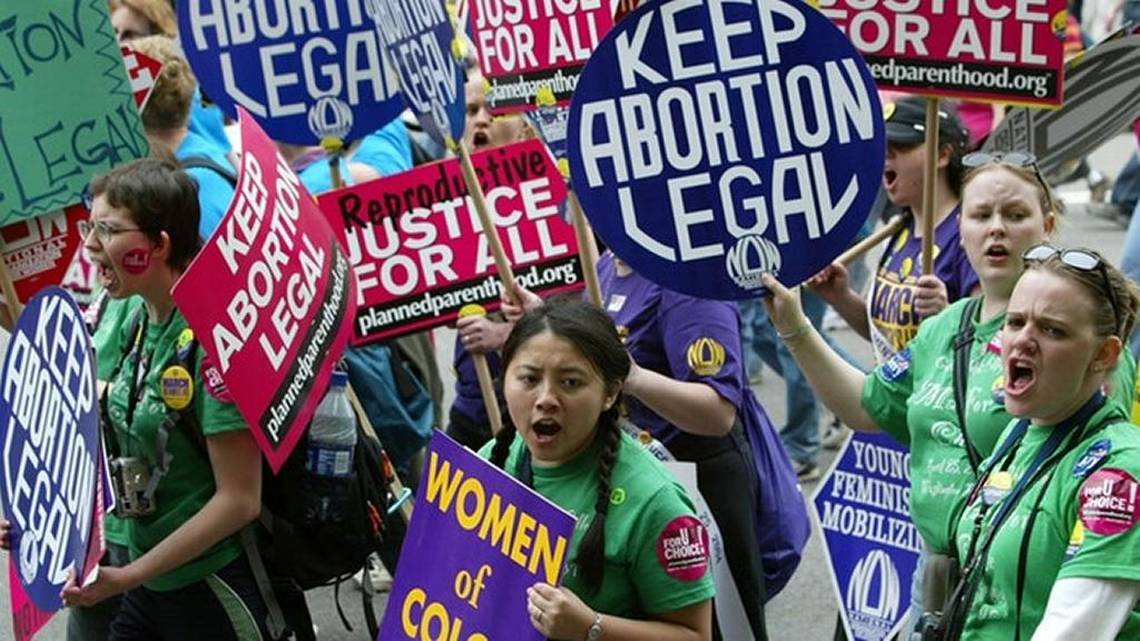



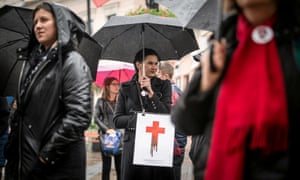







 Abortion - Abortion Clinics, Abortion Pill, Abortion Information