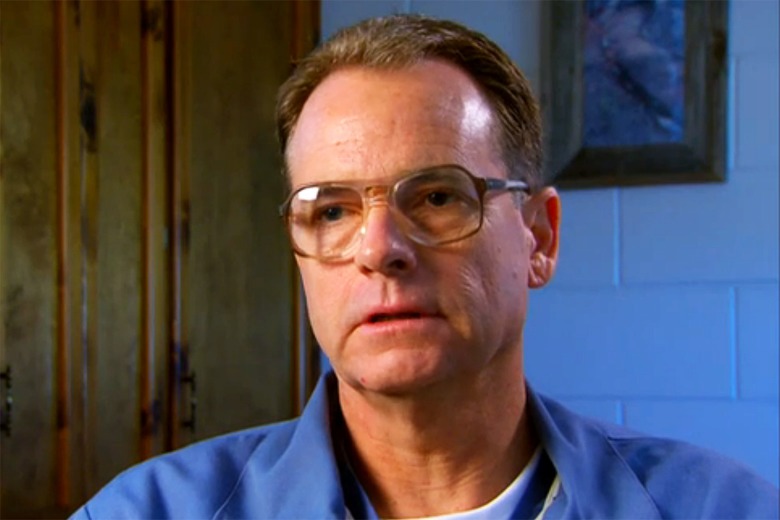
A new exhibition aims to show the wide range of reasons women have abortions. “Sometimes life is complicated,” its creator said.
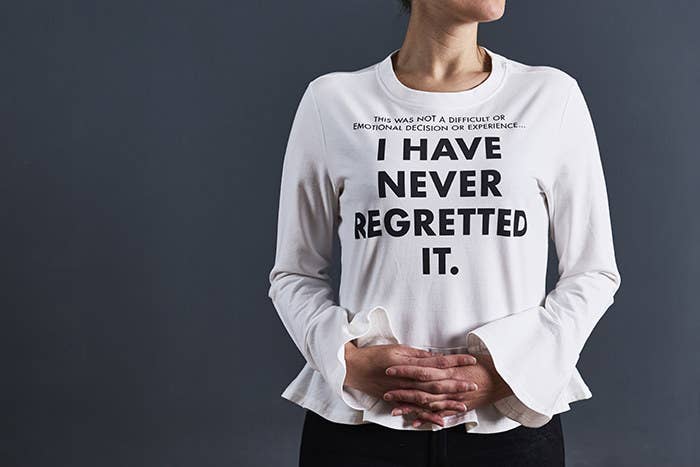
My Body, My Life

Women have been sharing their stories about why they chose to have abortions in the hope that a greater understanding of their reasons might help to tackle stigma around the procedure.

Last year almost 200,000 women in England and Wales chose to terminate a pregnancy, and one in three women will have an abortion in her lifetime, but the topic still remains relatively taboo.

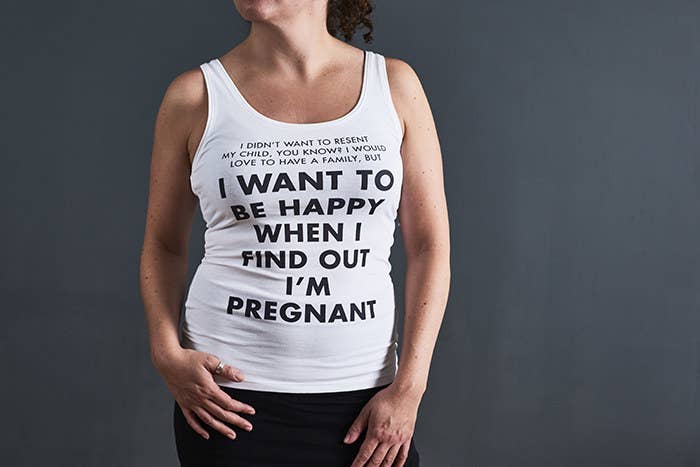
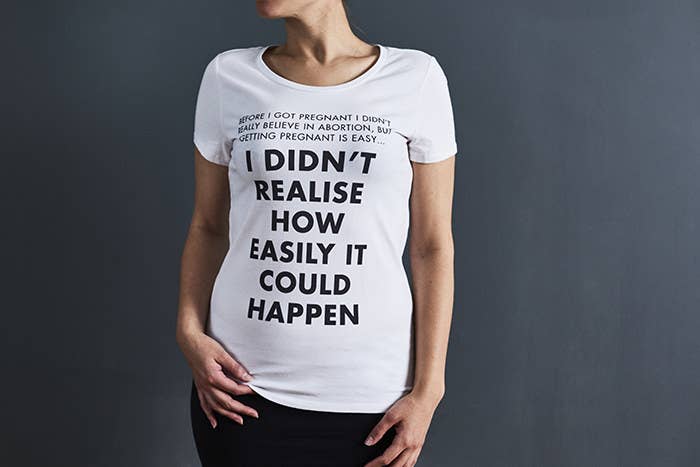
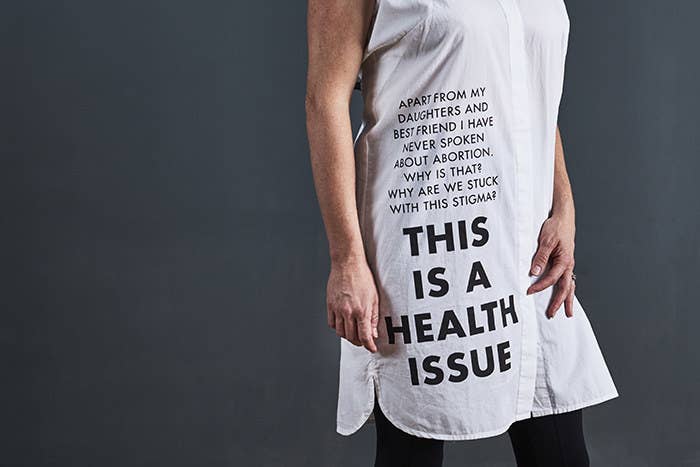
In a new exhibition, My Body, My Life, opening at The Old Fire Station in Oxford on 7 November, clothing printed with women’s abortion stories will be displayed to help demonstrate the complexities of those women’s decisions.
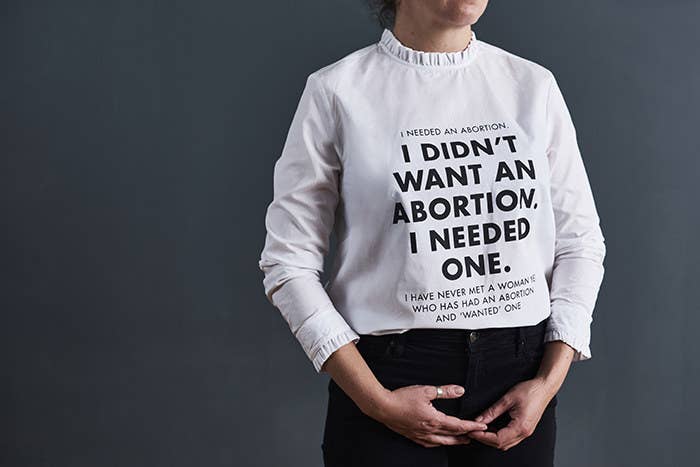
My Body, My Life

Lesley Hoggart, from the Open University, and Imogen Goold, associate professor of law at the Oxford University, collected the stories and created the exhibition to show the huge variety of women who get abortions.

“We have these stereotypical ideas that it’s only younger women getting abortions, but it’s a huge range, from women in their early teens, right up to women in their late 40s, who think they’re going through the menopause,” Goold told BuzzFeed News. “I really wanted all of that shown.”
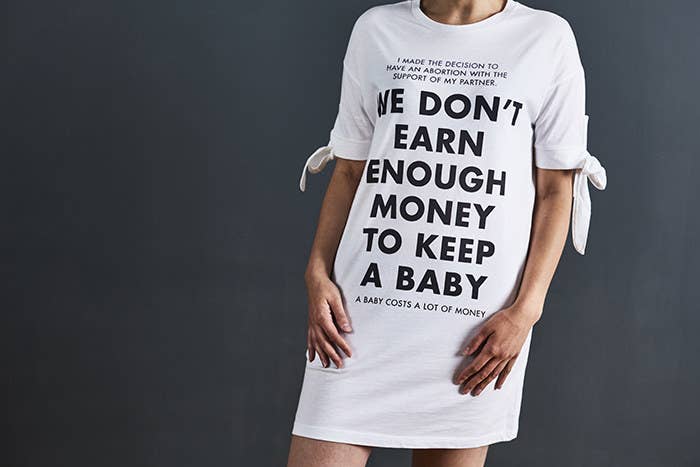
My Body, My Life

“Many women who get pregnant are using contraception of some kind,” she continued.

“Those kind of facts help us understand why women need abortions. I particularly want to get rid of this idea that it’s just laziness, or they should have tried harder, or it’s all their fault.

“Sometimes life is complicated.”

Earlier this year, Labour MP Diana Johnson put forward a parliamentary bill to loosen restrictions on abortion in the UK, and the 50th anniversary of Britain’s current abortion law, the Abortion Act 1967, has prompted discussions over whether medical advances mean it is no longer suitable.
My Body, My Life

But Goold said she was keen for the exhibition not to be politicised, and the views of women who are both for and against abortion are represented.

“Some women are happy about their abortions, some regret it and some are conflicted,” she said. “We are keen not to just have a pro-choice message, it’s meant to be about the fact that abortion is complicated and to understand that, we need to understand a whole range of experiences that women have reported.”

Instead the aim of the exhibition is to encourage women to share their stories and experiences. The items of clothing are laid out on a rail and visitors to the exhibition are invited to chat as they browse through them. During a recent previous version of the exhibition at the Edinburgh Fringe, Goold said she saw several women strike up conversations around abortion.
My Body, My Life

“We had women talking to us, and talking to their friends, but also talking to strangers, which was great,” she said. “What I’ve noticed in conversations with women is you say your story, and all of a sudden other women will start sharing theirs.”

Goold hopes that an increased openness about abortion, and the range of women who have them, will go a long way to reducing stigma, which often leaves women feeling guilty or ashamed.
My Body, My Life

“I think it’s important that when we think about abortion law reform we actually think about the women who are having them,” she said.

“If you’re thinking about those women, you might think about it from other perspectives.”

https://www.buzzfeed.com/laurasilver/women-sharing-their-abortion-stories-hope-to-tackle-the?utm_term=.cu79JpWLw#.lcm594DaM

Abdul El-Sayed vowed to use the governor’s office to block anti-choice measures if Republicans maintain the majority in Michigan’s legislature.

DETROIT—When Michigan Democratic gubernatorial candidate Abdul El-Sayed thinks about reproductive justice, he thinks “about it as building the space within which women are empowered to make their best decision at every point along which they might make a decision about their fertility, and their reproductive choices.”

That’s what he told Rewire on Saturday during an interview at the Women’s Convention in Detroit, where he was a speaker for a plenary session on engaging new voters in 2018 elections. El-Sayed is running in Michigan’s Democratic primary in hopes of replacing term-limited Gov. Rick Snyder (R).

His campaign website engages in both reproductive rights and justice, noting that the latter “goes beyond health care” and touches on other issues such as jobs and pay. “This is something that I believe in deeply,” he said, pointing to the experiences he and his wife, who is nine months pregnant with their first child, have had. “She’s a doctor, and the set of challenges that she’s had to face around thinking about child care, around what we can do together to create the best means for raising our daughter and empowering my wife as she continues forward in her medical career—those are hard things to deal with.”

“And you know, we’re really privileged,” he continued. “But there’s a lot to think about there: Breastfeeding, how we want to feed the child, what access to child care we have and where we want to go. Those are complications that when people just talk about you know, pro-choice, pro-life, right, they don’t get baked into the picture. Now, you can imagine if Sarah and I didn’t have the means that we had, or Sarah had to make this decision alone—those are deep, complicated choices, but it reaffirms the point to me that this always is an individual decision and we have to empower women to make that decision whichever way it works out.”

El-Sayed, 32, was born and raised in Michigan, the son of Egyptian immigrants. He would be the nation’s first Muslim governor if elected. He faces an August 7, 2018, Democratic primary against candidates including former state Sen. Gretchen Whitmer.

He served as the executive director of Detroit’s Health Department, where he helped build the SisterFriends program. According to its website, the program “connect[s] pregnant moms and families to existing programs and resources—and to each other” in order to address the high rates of infant mortalityin Detroit. El-Sayed described the effort as “a partnership program where the health department helps to train sister friends, or partners, who are interested in taking on a little sister—somebody who is facing pregnancy—and being a partner, role model, resource for that individual as she moves through her pregnancy and into the first year of life.”

Noting that he had worked on the program prior to leaving the Department of Public Health and that it launched just after his departure, he said he was “very proud of it.”

El-Sayed said “the best way to prevent an abortion is to prevent an unwanted pregnancy in the first place.” Under his leadership as public health commissioner in Detroit, the department worked to addressunplanned teen pregnancy, and he has discussed the importance of providing contraception such as long-acting reversible options in reducing poverty.

If elected to the governor’s office, El-Sayed told Rewire that advocacy would be a part of putting his pro-choice views into action. “One of things that you have as the governor is a position on which to weigh in on critical issues, and I will always use that position to advocate for pro-choice policy and to advocate for Planned Parenthood, and to advocate based on my own experiences and the data we have in Michigan,” he said.

Part of that would mean applying his positions on health care to the state’s budget, he suggested. “Our public health budget Michigan is 1.5 percent of the overall budget,” said El-Sayed. “That is crazy in a state that poisoned 9,000 kids in Flint, right? And the level to which we have invested in family-planning services and empowering women across the extent of their capacity to choose, I think is very limited, and I think there is a responsibility for us to really invest there because, well, if you’re empowering women to make their best choice, it has knock-on effects over the long-term.”

“That’s a great investment in public health as a public-health practitioner,” he continued.

El-Sayed said he would “want to appoint cabinet-level leaders who believe in the responsibility to empower women in the right to choose.”

“I’d want to make investments that signal that,” he said, “to how we invest as a state, to how we advocate around federal policy, to how we empower local health departments to work.”

Given that Republicans hold the majority in Michigan’s state legislature, El-Sayed vowed to use the power of his office to block anti-choice measures that came across his desk. “I have a pretty strong pen as a governor, you know, and I’ll veto anything that comes along my desk that would limit a woman’s right to make her best choice,” he said.

He mentioned what he saw as a “responsibility we have to push a broader narrative about why this matters” and to “personalize these conversations” about reproductive rights. “I think if we bring empathy to this conversation,” he said, “share people’s stories and empower them to share their stories, I think it changes the conversation.”

“It is an area that I will unabashedly lead on because I think in a civilized society like ours we need to be able to empower people to be able to make their best decisions about when and with whom and how and what circumstances to bring a person into the world,” El-Sayed said.

https://rewire.news/article/2017/11/02/gubernatorial-candidate-says-unabashedly-lead-protecting-reproductive-rights-michigan/

Yes, he said this in 2017.

This week, the Wisconsin State Assembly voted to approve a bill that would prevent health insurance plans for state employees from covering abortions, except in the cases of rape, incest, or to save the mother’s life.

While the bill passed on party lines, there was one legislator, Rep. Scott Allen (R), who said the law didn’t go far enough.

“Often in public debates people are afraid to say it, but let me just say it: Abortion is wrong,” Allen said, as reported by Mitch Reynolds of WIZM. “Although it may be legal we should in no way shape or form should we provide public funding for abortion.”

Allen then went on to argue that abortion was wrong for economic reasons, essentially saying that all women should be forced to have babies in order to grow the labor market.

“Labor force shortages are tied to population declines. Labor force shortages are a limiting factor in economic growth,” Allen said. “And limited economic growth poses a problem when government tries to pay for public services and infrastructure. In spite of this Mr. Speaker, ironically, the democrats continue their effort to support the abortion industry.”

According to the Capital Times in Wisconsin, the state Department of Employee Trust Funds already specifies that it will only cover abortions for “medically necessary” procedures. But this bill takes that a step further and makes sure “medically necessary” is clearly and concretely defined.

Democrats in the Wisconsin State Assembly tried to add two amendments to the bill — one to clarify that the measure would not impede the use of contraception, and another to get rid of the requirement that the victim of sexual assault or incest report the crime to law enforcement before being eligible for an abortion. Both amendments were rejected; those votes also were split strictly on party lines.

Speaking of party lines, it’s worth noting that the Wisconsin state assembly maps are considered to be the result of some of the most aggressive partisan gerrymandering in the country — in fact, they are currently under review by the Supreme Court.

Gov. Scott Walker (R-WI) announced earlier this month that Wisconsin’s total labor force reached an all-time high in September.

https://thinkprogress.org/abortion-restrictions-labor-force-fd5a0d7689cb/

Outgoing Indiana and Kentucky Planned Parenthood’s Betty Cockrum talks about the changes she’s seen over 15 years and her plans for the future. Kelly Wilkinson/IndyStar

An anti-abortion group  known for displaying graphic images of aborted fetuses passed out fliers Friday with the address of what it said is the home of Planned Parenthood of Indiana and Kentucky’s CEO.

“Christie Gillespie murders children. Christie Gillespie lives in our neighborhood,” said the Operation Save America flier that was handed out in the Meridian-Kessler neighborhood.

As many as 50 protesters with the Texas-based organization passed out leaflets and marched with signs on the sidewalks in front of the house and through the neighborhood.

But Gillespie, who became Planned Parenthood’s CEO in July, doesn’t live at that address. She sold the house earlier this year to a couple who has three young children.

“I was surprised that a former residence of mine would be targeted,” Gillespie said. “I’m not sure what kind of research that led them to believe that it was my house, but I hope they didn’t pay for that research.”

The current residents, who didn’t want to be identified, were upset. .

“They certainly don’t want any part of this public mess and don’t support these kinds of tactics,” said Jon Mayes, a representative of the family. “A number of protesters outside and circulating in the neighborhood asking for people to visit their house. This was very alarming and very unsettling for them and still is giving them great worry and anxiety.”

The Operation Save America tactic didn’t surprise Gillespie, who said being a target of anti-abortion groups is an expected part of her job.

“It’s assumed that all the presidents and CEOS of the (Planned Parenthood) affiliates could be named publicly like that,” she said. “You know that when you apply for these kinds of jobs.”

About 75 members of Operation Save America have been in Indianapolis since Wednesday, targeting different locations to protest, leaflet, display graphic imagery and hold prayer services, said Ante Pavkovic, one of the group’s leaders. They plan to leave Sunday.

Pavkovic, who is from North Carolina, said he didn’t know how the organization got the wrong address.

“We’re sorry we didn’t have the right information,” he said. “We don’t want to be wrong about things. It’s just an unfortunate mistake.”

Regina Eaton was driving her 7-year-old son Fenix to school Friday morning when a woman at a stop sign at 42nd Street and College Avenue stepped up to her car’s back window. Eaton thought she was from a nearby church, handing out information. So she rolled down Fenix’s window.

The woman handed the boy one of the fliers.

“Fenix opened it up, and he looked at me,” she said. “… All I saw, which is what my son saw, which was a dismembered fetus.”

Eaton told the woman she was a supporter of Planned Parenthood. She said the woman called her a sinner and that she’d pray for her. Fenix started asking Eaton questions.

“I just started crying, and I drove away,” she said. “He’s asking questions like, ‘Mom did you do something bad? Are you going to hell?’ I didn’t even have time to sit him down to explain to him what it meant because he had to go to school.”

Eaton said she went out later and screamed at the group of protesters to leave her neighborhood. She posted the account to the neighborhood’s Facebook group, which garnered dozens of comments from neighbors expressing concern about the protests.

“They succeeded in their mission today,” she said. “They did. They succeeded in getting people like me emotional today.”

Pavkovic said parents don’t want their children to see the images of bloodied fetuses because “the momentum of the people in our nation is to live in denial.”

“The kids are upset because children are honest and they look at the pictures and they go, ‘That’s a baby. Why would they hurt the baby?'” Pavkovic said. “To be upset with us is an irrational misplaced outrage. We’re not the ones hurting the children.”

Pavkovic compared the photos they distribute to photos of lynchings that were publicized during the Civil Rights movement.

“Those photos began to change the tide and public sentiment,” he said. “They’re not pretty pictures to look at today.”

The Operation Save America protest is a distraction, Gillespie said, and it’s one she plans to ignore.

“Our focus is on providing high-quality reproductive health care to the people who need it,” she said. “That’s what we focus on. We don’t focus on distractions like this.”

https://www.indystar.com/story/news/2017/11/03/anti-abortion-group-targets-indiana-planned-parenthood-ceos-house-but-gets-address-wrong/829874001/

“Reproductive rights [are] about having full ability to make your own determination as an American citizen,” Democratic candidate Gretchen Whitmer told Rewire. “It’s about liberty. It’s about freedom.”

DETROIT–Former Michigan state Sen. Gretchen Whitmer (D) told her sexual assault story in an effort to halt Republican efforts to pass anti-choice legislation. If elected governor, she says she would continue to stand up for reproductive health care amid sustained efforts from the opposing party to limit access.

Speaking to Rewire last weekend at the Women’s Convention in Detroit, Whitmer said Republicans, who hold the majority of the legislature, have “continued to push more and more barriers to women” and their ability to access health care. “You know, it used to be that you had a health plan that covered abortive services, and they’ve created what I call ‘rape insurance,’ where it requires that you pre-purchase an abortion rider for an unplanned event,” said Whitmer, referring to the infamous 2013 Michigan GOP bill requiring insurance riders for abortion care even in cases of rape and incest. Though Whitmer introduced legislation to roll back the law in 2014, it remains in place.

If elected, Whitmer said she would work to stop anti-choice legislation and “continue to protect the investments that we make in our local public health offices—education for young people, access to birth control.” Whitmer expressed hope that Democrats could take back the Michigan House of Representatives but said, “if necessary, I have got the backbone of titanium to hold the line on further attacks eroding women’s health care.”

She added that she is “eager to build any bridge that I can to prevent unwanted pregnancy—and [is willing to partner] with anybody who genuinely has that as a goal.”

When asked what specific actions she would take to expand and protect access to reproductive health care in Michigan, Whitmer said she has “always supported the effort to fund our public health and family planning line in the state budget” and suggested that she would be “a governor who is willing to utilize the rule-making authority within departments and make it easier for women to access birth control.”

Whitmer said reproductive rights are “absolutely” an intersectional issue. “Reproductive rights [are] about having full ability to make your own determination as an American citizen,” she told Rewire. “It’s about liberty. It’s about freedom. It’s about economic security. The biggest decision a woman makes in her lifetime when it comes to her independence and her wealth is when and whether to start a family. So it absolutely transcends many issues when it comes to being viewed as a full-American [with] full rights.”

Michigan’s primary to replace term-limited Gov. Rick Snyder (R) will be held August 7, 2018. Whitmer faces competition for the Democratic nomination from a handful of candidates, including former Detroit health commissioner Abdul El-Sayed and entrepreneur Shri Thanedar.

https://rewire.news/article/2017/11/01/democratic-gubernatorial-candidate-vows-hold-line-michigan-gops-anti-choice-onslaught/

Win McNamee/Getty Images News/Getty Images

While checking out the new Republican tax reform legislation, which they’ve invitingly named the Tax Cuts and Jobs Act, you were probably looking at, sensibly, what it means for the more financial aspects of your life. So, chances are, you probably missed the anti-abortion language that’s hidden in the GOP tax plan. Because so-called personhood bills haven’t yet succeeded on their own in qualifying fetuses as people upon conception, the GOP has now apparently decided to adopt a different strategy.

And they’ve gone about it in a roundabout and unanticipated way. After all, who would expect to find anti-abortion language in a tax reform bill? Specifically, the bill contains language explicitly allowing parents to open tax-advantaged college savings accounts, or 529s, in the name of their unborn children.

“On its own, I find it a despicable play to lay the groundwork for “personhood” bills and ending abortion rights,” says Calla Hales, the manager of a clinic that provides abortions in Charlotte, North Carolina. She goes on:

While this new language might serve some purpose if the existing law didn’t allow parents to open 529s for their children until they actually had a baby in their arms, that’s not the case. As it stands right now, parents can open 529s for their future, hypothetical children before they’ve even conceived — one parent just has to be at least 18 years old, and then they can transfer the account to the child’s name as soon as the child actually exists.

The tax bill, however, inserts language specifying that an unborn child can have a 529. Then it goes on to define what it really means by “unborn child.”

“Nothing shall prevent an unborn child from being treated as a designated beneficiary or an individual under this section,” the bill says, making the infinitesimal change that now parents can open the bill in the unborn child’s name instead of their own. It doesn’t stop there, however. “The term ‘unborn child’ means a child in utero. The term ‘child in utero’ means a member of the species homo sapiens, at any stage of development, who is carried in the womb.’’

This overbearing explanation comes dangerously close to the typical language of a personhood bill. One introduced in the House in January used the phrase “human life shall be deemed to begin with fertilization,” which carries essentially the same meaning as the language in the tax bill. The bulk of the bill, of course, is about something entirely different — but inserting this language could be a strategy to weaken the Roe v. Wade decision that made abortion legal across the country.

GOP officials might have tried to sneak this one in under the radar, but so far they haven’t quite managed.

“The GOP’s tax proposal’s inclusion of ‘personhood’ language makes one thing clear: that their anti-choice ideology knows no bounds or common sense,” said NARAL Pro-Choice America representative Kaylie Hanson Long in a statement. “We know that while they are busy trying to pass this tax proposal into law, they are also turning their backs on kids, women, families, seniors, and the disabled — those who stand to lose the most in this tax bill.”

“This is a back-door attempt to establish personhood from the moment of conception,” Rep. Diana DeGette told Politico. “What’s next, giving a Social Security number to a zygote?””

Anti-abortion advocates, on the other hand, have expressed both surprise and excitement over the personhood language. “We’re thrilled about it, but it wasn’t something that we were specifically calling for,” said Tom McClusky, president of March for Life Action. “We’ll fight to make sure it stays in there.”

So don’t be fooled — this tax bill isn’t just about making people pay more so corporations can pay less. It’s also about limiting women’s reproductive rights. In a way, then, it represents a microcosm of all of the GOP’s recent goals.

https://www.bustle.com/p/would-the-gop-tax-plan-make-unborn-child-a-legal-person-it-sneaks-in-anti-abortion-lingo-3216397

Drew Angerer/Getty Images News/Getty Images

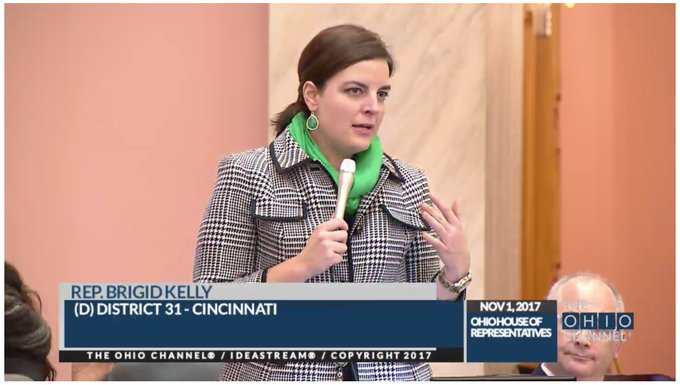
The bill passed in the House by more than 30 votes, with Ohio Rep. Brigid Kelly in the minority.

“Abortion is legal in the United States,” Kelly tells Bustle. “I think that women have every right to make the medical decisions that are appropriate for themselves and for their families.”

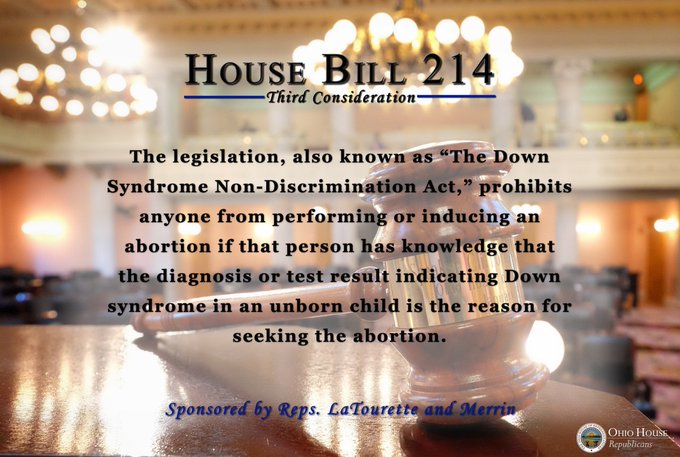
One concern that the bill raises is that it could deter women from getting prenatal screening tests to ensure that they have a safe pregnancy in the first place. Banning abortions after a Down syndrome diagnosis could potentially lead to fewer women getting prenatal screening tests, which would in turn put the mother and the fetus in a life-threatening situation that could’ve been avoided.

Opponents of the Ohio bill also say it would hinder open conversations between pregnant women and their doctors, and do nothing to help those with Down syndrome in the state. “This bill will totally offend this relationship,” Ohio Rep. Emilia Strong Sykes said, “not allowing honest discourse between a physician and patient.” According to a 2012 study by the medical journal Prenatal Diagnosis, 50 to 85 percent of American women whose fetus has a Down syndrome diagnosis opt for an abortion, USA Today reported.

Another question is how the state would track women who receive a fetal diagnosis of Down syndrome before seeking an abortion. Kelly tells Bustle her colleague introduced an amendment to HB214 on the House floor stating that no woman should have to disclose why she chose to have a particular medical procedure, but it was tabled. “There are still a few unknowns about practically how this would work,” Kelly says.

Another major unknown is whether or not women who self-induce an abortion would be punished. The bill would, however, punish doctors who perform abortions after a Down syndrome diagnosis with up to 18 months in prison and a $5,000 fine, along with the possibility of losing their medical license.

What’s rare about the Ohio bill is that it focuses solely on Down syndrome and doesn’t name any other genetic abnormalities. “Their right to life should be protected,” Ohio Rep. Derek Merrin, who sponsored the bill, told The Cincinnati Enquirer. “Individuals with Down syndrome are truly treasures.”

View image on Twitter

But those who oppose it say that distinction is dangerous. While debating the bill on the House floor, Kelly read a letter from a mother in her district who had a 20-year-old daughter with Down syndrome.

“Her concern was about creating a hierarchy of disabilities … and about driving a wedge into the disability community,” Kelly tells Bustle. She adds that the mother said: “It’s not up to us to judge other people and the choices that they make.”

As this debate took place in Ohio, a very similar one was happening in Congress. On Wednesday, the House Subcommittee on the Constitution and Civil Justice held a hearing on a bill that would “prohibit abortion in cases where a fetal heartbeat is detectable.” The so-called “heartbeat” bill would effectively ban abortion at six weeks, before most women even know they’re pregnant.

Making essentially the same argument as Kelly did in her state, Rep. Pramila Jayapal, the only woman invited to speak at the hearing, told Bustle previously: “It restricts the constitutionally protected right for women to make decisions about our own bodies, and similar state bills have already been struck down in the courts.”

Though the future of the federal “heartbeat” bill is still up in the air, Ohio’s abortion ban could pass the majority Republican Senate and be signed into law by Gov. Kasich, who has a history of supporting anti-abortion legislation. As has happened it other states, the constitutionality of the measure could then be challenged in court.

https://www.bustle.com/p/what-is-ohios-down-syndrome-abortion-ban-it-could-stop-life-saving-prenatal-testing-3206803

“We won’t let this distract us from the real issue here, which is that there are many more young women like Jane Doe out there who are still unable to get the care they need because of the Trump administration’s unconstitutional policies.”

The Department of Justice has asked the U.S. Supreme Court to intervene in the case of an unaccompanied pregnant minor the Trump administration went to extraordinary lengths to prevent from receiving abortion care.

Solicitor General Noel Francisco, one of President Trump’s recently confirmed anti-choice nominees, on Friday asked the Court to vacate the the lower courts’ ordersto the federal government to release the teenage immigrant, Jane Doe, from custody and allow her to get an abortion.

The petition asks the Supreme Court to send the case back to the district court and order that court to dismiss claims that additional pregnant unaccompanied minors may have against the Trump administration for blocking their access to an abortion.

According to her attorneys, Jane Doe’s experience with the Trump administration blocking abortion access is not an isolated case, but rather part of a new administration policy to block access to abortion care for all pregnant immigrant minors in detention.

Doe’s attorneys, including ones from the American Civil Liberties Union, have not yet filed a response to the request and their case against the Trump administration’s policy remains ongoing. In a statementissued after the filing, ACLU Legal Director David Cole blasted the Department of Justice, saying “[t]he Trump administration blocked Jane Doe from getting constitutionally protected care for a month and subjected her to illegal obstruction, coercion, and shaming as she waited.”

“After the courts cleared the way for her to get her abortion, it was the ACLU’s job as her lawyers to see that she wasn’t delayed any further—not to give the government another chance to stand in her way,” Cole said.

The Department of Justice took its petition one step further than asking the Supreme Court to intervene in the case; it asked the Court to discipline Doe’s attorney for what the department claims are “material misrepresentations and omissions to government counsel” concerning the release of Doe and the timing of her abortion, claiming those misrepresentations were “designed to thwart this Court’s review” of Doe’s case before she underwent the procedure.

The ACLU called the Trump administration’s filing and claims a distraction.

“We won’t let this distract us from the real issue here, which is that there are many more young women like Jane Doe out there who are still unable to get the care they need because of the Trump administration’s unconstitutional policies,” Cole said.

https://rewire.news/article/2017/11/03/trump-administration-wants-power-block-abortion-access-unaccompanied-immigrant-minors/

It is beyond shameful that the Republican-led Congress is spending its time on an abortion ban that will put women in danger.

abortion sign

GETTY

In my early twenties, I found myself pregnant. It was 1965, and I was 23 and new to sex. There was no sex ed in my school, so I was never taught how easy it could be to get pregnant. This was back when having a baby out of wedlock was shameful, and women who did so were hidden away until delivery, and their babies were labeled “bastards” the rest of their lives. Babies were often surrendered for adoption, since there was very little support for single mothers. I was terrified.

My only alternative was abortion, and it was illegal. If you managed to find someone to do the procedure, they were not usually a medical professional. The procedure was not done in a sterile – or frequently even clean – environment. While I was fortunate enough to have the procedure done in my apartment, the person who performed the abortion was so worried he would be caught that he made me wear a blindfold the entire time, so I never knew what his face looked like.

Even though the procedure was relatively safe, and not done by a coat hanger as was common in those days, I could not stop bleeding afterward. I bled for days in my apartment, terrified to seek medical help for fear I would get arrested. I didn’t realize at the time how serious my condition had become, but I later realized that another day of bleeding, and I might have died. Eventually the bleeding stopped, and I recovered, by some sort of miracle.

This is what it was like before Roe v. Wade. These are the choices women had to make, if you can even call what I faced any kind of choice. And this week, Republicans in the House of Representatives threaten to take us back to these dark, terrifying days. They’re holding a hearing on a bill they introduced that would ban abortion at six weeks, before many women even know they are pregnant. Make no mistake: this bill would effectively ban abortions.

This abortion ban is wholly unconstitutional, and while Republicans are obsessed with rolling back our reproductive rights, no abortion ban this extreme has ever been introduced, heard, or voted on in Congress until now. In 1973, the Supreme Court made very clear in Roe v. Wade that bans before viability violate a woman’s right to privacy, and established a constitutional right to abortion as a result.

As a woman with a personal experience I wouldn’t wish on anyone, I feel that it is beyond shameful that the GOP-led Congress is spending its time on an abortion ban that I know will put women in danger.

Beyond putting women in harm’s way, these abortion bans attack our independence by gradually taking away our ability to make decisions about our own lives, bodies, and futures. I have seen the dangerous conditions abortion bans create for women. I cannot believe Republicans are using women’s ability to create new life as a tool to oppress us, and return us to the restrictions of the first part of the 20th century. Their anti-choice ideology has no place in my body, nor in any laws.

When you seek to put oppressive restrictions on women’s reproductive choices, you are in effect seizing control of their bodies. And after what I’ve been through, I can adamantly say that no out-of-touch politician has a right to control my body or make decisions for me.

As long as anti-choice politicians continue their shameless attacks on our basic human rights, I’ll continue working with organizations like NARAL to protect reproductive freedom. According to a NARAL national survey, about 7 in 10 Americans believe abortion should remain legal and the government should not interfere with a woman’s decision. This majority stands on the side of abortion access and reproductive freedom for all.

Women will not go back to 1965. No out-of-touch politician will prevent us from controlling our own bodies and our destinies. Whether openly or in secret, we will always seek access to comprehensive reproductive health care. For many women, this abortion ban would be a death sentence, returning us to the days of unsafe and illegal abortions – I know, because I’ve had one.

http://www.cosmopolitan.com/politics/a13133632/abortion-ban-six-weeks-illegal-roe-v-wade/

The murdered doctor’s son says his family has received death threats from abortion rights foes in the years after an anti-abortion activist killed Dr. David Gunn.

The man considered the first known murderer of an abortion care provider will effectively spend the rest of his life behind bars, the Florida Commission on Offender Review decided Wednesday.

The commission voted to set the presumptive parole release date for Michael F. Griffin for March 9, 2043, when Griffin will be 82.

On a spring morning in 1993 outside a Pensacola, Florida, abortion clinic, Griffin fired three shots into the back of Dr. David Gunn, killing him. Griffin was convicted of first degree murder and sentenced to life in prison. Wednesday’s hearing was the first time he was up for parole.

An anti-abortion activist with ties to Operation Rescue, Griffin was heard yelling, “Don’t kill any more babies” before reportedly chasing down the doctor and shooting him at point blank range. Griffin’s defense argued that John Burt, regional director of the radical anti-choice group Operation Rescue, indoctrinated Griffin with a barrage of films, videos, aborted fetuses, and “effigies of nurses and physicians,” as the New York Times reported at the 1994 trial.

The murder spurred the passage of the federal Freedom of Access to Clinic Entrances Act. And it incited anti-abortion extremists to further violence. Since then, abortion rights foes have murdered 10 people and attempted to kill 26 more in attacks on abortion providers, according to the National Abortion Federation, which has tracked anti-choice violence since 1977.

Five days after Gunn’s murder, another anti-abortion activist, Paul Hill, appeared on the Phil Donahue Show. Hill told the host he considered slaying an abortion provider akin to murdering Hitler, and he believed in “the justifiable homicide of abortionists to save the lives of unborn babies.”

A little more than a year later, Hill arrived at Pensacola’s only other abortion clinic with a shotgun and killed Dr. John Bayard Britton. Also murdered was James H. Barrett, a retired Air Force lieutenant colonel who volunteered as a clinic escort.

Prior to Wednesday’s hearing, advocates mounted a letter writing campaign demanding the commission reject Griffin’s bid for parole.

“I began providing abortions full time on the day that the last abortion provider was assassinated, Dr. George Tiller, a man I knew personally, was shot and killed,” said Dr. Willie Parker, abortion provider and author of Life’s Work: A Moral Argument for Choice, in a statement. “One of the many threats that I constantly receive is that someone ought to shoot me. As long as Griffin is locked up, I can be sure that it won’t be him.”

Commissioners rate extenuating circumstances in determining whether to grant parole. Aggravating factors diminish the possibility of release, and victims are given ten minutes to address commissioners. Gunn’s son, David Gunn Jr., who was 22 at the time of his father’s murder, reportedly read from a 13-page letter that painted a moving portrait of a dedicated doctor and of a family haunted by anti-choice violence to this day. He called anti-choice terrorism a “second death”:

I doubt many people can understand how isolating it is endure conversations where the person begins, “I’m sorry your father was murdered, but he was killing babies…” I listened as a soon-to-be murderer compared my dad to Dr. Josef Mengele two days after his funeral. We attended memorial services for our family member that were picketed and protested by a soon-to-be murderer. We have been at services where we received FBI warnings concerning potential threats on the lives of attendees. I have received death threats for speaking on behalf of an assassinated family member. We have seen gravesite vandalism. Each indignity is another instance of inmate Griffin haunting us daily. It is a second death and an ongoing murder we endure at the hands of inmate Griffin every single day. He metaphorically murders us every da[y].


https://rewire.news/article/2017/11/01/parole-denied-first-known-killer-abortion-provider-stay-behind-bars/