


Women would ‘bear the brunt’ of the bill’s funding cuts and weaker regulations, says policy analyst, with access to reproductive healthcare particularly affected
September 27, 2017
Abortion bans around the world
Posted by laurasmith20200 under Abortion Information | Tags: Abortion, Abortion Rights, reproductive rights |Leave a Comment
September 26, 2017
Federal judge permanently blocks Indiana abortion limits
Posted by laurasmith20200 under Abortion Information | Tags: Abortion, Abortion Rights, reproductive rights |Leave a Comment
U.S. District Judge Tanya Walton Pratt’s decision, issued Friday, found that those two provisions and a third one are unconstitutional. She granted an order permanently blocking all three from being enforced and granted summary judgment in favor of Planned Parenthood of Indiana and Kentucky, which had sued the state in April 2016 after then-Gov. Mike Pence signed the provisions into law.
The three restrictions violate women’s due process rights under the Constitution and conflict with rulings by numerous courts, including the U.S. Supreme Court, upholding a woman’s right to seek an abortion before a fetus could viably survive outside the womb, Pratt wrote in her ruling.
“The challenged anti-discrimination provisions directly contravene well-established law that precludes a state from prohibiting a woman from electing to terminate a pregnancy prior to fetal viability,” the judge wrote.
Pratt’s order makes permanent her preliminary order issued in June 2016 — a day before the law was set to take effect — that temporarily blocked the provisions from being enforced.
Indiana is now permanently barred from enforcing a restriction that would have banned abortions sought because of a fetus’ genetic abnormalities, race, gender or ancestry. Pratt’s order also permanently blocks a requirement that abortion providers tell women that Indiana prohibits such abortions, and another provision that would have required that aborted fetuses be buried or cremated.
As for the fetal disposal provision, Pratt wrote that she could find no legal basis for Indiana to require health care providers “to treat fetal remains in the same manner as human remains.”
“Stated otherwise, if the law does not recognize a fetus as a person, there can be no legitimate state interest in requiring an entity to treat an aborted fetus the same as a deceased human,” she wrote.
Attorney General Curtis Hill said Monday in a statement that he’s disappointed by Friday’s ruling and plans to appeal to the 7th Circuit Court of Appeals in Chicago.
Indiana’s then-Attorney General, Greg Zoeller, did not appeal Pratt’s June 2016 order temporarily blocking the provisions.
Current Indiana Attorney General Curtis Hill said Monday that he’s disappointed by Friday’s ruling and plans to appeal the order to the 7th Circuit Court of Appeals in Chicago.
Hill said in a statement that the ruling clears “the path for genetic discrimination that once seemed like science fiction.” He added that the law’s fetal disposal provision “is hardly an impingement of anyone’s individual rights.”
Christie Gillespie, the president and CEO of Planned Parenthood of Indiana and Kentucky, praised Pratt’s ruling and said the group was confident the judge would find that the restrictions violate the Constitution.
“There is no medical basis for these restrictions. This is just another example of politicians coming between physicians and patients,” she said.
Share what you read here:
September 26, 2017
Government Watchdog: Anti-Choice Group Misused Millions from Taxpayers
Posted by laurasmith20200 under Abortion Information | Tags: Abortion, Abortion Rights, reproductive rights |Leave a Comment
“In its zeal to defund Planned Parenthood, Texas has wasted money on a group that is misappropriating taxpayer funds and providing no services, leaving women without access to health care.”

Governor Perry / YouTube
Texas has funneled millions to the anti-choice Heidi Group that a watchdog organization now accuses of breaking the law by misusing taxpayer funds.
The Campaign for Accountability, a nonprofit government watchdog, filed a complaint Tuesday with the Travis County District Attorney alleging the Heidi Group committed theft under state criminal law by taking state money for services the group never provided.
“Texas taxpayers deserve to know where their hard-earned money has gone,” Katie O’Connor, the Campaign for Accountability’s legal counsel, said in a statement.
Texas officials contracted with the Heidi Group to provide $7 million in family planning services to families with low incomes when it barred health-care provider Planned Parenthood from the state health-care program. Reports showed the Heidi Group shifted the money to anti-choice crisis pregnancy centers, or fake clinics. A six-month investigation by the Campaign for Accountability found the Heidi Group misspent the money.
“Prosecutors should look into whether the Heidi Group and its founder and executive director, Carol Everett, misappropriated taxpayer funds by failing to deliver the services pledged in state contracts, but nevertheless continued to submit reimbursement requests,” O’Connor said.
Campaign for Accountability officials filed a complaint with the U.S. Internal Revenue Service, asking the government to strip the Heidi Group of its tax-exempt nonprofit status. Through a public records request, the Campaign for Accountability discovered the Heidi Group had spent as much as 11 percent of its annual expenditures in one year on the “Heidi Group Cruise.” The anti-choice organization allegedly engaged in unreported lobbying and prohibited acts, such as electioneering and endorsing political candidates for state and federal office.
The complaint accuses the anti-choice group of a pattern of financial mismanagement, including operating for nearly a decade while technically insolvent. Since 2002, the Heidi Group has been in debt to its founder and CEO, Carol Everett, according to the complaint. Meanwhile, the Heidi Group has contracted with providers ineligible to receive state funds.
Responding to the accusations, Everett told the Dallas Morning News, “We’re here, our books are open, we’re not hiding from anyone. We’re not hiding anything, or from anyone.”
Such complaints are not new. Last year, critics called for an investigation of the Heidi Group, telling Rewire that Texas Health and Human Services Commission “just ignored the definition” of family planning clinics when it approved the Heidi Group contract.
After a critical Associated Press investigation this year, Everett told a deputy in Gov. Greg Abbott’s office: “No, we don’t look good, and no, we’re not doing what I planned to do, and no, we’re not doing what I wanted to do,” according to a voicemail the Campaign for Accountability obtained through an open records request.
The state said last month that it would cut the Heidi Group’s funding by $4 million after the organization failed to meet its own goals in providing family planning services to families. A spokesperson for the Texas Health and Human Services Commission told the Texas Tribune the funding cut was meant “to make sure we’re maximizing services for women.”
Amid reported problems, Texas continued to fund the Heidi Group, signing contracts in 2016 and 2017 worth $7 million, according to the Campaign for Accountability.
“In its zeal to defund Planned Parenthood, Texas has wasted money on a group that is misappropriating taxpayer funds and providing no services, leaving women without access to health care,” O’Connor, with Campaign for Accountability, said.
Share what you read here:
September 25, 2017
Supreme Court May Step Into Fight Over Missouri Abortion Restrictions
Posted by laurasmith20200 under Abortion Information | Tags: Abortion, Abortion Rights, reproductive rights |Leave a Comment
Attorneys for Planned Parenthood on Friday asked the U.S. Supreme Court to reinstate an order blocking Missouri officials from enforcing two anti-abortion regulations.

Lauryn Gutierrez / Rewire
Attorneys on behalf of Planned Parenthood on Friday asked the U.S. Supreme Court to step in and reinstate a lower court ruling that blocks the State of Missouri from enforcing anti-abortion regulations the attorneys claim are nearly identical to those ruled unconstitutional in last year’s Whole Woman’s Health v. Hellerstedtdecision.
The case involves two Missouri anti-abortion regulations. The first is a requirement that any doctor who provides abortion care—including medication abortions—have admitting privileges at a hospital within 30 miles of the abortion clinic. The second regulation requires that any facility providing abortions be licensed as a surgical center, even if the facility does not provide surgical abortions.
“As a doctor, I see just how hard it is on my patients when politicians put safe, legal abortion out of reach,” Dr. Raegan McDonald-Mosley, chief medical officer at Planned Parenthood Federation of America, said in a statement. “Many people don’t have the means to travel hundreds of miles or cross state lines to see a doctor, which means they simply go without care. We’re in court because every person deserves the right to decide whether and when to become a parent, regardless of who you are or where you live.”
Attorneys for Planned Parenthood in 2016 filed a lawsuit in federal district court in Missouri, arguing that the requirements were unconstitutional under Whole Woman’s Health v. Hellerstedt. The district court blocked enforcement of the requirements in April 2017, ruling they were close enough to the Texas regulations at issue in Hellerstedt to be considered unconstitutional.
Attorneys for the State of Missouri appealed the district court’s order to the U.S. Court of Appeals for the Eighth Circuit, asking it to stay the lower court’s order pending appeal. After a panel of judges on the Eighth Circuit declined to stay that order, attorneys for the state went to the full panel of Eighth Circuit judges, which agreed to stay the injunction.
Associate Supreme Court Justice Neil Gorsuch handles requests for the Eighth Circuit. He could decide on his own to accept or reject the appeal or pass it on to the full court for consideration. The Court could issue a ruling as soon as this week.
https://rewire.news/article/2017/09/25/supreme-court-may-step-fight-missouri-abortion-restrictions/
Share what you read here:
September 25, 2017
Pregnancy doctors back abortion on demand with no criminal sanctions
Posted by laurasmith20200 under Abortion Information | Tags: Abortion, Abortion Rights, reproductive rights |1 Comment
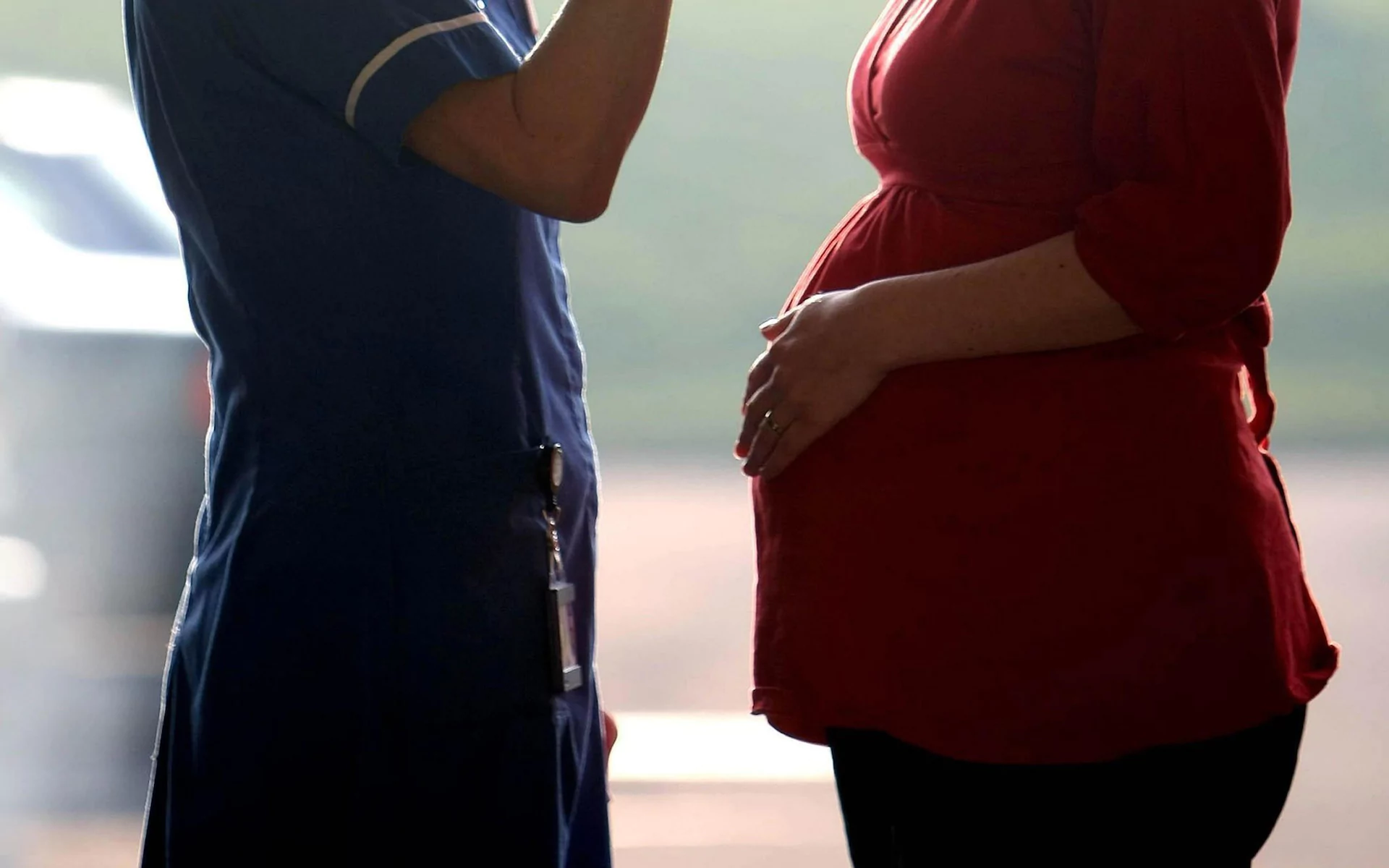
The leaders of Britain’s pregnancy doctors have voted to support abortion on demand, despite a revolt from members.
The Royal College of Obstetricians and Gynaecologists tonight formally demanded the full decriminalisation of terminations at any stage in a pregnancy.
The influential body will now lobby Government for a change in the law, aping the stance of Britain’s doctors’ union, the British Medical Association, which voted for decriminalisation in June.
The decision was made by the RCOG’s senior council behind closed doors, rather than in a ballot of its 6,000 members.
The Royal College is not advocating a change to the current 24-week cut-off period for abortions, however it now wants this restriction governed by professional regulations, rather than the criminal law.
It means doctors performing terminations later in a pregnancy would face no criminal sanctions.
The current legal requirement for two doctors to sign off an abortion “on medical grounds”, for example on the basis that going through with a pregnancy might harm a woman psychologically, should be scrapped, according to the RCOG.
The vote was last night criticised by pro-life campaigners, who accused the Royal College of “betraying its members, women and their babies, and the medical profession”.
It took place despite a letter signed by more than 650 doctors objecting to president Professor Lesley Regan’s “extreme stance” on abortion and their lack of participation in the decision.
Professor Regan insisted that decriminalisation did “not mean deregulation”.
“I am pleased that the Council of our College has voted in support of removing criminal sanctions associated with abortion,” she said.
“I strongly believe that the College has a responsibility to protect women’s health by ensuring access to this key healthcare service.”
According to government statistics, there were 190,406 abortions carried out in England and Wales last year, slightly lower than the five-year high in 2015.
Critics of a change in the law have said it could open the floodgates to sex-selective terminations as well as putting women in abusive relationships at risk of coercion to end pregnancies.
Dr Anthony McCarthy, from the Society for the Protection of Unborn Children, said: “By supporting a campaign to trivialise abortion, i.e. a lethal attack upon an unborn child, the leadership [RCOG] has betrayed the Hippocratic principles and opened the door to a laissez-faire and in effect deregulated abortion industry.”
The RCOP has asked for feedback from its members on the subject, but their responses were not binding on the council members who voted.
A spokesman for the Royal College said 45 members of the council had taken part, but would not reveal the split, saying only the council voted “strongly in favour”.
Share what you read here:
September 24, 2017
The Fascinating True Story Behind Elisabeth Moss’s New Movie About Abortion
Posted by laurasmith20200 under Abortion Information | Tags: Abortion, Abortion Rights, reproductive rights |1 Comment

A day after Elisabeth Moss won an Emmy for her work in The Handmaid’s Tale, we learned that she will be starring in another project focused on women’s rights. Her upcoming movie Call Jane is based on the story of an underground network of women who provided abortions in the 1960s. The film is being directed by Simon Curtis (My Week With Marilyn) and production is set to begin in early 2018. Here’s what to know about the remarkable true story of — and real women behind — the Jane Collective.
Abortion in the 1960s
Before the Supreme Court cast its historic vote on Roe v. Wade in 1973, abortion had long been illegal in the United States. The procedure was officially criminalized around 1880. According to Leslie Reagan, an expert on the history of abortion, this was the result not just of a moral stance on abortion and concern about its health risks, but also part of a broader political effort to limit a budding women’s rights movement.
Of course, the law did not deter women from seeking abortions — but it did make the procedure less safe. Abortions were performed in secret, oftentimes without the aid of a doctor or nurse. In the 1930s, the Great Depression led increasing numbers of women to seek illegal, and hence often risky, abortions in an effort to cope with dire economic conditions.
In the 1950s and ’60s, the Guttmacher Institute estimates that between 200,000 and 1.2 million illegal abortions took place, accounting for at least 18 percent of pregnancy-related deaths during those years. Low-income women and women of color were the most affected, being the least likely to have the resources to pay for a safe operation or the ability to travel to other countries where abortion was legal. As author Patricia G. Miller has written in her book The Worst of Times, complications from botched or self-inflicted abortions were so common that most major hospitals had a “septic abortion ward.”
How the Jane Collective Was Created
The Jane Collective was founded in 1969 and was active until abortion was legalized in 1973. In 1965, Heather Booth, a student at the University of Chicago, learned that a friend’s sister was pregnant and “nearly suicidal.” Booth successfully found a doctor who would be willing to perform an abortion. She was subsequently flooded with so many similar pleas for help that she decided to get organized with other women in Chicago and founded the Abortion Counseling Service of Women’s Liberation in 1969. The group gained the code name “Jane” in underground circles and eventually grew to have around 100 members.
Initially, after offering abortion counseling, the Jane Collective secretly brought women to a safe house — sometimes even blindfolding the patients to ensure anonymity — where a doctor performed the procedure in safe conditions. Eventually, a small number of its members learned how to perform abortions themselves, which gave them more freedom and enabled them to keep costs down for the patients. One of the members, Laura Kaplan, has written that the group helped more than 10,000 women during its existence.
In 1972, seven members of the Jane Collective were arrested after a raid by law enforcement. They were indicted, but the charges were dropped after Roe v. Wade was decided by the Supreme Court. Once abortion became legal, the group disbanded, its services no longer needed. Heather Booth continues to work as a political activist to this day.
In 1998, a documentary was made about the Jane Collective, and another feature film about the group, the indie Ask For Jane, reportedly began production in New York this Summer.
Why This Story Matters Today
Although abortion has been legal in the United States for more than four decades and the Supreme Court overturning Roe v. Wade is highly unlikely, access to the procedure has been greatly limited due to a wave of state-level legislation in recent yeas. Conservative politicians continue to work to make it harder for women in certain states to find a doctor or facility that performs abortions. Texas is one of the worst offenders. In 2013, the state instituted a law that required doctors in abortion clinics to have hospital privileges and for clinics to follow unrealistic and often prohibitively costly hospital-level standards, which forced half of the state’s 40 clinics to shut down. Although the law was overturned by the Supreme Court in 2016, Republicans in Texas are now pursuing other paths to restrict abortion, such as trying to pass a bill that would revoke most abortion doctors’ medical licenses.
Meanwhile, on a national level, President Donald Trump has suggested women should be “punished” for abortions and signed legislation in April to cut funding to Planned Parenthood, one of the largest providers of women’s health care in the country. Trump’s budget also proposes to cut all federal funding to the organization.
These actions by state politicians and the federal government to limit access to abortion reveal how fragile the rights guaranteed by Roe v. Wade remain. Now is a fitting time to commemorate the true story of the Jane Collective with a film — both as a reminder of how things used to be and as a reminder that the fight for agency over our own bodies is far from won.
https://www.popsugar.com/news/Elisabeth-Moss-Abortion-Movie-Call-Jane-Jane-Collective-44049752
Share what you read here:
September 24, 2017
Women seeking abortions in UK outside formal healthcare system due to ‘insurmountable’ barriers, finds research
Posted by laurasmith20200 under Abortion Information | Tags: Abortion, Abortion Rights, reproductive rights |Leave a Comment
Nearly one in five women cite controlling circumstances, including partner violence and partner or family control, as reason for not accessing formal abortion services
 Despite abortion being legally available in Britain, some women find it challenging or at times “impossible” to access abortion care through current service models, research finds Getty/istock
Share what you read here:
September 23, 2017
Republicans’ new health bill would hit women hardest, experts say
Posted by laurasmith20200 under Abortion Information | Tags: Abortion, Abortion Rights, reproductive rights |Leave a Comment

A new Republican attempt to reform the American healthcare system would have a disproportionate impact on women, experts have warned.
Republicans have pitched changes to the American health system which focus on “flexibility” for states to opt in or out of the coverage they believe they need.
But experts said funding cuts and weaker insurance regulations would leave more female patients worse off, hitting access to reproductive health hardest.
“The Graham-Cassidy bill is an assault on healthcare, period. But I really think women, particularly poor women, are bearing the brunt of this,” said Jessica Schubel, a senior policy analyst at the progressive Center on Budget and Policy Priorities.
At the heart of the bill, brought forward by the Republican senators Lindsey Graham and Bill Cassidy, is a proposal to change how the federal government pays for health programs, handing over more control to states through finite budgets called “block grants”. States stand to lose up to $4tn over 20 years, the Washington DC-based consulting firm Avalere health estimated.
In a setback for the proposal on Friday, Senator Susan Collins of Maine, a Republican, said she’s “leaning against” the bill, despite new pressure from her state’s GOP governor, Paul LePage, who cited research that the state could gain funding (while other states lose out). Collins, though, said there are lots of numbers floating around, and she’s awaiting an analysis by the Congressional Budget Office (CBO) before she makes a final decision.
Republicans have repeatedly attempted to undo the Affordable Care Act (ACA), better known as Obamacare, as part of a push to fulfill seven years of campaign promises and undermine a signature achievement of the Obama administration that provided health insurance to an estimated 20 million Americans.
Nevertheless, despite controlling both houses of Congress and the White House, Republicans have repeatedlyfailed to do so. Republicans hope to push this latest bill through the Senate within a week.
One of the most concerning provisions in the Graham-Cassidy bill, advocates said, was a push to defund the reproductive health provider Planned Parenthood.
The not-for-profit organization provides abortion services, which is why Republicans want to defund it. However, it also provides cancer screenings, sexually transmitted infection tests and contraceptive services at 650 clinics across the country. Planned Parenthood is already barred from using federal funds to provide abortion.
“The biggest issue is defunding of Planned Parenthood,” said Schubel. “In some areas, they’re the only game in town – so to speak – that’s affordable for low-income women.”
The bill would make Planned Parenthood ineligible for Medicaid funding, which pays for the care of many of the poor women who use the clinics.
In Texas, after Planned Parenthood was defunded, teen birth rates surged and up to thousands of women faced gaps in health coverage. Earlier this year, a public health expert told the Guardian: “I hate to say it, but I think an awful lot of women just opted to go without care.”
More negative impacts from Graham-Cassidy are dictated by simple demographics. Most people in America get insurance through their job, but many women receive benefits through their husband’s employer.
That means if women are widowed or divorced, they are at a greater risk of becoming uninsured. This risk would be even greater under the Graham-Cassidy bill, simply because of funding cuts. There would be fewer subsidies for private health insurance plans, and less money for Medicaid, a government health insurance program for the poor and disabled.
Further, proposed cuts to Medicaid could affect millions of pregnant women and elderly women who rely on the program. Almost half of all births in the United States are paid for by Medicaid, and four of five nursing home residents older than 85 are women, largely supported by Medicaid.
The Graham-Cassidy bill would also allow states to opt out of certain insurance regulations, such as a requirement that insurance companies offer maternity benefits. In that case, the annual cost to buy such coverage could be $17,000, the Congressional Budget Office has estimated in its appraisal of earlier Republican efforts to reshape healthcare.
“The whole thing is egregious,” said Katie Martin, vice-president of health policy and programs at the National Partnership for Women and Families. She called the bill “an absolute disaster for women and families who rely on affordable healthcare to thrive in society”.
https://www.theguardian.com/us-news/2017/sep/22/republican-healthcare-bill-graham-cassidy
Share what you read here:

September 23, 2017
Roy Moore Endorsed by Activist Who Once Suggested Murder of Abortion Provider Was ‘Justifiable’
Posted by laurasmith20200 under Abortion Information | Tags: Abortion, Abortion Rights, reproductive rights |[2] Comments
Moore, a candidate in an upcoming special election to fill a U.S. Senate seat, has connections to the most radical parts of the anti-choice movement.

Gary Tramontina/Getty Images
Roy Moore, a Republican vying for his party’s nomination in the special election for a U.S. Senate seat in Alabama, is touting the endorsement of an anti-choice activist who once signed a letter endorsing the murder of abortion care providers as a “justifiable” act.
The endorsements listed on Moore’s campaign website list the Rev. Matt Trewhella as a key supporter of the Alabama Republican’s Senate bid, as People of the American Way’s Right Wing Watch first reported.
“Trewhella has long been an activist on the far fringes of the anti-choice movement,” Right Wing Watch’s Miranda Blue wrote. “In the early 1990s, he was one of 34 anti-abortion extremists to sign a statementdeclaring that the murder of abortion providers is ‘justifiable.’ Another signer of the statement, Paul Hill, went on to murder an abortion provider and the provider’s bodyguard. Around that time, Trewhella was videotaped calling for churches to arm children in order to form militias.”
Moore’s campaign site identifies Trewhella as the “author of ‘The Doctrine of the Lesser Magistrate.’” In a blog post for what is his website of the same name, Trewhella defended President Trump’s notorious suggestion on the campaign trail that women who have an abortion should face “some form of punishment” should the medical procedure be made illegal, calling it a “no brainer.”
“If abortion is murder—and it is—the woman should be punished,” wrote Trewhella, going on to suggest abortion is a “capital crime.”
“When we are asked what the punishment should be for women who have illegal abortions, we should unashamedly respond—whatever the penalty is for murder in the state where it takes place,” he wrote.
Trewhella served time in jail for actions associated with his anti-choice activism, as Rewire reported. He co-founded the anti-choice group, Missionaries to the Preborn, and was “one of a half dozen anti-abortion activists [then] under investigation as possible conspirators in a campaign of violence against abortion clinics,” according to an August 1994 report from Newsweek.
Though Trewhella later removed his name from the aforementioned statement suggesting that the murder of an abortion doctor was “justifiable,” he nonetheless “was a mentor for potentially violent anti-abortion extremists” according to a Newsweek investigation.
Trewhella is a part of an arm of the anti-choice movement advocating that states ignore federal law and court decisions that safeguard abortion rights. Moore has twice been removed from his position as a justice on Alabama’s Supreme Court, including once for refusing to comply with the U.S. Supreme Court’s landmark marriage equality decision.
Moore has numerous ties to anti-choice extremists, including Operation Save America, according to another report from Right Wing Watch. The anti-choice group’s leader, Rusty Thomas, has donated toMoore’s campaign, and Moore has spoken to the group’s supporters and accepted an award from it.
The campaign’s website notes endorsements from anti-abortion radicals, Operation Rescue’s Troy Newman and Personhood USA’s Jason Storms.
Moore faces Sen. Luther Strange in Alabama’s runoff for the Republican nomination for the special election for U.S. Senate on September 26. The winner will face Democrat Doug Jones in the December general race.
Share what you read here:

September 22, 2017
When The Person Shaming You For Your Abortion Is A Child
Posted by laurasmith20200 under Abortion Information | Tags: Abortion, Abortion Rights, reproductive rights |1 Comment
How the anti-abortion movement uses children to legitimize its message.

Annie* was just 8 years old when her Southern Baptist parents started taking her to protest outside abortion clinics in Southern California. She marched in anti-abortion rallies, stood outside clinics with signs, and volunteered at crisis pregnancy centers.
Now, looking back at age 29, Annie wishes her parents hadn’t pushed her so hard to actively participate in a cause she didn’t quite understand at the time.
“I know, somewhere,” she told HuffPost, “there’s a picture of me holding a sign as a kid that read, ‘Would You Kill Me, Too?’”
“[Being forced to protest at such a young age] made me yell slogans for an issue I did not comprehend, and I deeply regret the hurt I probably caused as a child,” said Annie. “I remember women walking past me into a clinic, crying when they saw me.”
Annie’s experiences as a young child in the anti-abortion movement (if not her feelings about those experiences) are far from unique. Across the U.S., kids of all ages are woken up early on Saturday mornings and brought to local abortion clinics to protest with their parents. They pray, sing, pass out fliers, decorate sidewalks with chalk, or hold signs and posters.
While passing down religious and political beliefs is a natural part of parenting, and certainly not a bad thing, many patients, companions, clinic escorts and abortion providers that HuffPost spoke to question the role children are pushed to play in the anti-abortion movement. While anti-abortion leaders see children as an integral part of their protesting strategies, abortion rights advocates see young people being used as pawns to harass women making private health care decisions.
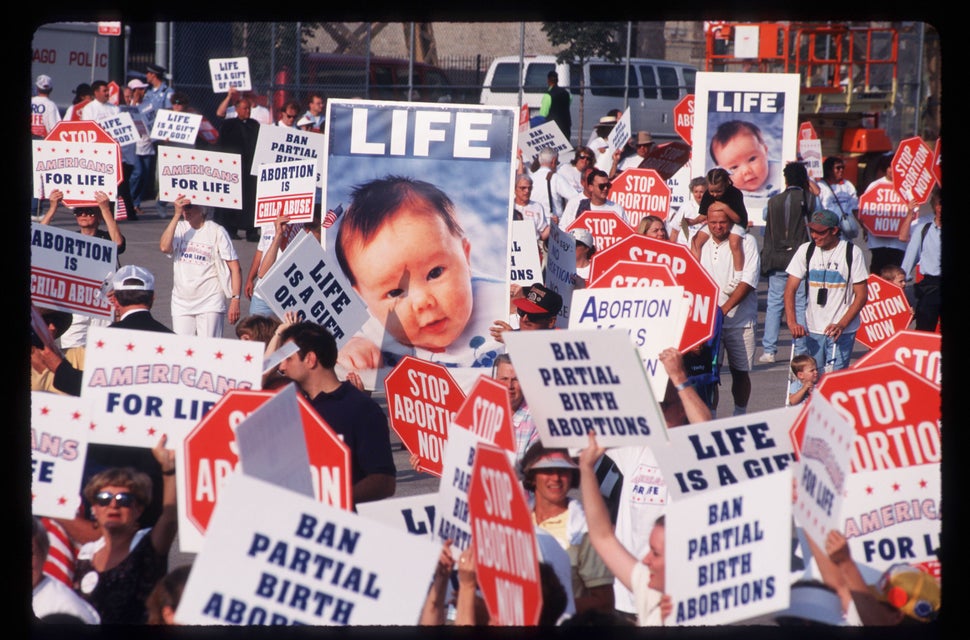
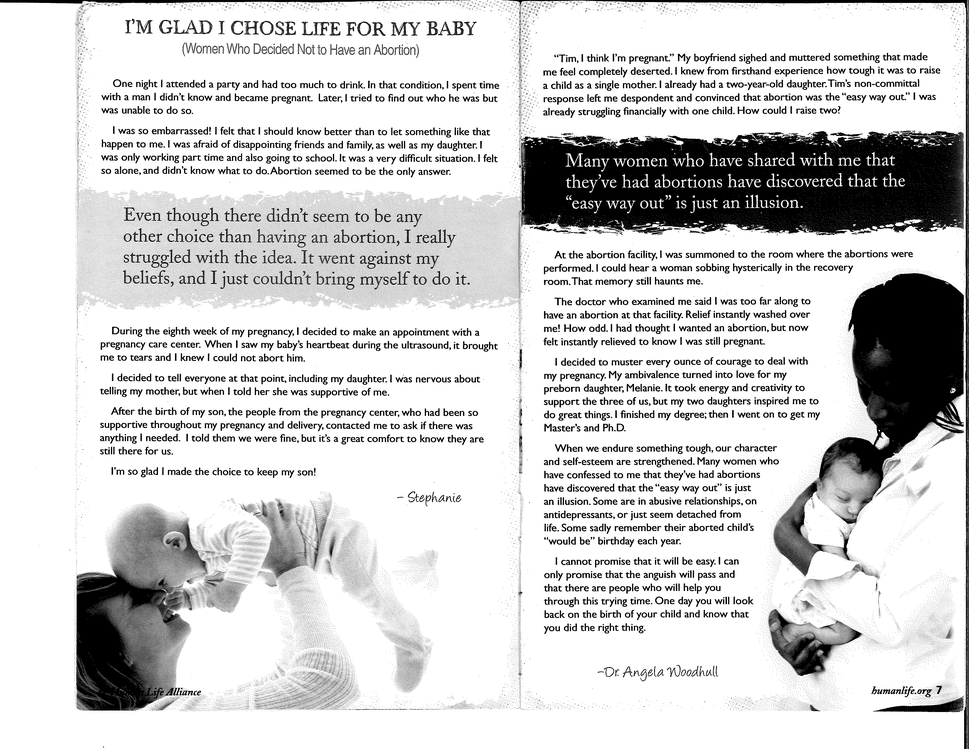
The anti-abortion movement has long used images of children in their marketing materials and posters. Protesters might carry posters featuring a baby or a young child’s face, with words like, “Would you kill me, too?” overlaying the photo. Many volunteers at Crisis Pregnancy Centers pass out pamphlets and fliers outside abortion clinics that include photos of happy-looking families or smiling children.
But the role children play extends outside of appearing on posters.
Kids are also leading prayers or engaging in group prayers led by religious leaders, speaking anti-abortion rhetoric into megaphones or microphones, and passing out literature from crisis pregnancy centers.
There is perhaps no better manifestation of the movement’s use of children than last Saturday morning’s Youth For Life march in Charlotte, North Carolina, outside of A Preferred Women’s Health Center (APWHC), one of the biggest abortion providers in the south.
Love Life Charlotte, a conglomeration of churches in the Charlotte area who have come together to protest abortion access, was granted a parade permit by the city for Saturday morning for their Youth For Life march. According to Love Life Charlotte, about 40 churches bused in children of all ages to march outside the clinic.
Justin Reeder, the founder of Love Life Charlotte, told HuffPost that the event was an opportunity for youth members to “see how being pro-life is not just being against abortion but also offering love and life to those who feel abortion is their only option.”
“As our nation continues to become more pro-life (Editor’s note: a recent Gallup poll showed that 49 percent of Americans currently identify as “pro-choice” while 46 percent identify as “pro-life”) it’s important for young people to see how much love and life the Church can bring to those who feel abortion is their only option,” Reeder said. “The youth are not engaging people, but rather praying that God ushers in a culture of love and life to a place where mothers feel so alone and afraid.”
The youth march drew close to 1,000 participants on Saturday, according to Love Life Charlotte. The patients and patient companions that HuffPost heard from said that the sheer number of people marching outside the clinic coupled with the noise that they were making ensured an overwhelming and distressing experience for anyone moving in and out of APWHC. Two volunteer clinic escorts were so upset by the number of children participating in the demonstration that they left in tears.
Though Reeder said that the aim of the march was not to “engage” with the clinic’s patients, the protest very much affected the appointments of APWHC’S patients. Although the participants never touched any of the patients, they did address them, often directly.
At one point, a 17-year-old member of Love Life Charlotte wept into a microphone, begging women who she called “Mom,” not to murder their babies. A small group of kids performed live music into microphones so that their songs could be heard from inside the clinic.
A Preferred Women’s Health Center is located at the bottom of Latrobe Drive, home to various local businesses on a wide two-lane road. Because Love Life Charlotte had been granted a parade permit, they were able to block off one of those lanes, thus disrupting the usual flow of traffic.
Members of the Charlotte-Mecklenburg Police Department were present to direct traffic and make sure members of all parties ― Love Life Charlotte, other anti-abortion groups, and Pro Choice Charlotte counter-protesters ― were abiding by all of the rules.
Calla Hales, clinic administrator at APWHC, has been skeptical of the police presence at these protests for a long time ― especially after an incident this summer in which members of CMPD were seen entertaining young kids from Love Life Charlotte while their parents prayed and protested outside APWHC.
(HuffPost reached out to CMPD for comment about this incident and did not hear back in time for publication.)
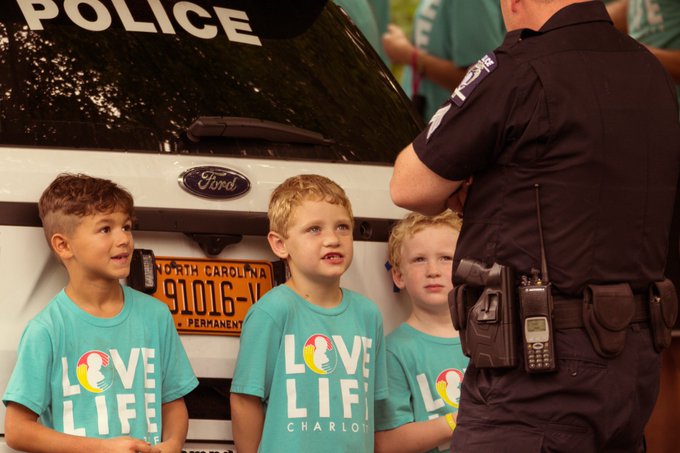

On Saturday morning, in preparation for the youth march, Hales created confidential questionnaires for patients to fill out once they’d made their way into the clinic. Just entering the clinic on Saturday meant passing not just the parade of children praying and singing at them, but also the usual gamut of aggressive protesters, and the three mobile crisis pregnancy centers and their nurses who often try to divert traffic away from the clinic.
Of the 22 patients or patient companions who filled out the questionnaires, which were obtained by HuffPost, 12 of them said that the number of people on the street made them consider leaving their already-hard-to-get appointments.
One woman wrote, “I was scared to death of all those protesters.” Another person, who was a patient’s companion, commented, “I should not have to watch my friend be shamed and emotionally attacked for one of the hardest personal choices she has ever made.”
“They yelled into my car and embarrassed and upset my friend,” a second patient companion wrote on their feedback form. “Music ridiculously loud, able to hear inside the clinic. Very disturbing.”
And one woman, who had brought her daughter to the clinic, complained in her feedback form that on her way down Latrobe Drive to get to the clinic, she had been told by anti-abortion protesters to park “way way away from where I was supposed to be ― I am also handicapped.”
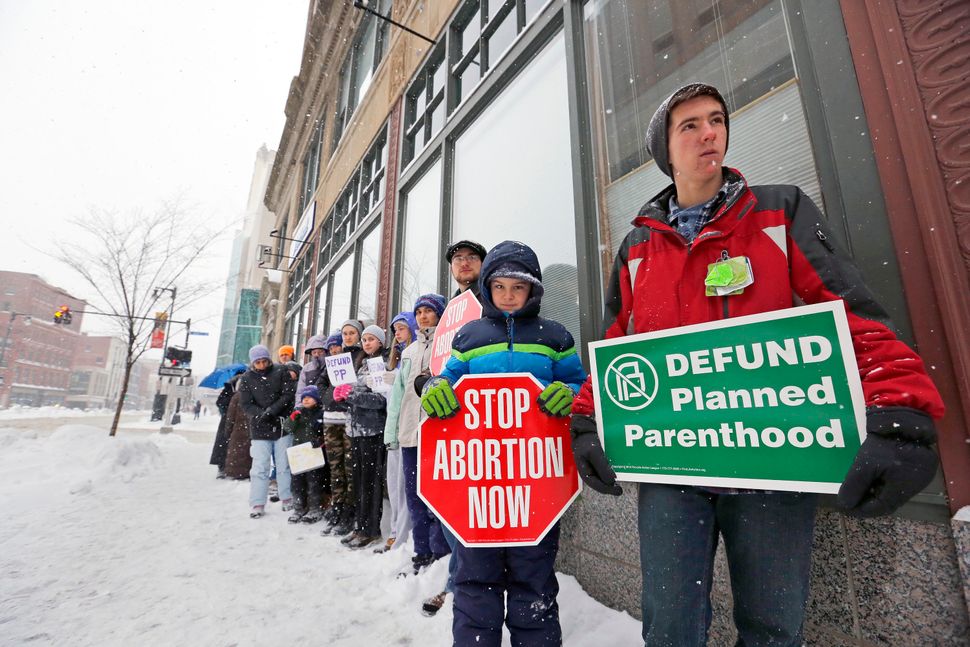
While Love Life Charlotte’s youth march was an extreme example of child-based anti-abortion demonstrating, children all over the country are party to anti-abortion protests at the behest of their parents and their parents’ religious groups. According to patients and clinic staffers that spoke to HuffPost, this participation sometimes crosses the line from simply attending a protest to engaging in harassment.
One volunteer clinic escort based in Atlanta, Karen, told HuffPost that at the clinic she volunteers at, she’s seen an increase in this kind of harassment since the 2016 election.
“Since the election, we have a group from Abolish Human Abortion (AHA) and they often bring at least one little girl to participate in holding giant signs and speaking into the wireless-amplified megaphone,” Karen said. “The little girl will read from the Bible or from an AHA script. It’s clear [these girls] have no real understanding of what they are reading.”
Karen recalled an incident in which one of these young girls looked at her and called her “evil.”
“With direct eye-contact she asked me, ‘Why are you doing this? Why do you want to make money off of murdering babies? Do you know you are evil? Do you know you will burn in hell?’” Karen told HuffPost. “It’s chilling to see young children used this way … I’ve seen babies being carried as props, and toddlers tagging along as props with the AHA group.”
In Michigan at Northland Family Planning, one anti-abortion protester, Elvis Kesto, regularly brings his son, a toddler, to stand outside and protest with a sign that says, “Babies Are Murdered Here.” Kesto regularly posts photos of this onto his Facebook page.
Jessica James, a clinic escort at Northland Family Planning, argues that forcing children to engage in the abortion debate outside clinics is akin to “religious and emotional abuse.”
“My issue is with the long-term effects of what I consider to be religious and emotional abuse on a child that doesn’t have a choice in the matter,” Gird, who is training to be a social worker, told HuffPost.
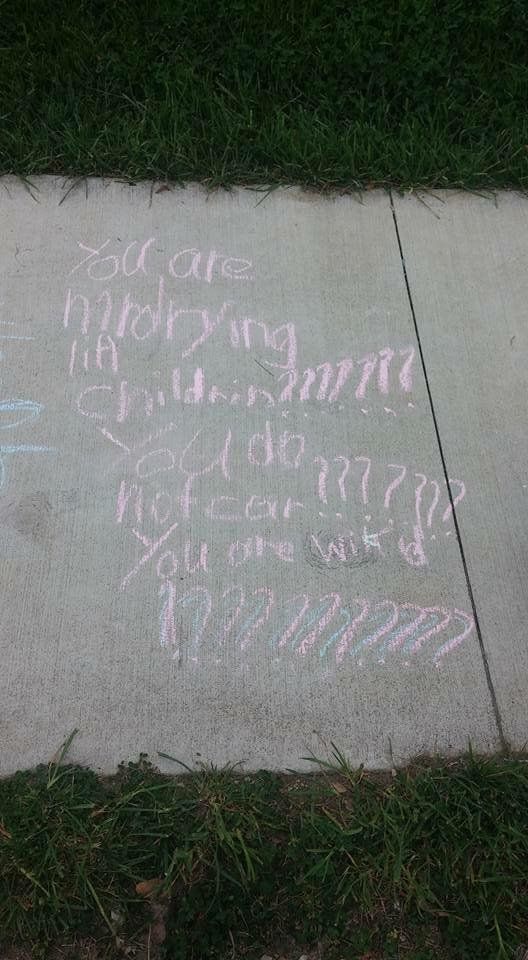
Steven Meyers, clinical psychologist and professor of psychology at Roosevelt University in Chicago, told HuffPost children that young “have limited perspective taking abilities, so they will have difficulty understanding what others experience.”
“Their emerging cognitive abilities mean that they don’t understand the complexity of issues and are more likely to perceive events in black-and-white terms,” he said. “Their stage in moral development involves mainly pleasing their parents and avoiding punishment rather than having the ability at this point to grapple with abstract or complicated decisions.”
In other words, anti-abortion protesters’ kids will follow the lead of their parents, regardless of the emotional consequences it will have on patients, because of their innate want to do right by their mother and father.
Of course, parents across the political spectrum encourage their kids to engage in political discourse. There were many children at the Women’s March on Washington the day after President Donald Trump’s inauguration, and many of their photos and posters went viral.
Meyers sees a clear difference between the Women’s March ― or any other peaceful march in a neutral space ― and anti-abortion protests, which often involve targeting individuals outside of clinics.
“The main difference between [the Women’s March and anti-abortion protests] is the amount of conflict and negative emotion that children are exposed to at these events,” he said. “Peaceful and orderly marches have the advantage of allowing parents to share their values with their children in ways that are more likely to be constructive teaching experiences. High conflict demonstrations can become more volatile and potentially distressing to young children.”
Annie, whose political views have changed since she held signs outside her area abortion clinic, agrees with this assessment.
“I remember first hearing about the concept of abortion when I was 6, I believe, when Bill Clinton got elected,” Annie told HuffPost. “My parents said it was a crime, for he wanted to kill babies.”
She also said that she’s had a hard time engaging in political demonstrations, because it brings back uncomfortable memories.
“I tried to attend an anti-Trump [protest] recently, and almost had a panic attack at the yelling, because it reminded me of the hurt I probably caused as a kid,” she said. “Whenever I see kids in any sort of political protest now, I just want to hug them and hide them away, even if I fundamentally agree with the idea they’re protesting.”
By 11am on Saturday, after the Youth For Life rally and over an hour of marching and praying in the humid North Carolina end-of-summer heat, two young girls from Love Life Charlotte fainted.
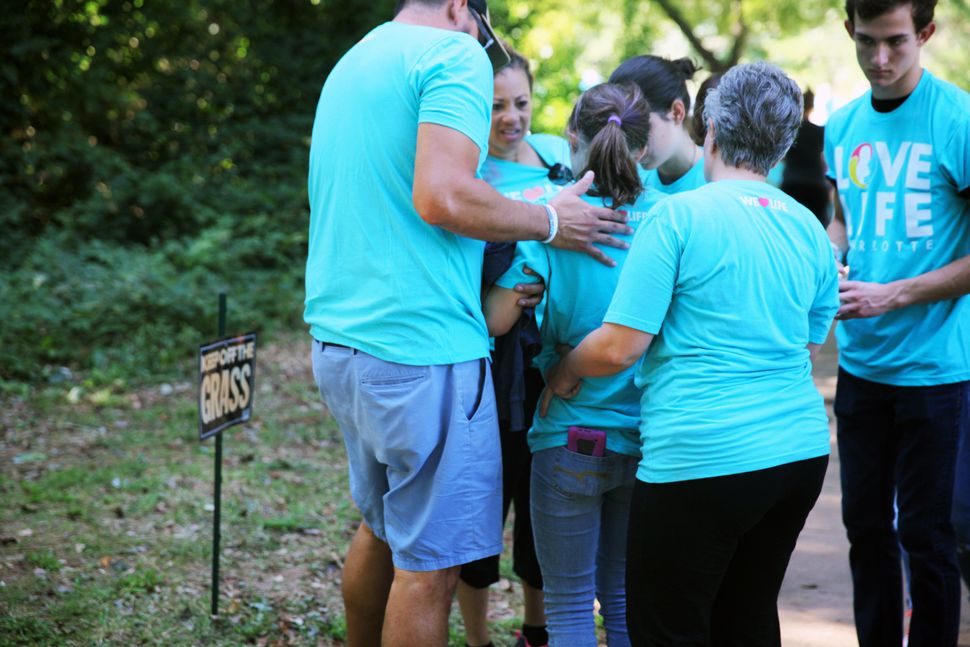
The two young teenagers were too faint to stand up. They were both ultimately fine, but the rest of Love Life Charlotte, including Reeder, carried on up the hill to finish their parade, while only a handful of youths and a couple of adults waited with the girls.
As all of this was happening, a member of another anti-choice group, Cities4Life, yelled prayers into a microphone, and begged women to come out of the clinic.
“Abortion is child abuse,” he said.


 Abortion - Abortion Clinics, Abortion Pill, Abortion Information