“I teach all of my residents, I teach all of the medical students, this is not the standard of care.”

Dr. Jessika Ralph was waiting for her patient to get sick.

The young woman had arrived at Wheaton Franciscan-St. Joseph hospital in Milwaukee, Wisconsin, in labor. She was 18 weeks pregnant, and her twin fetuses were long from viable. She miscarried one fetus within hours of admission, but her labor stalled while the second still had a heartbeat. Because the hospital followed rules issued by the Catholic Church, until the patient hemorrhaged or showed at least two signs of infection—fever of 100.4 or higher, uterine tenderness, rapid heart rate, or rapid fetal heart rate—Ralph could do little except watch her sicken.

So Ralph’s team trimmed the umbilical cord from the miscarried twin as short as possible to minimize the infection risk, and waited overnight.

After about 10 hours, the patient’s temperature soared to 102 or 103 degrees, Ralph recalled in an interview with Rewire in June, a few months after the incident. Ralph and her team gave the patient medication to induce labor. But Ralph could not administer mifepristone, which the American College of Obstetricians and Gynecologists (ACOG) considers part of the most effective drug regimen for such cases. The Catholic hospital didn’t carry the drug, which is commonly used for medication abortions—a failure Ralph believes was religiously motivated and needlessly prolonged her patient’s labor.

At first, the patient’s goals seemed to align with the hospital’s rules, Ralph said: She wanted to try to continue her pregnancy to a viable gestation, even though the chances were slim. But as she rapidly sickened, she and her family pleaded with Ralph to speed up the process of ending her pregnancy. Ralph felt powerless. The fastestsafest method for terminating a second-trimester pregnancy—a surgical procedure called dilation and evacuation (D and E)—was not offered at St. Joseph, where no supervising physicians were capable of performing the common abortion procedure, Ralph said.

For more than 24 hours, the patient labored through painful contractions. She bled heavily, requiring at least one blood transfusion. Her lips and face lost their color. Finally, she delivered a fetus that had no hope of survival.

If the patient had gone to Froedtert Hospital, about five miles away, she would likely have been offered the option of a surgical abortion or induction, without having to get sick first. If she had chosen induction, she could have received mifepristone.

The patient survived her ordeal. Due to medical privacy laws, Rewire could not contact her, but we confirmed Ralph’s account of the hospital’s policies with fellow residents and experts who said such constraints are typical for the growing number of hospitals nationwide that follow directives written by the U.S. Conference of Catholic Bishops. These rules restrict access to contraception, sterilization, abortion, and end-of-life care, although how they apply can vary based on the hospital, doctor, and even the local Catholic bishop who oversees compliance with the directives. Providers have cited these rules to deny transition-related surgery to transgender patientsemergency contraception to rape victims, and abortion care to patients in the potentially life-threatening process of losing their pregnancies, like the woman Ralph treated.

A combination of factors are now giving Catholic hospitals unprecedented power over U.S. health care. Recent decisions by the U.S. Supreme Court and President Donald Trump are poised to hand Catholic hospitals almost unfettered leeway to impose religious doctrine on patients and their own employees. And the reach of these hospitals is expanding. Nationwide, the directives govern one in six acute-care hospital beds; Wisconsin is one of five states where that rate is more than 40 percent.

To get a sense of how profoundly the Catholic directives shape access to reproductive health care, Rewireinterviewed doctors who rotated through three Milwaukee hospitals as part of a four-year OB-GYN residency at the Medical College of Wisconsin (MCW). Two of the hospitals, St. Joseph and Columbia St. Mary’s, are run by Ascension Health, the largest Catholic health system in the world and largest nonprofit health system in the United States. Ascension declined to respond to a detailed list of questions for this article, including the concern that its hospitals’ policies put patients at risk.

The third hospital where the residents worked, Froedtert, is not Catholic.
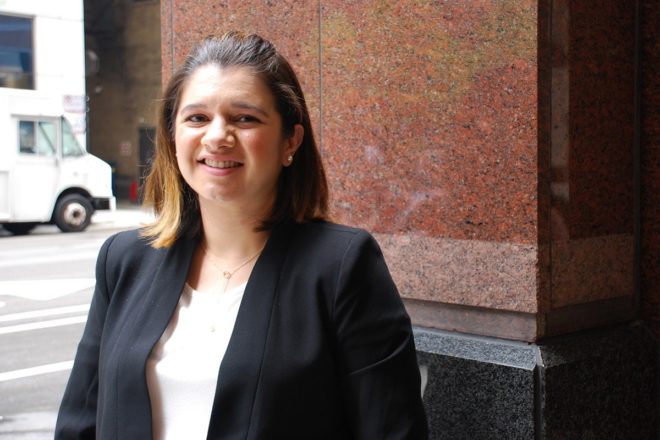
Dr. Jessika Ralph (Amy Littlefield/Rewire)

This situation put doctors like Ralph, who completed her residency in June, on the front lines of one of the most contentious areas of U.S. health care—the role of religion in medicine. Ralph and her colleagues saw firsthand how, even within the same city, a patient’s care could vary dramatically depending on whether she happened to wind up in a Catholic hospital or not. And in one of the country’s most segregated cities, the residents said, the impact of these religious restrictions often fell most heavily on low-income patients of color. St. Joseph, which is located in a mostly Black neighborhood, and the other Catholic hospital, St. Mary’s, both see a significantly higher share of Medicaid patients than Froedtert, according to data from Definitive Healthcare.

Ralph and the other residents interviewed by Rewire found ways to serve patients as best they could, while staying within religious rules that sometimes forced them to go against accepted medical standards. For Ralph, who trained medical students and fellow residents, an important part of that work was speaking out against the Catholic directives. She admonished her trainees to provide mifepristone when inducing labor at any hospital that allowed it, for example.

“I teach all of my residents, I teach all of the medical students, this is not the standard of care,” Ralph told Rewire, slamming her hand on the table to punctuate her words. “I tell them, at Froedtert, you better be giving them mifepristone. I will be very disappointed in you if you do not, and anywhere that you go, you better be giving them mifepristone, because we know that it makes this process safer.”

“I Was So Worried That She Would Never Trust a Doctor Again”

In less than 1 percent of pregnancies, a patient’s water breaks before the fetus is viable. When this happens, ACOG recommends patients be counseled about the risks of trying to continue the pregnancy versus ending it immediately.

“Immediate delivery should be offered,” the ACOG bulletin states.

That’s what happens at Froedtert Hospital, where patients are counseled about the risks and benefits of all options, including remaining pregnant, according to Dr. Kate Dielentheis, an OB-GYN who works there.

“My strong medical recommendation is that in a previable, preterm rupture of membranes, or premature rupture of membranes, it is not safe to stay pregnant, because of the infection risk and the risk that mom can get very, very, very sick,” Dielentheis, an assistant professor at MCW, told Rewire in a phone interview.

But patients at Catholic hospitals often have no choice but to run that risk if the fetus has a heartbeat.

In rare instances, the consequences of maintaining a pregnancy under these circumstances can be fatal, as in the case of Savita Halappanavar, who died of septicemia in 2012. Halappanavar had sought care while in the process of losing her pregnancy at a hospital in Ireland, where abortion is illegal in most cases. The hospital denied her an abortion; one practitioner told her Ireland was a “Catholic country.”

In the United States in 2010, a Catholic hospital in Michigan sent Tamesha Means home twice after her water broke at 18 weeks. When she returned a third time with an infection, the hospital prepared to send her home again, treating her only after she began to deliver, according to the American Civil Liberties Union, which sued the hospital and the U.S. Conference of Catholic Bishops on her behalf. Means survived.

Residents like Ralph may face less extreme versions of this scenario a few times a year.

“You’re in this limbo of knowing that the right thing to do is to induce her labor because she is going to get sick. And when we say sick, I mean, it’s not common but they can die, they can become septic and die from something that we could treat and prevent and never have them get ill,” Ralph said. “How do you tell this patient, in good conscience, ‘I’m waiting for you to get sick?’”

The Catholic directives forbid abortion, but allow procedures aimed at alleviating a serious risk to the pregnant person, even if they also happen to end the pregnancy.

But how this rule applies in practice—how sick a patient must get before she can be treated, and what that treatment entails—can vary, even within the same hospital.

In a case from a few years ago that still troubles her, Ralph was ordered to send a young patient home from St. Joseph after her water broke at 18 or 19 weeks. Typically, doctors would keep patients like her under observation for 24 hours, but the attending physician overseeing Ralph was concerned about the financial cost of keeping her, particularly since little could be done to help the patient due to the directives. So the attending told Ralph to discharge her after several hours.

The patient, still reeling from the news that she was likely to lose her pregnancy, was furious and frightened. She couldn’t understand why the hospital was sending her home if she was at risk of infection, Ralph recalled.

“I had to be the one to go in and say, ‘I have to send you home,’ even though it’s not what I wanted to do … and explain to her, essentially, come back when you’re really sick, and then we can take care of you,” Ralph said. “I was so worried that she would never trust a doctor again.”

Before sending her home, Ralph told the patient she would have more treatment options at Froedtert Hospital. She was careful not to document that advice in the patient’s medical record, for fear of ruffling feathers at St. Joseph. The patient checked into Froedtert the next day, Ralph learned.

Sometimes, the residents would help patients get care at Froedtert if they were in the process of losing their pregnancies and wanted a D and E or a prompt induction. If a patient was under the care of certain attending physicians who opposed abortion, residents knew such referrals were off limits.

Even at Froedtert, terminating a pregnancy was not always seamless. Some doctors and staff who opposed abortion refused to take part in D and Es, which could stall surgeries. Froedtert does not perform abortions unless two doctors attest that there is a lethal fetal anomaly or significant risk to the patient. Unlike the Catholic hospitals, however, Froedtert deems it a sufficient risk if a patient’s water breaks before viability, even without an infection.

Spokespeople for Froedtert and MCW declined to comment for this story. Dielentheis, the OB-GYN who works there, confirmed the hospital’s policies on abortion and said that in her experience, enough doctors there are willing to perform D and Es that moral objections by other physicians do not delay care.

At the Catholic hospitals, residents felt they were forced to place an implicit moral condemnation on patients.

“Even if you’re not personally putting a judgment on them, that kind of comes with an inherent judgment. You know, like, I’m not saying what you’re doing is wrong, but I can’t do it here, because it violates the Bible,” Dr. Sarah Krueger, who finished her MCW residency alongside Ralph, told Rewire. “Even if you don’t feel that same way, your patients kind of feel like you’re judging them.”

“It Feels Like I’m Letting Them Down”

Dr. Molly Isola, who is due to finish her MCW residency next year, grew frustrated with a note she saw repeatedly in her patients’ medical records.

“I’ve seen more than one patient who, in her notes, it will say, ‘wanted a tubal ligation last time but couldn’t get it where she delivered,’ and now she’s pregnant again,” Isola told Rewire in a phone interview.

These were patients who delivered babies via cesarean section and wanted to have their “tubes tied” at the same time, a common practice that obviates the risk and cost of a second surgery. But under the Catholic directives, Columbia St. Mary’s hospital forbids tubal ligations under any circumstances.

“I just don’t feel that it’s ethical to require someone to have a second surgery that isn’t necessary,” Isola said. “It could all be done at once.”

Isola would offer to refer her patients to another hospital that allowed tubal ligations, but some chose to deliver at St. Mary’s anyway, either because they had done so before, or because, like many patients at the hospital, they spoke Spanish, and wanted a midwife from the bilingual clinic that partners with St. Mary’s.

At St. Joseph, tubal ligations were allowed only during a c-section, following approval by an ethics committee that considered factors like prior c-sections and medical conditions that could make pregnancy dangerous. Krueger, for example, applied for a tubal ligation for a patient who was pregnant with twins and had more than five children, but because all of the patient’s previous deliveries were vaginal and she was relatively healthy, the request was denied. Some fear the policy could become even stricter after Ascension, which already owned St. Mary’s, acquired St. Joseph, and other Wheaton Franciscan hospitals in the area, last year.

Krueger also found herself frustrated with the contraceptive policies at St. Joseph, where the residents’ clinic didn’t stock long-acting reversible contraceptives like intra-uterine devices (IUDs). In yet another sign of the inconsistency of such restrictions, the residents’ clinic at St. Mary’s did stock some of these methods.

In segregated Milwaukee, St. Joseph sits in a low-income, predominantly Black area. It wasn’t uncommon for Krueger’s patients to take three buses or walk dozens of blocks to reach St. Joseph for medical care. Often, their pregnancies were complicated by consequences of poverty and racism—poor access to nutritional foods, which can fuel health conditions like diabetes; exploitative jobs that didn’t afford time off for medical appointments; or unstable housing.

For these patients, adding an additional barrier, like sending them elsewhere for another medical appointment, often meant they just never got the care they wanted.

One patient became pregnant again only to lose her fetus in the second trimester, an ordeal that Krueger believes could have been avoided if the patient had been able to get an IUD at her postpartum visit.

“It feels like I’m letting them down,” Krueger told Rewire. “These patients have had negative interactions with health-care providers before and so they come in jaded and guarded and not trusting and you build this really awesome, awesome relationship with them, but then at the end, that’s something that they really need … it impacts their life forever. And I can’t give that to them.”

While Krueger and her colleagues received relatively comprehensive reproductive health-care training at Froedtert, some residents aren’t so lucky. About 13 percent of OB-GYN residency programs in the United States are at faith-based institutions with restrictive policies on family planning, according to Maryam Guiahi, an assistant professor at the University of Colorado School of Medicine.

Graduates of these programs often report being unable to provide basic services like IUD insertions and tubal ligations, instead relying on colleagues or even watching YouTube videos to compensate for their lack of training, Guaihi wrote in a recent article for the Journal of Graduate Medical Education.

Ultimately, that means patients can suffer from delays and inadequate counseling, even in secular facilities, if their doctor was trained in a Catholic institution.

As for the residents Rewire interviewed, an important lesson they learned was to avoid institutions with religious restrictions on health care. Both Ralph and Krueger have accepted positions where they can provide care without these barriers, and Isola said she asks potential employers about them.

“I haven’t just ruled out [working for] Catholic hospitals as a rule, but the things that I want don’t seem compatible with most if not all” of these hospitals, Isola said.

“But they’re everywhere,” she added resignedly.

https://rewire.news/article/2017/09/07/catholic-rules-forced-doctor-watch-patient-sicken-now-shes-speaking/

Anti-abortion leaders urge Congress to fast-track Planned Parenthood defunding
© Getty Images

Ten leaders of anti-abortion groups are urging Congress to defund Planned Parenthood using a fast-track budget maneuver that is immune to filibuster.

The leaders, led by the Susan B. Anthony List’s Marjorie Dannenfelser, asked Republicans in a letter Tuesday to revisit the fiscal year 2017 reconciliation bill “immediately” to defund Planned Parenthood.

That bill was supposed to be used to repeal parts of ObamaCare, but Senate Republicans could not find the support within their party to pass it, and given a raft of congressional must-do items, that effort seems unlikely.

“The pro-life majority that now controls both chambers of Congress and the White House must pass a reconciliation bill stopping the vast majority of federal funding for Planned Parenthood,” the leaders wrote in the letter.

“Doing anything less brings into question whether this Congress can truly be called the Pro-life Congress. Rhetoric must be translated into law.”

The leaders urged Republicans to “immediately” find consensus on a bill that “takes Planned Parenthood off the federal Medicaid dole and offers women comprehensive alternatives.”

“Whether that is a broad pro-life healthcare reform package or a narrower bill is up to Congress to determine, but giving up is not why the voters sent pro-life Republicans to Congress,” the leaders wrote.They said Congress should defund Planned Parenthood using the fiscal 2018 bill should time for the 2017 bill run out.

The 2017 reconciliation bill expires at the end of the month.

Current law already prohibits federal funds from being used for abortions, but opponents of Planned Parenthood argue that money still indirectly supports abortion.

The Senate GOP’s health care bill would have defunded Planned Parenthood by blocking Medicaid reimbursements for one year.

It also would have banned the use of ObamaCare subsidies for plans that cover abortion.

The letter was signed by Dannenfelser, as well as Family Research Council president Tony Perkins and Americans United for Life president and CEO Catherine Glenn Foster, among others.

http://thehill.com/policy/healthcare/349297-anti-abortion-leaders-urge-congress-to-defund-planned-parenthood

USWEATHERSTORMHARVEY
A Houston Police dive team boat rescues individuals during the aftermath of Hurricane Harvey on August 27, 2017 in Houston, Texas.

Brendan Smialowski/AFP/Getty Images

Whole Woman’s Health, a group of clinics that provide abortion care and other health services, announced on Friday that it will offer free abortions to women impacted by the devastation of Hurricane Harvey. Noting that women in the Houston area and elsewhere in southeast Texas may have had to miss abortion appointments during the storm, a blog post on the Whole Woman’s Health website promised to help affected women get to one of the organization’s four Texas locations for abortion care at no cost.

“During Hurricane Harvey, many of the clinics in Houston had to close temporarily, leaving women with very few options,” the post read. “Continued political attacks on abortion access make an unwanted pregnancy particularly stressful in Texas—add that to the stress of dealing with hurricane aftermath.”

Natural disasters exacerbate existing logistical and financial barriers to women’s health care access. Women on Medicaid can’t use their insurance to cover or subsidize abortion care, and low-income women may save for weeks to afford the procedure, only to find that they’re too far along to get a cheaper medical abortion or to get a legal abortion at all in the state. After losing property or wages to a hurricane, even more women may find it difficult to pay for an abortion. Where it was once merely difficult to afford child care and time off work to accommodate an abortion appointment, after a natural disaster, it can be nearly impossible. And since women are usually the default caretakers of their families, they face the bulk of the extra responsibilities that come after a tragedy, including making arrangements for relief, organizing relocation, and caring for the young and old. This further diminishes the reserves of time and resources available for their own health care.

For the month of September, Whole Woman’s Health—the successful plaintiff in last summer’s landmark Supreme Court case on abortion restrictions—will cover both travel and housing costs for Harvey-affected women who need help getting to the organization’s outposts in Austin, Fort Worth, McAllen, or San Antonio. The group will draw from its own abortion fund, the Stigma Relief Fund, as well as the Lilith Fund, a Texas-specific abortion-funding organization that has established an emergency fund for care for Harvey survivors. Slaterecommended donating to abortion funds after Donald Trump’s election because they support people who, by virtue of their class, geographic location, or immigration status, can’t access abortion care, a right wealthier women will almost always be able to enjoy. It’s for this same reason—that they empower the most marginalized people exercise autonomy over their own bodies—that abortion funds are essential resources in the aftermath of a natural disaster.

All over the world, in all kinds of crisis situations, women’s sexual and reproductive health care is one of the first basic needs to fall through the cracks of disaster relief. Rates of sexual assault rise in crisis zones, and distraught survivors are more likely to engage in sexual behaviors that put them at risk for unwanted pregnancies and sexually transmitted infections. At the same time, agencies focused on food, shelter, and first aid often neglect sexual health needs that don’t go away when disaster strikes. The American Congress of Obstetricians and Gynecologists recommends that emergency health care providers stock up on emergency contraception, preventive contraception, and condoms when they help communities recover from a natural disaster. These are resources no one’s sending in their donation boxes of diapers and canned food.

Abortion care is even trickier to ensure in the wake of a crisis, since federal funds can’t be spent on abortions and politicians may be reluctant to single out a controversial medical procedure as a critical need during a time of recovery. Abortion funds in Texas are filling in the gaps of Harvey relief, because that’s what abortion funds are designed to do.

http://www.slate.com/blogs/xx_factor/2017/09/05/texan_survivors_of_harvey_can_get_free_abortion_care_with_travel_costs_covered.html

IMAGE: BOB AL-GREENE / MASHABLE
An abortion can be an emotional experience that raises questions about a woman’s relationships, past regrets, and future. She might want to confide in someone about these feelings in the following weeks, months, or years.

Abortion opponents have taken that complex reality to a disturbing extreme, with the hope of convincing the public and lawmakers that ending a pregnancy puts many women at significant risk for mental health problems like substance abuse, depression, and suicide.

To vividly and persuasively make their case, anti-abortion rights activists often point to scientific research that makes dubious connections between the medical procedure and long-term psychological turmoil or suffering. What politicians looking to restrict abortion don’t tell the public is that not all research in this field is equal.

“No one needs to tell us that we need to take time to think. People are doing it anyway.”This strategy has found its way into statehouses across the country. A recent report from the Guttmacher Institute, a research and advocacy organization, found that more than half of all women of reproductive age in the U.S. live in a state with at least two types of abortion restrictions that have no basis in scientific evidence, including counseling requirements and mandatory waiting periods.

Not all of these laws are explicitly premised on the notion that abortion causes lasting emotional or psychological damage, but many are routinely defended as measures to protect women’s health.

“I don’t think requirements are the solution to anything,” said Melissa Madera, who has interviewed 288 people about their abortion experiences as founder and director of the podcast The Abortion Diary. “No one needs to tell us that we need to take time to think. People are doing it anyway.”

Meanwhile, a battle over the science of abortion and mental health continues to unfold: Reputable medical and professional organizations in the field have found that the procedure doesn’t cause long-term psychological harm, but a group of researchers insist it’s devastating.

The losers in this fight? People who’ve had or may need an abortion and hear conflicting messages about the research, and who may face long waits to get care because of laws designed to slow the process.

While many women who’ve had abortions can share how the experience affected them, scientists can’t rely on these anecdotes to draw conclusions about mental health for an entire population. Instead, the best scientific research minimizes bias and controls for variables. When randomized trials are possible, scientists can recruit volunteers who are then assigned different outcomes.

With abortion, however, that would mean randomly selecting whether a woman carries an unintended pregnancy to term or ends it — disturbing, unethical, and impossible. Instead, research on abortion and mental health outcomes must rely on what are known as observational studies. That means women choose whether to end or complete their pregnancy, and then scientists follow those two groups over time to observe and compare their mental health outcomes. Scientists can make inferences about what they find in observational studies, but it’s more challenging to draw a straight line between cause and effect.

The path from pregnancy to developing a specific mental health experience can be nearly impossible to accurately track. Efforts to untangle the relationship between pregnancy and a specific mental health experience, particularly when abortion is involved, often fall short, said Julia Littell, a professor of social work at Bryn Mawr College who specializes in research design and synthesis but does not publish on abortion.

Research shows, for example, that the experiences that make women more likely to have an unintended pregnancy or abortion — like poverty, childhood sexual and physical abuse, and domestic violence — also are associated with an increased risk of developing a mental health condition. If they experience depression or anxiety and have had an abortion, it’s crucial for researchers to know which came first.

In the past decade, two major U.S. and UK professional organizations, the American Psychological Association and the Academy of Medical Royal Colleges, conducted in-depth reviews and found that the best evidence indicated ending an unplanned pregnancy in the first trimester posed no greater risk for mental health problems than giving birth.

That comparison helps to lay bare a political agenda that’s often more obsessed with protecting women from the potential effects of abortion than supporting women with the various emotional and psychological challenges of motherhood. Politicians, for instance, aren’t clamoring to pass laws making it harder for women to get pregnant because they might experience postpartum depression, anxiety, or psychosis.

More than 20 years ago, Mika Gissler, an epidemiologist and research professor of public health at The National Institute for Health and Welfare in Finland, published a study that anti-abortion activists have cited as proof that abortion can lead to suicide.

He analyzed the mortality risk of more than 600,000 women in a national register who gave birth or had an abortion. In his 1996 BMJ study, those who ended a pregnancy were at a much higher risk of dying by suicide, and he found the same to be true again in a studypublished in the European Journal of Public Health, in May.

But Gissler, after studying this cohort for two decades, believes there’s a more complex explanation for the association between abortion and suicide. First, his studies can’t account for pre-existing mental health conditions because the register lacks detailed information about their experiences. Gissler also thinks that motherhood itself largely reduces risky behavior like self-harm. The Finnish healthcare system plays a critical role as well by giving teenage mothers, the subject of his latest study, intense support during and after pregnancy. Teens who have an abortion don’t get the same reinforcements.

Though his 1996 study noted the possibility that abortion might negatively affect women, he holds no reservations now. “[I]t’s quite clear it’s not the abortions,” he said. “It’s the complex situation of the women.” Abortion and suicide, he noted, share the same risk factors, including economic instability and limited education.

Gissler said he’s been courted by anti-abortion researchers, some of whom he characterizes as well-versed in statistics but lacking expertise in mental or reproductive health epidemiology.

“They are making wrong conclusions and really bad science, if you can even call it science,” he said.

Though it might surprise some to learn that peer-reviewed journals publish questionable research, Littell said it does happen. A journal editor, for example, may not fully understand a study’s methodology and findings.

In 2008, a group of researchers published a review in Contraception suggesting that quality made a huge difference in abortion research. The highest quality studies did things like control for pre-existing mental health conditions and other important confounders, use the most appropriate comparison groups, and use widely accepted mental health measures. The review concluded that the highest quality studies don’t indicate abortion leads to long-term mental health problems, whereas the low quality studies largely reported a relationship between the two experiences. The authors also acknowledged that a “minority” of women experience “lingering post-abortion feelings of sadness, guilt, regret, and depression.”

“The goal of any such research should be to uncover the truth and share that with women and patients.”“The goal of any such research should be to uncover the truth and share that with women and patients,” said Chelsea B. Polis, co-author of the Contraception study and a senior research scientist at the Guttmacher Institute.

If that seems self-evident, consider that the debate over abortion and mental health is a lot like the controversy that has plagued research on climate change, evolution, or vaccines: A vocal group of researchers sees the scientific consensus as the product of bias, ethical misconduct, or even conspiracy and sows doubt at every possible turn. This isn’t just professional disagreement — it quickly begins to look like an ideological struggle.

Take, for example, what happened in December when JAMA Psychiatry published the largest and longest prospective study in the U.S. comparing the mental health outcomes of women who had an abortion to those of women denied an abortion. It followed 956 women over the course of five years, compared four groups with different abortion outcomes, and found that ending a pregnancy did not appear to increase a woman’s risk of developing mental health symptoms.

Those who had an abortion did not experience higher rates of anxiety, depression, low self-esteem, or low life satisfaction than those who were denied the procedure. In fact, women turned away from a clinic because they exceeded the facility’s gestational limit initially had higher levels of anxiety, lower self-esteem and less life satisfaction than those who had the procedure. Between six and 12 months, however, all of the women had similar mental health outcomes throughout the remainder of the study.

“I think that if the claim is to protect women’s mental health, what researchers are finding is that allowing women to make decisions and access care is more protective than denying them care,” M. Antonia Biggs, the study’s lead author, said.

The study garnered praise as providing “the best scientific evidence” on the mental health effects of abortion from a former director of reproductive health at the Centers for Disease Control and Prevention.

However, Priscilla K. Coleman, a professor of human development and family studies at Bowling Green State University whose own body of work consistently demonstrates a relationship between abortion and increased risk for mental health problems, criticized the study as methodologically flawed in a self-published rebuttal, and suggested there was a broader conspiracy to publish fraudulent results that bolstered the case for abortion rights.

“If we really wanted to promote [an agenda], we would have wanted to find more negative outcomes for the women denied abortion,” said Biggs, who is a social psychologist researcher with Advancing New Standards in Reproductive Health, a research group at the University of California at San Francisco.

Coleman said that she supports waiting periods and “sensitive, individualized pre-abortion counseling” and will oppose abortion until well-designed studies demonstrate it is beneficial to women. Coleman has served as a paid expert witness in abortion-related legal cases and for legislatures that considered restrictive measures, but her research has also been thoroughly critiqued.

“I know it’s appropriate science. I know I care about women. I just know what I’m doing is right.” A 2009 study Coleman published in the Journal of Psychiatric Research, which did not account for whether women had pre-existing psychological conditions, became the subject of heated criticism, and elicited a critical note from one of the journal’s editors. In 2012, the Eighth Circuit Court of Appeals cited her testimony when it upheld a South Dakota law that required physicians to tell patients they may be at greater risk of suicide if they have an abortion. The decision also cited Gissler’s 1996 paper. The dissent noted, however fruitlessly, that Gissler disavowed a causal link between abortion and suicide.

“We have to promote sexual and reproductive health and mental health, and have a checkup after the abortion to avoid any suicide [risk] instead of restricting women’s possibility to terminate pregnancy when they need it,” Gissler recently said.

In 2011, Coleman published a controversial study in the British Journal of Psychiatry. It attracted some support, but also prompted several letters of concern from researchers across disciplines who said the meta-analysis was poorly designed and didn’t account for the quality of the evidence it cited. Littell argued that it violated basic rules for synthesizing scientific research and called for its retraction. The editor declined to do so, a point Coleman raises in defense of her work.

Coleman said that she doesn’t routinely include published criticism of her work in expert testimony, but does address them in rebuttals when necessary. “I know it’s appropriate science,” she said of her research. “I know I care about women. I just know what I’m doing is right.”

Whether women might need emotional or psychological support after an abortion is an important public health question. The National Abortion Federation advises clinics to provide patients with counseling referrals and resources, and all medical providers must abide by informed consent laws and present patients with information about the procedure, its risks, and alternatives.

“You can make the choice to have an abortion and still feel complicated feelings about it.”Lawmakers opposed to abortion, however, just don’t believe any of those measures go far enough.

Madera believes that counseling should be easily accessible for abortion patients. Her intimate knowledge of other people’s abortion experiences, along with her own at the age of 17, has made her skeptical of competing social or political narratives that abortion is always traumatic or always simple.

“You can make the choice to have an abortion and still feel complicated feelings about it,” she said.

Instead of acknowledging that reality, though, politicians are using it to justify restricting a woman’s right to choose in the first place.

http://mashable.com/2017/08/17/abortion-mental-health-science/?utm_source=nar.al&utm_medium=urlshortener&utm_campaign=FB#TDoKmSnpMqqC

From Syria to Nigeria and Colombia, women rescued from the horror of war face losing the services that in many cases have saved their lives

A South Sudanese refugee who was raped for several days by soldiers stands by a window at a women’s centre run by the International Rescue Committee, in Bidi Bidi, Uganda
 A South Sudanese refugee who was raped for several days by soldiers stands by a window at a women’s centre run by the International Rescue Committee, in Bidi Bidi, Uganda. Photograph: Ben Curtis/AP

If the first victim of war is the truth, the second is often female. And the people who pick up the pieces are usually aid workers, as it is their health centres and “safe spaces” and camp programmes that help women to work through the trauma of loss, displacement and sexual violence.

Funding for this work quite often features the US government. US global health funding has topped $10bn in each of the past three years.

But all that is now at risk, after President Donald Trump’s decision to reinstate the so-called Global Gag rule, which will ban funding to any non-US aid groups that offer abortion services or advice funded from other partners.

As the cases below demonstrate, often the support given to these victims of war will have nothing to do with abortion. But, because the provider might be linked to abortion advice elsewhere in the world, the life-saving programmes they offer are in jeopardy. Without US funding, some are likely to close by the end of the year.

https://interactive.guim.co.uk/2016/08/explainer-interactive/embed/embed.html?id=9ee37c80-8b48-4f54-b95b-753fa4de7acb

And through no fault of their own, women suffering the agonies of war will find themselves alone.

Menash’s story

Menash had been a sex slave for Islamic militants Boko Haram for months when one of her kidnappers declared he wanted to marry her.

She refused – she was already married with six children – although her husband had fled their home when she and her sister were abducted. Eventually, she escaped.

As she sits in a quiet cubicle in Muna camp in Maiduguri with her baby son, the trauma Menash experienced shows in her movements and on her face: her head, her eyes, her strong hands, all seem heavy under the weight of what she went through in the Sambisa forest.

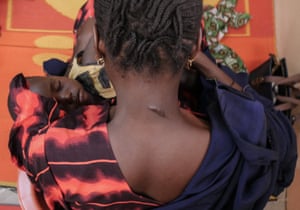
Menash holds her baby at the ‘safe space’. Her neck is scarred from when a Boko Haram militant tried to behead her
Pinterest
 Menash holds her baby at the ‘safe space’. Her neck is scarred from when a Boko Haram militant tried to behead her. Photograph: Ruth Maclean for the Guardian

“Five men used to come and rape me,” she said. “I complained about them to the man who wanted to marry me, but he just said: ‘That’s their tradition. That’s what they do.’ Even if I’d married that man, the others would have kept raping me.”

We are sitting in a safe space created by the UNFPA to help women like Menash, of whom there are thousands in this camp alone.

This is a place that welcomes women who have fled their homes or, like Menash and like the Chibok girls, escaped captivity under Boko Haram, which abducted, raped and murdered thousands of Nigerians, and left millions homeless.

Far from home, with no money or food and still facing violence and sexual assault in the camps, women can come to these hastily thrown-up buildings, sit on colourful plastic mats spread on the concrete floor, talk to each other, watch television, and learn to sew or make detergent to sell.

https://interactive.guim.co.uk/maps/embed/jun/2017-06-19T15:18:46.html

But as the US defunding of UNFPA threatens projects like this, the question is: for how much longer?

Here, the fund not only helps women get contraceptives, if they want them, but does much more. In camps across Nigeria’s north-east, they hand out soap, sanitary towels and clothes to those who have just escaped from Boko Haram and who often arrive in rags with nothing. Midwives examine pregnant women, sending those with complications for further medical help. Women who need counselling, like Menash, also get help.

Menash had not anticipated what her punishment would be for refusing to marry her captor, but she thought it could not be much worse than what she was already living through. However, then she was taken outside and made to kneel in the dirt, surrounded by other women including her sister.

As the sewing machines whirr outside our cubicle, she lifts her hijab over her face and leans forward, her fingers tracing a scar on the back of her neck. “They tied me up and tried to cut my head off,” she said. “I thought my life was over.”

Women at the ‘safe space’ at the Muna camp in Maidguri learn how to make soap to sell.
Pinterest
 Women at the ‘safe space’ at the Muna camp in Maidguri learn how to make soap to sell. Photograph: Ruth Maclean for the Guardian

She had been struck several times by a knife when a plane overhead suddenly made her attacker flee, along with other insurgents. But Menash’s hands were still tied behind her, with blood pouring down her back. Suddenly, her sister ran to her and helped her up.

“She cut the rope around my hands, and I ran, I just kept running. I couldn’t stop,” said Menash. “But my sister was not running fast enough. I haven’t seen her since.”

In Maiduguri, her husband rejected her, she said. He shouted at her to “get away”, calling her a “Boko Haram whore” and beating her.

“Nobody took my side, they were all yelling ‘Boko Haram wife’ at me,” she said quietly. “I just turned around and left.”

When she met Zainab Umar, a counsellor at Muna’s safe space, several months later, Menash was starving and dirty, and her hands shook violently. She said strangers sometimes laughed about her to her face and spread her story around.

Around 60% of women are estimated to have experiencedgender-based violence in the north-east of Nigeria and rape is rife in the camps. The need is huge for Umar and her colleagues, who work non-stop to counsel women like Menash and help them to get on their feet financially. Nevertheless, health workers and counsellors in the 20 safe spaces for women and girls across the region are not sure how much longer they will have jobs.

The UNFPA – which suffered another blow last month, when its director Babatunde Osotimehin died suddenly – is trying to find other donors to fill the gap left by the US. But it is a difficult time to raise money in Nigeria, where less than a third of the $1bn needed to address the humanitarian crisis created by the rise of Boko Haram has been raised.

Menash approached Umar and asked for something to eat after she had seen her talking to women in the camp. Umar explained that she wasn’t offering food, but family planning advice, neonatal checks and counselling. “Initially, I thought I wouldn’t bother,” said Menash. “But then I thought – even if he can’t give me anything, maybe I should see her. No one had been kind to me.”

Even after she had decided to go, it took her a while to open up. But then Umar told her that Boko Haram had made her suffer, too. “She told me: ‘They killed my own son ,’ so then I thought, I can share my story with this woman.”

Umar’s approach to the dozens of women she sees each day is simple. She reassures them that their conversation is confidential and encourages them to talk about their experience, and then tries to find ways for them to keep busy as a distraction.

“Many of their husbands have been killed, and many are traumatised,” said Umar.

Aseel’s story

Aseel, 25, had done the hard bit. She had escaped from Isis and its stronghold in Raqqa, her hometown, and she had made it to the relative safety of Jordan.

But that’s where her problems deepened. Penury stalked Aseel, who lived with her husband in a makeshift shack on a roof. The birth of her first child merely deepened her sense of loss, alienation and depression.

She stood on a roof edge and prepared to jump, but a neighbour intervened and took her to the Noor Al-Hussein Clinic in Amman, Jordan, a one-stop shop for women’s reproductive and mental health.

“I was so lonely then,” said Aseel, sitting in her counsellor’s office. “I didn’t know a soul. As we had no money we had to keep moving every four months to cheaper and cheaper apartments.”

She joined 10 other women in a group therapy session led by counsellor Shiraz Nsour. Aseel was the last woman to talk. “By the time I had heard the other nine women’s stories, I already felt that my problems were not so heavy. I heard about awful cases of domestic violence.”

Counsellor Shiraz Nsour, in her office at the Noor Al-Hussein clinic in Amman, Jordan.
Pinterest
 Counsellor Shiraz Nsour, in her office at the Noor Al-Hussein clinic in Amman, Jordan. Photograph: Tara Sutton

Nsour called her three times a day until she believed that Aseel was no longer a suicide risk, and Aseel finally felt she had some friends. “This centre saved my life,” she said, as her toddler son squirmed on her lap playing with the straps of her handbag.

“The women love to come here, they feel comfortable in the space,” said Nsour. The safe spaces allow women a level of privacy because they offer a variety of services. A woman might choose to tell her family she is going for a medical checkup when really she is going for psychological help.

“Depression, anxiety and even suicide are what I commonly see in Syrian refugee women,” said Nsour, who has been working with refugees since they began arriving in 2012. Jordan is home to more than 660,000 Syrians.

“People know about the physical need of refugees for food and shelter but they don’t consider their mental health. Many are extremely traumatised by what they have gone through in the war and then this is coupled with the poverty and uncertainty of their lives here, which leads to a lot of psychological issues.”

The future of the centre is now under threat. It receives a large part of its funding from the UN population fund, UNFPA, and is one of many in Jordan that will be affected by the Trump administration’s decision to defund the agency in April. In Jordan, that equates to a $3.2m hole in its funding this year.

UNFPA is already facing a global funding crisis, with predictions that it will have a funding gap of more than $700m (£537m) by 2020. Last year, US contributions to UNFPA totalled $69m, with most of the money used to support short-term, non-core projects such as those that support people displaced by conflict.

At the moment, UNFPA supports 19 safe spaces across Jordan inside and outside refugee camps. In April alone, the safe spaces were accessed by 3,470 women and girls. But these services are now at risk.

https://interactive.guim.co.uk/maps/embed/jun/2017-06-19T15:12:49.html

“What was so great about the US funds is that they were not earmarked,” said Fatima Khan, a gender-based violence officer at UNFPA’s Amman headquarters. “It makes life much easier for us, in terms of planning to know we have funds that can be used where they are most needed.”

“We have made up most of the funding shortfall for the remainder of 2017, but beginning in 2018 the gap will be difficult to fill,” said Christina Bethke, emergency reproductive health officer for UNFPA’s Syria cross-border programme. “With competing emergency priorities all over the world, the withdrawal of a major UNFPA donor will likely mean we will need to make some hard and unfavourable choices.”

Merlis’s story

Residents of the Villa Fanny neighbourhood in Fundación, Colombia, take part in a workshop on women’s rights. The sign on the balloon reads: ‘right to life’.
Pinterest
 Residents of the Villa Fanny neighbourhood in Fundación, Colombia, take part in a workshop on women’s rights. The sign on the balloon reads: ‘right to life’. Photograph: Joe Parkin Daniels for the Guardian

Merlis Castro was living in a poor village in Colombia’s banana-growing region when the civil war swept through her home. Paramilitaries accused her father-in-law of collaborating with Marxist rebels of the Revolutionary Armed Forces of Colombia, or Farc.

The militiamen killed him and dismembered his body with a chainsawThen they stripped Castro naked, sexually assaulted and beat her. “I held my son close to my breast while they had their hands all over me,” said Castro, sitting outside the small shop she now runs.

She fled her home, and eventually found refuge in Villa Fanny, a makeshift hamlet on the outskirts of Fundación, a dusty town in the Magdalena department.

There, Castro set about rebuilding her life, with help from the Asociación Pro-Bienestar de la Familia Colombiana (Profamilia), a Colombian women’s health and reproductive rights NGO. The group, which is partly funded by the US Agency for International Development (USAid), provides classes on sexual health, self-esteem, and what to do following a sexual attack.

For Castro, the therapy was invaluable: after the attack, she had found it difficult to maintain a relationship and had separated from her partner. “I couldn’t look at my husband after what happened to me,” she said, with tears in her eyes. “Profamilia has helped all of us victims here.”

Merlis Castro received help from a Colombian women’s health and reproductive rights NGO.
Pinterest
 Merlis Castro received help from a Colombian women’s health and reproductive rights NGO. Photograph: Joe Parkin Daniels for the Guardian

But that help will soon come to an abrupt end. Profamilia is a member of the International Planned Parenthood Federation, which has refused to sign the global gag.

“It’s fair to say that around December our services will stop,” said María Elena Santo, a psychotherapist working with Profamilia in Fundación. “It’s a big risk because we have been working to empower the women in these neighbourhoods and make sure they are able to exercise their sexual and reproductive rights.”

Many in Fundación argue that it is unfair to destroy the wide range of social work carried out by Profamilia, simply because the organisation also provides abortions.

https://interactive.guim.co.uk/maps/embed/jun/2017-06-13T20:42:07.html

Profamilia is among countless NGOs worldwide providing healthcare to vulnerable women that will suffer. IPPF has said that it will forego around $100m between now and 2020, money that could have prevented 20,000 maternal deaths, apart from its other social work.

Fewer communities will be hit harder than the Villa Fanny neighbourhood, whose residents are almost all victims of Colombia’s half-century of civil conflict, and where many women have endured sexual violence. “They have killed our husbands and our sons, and they have raped and abused us,” said Castro, who was elected community leader last year. “We are all victims dealing with trauma.”

“They did a lot of damage to me,” she said. “I still wake up in the middle of the night unable to escape what happened.”

María Henríquez was forced from her home by paramilitaries in 2005, and now helps women in Villa Fanny to build their self-esteem. “I have worked with Profamilia, and the work has been great,” she said. “Teaching victims to respect themselves is very difficult.”

In addition to its history of violence, Colombia is affected by health issues that are prevalent in the wider region, including teenage pregnancy and high rates of maternal mortality.

In Colombia, one in every five girls aged between 15 to 19 are or have been pregnant, according to a study by the UNFPA, and Magdalena ranks among the five departments with the highest rates of adolescent pregnancy.

Fundación has one public hospital, which has been classified as among the most basic in Colombia. Staff there worry that without programmes such as Profamilia’s, unwanted pregnancies and unsafe abortions will rise steeply.

María Henríquez was forced out of her home by militiamen.
 María Henríquez was forced out of her home by militiamen. Photograph: Joe Parkin Daniels for the Guardian

“We are battling with a culture that does not look at the risks of unprotected sex,” said Sofia Sánchez, the chief nurse. “Families don’t want to talk about contraception, girls worry that their father might see a condom in their handbag, and the result is that they choose to have sex without one.”

https://www.theguardian.com/global-development/2017/aug/01/insult-to-injury-trump-global-gag-will-hit-women-traumatised-by-war

Anti-abortion lobbyists are gearing up for the fall by putting pressure on Congress to once again go after Planned Parenthood’s federal funds.

Aaron P. Bernstein / Reuters

Despite suffering the most dramatic in a series of failures in the years-long effort to “defund Planned Parenthood” just last month, anti-abortion advocates and lawmakers aren’t giving up. In fact, they’re reigniting federal efforts and state level work-arounds as lawmakers prepare to return to Washington in the fall.

In late July, when the Republicans’ health care bill failed with a dramatic downward turn of Sen. John McCain’s thumb, abortion rights advocates breathed a sigh of relief. The bill, along with repealing and replacing Obamacare, would have stripped federal funding from Planned Parenthood for a year. That provision was key to GOP Senators Susan Collins’ and Lisa Murkowski’s no votes, giving Senator John McCain the opportunity to torpedo the bill at the last minute.

But now, as Congress’s fall session legislative challenges loom menacingly into view, anti-abortion advocates are bending the ears of sympathetic lawmakers to make sure their cause is not lost in the fray, while abortion rights advocates steel themselves for yet another fight, both with an eye on the 2018 elections.

Four major anti-abortion lobbying groups told BuzzFeed News in August that defunding Planned Parenthood was still in their top priorities for the fall, expressing impatience with Congress on the issue. All of them have the ear of Trump’s administration.

Andrew Guernsey, a lobbyist at the Family Research Council, a conservative Christian group, told BuzzFeed News that the GOP had “no more excuses.” Leaders at the conservative Heritage Foundation and the March for Life, which organizes an annual anti-abortion rally, emphasized that defunding Planned Parenthood was a campaign promise that they expect President Donald Trump and Republicans in Congress to keep.

“Defunding is one of the promises the president made to the pro-life community,” anti-abortion lobbyist Tom McClusky, vice president of government affairs for the March for Life, told BuzzFeed News. “By the 2018 elections they’re going to have to have checked something off that list or they’re gonna be in trouble.”

Mallory Quigley of the anti-abortion group Susan B. Anthony List told BuzzFeed News that, come September, it plans to make it publicly and privately clear to Republican members of Congress that “failure is not an option” in defunding Planned Parenthood.

“How can we have a pro-life president and a pro-life Congress and not have Planned Parenthood defunded?” she asked. “Now it’s time for Republicans to do their job.”

SBA List is a major organizing force for supporting anti-abortion candidates and mobilizing voters. By the end of August it had already knocked on about 50,000 doors of anti-abortion voters in Florida and Ohio who inconsistently turn out to vote, Quigley told BuzzFeed News, adding that this is just the beginning.

If Congress fails to defund Planned Parenthood, Quigley said, “it will make it that much more difficult to engage an otherwise enthusiastic base.”

On the other side, abortion rights groups have spent the dog days of summer steeling themselves for yet another fight, barely taking time to celebrate their narrow escape in July. Planned Parenthood recently announced an on-the-ground, volunteer-driven initiative to protect women’s health care — including funding for the organization. NARAL Pro-Choice America has also spent some of the summer mobilizing their ranks.

“Lawmakers should take note for the 2018 elections,” said Danielle Wells, Planned Parenthood’s assistant director for state policy media relations, indicating that removing funding for what is often the only family planning clinic in the area, according to the nonpartisan research organization National Campaign to Prevent Teen and Unplanned Pregnancy, is not popular. “Voters just don’t want to see attacks on their health care,” Wells said. “It’s as plain as that.”

poll from the nonpartisan Quinnipiac University released in January showed that 61% of voters overall oppose cutting funding from Planned Parenthood. However, it also showed that 63% of Republican voters support the defunding effort.

“How can we have a pro-life president and a pro-life Congress and not have Planned Parenthood defunded?”

“Defunding,” a term that Planned Parenthood claims is a misnomer, refers to ending the federal reimbursements Planned Parenthood gets for providing patients on Medicaid with free or discounted care. Due to a federal law, none of these reimbursements actually go toward providing abortions, but anti-abortion advocates claim that the reimbursements for other services help keep Planned Parenthood alive, enabling it to continue providing abortions. About 60% of Planned Parenthood’s roughly 2.5 million patients rely on either Medicaid or Title X (another federal funding grant) for nonabortion health care services. Removing Medicaid funding would likely cause clinics to close, affecting even those patients who do not rely on the government grants.

“Planned Parenthood has become a symbol for both sides,” McClusky said.

“There is not a lot the Democrats would give up for it,” and there isn’t much that will stop Republicans from trying to insert it into any legislation they can, McClusky added, no matter how doomed they know it may be.

Republican members of Congress have introduced bills to defund Planned Parenthood for years, and some passed easily in the Republican-dominated House when former president Barack Obama was still in office. The closest anti-abortion advocates have gotten was in January when Republicans in the House and Senate passed symbolic legislation to repeal Obamacare and defund Planned Parenthood with the knowledge that it would be immediately vetoed by Obama, who had just two weeks left in office.

Anti-abortion advocates point to that accomplishment as a reason to be optimistic about finally defunding Planned Parenthood under Trump, despite the failure of the health care bill this summer. “In the pro-life movement we’re optimistic to the point of running our heads into a brick wall,” McClusky said.

Opponents of Planned Parenthood are pinning their hopes on Republicans’ plans to try to pass a tax reform bill this fall. They’ll be using what’s known as the “reconciliation process” — the same method they used to try to repeal Obamacare — which allows Congress to pass legislation with only a simple majority of members, meaning no Democrats will need to cooperate. Anti-abortion advocates have been pushing Republicans to include the Planned Parenthood provision in that tax reform package and are confident they will, at least initially.

“If we have the same votes we did in 2016, which I believe we do, I know we can achieve victory in reconciliation,” Guernsey, lobbyist for the Family Research Council, told BuzzFeed News.

However, both Guernsey and McClusky conceded that this is easier said than done, with McClusky acknowledging that the obstacles around tax reform “are even tougher than with the health care bill,” partially because of disparate views among Republicans on tax reform. But McClusky also said reverberations from the health care fight could affect tax reform as well. “[Republican] leadership is now scared of rocking the boat when the boat is already rocking,” he said.

Republicans are still working on writing a tax reform bill, and with so many views among members, the process could easily fall apart, just like the health care bill did. And even if Republicans find a larger agreement on tax reform, they could end up scrapping the Planned Parenthood language in order to get a few, final swing votes on board. Collins and Murkowski have both long opposed defunding Planned Parenthood, for example, and absent their votes Senate Republicans would just have a one-vote margin for error.

There is one other major option on the table, but it’s not one anti-abortion activists are too hopeful about. Republicans have already indicated they will include defunding language in a major spending bill needed to avoid a government shutdown at the end of September, congressional aides and lobbyists told BuzzFeed News. But both sides seem to be in agreement that this is a pipe dream. The bill will need 60 votes — at least eight Democrats in the Senate, none of whom support defunding Planned Parenthood — to pass.

One senior Democratic congressional aide told BuzzFeed News that he thought including Planned Parenthood in these budget processes was “a total waste of time,” while another likened it to “praying for rain in a desert.” Guernsey said he would “prefer not” to have to fight for the defunding effort to be tied to an attempt to avoid a government shutdown, and McClusky more or less ruled it out.

Congress has taken one step toward defunding Planned Parenthood this year — at least at the state level. Back in March, Vice President Mike Pence stepped in to settle a tied Senate vote to enable states to block Title X federal family planning funds from Planned Parenthood. Since, Republican-run states that were blocked or punished financially for attempting to stop funding the organization have felt a new freedom to act. On Friday, South Carolina Gov. Henry McMaster released an executive order barring state funds from going toward any medical practice affiliated with an abortion clinic, specifically calling out Planned Parenthood.

While anti-abortion activists wait for Congress to do more, Texas remains the focus of a lot of the defunding attention. Under the Obama administration, the state gave up its federal Medicaid funding in order to exclude Planned Parenthood and other clinics that offered abortion services from its Medicaid waiver program. (Federal law requires states to fund “any willing provider.”) Now, under Trump, Texas is asking for those funds back. If the administration grants Texas’s request, made in May, it would send a message that any state could kick Planned Parenthood off their Medicaid programs without facing a loss in federal funding. That potential outcome has drawn the battle lines over abortion rights pretty clearly — Planned Parenthood called it “catastrophic for women,” while the March for Life said it was “inspiring.”

For now, the state fights look more promising for anti-abortion advocates, but they’ll keep pushing on the federal level. Even if their plans for legislation in Congress fail this fall, it’s only a matter of time before Republicans bring up another defunding bill and the fight starts all over again.

https://www.buzzfeed.com/emaoconnor/the-fight-to-defund-planned-parenthood-did-not-die-with-the?utm_term=.rmdZ6PYVn#.qhrZd0Eg1

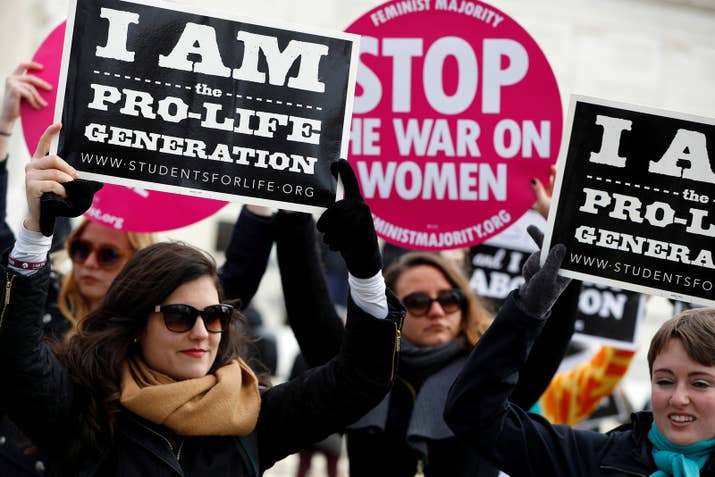
In this July 19, 2017, photo, abortion opponents hold signs during a rally in downtown Louisville, Ky. The protesters are with a group called Operation Save America that is planning a weeklong event at Kentucky's last abortion clinic with the hopes that it will shut down. With its survival on the line, Kentucky's last abortion clinic is bracing for a pivotal legal showdown with health regulators and the state's anti-abortion governor. (AP Photo/Dylan Lovan)
© The Associated Press In this July 19, 2017, photo, abortion opponents hold signs during a rally in downtown Louisville, Ky. The protesters are with a group called Operation Save America that is planning a weeklong event at Kentucky’s last abortion…LOUISVILLE, Ky. — Its survival on the line, Kentucky’s last abortion clinic is bracing for a pivotal legal showdown with health regulators and the state’s anti-abortion governor that could determine whether Kentucky becomes the first state in the nation without an abortion clinic.

The licensing fight, set to play out in a Louisville federal courtroom starting Wednesday, revolves around a state law requiring that EMW Women’s Surgical Center have agreements with a hospital and an ambulance service in the event of medical emergencies involving patients.

State regulators defend those conditions as “important safeguards” to protect women’s health. The clinic in downtown Louisville counters that the requirements lack any “medical justification” and amount to an unconstitutional barrier to abortion.

But the case’s significance goes beyond a debate about state law.

“The stakes in this case couldn’t be higher: the very right to access legal abortion in the state of Kentucky is on the line,” said Dr. Ernest Marshall, who opened the clinic in the early 1980s.

The licensing fight began in March when Republican Gov. Matt Bevin’s administration claimed the clinic lacked proper transfer agreements and took steps to shut it down. The clinic countered with a federal lawsuit to prevent the state from revoking its license. U.S. District Judge Greg Stivers blocked the clinic’s closure until the dispute could be heard at trial.

In its lawsuit, the clinic says it has had agreements with a hospital and an ambulance company on file with state regulators for years. The state’s abrupt “about-face” — finding the clinic non-compliant — came “out of the blue,” the lawsuit said.

Arguing that there’s no medical justification for the standards, the clinic is seeking a ruling that those requirements infringe on constitutional protections. Clinic attorney Donald L. Cox said the requirements have one purpose: “to give the state an excuse to prohibit abortions.”

Complications from abortions are rare, the lawsuit said, but if they occur “ambulance companies will readily pick up patients, and hospitals are required by law to accept patients in an emergency.”

The state’s legal team, in its court filings, conceded that EMW could dial 911 in an emergency, but added: “that does not provide the protection for women deemed necessary by the Kentucky General Assembly and does not satisfy the law of Kentucky.”

The state’s lawyers took aim at claims the requirements aren’t medically essential.

“The plaintiff’s self-serving statements about the rarity of complications from abortion gloss over the fact that such complications do occur and that transport agreements are important safeguards for women’s health in the event of such complications,” they said.

The EMW clinic has been on the defensive since Bevin’s election in 2015. The socially conservative governor calls himself an “unapologetically pro-life individual.”

“The transfer agreements’ requirements in question — which were enacted in 1998 and not questioned for 19 years — are important measures for ensuring women have the proper life-saving procedures in place in the event of an emergency,” said Bevin’s spokeswoman, Amanda Stamper.

“Essentially all health-care facilities in Kentucky are required to have such agreements, and it is telling that the abortion industry believes that it alone should be exempt,” she added.

In another twist, Bevin’s administration added new requirements to transfer agreements amid the legal wrangling. Critics said the changes were meant to make it harder to get a state license for abortions.

The lawsuit is one of two pitting the clinic against the state. The other lawsuit is challenging a new Kentucky law requiring doctors to conduct an ultrasound exam before an abortion, then try to show fetal images to the pregnant woman. The law says she can avert her eyes.

EMW gained an ally in its licensing fight when Planned Parenthood of Indiana and Kentucky was allowed to join EMW’s lawsuit. Planned Parenthood argues that Bevin’s administration has used the transfer agreements to block its requests for a license to provide abortions in Louisville.

EMW’s legal team believes the case “falls squarely” within a 2016 U.S. Supreme Court ruling that struck down Texas regulations that required doctors who perform abortions to have admitting privileges at nearby hospitals and forced clinics to meet certain standards for outpatient surgery. The Supreme Court has found that access to an abortion must be guaranteed, but it remains to be seen whether eliminating every clinic in a single state would pass that test.

“Will we build on the momentum of last year’s Supreme Court decision upholding abortion rights?” Marshall said. “Or will Kentucky be the harbinger of a future where the right to abortion only exists if you live in the right zip code?”

http://www.msn.com/en-us/news/us/kentuckys-last-abortion-clinic-to-face-off-against-governor/ar-AArf4O6

ANDREW COWIE/AFP/Getty Images

Across the country, conservative state lawmakers continue to threaten the right to abortion. Earlier this month, Texas Gov. Greg Abbott, a Republican, signed legislation that prohibited insurance carriers from covering abortion unless the person’s life is in danger. And just this week, South Carolina Gov. Henry McMaster signed an executive order that strips state funding from doctors or groups who help provide abortions (despite the fact that law prevents federal funds from being used for abortions). Now Congress will consider a little-known federal anti-abortion measure that would allow more employers to refuse abortion care.

The Conscience Protection Act of 2017 is an alarming piece of legislation that would severely restrict access to abortion at the federal level under the guise of safeguarding a company’s moral or religious beliefs. In particular, as noted by the American Civil Liberties Union, the bill would further broaden the right to refuse to provide, pay for, cover, or refer for abortion services for employers, insurance companies, and other health care entities, even if a person’s health is threatened.

According to Rewirethe House passed a version of the CPA last July, but the act was not taken up by the Senate. But anti-abortion lawmakers have decided to include the measure as a rider to the House’s Labor, Health and Human Services, and Education spending bill. According to the Hill, Congress will begin its appropriations process next week.

The Conscience Protection Act is far more dangerous than broadening the right to refuse abortion care. It would also give more power to corporations over reproductive rights. The CPA seeks to expand and make permanent the Weldon Amendment, an obscure rider to the Labor-HHS appropriations bill that prohibits entities, including state governments, that receive federal aid from discriminating against providers who refuse to participate in abortion carebecause of religious or moral objections. In recent years, anti-abortion activists have urged fellow anti-choicer HHS Secretary Tom Price to enforce the Weldon Amendment as blue states like California and Oregon pass measures protecting abortion rights.

The CPA would keep the core of the Weldon Amendment, while going a few steps further. In addition to expanding the definition of “health care entities,” it would also create a right to action for any party that opposes pro-choice policies, according to the ACLU. Under the Conscience Protection Act, entities that feel threatened or a “perceived threat” by measures protecting abortion rights would be able to sue states in federal court to block that legislation. Also, the CPA would give the right to deny abortion services or provide information on treatment options even in an emergency situation.

Anti-choice lawmakers will find anyway they can to restrict a person’s right to abortion and reproductive care. And sneaking the CPA — a piece of legislation that has failed before — into an appropriations bill is a sneaky way to achieve that goal.

https://www.romper.com/p/this-federal-anti-abortion-measure-would-allow-more-employers-to-refuse-abortion-care-80246

Patients often have to fight for coverage, even if their plans include the procedure.

Demonstrators show support for Planned Parenthood and reproductive rights in Chicago, Illinois on February 10, 2017.
 Photo by Scott Olson/Getty Images

Erika Christensen’s pregnancy ended at 32 weeks. But her fight to get her abortion covered by insurance had just begun.

In 2016, Christensen found out that the baby she was carrying had abnormalities that doctors called “incompatible with life.” “If it made it through birth, it would choke to death and die,” said Garin Marschall, Christensen’s husband. Christensen, now 36, and Marschall, 39, had very much wanted the child, which would have been their first. But after doctors gave them the bad news, they decided on abortion.

New York state, where they lived, bans the procedure after 24 weeks unless the mother’s life is at risk. Since there was no immediate risk to Christensen, she had to travel to a clinic in Colorado, one of only a few states with doctors who perform late-term abortions, an experience she has described in interviews at Jezebel. Her insurance covered abortion, but the clinic didn’t take it. So Christensen paid $10,000 out of pocket, which her mother withdrew from her 401k.

After the procedure, Christensen requested a reimbursement from her insurance company. She got back about $800. She asked the company to review the decision, which meant months of waiting and hours on the phone.

Ultimately, the insurance company reimbursed her around $3,000. The experience, so soon after the loss of a wanted pregnancy, prolonged her family’s pain and “kept us from being able to just start the grieving process,” Christensen said. “It felt like abuse to have these conversations again and again.”

Christensen’s experience is unusual in some ways — most abortions take place early in pregnancy and cost far less. But her struggle with insurance is surprisingly common — even insurance that ostensibly covers abortion may not actually pay for the procedure. That leaves patients scrambling to pay their bills out of pocket or even trying to do the procedure at home. And it leaves clinics with difficult choices, as Katrina Kimport and Brenly Rowland, researchers from Advancing New Standards in Reproductive Health (ANSIRH), a group at the University of California, San Francisco, note in a study released to the public Thursday. Given the insurance landscape, they write, “facilities might reasonably conclude that they cannot afford to take insurance and keep their doors open.”

Insurance coverage for abortion is often insufficient, even in states that allow it

Most people who get abortions pay out of pocket because they’re uninsured, they don’t want to go through their insurance (sometimes they’re worried an insurance bill could lead to family members finding out about the procedure), or their state restricts insurance coverage for abortion.

The Hyde Amendment bans the use of federal Medicaid funding to pay for abortions except in cases of rape, incest, or a threat to the mother’s life; 22 states have similar restrictions on state Medicaid funds. Meanwhile, 26 states restrict abortion coverage in private plans offered on the insurance exchanges, and 11 restrict abortion coverage in all private plans.

But even if patients have insurance that covers abortion, they or the clinic may end up footing the bill, according to the UCSF study. Kimport, a sociologist, and Rowland, an interviewer, talked to administrators in charge of 64 clinics in 21 states. They found that even in states where Medicaid was legally allowed to cover abortion, some Medicaid insurance providers declined to cover the procedure.

Private insurance presented similar roadblocks. In many states that don’t restrict private coverage of abortion, insurers can still choose whether to offer it or not. And some impose restrictions that conflict with the realities of abortion care.

One insurer would only pay for medication dispensed by a pharmacist, according to a doctor quoted in the study. But the FDA requires medication abortion, which accounts for nearly a third of all abortions, to be administered to a patient by a clinician, not a pharmacist. “I fought and fought” with one insurer to get medication abortion covered, said the doctor. After eight years of trying to challenge the rule, the doctor said, “I finally just gave up.”

Because of the way another insurer’s policies are written, abortion could only be reimbursed for patients over 12 years old, Kimport said. “When they had a patient who was under 12, there was simply not a way to get that reimbursed.”

For patients, insurance problems can have disastrous effects

When insurance companies fail to cover abortion, patients can suffer, especially if they live at or near the poverty line. They may need to delay while they get the money together, resulting in a later and costlier procedure, said Daniel Grossman, director of ANSIRH. The average cost of an abortion at 10 weeks is around $500; by 20 weeks, that rises to around $1,500. Financial obstacles can also push women to try to self-induce an abortion, potentially putting their lives at risk.

For low-income women, abortion costs can mean going without necessities. In her work with an abortion fund in California, Destiny Lopez, now co-director of the group All* Above All, saw women who were forgoing rent or food to pay for their abortions. “I vividly remember the day that I provided literally a tank of gas to a young couple that had to have a termination,” she said.

Even for those who are able to rely on family members for money, the experience of fighting with insurance companies can take a toll. Kate Carson had an abortion at 36 weeks after finding out that her daughter had a fatal brain abnormality. That meant coming up with $25,000 with just a weekend’s notice — her parents took the money out of their retirement account. Carson had insurance through Blue Cross Blue Shield, but since she had to travel out of state, from Massachusetts to Colorado, her insurer only reimbursed her a small amount of the total. “Every bill that came in the mail and every refusal from insurance was like a knife in my heart,” she said.

A representative from Blue Cross Blue Shield of Massachusetts said that employers decide which services their plans cover. If a service is covered and a patient receives it out of state, the reimbursement is typically based on how much a Blue Cross Blue Shield plan in that state would pay.

Patients choose late-term abortion for a variety of reasons. Jenny, who asked that her last name not be used, decided to seek an abortion after she found out her baby had a major heart defect that would likely leave him in a vegetative state, dependent on a ventilator and feeding tube. “I’m a nurse and I know how this stuff goes,” she said. “I didn’t want him to have that quality of life.”

Christensen considered carrying her child to term, even though a previous surgery meant she would have to have a C-section. But she realized that he would probably die soon after delivery “if he even made it that far,” she told Jezebel. Ultimately, she said, “I couldn’t put him through that suffering when we had the option to minimize his pain as much as possible.”

Insurance problems also put clinics at risk

The idiosyncrasies of insurance coverage for abortion also mean clinics may never get reimbursed for the abortions they perform. In states where Medicaid does cover abortion, reimbursement rates for the procedure are typically very low. The Medicaid reimbursement “doesn’t even come close to the expenditures” for an abortion, a counseling manager at one facility told Kimport and Rowland.

Medicaid reimbursements are low for many services, but since patients seeking abortions are disproportionately low-income, abortion clinics see an especially high percentage of patients with Medicaid. That means low reimbursement rates can pose a serious threat to a clinic’s survival. Some clinics have to make an uncomfortable choice between accepting Medicaid — and potentially going out of business — or declining the insurance so they can continue to see patients, Kimport and Rowland note.

Reimbursement rates are generally higher for private insurance, but the many restrictions and quirks involved mean clinics can never be sure if an insurer will pay them. “Providers are always rolling the dice,” said Kimport. Some practices choose not to accept private insurance — the Boulder Abortion Clinic, where Christensen had her abortion, has a contract with Kaiser but does not take other public or private insurance.

Meanwhile, some abortion practices have costs that neither public nor private insurance reimbursements truly reflect. Dr. Warren Hern, who performed Christensen’s abortion, estimates that 50 percent of what his patients pay goes toward security for his practice. “Pediatricians do not have to have armed guards and bulletproof windows,” he said. “We do.”

Changing the insurance picture starts with changing the law — but it doesn’t end there

Since their experience, Christensen and Marschall have become advocates for the Reproductive Health Act, which would make abortion after 24 weeks legal in New York state if the fetus is not viable or if the mother’s health is threatened. That would allow women in Christensen’s situation to stay in New York and get abortions from in-network doctors, making it more likely for insurance to cover the procedure. New York allows state Medicaid coverage for abortion, and most private insurers also cover the procedure, said Liz Krueger, a state senator and sponsor of the bill.

The Reproductive Health Act has passed the state assembly but not yet received a vote in the Republican-dominated state senate. Krueger is hopeful that it might move forward when the senate comes back into session in January 2018. Public opinion is on the bill’s side, she said, and in an election year, senators may be especially motivated to listen to their constituents’ concerns. The Trump administration has created anxiety and an appetite for change on many issues, she said. “There’s real momentum in New York state for voters to say, ‘We don’t trust Washington, we need this done here.’”

A few other states have recently passed similar laws. The Reproductive Health Equity Act, passed in Oregon this year, requires insurers, including the state’s Medicaid program, to cover abortion at no cost to the patient.

But one of the biggest barriers to insurance coverage for abortion around the country is the Hyde Amendment. Though it restricts only federal funding for abortion, it affects the private insurance markets as well, since many private insurers take their cues from the federal Centers for Medicare and Medicaid Services, said Marschall, who has become something of an insurance expert since Christensen’s abortion.

The EACH Woman Act, introduced in the House in January, would repeal Hyde, allowing Medicaid recipients, government employees, and anyone else with government-sponsored health care to receive coverage for abortion. It would also bar states from banning abortion coverage in private plans on the exchanges.

There’s likely little appetite in the current Congress for repealing Hyde. But advocates for the bill are realistic about their approach, said Lopez. “We know that if we’re undoing 42 years of bad policy, it’s not going to take one Congress to fix that,” she explained. “What’s important about the bill is it allows us to have a conversation we haven’t had in this country about public and private insurance coverage of abortion.”

Even repealing Hyde wouldn’t necessarily fix the problem of low reimbursement rates, as Kimport and Rowland note. Simply allowing Medicaid to cover abortion wouldn’t mean that clinics would actually get reimbursed for the full cost of the procedure. But advocates are at work on the state level to try to raise rates, Lopez said. Sometimes that means working with groups trying to raise rates for other services, she added. “Some of these issues are larger than just abortion care.”

The barriers to change are many, but advocates like Christensen remain committed to the fight. Until New York changes its law, “I will feel like I’m not allowed to grieve,” she said. “I’m going to stay acutely angry and rageful until it’s made right.”

https://www.vox.com/policy-and-politics/2017/8/31/16229654/abortion-insurance-hyde-amendment

A federal judge on Thursday delayed for two weeks enforcement of part of a state law that bans the most common second-trimester abortion method

A hallway at the Whole Woman's Health clinic in Austin.
A hallway at the Whole Woman’s Health clinic in Austin.  Callie Richmond

A federal judge has temporarily stopped Texas officials from enforcing a ban on the most common second-trimester abortion procedure, just one day before the ban was set to go into effect.

Judge Lee Yeakel of the U.S. District Court for the Western District of Texas granted a temporary restraining order Thursday, delaying enforcement of the ban until Sept. 14. It was originally set to go into effect Sept. 1.

Senate Bill 8, which passed during the 2017 regular legislative session, banned dilation and evacuation abortions — where doctors use surgical instruments to grasp and remove pieces of fetal tissue — unless the fetus is deceased.

Yeakel’s decision follows a Tuesday morning hearing during which attorneys for the state and reproductive rights groups sparred for an hour and a half about whether the order should be granted. With it in place, Texas doctors and health care providers can continue using the dilation and evacuation procedure – deemed the safest by medical professionals for second-trimester abortions — until a more permanent decision is made by the court.

Another hearing has been set for Sept. 14.

Without Thursday’s restraining order, Yeakel wrote in his decision, women and their doctors would be left “with abortion procedures that are more complex, risky, expensive, difficult for many women to arrange, and often involve multi-day visits to physicians, and overnight hospital stays.”

A spokesperson for the Texas Attorney General’s office said in a statement that the state’s top lawyer would “continue to defend our state’s legal right to protect the basic human rights and dignity of the unborn.”

Though the court’s decision Thursday offers a temporary respite to reproductive rights groups, it’s the latest in a series of legislative and legal challenges to abortion access in Texas. The lawsuit was filed in July by the Center for Reproductive Rights and Planned Parenthood on behalf of several women’s health providers in the state.

Proponents of the ban have called dilation and evacuation “dismemberment abortion.” In court Tuesday, Darren McCarty, an attorney for the state, said the procedure is “brutal, gruesome” and runs counter to the “ethos of a humane and civilized society.” He said SB 8 does not ban the method; it just requires the “humane termination” of the fetus beforehand.

The “state did a good job of clarifying that technical distinction,” and spelling out its interest in protecting fetal life, John Seago, legislative director for Texas Right to Life, said after the hearing.

Lawyers for the health providers countered that making fetal demise a prerequisite would subject women to medically unnecessary and untested methods, and force them to make additional trips to the clinic. Doctors would face criminal charges for violating the ban; the only exception would be in cases of medical emergency.

Already, women seeking an abortion in Texas must have a sonogram performed 24 hours before receiving an abortion, a requirement women’s health advocates say is costly and burdensome.

“The provisions of SB 8 that we’re challenging criminalize a safe and common method of abortion,” said Molly Duane, staff attorney at the Center for Reproductive Rights. “Politicians in Texas are trying to punish doctors who are using their best medical judgment.”

In court Tuesday, McCarty questioned the timing of the lawsuit’s filing, and argued it was a strategy to force the court to “rubber stamp” emergency relief days before the ban was slated to go into effect. Yeakel, agreeing, said he could see no reason why the suit couldn’t have been filed as soon as the governor signed the bill into law, and said its timing was a “real imposition” and put “maximum pressure” on the court to act at the last minute.

Yeakel also asked repeatedly what evidence legislators had considered before passing the law, and how Texas’ provision differs from similar bans that have been contested in other states. Laws like SB 8’s dilation and evacuation ban have been opposed or halted in Alabama, Arkansas, Kansas, Louisiana and Oklahoma, according to a press release from the center. In court Tuesday, neither side pointed to substantive differences between Texas’ law and these others.

Duane said the new law is part of a “coordinated strategy by the state of Texas and by states around the country to ban abortion method by method, one restriction at a time, until it’s practically unavailable for women.”

In May, state lawmakers tacked the dilation and evacuation ban onto SB 8, a broader abortion measure that also prohibits hospitals and clinics from donating aborted fetal tissue to medical researchers, and requires facilities to bury or cremate fetal remains whether from abortions, miscarriages or stillbirths.

Seago, whose organization championed the provision, noted it originated as a separate bill and was discussed extensively by lawmakers. “This is not something that the legislature unknowingly did in the dark of the night,” he said.

This lawsuit is hardly the first time the state’s abortion policies have wound up in court. In June 2016, the U.S. Supreme Court struck down parts of a Texas law that required abortion clinics to meet the same standards as ambulatory surgical centers — including minimum room sizes — and forced doctors performing the procedure to have admitting privileges at nearby hospitals. Days after the high court’s decision, the state put forth a new rule relating to how fetal remains are disposed of.

A federal judge blocked that fetal remains rule in January, noting that it had been proposed “before the ink on the Supreme Court’s opinion” was dry. A month later, that same judge said Texas can’t kick clinics affiliated with Planned Parenthood out of the state’s Medicaid program. The state is appealing both rulings.

Since the SB 8 lawsuit was filed in July, three new abortion-related measures were approved during the summer special legislative session and have been signed by the governor. Those new laws will increase reporting requirements for abortion complications, and require women to buy a supplemental insurance plan if they want coverage for an abortion – called a “rape insurance” policy by opponents.

https://www.texastribune.org/2017/08/31/judge-temporarily-halts-abortion-procedure-ban/?utm_content=bufferfd6f6&utm_medium=social&utm_source=facebook.com&utm_campaign=buffer