The anti-abortion “clinics” don’t just deceive pregnant people considering abortion care—they spy on and put them at legal risk, too.
Crisis pregnancy centers, the anti-abortion organizations that attempt to lure mostly poor people of color with unwanted pregnancies to their premises and dissuade them from having abortions, are a proven danger to public health, according to a new study by The Alliance: State Advocates for Women’s Rights and Gender Equality.
The nationwide coalition of reproductive health advocates’ new research says crisis pregnancy centers have become an even greater threat to the health and safety of pregnant people amid the recent surge in state abortion bans and restrictions — particularly Texas’ SB8, a near-total abortion ban that relies on citizen policing and surveillance for enforcement, which took effect last September.
Where do CPCs fit into the success of laws like SB8? They’re “plugged into the global anti-abortion movement’s sophisticated digital infrastructure, which facilitates expansion, client surveillance, and systemic, coordinated promotion of anti-abortion disinformation,” the study says.
Most anti-abortion “clinics” may pose as local mom-and-pops run by people resembling the family of your cool youth pastor, but they’re often part of massive, global networks that threaten abortion access and pregnant people’s autonomy on a number of fronts — all while often receiving taxpayer funding.
At least 10 states allocate federal welfare funding to CPCs, instead of supporting actual health care access, or resources for parents and families. The Alliance reports the ratio of crisis pregnancy centers to abortion-providing clinics in the US stands at 3 to 1, with even higher disparities in states that fund CPCs: In Pennsylvania, the ratio is 9 to 1, and in Minnesota, 11 to 1.
Many CPCs purposefully set up shop near actual abortion clinics, or will park their mobile clinics near abortion providers in an effort to confuse and prey on patients. With the state funding they receive, many CPCs don’t even provide the free prenatal and pregnancy resources that they claim they do. Instead, “provision of these goods was contingent on the client’s participation in ‘earn while you learn’ classes or counseling, Bible studies, abstinence seminars, video screenings, or other ideological CPC programming.”
Pregnant people seeking actual health care stumble upon these disinformation-peddling enclaves, likely after seeing targeted ads on search engines or on social media and are led to believe they’re actual health services. At these centers, patients are oftentreated primarily to drugstore-grade pregnancy tests and a barrage of lies about how abortion causes breast cancer or howmedication abortions can be “reversed.” CPCs might also throw in a “non-diagnostic” ultrasound, technology that is used“as a tool to persuade clients to carry their pregnancies to term and falsely signal medical legitimacy,” The Alliance notes. This is despite how the American Institute of Ultrasound in Medicine condemns use of ultrasounds for any “non-medical purpose.”
A key takeaway from the report is the unique threat that CPCs pose to pregnant people’s privacy, through the information they collect online and in-person from people considering abortion. As Texas’ SB8 remains in effect and copycat laws proliferate in state legislatures across the country, surveillance of pregnant people and criminalization of abortion and pregnancy loss will essentially become institutionalized to enforce these laws — and that’s where CPCs come in:
“CPCs are positioned to play a central role in surveillance of pregnant people in such a vigilante system. They exist, after all, to reach people experiencing unintended pregnancies, and collect extensive digital data on their clients and their reproductive histories.”
Already, anti-abortion groups have recently partnered with popular fertility tracking apps to gain access to users’ personal data, like menstrual cycles and pregnancies. The anti-abortion, crisis pregnancy center conglomerate Heartbeat International stores its digital communications with “abortion-minded” pregnant people to use “for any and all purposes.” And there have already been several cases of digital forensics, like online searches for abortion pills and text messages, or even reverse geo-fencing, used to criminalize people who have lost their pregnancies or induced their own abortions, and face feticide or child endangerment charges.
Criminal charges for miscarriages, stillbirths, self-managed abortions, and other pregnancy outcomes have tripled in recent years, from 413 prosecutions between 1973 and 2005 to more than 1,250 between 2006 and 2020, says the National Advocates for Pregnant Women. As though deceiving and draining the time and resources of people seeking abortion care weren’t enough, this new study is an illuminating look at an increasingly effective tool for spying on pregnant people and targeting poor people of color.
We cannot allow bad actors and the elected officials who prop them up to thrive in the shadows. We must protect our democracy. Alex Wong/Getty Images
Anti-choice extremists know that voting is critical to electing leaders who share the values of the majority of us who support the legal right to abortion.
The January 6, 2021, attack on the U.S. Capitol was a horrifying attempt to dismantle our democracy to advance an extreme right-wing agenda, but it didn’t happen in a vacuum. The same radical right that has been working for decades to erode our democratic institutions and impose their ideological agenda of power and control has also been fighting to strip away our freedom to decide if, when, and how we have children and form our families.
What we saw a year ago today and are seeing in the anti-choice movement now is the culmination of a decadeslong effort by forces hostile to social progress. The anti-democracy and anti-choice movements embrace disinformation at every turn, and their most extreme elements have often turned to violence. Anti-choice extremists were openly complicit in Trump’s efforts to undermine our democracy and regularly played an essential role in the disinformation networks that led to this moment.
And this isn’t new for them—when it comes to inciting right-wing violence, the anti-choice movement wrote the playbook. It’s no surprise that anti-choice elected officials, leaders, and activists helped promote and, in some cases, participated in the insurrection. To be clear—they are all part of the same movement.
Not only that, the legal right to abortion is hanging on by a thread. The U.S. Supreme Court could overturn Roe v. Wade in the coming months and, if they do so, we will likely be living in a world where 26 states ban abortion outright. But make no mistake, this plan is already in motion in some states. Take Texas, which has devised an end run around the Constitution in the form of a vigilante-enforced ban on abortion, Senate Bill 8. Just last month, the Supreme Court refused to block SB 8, rendering Roe effectively meaningless in our nation’s second-largest state. Now, 14 other states are clamoring to follow suit by enacting their own copycat bans on abortion.
At every turn, anti-choice lawmakers are emboldened and champing at the bit to outlaw abortion or push it as far out of reach as possible. How did we get here?
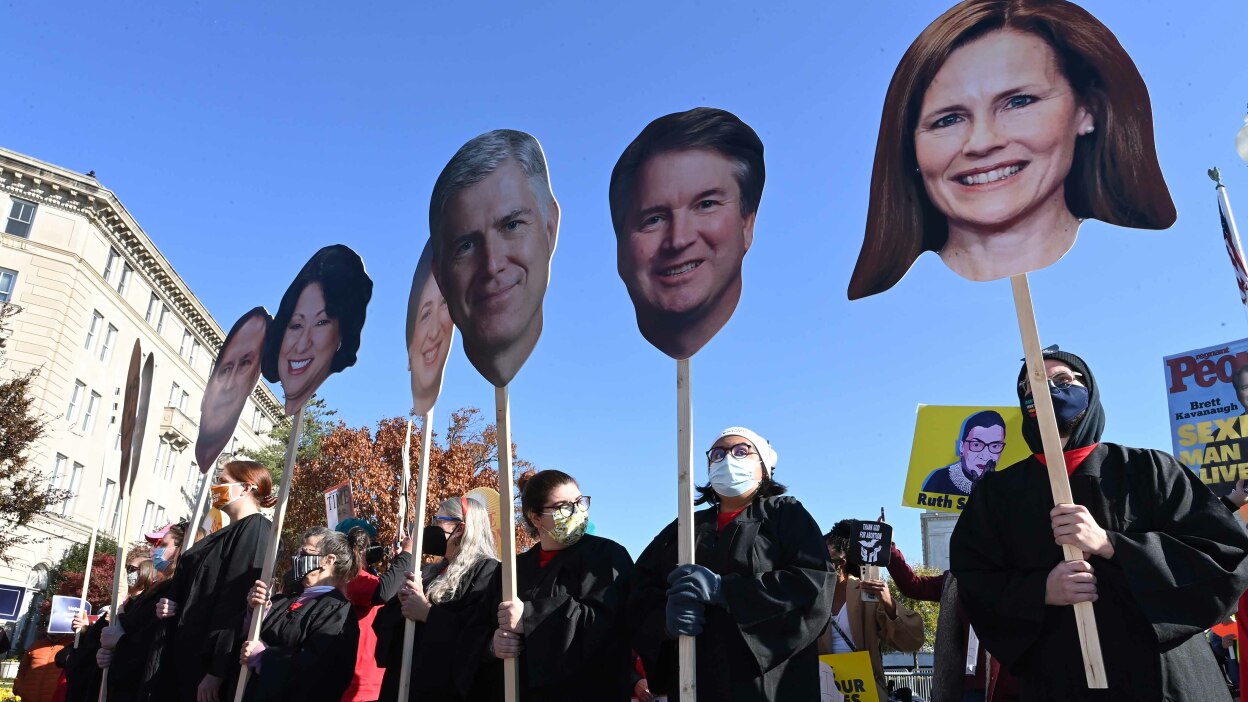
Trump and Kentucky Sen. Mitch McConnell solidified an anti-choice supermajority at the Supreme Court through the confirmations of Justices Neil Gorsuch, Brett Kavanaugh, and Amy Coney Barrett, endangering our fundamental right to abortion. The ramifications of this hostile supermajority will continue for decades to come. Hoping to continue Trump’s dangerous presidency, anti-choice leaders and news outlets amplified conspiracy theories and disinformation about how the 2020 election was “stolen” from Trump and promoted the now-infamous “Stop the Steal” rally that resulted in the insurrection.
Then, they turned up at the Capitol a year ago. Abby Johnson, an anti-choice leader and a speaker at the 2020 Republican National Convention, proudly photographed herself in the front row of the January 6 rally and described being on the steps of the U.S. Capitol. Elijah Schaffer, who broke into House Speaker Nancy Pelosi’s office, was reposting anti-choice disinformation just days before the riots. Known abortion clinic harassers Tayler Hansen and Derrick Evans were documented inside the Capitol during the insurrection.
In addition to joining in on the deadly attack, the anti-choice movement has also been working to dismantle voting rights at every turn. Anti-choice extremists know that our freedom to vote is critical to electing leaders who share and represent the values of the majority of us, the 8 in 10 Americans who support the legal right to abortion. They know they can’t win on the merits of their unpopular policies, so they attack the right to vote itself by creating barriers to accessing the ballot box. Anti-choice groups like Susan B. Anthony List and Republican state legislators are trying to dismantle our democracy and enact legislation to disproportionately strip the core freedom to vote from all Americans, particularly Black, Indigenous, Latinx, Asian American and Pacific Islanders, and all people of color.
We cannot allow these bad actors and the elected officials who prop them up to thrive in the shadows. In the year since the insurrection, we’ve seen the anti-choice movement successfully attack not only abortion access and our right to vote but diversity in education, the transgender community, and many other issues supported by the majority of people in this country. It is clear from their actions that their vision for our future is white supremacist, patriarchal minority control.
January 6, 2021 marked a terrifying chapter in American democracy, but we can prevent this extremism from further taking hold. We must protect our democracy by immediately passing the Freedom to Vote Act, the Protecting Our Democracy Act, and the John Lewis Voting Rights Advancement Act through any means necessary. And then we must hold our elected officials accountable. In the midterms, we will be pulling out all the stops to vote out those who threatened American democracy and allowed January 6 to happen, and we will continue exposing the tactics and bad actors in this movement until they are brought to justice.
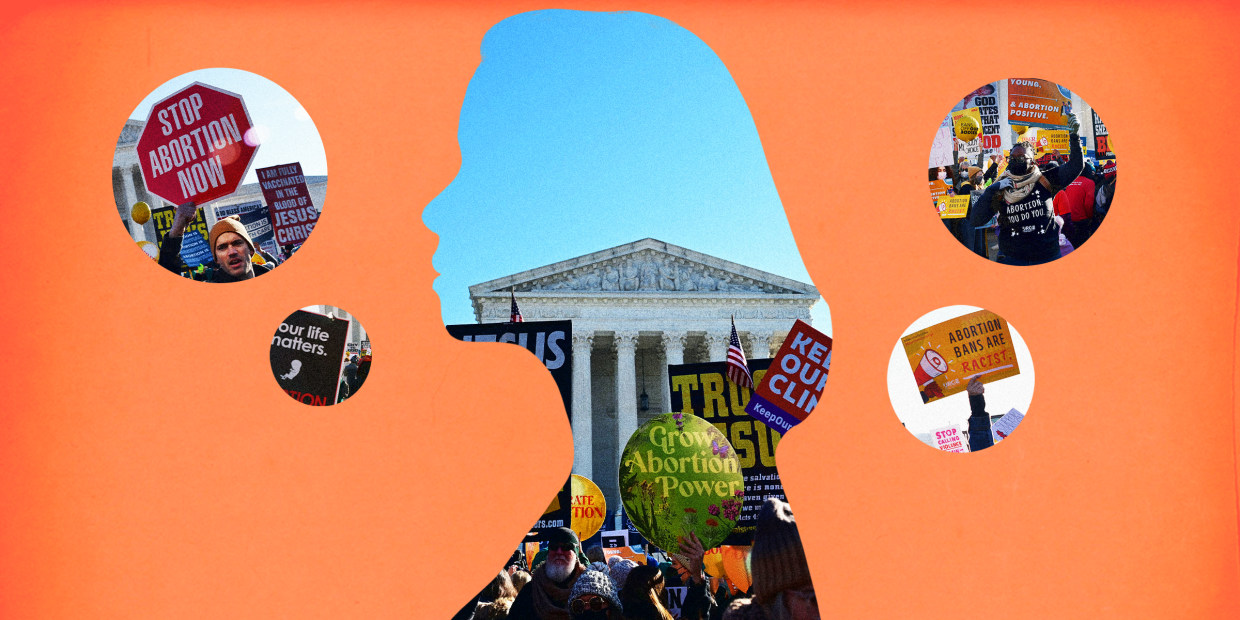
While the rhetoric surrounding abortion in general and specifically, abortion later in pregnancy, often includes the phrase “no one wants to have an abortion,” TODAY spoke to four people who say they did want — and need — abortion care later in pregnancy.TODAY Illustration / Getty Images
As the Supreme Court considers a Mississippi law that bans abortion after 15 weeks gestation, people who have had abortions later in pregnancy speak out.
Editor’s note: The full names of people who spoke to us for this story have been withheld to protect their privacy, given the sensitivity of the subject matter.
As the Supreme Court considers a Mississippi law restricting abortions after 15 weeks, much of the vitriol regarding abortion access is aimed at people who have abortions after the first trimester. TODAY Parents talked to four people who had abortions later in pregnancy, who say their stories show how important abortion access is and how far people will go to get the abortion care they want and need.
Abortions after 20 weeks gestation represent 1% of all abortions, yet most Americans believe they are five times more prevalent than they actually are. Medically inaccurate phrases like “late-term abortion” have also caused a general misunderstanding of later abortion care — medically, “late-term” refers to a pregnancy past 40 weeks gestation, not a time when abortion is provided.
Research suggests people have abortions later in pregnancy for two main reasons: They’ve learned new information — for example, realizing they’re pregnant after the first trimester, discovering a fetal or maternal health complication, or the loss of a job or partner — or they’ve encountered barriers to care that made it impossible for them to have an abortion earlier — including limited access to child care for the children they already have, existing anti-abortion laws and a lack of clinics that provide abortion services.
While it’s a common talking point in both pro- and anti-abortion circles that no one wants to have an abortion, the following people say they did want — and need — abortion care later in pregnancy.
Jenn, 30, New York
Jenn had her abortion in New York City in 2010, when she was 18 years old. She had a medical condition that causes frequent period loss and was using birth control, so she didn’t realize she was pregnant until she was past 15 weeks. The procedure itself cost $20,000. Because Jenn lived in New York at the time, her parents’ insurance covered the procedure.
“I actually found out I was pregnant when I was at my at-the-time best friend’s house. She supported my decision, until she found out I was in the second trimester. That was devastating — that someone was ‘pro-choice’ and still didn’t support my choice — and it also scared me when it came to telling my parents. But as soon as I found out I was pregnant, I knew I wanted an abortion. I never doubted my decision.
She supported my decision, until she found out I was in the second trimester.
“I thought I could have a medication abortion and that it would be relatively inexpensive, but when I called a Planned Parenthood clinic, they said that wasn’t possible. When I realized it would be a more complex and expensive procedure, it felt like the rug was being pulled out from under me. The fear of navigating the process alone overrode the fear of telling my parents, and thankfully, they came through for me almost immediately.
“There was only one place I could go to, and they had a significant waitlist, so I had to wait several weeks. I was miserable — having a body that was pregnant and getting more pregnant by the day, and being trapped in that body unable to do anything about it was the worst thing I’ve ever been through. I contemplated suicide during the pregnancy, because I was so scared I was going to have to carry the pregnancy to term.
“Now, I’m in law school, have a fiancé I’m madly in love with, and intend to start a family.”
Erika, 40, Arizona
In the third trimester of her wanted pregnancy, Erika’s doctors discovered serious fetal abnormalities that were not compatible with life. Faced with the reality of giving birth to a baby that would die, Erika chose to terminate.
“I had brain surgery the year before, so we knew early on that if I went into labor at any point, my health would be threatened. It would be dangerous for me to push. An abortion at this gestation involves a shot to induce fetal demise, then an induction of labor and delivery. The shot part was illegal in New York, and my doctors couldn’t refer me to someone else like normal. I found a doctor in Colorado who would help, but they wanted me to deliver in a hospital setting given my medical history. My insurance wouldn’t cover it, so it would cost $30,000. The shot alone cost $10,000. When I heard that, I thought, ‘OK, we can’t do that, so I guess I’m carrying to term, hoping my head doesn’t explode, and we’ll be the people who have a baby who dies.
My mom cashed in her 401K to pay for it.
“The doctors figured out that I could fly to Colorado to get the shot, then immediately fly back to New York to a hospital that was covered by my insurance. We didn’t have the money to cover the $10,000 plus travel ourselves — my mom cashed in her 401K to pay for it. My husband and I flew to Colorado the night before my appointment at 8 am, then flew back home.
“We weren’t allowed to take the time to work through our emotions, because we were so wrapped up in the logistics of trying to get care and dealing with the stigma and shame of the state having an invisible hand in our pregnancy.
“When we compromise (on abortion rights,) we’re purposefully compromising on the most systemically marginalized — you’re talking about poor people, pregnant children, disabled people, and people with complex medical situations like me.”
Kelly*, 32, Texas
Kelly, who asked that her real name not be used to protect her privacy, had her later abortion at 33 weeks gestation in 2020 after being raped. She first thought her pregnancy symptoms were the result of a new birth control method, only to later realize she had been impregnated during the rape. Unable to access care in her home state, Kelly flew to New Mexico by herself to receive care. Her abortion, including the procedure, travel, food, and lodging, cost over $10,000.
“I had to contact different abortion funds, including local funds in Texas and funds in other states, and I had to go out of state because there was no way I was going to be able to get an abortion in Texas.
I’m not the first person this has happened to and, unfortunately, I won’t be the last.
“I had one really good friend I could confide in, but I didn’t know how or even if I could communicate that with my family members, and honestly I still haven’t. For the most part, I did have to go through it by myself. And I guess I chose that, but I just did not know how it would be received.
“After my abortion I felt relief, but it’s still hard to talk about, especially certain aspects of the whole experience. But I think it’s important to share, especially because of the sexual assault — I’m not the first person this has happened to and, unfortunately, I won’t be the last.”
Leo, 31, New York
Leo, who is trans and uses they/them pronouns, found out they were pregnant at 19 weeks. Living in a state that protects access to abortion care, their insurance covered the cost of the procedure, and they did not have to travel out of state.
“It was confusing, because I’m not someone who has never wanted to be pregnant or have a child. For me, it just came at the wrong time. There were maps of clinics that provide abortions online, and the higher the gestational age, the smaller and smaller the number of clinics got. It was really frightening — I wanted the simplest abortion possible, but I also wanted to give myself time to make my decision. Luckily, I had a lot of support, from my partner at the time, my therapist, a couple of friends and my sister.
My abortion was an act of self-love.”
“Sometimes insurance companies give trans people a hard time and deny people the care they need, so I called beforehand, flat out shared my situation, and asked them to double, triple check to make sure they understood who I was. A friend drove me, and my then-partner brought me food.
“I felt love towards the fetus, but ultimately feel like that love for the fetus was redirected to me, and gave me the opportunity to continue my dreams. I’m a Ph.D. student now — I have certain ambitions, aspirations and accomplishments. My abortion was an act of self-love.”
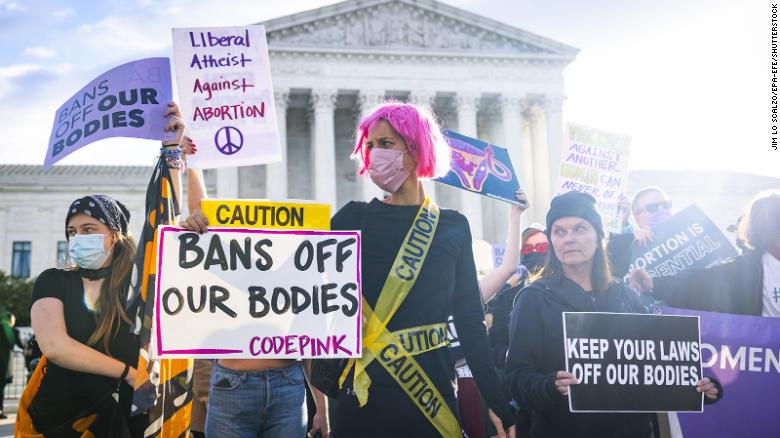
Abortion supporters gather outside the Supreme Court, in Washington, on November 1, 2021.
This could be the moment when some combination of Republican-appointed Supreme Court justices agrees to break 50 years of precedent by removing the national right to an abortion recognized in Roe v. Wade.
The court has a hearing over a Mississippi abortion law Wednesday, and the 6-3 conservative majority seems primed for action.
A separate, notorious Texas abortion law is also before the court. But it is the Mississippi case that is a direct challenge to the landmark Roe v. Wade decision, which established a woman’s constitutional right to end a pregnancy.
Many states have been so intent and creative on chipping away at the precedent that even a half-measure by the court could create a post-Roe reality. For women who live in states with few abortion providers and numerous hurdles to gain access, it may feel like a post-Roe reality right now.
But either by overturning Roe or scaling it back, the court could, when it hands down a decision next year, make it much easier for states to ban or more seriously restrict abortion rights.What does Roe guarantee? The 1973 decision said states can’t ban abortion unless a fetus is viable, or can survive outside the womb. The Supreme Court ruled that a woman’s right to an abortion was covered by the right to privacy under the 14th Amendment of the Constitution.
When the case was decided, that viability standard was 28 weeks, but it’s now considered to be from 22 to 24 weeks of gestation.
Must read: This story from CNN’s Joan Biskupic about how the 1973 court settled on that standard at the last minute. Back then, she points out, it was Republican-appointed justices concerned with privacy rights who helped set the precedent.
Question: What’s the difference between a woman’s right to privacy over pregnancy, which Republicans today want to disregard, and the right to privacy over, say, Covid-19 vaccinations, which they want to protect?
What would the Mississippi law do?
It’s a direct challenge to Roe v. Wade since it would ban abortions after 15 weeks of gestation, well before the current viability standard. Abortions after 15 weeks of pregnancy would be allowed “only in medical emergencies or for severe fetal abnormality.” There is no exception for rape or incest.Even something less than a full Roe reversal could change laws in much of the country.
Roe has been law for nearly 50 years. Will that matter?
CNN’s Ariane de Vogue writes that if the court overturns Roe, it could go “to the stability of the court as an institution.”She writes: “Put another way: if the court uses cases as building blocks to construct the rule of law, what happens when one block — put in place in 1973 — is yanked out?”I’ll take that a step farther, even though I’m not a constitutional lawyer. Today I read the 14th Amendment to review what it says about privacy. That concept that’s so key to Roe, it turns out, is not spelled out with the word “privacy” in the 14th Amendment. The protection of privacy has been built by the court over decades, and Roe is a key part of that structure.
Political backlash is guaranteed.
Perhaps more predictable is the political backlash to a Supreme Court controlled by Republican appointees removing a right for women.”I think if you want to see a revolution, go ahead, outlaw Roe v. Wade and see what the response is,” said Sen. Jeanne Shaheen, a Democrat from New Hampshire, on Monday. She compared state control of women’s reproductive health to “something we would see in an authoritarian state” during an appearance on the New Hampshire station WMUR.Abortion would suddenly become a key issue at the state level, too. In Virginia, for instance, the governor-elect, Glenn Youngkin, a Republican, has tried to de-emphasize the issue of abortion, to the consternation of anti-abortion-rights activists who supported his campaign.
The majority of Americans support upholding Roe v. Wade.
Numerous polls have confirmed this general public support for abortion rights. For example, an ABC News/Washington Post poll from November found 60% of Americans said the Roe precedent should remain, compared with 27% who supported overturning it.There is, however, variation in public support for abortion rights depending on the details of the situation. Although there is a long history of broad support for maintaining Roe, the share in support of legal abortion without any sort of government restriction is far smaller, according to Gallup polling going back decades.
Where would abortion be illegal?
Twenty-six states are certain or likely to ban abortion procedures if Roe is overturned, according to the Guttmacher Institute, which supports abortion rights. This includes states that would institute total bans on abortion, bans at 15 weeks of pregnancy and bans at 20 weeks. A dozen states have laws on the books to automatically ban abortions if Roe is overturned.The institute issued a report suggesting that Americans in the half of the country with abortion bans could drive hundreds of miles to access abortions if Roe is overturned, and guessed there could be a rush of demand in states where abortion remained legal, particularly Illinois and North Carolina.
Could a national abortion standard be set?
Sure, Congress technically has the ability to write a national abortion standard. That might not be a political reality, since a minority in the Senate can block most major legislation.
More women talking about abortion.
Many Americans either weren’t alive or can’t remember 1973. That includes the women who in recent months and years have shared stories of how and why they got abortions.Three members of Congress shared their stories at a hearing in September.”To all the Black women and girls who have had abortions or will have abortions, we have nothing to be ashamed of,” said Rep. Cori Bush, a Missouri Democrat. “We live in a society that has failed to legislate love and justice for us. So we deserve better. We demand better. We are worthy of better.””So that’s why I’m here to tell my story,” she said.On “Saturday Night Live” in early November, the comedian Cecily Strong wore a clown costume to open a dialogue on abortion.”I wish I didn’t have to do this, because the abortion I had at 23 is my personal clown business,” Strong said.
CNN reported at the time: “In her new memoir ‘This Will All Be Over Soon,’ Strong is not explicit on whether she had an abortion but she does say that she was pregnant at 23 and soon after was ‘not pregnant anymore.’ “For about half the country, that’s a choice women may soon not be able to make in their home states.
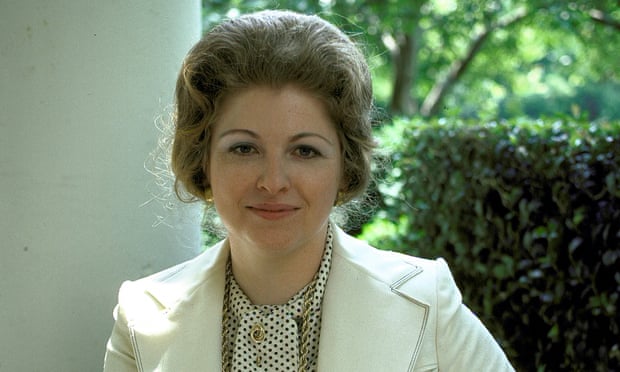
Sarah Weddington in 1979. She accepted that she would be remembered primarily for her supreme court victory. Photograph: Diana Walker/Getty Images
Sarah Weddington, an attorney who argued and won the Roe v Wade supreme court case which established the right to abortion in the US, has died. She was 76.
Susan Hays, a Democratic candidate for Texas agriculture commissioner, announced the news on Twitter on Sunday. The Dallas Morning News confirmed it.
“Sarah Weddington died this morning after a series of health issues,” Hays wrote. “With Linda Coffee, she filed the first case of her legal career, Roe v Wade, fresh out of law school. She was my professor … the best writing instructor I ever had, and a great mentor.
“At 27 she argued Roe to [the supreme court] (a fact that always made me feel like a gross underachiever). Ironically, she worked on the case because law firms would not hire women in the early 70s, leaving her with lots of time for good trouble.”
The court ruled on Roe v Wade in 1973. Nearly 50 years later, under a supreme court packed with hardline conservatives, the right Roe established is under threat in part thanks to a Texas law that drastically restricts access and offers incentives for reporting women to authorities.
In 2017, speaking to the Guardian, Weddington predicted such a turn of events. “If [Neil] Gorsuch’s nomination is approved, will abortion be illegal the next day? No. One new judge won’t necessarily make much difference. But two or three might.”
After steering Gorsuch on to the court, Donald Trump installed Brett Kavanaugh and Amy Coney Barrett. Barrett replaced the late Ruth Bader Ginsburg, a champion of women’s rights.
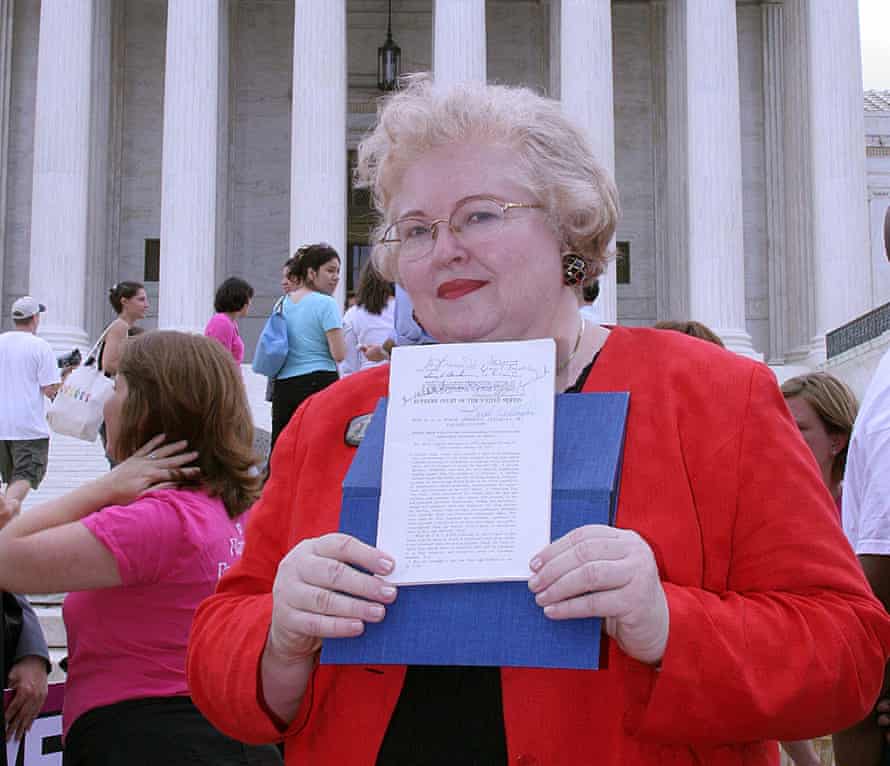
Sarah Weddington poses with a signed copy of the Roe v Wade decision in front of the US supreme court in 2005. Photograph: Karen Bleier/AFP/Getty
Weddington found her way to Roe v Wade soon after graduating from the University of Texas. Represented by Weddington and Coffee, Norma McCorvey became the plaintiff known as “Jane Roe” in Roe v Wade. McCorvey became an evangelical Christian and opponent of abortion. She died in 2017. In a posthumous confession, she said anti-abortion groups paid her to take such a stance.
In her Guardian interview, Weddington said arguing the case in federal court “was like going down a street with no street lights. But there was no other way to go and I didn’t have any preconceived notions that I would not win.”
She did win, but the case continued.
“Henry Wade, the district attorney, unwittingly helped us,” she said. “At a press conference, he said, ‘I don’t care what any court says; I am going to continue to prosecute doctors who carry out abortion.’ There was a procedural rule that said if local elected officials continue to prosecute after a federal court had declared a law unconstitutional, there would be a right to appeal to the supreme court.”
Before the court in Washington, Weddington said, “it was impossible to read the justices’ faces. The attorney on the other side started by saying something inappropriate about arguing a case against a beautiful woman. He thought the judges would snicker. But their faces didn’t change a bit.
“I had to argue it twice in the supreme court: in 1971 and again in 1972. On 22 January 1973 I was at the Texas legislature when the phone rang. It was a reporter from the New York Times. ‘Does Miss Weddington have a comment today about Roe v Wade?’ my assistant was asked. ‘Why?’ she said. ‘Should she?’
“It was beginning to be very exciting. Then we got a telegram from the supreme court saying that I had won 7-2 and that they were going to air-mail a copy of the ruling. Nowadays, of course, you’d just go online.
“I was ecstatic, and more than 44 years later we’re still talking about it.”
Weddington later revealed that she had an abortion herself, in 1967. “Just before the anaesthesia hit,” she said, “I thought: ‘I hope no one ever knows about this.’ For a lot of years, that was exactly the way I felt. Now there’s a major push to encourage women to tell their stories so people will realise that it is not a shameful thing. One out of every five women will have an abortion.”
Weddington predicted: “Whatever else I do in my life, the headline on my obituary is always going to be ‘Roe v Wade attorney dies’.”
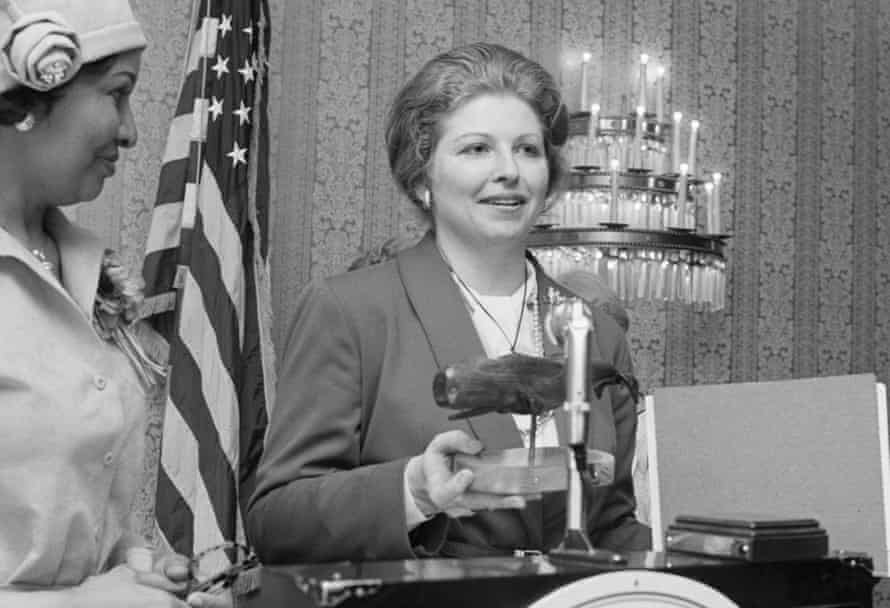
Weddington when she was special assistant to President Jimmy Carter. Photograph: Bettmann/Bettmann Archive
In fact she achieved much more, as Hays detailed. Weddington was “elected as the first woman from Travis county in the [Texas legislature] in 1972 (along with four other women: Kay Bailey, Chris Miller, Betty Andujar and Senfronia Thompson).
“She was general counsel of the United States Department of Agriculture under [Jimmy] Carter and enjoyed her stint in DC. Federal judicial nominations for Texas were run by her as a high-ranking Texan in the administration.
“A Dallas lawyer she knew sought a bench. She had interviewed with him while at UT law. He’d asked her, ‘What will we tell our wives if we hire you?’ She told him he was wasting their time and hers and walked out of the interview. He did not get the judgeship.
“Ever the proper preacher’s daughter, she would never tell me who the lawyer was. People don’t know that about Sarah. She was such a proper Methodist minister’s daughter. One of the few people I couldn’t cuss in front of.”
Hays also paid tribute to Weddington as a member of a “Great Austin Matriarchy” including the former Texas governor Ann Richards and the columnist Molly Ivins.
Among other tributes, the University of Texas law professor Steve Vladeck said Weddington was “a remarkable woman [who had] a remarkable career and a remarkable life. May her memory be a blessing”.
Sherrilyn Ifill, president of the NAACP Legal Defense and Educational Fund, said simply: “Rest in power.”
Weddington indicated she was at peace with being remembered for Roe v Wade.
“I think most women of my generation can recall our feelings about the fight,” she told the Guardian. “It’s like young love. You may not feel exactly the same, but you remember it.”
This article was updated on 27 December 2021 to include tributes to Sarah Weddington from Steve Vladeck and Sherrilyn Ifill. Reference was also added to Norma McCorvey’s statement shortly before her death, but revealed only afterwards, that she changed her stance on abortion because she had been paid to do so by opposition groups.
too often, so-called progressives and liberals consider teen access to be the third rail of abortion politics. Yana Paskova/Getty Images
Teens deserve abortion access without stigma, cost, or interference from their parents or the state.
As Rewire News Group’s resident shopaholic, this is really my season to shine. Few things bring me more joy than making a list of things to get and give. But this holiday season, my number one gift isn’t anything I’ll find under the tree. Instead, this year at the top of my list to Santa—yes, even ahead of a new purse and an emotionally available man with salt-and-pepper hair in his mid-40s—is teen access to abortion.
All I want for Christmas is for every young person in the United States to have the ability to end their pregnancies when and how they want, without stigma, cost, or interference from their parents or the state. Is that so much to ask?
You might be wondering, “Now Caroline, as a materialist shopaholic, what brings that to the top of your list?” Well, it’s simple. For the last decade I’ve been working in the reproductive justice space in some capacity, and since day one, my favorite soapbox to climb on has been “TEENS DESERVE ABORTION ACCESS TOO.”
I say this for a couple reasons. On principle, it’s true—young people should be able to make their own decisions regarding their pregnancies, their abortions, and parenting without any, and I mean any, restrictions from the state. But that’s not the case in over half the country.
In most states, teens have to obtain consent from a parent or notify them before having an abortion. For young people who can’t trust a parent to help them make that decision, they’re forced to go through a judicial bypass process: a court hearing where the minor has to argue before a judge that they’re mature enough to make the abortion decision on their own. And if the judge finds that’s not the case, they then have to rule on whether the abortion is in the minor’s best interest.
If that doesn’t sound dystopian enough, consider that these laws only further harm already marginalized teens. Part of the reason I’m so passionate about teen access is because I grew up in a home where my mom taught me about abortion at a young age without stigma, fearmongering, or derision. I have the kind of mom who told me as soon as I became sexually active that no matter what situation I was in, she would be there to support me. So I knew, if I was ever faced with an unwanted or unplanned pregnancy, I would have the ability to have an abortion with her help. I knew that a parental consent law would never make a difference for me, as it won’t for any young person who is lucky enough to grow up like I did with an abortion-supporting parent.
Instead, these laws, which are touted as ways to protect young people, truly do anything but. They might not place any hurdles in the way of people like my family, but for young people living in abusive or unstable environments, parental involvement laws and judicial bypass make life a living hell. They not only add unnecessary logistical hurdles, but they create a humiliating and often traumatizing experience for young people trying to access their right to bodily autonomy.
Think about it: A young person living in foster care, who might be placed in an unfamiliar community, cannot turn to their foster parent or leader at their group home for consent. Now, they have to figure out how to go to court—how to get there, how to afford the transportation, and how to take time off from school to do so. A teen living in an abusive household might have to do all this while keeping it secret from a parent.
And these aren’t just hypotheticals. Earlier this year, the mother of a Louisiana teen sued to stop all judicial bypasses in the state when she found out her daughter was getting one. I’ve also done extensive reporting on the absolute horror show teens in foster care have to go through to access abortion and birth control.
But the second, and incredibly trenchant reason that this key issue tops my Christmas list? Apathy—from both sides of the aisle. Having spent ten years researching and reporting on this topic has unfortunately revealed to me that all too often, so-called progressives and liberals consider teen access to be the third rail of abortion politics. I’ve had people in the movement tell me to not be too loud about it so as to not spook lawmakers; I’ve had so-called progressive legal thinkers parrot anti-abortion talking points to me about 14-year-olds needing parental consent to take Tylenol at school. All of these responses capitulate to the conservative framework that moralizes abortion, and only for the worse.
But abortion is health care. Abortion is a moral good in that it is lifesaving and life-affirming. Abortion is freedom, and what’s a better Christmas gift than that? For all.
Republican Gov. Asa Hutchinson has declined to say what he would do if the Arkansas legislature passes copycat SB 8 legislation. Chip Somodevilla/Getty Images
“What Texas has done is absolutely awesome,” Republican state Sen. Jason Rapert, who introduced the bill, said back in September.
UPDATE, December 9: The Arkansas legislature voted Thursday to defeat a resolution to extend the special session by 15 days to consider anti-abortion legislation. Both houses of the legislature adjourned without voting on the anti-abortion bill.
As Arkansas launched a special legislative session Tuesday nominally dedicated to passing income tax cuts, a leading anti-choice Republican in the state senate introduced a copycat version of Texas SB 8, legislation that effectively bans abortions after six weeks and allows any citizen to sue those who help a pregnant person get the procedure.
Reproductive rights advocates have been bracing for this moment for several months, ever since Republican Sen. Jason Rapert, who has sponsored some of the most aggressive bills to restrict abortion access over the last few years, came out in September to praise SB 8.
“What Texas has done is absolutely awesome,” he proclaimed when it first went into effect. The U.S. Supreme Court heard arguments against SB 8 on November 1.
Earlier this year, Rapert pushed through an abortion ban that only permitted abortions to save the life of the pregnant person, but did not provide any exceptions for those impregnated by rape or incest. A federal judge in July preliminarily blocked the law, but it was just one of 20 abortion restrictions Arkansas passed this year alone.
In early October, Rapert, who did not return requests for comment for this story, announced that he would be filing a version of Texas SB 8 as soon as Arkansas’ special session launches, which at the time lawmakers thought would be on October 25.
“I am filing the Arkansas Heartbeat Protection Act with a civil cause of action—just like Texas,” he tweeted then. “I invite [Republican Gov. Asa Hutchinson] to put the bill on the call and legislators to co-sponsor.”
According to the state’s legislative rules, since Hutchinson did not include abortion on his “call,” Rapert has to rally two-thirds of his colleagues in both chambers in order to have his bill considered in the special session. Rapert expressed confidence earlier in the fall that he could reach that support threshold. He also insisted that he must continue to be “creative” in his legislative pushes against abortion access, given that other bills he’s authored have been struck down in court.
SB 13 was filed Tuesday afternoon with Rep. Mary Bentley as the bill’s other primary sponsor; 28 other Republicans co-sponsored it.
Hutchinson had declined to say what he would do if the legislature passes copycat SB 8 legislation, but he said he thinks lawmakers should wait to see the decisions the Supreme Court hands down on SB 8 and Dobbs v. Jackson Women’s Health Organization, Mississippi’s 15-week abortion ban that the Court heard a week ago. Rapert has said he’s frustrated with Hutchinson’s stance.
Holly Dickson, the executive director of the ACLU of Arkansas, said trying to bring up a sensitive bill like this outside of the state’s regular legislative session is “unorthodox.” The ACLU has been monitoring the possibility of a Texas copycat law ever since Rapert issued his first threat.
“We’ll oppose any effort to do that and have been advising legislators against this blatantly unconstitutional move,” Dickson said.
Public opinion is somewhat mixed on the idea. In late September, a survey from Talk Business & Politics and Hendrix College, which polled 916 likely Arkansas voters on their opinions of Texas SB 8, found about 46.5 percent of voters would support a similar bill in Arkansas, and about 49.5 percent would oppose it. Only 4 percent of respondents said they didn’t have an opinion at the time. The pollsters found opposition was particularly strong among those under 30 years old, and among people of color.
In early November, the 23rd annual Arkansas Poll was released, which conducted 800 telephone interviews with randomly selected adults across the state, and found 41 percent of all very likely voters support laws that would make it harder to get an abortion. More than a quarter of very likely voters think abortion should be illegal under all circumstances, the highest percentage ever found in this poll, according to Charisse Dean of the Little Rock-based Family Council, a conservative research and advocacy group
Last month the national anti-abortion organization, Americans United for Life, ranked Arkansas as “the most pro-life state” in the country for the second year in a row. Arkansas already requires individuals seeking abortion to undergo a mandatory 72-hour waiting period, as well as to get two in-person visits at an abortion facility. Telemedicine for abortion is banned in Arkansas, and patients can access abortion only up to 20 weeks postfertilization, or 22 weeks’ gestation.
In mid-October, Planned Parenthood Great Plains Votes announced it would be launching an “aggressive statewide campaign” in Arkansas to defeat the proposed Texas copycat abortion ban. Among other things the organization said it had hired additional organizing and communications staff dedicated to the effort, would be hosting in-person and virtual events across the state to educate voters, and would be contacting over 20,000 state residents to discuss the implications.
“We’ve also really been targeting the legislature to help them understand the human impact,” said Emily Wales, the interim president and CEO of Planned Parenthood Great Plains.
Following the passage of SB 8 in Texas, visits by abortion-seekers into Arkansas jumped significantly. In September, Texas patients comprised 19 percent of Little Rock Family Planning Services’ caseload, after being less than 2 percent in August.
Many people are also traveling from Texas to Oklahoma for abortion care, though Oklahoma has passed its own wave of new abortion restrictions. In September, Planned Parenthood filed a lawsuit to block five of these new restrictions, which were set to take effect in November. The litigation has been successful; all five of the Oklahoma laws have been temporarily blocked so far.
More public-facing organizing against a Texas copycat law, Wales said, was delayed in Arkansas because the special session was pushed back from October. Advocates had said in mid-November that they expect in-person events against a copycat ban to pick up if and when Rapert’s bill is formally introduced.
“We will have in-person rallies outside the capitol,” Wales said. “If Texas has taught us anything it’s that you have to be really visible about what the outcomes are. We’re seeing patients in Texas who are shocked that their legislature passed [SB 8] and they weren’t paying attention before.”
In late September, a Republican state representative in Florida introduced the first copycat Texas bill, which almost identically mirrors SB 8. But reproductive rights advocates in Florida say they are less concerned that the bill will become law anytime soon, given the repeated failure of Florida lawmakers to pass a six-week abortion ban.
Karen Musick, the co-founder and vice president of the Arkansas Abortion Support Network, an all-volunteer nonprofit that helps Arkansans access abortion care, said they’ve definitely seen an uptick in donations since Texas SB 8 was passed but that their attention has largely been focused on organizing volunteers.
“People have really come out of the woodwork and said, ‘My home is available if someone needs a place to stay, if someone needs help getting to another place I will take them,’” Musick said. “We’re collecting all these people who have benefited from abortion care in the past and want to do as much as they can now to ensure the next generation has access too.”
Musick said that while there’s less they can do to stop the current legislature from passing new restrictions, they can at least focus on organizing people.
“Our job is to forge as many contacts as we can,” Musick said. “We need to build a base of transportation volunteers, escort volunteers, money and counseling volunteers.”
The Supreme Court will rule on abortion law next year. Abortion rights activists are planning their response. Credit: The Washington Post / Getty Images
The Supreme Court is poised to gut Roe v. Wade. These abortion rights activists aren’t giving up.
Last week, the moment that abortion rights activists have feared for decades finally happened. In a hearing about a plainly unconstitutional abortion ban in Mississippi, a conservative majority of Supreme Court justices made clear that they have no intention of upholding a legal right to abortion, a precedent enshrined by the 1973 case Roe v. Wade. Anyone who was paying attention, especially those on the front lines of this battle, saw this coming. After Donald J. Trump appointed three conservative justices to the Supreme Court during his presidency — declaring the end of Roe as “possible” — it was only a matter of time.
Activists are frank about what that will mean: “I think we have another generation’s worth of fights that we’re going to have to undertake to restore access,” says Destiny Lopez, co-president of the reproductive justice and abortion rights group All* Above All.
But Lopez and other abortion rights activists have been preparing for this moment for years. They have no intention of surrendering to a Supreme Court decision. Instead, they plan to counter, with a spirit of defiance, any court ruling that makes abortion impossible or even more difficult to obtain. They’re searching for creative ways to help anyone get an abortion when they need it, primarily through funds that finance abortion care to help people afford travel to states where it remains legal, and by increasing awareness of and access to medication abortion early in pregnancy, which may be easier to obtain depending on state laws. At the same time, political activists are waging a long-term electoral war over who controls the presidency, Congress, and statehouses, and therefore, who can make sweeping legislative or legal changes, like enacting federal laws that protect abortion, or nominating progressive justices who will restore those rights.
These activists don’t just want Roe back should the Supreme Court ruling dismantle it; they want reproductive justice, a concept pioneered by Black women who understood abortion access as a racial and economic justice issue. Unlike the moderate movement that shaped strategy for decades, and sometimes perpetuated stigma by rarely talking candidly about abortion, there’s now an emphasis on elevating women and people of color who unapologetically embrace it as healthcare and understand what their communities need most. Many activists see the Supreme Court ruling not as a moment for retreat, or reliance on past tactics, but to move forward boldly with a radical agenda that prioritizes equity and justice.
“If [the fall of Roe] is going to be our new reality, our solutions have to meet that reality or think beyond that reality, because I’m not sure going back to status quo is going to serve us,” says Lopez.
At the National Network of Abortion Funds, it’s clear what a post-Roe world will look like: Hundreds of thousands of patients who can’t access abortion and need help traveling to a state where it remains legal. The NNAF, a membership organization for dozens of abortion funds that provide financial and logistical support to people around the country seeking abortion, has years of experience solving this problem.
These funds solicit donations, which are used to defray or cover the cost of abortion care for patients who can’t afford it or must travel because their state has few providers. Expenses can include lodging, transportation, and child care. Funds have long served patients who can’t receive coverage for their abortion because they’re on Medicaid health insurance. Federal law, known as the Hyde Amendment, prohibits Medicaid from covering abortion care, with exceptions for rape, incest, and life endangerment.
Debasri Ghosh, managing director of the NNAF, says demand far outstrips abortion funds’ resources, even though their financial support of people in need more than doubled from $4 million to $9 million over the past three years. The network received 80,000 inquiries for help in 2020, nearly twice as many as it got in 2018. The influx is partly the result of states passing new abortion restrictions in an effort to test different legal strategies. Some clinics shuttered or had to send patients elsewhere for care as they tried to comply with onerous restrictions.
Ghosh says the NNAF’s long-term goal, regardless of what happens at the Supreme Court, is to provide everyone who seeks an abortion a “comittment that meets the totality of their need,” which can include financial, practical, and emotional support. “It sounds outrageous, but I think it’s radically doable, given how much organized wealth exists in this country,” she says. SEE ALSO:Interactive map shows how state abortion bans might impact reproductive healthcare access
To make this possible, Ghosh needs individual donors to think of supporting an abortion fund like they do other charitable causes, such as food banks or parent-teacher associations, by setting up regular or monthly contributions. She also needs foundations that support reproductive rights, among other philanthropic donors, to provide significant direct aid to abortion funds, something that’s rarely happened in the past. Without such fundraising, abortion funds won’t be able to meet surging demand, nor will they be able to hire well-paid staff instead of volunteers.
Amy Hagstrom Miller, founder and CEO of Whole Woman’s Health, which manages nine abortion clinics in five states, also anticipates the migration of patients from one state to another. She envisions a “pro-choice concierge service” — a kind of travel network that enlists major companies, like airlines, hotels, and car rental agencies, to offer discounts or vouchers that safely, affordably get people who need abortions to a destination where they can receive them.
This could start with an affirmative statement of support that companies are invited to sign, so they can “put their money where their mouth is,” says Miller, referencing corporate America’s penchant for casting itself as a champion of gender equality. If they really want women in the workforce, Miller believes companies must take a stand if the Supreme Court guts or overturns Roe.
Miller is working another front, too: keeping independent clinics open. In Texas, where Miller operates four clinics, a controversial state bill has effectively banned abortion at six weeks, making it impossible to serve most patients seeking abortion. A spike in donations to Whole Women’s Health and the nonprofit organization Whole Woman’s Health Alliance — 16 times what both entities received last year — has offset the financial hit of losing so many patients, but Miller is looking at a future in which independent clinics are reliant on people’s generosity to survive. Indeed, the Abortion Care Network, a membership organization of about 100 independent clinics in the U.S., solicits donations on their behalf. The funds cover costs like paying staff, purchasing medical supplies, and covering legal bills related to compliance with regulations.
While activists focus on keeping clinics open, they’re also trying to raise awareness of medication abortion, pills that safely end pregnancy within the first trimester. The Food and Drug Administration permits healthcare providers to prescribe them through regular or telehealth appointments, and patients can currently receive them in the mail because of the COVID-19 pandemic. In some states, patients needn’t visit a clinic at all, which is key for those who live in rural areas or otherwise can’t see a healthcare provider in person. Activists see the availability of medication abortion as helpful in the face of a devastating Supreme Court ruling, particularly if the FDA relaxes its regulation of pills and makes them permanently available by mail.
Still, Amelia Bonow, co-founder of the grassroots pro-abortion rights movement Shout Your Abortion, is so passionate about the role that medication abortion could play post-Roe that she and other activists, who were not pregnant, swallowed pills in protest outside of the Supreme Court on the day of the Dobbs hearing. Others want to promote abortion pills in more measured ways, but Bonow called the move an “act of defiance.” “We’re done standing around with signs that talk about our rights.”
“We’re done standing around with signs that talk about our rights,” says Bonow. “We are standing in front of this court taking abortion pills, and saying, ‘We’re going to do this forever, we’re going to help other people do this forever, you can never stop us.'”
Sharing information about medication abortion isn’t without risk. Bonow acknowledges that Black and brown people, and those who are low-income, are most likely to be surveilled, targeted, and reported by authorities for using abortion pills to end a pregnancy on their own. Bonow and other activists agree that the push to promote medication abortion must happen in tandem with efforts to decriminalize self-managed abortion. (Shout Your Abortion and the legal advocacy group If/When/How, among other sites, provide resources for learning more about the legality of self-managed abortion.)
In states where abortion is protected or likely to remain legal because of the legislature’s political makeup, advocates are still planning responses to the Supreme Court ruling. Their goal is to model what abortion access and reproductive justice can look like and to find ways to serve patients who will inevitably come to their states looking for care. In California, where abortion is a protected right, advocates have already released 45 policy recommendations for expanding access, including investing in abortion funds and reducing insitutional barriers to care.
Dusti Gurule, executive director of the Colorado Organization for Latina Opportunity & Reproductive Rights (COLOR), is lobbying for a bill that would explicitly protect reproductive health rights, including abortion, as a fundamental right in the state’s statute. While there are no abortion bans in Colorado, the right to care is not protected by state law or a state court ruling. Democrats plan to introduce the bill in the legislature next year. If successful, it would theoretically be a bulwark against future attacks on abortion rights and access in Colorado.
“We shouldn’t have to defend [the rights] we have every legislative session,” says Gurule.
But Gurule is also working with state legislators on a different goal: urging them to think beyond the “pro-choice” label to become “reproductive justice champions.” Gurule says the difference is critical in the fight ahead.
Whether or not Roe is rendered meaningless by the Supreme Court next year, activists are prepared for a battle that’s about more than clawing back lost rights. They’re set on securing reproductive health rights for all, like equitable access to healthcare and fair wages to support raising children, which were never guaranteed in the first place.
We need to urge more lawmakers to champion a progressive agenda that guarantees all people can get the health care they need, including abortion care. Leigh Vogel/Getty Images for Women’s March Inc.
Part of being a true progressive means standing in solidarity with communities of color and firmly rejecting racist efforts to control bodies and lives.
It’s no secret that abortion rights are under attack from all sides in our country.
The Supreme Court heard oral arguments a week ago in Dobbs v. Jackson Women’s Health Organization, the case that could overturn or gut Roe v. Wade and eliminate the constitutional right to abortion, whole cloth or for all practical purposes. At the same time, anti-abortion state legislators across the country are following Texas’ lead and proposing copycat legislation of that state’s six-week abortion ban and bounty hunter enforcement mechanism, which could eliminate access to abortion for millions more people even sooner.
Amid all these threats, it’s more important than ever to have champions for abortion access in state legislatures. But now we’re witnessing another troubling trend: Some lawmakers and advocacy groups that are pushing harmful legislation to restrict abortion are simultaneously seeking to claim the mantle of progressive values, falsely asserting that politicians can oppose abortion access while still being “progressive” on other issues.
This deeply dangerous and misguided worldview is being championed both by individual elected officials and a network of organizations without a significant membership base to support them, such as the self-described “Democrats for Life.” These groups sometimes claim to advocate on a range of progressive priorities like climate change and racial justice, but in reality they spend almost all of their time and resources helping anti-abortion lawmakers develop and advance policies to put reproductive health out of reach for more people.
The so-called “pro-life” position espoused by these fake progressives and their legislative allies fundamentally contradicts true progressive values. The progressive worldview is grounded in a core belief in personal autonomy, whether that means ensuring access to basic health-care needs, guaranteeing the right to vote, or protecting people against discrimination. Abortion access is a racial justice issue, a gender equity issue, and an economic issue; all these concepts are interrelated and cannot be siloed from one another. And no lawmaker can assert themselves as a champion of progressive values while also supporting policies that put the autonomy, health, and lives of their constituents at risk.
Abortion is safe, necessary health care, and our progressive values demand that we support people being able to receive the care they need without unnecessary barriers or stigma. Those who hold progressive views also recognize the importance of facts and expertise. Prominent medical associations like the American Medical Association and the American College of Obstetricians and Gynecologists support abortion access because they recognize that it is an essential part of comprehensive reproductive health care.
But while abortion is health care, it isn’t just a health-care issue. Restricting access to abortion also has a lasting impact on people’s overall physical, emotional, social, and economic well-being. For example, research shows that denying abortions to patients who want them negatively affects their mental health and makes them more likely to experience economic insecurity and stay with violent partners.Being anti-abortion isn’t just a political decision. It’s a decision to attack people who can become pregnant. It’s a choice to criminalize our decisions.
Abortion restrictions create additional financial and logistical barriers to accessing basic, necessary reproductive health-care services. These laws often force people seeking abortion to travel long distances to get care, which can require taking time off from work, arranging transportation, and paying for child care. And the impact of these restrictions falls most heavily on those who already disproportionately lack access to health care, including low-income communities, Black and brown people, and LGBTQ individuals. At their core, policies that restrict abortion are racist, xenophobic, and designed to exert power and control over people born into bodies disfavored by the system of white patriarchy. Part of being a true progressive means acting in solidarity with communities of color and firmly rejecting racist efforts to control bodies and lives.
There’s another reason why only lawmakers who support abortion access can claim to uphold progressive values: Progressives believe in democracy, and the overwhelming majority of the people in this country support abortion access. Recent polling shows that 80 percent of Americans support the legal right to abortion. Yet Roe v. Wade hangs on by a thread, and if it is overturned, politicians stand waiting, with bills already drafted, to completely ban and criminalize abortion in every state possible.
There is too much at stake to allow anti-abortion extremists to co-opt progressive values by espousing a dangerous and harmful agenda. We’re in the fight for our lives. Being anti-abortion isn’t just a political decision. It’s a decision to attack people who can become pregnant. It’s a choice to criminalize our decisions. It’s a choice to deprioritize the allies and communities whose support will be essential if we want to advance a true progressive vision at the national level and in states across the country.
Thankfully, there are elected officials in state legislatures who are proactively working to protect and expand access to abortion. In states from Virginia to Hawaii, legislators have enacted policies that expand insurance coverage of abortion care and broaden the types of providers who can offer this care. We need to urge more lawmakers to follow the lead of their colleagues and champion a progressive agenda that guarantees all people can get the health care they need, including abortion care.
We cannot afford to have elected officials cherry-pick which progressive values they support, or to silo abortion apart from the numerous other political, social, and economic issues it connects to. We must push our elected officials to do the right thing for us and the country by unapologetically acting in support of abortion access.
Physician Meera Shah, right, in late October with a patient at Whole Woman’s Health in South Bend, Ind. (Taylor Glascock for The Washington Post)
NEW YORK to SOUTH BEND, Ind. — With the New York City skyline melting into the distance, Meera Shah looked out over the pink sunset, trying to relax as she settled in for the nearly three-hour flight to Chicago.
Heavy rain splashed against the plane’s windows. Some of the passengers — football fans headed to the Notre Dame game in Indiana — were talking about news of high winds in Chicago causing delays.
Shah needed to make her connection. She had patients waiting.
The New York physician was on her monthly commute to South Bend — an 800-mile trip across four states — to perform abortions. She is among about 50 doctors who travel regularly to 20 states, logging hundreds of miles, crisscrossing time zones to provide abortions in places where patients would otherwise not have access, according to Mary Frank, director of strategic initiatives at the National Abortion Federation, an association of providers. The doctors are paid by the clinics they serve.
Shah and other doctors who do such work say that their services have never been needed more — and that their commitment has never been stronger, with the nation at the most significant moment for abortion rights since Roe v. Wade made the procedure legal in 1973. Abortion opponents are optimistic that Roe will be overturned when a newly conservative Supreme Court rules next year on a Mississippi abortion ban, following arguments heard Wednesday. A Texas law that bans nearly all abortions after six weeks — the strictest in the country — is also being reviewed by the high court.
But even if Roe v. Wade is upheld, abortion rights advocates worry there will not be enough doctors to perform the procedure. That fear is part of what drives Shah.
“The commute is exhausting, of course, but I’ve seen firsthand how this care is so important to a patient’s autonomy over their own body,” said Shah, 38.
The daughter of Indian immigrants, Shah sees her work as part of her identity as a doctor and her commitment to social justice. She was back to her South Bend commute two days after her honeymoon this summer to see patients at a Whole Woman’s Health Alliance clinic.
“I literally fly all this way to hand out medication abortion pills,” she said. “I do what a nurse practitioner is trained to do and is already doing in some states,” she said, adding that a key strategy of abortion opponents has been to place layers of restrictions on providers and clinics.
So Shah flies to South Bend about once a month and stays anywhere from 24 hours to two days. The South Bend clinic also has a rotation of doctors who drive in from nearby states, including one from Kentucky.Roe under threat: One doctor’s journey to provide abortion careAn abortion doctor from Kansas City, Mo., travels across state lines every month to provide care at clinics in the Midwest. (Whitney Leaming, Alice Li/The Washington Post)
When abortion was first legalized, the antiabortion movement targeted women who sought the procedure, labeling them “sluts” and “murderers,” said Carole Joffe, a professor in the department of obstetrics, gynecology and reproductive sciences at the University of California at San Francisco. “But this proved to be a losing strategy,” Joffe said. So the movement turned to “the harassment and vilification of abortion providers instead.”
“It’s not just fear of antiabortion violence or harassment that inhibits abortion provision by local doctors,” Joffe said, adding: “Abortion stigma plays a role. In some practices, when doctors join group practices, they are obligated to sign a statement that they will not provide abortions — even away from the group’s office, in a clinic.”
Pamela Merritt, executive director of the nonprofit Medical Students for Choice, said training more doctors to perform abortions will “be a key battle in the fight to maintain and increase access” to the procedure. “Fewer clinics means higher demand at all other clinics,” she said. “And that means fewer openings for training, because clinics simply do not have the time.”
Abortion rights activists also hope that the efforts to ban abortion will inspire a new generation of doctors who, like Shah, are committed to offering what she calls “compassionate care.” Medical Students for Choice added chapters at 10 U.S. medical schools this year, with an estimated 300 additional members, Merritt said.
‘I have to make it’
Shah’s flight from New York had a rough landing and was over an hour late. So she sprinted nearly a mile through sprawling O’Hare International Airport to try to make her connection. She was too late — it had already taken off.
Zigzagging through the crowds of stranded passengers, she found a virtual customer-service kiosk and was able to retrieve her luggage at baggage claim.
With so many travelers stranded, there were no rental cars available. So Shah improvised and calls an Uber — the nearly two-hour ride to South Bend would cost about the same as renting a car for 48 hours.
“Patients may have taken a day off of work or traveled hundreds of miles or set up child care,” she said. “I have to make it.”
She got in the car around 10 p.m. On the way, she called ahead to her hotel.
“Please don’t give away my room,” she pleaded. It’s happened before when she’s arrived late during the busy football season. “I promise — I’m on my way.”
After the drive through darkness and rain, she arrived in South Bend by midnight.
The next morning, Shah was up early. Dressed in dark blue scrubs, she grabbed a frozen breakfast burrito from the hotel lobby, filled her travel mug with English-breakfast tea and headed to the clinic.
On the ride over, she saw the antiabortion billboards that dotted the skyline. She passed the campus of the University of Notre Dame, famous for football and its towering “Touchdown Jesus” mural.
Across the highway from the clinic, the Women’s Care Center attempted to lure her patients away with offers of free pregnancy tests.
Escort April Lidinsky, a professor of women’s and gender studies at Indiana University South Bend, held a big rainbow umbrella to block patients from the few protesters who had shown up.
She shuffled Shah in as the demonstrators held up crosses and gestured toward the pregnancy center across the street, shouting, “We love you and your baby!”
Inside, inspirational messages are painted on the walls to welcome patients: “Look at our women. They are strong, you can feel it. They are the rocks on which we really build,” a quote from labor leader and civil rights activist Dolores Huerta. Exam rooms are named after female cultural icons — Diana Ross, Ella Fitzgerald, Audre Lorde. Clinic workers wear purple T-shirts with “Kicking politicians out of vaginas since 2003” on the back.
On a table in the waiting room is a book titled “You’re the Only One I’ve Told: The Stories Behind Abortion,” which was written by Shah and includes a note inside that says, “Meera Shah is your physician today.”
Shah wrote the book to illustrate the range of people who get abortions and counter the stereotypes about them. She tells the stories of a rabbi who had an abortion because it was not the right time for her to become a parent, a young woman who advocated for herself before a judge in West Virginia to get an abortion without parental consent, and an Indian woman who questioned her desire to parent after she was abused growing up.
Shah, chief medical officer at Planned Parenthood Hudson Peconic in Hudson, N.Y., also wanted to show readers the next generation of providers. She wants children of her own someday and often shows off photos of her niece and nephew on her phone.
“I would do anything for them,” said Shah, a family-medicine doctor specializing in sexual and reproductive health. But she said she feels just as strongly that pregnant people have the right to make decisions about their bodies.
For many young doctors like Shah, making sure access to abortions remains safe and legal is a mission, particularly in underserved communities, Joffe said.
“There’s a new generation of doctors — disproportionately female, many of them people of color — who are committed to providing abortion precisely because of the assault on abortion rights,” Joffe said. “They realize that the attack on abortion impacts the most vulnerable in our society. They see it as a social justice issue.”
About 50 percent of abortion patients live below the federal poverty line, 25 percent just above it, Joffe said. About 60 percent also already have children.
Joffe and other abortion rights advocates fear a return to the pre-Roe era when people turned to untrained or poorly trained individuals for abortions — and in many cases died or suffered permanent injury from botched procedures performed under unsanitary conditions.
“The image of the butcher dominated the medical imagination, and helped keep abortion providers marginalized from rest of mainstream medicine . . . even though the post-Roe providers were largely ethical and skilled.”
Shah’s book opens with a scene in a Target in her hometown in the South. She describes bumping into a woman who looked like “Mrs. Claus or even Betty White” while in the greeting-card aisle. The woman notices Shah’s black-and silver stethoscope and asks whether she was a nurse.
She tells the woman she’s a doctor, and the woman asks what kind.
“At that point in my life,” Shah writes, “this question was tricky for me.”
Shah said she rarely disclosed that she provided abortion care, especially while in the Bible Belt. But something about the woman’s questions made her finally “come out” to the shopper and tell her that, along with family medicine, she is an abortion provider.
The woman pauses for a moment. Shah holds her breath, “suddenly afraid my casual Target run was about to turn into an altercation.”
Instead the woman leans in and says: “I’ve had an abortion. In fact, I’ve had two.”
The woman says her first abortion was when she was young. The second was when she already had two children.”
“You’re the only one I’ve told,” she whispers to Shah, touching her arm.
“Ever?” Shah asks.
“Ever,” the woman says.
‘It’s not their life’
In the clinic’s waiting room, a soft-spoken, rail-thin 18-year-old described how she thought the people at the women’s center across the street would help her get an abortion when they coaxed her over. Instead, they sent her home with information about the “bliss of motherhood” and “mental illness” that comes with abortion, along with photos of a smiling pregnant woman. Then they started calling her.
“I told them I wanted an abortion, and at first I didn’t really know what they were doing,” the teenager said. “Then I told them, ‘It’s really not your guys’ decision.’ ”
After a few more phone calls, “they sounded all disappointed, but I couldn’t really understand why,” she said. “It’s not their life. They won’t be getting up with that baby in the middle of the night.”
They texted and called so many times, she said, that she eventually blocked their number because they refused to stop.
When her name was called at the clinic, she was led to a private counseling room.
“Did you bring anyone with you today?” Shah asked.
“My grandma,” said the patient, who was wearing Crocs with a rainbow charm on one and a popcorn charm on the other. “She’s waiting in the car with my 6-month-old daughter. She’s teething. She broke my TV.”
“She’s a handful,” she added, smiling a little, then looking down and fiddling with her phone.
The exam room was named for poet and civil rights activist Maya Angelou. The teen looked up at an Angelou quote painted in cursive on the wall: “People will forget what you said. People will forget what you did. But people will never forget how you made them feel.”
Shah began to read from a script required by Indiana law, but she added, “I don’t agree with this as your doctor.”
The mandated script includes medically disputed information such as, “A human fetus can feel pain at or before 20 weeks,” and that abortion can cause infertility later.
“Both not true,” Shah told her patient.
Shah performed an ultrasound and told the teen the gestational age of the fetus was seven weeks and four days.
She printed out the image, put it and the state-mandated information into an envelope and told her she could read it — or not.
“I’m ready for the abortion,” the teen said. “Can I do it today?”
“Great question,” Shah said. “State law requires that you come back in 18 hours.”
“Really? Why can’t I just do it today?” she asked.
Shah explained again that state law requires the waiting period.
The teen lowered her head and said quietly: “I understand. Thank you.”
“I’m already in a tough domestic-violence situation,” she said.
She shared cellphone photos of evidence of beatings she said were from her daughter’s father when she was pregnant with her first child, leaving her with a bruised eye and head wound. She was able to get a protective order against him.
“Good,” Shah said, gently touching her back.
“I just can’t have another baby right now. My body isn’t ready.”
Savannah
In the break room, clinic staffers discussed what might happen if Roe is overturned. But they had full schedule of patients and knew they needed to take a break to eat if they were going to keep their energy up. They passed around menus from a Vietnamese restaurant. Shah rarely has time to eat, but she paid the tab for the staff.
Next on Shah’s schedule was Savannah, a 29-year-old with children ages 6 and 1 at home. She rushed in when her name was called.
“I have to take my kids trick-or-treating after we talk,” she said.
She explained that she was there for an abortion because she just had a baby. Her birth control failed. She is studying criminal justice with hopes of becoming a lawyer. She is a former methamphetamine addict who earned money dancing in a strip club, but she couldn’t work after becoming pregnant and ended up homeless. Now, she said she had turned her life around and is trying to be a good mother to the children she already has.
“For me, for my sobriety, for me finally being able to get an education, I don’t want another child right now,” she said, adding she had given it a lot of thought. She was about seven weeks pregnant.
Savannah had been volunteering for Planned Parenthood, working the phones to tell callers there is nothing to be ashamed of in having an abortion and making sure they know their rights: “I’ve spoken to women and say, ‘It’s your life.’ These men in government, telling you what to do, don’t know your life. Have they ever been a pregnant, homeless stripper? No. At the very least they should mind their own business. That’s all they have to do.”
She told Shah that she thinks she’s brave for doing the work she does — providing abortion services. And she was impressed that she came all the way from New York.
“Wow, that’s very admirable,” she told Shah. “Thank you.”
“Don’t worry about me,” Shah said. “I’m actually honored to be able to care for you.”
A caption in an earlier version of this story misspelled Dr. Shah’s name. This version has been corrected.









 Abortion - Abortion Clinics, Abortion Pill, Abortion Information