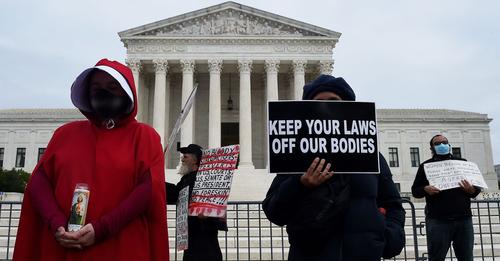
Missouri Gov. Mike Parson called a special legislative session so lawmakers could discuss cutting Planned Parenthood from the state’s Uninsured Women’s Health Services Program. Kyle Rivas/Getty Images
Some Missouri Republicans attempted to redefine certain forms of birth control as abortifacients in order to ban Medicaid from paying for them.
The Missouri Senate defeated a measure that would have redefined certain forms of birth control as abortifacients in order to ban Medicaid from paying for the contraceptives.
After hours of negotiation last Friday, lawmakers dropped the anti-choice language from the tax bill and voted against an amendment to ban Planned Parenthood as a Medicaid provider. The senate voted early Saturday morning to renew the Federal Reimbursement Allowance, a state tax that funds Medicaid, and the measure now heads to the state house. The Kansas City Star reported:
The vote makes it much more likely the General Assembly will meet Gov. Mike Parson’s July 1 deadline to renew the tax. He has promised severe budget cuts without a bill on his desk by then.
Last week, Missouri lawmakers had tried to use the funding bill to ban Medicaid from covering emergency contraceptives like Plan B and certain forms of birth control, like intrauterine devices (IUDs). The Republican state senators claimed that using Plan B or IUDs is the same thing as getting an abortion.
This is a preposterous lie, but one that anti-choicers will keep spreading far and wide in order to achieve their goal of criminalizing the use of birth control. Make no mistake—that is their end game.
Don’t fall for it.
Contraceptives like IUDs and Plan B prevent pregnancy. An abortion terminates a pregnancy. This is not up for debate.
But do you think that mattered to Republican lawmakers in Missouri? Nope.
Missouri Gov. Mike Parson even called a special legislative session so lawmakers could discuss sticking it to poor people by cutting Planned Parenthood from the state’s Uninsured Women’s Health Services Program and prohibiting Medicaid from covering IUDs and Plan B.
How? By pretending they’re abortifacients.
Birth control methods like IUDs are not abortifacients. Emergency contraceptives like Plan B aren’t either.
Just ask Imani Gandy, Rewire News Group‘s senior editor for law and policy, who wrote back in 2014:
Contraceptives prevent pregnancy, abortifacients terminate a pregnancy, and a pregnancy begins at implantation. So contraceptives by definition are not abortifacients because they prevent a pregnancy; if they work, there is no pregnancy to be terminated.
And:
Birth control benefit opponents obfuscate basic concepts about reproduction and women’s health. They attempt to turn a discussion about when pregnancy begins—and therefore when and how a pregnancy can be terminated—into a discussion about when life begins.
This is hardly the first time conservatives have argued that certain birth control methods should be banned or restricted because they cause abortion.
Texas Sen. Ted Cruz infamously believes that all kinds of birth control cause abortion. Gandy wrote in 2015:
At last year’s Value Voters Summit, where Ted Cruz opened his mouth and a lot of words that made no sense fell out, Ted Cruz repeatedly referred to birth control as “abortion-inducing.” At one point, Ted Cruz even claimed that the government is trying to force Catholic nuns to pay for abortion-inducing drugs, which is as hilarious as it is untrue. Cruz was referring to the Little Sisters of the Poor, a bunch of nuns who filed a lawsuit about the compromise the Obama administration entered into in order to shut up some of the birth control benefit detractors. (Spoiler Alert! The compromise didn’t work and, in fact, probably made things worse because the Religious Right is unreasonable and cannot be appeased.)
And just last week, Georgia Rep. Marjorie Taylor Greene argued that federal funding for Plan B amounted to paying for abortion, parroting the same misinformation that’s being used in Missouri.
Even if these restrictions only applied to abortifacients, they would be unnecessary and harmful. But it’s important to remember anti-choice politicians aren’t just coming for abortion.
Because it’s not really about abortion: It’s about restricting people’s autonomy.
It’s rare that reproductive rights advocates get to celebrate a win like this, but it’s an important reminder that these battles can sometimes be won, even in Republican-dominated states like Missouri.
New York — A solid majority of Americans believe most abortions should be legal in the first three months of a woman’s pregnancy, but most say the procedure should usually be illegal in the second and third trimesters, according to a new poll.
The poll comes just weeks after the U.S. Supreme Court agreed to hear a case involving a currently blocked Mississippi law that would ban abortions after 15 weeks of pregnancy, two weeks into the second trimester. If the high court upholds the law, it would be the first time since the 1973 Roe v. Wade decision confirming a woman’s right to abortion that a state would be allowed to ban abortions before a fetus can survive outside the womb.
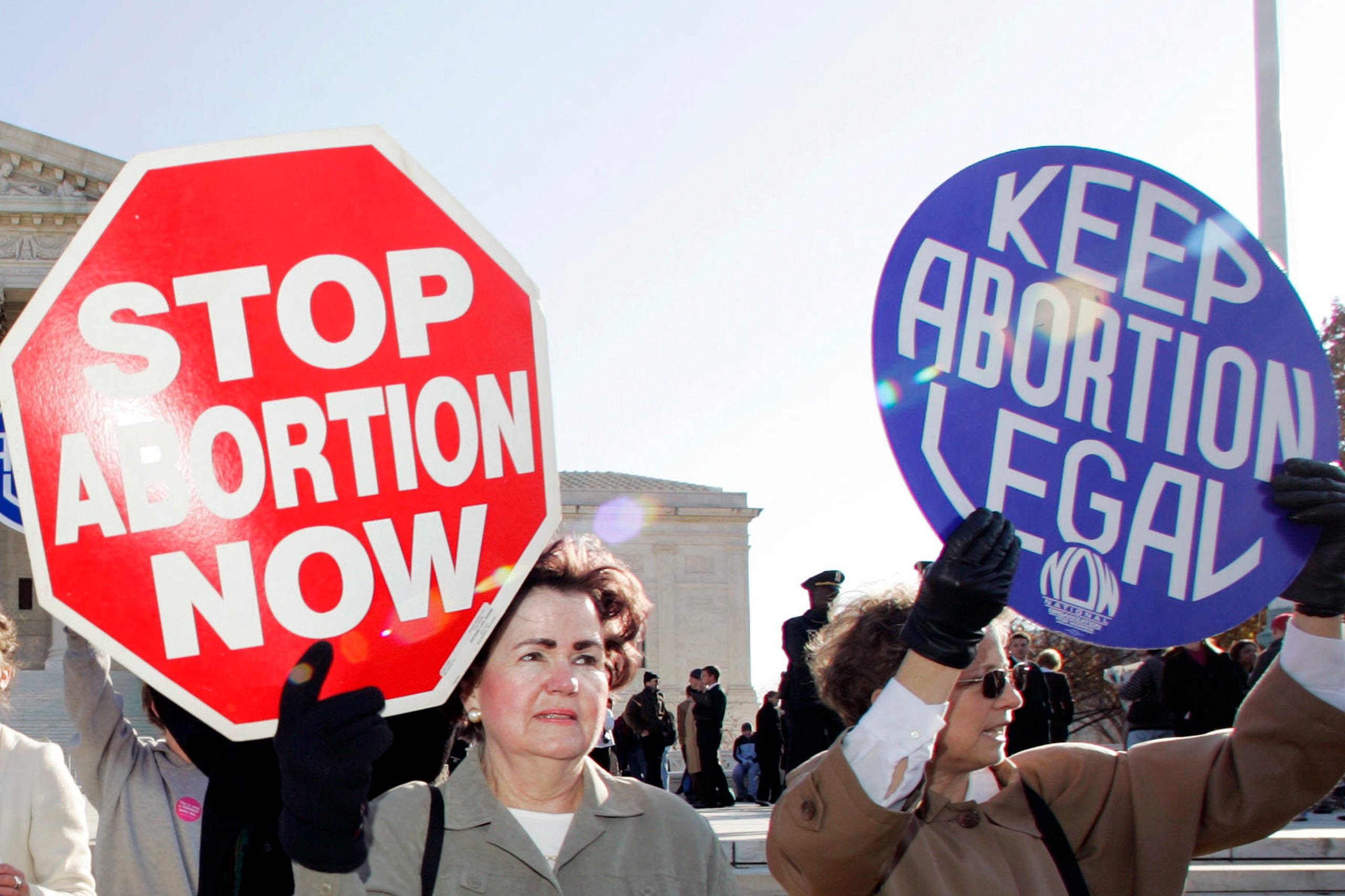
In this Nov. 30, 2005 file photo, an anti-abortion supporter stands next to a pro-choice demonstrator outside the U.S. Supreme Court in Washington. MANUEL BALCE CENETA, AP
The new poll from The Associated Press-NORC Center for Public Affairs Research finds 61% of Americans say abortion should be legal in most or all circumstances in the first trimester of a pregnancy. However, 65% said abortion should usually be illegal in the second trimester, and 80% said that about the third trimester.
Still, the poll finds many Americans believe that the procedure should be allowable under at least some circumstances even during the second or third trimesters. For abortions during the second trimester, 34% say they should usually or always be legal, and another 30% say they should be illegal in most but not all cases. In the third trimester, 19% think most or all abortions should be legal, and another 26% say they should be illegal only in most cases.’
Michael New, an abortion opponent who teaches social research at Catholic University of America, predicted the findings regarding second- and third-trimester abortions will be useful to the anti-abortion movement.
“This helps counter the narrative that the abortion policy outcome established by the Roe v. Wade decision enjoys substantial public support,” he said.
David O’Steen, executive director of the National Right to Life Committee, said the findings suggest that abortion rights advocates are “way out of the public mainstream” to the extent that they support abortion access even late in pregnancy.
But Dr. Daniel Grossman, a professor of obstetrics and gynecology at the University of California, San Francisco, who supports abortion rights, cited research showing that Americans viewed second-trimester abortions more empathetically when told about some of the reasons why women seek them.
These include time-consuming difficulties making arrangements with an abortion clinic and learning during the second trimester that the fetus would die or have severe disabilities due to abnormalities, Grossman said.
“More work needs to be done to elevate the voices of people who have had abortions and who want to share their stories to help people understand the many reasons why this medical care is so necessary,” he said via email.
Majorities of Americans — Republicans and Democrats alike — think a pregnant woman should be able to obtain a legal abortion if her life is seriously endangered, if the pregnancy results from rape or incest or if the child would be born with a life-threatening illness.
Americans are closely divided over whether a pregnant woman should be able to obtain a legal abortion if she wants one for any reason, 49% yes to 50% no.
Jenny Ma, senior staff attorney with the Center for Reproductive Rights, said women seeking second-trimester abortions included disproportionately high numbers of young people, Black women and women living in poverty. Some had not learned they were pregnant until much later than the norm; others had trouble raising the needed funds to afford an abortion, Ma said.
She noted that Republican-governed states have enacted numerous restrictions in recent years that often complicated the process for getting even a first-trimester abortion.
“Removing the many existing barriers to earlier abortion care would reduce need for second- and third-trimester abortions,” Ma said.
Abortions after the first trimester are not rare, but they are exceptions to the norm. The Centers for Disease Control and Prevention, in its most recent report on abortion in the U.S., estimated that 92% of the abortions in 2018 were performed within the first 13 weeks of pregnancy.
The poll also shows how opinions on abortion diverge sharply along party lines. Roughly three-quarters of Democrats think abortion should be legal in all or most cases; about two-thirds of Republicans think it should be illegal in all or most cases.
But most Americans fall between extreme opinions on the issue. Just 23% say abortion in general should be legal in all cases, while 33% say it should be legal in most cases. Thirty percent say abortion should be illegal in most cases; just 13% say it should be illegal in all cases.
Respondents from three major religious groups — white mainline Protestants, nonwhite Protestants and Catholics — are closely divided as to whether abortion should usually be legal or illegal in most cases. It was different for white evangelicals — about three-quarters of them say abortion should be illegal in all or most cases.
Dave Steiner, a hotel manager from suburban Chicago, was among those responding to the AP-NORC poll who said abortion should be legal in the first trimester but generally illegal thereafter.
“I was raised a very strict Catholic — abortion was just no, no, no,” said Steiner, 67. “As I became more liberal and a Democrat, I felt the woman should have the right to choose — but that should be in the first trimester.”
“Abortions are going to happen anyway,” he added. “If you’re making it illegal, you’re just chasing it underground.”
Editor’s note: On Tuesday, June 8, the Women’s Health Protection Act (WHPA) was reintroduced in Congress—federal legislation that would codify Roe v. Wade into law and establish the legal right to abortion in all 50 states. This is not the first time the bill has been introduced, but this time around does mark the highest number of original co-sponsors ever for the legislation.
Last Wednesday, in front of the Senate Judiciary Committee’s Subcommittee on the Constitution, Sen. Richard Blumenthal (D-Conn.)—a WHPA co-sponsor and committee chair—oversaw a Senate hearing on the historic legislation. Senators heard testimony from abortion advocates, including Dr. Jamila Perritt, president and CEO of Physicians for Reproductive Health; an abortion storyteller named Tohan from Texas; and Professor Michele Goodwin, chancellor’s professor at the University of California, Irvine, founder and director the Center for Biotechnology and Global Health Policy and its Reproductive Justice Initiative, and host of the Ms. podcast “On the Issues With Michele Goodwin.”
Goodwin spoke powerfully on the urgency of the WHPA in addressing racial, gender, legal and health disparities. Read her testimony below.
Committee Chairman Durbin, Committee Ranking Member Grassley, Subcommittee Chairman Blumenthal, Subcommittee Ranking Member Cruz, and distinguished members of the Senate Judiciary Committee and Subcommittee on the Constitution, thank you for inviting me to participate in today’s hearing on the Women’s Health Protection Act (WHPA).
My name is Michele Bratcher Goodwin. I am a chancellor’s professor at the University of California, Irvine and founding director of the Center for Biotechnology & Global Health Policy. I write and teach in the areas of constitutional and health law. My scholarship is published in the Harvard Law Review, Yale Law Journal, and Texas Law Review among others and in books, most recently, Policing The Womb: Invisible Women and The Criminalization of Motherhood.
Today, I am here to speak about the WHPA and preserving Roe. Preserving Roe is not a lofty academic matter, but one of great urgency. A woman is 14 times more likely to die in childbirth than by having an abortion. In states most aggressively legislating against abortion rights, the maternal mortality rates are devastatingly high and reflect glaring, grotesque racial disparities. This is a critical aspect of the new Jane Crow.
In 1851, Sojourner Truth delivered a speech best known as “Ain’t I A Woman?” to a crowded audience. Truth pleaded, “I have borne 13 children, and seen most all sold off to slavery, and when I cried out with my mother’s grief, none but Jesus heard me! And ain’t I a woman?”
Senators, 170 years later, the relevance of Truth’s plea endures. The ink remains wet on that famous oration. Truth’s speech remains a timeless appeal, because Black women continue to struggle against efforts to deny them reproductive autonomy and independence, including that guaranteed by the Constitution.
The picture that I paint for you is on a canvas that unravels beyond the reaches of slavery and into the 20th and 21st centuries. Women’s reproduction has been the euphemistic football of legislative politics.
Women’s Health Protection Act: An Important Step In Health Care
The Women’s Health Protection Act deserves your attention and support. It would “establish federal statutory abortion rights for providers and patients…” Enacting WHPA could trigger the repeal or striking down harmful laws that infringe on abortion access whose purpose and effect is to make it difficult for pregnant persons to access care. This specifically includes requirements for multiple, medically unnecessary in-person visits, requirements that doctors provide their patients with medically inaccurate information, requirements that providers perform medically unnecessary tests and procedures, and unnecessary building requirements that have the purpose and effect of shutting down clinics that not only provide abortion services, but also contraception, breast cancer screenings and STI testing.
WHPA creates an enforcement mechanism through public and private rights of action, similar to civil rights and anti-discrimination laws. This mechanism allows the U.S. attorney general, a clinician or patient to challenge violations of WHPA in court.
Congress has the power to protect pregnant people now. Under Section 5 of the 14th Amendment, Congress has the authority to enact legislation when state laws infringe upon or deny the exercise of constitutionally protected rights. This is the important action Congress took when it enacted the Voting Rights Act of 1965 to protect the right to vote. Congress expressly exercised its Section 5 authority to protect access to abortion services and health care providers’ ability to provide abortion services when it enacted the Freedom of Access to Clinic Entrances Act in 1994.
Congress Has the Authority and Obligation To Act
Congress also has authority under the Commerce Clause to protect access to abortion. Abortion services are, like other health care, a form of commercial and economic activity.
Enacting WHPA will be a substantial improvement in the wake of unrelenting attacks on reproductive health and rights. The challenges to reproductive health, rights and justice in the U.S. are longstanding and manifold. Forced and coerced sterilization, lack of sex education in high schools, criminal prosecutions and sanctions against poor pregnant women, and high maternal mortality are part of our landscape and history.
Reproductive justice requires every individual to have the right to make their own decisions about having children regardless of their circumstances and without interference and discrimination. It is time to enact the Women’s Health Protection Act. By passing this legislation, you will protect millions of Americans from harmful abortion restrictions that infringe on rights, burden health, and trample dignity.
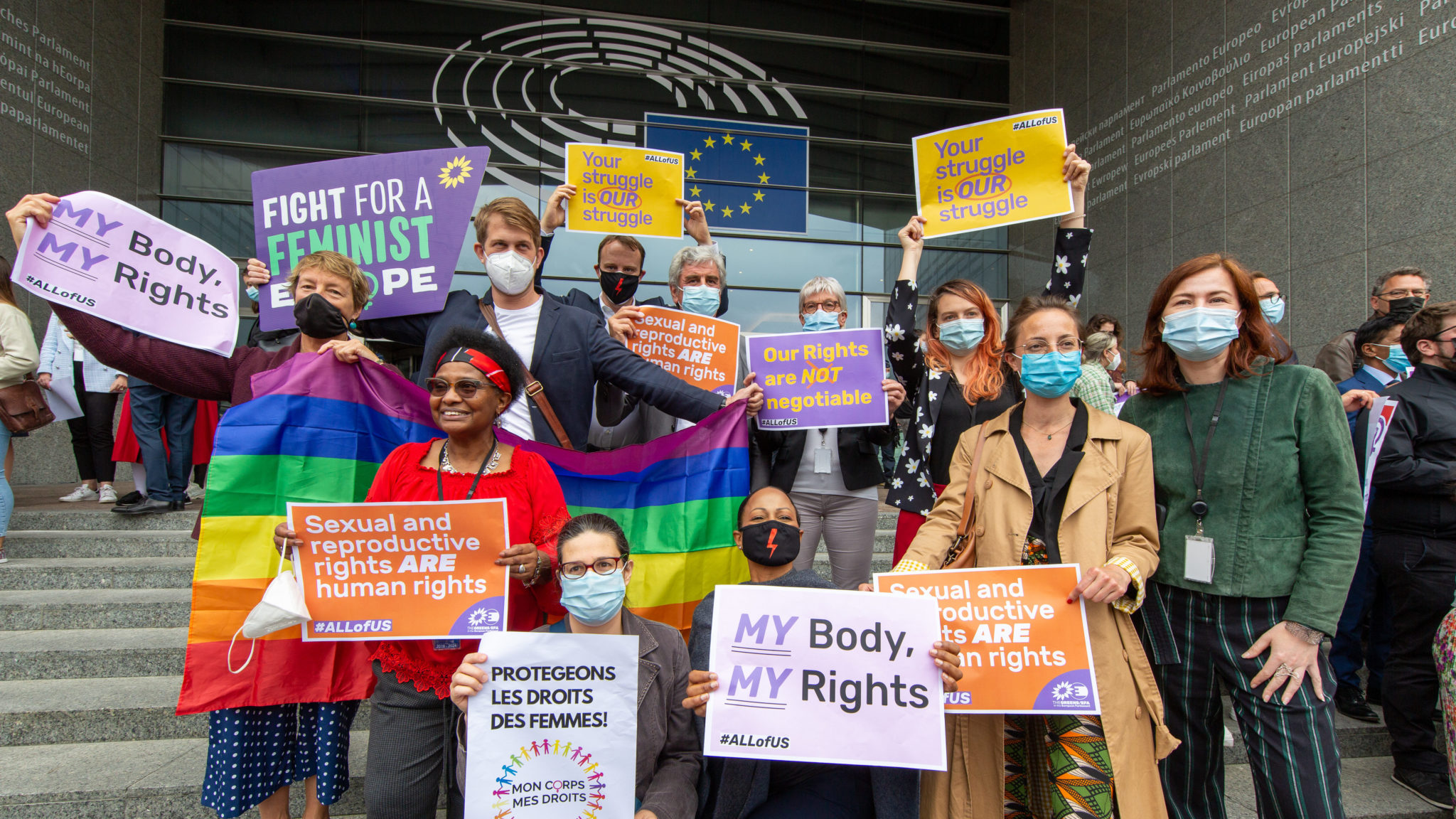
European Parliament passes resolution calling for removal of all barriers to sexual and reproductive health and rights across the EU.
The European Parliament passed today a resolution affirming that sexual and reproductive health and rights (SRHR) are fundamental human rights that must be upheld by European Union (EU) Member States.
The resolution, passed in a plenary session of the Parliament after being approved in the Women’s Rights and Gender Equality Committee on May 11, is the first SRHR resolution passed by the Parliament in almost 20 years and calls for removal of all barriers in access to abortion, modern contraception, quality maternal health care, assisted reproductive technologies and comprehensive sexuality education.
The resolution includes recommendations for European Union (EU) Member States to ensure that their national laws and policies guarantee SRHR free from discrimination, coercion and violence and promote accessibility of SRHR health services, information, and education.
“The European Parliament’s adoption of this comprehensive SRHR resolution demonstrates the EU’s commitment to advancing sexual and reproductive health and rights, as critical for guaranteeing women’s rights and gender equality within the EU,” said Katrine Thomasen, Senior Legal Advisor for Europe of the Center for Reproductive Rights. “Regressive threats to sexual and reproductive rights are increasing in many member states —so it’s critical that EU institutions condemn this regression and take robust action to protect these rights.”
In passing the resolution, the Parliament also called on the European Commission, which is the executive branch of the EU, and other EU institutions to counter the threats of regression in SRHR, increase support for women’s rights and SRHR civil society organizations and women human rights defenders working in Member States, and address the disruptions and limitations in access to sexual and reproductive health care services as a result of the COVID-19 pandemic.
Resolution Promotes Non-discrimination and Access to SRHR Services, including Abortion
The resolution calls on Member States to discharge their human rights obligations with regard to SRHR services, namely to:
Safeguard the rights of all people—across age, race, gender identity, sexual orientation, ethnicity, socio-economic status, and national origin—to make their own decisions about sexual and reproductive health and to ensure the right to bodily integrity, autonomy, and equality within their national SRHR policies and laws.
Ensure access to the full spectrum of comprehensive sexual and reproductive health care by removing legal, policy, financial and other barriers and securing adequate funding for SRHR services. This includes ensuring access to evidence-based, age-appropriate and comprehensive sexuality education; abortion care; modern contraception; fertility treatments; and quality maternity, pregnancy, and birth-related care.
Remove obstacles to legal abortion and bring national laws into line with international human rights standards and regional best practices by decriminalizing abortion and ensuring that abortion is legal in early pregnancy as well as removing all barriers in access to timely care
The resolution also urges EU institutions and agencies to advance universal access to SRHR services by taking actions that promote gender equality, accessibility, informed choice, consent and respect, non-discrimination, and non-violence.
Addressing Barriers to Abortion Access in the EU
The adopted resolution cites the Center’s World Abortion Laws Map, pointing out that 41% of women around the world live in countries with restrictive laws on abortion and 59% live in countries that broadly allow it. Yet, as the text explains, even where abortion care is legally available, restrictive laws often make it difficult to access, causing harm to those needing abortion care and placing their health and well-being at risk.
Among EU Member States, Malta bans abortion in all circumstances and Poland has highly restrictive laws that make accessing abortion care very difficult. A bill recently introduced in the Malta Parliament seeks to remove the country’s strict criminal penalties for abortion, while its current law includes penalties of up to four years imprisonment for doctors who provide abortion care and three years for patients or those who help patients find care.
The Center’s Europe program works with a broad group of stakeholders at the EU level, the Council of Europe, and other multilateral institutions to promote actions by those institutions that advance the respect and protection of SRHR across the region.
I knew what abortion was even before I knew how babies were made. As a child in the hot brick Baptist churches of Texas, I was told that there were women who threw babies in the trash. That there were women who were so selfish that they murdered. My mother showed me pictures of fetal remains. At church, we prayed for the lost lives. And on the anniversary of Roe v. Wade, my parents would march their five, then six, eventually eight children down the streets of downtown Dallas to protest abortion, our small bodies lost in a sea of signs declaring “God hates abortion” and images of milky-pink whale-like fetuses.
In high school, before I even understood the depths and pleasures of my own flesh, I watched boys and teachers stand up and debate whether I should have the right to choose what happens to me. My life always weighed in the balance against potential life, and the unformed life always seemed to win against my actual existence. My junior year of high school, in American government class, I was assigned to debate a boy on whether abortion should be legal. I had to argue it should be. He argued against. The vote went to the rest of the class and he was popular, so I lost. I cried in the bathroom after, not just because I hated losing, but because I felt humiliated that somehow my rights, my body, my life was a matter of public debate, of “seeing both sides” instead of seeing my humanity.
Existing as a woman in America means watching a parade of state legislators stand up every year and debate bills that restrict your body and therefore how much say you have over the direction of your life. These bills are argued in courts, online, in classrooms and on opinion pages. Our bodies are not simply our bodies. They are the part of the discourse.
In 1973, the Supreme Court, citing a woman’s right to privacy, ruled in Roe v. Wade that a woman has a constitutional right to an abortion. In 1992, the Court reaffirmed Roe in Planned Parenthood vs. Casey and said that states cannot ban abortion pre-viability, meaning before the fetus could live outside the womb. This has been the standard ever since. These rulings have never meant that every woman could get an abortion when she needed it, as many low-income women, particularly in red states, are still unable to access the procedure due to regulations that have imposed prohibitive barriers. But for nearly 50 years, Roe was precedent. Settled law, as Brett Kavanaugh told Susan Collins less than three years ago.
Except maybe not. On May 17 the Court announced that it would hear the case of Dobbs vs. Jackson Women’s Health Organization, a challenge to a Mississippi law banning almost all abortions after 15 weeks, which clearly violates Roe because a fetus is not yet viable at that point in pregnancy. Days later, Texas Governor Greg Abbott signed one of the nation’s most restrictive abortion laws, banning the termination of pregnancy as early as six weeks and allowing private citizens to sue abortion providers as well as anyone who “aids and abets” an abortion patient, including by paying for the procedure. It is scheduled to go into effect in September. Although states have passed bans on early abortion before, courts have blocked or struck them down because they are blatantly unconstitutional. But Abbott and other Republican lawmakers are betting on what so many women have known their whole lives: There is no settled law in this area. Our bodies are an eternal battlefield.
We have never had full control. We have always known what little we had could be taken away.
We may not get a decision in the Dobbs case before June 2022. And so we are, for now, in limbo. But while this moment is different from ones in the past, as the Court is now stacked with six conservative justices, including its newest member Amy Coney Barrett, and there’s the very real possibility that Roe will be overturned, it is also the same. We have never had full control. We have always known what little we had could be taken away.
Not long ago, a friend called to tell me about her abortion. She whispered, not because she was ashamed, but because she didn’t want to be another political point to be scored. She just wanted to exist in her body. She just wanted to be respected.
I’ve thought a lot about that conversation in this year consumed by a public health crisis and a reckoning with the racism that built our nation. How too few people are allowed to exist in their bodies without commentary or interference. I adopted not one but two pandemic dogs and spent long hours walking them listening to Call of the Wild and Julie of the Wolves on audiobook. Each of those books made me cry, because I realized that dogs, wolves, have something I don’t, the ability to just be flesh. It’s silly, but it’s not.
These political fights are not about people. I know that. They’re about money and rhetoric. I think about all the money raised from proclaiming reproductive rights are in jeopardy. The money raised from promising to pack the courts to end the murder of babies. The money raised on the precarity of my life.
I know that whatever the Supreme Court decides does not have to be the final word. Given the timing of the ruling, abortion will likely a midterm-election issue, though misogyny can be as motivating a political force as the loss of bodily autonomy. (Nearly one in four Americans say they will only vote for a candidate who shares their views on abortion.) But with the right leaders in place, Congress could pass a law shoring up the rights granted by Roe. If we put enough pro-choice politicians in state and federal office, the Equal Rights Amendment could finally be ratified. These advancements are not impossible, yet they feel so monumentally so far away.
As we crawl out of the tunnel of a pandemic, where the inequity of our political system was laid bare and we saw firsthand how little a society that forces women to have children actually values mothers, it can be hard to feel hopeful. It’s especially hard when it feels like we’re just waiting to be told if the rules about our own bodies have changed.
Twenty-five years after I moved away from Texas, another young woman from the state stood up in front of her peers and demanded her own autonomy. Paxton Smith, valedictorian at Lake Highlands High School in Dallas, replaced her approved speech with one that signaled that the fight over women’s bodies is just as ferocious as it has ever been. “I’m talking about this today — on a day as important as this, on a day honoring 12 years of hard academic work, on a day where we are all gathered together, on a day where you are most inclined to listen to a voice like mine, a woman’s voice — to tell you that this is a problem, and it’s a problem that cannot wait,” she said. “I cannot give up this platform to promote complacency and peace, when there is a war on my body and a war on my rights.”
We are all tired of protesting and explaining and pointing and shouting and asking for change, tired of asking to simply be allowed to exist in our bodies. It doesn’t mean we will stop. What choice do we have? This is the fight of our lives. The fight for our lives.
Demonstrators gather on the University of Iowa Pentacrest for a pro-choice rally on Friday, May 17, 2019. — Zak Neumann/Little Village
A District Court Judge in Johnson County ruled on Monday that a law mandating a 24-hour waiting period before a woman can have an abortion is unconstitutional, and issued a permanent injunction against the state enforcing it. Gov. Kim Reynolds had signed the measure — requiring a woman to have an appointment with a doctor at least 24-hours prior to an abortion, and provide a doctor with written certification that she is eligible to obtain an abortion — on June 29, 2020.
Judge Mitchell Turner, who issued a temporary injunction last year stopping the law from taking effect, issued the permanent injunction as part of a summary judgment resolving the case in favor of the plaintiffs, Planned Parenthood of the Heartland and Planned Parenthood Federation of America, who were represented in court by the ACLU of Iowa. Turner found they had “established the existence of undisputed facts, and have established success on the merits of their claims.”
“The decision is really essential for protecting abortion access for Iowans,” Rita Bettis Austen, legal director of the ACLU of Iowa, said during a news conference on Tuesday.
Although it was a 24-hour delay in accessing abortion services the law required, in practical terms it could have delayed a procedure by weeks if there was difficulty in scheduling the legislatively mandated but medically unnecessary appointment due to limited availability at a clinic.
The law was pushed through by Republican legislators in the final hours of the last day of the legislative session in 2020. It was added as a last-minute amendment to a bill dealing with the withdrawal of medical intervention needed to sustain the life of a critically ill child. There were no hearings on the amendment, and there was no opportunity for public comment on it before it was approved.
The amendment was added to the bill after 10 p.m. on a Saturday night, and it received final approval — with all the Legislature’s Republicans and one House Democrat voting in favor — in the early hours of Sunday morning.
The Iowa Constitution requires that bills only address one subject, and all amendments to a bill be germane to the subject of the bill. During the floor debate on the amendment that took place in the early hours of the final session of the Legislature in 2020, Rep. Brian Meyer, a Democrat from Polk County, told Speaker Pat Grassley he was confused by how the amendment was relevant to the bill and asked for clarification.
“Rep. Meyer, your point is well taken, the amendment is not germane,” Grassley replied. Grassley did not, however, take any steps to remove the amendment and, like the rest of his fellow Republicans in the Iowa House, voted to pass the bill.
Judge Turner cited Grassley’s statement in his ruling on Monday, which found the abortion restriction violated the Iowa Constitution in two ways.
First, the way it was passed clearly violated the constitutional provision requiring bills to only address a single topic.
“Upon review of both the Iowa Senate and House videos, it is abundantly clear to this Court that what occurred in the Iowa Legislature on June 13th and 14th, 2020 was exactly such ‘tricks in legislation’ and ‘mischiefs’ that the single-subject rule exists to prevent,” Turner wrote.
Secondly, the judge also found the waiting period to be in violation of the due process and equal protection clauses of the Iowa Constitution. It was on those grounds the Iowa Supreme Court struck down a 72-hour waiting period on abortion signed into law by then-Gov. Terry Branstad in 2017.
In its 2018 decision striking down the 72-hour waiting period, the Iowa Supreme Court ruled that the state constitution provides a stronger guarantee of a woman’s right to access abortion services than the U.S. Constitution, writing that in “the Iowa constitution… implicit in the concept of ordered liberty is the ability to decide whether to continue or terminate a pregnancy.”
Republican lawmakers were fully aware the state’s highest court had struck down a mandatory waiting period for abortions when they added the 24-hour waiting period rule at the last minute in 2020. Sen. Jake Chapman, a Republican from Adel, said during the floor debate in 2020 the waiting period was intended to challenge the Iowa Supreme Court’s 2018 decision.
“The very notion that somehow there’s a fundamental right in Iowa’s constitution is one of the most gross misuses of the power of the gavel,” according to Chapman.
Republican antipathy to the Iowa Supreme Court’s 2018 ruling in Planned Parenthood v. Branstad is also the reason the Legislature passed a constitutional amendment adding anti-abortion language to the Iowa Constitution in May.
“To defend the dignity of all human life and protect unborn children from efforts to expand abortion even to the point of birth, we the people of the State of Iowa declare that this Constitution does not recognize, grant, or secure a right to abortion or require the public funding of abortion,” the amendment states.
For it to become part of the state constitution, it will have to be passed again in the 2023-24 legislative session, and then approved by a majority of voters in a statewide general election.
In her 2020 Condition of the State Speech, Reynolds called adding anti-abortion language to the Iowa Constitution one of her top priorities. An amendment passed the Iowa Senate that year, but the House did not take it up during the pandemic-shortened session.
This year, the amendment passed both chambers of the Legislature, almost entirely on party-line votes. In the Senate, every Republican voted in favor of it and every Democrat opposed it. In the House, three Republican joined all the chamber’s Democrats in voting against it.
Speaking at Tuesday’s news conference on the permanent injunction, Jamie Burch Elliot, director of Public Affair for Planned Parenthood North Central States, pointed to threats to reproductive choice posed by the proposed constitutional amendment.
“The court’s decision [on Monday] means access to safe and legal abortion in Iowa remains unchanged,” she said. “But this serves as a reminder of why the protections of the state constitution for abortion are so important, and why Iowans have to double down in the fight against the anti-abortion constitution amendment that lawmakers passed in this legislative session.”
In a written statement issued by the governor’s office on Tuesday afternoon, Gov. Reynolds said she plans to appeal Turner’s ruling.
“In a court ruling issued yesterday, an Iowa District Court wrongly struck down our efforts to protect all innocent human life,” Reynolds said. “I will be working with our legal counsel to appeal this recent decision, and I believe we can win.”
Real abortion stories from real people have the power to change minds, as Paxton Smith’s viral valedictorian speech reminded us. Here, a collection.
n June 1, the country was reminded of the power of unfettered, unfiltered, passionate storytelling. During what should have been a run-of-the-mill graduation ceremony for the seniors of Lake Highlands High School in Dallas, TX, valedictorian Paxton Smith made a last-minute change to her commencement speech, pivoting to address the continued attacks on abortion access. Her speech came in the wake of Texas Gov. Greg Abbott signing an anti-abortion law that would ban the procedure at six weeks gestation, before most people even know they’re pregnant. (The law has not gone into effect and is likely to be struck down in court—abortion is still legal in all 50 states.)
“I have dreams and hopes and ambitions. Every girl graduating today does,” Smith said to a stadium filled with classmates, faculty, staff, family, and friends. “And we have spent our entire lives working towards our future. And without our input and without our consent, our control over that future has been stripped away from us.”
As states continue to introduce, and in many instances pass, anti-abortion laws that would further deny pregnant people from exercising their constitutional right, abortion storytellers are leading the fight to protect and expand access to care. And it comes as no surprise that these storytellers are often young, Black, brown, Indigenous, LGBTQ+, and are continuing the work of the Black and brown advocates who came before them.
With the help of We Testify, an organization dedicated to the leadership and representation of people who’ve had abortions, Cosmo spoke to four people who had abortions when they were in their teens and early twenties to learn about their experiences, the barriers they faced while seeking a common medical procedure, and how abortion storytelling has not only changed their lives but the lives and viewpoints of those around them.
“BOTH STORYTELLING AND MY ABORTION EXPERIENCE CHANGED MY LIFE. IT SAVED MY LIFE.”
CoWanda was 17 when she had her abortion at 8 weeks and 4 days gestation in Dallas, Texas.
“I got my abortion maybe three weeks before my high school graduation, so on top of preparing for graduation, trying to navigate the end of school, and getting ready for college, I was forced to go before a judge in my county and talk about my goals for life and why I wasn’t able to continue a pregnancy. I also had to wait 24 hours after already knowing I needed an abortion before I could actually get an abortion.
“I also really needed help paying for my abortion. All the money that I had saved from working had gone to my senior fees and I had no relationship with my parents. In fact, I was scared to go to my parents about my pregnancy because my mom told me that if I had sex and ever got pregnant she would force me to carry the pregnancy to term because she didn’t think I shouldn’t be having sex at all—that was my sex education at 16 years old.
“The meaning of abortion storytelling, for me, has transitioned over time. But at one point it was literally why I woke up in the morning. It was part of my existence. Like, this is what I have to do for my community, this is my step towards claiming my power, claiming my truth, and my access to the liberation that I envision for myself. Storytelling has allowed me to speak up in a lot of different ways—I’m able to have trauma talks with my families and friends. I’m able to call out behaviors we’re normally told to be ‘hush hush’ about.
“It also holds space for people to learn and grow. Sometimes you really don’t know until you hear someone else’s story. A lot of my friends and family have literally told me, ‘I have changed my view because you had an abortion. In hearing your story and you telling me what you went through, there was just no way I could be “pro life” and consciously not consider people like you.’ As a faith person, that is what I live for! To let people know that you are above shame and you are above the fear that our world tries to put on you.
“I know that both storytelling and my abortion experience changed my life. It saved my life.” —CoWanda, 22, Texas
“THE WAY PEOPLE FEEL ABOUT ABORTION IS LITERALLY UP TO THE PERSON WHO IS GETTING THE ABORTION. THERE IS NO MONOLITH TO ABORTION.”
Larada had her abortion when she was 6 weeks pregnant and 19 years old.
“My abortion definitely helped me see the barriers that exist when people are trying to get abortions. I had to go to three appointments—what would I do if I didn’t have people who were able to bring me to these appointments? What would I do if I had to work? What would I do if I didn’t know who to reach out to? If I had to pay for this abortion and be short on rent? What would do if I had to carry this pregnancy to term because I couldn’t afford an abortion because I didn’t know certain people?
“There were protestors outside the clinic—this was during a time when there was mass civil unrest in response to the murders and executions happening in broad daylight at the hands of law enforcement and would-be vigilantes that lit a spark in the Black Lives Matters movement. Even sitting in the abortion clinic and seeing the protesters and people talking about police brutality on the news after walking past protesters who harassed me and tried to make me feel bad about the decision that I was making and using my race and the current times as a means to intimidate me…
“Storytelling has helped affirm me in so many ways. In the process of my abortion, my main concern was just getting the abortion. I didn’t have any feelings about carrying my pregnancy to term or the possibilities of what ‘could be’ if I chose to become a mother. That wasn’t my M.O. I was 19, not too far fresh out of foster care, on my own, in school, and didn’t feel bad about the decision I was making. But people wanted me to feel bad. With how stigmatized abortion is and how the narrative of abortion is so controlled by one group of people, you would think it was a distraught, very, very tough decision. But the way people feel about abortion is literally up to the person who is getting the abortion. There is no monolith to abortion.” —Larada, 20, California
“I FEEL VERY PROUD OF MYSELF, AND I HAVE COME TO TERMS WITH MY ABORTION BECAUSE IT’S HEALTH CARE.”
Anna was 17 when she had her abortion at six weeks gestation in Dallas county, Texas. Prior to her abortion, she was denied access to birth control and, after a case of a ripped condom, Plan B due to her age.
“I had that feeling that it was going to happen but I didn’t want to believe it. I was in Texas, I was a minor, so how was I going to get anything done? I just got into an engineering program at UTB [University of Texas at Brownsville] too, and I was so excited—but then I was thinking, ‘What if this ruins my life?’ because this would ruin my life.ADVERTISEMENT – CONTINUE READING BELOW
“I was also an uneducated teen who was desperate to try to get anything done so I was Googling all types of stuff. There were unauthorized websites offering abortion pills shipped overseas. I was looking up how many Vitamin C pills to take, drinking parsley tea and mugwort tea. Then a friend showed me Jane’s Due Process, and they set up everything to help me get my abortion. They also paid for my sonogram, they helped pay for my abortion, they helped me with transportation, and they helped me get a lawyer so I could get an abortion without parental consent (this is called a judicial bypass).
“I went to the courthouse prepared with my resume because it was literally an interview of my maturity and how will I do as a person—all my grades, all the stuff that I’m involved with, and why I needed this abortion. I was basically interviewed really intensely by a judge. And at the end of the day, she was like, ‘I signed the paper, but why did you even have sex? What do you get out of it? You have such a great future in front of you, I don’t know why you made this choice.’ It just feels so dehumanizing.
“Every single part of my journey, every single obstacle—not being able to take hormonal birth control, not being able to get emergency contraception, not being able to even make my own choice to have sex, having to explain that I had to have an abortion because I was denied my two previous choices—it was such a terrible time.
“For me, being able to say my story and having other people learn from all the painful obstacles I had to overcome myself makes me feel proud. I feel very proud of myself and I have come to terms with my abortion because it’s health care.” —Anna, 20, Texas
“STORYTELLING HELPED ME UNDO A LOT OF THE INTERNALIZED STIGMA BECAUSE I WOULD NEVER THINK ANY OF THAT ABOUT ANYONE ELSE.”
Lexi had a medication abortion when she was 20 years old—right before her 21st birthday—while attending college in Massachusetts.
“I actually took a pregnancy test as a joke—my best friend had bought a pack of 100 off Amazon and she was finally down to her last one and I was like, ‘You know, I’m just going to take it.’ It was the absolute last thought in my mind that I was pregnant. I went in the bathroom, I took it, that test turned positive in like five seconds, and I immediately disassociated. I walked out and said, ‘Yeah it’s negative,’ and left my friend’s house and got in my car and was like, ‘I don’t even know who to call.’ I just got out of foster care before college, I was living with my grandparents who are very old-school and from the South and I was scared to even go home. I also went to a private Catholic school from kindergarten to 12th grade, so I had absolutely no sexual health education—no health education at all, actually—and I had no idea what was happening with my body. All I knew was that I was going to be this awful person and I would be horrible if I have an abortion.
“For me, everyone makes this big deal about abortion…but it’s normal. And after meeting all these people [who’ve had abortions] and sharing my story, I’m like, ‘Wait, all of these people are absolutely amazing. I don’t think they’re horrible at all. I think they’re amazing for having their abortions, so why do I think I’m horrible?’ Storytelling absolutely helped me undo a lot of that internalized stigma because I would never think any of that about anyone else. When it was me, I was like ‘Oh, I’m just bad’ but I couldn’t actually pinpoint the ‘why I am bad?’ So it literally made me reverse it and I was like, ‘Actually, I’m great. Actually, I am the best because I had an abortion.’” —Lexi, 23, Ohio
Lakeesha Harris, director of reproductive health and justice at Women With a Vision, said Louisiana’s dozens of abortion restrictions have made abortion a right in name only for many Black residents. Shutterstock/RNG illustration
A year out from a big abortion rights win at the Supreme Court, advocates worry the Court is about to take it all away with a case out of Mississippi.
It took a full day for Elizabeth Gelvin to process the news.
If the Supreme Court upholds the law, Louisiana’s own 15-week ban—which is tied to the outcome of the Mississippi law—could go into effect, slicing off five weeks of access in the state. Louisiana also has a “trigger law” that would ban abortion outright if Roe is overturned.
Gelvin is the client and community coordinator for the New Orleans Abortion Fund, which supports people getting care across Louisiana and, increasingly, out of state. For her, the Court’s announcement was momentous, even though a post-Roe reality is already here for many of her clients.
“The Mississippi case is terrifying, it’s stomach-churning—but right now in real time, we already have folks that cannot access care,” she said. “The future is scary, and so is the present.”
Louisiana has only three clinics left and already bans abortions after 20 weeks. A directive from the state department of health at the beginning of the COVID-19 pandemic temporarily closed two clinics in April 2020, and capacity limits from the Centers for Disease Control and Prevention and an influx of patients from Texas led to increased wait times. The New Orleans Abortion Fund had to help more people cross state lines than ever before.
There are many reasons why people have abortions after 15 weeks, including needing to get money together for the procedure plus travel and child care, not realizing they’re pregnant until later, or learning about health issues with the fetus or pregnant person.
If the Supreme Court upholds the 15-week ban (hearings will likely be in the fall, with a decision next June), even more people will have to travel out of state, widening the gap in what’s already a two-tiered system of abortion access in the United States. Families with money will always be able to get care, said Kathaleen Pittman, director of Hope Medical Group for Women, an abortion clinic in Shreveport that provides care up to 16 weeks and 6 days into pregnancy. (Louisiana’s two other clinics go to 20 weeks, Gelvin said.)
Families living on low incomes will have fewer options, and many of Hope Medical’s patients already cite money as a top reason why they’re seeking abortion: They just can’t afford a child—and many of them already have kids.
“Systemic poverty is going to continue,” said Pittman, whose clinic was the plaintiff in last year’s abortion rights victory at the Supreme Court, June Medical Services v. Russo. “It’s an absolute slap in the face to the families we serve. But what can I say, that’s the way it’s always been and apparently the legislators are comfortable with perpetuating this.”
“We know that as a Black, queer-led organization, these laws directly impact the most marginalized here in Louisiana—and that’s Black people, Black women, Black trans men who may need an abortion,” Harris said.
Abortion restrictions are part of a broader system of oppression alongside recent anti-transgenderbills and the lack of state action on raising the minimum wage, which together limit people’s bodily autonomy, Harris said.
“It’s not just an abortion issue. We can’t look at this from a singular lens. This is an attack on every aspect of our bodies,” she said. “Yes, it’s a chipping away, bit by bit, at Roe v. Wade, but also in addition to all of the other laws that chip away at our rights and access as Black people, as queer people, as trans people, it confines [us] to a system that is set to oppress who we are as a whole.”
Harris said this playbook isn’t limited to the South, citing recent bills out of states like Pennsylvania. “The whole nation should be on alert. This isn’t just a Southern strategy.”
The Hope clinic already works with at least five abortion funds to help their patients address costs, and the need for financial assistance would only increase with a 15-week ban. Pittman underscored that if a patient has to fly, they’d be booking their travel at the last minute, when prices are often higher.
“It’s a struggle to help take care of the people locally, not to mention sending them to God knows where,” Pittman said. “There are never enough resources. We would have to work even harder to get women where they needed to be. We’ve been putting out pleas to everybody. It makes my head hurt thinking about it.”
The pandemic has been a learning exercise for a post-Roe future. Before COVID-19, the New Orleans Abortion Fund mostly offered financial help, but then it evolved into an “abortion travel agency” out of necessity, Gelvin said. “Supporting folks in getting care in Texas and Florida has been increasingly the norm,” she said.
Florida is the only state in the Southeast that would have abortion protections if Roe v. Wade falls, according to the Center for Reproductive Rights. The next closest state for many would be Illinois, hundreds of miles away; the New Orleans Abortion Fund also helped people travel there during the pandemic. Clinics in these states may become overwhelmed.
Traveling to Florida for an abortion is “scary and sad and already a lived reality,” Gelvin said. “It may be more realistic, both logistically and financially, to support people to take a flight to South Florida to access their care there than elsewhere.”
Harris said she’s already made connections with reproductive groups in Illinois in the event of an unfavorable Supreme Court decision. The national reproductive justice umbrella organization, In Our Own Voice, is making plans and gathering resources to help more people travel in preparation for the future, she said.
If abortion becomes restricted beyond a 15-week ban in Louisiana, neither the New Orleans Abortion Fund nor Women With a Vision plans to direct people to information on self-managed abortion with pills because of the legal risk involved. Louisiana is one of 19 states that bans telemedicine for abortion pills.
“From a harm-reduction standpoint, and not wanting to get more Black and brown people locked up, or people locked up period, our challenge then is to see how we can assist with transporting people to friendlier states,” Harris said, noting that undocumented people crossing state lines could face additional challenges.
Women With a Vision will continue distributing condoms and emergency contraception in partnership with ReJAC, New Orleans’ Reproductive Justice Action Collective, Harris said. Her organization also offers sex ed classes and distributes a contraceptive guide that uses inclusive language in both English and Spanish.
Arguments in the Mississippi case, Dobbs v. Jackson Women’s Health, haven’t been scheduled, but as the country braces for the Supreme Court’s decision, one thing is clear: Local reproductive rights and justice groups will need more money to help people continue to get abortions.
“The reality for abortion funds, especially those in heavily restricted states, is that the need has always outpaced what is available, even in moments of great attention and greater windfall,” Gelvin said.
Gelvin said that applies to abortion funds like New Orleans Abortion Fund, as well as practical support groups that offer assistance like coordinating and funding travel, lodging, and child care. She noted that money people may have for their procedure isn’t worth much if they can’t afford to get to the clinic. Groups in the Southeast that do this work include ARC Southeast, Yellowhammer Fund, Fund Texas Choice, Clinic Access Support Network, Tampa Bay Abortion Fund, and Florida Access Network, Gelvin said. There’s also the Midwest Access Coalition and the Brigid Alliance, which specializes in support for later abortion patients.
Gelvin recommended donating directly to your local abortion fund or support group, giving monthly if you can, organizing fundraisers, and donating your time if money is tight. But keep paying attention, especially as states like Louisiana prepare for another hurricane season that can disrupt people’s reproductive care.
“I would just hope that people continue to pay attention and stay activated and organized throughout all of this long year that we have ahead, before we have some sort of outcome from the Court,” she said.
After spending nine years wrongfully detained, Sara Rogel returned home and now begins the long process of rebuilding her life. Marvin Recinos/AFP/Via Getty Images
Banning abortion leads only to despair. And yet the Court could soon push legal abortion even more out of reach with Dobbs v. Jackson Women’s Health.
A Salvadoran woman who was imprisoned after an obstetric emergency that caused the loss of her pregnancy was granted parole last week by the sentencing court of Cojutepeque in El Salvador. After spending nine years wrongfully detained, Sara Rogel returned home and now begins the long process of rebuilding her life.
Sara’s story is important in its own right. But it’s also critical in demonstrating to U.S. politicians and the Supreme Court what banning abortion causes: Every person with a pregnancy loss will be under suspicion, police will be invited to intervene in intimate reproductive health-care outcomes, and innocent people will end up in jail. We can and must heed the lessons from Sara’s story and reject attempts to ban abortion.
We met Sara not long ago in El Salvador with a delegation of U.S. state lawmakers to try to better understand how banning abortion devastates families and communities. A recent announcement by the U.S. Supreme Court that it will be considering a case out of Mississippi should strike fear into our hearts, as the Court’s ruling could alter the nearly 50-year foundation of legal abortion in the United States.
Despite the fact that not a single state’s population supports banning abortion, we’re in the midst of an avalanche of state-level abortion bans and restrictions—more than 500 introduced this year alone—which has made much of the promise of Roe v. Wade nearly hollow for many people seeking abortion care. And yet the outcome of Dobbs v. Jackson Women’s Health Organization could push legal abortion even more out of reach.
This spring’s chaotic flurry of bans and restrictions on abortion portends danger.
In Texas, a new law will prohibit abortion as early as six weeks if it takes effect—banning abortion even before some people know they are pregnant—and opens the door for almost any private citizen to sue abortion providers or anyone else involved in the procedure. Arkansas, Arizona, Idaho, Montana, Oklahoma? Abortion ban after abortion ban. These state lawmakers claim to care about women and children, but we only need to look around us, in the United States and beyond, to see that the criminalization of our reproductive decisions has devastating consequences.
El Salvador has one of the most extreme abortion bans in the world. Women are forced to ask courts for permission to receive medical care, oftentimes when on the brink of death. This is what happened to Beatriz, whose pregnancy was diagnosed with a fatal fetal anomaly. Her case received international attention after the Salvadoran court refused to allow doctors to end the pregnancy, even though Beatriz faced grave fatal health risks. The Inter-American Commission of Human Rights eventually intervened to allow Beatriz the care she needed. In the case of 22-year-old Keyla Cáceres, doctors diagnosed her with an ectopic pregnancy but refused to perform an abortion. They waited until her ovaries exploded and her life was on the line before finally taking action.
These stories are far from unique. Countless women and girls in El Salvador are regularly prosecuted and wrongfully imprisoned as a result of its abortion laws, even in cases where they involuntarily suffered miscarriages, stillbirths, or other obstetric emergencies beyond their control. Over the course of 20 years, El Salvador’s total abortion ban has imprisoned more than 55 women and orphaned countless children. Because when abortion is banned, all pregnant people become suspects.
We can’t allow the United States to regress; we can see the horrific impact of banning abortion in the eyes of Sara, Keyla, Beatriz, and the countless other women and families who have been devastated by cruel abortion bans.
There is global momentum to respect the dignity and reproductive well-being of all women and pregnant-capable people. At the end of 2020, Argentina passed a historic bill legalizing abortion—a testament to public support from the medical community and the thousands of activists who for years marched in the streets to demand an end to clandestine abortions. Ireland decriminalized abortion. And while a near-total abortion ban in Poland has been enacted as part of the country’s dangerous slide into authoritarianism, protesters there took to the streets in record-breaking numbers and will continue to fight. Here in the United States, Illinois and New York have enacted protections for abortion rights. Across the Americas and the world, we are unapologetically claiming reproductive autonomy and dignity.
We must heed the crystal-clear lessons of El Salvador: Banning abortion leads only to despair. People, no matter their home country or socioeconomic status, should not die from pregnancy complications. And no one should be jailed for suffering a miscarriage or locked behind bars for having an abortion.
We’re working for a world in which all people can imagine and embody safe and healthy pregnancies if they want them, access to quality health care provided with dignity and respect, and supportive communities that help us all reach our full potential. This is our shared struggle for reproductive freedom, and it’s a struggle worth fighting for around the world and here at home.
The Women’s Health Protection Act would bar states from imposing restrictions on abortion, as Republicans push hundreds of anti-abortion bills at the state level.
Democrats are reintroducing legislation to protect people’s access to abortion, just as Republicans at the state-level push dozens of bills trying to limit access to reproductive rights and the Supreme Court is set to consider a pivotal case.
The Women’s Health Protection Act, first introduced by Sen. Richard Blumenthal (D-Conn.) in 2013, would block states from imposing restrictions on abortion that make it harder for pregnant people to access care. It would protect both a person’s right to determine if they want to continue a pregnancy, and health providers’ ability to offer reproductive health care services.
“What we’ve seen is an unprecedented assault on a woman’s right to decide whether to continue a pregnancy,” Blumenthal said, calling the state-level barriers an “attack on women’s health care.”
In Texas, for instance, Republican Gov. Greg Abbott signed an extreme abortion law last month, effectively banning the procedure at six weeks into pregnancy, before many people even know they’re pregnant. And in Oklahoma, Republican Gov. Kevin Stitt signed a bill that would revoke the medical license of doctors who perform abortions unless it’s to protect the mother’s life.
Meanwhile, the Supreme Court is set to consider a pivotal case on a Mississippi ban on abortions beyond 15 weeks of pregnancy, marking the first time the nation’s highest court will consider an abortion ban since the landmark Roe v. Wade decision of 1973.
Blumenthal warned that the conservative-leaning court’s decision could “not only chip away, but potentially overrule Roe v. Wade — at the very least, do profound damage to it.”
The Women’s Health Protection Act, first introduced by Blumenthal in 2013, has repeatedly been reintroduced in new congressional sessions since. So far in the current Congress, the bill has 176 co-sponsors in the House and 45 co-sponsors in the Senate. While Democrats hold a majority in the House, such contentious legislation will face tougher odds in the tightly divided Senate.
In Tuesday’s virtual presser, co-sponsor Rep. Judy Chu (D-Calif.) noted that restrictions on abortion disproportionately impact low-income women and women of color.
“It’s a sad fact that in this country, if you are white, rich, well-connected, abortion will always be available to you,” Chu said. “But we need [this legislation] to ensure that no matter where you live, what your background is … you have the same rights to make decisions about your own body as anyone else.”










 Abortion - Abortion Clinics, Abortion Pill, Abortion Information