When it comes to abortions, then-presidential candidate and current New York City mayoral candidate Andrew Yang said the quiet and stigmatizing part out loud.
 John Lamparski/Getty Images

I’m asking pro-choice politicians to evolve from this outdated mantra—it’s no longer serving you. It never served those of us who have abortions.

One thing I love about reproductive justice and other radical movements is the ability to evolve. We’re humans—evolution is natural and how we’ve survived. As organizers and political leaders, we have to evolve, learn from our past, and recognize when our good intentions fell short. But in order to do so, we have to shift our perspective and let go of things that no longer serve us.

Today, I am asking pro-choice politicians to evolve and let go of “safe, legal, and rare.” It is no longer serving you, and it never served those of us who have abortions. Let it go.

I was reminded of the outdated mantra recently when Virginia state senator and gubernatorial candidate Jennifer McClellan brandished her pro-choice values at a women’s forum hosted by NARAL Pro-Choice Virginia and Virginia’s List with all of the women candidates running for statewide office. “If we want to have abortions be safe, healthy, and rare,” she told the digital audience, “we have got to do more to prevent unwanted pregnancies.” McClellan went on to discuss the need to increase access to contraception and sex education—two critical goals I support. But I wondered: What was the point of stigmatizing abortion along the way?

Despite the Democratic Party dropping “safe, legal, and rare” from the party platform in 2012, politicians are still repeating it nearly a decade later to signal their moral superiority and supposedly commonsense position on abortion. Even Hillary Clinton, who, along with her husband President Bill Clinton, is credited with popularizing the phrase, eventually stopped saying it, opting for “safe and legal” during her 2016 presidential campaign. Yet some pro-choice politicians can’t let it go.

During an October 2019 Democratic presidential primary debate, Rep. Tulsi Gabbard of Hawaii proclaimed, “I agree with Hillary Clinton on one thing: Abortion should be safe, legal, and rare.” Soon after, ousted Planned Parenthood CEO Dr. Leana Wen seconded this view on Twitter, later doubling down while emphasizing an approach focused on preventing the need for abortion. In February 2020, at a presidential forum hosted by several reproductive rights organizations, then-candidate and current New York City mayoral candidate Andrew Yang said the quiet and stigmatizing part out loud:

I think we have to get back to the point where no one is suggesting that we be celebrating an abortion at any point in the pregnancy. That there was a time in Democratic circles where we used to talk about it being something that, like, you don’t like to see but should be within the freedoms of the woman and the mother to decide. And so to me I think there is a really important tone to set, on this, where you don’t just say like, “we’re absolutist about it,” though I have to say I am relatively absolutist on this, like I think it should be completely up to a woman and her doctor and the state should not be intervening all the way through pregnancy.

But it’s a tragedy, to me, if someone decides that they don’t want to have a child and they’re on the fence and that maybe at some point later, I mean it’s a very difficult and personal decision and it should be something that we’re very sensitive to. I think that celebrating children, family, like these are universal human values. And if we manage to lead on that and then we but also say we stand for women’s reproductive rights, I think we can bring Americans closer together on a really, really important issue.

It is truly disappointing that so many of us share our stories—about how abortion access was critical and necessary to our futures, families, and health—yet pro-choice politicians feel the need to shame us, with some—like members of the Biden administration—refusing to even mention the word “abortion” in statements praising its legality. And we’re supposed to be thankful?

Before you start abortionsplaining to me about what these politicians actually meant and why we should be working to make abortions “rare,” let me explain why you’re wrong. The very idea of abortion being “rare” isn’t real. It’s not actually a number, it’s an idea—and it’s not even factual. The myth of “rare” was created by politicians uncomfortable with abortion and sex. The truth is the recorded abortion rate has steadily dropped due to increased access to contraception, increased barriers to abortion access, and fewer people becoming pregnant in the first place. Yet somehow we’ve never achieved “rare” in these politicians’ minds. That’s because “rare” will never be an achievable thing so long as those of us who have abortions continue to do so for reasons politicians deem frivolous and “tragic.”

Demanding abortion be “rare” is stigmatizing at its core; it posits that having an abortion is a bad decision and one that a pregnant person shouldn’t have to make, and if they do, it must be in the direst of circumstances. This messaging tells those of us who’ve had abortions that we did something wrong to need an abortion, and we shouldn’t do it again. It unfairly stigmatizes people who will have more than one abortion, which is nearly half of abortion patients.

Making contraception free and widely available and increasing access to sexual health education won’t magically make abortion unnecessary. Contraception doesn’t work for everybody and fails for half of abortion patients. Pregnancies don’t progress as planned. Rape and reproductive coercion are real. Not everyone wants to put hormones in their bodies. There will be as many abortions as we need. Period.

“Safe, legal, and rare” is nothing but a mediocre talking point masquerading as a policy compromise, evidenced by the current status of decimated abortion access. Abortion will always be necessary, no matter what your campaign strategist tells you.

Making abortion “rare” or even “legal” isn’t the goal; like “rare,” “legality” is an arbitrary marker that allows for the criminalization of people who may choose to safely take medication abortion pills or herbs on their own. The goal is to make abortion decriminalized, accessible, supported, and as plentiful as necessary.

We need to change what it means to be a pro-choice champion. Organizations that rank candidates need to move beyond scoring votes only—words must count too. In order to be a true champion of an issue, politicians cannot stigmatize it at the same time. Champions don’t make the people they’re advocating on behalf of feel bad for needing care in the first place. Champions change their behavior and evolve their language as those who are most impacted speak out. Champions talk about their values and why they believe abortion access is critical health care and central to economic and racial justice.

True pro-choice champions make sure that people who have abortions feel loved and supported with their words. Champions say, “I love someone who had an abortion and I believe abortion is health care, which is why I will make it accessible to all of my constituents.”

This is a moment for bold leadership, policies, and language that reflects the care and compassion we have for people seeking abortions. You’ll never go wrong declaring your values and showing up for your constituents and their needs, including those who have abortions. But first you have to evolve. Let go of the stigma. It’s worth it, I promise.


Source: https://rewirenewsgroup.com/article/2021/04/05/dear-politicians-put-safe-legal-and-rare-in-the-dustbin/?fbclid=IwAR3RXMfCVJqDXA1i_ntdpyzsrEu6Hi6Sls0cVSlCeiiS8TJAXnnHMOEpXUM

New socioeconomic realities have led many women, particularly women of color, to change their fertility preferences, at a time when access to birth control has been stymied, the Guttmacher Institute reported.
 Getty Images

And it starts with immigrants and survivors of sexual violence.

As conservative-led states continue to pass a torrent of restrictions on reproductive health care, Colorado lawmakers are working to expand access for some of its most vulnerable residents.

Two bills up for consideration in Colorado, which has long been a reproductive rights stronghold, would increase reproductive health access for low-income immigrants and survivors of sexual violence. Should they pass, the effects would be far-reaching, both in terms of the lives they’d impact and the statement they’d make about who deserves access to care.

One piece of legislation would provide contraceptives to undocumented immigrants in Colorado using state Medicaid dollars. If the bill passes, Colorado would become one of only a few states to offer reproductive health benefits for undocumented immigrants.

The bill’s advocates point to the urgent needs of undocumented communities, and the severe health-care disparities they face.

In written testimony to Colorado lawmakers, A.U., a mother of three from Mexico who lives in rural Colorado, said that being undocumented means living in fear of needing basic health care.

“Living in this country has given me the possibility of offering my children a better future, which I am deeply grateful for,” wrote A.U., who said that she came to the country over a decade ago. “Unfortunately, surviving in this nation can sometimes be very difficult, even more difficult when you talk about access to health care.”

E.M., another mother who came to a rural Colorado town from Mexico, offered her own testimony.

“When I got here everything was different,” she wrote. “It wasn’t like the stories you hear back in your country. Undocumented people like me, we have little to no rights, and that includes access to health care.”

As a single mother of four, E.M. said it’s difficult to make ends meet, and she’s constantly worried about affording health care for her kids.

“I am proud to be in this country, and I know one day the government will listen to us and will provide the support we need to access care and plan our pregnancies,” E.M. said.

Undocumented people like E.M. and A.U. are ineligible to enroll in Medicaid or to purchase coverage through the Affordable Care Act marketplaces. Due to the extremely limited options available for health coverage, most have difficulty accessing basic care, including reproductive health care.

The pandemic has made a bad situation worse, particularly when it comes to family planning. According to data from the Guttmacher Institute, new socioeconomic realities have led many women, particularly women of color, to change their fertility preferences, at a time when access to birth control has been stymied. Thirty-four percent of women surveyed last spring said they now want to have fewer children or to delay having children, and 1 in 3 reported having trouble getting contraceptives or other reproductive health care. Those sentiments were significantly more common among women of color, particularly Hispanic women.Colorado lawmakers are offering a road map for making incremental but significant change, working with what they’ve got to cut away at red tape that pushes care out of reach.

And while many can bank on some financial relief after President Joe Biden signed a massive COVID-19 stimulus bill into law, undocumented immigrants will continue to weather the crisis with scarce public assistance.

“This is such a structural problem, so we are just trying to address some minimal part of it right now,” said Karla Gonzales Garcia, policy director for the Colorado Organization for Latina Opportunity and Reproductive Rights (COLOR). “I say minimal, but at the same time, you’re talking about giving people the opportunity to manage their pregnancies.”

Garcia has been working for years to expand reproductive health benefits for immigrant communities in Colorado. While this bill only provides contraception, she’s hopeful it will be a critical first step toward offering the full range of reproductive health coverage to people without legal status, like Oregon began doing after passing the Reproductive Health Equity Act in 2017.

“This is creating the basis,” she said. “It’s a long-term strategy so we can keep adding.”

“We are proposing this expansion with the idea that providing the resources for our community members to manage their reproductive health, to manage their bodies and their pregnancies—it has a long-lasting effect for them realizing and achieving their goals,” Garcia added.

According to Garcia, many of Colorado’s undocumented immigrants live in “contraceptive deserts”—rural corners of the state where convenient, affordable family planning services are hard to come by.

“They need to drive sometimes over an hour,” Garcia said. “And guess what: A lot of them don’t have a car. They’re in low-income communities. They may have to spend a whole day of work to try to do this, and that could be two to three days worth of food for them.”

In another effort that would particularly benefit rural Coloradans, Democratic lawmakers are pushing a bill that would stop forcing rape survivors who qualify for an abortion covered by Medicaid to travel to Denver to get care.

The Hyde Amendment bans federal funding for abortion in most cases. And, like a majority of states, Colorado has a law of its own that prohibits public funding for abortion, limiting affordable options for people on Medicaid. There are, however, exceptions for cases of life-threatening medical emergencies, rape, and incest.

But Colorado’s abortion funding ban includes an extra restriction: The few patients who do qualify for a Medicaid-covered abortion can only get care at a hospital. Because most hospitals only offer abortion during medical emergencies, the only option available for low-income Coloradans who use Medicaid and become pregnant after surviving sexual violence is in Denver.

“It reminds me of a Texas-style TRAP law because it’s about buildings,” said Jack Teter, regional director of government affairs for Planned Parenthood of the Rocky Mountains. “Yeah sure, it’s legal, but there’s only one place in the state to get it.”

“It’s not medically necessary in any way shape or form. And it only applies to some of the most vulnerable patients that we serve,” Teter added.

For those living in rural parts of the state, the restriction forces them to make a long and costly journey rather than getting care at a more convenient local abortion provider. Eliminating the restriction would make life easier for low-income sexual violence survivors. The bill passed a third reading in the Colorado Senate on Tuesday morning.

Taken together, these two pieces of legislation address a critical question for reproductive justice advocates: How can we use public resources to serve those who need care most?

It’s a question made exceedingly difficult by the discriminatory nature of abortion funding bans, which is not well understood. There’s a lack of understanding around public funding bans in general—if you got your news from conservatives on Twitter, you’d think that taxpayer-funded abortion is the norm.

But support for doing away with public funding bans is increasing, thanks in large part to decades of organizing by women of color.

Colorado’s public funding ban for abortion was passed as a constitutional amendment by voters in 1984, which makes it immune to a quick fix by lawmakers. But Colorado keeps getting bluer and bluer, and other states are paving the way. In 2017, Illinois repealed its public funding ban, and Maine followed suit in 2019.

There’s light on the horizon regarding federal policy as well. In a historic first, nearly all of the 2020 Democratic presidential candidates, including Biden, openly opposed the Hyde Amendment. And congressional Democrats are more united on the issue than ever.

Still, it will be difficult for Democrats in the Senate to overcome their razor-thin majority and do away with the policy—especially considering the conservative Democrats within their ranks. (See: Joe Manchin.)

In the meantime, Colorado lawmakers are offering a road map for making incremental but significant change, working with what they’ve got to cut away at red tape that pushes care out of reach and expanding benefits where they can.

Source: https://rewirenewsgroup.com/article/2021/03/30/colorado-has-a-roadmap-for-expanding-reproductive-health-care/?fbclid=IwAR2Y1oJVKLV1GY9HZKa13taANv91Anzm5DZVjKksovtSgdvfMNb9WaH3pKM

mifepristone.JPG

For the first time, women in Massachusetts are now eligible to get abortion services via telemedicine without having to leave their homes.

Massachusetts joined a federal study in late January that allows anyone living in a participating state to access telabortion services if they are under 10 weeks pregnant. All they need is an ultrasound from a primary care doctor and a telehealth visit with a provider that participates in the study. Then, the abortion medication is mailed to their home.

The telabortion study began in 2016 with just a handful of states to review the validity of FDA regulations that require the abortion medication, Mifepristone, be given in person by a clinician.

“We really see telabortion as just an expansion of options for people. We don’t really see it as replacing anything,” said Leah Coplon, who oversees the federal telabortion study for Massachusetts patients. “It’s just one more way to make abortions accessible to folks.”

Coplon is the program director at Maine Family Planning, one of the providers under the federal study. She’s been offering telabortions to Maine residents since 2017 and helped open up the service to Massachusetts residents earlier this year. Joining the study did not require any action by the legislature or the governor, merely a trained provider in the study and a licensed physician in the state.

There are several reasons why patients decide to choose this option, Coplon said, and privacy is a big one.

“As much as we work to de-stigmatize abortions, we recognize that for some folks there is a lot of stigma around it. If they can get what they need at home without having to interface with a healthcare facility and walk past protestors or drive by protesters, then that feels like the most safe and secure way for them to do it,” Coplon said.

Dr. Jennifer Childs-Roshak, who heads Planned Parenthood in Massachusetts, said telabortions also help address disparities that too often impact minority and low-income women.

“By providing ways for folks to receive abortion care in a way that doesn’t require taking time off from work, traveling long distances, having to find child care, putting their livelihood in jeopardy, it improves health equity,” Childs-Roshak said.

Telabortions are also cheaper. A medication abortion in a Massachusettts clinic can cost $500 to $700 — two or three times the cost of a telabortion.

This type of service, Childs-Roshak said, is also more critical for Bay State women than one might think.

“One might be surprised that even here in Massachusetts people must travel up to or more than 100 miles to access abortion,” she said. “This is a tremendous barrier for people on the western part of the state and the Cape and Islands.”

Recent interest in this national study has also expanded well beyond Massachusetts. Since the pandemic began, the number of states that participate has jumped from 10 to 17, plus Washington, D.C. Patient numbers also tripled in the first few months of the pandemic. But there are limits on which states can participate: It is currently illegal to mail Mifepristone in 19 states.

Tara Shochet, of Gynuity Health Projects, which runs the federal study, said a major factor in this increased demand is that pregnant women have been nervous about getting COVID-19 or spreading it.

“Folks didn’t want to go into places anymore,” Shochet said. “All sorts of medical establishments were cutting back on the number of people who could be inside at any time. Mandatory stay-at-home orders [were] in place. You add all these things to it, and this really turns into a very important way to access abortion care.”

But some doctors urge caution. Dr. Kerry Pound, an ER pediatrician and vice president of Massachusetts Citizens for Life — a group that opposes abortion — argues that FDA regulations requiring in-person distribution of Mifepristone exist for a reason. She believes the drug can be dangerous, possibly leading to hemorrhaging, vomiting and sharp pains.

“We are deserting women at this very vulnerable time when they should have care and supervision,” Pound said. “We don’t want to be by ourselves suffering, possibly bleeding severely — we are leaving them alone.”

Over 1,700 patients have participated in the telabortion study since 2016. Exit interviews have shown little if any difference in safety or effectiveness between dispensing the drug in-person and mailing it.

Source: https://www.wgbh.org/news/local-news/2021/03/25/massachusetts-women-can-now-access-abortion-medication-through-the-mail?fbclid=IwAR3BUYGpCztvHxYQkBusf4hF3SmV0fSA8vmUNOU9n9pEyAvCm9_6bcyShR0

NEW GUIDELINES ALLOW GREATER FREEDOM FOR WOMEN SEEKING ABORTIONS. FOR ILLUSTRATIVE PURPOSES ONLY. PHOTO: ANTHONY WALLACE / AFP

In Japan, a woman used to need her husband’s permission to have an abortion even if he had raped her.

Japan has announced new guidelines that allow women to get an abortion without their husband’s consent if they can prove their marriage has effectively collapsed due to domestic violence or other reasons.

Previously, women had to obtain written consent from the man who impregnated them to terminate their pregnancy. Exceptions are granted only if the women could prove the father of their future child was dead, missing, or had raped her. Additionally, if the husband was the rapist, a woman still needed his consent to carry out an abortion.

The new guidelines, announced on Sunday by the Japan Medical Association, came after growing calls from medical and rights groups for women to have more say over abortions.

The Crime Victim Support Lawyer Forum, or VS Forum, a group of lawyers defending the rights of abuse victims, was among several organizations that demanded a reform of Japan’s Maternal Health Act.

In June 2020, VS Forum requested the Japan Medical Association, Japan’s largest professional association of licensed physicians, to review how they grant abortions. 

“Though the law states that when a woman is a victim of rape she doesn’t need spousal consent for an abortion, in reality, that was often not the case,” Masato Takashi, the executive director of VS Forum, told VICE World News. “Female victims were turned away at many medical institutions.

Doctors were afraid of getting sued by the female’s partners, if they performed abortions without spousal consent.”

Japan’s health ministry adopted the recommendations put forward by the physician association, the Mainichi Shimbun newspaper reported on Sunday.

Though domestic violence support groups have cheered the new guidelines, they’re unclear how it will work in practice.

“The government hasn’t sent us any guidelines about how to better implement these revisions. Do victims need to speak to police to be considered victims of domestic violence? Or can it merely be victims who came to us for help? Nothing is made clear,” said a spokesperson from Saitama Victim Consultation Center, who declined to provide her name out of privacy concerns. 

Takashi, of VS Forum, said victims of domestic abuse could still be denied access to abortions because of the taboo around such violence.

“It’s common for a woman to keep her experiences of domestic violence a secret. She may feel shame, or embarrassment. So when she’s asked, ‘Did you report this to the police?’ Obviously, most women haven’t. This law helps, but it’s not enough,” he said.

In the past 25 years, laws concerning abortions have generally become more liberal globally, with 29 countries relaxing abortion laws since 2000. 

Yet millions of women still live under restrictive laws. 41 percent of the world’s female population cannot terminate their pregnancies freely, according to the Center for Reproductive Rights, a global legal advocacy organization. 

Japan is one of at least 12 countries that still require spousal consent for abortions. Some other nations include Turkey, Saudi Arabia, Kuwait, Morocco, Yemen, and Syria. 26 countries outright ban abortions.

Conversely, the Netherlands have some of the most lax laws around abortions. The United Nations has noted that “abortion is permitted virtually on request at any time between implantation and viability if performed by a physician in a (licensed) hospital or clinic.” For those living in the Netherlands, abortions are free of charge.

Source: https://www.vice.com/en/article/m7az34/japanese-women-no-longer-need-spousal-consent-for-abortions-if-they-were-abused

Center applauds introduction of federal legislation to reverse harmful Hyde Amendment and expand insurance coverage for abortion care

Members of the U.S. House of Representatives and Senate will introduce the Equal Access to Abortion Coverage in Health Insurance (EACH) Act, a federal bill to ensure that every person who receives health care or insurance through the federal government would have coverage for abortion care.  

The EACH Act would reverse the Hyde Amendment and related abortion coverage bans that push abortion care out of reach for people enrolled in federal health insurance programs like Medicaid and TRICARE or who receive health care through a government provider like the Indian Health Service and the Veterans Administration.

These bans deny abortion coverage for federal employees and their dependents, military service members, veterans, Native Americans and Indigenous people, Peace Corps volunteers, immigrants, people in federal prisons, and residents of Washington, D.C.

The Center for Reproductive Rights is part of a broad coalition, led by All* Above All, of more than 100 state, national, and regional organizations supporting the EACH Act. Through its U.S. congressional advocacy work, the Center advocates for federal laws that advance reproductive health, rights, and access, including the EACH Act.

“By denying insurance coverage for abortion, the Hyde Amendment and other coverage bans put abortion care out of reach for those working to make ends meet,” said Freya Riedlin, Federal Policy Counsel for the Center for Reproductive Rights. “We fully support the EACH Act, which will ensure that every person can make their own decisions about pregnancy, no matter how they get their insurance, where they live, or how much money they earn.”

Abortion coverage bans have long-lasting, harmful impacts

Studies show that restricting Medicaid coverage of abortion care forces one in four women with low incomes to carry an unwanted pregnancy to term—an outcome that can have long-lasting impacts for women’s health, well-being, and financial security. Studies also show that women who are unable to access wanted abortion care are at increased risk of experiencing intimate partner violence and health problems and are more likely to fall into poverty and to experience ongoing financial distress, including rising debt and eviction proceedings.

Abortion coverage bans compound the barriers to care many people already face due to systemic discrimination and economic insecurity. Black, Indigenous and people of color (BIPOC) are among those most harmed by abortion restrictions while also bearing the brunt of the pandemic and systemic racism. Because of the systemic barriers they face, BIPOC, people working to make ends meet, members of the LGBTQ+ community, and young people are more likely to qualify for Medicaid and other government insurance programs and are therefore also more likely to experience the financial hardships caused by the Hyde Amendment. 

In addition to reversing the Hyde amendment, the EACH Act would also prevent the federal government from prohibiting or restricting coverage of abortion care by private health insurance companies, including those participating in the insurance marketplaces under the Affordable Care Act.

The EACH Act of 2021 is being introduced in the House of Representatives by Congresswomen Barbara Lee (D-CA), Ayanna Pressley (D-MA), Diana DeGette (D-CO), and Jan Schakowsky (D-IL), and by Senators Tammy Duckworth (D-IL), Patty Murray (D-WA), and Mazie Hirono (D-HI) in the Senate. In the previous Congress, the EACH Act was introduced as the EACH Woman Act with now Vice President Kamala Harris as an original Senate sponsor. 

Lifting abortion coverage bans is an essential step toward equity in abortion access.

Congress first passed the Hyde Amendment in 1976 as a rider on the annual Department of Health and Human Services funding bill with the aim of prohibiting abortion care coverage under Medicaid. Lawmakers have renewed it every year since, and expanded its reach to ban abortion coverage for nearly all people who receive health insurance through the federal government. This has made abortion care inaccessible for people struggling financially for nearly 45 years. 

In addition to the Hyde Amendment, many people seeking abortion care are also subject to state-based restrictions that prohibit coverage of abortion care: 26 states prohibit coverage in health insurance marketplaces and 12 prohibit coverage in private health insurance plans. More than half (55%) of women of reproductive age enrolled in Medicaid live in states that block insurance coverage for abortion except in limited circumstances.

In the majority of states, the out-of-pocket cost for abortion care is considered financially catastrophic for households earning the state’s median monthly income. Without insurance coverage, people seeking care must often forgo basic expenses, such as rent, to access care; borrow money from friends and family; delay care; or forego care entirely and carry the pregnancy to term.  

Medicaid plays an essential role in providing health care coverage for people who experience elevated rates of poverty, under- and unemployment, and gaps in private insurance coverage. By dismantling economic barriers to accessing abortion care, passage of the EACH Act would be a critical step toward equity in health care access—and making sure every person can make health care decisions about pregnancy that are best for themselves and their families.

Source: https://reproductiverights.org/story/each-act-would-remove-major-economic-barriers-abortion-access-us?fbclid=IwAR3lS7F3pQikQjbtaS-zXMEdDATEgzvj01eU3bVfYayLOWZFY0oj0JRi7xE

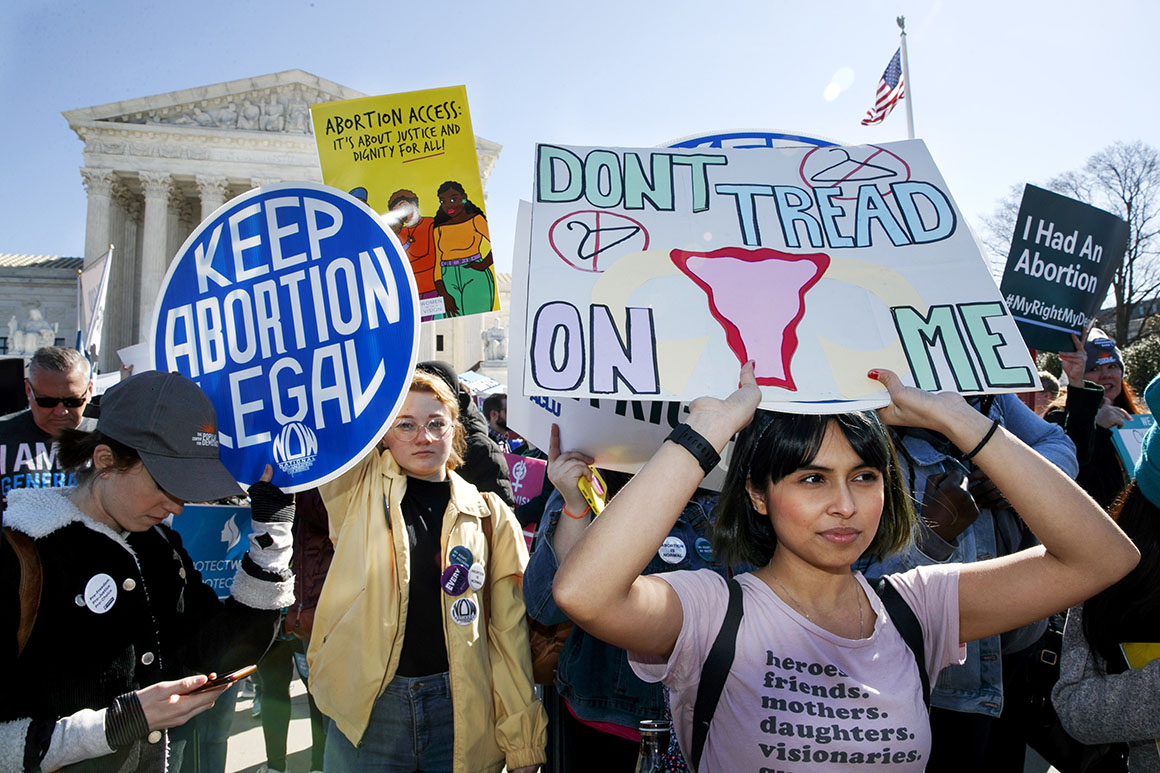
Abortion rights demonstrators rally outside the Supreme Court in Washington on March 4, 2020. | Jacquelyn Martin/AP Photo

Pressure mounts on Biden to approve telemedicine for the use of abortion pills.

The battle over abortion rights has a dramatic new front: the fight over whether the Biden administration will make pills available online.

Even as they keep a sharp eye on the increasingly conservative Supreme Court, activists, lawmakers and medical groups are pushing Biden’s FDA to lift restrictions on a 20-year-old drug for terminating early pregnancies. Such a decision would dramatically remake the abortion landscape by making the pills available online and by mail even if the Supreme Court overturns or cuts back Roe vs. Wade.Advertisement

Pressure that had already been building for years over access to telemedicine abortions is reaching a peak, as patients fearful of Covid-19 are seeking to avoid in-person medical procedures whenever possible and demand for the drug has skyrocketed.

As the Biden administration deliberates on the federal rules on where, when and from whom patients can get the pills, with a federal court deadline looming in early April, conservatives are already erecting barriers. In court, in Congress and in statehouses across the country, they’re working to preemptively ban the pills or make them more difficult to obtain — with bills now pending in Indiana, Montana, Arizona, Arkansas, Alabama, Iowa this year alone.

“They’re trying as hard as they can to restrict access to the pills now because they know they won’t be able, later, to unring the bell,” said Mary Ziegler, a professor at the Florida State University College of Law who studies abortion. “This is just as important as what happens with Roe.”

Biden’s pledge to “follow the science” when it comes to public health is under scrutiny as medical experts argue — citing new data gained during the pandemic — that administering the abortion drugs remotely is safe and effective.

Should the federal rules get rewritten, someone in, say, Arkansas, could have a video consultation with a doctor in Massachusetts or even the UK and then receive the pills by mail. Even if red states moved to ban their importation, enforcement would be nearly impossible.

“It takes the fight out of the clinic setting into individual people’s homes,” explained Alina Salganicoff, the Director of Women’s Health Policy at the Kaiser Family Foundation. “That becomes much more difficult to regulate and could potentially broaden access.”

Women’s health and advocacy groups stress, however, that the pills are not a panacea. For one, they can only be used safely in the first 10 weeks of pregnancy — a narrow time window during which many people are not yet aware that they are pregnant. Additionally, taking the pills in a state that has banned them could be legally perilous, discouraging people from seeking medical help if they have a complication. This fear is not theoretical — already, even with Roe still in place, women have faced prosecution for self-induced abortions.

Biden may soon be forced to make a decision.Afederal appeals court is hearing a challenge to the Trump administration’s decision to keep the FDA’s in-person dispensing requirement for the pills in place during the pandemic, and Biden’s DOJ must tell themby April 7whether or not it plans to keep enforcing those rules.

Even if the Biden administration were to choose to defend the Trump rule, there’s a burgeoning online underground market for the pills which, like its counterparts in the formal health care system, has seen surging popularity during the pandemic.

Abortion opponents are already sounding the alarm about this potential wild west.

Congressional Republicans have for years raised concerns about the safety of the pills, sending letters pushing the FDA to take action against the drug and the online sellers who offer it. The most recent letters came last year, as nearly a hundred Republicans from each chamber of Congress urged the agency to take the drug off the market entirely.

Now that the administration is considering lifting the federal restrictions on the pill, conservatives are worried the state-level bans they’re rushing to enact won’t be enough.

“Chemical abortion really puts Roe vs. Wade on steroids,” said Kristi Hamrick with the anti-abortion group Students for Life of America. “Roe made abortion possible anywhere in the country during all nine months of pregnancy, but this is really a new frontier — doing it virtually and chemically.”

But for advocates like Silvia Henriquez, the co-president of the abortion rights group All* Above All, looser federal rules for the pills is part of a long-held goal.

“We are working towards a future where abortion care is there when we need it, where it’s affordable, accessible and on our own terms, without barriers,” she said. “Medication abortion gets us closer to that world — where it doesn’t matter who we are, how much we earn, or where we live.”

As conservative states have moved aggressively in recent years to restrict access to surgical abortions, passing hundreds of laws that have set limits on when, where and how people can have the procedure, demand for the cheaper and more convenient abortion pills has soared — including online, where patients have obtained the drug from underground marketplaces as well as approved vendors. In 2001, the drugs were used in just 5 percent of abortions in the U.S. By 2017, that jumped to 39 percent, according to the Guttmacher Institute. The increase came even as the total number of abortions dropped significantly.

Scientists and doctors are increasingly supportive of medication abortions and have long called for scrapping the rules dictating that patients pick them up in person even if they don’t swallow them until they get home. They say it’s a particularly pressing concern during the pandemic, when the government has moved to limit in-person dispensing — and promote telemedicine — for nearly every other drug.

Jen Villavicencio, an abortion provider and health policy fellow with the American College of Obstetricians and Gynecologists, told POLITICO that she started going from car to car seeing patients in her clinic’s parking lot and dispensing the pills after the Supreme Court intervened in January to restore the Trump administration rules that for several months had been blocked by lower courts.

“We were trying to avoid interactions with other people to try to quell the rising numbers of Covid-19 cases,” she said. “Many medications that have much higher risk profiles were allowed to remove the in-person requirement because of the pandemic. But that courtesy and safety measure was not offered to people who were seeking abortion care or miscarriage management.”

Medication abortion relies on two pills — misoprostol, which is lightly regulated, and mifepristone, which has been more tightly regulated by FDA since its introduction in the market decades ago.

Yetmifepristone “has very few risks at all,” argues Villavicencio. “It is more safe than over-the-counter medications like ibuprofen and Tylenol. We know this medication can be safely administered via telemedicine because we’ve studied it.”

ACOG, along with the American Medical Association and other leading medical groups, has been lobbying the Biden administration and arguing in court that the federal rules for dispensing the pills should be loosened. Their push has been echoed on Capitol Hill, where Democratic lawmakers have urged Biden to allow telemedicine abortions both during the pandemic and beyond.

But the decision still presents a political quandary for Biden, who until recently was relatively conservative on abortion for a Democratic politician.

The president has yet to take a position on the pills. When pressed by the New York Times in 2019 as part of a Democratic primary questionnaire on whether the medications should be over-the-counter, Biden gave a noncommittal answer, unlike several of his then-competitors, like Sen. Elizabeth Warren, who urged easier access to the pills.Advertisement

Asked where it stands on the dispensing requirements on the drugs, the Department of Health and Human Services declined to comment, citing the ongoing litigation. But Xavier Becerra, California’s attorney general who was just confirmed as Biden’s HHS secretary, last year led a coalition of 21 Democratic AGs in petitioning the FDA to allow telemedicine abortions at least for the duration of the pandemic.

“Forcing women to unnecessarily seek in-person reproductive healthcare during this public health crisis is foolish and irresponsible,” he wrote at the time.

As they await a decision, abortion rights opponents are fighting on two fronts: pushing Congress, state lawmakers and the FDA to enact restrictions on the pills or ban them entirely while also seeking to convince the public that the pills are dangerous.

For the last three years, groups including Students for Life of America have bought ads online and on TV, created mini documentaries, sponsored events on college campuses, and trained members to testify before their state legislatures about possible complications and side effects of the pills and the danger that women could be pressured or tricked into taking them without consent.

With easier telemedicine access to the pills, conservatives warn, even the fall of Roe vs. Wade wouldn’t curb their use in states that choose to ban abortion.

“There’s always been an issue of people crossing state lines, in order to do things that might be illegal,” said Roger Severino, a former top official in Trump’s HHS now working for a think tank.“It all depends on how the Biden administration reacts: if it fulfills its responsibility it’ll clamp down on the black market for it.”

Conservative fears around mifepristone are nothing new. When the drug was firstintroduced in the 1990s, politicians including George W. Bush worried the medication would popularize the practice.

Evidence since then — and especially during the pandemic — has borne those fears out. The popularity of so-called teleabortions has increased in the U.S. for years — long before the pandemic — both through the established health care system as well as more informal, underground groups. A January 2020 study in the American Journal of Public Health, for example, found increasing demand for one domestic teleabortion service operating underground in states where state restrictions on in-person abortion clinics increased. The federal government has also been seizing more pills shipped in from abroad, according to a POLITICO analysis of data on the FDA’s seizures of misoprostol and mifepristone obtained through the Freedom of Information Act.

In 2008, FDA intercepted nine shipments of abortion drugs, according to the FDA data obtained by POLITICO; in 2018, just a decade later, there were 26. The agency’s annual totals have varied widely from year to year: a low of 5 in 2015, followed by rises during the Trump administration of 19 in 2017 and 26 in 2018. The number fell to 10 in 2019, the last year for which information is available.

The shifting landscape overseas for access to mifepristone is a potential indicator of how widespread the practice of teleabortion could become in the U.S., whether it gains new footing legally under the Biden administration or is kept underground.

In the United Kingdom, the not-for-profit group MSI Reproductive Choices performed some 16,750 abortions through telemedicine alone in 2020 after the government loosened restrictions on the practice. (The country typically has around 200,000 abortions per year.) A new study of the pandemic year in the British Journal of Obstetrics and Gynecology says the practice has been successful: patients wait on average 4 days fewer to get an abortion, with little difference from in-person abortions in safety or effectiveness.

Jonathan Lord, the chief medical officer of the group, says the increased ease in obtaining the medications has had the effect of expanding access to abortion generally. When women had to go in-person to pick up the pills, many vulnerable women — such as those being abused at home — were too fearful to make the trip, worrying that their partners would discover what they were doing.

Now, the health care system can coordinate with social workers and police for people in the group. “They’re also the group we would really, really, really like to engage with,” Lord said. “That’s where telemedicine has really helped.”

The change has also diminished the importance of some of the underground groups.

Women on Web, the most prominent international group providing abortion pills through the mail outside of formal health care channels, got contacts from 0 patients in the the U.K. during the first few months of the pandemic — down from 35 or 40 a month. In a study of eight European countries, the group generally found surging demand for its services during the pandemic year — unless the country allowed for more teleabortion.

No matter what decision Biden and other policymakers make in the coming months, these trends are likely to continue long after the threat of Covid-19 has passed. The medication is likely to be the future of the abortion wars, if only because it’s the future of abortion.Advertisement

“There are so many direct and indirect ways that states have moved to limit access to surgical abortion — from waiting periods to parental notification and requirements for special licenses — and I anticipate they would be equally creative with medication abortions,” Salganicoff said. “Whether they can stop every pill from coming across the border is another story.”

Source: https://www.politico.com/amp/news/2021/03/20/abortion-pills-telemedicine-477234?__twitter_impression=true&fbclid=IwAR2A7HNHEiN66zSetM2FlzLL0YKWhLeJDI_hZar4qin0aZzCcAM3pSWhjdc

Anti-abortion demonstrators protest in front of the Supreme Court in Washington on June 29.Caroline Brehman / CQ-Roll Call via Getty Images file

“This legislative season is shaping up to be one of the most hostile in recent history for reproductive health and rights,” said Planned Parenthood’s president and CEO.

State legislators across the country are accelerating their efforts to limit access to abortions by fast-tracking a new round of anti-abortion laws this year, according to a report exclusively shared with NBC News.

Over 500 abortion restrictions have been introduced in 44 states this year, compared to around 300 at this time in 2019, according to the report, which Planned Parenthood produced with data compiled by the Guttmacher Institute, an abortion-rights research organization.

“This legislative season is shaping up to be one of the most hostile in recent history for reproductive health and rights,” said Alexis McGill Johnson, president and CEO of Planned Parenthood. “These abortion restrictions are about power and control over our bodies.”

Ralph Reed, founder and chairman of the Faith & Freedom Coalition, said the flurry of measures is part of a decadeslong strategy of states’ chipping away at abortion rights.

Like many of those who support such legislative efforts, Reed’s organization has worked to elect anti-abortion legislators who champion what he called “incremental” limits.

“We’re very bold and unapologetic in our aspirations that we want to see a day in America where the most vulnerable among us are protected,” Reed said. “The ultimate goal of the pro-life movement is to see Roe v. Wade overturned.”

Motivated by Justice Amy Coney Barrett’s appointment as the sixth conservative vote on the Supreme Court and President Joe Biden’s sweeping rollback of Trump-era anti-abortion efforts, state legislators have already passed a wave of laws this year aimed at giving the Supreme Court the opportunity to upend its landmark decision.

Enacting abortion restrictions at a rapid pace

South Carolina’s governor recently signed a law banning most abortions, making it the first state to have passed an anti-abortion measure this year. The bill, SB 1, requires doctors to perform ultrasound tests to check for cardiac activity, and if it is detected, an abortion can be performed only if a person’s life is in danger or in cases of rape or incest. Abortion-rights groups immediately sued, preventing the law from taking effect.

“We believe the Heartbeat Law is constitutional and deserves a vigorous defense to the U.S. Supreme Court if necessary,” South Carolina Attorney General Alan Wilson said in a statement.

So far this year, 12 abortion restrictions have been enacted in six states, compared with only one that had been passed by this time in 2019, the report said.

Nancy Northup, president and CEO of the Center for Reproductive Rights, the nonprofit organization that filed the lawsuit against South Carolina’s ban, said anti-abortion bills have become “more extreme.”

“We used to see more backhanded laws that forced clinics to shut down through impossible regulations. … But now politicians have dropped the smokescreen and are very open about their goal of banning abortion,” she said.

Conservative-leaning states shift focus

For years, state legislators have passed bills to limit access to surgical abortions; meanwhile, medication abortion — a more convenient and private way to end pregnancies — have grown in popularity and now make up over a third of abortions in the U.S.

The Food and Drug Administration requires the drug mifepristone, one of two pills used to perform a medication abortion, to be dispensed in clinics or doctor’s offices, rather than prescribed and picked up at pharmacies or by mail.

During the coronavirus pandemic, a group of doctors and advocates, led by the American College of Obstetricians and Gynecologists, challenged the rule. In mid-July, a federal judge suspended the restriction; the Supreme Court reinstated it in January.

The push to expand access to medication abortions during the pandemic and beyond fueled state legislators to propose limits on the method. As of now, 33 medication abortion restrictions and bans have been introduced. At this time in 2019, only 11 had cropped up in statehouses, according to the report.

In Montana, HB 171 would ban telemedicine abortions, prohibit medication abortions from being provided on school property and require informed consent from patients and state-mandated counseling before obtaining abortions.

“The abortion industry is changing, and chemical abortion is the new frontier, and states are motivated to upgrade their regulations,” said Sue Liebel, state policy director for Susan B. Anthony List, an abortion-rights advocacy group.

The American College of Obstetricians and Gynecologists is urging the FDA to lift its rules on mifepristone, saying medication abortions can be provided safely by telehealth. When medication abortions are obtained by telemedicine or in person, the likelihood of complications is less than 1 percent.

A rise in anti-abortion constitutional amendments

Even in liberal states that have taken steps to safeguard access, conservative lawmakers are seeking to add anti-abortion language to state constitutions.

Fourteen anti-abortion constitutional amendments have been introduced this year, more than three times the number at this time in 2019, according to the report.

Kansas legislators have already passed a constitutional amendment, HCR 5003, and next year, residents will decide whether the state constitution allows a right to the procedure.

“We want the people of Kansas to weigh in directly on the ballot so that we can pass laws, because right now their state Supreme Court makes that incredibly difficult,” said Katie Glenn, government affairs counsel at Americans United for Life, an anti-abortion-rights advocacy group.

If voters approve it, the proposal would amend the state constitution to say that nothing in the constitution protects the right to an abortion or the funding of an abortion. It would reverse a 2019 state Supreme Court decision that affirmed the right.

Elizabeth Nash, the policy analyst for state issues at the Guttmacher Institute, said such amendments give states more leeway to regulate abortion procedures.

“If the U.S. Supreme Court overturns federal abortion rights and neither the federal nor state constitution protects abortion, it would make it very easy for states to pass bans and restrictions and push care even further out of reach,” Nash said.

Source: https://www.nbcnews.com/politics/politics-news/report-details-wave-state-legislative-attempts-restrict-abortion-2021-n1262070?utm_source=instagram&utm_medium=post&utm_campaign=amjinstagram&utm_content=nbcnews-march2021

A 2010 women’s day celebration in Takaungu, Kenya, where women dicussed abortion, child marriage and women’s equality. (BBC World Service / Flickr)

“Women’s [and pregnant people’s] needs do not suddenly stop or diminish during an emergency—in fact, they become greater.”

A new resource created by Ipas and the Center for Reproductive Rights aims to help abortion care providers understand and manage their legal risks in areas hostile to abortion rights. The toolkit—”Improving Access to Abortion in Crisis Settings: A legal risk management tool for organizations and providers“—focuses on abortion care providers working in crisis settings, like caring for people displaced by natural disasters or conflict.

It emphasizes the importance of approaching abortion care with a human rights perspective, arguing governments have an obligation to “respect, protect and fulfill sexual and reproductive health and rights during conflict and humanitarian emergencies.” To help ensure states can effectively fulfill those responsibilities, the resource makes recommendations for how governments, organizations and medical professionals can provide accessible, confidential and dignified care for displaced people.

According to a Guttmacher Institute report on refugee reproductive rights, one-fourth of the 129 million people around the world in need of humanitarian assistance are women and adolescent girls of reproductive age. And as they point out, “Women’s needs do not suddenly stop or diminish during an emergency—in fact, they become greater.”

Providing reproductive health services during crisis situations requires unique strategies, resources and knowledge.

According to Carrie N. Baker, a women and gender professor at Smith College and an expert on reproductive rights and sexual harassment laws:

“Natural disasters and political conflict often result in unsafe environments with increased sexual and gender-based violence. In crisis settings, health care systems may disintegrate or be destroyed so that women and girls may not be able to access reproductive health care, which can lead to higher rates of maternal mortality and morbidity. Their lack of information about their rights or available services, as well as inability to afford services and fear of violence for seeking care, puts the health of women and girls at risk.”

The resource also provides guidelines to help abortion care providers assess their legal risks. It encourages them to understand the law in their specific location and situation, and provides suggestions for how providers can research the local legal context.

“Abortion law can be complex and confusing,” said Baker. “Even if abortion is allowed, police, lawyers and judges sometimes don’t know the law on abortion or have biased views against abortion. If local laws are unfavorable to legal abortion, government officials sometimes use the law to intimidate and harass pregnant people and abortion providers.

The resource lays out a series of questions designed to help providers catalog their legal risks, and the probability that those risks will impact their program. Then, they can make informed decisions and create a plan to ensure that patients can access abortion care, while not putting their providers in unnecessarily risky situations.

Providing abortion care can be a risky—or even dangerous—job. But it is a critical one, particularly in crisis settings and when dealing with marginalized or otherwise at-risk patients. This toolkit provides an essential resource to help medical professionals and their patients understand and reduce their legal risks, and reinforce that abortion care needs to be accessible and safe for people dealing with humanitarian crises.

Source: https://msmagazine.com/2021/03/16/abortion-ipas-center-reproductive-rights-improving-access-abortion-crisis-settings-a-legal-risk-management-toolkit/?fbclid=IwAR0zSOhOfhkbfyD3mIm5tjUe7Vr1sg1vvCPsy0vBfxwXQvin-O-2a3hZuvI

GETTY IMAGES
image captionWomen will no longer have to wait seven days for an abortion

Women seeking an abortion in Jersey will no longer need to wait a week for an appointment after requesting a termination.

The island’s government has agreed to update the 1997 abortion law following calls from Deputy Louise Doublet.

She described the mandatory seven-day waiting period as an “unnecessary barrier to accessing safe and legal abortion care”.

Abortions are not offered in Jersey after 12 weeks.

Deputy Doublet said the seven-day waiting period can push women across the 12-week threshold, forcing them to leave the island to seek treatment, increasing the risk of complications.

She said medical abortions are usually only available up to nine weeks of pregnancy, so waiting seven days could also mean an unnecessary surgical procedure.

Her report also said there is only one clinic on the island.

“Dependent on how busy the clinic is or if bank holidays occur, there might be a wait for the second medical appointment,” said Deputy Doublet.

“A mandatory waiting period could result in women undergoing surgical procedures or having to travel off-Island unnecessarily.

“Approving this amendment would remove this requirement, in line with international medical best practice,” she added.

Source: https://www.bbc.com/news/world-europe-jersey-56515407

Indiana is again using abortion access for minors as a way to try and undo the last big abortion rights win at the Supreme Court.

The Seventh Circuit Court of Appeals issued a ruling about a week ago in Planned Parenthood v. Box that tees up a fight at the Supreme Court about what constitutes an undue burden on the right to an abortion and what standard courts should use to determine whether abortion restrictions are constitutional.

The question should be an easy one. In 1992’s Planned Parenthood v. Casey, the Supreme Court ruled that an abortion restriction imposes an undue burden if it places a substantial obstacle in the path of a person seeking a lawful abortion. The Court clarified the undue burden test in Whole Woman’s Health v. Hellerstedt in 2016, ruling that courts must weigh the burdens a law imposes on abortion access against the medical benefits those laws confer. If the burdens outweigh the benefits, then the law is unconstitutional.

Last year, in June Medical Services v. Russo, the Court reiterated that balancing burdens and medical benefits is required when analyzing whether an abortion restriction is constitutional. But Chief Justice John Roberts disagreed. In his view, Casey doesn’t require the balancing test—the one that the majority in Whole Woman’s Health already said was necessary. In Roberts’ view, Casey asks one question: “Is this law a substantial obstacle?”

And that’s what the appeals court had to consider in Planned Parenthood v. Box. At issue in that case is a change to Indiana’s forced parental involvement law. Indiana law states that a young person has to obtain consent from a parent before having an abortion; if they choose not to seek a parent’s consent, they have to go to court to seek a judicial bypass—that means asking a judge to determine if they are mature enough to have the abortion, and if not, if it’s in their best interest. In 2017, Indiana enacted a law that would require notifying the parent of any young person seeking a judicial bypass for an abortion, unless the judge decided that was against the minor’s best interests.

This change is obviously absurd. The whole point of the judicial bypass process is to allow young people to access abortion without involving a parent; if a young person has decided not to notify their parents that they plan to get an abortion, it makes no sense to force them to tell their parents that they are using the judicial bypass procedure. The change in the law makes an oppressive parental involvement mandate worse and is designed to further limit abortion access for young people.

The district court found that this new parental notice requirement imposed a substantial obstacle on some minors’ right to obtain an abortion, and the judge issued a preliminary injunction blocking it. On March 12, the Seventh Circuit affirmed the lower court’s decision, citing the balancing test in Whole Woman’s Health v. Hellerstedt and ruling that the new notice requirement imposed a burden without any appreciable benefit. In doing so, the circuit court deepened a circuit split (in other words, a disagreement among the federal courts of appeal) about whether or not a balancing of burdens and benefits is necessary.

On its face, Box is about expanding forced parental involvement laws. But there is a more insidious motivation at play here: Anti-choice advocates want to use cases like Planned Parenthood v. Box to reframe the undue burden test. They want to decimate abortion access by undercutting the undue burden standard. And parental involvement laws, like the one at stake in Box, make the perfect Trojan horse.

That’s because they are among the most common abortion restrictions, existing in over 35 states—and enjoying support from both Democrats and Republicans. They don’t evoke the same visceral reaction as more widely opposed restrictions, like forced ultrasound laws—meaning courts might be more sympathetic to upholding them, despite what that might mean for abortion precedent at large.

And anti-abortion advocates might get their way, thanks to Roberts’ concurrence last year in June Medical Services, in which he said that Casey doesn’t require a balancing test. The fate of abortion access hangs in the balance.

It’s important to stress that parental involvement laws like the one at stake in Box—like all abortion restrictions—are in and of themselves an undue burden.

Typically, parental involvement laws require that a young person either notify or obtain consent from a parent before having an abortion. In 1979, however, the Supreme Court ruled in Bellotti v. Baird that in order for parental involvement laws to be constitutional, they needed to include some kind of loophole: a way for young people to obtain an abortion without going to a parent in order to avoid giving veto power over someone else’s abortion decision to any single person.

Thus the judicial bypass process was born: a court hearing where a minor argues they are mature enough to make an abortion decision without involving a parent. The judge also has the option, if they find the minor is not mature enough, to allow the abortion to proceed on the grounds that it’s in the minors’ best interest.

Parental involvement laws already put young people at risk; they force minors to unecessarily engage with their parents or the courts to obtain an abortion. And the proposed expansion of Indiana’s parental involvement law would create another hurdle that will force young people to disclose their abortion decision to their parents—or more likely, to forgo abortions entirely for fear of having to involve a parent. The Seventh Circuit was right to block it.

But courts remain split over whether Whole Woman’s Health and June Medical Services require a balancing test. According to the Seventh Circuit, a balancing of burdens and benefits is required, but the sixth and eighth circuits have both ruled that it’s not required. And while a Fifth Circuit panel has ruled that the balancing test remains valid, we await a ruling from the full Fifth Circuit.

So what does this all mean? In short: The legal standard abortion advocates have long relied on to protect patients and providers from frivolous and harmful restrictions is in jeopardy, thanks to what is essentially a procedural schism—a circuit split regarding what the balancing test means and whether it is even required. Anti-choice lawmakers are relying on widespread support for seemingly harmless parental involvement laws to sneak through their agenda without appearing too extremist, even though these laws are just as extreme as any abortion restriction. And it’s a stark look into how abortion opponents plan to use abortion restrictions that appear less polarizing, but are nonetheless harmful and unecessary, to gain ground in their fight to restrict access.

A few years ago, this would not be the daunting prospect that it is today. But with a conservative supermajority on the bench—with justices like Amy Coney Barrett, who have been obvious in their disdain for abortion access—cases like these could have devastating effects, opening the doors for a flurry of restrictive abortion laws that would no longer be required to pass a critical and commonsense test.

Source: https://rewirenewsgroup.com/article/2021/03/22/this-abortion-rights-fight-is-calling-amy-coney-barretts-name/