Anti-abortion demonstrators march toward the US Supreme Court during the March for Life on January 20 in Washington, DC.
Sunday marksexactly 50 years since the USSupreme Court granted American women abortion rights with theRoe v. Wade ruling – and comes about seven months after thecourt opened the door for much of the country to take them away with Dobbs v. Jackson Women’s Health Organization.
The court instantly created new fault lines throughout the country when it handed more control of abortion rights back to states. It also may presage a new rift within the GOP.
At this moment of greatest triumph for abortion rights opponents, there are real questions about how far lawmakers and potential 2024presidential candidates will go to prove their opposition to abortion.
Pushing a 15-week ban in Virginia
One potential presidential candidate, Virginia Republican Gov. Glenn Youngkin, told Virginians to “choose life” during his State of the Commonwealth address this month. He’s backing that call up by pushing toward a 15-week ban. Current state law allows for abortion care up to about 26 weeks.
It would be a genuine achievement for Youngkin in Virginia, since he shares power at the legislative levelin the state with Democrats, who have vowed to scuttle his plan.
A ‘nudge’ for DeSantis to go further than 15 weeks
Florida Gov. Ron DeSantis signed a 15-week ban into law before the Dobbs decision last year, but given the Republican majority in his state, he’s now being criticized by some conservatives for not going nearly far enough.
An aide to another potential GOP presidentialcandidate, Gov. Kristi Noem of South Dakota, has criticized DeSantis for not endorsing a more forceful restriction on abortion rights.
South Dakota has a near-total ban and, asked about DeSantis, Noem told CBS News this week that other Republican governors should do more.
“I would nudge every governor to do what they can to back up their pro-life record,” she said.
DeSantis is uncharacteristically quiet
When I asked CNN’s Florida politics expert Steve Contorno how far he expects DeSantis could go to restrict abortion rights, he told me the normally bombastic DeSantis has been sidestepping specifics ever since the Dobbs decision came out.
DeSantis released a vague statement promising to “expand pro-life protections” but has otherwise used an ongoing legal case over the 15-week ban as a shield for discussing what further steps he would take.
“People on both sides of the abortion debate have told me they expect some kind of legislation will come up that pushes the limit earlier than 15 weeks that could blunt further attacks like the one from Noem, but it’s not clear if DeSantis would support a full ban,” Contorno told me.
A ban that goes into effect after fetal cardiac activity is detected could be an alternative, he added, pointing out that DeSantis supported that type of legislation during his first run for governor in 2018.
Contorno also pointed out that Florida’s new Senate president, Kathleen Passidomo, told the Tampa Bay Times/Miami Heraldshe wants a 12-week abortion ban, but that she would include exceptions for rape and incest that are absent from the 15-week ban DeSantis signed into law last year.
Trump is feuding with evangelicals
Meanwhile, former President Donald Trump – who has announced he’s running again in 2024 – wants more credit from evangelical leaders for delivering the right-wing Supreme Court that is working its way through a total reexamination of US legal precedent and individual rights.
“Nobody has ever done more for Right to Life than Donald Trump,” Trump told the conservative journalist David Brody. “I put three Supreme Court justices, who all voted, and they got something that they’ve been fighting for 64 years, for many, many years.”
He alleged “great disloyalty” among evangelical leaders not appropriately supporting him now.
On his social media platform, Trump said abortion hardliners cost the GOP votes, especially “those that firmly insisted on No Exceptions, even in the case of Rape, Incest, or Life of the Mother.”
It is the definition of a Trumpian contradiction to both want credit for overturning Roe and be frustrated by the activists who wanted Roe overturned. But it also speaks to this larger issue of how Republicans should proceed on the issue.
A state-by-state look
Opponents of abortion rights want to go further and are plotting a series of new laws in GOP-controlled states.
CNN’s Jessica Schneider and Devan Cole note that 22 state governments are under unified GOP control, and as state legislatures come into session for the year, they are looking to further restrict access to abortion services. Read their full report.
Republicans in Wyoming, for example, have introduced a bill that calls for afull abortion ban, including on medication abortion, without exceptions for rape or incest, and which includes criminal penalties for anyone who performs abortions. The only exception would be in cases where the life of the mother is at risk.
Nebraska Republicans introduced a ban on all abortions after embryonic cardiac activity is detected at about six weeks of gestation.
States moving to protect abortion rights
Schneider and Cole note thatDemocrats are pushing back. Michigan Democrats, who now control the state government, are working to repeal an abortion ban in the state that dates back to 1931 but was on ice during the Roe years and was blocked by a judge in the immediate aftermath of the Dobbs decision.
Meanwhile, in Maryland, where Democrats have complete control, voters may see an amendment on their ballot in 2024 that would add abortion rights to the state constitution.
A need to rebuild momentum
CNN’s Veronica Stracqualursi talked to anti-abortion rights groups before they gathered Friday for the annual March for Life – which first occurred in 1974, a year after Roe, and now finds activists focused on passing more restrictive laws in states and trying to rebuild anti-abortion rights momentum after their Supreme Court victory in June.
“The pro-life movement has just experienced a major victory in the fall of Roe v. Wade, but our work to build a culture of life is far from complete,” Jeanne Mancini, the head of March for Life’s Education and Defense Fund, told Stracqualursi. Read her full report.
That may not be the case for supporters of abortion rights, many of whom credit the end of Roe with Democrats’ better-than-expected performance in the 2022 midterm election. While Republicans will be recalibrating, Democrats will try to carry that momentum built around abortion rights into the presidential election.
ABORTION RIGHTS DEMONSTRATORS GATHER IN FRONT OF THE SUPREME COURT OF THE UNITED STATES ON TUESDAY, MAY 3, 2022 IN WASHINGTON, DC. (KENT NISHIMURA / LOS ANGELES TIMES VIA GETTY IMAGES)
“I will vigorously enforce Alabama law to protect unborn life.”
Alabama, one of the strictest anti-abortion states in the country, is ready to take its anti-abortion stance even further: It could prosecute people who take pills to end their pregnancies, Alabama Attorney General Steve Marshall said Tuesday.
Abortion is currently only allowed in Alabama in cases of medical emergencies. But the Alabama abortion ban, like most abortion bans, penalizes people who perform abortions, not the people who get them. In fact, the law, known as the Human Life Protection Act, explicitly declares that people who get abortions cannot be held criminally or civilly liable.
But that won’t stop the attorney general’s office, according to AL.com. Instead, Marshall’s office could use another Alabama law to target abortion patients—a child endangerment law that was originally designed to protect children from the chemicals left behind by meth labs.
“The Human Life Protection Act targets abortion providers, exempting women ‘upon whom an abortion is performed or attempted to be performed’ from liability under the law,” Marshall told AL.com in a statement. “It does not provide an across-the-board exemption from all criminal laws, including the chemical-endangerment law—which the Alabama Supreme Court has affirmed and reaffirmed protects unborn children.”
A 2013 ruling by the Alabama Supreme Court ruled that the “chemical-endangerment law” could apply to fetuses. “The decision of this court today is in keeping with the widespread legal recognition that unborn children are persons with rights that should be protected by law,” one of the judges in the 2013 case wrote in a concurring opinion.
By legally deeming fetuses children, the decision reinforced the so-called “personhood movement,” an anti-abortion movement that works to further the belief that fetuses deserve all the rights and protections granted to humans outside the womb. This belief could have widespread implications across all U.S. law; in Georgia, for example, a recent abortion ban now lets people claim fetuses on their taxes.
In Alabama, officials have used the chemical-endangerment law to target more than 1,000 women who allegedly used drugs while pregnant, according to AL.com. Prosecutors have, in at least 20 cases, now used fetal personhood ideas to bring criminal charges over a miscarriage or stillbirth, the Marshall Project reported last year, along with the Washington Post, AL.com, and The Frontier.
Marshall’s declaration also arrives just a week after the FDA announced that it would let regular pharmacies dispense abortion-inducing pills. The move could expand access to the procedure in blue states, but it would not apply to states that already have abortion bans on the books.
“Promoting the remote prescription and administration of abortion pills endangers both women and unborn children,” Marshall told AL.com. “Elective abortion—including abortion pills—is illegal in Alabama. Nothing about the Justice Department’s guidance changes that. Anyone who remotely prescribes abortion pills in Alabama does so at their own peril: I will vigorously enforce Alabama law to protect unborn life.”
Mainstream anti-abortion activists have long shied away from penalizing abortion patients directly, although a growing fringe movement, who refer to themselves as abortion “abolitionists,” believe that patients should be punished like murderers. Experts have also warned that, if prosecutors want to punish people accused of aborting their own pregnancy, they will find a way to do it. Last year, the legal advocacy group If/When/How found that, between 2000 and 2020, law enforcement in 26 states investigated or arrested at least 61 people for allegedly aborting their own pregnancy or helping someone else do so.
“It is a dark day for our country, but this is far from over. We will not compromise on our bodies, our dignity or our freedom,” the organization said in a statement.
But with more than a dozen states enacting complete or partial bans on abortion following the Supreme Court decision, abortion clinics, like those operated by Planned Parenthood, and the protests they attract have become an even more potent symbol of the country’s deep divisions over reproductive health.
To minimize the effect these protests have on patients visiting Planned Parenthood clinics, the organization deploys volunteer clinic escorts to “help get patients to the door of our clinic with as little harassment from protesters and picketers as possible,” according to its website.
The result is a defensive role on the front lines of America’s abortion debate.
To understand the role and what it entails, we turned to Marian Starkey, a volunteer Planned Parenthood clinic escort in Maine who hasbeen guiding patients past protesters at different locations since 2007.
Our conversation, conducted over the phone in late Decemberand lightly edited for flow and brevity, is below.
The average day
LEBLANC: When you sign on for your clinic escort shift, what can the average day bring? I imagine every day is a little bit different.
STARKEY: To a degree. I mean, the difference really revolves around the public’s reaction to the protesters. Honestly, the protesters are pretty consistent. It’s generally the same people who show up every Friday.
Friday is the procedure day at Planned Parenthood. And so that’s the day that the protesters are there. They usually arrive around 8:30 in the morning and, depending on the weather, they’ll stay until 11 o’clock or sometimes later if it’s nice out.
They show up with massive signs that barely fit in their cars. They have to kind of squish them into the back seats of their cars when they leave at the end of the shift. The signs show fetusesin very advanced stages of development and pretty, pretty gruesome images, and they’re meant to shock and disturb patients and passersby, which they do.
They show up and they do a little prayer to start off their day. And then the men – it’s always men – will take turns preaching throughout the morning. I’ve never, in the 15 or 16 years I’ve been doing this, I’ve never seen a woman preach, always the dudes. Young ones, too.
I mean, men as young as probably 19 or 20 sort of get on their soapbox and preach at passing traffic, at the patients entering the clinic. But mostly at us.
The name game
STARKEY: Honestly, the patient traffic isn’t so heavy that there’s always somebody for them to be sort of focusing on. So they focus most of their attention on us greeters and try to learn personal information about us and then use that to sort of get under our skin.
I mean, they all know my name. They know that my mom’s a midwife. I hear about that a lot – that, you know, she brings life into this world and I take it out.
LEBLANC:Oh, wow.
STARKEY: Yeah, so it can be pretty targeted. We have a non-engagement policy across the country, so we don’t speak with them; we try not to even acknowledge them with eye contact. And so we just kind of look right through them or look up and down the sidewalk to see what’s going on with patients and people passing by.
And that doesn’t deter them from talking at us, but we don’t engage.
LEBLANC:How is it that they’re learning personal information about the clinic escorts?
STARKEY: The same way that we’re learning information about them, if I’m being honest. If they make the mistake of using each other’s names out on the sidewalk, then now we know their name.
They coordinate with each other using a Facebook page, and so if you go to that page, you can see a lot of their activity, and it can actually be kind of useful to see what they’ve got cooking. They’ll sometimes reveal plans for future protest events that they wanna do.
But it’s also a place to see their pictures, and so we can recognize who they are. And I imagine they do the same thing with us.
Preparing the patients
LEBLANC: So your goal is to basically shield the people using Planned Parenthood’s facilities from as much protester activity as possible?
STARKEY: Yeah, and to just keep the chaos to a minimum, if possible. Patients can’t tell when they turn the corner from the parking garage and start their walk down the sidewalk – they can’t tell who’s a protester and who isn’t and who’s on their side and who’s not.
And so when they make their appointments over the phone, they’ve already been warned there are protesters. They’ve also been told that there areclinical volunteers who are wearing these bright pink vests.
But I think sometimes that doesn’t even register for them because they’re just in such a state when they see what they have to walk through. So, you know, we’re just trying to keep things as calm as possible, and not engaging with them tends to be the best way to do that.
People are in all sorts of different mental states when they arrive. A lot of times just the presence of the protesters will make them cry. They have to walk down almost an entire block to get from the corner where the parking garage is to the front door of the clinic. And so I’m sure that can feel like an eternity for patients when they’re already upset.
And so a lot of times they’ll burst into tears or the partners that they’re with – their support person – will start screaming at the protesters.
A lot of times the men are actually the targets of the abuse from the protesters. They have sort of standard lines that they shout at them, like “real men don’t kill their children” and “be a father” or “don’t kill your child,” that sort of thing.
So yeah, it’s just chaos out there. It’s a circus.
How effective are the protests?
LEBLANC:Have you ever had someone come in that was so traumatized by the experience that they no longer want to go through with their procedure?
STARKEY: I haven’t seen that happen. The protesters, we will hear them sometimes boast about all of the lives that they’ve saved through people changing their minds. I haven’t seen it happen. So I’m not sure what they’re referring to when they say that.
I don’t know, maybe something’s happening behind the scenes that we’re not privy to. I’m not sure.
We have had patients for sure who, if there weren’t greeters on the corner, would not have walked down the sidewalk by themselves, and they told us that.
Post-Roe landscape
LEBLANC:You’ve been doing this a long time. I’m curious if you’ve noticed a change at all since the Dobbs decision that overturned Roe v. Wade?
STARKEY: Honestly I don’t think so. The protesters seemed happy about it, but not overjoyed. They have told us over the years in their preaching, but also just kind of the one-sided conversations they have with us, that they’re not political people. That for them, the person in charge is Jesus Christ and they’re not all that interested in the laws of man and the elected officials that we have.
What I have noticed that’s different is that people passing by are a lot angrier.
The morning of the decision, a man came by and just screamed in the faces of the protesters: “You finally got what you wanted, now you can get out of here.” And they just kind of calmly explained to him, “Well, no, because abortion is still legal in Maine, so we still have work to do, and we’ll be out here regardless.”
I had never before the Dobbs decision – I had never seen people passing by grab their signs and make off with them. And now that’s happened. I mean, I’ve probably seen that five or six times now.
ABORTION RIGHTS PROTESTERS DEMONSTRATE OUTSIDE U.S. SUPREME COURT JUSTICE SAMUEL ALITO’S HOME ON JUNE 27, 2022 IN ALEXANDRIA, VIRGINIA. (TASOS KATOPODIS/GETTY IMAGES)
Virginia’s proposed abortion ban could let a jury decide if an emergency abortion was really necessary.
A bill introduced Wednesday in the Virginia state legislature would ban almost all abortions after 15 weeks—and if a doctor agrees to end your pregnancy during a medical emergency, a jury of 12 random people could end up deciding whether their medical judgment was sound.
In other words, a doctor who wants to perform an emergency abortion without risking legal penalties will have to win over 12 people who likely have zero years of medical training.
Abortion is currently banned in Virginia after the start of the third trimester, except when it’s necessary to preserve a patient’s health or life. The proposed bill would not only narrow the window of time when people can get abortions, it would only permit abortions after that point in cases of rape or incest, or if the patient’s life is in danger or they’re facing “a serious risk of substantial and irreversible impairment of a major bodily function.” (Psychological and emotional risks, such as feeling like you’ll die of suicide if you can’t get an abortion, don’t count.) After Roe v. Wade’s overturning last summer, states across the country banned abortion except in cases of life endangerment. But doctors have argued that this “exception” forces them to watch as their patients inch closer and closer to death before they can perform an abortion.
“We’re waiting for patients to get sick, or get sicker, to be sick enough as to be able to intervene,” one maternal fetal medicine specialist told VICE News last year. Another OB-GYN added, “Someone can go from looking, clinically, in front of you, fine, talking to you, maybe appearing overall pretty well—and then all of a sudden their vitals can just tank and they can really get sick fast.”
Plus, some devastating fetal abnormalities are only detectable later on in pregnancy. Fetuses with those abnormalities may be deemed “incompatible with life,” meaning they will likely not make it to birth, die during birth, or die right after. Continuing with these pregnancies can be emotionally wrenching for would-be parents, and can risk the life and health of pregnant people.
The problem with these laws, doctors have told VICE News, is that politicians who lack medical training are dictating medical policy. Now, unelected people could be doing the same in Virginia.
Under current Virginia law, a doctor needs to use their “good faith clinical judgment” to determine whether a patient needs an emergency abortion. In other words, if a doctor had to defend their actions on the stand, they would just need to prove to a jury that they believed at the time that the patient was experiencing a life-threatening emergency and that abortion was the best or only form of treatment.
But under the new Virginia bill, doctors would have to use their “best clinical judgment”—meaning that they would have to show that the emergency abortion was absolutely necessary to save the patient’s life. It’s a change that, although seemingly small, could undercut doctors’ ability to do their jobs and leave them more vulnerable to prosecution.
Ban like these can make physicians afraid to help even in true emergencies . In an affidavit filed last year in a lawsuit over Ohio’s now-suspended abortion ban, one doctor warned, “I am concerned that the law’s stiff criminal penalties are deterring some physicians from providing even legal care that is medically necessary.”
The bill introduced Wednesday has just one sponsor, but Virginia Gov. Glenn Youngkin, a Republican, has said that he would support a 15-week abortion ban. Such a limit, he suggested to the Washington Post last summer, could be a compromise between Republicans and Democrats.
In a statement Wednesday, Jamie Lockhart, executive director of Planned Parenthood Advocates of Virginia, rejected that idea.
“Let’s be clear: a ban is a ban, plain and simple,” she said.
After a change to US Food and Drug Administration rules, major pharmacy chains CVS and Walgreens say they plan to seek certification to distribute abortion pills where legally allowed.
The FDA said on its website Tuesday that pharmacies that become certified to dispense mifepristone, which may be used in a medication abortion, can do so directly to someone who has a prescription from a certified prescriber.
For the first time, this allows outpatient pharmacies to dispense mifepristone, said Lewis Grossman, a professor of law at the American University Washington College of Law.
But that doesn’t mean all pharmacies will dispense the medication.
“In terms of whether or not that is going to have any impact in states where abortion is banned, I think the answer is probably not,” Grossman said. “I don’t see any real effect there.”
It’s not clear which other pharmacies will seek certification or what impact it will have on abortion access in places where it’s banned or restricted.
“It’s not at all clear that many or all or most pharmacies, or pharmacies in more rural areas, or pharmacies in red states will do so in ways that meaningfully increases access to medication abortion,” Leah Litman, a professor of law at the University of Michigan, said in an email Wednesday.
Also, “mail order pharmacies have already been dispensing pills with the FDA’s permission,” she wrote. “So the possibility of getting medication abortion existed before this latest decision.”
A different standard
In a medication abortion, mifepristone is used with another drug called misoprostol to end a pregnancy. Mifepristone blocks a hormone called progesterone that is needed for a pregnancy to continue. Misoprostol can already be distributed by pharmacies.
In a statement Wednesday, Walgreens said it is “working through the registration, necessary training of our pharmacists, as well as evaluating our pharmacy network in terms of where we normally dispense products that have extra FDA requirements and will dispense these consistent with federal and state laws.”
CVS said in a statement, “We plan to seek certification to dispense mifepristone where legally permissible.”
Honeybee Health, an online pharmacy company that had been supplying and shipping abortion medications, posted on its verified Facebook page Tuesday that it “officially became the first pharmacy certified to dispense medication abortion.”
The online pharmacy can distribute the pills only in states where it’s allowed.
“At the onset of the pandemic, Honeybee Health quickly became the first digital pharmacy to supply and ship medication abortion. We are proud to partner with the majority of telemedicine abortion providers in the US and to work closely with our manufacturer to help set the high standards required for certification in response to the FDA’s adjustment to the REMS program,” the Facebook post says. REMS refers to the Risk Evaluation and Mitigation Strategy program for mifepristone.
But for many pharmacies, it will take some time to review and decide whether to undergo the certification process – and the certification process may be complicated.
“Mifepristone is not the kind of drug for which any kind of pharmacy certification is normally required,” Grossman said. “And this particular pharmacy certification regime seems much more onerous than one would expect for a random drug with a similar safety profile.”
The American Society of Health-System Pharmacists said in a statement that “FDA’s change does not mandate that pharmacies must stock or dispense mifepristone, nor does it supersede any state laws that restrict prescribing or dispensing of the medication.”
Affect on abortion access
There are questions remaining about how the changes might affect the abortion access landscape, Litman said.
“It’s not clear that the latest FDA move means that states couldn’t enforce different abortion restrictions against doctors who prescribe medication abortion, or pharmacists who fulfill prescriptions, or people who take medication abortion to induce an abortion,” she said. Additionally, it’s not clear whether someone living in a state with abortion restrictions can use telehealth services to get a prescription for mifepristone and have it delivered through the mail.
In places whereabortion was banned or heavily restricted before the FDA update, it remains banned or restricted, said Elizabeth Nash, a principal policy associate of state issues at the Guttmacher Institute, a reproductive-health nonprofit.
“The FDA’s change in allowing dispensing at pharmacies means that there are more options for access for people in states where abortion is not heavily regulated and abortion rights are protected. Where abortion has been banned, abortion remains banned,” Nash said.
“What we are seeing now is that if a state has banned abortion, then medication abortion is unavailable. And I think we’re going to see how this tension plays out between the FDA’s authority over drugs and devices and the state laws,” she said. “We may see some court cases around this very issue as to FDA’s authority and state law.”
Andrea Miller, president of the advocacy group National Institute for Reproductive Health, praised the FDA’s changes, calling them an “important step forward” in terms of increasing access to abortion medication – but she said there is “an unfortunate reality.”
“The unfortunate reality is that there are more than a dozen states right now where abortion is illegal or close to fully illegal, it is banned. And unfortunately, just like people are forced to do now, it is likely that some people in states where abortion is banned may choose to travel to another state to seek medication abortion,” Miller said.
“We don’t believe that anyone should be forced to travel in that way, and certainly, as this moves forward, there are a lot of very smart lawyers who are looking at the question of how they’ll be incorporated into drugstores and pharmacy chains, and where that can happen – and how these different federal and state provisions interplay,” she said.
The FDA’s pharmacy certification for mifepristone requires pharmacies to track shipments and to keep records of prescribers, recipients and lot numbers of each drug dispensed. This “inhibits the creation of a secondary distribution network for this drug,” Grossman said, such as if people in a state with access send the drug to those in abortion-restriction states.
He asked, “Would a state that was prosecuting somebody for diversion have access to those records? Because if they do, then that is a disincentive to providing it to people in states that are banning it.”
Whether states can enforce restrictive abortion laws against people who “provide, facilitate access to, or obtain medication abortion” to someone in another state or within a state depends in part on a doctrine known as preemption, under which a state law that undermines the purpose or objectives of federal law cannot be enforced, Litman said.
In the current political climate, “it’s far from clear” whether the US Supreme Court would say the FDA’s recent actions “preempt” state laws restricting access to medication abortion, Litman said, or that state laws are preempted to the extent they regulate medication abortion.
MELISSA GRANT, CHIEF OPERATING OFFICER OF CARAFEM, HOLDS UP PILLS USED FOR ABORTION AT THE HEADQUARTERS OF CARAFEM IN WASHINGTON, D.C., ON JULY 1, 2022. (AMANDA ANDRADE-RHOADES/FOR THE WASHINGTON POST VIA GETTY IMAGES)
It’s a move that will further expand access to abortion for some—but not for those in states with near-total abortion bans.
Pharmacies will now be allowed to dispense the abortion medication mifepristone to patients with a prescription, the US Food and Drug Administration announced Tuesday. It’s a move that will further expand access to abortion for some—but not for those living in states with near-total abortion bans.
“There are a handful of states that have outlawed abortion from the moment of conception. And so, frankly, it doesn’t do much work in those states,” said Nicole Huberfeld, a health law professor at Boston University’s School of Public Health. But Huberfeld says that the decision makes medical sense. “There was really no scientific reason to continue the serious constraints on accessing mifepristone.”
Mifepristone blocks progesterone, a hormone needed for a pregnancy to continue, and can be used alongside the medication misoprostol—a drug often used to manage miscarriages—to induce an abortion in the first trimester of pregnancy. In the past, access to medicated abortion was restricted: Only certified healthcare providers could prescribe and dispense the medication. But according to the updated FDA rules, brick-and-mortar pharmacies can now obtain certification and dispense mifepristone directly to people who have a prescription from a certified prescriber.
The new rule is part of a change to the FDA’s risk evaluation and mitigation strategies (REMS) on the medication, and it follows a December decision that permanently extended rules that were initially temporarily introduced in 2021 because of the COVID-19 pandemic. Those rules make it possible for telehealth providers to prescribe mifepristone, and for the medication to be shipped by mail.
Planned Parenthood and producers of the drug applauded Tuesday’s move for its potential to expand abortion access as the country grapples with the aftermath of the Supreme Court’s decision to overturn Roe v. Wade. At least 13 states now have abortion bans in effect.
For now, it’s unclear how many pharmacies will choose to undergo the certification process. Massive chains like Walgreens and CVS, in particular, may be hesitant.
“It’s hard to say if pharmacies want to wade into the extraordinary conflict that exists between states right now. And when I say extraordinary, I think that’s an understatement,” Huberfeld said. “These are medications that have been lawful for a long time. And it isn’t a question as to whether they’re safe and efficacious. It’s really just the politics. So one would hope that the politics wouldn’t muck up the medicine, but they may.”
What is clear is that the move won’t expand abortion access within states that already ban abortions. More than a dozen states have implemented near-total abortion bans, including some that specifically target mifepristone, and the FDA’s decision won’t affect those laws. CEO Evan Masingill of GenBioPro, which produces the generic version of mifepristone, told Politico that the FDA’s decision “will not provide equal access to all people,” though people seeking the medication could travel out of state to buy and take it—if they can afford to do so.
There are also safety implications for pharmacies that choose to stock the medication. Abortion clinics and providers have dealt with enormous levels of harassment and violence over the years. In 2021, abortion clinics reported a 54 percent increase in vandalism, including incidents where bullets were fired through clinic windows, compared to 2020, according to the National Abortion Federation. Bomb threats also rose by 80 percent.
However, abortion clinics also made easy targets for anti-abortion activists, because they provided the vast majority of abortions during the Roe era. If mainstream medical institutions treat abortion like a normal part of health care, it may become less dangerous to provide the procedure.
“If every pharmacy offers this medication, then it’s actually harder to target them, because then it becomes common rather than exceptional,” Huberfeld said.
For many, Tuesday’s news still represents a victory: People in blue states with access to abortion could benefit from being able to pick up pills at participating pharmacies, including those who don’t have a fixed home address or easy internet access. Those who don’t want a parent or partner to find the medication in the mail could also benefit from the added layer of privacy.
“Today’s news is a step in the right direction for health equity. Being able to access your prescribed medication abortion through the mail or to pick it up in person from a pharmacy like any other prescription is a game changer,” said Alexis McGill Johnson, president & CEO, Planned Parenthood Federation of America, in a statement on Tuesday.
“While we’re still fighting against bans and restrictions on medication abortion at the state level, it’s critical that people in states where abortion is legal have access to care.”
Today, almost all — 96% — abortion procedures take place in clinics, not in hospitals or doctor’s offices. And many of those clinics are closing. Data from the Abortion Care Network estimate that the number of independent clinics in the US fell 35% over the last 10 years and that the pace of closure doubled in 2022, after the Supreme Court’s Dobbs decision overturned Roe v. Wade.
That has put enormous strain on the clinics that are still operating. After bans took effect in neighboring states, North Carolina saw a 37% increase in the number of abortions performed; Kansas, 36%; Colorado, 33%. Some providers now see 50 abortion patients per 12-hour shift, more than double the number they saw before Dobbs. And thousands of women haven’t been able to get the abortions they need; in just the two months following the decision, an estimated 10,000 women continued pregnancies they would have otherwise ended.
This got me wondering: Why do we rely so heavily on abortion clinics? Why isn’t abortion accessible through the same channels we use for other prescriptions or outpatient procedures? And in a country where 1 in 10 women traveled out of state to terminate pregnancies before Dobbs, why can’t doctor’s offices and hospitals pick up more of the load?
Before Roe v. Wade established a constitutional right to abortion in 1973, abortion access was uneven, to say the least. Illegal abortions took place anywhere — homes, hotel rooms — while medically supervised abortions occurred in hospitals and doctor’s offices, often after a board of (usually male) doctors approved a woman’s request to end her pregnancy.
After Roe, reproductive rights activists opened clinics to improve access, according to Mary Ziegler, a professor at the University of California Davis School of Law and author of After Roe: The Lost History of the Abortion Debate. Clinics could offer care more cheaply, provide it closer to where patients lived and also deliver care that was more patient-centric and less judgmental. Still, hospitals performed about half of all abortions in the years immediately following Roe.
As time went on, hospitals became more skittish about providing a procedure that increasingly attracted protesters. Federal and state lawmakers also restricted funding for abortion — most notably through the 1976 Hyde Amendment — limiting some hospitals’ ability to offer the procedure and scaring away others.
The result is that although there are more than 6,000 hospitals in the US, by 2020 there were only 530 providing abortions — down from some 1,405 in 1982. Doctor’s offices have seen an even bigger drop, from 714 providing abortion in 1982 to just 266 in 2020. Hospitals now provide just 3% of all abortions, and doctor’s offices just 1%.
This means that a safe, mainstream medical procedure that a third of women will need at some point is now largely only available through standalone clinics. “It’s really siloed abortion care,” says Ushma Upadhyay, a public health social scientist and associate professor of obstetrics, gynecology and reproductive science at the University of California San Francisco.
That separation stigmatizes abortion, making it seem as if it isn’t really health care. It also makes it easier for protesters to target patients and doctors, sometimes with vandalism or violence. And where there is only a single clinic for hundreds of miles, restricting access to abortion is as easy as forcing one clinic to close.
In the post-Dobbs era, we need all parts of the medical establishment to take a stronger stand — not only defending the right to abortion, but actually being willing to provide it. The American Medical Association has sought to protect doctors from prosecution and has called for insurers to cover abortion care. But there is more that individual doctors, hospital systems and health agencies should be doing.
For one, more hospitals could decide to provide abortion services again. Yes, it’s true that legal restrictions bar abortion at some facilities (such as military hospitals) and complicate it for others (such as those attached to state universities). But more hospitals could offer terminations than currently do; after all, they did so in the past.
Individual OB-GYNs also could decide to offer abortion. They already use the same procedure used for first-trimester abortions to treat early miscarriages and post-partum blood clots. Yet although the US has more than 50,000 OB-GYNs, only 14% perform abortions. If more hospitals and OB-GYNs provided elective terminations, it would go some way to addressing the surge in demand at clinics abutting states where abortion is now illegal.
Policymakers in states where abortion is legal could further help by broadening the rules on who can prescribe abortion medication and perform first-trimester procedures. Many states have rules saying that only doctors can do so, but the procedure isn’t more medically complex than, say, inserting an IUD, which non-doctor providers — such as nurse practitioners or certified nurse-midwives — are allowed to do.
Research led by Upadhyay found that first-trimester abortions could be performed by nurse practitioners or midwives just as easily and safely as by OB-GYNs. This would allow thousands of medical professionals to offer abortion through local community health centers or other primary-care settings.
The FDA could also do more to make abortion medication available. Abortion pills account for more than half of terminations. During the pandemic, the FDA allowed the medication to be prescribed via a virtual visit, but imposed needless rules requiring that the prescriber get additional certification, as my colleague Lisa Jarvis has written. These rules should be scrapped.
The FDA could also decide to go further and make medication abortion available without a prescription, the way emergency contraception can be purchased directly from a pharmacy.
Democrats in Congress have failed to end the Hyde Amendment. But even under the status quo, federal agencies could make some progress by enforcing existing law. Hyde mandates that Medicaid must cover pregnancies caused by rape or incest as well as situations in which abortion is needed to save a patient’s life, but a 2019 Government Accountability Office report found that not all states abide by those rules.
That means women who should qualify for a publicly funded abortion are either being turned away or having to find the money themselves. The Department of Health and Human Services and Centers for Medicare and Medicaid Services should ensure that these women are getting the care they’re entitled to.
These reforms wouldn’t solve the core problem — that abortion is banned in 13 states and overregulated in many others. “You should not need to travel or pay an exorbitant amount for basic health care,” as Erin Grant, deputy director for the Abortion Care Network, concisely put it.
And this isn’t to take away from the importance of clinics. For decades, these facilities have done vital work, not only offering abortion care but also mammograms, birth control and treatment for sexually transmitted infections — plus defending reproductive rights in court.
But our nation’s battered network of abortion clinics shouldn’t have to stand alone. The rest of the medical establishment, from individual doctors to hospital systems to health agencies, should stand with them. Doing so would send an unambiguous message: Abortion is health care.
PROTESTERS DENOUNCE THE U.S. SUPREME COURT DECISION TO OVERTURN ROE V. WADE, AND END FEDERAL ABORTION RIGHTS PROTECTIONS ON JUNE 26, 2022 IN WASHINGTON, DC. (PHOTO BY TASOS KATOPODIS / GETTY IMAGES)
2023 is going to be a big year for anti-abortion policy: Anti-abortion activists could even harness a 19th-century law to curtail talking about abortion
If this is the year that Roe v. Wade fell, 2023 will be the year that kicks off what promises to be a years-long, state-by-state brawl between Americans who believe abortion is essential to freedom and Americans who believe the procedure is murder.
Come January, state legislatures across the country will open for business. Conservative lawmakers will try to narrow the last few avenues to abortion available in red states. Abortion rights activists, buoyed by their victories in the midterms, will push for more ballot measures. Many of these legislative and political showdowns will likely end up in the courts.
All these efforts will not only make abortion access even more fraught, but further deepen the divide between red and blue states. They will also raise questions about the clash between the nation’s First Amendment and its long-dormant laws, and fuel a crisis of faith for Republicans: Do they tiptoe around abortion, or double down?
The nation will start to taste the impact of overturning Roe. March will mark nine months since the overturning of Roe v. Wade—and, in all likelihood, the beginning of the births of babies from people who would have otherwise gotten abortions.
“I think poverty of women and child poverty are going to go up,” said Carrie Baker, director of the Program for the Study of Women and Gender at Smith College. “We’re going to see significantly an impact on women’s labor force participation earnings. We’re going to see increased turnover and time off from work among women of reproductive age.
Here’s what’s next for abortion rights in 2023.
State legislatures open in January—and with these openings will come more restrictions.
By the time the Supreme Court ruled to overturn Roe in June, many of the country’s state legislatures had shut down for the year. In January, state lawmakers will head back to work.
“You have a lot of state legislators who are Republicans who feel very beholden to anti-abortion voters, both from the standpoint of winning primaries and getting donations,” said Mary Ziegler, who studies the legal history of reproduction at the University of California, Davis, School of Law. “But you also have Republicans were worrying that the abortion issue is bad for them and that especially eliminating things like rape and incest exceptions are likely to make the issue even worse for them than it otherwise would be.”
States like Florida, which outlaws abortion after 15 weeks of pregnancy, or Georgia, which bans it past roughly six weeks of pregnancy, may tighten up those bans to start earlier on in pregnancy. Legislators in those states, Ziegler said, could find themselves mired in debates over whether to allow abortions in cases of rape and incest.
State lawmakers will often pre-file bills in December. Ahead of Roe’s overturning, some anti-abortion activists started murmuring about limiting people’s ability to travel across state lines for abortion, or helping others do so—a practice they called “abortion tourism.” But Elizabeth Nash, principal policy associate of state issues at the Guttmacher Institute, which tracks abortion restrictions, has not yet seen any bills that explicitly limit people’s ability to travel.
That doesn’t mean that abortion foes won’t try to attack the issue obliquely. They could require that abortion funds, which can help people travel, report information to the state, or mandate that they tell abortion seekers misinformation.
“It could kind of go down a laundry list of restrictions that could be placed on abortion funds and practical support organizations that would make it hard for them to operate,” Nash said. “It could have really wide-ranging effects around not only accessing abortion and sharing information about abortion, but even understanding abortion or reading about abortion in the news.”
Steve Aden, chief legal officer for Americans United For Life, warned that trying to stop people from traveling across state lines for abortion is “wrong-headed policy.”
“There is a constitutional right to travel,” Aden said. “States should not seek to, and we don’t encourage them to, seek to prohibit people from traveling across state lines, even if it’s to secure something that’s illegal, like abortion.”
Americans United for Life is famed for its wildly successful playbook of anti-abortion model legislation, which state lawmakers can lift by just writing in their states’ names. Now, the organization is working on model legislation that could cut down on access to abortion-inducing pills, one of the anti-abortion’s greatest goals. Specifically, these bills will require abortion patients to meet in person with a provider if they want a medication abortion, which are induced using pills. Last year, the Food and Drug Administration decreed that people do not need to meet with providers before undergoing that kind of abortion.
“It’s our position, contrary to the Biden administration, that states do have the authority to enact stronger protections for patients generally than the federal drug guidance offers,” Aden said. “And we feel confident that the federal courts that are looking at this issue will come out that way, when it’s all said and done, and will affirm that states do have the authority to come to enact stronger control, stronger protections for women considering chemical abortion than the FDA has.”
Americans United for Life has also released model legislation that could also be used to essentially funnel more money to crisis pregnancy centers, anti-abortion facilities that aim to convince people to continue their pregnancies. With thousands of locations, these facilities already far outnumber abortion clinics. Texas, which has long pioneered anti-abortion strategies that then get exported to the rest of the country, has already devoted millions of dollars to its “Alternates to Abortion” program, which has funded crisis pregnancy centers in the past.
One proposed bill in Texas caught Nash’s eye, because it would allow pregnant people to use the HOV lane. Although the bill may seem inconsequential, that language would essentially make a fetus legally qualify as a person—which would have enormous implications for all of U.S. law.
Legal battles over abortion will continue.
Roe’s demise triggered abortion bans in at least 13 states, but not all of those bans are now in effect. Thanks to court battles, abortion rights have flickered to life in states like Ohio, Georgia, and Wyoming. Some of those battles are now stretching into 2023, potentially giving some patients time to still get the procedure.
But the biggest legal challenge to abortion could come in the shape of a lawsuit filed in Texas last month. In November, four doctors and anti-abortion groups sued the FDA, claiming that the FDA had overstepped its authority when it approved the drug mifepristone for use in abortions in 2000. Mifepristone is wildly popular: In 2020, medication abortions, which use mifepristone, accounted for more than half of all U.S. abortions.
If the lawsuit succeeds, it could imperil the entire nation’s access to medication abortion—regardless of whether a state has protected abortion rights.
George Delgado, one of the doctors who has championed the controversial and unproven method of “abortion reversal” is among the doctors who are suing. The doctors and groups are being represented by the Alliance Defending Freedom, the deep-pocketed legal arm of the anti-abortion movement. The Alliance Defending Freedom, which has ties to Justice Amy Coney Barrett, also architected the Mississippi 15-week abortion ban that was ultimately used to overturn Roe.
The lawsuit’s claim about the FDA is likely a longshot. But the lawsuit was also filed in Amarillo, Texas, which means it could end up on the desk of Matthew Kacsmaryk, a Trump-appointed conservative judge who recently took aim at Title X, the nation’s largest family planning program.
There is one other looming legal threat to abortion pills. In November, Students for Life of America launched a petition urging the FDA to require doctors who dispense abortion-inducing pills to treat the fetal remains left from abortions as medical waste, because, the group says, that waste could constitute a threat to the environment. If that petition succeeds, the requirements would be so onerous for providers that access to medication abortions would effectively vanish.
Anti-abortion activists could harness a 19th-century law to curtail even talking about abortion.
In 1873, a century before the Supreme Court decided Roe, Congress enacted the Comstock Act. Technically meant to block people from sending “obscene” materials through the mail, though it did not define what, exactly, counted as “obscene,” the Comstock Act was essentially a cudgel that could be wielded against all efforts to expand information and access to birth control and abortion. Now, some abortion opponents have seized on the 19th-century law, arguing that the federal provision trumps any state laws to protect abortion rights.
The city council of Pueblo, Colorado, recently passed an ordinance that would amount to banning abortion within city limits. That ordinance flies in the face of Colorado law, which protects abortion rights. But Mark Lee Dickson, a prominent anti-abortion activist who has helped more than 60 cities essentially ban abortion by declaring themselves “sanctuary cities for the unborn,” has said that the ordinance is legal thanks to the Comstock Act.
“No decision of the Colorado court and the Colorado legislature can change the fact that in the 1870s, Congress passed these laws that are on the books. So until Congress repeals those laws, these are the laws we’re under,” Dickson told a local news outlet. He added, “This was written to survive a challenge. If the state of Colorado does want to challenge that, then there’s a place that we can take this, and that’s the Supreme Court of the United States.”
The lawsuit filed in Amarillo also references the Comstock Act, claiming that the FDA has failed to follow laws that “expressly prohibit the mailing or delivery by any letter carrier, express company, or other common carrier of any substance or drug intended for producing abortion.”
Aden suggested that, if a Republican administration were in power, it could one day use the Comstock Act to limit abortion. “If we either had a pro-life administration or at least one that respects the role of the executive branch, we would be discussing how and under what circumstances the federal law prohibiting sending abortion-inducing drugs in the federal mails applies,” he said. “I wish that we were having that discussion.”
The Comstock Act almost certainly won’t be anti-abortion advocates’ only attempt to curb people’s ability to share information about abortion. Even before Roe fell, states passed laws requiring doctors to give patients misleading information about the procedure. The controversial Texas six-week abortion ban, enacted last year, also targeted people who assist in procuring an abortion, which could include passing on information about how to get one.
Now, without Roe’s protections, similar efforts will likely only intensify. The National Right to Life Committee, one of the nation’s oldest anti-abortion organizations, has proposed model legislation that would go after people “aiding or abetting an illegal abortion.” Aiding and abetting, in the eyes of the group, includes providing any information about self-managing an abortion or obtaining an illegal abortion, or even having a website that “facilitates efforts” to get an illegal abortion.
To stay out of legal trouble, institutions may even start to self-censor. In September, the University of Idaho warned employees in a memo that they could be fired if they referred students for abortions or even offered them birth control. The memo also said that, in light of Idaho’s new abortion ban, employees should not to provide birth control at all. Even condoms could only be offered “for the purpose of helping prevent the spread of STDs and not for purposes of birth control.”
“The line between giving information and advising people or encouraging or conspiring—what’s that line?” Baker said. “I have no doubt that they will try to make that line, ‘If you say “the A word,” you’re encouraging it. Therefore, it’s an act, not speech, and therefore, we can throw you in jail.’”
Don’t expect ballot initiatives to save abortion.
For decades, anti-abortion groups promised Republicans that opposing abortion was a winning issue at the ballot box. But, after Roe’s overturning, that didn’t exactly pan out.
The first hint that something had gone dramatically wrong for anti-abortion politicians arrived in August, when voters in Kansas—the literal middle of the country—decided not to strip their state constitution of abortion rights. Then, in November, abortion opponents went zero for five on abortion-related ballot measures. California, Vermont, and Michigan—a decidedly purple state—all voted to enshrine abortion rights in their state constitution. Montana voted not to adopt a measure that involved legislating doctors’ treatment of infants, which anti-abortion advocates had pushed. Even voters in deep-red Kentucky, home of Senate Minority Leader Mitch McConnell, decided against affirming that their state constitution does not support abortion rights, giving abortion rights supporters a narrow path to one day bringing abortion rights back to the state.
These stunning victories demonstrated that abortion, long an afterthought for American voters, was finally inching up their priority list. Abortion rights supporters in Idaho, Nebraska, and Ohio all started to crow about their plans to give voters the chance to comment directly on abortion.
“It’s a when,” Kellie Copeland, executive director of Pro-Choice Ohio, told the Ohio Capitol Journal. “It’s not an if.”
But these ballot measures won’t be enough to protect or restore abortion access across the United States. In total, there are 22 states that have a near-total or six-week abortion ban on the books, according to a FiveThirtyEight analysis. (Some are active, thanks to legal and logistical challenges—on any given day, about 12 to 14 states tend to have an abortion ban in effect.) Of those 22 states, 15 don’t allow citizens to initiate constitutional amendments.
Republicans in Ohio are also moving to make it harder for voters to amend the constitution; they want to create a spring 2023 ballot measure that would, in the future, require citizen-led ballot measures to garner 60 percent of the vote in order to pass. (That rule wouldn’t apply to ballot measures generated by the GOP-controlled state legislature. They would still only need a simple majority to pass.)
Even if you gave people in some states the chance to vote on abortion rights, they’d still likely choose to ban them. While most Americans wanted to keep Roe, a majority of voters in states like Alabama, Arkansas, and Louisiana all think abortion should be illegal in most or all cases, according to data collected by Civiqs.
The midterm results from state legislatures highlight voters’ mixed feelings about abortion. And that’s where voting on abortion can matter the most next year, given that the vast majority of abortion restrictions are state-level. Democrats held off Republican victories in state legislatures like North Carolina, where the GOP was hoping to secure a veto-proof majority that would allow them to further restrict abortion in the state. But Republicans held onto governor, attorney general, and state legislative seats in states that enforced abortion restrictions in the wake of Roe’s overturning. In other words, they kept their ability to keep abortion restricted, or limit it further, in red states.
“Blue states protected abortion rights as expected,” Catherine Glenn Foster, president of the powerful anti-abortion group Americans United for Life conceded in an op-ed. “But public officials who have supported or enforced limits on abortion in nearly 20 red states were re-elected.”
Kristan Hawkins, president of Students for Life of America, tweeted that the midterms demonstrated the need for abortion opponents to focus on federal restrictions for abortions. “This is why our mission in the pro-life movement is two-fold, changing minds AND laws,” she tweeted. “And this is why we need federal protections for preborn children. Like other injustices our nation faced in our past, some states will just refuse to acknowledge human rights and progress.”
Republican Sen. Lindsey Graham, of South Carolina, has already introduced a bill to ban abortions after 15 weeks of pregnancy. So far, it’s amassed little support in Congress.
“The national Republican Party doesn’t want anyone to do anything about abortion at all at the moment,” Ziegler said.
Jill Hartle might seem an unlikely advocate for abortion rights, but after a devastating pregnancy loss, she’s raising her voice.
A conservative Christian and former Ms. South Carolina, Jill was a Republican until last summer, when in the wake of new abortion restrictions in her state, she endured the “excruciating” experience of terminating a pregnancy with a baby who had a severe heart defect.
Because of South Carolina’s abortion laws, Jill and her husband, Matt, had to spend weeks waiting for availability at a clinic out of state, fly there, endure wrenching time away from their family and support system, fly home the day after a painful three-day medical procedure, arrange for their daughter’s remains to be shipped back to them and find thousands of dollars to pay for it, “all while grieving the loss of your child,” Jill said.
The Hartles, who say they’ve always supported abortion rights, have now formed the Ivy Grace Project, named after their daughter who died, to educate the public and policy makers about fetal anomalies, which are often detected four or five months into a pregnancy – too late in states like South Carolina to terminate a pregnancy.
“It’s not fair for the government to tell you what you should or should not do,” Jill said.
The Ivy Grace Project is just a few months old, but Jill says already it has had an impact.
“I got messages this fall – ‘I’ve never voted blue in my life, but I decided to vote blue because of your, Matt and Ivy’s story,’ ” Jill said. “There are so many of their constituents who do not want (a six-week abortion ban), and I need the Republican party to understand that, because I do think it will ultimately alienate some of their conservative (constituents) and then they in fact will then vote across party lines.”
CNN reached out to sponsors of South Carolina legislation that restricts abortion rights.
The primary sponsor of a Senate bill, Sen. Larry Grooms, said, “I regret to hear about the (Hartle) family and of their baby with a heart defect. However, I remain committed to protecting the lives of children from those who would choose to end those lives.”
A gift of ‘Dad shoes’
As the Hartles told their story to CNN, Matt’s hand rested on his wife’s knee, comforting her as she remembered the emotional details.
Jill, 35, grew up in the town of Moncks Corner, South Carolina, going on retreats with her Christian youth group and attending sleepaway summer Bible camp with her twin sister.
In 2012, at a mutual friend’s wedding, Jill met Matt, a college football coach who’d moved back home to Charleston three days before.
Matt, 40, a cellarman at a local brewery, says that when he saw Jill walk into the reception, he turned to his mother and said, ” ‘There she is! That’s the one!’ ”
Jill and Matt married in 2021 and about a year later, Jill became pregnant.Ivy Grace Project
Matt proposed on the edge of the Grand Canyon in 2019, and the couple married in Mount Pleasant, South Carolina, in April 2021.
A year later, excited that she might be pregnant, Jill swung by a CVS near the hair salon she owns in Charleston to get a test. At work at the salon, she was thrilled to see the positive result.
Her twin, Brett Brock, was nearby, and together the sisters devised a plan to tell Matt. After she finished work, she went shopping for “Dad shoes,” and presented the white sneakers to Matt, with the positive pregnancy test on top.
“As soon as I opened that shoebox with the white shoes and the pregnancy test, I felt different,” Matt said. “I immediately felt like a Dad and a father – my whole role now is to protect my family.”
Jill told Matt she was pregnant with a gift of “Dad shoes.”Ivy Grace Project
Healing in heaven
Matt would need to take on that role sooner than he thought.
At a routine ultrasound on July 27, when Jill was 18 weeks pregnant, their obstetrician came in the room and said, ” ‘her heart isn’t what we want it to look like,’ ” Jill remembers.
The diagnosis was a severe form of hypoplastic left heart syndrome, a condition where the left side of the heart has multiple malformations and can’t pump blood properly. An ultrasound a month later, when the baby was larger and the heart could be seen more clearly, confirmed the severity of the diagnosis.
The Hartles say the doctors offered them two options.
One, Jill could carry Ivy to term. Their care team explained she might be stillborn, and if she was born alive, she would be given medicine for the pain caused by her failing heart, and could live for a few days at the most.
The second option was that Ivy could have an open-heart surgery in her first week of life, but Jill says her doctors warned that she likely wouldn’t survive it. Babies with hypoplastic left heart syndrome who do survive the first surgery then have another open-heart procedure at around 6 months old, and a third before age 4. These surgeries are not a cure, and even after the three procedures, these children may need a heart transplant, according to the US Centers for Disease Control and Prevention.
In states with less restrictive abortion laws, doctors can offer a third option: terminate the pregnancy.
Pediatric heart doctors say patients often choose that option. Dr. Joseph Forbess, surgical director of the Children’s Health Program at the University of Maryland Medical System, said in his program, most parents opt to terminate when the fetus has hypoplastic left heart syndrome.
“We’re basically talking about a child who’s going to have, at best, a chronic medical condition that limits their cardiac output,” he said. “And they’re going to need a lot of high-level medical care their entire life.”
Heather Woolwine, a spokesperson for the Medical University of South Carolina, where Jill got her care, said that “the mortality rate associated with Hypoplastic Left Heart Syndrome is high in the first year of life and severe complications plague most survivors.”
The Hartles prayed for guidance.
“I grew up in a very Christian conservative household,” Jill said. “I’m a very faithful woman. I live my life with faith.”
They researched hypoplastic left heart syndrome, talked to another family who’d been in their situation and asked questions of their care team at the Medical University of South Carolina.
“Our goal is to provide all the information families need to make their decision,” said Paige Babb, the prenatal genetic counselor who worked with the Hartles. “Jill and Matt were so thoughtful with everything.”
After prayer, research and discussion, Jill said her “mother intuition” told her that “the best thing for her was to give [Ivy] the peace of not having pain and suffering.”
“The best option to protect our daughter from pain and suffering was to send her to heaven,” Jill said. “When I prayed for healing – sometimes that healing does not happen on this earth. Sometimes the way they get healed is to be free in heaven.”
When Jill was 18 weeks pregnant, a routine scan showed their baby’s heart had multiple malformations.Ivy Grace Project
South Carolina’s changing abortion laws
But the Hartles’ doctors would not terminate the pregnancy.
Both the couple and their doctors were caught in the middle of South Carolina’s changing abortion laws last summer.
On July 27, when Ivy’s heart defect was first diagnosed, South Carolina law effectively banned abortion after about six weeks, and Jill was way beyond that timeframe.
Then on August 17, the state’s Supreme Court temporarily blocked the six-week ban and the law reverted to abortion being “prohibited when probable post-fertilization of unborn child is twenty or more weeks.”
The Hartles weren’t due for their next ultrasound for another six days, but Jill was fast approaching the window in which abortion would be illegal under the 20-week law. She says she called her doctors at the Medical University of South Carolina to ask if she could come in earlier for the second ultrasound, knowing that she and Matt would want to terminate the pregnancy if the severity of Ivy’s hypoplastic left heart syndrome diagnosis was confirmed.
But the doctors told her again that they would not terminate the pregnancy.
Woolwine, the MUSC spokesperson, said this was “still a very volatile legal time” since the South Carolina Senate was “actively pursuing new legislation.”
“By the time the two day procedure could be scheduled, (Jill) was also at the end of the gestational window on the (20-week) law, and given the legal volatility, no one wanted her to be halfway through and the law could then change midstream,” Woolwine wrote in an email to CNN.
Jill says she asked if there might be an exception in Ivy’s case considering that South Carolina law allows for abortion if the fetus has an anomaly that “with or without the provision of life-preserving treatment, would be incompatible with sustaining life after birth.”
Again, she was told no.
“The diagnosed fetal anomaly did not clearly meet a permitted exemption under the law,” Woolwine wrote.
CNN reached out to 16 South Carolina state legislators who sponsored abortion restrictions to get their response to the Hartles’ story, and three responded.
Grooms, the primary sponsor of the Senate six-week abortion ban expressed his commitment to “protecting the lives of children.”
Sen. Katrina Frye Shealy, a co-sponsor of that bill, said there should be exceptions for “fatal fetal anomaly.”
Sen. Brian Adams, another co-sponsor of that legislation, said he supports bills “which will allow those parents to make that tough decision when they have received a sad prognosis from the doctors about the pregnancy and their child has a fetal anomaly.” Adams did not respond to a CNN email asking him to be more specific about how he defined “fetal anomaly.”
US Sen. Lindsey Graham, a South Carolina Republican who introduced a bill in September that would ban abortions after 15 weeks, did not respond to emails from CNN asking him for comment.
Jill and Matt say given the penalties health care providers can face for violating South Carolina law – heavy fines and prison time – they don’t blame the doctors for refusing to terminate the pregnancy, or for declining to help them find a doctor who would.
“We were on our own to figure it out medically from that point on,” Matt said.
A broken heart
Because of restrictive abortion laws in states like South Carolina, there’s a backlog at clinics in nearby states that do allow abortion. That meant the Hartles had a lot of work in front of them.
“It was logistically a nightmare, trying to make this happen and figure out how to set this up,” Matt remembers.
“My heart was broken – to make those calls, even just saying the words out loud was so difficult,” Jill added.
Family members who work in health care stepped in and made calls for them, locating a clinic in Washington, DC.
The clinic didn’t have availability for another two weeks, so the Hartles were forced to wait, all while Jill was visibly pregnant.
“Every person you see, they pat the belly, ‘how’s the baby doing? How are you guys doing?’” Matt remembers.
Jill said it was particularly “torturous” at her hair salon, where Matt says she is “very close to her clients, and they’re invested in her life.”
“Every two hours I have a new person coming into my salon thinking everything is great, asking me how I’m doing, am I excited, do I have a day care picked out,” Jill remembers.
While the Hartles were enduring this “excruciating” pain, they also had to figure out a way to pay for everything. They said their insurance doesn’t cover out-of-state care, and the procedure cost $7,800. Add in airline tickets, hotel, other travel expenses, and the cost of bringing Ivy’s remains back to South Carolina and they said the total cost was nearly $15,000 – money they would not have had to have paid if they’d been able to get the procedure in South Carolina.
The couple, who had just bought a house, worried about the expenses. Only at the very last minute, just a few days before their trip to Washington, did they find out that several foundations were pitching in to pay for nearly all of the expenses.
The Hartles traveled to Washington on September 11, nearly three weeks after they’d made the decision to terminate the pregnancy. It was a three-day procedure to induce and deliver Ivy and afterward, her parents held her tiny body in a blanket with her name embroidered in green thread.
It was a three-day procedure to induce and deliver Ivy in Washington, DC.courtesy Jill Hartle
‘I was unable to protect my family’
All of this took a terrible physical toll on Jill.
“I don’t remember coming home because I was in so much physical pain from giving birth, and I could have avoided all of that by just being at home,” Jill said. “It’s all of those things that people aren’t thinking about – of women being on airplanes, having excruciating pain from giving birth, then having to get home.”
It took a terrible psychological toll, too. Much of it was the pain of losing their child, but Matt said the state of South Carolina made it “so much worse” by forcing them to wait nearly three weeks, coordinate a complicated trip and leave their support system – the loving embrace of family and friends.
“Those couple weeks, that travel, was just mentally brutal,” Matt said. “It was going to be tough either way, but it didn’t have to be like that. … We were just put in such a tough position of not being able to be in (our) comfort zone during such a tough time.”
He said the experience has “scarred” him.
“It makes me so angry that my wife was so devastated (and) I was so angry that I had to take her to a different city, somewhere uncomfortable to ask her to go for this procedure (and) so angry at how she was treated throughout this and how sad she was going through this and angry because I couldn’t control any of it,” he said. “I was unable to protect my family.”
The Hartles say they’ve come away from this even stronger as a couple, but that the stress of the whole ordeal, including the part imposed on them by South Carolina legislators, might ruin less stable marriages.
That’s one reason they’re speaking out and fighting so hard.
“This was ten times worse than it should have been,” Matt said.
“And we just don’t want another family to have to experience the pain that we’ve had to experience,” Jill added.
The Ivy Grace Project
While the Hartles have always supported a woman’s right to choose, they were never particularly vocal about it.
“I was pro-choice before, but I never thought I would have to stand up like this,” said Jill, who doesn’t belong to a political party and considers herself “very purple.”
Since their ordeal, they’ve become activists. So far, they’ve created a short documentary about their experience, reached out to lawmakers, and spoken to the media in an effort to educate about fetal anomalies.
They say they want people to know that often families aren’t aware of a severe birth defect until halfway through a pregnancy, and that’s why the decision to terminate isn’t made until that point.
“A lot of us have to wait that long to understand exactly what’s going on to make the best decision for our child,” Jill said.
They also want lawmakers in conservative areas to know that many Christians, like them, are opposed to strict abortion bans.
“If you come from a place of non-judgment and compassion and you show God’s grace by loving another human no matter the decisions that they make, then that’s true Christianity in my opinion,” Jill said.
Stories from families like the Hartles are valuable tools in the fight for abortion rights in states like South Carolina, said Celinda Lake, a Democratic pollster and political strategist.
“It is literally the most persuasive scenario that we have in the tough cases,” Lake said.
Molly Rivera, a spokesperson for Planned Parenthood South Atlantic, added that “people like Jill and other folks telling stories publicly can be so powerful.”
The Hartles are working with Planned Parenthood to figure out their next steps for the Ivy Grace Project.
In the meantime, they’re dreading the holidays.
“The 25th is Christmas, Jill’s birthday is the 26th, and the due date was the 27th,” Matt said.
Jill knows from talking to other parents who’ve lost a child that the first holidays bring on “a pain that is so indescribable.”
“All I want to do is sleep and wake up, and it be January,” she said.
But after January, she has a plan.
“My goal is to try to get in front of the state House this January when they reopen their session to explain my story,” she said.
She said her inspiration will come from the women who’ve reached out to thank her and Matt for telling their story.
“If I can help a woman not feel alienated or feel alone, then that gives me courage to keep going forward,” she said.
Abortion rights activists react to the overturning of Roe v. Wade in front of the Supreme Court in Washington, D.C., on June 24.Anna Moneymaker / Getty Images file
Maternal death rates in states that restricted abortion were 62% higher than in states where abortion was more easily accessible, new research showed.
New research released Wednesday adds to a growing body of evidence showing a link between more restrictive abortion policies and higher rates of maternal and infant mortality.
The analysis comes from the Commonwealth Fund, an independent research organization focused on health policy. It found that strict restrictions on abortion are associated with poorer access to health care for pregnant people and infants, which in turn raises the risk of negative outcomes such as mental health challenges and death.
According to the report, states that heavily restricted abortion access in 2020 had maternal death rates that were 62% higher than they were in states where abortion was more easily accessible.
The disparity maybe aggravated by state-level changes after the Supreme Court overturned Roe v. Wade in June, the report says.
People of color, those who are uninsured and those who live on low incomes or in underserved areas already face additional risks that threaten their lives during pregnancy, such as difficulty accessing consistent pre- and post-natal care, said Dr. Laurie Zephyrin, the senior vice president for advancing health equity at the Commonwealth Fund.
“Then, on top of all that, you’re adding this variation in abortion services, reproductive health services, by states,” Zephyrin said. “We’re just adding on to an already fractured system.”
For the new analysis, Zephyrin and her co-authors used data from the Centers for Disease Control and Prevention, as well as an index quantifying levels of abortion access from the Guttmacher Institute, an abortion rights research and advocacy group.
“It’s important to keep the issue in the forefront, because then that continues to bring it to awareness for everyday people so that people that are suffering from these inequities are not suffering in the shadows,” Zephyrin said. “And hopefully, it’ll help drive policy change.”
An empty exam room hallway at a Planned Parenthood facility in Chicago.Anjali Pinto for NBC News
Zephyrin’s report reveals a correlation, not a direct causal link, and other policies in states with high maternal mortality most likely play roles in the disparity, as well. For example, some states that restrict the ability to terminate pregnancies also have more limits on Medicaid coverage and fewer OB-GYNs and nurse midwives per capita.
The Commonwealth Fund analysis found that an estimated 39% of counties in the states categorized as having the most restrictive abortion rulesare considered “maternity care deserts.”
Medicaid, meanwhile, accounts for about 44% of payments for birth-related services in states where abortion access is restricted, according to the report. Medicaid coverage has traditionally ended 60 days after delivery, but since 2020, some states have extended it to 12 months.
A majority of maternal deaths happen within the first year of having given birth, according to a CDC study published in September. The researchers estimated that 80% of pregnancy-related deaths are preventable.
The Commonwealth Fund report notes that “the general pattern of differences” in health outcomes between states with more and fewer abortion restrictions “has remained consistent” over time.
But since the Supreme Court overturned Roe v. Wade, those existing challenges could get worse, some experts say, because some doctors may now be reluctant to work in states they perceive as restricting their abilities to do their jobs.
“I think the bottom line is that you take space with these existing deficits, right? And then you have these further restrictions on reproductive health care,” Zephyrin said. “You know, there’s the potential of even further disrupting the health care system.”
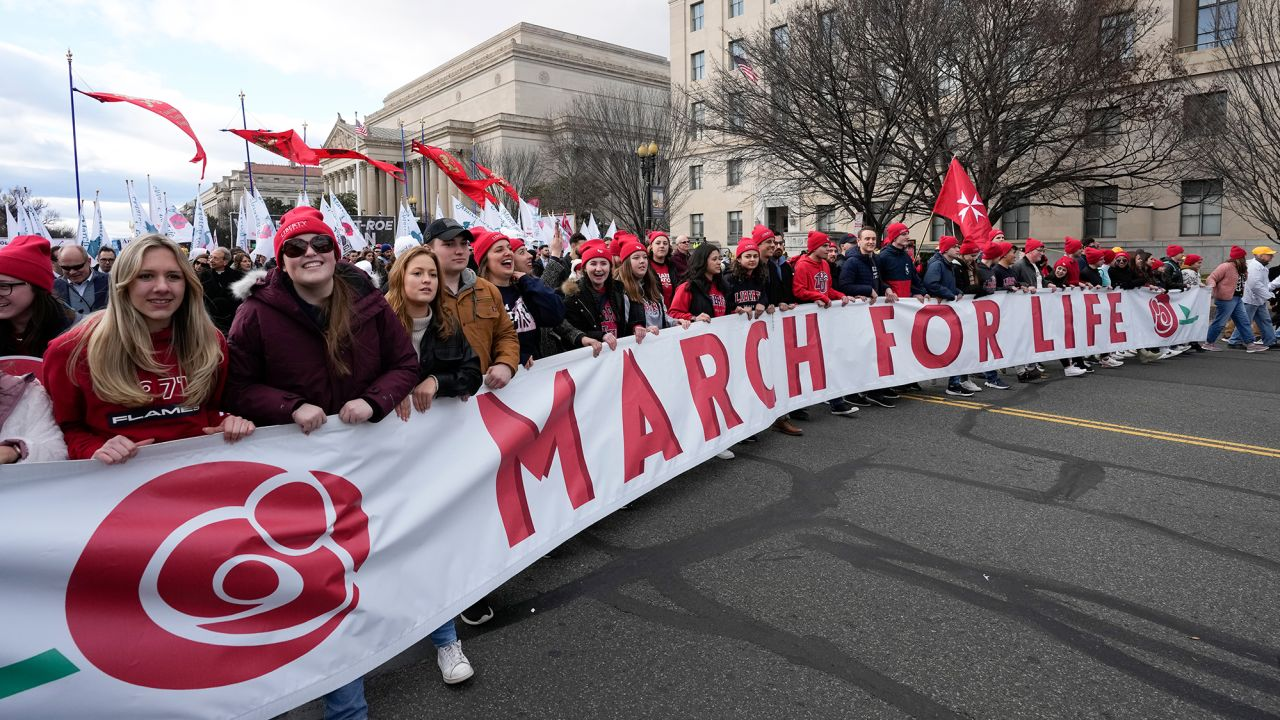
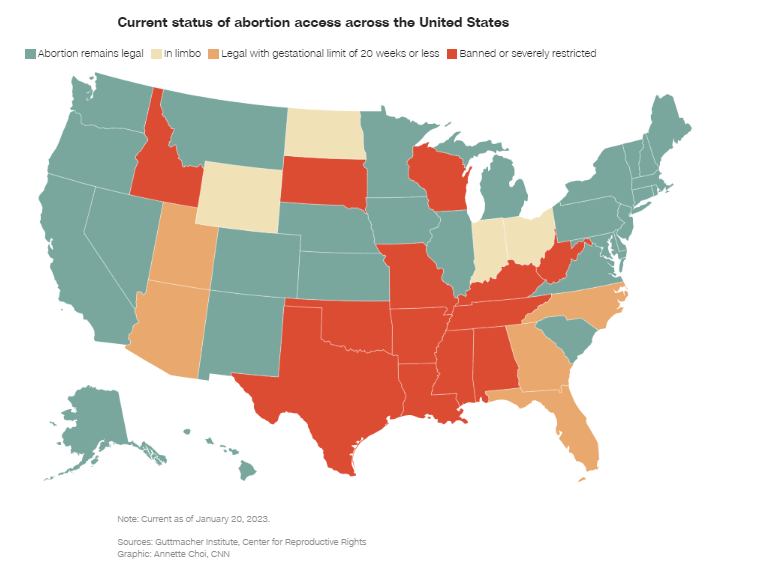

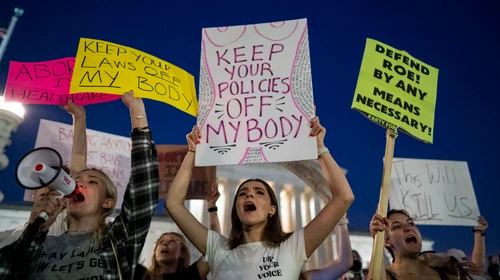


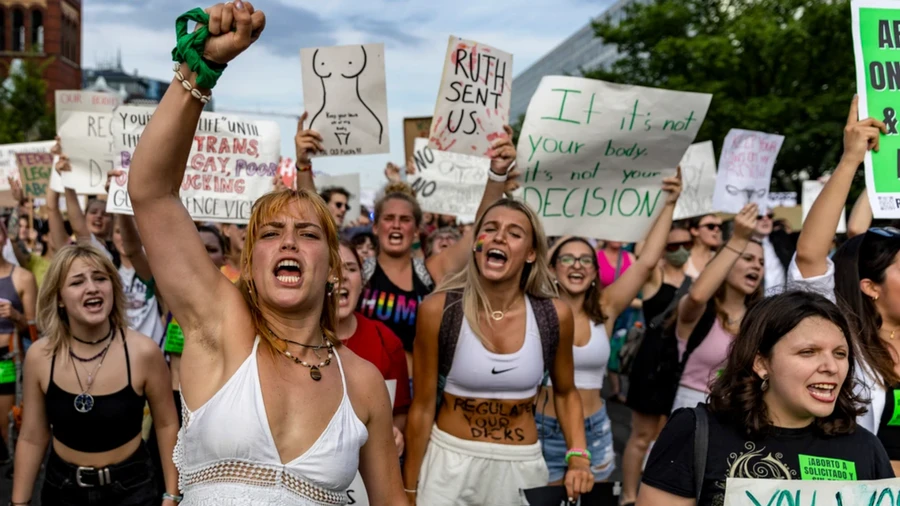



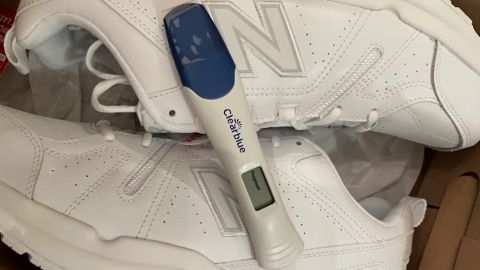

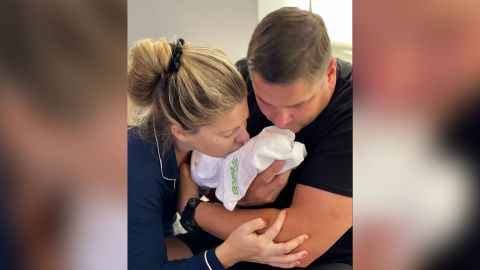

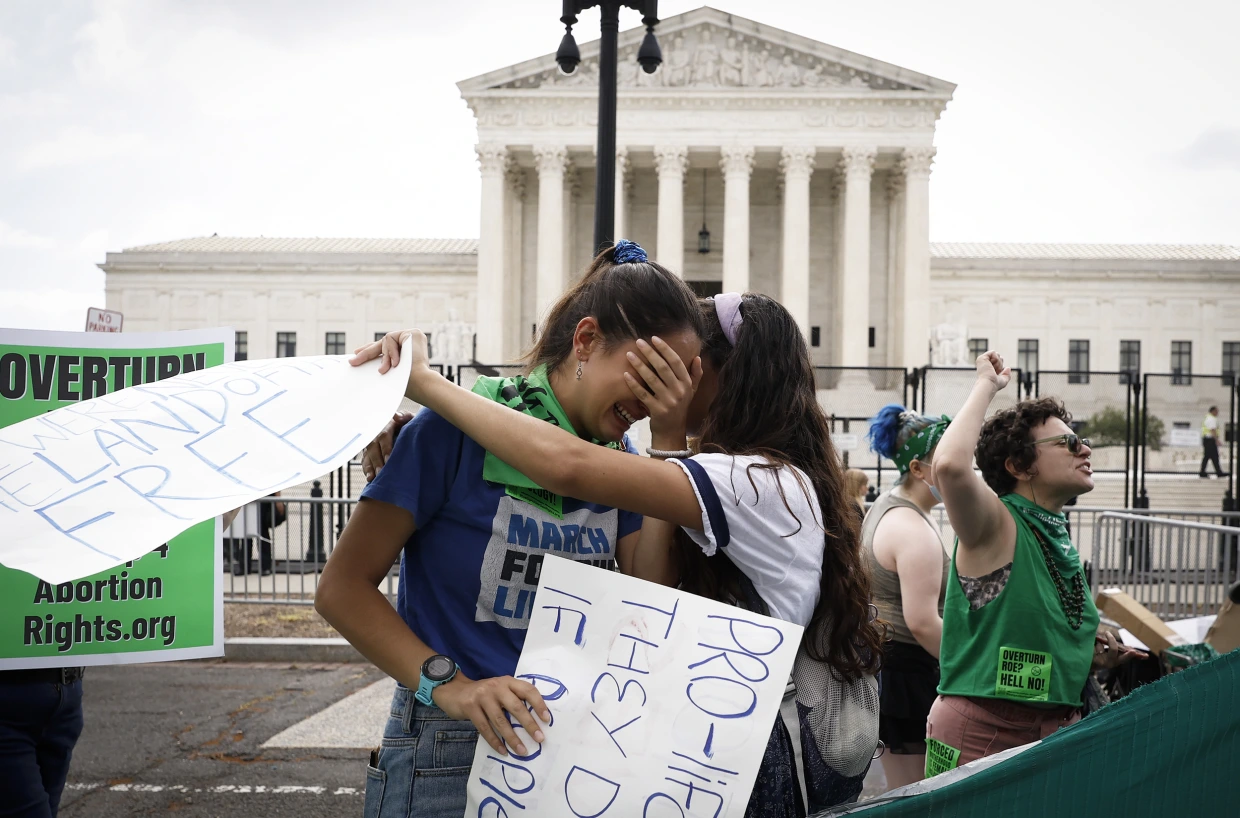



 Abortion - Abortion Clinics, Abortion Pill, Abortion Information