Photo by Alex Bruski on Unsplash

Frantic attempts to schedule appointments. Driving across state lines. Every American is learning what it’s like to have to fight for health care access.

If your life is anything like mine, someone you know was vaccinated last week because someone else sat up all night, hitting refresh on an obscure website until they found an open appointment. Someone else you know probably just got their shot because their son or daughter sat on hold for hours on a phone line, until someone picked up and slotted them into a complex health system. Someone else you may know hopped in a car to drive across state lines, for several hours, to get a shot in some other jurisdiction. And someone else maybe received a phone call from someone they knew abruptly telling them to bundle their elderly parents or immunocompromised self into the car and just drive, because there were vaccines available someplace.

Kindly remember this experience—because what you are witnessing is precisely what happens whenever a woman’s reproductive health care facility shuts down. Access to vital, lifesaving health care becomes purely a function of whom you know, how fluent in English and how mobile you may be, and, of course, how much money you have. This may be a first for you, but for millions of women, especially in states that have closed virtually all of their abortion clinics in recent years, this is how reproductive health care currently works in America.

It’s hardly a controversial statement that while vaccine delivery is finally happening, the rollout has been chaotic and hyperlocalized. Every state and county and city may have different systems. The incomprehensible matrix of hospital and pharmacy websites, phone apps, and telephone hotlines assumes that everyone in America has ready access to technology, vast computer literacy, an email address, and hours of time to burn scaling the vaccine learning curve. (Here is an instructive example from the Washington Post’s Geoffrey Fowler guiding elderly Americans on navigating the systems.) You may be subject to fraudsters and grifters who prey on vulnerable people seeking health care in a crisis. Wealthy enclaves with big donors appear to have access that allows them to jump the queue, ahead of local seniors and the seriously ill. Learning to navigate these fragmented systems can take days. And if you aren’t fluent in English, computer-savvy, free to take time off work, and well connected, you will probably get vaccinated after those who are.

Nobody expected anything less, particularly given that high-end clients have received preferential treatment and resources throughout the pandemic. But at minimum we can learn from this natural experiment in scarce medical resources what will happen as several states continue their crusades to limit low-cost, accessible birth control and pregnancy care.

The state-level assault on abortion clinics, and particularly on independent clinics, long predated the COVID crisis. As Time magazine reported in December, “the number of independent abortion clinics in the U.S. has fallen 34 percent in recent years, from 510 in 2012 to 337 as of November. A total of 41 clinics have closed in the past two years alone.” Since 58 percent of people seeking abortions get them at independent clinics, the results have of course been catastrophic for women’s health. COVID itself has exacerbated the problemSix states were down to a single clinic before the pandemic hit, but 11 states attempted to suspend abortion services this past spring, opportunistically citing the pandemic as justification. While these efforts were blocked in the courts, some clinics closed, and the attendant legal fees and the burden of COVID regulations have all been devastating for others. For the women who require their services, the cost of declining abortion access is immeasurable.ADVERTISEMENT

Since Brett Kavanaugh’s confirmation to the Supreme Court, state legislatures itching to end the protections of Roe v. Wade have passed regulations that are defiantly unconstitutional, in an effort to force the issue nationwide. TRAP laws designed to shutter clinics under the pretext of advancing maternal health have been sidelined in some states as they now try to ban abortion outright. Last week, Mark Joseph Stern interviewed professor Mary Ziegler about Arkansas’ new, near-total abortion ban. The state joins at least 11 others in passing complete or near-total bans in the hopes of becoming the case that will overturn Roe. Also last week, Republican Texas state Rep. Bryan Slaton introduced a bill to abolish abortion, allowing for the death penalty for women and physicians who carry out the procedure.

We already know exactly what happens in a state that closes virtually all of its clinics. And we already know that states with the worst maternal and infant health outcomes are leading that charge. Missouri Gov. Mike Parson’s yearslong harassment crusade to shutter the last remaining clinic in his state, admittedly undertaken to end all abortion there, was stymied in the courts but proved devastating to both the clinic and to women forced to travel out of state to obtain their abortions in Illinois. What we do know about states that impose onerous TRAP laws is that the public health impacts have always fallen disproportionately on people of color and the poor. As Jasmine Wang, Peter Jacobs, and Hannah Pugh recently detailed here, “clinic closures across the country have resulted in longer wait periods and travel times, which place additional strain on patients in rural areas. Logistical requirements that do not improve patient safety—such as 24-hour waiting periodsmandatory ultrasounds and counseling, and informed consent laws—require patients to make multiple, sometimes costly trips to clinics.” We also know how quickly each of those burdens and extra inconveniences is dismissed by those who want to blame people for failing to access health care that is nearly inaccessible to them.

Yet again we are witnessing the stark division between the medical haves and have-nots, and yet again it’s got nothing whatever to do with moral virtue or medical need.

When Texas passed its controversial omnibus clinic regulation, House Bill 2, in 2013, the number of clinics that could operate in the state briefly dropped from 42 to 7. Had the Supreme Court upheld the new restrictions, Texas would have been left with 10 clinics—all in major cities—to serve 5.4 million women of childbearing age. Even after the Supreme Court struck down that law in 2016, many clinics never reopened. The number of clinics operating in the state now is about half what it was in 2013. While the litigation was wending its way through the courts, Texas experienced a natural experiment in what happened to women who lost access to reproductive care. Overnight, women seeking to secure abortions were forced to endure longer wait times, unnecessary repeat visits, burdensome travel, costly hotel stays, and missed work. The longer the wait time, the pricier the procedure became. In some cases, longer waits eventually precluded an abortion altogether. In Lubbock, for instance, a woman would have had to travel nearly 300 miles to reach her closest provider. Studies showed that the “number of Texan women of reproductive age living in a county over 100 miles from the nearest abortion provider in Texas more than doubled to just over one million when the admitting privilege requirement of HB2 went into effect.” Wait times at the remaining open clinics quickly soared to 20 days and longer. Women began to cross state lines to obtain abortions, turned to dangerous self-managed abortionsblack-market scammers, and drugs they could purchase in Mexico.

sample CNN account at the time was representative of how this affected poor women in particular: Women traveling hundreds of miles needed gas money. Poor and rural and non-English-speaking women didn’t always have access to bus tickets, taxis, hotels. Some slept in their cars while awaiting procedures. Women missed procedures because their babysitters didn’t show up, their paychecks didn’t clear, time off work was denied, protesters blocked clinics. And yet, at oral argument over HB 2 before a federal appeals court in 2014, Judge Edith Jones suggested that the 300 miles round-trip between the Rio Grande Valley and Corpus Christi was a breeze: “Do you know how long that takes in Texas at 75 miles an hour? This is a peculiarly flat and not congested highway.” Spoken like someone who has never slept in her car.

Vaccine access as it’s rolled out across the country highlights the same problems that were laid bare when Texas shuttered clinics. It has been an example of what can happen when capitalism and scarce medical resources collide. Yet again we are witnessing the stark division between the medical haves and have-nots, and yet again it’s got nothing whatever to do with moral virtue or medical need. Vaccines will go—as reproductive care has always gone—to the wealthy and well-connected, to those with resources and networks, to those with work flexibility, ample child care, and the ability to travel. Eventually, everyone will “have access,” but the same burdens and worries, limitations and encumbrances, that make it all but impossible for poor or non-English-speaking women in Mississippi and Missouri to access lifesaving reproductive care will present again when it comes to lifesaving COVID protection care. For Americans who haven’t thought carefully about why that happens, this present moment affords us that clarity.

We are doubtless a few short months away from the time at which we will begin to hear that there is simply something “wrong” with those who haven’t been vaccinated yet, that they were too lazy or unmotivated or distracted. (Indeed, narratives about measles vaccination rates tend to focus on anti-vaxxers, but as my former colleague Dan Engber wrote in 2019, lack of access to vaccination seems to be just as significant a problem in the U.S.) That’s what was said about poor women seeking to terminate their pregnancies, too—they weren’t trying hard enough. So long as access to lifesaving health services demands what this rollout is demanding—access that privileges the well-connected and the internet-connected—unevenness will be the rule. Blaming individual behavior for a systemic problem has long been the way to avoid solving systemic problems. But long after the crisis of this particular pandemic has passed, we would do well to question exceptionalist claims that basic health care required by all Americans is available to all Americans. As abortion clinics continue to close around the country, the pandemic should remind us that the pattern is long-standing, and that basic health care is still largely for the wealthy and the lucky.

Source: https://slate.com/news-and-politics/2021/03/vaccine-access-abortion-health-care-connection.html?fbclid=IwAR1OrfDIH89Wo1wOcxbSOPvdmhVMcHsC9LviJWA7Mt3_O37yqrE_bdErFqA

Women demonstrate at a screening of the hearing of the Inter-American Court of Human Rights over the case of Manuela, who was charged with aggravated homicide. Photograph: Marvin Recinos/AFP/Getty

Demands for justice for Manuela, who died of cancer during 30-year sentence, taken to international court in country first

When Manuela, a 33-year-old mother of two from rural El Salvador, had a miscarriage in 2008, she did what most women would do: she went to hospital.

There she was handcuffed to her hospital bed, accused of having an abortion, and charged with aggravated homicide.

The authorities said Manuela – whose full name has never been made public in El Salvador – must have been guilty of killing her baby as the child was conceived outside marriage. They did not allow her to speak with a lawyer while she was being interrogated.

Manuela was sentenced to 30 years in prison. Around the same time she was diagnosed with lymphatic cancer. Two years later, she died of her illness in prison.

On Wednesday, the Inter-American Court of Human Rights heard arguments in Manuela v El Salvadora landmark case that could shape policy and debate on abortion across Latin America.

As well as seeking reparations for Manuela’s family, the plaintiffs – a group of reproductive rights groups including the Center for Reproductive Rights and the Feminist Collective for Local Development – are also asking the court to mandate that the state take responsibility for failing to guarantee Manuela’s rights to health and life.

It is the first time that an international court has had the opportunity to challenge the staunchly religious Central American country’s aggressive prosecutorial approach to abortion.

“I remember my mum, she gave us advice and never left us alone. It is painful to grow up without a mother because that love is incomparable,” said Santos de Jesús, Manuela’s eldest son, in a statement to the media before the hearing. “I ask the state not to do these things because they left us abandoned without a mother.”Advertisement

Manuela’s treatment is not unique. El Salvador has some of the world’s most draconian abortion laws, with the procedure outlawed. Unlike in many other Latin American countries, El Salvador does not permit abortion in cases where the child is conceived by rape or incest, or where the health of the mother or child is at risk.

The penalties for women are often enforced. Over the past two decades, about 181 women who experienced obstetric emergencies were prosecuted for abortion or aggravated homicide, according to rights groups.

“We know that Manuela’s case is not isolated and that many other women are in the same situation,” said Catalina Martínez Coral, regional director for Latin America and the Caribbean at the Center for Reproductive Rights. “When Manuela went to hospital the doctors and the authorities immediately presumed guilt, going against all the guarantees of due process.”

The court’s decision, expected later this year, could have a sweeping effect throughout the region, as most Latin American countries respect the tribunal’s jurisprudence.

“This case will establish a standard not only in El Salvador but across the whole region on how we protect the reproductive rights a woman has when she arrives at a hospital,” Martínez Coral said. “A good decision will be a win for reproductive rights.”

Rights groups say Manuela’s ordeal was typical in El Salvador not only for its cruelty, but due to her status as a poor rural woman.

“What we are also seeing in El Salvador is the criminalisation of women who live in poverty,” said Paula Avila-Guillen, executive director of the Women’s Equality Center in New York, in reference to at least 25 other women who are in Salvadoran jails after obstetric emergencies.

“I am certain that if these women had had proper attorneys at the hospital, if they had had the agency to tell their story, if they had had the guidance of what to do in their situation, then none of them would be in prison,” she said.

Avila-Guillen added that this week’s hearing could apply pressure on Salvadoran courts to treat another woman who is in Manuela’s situation more leniently. The woman, called Sara, also had a miscarriage and will be sentenced in El Salvador on Monday.

“We don’t need more women dying in prison,” Avila-Guillen said. “And that’s what we’re hoping will come out of today [the court case].”

Source: https://www.theguardian.com/global-development/2021/mar/12/el-salvador-abortion-laws-on-trial-in-case-of-woman-jailed-after-miscarriage?fbclid=IwAR2VGAHvr6mDaRcHBBnalXpqOC56PVvWX6NW58Zk3MJ_K1VRxI_908UjdNI

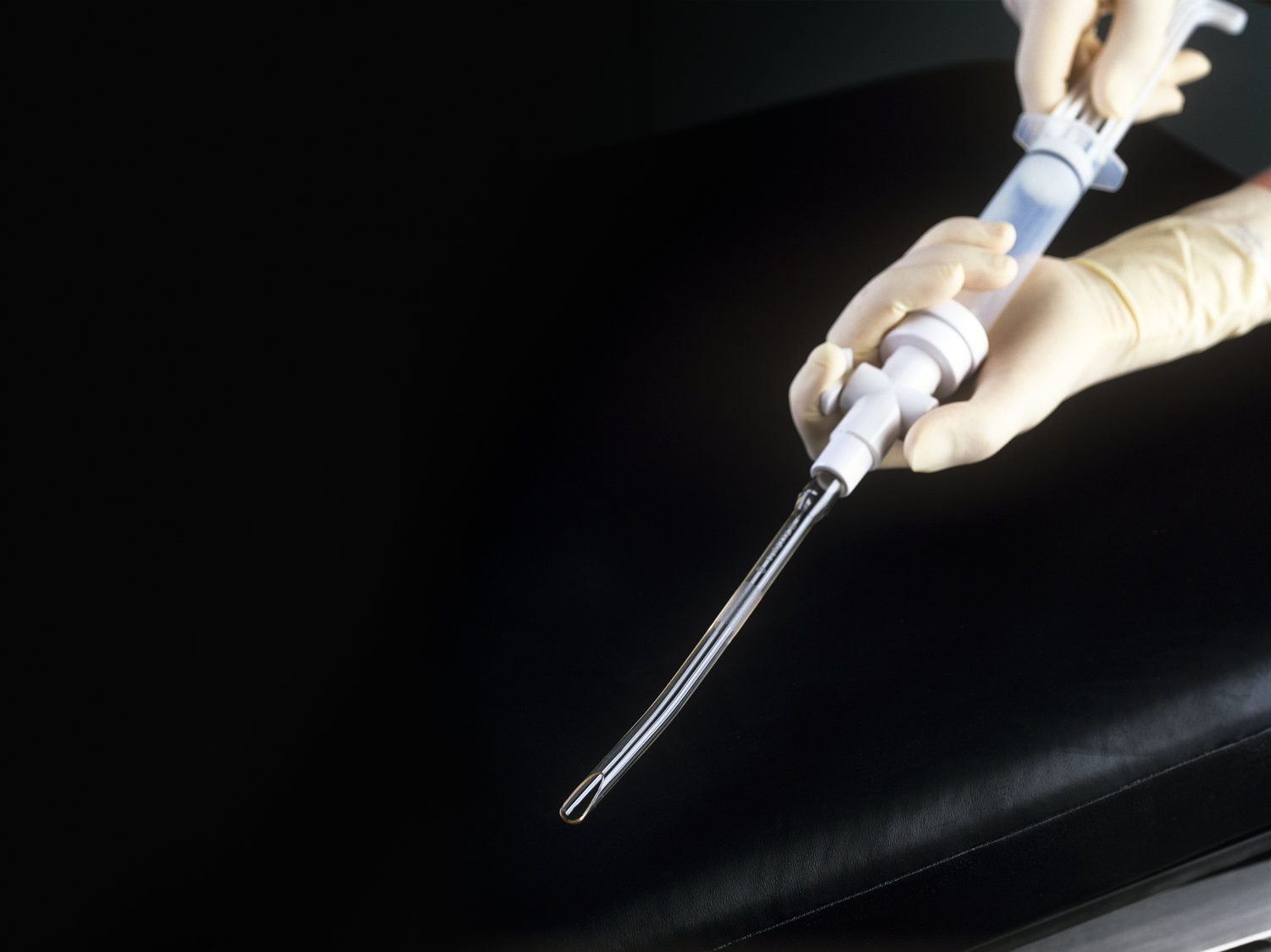
A manual vacuum aspirator can be used to perform abortions and also to remove tissue from the uterus after an abortion or miscarriage.

Some of Onikepe Owolabi’s most vivid memories of medical school in her native Nigeria are of the teenage girls she saw in the emergency room of a rural hospital with complications from an unsafe abortion — painful infections that, if left untreated, can lead to permanent disability or even death.

Each time, Owolabi, now a senior research scientist with the Guttmacher Institute, a nonprofit reproductive rights organization in the U.S. that supports abortion rights, assisted doctors in promptly providing the girls with a group of essential obstetric services known collectively as “post-abortion care,” or PAC.

Abortion is illegal in Nigeria except to save a woman’s life and carries a heavy jail sentence for both the provider and the patient. But post-abortion care is a form of emergency medicine that all countries have pledged to provide to women with complications of a miscarriage or an induced abortion, irrespective of the legal status of the latter. And many do so with the technical and financial support of the United States.

Indeed, amid the political back-and-forth between Democrats and Republicans over U.S. aid for abortion overseas, post-abortion care represents a rare piece of common ground. The term was first introduced in the early 1990s to describe a public health solution to the problem of unsafe abortion, and U.S. funding for PAC has been permitted under anti-abortion restrictions on U.S. aid. Funding for PAC was even allowed under the Trump administration’s expanded Mexico City Policy, which barred federal global health funding to nongovernmental groups that provide or refer patients for abortions. (That ban was rescinded in January by President Biden.)Article continues after sponsor message

Still, as Owolabi and her colleagues at Guttmacher have found in recent years, post-abortion care is often unavailable where abortion is prohibited, and most abortions are unsafe — the very places post-abortion care is needed most.

In a 2018 assessment of health centers’ capacity to provide post-abortion care in 10 low-income countries, they found what they described in The Lancet Global Health as “an alarming state of health care” for women with complications from an abortion or miscarriage. In 7 of the 10 countries (Bangladesh, Kenya, Namibia, Nepal, Rwanda, Tanzania and Uganda), fewer than 10% of primary care facilities could provide basic post-abortion care services, such as removal of retained tissue and antibiotics administered by injection.

Last year, the Guttmacher team conducted a similar study in Zimbabwe, finding that just over 20% of 227 health facilities could provide basic post-abortion care, with more than half the country’s population lacking access to the services.

“When you look at country-level data on emergency obstetric care around the world, you see improvement in access to commodities [such as drugs and medical supplies] for a variety of pregnancy complications,” says Owolabi. “But even as everything else in maternal health moves forward, PAC gets left behind.”

She and other researchers say the problem is partly due to the stigma surrounding abortion, particularly in countries where the procedure is prohibited. “It’s [society’s] way of punishing women” for getting an abortion in the first place, says Owolabi. “No one is saying that explicitly, but that’s what the data and the funding show.”

But there’s also the fact that the skills and supplies needed to provide post-abortion care are the same as those needed to safely perform abortions. And researchers say that’s forced the U.S. Agency for International Development to walk a fine line between the two. While USAID funds post-abortion care programs in more than 40 countries, that funding may not be used to equip health workers with the best tool for the job: a portable plastic device known as the manual vacuum aspiration (MVA) kit.

Why quality post-abortion care is hard to access

For decades, health authorities have encouraged the use of the MVA kit as the preferred technology for post-abortion care. A small hand-held syringe attached to a flexible polyethylene tube, the device uses suction to remove the contents of the uterus, such as a fetus or embryo or a piece of the placenta. Safe, effective and easy to operate, it requires no electricity or clinical infrastructure (such as a sterile operating theater or IV lines), causes minimal discomfort and can be used by health workers like nurses and midwives.

For those same reasons, the MVA kit is also the world’s most widely used tool for safe surgical abortion, making it subject to federal restrictions under the 1973 Helms Amendment to the Foreign Assistance Act as it’s been interpreted by USAID. Unlike the Mexico City Policy, which bars groups that provide abortions from receiving U.S. funding when it is in effect, the Helms Amendment bars the use of any U.S. foreign aid to pay for abortions.

Passed in 1973, the Helms Amendment went into effect just as USAID was ramping up global distribution of the MVA kit — part of a vast new family planning program aimed at curbing population growth in poor countries.

While the Helms Amendment refers only to abortion “as a method of family planning,” USAID construed it as eliminating assistance for all abortions — even to save a woman’s life or in cases of rape in war zones. The agency also interpreted the law as a ban on the purchase and distribution of the MVA kit “for any purpose,” requiring ministries of health to procure the device independently of other medical supplies.

Ever since then, many countries have struggled to maintain a sustainable supply of the MVA kit.

And according to Siri Suh, an assistant professor of sociology at Brandeis University and an expert on post-abortion care where there isn’t access to MVA, countries continue to rely on outdated methods.

Suh says the most prevalent of these is a surgical procedure known as “dilation and curettage,” or D&C, which involves the use of a sharp metal instrument, a “curette,” to scrape out tissue retained in the uterus.

Research has shown that D&C is less safe, less effective and more painful than MVA, and because it can only be performed by a doctor with access to an operating room, it’s also significantly more expensive. Studies in Uganda and Malawi found that by switching from D&C to MVA, hospitals could reduce the average cost per case of post-abortion care by as much as 43%, from $45 per patient using D&C to $25 using MVA. And yet in Uganda, Malawi and many other poor countries, D&C persists. Suh and others describe it as a form of “obstetric violence.”

In her new book, Dying to Count: Post-Abortion Care and Global Reproductive Health Politics in Senegal, Suh explores how anxieties about the MVA kit’s capacity to induce abortion, which is illegal in Senegal, have constrained its integration into routine care.

Dubbed the “PAC pioneer of West Africa,” Senegal is celebrated for having been among the first countries to decentralize post-abortion care from large urban hospitals to smaller facilities in rural areas. But as Suh found, health officials took pains to prevent the MVA kit from being used to perform abortions, often by keeping it behind lock and key. Suh says this greatly impeded access to the tool for post-abortion care, leaving many women to undergo substandard treatment.

That includes what’s known as digital curettage, whereby a provider uses two fingers to remove the contents of the uterus, a method WHO has long considered unsafe.

“It’s incredibly painful,” says Suh. “It’s used extensively across sub-Saharan Africa when there’s no one trained on MVA, or the [MVA’s] syringe is broken, or it’s locked up because the head doctor isn’t around. And it’s often performed without medication for pain.” Indeed, as a 2018 study by researchers at Guttmacher found, of more than 900 patients who received post-abortion care at facilities in Kinshasa, the capital of the Democratic Republic of Congo, close to a quarter of them were treated with digital curettage and just over a tenth received medication for pain.

Asked about its decision not to procure the MVA kit for the post-abortion care programs USAID supports, an agency spokesperson did not respond to the question but offered this comment:

“USAID has long championed the reproductive health and reproductive rights of women and girls, including access to voluntary family planning and providing support for post-abortion care.”

A disputed device

Anu Kumar was just starting her career as a medical anthropologist when she went to Cairo to attend the United Nations international conference on population and development. It was September 1994, and Kumar still recalls the weight of that moment when, as she puts it, “179 governments made the reproductive health and rights of women a global development priority.”

It was also the moment that post-abortion care was first formally recognized as an apolitical solution to the public health problem of unsafe abortion.

“We managed to get PAC accepted as a concept, and that was important,” says Kumar. “But at the end of the day, post-abortion care is still only dealing with the aftermath.”

Suh echoes that critique, arguing that post-abortion care represents “a system of global reproductive governance that withholds affordable obstetric care from low-income women until after they’ve resorted to unsafe procedures.” Of course, she adds, “PAC is infinitely more beneficial to women than no treatment at all.”

Twenty-five years later, Kumar is the president and chief executive of the reproductive rights group Ipas, which advocates expanding access to safe abortion care. Ipas developed and refined the MVA kit now in use in more than 100 countries. “The U.S. government paid for this technology and then turned its back on it,” she says, noting that Ipas was founded in 1973 to carry out manufacturing and distribution of the device after passage of the Helms Amendment earlier that year.

“The Helms Amendment is really our genesis story,” says Kumar. “It’s why we exist.” And so it’s fitting, she says, that Ipas could help shape the Abortion is Health Care Everywhere Act, the first bill to repeal the Helms Amendment. Introduced last year by Rep. Jan Schakowsky, (D-Ill.), the bill was re-introduced this week and is co-sponsored by more than 140 members of Congress.

Meanwhile, Ipas and partners continue to supply the MVA kit to clinics around the world, including many in conflict-affected countries where researchers say strengthening post-abortion care remains an urgent priority.

“A big part of [this work] is just explaining to health workers what PAC is,” says Sara Casey, director of the Reproductive Health Access, Information and Services in Emergencies Initiative (RAISE) at Columbia University. “That it’s not controversial. That it’s something you can do, something your ministry of health wants you to do.”

Where health systems are on the brink of collapse, and distrust in health services often runs high, providing post-abortion care is already hard enough, says Casey, who with colleagues at RAISE has worked to improve access to the intervention in conflict settings around the world. And it’s made all the more difficult, she says, when health workers can’t use the best tool for the job.

“Why tie a hand behind their back?” she asks. “Why not help them instead?”

Source: https://www.npr.org/sections/goatsandsoda/2021/03/09/936206516/in-hospitals-across-africa-a-lack-of-post-abortion-care?fbclid=IwAR3nVYOo1alyyYlzdmapKA-1N0W7hxKF6whv7sZ2j-FudW3-AZiHdMvXlAE

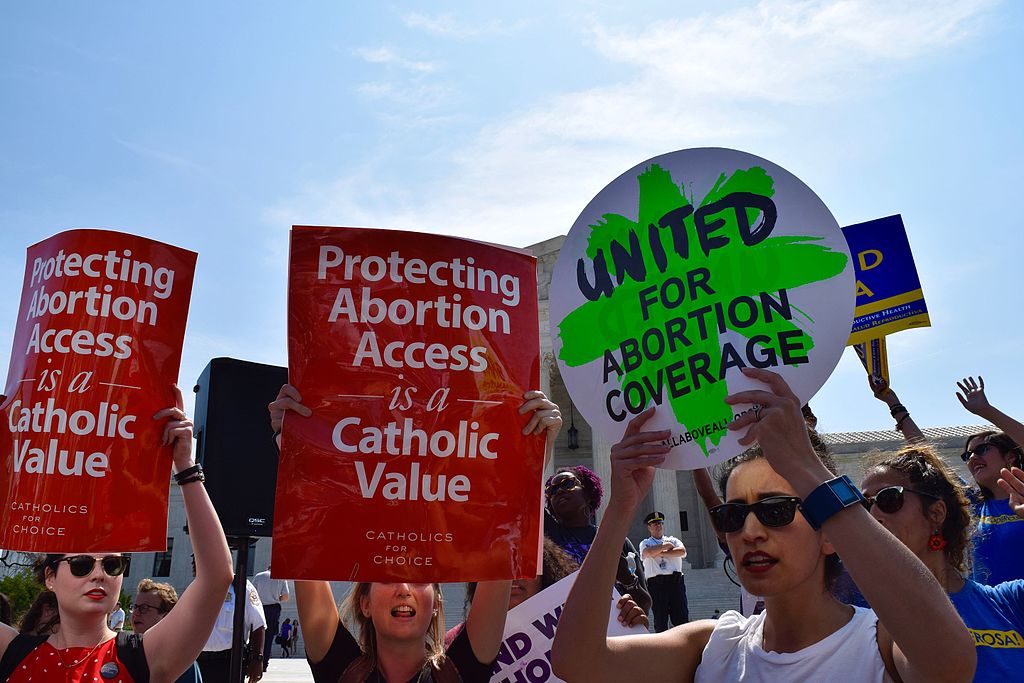
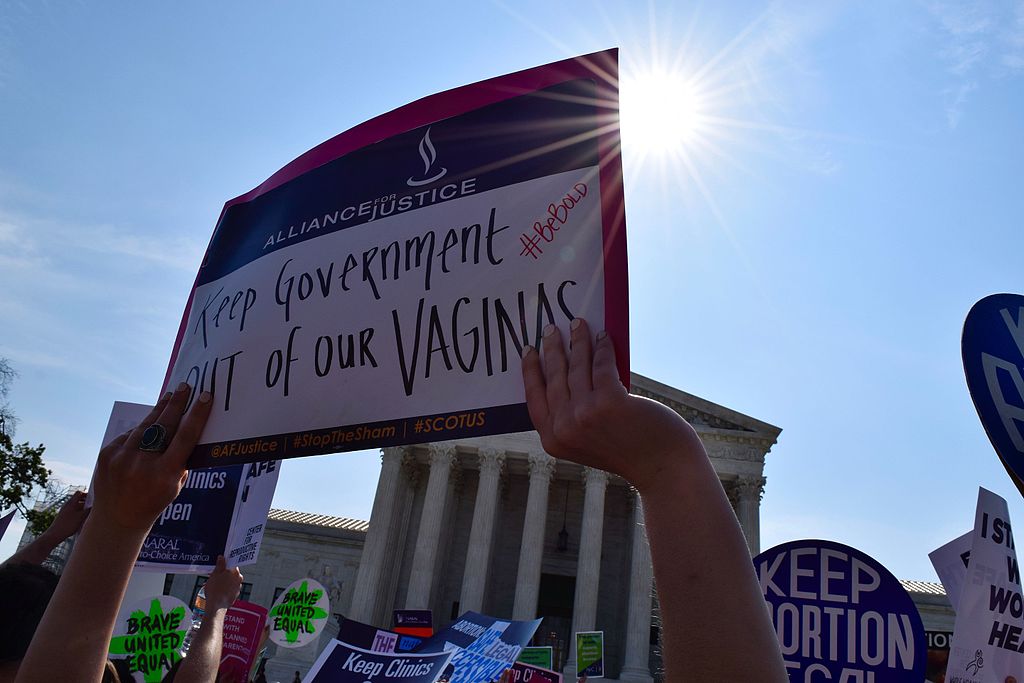
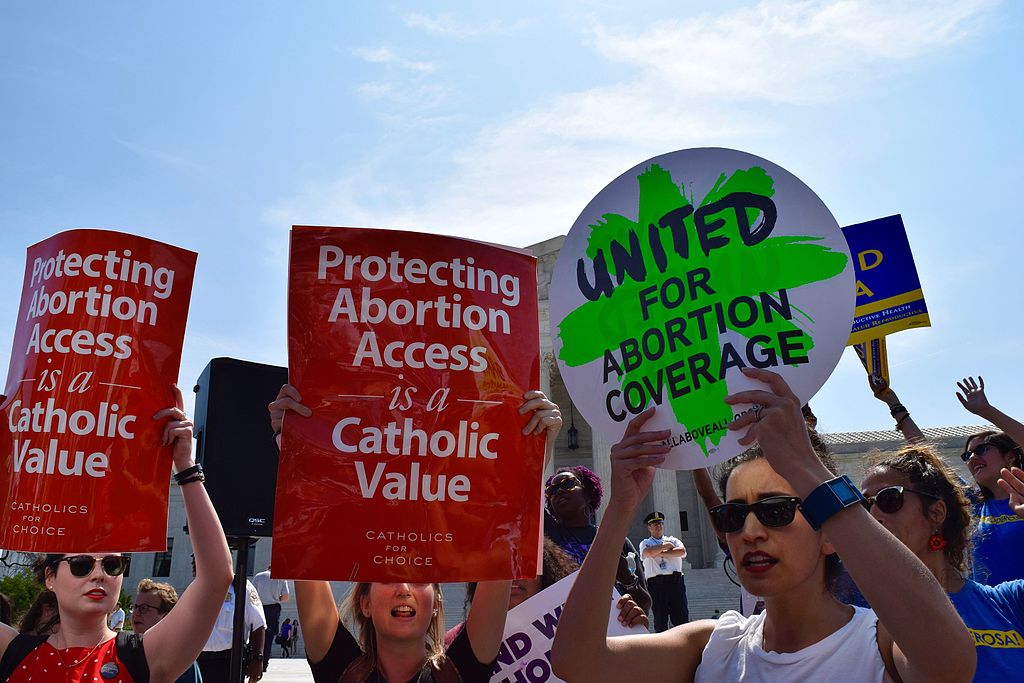
A June 27, 2016 demonstration in front of Supreme Court during Whole Woman’s Health v. Hellerstedt. The Court ruled 5–3 that Texas cannot place restrictions on the delivery of abortion services that create an undue burden for women seeking an abortion. (Jordan Uhl / Wikimedia Commons)

As the president of Catholics for Choice, I am urging President Biden to center his Catholic upbringing and support this landmark legislation to repeal the Helms Amendment.

On Tuesday, Rep. Jan Schakowsky (D-Ill.), senior chief deputy whip and chair of the Congressional Pro-Choice Caucus Providers and Clinics Task Force, reintroduced the Abortion is Health Care Everywhere Act—landmark legislation that would repeal the decades-old Helms Amendment, which currently prohibits U.S. foreign assistance funding for abortion care.

Helms is similar to the global gag rule, also known as the “Mexico City policy,” an executive action repeatedly issued by Republican presidents (and rescinded by Democratic presidents). The global gag rule not only prohibits U.S. foreign aid for abortion care—it goes even further than Helms, prohibiting international organizations receiving U.S. funding from even so much as using their existing, non-U.S. funding to counsel or refer vulnerable people to abortion care services, even if they don’t provide them.

Both the Helms Amendement and the global gag rule are immediate threats to comprehensive health care for women and gender diverse persons, and both need to be permanently repealed.

As the president of Catholics for Choice, I am urging President Biden to center his Catholic upbringing in championing individual conscience, prioritizing justice and ensuring this bill has the full support of his administration.

The Helms Amendment is the international equivalent of the Hyde Amendment, the current domestic policy that prohibits taxpayer dollars from being allocated directly for abortion care. Like the Hyde Amendment, Helms places an extraordinary burden on the rights of pregnant people—particularly Black and Brown women, trans men and non-binary people—who are denied access to life-saving health care simply because of the irrational grip of extremist religious factions in the U.S. government.

When we hear those in power talk about religious freedom, this is the kind of government overreach that should concern all of us—brought upon by those who weaponize faith against vulnerable communities for no better reason than regulating the private lives of strangers, regardless of threats to life and privacy.

I am a Catholic theologian and run the largest organization in the United States dedicated to centering the Catholic belief of respecting individual conscience in all matters. I believe there is no greater threat to the respect of all faith backgrounds than permitting one particular religious ideology to arbitrate the choices of all individuals, regardless of how their own beliefs align with those extremely narrow policies.

Stop Weaponizing Faith and End the "Racist, Deadly" Helms Amendment
A demonstration during in front of the Supreme Court on June 27, 2016. (Jordan Uhl / Wikimedia Commons)

Yet, this goes further than religious freedom. The Helms Amendment is rooted in white supremacist beliefs—not only for the way it disproportionately harms communities of color, particularly Black and Brown women, but in the history of its namesake.

The late Jesse Helms wore his support for systemic racism as a badge of honor throughout his career—from leading the filibuster against making Martin Luther King, Jr. Day a federal holiday, to threatening to incarcerate Black voters who failed to update voter registration addresses (one of the most jarring voter suppression tactics in recent memory). Upon announcement of his retirement in 2001, Helms was described by one Washington Post columnist as “the last prominent unabashed white racist politician in this country.”

It’s therefore no wonder why the Helms Amendment has been defined by the way it withholds available, common sense aid for impoverished women of color in especially oppressive regions of the world. This was never a policy meant to help any woman but meant to punish those women Helms deemed racially inferior.

Abortion is health care, and health care is a human right. It doesn’t matter if it’s a pregnant person in the United States or halfway around the world; if our country claims a mantle of safeguarding human rights globally, it has an obligation to ensure reproductive freedom to the best of its ability. When our government hides behind a blatantly racist law like the Helms Amendment, it is has made a choice to directly harm women of color and gender diverse persons around the world.

I take President Biden at his word when he expresses care and concern for those most vulnerable in our society, both at home and abroad. Now that he is in a position of power, with his party controlling Congress, it is time to put an end to this racist, deadly policy, once and for all.

It is not just my Catholicism or President Biden’s Catholicism that compels us to ensure life-saving health care for those in need; it’s the Catholicism of anyone honest enough about Christ’s teachings to fight for those struggling to live through extraordinarily dire circumstances. These are the moments our faith teaches us to seek out. I urge President Biden to embrace this moment before us.

Source: https://msmagazine.com/2021/03/09/helms-amendment-biden-abortion-is-health-care-everywhere-act-catholics-for-choice-weaponizing-faith-racism/?fbclid=IwAR2pNJA5dJSE5VnXftwy2P7NWqyfEJYAZRkzW2P-sHlDkzPlNRZmlWOzbfs

It’s called judicial bypass, and understanding the ins and outs of it for most people would require hours of online research or a team of lawyers.
 Shutterstock

A new site tells young people exactly how to navigate judicial bypass, the workaround for state laws that remove their bodily autonomy and agency.

Constructive and actual notice. Judicial waiver of notice. Referring physician. Notice requirement. Notarization.

This is some of the the legal terminology young people seeking abortion care need to know if they live in one of the 37 states with parental involvement laws, like Florida. Abortion is available there to teenagers younger than 18, but only if they notify their parents—and when the state’s forced parental consent law takes effect in July, it will become even more complicated, forcing those who aren’t able to receive consent from their parents to navigate a complex legal system to exercise their constitutional rights.

It’s called judicial bypass, and understanding the ins and outs of it for most people would require hours of online research or a team of lawyers. Maybe both.

That’s why the reproductive justice organization If/When/How created the Judicial Bypass Wiki—to provide information to teenagers about how they can secure permission from a judge to have an abortion in their state, without involving a parent or guardian. The site uses plain language to explain the legal terms young people need to use the workaround for state laws that remove their bodily autonomy and agency.

It’s not a traditional wiki; there’s no collaborative editing, though If/When/How aims to regularly update the site and encourages advocates and others with information to reach out. The organization will “collect feedback from young people and other advocates in the field, and add new information while still getting information out there to help meet people’s immediate needs,” Jessica Goldberg, counsel for reproductive justice organization If/When/How, told Rewire.News. “We’re working directly with young people and community-based advocates to get that feedback right now to ensure that it is as fresh, accessible, and valuable as possible.”

Thirty-seven states require parental notification or consent before having an abortion, with three states requiring consent from both parents, according to the Guttmacher Institute. The only alternative is going through the judicial bypass system. In seven of those states, judges must decide on waiving parental involvement for abortion care based on specific criteria, such as the young person’s “intelligence or emotional stability,” according to Guttmacher. In Indiana, a judge will only grant judicial bypass if they consider the person seeking it to be “mature” and “well informed,” or if they agree that the abortion is in the young person’s best interest. If the judge thinks the parents should be involved, they will deny the young person a bypass. 

Anti-choice lawmakers have characterized judicial bypass as a loophole in otherwise onerous abortion restrictions. Goldberg said that’s never been true.

“When courts have upheld these laws—and they are not always upheld, to be sure—it is based on a misconception that a judicial bypass proceeding will protect a young person’s ultimate right to decide whether or not to have an abortion, when in fact the bypass itself presents yet another barrier to care,” Goldberg said. She added that forced parental consent laws are “one of the myriad ways that states have tried to make abortion hard or impossible to access after Roe v. Wade was decided.” 

The Judicial Bypass Wiki’s Florida entry tells visitors that if a young person based in the state is or has been married, or if they have a dependent child, they don’t need to notify a parent before getting an abortion. (The same exemptions will apply once the parental consent law goes into effect.) It explains the difference between “constructive notice” received in writing, and “actual notice” given in person or over the phone.

According to the wiki, a Florida court has three days to rule on a judicial waiver petition. If there’s no ruling, “another petition can be filed with the Chief Judge of the Circuit to ensure there is a hearing held within 48 hours of the second petition,” the site explains. 

The wiki includes resources to ease the process. The Arizona page links to Planned Parenthood of Arizona’s parental consent form, which must be notarized after a young person has permission from a parent or guardian. For a teen who isn’t sure what notarization is, the site explains what it means. Importantly, the wiki links to court addresses and phone numbers for people who need a judicial bypass to avoid having to seek parental consent.

The If/When/How wiki is the latest technological resource designed to assist young people who might struggle with the intricacies of reproductive health-care restrictions. Abortion rights advocates in North Carolina recently introduced a text line, Text Abby, that answers questions about navigating abortion laws, and Advocates for Youth has a site addressing common questions about how someone can access an abortion during the COVID-19 pandemic.

Florida’s forced parental consent law advanced to Gov. Ron DeSantis’ (R) desk only after some Democrats in the state house joined Republicans in approving the measure, drawing criticism from advocates. If these lawmakers better understood what judicial bypass involves, they might not join their anti-choice colleagues in passing forced parental consent laws, Goldberg said.

“I believe they’d be far less likely to support forced parental involvement laws if they understood the reality of the judicial bypass process,” Goldberg said. “The judicial bypass process does not mitigate the burden created by forced parental involvement; it is itself a burden and an enormous barrier to abortion access for young people.”

Diana Thu-Thao Rhodes, vice president of policy, partnerships, and organizing at Advocates for Youth, said even young people who tackle judicial bypass with an attorney often feel “stigmatized, judged, or even criminalized—like they had done something wrong.”

“Forced parental consent laws, like this new one in Florida, are just one more barrier in a whole system of obstacles for young people to access abortion care,” Thu-Thao Rhodes told Rewire.News. “What lawmakers may not realize is that parental involvement laws have no clear impact on birth or abortion rates, do not guarantee that a young person will talk to their parents before they have an abortion, and often just delay young people’s abortion care.”

Source: https://rewirenewsgroup.com/article/2020/05/06/teens-face-extra-barriers-to-abortion-this-new-site-can-help/?fbclid=IwAR003XsSRV_mZmE-RX0oz6wYAJfFLPr1ZoZarKEBM2wZgfOwyb6azF9GDgw

Center Joins Town Hall with Lawmakers and Advocates to Discuss New Proposal

Decades of attacks on reproductive rights and health care access by state legislators have made abortion care difficult to access in North Carolina, with the COVID-19 pandemic exacerbating existing barriers. A proposed new state law would remove several of those barriers.  

The new law, called the Removing Barriers to Gain Access to Abortion Act (“RBG Act”) in honor of Justice Ruth Bader Ginsburg, was introduced on March 1 by members of the North Carolina General Assembly, including Representative Julie von Haefen, Senator Natasha Marcus, and Senator Jay Chaudhuri. HB 188 and SB 167 would eliminate medically unnecessary and arbitrary restrictions that have limited access to reproductive health care in North Carolina for many years.  

The Center for Reproductive Rights joined North Carolina lawmakers and advocates at a March 2 town hall forum to discuss the proposed new law. 

The RBG Act would repeal the state’s biased counseling requirement, 72-hour delay before a patient may access abortion care, ban on telemedicine for abortion care, and bans prohibiting abortion coverage in state and private health plans. The bill would also allow advanced practice clinicians to provide abortion care within their scope of practice.  

At the forum, which was moderated by North Carolina State Representative Deborah Butler and State Senator Natalie Murdock, the RBG Act was discussed in the context of North Carolina’s numerous abortion restrictions—many of which are being challenged by the Center and its partners in court—as well as its overall health policies.  

Nimra Chowdhry, State Legislative Counsel at the Center, cited findings from Evaluating Priorities, an online resource by the Center and Ibis Reproductive Health, comparing states’ anti-abortion laws and policies with thosesupporting the health and well-being of pregnant people, children, and families.  

“Repealing harmful abortion restrictions through the RBG Act would represent a step in the right direction for North Carolina,” said Chowdhry. “Despite numerous restrictions on abortion, North Carolina only has three of the seven policies considered in the Evaluating Priorities research supportive of pregnant people. In addition to removing restrictions, more supportive policies must be enacted.”  

The findings in Evaluating Priorities show a national trend: The more abortion restrictions in a state, the fewer evidence-based supportive health policies. While policymakers who support abortion restrictions claim that they want to protect the health and safety of women, these findings suggest otherwise.  

North Carolina has passed 15 of the 18 abortion restrictions included in the analysis yet enacted only 12 of the 25 supportive health policies. The state has the fourth highest number of abortion restrictions in the country, along with Alabama, Michigan, South Dakota, Tennessee and Utah.  

At the forum, Amber Gavin spoke on behalf of A Woman’s Choice clinics and emphasized the impact that these restrictions have on patients accessing abortion care in the state. She noted that the pandemic has had drastic financial impacts on their patients and that many patients have had to delay their procedures to gather necessary funds. In addition, the ban on telemedicine has prevented the clinic from providing care that maximizes social distancing for patients and staff.  

Also joining the forum were Liz Barber of the ACLU of North Carolina, Susanna Birdsong of Planned Parenthood South Atlantic, Mars Earle of the Carolina Abortion Fund, and Tara Romano of NARAL Pro-Choice NC. 

Source: http://reproductiverights.org/story/north-carolinas-rbg-act-would-remove-state-barriers-abortion-care?fbclid=IwAR1Q_guYqM9m2BujnJ41vgpWCT49bOubNwxlkPoQAjyC-8yHuRN366DpFds

WASHINGTON, DC – OCTOBER 1: Judge Amy Coney Barrett, President Donald Trump’s nominee for Supreme Court, poses for a photo before a meeting with Senator Steve Daines, R-Mont., at the United States Capitol Building on October 1, 2020 in Washington, DC. Barrett is meeting with senators ahead of her confirmation hearing which is scheduled to begin on October 12, less than a month before Election Day. (Photo by Anna Moneymaker – Pool/Getty Images)

On Tuesday, Arkansas passed one of the most restrictive abortion bans in the country — a move directly aimed at forcing (or, at the very least, encouraging) the conservative majority in the Supreme Court to reexamine Roe v. Wade.

In signing the legislation, which would ban abortions in all cases “except to save the life of a pregnant woman in a medical emergency” Arkansas Republican Gov. Asa Hutchinson nodded to this broader goal.

“I will sign SB6 because of overwhelming legislative support and my sincere and long-held pro-life convictions,” he said. “SB6 is in contradiction of binding precedents of the U.S. Supreme Court, but it is the intent of the legislation to set the stage for the Supreme Court overturning current case law. I would have preferred the legislation to include the exceptions for rape and incest, which has been my consistent view, and such exceptions would increase the chances for a review by the U.S. Supreme Court.

“The Arkansas bill is the first of its kind to pass in 2021 — although South Carolina enacted a law last month that would ban abortions (except in the cases of rape, incest and the mother’s life being endangered) once a heartbeat was detected via an ultrasound.

According to the Guttmacher Institute, a reproductive rights think tank, 19 state legislatures have introduced a total of 48 pieces of legislation that would lead to all or most abortions being banned in their state. Since 2019 there have been 11 so-called gestational bans passed by state legislatures — although all of them have been blocked by judges as appeals are litigated.

The belief among Arkansas legislators is, clearly, that the near-total ban is just the sort of vehicle that the newly installed 6-3 conservative majority on the Supreme Court could latch on to if they want to re-examine (or even overturn) Roe vs Wade, the landmark legislation in 1973 that made abortion legal in the United States.

Arkansas state Sen. Jason Rapert, one of the lead sponsors of the legislation, framed the issue — and the goal of the total abortion ban — in monumental historical terms last month. Tweeted Rapert:“The United States was birthed in 1776. But for 87 years slavery was legal in our country. Thank God our nation & Republicans fought to abolish slavery even though the U.S. Supreme Court had upheld it. They finally relented. Today, we in Arkansas proudly stand to #AbolishAbortion.”It remains unclear whether the Supreme Court is inclined to take up such a direct challenge to Roe and, even if justices were so inclined, whether the Arkansas law would be their preferred vehicle to do so. The court is nearing the end of its period of hearing oral arguments for cases it has already accepted (that period runs from October-April) and will usually wrap up all of its decisions for the term by late June or early July. That means that any sort of abortion challenge would not be heard by the justices until October 2021 — at the earliest.What is clear is that the addition of Amy Coney Barrett to the court following the death of Ruth Bader Ginsburg means that there is another justice on the bench who personally opposes abortion. As CNN’s Ariane de Vogue wrote during Barrett’s confirmation hearings last fall:“Barrett as a law professor working at a Catholic university made clear that she was opposed to abortion and as a judge voted twice to revisit her colleagues’ opinions that struck down abortion restrictions. In addition, she had to supplement her record when CNN reported upon undisclosed talks she gave as a law professor to student groups that oppose abortion.”But despite Senate Democrats’ best efforts, Barrett would not acknowledge that her personal opinions would have any effect on her legal opinions about Roe. “My policy views, my moral convictions, my religious beliefs do not bear on how I decide cases nor should they, it would be in conflict with my judicial oath,” she said.

That said, the Supreme Court in January sided with the outgoing Trump administration in its efforts to reinstate the requirement that those seeking medication that induces abortion early in pregnancy must meet with a medical professional to pick up the drugs. (Concerns about in-person contact amid the Covid-19 pandemic had led to the suspension of the requirement.)

“Because the Biden administration is eight days away, the odds that this FDA rule is on the books that much longer seems pretty slim,” Steve Vladeck, a CNN contributor and law professor, said of the ruling at the time. “The much bigger import of tonight’s ruling is the harbinger it seems to provide of how the new conservative majority is going to approach abortion cases.

“Of course, there’s a big difference between reinstating a policy about access to abortion drugs during a pandemic and overturning a nearly five-decade-old law legalizing abortion in the country.

But make no mistake: Pressuring the court to overturn Roe is at the center of what happened in Arkansas this week. And while it’s the first law of its kind to be enacted in 2021, it’s not likely to be the last.

Source: https://edition.cnn.com/2021/03/10/politics/arkansas-abortion-ban-hutchinson/index.html?fbclid=IwAR1W1VKBs-MLoLHTtvwngTBdxO8fZyPPuwXfQXgHoRiCDsVjA9hERXgMC2Y

I deliver my patients’ babies when needed, and perform their abortions when needed. Thankfully, my state treats all health care like health care.

I walk into the room and greet my patient with a smile. Six months earlier, I delivered her first baby by cesarean section after a long labor.

“How are you?” I ask. She assures me that she is doing fine, her daughter is thriving. She quickly takes out her phone and flips through a few recent photos. She smiles at me and tells me that she is just not ready for another baby. My patient is pregnant again and has made the decision to have an abortion. Just as I did when I delivered her daughter, I strive to hold a space of dignity and respect. I hold space for her and her emotions. I recognize that for her, she is making a difficult decision, but is doing so out of love and compassion.

She is insured through Medi-Cal, California’s state Medicaid program. California is one of only 16 states that cover abortion for patients who are publicly insured. That means my patient can easily access this medical care, and she was able access that care with me, the same provider who delivered her daughter. 

This shouldn’t be a privilege just for the patients I see in California. It’s a right everyone should be able to access. We can’t get there unless the Biden administration and Congress do away with the discriminatory Hyde Amendment.

Boxing the poor out of health care

The Hyde Amendment’s prohibition on the use of federal funds to pay for most abortion care has been in the budget since the late 1970s. The amendment’s sponsor, Rep. Henry Hyde, R-Ill., made it clear that he was punishing poor people in service of his anti-abortion agenda, saying, ‘I would certainly like to prevent, if I could legally, anybody having an abortion, a rich woman, a middle class woman, or a poor woman. Unfortunately, the only vehicle available is the … Medicaid bill.”

No one should be denied abortion coverage because of where they live or how much money they make. Having their abortions covered by Medi-Cal makes abortion an option for my patients. They schedule an appointment and access this care as they would any other medical care. They don’t have to worry how they will have to pay for it. That means most of my patients don’t have to delay until they can scrape together enough money to afford their abortion.

While the risks are minimal, complications from abortion increase with each week of pregnancy. The burden of paying for the procedure often makes it so my patients who don’t have insurance coverage for abortion (their private insurance doesn’t cover it and those coming from out of state) don’t make it in for abortion care until later in pregnancy. 

Abortion should be covered for all

Abortion should be covered for all. But the Hyde Amendment assures a gross level of inaccessibility to those who are least likely to afford it. Longstanding systemic racism and racialized systems of oppression led to people of color being disproportionately insured through public insurance or lacking insurance altogether. Hyde Amendment restrictions thus disproportionately limit choice and access for people of color. 

Even with the assurance that her abortion would be paid for, my patient had to take time away from work, secure child care for her daughter, and find transportation — all things that cost money. She lives in the same city where I provide care, which made this more manageable. However, many of my patients come from farther away, and even with coverage for their abortion, they must manage travel, gas money, bus or train fare, child care, time away from work, hotel room costs. Those costs, for many, make abortion barely accessible. 

Abortion rights demonstrators including Jaylene Solache, of Dallas, Texas, right, rally outside the Supreme Court in Washington, D.C., on March 4, 2020.

Abortion rights demonstrators including Jaylene Solache, of Dallas, Texas, right, rally outside the Supreme Court in Washington, D.C., on March 4, 2020.  JACQUELYN MARTIN, AP

Imagine adding on thousands of dollars for actually paying for the abortion. It’s a cruel twist that having to delay an abortion to save up enough money to pay for it means you need even more money for an even more expensive procedure. This is what the Hyde Amendment does for publicly insured people in the vast majority of states. Ending the Hyde amendment is a necessary — though still insufficient — step toward allowing people the human right to decide if and when they will continue a pregnancy. 

President Joe Biden and Vice President Kamala Harris declared their opposition to the Hyde Amendment on the campaign trail. But they have been largely quiet so far on how they plan to follow through on that commitment.

I’ve seen how hard my patients fight to get the basic care that should be their right. The Biden administration owes it to them to fight just as hard to end this discriminatory policy. I’m honored to be able to provide the compassionate care my patients deserve in a state where it’s treated like all other health care. It’s well past time for everyone to have that experience.     

Source: https://eu.usatoday.com/story/opinion/voices/2021/03/07/pro-choice-abortion-hyde-amendment-obgyn-biden-harris-column/4592699001/

Arkansas’s latest move to restrict abortion access for its residents will likely head to court as proponents and opponents of a new law debate over the future of reproductive rights in the state.

Both sides of the issue contend that the legal battle could have larger implications for the rest of the country.

Gov. Asa Hutchinson signed SB 6, which passed in the state legislature and prohibits abortion in all cases except to save the life of the mother. Cases involving rapes and incest are not considered exceptions under the law, a move that Hutchinson said in a statement he did not agree with.

The governor, nonetheless, advocated for the bill, which also charges anyone who performs a non-approved abortion with a felony punishable up to 10 years in prison.

Hutchinson acknowledged the bill was made to challenge Roe v. Wade.

“SB6 is in contradiction of binding precedents of the U.S. Supreme Court, but it is the intent of the legislation to set the stage for the Supreme Court overturning current case law,” Hutchinson said in a statement following the bill’s signing.

Several reproductive rights advocacy groups, including the American Civil Liberties Union of Arkansas, the Guttmacher Institute and NARAL Pro-Choice America, immediately condemned the bill and noted that the state has spent the last couple of years chipping away access to safe abortions.

Without any open clinics in the state, the average one-way driving distance to an abortion clinic for Arkansas women would be 128 miles, according to research from the Guttmacher Institute.

Holly Dickson, executive director of the ACLU of Arkansas, said in a statement that her organization will see the governor in court.

“This extreme abortion ban is cruel and unconstitutional, and it will have accomplished nothing but cause stress for patients while ignoring the pressing challenges Arkansans face,” she said in a statement.

The law is slated to go into effect at the end of August, but it is likely to be the first of many state laws that are aimed at curtailing abortion access.

There were 384 anti-abortion provisions were introduced in 43 states in January and February, according to an analysis by the Guttmacher Institute, and several states have pressed on with their legislative packages.

The South Dakota Legislature passed a bill this week that would ban abortions due to a Down syndrome diagnosis and would impose a criminal felony on the provider. A bill approved by Arizona state leaders would ban abortions performed after 20 weeks of pregnancy and charge those who perform such procedures with a felony.

The governors of both states have said they will sign the bills.

A federal judge has put a hold on a bill that would also restrict abortions in South Carolina after Planned Parenthood sued the state.

The bill, which passed in February, requires doctors to perform ultrasounds to check for a heartbeat in the fetus, which can typically be detected about six weeks after conception. If one is detected, the abortion can only be performed if the pregnancy was caused by rape or incest or the mother’s life is in danger.

Elizabeth Nash, the Guttmacher Institute’s associate director of state issues, said in a statement that there will likely be more challenges to Roe v. Wade from the state level and urged Congress to take up the issue soon.

“Now is the time for Congress to protect against these attacks by creating a federal statutory right to access abortion without medically unnecessary restrictions through the Women’s Health Protection Act,” she said in a statement.

Source: https://abc11.com/states-near-total-abortion-ban-certain-to-face-legal-showdown/10404864/

Historically, it has not been easy to access abortions on Guam despite them being legal, due to stigma and past restrictive laws Photograph: dbimages/Alamy

It’s been impossible to get an abortion on the island since 2018, and the closest legal clinic is in Hawaiʻi

Guam has taken a significant step toward restoring abortion access, after the ACLU scored a victory in a lawsuit that seeks to ensure residents of the US territory can turn to remote healthcare providers for abortion medication.

Telemedicine medication abortions, which allow doctors to remotely prescribe the abortion drugs mifepristone and misoprostol to patients up to 10 weeks pregnant, would be an obvious solution, if it were not for a 1978 Guam law that says abortions must be “performed” in a “medical clinic or hospital”. The ACLU lawsuit is fighting, in part, to block that law from being enforced.Advertisement

“We know that many people have reached out to physicians in Hawaiʻi about accessing abortions and that not all of them have been able to overcome the enormous financial and logistical obstacles to traveling several thousand miles,” said Vanessa Williams, a Guam lawyer working with the ACLU.

Historically, it has not been easy to access abortions on Guam despite them being legal, due to stigma and past restrictive laws. In the 1990s, the mostly Catholic US territory, where 165,000 people live, passed a law that prohibited abortion except when the mother’s life was endangered. Eventually, the US ninth district court of appeals struck down the law, citing Roe v Wade.

“There are very polarizing points of view within our small community on this emotionally charged issue,” said Williams.

Along with the vocal anti-abortionists, there has also been a local movement for abortion rights led by CHamoru women, the Indigenous people of the Mariana Islands, which include Guam. The island was colonized by Spain in the 17th century, when Catholicism was introduced, and was ceded to the US in 1899.

Dr Michael Lujan Bevacqua, a CHamoru scholar and the son of Rita Lujan Bevacqua, a nurse who fought for abortion access in the 1990s, says abortion rights align with ancient CHamoru values and that CHamoru women were empowered to make choices for themselves.

TelAbortion, a pilot project in Hawaiʻi and 12 other states, allows certified doctors to provide abortion consultations via videochat and mail the medications directly to patients. But two ambiguous laws in Guam, one of which is the 1978 law, have made medical professionals unsure how to proceed, prompting the ACLU and two Hawaiʻi doctors who are licensed to practice in Guam to file the recent lawsuit in January.

On 5 March the ACLU reached an agreement with Guam’s attorney general and Board of Medical Examiners that means the 1978 will not be enforced. While that amounts to a major win in the case, Alexa Kolbi-Molinas, a senior staff attorney at the ACLU Reproductive Freedom Project, says that in practice “things will not change overnight”.

A key challenge still remains in overturning the second law, which requires patients to attend an in-person visit with a physician on the island at least 24 hours before an abortion to share mandated information. The ACLU says this creates undue logistical hurdles as well as privacy concerns. It also puts a physician in a tenuous situation, since punishment for violating the law includes loss of a medical license.

“The settlement clears any legal obstacles to using telemedicine to prescribe medication abortion,” said Kolbi-Molinas. “It is still an open question in the case whether patients will be required to visit a different healthcare provider in Guam to obtain the mandated information.”

The ACLU will challenge the second law on 18 March in Guam’s district court.

Source: https://www.theguardian.com/world/2021/mar/10/guam-abortion-access-aclu-lawsuit?fbclid=IwAR3XCDTvMFy5rumBdRCgXbHVEe7ErUGranAswD8jNFoVRBggmKv3hOvW5w8