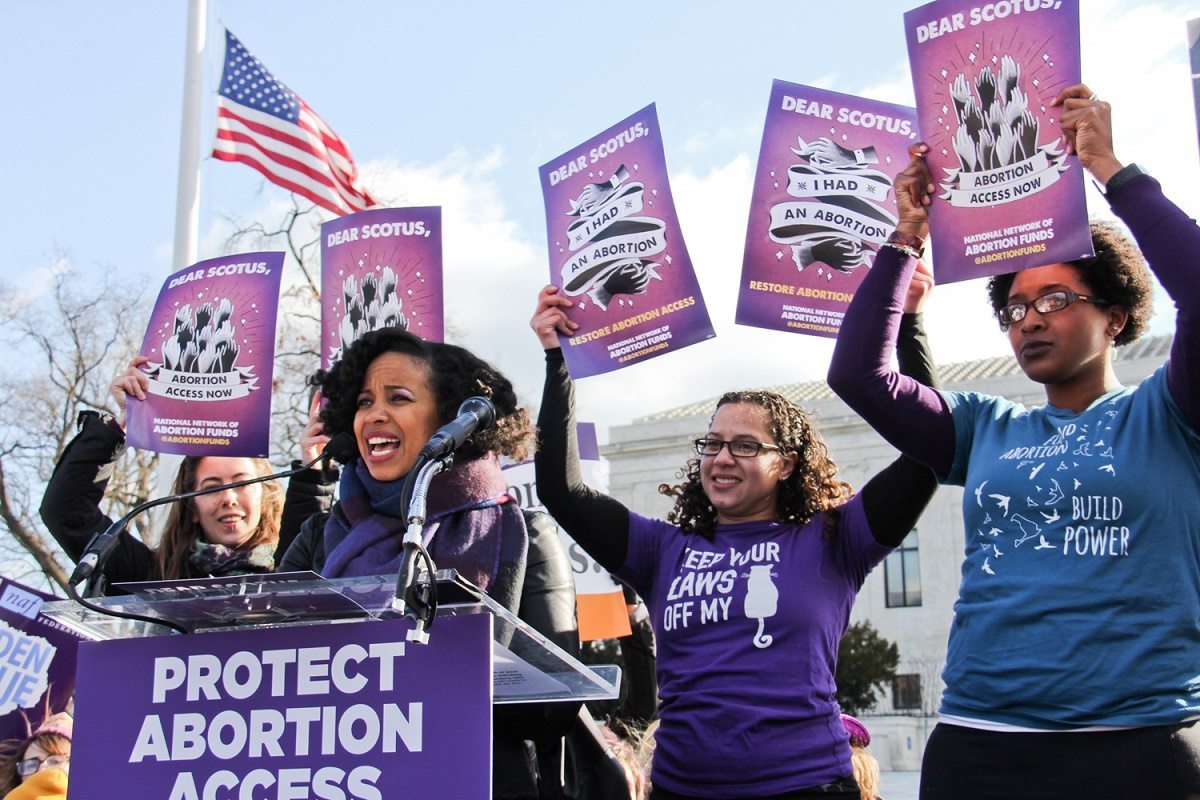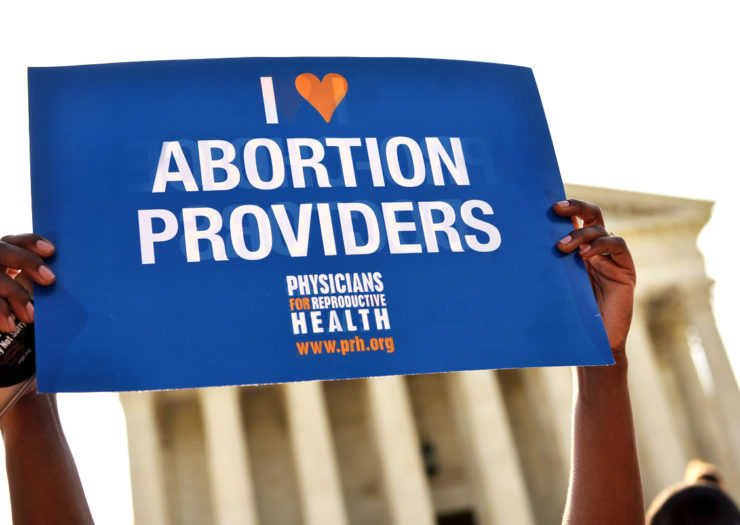
Ahead of National Day of Appreciation for Abortion Providers on March 10, we at Rewire.News wanted to spotlight abortion providers who make abortion care possible. These are the people who open clinics, fundraise to keep them open, physically protect patients and other providers, and yes, perform medication and surgical abortions.
 MANDEL NGAN/AFP/Getty Images

“We show up every day for our patients because we know that when people are able to make their own decisions about if, when, and how they create families, we build stronger, healthier, and happier communities,” said one development director of an abortion clinic.

There are myriad paths to reproductive health, rights, and justice work. For AJ Haynes, it involved “margaritas and a cover band, as any good story should.”

Haynes, a counselor for the Hope Medical Group for Women in Shreveport, Louisiana, explained to Rewire.News on Tuesday that about ten years ago, she had a cover band to help pay bills as she worked toward a bachelor of arts in English and communications. At the time, Hope’s late founder and clinic owner, Robin Rothrock, had a Christmas party every year. This particular year, Rothrock wanted to have a band. “And so we played at the party,” Haynes said. “Afterward, I was just hanging out and having margaritas with Robin. I don’t even know what we were talking about … [But] like you do over margaritas, you have a come to Jesus with yourself, so I was like, ‘I need a job, more jobs, because I’m broke.’”

Rothrock responded: “Do you want to come and work for the clinic?’”

After Haynes said yes, Rothrock explained that Hope is an abortion clinic. She asked Haynes what her thoughts were on abortion. “I had never thought about it before, but my response was: ‘I believe that women should have dominion over their bodies.’ And that was that,” Haynes said. She started working there the Monday after the Christmas party.

“I don’t know what other people’s processes are in coming to this work, but it was pretty A + B = C to me,” she said.

Haynes explained to Rewire.News that growing up, she received a comprehensive sex education from the women who raised her. “There was never any guilt or shame or stigma around sex. It was always a matter of health and agency, in that no—in my case—no man should tell me what to do with my body, ever, and that pleasure is OK; we get to celebrate our bodies.”

“Because I was raised that way, it was a very easy sell on abortion care: The ultimate expression of freedom of our bodies is having the ability to have access to things that we need to make choices,” said Haynes.

Ahead of National Day of Appreciation for Abortion Providers on March 10, we at Rewire.News wanted to spotlight people like Haynes who make abortion care possible. These are the people who escort patients from their cars to the clinic’s front door across a parking lot or sidewalk that is often crowded with anti-abortion protesters, and who take calls from prospective patients whomay have to wait a week or more for an appointment in one of the six states with only one clinic left due to restrictive anti-choice laws. These are also the people who open clinics, fundraise to keep them open, physically protect patients and other providers, and yes, perform medication and surgical abortions.

Specifically, we wanted to hear from them about what they wanted others to know about their work and why they provide abortion care. Here are their responses, lightly edited for clarity.


Name: Andrea Ferrigno, corporate vice president
Clinic Location: Whole Woman’s Health, an independent abortion provider with locations in Texas, Maryland, Minnesota, Illinois, and Virginia

“Being an abortion provider is what allows me to fulfill my mission to contribute whatever little I can to make someone’s world or day better. Being able to have open, honest conversations about the complexities and stigma surrounding abortion is what keeps me grounded. Hearing the stories our patients share with us—stories of resilience, deep senses of responsibility, and love for themselves, their dreams, their current children, and future families—is what has made this work my mission in life, what has helped create my vision for what health care should look like, and what a just world should look like.”

“The things I want the world to know about abortion providers and the people that have abortions I have already said. What I’d like to do today is invite people to get to know abortion providers and to open their minds and hearts to hear from the people who are willing to share their abortion experiences.”


Name: Katie Quiñonez, development director
Clinic Location: Women’s Health Center of West Virginia in Charleston

“I work as an abortion provider because I believe this is the most important work there is. I have had two abortions in my life, and the experiences had a profound effect on me. My abortions were opportunities for me to take control of my life and create the future I wanted for myself. I am truly the person I am today because of my abortions. Abortion is a very normal part of many people’s reproductive lives, and I am honored to work alongside my colleagues to ensure our patients receive quality, compassionate health care free of judgement and shame.”

“I want the world to know that abortion providers are heroes. Period. We work tirelessly to ensure that people are able to make the best decisions for their health, their lives, and their futures. We face harassment and intimidation on a regular basis, but we will not be deterred. We show up every day for our patients because we know that when people are able to make their own decisions about if, when, and how they create families, we build stronger, healthier, and happier communities.”


Name: Jamila Perritt, MD MPH FACOG
Clinic Location: Maryland and Washington, D.C.

“The decision to have a baby or not, is one of the most monumental that any family can make. It changes EVERYTHING. For those who are fortunate enough, it can mean unparalleled joy and excitement for the future, but for others it can be just one more thing that guarantees a life of poverty, want, and abuse. This right should not be shrouded in secrecy or veiled in shame. It should not be debated in the halls of Congress or used a tool for political gain. My job allows me to be an agent of change for each person I care for and care about. The ability to control one’s own fertility means planning, preparing, deciding for yourself. I do this work because I know how important it is for someone to have a say-so in the direction their life is headed. I do this because it matters. I do this because it’s important. How could I not?”

“Abortion providers are activists, advocates, parents, healers, and dreamers. We are united in our belief in agency, autonomy, and self-determination. We care for our mothers, our sisters, and our friends. We care for our neighbors, our co-workers, our daughters. We are united in our work and share in the privilege and honoring of caring for those who need us. This work is an honor and a privilege.”


Name: Tammi Kromenaker, director
Clinic Location: Red River Women’s Clinic in Fargo, North Dakota

“I do this work because of the women we serve. They deserve the highest quality care and we strive every day, even in this very hostile, red state to provide that. It is an honor to be a part of their reproductive health care.”

“Abortion providers are just like our patients; we are your sisters, your mothers, your friends, your neighbors. We care deeply about the patients we serve and the teams we work with. We are on the front lines ensuring bodily autonomy and dignified abortion care.”


Name: Colleen McNicholas, DO MSCI FACOG
Clinic Location: St. Louis, Missouri; Wichita, Kansas; Oklahoma City, Oklahoma; Columbia, Missouri

“As an OB-GYN, I believe that it is both my moral and ethical responsibility to provide abortion care—a service that one in four women will need in their life. As a woman, I am acutely aware of the impact of gender inequity. Being able to decide if one wants to parent and if so, when to do so, is fundamental to people being able to dream of an education, career, and family life. As a mother, I have had the honor of knowing the great joy but also the terrible pain that can come with parenting. The magnitude of the responsibility of a decision to parent can only be understood by the person making it—and because of this, I strongly believe the only person qualified to make the decision is the pregnant person in the context of their specific life and social circumstances.”

“Abortion providers are some of the most dedicated and empathetic clinicians I have known. They so deeply care for their patients and above all value the opportunity to help them live their best lives based on their values.”


Name: AJ Haynes, counselor
Clinic Location: Hope Medical Group for Women in Shreveport, Louisiana

“I feel like my work in abortion care is a way to honor the women that made sacrifices for me to be able to have the vantage points that I have as an artist. I am a counselor, but I’m also in a touring band. We’re getting ready to release a record later this year! So the clinic has at once been a place for me to discover my voice to celebrate my body and other people’s bodies, and a way for me to pay my bills to facilitate me continuing to be an artist, and my art is informed by my experience. And there is no way to draw lines there. Everything about my art informs how I treat my patients, and everything about how I treat my patients and what I learn informs my art. Working in abortion care is just another way for me to say ‘thank you’; it’s an expression of gratitude to all of the people who make these sacrifices.”

“I want people to know that we are already part of their community whether we’re accepted or not. We provide the highest quality, highest caliber of patient care, and we do it with love and compassion. And we will continue to do it, even in this climate under the amount of scrutiny and bureaucratic, bullshit red tape, and stigma and fear that is part of so much of our culture; we’re not going anywhere.”

“We’re whole human beings, trying to help other human beings be whole and get free. We’re seeing people in their most vulnerable state, and we’re just here to help them become stronger—whichever decision they choose.”

“[I just know] this is where I’m supposed to be in this life at this time. It is challenging in ways that keep me up at night, but I just have to remember that I have to take care of my body. We can’t be out here celebrating other people’s bodies and not our own.”

Kat Jercich contributed to this reporting.

Source: https://rewirenewsgroup.com/article/2019/03/08/this-abortion-provider-appreciation-day-get-to-know-the-people-who-make-abortion-care-possible/?fbclid=IwAR2pY-sRnitDT2FMSog0ERfLDwtAzh8mBitNZ6fFzGcg-8lJb4ih5cAusGc

WARSAW (Reuters) – Poles took to the streets on Monday to mark International Women’s Day, in demonstrations around the country that took on added significance months after a constitutional court banned almost all abortions.

The October ruling, which took effect in January, unleashed a wave of protests that has morphed into broader anger at the government, particularly among young people. Recent protests have been much smaller, but the ruling party’s ratings in most opinion polls have slipped to around 30% from more than 40% in August.

In Warsaw, several dozen protesters brandishing placards with slogans such as “I am a feminist warrior” gathered in the city centre, where they were outnumbered by a heavy police presence.

Previous protests organised by the Women’s Strike movement, which opposes the tightening of restrictions regarding abortion, have been marred by violence, with the police criticised for heavy-handed tactics.

“It is difficult to say anything positive about Women’s Day today. We are at war and all I can hope for is that we will win the war,” Klementyna Suchanow, co-founder of the Women’s Strike told Reuters before the demonstration began.

“Women’s Day in 2021 has a specific flavour,” she said. “After the abortion regulations were tightened, this holiday takes on the significance of a battle, just like in the beginning when it was first established, over a 100 years ago.”

As police formed a cordon around the protestors, speech therapist Aleksandra Gajek, 24, called it an intimidation tactic. “The number of police is intended to scare us and force us to stop fighting for our rights,” she told Reuters.

The police was trying to keep traffic moving, spokesman Sylwester Marczak said by phone. “The actions of the police are determined by the blocking of traffic on one of the most important roundabouts in Warsaw.”

Source: https://www.reuters.com/article/idUSKBN2B029T?fbclid=IwAR3nrofKl2SAOyP3eALdzVaCS2-iFK4j0zOvZqrMXyl-k-ejYxjPLzl6YCU

Attorney-General Vickie Chapman said the passage of the legislation was a “historic day for the women of South Australia”. Source: AAP

Abortion advocates have welcomed the passage of laws to decriminalise the procedure in South Australia.

South Australia is the latest Australian jurisdiction to formally decriminalise abortion, after the state’s upper house ticked off new laws.

The passage of the Termination of Pregnancy Bill on Tuesday came after the lower house in February passed the legislation 29 votes to 15.

It was then sent back to the upper house for final approval, which has now occurred.

Under the changes, abortion will be treated as a healthcare issue, not a criminal one, in line with other states including Victoria, Queensland and NSW.

It can be performed by one medical practitioner up to 22 weeks and six days gestation.

After that time, a medical practitioner can only perform an abortion if they consult with another practitioner and if both are of the view that the procedure is medically appropriate.

Those circumstances could include if a life is at risk, if there’s a serious foetal anomaly or a serious risk to a patient’s physical or mental health.

‘Historic day’

Attorney-General Vickie Chapman said the passage of the legislation was a “historic day for the women of South Australia”.

“It’s been a long and, at times, ugly journey, but finally we have modern termination of pregnancy laws, which make abortion a health issue, not a criminal one,” she said.

“This legislation makes explicit the higher standard of medical care and decision making that already exists in South Australia.”

Advocacy group Fair Agenda said the bill was an important step towards ensuring everyone could access the healthcare they needed, when they needed it and where they needed it.

“A patient might need to end a pregnancy for any number of deeply complex and personal reasons,” spokeswoman Renee Carr said.

The bill was subject to a conscience vote in both houses with MPs opposed to the legislation successfully securing a number of amendments.

These included a ban on sex-selective abortion and a requirement every patient be provided with information about counselling, regardless of their situation.

While opponents to the legislation remained concerned with provisions allowing for late-term procedures.

The Human Rights Law Centre said the passage of the bill in SA means only Western Australia still uses criminal law to regulate abortion.

“It is time for the Parliament of Western Australia to follow in the footsteps of South Australia and bring their laws into line with every other jurisdiction in the country by removing all barriers to timely reproductive healthcare,” spokeswoman Monique Hurley said.

Source: https://www.sbs.com.au/news/historic-day-for-women-as-abortion-officially-decriminalised-in-south-australia?fbclid=IwAR3Fg9v37RYqlQGGFa5geCcjlodFQYKs7uqIV7pQeYD0s-Idlu_m3chfyP4

Yamani Hernandez will be departing as executive director of the National Network of Abortion Funds, which is made up of 80 independent organizations that work to remove barriers to abortion care.
 Courtesy of National Network of Abortion Funds

After announcing Friday she will be stepping down as head of the National Network of Abortion Funds in 2022, Yamani Hernandez reflects on her legacy.

In 2015, Yamani Hernandez earned trailblazer status when she became the first Black executive to head the National Network of Abortion Funds (NNAF), a collection of more than 80 independent organizations that work to remove barriers to abortion care. At the time she assumed the role, NNAF had a budget of $2.3 million and a staff of 12; under Hernandez’s leadership, the organization has grown fivefold, driving greater awareness of the vital work done by abortion funds.

Next year, however, Hernandez will be leaving NNAF, which she calls “the biggest, best thing I’ve ever been a part of.” In this interview, which has been condensed and lightly edited for clarity, Hernandez shares the thinking behind her decision, the lessons she’s learned, and her hopes for the next generation.

Rewire News Group: Let’s start with the obvious. Why step down now?

Yamani Hernandez: There’s a shift happening at the organization—an intentional shift that we’ve been building toward and that I’m excited about. We’ve been preparing for a more restricted policy environment, and so we’ve set out the last year or so to scale abortion funds so they have a lot more of the resources they need to get people care. Right now, trying to get funds for an abortion, it’s like crowdfunding, where you have to call multiple places and piece the funding together. We have a vision that abortion funds will be fully staffed and can say yes to every caller with fewer hassles. There’s a huge opportunity for someone to lean into this next chapter of what a scaled network looks like. It’s time to pass the mic on to that person.

That person has big shoes to fill! You are a groundbreaker in abortion advocacy leadership. Can you talk about what that distinction means to you?

YH: When you’re in the role it’s hard to think about that; you’re just getting it done and doing the best you can! But I certainly knew the significance of it, and how much organizational change was going to have to happen within a predominantly white environment, both within the organization and the network [of abortion funds]. And it’s interesting: Any kind of “first Black leader”—or any black leader in a setting that is not an all-Black or all-POC environment—will say that’s an extra aspect of the job. You have your regular job duties and then this huge culture-change piece that’s a long-term project. Because culture change doesn’t get solved with one leadership change. But it’s certainly a start.

Talk more about the added pressure you felt as a Black leader. Because so often we’re asking one person to carry the weight for an entire group of people, which can be not only unfair, but exhausting.

YH: I have heard from a lot of Black leaders and people in this movement who feel like me being in this position has meant something to them. I’m really touched by that. But it’s also a lot of pressure to make sure you’re showing up in the ways people expect you to. One thing I say all the time is just because you hire a Black person doesn’t mean that person is a racial justice equity expert or trainer, but you still get, “Oh, you’re Black—so these bad things will never happen.”

And I think we can sort of create this mythology around having a Black leader, giving that person almost superheroic traits, and that part is really hard because when you don’t do something perfectly it feels like you’ve let someone down. There’s a thing happening right now that’s like, “Let Black women lead everything,” and I think that’s beautiful on the one hand—but on the other, I think that putting people on pedestals is a very dangerous thing, because falling off a pedestal is very painful, for everybody. So it’s important to recognize the humanity of leaders.

Especially when it seems like there are new, unprecedented challenges cropping up all the time, like COVID-19.

YH: Which is why it’s important to recognize that leaders are human beings, too! I’m a parent, and I’ve been working less since online school started because I can’t do that and work at the same time. I’ve had to acknowledge that I’ve been more distant because I’ve been “mama”! And then there are other things, too, that happen to us as leaders of abortion organizations that are just brutal—people saying insidious things about you online, that your children see. This work comes at a cost. It’s a huge opportunity, and I’m so proud, but it’s important to recognize the sacrifices people make in order to contribute to the movement.

What are some of the big priorities NNAF’s new leader will need to tackle?

YH: We need to close the gap between people who call abortion funds and the people who answer those calls—we want people who call to see themselves in the people answering the phone. We don’t think of this work as charity; maybe decades ago that was the prevailing value behind it, the idea of “helping” people, but we see this work differently now. And that is: People should not feel shame and stigma when calling for help, because what they’re experiencing is an injustice. What they’re experiencing is the government refusing to do its job to help and support the people who live and work in this country.

And so who would you like to see step into your role?

YH: My ultimate dream is that someone who called an abortion fund would lead the network. Because it would be the ultimate example of this thing we say all the time: building the power of people who are most impacted.

When you think back on the goals you set for yourself coming into this job, how would you evaluate your performance?

YH: I wanted to organize us as a national organization with expertise and strategies in each of the areas our members needed support in—and we have departments now! A membership department, a communications department, a systems department to handle tech assistance—our members are really getting the value of being part of a network. I’m also proud to say that one-third of our budget goes to our members, which is a testament to our values: We’re working hard to pass through our resources and make our members stronger, which is really our purpose. Then there’s the change we’ve seen in the value people place on abortion funds. There’s less talking about them as scrappy organizations and more recognition of their expertise and strategy on the ground, as important touchpoints with getting care, and with their local policy work. We support the All* Above All campaign to get cities and states voting to fund abortion, and I’m proud to see that growth. In 2019, when the Alabama abortion bans happened, that was a huge cultural moment for us; you had Bernie Sanders and Kamala Harris and Hillary Clinton calling to get people to support abortion funds, understanding that there’s this robust ecosystem of organizations that make up abortion care and access.

Looking back, are there any clear lessons you’ve learned—or mistakes you think folks should avoid repeating in the future?

YH: Investing solely in policy solutions has not worked. Like right now, we’re so excited for how close we are to repealing the Hyde Amendment, but once Hyde is repealed there are still a ton of barriers to abortion access. The pandemic has been really helpful for people understanding that things like mutual aid and community care need resourcing. We can’t prioritize policy over getting people care; it has to be a both/and strategy.

You’re raising two children. When you think about the world they’ll inherit, what kind of reproductive and sexual health-care future would you like them to have?

YH: What a beautiful question! I hope they’re inheriting a world that has less hassle and hustle and pain associated with their sexuality, and, more broadly, with their health care. That there’s just a ton less stigma and shame. When I think about generational change, comprehensive sexual education is an underfunded, underrecognized vehicle to some of the things we want most for society. When you hear lawmakers talk about abortion, or sexual assault, or pregnancy, the things they say are so out of touch with reality—you know they haven’t taken sex ed or just don’t know how bodies work! There is so much ignorance—some it is willful, and some of it lying—but a lot of people don’t know because they weren’t taught or they were taught in abstinence-only settings. I’m hoping my grandchildren get to grow up in a world that has sex ed as a normal part of school, and that parents feel more empowered and knowledgeable talking about it, and that there’s less violence and harm around sex and sexuality. More ease. More peace.

Source: https://rewirenewsgroup.com/article/2021/03/08/what-its-like-being-a-black-leader-in-the-abortion-movement/

BOISE, Idaho (AP) — The House on Tuesday passed legislation that would halt public funding to any entities that advise women about their abortion options.

Lawmakers voted 55-14 to send to the Senate the bill supporters say would stop some women from obtaining abortions.

The bill would bar all public funding to any entity — including schools, public health departments and other health care providers — if anyone associated with the entity provides an abortion, assists someone in getting an abortion, or even counsels a patient that abortion is an option they could seek out. It allows exceptions for hospitals, cases where the mother’s life is in danger and cases involving Medicaid transactions, which are governed by federal law.

A federal law called the Hyde Amendment already bans federal dollars from being used for abortion services, with small exceptions. The bill would also stop public money going to other services like contraception or cancer screenings if the provider also offers abortion counseling.

“The bill defunds abortion so your tax dollars and mine are not used directly or indirectly for any type of abortion or referral for such services,” said Republican Rep. Bruce Skaug, one of the bill’s sponsors. “If I could stop Medicaid funds from going to abortion, I would.”

Opponents said it would stop many women from getting cancer screenings, birth control and other health care by shutting down providers like Planned Parenthood.

Some lawmakers opposed the legislation because it didn’t outright ban all abortions.

Democratic Rep. Chris Mathias opposed the legislation, saying he was concerned the bill denied healthcare coverage to thousands of Idaho residents because the facilities they use provide an occasional, constitutionally protected abortion.

“Idaho is a state with healthcare shortages,” he said. “We don’t have enough primary care physicians. We don’t have enough nurses. We don’t have enough hospitals in the right places. We don’t have enough beds. We don’t have enough people with health insurance or enough health insurance to get them the adequate care that they need.”

Source: https://apnews.com/article/legislation-medicaid-bills-idaho-laws-fcf95e7d4b6d38acaab579db76b72491?fbclid=IwAR3qabvYuxcMN8QPzmHjPb8hS4eKP0tz82yAEyBOP_vqQDHYFhPVfP70qR8

The Arkansas Senate has approved a measure banning nearly all abortions in the state, despite objections to it not allowing the procedure for victims of rape or incest

LITTLE ROCK, Ark. — The Arkansas Senate on Monday approved a measure banning nearly all abortions in the state, despite objections to the ban not including exceptions for rape or incest.

The majority-Republican Senate approved the ban on a 27-7 vote, sending the measure to the majority-GOP House. Arkansas is one of 13 states where outright abortion bans have been proposed this year, according to the Guttmacher Institute, a research group that supports abortion rights.

The bans are being pushed by Republicans, encouraged by former President Donald Trump’s appointments to the U.S. Supreme Court, who say it’s time to test where the high court stands on overturning the 1973 Roe v Wade decision that legalized abortion nationwide.

“Arkansas is asking and pleading that the U.S. Supreme Court take a look at this and make a decision that once again allows the states to protect human life,” Republican Sen. Jason Rapert, the bill’s sponsor, said before the vote.

The bill advanced days after South Carolina’s governor signed into law a measure banning most abortions. Planned Parenthood immediately sued challenging the measure.

Arkansas’ bill only excludes abortions to save the life of the mother in a medical emergency, and supporters of the measure rejected calls from supporters of past anti-abortion restrictions to include rape or incest.

“In this bill, we’re going to tell a 12-year-old rape victim that because we believe so strongly in the right to life, she’s going to have to carry that baby to term regardless of the consequences it does to her or her family or her life,” Sen. Jim Hendren, who left the Republican Party last week, said. Hendren effectively abstained from voting on the measure, casting a “present” vote rather than voting yes or no.

Republican Sen. Missy Irvin said the legislation was “disenfranchising people that are pro-life that believe rape and incest should be a part of this bill because their loved ones were raped.” Irvin, however, ultimately voted for the measure.

The bill passed on mostly party lines, with Sen. Larry Teague the only Democrat voting for it and Senate President Jimmy Hickey the only Republican opposing it.

Republican Gov. Asa Hutchinson has also said he has concerns about the bill, citing a letter written by the attorney for National Right to Life that said the chances of the legislation leading to overturning Roe v Wade were “very small and remote.” National Right to Life has not taken a position on the bill, though its state affiliate supports the measure.

Hutchinson on Monday stopped short of saying whether he supports the bill, but said he backs exceptions for rape and incest.

“It makes sense to add the exceptions because if you are going to do a direct challenge to Roe v. Wade, then it is important to have exceptions that the public generally supports,” he said in a statement.

Abortion rights supporters said they’re prepared to challenge Arkansas’ measure if it becomes law. Democratic opponents warned it could lead to women pursuing more dangerous methods to end their pregnancies.

“It’s bad enough, but it’s far worse if you won’t put the (rape and incest exceptions) on the bill,” Democratic Sen. Joyce Elliott said.

Source: https://abcnews.go.com/US/wireStory/arkansas-senate-approves-bill-banning-abortions-76052320?fbclid=IwAR3XFwWes3iGK87iSAEgEburUgJCZItLFOgIKUmKKpba6BnAIJa8p1IrNvo

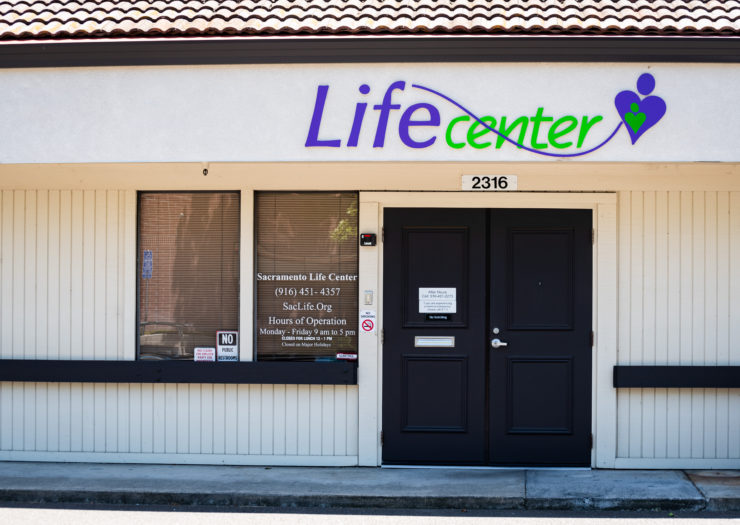
Crisis pregnancy centers are fake abortion clinics set up by anti-abortion extremists to deceive people seeking an abortion into not having them.

There are more than three times the number of crisis pregnancy centers than there are abortion providers, according to the Guttmacher Institute.
 Shutterstock

Picture this: You’re pregnant, and you need an abortion. Maybe you’re not ready to be a parent; maybe you have a medical condition that makes pregnancy dangerous for you; maybe you already have the size family you want; maybe you just don’t want to be pregnant.

Whatever the reason is: It’s valid. So you Google and find a clinic near you so you can have an abortion. You find one that says they offer pregnancy services, so you call to get more information and they tell you to come in. When you pull into the parking lot, you notice it’s right next door to another abortion clinic—which you find odd, but the website seemed legitimate and the person on the phone was warm and disarming so you go ahead with your visit.

But once inside, things start to feel off. You’re ushered through a series of rooms, handed leaflets, and shown videos about the risks of abortion and the mental toll it will take. You’re given a “free” ultrasound to see your fetus; despite never asking for one, it doesn’t really feel like a choice. Finally, you’re taken to a room filled with baby clothes and other items new parents would stock up on.

It’s too late now, but you’re realizing this isn’t an abortion clinic at all. It’s a “crisis pregnancy center.”

CPCs are fake abortion clinics set up by anti-abortion extremists to trick people seeking abortion into not having them. They often set up shop adjacent to real clinics to really up the ante on the deceit. These fake clinics force patients to have ultrasounds and sit through lectures on how abortion gives you cancer and how it will murder your soul and rob you of your ability to have more children and how it will anger god—you know, the usual.

There are more than 2,500 of these hellholes around the country, which is more than three times the number of abortion providers, according to the Guttmacher Institute. Many are not medical facilities and there are no uniform licensing requirements. Oh, and they’re taxpayer funded. Tens of millions of dollars from federally funded abstinence education programs were funneled directly into CPCs under President George W. Bush; most recently, CPCs received at least $4 million from the government’s pandemic bailout.The unfortunate truth is deceptive pregnancy centers have the law on their side.

And if you’re reading this and thinking, um… what the fuck? Well, you’re right. CPCs are more than just a money-draining nuisance—for many patients, a CPC can delay access to actually having an abortion at, you know, a real clinic. The federal money these fake clinics receive is a blatant affront to the separation of church and state as, unsurprisingly, many are religiously affiliated. Not to mention, they are part of a grander scheme of anti-abortion culture that perpetuates violence against patients and providers. And they do it all under the guise of “pregnancy counseling” or some other vague phrase they know will mislead people into thinking they actually provide care.

For what it’s worth, some lawmakers are trying to change this.

Connecticut lawmakers on the Public Health Committee voted Monday to send a bill to the state senate floor that would allow CPCs to be sued for deceptive advertising by the state’s attorney general. Opponents of the bill say the state’s Unfair Trade Practices Act would cover any actionable behavior by CPCs, but their logic becomes transparently flawed when you consider they also argued the nature of the bill was “defamatory” in its treatment of CPCs.

“Rep. Jillian Gilchrest, D-West Hartford, a chief proponent of the bill, recalled at least two doctors who said patients of theirs had been deceived in a pregnancy center,” the Connecticut Post reported. Gilchrest went on to say:

There’s a lot of shame placed on women. A lot of blame placed on women. Women are actually physically sometimes under attack when seeking abortion in our state and country. To me, this legislation is about creating uniformity across the state and ensuring that regardless of the website that a woman visits, or the crisis pregnancy center she walks into, she receives medically accurate information.

Sounds reasonable enough, which raises the question: If the only aim of legislation like this is to ensure patients receive medically accurate information, doesn’t the opposition have to concede its comfort with or outright advocacy for lying to patients? For providing information that’s misleading and anti-science?

The unfortunate truth is deceptive pregnancy centers have the law on their side. In 2018, the U.S. Supreme Court ruled that a California law requiring these fake clinics to post disclosures about what they really do violated the First Amendment. This just reinforces the same old hypocritical playbook we see from anti-abortion folks all the time: crying “First Amendment violation” because they can’t scream at patients walking into clinics—or lie to them to get care.

But while the information they peddle might be fake, the consequences are very, very real.

Source: https://rewirenewsgroup.com/article/2021/02/27/taxpayer-funding-for-lying-the-crisis-pregnancy-center-story/

COLUMBUS – Ohio’s “heartbeat bill,” one of the nation’s most restrictive abortion bans, never took effect. 

But 1 in 10 Ohio women thought abortion was illegal in the state anyway, according to a new study published in the American Journal of Obstetrics and Gynecology.

While most Ohio women, about 64%, understood abortions are legal in Ohio, another 26.2% weren’t sure and 9.8% incorrectly believed all abortions were illegal in the state, according to an eight-month review of the Ohio Survey of Women led by Ohio State University professor of epidemiology Maria Gallo.

A disproportionate number of women from certain demographics incorrectly believed abortion was illegal in Ohio: those who were younger, of lower socioeconomic status, unmarried or Black.

That’s a problem because these women already face structural barriers to accessing health care and the confusion surrounding whether abortion was legal didn’t help, Gallo said. 

“They are the people who get hardest hit by every misinformation campaign and every health disparity,” said Kellie Copeland, executive director of NARAL Pro-Choice Ohio. “It’s inexcusable.”

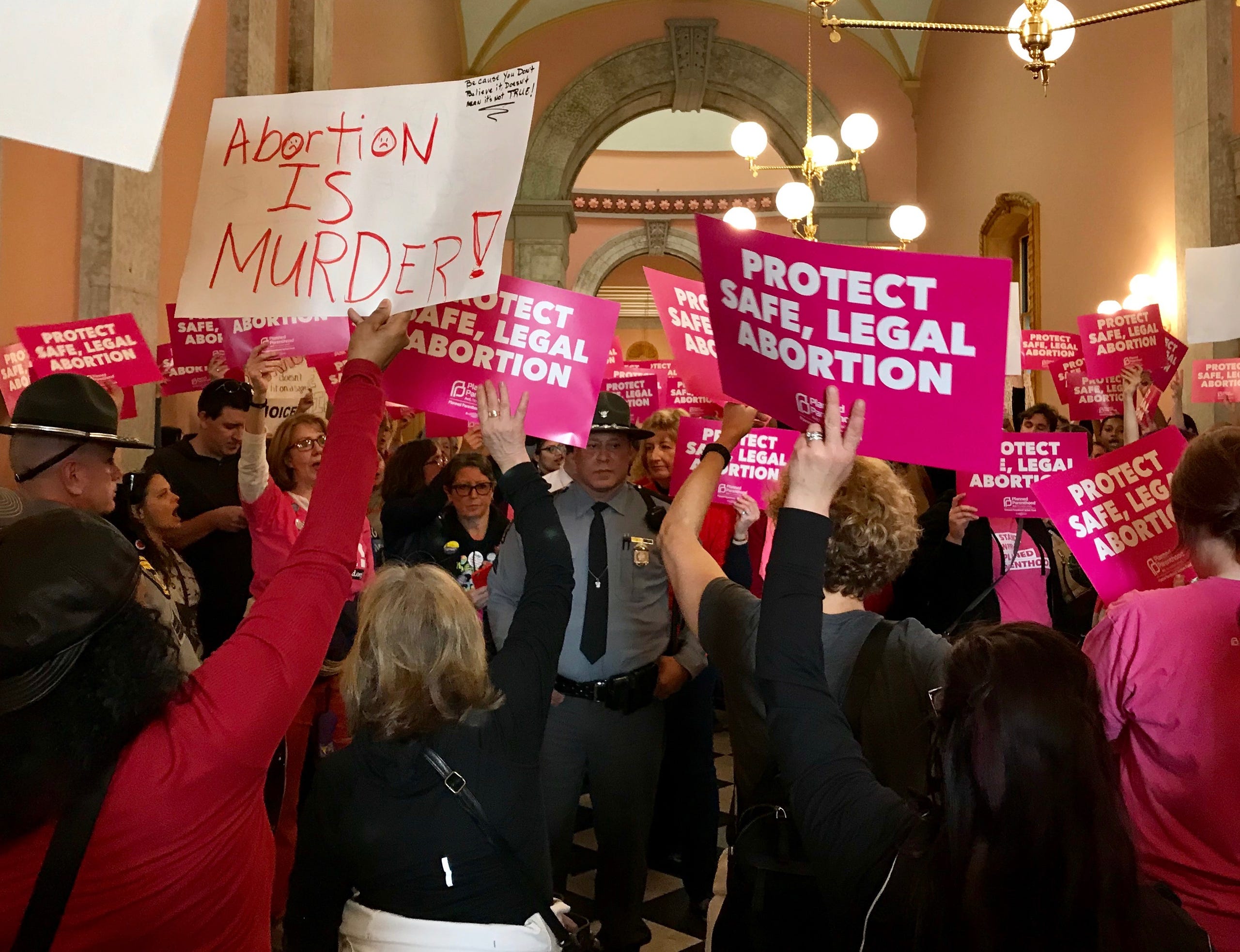
People rally to support and oppose the "heartbeat bill" outside the Ohio House of Representatives chamber at the Ohio Statehouse on April, 10, 2019.

A fight over the heartbeat bill led to mass confusion over whether abortion was legal in Ohio.  JACKIE BORCHARDT/CINCINNATI ENQUIRER

Current Ohio law bans abortions after 20 weeks gestation. Other laws to restrict access to abortions, passed by the state’s GOP-controlled Legislature, are tied up in legal battles. Those include a ban on abortions after a diagnosis of Down syndrome and the so-called “heartbeat bill,” which would ban abortions as early as six weeks gestation.

Between October 2018 and June 2019, confusion about the legality of abortion in Ohio increased, growing from 4.5% of women believing it was illegal to 15.9%, according to the study. 

During that time, Ohio lawmakers debated and eventually passed the heartbeat bill, which would penalize doctors who perform abortions after a fetal heartbeat is detected. The law has an exception to protect the life of the mother but not rape or incest. The changes were later blocked by a federal judge who issued a preliminary injunction.

The flurry of activity surrounding the bill, and the widespread media coverage of that activity, was confusing for some Ohio women, Gallo said. “It’s a confusing process if you weren’t following it very closely.” 

Ohio Right to Life backed the heartbeat bill and other restrictions on abortion during that time. Spokeswoman Allie Fraizer said the truth is her organization’s greatest asset. 

“If people think that abortion is illegal in Ohio, it hampers our ability to have conversations about how much work still needs to be done,” spokeswoman Allie Frazier said. “This is why we communicate daily with Ohioans about the status of our state’s pro-life legislation and impart with urgency the need to protect tiny babies with beating hearts from the violence of abortion.” 

Copeland contended that abortion opponents intentionally muddy the waters to confuse Ohio women. 

“One of the goals of anti-abortion groups and anti-abortion lawmakers is obviously to eliminate abortion access,” she said. “One of their stock and trade tools in that is creating confusion about the legality of abortion.”

Ultimately, Gallo said there’s a takeaway for doctors in Ohio: “Healthcare providers shouldn’t assume that their patients know that abortion remains legal.”

Source: https://eu.cincinnati.com/story/news/politics/2021/02/18/amid-heartbeat-bill-fight-ohio-women-were-confused-legality-abortion/6779262002/

The only way for abortion opponents to win is to keep Republicans in office—and they know it.

Susan B. Anthony List is teaming up with Ken Cuccinelli to cater to conservative white voters’ unfounded fears of disenfranchisement.
 Michael M. Santiago/Getty Images

One of the greatest tricks that Trump has pulled was convincing white conservatives that they were being disenfranchised by Black voters. It’s a neat trick, and actually rather clever, even though he did not mean it to be. (If there’s one word I would use to describe Trump, clever is not it.) 

Still, conservative white people, most of whom I would bet have never had to worry about their right to vote being stripped from them, are now suddenly very concerned about election integrity. And wouldn’t you know it, Ken Cuccinelli, who has been whining about nonexistent voter fraud since before he lost the 2013 Virginia gubernatorial race to Democrat Terry McAuliffe, is here to help. 

Cuccinelli has a new Election Transparency Initiative and, with the help of Susan B. Anthony List and American Principles Project, is mounting a challenge to kill HR 1, the greatest proposed legislative overhaul of voting rights in the United States since the Voting Rights Act in 1965. HR 1, dubbed the For the People Act, would require states to enact automatic voter registration so that, for example, when a person goes to the DMV to get a driver’s license they are automatically registered to vote. It would also require same-day registration, promote internet registration, put in place mechanisms to deal with voter intimidation, and increase transparency when it comes to campaign finance, among myriad other reforms. 

Make no mistake: White Republican voters’ fear of being disenfranchised are nonsense. There is no law targeting white voters qua white voters for disenfranchisement. A white voter may be poor or a student or a senior or live in a rural area, and so they may be affected by voter suppression—laws that require photo ID or laws that cancel your vote if you submit your ballot in the wrong precinct or laws that cancel your voter registration if you don’t exercise your right to vote for an election cycle or two. But a white voter will not be targeted for suppression efforts because they plan to vote for Republican candidates. You’re not going to find any case law asserting that white voters were “targeted with surgical precision.” (That’s what the Fourth Circuit ruled with respect to Black voters when it struck down North Carolina’s voter ID law in 2016.)

So why is the Susan B. Anthony List, one of the most powerful anti-abortion lobbying groups in the country, teaming up with Ken Cuccinelli, the boy who cried election fraud, and other socially conservative groups to kill the For the People Act? 

Because preventing HR 1 from becoming law is anti-abortion activists’ last stand. Their 47-year long crusade to criminalize abortion and their efforts to cobble together a political constituency based on policing pregnant people could grind to a halt if they were forced to play by the same electoral rules as everyone else. Harnessing conservatives’ baseless fear about election integrity is the best way forward when it comes to their forced birth agenda.

So of course anti-abortion advocates are now outing themselves as anti-democratic operatives as well.

For months leading up to the 2020 election, Trump planted the seed that he, and he alone, would win the election. Any other result was de facto invalid and evidence of widespread voter fraud, Trump claimed. And when he lost the election to Joe Biden, a large contingent of his supporters were already primed to believe that the fix was in—because they’d been told for months the fix would be in. The election was rigged! Time to storm the castle! (Which they went ahead and actually did.)  

Remarkably, Trump is still claiming he won the election in a landslide, even though he 100 percent did not; what’s even more annoying is that the media has been reporting on Republicans’ flagging trust in the integrity of U.S. elections as if Trump and his cronies didn’t purposefully cultivate that distrust beginning in 2017, when Trump’s bruised ego wouldn’t permit any belief that he lost the popular vote.   

Trump spent years lying about voter fraud—about dead people voting and “illegals” voting—so is it any surprise so many Republican voters think our election system is crap?

The funny thing is, they’re not wrong. The election system in this country is crap. The electoral college is crap. The fact that voting isn’t compulsory is crap. The fact that in California I can walk into my polling place and it only takes me  five minutes to vote while a Black woman in Georgia can expect to wait upwards of  eight hours is crap. But that’s not why red hats stormed the Capitol on January 6, leaving five people dead and a nation wondering what the fuck was going on.

Republicans have spent decades undermining the integrity of U.S. elections with false claims about voter fraud, and now they have millions of people who believe Biden stole the 2020 election. And to prevent something that never happened in the first place from ever happening again, Republicans in states across the country are passing even more strict voting laws designed to thwart the will of the people—if the will of the people doesn’t jibe with Republicans’ will. These laws will further disenfranchise already disenfranchised Black and brown voters.

None of the voting rights laws being proposed in any state will fix the voting fraud that Republicans keep complaining about. The real fraud is coming from Republicans themselves as they implement increasingly stringent restrictions that lead to thousands of Black, brown, and Indigenous voters being disenfranchised. But the new “election integrity” laws will make conservative white voters, who have been convinced that their right to vote has been stolen, feel better because these laws are intended to ensure that their candidates win. And for conservative white voters, that is the true measure of fairness in elections: It’s only fair if their candidates win. 

This sentiment was on full display when the likes of Madison Cawthorn—who looks like if Armie Hammer joined the Hitler Youth—and Marjorie Taylor Greene—who looks like a barely sentient doorknob grew hair and then started yammering incoherently about Jewish space lasers—complained that the very ballots that elected them to Congress were fraudulent only to the extent that the person who turned in that ballot voted for Joe Biden and not Donald Trump.

Yes, the electoral system is crap. And the only way to turn the crappy tide is to enact the For the People Act. The very future of democracy in this country rests on Democrats’ ability to pass HR 1 and reenfranchise the hundreds of thousands of Black and brown voters who have had their voting rights stripped from them in the wake of the Supreme Court’s demonstrably disastrous 2013 ruling in Shelby County v. Holder.

In Shelby, the Court rolled back the 1965 Voting Rights Act’s protections and permitted states, including those with long histories of voter suppression, to implement new voting laws without any outside oversight. Before Shelby, if Jim Crow County in West Racist U.S.A. wanted to pass a voting rights law that would negatively impact Black and brown voters, the lawmakers in West Racist would have to go through the Department of Justice first. But after Shelby, states were permitted to enact laws that would not have been allowed if the DOJ had any say in the matter.

HR 1 would correct a lot of the voter shenanigans that Shelby engendered over the last 8 years—in North Carolina, North Dakota, Georgia, Ohio, IndianaTexas, and elsewhere—and anti-abortion activists cannot allow that to happen. If HR 1 gets through the House and Senate and somehow slips past the 6-3 Federalist Society Supreme Court—and “somehow” is doing a lot of work here, given the apparent willingness of Clarence Thomas to permit the federal government to meddle in state elections—then it’s game over for anti-choicers. 

Anti-choicers daydream about enshrining personhood into law and tossing preggos into prison if they so much as think about getting an abortion. In their dream world, the lima bean-sized embryo in a pregnant person’s womb has the same rights as the pregnant person. (It also has thoughts about the series finale of Game of Thrones.)

 But to get to that promiseland, anti-choicers need to ensure that the very same Black and brown people whose “preborn lives” they routinely pretend to care about are stripped of their right to vote and, in so doing, of their right to determine their own destiny. 

For all of the success anti-choicers have had in winnowing down abortion access to practically nothing, their continued ability to do that depends on Republicans maintaining power at the state and federal level. And to maintain power, Republicans need to suppress Democratic votes. And the best way to suppress Democratic votes is to craft laws that claim to protect election integrity but actually do the opposite. It means enacting ostensibly race-neutral laws that disproportionately impact Black and brown people and make it harder for them to vote, while pretending that’s not what you’re doing. 

Because the fact of the matter is this: People are becoming more pro-choice. Most peope in this country do not oppose abortion. Anti-abortion activists have spent the better part of 40 years throwing everything they have, including millions of dollars, at this fight, and still people are becoming more pro-choice.

That means Susan B. Anthony List is going to do whatever it can to make sure HR 1 doesn’t become law. That means keeping Black and brown people from voting because when Black and brown people vote, they vote for Democrats. And 99.9 percent of Democrats want to expand abortion access, not shrink it.

So of course the SBA List is teaming up with Ken Cuccinelli and American Principles Project, one of those conservative think tanks that touts itself as pro-family but is really only concerned about making sure women aren’t having abortions or wearing pants in the workplace.

It’s the only way they can win.

Source: https://rewirenewsgroup.com/ablc/2021/03/02/anti-abortion-advocates-are-trying-to-keep-black-people-from-voting/

Public consultation led by the MHRA is looking for views on the potential reclassification of two pill types

The MHRA’s Dr Sarah Branch said: ‘We hope to hear from as many people and women’s groups as possible.’ Photograph: Getty Images/iStockphoto

Two types of the contraceptive pill could be sold over the counter for the first time, the government has announced.

As part of a public consultation, the Medicines and Healthcare products Regulatory Agency (MHRA) is looking for opinions on the reclassification of two progestogen-only pills.

If the medicines – Lovima 75 microgram film-coated tablets and Hana 75 microgram film-coated tablets – are reclassified, it will be the first time daily contraceptive pills will be available over the counter at a pharmacy.

At the moment, the contraceptive pill is only available on prescription following a medical consultation.

Dr Sarah Branch, director of vigilance and risk management of medicines at the MHRA, told PA Media: “Every response received will help us gain a better picture of whether people think the contraceptive pill with desogestrel [a synthetic form of progestogen] should be available over the counter. We hope to hear from as many people and women’s groups as possible.”

The proposals have been labelled a “positive step” by a consumer healthcare association.

Last year a report by a cross-party group of MPs found that many women in England were struggling to access contraceptive pills as a result of underfunding and cuts to services, which was only made worse by Covid-19.

The report warned that reduced access to contraception would affect marginalised groups the hardest, with young people possibly put off from going to see their GPs about contraceptives.Advertisement

Michelle Riddalls, chief executive of PAGB, the UK trade association that represents the manufacturers of branded over-the-counter medicines, said the body backed the the reclassification of the pills.

“The MHRA consultation represents a landmark opportunity in women’s health and one which we hope will be viewed positively,” she said.

“Both Maxwellia [a British drugmaker] and HRA Pharma [a French drugmaker] have asked the MHRA to permit the sale of their progestogen-only pill products under the supervision of a qualified pharmacist.

“As expert healthcare professionals, pharmacists are fully equipped to offer advice to anyone seeking information about over-the-counter medicines.”

She said the application to reclassify the medicines had “particular significance as they are the first to seek over-the-counter licences for any form of daily contraceptive pill, 60 years after the pill in its original form was made available via prescription on the NHS for married women only.

Source: https://www.theguardian.com/uk-news/2021/feb/12/contraceptive-pills-could-be-sold-over-counter-for-first-time-in-uk?fbclid=IwAR1VqlYOaNJSuX7KYuJcOEub2Cic79AWvmQRhNaOD7Xyef-66R_IGHIYy3g