TOPEKA, Kan. (AP) — Republicans on Friday pushed a proposed anti-abortion amendment to the Kansas Constitution through the state House, a bitter reminder of election setbacks for abortion rights Democrats on the anniversary of the U.S. Supreme Court decision legalizing abortion nationwide.
The vote was 86-38 on a measure that would overturn a 2019 Kansas Supreme Court decision that declared access to abortion a “fundamental” right under the state’s Bill of Rights. Abortion opponents had two votes more than the two-thirds majority necessary for passage, sending the proposal to the Senate, where a debate could occur as early as next week.
The measure would add language to the state constitution declaring that it grants no right to abortion and that the Legislature can regulate abortion in line with U.S. Supreme Court decisions. The measure is not a state abortion ban, but it could allow one if a more conservative U.S. Supreme Court overturned the landmark 1973 Roe v. Wade decision protecting abortion rights.
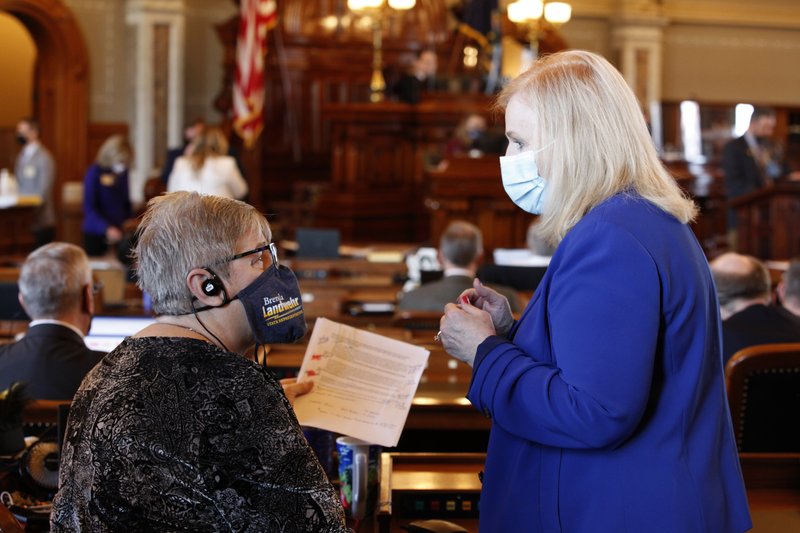
“I think it’s about as ugly as you can get,” said Rep. Annie Kuether, a Topeka Democrat who supports abortion rights.
Republicans said the timing of the debate was a coincidence, but abortion rights Democrats, particularly women, saw it as a pointed message that GOP legislators and anti-abortion groups intend to keep moving toward a state ban. A similar proposal failed last year in the House when four GOP members objected, and elections last year left the Republican supermajority more conservative.
“It’s remarkable and it shows you that Kansas, that we are a pro-life state,” said Rep. Tori Arnberger, a Republican from the central Kansas town of Great Bend, who led the anti-abortion side during the debate.
Anti-abortion lawmakers said that if the Kansas court decision stands, two decades’ worth of restrictions on abortion enacted with bipartisan support could fall in state court challenges.
The 2019 ruling put on indefinite hold a law banning a common second trimester procedure — designated as “dismemberment abortion” in its language. Special health and safety standards for abortion providers, described by them as unnecessary and burdensome, have been on hold since 2011 because of a lawsuit.
Abortion opponents also worry that also in jeopardy are a 24-hour waiting period for an abortion, a requirement that most minors seeking abortions notify their parents and rules for what providers must tell their patients.
“The people, over the last three decades, have supported very strongly reasonable regulations on the abortion industry, and they want those protected,” said Jeanne Gawdun, a lobbyist for Kansans for Life, the state’s most influential anti-abortion group.
But several Republicans said in explaining their yes votes that they would continue to push for a ban on abortion if the amendment is added to the constitution.
Freshman Republican Rep Patrick Penn, of Wichita, said his late mother, a survivor of abusive relationships, had been urged by family to abort him “in accordance with every excuse promoted by the pro-death forces.”
If the Senate also approves the measure by a two-thirds majority, it would go on the ballot in the August 2022 primary, when approval by a simple majority of voters would add it to the state constitution.
“It will almost certainly lead to an abortion ban,” said freshman Democratic Rep. Lindsay Vaugh, a Kansas City-area abortion rights supporter, noting moves for near bans in other states, including Alabama, Tennessee and West Virginia.
The timing of the statewide vote was a key issue last year, when anti-abortion groups pushed to have the measure on the ballot in the August 2020 primary.
Four Republicans voted then against that measure, joining many Democrats in arguing that the larger and broader group of voters in the November general election should decide. In Kansas since 2010, an average of 3.5 times as many Republicans as Democrats have cast ballots in primaries, and the primary electorate tends to be more partisan.
Three of those Republican dissenters retired, and another lost his GOP primary race. The GOP had a net gain of two seats in the November election, making its majority 86-38, with one independent House member.
In Friday’s vote, only Republicans backed this year’s proposal, and only Democrats and the independent House member voted no.
The failure of last year’s proposal led to an intensified focus by both anti-abortion and abortion rights groups on legislative races. They spent hundreds of thousands of dollars, sent hundreds of thousands of text messages, made tens of thousands of phone calls and knocked on thousands of doors. The national anti-abortion group Students for Life also became involved in Kansas races for the first time.
“It was, ‘This is the time to protect life,’” said Kristan Hawkins, Students for Life’s president. “We need to stand up and hold elected officials accountable, regardless of what party they’re in.”
But Kuether argued that Kansas legislators keep repeating the same decades-old “debates over controlling women” even after the U.S. elected its first female vice president, Kamala Harris. She said there’s no debate over any proposal “to deny a right to men.”
Julie Burkhart, founder and CEO of Trust Women. COURTESY PHOTO
Kansas politicians are fast-tracking two bills — HCR 5003 and SCR 1602 — which aim to severely impact women’s ability to receive safe and legal reproductive health care. The bills were introduced last week and are set to be on the House and Senate floors in the very near future.
The intent of each bill is to amend the constitution to remove the right of Kansans to personal and bodily autonomy, including the right to have an abortion. This is the first step in advancing an outright ban on all abortions and putting the government squarely in between women and their private medical decisions.
The so-called “Value Them Both” amendment is a cynical redo of last year’s failed attempt to reverse the Kansas Supreme Court’s decision in Hodes vs. Schmidt, which found that, in Kansas, women are guaranteed the same right to bodily autonomy as do their male counterparts. Despite Kansans’ nuanced opinions on abortion, we share an independent spirit and believe that our fellow citizens and neighbors deserve to live their lives as they see fit, free from interference from politicians. How can a proposal to amend the constitution be helpful to all citizens, when it clearly seeks to deny Kansas women the right to make the best possible decision for each pregnancy?
My organization, Trust Women, has spent countless hours across the state of Kansas canvassing door-to-door in urban and rural communities, talking with people from all walks of life about reproductive health care. What we hear, repeatedly, are the abortion stories told to us on people’s doorsteps. Each person’s story is unique, but what is common across all stories is the thought and care that went into making the decision to have an abortion.
Anti-choice proponents paint a picture of women who have abortions as selfish, uneducated or misled by their doctors. In reality, a majority — 70% — of women who visit our clinics are already mothers who only want the best for the children they already have. Women spend time considering their options and consulting with medical professionals before choosing the right path for themselves and their families.
Many people may think an amendment such as the one currently being pushed at breakneck speed will have no negative impact. In fact, abortion is a common and safe medical procedure. Approximately one in four women will have an abortion by the time they are 45 years old — around half of those women will have more than one abortion procedure. Far from being a niche issue with small impact, this amendment will pit the state against women, criminalizing their choices and leaving them with no options, which will ultimately lead to damaging, dangerous health outcomes.
The anti-choice politicians in the legislature intend to use their muscle to push through this irresponsible and dangerous amendment as quickly as possible, hoping for a vote by Kansans in August of 2022. As freethinking, rational and compassionate citizens, we owe it to the women in our lives to speak out against this legislation. We all know women who have had abortions, whether or not they speak about it. I hope Kansans will call their legislators and ask them to vote no on these resolutions. Even if politicians succeed in restricting or banning essential reproductive health care, it will not erase abortion from the fabric of society, whether legal or illegal.
I would rather help create a society where women and families are healthier, their personal freedom is respected and politicians know better than to intrude into matters where they do not belong. Our society has nothing to gain by taking away the rights of its citizens.Julie A. Burkhart is the founder and CEO of Trust Women, a reproductive rights organization.
‘If you’re old enough to make the decision to have children, then surely you’re old enough to be permitted to make the decision not to,’ says Sue, who was denied a tubal ligation at the age of 24. Photo is of a model. Photograph: iprogressman/Getty Images/iStockphoto
The pandemic has caused many to think about whether they really want children. But practical options for those who choose not to remain limited
Queensland dance instructor Sue knew she wanted to be child free from the age of 15. It’s a decision she has never regretted. At 24, she saw a gynaecologist and requested tubal ligation for the first time, having had unwelcome side-effects from hormonal contraception. Her experience made her reluctant to ever see a medical professional again.
“He refused to even entertain the idea, treated me very condescendingly, and then insisted on administering an internal examination I didn’t need,” says Sue, not her real name. “I now recognise that the combination of his disrespect for me with violation for which I wasn’t prepared has caused me lasting trauma.”
An article published in April in the Journal of Medical Law by lawyer Joshua Taylor described how Australian women may desire access to procedures such as tubal ligation and hysterectomy “for family planning purposes; medical concerns, such as alleviating pain; or for comfort reasons, such as no longer wanting to menstruate”.
“Women are routinely denied access to these procedures on the basis of their age, especially when they have yet to bear children,” he wrote. “This decision is largely defended on the grounds that women will come to regret such decisions.” But he argued that “such decisions are generally unethical and may constitute discrimination under Australian laws”.Why a generation is choosing to be child-freeRead more
Concern that people may regret permanent procedures like vasectomy or tubal ligation and change their mind about having children is a reason some medical professionals are reluctant to perform them, especially on younger people. But a study published in the journal Obstetrics and Gynecology found “most couples who choose sterilisation … are satisfied with their decision and do not experience regret”.Advertisement
At age 25, Sue fell pregnant, and had a termination. It took more than a decade of trying different forms of contraception, including the IUD which caused her side-effects, before she was finally granted a tubal ligation at the age of 37.
“It wasn’t until they were about to anaesthetise me that one of the medical team said, ‘How many children do you have Sue?’ and when I said ‘none,’ there was this complete pause in the whole room.
“It never occurred to me that people would see this as problematic for a 37-year-old woman who’d never wanted children. An otherwise very progressive friend expressed at length how appalled she was with my decision. I learned right away not to share it with people.”
Sue says her life is full enough without children. “All my career I’ve been a teacher and a mentor,” she says. “I’ve lectured in university, I now run a ballroom dance studio and it’s all about developing people’s confidence. I looked at parenthood and I thought, ‘Well I can have that. Or I can have everything else’.”
If a 23-year-old is adamant that they don’t want children and they’ve never wanted children, it is very, very difficult to access tubal ligation services
Sharon Stokell
She says people still struggle to speak openly about choosing to be child-free and their reasons for it. But she believes as more people have been forced to put their lives on pause during the pandemic, they will have time to think about the future, what they want, and whether children are a part of that. She hopes for those that choose not to, the process of choosing their contraception of choice, whether vasectomy, long-acting reversible contraceptives (Larc), or tubal ligation, will be easier than it was for her.
“If you’re old enough to make the decision to have children, then surely you’re old enough to be permitted to make the decision not to,” she says.Advertisement
“I don’t understand why it’s such a scandalous thing. People have to think much more about being sterilised than they think about having children, I mean people can fall pregnant by accident for God’s sake. But you can’t have a medical procedure by accident, there’s a lot of hoop jumping you have to go through, and I find it absurd that a more permanent choice can still be so frowned upon.”
Sue is just one of many women who have been refused access to permanent sterilisation procedures such as hysterectomy, or tubal ligation, where the fallopian tubes are cut, tied or blocked to permanently prevent pregnancy. Larcs, which include intrauterine devices and Implanon, and can provide protection against pregnancy for years, are giving women more options, especially those denied permanent procedures. But it is only in recent years that information about Larcs has become more widespread in Australia.
In 2017, the Royal Australasian College of Obstetricians and Gynaecologists said low uptake of Larcs “may be related to Australia’s prevailing cultural norm of oral contraception, and practitioner and patient misperceptions of the safety and efficacy of Larc, which have been dispelled in recent years”. The World Health Organization now recommends Larcs as a first-line contraception method for young women.
The business manager for clinical services and operations for Queensland family planning provider True Relationships & Reproductive Health, Sharon Stokell, says Larc use is on the rise.
“Especially for young people, and if a 23-year-old is adamant that they don’t want children and they’ve never wanted children, it is very, very difficult to access tubal ligation services,” Stokell says. “So certainly I think there’s a particular population who are using Larc instead of having that tubal ligation, for example because they just can’t get it. There’s no one that will provide it.”
Attitudes towards having children and reproductive health are also changing because of the Covid-19 pandemic and recession, she adds. And it’s not just women; inquiries into vasectomies have also increased, especially in 2020.
“Covid in particular has seen an increase in the amount of people that have been ringing about vasectomy,” Stokell says.
“The interest has been particularly strong this year.”
Stokell says there are a few reasons for that, one of them being that the pandemic and other pressing issues such as climate change have made people reluctant to have more children, or to have any children at all, so they are seeking out a more permanent contraceptive option. It has also given people time to think about their health and their future, she says.Advertisement
“For some people it’s a fear, the pandemic has brought about a lot of fear for people around life.”.
Dr Philip Goldstone, the medical director of national family planning organisation Marie Stopes Australia, agreed that “the increasing awareness and availability of highly effective Long Acting Reversible Contraceptive methods has contributed to the steady decline in demand for tubal ligation”.
“Provision of Larc methods is simple, with some methods lasting 10 years, with effectiveness equal to that of tubal ligation,” Goldstone says.
A spokeswoman for Marie Stopes says decision making around planning for pregnancy seems to be changing, alongside broader life plans, “due to the pandemic and recession”.
“Some people with planned pregnancies have decided to access abortion due to unforeseen financial insecurity and other emerging stressors. Some people want to change to more efficient methods of contraception, knowing that abortion access could be difficult.”
She says in counselling sessions, staff were increasingly hearing from people choosing not to parent, “and particularly young women who choose to be child-free”.
“Their reasons are diverse and deeply personal,” she says. “The hashtag #ChildFree is increasingly used in online conversations among some communities as a political term to decide not to parent.”
Marie Stopes Australia managing director, Jamal Hakim, says: “Every person has the right to bodily autonomy.
“Access to tubal ligation and vasectomy services as permanent forms of contraception form part of the options available,” he says. “This however does not always translate in practice with system barriers, particularly for people who are choosing to be child free.”
Anecdotally, there are still barriers when it comes to choice, she says. In the public system, there can be inflexible restrictions, such as age or number of children. In many health and hospital regions, it can take a great deal of referrals and time to seek a tubal ligation consultation, after which some patients are denied their choice.
In May 2019, Marie Stopes Australia ran a social media campaign requesting that those who had faced difficulty accessing tubal ligation send a private message to discuss their experiences. Women reported having tried alternative contraceptive methods which caused side-effects. Some had numerous unplanned and unwanted pregnancies as a result of method failure, or the inability to find a suitable contraceptive method.Advertisement
“Those who choose to continue with an unplanned pregnancy have an increased risk of delayed initiation of prenatal care, low birth weight, reduced rates of breastfeeding, developmental delays and increased rates of infant mortality,” a Marie Stopes spokeswoman said. “Therefore, it is important that all people have access to the contraceptive methods that suit their needs.”
Anna is another woman who doesn’t want children and has chosen permanent sterilisation. She says she and her husband have still not told some members of her husband’s family that they are child free by choice, or that she underwent the medical procedure.
Despite she and her husband using contraception, Anna fell pregnant twice before undergoing tubal ligation, and got an abortion each time.
“We had had our contraception fail twice,” she says. “I didn’t feel confident that anything other than something permanent would offer me safety. I think I’m quite aware of the impact a child has on your lifestyle, on your body and on your sleep habits. And both my husband and I had periods in our life where we’ve suffered depression, and I’m prone to anxiety and I just would imagine that adding a small child and sleep deprivation to the mix would make that so much worse.”
Anna says she hopes there comes a time where she and her husband can speak more openly about their child free choice with members of her husband’s family.
“I think we should talk about it as a society more,” she says.
“We have a ton of work to do to undo the harm over the last four years,” said Planned Parenthood President and CEO Alexis McGill Johnson.
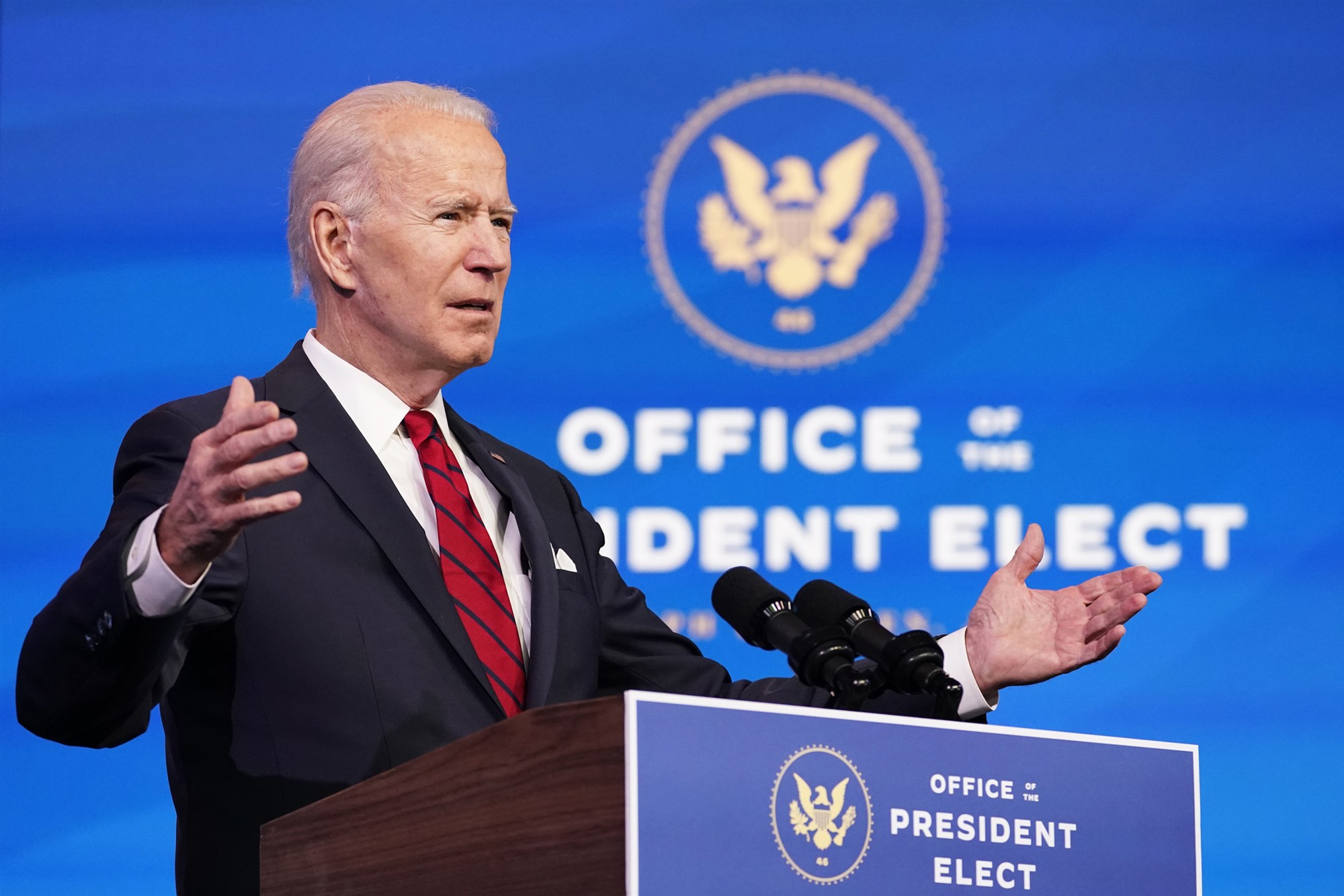
President-elect Joe Biden is poised to roll back several of the Trump administration’s most restrictive sexual and reproductive health policies, including limits on abortion.
Reproductive rights advocates expect Biden to quickly overturn Trump-era rules, like banning federal funds for foreign and national health organizations that promote and provide abortion and giving employers more freedom to deny free contraceptive coverage for their workers.
“We have a ton of work to do to undo the harm over the last four years, but knowing we have champions there who understand what needs to happen in the first 100 days is tremendously exciting,” said Alexis McGill Johnson, president and CEO of Planned Parenthood.
Abortion rights opponents are concerned about the new administration and warn that they will continue to push back.
“It’s certainly disheartening, but we aren’t going to give up, and we will do whatever we can to stop abortion from being promoted,” said Carol Tobias, president of the National Right to Life Committee, who said she expects a wave of abortion restrictions at the state level this year.
Biden is a devout Roman Catholic, and his position on abortion has evolved throughout his career. Most recently, in 2019, he dropped his long-standing support of the Hyde Amendment, a decades-old policy restricting federal funding for abortions, after having faced mounting criticism. He has also vowed to codify Roe v. Wade and to fight state-level policies limiting access to abortion.
Here are some of the ways Biden has indicated he will restore and improve access to reproductive care:
The Mexico City Policy
The Reagan administration implemented the Mexico City Policy, which barred foreign organizations that receive U.S. family planning assistance from providing information, referrals or services for abortions. Since then, it has been rescinded by Democratic presidents and then restored by Republicans.
When President Donald Trump reinstated the policy, he also expanded it by applying the restrictions to nearly all federal global health assistance. Trump’s hard-line stance on abortion forced organizations that treat HIV, malaria, tuberculosis and other infectious diseases to comply or lose funding.
“The Trump administration launched a wholesale assault on sexual and reproductive health across the world by buying up providers and limiting the services that they can offer to women,” said Jonathan Rucks, senior director of policy and advocacy at PAI, an international reproductive health and rights organization.
Trump’s move led to reduced access to abortion care, along with contraception, HIV testing and treatment and cancer screening in Kenya, Nepal, Nigeria and South Africa, according to a 2019 study.
While Biden pledged to quash the Mexico City Policy, abortion rights advocates are calling on Congress to pass the Global HER Act, which would permanently prohibit the rule.
The Title X program
The Title X program, which was established 50 years ago, helps fill in gaps in health care access and affordability by providing family planning assistance to clinics serving low-income and uninsured people in the U.S. Specifically, it offers grants to providers that fund services like contraception, pregnancy tests and STD screenings. However, it has never funded abortion care.
In 2019, the Trump administration blocked clinics in the program from referring people to abortion providers or performing abortion procedures with other funds. Consequently, the number of clinics and patients served by the program dropped dramatically. A quarter of Title X sub-recipients and sites left the network, including independent clinics and Planned Parenthood. Planned Parenthood health centers served 40 percent of all Title X patients before it withdrew from the program, according to the organization.
“It’s not like there is a lot of money out there for providing services for family planning, and anything that restricts funding and support has the impact of reducing access,” said Alina Salganicoff, senior vice president and director of women’s health policy at the Kaiser Family Foundation.
As a result of the mass exodus of providers from the program, the Office of Population Affairs, the federal agency that operates the program, reported that the number of people served by the Title X program in 2019 was 21 percent lower than in 2018.
Biden is expected to dial back the Trump administration rule and “restore federal funding for Planned Parenthood.”
The contraceptive coverage mandate
The contraceptive coverage mandate of the Affordable Care Act required most private insurance plans to cover birth control without copayments; the requirement increased access to contraception and made it affordable for millions.
Most women will use birth control at some point, and 86 percent have used three or more methods by their early 40s, according to the Guttmacher Institute, a pro-abortion rights research institute.
However, Trump rolled back the reach of the contraception mandate, allowing any employer with a religious or moral objection to birth control to be exempt from the requirement. Last summer, the Supreme Court upheld the exemptions in the case Little Sisters of the Poor v. Pennsylvania.
“Although everyone has a right to their religious beliefs, those beliefs should never be used to discriminate against others, including by taking away their health insurance coverage. No one should be denied birth control coverage because of where they work or where they go to school,” said Georgeanne Usova, senior legislative counsel at the American Civil Liberties Union.
Biden said he would restore the Obama-era policy, which exempts only houses of worship but provides an accommodation for other objecting employers, which allows their employees and dependents access to contraceptive coverage through their insurance companies or third-party administrators.
The Hyde Amendment
For decades, the Hyde Amendment has prohibited federal programs from paying for abortions, except in the case of rape or incest or to save the life of the woman. While the amendment originally applied only to Medicaid recipients, most of whom are part of communities of color or are categorized as low-income, Congress extended it to apply to federal employees and their dependents, military personnel, the Indian Health Service, Peace Corps volunteers and residents of Washington, D.C.
“The Hyde Amendment is an attack on low-income families and an attempt to take away the promise of Roe v. Wade. For many, abortion care has been a right only in name and not in practice, because if you can’t actually afford it, the legal right is moot,” said Kelsey Ryland, co-director of the All* Above All abortion coverage campaign.
Those covered by Medicaid in 34 states and D.C. have minimal abortion coverage because of the Hyde Amendment, according to the Kaiser Family Foundation. In that case, the cost of an abortion is often a significant financial barrier. On average, the cost of an abortion procedure is about $500; nearly 40 percent of Americans can’t cover an unexpected $400 expense. Meanwhile, 16 states use their own funds to pay for abortions for those insured by Medicaid, including California, Illinois and New Mexico.
Since 1976, the amendment, which isn’t a permanent statute and doesn’t require a repeal, has been added every year to legislation passed by Congress to fund the federal government. Biden has vowed to end the policy, which he once supported, but it would require congressional action to eliminate it.
“The work that we all need to be doing right now is making sure that we are expanding access to health care, not finding ways to limit it,” said McGill Johnson of Planned Parenthood.
PHOTO: KENT NISHIMURA/LOS ANGELES TIMES/GETTY IMAGES.
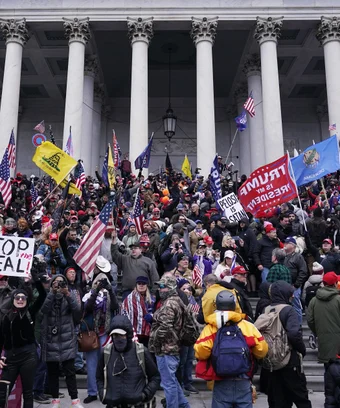
Last week, the world watched in horror as a pro-Trump mob, urged by the President himself, attacked the U.S. Capitol in an effort to overturn the results of the 2020 presidential election. Thousands of angry people, rushed the Capitol building, overwhelming the law enforcement officers who were staged outside. They smashed windows and broke down doors; thousands of them flooded into the Capitol building itself. For several hours, they occupied congressional offices and triumphantly paraded through the House and Senate floors, wreaking havoc and calling for violence against and death for politicians and police officers, alike. By the end of the seditious melee, five people were dead.
One of the people there was John Brockhoeft, who posted online about his presence at the Capitol. Brockhoeft isn’t just any Trump supporter. He’s also a convicted anti-abortion terrorist.His presence wasn’t a coincidence, but an example of the long-standing crossover between anti-abortion and white supremacist terrorist movements, and how America’s complacency around both has helped pave the way for this moment of terrifying insurrection.
There were other anti-abortion activists who were involved in the attack, according to a NARAL report. One of them was Abby Johnson, a former Planned Parenthood clinic director turned anti-choice extremist, who was present during Trump’s speech inciting the riot. Another was Taylor Hansen, an anti-choice activist connected to a group called Baby Lives Matter, who posted violent videos to Twitter during the riots.
As long as abortion has been legal in this country, it has been under siege. Since 1977, there have been 11,905 acts of violence against abortion providers, including 42 bombings, 189 arsons, and 11 assassinations. Clinics have experienced more than 700,000 incidents of disruption.
These acts of violence and harassment grew steadily over decades, as anti-abortion extremists saw how little retribution they faced for escalated their tactics. In 1982, Joseph Scheidler, an anti-abortion activist who literally wrote the book on how to harass abortion patients and staff, hired a private detective to find a teenager’s address and then harangued her mother from an adjacent balcony to talk her out of an abortion. Scheidler inspired Randall Terry, another anti-abortion extremist, to found Operation Rescue — a radical, direct-action anti abortion group — in 1987. Terry once proclaimed, “If you think abortion is murder, then act like it’s murder.” He also led thousands of people in massive blockades at abortion clinics, chaining themselves to doors, laying down in front of traffic, gluing locks — anything to prevent the clinic from operating. Law enforcement’s presence was often lax or non-existent; in San Francisco, it took the police two hours just to show up after the blockade began.
Operation Rescue was able to shut down clinics across the country and terrorize abortion patients, unchecked by the federal government, for nearly a decade. That sense of complacency among lawmakers and apathy on the part of some law enforcement officials helped fuel the dramatic rise and escalation in anti-abortion extremism. By 1993, just two decades after Roe v. Wade was decided, anti-abortion extremists had escalated from picketing to stalking to blockading to bombing to assassination.
Brockhoeft came of age as an extremist in that environment. He bombed two abortion clinics in Cincinnati in 1985, and was convicted three years later of attempting to bomb an abortion clinic in Florida. He was out of prison by 1995 and further embraced the far-right. In April 2020, he was spotted outside the Ohio Statehouse, surrounded by armed, right-wing extremists, aggressively protesting the COVID-19 shutdown order.
Much has been made of the racist double standard that law enforcement displayed in their response toward the Capitol rioters as compared to how they dealt with Black Lives Matter protesters. A video appeared to show Capitol police officers opening the protective gates around the building, allowing a swarm of pro-Trump rioters to march past. Once the mob had successfully broken in, a Capitol police officer, in full uniform and a neon vest, posed for a selfie with a rioter. The mob kept moving, marching toward their next site of desecration.
It was a harrowing moment of familiarity between law enforcement and law breaker, one that is well known in abortion rights circles. In August 1979, a Fort Wayne, Indiana abortion clinic received a bomb threat. The city refused to dispatch either police or fire officials, forcing clinic staff to search for the bomb themselves. Nearly 40 years later, Becca Ballenger, a clinic escort in New York City, called in a complaint about protesters violating the 15-foot buffer zone at the clinic. When he arrived, she told Refinery29, she watched the responding officer approach the violator, shake his hand, and give him a hug. He then turned to the group of clinic escorts and said, “What are you doing to restrict their First Amendment rights today?”
When law enforcement refuses to take anti-abortion harassment and violence seriously, even if it’s only in certain cities, it signals their tolerance of that behavior. But it’s not just law enforcement––our cultural complacency around anti-abortion terrorism has helped normalize what should be unthinkable. The image of sweet grandmothers quietly praying the rosary and polite teenagers, standing alone with a gentle sign (a la Juno) belie the very real aggression and violence that has always existed. Under the Trump administration, clinics have reported receiving an increasing number of harassment, threats, and violence. As a clinic escort myself, I’ve seen the rhetoric and behavior outside the clinic shift, with harsher, more openly racist rhetoric from increasingly angry men wearing a mix of “Abortion is Murder” T-shirts and “Make America Great Again” red hats. It’s no coincidence that at the same time, white nationalist groups have risen by 55% over the last few years, emboldened by a President who called them “very fine people” after rioting in Charlottesville.
If you asked yourself, “How did this happen? Where did these people come from?” while watching the riot unfold, ask yourself another question: When was the last time you saw what was happening outside an abortion clinic? When was the last time you really paid attention? When was the last time you just ignored someone spouting well-known falsehoods about abortion, about Black Lives Matter, about the results of the 2020 election? We hear so much about “breaking out of our siloes,” but we don’t have to excuse right-wing extremism to see it happening. At the very least, we have to start acknowledging that it’s happening, that it’s been happening, and many of us just haven’t cared enough to speak up because it didn’t affect us. Until it did.
Conspiracy theories and outlandish rhetoric aren’t without consequences, particularly when encouraged by those in power. In 2015, anti-abortion extremists launched a highly visible smear campaign against Planned Parenthood, featuring doctored videos that accused the organization of illegally selling fetal body parts. It was absurd and completely untrue, but that didn’t stop Congressional Republicans from embracing the conspiracy theory, decrying Planned Parenthood, and opening an investigation into the organization. Just a few months later, Robert Dear opened fire on a Planned Parenthood clinic in Colorado Springs, killing three people, including a security guard. Dear confessed that he was “upset with them performing abortions and the selling of baby parts,” a direct reference to the cooked-up, anti-abortion smear campaign — a conspiracy theory that certainly has echoes in other far-right conspiracies like QAnon.
President Trump has been booted off various social media platforms, but he doesn’t need a Twitter account to continue to fuel the the same kinds of wild conspiracy theories that led Robert Dear to murder three people. He doesn’t need a video on Facebook to incite his supporters to ever-more rabid and racist violence. The coup attempt at the Capitol wasn’t inevitable––it was entirely preventable. But not without a justice system that prioritizes the rights and lives of the marginalized. Not with police officers who pose for selfies and even join the insurrectionist riot. Not with city officials ignoring credible bomb threats. Not without each of us decrying right-wing fascism and violence, no matter who the target may be.
The significance of the Biden-Harris administration for the world’s women and girls cannot be overstated. The current status of women and girls is grim. The COVID-19 pandemic and four years of dangerous policies designed to strip women and girls of their reproductive and economic autonomy and punish them—first for their biology, and second for their gender—have slowed and even reversed decades of progress toward gender equity. Systemic racism and policies meant to further exclude and disenfranchise minority communities have targeted women of color with tragic results.
Long have women (and allies) chanted for gender equity, for an end to men making laws controlling women’s reproductive rights, for full participation in all aspects of society, and for supportive domestic and foreign policies. For these goals to be realized, women and people of color must have a seat at the table and a voice in decision-making. The elected Biden-Harris administration appears to be setting itself up to change history with their “aggressive and comprehensive plan to further women’s economic and physical security and ensure that women can fully exercise their civil rights.” They aren’t shying away from the realities of 2020 America—they are facing them with what may just be a watershed moment for the U.S. government—gender parity in the President-elect’s Cabinet.
Historically, the status of women and girls has been disappointing at best and devastating at its worst. Currently, one in three women worldwide will experience gender-based violence in her lifetime, approximately 130 million girls between the ages of 6 and 17 are not in school, and one in five girls are likely to marry before she turns 18. Some 218 million women in low- and middle-income countries have an unmet need for modern contraception, leading to more than 35 million unsafe abortions each year. Women continue to make 77 cents to every dollar men make and in addition to their paid work and the challenges against them, women do at least twice as much unpaid care work as men, including housework, child care, and elder care.
Over the past four years, sexual and reproductive health and rights were, at a minimum, neglected, and more often, systematically challenged and undermined by the Trump administration. As a result, women, families, and nations suffered. For example, the Trump administration cut millions of dollars in funding from the United Nations Population Fund (UNFPA), the UN agency focused on reproductive and maternal health care. The Trump administration has also undertaken an “unprecedented expansion” of the Global Gag Rule (also known as the Mexico City Policy), which prohibits non-governmental organizations receiving U.S. federal assistance from providing abortion services. This expansion has had “devastating impacts” both on individuals seeking health services and on countries’ public health systems as a whole.
Pre-pandemic, women held more jobs in the U.S. economy than men. Women still faced wage gaps and were more likely to hold part-time positions, but they were making substantial progress in the U.S. workforce. However, the economic fallout of the pandemic has landed more heavily on women, jeopardizing this progress. In September 2020, six months after the onset of COVID-19 in America and the related shutdowns, 865,000 women left the workforce (four times the number of men), with Black and Latina women being disproportionately affected. In December 2020, the U.S. economy lost 140,000 jobs. Every single one of them was lost by a woman. And actually, the numbers are worse. 156,000 women lost their jobs in December, but men gained 16,000 jobs, bringing the overall loss to 140,000. Even to a gender equity novice, such a stark contrast clearly illustrates that policies and protections for women are grossly inadequate.
Since the early days of his campaign, President-elect Biden has emphasized the importance of, and commitment to, building an administration that looks like America. He began fulfilling this promise when he selected Vice President-elect Kamala Harris as his Vice President, and he has continued this trajectory with the selection of his Cabinet. “This Cabinet will be the most representative of any Cabinet in American history,” Biden declared at a December event. “We’ll have a Cabinet of barrier breakers, a Cabinet of firsts.” So far, Biden’s nominations reflect his words. He and Harris have included a historic number of firsts in their lists of nominated cabinet members, including former Mayor Pete Buttigieg, the first openly LGBTQI+ Cabinet appointee; Janet Yellen and Avril Haines, the first women to hold the role of Treasury Secretary and Director of National Intelligence, respectively; and retired Army General Lloyd Austin and Michael Regan, the first Black men to serve as Defense Secretary and Head of the EPA, to name only a few. In total, Biden has nominated a record-breaking 14 people of color and 12 women to Cabinet-level posts. If all of these nominees are confirmed, Biden’s Cabinet could also be the first in history to have at least as many women as men.
There are more firsts to come, and their impact promises to be powerful. Diversity of perspectives and lived experiences leads to policies that better meet the diverse needs of the American people and the world. Having Alejandro Mayorkas, a child of immigrants, head the Department of Homeland Security is significant, given the growing mistreatment of undocumented immigrants under the Trump administration. Having Representative Deb Haaland, an Indigenous woman, as the Secretary of the Interior is especially notable because the Department of the Interior determines policy for federally-owned natural resources and tribal lands. And having a woman head the Treasury could bring a different policy perspective that may be especially beneficial given the impacts of COVID on women’s work and economic standing.
So what can we expect from Biden’s first 100 days?
Rescind the Trump administration’s expanded Mexico City Policy (also known as the Global Gag Rule) and support Congress repealing the Helms Amendment and permanently rescinding the Global Gag Rule, both of which decrease access to sexual and reproductive health services globally.
Restore Title X funds and Medicaid coverage for Planned Parenthood to expand access to SRH services in the United States
Address maternal health by applying successful interventions nationwide to reduce maternal mortality and morbidity
Improve women’s economic security by promoting pay equity, expanding affordable childcare, and improving pay and benefits in careers disproportionately filled by women
Prioritizing gender parity in U.S. government leadership, particularly within the implementing agencies of the WPS Act of 2017
Reviewing and updating the WPS strategy to advance the WPS Agenda
By expanding protection for survivors of gender-based violence and sexual assault, recognizing the importance of sexual and reproductive health and rights, and increasing women’s economic security and political participation the Biden administration will, in its first 100 Days, begin to improve the status of women and girls worldwide. As we approach Day 1 of the Biden-Harris Era, the groundwork has been laid for historic change in our nation and a reorienting of American leadership worldwide.
This week, the Supreme Court issued its first abortion related-ruling since Justice Amy Coney Barrett joined its ranks in October. In a ruling issued Tuesday, the court found that patients seeking medication abortions must pick up the pills in person, which advocates argue will prevent patients from accessing the medication — and thus, abortion care — at all.
The court’s majority ruling reinstates a Food and Drug Administration (FDA) rule that had, until July, prevented mailing the medication. The July ruling by a lower court federal judge found that amid the COVID-19 pandemic, patients should not have to travel long distances to access medication or be required to pick up medications in person.
Writing on behalf of the majority, Chief Justice John Roberts said that it was unclear whether it was within the court’s reach to comment on FDA rules and regulations, and that the issue of medication abortion should be left to what he called “politically accountable entities” with the background and knowledge needed to comment on health care issues. Advocates argue that the majority ruling sidesteps the fact that forcing patients to travel and seek medication abortion pills in person essentially functions as an abortion restriction.
Justice Sonia Sotomayor disagreed with the majority opinion, writing that the rule reversal will pose an “undue burden” on accessing abortion, which the landmark case Roe v. Wade is supposed to protect against. Based on her dissent, which was joined by Justice Elena Kagan, it seems that Sotomayor also disagreed with the justification that the judicial system should not comment on health care matters, as Roberts claimed. “Of the over 20,000 FDA-approved drugs, mifepristone is the only one that the FDA requires to be picked up in person for patients to take at home,” Sotomayor wrote. “The FDA’s policy imposes an unnecessary, unjustifiable, irrational, and undue burden on women seeking an abortion during the current pandemic.”
Advocates for abortion access, like the women of color-led abortion justice organization All* Above All, claim that the ruling will disproportionately harm abortion patients who are already burdened by the coronavirus pandemic. “This [Supreme Court] ruling to restrict telehealth options for medication abortion care will fall hardest on people of color, people who live in rural areas, and those working to make ends meet,” the organization wrote on Twitter.
In fact, most people who seek abortion care are already parents, suffer from lower incomes, and face a maze of other challenges produced by racist and classist systems that result in health care inequities. Though the court’s majority opinion appears as if it offers concern for the health of abortion patients, ReproAction, a reproductive justice organization, said that the ruling is instead a practice in usurping patient’s ability to make decisions for themselves.
“In the same night, SCOTUS decided to execute a mentally ill woman and reinstate unnecessary abortion restrictions,” the organization wrote in a tweet, alluding to the federal execution of Lisa Montgomery. “There is nothing ‘pro-life’ about these actions, advanced by a court hand-picked by conservatives allegedly to protect life. That’s a lie: It’s about power and control.”
Argentina shows us there’s a kinder way to treat rape survivors with dignity.
Abortion legalization in Argentina is a reminder that in the United States and everywhere, we don’t have to settle for stigma and barriers that violate and endanger pregnant people and people who have survived sexual violence. Marcelo Endelli/Getty Images
In a monumental step forward for human rights, at the end of 2020 Argentina fully legalized abortion care through the 14th week of pregnancy. Previously, Argentina permitted abortion only in cases of incest and rape or to save the life of the pregnant person. This victory was not sudden—it was a product of decades of grassroots organizing. And organizers’ victory provides a model for abortion rights advocates in the United States.
Abortion legalization in the deeply Catholic country reminds us of the transformative power of not just grassroots organizing, but also organizing without compromise—that means without making someone’s bodily autonomy contingent on how a pregnancy was conceived. In the United States, while abortion has been technically legal since 1973, not only is care widely unavailable due to hundreds of state and federal restrictions, but access is often conditional due to abortion restrictions with rape exceptions.
To usher in 2021, several U.S. state legislatures are already introducing and passing new restrictions, like Ohio’s latest law requiring costly burials for aborted fetuses. Argentina has provided a bold model of full legalization, and it’s time to fight for the same in the United States. That means refusing to accept the invasiveness and cruelty of making abortion access dependent on exceptions for rape, and recognizing that the struggles for reproductive justice and survivor justice are inextricably connected.
In recent years, state and federal lawmakers have introduced and passed a wide range of bans and restrictions, including bills to restrict abortion coverage and prohibit care at varying stages of pregnancy. These bills often come with exceptions for incest and rape. Abortion opponents have routinely weaponized the rape exception to make their cruel, extreme legislation seem more humane and compassionate.
This exception raises critical questions that too often go unasked—like how survivors with unwanted pregnancies are supposed to prove they were raped to law enforcement and doctors; whether they feel comfortable and safe doing so; and whether the rape exception can actually protect them if doctors and law enforcement don’t believe them. Rather than supporting survivors’ ability to get abortion care, the rape exception creates dangerous barriers for survivors, and instead benefits anti-choice politicians by improving the moral optics of violent and inhumane abortion bans and restrictions.
Rape exceptions to abortion restrictions send the false message that coming forward about one’s experience with rape, proving this experience to law enforcement and doctors, and seeking care are easy and simple. On all fronts, we know this isn’t true: One in five women experience rape or attempted rape—with women of color and LGBTQ folks more vulnerable to violence—and an estimated 65 percent to 85 percent of sexual assaults aren’t reported. One key reason survivors cite for not reporting their assaults is fear of being disbelieved and punished. The over-simplicity of the rape exception to abortion bans obscures this truth.The United States continues to ban federal coverage of abortion care in order to prioritize a narrow minority’s personal and religious views over the health and autonomy of pregnant people.
Among anti-choice politicians, there’s little consensus on whether there should ever be exceptions to abortion bans. In 2019, white nationalist and former Iowa Rep. Steve King came under fire from across the political spectrum for arguing against the rape exception. Yet there was something sorely missing from this discourse: that abortion bans are violent and inhumane, with or without an exception that’s far more symbolic than effective in supporting survivors.
Survivor justice and reproductive justice are both rooted in a fundamental demand for autonomy and safety in one’s own body, home, and community. Any and all abortion bans and restrictions that push care out of reach serve to violate women and pregnant-capable people, exceptions or not. Similarly, rhetoric that insists people with unwanted pregnancies “take responsibility” dangerously equates consent to sex with consent to pregnancy, birth, and parenthood.
Abortion legalization in Argentina presents other contrasts with the state of care in the United States. Even though the country is deeply Catholic, abortion in Argentina will be covered by the government free of cost, all while the United States continues to ban federal coverage of abortion care in order to prioritize a narrow minority’s personal and religious views over the health and autonomy of pregnant people.
The myriad restrictions on abortion and the deep stigma in the United States have also increasingly rendered pregnant people vulnerable to criminalization and suspicion for miscarriages, stillbirths, and self-managed abortions, with several women of color investigated, charged and even jailed for pregnancy losses in recent years.
Abortion legalization in Argentina is a reminder that in the United States and everywhere, we don’t have to settle for stigma and barriers that violate and endanger pregnant people and people who have survived sexual violence. And we certainly don’t have to settle for laws that punish survivors by forcing them to come forward about their traumas to get health care.
Protective fencing surrounds the Supreme Court building in Washington ahead of the Jan. 20 presidential inauguration. (Al Drago/Getty Images)
The Supreme Court on Tuesday agreed with the Trump administration and reinstated requirements that women seeking medication abortions receive the drugs in person at a clinic, setting aside a judge’s ruling that protocol was dangerous during the coronavirus pandemic.
The administration sought to reinstate rules by the Food and Drug Administration that women pick up the abortion pills at a medical facility — rather than receive them by mail or delivery — even though there is no requirement they take the medication in such a setting. Most take the pills that end a pregnancy in its early stages at home.
The court’s three liberals objected to reimposing the requirements, which a lower court had eased during the pandemic in an effort to protect women and health workers.
“This country’s laws have long singled out abortions for more onerous treatment than other medical procedures that carry similar or greater risks,” wrote Justice Sonia Sotomayor, joined by Justice Elena Kagan. She seemed to hold out hope the incoming administration of President-elect Joe Biden will change the policy.AD
“One can only hope that the government will reconsider and exhibit greater care and empathy for women seeking some measure of control over their health and reproductive lives in these unsettling times.”
Justice Stephen G. Breyer also noted his dissent, but did not join Sotomayor’s opinion.
The court’s conservative majority did not explain its reasoning, as is common in emergency applications. But it has been strengthened by the addition of Justice Amy Coney Barrett, who joined the court since it last considered the issue and refused to reinstate the requirements.
Chief Justice John G. Roberts Jr. wrote separately to say he went along with the decision to dissolve the lower court’s stay out of respect for government experts.
“My view is that courts owe significant deference to the politically accountable entities with the ‘background, competence, and expertise to assess public health,’ ” Roberts wrote, referring to an opinion he wrote upholding state limits on attendance at church worship services.AD
“In light of those considerations, I do not see a sufficient basis here for the district court to compel the FDA to alter the regimen for medical abortion.”
A federal judge this summer had found the rules to be cumbersome and dangerous during the pandemic.
The Supreme Court in the fall told U.S. District Judge Theodore D. Chuang in Maryland to reconsider in light of current conditions. But he said last month that the health risks have “only gotten worse.”
He stood behind the nationwide injunction he put in place.
“While the progress on vaccines and medical treatments for COVID-19 are cause for optimism and may advance the day that the Preliminary Injunction will no longer be warranted, the impact of these advances to date has not meaningfully altered the current health risks and obstacles to women seeking medication abortions,” he wrote.AD
Doctors and abortion providers who brought the suit said the government had not shown there was a good reason to retain the rules, as other more dangerous drugs were dispensed without an in-person visit.
The government asks for “the extraordinary step of staying a preliminary injunction that protects patients and health-care providers from life-threatening COVID-19 risks” they told the court.
“It is mind-boggling that the Trump administration’s top priority on its way out the door is to needlessly endanger even more people during this dark pandemic winter — and chilling that the Supreme Court allowed it,” Julia Kaye, an attorney for the American Civil Liberties Union, said in a statement Tuesday. Biden’s administration, she added, “must right this wrong on day one and hold firm to its commitment to support both evidence-based regulations and reproductive freedom.”AD
Medication abortions require taking two drugs, mifepristone and misoprostol, up to 10 weeks into a pregnancy. They have been in use since 2000, and in 2016 the FDA eliminated the requirement that the first drug be administered in a hospital, clinic or doctor’s office. FDA experts said it was just as safe for a woman to take the medications at home.
But the FDA did not relax the requirement that women pick up the pills in person and sign for them.
Sotomayor said the longtime restriction made no sense.
“Of the over 20,000 FDA-approved drugs, mifepristone is the only one that the FDA requires to be picked up in person for patients to take at home,” Sotomayor wrote.
She said that government agencies during the pandemic have eased restrictions on picking up other drugs in person.
“As a result, government policy now permits patients to receive prescriptions for powerful opioids without leaving home, yet still requires women to travel to a doctor’s office to pick up mifepristone, only to turn around, go home, and ingest it without supervision,” Sotomayor wrote.
She called the policy an “unnecessary, unjustifiable, irrational, and undue burden on women seeking an abortion during the pandemic.”
Texas officials cited a need to preserve medical supplies as a reason to crack down on abortions. A new study finds that many Texans left the state during this time seeking the procedure.
After Gov. Greg Abbott’s order that postponed all non “immediately, medically necessary” surgeries expired in May, second-trimester abortions increased 61%. Credit: Callie Richmond for The Texas Tribune
The number of Texas residents who went out of state to receive abortions leapt from 157 in February to 947 in April, after Gov. Greg Abbott ordered that all procedures not “immediately, medically necessary” be postponed to contend with the nascent coronavirus pandemic, according to a new study published in the Journal of the American Medical Association.
The number of abortions performed in Texas plummeted 38% in April 2020 when compared to the previous year. But after the order had expired in May, second-trimester abortions increased 61% likely reflecting “delays in care among those who waited for an appointment and facilities’ limited capacity to meet backlogged patient need,” the researchers found. Abortions performed later during a pregnancy are safe, but have a greater risk for complications and may need more appointments, the study said.
The study relied on data from 30 out of 37 open facilities in Arkansas, Colorado, Kansas, Louisiana, Oklahoma and New Mexico, and from 18 out of 24 facilities in Texas that provide more than 90% of abortions in the state.
The governor’s order, which went into effect March 22, “put additional barriers in place” compounding restrictions Texas already has on abortion access, said Kari White, an author of the study, and lead investigator of the Texas Policy Evaluation Project at the University of Texas at Austin.
Another author of the study, Dr. Robin Wallace, was among several abortion providers who this spring challenged Abbott’s executive order, which Attorney General Ken Paxton said extended to abortions. The case pingponged between a district judge and the 5th U.S. Circuit Court of Appeals before the ban on nearly all abortions in Texas lifted April 22.
Another author, Dr. Bhavik Kumar, an abortion provider, has sued state officials over access to abortion.
A second research brief published by the Texas Policy Evaluation Project said clinics canceled and rescheduled hundreds of appointments while the governor’s order was in effect and as the courts issued a flurry of different rulings.
In interviews with 10 people seeking access to an abortion, the brief said most had “to delay their abortion visits until they were past the 10-week limit for medication abortion, which many women prefer” and which can be cheaper. Half had an abortion performed, with one 26-year-old, who was unable to get a pill-induced abortion or travel out of state to get the procedure, telling the researchers she felt depressed and afraid.
A 30-year-old nursing student traveled more than 700 miles to New Mexico where she got an abortion after “learning her fetus had significant anomalies,” the brief said. She felt feverish on her return trip and was worried she had been exposed to the virus.
“For all of the people that we talked to, it was a time period where they were facing a lot of economic insecurity. They didn’t necessarily know when the next paycheck was coming in. They were confused about what was really happening in the state in terms of their ability to get services, and they found it very stressful to remain pregnant and try to figure out what they were going to do,” White said. “And that was true, regardless of whether or not they were able to get an abortion or whether or not they ended up continuing their pregnancy.”
The Texas Policy Evaluation Project’s researchers “evaluate the impact of legislation and policies in Texas related to family planning and abortion” and has received funding from the Susan Thompson Buffett Foundation and the Society of Family Planning, which says it supports abortion and contraception research. The foundation is one of the largest private funders of sexual and reproductive health work and has given money to pro-abortion access groups, according to media reports. Funders don’t design, interpret or approve the project’s research, it says.
Abbott’s office did not immediately respond to a request for comment.









 Abortion - Abortion Clinics, Abortion Pill, Abortion Information