Biden has pledged to return the U.S. to a government-wide focus of uplifting the rights of women and girls around the world. Here’s how.

Joe Biden accepts the nomination for the Democratic ticket for president in Wilmington, Del., on Aug 20, 2020. (Adam Schultz / Biden for President)

Women across the world experience health disparities, economic discrimination, political exclusion and violence. Globally, women earn just 58 percent of men’s wages for similar work and are more likely than men to live in poverty. The majority of women work in the informal economy, without employment contracts or benefits, and with few legal rights or social protections. On top of paid work, women do at least twice as much unpaid care work as men, including housework, child care and elder care.

Girls are denied education and married off at young ages. Approximately 130 million girls between the ages of 6 and 17 are not in school; one in five girls are likely to marry before she turns 18.

Women also experience astonishing rates of violence. One in three women worldwide will experience gender-based violence in her lifetime, with higher rates in some countries. Women experience sex and labor trafficking, “honor” killings, genital cutting and rape as a weapon of war. And the COVID-19 pandemic has only increased violence against women globally.

The Trump presidency has made matters worse by withdrawing U.S. support from critical international programs to protect the health and safety of women and girls around the world.

On his first day in office, Trump reinstated and expanded the global gag rule (also known as the Mexico City Policy), which prohibits foreign nongovernmental organizations receiving U.S. global health assistance from providing information, referrals, or services for legal abortions, or from advocating for abortion law reform, even with their own non-US funds.

Trump then suspended U.S. funding to the United Nations Population Fund, which addresses violence against women globally. He co-sponsored and signed an anti-abortion global pact called the “Geneva Consensus Declaration” that denies the international human right to abortion, and withdrew the US from the World Health Organization (which supports reproductive rights) and the United Nations Human Rights Committee consensus that promotes safe, legal and affordable access to sexual and reproductive health care, including abortion. His State Department ceased reporting on reproductive health in the annual human rights Country Reports.
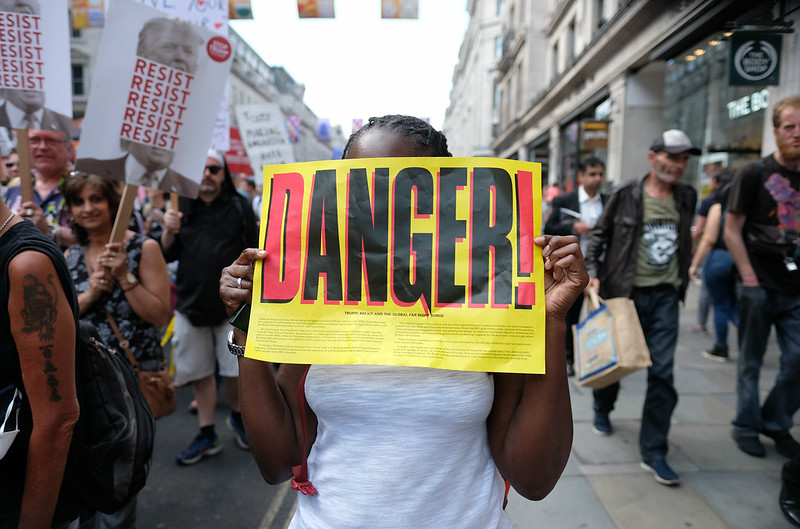
What Women Can Expect from a Biden Presidency: On Global Women’s Rights
A protest in London’s Trafalgar Square against Donald Trump’s visit to the U.K. on July 12, 2018. (Alisdare Hickson / Flickr)

President-Elect Joe Biden has pledged to reverse course and pursue an “aggressive and comprehensive plan to further women’s economic and physical security and ensure that women can fully exercise their civil rights.” Biden has provided details for how he will accomplish this pledge in an ambitious platform for women’s rights focused in five areas: health careeconomic securitywork and familyviolence against women, and protect and empower women across the globe.

After four years of the Trump administration aggressively rolling back women’s rights at home and abroad, Biden has his work cut out for him.

Biden has a strong record working for global women’s rights. As vice president, Biden worked closely with President Obama to address gender-based violence across the world. They created the first U.S. National Action Plan on Women, Peace and Security; the first U.S. Strategy to Prevent and Respond to Gender-Based Violence Globally; as well as the first U.S. Global Strategy to Empower Adolescent Girls.

In 2007, Biden introduced the International Violence Against Women Act (IVAWA), which offered a comprehensive approach to gender-based violence globally. The Obama-Biden administration implemented many of the law’s provisions through executive actions. Biden has demonstrated his commitment to addressing women’s rights globally.

The global women’s rights prong of Biden’s agenda for women includes:

  • restoring U.S. support for women’s global health,
  • supporting women’s economic security,
  • boosting their political empowerment,
  • combatting violence against women globally, and
  • pursuing ratification of the UN Convention on the Elimination of all Forms of Discrimination Against Women (CEDAW).

Biden has pledged to return the U.S. to a government-wide focus of uplifting the rights of women and girls around the world.

Health Care

Biden has pledged to rescind the global gag rule and supports the Global Health, Empowerment and Rights (Global HER) Act to permanently repeal the global gag rule and the Helms Amendment (which bans U.S. funding for safe abortion internationally).

Whereas the Trump administration withdrew U.S. support for international organizations supporting sexual and reproductive health rights globally, the Biden administration has pledged to re-join the World Health Organization and re-fund the UN Population Fund, which works to end female genital mutilation and cutting, early and forced marriage, and other practices detrimental to the health of women and girls. Biden has pledged that his State Department will resume monitoring human rights abuses that disproportionately impact women and girls, including maternal mortality and unmet contraceptive needs.

Advocates also hope that Biden will exit the anti-abortion “Geneva Consensus Declaration” and rejoin the United Nations Human Rights Committee consensus.

Economic Security

A core pillar of the Biden administration’s proposed solutions to increase economic opportunity centers around building upon the Obama-Biden Administration work to promote and increase accessibility to girls’ education as a pathway to exiting the cycle of poverty. COVID-19 has exacerbated economic inequality across the globe, with a disproportionate effect on women.

What Women Can Expect from a Biden Presidency: On Global Women’s Rights
A Congolese girl carrying several pounds of water on her head. In 2012, just 62 percent of girls 15 years and older were literate, compared to 88 percent rate for young males. (Woody Collins / Flickr)

According to the International Center for Research on Womenthere is a 43 percent gap in labor force participation between men and women globally and post-COVID-19 data is likely to show that these numbers will grow as adolescent girls experience an increase in domestic responsibilities and a lower rate of return to school, limiting their future economic opportunities. In fact, kids who fall behind school are more likely to drop out later on, a phenomenon top of mind for the Biden Administration.

Women’s economic empowerment can generate economic diversity and bolster the economy, yet lack of access to capital and banking has barred low-income women globally from economic opportunity. Globally, only 58 percent of women report having a formal banking account which provides a gateway to further financial services that can help uplift women. The Biden administration has committed to increasing access to financially inclusive banking and women’s access to capital so they can have the resources they need to start businesses and build wealth—a step to ending the gendered wealth gap.

Biden has committed to amending partnerships with countries and multilateral organizations to provide women with the economic opportunity they deserve with special attention to underrepresented communities including indigenous and ethnic minority women, the LGBTQ+ community, and Afro-Latina women.

To increase economic development efforts, Biden’s plan focuses on remittances from family members sending money home since they represent a larger share of the GDP in many Central American countries than foreign direct investment. Through special mechanisms designed to help remittance recipients, the Biden Administration will create pathways for female recipients to begin to invest in and start small businesses.

Political Empowerment

Women have always been disenfranchised politically, leaving little opportunity to gain access to power, yet research has shown that not only do women politicians create more equitable societies, their representation can improve education, welfare and health outcomes. Through his plan for increased access to education in addition to a strong women’s political empowerment agenda, Biden aims to create political opportunities and empowerment for women through his support for women’s leadership globally.

In the midst of a global pandemic, his response to help women politically is more important than ever. Through leveraging women leaders in the global COVID-19 response, Biden aims to rely on women as collaborators, giving women the platform they deserve.

Continuous efforts to improve women’s access to conversations and decision-making roles will be most notable through the Biden administration’s plan for full implementation of the Women, Peace and Security Act, a bipartisan act that aims to decrease conflict by increasing women’s participation in decision-making roles and mediation. Through a diverse foreign policy and national security team, Biden will provide opportunities for women’s voices to be heard and increase women’s political participation.

Moreover, these roles may be seen as inspiration to younger women and girls to increase their political participation.

Ending Violence Against Women Globally

To combat gender-based violence globally, Biden pledges to work with nations and non-governmental organizations across the world to coordinate a global response to the crisis of gender-based violence, including training law enforcement to root out the corruption and effectively investigate and prosecute crimes of sexual violence.

Biden promises to focus particular efforts in Iraq to address ISIS-perpetrated sexual violence and in Central America to address femicide and gender-based violence. Biden has also pledged to create a comprehensive initiative to support and strengthen the influence of women-led civil society organizations that focus on addressing gender-based violence and supporting survivors.
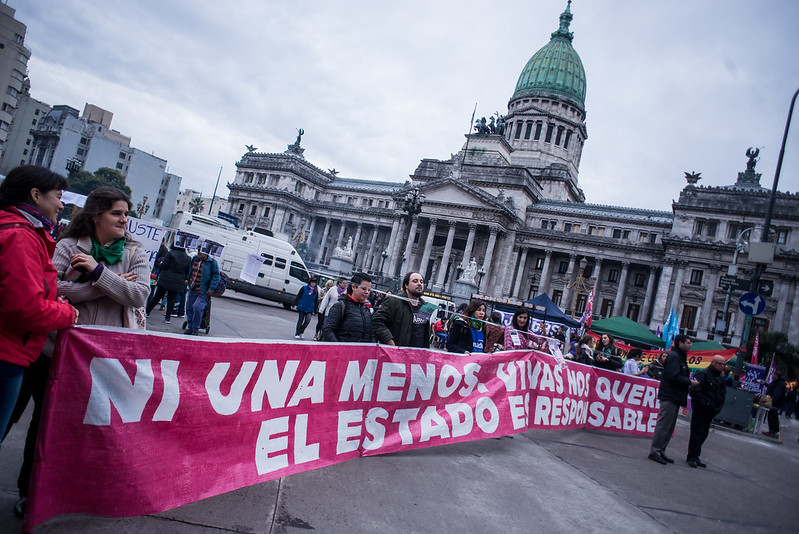
What Women Can Expect from a Biden Presidency: On Global Women’s Rights
Ni una menos is a Latin American feminist movement, which started in Argentina and has spread across several Latin American countries, that campaigns against gender-based violence. Ni una menos defines itself as a “collective scream against machista violence.” (Fotografías Emergentes / Flickr)  

While President Trump has watered down and threatened to veto UN Security Council resolutions that address sexual violence in conflict, Biden promises to champion such issues in the Security Council, and offer increased support to the work of the Special Representative to the UN Secretary General for Sexual Violence in Conflict. He will work with the UN to strengthen the ability of peacekeepers to prevent sexual violence and to hold peacekeepers themselves accountable when they perpetrate gender-based violence. He will urge countries to create national laws on sexual violence that align with international norms to bring perpetrators of sexual violence to account.

For migrant women and girls, Biden has pledged to revive America’s commitment to refugees and displaced persons and ensure that women and girls fleeing gender-based violence are given the opportunity they deserve to seek asylum in the United States.  He promises to restore full access to asylum for domestic violence victims, which Trump revoked. 

Supporting the Convention on the Elimination of all Forms of Discrimination Against Women

The US is one of a small number of nations that has not ratified UN Convention on the Elimination of all Forms of Discrimination Against Women (CEDAW), a comprehensive international agreement on the basic human rights of women, often referred to as a “Bill of Rights” for women. Biden pledges to push the U.S. Senate to finally ratify CEDAW.

Biden’s ambitious platform for women’s rights will go a long way toward empowering women globally by increasing access to healthcare, economic opportunites, and political leadership, while also combatting the global scourge of violence against women. Biden should also work for peace, fair trade and economic justice, which would significantly improve women’s status around the world.

While some of these policies require Congressional action—so winning the two Georgia Senate seats is critical—many of the policies Biden can implement within the executive branch without congressional approval.

And women will be better off as a result.

Source: https://msmagazine.com/2020/12/09/what-women-can-expect-from-a-biden-presidency-on-global-womens-rights/?fbclid=IwAR3G73hbwxZOOqgqkD14gQ7SYsajDc_tOo9KSoiUpSBONAuq2CmWd9uV2XM

After Texas used the pandemic as a reason to block the procedure, the number of people who fled the state to undergo abortions skyrocketed, as did second-trimester abortions.

With Amy Coney Barrett now on the Supreme Court, the ruling that legalized abortion nationwide decades ago may be on its last legs. But during the coronavirus pandemic, Texas already gave a sneak peek at what could happen if Roe v. Wade collapses.

In late March 2020, Republican Gov. Greg Abbott issued an executive order postponing all abortions that weren’t “immediately, medically necessary”—which his attorney general defined as including nearly all abortions. Supporters of abortion rights promptly sued, but the order—and the legal tussling over it—intermittently cut off access to abortion until the end of April, when it finally expired.

That delay had steep consequences for Texas, as well as its neighboring states. The number of people who fled the Lone Star State to undergo abortions skyrocketed, as did requests for the abortion pill, according to two separate studies. And after Abbott’s order expired, the number of second-trimester abortions performed in Texas also shot up, one of the studies found.

What happened in Texas may hint at what lies in store for the U.S. as a whole if Roe were overturned—a real possibility now that a 6-3 conservative majority dominates the Supreme Court. Without Roe, each state would once again be free to regulate abortion as it sees fit, and the nation would dissolve into a patchwork of states that ban the procedure and those that do not. People who live in conservative states would likely flee to more liberal states for abortions, just as they did in Texas.

In April 2020, the month after Abbott signed his order, abortions at 18 Texas clinics fell 38 percent compared to April 2019, according to a paper published Monday in the Journal American Medical Association. That same month, 947 Texans underwent abortions at clinics in six other states. In February 2020, just 157 Texans did the same.

But having to leave the state to get an abortion wasn’t the only likely consequence, according to researchers. In May, after Abbott’s executive order expired, second-trimester abortions in Texas spiked by 61 percent, according to the study, which was conducted by researchers from the University of Texas at Austin and University of California, San Francisco. (One of the study’s authors, Robin Wallace, was one of the abortion providers who sued the state of Texas over Abbott’s order.)

The increase in second-trimester abortions, researchers wrote, “likely reflects delays in care among those who waited for an appointment and facilities’ limited capacity to meet backlogged patient need.”

“Although abortions later in pregnancy are very safe, they are associated with a higher risk of complications and may require additional visits,” they added.

During the confusion and fighting over over Abbott’s executive order, patients’ abortions were sometimes rescheduled three or four times, Marva Sadler, director of clinical services for three Texas-based abortion clinics run by the national company Whole Woman’s Health, told VICE News last month.

“There were couple of days in our clinics when we were not able to see patients at all and then there were some days that we were only able to see medication abortion patients,” she said, referring to a type of abortion that can be induced with pills. “There was also a time that our three Whole Woman’s Health clinics, along with another independent provider, were the only clinics that were seeing patients at all.”

Another January brief, compiled by researchers at the University of Texas at Austin’s Texas Policy Evaluation Project, interviewed 10 people who reached out to an abortion clinic while Abbott’s order was in effect. Of those, five people were able to get abortions and four continued their pregnancies. One was still unsure of their plan.

“The participants who ultimately resolved to carry their pregnancy to term cited economic barriers that further contributed to delays in care,” the researchers wrote. “Despite attempts to get care early in pregnancy, the executive order made it too difficult for these participants to obtain an abortion.”

One woman who was interviewed by researchers was unable to find work due to the pandemic. She said that she couldn’t pull together enough money to afford an abortion, thanks in part to abortion restrictions in Texas that predated the coronavirus.

Another woman did end up getting an abortion—after traveling more than 700 miles one way to New Mexico. Her fetus had what the researchers called “significant anomalies.”

In yet another study, researchers led by the University of Texas at Austin found in July that Aid Access, a international group that ships abortion-inducing pills to the U.S., saw the number of requests for pills from people in Texas increase by almost 94 percent between March 20 and April 11.

Texas is far from the only state that used the pandemic to hack away at abortion access. In the spring of 2020, 10 other states also tried to ban at least some types of abortions by labeling the procedure nonessential, according to the Guttmacher Institute, which tracks abortion restrictions. That triggered a cascade of lawsuits, although all of the efforts to block abortion eventually fell apart, thanks to court orders and executive orders expiring.

In the event Roe is overturned, 21 states already have laws on the books that could be used to restrict abortion’s legality, according to the Guttmacher Institute. Thirteen states and Washington, D.C., have laws that protect the right to abortion. 

“Access is already a problem,” said Mercedes Sanchez, the communications director of the Seattle area-based Cedar River Clinics. Between 2015 and 2020, her facilities saw patients from more than 30 states.  

If Roe falls apart, she continued, “states where abortion would remain legal would be overwhelmed by the numbers of people needing to travel to get care.”

Source: https://www.vice.com/en/article/qjpwwp/texas-covid-abortions-end-of-roe-v-wade

Today’s attacks on abortion access have a long history rooted in white supremacy.

In 1851, Sojourner Truth delivered a speech best known as“Ain’t I A Woman?” to a crowded audience at the Women’s Convention in Akron, Ohio. At the time, slavery remained in full force, a vibrant enterprise that fueled the American economy. Various laws protected that system, including the Fugitive Slave Act, which resulted in the abduction of “free” Black children, women, and men as well as those who had miraculously escaped to northern cities like Boston or Philadelphia. Bounty hunters then sold their prey to Southern plantation owners. The law denied basic protections for Black people caught in the greed-filled grasps of slavery.
 
Ms. Truth condemned this disgraceful enterprise, which thrived off not only uncompensated labor, but also physical and psychological terror. Most will remember Ms. Truth’s oration for its vivid descriptions regarding physical labor; Black women were forced to plough, plant, herd, and build — just as men. Yet far too little attention centers on her condemnation of that system, which made sexual chattel of Black women, and then cruelly sold off Black children. This was human trafficking in the American form, and it lasted for centuries. Ms. Truth pleaded:
 
“I have borne 13 children, and seen most all sold off to slavery, and when I cried out with my mother’s grief, none but Jesus heard me! And ain’t I a woman?”
 
Following the Supreme Court’s decision in June Medical Services v. Russo this week, it is worth reflecting on the racist origins of the anti-abortion movement in the United States, which date back to the ideologies of slavery. Just like slavery, anti-abortion efforts are rooted in white supremacy, the exploitation of Black women, and placing women’s bodies in service to men. Just like slavery, maximizing wealth and consolidating power motivated the anti-abortion enterprise. Then, just as now, anti-abortion efforts have nothing to do with saving women’s lives or protecting the interests of children. Today, a person is 14 times more likely to die by carrying a pregnancy to term than by having an abortion, and medical evidence has shown for decades that an abortion is as safe as a penicillin shot—and yet abortion remains heavily restricted in states across the country.
 
Prior to the Civil War, abortion and contraceptives were legal in the U.S., used by Indigenous women as well as those who sailed to these lands from Europe. For the most part, the persons who performed all manner of reproductive health care were women — female midwives. Midwifery was interracial; half of the women who provided reproductive health care were Black women. Other midwives were Indigenous and white.
 
However, in the wake of slavery’s end, skilled Black midwives represented both real competition for white men who sought to enter the practice of child delivery, and a threat to how obstetricians viewed themselves. Male gynecologists claimed midwifery was a degrading means of obstetrical care. They viewed themselves as elite members of a trained profession with tools such as forceps and other technologies, and the modern convenience of hospitals, which excluded Black and Indigenous women from practice within their institutions.

History would later reveal that it was literally on the backs of Black women’s bodies that such tools were developed. Dr. Marion Sims famously wrote about his insomniac-induced “epiphanies” that stirred him to experiment on enslaved Black women, lacerating, suturing, and cutting, providing no anesthesia or pain relief. Only recently have the terrors that Black women endured through nonconsensual experimentation by gynecologists of the 19th and 20th centuries been acknowledged.
 
Successful racist and misogynistic smear campaigns, cleverly designed for political persuasion and to achieve legal reform, described Black midwives as unhygienic, barbarous, ineffective, non-scientific, dangerous, and unprofessional. Dr. Joseph DeLee, a preeminent 20th century obstetrician and fervent opponent to midwifery, stated in a much-quoted 1915 speech, “Progress Toward Ideal Obstetrics”:

The midwife is a relic of barbarism. In civilized countries the midwife is wrong, has always been wrong … The midwife has been a drag on the progress of the science and art of obstetrics. Her existence stunts the one and degrades the other. For many centuries she perverted obstetrics from obtaining any standing at all among the science of medicine … Even after midwifery was practiced by some of the most brilliant men in the profession, such practice was held opprobrious and degraded.

At the root of these stereotypes were explicit efforts to destroy midwifery and promote white supremacy. As the surge of lynchings, “separate but equal” laws, police violence, and the decimation of successful Black communities during Jim Crow revealed, Black Americans post slavery suffered greatly due to white supremacy, as did Chinese and Japanese workers and their families. Indeed, the racist campaigns launched by doctors against Black midwives extended to anti-immigration legislative platforms targeted at Chinese and Japanese workers. The Page Act, which restricted Chinese women from entering the United States, is a part of this shameful legacy. This broader 20th century anti-Chinese campaign became known as “yellow peril.” DeLee and Horatio Storer urged white women to “spread their loins” across the nation,  a dog whistle about the threat of too many Blacks and Asians in the U.S. 
 
Gynecologists explicitly revealed their motivations in undermining midwifery: They desired financial gains, recognition, and a monopoly. As Dr. DeLee wrote in a 1916 article published in the American Journal of Obstetrics & Disease of Women & Children, “There is high art in obstetrics and that it must pay as well for it as for surgery. I will not admit that this is a sordid impulse. It is only common justice to labor, self-sacrifice, and skill.” They believed that men should be paid, but not women — particularly not Black women.
 
To better understand racial injustice in the anti-abortion movement, remember that American hospitals barred the admission of African Americans both in terms of practice and as patients. And, the American Medical Association (AMA) barred women and Black people from membership. The AMA, founded in 1847, refused to admit Black doctors, informing them, “You come from groups and schools that admit women and that admit irregular practitioners.” For this reason, Black doctors formed the National Medical Association in 1895.
 
In 2008, the organization issued a public apology for its active campaigns to close Black medical schools, deny Blacks membership, and other efforts to marginalize Black patients and practitioners. 
 
Gynecologists pushed women out of the field of reproductive health by lobbying state legislatures to ban midwifery and prohibit abortions. Doing so not only undercut women’s reproductive health, but also drove qualified Black women out of medical services. For these groups, there was no meaningful path to the formalized skill set DeLee claimed necessary.
 
Abortion was an expedient way to frame their campaign to create monopolies on women’s bodies for male doctors. The American Medical Association explicitly contributed to this cause through its exclusion of women and Black people.
 
Today, as people debate whether anti-abortion platforms benefit Black women, the clear answer is no. The U.S. leads the developed world in maternal and infant mortality. The U.S. ranks around 50th in the world for maternal safety. Nationally, for Black women, the maternal death rate is nearly four times that of white women, and 10 to 17 times worse in some states.
 
In the wake of both Whole Woman’s Health and June Medical Services v. Russo, keep in mind that both Texas and Louisiana, where these cases originated, are considered the deadliest in the developed world for a woman to give birth.
 
Sadly, pregnancy has become a death sentence for many in the very places that make reproductive health care access the most fraught and hard to reach. Many of these states (though not all) are former slave states, such as Texas, Louisiana, Mississippi, Alabama, and Arkansas. As Black people in these states continue to fight for equal access the reproductive care they need, Sojourner Truth’s 1851 speech continues to resonate. And as the Supreme Court demonstrated this week, the fight for justice in reproductive health care and equality in abortion access is far from over. The decision does not advance the equality of poor Black women — it maintains all other burdensome restrictions already in place. We have much more work to do such that not only DeLee’s words, but also his racist and exploitative viewpoints, are relegated to history.

Source: https://www.aclu.org/news/racial-justice/the-racist-history-of-abortion-and-midwifery-bans/?initms_aff=nat&initms_chan=soc&utm_medium=soc&initms=201230_blog_fb&utm_source=fb&utm_campaign=&utm_content=201230_reproductiverights_blog&ms_aff=nat&ms_chan=soc&ms=201230_blog_fb&fbclid=IwAR1HpWCx92g35a-TRS5agDjzILuQnoudu_U6R9XPUkeWiJCyqx8BJR3V44k

First, we need to stop pretending that voters don’t support abortion rights. They do.

Democrats’ structural disadvantages in the electoral college and the Senate mean we cannot write off rural, exurban, or center-right voters who may be conflicted on abortion rights.
 Jessica McGowan/Getty Images

In the wake of Republican victories in state legislative races and Amy Coney Barrett’s confirmation to the Supreme Court, dismal predictions about the future of reproductive rights are everywhere. “Why the Left Is Losing on Abortion,” a New York Times headline promised to answer. The logic is that the right-wing waged a decades-long war against legal abortion and won, fair and square.

But this explanation misdiagnoses the real challenge and hinders efforts to overcome it.

Yes, reproductive rights are at greater risk today than at any time since Roe v. Wade. But the setbacks we’ve faced are not because people have turned against abortion rights. The reason anti-choice extremists have been able to turn back the clock has everything to do with the right wing’s ability to hijack our democracy to pass policies the majority of voters do not support.

From voter suppression and gerrymandering schemes to Donald Trump’s sabotage of the census—right-wing politicians have created a tyranny of the minority, and abortion access is not the only casualty.

Even as President-elect Joe Biden won the national popular vote decisively, Republicans will retain control of at least 59 state legislative chambers—in large part due to rigged, unfair maps that protect Republican incumbents and disadvantage Democrats. They will no doubt use these majorities to pass more tax cuts for the rich, block commonsense policies like Medicaid expansion, and push abortion care even further out of reach.

So how do we turn the tide and take our democracy back?

First, we need to stop pretending that U.S. voters don’t support abortion rights. They do.

Seven out of 10 voters oppose overturning Roe v. Wade. In fact, not even a majority of Republicans support completely overturning the landmark decision affirming people’s legal right to abortion. Among independents, a 2019 survey showed two-thirds were likely to support state laws that decriminalize abortion and lessen restrictions on care. In Colorado, voters resoundingly defeated an anti-choice ballot initiative, with “no” votes outperforming votes for Biden by more than 56,000.

Popular opinion falls squarely on the side of respecting people’s personal medical decisions. But this pro-choice majority has been silenced by politicians willing to bend the rules and subvert our democracy to deny them that right.The people want abortion to be safe and legal. Now we just need politicians who will listen.

Second, we need to advocate, organize, and vote like our rights depend on it.

At Trust Women, we’ve always known that protecting and expanding access to abortion care, especially in politically hostile states, meant not only providing abortion services but also engaging in integrated advocacy, litigation, and organizing.

Earlier this year we helped stop an extreme anti-choice amendment from going to the ballot in Kansas. Since 2014, our canvassers have knocked on over 250,000 doors: identifying voters on abortion rights and educating them about laws and bills that affect one’s reproductive freedom. Voters from every political persuasion are on that list.

Looking ahead, we’ll need to organize and advocate in every single state—not just on the coasts or in swing states—and build an even larger base of grassroots activists and volunteers to fight back against abortion bans and expand access across the country.

We’ll need to reject the notion that some places are just too hostile to abortion rights, or that we need to compromise our values by conceding that only “pro-life” candidates can win. Instead, we need to be having more conversations about how reproductive health care is essential to healthy families and communities. Democrats’ structural disadvantages in the electoral college and the Senate mean we cannot write off rural, exurban, or center-right voters who may be conflicted on abortion rights.

At Trust Women, these are the communities we serve. We don’t ask our patients whether they are Democrats or Republicans, conservatives or liberals. Without question, many of them voted for Trump and down-ballot Republicans. But all of them need and deserve access to affordable, compassionate abortion care. Winning in these communities doesn’t mean compromising our values; it means rallying people around our shared values of human dignity and personal autonomy.

Beyond that, we need to support democratic reforms that will ensure our voices are never again silenced by a minority of extremist politicians. That means restoring the Voting Rights Act, ending the filibuster, and ensuring fair maps.

Unless our democracy is strong, none of our rights are secure. The people want abortion to be safe and legal. Now we just need politicians who will listen.

Source: https://rewirenewsgroup.com/article/2020/12/30/we-can-take-our-democracy-back-heres-how/

The Biden-Harris administration offers some hope for international reproductive health, rights and justice—but unless the Helms Amendment is repealed, people in low-to-middle income countries will continue to be denied access to abortion services. 

A pro-choice activist in Brisbane, Australia, in September 2018. (Wikimedia Commons)

For the past four years, the Trump administration has systematically attempted to roll back sexual and reproductive health and rights globally. Their anti-rights attacks put the United States at odds with the rest of the world and diminish its historical leadership on global health and human rights.

Not only must President-Elect Biden adopt a bold agenda to undo the harms inflicted by Trump’s anti-rights policies, but his administration and Congress must proactively repeal all U.S. foreign policies that prohibit access to abortion services. This includes supporting the Abortion is Health Care Everywhere Act, which repeals the Helms Amendment and was introduced by Rep. Jan Schakowsky  (D-Ill.) this summer. 

“As the largest government funder of global health, including family planning and reproductive health services, the United States should be stepping up and doing everything we can to prevent negative maternal health outcomes,” said Schakowsky.

‘But instead we have archaic language that creates an arbitrary line between abortion and all other health-care services, limiting access to critical care, particularly in the Global South. It is plain wrong for the United States to force a health care provider in another country to choose between limiting the care they can give to patients and keeping critical funding. Doctors pledge to do no harm.” 

The Helms Amendment was signed into law as part of the Foreign Assistance Act on Dec. 17, 1973, after being authored by then-Sen. Jesse Helms (R-N.C.), a politician well-known for his racist and discriminatory positions. The amendment prohibits the use of any U.S. foreign assistance funds for “abortion as a method of family planning.”

In effect, it is implemented as a ban on funding for abortion and denies millions of mostly Black and brown people in low-to-middle income countries the health care they need and want. 

Restricting U.S. foreign aid for abortion is harmful to the health and well-being of people around the world. Barriers to accessing abortion care too often mean that people’s only option is to seek an abortion in conditions that are considered unsafe —globally, more than 35 million people have abortions in unsafe conditions each year. As a result, tens of thousands of people die and millions more face dangerous injuries and complications. 

In July, Schakowsky—a senior chief deputy whip and chair of the Congressional Pro-Choice Caucus Providers and Clinics Task Force—introduced the Abortion is Health Care Everywhere Act, with original co-sponsors co-sponsored by Reps. Nita Lowey (D-N.Y.), Barbara Lee (D-Calif.), Jackie Speier (D-Calif.), Ayanna Pressley (D-Mass.), Diana DeGette (D-Colo.) and Norma Torres (D-Calif.).

The bill is currently cosponsored by more than 120 representatives in the 116th Congress.  This was the first time in 47 years that members of Congress have introduced standalone legislation to repeal the Helms Amendment. 

“When people aren’t allowed to make their own reproductive health decisions, and have limited access to vital health care, it has dire consequences for their health. It costs lives,” said Schakowsky. “If we are serious about racial and reproductive justice worldwide, then we must repeal the Helms Amendment—and that is exactly what we intend to do.”

The Biden-Harris administration can show Americans, and the rest of the world, that they stand for reproductive freedom by supporting the Abortion is Health Care Everywhere Act. It’s time to end nearly five decades of harm. 

What Can the Biden Administration Do to Repeal the Helms Amendment?

Immediately upon taking office, President Biden must issue an executive order stating his administration’s commitment to protect sexual and reproductive rights and expand access to comprehensive reproductive health care, including abortion, not only in the United States but globally.

The new administration has committed to rescinding the global gag rule (also known as the ‘Mexico City policy’), a presidential memorandum that prohibits foreign organizations that receive U.S. global health assistance from using their own funds to provide abortion services, information, counseling or referrals and from engaging in advocacy to expand abortion access.

But with the Helms Amendment in place, the largest government funder of reproductive health in the world—the U.S. government—continues to neglect, stigmatize and separate abortion care.

A broad coalition of global reproductive health and rights advocacy, research, and service delivery organizations has been working to mitigate and address the harms caused by Helms for years. The Abortion is Health Care Everywhere Act is currently endorsed by more than 115 organizations. 

Source: https://msmagazine.com/2020/12/17/the-helms-amendment-47-years-of-denying-u-s-support-for-international-reproductive-health-and-rights/?fbclid=IwAR2TM54UqSkw-3xXJ8kuFcFaMwpLgc8qRRG99S-fPQFzrDhb4FqGbYjbqRE

As 2020 comes to a close, there’s a bright spot at the tail end of a long, dark year: Argentina just made women’s rights history.

On Wednesday, a majority of its Senate voted yes on a bill to legalize abortion up to 14 weeks into a pregnancy — a significant liberalization of the current law, which generally prohibits the procedure, and only allows exceptions for rape and the pregnant woman’s health. President Alberto Fernández has pledged to sign the bill into law, which will make Argentina the largest nation in Latin America to legalize abortion, and one of just a tiny handful of countries in the region where women are allowed to decide for themselves whether or not to continue a pregnancy.

But it’s not just about legal abortion, Giselle Carino, an Argentinean feminist who is the CEO and regional director of International Planned Parenthood Federation/Western Hemisphere Region, told me. “It’s also the notion that women are whole,” she said. “It’s about public health and saving one’s life, but here it’s also a bigger notion of how you can be a true part of the democratic process, and that’s the notion of citizenship.”

Since 2018, this is what many Argentinian women have been yelling on the streets: That for women to be full sovereign citizens and equal participants in society, they need full sovereignty over their own bodies.

This victory comes after decades of feminist advocacy and a women’s movement that has demanded its issues be understood as interconnected and overlapping. The message of Argentinean feminists: You can’t separate out the right of a woman to decide what happens to her reproductive system from the right of a woman to decide what happens to the rest of her body and the rest of her life — that is, there are connections between abortion rights and the right to live free from violence, the right to go to school, the right to be paid fairly, the right to political representation and the right to chart one’s own course.

These feminists asked: How can a woman plan her future and follow her dreams if she can’t decide for herself when and whether to have children? How can we tell women they have the right to live free of male control and violence, and then allow the state to control their reproductive lives, forcing them to continue pregnancies, risk their health and their lives, and give birth against their will?

The abortion-rights movement in Argentina, Carino tells me, has gone hand in hand with the fights against gender-based violence and gender discrimination more broadly, because women’s lives aren’t segmented into political buckets.

The symbol of this movement has been the green handkerchief, and it has spread across Latin America to symbolize a commitment to women’s rights. “Walking the streets in Argentina anywhere, you see the young girls wearing the green handkerchiefs in their backpacks as they go to school,” Carino says to me. “It’s become a symbol of freedom and citizenship.” And it’s a resonant one in a nation where mothers who lost their children during the dictatorship would march with white headscarves, demanding answers for the “disappeared.

“The reality of abortion in Argentina is the same as it is in many other nations where the procedure is outlawed or strictly limited: Some lucky women with means are able to work the system or find relatively safe but clandestine options to end unwanted pregnancies, while women with fewer means — often rural, indigenous, and poor women — have fewer options, and are often forced to either resort to less safe methods or to carry a pregnancy they desperately do not want.

All of those women, but most often the poor ones, risk being maimed or dying if an unsafe abortion goes wrong, or going to jail if they are caught by police. All of them are being stigmatized — effectively told by their country that they are criminals who should be ashamed — for a choice tens of millions of women make elsewhere around the world make every year.

Even in cases where abortion is permitted in Argentina — rape, for example — girls and women who live in rural areas or who don’t have the resources to navigate the legal and medical systems often wind up with no choice at all. And if an over-zealous law enforcement official wants to send an anti-abortion message, women and doctors wind up treated like criminals, even when they comply with the law.

The costs of restrictive abortion laws are high: According to the World Health Organization, unsafe abortion remains a leading cause of maternal mortality worldwide and women die from unsafe abortions in the highest numbers in nations where it is illegal or difficult to access. For every woman who dies from an unsafe abortion, thousands more are seriously injured — some 7 million women are hospitalized every year from unsafe abortions in developing nations, and globally, more than half a billion dollars is spent every year treating complications from unsafe and usually illegal procedures. Across Latin America, Guttmacher Institute research shows that most abortions are not safe abortions.Argentina is an upper middle-income country and a regional leader. Legalizing abortion could have broad ripple effects from Brazil to Chile to Colombia and beyond. Yes, there are the usual opponents: The religious right, which in Pope Francis’s homeland means the Roman Catholic Church and evangelical groups. But Argentinean feminists say there has been a sea change, especially among the young, and that the Covid-19 pandemic has raised the stakes even higher.Get our free weekly newsletter

As so many nations, in Argentina there is evidence of a significant uptick in domestic violence during the lockdown, and women’s rights groups are documenting more murders — because for women, being trapped at home too often means being trapped with an abuser or a rapist. It’s still too early for full, reliable data. But anecdotally, this has been a terrible year for women’s economic stability, our professional advancement and our basic personal safety.

Which is one reason why it’s such a big deal that Argentina, a divided nation in the midst of a global pandemic, legally confirmed that women have a right to bodily autonomy.

“We have all had a terrible year,” Carino says to me. But, she says, this shows “that we can overcome and resist and continue fighting and eventually succeed, even in the oddest of circumstances possible.”

Source: https://edition.cnn.com/2020/12/30/opinions/argentina-abortion-legalization-significance-filipovic/index.html?fbclid=IwAR1s99heSsSi09c2zGZJmuTTh0DgvglqihxVPyveZawakRwj0DeminkfuFE

Abortion remains a contentious issue in Ohio. Gov. Mike DeWine signed into law a bill that would require fetal remains be buried or cremated.  
JACKIE BORCHARDT/CINCINNATI ENQUIRER

COLUMBUS – What started with then-Attorney General Mike DeWine’s 2015 investigation into Planned Parenthood ended with the Republican governor signing a bill on Wednesday that requires fetal remains be buried or cremated.

Senate Bill 27 requires any zygote, blastocyte, embryo or fetus from a surgical abortion to be buried or cremated. Any woman who obtains an abortion in Ohio would be informed prior to the procedure that she can choose the final disposition of the fetal remains. 

If she doesn’t choose a location, the abortion facility would select a location and pay for the burial or cremation. If the clinic does not, individuals there could face a first-degree misdemeanor punishable by up to six months in jail and a $1,000 fine. 

Opponents of Senate Bill 27 say the changes invade women’s privacy and add unnecessary regulations for abortion providers. 

“Not only is Senate Bill 27 unconstitutional and medically unnecessary, it also adds yet another barrier for patients who are trying to access abortion services – which is the legislature’s real goal,” said Lauren Blauvelt-Copelin, vice president of government affairs and public advocacy at Planned Parenthood Advocates of Ohio.

Proponents of the new law say it’s about dignity for the unborn. 

“Whether pro-life or pro-choice, everyone should be able to agree that the bodies’ of babies should never be thrown into the trash,” said Mike Gonidakis, president of Ohio Right to Life. “The unborn victims of abortion deserve the same basic decency that we afford to all humans: a dignified burial.”

The law was prompted by an investigation DeWine commissioned while state attorney general. He probed whether Planned Parenthood was selling fetal tissue in Ohio. It wasn’t. 

But the investigation raised concerns about how a Planned Parenthood contractor disposed of fetal remains into a Kentucky landfill. Ohio law specified only that disposal be “humane” and DeWine argued Planned Parenthood wasn’t meeting that mark.  

DeWine has consistently supported restrictions on access to abortions. Last year, he signed the state’s most restrictive abortion ban, which would prohibit them as soon as six weeks into a woman’s pregnancy. That law, called the “heartbeat bill,” is being challenged in court.

Source: https://eu.dispatch.com/story/news/politics/2020/12/30/ohio-gov-dewine-signs-bill-requiring-fetal-remains-buried-cremated/3904366001/

BOSTON – JULY 16: The Massachusetts State House in Boston, MA on July 16, 2020. (Photo by Craig F. Walker/The Boston Globe via Getty Images)

“Beginning today, pregnant people who once faced near-insurmountable barriers accessing abortion care can now seize the right to control their own bodies,” said Senate President Emerita Harriette Chandler

Abortion rights will be formally codified in Massachusetts law and access to the procedure will be expanded after the Senate on Tuesday joined the House in overriding Gov. Charlie Baker’s veto of the legislation.

The bill, known as the ROE Act, expands access to abortion beyond 24 weeks in cases of fatal fetal anomalies and lower the age of consent from 18 to 16. Current state law allows abortions after 24 weeks only to preserve the life or health of the mother.

Republican Gov. Charlie Baker vetoed the bill on Christmas Eve, saying that, though he “strongly” supports the right to access reproductive health care, he “cannot support” reducing the age that women are required to get permission from a parent or judge. Baker also proposed qualifying language for abortions after 24 weeks.

The governor’s veto kicked the issue back to the Legislature. The Massachusetts House voted to override Baker Monday on a 107-46 vote, and the Senate reaffirmed its support for the abortion access measures (H 5179) on a 32-8 vote.

The Massachusetts Senate is slated to vote on legislation Tuesday that would establish the right to an abortion in state law and make the procedure more accessible. The bill, known as the ROE Act, would expand access to abortion beyond 24 weeks in cases of fatal fetal anomalies and lower the age of consent from 18 to 16.

“Beginning today, pregnant people who once faced near-insurmountable barriers accessing abortion care can now seize the right to control their own bodies,” said Senate President Emerita Harriette Chandler, who filed one of the bills on which the budget language was based. She said supporters had been pushing for the changes for two years.

A coalition of organizations including NARAL Pro-Choice Massachusetts, Planned Parenthood League of Massachusetts and the ACLU pushed to pass the ROE Act on Beacon Hill as women in Massachusetts have been forced to get abortion care elsewhere.

The push gained renewed momentum since the death of Justice Ruth Bader Ginsburg and Supreme Court Judge Amy Coney Barrett’s confirmation to replace her — which consolidated a conservative majority on the bench.

Source: https://www.nbcboston.com/news/local/mass-senate-to-vote-on-bill-expanding-abortion-access/2267660/?amp&fbclid=IwAR06ubvPWQ-RUb9hPdTernur1wq5lwMyl-wctg4UPNHnMDUxwAu00TJArWs

Joe Biden needs to embrace his identity as the nation’s first pro-choice Catholic president.

President-elect Joe Biden has said his Catholic faith is the basis of his belief that everyone is entitled to dignity and that the poor should be given special preference. But I worry about the extent to which he’ll act on that promise.
 Chip Somodevilla/Getty Images

From the media coverage of Catholics during the 2020 presidential campaign, you’d think that the only ones who vote—or perhaps the only voters who matter—are ordained men obsessed with abortion.

The results of the November election show, however, that the majority of Catholics did, in fact, vote for the nation’s first pro-choice Catholic president.

It’s often said Catholicism is a “big tent” religion, and it’s certainly true of Catholic voters. We’re a diverse group, reflecting a broad range of political and demographic categories. But the fact is, abortion simply isn’t a top priority for the vast majority of Catholic voters, and when asked, they will tell you that they, like President-elect Joe Biden, don’t want to see Roe v. Wade overturned.

national survey of Catholic voters, conducted from October 26 to November 3 by polling firm GBAO, found that their votes were driven not by the abortion debate but by concerns about the economy, health care, and the raging COVID-19 pandemic, the same issues cited by much of the broader electorate. As far as reproductive health is concerned, Catholics are nearly twice as likely to vote for a candidate who supports access to safe, legal abortion than a candidate who doesn’t, and they overwhelmingly reject the practice of denying Holy Communion to Catholics who support abortion access.

Of the 70 million Catholics in the United States, only 300 are bishops—so we ask that policymakers listen to the people in the pews a bit more than the celibate men in the pulpit.

Biden and the 117th Congress should know that Catholics in the United States not only support safe and legal abortion access but also believe that insurance companies should be required to offer plans that include birth control coverage and support in-vitro fertilization, as well as the use of stem cells in the development of medical treatments. We also think that no one should be denied the abortion care they need because they’re enrolled in Medicaid or other public health insurance programs.Using abortion rights as a bargaining chip to “reach common ground” is too often put on the table when a Democrat wins the White House.

The intersection of reproductive health and poverty doesn’t stop at the U.S. border.

The Trump administration’s unprecedented expansion of the Reagan-era “global gag” rule, which forbids foreign nongovernmental organizations (NGOs) that receive federal family-planning aid from performing or providing information about abortion, is an egregious example of how values not shared by a majority of Americans, or even most Catholics, are used to control pregnant people around the globe. Far from serving people in need, Trump’s expanded version of the gag rule has already done profound damage to providers, community health workers, and, of course, anyone in need of comprehensive reproductive health care. The sick are sicker and the poor are poorer because of it.

In a New York Times op-ed last month, Michael Wear, who served in what was then the Office of Faith-based and Neighborhood Partnerships during the Obama administration, suggested the Biden administration go slow on overturning the global gag rule. Such a move, he said, would both make religious conservatives feel less embattled and help Biden signal that he is “uninterested in promoting a new round of culture wars.”

I’m not sure Wear realizes how cruel and craven his suggestion is. The gag rule has done untold harm to the bodies of pregnant people who should not be forced to suffer another minute because of an ideological battle waged largely by white, wealthy hierarchs, legislators, and pundits. Catholic social justice doctrine teaches that caring for the poor and marginalized should be our first priority. Denying anyone reproductive health care of any kind is to deny them of their human rights. Overturning this oppressive policy is a matter of life or death.

Biden has said his Catholic faith is the basis of his belief that everyone is entitled to dignity and that the poor should be given special preference. But I worry about the extent to which he’ll act on that promise. Using abortion rights as a bargaining chip to “reach common ground” is too often put on the table when a Democrat wins the White House. Culture warriors like the bishops will never be appeased, so those of us who care about justice should stop trying.

We will proudly welcome our pro-choice Catholic president on January 20. But we implore him to fully embrace that identity, which would not only acknowledge the millions of U.S. Catholics who agree with and voted for him but also support the fundamental humanity of pregnant people everywhere. He has the mandate and the faith. He needs to act on both.

Source: https://rewirenewsgroup.com/article/2020/12/22/abortion-is-a-catholic-value-just-ask-joe-biden/?fbclid=IwAR0XKSDSfBbvsCH68S_UeCMxWiphqdePxSNAEXa9d2rBffSQe6ymIykruVc

Reproductive rights and justice organizations weigh in on the historic House hearing.

BARBARA FREEMANGETTY IMAGES

Over the course of more than four decades, Congress has annually renewed the Hyde Amendment, a highly controversial measure that reproductive rights activists say keeps abortion inaccessible to marginalized communities. That could all change, however, as the House Appropriations Committee held a historic, virtual hearing yesterday on the disproportionately negative impacts of the amendment.

Simply put, the Hyde Amendment broadly bars federal funding for abortion costs, meaning Medicaid recipients—who overwhelmingly come from communities of color or low-income communities—lack abortion coverage. Since the measure’s 1976 passing, Congress has extended the amendment to also apply to federal employees and their dependents, Native Americans, immigrants, Washington, D.C., residents, Peace Corps volunteers, those who are incarcerated or held in immigration detention facilities, and military personnel, according to Planned Parenthood. A 2009 report from the Guttmacher Institute found that 25 percent of women who “who would have Medicaid-funded abortions instead give birth when this funding is unavailable.”

The fight to end the Hyde Amendment has been a long one, spearheaded by women of color and organizations like All* Above All, which kicked off the #BeBoldEndHyde movement. Now, as the movement builds on unprecedented support for the measure’s repeal, and as Joe Biden and Kamala Harris—both of whom have publicly rejected the provision, though Biden only recently rescinded his support of the amendment during the 2019 Democratic primary presidential race—prepare to enter the White House come January, some activists are hopeful for the future. Biden and Harris also join a growing number of elected officials, like House Speaker Nancy Pelosi and incoming Appropriations Chair Rosa DeLauro, in supporting an end to the provision.

To fully grasp the destructive reach of the Hyde Amendment and the building momentum to finally eliminate it, BAZAAR.com reached out to All* Above All’s co-director Destiny Lopez and some of the testifiers at the historic House hearing: Dr. Herminia Palacio, the president and CEO of Guttmacher Institute; and Dr. Jamila Perritt, the president and CEO of Physicians for Reproductive Health. Read on to learn more about what they had to say about the next frontier in the battle for reproductive freedom.


What is the Hyde Amendment?

Jamila Perritt: The Hyde Amendment is a discriminatory policy that blocks those relying on federally funded health programs from getting coverage for abortion care. This includes people receiving their insurance coverage via Medicaid, the military, the Indian Health Service, people receiving care in federal prisons and detention centers, D.C. residents, federal employees, and Peace Corps volunteers. It is a rider to the annual appropriations bill for the Department of Health and Human Services, and Congress has voted to pass the annual spending bill with this rider attached almost every year since its passage in 1976.

Destiny Lopez: For 44 years, anti-abortion politicians have used the Hyde Amendment to deny insurance coverage of abortion for people who are enrolled in Medicaid. Since it was initially passed in 1976, the harms of the Hyde Amendment have been extended to also deny abortion coverage for federal employees, Native and Indigenous people, women in detention, and residents in Washington, D.C.

The Hyde Amendment is one of the prime examples of why Roe v. Wade, which established legal abortion in the United States, has never been enough for people working to make ends meet.

Herminia Palacio: By design, the Hyde Amendment targets people with low incomes—and, in particular, people of color with low incomes—for harmful and discriminatory treatment.

For 44 years, the Hyde Amendment has denied abortion coverage to people enrolled in Medicaid. Removing such blatantly coercive, racist, and demeaning language is a critical step toward ensuring people can get the abortion care they need.

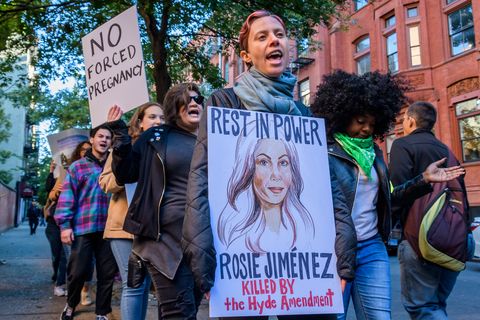
manhattan, new york, united states   20191005 pro choice protesters picketed outside the church where anti abortion groups gathered abortion rights activists from a number of organizations held a demonstration outside of the basilica of st patricks old cathedral in soho, where congregants meet on the first saturday of every month before marching to the planned parenthood clinic on bleecker street to pray, and to allegedly harass and intimidate patients as they enter the clinic photo by erik mcgregorlightrocket via getty images
An abortion rights protester holds a sign that reads, “Rest in Power Rosie Jiménez, killed by the Hyde Amendment.” Jiménez died in 1977, a year after the amendment’s passing, due to an illegal abortion.ERIK MCGREGORGETTY IMAGES

How does it disproportionately affect Black and Latinx communities, and other marginalized communities?

DL: The Hyde Amendment falls hardest on communities who are already marginalized by our health care system, and disproportionately impacts Black, Indigenous, and people of color by denying them the ability to control their lives, bodies, and futures, and to live with dignity and economic security.

The impact of the Hyde Amendment is now compounded by the COVID-19 pandemic, which has resulted in job loss and economic insecurity, exacerbated health inequities, and killed Black, Latinx, and Native people at vastly disproportionate rates. It’s also important to recognize that Hyde, like police violence, wage gaps, inequities exposed by COVID-19 this year, is rooted in systemic racism that denies the humanity of Black, Indigenous, and people of color, and the ability to thrive in their own communities.

We also know that when politicians restrict Medicaid coverage of abortion, they force one in four poor women seeking an abortion to carry an unwanted pregnancy to term. And when a woman wants to get an abortion but is denied, she is more likely to fall into poverty.

JP: Barriers to abortion care like the Hyde Amendment disproportionately impact those who already face the most barriers in our health system, including Black women, Indigenous women, other people of color, young people, transgender and nonbinary people, LGBTQIA people, and those living in rural communities. Especially in the midst of a pandemic that is inequitably impacting communities of color, it is more important than ever that we address the historically racist policies denying people access to basic, essential health care.

HP: The harmful burdens of the Hyde Amendment are intentionally and unjustly imposed on Black and Brown people, and on people with low incomes. In other words: people who have been historically marginalized.

Because of the legacy of systemic racism in this country, Black and Brown women are disproportionately likely to be insured through Medicaid: 31 percent of Black women and 27 percent of Hispanic women aged 15 to 44 are enrolled in Medicaid, compared with 16 percent of white women. As our country undergoes a racial reckoning, I want to be clear: The Hyde Amendment is a racist policy.

As our country undergoes a racial reckoning, I want to be clear: The Hyde Amendment is a racist policy.

The United States has the highest maternal mortality rate among developed countries, with dramatic but preventable racial inequities. Black and Indigenous women’s maternal mortality rates are two to three times the rate of white women.

Reflect on these overlapping and perverse indignities: The Hyde Amendment disproportionately withholds abortion coverage from Black and Brown communities—a potential consequence of which is being forced to continue a pregnancy in a system in which Black and Indigenous people are astonishingly more likely to die.

What is the status of Hyde right now?

DL: While the Hyde Amendment remains in the current federal spending bill, the momentum to end it once and for all has never been higher.

On the federal level, the EACH Woman Act—a groundbreaking bill, led by U.S. Senator Tammy Duckworth in the Senate and U.S. representative Barbara Lee in the House, that would ensure public and private coverage—is up to 207 co-sponsors. Earlier this year, U.S. representatives Ayanna Pressley, Alexandria Ocasio-Cortez, Barbara Lee, and Jan Schakowsky filed an amendment to strip Hyde from the federal spending bill, and as she said this week, U.S. representative Rosa DeLauro has committed to ending the Hyde Amendment in next year’s federal spending bill.

Locally, elected officials have declared their support for abortion coverage, and lawmakers in cities like Austin and New York have stepped up for the second consecutive year to dedicate funding within their city budgets to practical support for abortion care. Maine and Illinois are the latest two states to ensure insurance coverage for abortion for folks in their respective states.

The majority of national voters—62 percent—support Medicaid coverage of abortion.

HP: Across 34 states and the District of Columbia, the Hyde Amendment leaves seven million women who are already struggling financially without abortion coverage. On average, an abortion at 10 weeks costs around $550, which could be someone’s entire rent payment. And the cost increases over time. Contrast that with the fact that—even before the current recession—37 percent of Americans said they would struggle to cover an emergency expense of $400, for any purpose.

JP: While the Hyde Amendment is currently in place, Congress and the Biden–Harris administration have an opportunity to end the Hyde Amendment by ensuring a clean budget, passing clean appropriations bills, and moving forward with legislation like the EACH Woman Act. The EACH Woman Act would prohibit politicians from interfering with personal health care decisions through sneaky coverage restrictions that deny people struggling financially the ability to get the affordable abortion care they need. Abortion care should be made accessible to all people regardless of where they live or how much they make. Pregnant people and their families should have full access to the care they need as decided only by themselves with support from medical providers, not politicians.ADVERTISEMENT – CONTINUE READING BELOW

On average, an abortion at 10 weeks costs around $550, which could be someone’s entire rent payment. And the cost increases over time.

Why is the House’s December 8 hearing on the amendment so important?

DL: This week’s hearing has been years in the making, all thanks to the power, strength, and voices of women of color who have been leading the movement to end the Hyde Amendment for decades. The hearing also demonstrates the strong commitment from elected officials to end the Hyde Amendment in next year’s federal spending bill.

We also heard from three powerhouse women of color who are dedicated to ending abortion coverage bans and fighting for the dignity, well-being, and economic security of the folks that they serve.

This week’s hearing has been years in the making, all thanks to the power, strength, and voices of women of color who have been leading the movement to end the Hyde Amendment for decades.

HP: Looking ahead to the 117th Congress and the Biden administration, the historic significance of this hearing on the Hyde Amendment cannot be overstated. Congresswoman DeLauro was selected by her colleagues to chair the full Appropriations Committee starting next year, and we are especially encouraged by the clear commitments she and her subcommittee colleagues have made to lift the harmful and discriminatory Hyde Amendment and support abortion coverage for all.

JP: We have ignored the real, devastating harms of the Hyde Amendment for decades. When people don’t have access to the abortion care they need, their well-being and the well-being of their families and communities are negatively impacted. It was an honor to testify alongside my colleagues Dr. Herminia Palacio and Amanda Beatriz Williams as we collectively shared the harms of the Hyde Amendment and our vision for a future where all people can access the health care they need, no matter the source of their insurance.

What happens if Congress decides to lift the Hyde amendment?

JP: When we end the Hyde Amendment, abortion care will be treated like the basic, essential health care it is. Insurance coverage of abortion should be comparable to other essential health care services. Abortion should not be singled out for exclusion or have additional burdens placed upon it.

DL: Ending the Hyde Amendment in the federal spending bill helps ensure that people working to make ends meet can get the abortion care that they need, and gets us one step closer to a future where each of us can live, work, and make decisions about our health and our future with dignity and economic security.

When we end the Hyde Amendment, abortion care will be treated like the basic, essential health care it is.

We are also calling on President-elect Biden to demonstrate his commitment to ending Hyde by introducing a presidential budget without this policy, and appoint cabinet nominees that have a strong commitment to protecting and expanding reproductive health care, economic justice, and racial justice.

HP: Repealing Hyde is a necessary step to dismantle systemic racism and ensure that our public policies support bodily autonomy and safe, healthy communities. Repealing the Hyde Amendment would mean greater equity in insurance coverage for abortion, and it would be an important step in making abortion care more available for those who want and need it. But the fight to protect and expand abortion rights and access does not stop there. Both federal and state policymakers must do much more to roll back harmful restrictions and short up and expand abortion rights.

What happens if it doesn’t?

HP: Hyde would continue to pose a major barrier to accessing care for people with low incomes—and an insurmountable one for many of them.

Abortion patients include people of every race, religion, political affiliation, and socioeconomic group, and the majority are already parents. One in four cisgender women in the United States will have an abortion in their lifetime. Likewise, trans men and gender-nonconforming individuals require access to the full range of pregnancy-related care. Overall, 75 percent of abortion patients in the United States are low-income, and the majority are people of color.

Many people with low incomes experience delays accessing abortion care because of the time and effort needed to pull together funds. People get caught in a cruel cycle, in which delays associated with raising the money leads to additional costs and subsequent delays.

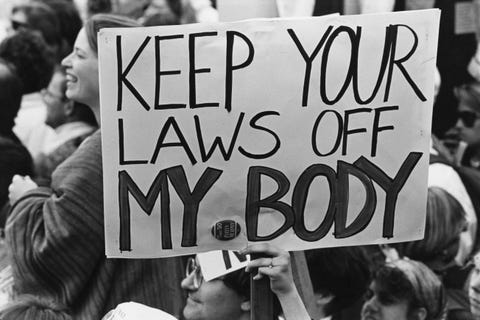
pro choice campaigners at a march for womens equality in washington, dc, 9th april 1989 one placard reads keep your laws off my body  photo by barbara alpergetty images
A sign at a pro-choice rally reads, “Keep your laws off my body.”BARBARA ALPERGETTY IMAGES

literature review conducted by Guttmacher concluded that among women with Medicaid coverage subject to the Hyde Amendment, one in four who seek an abortion are forced to continue the pregnancy.

Forcing someone who wants an abortion to continue a pregnancy is not only a violation of their reproductive autonomy; it is tantamount to requiring them, against their wishes, to accept the risks of pregnancy- and labor-related complications, including preeclampsia, infections, and death.

JP: We will continue to operate under a two-tiered system of health care where some people get the health care they need and others don’t. This is absolutely egregious, and we cannot accept health care access being dictated by one’s income, socioeconomic status, and zip code.

DL: If Congress does not act and end the Hyde Amendment, people struggling financially and who are already marginalized will continue to bear the brunt of this harmful policy.

We are calling for a future where each of us can live our lives with dignity, respect, and economic security, and the women of color who have led this movement from the beginning will continue our work until Hyde is no more.

We are calling for a future where each of us can live our lives with dignity, respect, and economic security.

This interview has been edited and condensed for clarity.

12/11/20: This story has been updated to include answers from All* Above All, an organization that has been instrumental in the fight to repeal the Hyde Amendment.

Source: https://www.harpersbazaar.com/culture/politics/a34906333/hyde-amendment-facts/