Ann Marie Benitez of the National Latina Institute for Reproductive Justice: “We must ensure that folks in our communities understand … abortion care is legal in the entire country.”

President Trump is leaving office having appointed three Supreme Court justices, with abortion rights in the balance, and abortion access severely limited in some parts of the country. Yet the reproductive health justice movement has been mobilizing to fight back. “There was a significant surge in state-level abortion restrictions starting in 2010 that has never really slowed down, so responding to these attacks on access in so many places is unfortunately the new normal,” said Julie Gonen, policy director at the National Center for Lesbian Rights.

And this past summer, the COVID-19 crisis created an opportunity for anti-abortion lawmakers to halt abortions as “nonessential,” providing a “glimpse of what a post-Roe world will look like,” said Julie Burkhart, founder and CEO of Trust Women, an advocacy organization that has clinics in Wichita and Oklahoma City. Some governors issued executive orders banning abortion statewide, including in Texas and Oklahoma. Trust Women’s clinics were overrun, with staff working 12- to 18-hour days. “We saw a 400% increase in patients seeking abortion care, and we had people traveling from Houston all the way to Wichita to get an abortion,” said Burkhart.

The clinic closings due to the pandemic and the wave of extreme abortion bans in 2019 necessitated putting forward “the basic message that abortion is still legal in all 50 states,” said Ann Marie Benitez, senior director of government relations at the National Latina Institute for Reproductive Justice. “With all the misinformation, disinformation, fake clinics, and anti-abortion officials playing politics with people’s lives, we must ensure that folks in our communities understand that very crucial message — abortion care is legal in the entire country.”

Despite more than 450 state-level restrictions put in place since January 2011, organizations and activists have adapted strategies to not only sustain the movement to keep abortion accessible and available, but make it stronger. “Reproductive justice advocates have insisted on having a place at the table and pushed the broader movement to expand its vision beyond simply protecting the legal right to abortion,” said Gonen. “The voices of young people, people of color, and those who have had abortions have been better amplified. While we can’t stop advocating for better legislative and judicial protection of the right to access reproductive health care, we do better when we link arms with other movements, like those seeking to secure access to health care more generally and those, like NCLR, working to ensure equality for LGBTQ people.”

In addition to coalition-building and working to create a more inclusive movement, advocates have been amplifying the pro-choice religious community, promoting personal storytelling about abortion, and researching language around abortion care to create impactful messaging. There are also increased efforts to raise awareness about the nation’s 70-plus abortion funds, which are unified through the National Network of Abortion Funds. Cost and travel are major barriers to accessing abortion care, and abortion funds are an increasingly crucial resource for low-income women, especially in rural areas and in states with few or even one clinic.

“Abortion funds are mutual aid funds — we literally use money donated from people who believe in the right to an abortion and want to support people who are being denied health care by the government,” said Kamyon Conner, executive director of Texas Equal Access Fund, which provides funding to low-income women in northern Texas. “COVID showed us that we are in a unique position to provide a direct link between abortion providers and women seeking abortion care. And this spring, when clinics were being closed in Texas, abortion providers were relying on us for support to assist people in need of abortion care.”

Not only do the funds help cover the cost of an abortion, they can help with transportation and child care. “One of the beautiful things about abortion funds is how they have always been deeply creative and connected in developing solutions,” said Steffani Bangel, executive director of the New Orleans Abortion Fund. “We have, for years, learned from each other about the best ways to continue to facilitate access for our communities despite political and structural attacks on our rights.”

Advocacy organizations have been putting resources into polling and research to better understand views on abortion. After conducting research in 2019, NARAL Pro-Choice America now uses “freedom to decide” rather than “right to choose” in their materials. “We found that language around freedom from political interference and freedom to make personal decisions resonated with people,” said Kristin Ford, national communications director at NARAL. “This messaging especially resonated with people who have personal conflicts with abortion but they feel uncomfortable with the government interfering in personal decisions. This language is more in line with what other political movements use — it’s not about personal identity, such as saying you are pro-choice, but around your beliefs. We are seeing a shift, and the broader Democratic party and progressive movement has now coalesced around abortion rights as a nonnegotiable position. Abortion is increasingly seen as foundational right and that it’s impossible to talk about a living wage, etc., without being able to make your own decisions about parenthood and pregnancy.”

A national survey of Catholic voters in the 2020 election found that they are nearly twice as likely to vote for a candidate who supports access to abortion care than candidates who want to make it illegal. “We were a part of the coalition that elected Biden,” said Jamie Manson, president of Catholics for Choice. “What we have seen in this election is that the religious left is the sleeping giant of the pro-choice movement, and we saw a resurgence of it this year. There is a lot of activism among Catholics on the ground, and we are trying to organize people and engage them to be part of the larger reproductive justice movement. We have a president and we have lawmakers like Alexandria Ocasio-Cortez who are specifically appealing to their Catholic faith to support their ideas of social justice. That is something we want to leverage. We are also looking at the language that we use — the word ‘choice’ is great for women who have choices, but not everyone does.”

Since 2012, the National Latina Institute for Reproductive Justice has conducted annual polls of Latino/a voters and found a majority would support a loved one who decided to have an abortion despite some narratives in the media that depict the community as conservative on the issue. The Road to Reproductive Justice: Native Americans in New Mexicoa report by Forward Together, investigated stereotypes around Native Americans used by anti-choice legislators to falsely promote the narrative that most are against abortion due to cultural and religious beliefs. Instead, the report found that a large majority of Native Americans “hold respectful and complex views on abortion” and trust women to make their own decisions without government interference.“We have been working to de-polarize the public’s point of view on abortion by promoting the message that abortion care is health care and that women be allowed to make the decision about having an abortion themselves,” said Adriann Barboa, New Mexico policy director at Forward Together. “We’ve done polling that shows people are more likely to agree to statements about women being left to decide about abortion care for themselves with their loved ones than ones about supporting abortion itself. [New Mexico] is one of the poorest states in the country, and people don’t have a lot of options in many parts of their life, so ‘my body, my choice’ doesn’t resonate.”

Nearly one in four women has an abortion, and advocates believe their stories should be told and out in the open. “Abortion doesn’t occur in the abstract, and abortion restrictions affect real people,” said Gonen. “The more people tell their stories — about their own abortions, about their experiences providing abortion care, about how their own families have been affected by government-imposed restrictions — the more the issue is humanized and the more people will realize that forced pregnancy is reprehensible in a nation that claims to value freedom.”

Earlier this year, the Black Women’s Health Imperative put out its Black Women Vote: National Health Policy Agenda, a blueprint for the health and wellness of Black women, which they will continue to use to “hold elected officials accountable for delivering on abortion rights and reproductive justice,” said Kineta Sealey, policy counsel. “We have worked really hard to reach women of color, especially those who may lack access to accurate information and those who reside in the South. It all comes back to education and facts. We have to keep our eyes on the ball on everything from calling for the FDA to lift restrictions on access to medical abortion to passing the EACH [Equal Access to Abortion Coverage in Health Insurance] Woman Act.” And President-elect Joe Biden will face pressure to fulfill his campaign promise to overturn the Hyde Amendment, which prohibits public funding of abortions.

“Even though the majority of Americans believe in the legality of abortion rights in this country, there is a disconnect with some of those voters,” said Burkhart. “We still lack the ability to reach the middle in certain areas of the country — that of Republicans and rural voters in particular. The political divide that we have between Democrats and Republicans most definitely contributes to this dynamic, as abortion rights are voted on, primarily, right down party lines, when in reality, the women having abortions are not just urban, liberal, Democratic voters. This is where some of the disconnect lies.”

The restrictions over the past decade “have only ignited us,” said Benitez. “We know that the courts will not save us, Roe cannot save us; we must organize and mobilize our communities to hold our elected officials accountable to ensure access to safe, affordable abortion care for everyone. We have seen the disparities in health outcomes across the board, never more evident than now during this pandemic. Who better to lead the fight for equal access to reproductive health care than those hardest hit by the repercussions of that inequality?

The lived experiences of women of color have been ignored for far too long. It is time we put women of color front and center and look to our communities to lead the fight for justice.”

Source: https://womensmediacenter.com/news-features/the-reproductive-justice-movement-is-fighting-back

In a disturbing irony, Poland’s decision to remove the “fetal defect” grounds for abortion will have a disproportionately negative impact on the lives and well-being of women with disabilities.

On Oct. 22, Poland’s Constitutional Tribunal ruled that Poland’s law permitting abortion on grounds of “a severe and irreversible fetal defect or incurable illness that threatens the fetus’s life” was unconstitutional. The decision triggered mass protests across Poland and uniting hundreds of thousands of people from all walks of life in their concern over the increasing restrictions on women’s rights.

This decision effectively bans access to safe and legal abortion for all pregnant persons, including women with disabilities. The Tribunal asserted that removing the “fetal defect” grounds for abortion would protect the rights of persons with disabilities. 

To be sure, the intersection of abortion rights and disability rights is complex, especially in an overwhelmingly ableist world. Some disability rights advocates are concerned that laws that expressly permit abortion on grounds of fetal impairment codify the notion that disabled lives are worth less than non-disabled lives. Reproductive rights advocates are concerned that reforming abortion laws to remove fetal impairment grounds—or to expressly ban abortion in the case of a fetal impairment diagnosis—will result in less access to safe abortion and exacerbate related human rights consequences for those seeking to terminate their pregnancies, as we anticipate seeing in Poland as a result of this decision.

Too often, however, the diverse voices and perspectives of women with disabilities are left out of these debates. Yet, as people who experience ableism, sexism and other forms of discrimination and need to access the full range of sexual and reproductive health care, including abortion, they are uniquely positioned to address this debate’s complexity and bring essential perspectives to this ongoing debate.

Indeed, Polish feminists with disabilities have brought powerful dissent and insights to the ongoing protests and discussions about abortion in Poland—both on- and offline. In a recent webinar organized by our organizations, Artykuł 6 and Women Enabled International (WEI), together with CREA and Pełnoprawna, Polish feminists with disabilities stressed that pitting reproductive rights against disability rights discounts the perspectives of women with disabilities and undermines the human rights approach to disability rights as encapsulated in the UN Convention on the Rights of Persons with Disabilities (CRPD).

Furthermore, as WEI has documented, meaningful reproductive autonomy is a priority for women with disabilities all around the world, both as women and persons with disabilities, and access to abortion is an important part of that reproductive autonomy—and more broadly of their inherent and inalienable right to dignity.

But to exercise reproductive autonomy, people need both the legal right to make decisions about their bodies and lives and an enabling and non-stigmatizing environment in which to do so. Such an environment means that the full range of reproductive health care is fully accessible to all (including financially accessible) and that people can make reproductive health choices without stigma and fear.

It also means that pregnant people can receive unbiased information about a “fetal impairment” diagnosis at all times, including free from bias about the value of the life of a person with a disability, and that the rights of persons with disabilities living in the world are fully respected, protected, and fulfilled.

In a disturbing irony, Poland’s decision to remove the “fetal defect” grounds for abortion will have a disproportionately negative impact on the lives and well-being of women with disabilities. (Abortion and Disability: Towards an Intersectional Human Rights Approach / Women Enabled International)

By removing one of the only remaining legal grounds for abortion in Poland while continually failing to ensure an environment that recognizes the dignity of persons with disabilities living in the country, the Constitutional Tribunal ruling fails on many levels to ensure reproductive autonomy or to meet Poland’s human rights obligations.

And in a disturbing irony, its decision will have a disproportionately negative impact on the lives and well-being of women with disabilities.

Why? Because women with disabilities typically are structurally hindered from accessing education and employment, resulting in lower incomes, so frequently cannot afford to travel abroad for abortion. Women with mobility-related disabilities face additional barriers, as the means of travel are often inaccessible. These inequalities are further exacerbated in the context of the current global pandemic.

Put most powerfully by Artykuł 6, the Constitutional Tribunal’s ruling “violates human rights and any respect for the decisions and needs of women, including women with disabilities. Instead, it imposes a limited vision of life and femininity that is contingent on subordination and coercion of women and girls with disabilities.”

Poland has clear legal obligations under the UN CRPD to protect the rights of persons with disabilities—including to protect the sexual and reproductive health and rights of women, girls, and pregnant persons with disabilities.

To meet these international legal obligations, Poland must:

  • Ensure that people with disabilities have access to a full range of sexual and reproductive health care (including abortion where needed).
  • Abolish laws that restrict the legal capacity of persons with disabilities to make their own decisions.
  • Support persons with disabilities to lead autonomous, dignified and independent lives, and ensure that persons with disabilities can access quality education, meaningful employment, and social life.
  • Ensure that persons with disabilities and their families have access to the range of supports and services they may need.
  • Foster a climate where people with disabilities can participate freely as equal and valued members of society.

The clock is ticking.

Source: https://msmagazine.com/2020/12/15/abortion-poland-polish-feminists-women-with-disabilities-fetal-defect/

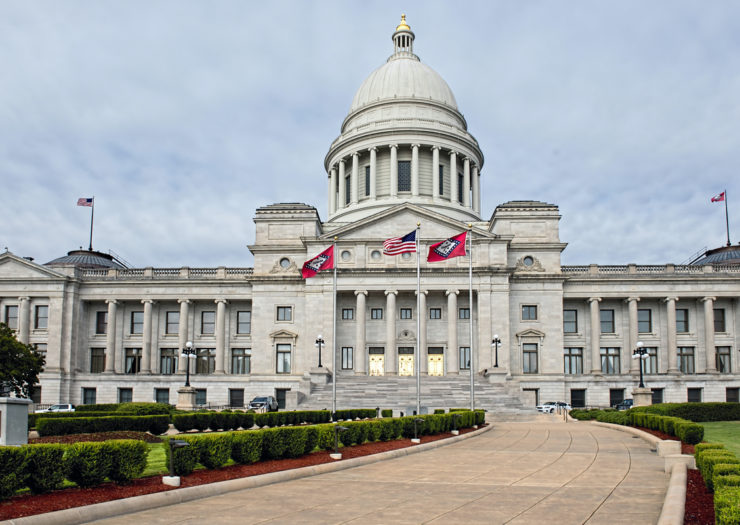
The “Unborn Child Protection Act” was filed ahead of Arkansas’ next legislative session meant to more directly challenge Roe v. Wade.

Advocates for reproductive rights in Arkansas have had their hands full fighting back against anti-choice legislation over the last decade, with some bills landing in multiyear battles in federal court.
 Shutterstock

UPDATE, December 23, 11:15 a.m.: On Tuesday night, a federal judge blocked four anti-abortion laws from taking effect in the state.

Amy Coney Barrett has been a Supreme Court justice for less than two months, yet Arkansas lawmakers wasted no time introducing an anti-abortion bill aimed squarely at the Court, whose new conservative supermajority puts the future of abortion rights in serious jeopardy.

Advocates have called the Unborn Child Protection Act, introduced in November ahead of Arkansas’ next legislative session, “so egregious”—particularly in light of the COVID-19 pandemic that continues to ravage the country with no federal relief bill in sight.

Arkansas already has a law banning abortion should the Supreme Court overturn Roe v. Wade20 other states have similiar laws in place.

The same lawmaker who sponsored the state’s so-called trigger ban last year, Republican state Sen. Jason Rapert, introduced this latest bill that he said was meant to more directly challenge Roe. He did not return multiple requests for comment.

SB 6 would ban all abortion unless a woman’s life was in danger, and like the trigger ban, it has language unusually directed to the nation’s high court.

“The State of Arkansas urgently pleads with the United States Supreme Court to do the right thing, as they did in one of their greatest cases, Brown v. Board of Education, which overturned a fifty-eight year-old precedent of the United States, and reverse, cancel, overturn, and annul Roe v. Wade, Doe v. Bolton, and Planned Parenthood v. Casey,” the legislation reads.

ACLU of Arkansas Executive Director Holly Dickson issued a statement calling Rapert’s bill “cruel and blatantly unconstitutional.” She urged state lawmakers to shelve the bill and focus on COVID-19 relief.

“Let’s be clear: if passed, this brazenly unconstitutional abortion ban will be struck down in court, and legislators who passed it will have achieved nothing but having wasted taxpayer dollars on an unlawful measure and diverted scarce resources from the urgent needs our communities face in the midst of an ongoing and devastating pandemic,” Dickson said.

Gloria Pedro, Planned Parenthood Great Plains Votes’ regional manager of public policy and organizing for Arkansas and Oklahoma, said the bill is the “equivalent of a demand letter to the Supreme Court, which is not how the Supreme Court works. And there’s already a trigger law passed, which is why this is so egregious.”

Patients can access abortion in Arkansas up to the 20th week postfertilization, or 22 weeks’ gestation. There are two clinics in the state, both in Little Rock, though only one provides procedural abortions.Reproductive rights groups conceded there are more anti-choice bills passed every legislative session than could possibly be challenged.

Advocates for reproductive rights in Arkansas have had their hands full fighting back against anti-choice legislation over the last decade, with some bills landing in multiyear battles in federal court. Conservatives have long eagerly eyed the Eighth Circuit, a federal appellate court with jurisdiction over Arkansas, as a way to bring a challenge against Roe to the U.S Supreme Court. Back in 2015, Eighth Circuit appellate judges recommended the high court “reevaluate its jurisprudence” on abortion, and urged for more state discretion over reproductive decision-making.

One such challenge began in 2017, after Arkansas legislators passed new laws to criminalize doctors who perform dilation and evacuation (the most common second-trimester abortion procedure) and require a patient inform the person who got them pregnant before they could get an abortion. The ACLU of Arkansas and the Center for Reproductive Rights sued over those laws and additional state restrictions, like requiring doctors to notify local law enforcement when patients under 17 years old seek to terminate a pregnancy. The laws were temporarily enjoined.

This past August, a three-person Eighth Circuit panel ruled against the plaintiffs, citing Chief Justice John Roberts’ concurrence in the Supreme Court’s recent June Medical Services v. Russo decision. In that case, the Supreme Court ruled that a Louisiana law placing hospital admission requirements on abortion clinic providers was unconstitutional, echoing its 2016 position in Whole Woman’s Health v. Hellerstedt.

But in his concurring opinion, Roberts argued that while he agreed with his four liberal colleagues that the Louisiana case was virtually identical to Whole Woman’s Health, he believed the “undue burden” standard used to decide that case was wrong, and should not involve weighing costs and benefits of an abortion restriction when judging its legality.

“We don’t agree that one justice’s opinion can change the precedent set by Whole Woman’s Health that clarified the undue burden standard requires this balancing standard,” said Hillary Schneller, a senior staff attorney at the Center for Reproductive Rights, who asked the Eighth Circuit to review the decision en banc. (That means the case will be heard before the entire bench of judges, rather than a three-person panel.)

Schneller said “there’s always a chance” a case like this could wind up at the Supreme Court, but for now they’re just waiting on the Eighth Circuit.

That wait came to an end Tuesday afternoon when the Eighth Circuit summarily rejected the en banc request in a one-page order. Without further court intervention Arkansas’ restrictions could take effect as soon as December 22.

Meanwhile, reproductive rights advocates have also been dealing with harassment related to the pandemic. Arkansas health officials earlier this year sent a cease-and-desist letter to Little Rock Family Planning Services, arguing their procedural abortions were “elective” and should wait until after the public health crisis ends. State officials also tried to force patients to get negative COVID-19 tests within 48 hours of getting an abortion, even though tests were in short supply.

While advocates have successfully fended off some of the worst restrictions, reproductive rights groups concede there are more anti-choice bills passed every legislative session than could possibly be challenged.

“We can’t challenge every single restriction and those restrictions are continuing to stack on the books,” Dickson said. “They join together to create substantial obstacles and burdens for patients.” There was a 30 percent decline in the Arkansas abortion rate between 2014 and 2017, and according to the state’s health department, 2,963 abortions took place in Arkansas in 2019.

Pedro of Planned Parenthood Great Plains Votes noted that Arkansas has the fourth highest maternal mortality rate in the nation and one of the highest infant mortality rates. In 2016, Arkansas had the highest teen pregnancy rate in the country, and public schools in the state still do not provide comprehensive sex education and primarily endorse abstinence-only instruction.

“It’s not just that these bills take away reproductive rights, which is crucial, but they’re also having a real tangible impact in our state, and things are getting worse,” Pedro said.

Pedro and Dickson say the most helpful thing would be for residents to pressure their state representatives to avoid wasting energy and resources on more anti-choice bills.

“Arkansas does not need to fly the trial balloon and be the trendsetter on setting regressive law,” Dickson said. “We have so many other things that we need our state to focus on.”

Source: https://rewirenewsgroup.com/article/2020/12/16/arkansas-could-give-amy-coney-barrett-her-big-abortion-moment/?fbclid=IwAR3OIXdMOnI61Wt54k2vJ_oCCvOfT8EV91aW0M9cR8dn8rU3tpwgwwIBeCQ

When Joe Biden is inaugurated on Jan. 20, he will become the most prominent pro-choice Catholic in the country.

Although the U.S. Council of Catholic Bishops opposes abortion and advocates for religous exceptions to birth control coverage, the majority of U.S. Catholics support access to comprehensive reproductive health care, including 56 percent of U.S. Catholics who believe abortion should be legal in all or most cases. Jamie Manson, president of Catholics for Choice, said she hopes these Catholics will have more of a voice under the incoming Biden-Harris administration.

“We see giving women access to reproductive health care as being pro-life,” Manson said of Catholics for Choice, which was founded in 1973 by Catholics who believe that the faith tradition supports a person’s right to follow their conscience on matters of their own reproductive health.

 “We love our faith but we don’t want to see our faith have disproportionate influence in policy,” Manson said. “We do not want to see it misused and become an instrument of harm, particularly to the most vulnerable and the poorest.”

This week, Biden tapped California attorney general Xavier Becerra, a Catholic, as the next secretary of health and human services.

“His record suggests that he sees the issue of reproductive rights through the lens of social justice,” Manson said. Earlier this year, Becerra led a coalition of attorneys general in filing an amicus brief opposing a Mississippi abortion ban that he called “unjust, unlawful, and unfair.”

After four years of Trump administration policies driven by fierce opposition to abortion rights, especially from Christian conservatives, Manson and other faith-based reproductive rights advocates are hoping that the incoming Biden-Harris administration will turn the tide. Advocates are looking to the president-elect to end policies that have curtailed access to reproductive health care, particularly for low-income Americans.

Reproductive health care as a human right

Since taking office, Donald Trump has taken many steps to rollback access to reproductive health care, often through agency rulemaking and executive orders. One of his first actions as president was to reinstate a policy that prohibits any nonprofit receiving U.S. global health funds from performing or mentioning abortion as a method of family planning.

In 2019, the Trump administration applied that rule domestically, rewriting the Title X low-income family planning program to prohibit fund recipients from providing abortion referrals, even when patients request it. The new rule caused approximately one-quarter of all U.S. clinics that received Title X funding to leave the program, according to the pro-choice research institution the Guttmacher Institute. Guttmacher estimates that the changes reduced the Title X network’s capacity to provide women with contraceptive services by at least 46 percent.

Reproductive rights advocates hope that Biden will reverse these policies and instead funnel more federal money into comprehensive reproductive health care services.

Cherisse Scott, a former nondenominational minister and founder of SisterReach, a reproductive rights nonprofit based in Tennessee, hopes that Biden “will replenish and invest federal dollars into making sure that young people have access to comprehensive sex education” for K-12 and college students.

“One of the biblical scriptures we use to guide our commitment to comprehensive reproductive and sexual health education, is Hosea 4:6: ‘My people are destroyed for a lack of knowledge,’” said Scott. “Access to education and being empowered to inform if, when, and how you will engage in sex, parenting, or even celibacy is only achieved by an informed and unhindered understanding of our bodies.”

Advocates also hope that Biden will block a budget provision known as the Hyde Amendment. First approved by Congress in the 1970s, the amendment blocks the use of federal funds for abortion care, meaning individuals who get their coverage through Medicare, Medicaid, or the U.S. military aren’t able to access that health care.

“We don’t want to see that in the president’s budget,” said Rev. Sung Yeon Choimorrow, executive director of the National Asian Pacific American Women’s Forum and an ordained minister in the Presbyterian Church (U.S.A.). “What we really want is for every person to make the decision for themselves as to if, when, and how they want to parent,” Choimorrow said.

The Trump administration has also offered faith-based exemptions to religious employers who don’t want to offer contraception in their employee insurance plans, as is mandated by the Affordable Care Act.

Rabbi Hara Person, chief executive of the Central Conference of American Rabbis, the leadership organization of Reform Judaism in the United States, said these carveouts were part of a broader trend of the Trump administration favoring certain religious viewpoints over others.

“The idea that religious liberty is about restricting people’s rights and allowing one religious perspective to control other people’s opinions is a complete misuse of what religious liberty is supposed to be about,” Person said. “When religious liberty is being used as a way to control other people, that’s religious liberty being used as a hammer.”

Reform Judaism considers abortion to be part of health care and health care to be a human right, she said. “We’re all created equal, and we’re all created in the image of God,” Person said. “So nobody should have the right to say to another person, ‘You can’t make decisions for yourself.’”

While there is much that the new administration can change in the way of health policy, rollbacks in the federal court system and state legislatures won’t be easily undone. Biden will be far from a cure-all, advocates say.

Even if the Biden-Harris administration champions the most expansive view of reproductive rights and justice, “so much, in terms of abortion, sex ed, and Medicaid expansion, happens on the state level,” said Rev. Katey Zeh, CEO of the Religious Coalition for Reproductive Choice.

The RCRC is an interfaith organization of religious leaders for whom access to comprehensive reproductive health services, including abortion, is an expression of religious freedom, according to Zeh. The organization has its roots in a pre-Roe v. Wade clergy consultation service where Christian, Jewish, and Unitarian clergy helped people access safe and affordable abortion care.

“Even going back to pre-Trump, the state of reproductive health rights and justice wasn’t great,” said Zeh. “It’s certainly gotten worse, but it’s not like our aim is to return to where we were four years ago.”

Source: https://sojo.net/articles/biden-pro-choice-catholic-will-he-expand-reproductive-health-care?fbclid=IwAR02PfguL5Co4zOV6Y_j3_bjwqE5AXPTVPtTgLEZrZ2VHZK5v2J9Dx4WfZo

Massachusetts is a safer state for pregnant people than it was last week. I’ll take the win, but the moment doesn’t feel victorious.

In the end, the ROE Act was only possible because we have utterly lost the battle for a bold, comprehensive vision of reproductive health care in this country.
 Sarah Silbiger/Getty Images

Three years ago, I sat at my kitchen table with the blinds drawn while my kids were at school, on a call with a professional abortion rights advocate. Ever the good student, I had a legal pad and a pen in front of me to take notes. I’d had a third-trimester abortion in Colorado the month prior.

It had been a complicated procedure; I was probably still not well the day I made that call. But at that time in my life I was living off rage. From the moment my doctors in Boston told me they couldn’t help me themselves—because Massachusetts law banned abortion after 24 weeks except in cases of a fetal anomaly—and that the best they could do was to ship me off like tainted goods to another state, I had been furious. I asked to speak to this advocate, looking for a way to change something.

“Your case wouldn’t have fit the legal definition of a fatal anomaly under Roe,” she explained, slowly and clearly, so I would hear her. “Hospitals have maybe three conditions their lawyers tell them will safely fit under ‘fatal.’ And anyway, there’s no hope of expanding later abortion access more generally in Massachusetts—too many blue Catholics in that legislature. We barely managed to get rid of two-parent consent for minors.”

She was right—in 2017. A year later, President Trump began escalating violent anti-abortion rhetoric at rallies and even the State of the Union. Brett Kavanaugh was appointed to the Supreme Court. Trump and Vice President Mike Pence appeared at the March for Life rally. And slowly but surely, with escalating attacks on abortion rights coming from the Trump administration, deep-blue Massachusetts had enough political cover to draft the original ROE Act. Even with all those “blue Catholics” in the state legislature.

I testified to the Massachusetts Senate Judiciary Committee in 2019 on behalf of the ROE Act, three weeks after giving birth to a baby girl. She came to the statehouse with me, and a sympathetic staffer let me use an empty office to feed her while I waited to testify. Someone on the committee made nice noises about bravery and thanked me.

I didn’t feel brave: I was angry. I was angrier still when a year passed and the bill stalled in committee, as the legislature hoped they could profit off merely drafting the legislation, then scrap it as unnecessary after a Biden win.I wonder, often, if my casually anti-choice acquaintances realize quite how completely Christian extremism will soon come to legislate their family’s most intimate choices.

The death of Justice Ruth Bader Ginsburg in September and the appointment of Amy Coney Barrett weeks later finally shifted the political winds enough to put the bill back into play.

The ROE Act, adapted into a section of the budget, passed for a second time last Thursday, overruling Gov. Charlie Baker’s proposed changes to the bill. Baker can, in theory, veto the measure after it is sent to him a second time, but both chambers have a veto-proof supermajority. The legislation does two things: increases access to abortion care for young people and expands access for those seeking care after 24 weeks of pregnancy.

First, it lowers the age of consent from 18 to 16, ending judicial bypass for youth over the age of 16. Those younger than 16 will now be able to request judicial bypass via a televisit, rather than going before a judge in person.

Second, the bill codifies the right granted under Roe v. Wade to an abortion after viability in the case of fatal fetal anomaly, and it expands that right to include a meaningful maternal health exception after 24 weeks. With the passage of this legislation, Massachusetts joins a small group of blue states that codified or expanded Roe during the Trump administration.

I am supposed to be happy. And don’t get me wrong: I’ll take the win. But this moment doesn’t feel victorious. These new laws codifying and slightly expanding Roe in Massachusetts are a rearguard action in a battle we’ve already lost. In the end, the ROE Act was only possible because we have utterly lost the battle for a bold, comprehensive vision of reproductive health care in this country.

I am not a professional advocate: I have a day job, three young children, a frontline spouse. But even I can feel the winds shifting in professional advocacy circles toward more focus on medication abortion, decriminalizing self-managed abortion, and bulwarking whatever states we can in whatever time we have left as the movement lays the groundwork for what comes next.

And what comes next is that later abortion is fucked. One way or another, abortion after the first trimester is dead on arrival in the majority of the United States. People like me, who needed complex, surgical abortion care late in pregnancy? Forget about it. The absolute best-case scenario is that the scant handful of providers that help those later in pregnancy remain open, while blue states continue to codify Roe. The worst-case scenario is a fetal “personhood” ruling written by Justice Barrett. I wonder, often, if my casually anti-choice acquaintances realize quite how completely Christian extremism will soon come to legislate their family’s most intimate choices.

This is what I will do: Celebrate the passage of the ROE Act. Take a break. Then fight the next retreating battle, and the next, and decide to hope for the day when it won’t be a retreat anymore. Am I still angry? Always. But Massachusetts is a safer state for pregnant people than it was last week, and that’s not nothing. Not nothing at all.

Source: https://rewirenewsgroup.com/article/2020/12/21/i-had-to-leave-massachusetts-for-my-abortion-not-anymore/

Poland is a reminder that when authoritarians take power, attacks on reproductive rights often follow

Protesters hold banners and shout slogans during the 12th day of protests against the Constitutional Court ruling on tightening the abortion law in front of the Archbishops Palace on November 02, 2020 in Krakow, Poland. The country’s constitutional tribunal recently ruled that terminating pregnancies due to serious, irreversible fetal defects is unconstitutional. The decision sparked a wave of protests against the ruling Law and Justice party (PiS). (Omar Marques/Getty Images)

Just as voters in America were taking part in a historic presidential election, the women of Poland were taking to the streets. Up to a million people daily have taken part in mass demonstrations against Poland’s near-total ban on abortion and the ultra-conservative regime that imposed it.

The ban, approved by the country’s constitutional tribunal, outlaws abortions even in cases of serious fetal abnormalities. The response has been the largest mass protests since the Solidarity movement brought down the communist government in the 1980s.Advertisement:

Led by a grassroots group called Ogólnopolski Strajk Kobiet (All-Polish Women’s Strike), the demonstrators have also taken aim against the government’s authoritarian and anti-democratic policies more broadly. Poland’s ruling Law and Justice party is conservative, patriarchal and closely tied to the Catholic church. It won a razor-thin victory in July on a platform rife with anti-LGBT and anti-Semitic sentiment and continues to pursue a strategy intended to motivate its conservative base.

If any of this sounds familiar, it should. President-elect Joe Biden’s victory over Donald Trump was an enormous relief, but having a supporter of abortion rights in the White House should not make us complacent. With conservatives holding a majority on the Supreme Court and in state legislative chambers nationwide, Americans should be ready to agitate, organize and protest like our rights depend on it.

First, the fight for reproductive rights is inextricable from the global effort to advance human rights. What’s happening in Poland is a reminder that when authoritarian regimes undermine democratic values, attacks on reproductive rights often follow. It is no accident that the countries that joined the Trump administration in repudiating the right to abortion at the United Nations were largely repressive governments with records of violating human rights. Freedom cannot exist without reproductive freedom.Advertisement:

That is why abortion rights must be situated within a broader framework of human dignity, individual autonomy and civil rights. Polish demonstrators’ demands extend well beyond reproductive rights – to LGBTQ rights, women’s rights, greater access to health care and more separation between church and state. Abortion access is fundamental not only to women’s ability to participate equally in society, but also to all people’s right to be themselves. 

Second, mass demonstrations work – especially when they are organized from the ground up. In response to the All-Polish Women’s Strike, Poland’s ruling party has paused implementation of the ban and is calling for talks. Adam Mrozowicki, a sociologist at the University of Wrocław, described the protests to the Guardian as “decentralized, locally based, grassroots. And personally, in 20 years, I’ve never seen anything like these numbers.” Harvard University’s Erica Chenoweth has found that catalyzing meaningful political change takes around 3.5% of the population actively participating in protests, or about 11 million people in the U.S. This is not an insurmountable goal. Polling suggests that about 15 million to 26 million people in the United States participated in Black Lives Matter demonstrations over the death of George Floyd, Breonna Taylor and others.

Finally, the Polish demonstrators belie the notion that the left should soften its stance on abortion or avoid talking about the issue of abortion altogether. The Polish demonstrators’ symbols and language are raw, unapologetic and confrontational. The primary symbol of the protest is a red lightning bolt, created by designer Ola Jasionowska, who says that it symbolizes “watch out, beware, we won’t accept that women are being deprived of their basic rights.” Among the protesters’ most widespread slogans has been “Wypierdalać”, a vulgarity that translates roughly as “Fuck off.”Advertisement:

As right-wing politicians here in the U.S. strengthen their hold on the Supreme Court and state capitals around the country, it is clear they have every intention of using that power to dictate women’s personal medical decisions and criminalize abortion care. It would behoove us to remember that this is not just some abstract policy making exercise, but rather, these policies dramatically affect the lives of real people trying to access reproductive health care.

Poland’s mass demonstrations remind us of the power of protest, even in the most hostile political environment.

Don’t put away your pink pussy hat yet. Winter is coming.

Source: https://www.salon.com/2020/12/12/mass-protests-for-reproductive-rights-erupt-in-poland-why-americans-should-learn-from-them/?fbclid=IwAR1NqSnv31hp3gmj4IJig_FYorxQTGOhRRGOcaonsT5sdh_CMYm7_zz47VY

“While we’re disappointed with this order from the Eighth Circuit, we’re not backing down—this fight is nowhere near over,” Ruth Harlow, senior staff attorney in the ACLU’s Reproductive Freedom Project, said Tuesday. “To the state of Arkansas: We’ll see you back in court.”

Demonstrators for and against abortion rights outside the U.S. Supreme Court in Washington during oral arguments in the Louisiana abortion clinic case June Medical Services v Russo, on March 4, 2020. (Photo: Diego M. Radzinschi/ALM)

The U.S. Court of Appeals for the Eighth Circuit on Tuesday moved a series of abortion restrictions closer to taking effect in Arkansas.

The court denied a motion to rehear by a panel or by the full court en banc arguments over its decision in August to vacate a district judge’s preliminary injunction against enforcing the new laws.

The measures that won favor from the Eighth Circuit would ban the standard method of abortion provided after approximately 14 weeks of pregnancy in Arkansas. That moves abortion restrictions earlier in pregnancy than the precedent set by the U.S. Supreme Court in Roe v. Wade and its progeny—which is up until the point of viability, now considered to be between 20 and 25 weeks. The new measures would also require clinics to notify a woman’s partner or other family members about an abortion, report a teenager’s abortion to local police and require extensive medical records from all women seeking abortion. The order means the new restrictions could go into effect as soon as Dec. 22, according to attorneys for the plaintiffs.

But they signaled intentions to appeal the ruling.

“These Arkansas laws represent the worst motives of anti-abortion politicians: to shame, stigmatize, and humiliate abortion patients, and to make abortion care difficult if not impossible to access,” Ruth Harlow, senior staff attorney in the ACLU’s Reproductive Freedom Project, said in a written statement. “While we’re disappointed with this order from the Eighth Circuit, we’re not backing down—this fight is nowhere near over. To the state of Arkansas: We’ll see you back in court.”

The lawsuit was filed by the ACLU, the ACLU of Arkansas, the Center for Reproductive Rights, and the law firm of O’Melveny & Myers on behalf of Frederick W. Hopkins, M.D.

Arkansas Attorney General Leslie Rutledge and Deputy Solicitor General Vincent Wagner defended the case. The office provided a statement in response to a request for comment: “The attorney general applauds today’s decision denying en banc review. This is another win validating the pro-life laws in Arkansas.”

Rutledge is a Republican who backed the lawsuit Texas Attorney General Ken Paxton filed last week in the U.S. Supreme Court seeking to overturn votes of swing states where Vice President Joe Biden defeated President Donald Trump. The high court declined to hear that case.

“These extreme bans and restrictions would push abortion care out of reach to many who need it and brazenly intrude on people’s most personal medical decisions,” said Holly Dickson, executive director of the ACLU of Arkansas. “While we’re disappointed the Eighth Circuit declined to rehear the case, this fight is not over. The people of Arkansas have a constitutional right to control their own lives and make their own medical decisions, and we’ll never stop fighting to protect it.”

If the case is appealed to the U.S. Supreme Court, it will be one of many abortion bans passed by states around the country, some of which are more restrictive than the laws in Arkansas. Several states have laws now under injunction that would ban abortion after six weeks gestation, which is before many women know they’re pregnant. Georgia’s approximately six weeks ban allows for exceptions for rape if a woman reports it to police. Alabama has passed a law banning all abortion, with no exceptions for rape or incest. Attorneys and legislators defending those laws have expressed the goal of using them to overturn Roe v. Wade, now that the Supreme Court has a conservative majority with recent appointees by a Republican president.

Source: https://www.law.com/2020/12/17/eighth-circuit-clears-way-for-abortion-restrictions/?slreturn=20201119145642

A hurricane hits. The terror and stress caused by the imposing wind and rain affect nearly everybody’s mental health, but perhaps none more so than expectant mothers. Then that stress and the pollutants whipped up by the storm wreak havoc on their bodies, and their pregnancies.

An environmental disaster like a hurricane or a bushfire also prevents women from accessing family planning services, which are needed more than ever when the environment becomes unstable: Jobs are fewer and farther between and money becomes tight, changing how women view the possibility of having children. It also inhibits access to prenatal care in a moment when pregnant women are most at risk.

“Reproductive justice is the right to reproductive health care, and the right to have children or not, the right to the healthiest possible pregnancy and birth, and the right to raise children in a safe and healthy environment,” Linda Goler Blount, president and CEO of the Black Women’s Health Imperative, said at a Wilson Center event in July. “These rights will be challenged by climate change, including increasing temperatures.”

A 2020 study in the Journal of the American Medical Association found that “there was a statistically significant association between heat, ozone, or fine particulate matter and adverse pregnancy outcomes” across the United States — aka pollution and hotter temperatures are making babies and their mothers ill.

And while pregnant women in the U.S. have suffered significant medical issues from climate change, the effects are that much worse in parts of the world where women are subject to severe poverty, and treated as second-class citizens.

Here are a number of ways in which the climate crisis has compromised women’s reproductive rights around the world:

Drought in Lesotho created a crisis of unwanted pregnancies.

Drought from rising temperatures in Lesotho has made it difficult for people to support large families, with farming — and therefore livelihoods — greatly affected, the U.N. Population Fund reported in March. And with the drought has come a shortage of increasingly needed family planning services. Because climate change can disrupt a family’s finances and even force them to migrate, women may think about their lives and the size of their families in a different way than in more prosperous times.

An increased desire for fewer children has caused women and girls to get unsafe abortions, causing them to be hospitalized from these procedures more than from any other cause, the U.N.’s 2019 Annual Joint Review found.

In the rural Mokhotlong district, a mountainous area in the east of the country, the gap between women bearing children and how many children those women actually want is the biggest in Lesotho, according to the Demographic and Health Surveys Program, a U.S.-funded group. UNFPA reported that 25 percent of women are unable to meet their family planning needs in the district, as compared to 18 percent of the women in the country. Women in Mokhotlong have an average of 4.4 children, more than the average 3.2 nationwide, according to UNFPA, and they face a dearth of contraception to prevent unwanted pregnancies. In contrast, Europe has an unmet need of 9 percent, the World Health Organization reported.

Mokhotlong’s teen pregnancy rate is the nation’s second highest, and a quarter of girls aged 15 to19 are estimated to have already began having children.

In 2018, harvests of crops like maize and sorghum fell by as much as 93 percent from the year before, the U.N. reported. Food insecurity caused by the drought has caused families to struggle financially. Because of their reduced income, women have a higher need and desire for contraception than before.

“In these difficult times, it is not easy to look for a job or to get employed when you have many children, especially here in the village,” Regina Mokoena, a health worker in the district, told UNFPA. “Besides, educating children is also very demanding.”

On top of that, construction workers on a dam project in the district are thought to be responsible for an increase in teen pregnancy and sexually transmitted diseases, according to the Center for Investigative Reporting.

“There might be other factors, but construction workers are mainly responsible,” said Realeboha Tlhabi, a nursing officer at the health center in the town of Mapholaneng in Mokhotlong.

“I have witnessed girls of 15 to 17 years marketing their bodies to the construction workers,” Tlhabi told the center. “When transferring patients to the district hospital at night and early mornings, I see young girls in miniskirts on the roadside and we all know why they are there and what they are doing.”

Between the drought and the problems it has created, women and girls “have reportedly left their rural homes to urban areas or South Africa in search of work, mostly as domestic workers trading sex for money or food,” said Jens Laerke, a spokesman from the U.N. humanitarian office.

“It makes particularly women and children, girls in particular, very vulnerable to sexual exploitation and abuse,” he added.

Warmer temperatures led to premature births in California.

A 2017 study in the Environmental Research journal found a link between temperature and adverse birth outcomes — namely, premature delivery.

Researchers analyzed data from medical records from a large health maintenance organization in Northern California collected over 16 years (1995 to 2009). The study observed 14,466 women who had a preterm birth (20 to less than 37 gestational weeks).

It found that for every 10-degree Fahrenheit increase in temperature in California, there was an average increase in preterm delivery of 8.6 percent. That percentage increased for Black women, who had an increase of 15 percent. Researchers concluded that others who were young; Black; Hispanic; had comorbidities like hypertension and diabetes; or drank alcohol and smoked were among the most vulnerable to premature delivery from higher temperatures in California.

“Black women have the highest risk of preterm delivery from heat,” said Rupa Basu, the chief of the Air and Climate Epidemiology Section at the California Environmental Protection Agency, and one of the study’s co-authors.

Australia’s fierce bushfire season threatened pregnant women.

Smoke from Australia’s “black summer” megafires in the 2019-2020 bushfire season was connected to the deaths of more than 445 people, according to a government inquiry, and an estimated 4,000 people were admitted to the hospital due to smoke inhalation. Pregnant women in particular suffered serious effects.

A physician in Victoria, Australia, linked global warming with Australia’s worsening bushfires — and the harm caused to pregnant mothers and their children.

“This is the canary in the coal mine,” Rebecca McGowan told Voice of America. “We are starting to see literally the effects. It is not a sci-fi movie. This is happening in real life. We are starting to see the effects on the unborn, and we are starting to see these babies born now with major effects of climate change and we cannot deny it anymore. It is happening in front of us.”

A study of the effects of a 2014 fire at a Victoria coal mine that burned for more than a month found that pregnant women were more likely to develop gestational diabetes, Fay Johnston, an environmental health professor at the University of Tasmania’s Menzies Institute for Medical Research, told The Washington Post.

Doctors in the worst-affected regions are still measuring the effects of the fires on pregnant women. Alarmingly, they have found that smoke particles blackened placentas to the point where many resembled those in women who are heavy smokers. “Instead of being a healthy shade of pink, distressed organs are left gray and grainy,” VOA reported.

The damage led to premature birth and babies — now known as “bushfire babies” — had breathing problems, doctors found.

Doctors warned that these newborns could endure health problems their whole lives.

Researchers linked Hurricane Harvey in Texas to health problems among pregnant women and their newborns.

A study of women who delivered after Texas’s Hurricane Harvey in 2017 revealed more complications — including high blood pressure, cesarean sections, and infections during labor — than those who had delivered in the years and months before the storm.

“Natural disasters can truly have deleterious effects, especially on vulnerable populations, that may not be evident until weeks or months later,” lead author Dr. Hector Mendez-Figueroa told Reuters Health.

According to the study, which was published in the journal Obstetrics and Gynecology, storm-exposed women also had higher rates of hypertensive disorders of pregnancy, such as preeclampsia, and higher rates of infection during labor.

What’s more, maternal morbidity saw a “significant increase after Harvey only among low socioeconomic women,” said Dr. Hector Mendez-Figueroa.

The authors said these hurricane-related health problems are sometimes related to stress, which produces insulin that leads to metabolic problems. But they also pointed to the dispersal of chemical and environmental pollutants from the storm. Air, water, and land pollution all adversely affect pregnant women.

Fresh water scarcity in coastal Pakistan caused gynecological and other health issues for women.

In Pakistan’s Thatta district — the southern coastal area of Sindh province — people live or die by the water. Because of climate change and the purposeful diversion of Indus River water for power and agricultural use, fresh water has turned increasingly salty and unclean. Also, the coastal areas of the country have had a marked slowdown of farming in recent years as agriculturally related needs like grazing pastures and tree cover have become scarce because of climate change. Extreme heat threatens both lives and livelihoods.

Women are feeling the brunt of the clean water shortage.

“Since women are primarily responsible for the family, the collection and management of water is primarily their responsibility, and they have to face the consequences of water scarcity if it is not easily available,” the Bangkok-based group Mangroves for the Future wrote in a 2019 report.

Mangroves for the Future said that eye and skin diseases commonly affect vulnerable groups (women, children, and the elderly) in Thatta because of unsafe drinking water. There are also significant sanitary problems for women, and gynecological issues.

Women told the group that they have devised some coping mechanisms to deal with the unrelenting sun and heat, such as using a wet cloth on their heads to reduce body temperature. Fishing is the main industry along the coast but increasing heat causes fish to go bad quickly — and there is no electricity for refrigerators. Families are facing a serious loss in income. Additionally, men stay inside longer to cool off. That means fewer hours catching the fish they need for their families’ livelihood.

(Frances Nguyen contributed reporting.)

Source: https://womensmediacenter.com/climate/the-climate-crisis-has-created-a-secondary-crisis-of-reproductive-rights?fbclid=IwAR0-cnXnkHV_bCvfT1iglKQk8_s1jt8JlFdLwaDm-qzHWVJjditgZgU0tIQ

Today, there are 34 percent fewer independent clinics across the country than there were in 2012. The threats independent clinics face are harsh—which is why now more than ever, they need our support to continue meeting this moment.

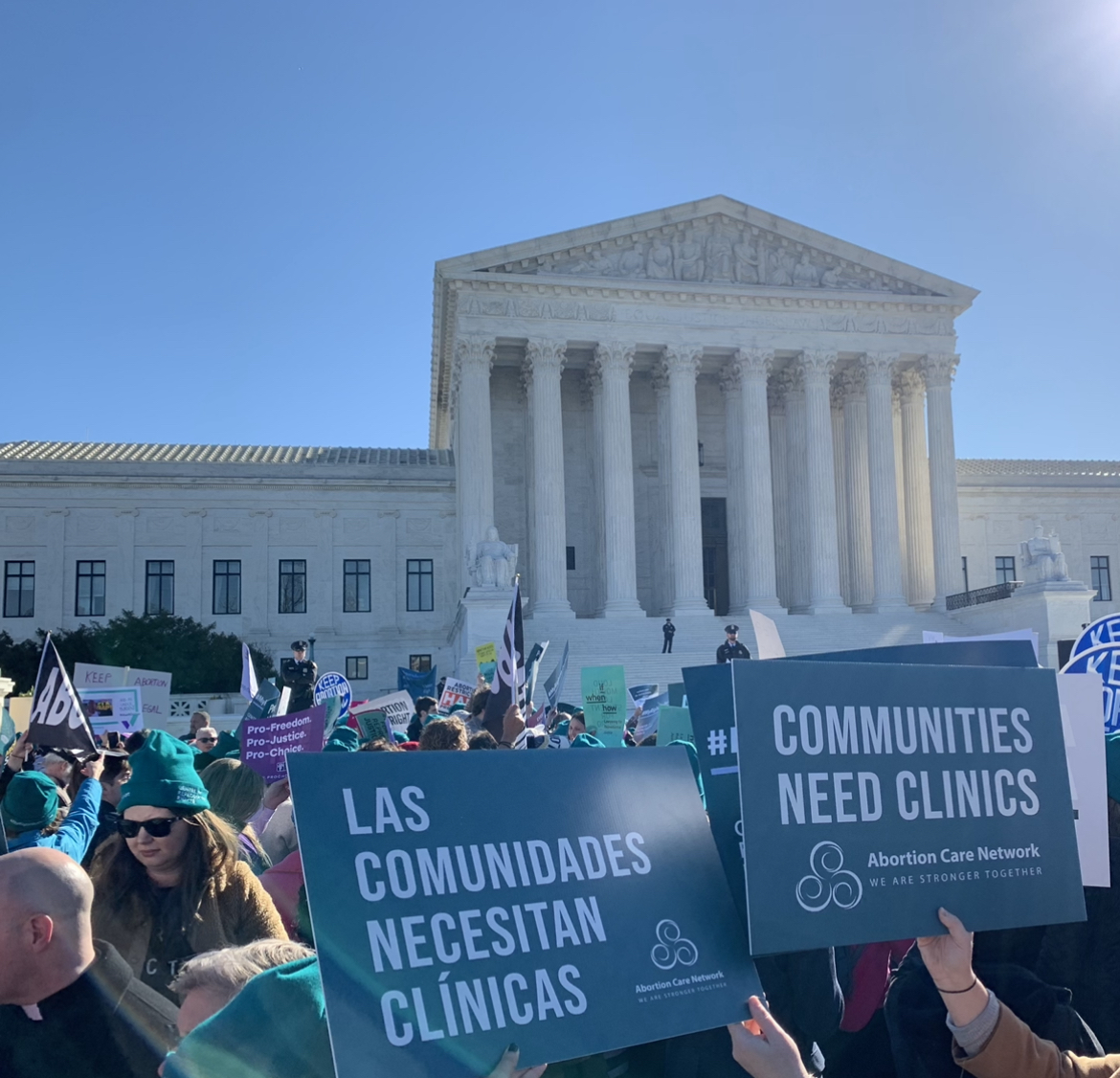
Outside the Supreme Court during oral arguments for June Medical Services v. Russo on March 4, 2020. (Courtesy of Abortion Care Network)

The toll of the COVID-19 pandemic has been devastating for families and communities across the country, including my own. But when I reflect back on 2020, amid all of the heartache, a moment of absolute joy stands out.

In early March, just days before the nationwide cascade of shutdowns and uncertainty, I stood arm-in-arm outside the Supreme Court with reproductive health, rights and justice advocates as we cheered on the fierce clinic staff at Hope Medical Group for Women, the Louisiana-based independent abortion care provider at the center of this year’s Supreme Court abortion case. Like other independent clinics (indies) before them, Hope was fighting for all of us that day.

In the years that I’ve supported independent clinics as director of Abortion Care Network, I’ve seen the resilience of independent providers like Hope in action time and again. Indies are known for their grit, rising up for their communities in the face of a seemingly endless barrage of attacks by state anti-abortion politicians, protesters right outside their doors—and today, a public health crisis like none we’ve seen before.

Through it all, independent clinics are there for their communities, whatever comes their way, because without them, there is no meaningful access to abortion care. 

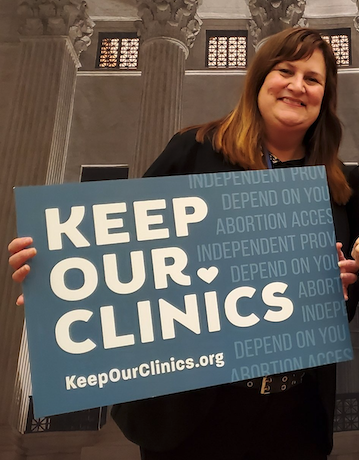
Nikki Madsen of Abortion Care Network.

People from all walks of life, in every part of the country, seek the compassionate care of independent providers to make fundamental decisions about their bodies and lives.

In fact, indies serve three out of five people who seek abortion care, and in some regions that are especially hostile to abortion, independent clinics are the sole or primary abortion providers.

Notably, indies are the only clinics remaining in Mississippi, North Dakota, West Virginia, Louisiana and Wyoming, and the only providers of in-clinic (sometimes referred to as surgical or aspiration) abortion in Arkansas, Georgia and Nevada—some of which hold the most restrictive abortion laws in the country.

Today, there are 34 percent fewer independent clinics across the country than there were in 2012, making it increasingly costly and difficult for patients to get the care they need in their communities, or even in their own states.

This troubling trend threatens access to all abortion care, but especially care throughout pregnancy. Of all the clinics in the U.S. that provide abortion care after the first trimester, 62 percent are independent. Of the clinics that provide care at or after the 22nd week of pregnancy, 81 percent are independent.

And nearly all independent clinics provide both medication abortion care as well as in-clinic care, to meet the varied needs and preferences of their patients.

Amid political threats, indies have weathered the storm of this year with the courage and determination they’re known for.  Like health care providers across the country, they adapted to new, often difficult realities, implemented social distancing guidelines and scrambled to get personal protective equipment.

They also supported their patients in navigating heightened barriers to abortion care as a result of the pandemic and subsequent economic recession—from increased out-of-pocket costs, reduced appointment availability, and lack of transportation, lodging and child care options. And in true indie form, they fought back in court, and won, as state politicians tried to exploit the pandemic by banning abortion care. 

The threats independent clinics face are harsh, which is why now more than ever, they need our support to continue meeting this moment. It’s on each of us to speak up, organize and stand with clinics whose service is often made possible by small donations from community members. We must demand policy change that protects our clinics and their patients, and an end to abortion coverage bans that hit patients of color and those struggling financially the hardest. 

When I’m feeling downtrodden by the pandemic and our uncertain future, I channel the heart and unwavering determination of independent abortion providers, who have faced unforeseen challenges before. I remember the vibrant energy of that bright March morning and know that together, we can build a future where independent providers thrive.

Source: https://msmagazine.com/2020/12/11/independent-abortion-clinics-covid-19-abortion-care-network/?fbclid=IwAR3XJHH2XvVz_rs8bClQThjyJqZ_sYw3M2Vy4-Xx3V_RHk9GKbYYvXA4k_U

Demonstrators wait with green headscarves — the symbol of abortion rights activists — outside the Argentine Congress in Buenos Aires, where lawmakers endorsed a bill to legalize abortion
Ronaldo Schemidt/AFP via Getty Images

Argentina’s Chamber of Deputies approved a bill making abortion legal early on Friday, in a much-debated vote that many in the predominantly Roman Catholic country are describing as historic. The bill now heads to the Senate.

“Today we write a new chapter in history,” Argentina’s Women, Genders and Diversity Minister Elizabeth Gómez Alcorta tweeted after the approval of the Voluntary Interruption of Pregnancy Bill.

The new legislation would allow an abortion during the first 14 weeks of pregnancy. Argentina currently outlaws abortion except in case of rape or if the mother’s health is in danger.

Lawmakers started formal debate of the bill on Thursday; it wasn’t until the early hours of Friday that the chamber voted to approve the measure.

Several deputies said the change would bring regulation and remove stigmas from a practice that is already carried out clandestinely. But Deputy Graciela Camaño saidthat through the measure, “what is being done is to enable to discard the life of a human being.”

Other lawmakers emphasized that women must have the right to make their own choices about reproduction.

By subscribing, you agree to NPR’s terms of use and privacy policy. NPR may share your name and email address with your NPR station. See Details. This site is protected by reCAPTCHA and the Google Privacy Policy and Terms of Service apply.

“The world is unjust, but the answer is not in our uterus,” Deputy Gabriela Cerruti said via Twitter. On the contrary, she added: “The world is unfair because it was built 500 years ago on a system based on the exploitation of women.”

The vote — 131 in favor, 117 against and six abstentions — set off celebrations on the floor of the chamber, where the bill’s backers, many of them wearing green to show a unified front, shared hugs. The margin was slightly larger than a similar 2018 bill that was later rejected by the Senate.

Argentina’s move toward legalizing abortion is being closely watched, in part because of the longtime influence of the Catholic Church on the country, the home of Pope Francis. If the bill is enacted, it would signal a shift in a region that has long restricted the right to end a pregnancy. Currently, Uruguay and Cuba are the only Latin American countries that allow abortions upon request, as NPR’s Scott Neuman has reported. In South America, Guyana and French Guiana also allow the procedure on request.

Despite those restrictions, U.N. health researchers say, there are more than 6.4 million abortions in Latin America each year — and only 1 in 4 of those procedures was deemed safe, according to the researchers’ 2017 study on abortion safety.

Source: https://www.npr.org/2020/12/11/945387389/in-historic-vote-argentina-chamber-oks-bill-legalizing-abortion