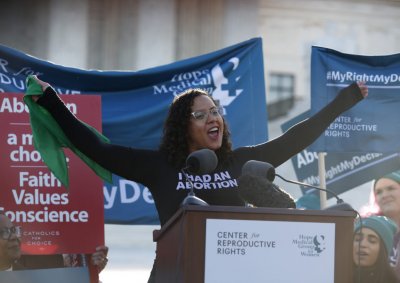
We must ensure that each of us has quality health care, encompassing the full range of reproductive health-care options, including abortion.

We are people of faith and we are pro-choice.
Brendan Smialowski/AFP via Getty Image

As leaders of organizations that represent countless people of faith across the nation, we want to set the record straight: We are people of faith and we are pro-choice. We believe in the dignity and worth of all people, and that belief drives our commitment to ensuring universal access to affordable health-care coverage, including coverage for abortion care.

Recently, Democrats for Life, an anti-abortion group claiming to represent the faith community, sent a letter from 100 Christian pastors and theologians to the Democratic National Committee urging the party to rescind its support for ending the Hyde Amendment, which bans federal funding for abortion except in cases of rape, incest, and life endangerment.

But Democrats for Life doesn’t represent the faith community. Many people of faith support access to abortion and oppose the Hyde Amendment and its restrictions, which further enshrine systemic racism and strip the poor of access to abortion. Policies that deny abortion coverage to individuals based on their income level or the type of health insurance they have contradict shared core values and principles of our faiths. Supporting this injustice goes against everything clergy of all faiths should represent.

That’s why we are calling on Congress to pass the Equal Access to Abortion Coverage in Health Insurance (EACH Woman) Act. This bill, if enacted, would eliminate abortion coverage bans in federal health insurance programs and prohibit local, state, and federal political interference in the decisions of private health insurers to offer abortion coverage.

People in the United States are facing severe economic duress compounded by a growing health-care crisis and firmly institutionalized racism; we cannot afford to further wrong the most vulnerable. Inflicting further injury on those whom our traditions are called to support is morally bankrupt. As people of faith, we believe in the inherent dignity and equal worth of all people. We are, therefore, called to treat all individuals with respect, no matter their income, insurance, gender, race, or other factors.

We also believe in the power of compassion to build a just and fair society. Our nation is at its best when our laws match our compassion. A compassionate nation ensures that every single person can access quality, timely medical care from trusted providers when they seek abortion care—regardless of how much they earn or where they live. Because of our faith traditions, consciences, and deep respect for an individual’s moral agency, we support policies grounded in compassion that protect each person’s right to health and foster their safety and well-being irrespective of income.

Those with means will always be able to secure the reproductive health care they want and need, and low-income people should be able to as well. We must ensure that each of us has quality health care, encompassing the full range of reproductive health-care options, including abortion.

It is long past time for our elected officials to eliminate the Hyde Amendment and all bans that interfere with people receiving the care they need. In addition, we cannot permit organizations like Democrats for Life to erase the many people of faith who support ending restrictions on federal funding for abortion. It is wrong for a few religious leaders representing an outlying ideological position to hamper the just and moral reasoning that eliminated the repressive Hyde Amendment from the Democratic Party platform in the first place.

A hundred pastors should not determine the direction of abortion policy in the nation, any more than a few hundred Catholic bishops should. Neither represents the millions of people of faith who are tired of having their religion weaponized to deny others health care. No person of faith can claim to speak for people of all faith. The National Council of Jewish Women, for example, has a network of nearly 1,000 rabbis who have committed to using their platforms to advance reproductive freedom, but they do not claim to speak for all people of faith or attempt to impose their views on the entire country.

Religious freedom is an essential shared principle undergirding our support of policies that ensure equitable access to abortion. The United States is home to people of many different faiths as well as people with no religious affiliation. We cannot limit an individual’s religious liberty by enshrining one set of beliefs into law and restricting their ability to make personal decisions about their pregnancy, health, and family according to their own religious or moral beliefs and conscience. No government committed to human rights and democracy can privilege one religion over another.

Today, we are coming together to say not in our name. Eschewing insurance coverage bans is a moral good. No one should be denied an abortion because of where they live or how much they earn.

We urge Democrats to stand firm on their platform and to encourage all members of Congress to support and pass the EACH Woman Act.

Source: https://rewire.news/article/2020/08/17/denying-abortion-coverage-is-not-a-religious-value/

The Supreme Court’s rulings from a momentous just-completed term already are altering the nation’s legal landscape, almost ensuring that issues such as abortion and transgender rights will be returning to the high court.

In the past week, lower courts have resurrected controversial abortion restrictions in Arkansas, stopped a Vermont program that disfavored students at religious high schools and ordered a Florida school district to change its policy banning transgender students from the restrooms of their choice.

All were based on the Supreme Court’s decisions reached just weeks ago. And especially on transgender rights and abortion, they raise issues that seem to warrant the justices’ continued attention.

The most consequential regards abortion, and whether Chief Justice John G. Roberts Jr.’s pivotal vote striking down a Louisiana law actually paved the way for courts to approve restrictions that have been enacted elsewhere.

The chief justice has drawn fire from those on both sides of the issue for his vote in the 5-to-4 decision in June Medical Services v. Russo, the court’s first look at abortion since President Trump’s nominees, Neil M. Gorsuch and Brett M. Kavanaugh, joined the bench.

Antiabortion forces were enraged that Roberts voted with liberals to strike down the law, which would have imposed requirements on abortion providers that they said would close all but one of the state’s clinics. Roberts said the law was identical to a Texas law the court had declared unconstitutional in 2016, and thus could not be upheld under the court’s precedents.

Vice President Pence was among those calling Roberts a “disappointment to conservatives,” specifically citing the abortion decision.

“That’s a very modest restriction on abortion providers, but a narrow majority in the Supreme Court still said it was unacceptable,” Pence said in an interview with the Christian Broadcasting Network. “And I think it’s been a wake-up call for pro-life voters around the country who understand, in a very real sense, the destiny of the Supreme Court is on the ballot in 2020.”

But Roberts based his vote on precedent alone. He did not join the opinion by Justice Stephen G. Breyer that said courts should balance the burdens imposed by state restrictions against their purported benefits in determining whether a law violates a woman’s right to an abortion.

Robert said he continued to believe the Texas case was wrongly decided. He said courts should look only at whether a restriction places an “undue burden” on a woman’s access to the procedure.

Abortion rights supporters were alarmed. Roberts’s opinion “preserves the outer shell of the earlier decision while gutting its substance,” New York University law professor Melissa Murray wrote in an op-ed in The Washington Post. “And in so doing, it invites states to push the envelope on abortion legislation, secure that, regardless of the benefits to patients, courts will bless the laws so long as they do not pose a substantial obstacle.”

It didn’t take long for lower courts to take notice.

Roberts “emphasized the ‘wide discretion’ that courts must afford to legislatures in areas of medical uncertainty,” a unanimous panel of judges on the U.S. Court of Appeals for the 8th Circuit wrote, lifting the injunction against four controversial measures passed by the Arkansas legislature in 2017. The laws had never gone into effect because of legal challenges.

Because Roberts and the court’s four dissenting justices did not agree with the reasoning in the 2016 Texas case, the panel said, it was no longer controlling law. It instructed a district judge to evaluate the Arkansas restrictions according to Roberts’s opinion about whether they constituted a “substantial obstacle” to abortion rights.

The laws include a ban on dilation and evacuation, the standard method of conducting second-trimester abortions; requirements that doctors review a woman’s medical records to ensure she is not seeking an abortion because of the sex of the fetus; and restrictions on the disposal of fetal remains, which challengers said was really a way to provide notice to a woman’s partner and family that she was seeking an abortion.

“If allowed to take effect, these restrictions would completely block many people from obtaining abortion care, and would eventually leave the state with even more limited abortion care,” the American Civil Liberties Union and Center for Reproductive Rights said in a statement.

Hillary Schneller, a senior attorney at the center, said the injunction will remain in place through most of August, and the challengers are still deciding their legal strategy going forward.

Chief Justice John G. Roberts Jr. (Mandel Ngan/AFP/Getty Images)

But she said she did not believe Roberts’s opinion doomed the challenge to the Arkansas provisions and other restrictions imposed around the nation.

“I’ve heard and seen some of that chatter,” Schneller said in an interview. “But nothing in June Medical changed the basic legal standard that courts are applying to abortion restrictions. They have to ask the same questions now as they did before.”

Roberts “still looked at both the benefits and burdens and was clear that the facts matter here and that district courts are important arbiters of those facts.”

She pointed out that another case had gone the other way. Maryland U.S. District Judge Theodore D. Chuang, in a case involving medicationinduced abortions, said that the Supreme Court’s 2016 decision in the Texas case was still the standard courts should look to, because the court’s June Medical decision did not overturn it.

Two issues centered on schools

When the Supreme Court ruled 6 to 3 that LGBTQ workers were covered under the federal law that prohibits sex discrimination in the workplace, it passed over the contentious issue of which bathrooms transgender individuals could use.

“Under Title VII, too, we do not purport to address bathrooms, locker rooms, or anything else of the kind,” Gorsuch wrote in Bostock v. Clayton. “The only question before us is whether an employer who fires someone simply for being homosexual or transgender has discharged or otherwise discriminated against that individual ‘because of such individual’s sex.’ ”

But dissenters said the reasoning in the decision would be applied by lower courts to the controversy, and a panel of the U.S. Court of Appeals for the 11th Circuit last week became the first to do so.

In a 2-to-1 vote, it affirmed a lower-court ruling that required a suburban Florida school district to allow a transgender student access to the restroom that matches his gender identity.

The panel relied heavily on the Bostock decision to rule for Drew Adams, who was denied access to the boys bathroom at Nease High School near Jacksonville. The panel said the St. Johns County School Board’s policy violated the Constitution and Title IX.

Bostock confirmed that workplace discrimination against transgender people is contrary to law. Neither should this discrimination be tolerated in schools,” wrote Judge Beverly B. Martin, who was joined by Judge Jill A. Pryor. “The school board’s bathroom policy, as applied to Mr. Adams, singled him out for different treatment because of his transgender status. It caused him psychological and dignitary harm.”

Martin wrote that “the school board argues that Title IX’s ban on sex discrimination is somehow different from Title VII’s because ‘schools are a wildly different environment than the workplace’ and education ‘is the province of local governmental officials.’ We are not persuaded.”

The decision drew a sharp dissent from the circuit’s chief judge, William H. Pryor.

He noted that Bostock did not take on the issue of restrooms, and that Title IX “permits schools to act on the basis of sex through sex-separated bathrooms.”

Quoting former Supreme Court Justice Thurgood Marshall and the works of Justice Ruth Bader Ginsburg when she was a professor, Pryor added: “The majority misunderstands the policy at issue, ignores decades of precedent, dismisses any sex-specific interest in bathroom privacy, and flouts foundational principles of statutory interpretation. . . . There is nothing unlawful, under either the Constitution or federal law, about a policy that separates bathrooms for schoolchildren on the basis of sex.”

The 11th Circuit is one of the country’s most conservative, and if the school board wants to continue to fight, it might ask all of the court’s judges to reconsider the panel decision.

Drew Adams speaks with the media outside the U.S. Court of Appeals for the 11th Circuit in Atlanta last year. (Ron Harris/AP)

A panel of the U.S. Court of Appeals for the 2nd Circuit indicated there was little ambiguity in the Supreme Court’s decision in Espinoza v. Montana Department of Revenue, which concerned whether religious schools must be included in public programs that benefit other private schools.

“A state need not subsidize private education,” Roberts wrote for the five-member majority. “But once a state decides to do so, it cannot disqualify some private schools solely because they are religious.”

That seems to doom a Vermont program that provides funding for high school juniors and seniors to dual-enroll in college courses before they graduate. Students at religious high schools were barred from the program, but not those at secular private schools or those who are home-schooled.

panel of judges said the challengers “have a strong likelihood of success on the merits of their claims” because of the Espinoza decision, and halted the exclusion of students at religious schools while the lawsuit went forward.

Source: https://www.washingtonpost.com/politics/courts_law/arkansas-abortion-florida-transgender-supreme-court/2020/08/12/588f1162-dc09-11ea-809e-b8be57ba616e_story.html

The last thing we need right now are alarmist headlines suggesting contraceptives and COVID-19 are a deadly combo.

Are people who are pregnant or taking estrogen at a higher risk of getting a blood clot if they get sick with COVID-19?
Shutterstock

Between articles about political misdeeds, murder hornets, and mystery seeds, I came across this headline recently: “How being on the Pill could increase your risk of dying from coronavirus, docs warn.”

The tabloid newspaper’s story—which also included subheadings like “Deadly DVT” and frightening graphics about COVID-19’s spread—seemed to suggest a new study had found an increased risk of blood clots in women on birth control who contract the virus. Its alarmist tone and tidy conclusions (increased risk + increased risk = imminent death) raised red flags.

The story, and other more tempered versions, were based on a commentary published in the journal Endocrinology.

In it, Dr. Daniel Spratt and Dr. Rachel Buchsbaum note the “troublesome frequency” of blood clots and venous thromboembolic events (VTEs) in patients hospitalized with COVID-19. They then point to volumes of research showing that both pregnancy and medications that contain estrogen—including combined oral contraceptive pills, hormone replacement therapy (HRT) to reduce menopause symptoms, and oral estrogen taken as part of gender affirming care—can also raise a person’s risk of blood clots, VTEs, and stroke.

The authors ask the obvious question: Are people who are pregnant or taking estrogen at a higher risk of getting a blood clot if they get sick with COVID-19? The commentary does not claim to answer this question.

The news stories were wrong to call Spratt and Buchsbaum’s commentary a study. It wasn’t one. There were no patients, no control groups, no observations. In fact, the authors state quite clearly, “no reports of increased incidence of VTEs in pregnant women or women taking estrogen preparations who also have COVID-19 have emerged.” So why publish this at all?

I spoke to Dr. Spratt, who said the purpose of the commentary was to guide clinicians and prompt future research. He said there are some things clinicians can do now to help lower the risk of blood clots such as using anticoagulation drugs recommended for all patients, especially pregnant patients, hospitalized with COVID-19. Spratt said people taking estrogen should make sure to tell their health-care provider about their medication if they test positive for COVID-19 and develop symptoms. By no means, however, does he think everyone should put their pill packets in a drawer until the pandemic passes.

“Certainly we do not want to take our commentary and have everyone going off birth control or HRT,” Spratt said.

The commentary was also meant to direct future research on this issue so that we can learn more about how and why COVID-19 increases risk of blood clots, and perhaps prevent bad outcomes.

I worry, however, that the scary headlines play into a growing narrative of danger and risk that has been undermining the birth control pill for years.

Some of this may inadvertently come from health-care providers and sex educators like me who sing the praises of long-acting reversible contraceptive (LARC) methods such as intrauterine devices (IUDs) and implants. We elevate these methods because they work for three to ten years without the user having to give them a second thought; getting rid of user error means fewer unintended pregnancies. This enthusiasm may be misinterpreted as experts being against birth control pills. We’re not.

The anti-pill movement appears to have some roots in society’s ongoing quest for a form of “wellness” that idealizes an all-natural life free of nitrates, nitrites, dairy, gluten, preservatives, or any other chemical enemy du jour. As someone who lives in a gluten-free house, I know these can be legitimate health and lifestyle choices. But hormonal contraceptives have gotten caught in an extreme version of this rhetoric, and too often the arguments against the pill are based on anecdotal evidence and pseudoscience.

Interestingly, as I was writing this, another headline came across my feed suggesting the pill might protect against COVID-19. A “preprint” study—that’s a scientific manuscript that hasn’t yet undergone peer review—out of King’s College London looked into estrogen’s effect on the disease and found fewer presumptive positive cases of COVID-19 and fewer hospitalizations among premenopausal people taking combined oral contraceptives. When I forwarded the link to Spratt, he said there’s not enough evidence to make any conclusions yet.

“It is possible that being on estrogen or being pregnant may make you less likely to contract COVID-19 but also that being on estrogen or being pregnant may make you more likely to get a blood clot if you do develop COVID-19,” he said.

New findings and theories about COVID-19 will come out daily, and they will contradict each other. It may be years before the science is settled. For now, remember to read past the headlines with a healthy level of skepticism. Access to all methods of contraception is vital, especially during a global pandemic and unprecedented economic downturn when people need to be able to make their own choices about whether and when to have children. As Rewire.News reported, political forces won’t stop trying to get in between people and their birth control. The last thing we need right now are alarmist headlines suggesting contraceptives and COVID-19 are a deadly combo.

Source: https://rewire.news/article/2020/08/14/fearmongering-headlines-about-covid-19-and-birth-control-dont-tell-the-whole-story/


Protecting reproductive freedom is a winning issue with the American public. So why are we in the midst of an all-out assault on it?

In political conversations about abortion in the U.S., one critical fact is far too consistently ignored: The overwhelming majority of Americans support—and always have supported—maintaining the legal right to abortion. Right now that support is at an all-time high of 77%. But in 1972, a year before Roe v. Wade, more than two thirds of even Republicans agreed that abortion was a private matter between a woman and her doctor. Protecting reproductive freedom is a winning issue with the American public. So why are we in the midst of an all-out assault on reproductive freedom?

Republican voters, like almost all people, want to believe that their chosen course is the moral one. At the same time, most people choose not to argue morality with others, believing it is a personal code, not a political one. The reticence to argue is especially acute when it comes to issues of abortion. Any individual decision to end a pregnancy involves so many different factors and circumstances that it inherently lives in the complicated gray zone of the mind. The right has always defined this as black-and-white, when, like most things in life, people are just making the best decisions they can for themselves at the time.

Forcing an overly simplistic view of the issues surrounding abortion rights and, more broadly, of reproductive freedom also benefits the GOP brand. They demand the moral high ground without ever reckoning with the breadth of moral issues—from racial and economic inequality to climate change and more—that impact their privilege in society. They channel their frustration at a changing culture, or at perceived threats to traditional privilege or masculinity, into a crusade that feels not just morally justifiable, but morally superior.

Wrapping themselves in ostensibly Christian virtue also means that they’re often given the benefit of the doubt in all aspects of public discourse. No matter the attack, the default assumption of those around them is benevolent intent because they present as being driven by an unimpeachable and divinely inspired set of principles. They are often not asked about or held accountable for policies they propose, much less those that spring from their infrastructures and founding philosophy. They can ignore children in cages, promote self-serving tax policy, or deny health care to millions of Americans during a global pandemic simply by dog-whistling “abortion.”

As forces on the right moved from focusing on maintaining segregationist policies to attacking the potential Equal Rights Amendment to the protections of Roe v. Wade to the security offered by policies like the Affordable Care Act, it effectively used its facade of morality to stay perpetually on the offensive. Focused solely on maintaining power through winning and obstructing progress, they never developed a plan for governing. The movement’s proposals were too often not subject to scrutiny, because who could question someone’s deeply held religious or moral beliefs?

Try to ask a Republican to defend the abortion bans that moved through conservative states in 2019. Ask how exactly they enforce such a ban. Ask how potential violations would be investigated. Serious questions about the consequences of implementing their own policies often result in platitudes, promises, or dodges. Republicans don’t have a governing philosophy around the issue itself and have not been effectively forced to reckon with the damage their poorly conceived ideological bills would wreak. Then ask what they’re doing to combat America’s maternal mortality problem. Ask how they will help women who need to support their children. Ask about the uninsured kids, the lack of access to education, to food security, and to job opportunity.

In recent focus groups, we’ve found that when people are asked to think through current antichoice policy proposals—how they work, who they would impact, and what measures would be necessary to enforce them—those people become increasingly opposed to those policies and the harsh realities they would impose. That holds true even for many people who initially supported much of the “pro-life” ideology.

We have focused on how the manipulative strategy of the radical right and GOP has been used to politicized the issue of abortion for their larger political gain. However, the effects don’t stop there. They’ve consistently used similar techniques to undermine steps toward racial equality, LGBTQ equality, economic justice, and so much more. And they’ve been able to level those attacks despite overwhelming public support for more progressive policy in each and every one of those areas. What we’re looking at is a wide-reaching effort to attack democracy and insulate white male privilege from a changing society.

The issue of reproductive freedom may be best understood as a canary in a coal mine, though not the only one. Systematic attacks on reproductive freedom are one of the classic hallmarks of democratic backsliding. Advocates for reproductive freedom, health, rights, and justice have spent the last several decades combatting the elements of creeping authoritarianism—from disinformation and propaganda, to the ongoing efforts to undermine trust in science and medicine, to a relentless barrage of attacks on institutions designed to protect individual liberty or free and fair elections.

The radical right has never had popular support, but with the help of their relentless disinformation campaigns and a network of powerful institutions at their disposal, popular support can be overwhelmed. With the Supreme Court now under their control, they’re stronger than ever.

We still live in a democracy, and popular opinion still matters. But we are being held back on engaging on the critical issue of reproductive freedom by a fear of leaning in and taking a bold and public stance. That fear began in an era where white men led both parties and even the most progressive political leaders considered so-called women’s issues a sideshow, but it has been proactively nurtured by the radical right. Our progressive political leadership is more diverse than ever, women and pregnant people have made their demands known, and policies that center the lived experiences of women and families are in line with what the vast majority of Americans want. The polling unquestionably demonstrates that protecting reproductive freedom is a core American value.

The underlying reality remains the same. Consistent research has shown that more than 7 in 10 Americans support legal access to abortion. Only 9% of voters believe abortion should be rendered completely illegal, now the mainstream GOP position. Even among self-identified Republicans, support for a full abortion ban is as low as 20%. Backlash to the draconian positions of the antichoice right are now too visible to ignore. From the uprisings around the Kavanaugh nomination to the marches protesting the abortion bans of 2019 to the electoral outcomes since 2016, the evidence of overreach on the right is apparent.

Political flash points like the Women’s March or the backlash to Georgia’s and Alabama’s draconian abortion bans show that, when the public is able to see through the radical right’s shallow “moral” facade and understand the cruelty their proposals would impose, the public recoils. There’s no reason Democratic leaders shouldn’t lean in.

The manipulative strategy that has driven the radical right for so many decades only works when left uncontested. Countering those strategies requires a serious investment in better, bolder messaging; proactive efforts to fight disinformation both online and offline; long-term planning and coordination across the progressive coalition; a focus on the courts; and a more realistic political analysis that understands the ways the right has manipulated race and gender to activate their audiences and project their power.

They depend on our silence and our fragmentation—2020 is the year to change this.

Source: https://www.glamour.com/story/most-americans-support-abortion-so-whats-the-problem

Photo: Scott Olson/Getty Images

In late March, Texas temporarily banned abortion, using the coronavirus pandemic as a thin excuse. The decision caused intense confusion and distress among doctors and patients when it was announced, in a state where safe and legal abortion is already essentially inaccessible for so many. Now we have a fuller picture of the damage done by the one month in which abortions were outlawed in the state, and it is terrifying.

Texas governor Greg Abbott signed the emergency order calling for a halt to abortion procedures on March 22, arguing that it was a “medically unnecessary procedure” and thus had to be put on hold while the pandemic raged. (This made Texas the second state to attempt to do so; four others would follow.) The ban came with no exceptions, save for a threat to the life of the mother, and threatened any provider who didn’t comply with fines and jail time. Clinics were forced to suddenly turn away patients with urgent appointments. It made already stringent time constraints around abortion in Texas, only legal up to 20 weeks, even more stressful and harrowing. After a prolonged legal battle, clinics were allowed to resume abortions exactly a month after the ban began, on April 22.

NBC News reveals that as soon as the ban was lifted, clinics immediately saw an influx of patients seeking abortions later in their pregnancies because they had been forced to wait for care. Southwestern Women’s Surgery Center in Dallas reported a 57 percent jump in second-trimester abortions in the month after April 22; at Planned Parenthood Center for Choice in Houston, there was a 28 percent increase in abortions after ten weeks, with 51 weekly patients after the ban compared to about 40 patients per week before; Whole Woman’s Health in Austin saw the number of surgical abortions nearly double in the three weeks after it was able to resume operations.

Many of the patients, clinics said, had intended to receive a nonsurgical medication abortion, allowed only in the first ten weeks of pregnancy in the state, and missed the opportunity. “At the first visit, folks had expressed wanting to do a medication abortion, but then so many people weren’t able to come back for several weeks, which put them out of the window when they would have been able to access that care,” Dr. Bhavik Kumar, a medical director at Planned Parenthood Gulf Coast, told NBC. “We were ready, capable, and able to do what we needed to do to take care of our patients, but we legally weren’t able to do that.”

Surgical abortion is an overwhelmingly safe and relatively minor procedure, but it gets more dangerous the later it occurs during pregnancy. In addition to putting patients’ physical health at risk by delaying procedures, the significant uptick in later abortions also indicates emotional and psychological costs. “The idea of having an in-clinic procedure was more daunting for them than having a medication abortion in the safety of their home with their partner,” said one clinic director of her patients. A 21-year-old who had to travel to New Mexico for her abortion because she couldn’t wait said she “felt like I was being punished in some way for getting pregnant … I felt like I was on an emotional and physical roller coaster.” And the data doesn’t even show how many patients who attempted unsafe, illegal at-home abortions, or who endured forced childbirth because they could not afford to travel for care.

In a statement sent to the Cut, Planned Parenthood said that Abbott “exploited the pandemic and inserted politics into personal medical decisions by temporarily banning abortion in his state.” What resulted is a sobering glimpse into the post-Roe America GOP legislators want to usher in by chipping away at access wherever they can. It’s horrifying to imagine the effects of just one month of total loss of abortion care in one state magnified across more places, and for longer periods of time.

Source: https://www.thecut.com/2020/08/the-devastating-impact-of-the-covid-abortion-ban-in-texas.html

One woman reveals the lengths she went to in order to receive an abortion when Texas clinics closed due to the pandemic.

Shortly after Esmarie* learned she was pregnant in mid-March, the city in South Central Texas where she lives started to shut down in response to the coronavirus. Her college classes went online and she lost shifts at the two restaurants where she works, leaving her barely able to afford groceries. She knew right away that she did not want to continue the pregnancy but feared abortion clinics would soon be shut down too. It would be another six weeks before she was able to resolve her pregnancy with a self-managed abortion using abortion pills, which, when used as directed, have a success rate of 95 percent and are an increasingly popular option during the pandemic (one study showed a 27 percent rise in requests across the U.S. and a 94 percent increase in demand in Texas). Esmarie, 19, told us about her experience obtaining an abortion during the pandemic.


The day I found out I was pregnant, I saw all over Facebook that Texas was going to be shutting down the clinics. I thought, I’m not going to be able to have this abortion. I thought that I didn’t have a choice—I was going to have to just live with it. It was very scary because I couldn’t tell anybody. I was trying to get as many hours of work as I could.

It was also scary because of everything going on. Everything was closed. I wasn’t making enough money. The restaurants were giving me only 10 hours a week, so I couldn’t make enough to support myself. I was scared I would get COVID-19 because I was pregnant. I didn’t have a car, so I had to walk in the heat. No transportation, no work—I couldn’t meet my basic needs.

The abortion clinics were closed at that time, but the CPCs, the crisis pregnancy centers, those were open. When I was making phone calls, trying to see which clinics were open for abortion, they were the only ones who answered. They said, “We don’t do abortions, but you can get an ultrasound and we can talk to you about your choices.” But they really only give you two choices—adoption or parenting. I was definitely not going to do adoption because I was adopted and it just didn’t go well. But I knew I couldn’t raise my child at this time.

They try to tell you, “We’re going to help you do this, we’re going to help you do that.” I’ve had friends say they told them that too. But once the baby was there, there was no help. So I was just scared, just thinking, I’m really going to have to give birth. I just felt stuck. They just kept saying, “When you do have the baby.” I was wondering, Who am I going to tell? How am I going to get money? How am I going to get to my prenatal appointments? I was barely even able to make the two-hour bus ride to that CPC.

I feel like this wouldn’t have happened if I would have just gotten the help earlier.

I started reaching out to anyone who could try to get me to a different state. A few years ago, I had an abortion in a clinic. I took the first pill in the clinic, then the second one at home. I reached out to someone who was out of state who had helped me the first time. I thought they weren’t going to be able to do anything. But they said they could fly me out to a different Texas city or to a different state if the one in Texas closes too.

Like I said, I’ve had an abortion before, so I know how it is. If I had to go out of state, who knows what state it was going to be? I only have family in Texas. I wouldn’t have had anywhere to stay. I didn’t have money for a hotel. I could barely even get food for myself. They found me an appointment at a clinic, but then they asked, “Do you want to go to that clinic or do you want to do it at home?” I said I would do it at home.

It took two weeks for the pills to arrive. I’m pretty sure the mail was backed up because of COVID-19, so after a week, I asked them to send another package. While I was waiting for it, I was just thinking, I’m only getting further and further along. It was so stressful. The people who sent them buy them outside of the U.S. and send them to women who need them.

The first time I had an abortion, I was eight weeks along. Eight weeks and 10 weeks is actually a very big difference. The first time, it was not that bad—I was able to handle the pain, I guess. But the second time, it was so bad. I couldn’t move, I had chills, and my stomach was hurting. It was so bad I brought my blanket into the restroom just so I could be next to the tub, be next to the toilet. I feel like this wouldn’t have happened if I would have just gotten the help earlier.

I was staying with a friend and I didn’t tell him anything about the pill. I remember my hair was all wet like I had been in the bathtub. It was around 3 in the morning. I was crying and I was bleeding; I bled through three maxi pads. You’re not supposed to bleed through more than two during a medical abortion. I was trying to take as much pain as I could, and I actually dealt with the pain for a good two hours. But then I just couldn’t do it anymore. I couldn’t lie down. I couldn’t sit down. I couldn’t do anything, so that’s when I decided to go to the emergency room even though there were COVID-19 patients there. My friend took me. The hospital was not that far off, maybe five minutes, but it felt like the longest drive ever. My phone was dead so I couldn’t tell anybody I was there. I was just on my own during that time.

I actually dealt with the pain for a good two hours. But then I just couldn’t do it anymore.

I had forgotten my mask—that was not on my mind at all. I was nervous. I didn’t want to touch anything. I think I was having a panic attack because I couldn’t tell them I was having a miscarriage. They were asking me what was wrong and what I needed, but I couldn’t breathe because I was in shock. I just remember holding my stomach because it was hurting and I was crying because I was scared. I told them, “I’m bleeding and I was pregnant.”

Then I lost so much iron from bleeding that I passed out on the floor. I’m 4’11” and I weigh about 98 pounds. I remember a receptionist told me to go put hand sanitizer on. I walked to go get hand sanitizer and I woke up on the floor. They put me in a wheelchair. It was kind of embarrassing—I was bleeding all over the wheelchair, all over the floor and the restroom.

They gave me morphine for pain through an IV. I was on anesthesia because I guess they had to finish taking out whatever was left, so I was asleep. When I woke up, I used the hospital phone. I was trying to get ahold of my mom or my brothers or sisters. I wasn’t going to tell them what happened, but I did want to tell them I was in the hospital and I needed a change of clothes. I had bled through my pants and didn’t have extra clothes. I got ahold of my brother at 6:30 in the morning. He came to give me some clothes and stuff but I couldn’t have visitors, so he gave it to the front-desk person and they brought it to me.

To the politicians who closed down the clinics, abortion is a basic human right.

The baby’s father gave me a ride home from the hospital, but I didn’t tell him why I was there. No one knew about the abortion, which I was sad about, but still, everyone was calling me, asking, “Are you okay?” My mom told other family members that I was in the hospital, so they started blowing up my phone: my sisters and my tías, my tíos. They started asking questions, so I told them, I don’t know, I was asleep, they had me on all kinds of medicines. I didn’t want to tell them anything because they’re going to judge me. They wouldn’t be supportive. I haven’t told my friends either.

To the politicians who closed down the clinics, abortion is a basic human right. Young ladies have the right to this. If they know what they want, they shouldn’t have to wait longer, because it can just make things worse.

*Esmarie’s name has been changed to protect her privacy. This article was supported by the Economic Hardship Reporting Project.

Source: https://www.cosmopolitan.com/politics/a33393312/abortion-covid-19-pandemic/?fbclid=IwAR1aFxTtn8ghCs21GNCBa5yeYoKBuGR0e60NDOOwT0ReoJxasSTcK5PKMYI

Harris is the first Black woman at the top of a major party ticket. The first Asian American. The first graduate of a historically black college or university.

According to FiveThirtyEight’s tracking, in the 116th Congress Kamala Harris ranks 99th out of 100 for voting in line with President Trump—a “bad” record all of us should be proud of.
Chris Carlson/Getty Images

It was a snowy Martin Luther King Jr. Day in 2019—I was in Park City, Utah, for work during the Sundance Film Festival. My friend Symone Sanders tagged along for this trip.

We took a break from our busy schedules as two Black women political strategists to head back to our hotel to watch Sen. Kamala Harris (D-CA) kick off her presidential campaign. As we watched her, we were in tears full of inspiration for what Black women could achieve. And even though we chose to work for different candidates within the primary—former Vice President Joe Biden in Sanders’ case, and Sen. Elizabeth Warren (D-MA) in mine—that feeling of history and inspiration remains.

Throughout history, Black women have fought against all odds to demand our seat at the table, to fight for our communities as a whole, to imagine a world where every person’s experiences are validated and justified. We have led both women and Black men to the freedom line, only to be told to wait our turn because the intersection of our identity was too burdensome.

Our time is now.

Harris is the first Black woman at the top of a major party ticket. The first Asian American. The first member of a Black Greek letter organization. The first graduate of a historically black college or university.

ProgressivePunch rates her record as a senator as one of the most progressive. And according to FiveThirtyEight‘s tracking, in the 116th Congress she ranks 99th out of 100 for voting in line with Donald Trump—a “bad” record all of us should be proud of.

When it comes to reproductive freedom, Harris has an impeccable record. She’s protected funding for Planned Parenthood health centers, opposed the domestic “gag rule,” supported the protection of the Title X family planning program, and introduced Black maternal health legislation alongside reproductive justice leaders. During her presidential campaign, she proposed a plan that would require states with a history of violating Roe v. Wade to get approval from the Justice Department before enacting new abortion laws.

Black women are excited. Even us members of Delta Sigma Theta sorority share joy with our sister Greeks of Alpha Kappa Alpha, who are making history with one of their own. Regardless of the numerous well-qualified women any of us thought would have been the ideal running mate, the mutual consensus is this is a historic moment, and we will absolutely not tear down a Black woman with the misogynoir we face daily.

As Elizabeth Warren, my former boss, said, Kamala Harris is an inspiration to the many women who see ourselves within her, and most importantly, she is unafraid.

There is room for disagreement in the big tent of the Democratic Party. Harris challenged Biden during the primary, and he still chose her as the most qualified running mate; I hope this campaign continues to build upon the same sentiment. It will take a broad coalition in November, especially in the midst of unprecedented voter suppression efforts along with the COVID-19 pandemic. And with racial justice at the forefront of our nation’s politics, our nominees must work with those who have been catalysts for this movement—including organizations like the Working Families Party, the Movement for Black Lives, and Black Womxn For.

Because that’s the beautiful thing about democracy when it works—our elected officials work for us. The people. The people who demand universal child care. Medicare for All. Eradication of poverty. A Green New Deal. Criminal justice reform. Canceled student debt. And we hold them accountable.

And they are shook. Trump, Pence, Barr. All of ‘em. Shooketh.

As Warren, my former boss, said, Harris is an inspiration to the many women who see ourselves within her, and most importantly, she is unafraid. Like Warren, and everyone else who remembers Harris during the Barr hearings, we’ve got our popcorn ready for the vice presidential debate in October.

But, “Black women, please brace yourselves. It is about to get so ugly. We are so hated, and anytime we are centered, we get vitriol from all sides. Remember what dude said about Tubman just a couple of weeks ago? Get ready,” my sister friend Jamilah Lemieux noted on Twitter.

The misogynoir that will be unleashed is only just beginning. It is on us to push back against these attacks and ensure the protection every Black woman and girl deserves—especially one fighting to represent us at the highest ranks of our government.

For the political media covering this election—which is overwhelmingly white and male—it’s time to hand the pen and microphone over to the Black people and women in the newsroom. And if you have a Black woman on your team, you may want to put her on this beat because no one will be able to capture the dynamics or nuance of this historic campaign like her. No matter how much you try to learn about the Mecca that is Howard University, Alpha Kappa Alpha (or the Ks), and Beyoncé, your experience won’t rise to the moment within our culture that is required for this coverage. This is literally like a dream where Ida B. Wells could have covered Barbara Lee and Shirley Chisholm.

This Delta is looking forward to saying Madam Vice President.

Source: https://rewire.news/article/2020/08/12/with-kamala-harris-as-bidens-vice-presidential-pick-our-time-is-now/

Without stable housing, many struggle to get the health care they need.

A couple hugs during a sweep of a large homeless camp. (AP Photo/David Zalubowski)

As the country prepares for an avalanche of evictions as coronavirus-related eviction moratoriums end, millions of Americans may be thrust into unstable living situations or experience homelessness. With that, they may find abortion services more difficult to access and end up having abortions later in pregnancy.

A new study In the American Journal of Obstetrics and Gynecology looked at over 1,900 people who had an abortion at a San Francisco clinic from 2015 to 2017. What they found was that people experiencing homelessness and housing instability came to clinics later in pregnancy. In turn, that meant they had later abortions.

Typically, patients at the clinic sought abortions at 9.5 weeks, but people with housing instability came nearly four weeks later. At an average of 13.3 weeks, that meant many people experiencing homelessness and housing instability were often very close to or in the second trimester before presenting at the clinic.

People experiencing homelessness and housing instability can receive health care through Medicaid, but the Hyde Amendment prohibits federal funds, including Medicaid, for almost all abortions. Clinics sometimes offer sliding scale fees and there is a national network of abortion funds, but it’s not enough: One in four low-income people ends up carrying an unwanted pregnancy to term.

As the National Latina Institute for Reproductive Justice notes, this problem affects people of color far more than their white counterparts, as people of color are “disproportionately affected” by economic inequality. They call the Hyde Amendment “heartbreakingly successful” at diminishing the reproductive freedom of people with low incomes.

Additionally, 2 states have banned the most common method for later abortions, and other states are trying. Those bans have serious implications for people experiencing homelessness or housing instability. The study found that those people “may be disproportionately impacted by laws that ban abortion after a certain gestational age as they often present later in pregnancy.”

If people are unable to get an abortion in their home state because they are already into their second trimester and that procedure is banned, they may need to travel out of state to obtain an abortion.

For example, Nebraska is currently debating a ban on a later abortion method. Were the state to do so, people needing that procedure would have to travel 342% farther to get an abortion, according to a study from the Guttmacher Institute, which researches reproductive health issues. Increased travel costs can create a significant barrier to abortion care and delay access as people attempt to raise money to afford a more expensive procedure.

The underlying causes here — lack of housing stability — was already a widespread problem. A 2016 study by the Department of Housing and Urban Development found that 200,000 people in families with children were considered homeless and millions more experience housing instability. That is likely to get much worse soon and may lead to many more people needing costlier and harder-to-obtain later abortions.

Source: https://americanindependent.com/housing-instability-abortions-evictions-homelessness-hud-health-care-reproductive-rights/?fbclid=IwAR3jU7kTvlEhrf4sftSv8iJ_mczsqssKsdeDbEZ8pahrkRK9b25pldeq2-Q

The good news is that most people will still have birth control after this decision because most employers want to cover it.

Over 61 million women have birth control coverage thanks to the birth control benefit—but we anticipate several hundred thousand people will lose coverage as a result of the Trump birth control rules. Shutterstock

The birth control benefit in the Affordable Care Act (ACA) is one of the most important nondiscrimination provisions of the health-care law. The benefit requires that employer-provided health plans treat contraception like all other preventive medicine and cover it with no additional costs or co-pays to employees.

When the U.S. Supreme Court ruled the Trump administration could allow employers to opt out of providing that birth control coverage in their employee health plans if the employer had a religious or moral objection, it threatened the birth control coverage of millions of employees and students across the country. It left many with the same question: Now what?

Mara Gandal-Powers, director of birth control access at the National Women’s Law Center (NWLC), walked us through some basic birth control benefit facts you may be wondering about.

Rewire.News: How can an employee find out if their health insurance plan covers contraception?

NWLC: Your HR or benefits staff at work should have answers to this question. But we understand that it may not be comfortable to ask that question of your employer, or if your insurance is through a spouse or parent’s employer it may not be possible.

You can also look at your health insurance documents—you have a right to access the full coverage documents at any time. You can search the documents to see if there are coverage exceptions—I recommend using the search terms “contracept” “family planning” and “birth control” because different documents might use different terms.

If an employer health plan covers contraception, how worried should employees be? Is there anything employees can do to make sure employers that cover contraception continue to do so?

NWLC: The good news is that most people will still have birth control after this decision because most employers want to cover it. Over 61 million women have birth control coverage thanks to the birth control benefit—but we anticipate several hundred thousand people will lose coverage as a result of the Trump birth control rules. If you currently have birth control coverage in an employer health plan, most plans will be required to provide you with a notice if they drop coverage, so pay close attention to letters or other communications from the insurance company.

Employees can talk to the benefits team and share that they are encouraged to see the continued birth control coverage. These comments can both help the benefits team know what employees want and motivate them should management consider a coverage change.

If an employer plan doesn’t cover contraception, what if anything can the employees do about it?

NWLC: Because there is no list of all employers that exclude contraception, it is important for employees to share this information with others so they can know as well. The NWLC operates a hotline called CoverHer, and we can talk with employees about their situation. Employees can also let people know through employer-review websites like Glassdoor, so that people job searching will know about this problem before they decide about a job there.

What’s next in the fight over the birth control benefit in the Affordable Care Act?

NWLC: This fight is definitely not over. The Supreme Court remanded Pennsylvania’s case back to the lower courts because there are claims that are still to be decided. And there are also cases brought by California and Massachusetts, as well as one in which we, Americans United for Separation of Church and State, and the Center for Reproductive Rights represent a student group, Irish 4 Reproductive Health, that had been stayed pending the Supreme Court decision. Each of these cases is now moving forward, and a lower court could stop the Trump birth control rules in any of them.

Source: https://rewire.news/article/2020/08/10/whats-next-for-your-birth-control-coverage-after-little-sisters-of-the-poor/

Today is an anniversary for me. Fifteen years ago today, I woke up pregnant—when I truly didn’t want to be—for the last time. My day started out in a very ordinary way. I riffled through my closet, proclaiming nothing to wear, but eventually choosing a tee shirt, tight jeans, and a thong. What does one wear to an abortion? I drove my then-boyfriend’s house to pick him up so he could drop me off at the clinic.

When I arrived at the clinic, the only sense of nervousness and panic occurred when I saw all of the security cameras and bullet proof glass greeting me at the door. I instinctively knew these precautions were to keep me safe from those who are anti-abortion and choose to threaten people undertaking abortions at clinics. It just left me feeling more sure in my decision.

I’ve heard people say: “No one wants an abortion,” but that wasn’t true for me. I wanted an abortion. When I had my sexual debut just before my 16th birthday, I made a plan—I would use condoms, get birth control pills at my high school’s free health center, and if I became pregnant before I was ready, I would have an abortion. I was being safe and I had a plan.

But many best laid plans go awry, through no fault of the person who made them. I was no exception; my partner often refused to wear condoms and once I left high school I didn’t make enough money to afford consistent access to birth control pills.

When I eventually became pregnant, I had a plan at the ready. I’ve heard people say: “Abortion is never any easy decision,” but that also wasn’t true for me.

It was an easy decision because I knew what I wanted. I’ve heard people say: “You’ll come to regret your abortion,” and 15 years later, I haven’t. Ninety-five percent of us who have abortions don’t regret them, data shows.

There are many permanent things I’ve done to my body that I regret; the poorly done hip tattoo I got at 16, the tongue piercing that has left a permanent scar, and relationships I stayed in too long that caused pain. I was determined, and I knew an abortion was something I had to do to move forward. It was—and still is—the best decision I ever made.

Abortion, Activism, Pro-choice

Renee Bracey Sherman had an abortion 15 years ago today. She says it is still the best decision she has made. Here is she pictured at the Chicago Abortion Fund Fundraiser in 2018.COURTESY OF CHICAGO ABORTION FUND.

The abortion itself was mostly uneventful: an ultrasound I couldn’t read, twilight sedation, a few cramps, a kind nurse holding my hand and then resting at home for the day. I regret what I wore; the jeans were too tight and uncomfortable and the thong was the absolute wrong match for the extremely large maxi pad they sent me home wearing.

What I remember most is the feeling of loneliness because I wasn’t ready to tell my parents—who I knew would have come with me if I wanted—and my then-boyfriend who didn’t want to come inside. I had no idea that this moment would change my life and become my entire career. An activist career my parents are proud of me for.

Once I finally felt ready to talk about my abortion openly, loved ones shared their stories back. Not just about abortion—both safe and unsafe—but also miscarriages, sexual violence, adoptions, infant and maternal deaths, and pregnancies that have shaped generations of our families. I am here because of a lineage who forcefully didn’t have and diligently sought control over their fertility. I exist because of abortion. For that I am eternally grateful.

I’ve also explored and grown in my understanding of what it means to be a biracial Black woman, particularly one who had an unintended pregnancy. I’ve become increasingly angry and felt betrayed by messages I’ve seen, and see, that suggest Black mamas are a scourge of the U.S. and a reason for societal ills.

The only thing I regret about my abortion experience is that I almost believed the rhetoric that was presented by anti-abortion groups around abortion and Black women. Was my body “the most dangerous place for an African American” as one anti-abortion billboard told me? Is “our next possible leader aborted every 21 minutes” as another said, alongside an image of President Barack Obama? I knew the answer was no, but it has taken years for me to understand the deep seated hatred for Black women that those billboards display.

It’s still frustrating to see that white pro-criminalization activists cheered on rapper Kanye West for tweeting that 22,500,000 Black babies have been aborted in 50 years, without taking time to fact check the statement or consider how it might affect Black women and trans people who have abortions, and how they might feel erased.

Sometimes, I regret making working towards abortion access my job, because of the near constant onslaught of racist anti-abortion hatred I receive. Black unborn lives matter so much to them they email me calling me a “n***** b****” to defend the right to life. But it’s this anti-Black hatred that has pushed me to keep going.

Abortion, Activism, Pro-choice
Abortion, Activism, Pro-Choice

I believe that what most upsets people who attack me is that I love myself, publicly. How dare we be open about our experiences, and demand that people continue to love us publicly? How dare our families be supportive and accepting of our decisions? I don’t hate myself, and I think it makes people angry. I am confident and self-assured of my decision 15 years ago. And, I use it to change the world.

Inspired by the loneliness I felt in the clinic, I have volunteered to drive people to the clinic, offered refuge in my home between multi-day appointments, and held their hands during the procedure for nearly a decade. Everyone deserves to have someone who cares for them unconditionally by their side during their abortions.

My job now, as a vessel for abortion stories is truly a gift, and I have never taken that for granted. I am creating a world where Black people’s pregnancies, and abortions, are met with love and compassion. After experiencing the heartbreak of burying a cousin, born 14 weeks premature and dying on her 25th day, I am even more committed to ensuring families are able to make decisions throughout pregnancy that are best for them.

Refuting the hatred that exists towards people who have abortions and showing others they’re loved unconditionally is the best way I know I can honor my abortion daily.

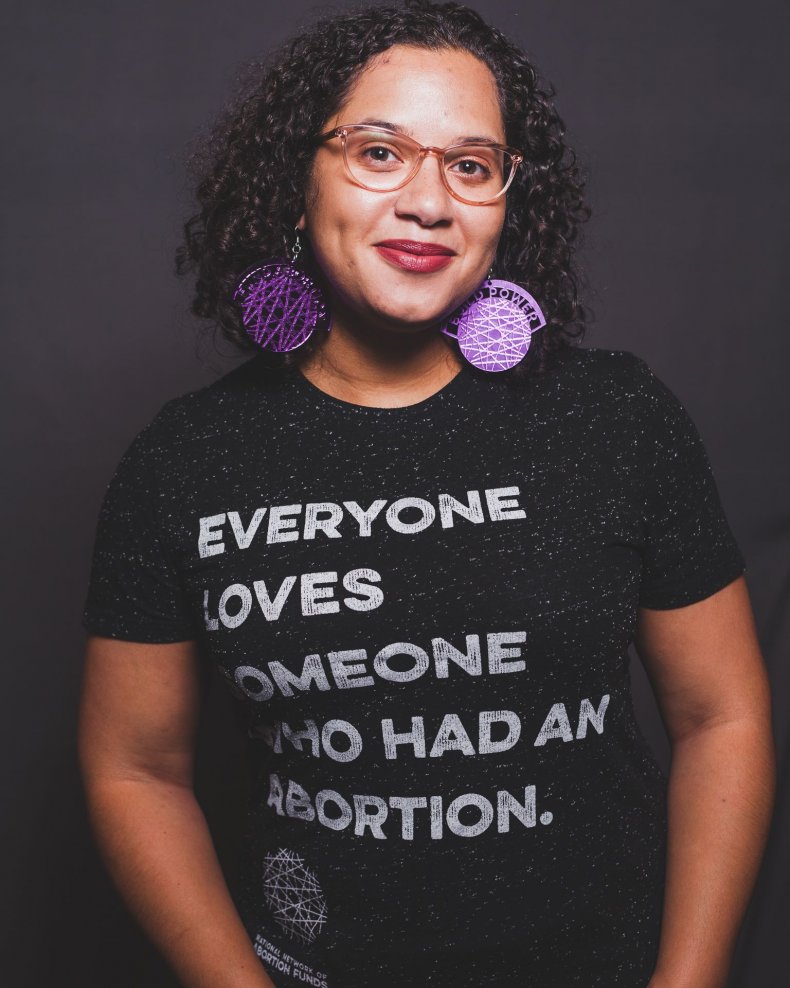
I’ve taken what I’ve learned from my experience in hopes that it can shift someone else’s. “Everyone loves someone who has had an abortion,” is a phrase I often use, as one in four cisgender women have abortions. The most important lesson I’ve learned in the 15 years since my abortion is that it’s okay to love myself.

Renee Bracey Sherman is the founder and executive director of We Testify, an organization dedicated to the leadership and representation of people who have abortions. She is also the executive producer of Ours To Tell, a documentary centering the lives of women of color and nonbinary people who had abortions.

All views expressed in this piece are the writer’s own.

Source: https://www.newsweek.com/abortion-15-years-ago-today-best-decision-made-1522441?fbclid=IwAR3huKpPC8q4cH8OIvsoOT-27rG1o5wT-EG3KKrboEeKsLXomJAQ4wJuq7g