As they did with abortion, the Supreme Court could take away the right to contraception as established in Griswold v. Connecticut. Cage Rivera/Rewire News Group illustration
With the continuing attacks on reproductive rights, birth control access is in a precarious position.
After the Supreme Court threw abortion access into turmoil when it overturned Roe v. Wade in June and conservatives signaled that birth control is one of their next targets, the U.S. government took two important steps toward contraceptive equity. The Food and Drug Administration announced in July it will consider the birth control pill for over-the-counter (OTC) status. Granting OTC status would revolutionize contraceptive access for people who can become pregnant. In the same month, the House of Representatives voted to codify the right to birth control, but the Senate blocked it.
“It’s scary right now, people saw the writing on the wall in the decision, that Justice Thomas in particular is interested in getting rid of the right to birth control,” Mara Gandal-Powers, the director of birth control access and senior counsel for reproductive rights and health at the National Women’s Law Center, said about Dobbs v. Jackson Women’s Health Organization. “I think people who are realizing that maybe the right to abortion isn’t as successful as they thought it would be for the rest of their lives are now thinking about, ‘OK, what I am using for birth control? What are my options?’”
Gandal-Powers said the Food and Drug Administration’s decision to review the birth control pill Opill for OTC status gives cis women, trans men, and nonbinary people with uteruses reproductive power.
“It gives us another way of getting the birth control that we need and fills a gap,” Gandal-Powers said. “Right now, in terms of over-the-counter contraception, we have over-the-counter emergency contraception and external condoms … To have something that is over the counter and is in control by the person who could get pregnant and is for routine use, it’s a whole new world.”
The FDA approving the pill for OTC status will lessen several gaps to contraceptive access. Currently, contraceptive deserts blanket our country—more than 19 million people of reproductive age lack access to the full range of contraceptive measures in their county. The Trump administration’s domestic “gag rule” decimated low-income people’s access to contraception via Title X, the federal law that provides family planning services. Abstinence-only sexual education programs obscure young people’s knowledge of contraception. These particular barriers to access affect people with little access to transportation, lower income levels, and financial dependency on others, such as young people.
Nimisha Srikanth, the president of Feminists for Reproductive Equity and Education (FREE) Aggies, a direct-action group and a Planned Parenthood Generation Action chapter at Texas A&M University that educates students about reproductive justice and distributes sexual heath resources to their community, strongly supports OTC birth control because of its implications on college students’ reproductive autonomy.
“College students can only access birth control through prescriptions,” Srikanth said. “For some, they secretly obtain prescriptions through doctors. Some utilize online services and get pills shipped to them. We are in support of making birth control available as an over-the-counter medication. … This would also allow more distribution services to provide pills to help those who may not be able to purchase pills monthly.”
The FDA has ten months to review the birth control pill OTC application. The likelihood it getting approved is high, Gandal-Powers said.
“For most products that have gone from this prescription to OTC process, I think there has only been one that didn’t get the OTC approval [within a ten-month period],” Gandal-Powers said.
Yet, she warns that birth control opponents could potentially influence the FDA to compromise on contraceptive equity.
“From what I’ve seen, if the FDA made a decision to not allow the pill to go OTC or do what we saw them do with Plan B with slapping an age limit on it—those actions would not be based in science,” she said.
The FDA placing an age limit on OTC birth control is not the only potential threat. The Supreme Court cases Griswold v. Connecticut and Eisenstadt v. Baird currently protect the constitutional right to birth control, but the Court’s conservative wing may add birth control to their rollback of rights agenda—and a section from Thomas’ concurring opinion and a footnote in the Dobbs v. Jackson Women’s Health majority opinion demonstrates exactly how they’ll do it. Thomas argues the Court should overturn Griswold and other substantive due process opinions. The justification for doing so may be an incorrect and incomplete reading of the histories of birth control, racism, and eugenics.
In 2019, when the Court declined to hear a case about Indiana’s anti-trait-selective abortion law, Thomas wrote a concurring opinion, in which he incorrectly entangled the histories and uses of abortion, eugenics, and racism. He explicitly wrote that “the use of abortion to achieve eugenic goals is not merely hypothetical.” Reproductive rights legal scholars such as Melissa Murray originally theorized that this concurrence could be the framework for invalidating Roe v. Wade on racial discrimination grounds. This framework could definitely be used for overruling Griswold, as the birth control pill was unfortunately associated with eugenics.
Alternatively, the Court could argue just as it did in Dobbs that it should not be the arbiter of such a “controversial” topic and remand the right to contraception to the states. Footnote 41 in the majority opinion draws attention to an anti-abortion amicus brief submitted by Black and Latine religious organizations, which argues that “the birth control movement, abortion advocacy, and eugenics are all rooted in Social Darwinism and the elimination of undesirable populations.”
Regardless of the potential flawed legal reasoning that could result in the overturn of Griswold, the right to access birth control is in a precarious position.
“With more attacks on reproductive freedom, contraception access should be codified into law,” Srikanth said.
House Republicans resoundingly voted against the Right to Contraception Act despite the positive public consensus around contraceptives. Combined with the politicization of birth control access, the setback disheartens Gandal-Powers.
“I believe we are at the beginning of a wave [of] unprecedented attacks on contraception, attacks on both the right to access contraception and the things that make it possible to actually get contraception,” Gandal-Powers said. “I don’t love that politics is more of a player in that decision about your own birth control choices, but that is the reality we’re living in. It’s not the reality we want.”
Advocates envision different yet kindred paths forward so people can have full reproductive autonomy and access to contraception.
“There are some states where they may want to make the right to birth control even more explicit in their constitution,” Gandal-Powers said. “In terms of practical access, we’ve seen states enable pharmacists to prescribe birth control, in addition to doctors, nurses, and midwives. As I look to the future and where our movement is going, we will be showing up to both the proactive and defensive work leading with our values: Everyone should have access to the contraception they want, when they want it, without barriers in their way.”
Srikanth believes in a direct-services approach and said she would like to see an equitable distribution of birth control.
“The main goal should be that all people can access and purchase any contraception they desire at an affordable price,” Srikanth said. “Such wins will help empower society as a whole and promote true equity in all ways.”
REPUBLICAN GUBERNATORIAL CANDIDATE TUDOR DIXON GIVES A THUMBS UP DURING A SAVE AMERICA RALLY ON OCTOBER 1, 2022 IN WARREN, MICHIGAN. (PHOTO BY EMILY ELCONIN/GETTY IMAGES)
In a video obtained by VICE News, Tudor Dixon, Michigan’s GOP gubernatorial nominee, seemingly veered even farther to the right on abortion.
Tudor Dixon, the Republican candidate running for Michigan governor, has made no secret of her fierce opposition to abortion. On the day the Supreme Court overturned Roe v. Wade, Dixon declared that she was “pro-Life.”
“My only exception is to protect the LIFE of the mother,” she tweeted, in response to a video suggesting she had flip-flopped on abortion. “That has never changed.”
But in an interview only one day before, Dixon suggested that wasn’t quite true.
“I am honored to have been endorsed by Right To Life. Life is so important to me,” Dixon said. “I have so many people in my life who, if the doctors looked at that ultrasound, they would have said, ‘You’d be better off not having this child.’ And that’s just the devil’s lie.”
She added, “The dad and moms are being lied to that these are not precious lives.”
Dixon has made a distinction between abortion bans with exceptions for a pregnant person’s “life” (which she has said she supports) compared to bans that offer exceptions to protect their “health.” Doctors have told VICE News that “health” exceptions give them more leeway to follow medical guidelines and keep patients’ health from needlessly deterioating; by only allowing them to perform abortions in life-threatening cases, doctors feel like they are forced to wait until patients are on the cusp of death before they can intervene.
But Dixon’s comment raises questions about whether the candidate trusts doctors’ medical opinions when it comes to abortions, regardless of whether a patient’s health or life is at stake. Some activists within the anti-abortion community like to suggest that predatory doctors are out to bamboozle helpless patients into abortions.
“A 14-year-old who, let’s say, is the victim of abuse by an uncle—” Charlie LeDuff, host of the talk show “The No BS Newshour,” started to say.
“Yeah, perfect example,” Dixon interrupted.
“You’re saying carry that?” LeDuff asked.
“No, perfect example,” Dixon said. “The way that this could be set up is you’re protecting that guy, and we’ve got to get those guys in jail.”
After LeDuff pressed her on whether the 14-year-old should have the ability to end the pregnancy, Dixon said, “A life is a life for me. That’s how it is. That is for me, that’s my feeling.”
In response to a VICE News request for comment for this story, a spokesperson for Dixon’s campaign did not address Dixon’s June 23 remarks. Instead, Communications Director Sara Broadwater focused on the “14-year-old” comments.
“Leave it to VICE News to continue the media lie about Tudor’s response to the hypothetical 14-year-old rape victim,” Broadwater said in an email. “What she actually said was that it was the perfect example of how a lack of parental consent laws, coupled with abortion-on-demand, actually protects sexual predators by making it more difficult to hold them accountable for their horrendous crimes and prevent them from offending again.”
“Tudor is pro-life but has always supported exceptions for life of the mother. She strongly condemns any sexual assault, which is why she’s put forth a plan to combat sex crimes in Michigan,” Broadwater continued.
Broadwater did not immediately reply after VICE News reiterated the request for comment about Dixon’s June 23 remarks.
In another interview in August, Dixon was asked again about a hypothetical 14-year-old rape victim. She took the opportunity to seemingly suggest that rape is more serious only if it involves abduction.
“I’ve talked to those people who were the child of a rape victim and the bond that those two people made and the fact that out of that tragedy there was healing through that baby, it’s something that we don’t think about, because we assume that that story is someone who was taken from the front yard, then returned,” Dixon said. “That’s generally not the story there.”
In reality, eight in 10 sexual assaults are committed between people who know one another, according to statistics from RAINN, the nation’s premier anti-sexual assault advocacy organization.
Abortion is on the ballot in Michigan in the upcoming midterms, both directly and indirectly, and the race there is likely the nation’s most high-profile electoral battle over abortion. The procedure remains legal in Michigan, although that could change if Dixon wins since Whitmer has served as a legislative bulwark against the Republicans who already control the state Legislature. Abortion rights activists in the state are now pushing for a constitutional amendment that would enshrine abortion rights in the state constitution and protect them no matter who sits in the governor’s chair. Michiganders will vote on that amendment in the midterms.
Dixon’s approach to abortion rights this election is out of step with many of her fellow Republicans, who are downplaying their abortion stances in the wake of the crushing defeat of an anti-abortion constitutional amendment in Kansas.
“Nothing can be more harmful to pregnant people in New Orleans right now than not having access to clean water and safe housing and the ability to earn an income,” said Luu Ireland, an assistant professor of OB-GYN at the University of Massachusetts Amherst. Shutterstock
New Orleans flood water funding project highlights how environmental justice is reproductive justice.
After New Orleans officials declared they wouldn’t comply with the state’s restrictive abortion ban, Louisiana Attorney General Jeff Landry made it clear that the city could lose funding needed to complete a life-saving project if it continued to resist the ban.
Louisiana’s near-total abortion ban went into effect in July, less than a month after the Supreme Court overturned Roe v. Wade. The Human Life Protection Act is a 2006 trigger law designed to take away a pregnant person’s right to end their pregnancy in the event that Roe was reversed.
New Orleans District Attorney Jason Williams said he would not prosecute anyone seeking or providing an abortion. The city council also adopted a resolution to not use any of the city’s money or resources to enforce the ban.
City officials’ open opposition to the law is why Landry wanted to block funding for a project that will help pump flood water out of the city, making it safer and more livable. While the Louisiana Bond Commission ultimately approved the project’s funding, Landry’s threat may not be an isolated incident in the post-Roe era. With water crises rising in other cities around the country, including Jackson, Mississippi, it is difficult to understate the threat to New Orleans without this funding.
Pushing back
The project began when then-mayor Mitch Landrieu hired Paul Rainwater in 2017 to help strengthen the city’s power system.
They planned to create a more up-to-date version of the city’s existing power plants in addition to its levee system. Although the levee system is functional, some of the city’s suburbs still flooded during Hurricane Ida in 2021. The new power plants would be able to pump flood water out of the city.
This is important, Rainwater said, because even minor weather events can flood the entire city.
According to Rainwater, the state government promised $38 million for the project. Had state officials complied with Landry’s request to withhold the rest of the project’s money because of New Orleans’ officials resistance to the abortion ban, the project would go unfinished and all of the money spent so far would have been wasted.
Rainwater said at issue was the state’s desire to enforce the laws against abortion as well as Mayor LaToya Cantrell’s opposition to the decision.
Rainwater believes the work on the city’s infrastructure should not be affected by the battle over abortion rights, as they are two unrelated issues. He said any events hosted in New Orleans depend on the city’s ability to pump out flood water.
“The project is extremely important to everything that happens in the city, whether it’s Saints football, or the Pelicans basketball game—all of those things are connected,” Rainwater said. “That power plant and the sewage and water board provides a basic service water sewer. It powers the 200 pumps that take water out of the city when the city gets a heavy rain.”
Not a unique situation
Randall A. Lake, an associate professor of communication at the University of Southern California, studies both social movements related to abortion rights and environmentalism.
He said threatening to withhold something necessary to enforce a law—even if it’s entirely unrelated—is not abnormal. He said there are “all kinds of ways” lawmakers will do something like this to get what they want.
“I would say this kind of thing is not at all uncommon because the legislature that wanted to outlaw abortion fundamentally is just using its power to retaliate against opponents, and they’re using flood aid as the mechanism to retaliate because they know that flood aid is very important to the city of New Orleans,” Lake said. “So the larger pattern here is just, ‘We’re gonna get what we want, and we’re gonna punish you if you stand in our way.’”
Other cities could suffer if they defy their state’s abortion laws—and if the state governments don’t prioritize residents’ needs.
Jackson, a historically progressive city in a conservative-run state that also has issues with flooding, also needs a new water system. Fixing the system would cost at least $47 million—Mississippi gave the city $3 million to fix it. The state claimed it cannot allow Jackson to take up all of the state’s resources; the Associated Pressreported that Mississippi Gov. Tate Reeves helped block funding for Jackson’s water system.
“Ultimately it is not just a Jackson problem,” Jackson Mayor Chokwe Antar Lumumba told NPR. “It is a state of Mississippi problem.”
Birmingham, Alabama, a predominantly Black city in a red state, has attempted to create a law to raise minimum wage citywide. The state in turn passed a law requiring one minimum wage in Alabama. The city appealed a lawsuit in response.
“Politicians in Montgomery have tried to strip the working people of Birmingham of their vote and their voice, but we won’t give up the fight,” Scott Douglas of Greater Birmingham Ministries said in a statement, according to U.S. News & World Report.
There’s also Austin, Texas, which voted to decriminalize abortion after Roe v. Wade was overturned. Prior to the overturn, Gov. Greg Abbott had signed into law that abortion would be illegal in Texas (and SB 8 also bans abortion at six weeks’ gestation, before most people know they’re pregnant). Abbott had said in 2017 that he believes cities should not be able to self-regulate, which is what New Orleans has tried to do in 2022.
“If cities try to put bans like this in place whether it be on fracking or some other thing, I think cities should have to pay the price for it,” he said.
‘Gambling with people’s lives’
Luu Ireland, an assistant professor of obstetrics and gynecology at the University of Massachusetts Amherst, said the threat to withhold flood aid is “gambling with people’s lives” in a multitude of ways.
“Withholding funding and preventing people from being able to resume their work and their livelihood to have access to clean water and food—that is more of a threat to health than anything right now,” Ireland told Rewire News Group. “And the idea that folks at the state level are playing with people’s lives, or using people’s lives as a political bargaining chip or political blackmail, is really, really horrifying.”
A lack of clean water endangers both pregnant people and fetuses.
“Nothing can be more harmful to pregnant people in New Orleans right now than not having access to clean water and safe housing and the ability to earn an income,” Ireland said. “The impact in this political fight is not going to be short-lived, and it’s going to impact generations to come.”
If a pregnant person were to ingest unclean water, the risks could be fatal. Cholera, a bacterial disease found in water, can lead to the loss of a fetus, a premature delivery and/or a stillbirth. It can even lead to the pregnant person’s death.
Ireland and her colleagues are no strangers to the unpreventable issues that can affect a pregnancy. Significant bleeding and premature water breakage, she said, are grounds for an abortion procedure the pregnant person’s life, especially as an OB-GYN operating under the Hippocratic oath.
Since she currently works in Massachusetts, where abortion is legal, Ireland can still provide abortions. But she sympathizes with physicians in states that have outlawed abortions, such as Louisiana.
“I cannot imagine being a physician who has a critically ill patient in front of me, having the skill set and the medical expertise to make them better, and not being able to do it because of a law that tied my hands,” Ireland said.
Ireland pointed out that Black and brown people are affected by health-care issues disproportionately. New Orleans is 59.2 percent Black, and 32 percent of the city’s Black households live in poverty according to data from the Data Center, meaning its residents could face severe pregnancy complications in addition to the problems posed by the lack of abortion access.
“Those who don’t have the means to travel out of state, who don’t have the means to arrange child care, time off work, to go to a place where they can access safe and legal abortion care—the folks who are most vulnerable continue to be hardest hit by all of these issues,” Ireland said.
ABORTION BANS ARE STOPPING DOCTORS FROM LEARNING HOW TO DO ABORTIONS NOW
“In those 2 a.m. moments in the middle of the night, will you know what you need to do to save someone’s life?”
he pregnant young woman showed up at the hospital in the afternoon. Her water had broken and she was in labor, but something had gone very wrong. It was too early on in her pregnancy for any baby to survive.
The patient was hemorrhaging blood, recalled Dr. Alexandra Stiles, an OB-GYN resident. At first, there was very little the Ohio doctor could do for her. Before June, Stiles could have sedated the patient and performed a dilation and extraction, a surgical procedure commonly used in second-trimester abortions, to end the now-hopeless pregnancy. But soon after the Supreme Court overturned Roe v. Wade, Ohio banned abortion as soon as a doctor detects what the law calls a “fetal heartbeat.” And Stiles could still hear it.
Now, the patient’s only choice was to grit her way through labor and deliver a stillborn.
Everybody felt awful, recalled Stiles, who was also working with another OB-GYN resident.
“This whole situation was traumatizing for the patient,” she said. “This was a pregnancy that she had planned to keep and planned to carry, and her whole situation changed.”
The patient’s only choice was to grit her way through labor and deliver a stillborn.
As the patient’s labor stretched into the evening, the heartbeat disappeared, leaving Stiles free to perform the dilation and extraction. The resident working alongside Stiles should have known how to perform the procedure. But instead, the resident revealed, “I’ve never done this before.” Thanks to Ohio’s abortion ban, the resident had never had a chance to learn how to do perform a typical procedure—even in cases of medical emergencies.
In the months since Roe’s overturning, countless doctors have confronted abortion bans that, they say, have forced them to defy medical guidelines and their oath to do no harm. But amid that health care crisis, there’s another, burgeoning terror, one that’s set likely haunt medicine for years to come: Can doctors still learn how to do abortions?
The answer is worrying. At least 13 states have now banned almost all abortions, and hospitals in those states can no longer teach the next generation of doctors how to perform the procedure. Although Roe’s overturning has spurred more doctors to pursue abortion training, experts told VICE News, the few places that can provide that information are dwindling and overrun. Abortion providers’ ability to keep up what promises to be a decades-long fight over the future of abortion is now imperiled.
Twenty-six states are ultimately expected to ban abortion. In April, a study published in the medical journal Obstetrics & Gynecology estimated that, without Roe, roughly 44 percent of the 6,000-plus OB-GYN residents in the United States would lose access to in-state abortion training.
VICE News contacted dozens of OB-GYN residency programs in states with abortion bans about their plans for handling abortion training. (Ohio’s abortion ban was paused in September after a court challenge.) Just five programs responded; of those, two declined to speak. One program administrator talked only on the condition that VICE News not name their program.
“I just literally do not want any additional attention on our residency, in case we are able to get people to go out of state,” they said. “The last thing I really want is the state legislature saying, ‘Oh, let’s hold up some funds or try to pass more legislation restricting the ability of our residents to get the training that they need.”
“We’re almost stuck cold-calling places to see if they’ll take residents.”
The administrator is even worried that people at the institution where they work may try to sabotage plans to train residents. Before the ban, when the program sent its residents to Planned Parenthood for training, an official initially refused to sign off on the agreement, the administrator said.
Now, the administrator said, “We’re almost stuck cold-calling places to see if they’ll take residents.”
Patients are already paying the price.
“The ultimate concern is the trickle-down effect of this,” said Dr. Nicole Scott, director of the OB-GYN medical residency program at Indiana University. “In those 2 a.m. moments in the middle of the night, will you know what you need to do to save someone’s life?”
Ahistory of relegating abortion to the fringes of medicine left much of the field unprepared for a post-Roe United States. Residency programs and hospitals weren’t at the starting line when the Supreme Court overturned Roe. They were 50 yards back.
Dr. Doug Laube started performing abortions in Iowa in the ‘70s, after he said he watched a 17-year-old patient die from complications of illegal abortions. Back then, he never imagined that mainstream medical institutions would remain so resistant to providing the procedure.
“I anticipated back then that, as time went on, that people who learned the technique during their residencies would just be doing them in their offices from time to time as they were needed,” Laube told VICE News in 2020. “That has not happened. It happens almost nowhere.”
Residency programs and hospitals weren’t at the starting line when the Supreme Court overturned Roe. They were 50 yards back.
The physical separation between the hospital and the clinic reinforced the metaphorical distance: If it wasn’t done in hospitals, abortion seemed like an act outside of mainstream medical care. The separation endured and grew thanks to an array of forces: the complexity of paying for abortions using government funds such as Medicare; the (continuing) rise of Catholic hospitals, which largely refuse to perform abortions; the deeply hierarchical, traditional nature of the medical field itself, where institutions rely on donations and public dollars and are thus predictably allergic to controversy.
The bulk of doctors’ practical training—and, in particular, training to do procedures like abortion—occurs in residency, a years-long kind of apprenticeship where recently graduated doctors hone their chosen specialties. For decades after Roe, residency training in abortion remained optional. In 1992, a study found that just 12 percent of OB-GYN residency programs offer training in first-trimester abortions. The National Coalition of Abortion Providers, which represented independent clinics, started issuing dire warnings about their inability to recruit well-trained physicians. Its executive director told the Washington Post in 1993, “It’s not just a problem, it’s the problem.”
Anti-abortion groups celebrated. “If there is no one willing to conduct abortions, there are no abortions,” one organization’s field director reminded the Post, in a comment that has new resonance in this post-Roe reality.
It was attacks against providers, ironically, that revitalized American abortion training. In 1993, a medical student at the University of California, San Francisco, named Jody Steinauer was mailed a brochure, as were many other medical students. The brochure read, “Q: What would you do if you found yourself in a room with Hitler, Mussolini, and an abortionist, and you had a gun with only two bullets? A: Shoot the abortionist twice.” Days later, an abortion provider named David Gunn was shot to death in Pensacola, Florida.
“Those two events together woke a whole group of medical students up,” Steinauer told VICE News in 2020. “We thought to ourselves, ‘Wait a second, this is part of healthcare.’”
After talking to students from medical schools across the country, Steinauer took a year off of medical school to dedicate herself to formally launching a group, Medical Students for Choice, to support aspiring abortion providers. Three years later, the Accreditation Council for Graduate Medical Education took action, decreeing for the first time that all OB-GYN programs must offer abortion training.
It still didn’t quite take. A 2019 study from the University of California, San Francisco, found that, despite the council’s 25-year-old mandate, just 64 percent of 190 residencies truly include “routine training with dedicated time” for abortion.
“It already has started to be a situation where even miscarriage was starting to be marginalized and pushed out to let the abortion providers handle it.”
Dr. DeShawn Taylor, an OB-GYN who runs an Arizona clinic that offered abortions before the state banned them, told VICE News earlier this year that even before Roe’s fall, the stigma of the procedure has made doctors less able to diagnose and handle miscarriages and ectopic pregnancies.
“It already has started to be a situation where even miscarriage was starting to be marginalized and pushed out to let the abortion providers handle it,” Taylor said.
Abortion hasn’t fared much better in medical schools. “Abortion is one of the most common medical procedures,” Stanford University researchers concluded in a 2020 study. “Yet abortion-related topics are glaringly absent from medical school curricula in the U.S.A. with half of medical schools including no formal training or only a single lecture.”
When medical school ends, students aren’t free to simply pick where they go to residency. Instead, they spend the last year of school applying to a nationwide program called the Match, which will ultimately use an algorithm to sort out which residents go where. If students try to decline their match, they will likely have to wait another year to start residency—and run the risk of ruining their medical careers before they even really get started.
Even if a medical student desperately wants to learn how to perform abortions, even if they went to medical school to dedicate themselves to being abortion providers, they may have no choice but to live and work in a state where it’s now illegal.
In the United States, two kinds of doctors tend to perform abortions: OB-GYNs and family medicine doctors. University of Illinois, Chicago medical student Maria Valle Coto said she is applying to 80 different OB-GYN residency programs, including every single California residency program and most programs in New York. But if she still ends up in a state with an abortion ban, she may go anyway. She has $290,000 in medical school debt, she said, and just waiting for it to accumulate interest isn’t really an option.
“I’m not someone that comes from wealth or has family physicians, so this has been a huge investment in my future,” Valle Coto said. “And for it to be jeopardized because of policy is incredibly disappointing.”
Valle Cotto said officials at her medical school repeatedly advised to tone down her mentions of abortion in her residency applications. She refused.
“I’m not gonna tamp down who I am and what I believe just to try to match somewhere,” she said.
When North Carolina family medicine resident Dr. Avanthi Jayaweera has a spare Saturday, she’ll frequently drive up to two hours to spend it at a clinic, sharpening her abortion skills. Given that she regularly works 65 to 85 hours a week, it’s no small sacrifice.
Jayaweera currently feels comfortable performing abortions up to 16 weeks of pregnancy, but she wants to learn how to provide it until at least 20 weeks. She had originally planned to do more training in Florida, Tennessee, or Kentucky, but thanks to abortion bans in those states, she won’t be able to go to sites there.
“Whichever ones will take me at this point, I will go. The need is just so high,” Jayaweera said. “My hope was that I could potentially get based in a place where I have a close friend or family member that would let me crash with them. But I imagine it would cost at least maybe $5,000 for lodging and transportation and everything.”
Two major initiatives help residents get training in abortion: the California-based Ryan Residency Training Program, run by one Dr. Jody Steinauer, works with OB-GYN residencies, while the RHEDI program in New York does the same in family medicine. Programs that partner with these initiatives are committed to making sure residents have easy access to comprehensive abortion training; given that such a high volume of abortions are performed in clinics, they often help residencies iron out relationships with abortion clinics to teach doctors.
“My hope was that I could potentially get based in a place where I have a close friend or family member that would let me crash with them. But I imagine it would cost at least maybe $5,000 for lodging and transportation and everything.”
Out of the 107 active Ryan programs, the group has been trying to figure out what to do with 13 to 20 programs in states with abortion bans, Kirstin Simonson, director of programs and operations for Ryan, told VICE News in September. These residencies are in the midst of setting up partnerships with programs in more liberal states, figuring out paperwork, scheduling, and coordinating potential travel and lodging for residents fleeing bans.
Residents will likely end up in cities like Chicago and New York City; Simonson has no idea how much relocating residents will cost programs or the residents themselves, who tend to make in the ballpark of $60,000 to $70,000 a year.
“It is not most budget-neutral cities to be training in,” Simonson admitted.
The earliest consistent travel will likely start in February or March 2023. Residency programs start nationwide on July 1, meaning that these residents are set to lose out on at least seven months of potential training time.
Simonson feels confident that the Ryan programs will be able to find ways for residents to still get abortion training. But only 36 percent of all accredited U.S. OB-GYN programs belong to Ryan.
Before Roe’s overturning, the Accreditation Council for Graduate Medical Education—which sets standards for all residencies—didn’t have specific abortion requirements for family medicine doctors, but it did mandate that all OB-GYN residency programs “provide training or access to training in the provision of abortions, and this must be part of the planned curriculum.”
As of mid-September, though, the council changed those rules. Now, according to the guidelines, “If a program is in a jurisdiction where resident access to this clinical experience is unlawful, the program must provide access to this clinical experience in a different jurisdiction where it is lawful.”
In other words: Send residents out of state. And if a residency program doesn’t pull that off—a costly, potentially legally hazardous maneuver—its accreditation could be threatened, at a time when OB-GYNs are already projected to be in short supply.
The Indiana University OB-GYN residency program, which Scott runs, is a Ryan program. Last May, when a Supreme Court draft opinion overturning Roe leaked, Scott scrambled to partner with an Illinois abortion clinic so residents could travel there to perform abortions for patients in the first-trimester of pregnancy.
Scott declined to name the clinic or its exact location out of concern for residents’ safety.
“My greatest fear is that something would happen to our residents, whether it be a threat of violence or even just a car accident if they’re driving 100 miles to a place to train,” Scott said. “Those are the things that keep me up at night.”
Under the new guidelines, OB-GYN programs must provide “support” for residents who need to travel out of state for training, although residents who leave the comfort of home may still find themselves paying out of pocket for expenses. When it proposed revising those guidelines, an Accreditation Council for Graduate Medical Education review committee also said that the changes aren’t expected to cost programs any “additional resources.” But that’s not true for Scott, who said that ferrying residents to Illinois is expected to cost her program more than $20,000 this year alone, as the program has to shoulder expenses like housing, lodging, and new Illinois medical licenses. Scott isn’t sure if she’ll be able to wrangle that kind of money next year.
“My greatest fear is that something would happen to our residents.”
If she can’t cover the costs, Scott’s program could be found to be out of compliance with accreditation requirements.
Those new rules about “support” don’t apply to family medicine residents. With 30 affiliated family medicine residencies, RHEDI is far smaller than Ryan. But two of its programs, in Idaho and Montana, are also facing the prospect of being unable to train doctors in-state.
“They’re trying to be creative and see if they can set up a satellite clinic across the border so people have been getting trained,” said Erica Chong, RHEDI’s executive director.
Since Roe’s overturning, several people involved with abortion training told VICE News, doctors’ interest in learning about the procedure has skyrocketed. RHEDI had numerous residency programs in New York and North Carolina ask how to join, Chong said.
But part of the problem, she said, is that the abortion clinics who may normally teach residents are now seeing a surge in requests for training. “They’re also receiving lots of requests from especially all of the OB-GYN residents who are now having a really challenging time. So it’s a lot of people who are looking to get trained and not that many training slots.”
The Midwest Access Project, a nonprofit that helps connect a range of health care professionals with reproductive health care training like abortion, received 49 applications for help in its first application cycle after Roe’s overturning. That’s the most applications the organization has ever received in a single cycle. But, Midwest Access Project Executive Director Lynne Johnson warned, “We’re going to start declining more people as a result of the decision.”
“It’s a lot of people who are looking to get trained and not that many training slots.”
The fear is that, unless overworked doctors start taking extraordinary steps, there’s likely just not enough places for everybody—including doctors who have graduated from residency and are further along in their career—who wants to learn how to do abortions to do so. And with a new Match cycle now underway, residency programs in states with abortion bans will potentially get far fewer applicants, while programs in liberal regions will be flooded.
“I was hoping that the increased demand would lead to more days and then more training spots and everyone would jump in together to make sure that happens. But it’s so much more complicated than that, than just saying, ‘Yes, everyone comes in and train,’” said Dr. Julia Eicher, a family medicine resident who works at a RHEDI-affiliated program in New York City. “What I’ve been seeing in my personal experience is, ultimately, there’s maybe the same amount or maybe a little less training available now that all this is happening.”
“I blew through my savings to do this,” Daniels said. “It could have been essentially free, had I been able to live in my apartment and just drive down the road.”
This summer, North Carolina family medicine resident Dr. Chelsea Daniels had the rare chance to spend a few weeks working solely at a Planned Parenthood clinic. But when a more senior doctor, from Hawaii, had wanted to get training in abortion, there wasn’t enough room for both Daniels and that doctor to work at the clinic, Daniels said. Instead, Daniels ended up working at another Planned Parenthood in Chicago.
“I blew through my savings to do this,” Daniels said. “It could have been essentially free, had I been able to live in my apartment and just drive down the road.”
“If you’re in a spot where you can’t afford it, then you just lose out on the training, which is pretty unacceptable,” she continued.
All of these plans are built on one foundational premise: that doctors can safely cross across state lines. But that foundation is rickety at best, because the country is now pitted against itself in a kind of abortion arms race. Half the United States wants to protect the procedure, while the other is determined to eradicate it. And each side wants to undermine the other.
Although abortion providers have spent years traveling into red states into perform abortions, rather than live permanently among hostile neighbors, abortion opponents have already started to push for laws to cut down on what they’re now calling “abortion tourism” for both patients and providers. In early June, the top anti-abortion groups who architected Roe’s toppling discussed strategies for attacking interstate travel for abortion. In July, Congressional Republicans blocked a bill meant to protect the practice.
The governors of liberal states like Colorado and Washington, meanwhile, have vowed to ignore other states’ requests to investigate or extradite people for breaking abortion laws.
But come January, when many state legislatures go back to work, the legal landscape of abortion could shift again. While conservative states might not be able to restrict interstate travel this year, the campaign to chip away at and ultimately destroy Roe took decades. And it worked.
“It’s likely only going to get worse, especially as all this stuff gets more siloed geographically,” said Eicher, the family medicine resident in New York. “There’s going to be huge portions of the country where there’s no one there who’s ever done an abortion or known anyone to do an abortion.”
Inaccurate and misleading sources of information can be difficult to distinguish from trusted, vetted ones, and advocates worry that the prevalence of misinformation could delay or deter people seeking an abortion. Austen Risolvato/Rewire News Group
From crisis pregnancy centers to gray legal areas to internet algorithm censorship, abortion misinformation is running rampant.
As the legal status of abortion in some states changes from one day to the next, people who need abortions are scared, confused, and hungry for information. This is particularly true among communities that face the greatest barriers to abortion access, including young people and people of color.
Unfortunately, abortion-related misinformation—whether intentionally misleading or not—abounds both in online spaces and via word of mouth. Inaccurate and misleading sources can be difficult to distinguish from trusted, vetted ones, and advocates worry that the prevalence of misinformation could delay or deter people seeking an abortion.
The stakes couldn’t be higher: As more and more states ban abortion, pregnant people’s appointments are already being delayed, forcing them to pay for more expensive procedures. Any further delay, or a scam that results in financial loss, could be the difference between someone getting their wanted abortion and being forced to remain pregnant.
“In broad strokes, the most common pieces of confusion and misinformation we see have to do with the legal gray area we’re in,” Lynn McCann, the Baltimore Abortion Fund’s co-director, said. “We’ve been hearing a lot from callers who live in a state where abortion is still legal, but they think it’s banned. It’s hard for us to tell where people are getting that message. Is it deliberate, or is it because of a general state of confusion?”
In all likelihood, it’s a mix of both. When talking about abortion-related misinformation, the same actors usually rise to the top of the list: crisis pregnancy centers, or CPCs. These anti-abortion fake clinics have long been known to lure in abortion seekers, often by posing as real clinics. They share false and stigmatizing information about abortion with the goal of delaying care or preventing them from having abortions altogether. Even when Roe v. Wade was the law, CPCs outnumbered legitimate abortion clinics by more than 3-to-1 and had a 5-to-1 funding advantage. CPCs are now expanding—and they’re taking advantage of this moment of confusion and panic.
Amanda Carlson, abortion fund director and senior policy associate at Cobalt Advocates in Colorado, said she is aware of at least one instance in which a patient traveled to Colorado thinking they had an appointment for an abortion at what was a CPC.
Fortunately, they got in touch with a Colorado abortion fund that helped them secure an appointment at a real clinic, “but the fact that the CPC let them travel here?” Carlson said. “That was disturbing to me.”
Austen Risolvato/Rewire News Group
Elisa Wells, co-founder and co-director of Plan C, which provides information about self-managed abortion, said CPCs have also begun to imitate Plan C’s branding—a tactic they have long used with brick-and-mortar clinics.
“CPCs are very savvy,” Wells said. “When we see somebody co-opting our language or our branding, we try to put in a report, but of course, nothing ever happens.”
According to Wells, Plan C has been in communication with Google and other tech companies about how they present abortion-related information. After outcry over internet searches for abortion clinics often turning up results for CPCs, Google changed its policy in 2019 to require that businesses running ads targeted to abortion-related keywords would have to disclose whether they provided abortion services. However, CPCs were still showing up in Google searches for abortion clinics. Finally, in August, Google announced it would only show verified abortion providers in local search results for queries like “abortion clinic” or “abortion near me.” Yelp had also announced it would add disclaimers on CPC pages after recategorizing hundreds of businesses as crisis pregnancy centers last year.
But these are imperfect solutions: A disclaimer that an organization does not provide abortion services would also apply to Plan C and many other trusted sources of information, Wells noted. Instead, she said, search engines and social media platforms should designate websites like Plan C’s as reliable sources of information so that they don’t get suppressed—or outright censored—by algorithms.
Sometimes, it’s hard to tell whether an effort is well intended but poorly run or just an outright scam—leaving people who need abortions open to unnecessary risk. Carlson pointed to one example in particular of an abortion funding website set up by a New Mexico group asking abortion seekers to provide a Social Security number and other personal information.
“Maybe it was well intended, but they weren’t willing to listen to folks in the movement when we tried to tell them that was problematic,” Carlson said. “People should not be providing individuals that are not HIPAA-compliant entities with personal information.”
Even more alarming is Abort Offshore, an organization claiming to offer abortions up to 20 weeks on a boat in the Gulf of Mexico, requiring payment upfront and gathering patient information through a form that doesn’t appear to be secured in any way.
Plan C orders pills from all the online pharmacies it lists to ensure that they are the real deal, and lets pharmacies know they will be removed from the listings if Plan C receives repeated user complaints about them. According to Wells, they have yet to encounter an actual scam. In the international market, where ordering abortion pills online has been a widespread practice for longer than it has in the United States, scams do pop up, said Kinga Jelinska, co-founder and executive director of Women Help Women. When Women Help Women or its partner organizations uncover a scam, they publicize it so people know not to buy pills from that provider. When they encounter price gouging, they put pressure on the seller to lower their prices.
Jelinska suggests that these practices can be replicated in the United States, but acknowledges they are “a bit exhausting.” As for how to counter misinformation and unreliable sources, “the answer is to create as many reliable sources as possible and widely publicize them,” she said. Instead of leaving nonprofit and volunteer groups to pick up all the slack, state governments could step in and help. Carlson points to the recent public awareness campaign in New York, with ads linking to a website featuring established directories like Abortion Finder and I Need an A, as a great example of how states should be communicating information about abortion through a public health lens.
Finally, said Carlson, well-meaning but ill-informed groups have been another major source of misinformation.
“We saw this happen with [Texas] SB 8, or even back in 2019 when there was a flurry of abortion bans—people setting up groups calling them ‘auntie networks’ or ‘underground railroads,’ which is messaging we’re really trying to educate and steer people away from,” she said. “We’re trying to explain to people that they shouldn’t be encouraging individuals they don’t know to come stay with them, because there are serious safety concerns there. The intention is not bad, but you shouldn’t be asking a stranger to stay with you, and a stranger shouldn’t have to stay with you.”
McCann said instead of diverting time, energy, and resources away from already-established networks, “support abortion funds and listen to organizations that have a track record.”
A hundred days after the end of Roe v. Wade, nearly 22 million U.S. women live in states where abortion is no longer legal or highly restricted.
One hundred days after the Supreme Court overturned Roe v. Wade, nearly one third of U.S. women live in states where abortion is no longer legal or highly restricted. That’s almost 22 million women.
The stunning statistic is the result of a new analysis by the Guttmacher Institute, which tracks abortion restrictions. Thanks to a flurry of lawsuits and court orders, the map of abortion access remains in constant flux. The Guttmacher Institute based its analysis on the availability of abortion on Oct. 2, the 100-day anniversary of Roe’s demise on June 24.
As of Oct. 2, 13 states had implemented total abortion bans, the Guttmacher Institute found. Legal uncertainty in Wisconsin has led abortion providers in the state to cease offering abortions out of fear that they could be prosecuted in the future. Georgia, meanwhile, has enacted a six-week abortion ban, outlawing the procedure before many people know they’re pregnant. All of these laws have some exceptions, such as in cases of rape or medical emergencies, but even people in those circumstances have found it deeply difficult to get abortions.
Before Roe’s overturning on June 24, there were 79 abortion clinics spread across those 15 states. Twenty-six of those clinics have shut down totally. As of early October, just 13 are still performing abortions, and all of them are in Georgia.
In other words, 14 states now have zero abortion providers. In 2020, nearly 126,000 abortions were performed in those states.
“A lot of those 126,000 people are not going to have the resources or abilities to go out of state to obtain care,” said Rachel Jones, the Guttmacher Institute’s principal research scientist. (The Guttmacher Institute analysis is based on census data, which is why it uses the term “women,” but people who are not women can get pregnant.)
“Most people are going to turn to the clinics that are closest to them, in bordering states [from] where abortion is banned, and they just don’t have the capacity to take on that increased caseload,” Jones continued. “We know anecdotally, from talking to providers, from media stories, that now it’s the case where even people who live in states where abortion is not banned are not able to get timely appointments because of the increased demand from people from banned states.”
Forty of the 79 clinics in the study are technically open and offering other kinds of services. But more providers could shut down in the coming months.
Abortion clinic network Whole Women’s Health has four Texas-based clinics, and founder Amy Hagstrom Miller is closing the abortion them the wake of the state’s abortion ban. Keeping them open just didn’t make financial sense, she told VICE News this summer.
“Not for lack of trying,” she said. “There’s no other medical provider that’s expected to stay open when they’re blocked from doing the care they’re trained to provide.”
Now, Whole Woman’s Health is in the process of trying to open up a clinic in New Mexico.
Ultimately, the Guttmacher Institute predicts that as many as 26 states will ban abortion. The next dominos to fall, Jones said, will likely be Ohio, Indiana, and South Carolina.
“Access to abortion is quickly eroding in the United States, probably even quicker than any of us anticipated that it would,” Jones said. “Abortion access, even prior to June 24, was difficult for people in a number of states. And it’s now becoming even more inaccessible and impossible for a number of people.”
“It’s incredibly important to start as early as you can with abortion training to normalize abortion,” said Aisha Wagner, medical director of Training in Early Abortion for Comprehensive Healthcare (TEACH). Cage Rivera/Rewire News Group illustration
Many OB-GYN residencies will no longer have abortion training for their residents—even as demand for it is now rising.
Hanna Amanuel recalls observing a second-trimester abortion at a hospital, in part because her work allowed her to shadow the doctor. Outside of medical school classes and pro-abortion groups such as Medical Students for Choice, where Amanuel is the incoming president, the opportunities to receive comprehensive abortion training remain limited.
“Among our board members and student chapter organizers, a lot of people are a lot less interested or not interested at all in going to residency programs in states that are likely or have banned abortion,” said Amanuel, a doctorate’s student at Harvard University who’s seeking abortion training.
Nearly 15 years ago, half of the U.S. obstetrics and gynecology residency directors reported routine abortion training, and 10 percent denied any training, according to a national survey of 190 residency program directors. The results showed that abortion training has increased since 2004, but many graduate residents lack enough training to perform dilation and evacuation, a common procedure after the first trimester of pregnancy.
“Abortion was mentioned in our preclinical curriculum, but it wasn’t until our OB-GYN clerkship that we had more focused training,” Amanuel said.
Access to abortion training can affect the types of communities served. Research published in 2017 found that women below the federal poverty level had the highest abortion rates, compared to other women with higher incomes.
The desire to support racial groups, such as Black and brown women, inspired students like Amanuel to seek abortion training.
“For medical students, we’re trying to figure out where can we get the training to provide the essential care that patients need?” Amanuel said. “For a lot of us, in particular, we came to medical school to support Black, brown, and poor communities, so this is very much a racial justice issue as well.”
Although the Accreditation Council for Graduate Medical Education requires obstetrics and gynecology residency programs to provide access to abortion training, many residents lack sufficient training. Hospital policy, according to a national survey of U.S. teaching hospitals, restricts training.
“Training in medical school around abortion, in general, is fairly limited,” said Aisha Wagner, medical director of Training in Early Abortion for Comprehensive Healthcare (TEACH).
Even decades after the landmark 1973 Supreme Court decision in Roe v. Wade made abortion a constitutional right, the practice was still stigmatized. The overturn of that right in June has narrowed the scope of training available in states near California, such as Arizona, where a near-total abortion ban recently went into effect.
“Medicine for a long time has cared less about women or people with uteruses’ reproductive systems,” Wagner said. “In liberal states, the stigma of abortion is very much present.”
“It’s incredibly important to start as early as you can with abortion training to normalize abortion,” Wagner added.
TEACH helps residents and family medicine specialists train in abortion care, but trainees also fly to other states.
“A lot of it is trying to figure out, how do we support our residents? How do we support our colleagues?” Wagner said. “The community of people who provide and support abortion—it’s small in the medical field. It’s always been kind of, ‘we’re in this together,’ and I think it is now even more so.”
Amid the uncertainty of abortion laws, training programs have relied on legal experts to help practitioners protect the privacy of patients.
“We are trying to bring in experts who can help residents understand what is within their legal boundaries, but also, really importantly, how to not criminalize patients because patients are coming in from other states to have medication abortions and procedural abortions,” Wagner said.
Medication abortions rely on pills, typically administered via telehealth. The pills are also used to self-manage a pregnancy. Even before the Court overturned Roe, half of the abortions in the United States were medication abortions. But medication abortion works most effectively early in pregnancy, and state laws vary regarding telehealth.
The advanced training program Wagner uses with third-year residents has a revised curriculum.
“We’re trying to really focus that curriculum on medication abortion, which clearly is not the solution and is not going to be the answer for everyone who’s seeking an abortion,” Wagner said. “But it is a way to increase access to abortion for a lot of people, especially people in banned states.”
With 14 states already completely banning abortion and a dozen more expected to join them, Dr. Deborah Bartz, an associate professor of OB-GYN at Harvard Medical School, has seen demand for training skyrocket.
“We cannot accommodate all the students that are interested in learning about this topic because the interest is so high at the moment,” Bartz said. “People are so interested in incorporating abortion training into their careers.”
Many abortion clinics are found within a close radius of medical schools and urban areas, according to Bartz. A 2017 study found that half of U.S. women live within 11 miles of an abortion clinic, but 20 percent of them have to travel 43 miles.
“The fall of Roe means that many, even close to half of all OB-GYN residencies, will no longer have abortion provisions for patients and therefore abortion training for their residents, which has foundational implications for the desirability for the students to want to train within those institutions,” Bartz said.
In some cases, the overturn of Roe eliminated even the conversation about abortion in training. Ella Nonni, a third-year medical student at Texas A&M University, was instructed by her mentors not to offer any information about abortion to a patient, in case the advice comes off as a suggestion to undergo the procedure.
“Patients have to ask us directly, and we don’t, based on the legal advice for our clinic, provide them any written information about abortion care,” Nonni said. “We just name clinics that they can go to out of state, and then it’s on them to do the research.”
Before the fall of Roe, Nonni had experienced limited exposure to abortion training. Unless medical students were looking do to a rotation at Planned Parenthood, the training focused on conversations and a few minutes of abortion care mentioned in a reproductivity class.
“Now it’s impossible unless you go out of state, but even the conversations around abortion or options counseling are almost negated completely,” Nonni said.
Raised in New York and New Jersey, Nonni considered staying in a state like Texas, where currently SB 8 bans abortion at six weeks, before most people know they’re pregnant. Nonni had hoped that the benefit to serve abortion to people who needed it the most, especially in a red state, but residency in Texas makes little sense, given that she will insist on family planning training.
“Now that it’s completely illegal in the state, there’s no point in being here. I can’t help those patients the way that I want to,” Nonni said. “I can only help them in states where it’s safe.”
An abortion rights demonstrator in front of the U.S. Supreme Court on June 25, 2022, a day after the Supreme Court released a decision on Dobbs v. .Jackson Women’s Health Organization, striking down the right to abortion. (Stefani Reynolds / AFP via Getty Images)
Abortion, like all healthcare, should be a human right—not merely a benefit of select insurance plans.
Over four decades ago, millions of people woke up without abortion care.
On Sept. 30, 1976, the U.S. House of Representatives passed the Hyde Amendment, which barred federal funds from covering abortions with the narrowest exceptions for rape, incest or threats to a patient’s life. As soon as Hyde went into effect, the number of Medicaid-covered abortions in the United States dropped from 300,000 to just a few thousand.
Like many abortion restrictions, this hurts women of color most. Black and Latina women are most likely to be covered by Medicaid and struggle to access abortion services. For many Native Americans, the Hyde Amendment prohibited the protections of Roe v. Wade, before it was overturned, from ever reaching their doctors’ offices. And as an Asian American woman in the reproductive justice movement, I’ve seen the Hyde Amendment reshape life for countless Asian American and Pacific Islander (AAPI) families.
Yet conversations about the Hyde Amendment often overlook AAPI communities. For us, statistics continue to paint an incomplete picture, even though as many as one-third of pregnancies in the AAPI community end in abortion. Less than 10 percent of Asian Americans as a whole are enrolled in Medicaid—but over 30 percent of Native Hawaiians and Pacific Islanders and 20 percent of Southeast Asians, including Vietnamese, Laotian, Hmong, and Cambodian Americans, rely on the program.
As a result, these groups must scale higher barriers to access abortion—denied first by insurance, and second by the staggering costs of abortion care. An abortion can cost anywhere from $500 to over $3,000, depending on the timing and type of procedure. That’s before adding the additional costs of childcare, taking time off work or losing a job, and traveling across state lines to bypass draconian abortion restrictions in your home state.
For many, these costs lead to the end of reproductive freedom. Nearly half of Southeast Asian Americans are low-income, while 15 percent of Native Hawaiians in the United States live at the federal poverty level. Together, over 1.3 million Asian American, Native Hawaiian, and Pacific Islander women live in states that have banned or are likely to enact abortion bans.
Abortion, like all healthcare, should be a human right—not merely a benefit of select insurance plans.
Not having access to safe and affordable abortion care threatens the fabric and livelihood of our communities. Women who are forced to carry unwanted pregnancies to term are four times more likely to live in poverty. They are more likely to stay with abusive partners and to experience serious pregnancy complications like eclampsia, and even death.
The solution is clear: Congress must repeal the Hyde Amendment by passing legislation like the EACH Act. We must fulfill the will of the more than half of Asian Americans who believe Medicaid should cover abortion services and the 86 percent of women of color voters who want their legislators to respect a woman’s authority over her own reproductive health. As states enact devastating abortion laws and Republicans threaten a federal abortion ban, our public representatives must interrupt business-as-usual and put the health and well-being of women and people of color first.
At the same time, organizations that serve AAPI communities must continue to gather accurate and comprehensive data on abortion—from those who use abortion care as well as those who are denied it.
The AAPI community is far from monolithic and only by illuminating the diversity of the AAPI community can we develop an accurate understanding of abortion care—and of the actions needed to safeguard it.
By repealing the Hyde Amendment, we can move toward a better quality of care for vulnerable populations, and for everyone who may need an abortion. A nation without Hyde will be a safer, more humane home for all of us—from working mothers to young students, immigrants to third-generation, and every person who cares for their health and hopes to create their own destinies.
“The laws are written by people who are not doctors so they don’t understand how medicine and … don’t necessarily understand pregnancy or how abortion works,” said Catherine Cohen, a scholar at the Center on Reproductive Health, Law, and Policy at UCLA Law. Unsplash
Attending college in a state that protects abortion doesn’t necessarily make it accessible, especially if students are under their parents’ health care.
After the Supreme Court overturned Roe v. Wade in June, abortion rights supporters turned out in droves to protest the loss of the constitutional right—especially young people. College students across the country are demanding their universities take action in the fight for reproductive rights, but few have outwardly shown support. With abortion banned or threatened in 12 states and threatened in another 14, students are left wondering how to safely seek abortion care while avoiding unwarranted legal implications.
People in their 20s obtain 60 percent of abortions in the United States. Teenagers between 18 and 19 years old obtain another 12 percent. In this post-Roe world, young people face even more obstacles and anxiety in seeking reproductive care, and for those in college, accessing care adds another complicated layer, as those who attend school outside their home state risk the security of insurance coverage.
Most schools encourage their students to maintain health insurance while registered for classes—some even require it. For students who are not covered by their parents’ insurance plans, universities often offer a school-sponsored health-care program. Under these plans, like New York University’s Wellfleet coverage, students are covered for all University Health Center visits and procedures, in-network physician’s visits, and some out-of-network physicians with small co-pays.
While some take advantage of college health programs, many students choose to stay on their parent’s health insurance plans, even if it means technically being insured in another state. Cathren Cohen, a scholar at the Center on Reproductive Health, Law, and Policy at UCLA Law, said this is where the biggest risk lies for students, especially under bounty hunter laws like Texas SB 8. A student from an anti-abortion state could be sued for obtaining reproductive care in their college town. They are still considered to be traveling to obtain care, just on a longer timeline (the duration of a semester or school year).
“The statute is, in theory, if you live in Texas, you grew up in Texas, that’s where your parents are and you have some sort of ties back to the state—maybe you’re still registered to vote there or you’re being claimed on your parents’ taxes—and so you’re still considered to be in Texas,” Cohen said.
“You could still be sued while you’re in California. Well, not you, but somebody could be sued for helping you get an abortion because Texas still holds some claim over you and you’re violating their law.”
Because some states, like California, have said they won’t comply with out-of-state prosecution and are withholding state judicial resources, whether or not a court would uphold any lawsuit is unclear. Cohen predicts a number of lawsuits being filed in the coming years.
For students from states that have banned abortion, opting into your university’s health-care plan may be the safest option. But school health centers have a long way to go before they can claim to be the best reproductive health option for students.
University health care isn’t always ideal
Emma Warshaw, a second-year graduate student studying public health at Columbia University and member of the Reproductive Justice Collective (RJC) at Barnard and Columbia, tried setting up a birth control appointment through Columbia’s health center at the beginning of the fall 2021 semester. Warshaw said that before she was allowed to see a provider, she was required to have a Zoom consultation with a university nurse—an unnecessary step in the care process. Warshaw decided to seek care off-campus instead, as she no longer felt comfortable seeking care through Columbia.
While university health centers like those at Columbia and NYU offer services like Pap smears and birth control, the schools do not currently offer abortion access on campus. If a student needs an abortion, they have to seek care off-campus, complicating the process further. Where a student is able obtain an abortion often depends on the coverage provided by their health insurance plan. Not to mention the “gray area” of which insurance companies will cover care at which clinics.
“That’s a lot easier if you have your parent’s health insurance,” Warshaw said. “I know I could go pretty much anywhere and it would be covered 100 percent.”
But if a student is covered by Columbia’s health insurance, which uses Aetna Student Health, they have to find an in-network doctor to find care on their own.
Claire Burke, a sophomore at Columbia’s Barnard College and member of the RJC who grew up in Shawnee, Kansas, said she wouldn’t even know where to start looking for abortion care in New York if she needed one. Because Burke is still covered by her parents’ insurance in Kansas, she has not sought physical care while on Columbia’s campus. Instead, she uses the same doctors from high school. Without having a provider in New York she feels comfortable with, Burke said seeking an abortion in the city would be difficult.
“In regards to an abortion, something that’s really important is comfort, and I don’t have a provider who I’d feel comfortable going to in New York,” Burke said. “I think that would make the process more stressful for me.”
Burke cited the lack of comprehensive information provided by Barnard and Columbia about where to obtain a safe abortion and other reproductive care options as a core reason for her anxiety around seeking care while on campus.
‘The laws are written by people who are not doctors’
For some students, getting reproductive care like birth control from their university resources is their only option. Sometimes, it’s a lifesaving option.
Rachel Bell, a recent NYU graduate from Boca Raton, Florida, relies on the NYU hospital for her birth control. Bell has polycystic ovary syndrome (PCOS) and endometriosis. For her, birth control is essential to daily life. Without it, she experiences intensely painful periods and dangerous levels of bleeding. Because it is so vital to her health, she has to order the medication in 90-day supply quantities, an amount that may cause her problems if she were refilling in her home state of Florida.
Cohen explained that many health-care providers and pharmacies are becoming more apprehensive about prescribing and filling prescriptions that have been associated with abortifacients, no matter how loose the association may be.
“This is really reflecting the chilling effects that we’re seeing from a lot of these laws,” Cohen said. “The laws are written by people who are not doctors so they don’t understand how medicine and prescribing that kind of stuff works. They also don’t necessarily understand pregnancy or how abortion works. And so often you’ll see really broad sweeping laws that can grab things that aren’t specifically abortions.”
Bell also has Crohn’s disease, and although Bell doesn’t take methotrexate, the medication is commonly used to combat symptoms. Methotrexate is also a common abortifacient. Bell recently got an email from her doctor about possible challenges in getting the prescription in a state that outlaws abortion outside a state that protects abortion. She worries for other students who may have their access to the drug restricted.
“You need that medication,” Bell said. “It’s an autoimmune disease. You can’t function without being medicated.”
This is where universities can and should be stepping in to support students’ reproductive care. The Reproductive Justice Collective at Barnard is calling on Columbia to make medication abortion care accessible on campus. Over the summer, the organization expanded its efforts to guarantee the same medication access across both public and private New York state colleges.
Offering care on campus also alleviates the patient load on surrounding clinics.
“It is tremendously important to have more points of care,” said Tamara Marzouk, director of Abortion Access at Advocates for Youth, a nonprofit that fosters intersectional organizing for 14- to 24-year-olds. She said clinics in abortion-friendly states are “overwhelmed” with appointments from out-of-state patients.
“The more points of care we can have and the fewer students traveling off campus for care, the better,” Marzouk said.
Bell said there is no reason schools like NYU cannot provide abortion pills through the student health center pharmacy, at the very least.
“Even some universities have certain health centers that do minor surgeries like a colonoscopy,” she said. “If you can do a colonoscopy, you can do an abortion.”
Schools in California and Massachusetts have already adopted these measures for their students. On January 1, 2023, University of California and California State University students will be able to access abortion pills through their university health center as a 2019 law expanding abortion access takes effect. California is the first state to require public universities to provide abortion access.
Massachusetts is following suit as lawmakers push for a bill that would require public university health centers to provide abortion pills on campus. The lawmakers are working closely with advocates who worked to pass the California legislature in 2019. Columbia and NYU continue to only offer Plan B on campus. Neither school responded to requests for comment.
Passing laws such as these ensures students are receiving safe, effective reproductive care. On the homepage of its website, Columbia Health claims to “advance the well-being of the Columbia University community and the personal and academic development of students.” Abortion access on campus is essential to ensuring a student’s well-being and continued development in all areas.
“It’s not a matter of belief,” Warshaw said. “It’s health care. It’s like saying you don’t believe in a root canal … Schools just need to get on board with that and start driving that message home. Don’t say you’re a feminist campus and that you support choice and you support autonomy, and then also sweep this under the rug and act like, ‘Well, you gotta go off campus to get it.’”
It is the responsibility of university health centers to provide essential health services to students. Abortion is an essential service. Asking students, especially out-of-state students who are often unfamiliar with the care options in their college towns, to seek reproductive care and facilitate the treatment process alone is an undue stress and obstacle in receiving essential care. But for now, this is the option many students are left with.
IMAGE: MEDIANEWS GROUP/ORANGE COUNTY REGISTER VIA GETTY IMAGES/CONTRIBUTOR
Motherboard previously revealed that SafeGraph was selling location data related to visits to Planned Parenthood facilities.
Data broker SafeGraph says it will close its data shop next week, according to an email sent to SafeGraph customers on Friday.
The news signals a change in the business model in one data broker that has hit headlines recently. In May, Motherboard found SafeGraph was selling location data related to people who visited Planned Parenthood clinics in the wake of the leaked Supreme Court draft opinion to overturn Roe v. Wade.
“Next week we’ll be closing SafeGraph’s data shop. We see this as an opportunity to focus more on what matters the most to us: building the most accurate and usable dataset of global POIs [points of interest] in the market,” the email reads. SafeGraph sells POI data that can include the locations of coffee shops, stores, and other landmarks. This can be useful to customers who may want to combine it with their own datasets and to ensure accuracy.
On its data shop, SafeGraph offers more data, such as its “Patterns” product, which is based on location data harvested from mobile phones. “Foot traffic data that answers: how often people visit a place, how long they stay, where they came from, and more,” SafeGraph’s shop currently reads. This is the product that included data related to Planned Parenthood clinics. (Motherboard received the announcement email because we previously bought $160 worth of data related to abortion clinics to verify that the purchase of such data was possible). The email adds that customers should pull out any data they previously purchased in the last year within the next two business days if needed.
On its site, SafeGraph says that its location data is aggregated for privacy. But as Zach Edwards, a cybersecurity researcher who has followed the data trade previously told Motherboard, that sort of data can still present an issue. “It’s bonkers dangerous to have abortion clinics and then let someone buy the census tracks where people are coming from to visit that abortion clinic,” he said at the time. “This is how you dox someone traveling across state lines for abortions—how you dox clinics providing this service.”
SafeGraph did not immediately respond to a request for comment on the planned closure of its data shop.


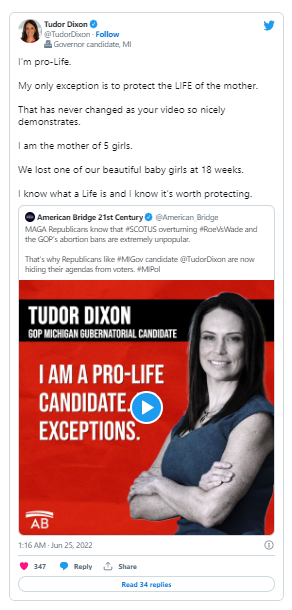






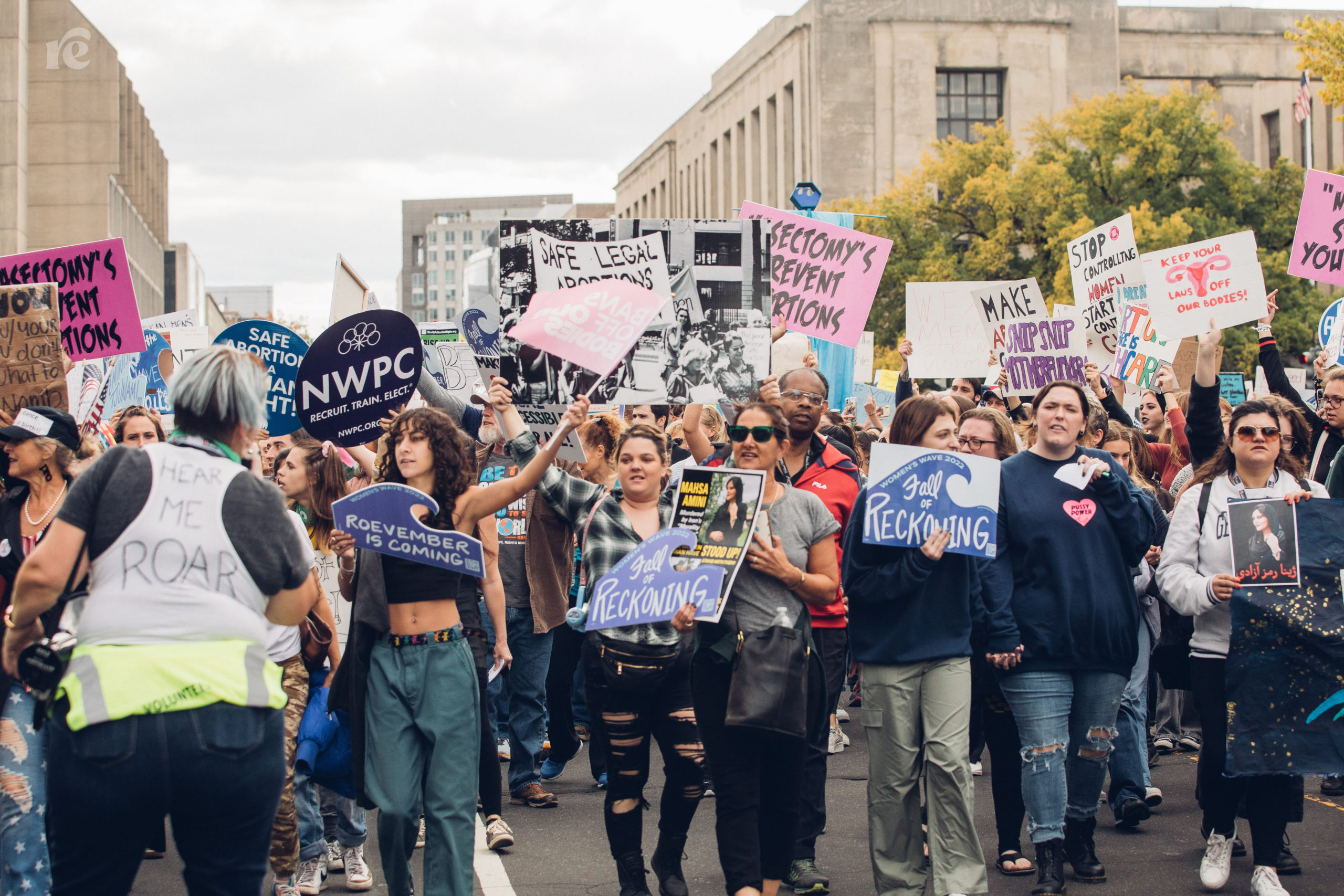




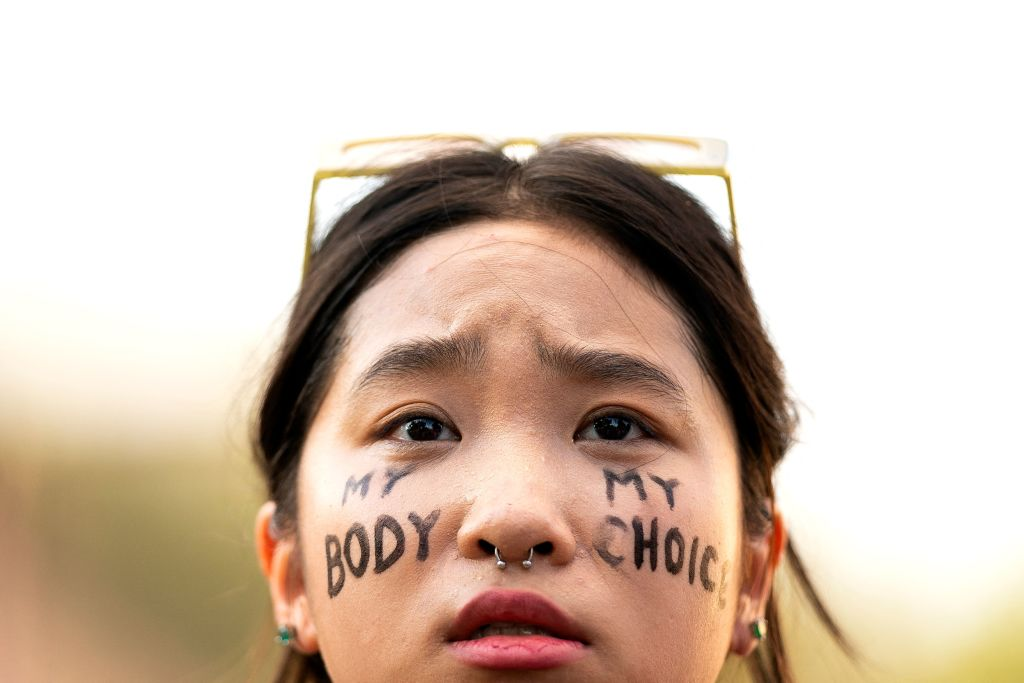




 Abortion - Abortion Clinics, Abortion Pill, Abortion Information