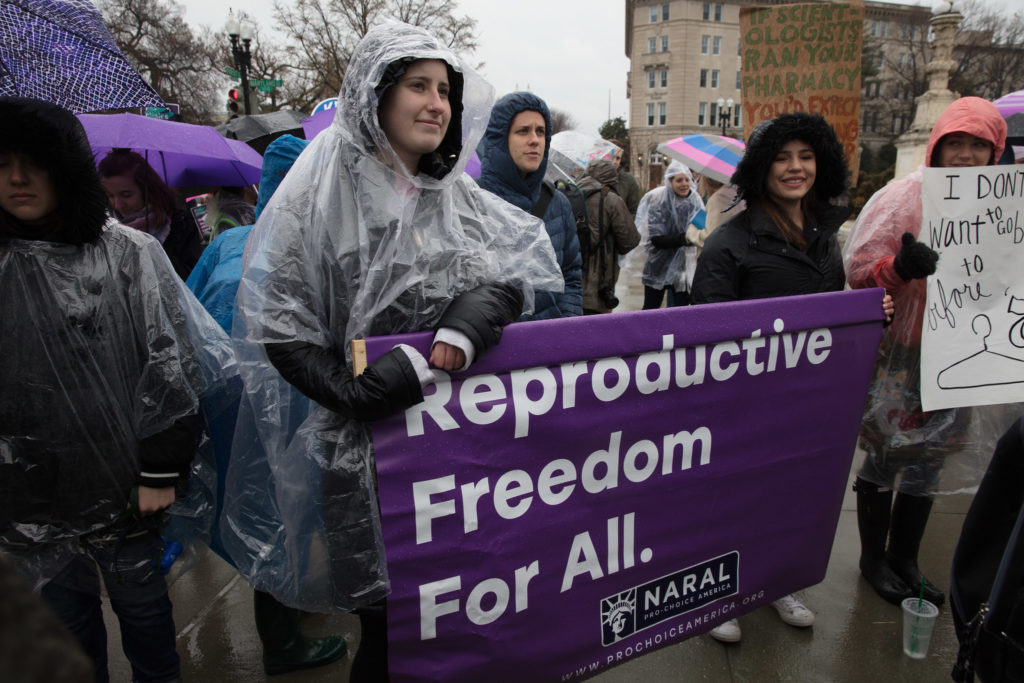
In 2019, thousands of women protested against state decisions revoking their reproductive rights. Saul Loeb / AFP via Getty Images

In 2019, thousands of women protested against state decisions revoking their reproductive rights. Saul Loeb / AFP via Getty Images

  • A groundbreaking study analyzed 667 women’s emotions about their decisions to have abortions. It followed them from a week after their abortions until five years post-procedure.  

  • After three years, 99% of these women said having an abortion was the right decision. After five years, 95% said the strongest emotion they felt was relief. 

  • This is the first study of its kind to investigate how women feel years after their abortions. Other studies on the topic have been limited to one week or one month post-procedure. 

  • These findings run contrary to many of the claims that fuel state-level laws restricting abortion access in America. 

Five years after their abortions, the strongest emotion almost all women feel isn’t regret, but relief. That was the takeaway of a groundbreaking five-year study of 667 women published today in Social Science & Medicine.

The study, conducted between 2008 and 2016, followed each woman from a week after her abortion until five years post-abortion to see how she felt about her decision years down the line.

While other studies have looked at the emotional effects of abortion, they’ve been limited to a week or month post-procedure since larger, long-term studies are prohibitively expensive and time consuming.

“I wanted to investigate if there was any evidence to the claims that abortion had negative long-lasting effects,” said epidemiologist Corinne Rocca, who conducted the study as part of UCSF’s Advancing New Standards in Reproductive Health and funded her study with grants from four different foundations.

For example, could abortions haunt women later in life and cause major feelings of regret? Could there be a basis for the waiting period 27 states require before a woman can get an abortion? Could the state-mandated abortion materials given out in eight states that claim abortion causes lasting mental health harm be correct?

According to the study, no, no, and no.

“What we found was that there definitively wasn’t” evidence to support claims that the procedure has detrimental long-term effects, Rocca said.

The results showed nearly all women didn’t regret their abortions

The study included a mix of white, black, and Latina women from 30 clinics across the U.S. The average age was 25, and 62% were already raising kids.

“We actually achieved a sample that looks very similar to the population of women who seek abortions nationally,” Rocca said.

The study’s analysis shows that one week after their abortion, 51% of the participants felt positive emotions, 17% felt negative emotions, and 20% felt no emotions.

The study also found that 46% of women felt it wasn’t a difficult decision to have an abortion, but for the 27% of people who did have difficulty with the choice, feelings of sadness declined sharply in the two years post-procedure.

After three years, 99% said having an abortion was the right decision. Even the women who had abortions later on in their pregnancies did not experience any more regret than the women who had earlier abortions.

After five years, the emotion most commonly felt by 95% of these women was relief.

Michelle Williams golden globes
Michelle Williams attends the 2020 Golden Globes, where she delivered a pro-choice message in her acceptance speech. 
Frazer Harrison / Staff / Getty Images

Women didn’t think much about their abortions until they were prompted

Women often told interviewers their feelings on their abortions were virtually nonexistent. “The only time I think about my abortion is when you call up and ask about it,” Rocca said many women told her.

The study also measured community stigma and found that 31% of women said people in their community would look down on them if they knew about the abortion. Those women expressed higher levels of post-abortion sadness, suggesting that sociocultural context plays a role in how women feel about their abortions.

The researchers accounted for factors that could have influenced the findings, including if the woman was in a relationship with the man who was involved in the pregnancy, if the women had histories of depression or anxiety, if they intended to get pregnant, if they had social support, and their age, race, and what stage of pregnancy they were in.

Abortion remains a highly stigmatized and divisive procedure in the US

Ever since the Supreme Court decriminalization in 1973, abortion has been a highly stigmatized medical procedure that divides Americans. According to a 2019 Gallup poll, 53% of American adults believe abortion should be legal “only under certain circumstances,” while 21% think it should be completely illegal.

Every state in America has different laws limiting the types of abortions that can be performed, with 45 states allowing healthcare providers to refuse to give women abortions. There are 27 states that require a waiting period before women can have abortions. And, eight states are required to give women literature on the long-term mental health consequences of having an abortion.

All of these laws are premised on the idea that having an abortion can cause women long-term emotional harm. But this study shows this premise is faulty.

abortion protest
A young woman holds a sign demanding a woman’s right to abortion at a demonstration in Madison, Wisconsin in 1971. 
AP Photo

The study’s findings are consistent with previous research done on women and abortion

In 1987, President Reagan asked the surgeon general at the time, a man named Everett Koop, to prepare a report stating that abortion was psychologically harmful to women.

Koop was morally opposed to abortion, but he was also a scientist. He found that there wasn’t any data to back Reagan’s claim. In 1989 the New York Times reported that Koop told Reagan there was insufficient evidence to create the report and quoted him saying he was concerned the president’s advisors thought “it was a foregone conclusion that the negative health effects of abortion on women were so overwhelming that the evidence would force the reversal of Roe v. Wade.”

Since then, “studies looking at the emotional consequences of abortion show that people are unlikely to experience mental health challenges following an abortion — except in cases when pre-abortion emotional challenges existed or when an intended pregnancy is ended due to medical concerns,” according to a statement Dr. Gillian Dean, the senior medical director of the Planned Parenthood Federation of America, sent to Insider.

“Evidence shows that being denied a wanted abortion can have greater emotional and physical consequences on a person’s health,” she added.

Despite the current study’s consistencies with past research, Dr. Wendy Chavkin, professor emerita at the Columbia Mailman School of Public Health, told Insider she doesn’t think it will have much of an effect on policy.

“The people who are so opposed to abortion don’t care about the data,” she said. “It’s like climate change deniers. The data is irrelevant. But for women considering abortions to know that 95% of women didn’t regret it? That’s important.”

Source: https://www.insider.com/almost-no-women-regret-having-abortions-feel-relief-landmark-study-2020-1?fbclid=IwAR1UbwoG25PHUdK53A6BGoo8rpcEp7dGo8FCxS5SQf3GfgPyENIfOecL164

Living in a state without abortion coverage restrictions on Affordable Care Act plans doesn’t mean your insurance company will cover it.

In some states where ACA marketplace plans do cover abortion, the information about whether a certain type of abortion will qualify for coverage and when is unclear.
Shutterstock

Four in ten adults would not have enough money on hand to cover an unforeseen expense of $400, according to a recent Federal Reserve Board survey. At an average cost of $500, a first-trimester abortion is squarely out of reach for many women if insurance doesn’t cover their care.

That means out-of-pocket costs for abortion can be detrimental to families. We know from research that low-income people who aren’t able to use their public insurance to cover abortion care endure financial hardships as they work to find the funds. Less is known about people’s experiences accessing abortion through private health insurance such as employer-based insurance or insurance through the Affordable Care Act (ACA), which together cover a majority of people in the United States.

At Ibis Reproductive Health, we reviewed evidence on the topic and found that policyholders themselves lack information, and many are unsure if their insurance covers abortion. And in a study of marketplace plans—the insurance plans established through the ACA—the National Health Law Program (NHeLP) recently found that many ACA plans don’t cover abortion services, even in states with no restrictions on coverage.

Hurdles to using insurance to cover abortion are due in part to restrictions passed by lawmakers to limit private insurance coverage of abortion. Over 30 restrictions on insurance coverage of abortion have been passed by state legislatures in the past ten years. Meanwhile, the Trump administration recently finalized a rule designed to cause confusion among enrollees and limit access to insurance coverage of abortion. With ACA marketplace plans required to send a separate billing statement for abortion coverage, this new administrative burden will be passed on to individuals in the form of higher premiums—or plans will eventually drop abortion coverage altogether. As NHeLP’s report documents, many ACA plans have already placed restrictions on abortion coverage, such as lifetime or yearly limits on the number of abortions an enrollee can receive. With this new rule, coverage is likely to worsen.

In states where private insurance coverage of abortion is banned but an insurance rider (an extra monthly fee that someone can pay to have this coverage) is allowed, abortion coverage is still not accessible. Research has found that only one plan in one state actually included a rider option.

Restrictions aren’t the only reason people can’t have their abortion covered: In some states where private and marketplace insurance plans are able to cover abortion, the information about whether and when a certain type of abortion will qualify for coverage is unclear. Extreme limits on private insurance coverage, in addition to inconsistent or unavailable information on coverage, forces many to pay out-of-pocket for a reproductive health service that one in four women will use in their lifetimes.

The Affordable Care Act was designed to improve access to health care, especially for low- and middle-income people. For those paying for their insurance and actively trying to stay insured, an emergency health cost such as an abortion could have serious implications for the family’s finances. It is paramount to include better coverage for reproductive health services in plans and policy proposals to improve our health care system.

NHelp’s recent report reinforces other findings that have demonstrated that living in a state without restrictions on abortion coverage does not mean an insurance company will cover it. It is critical for consumers and advocates to speak up and ask insurance companies to offer transparent, clear, and comprehensive information on abortion coverage policies.

Affordability is key to increasing access to quality abortion care. With increasing restrictions on private insurance coverage of abortion, it is important to protect the coverage we have and to improve coverage of all reproductive health services in places where coverage is restricted.

Source: https://rewire.news/article/2020/01/08/people-dont-know-if-their-insurance-covers-abortion-care/

A Massachusetts woman who had an abortion when she was 15 stands outside the Suffolk County Courthouse in Boston. Right now, girls facing that decision who don’t want to tell their parents must get a judge’s approval.
Jesse Costa/Jesse Costa/WBUR

The teenager was just 15, and recovering from a rape, when she realized she was pregnant. This young woman, whom NPR has agreed not to name, says she knew right away that she wanted to terminate the pregnancy. But like a lot of states, Massachusetts required — and still requires — minors to get a parent’s consent before obtaining an abortion.

“I knew I couldn’t tell my mom or my immediate family members,” she says, “because my pregnancy was the result of a sexual assault from a family friend.” Her home, she adds, “wasn’t necessarily a safe or healthy one at the time.”

So the 15-year-old pursued her only legal alternative: obtaining permission for the procedure from a state judge. She remembers staring up at a man who never made eye contact with her during their short conversation about grades and whether she played sports. She says the judge never asked her about the assault or her planned abortion.

“And then, right before I was leaving, he just encouraged me to think harder next time, before I had sex,” she recalls. “That was tough to hear.”

The judge issued an order granting her request. But the additional time it took to get that permission pushed the 15-year-old past the point that would allow her to take pills to induce an abortion. Research shows going to court typically delays an abortion for minors in Massachusetts by six days — delays that are most common among low-income, nonwhite teenagers.

So, instead of a medical abortion, she had to have the more invasive surgical procedure. But that’s not what weighs heavily on the young woman, who is now 23, has a masters degree and works for a nonprofit in Boston.

“The feeling that I had — from seeing the judge and those last words he said to me about being ‘more responsible’ ” — is what has stuck with her.

Required parental consent is one of the main reasons Massachusetts, often viewed as a bastion of liberal laws, only gets a grade of “C” for abortion access from an abortion rights group. Now, there’s an ongoing, vigorous debate in Massachusetts about whether to keep or remove this restriction.

It’s part of a larger process, in which both supporters of abortion rights and groups that oppose abortion are re-examining — and often changing — state-level policies in the wake of Brett Kavanaugh’s ascension to the U.S. Supreme Court in 2018. Both sides believe the appointment of Kavanaugh could lead to Roe v. Wade being overturned, which would mean the power to determine abortion policy would return to states.

Abortion-rights opponents say that when minors seek out abortion, having a parent or judge involved is supposed to help protect vulnerable teenagers, such as the 15-year-old who was raped. (That young woman says she has always assumed her lawyer told the judge how she got pregnant, but she can’t be sure.)

“In our laws, we need to do as much as we can — especially given the kind of epidemic abuse that we’re facing — to interrupt that cycle,” says David Franks, chairman of the board of the anti-abortion group Massachusetts Citizens for Life.

And requiring parental consent works to cut down on the procedures, these opponents of abortion rights say. The restriction has prevented at least 10,000 abortions since it was enacted in Massachusetts, according to calculations by Michael New, a visiting professor at The Catholic University of America. That takes into account the hundreds of Massachusetts teenagers who travel to neighboring states every year where parental consent for minors is not required. New says Massachusetts residents have traditionally backed some abortion limits for teenagers.

“Even in these more ‘liberal’ states, some of the existing pro-life laws still enjoy a lot of support,” New says. “I think most people are uncomfortable with minor girls obtaining abortions without their parent’s knowledge.”

Still, a poll out this past summer found that a plurality of Massachusetts voters favor letting minors decide on their own.

Removing parental consent is one of the key elements in a bill being called the “Roe Act” that’s pending in the Massachusetts legislature. It would also allow abortions in the third trimester — if a doctor diagnoses a fatal fetal condition — and, in anticipation of a post-Roe world, would establish the right to an abortion in state law.

The bill’s sponsor, state Sen. Harriette Chandler, argues that abortion is more widely accepted these days as general medical care. Chandler, who is 82, remembers when it wasn’t.

“I think if people realize what a post-Roe world would be, that would make it even more reasonable to do this bill,” Chandler says.

Her proposed legislation is still in committee, and its ultimate fate is unclear. Massachusetts Gov. Charlie Baker, a Republican, says he generally supports access to abortion, but not Chandler’s proposed expansions to state law.

Massachusetts, a heavily Catholic state, was among the first to pass limits on legal abortions in the 1970s, including required parental consent for minors. Twenty-five other states enforce a similar law for minors. No state has repealed the restriction.

‘It’s really been difficult to repeal barriers across the country,” says Rebecca Hart Holder, executive director at the abortion rights group NARAL Massachusetts. “This is a moment for us to take back that narrative and say those barriers are not acceptable.”

The prospect of eroding or overturning Roe v. Wade is triggering a flurry of legislative actions in states across the country. The Guttmacher Institute, which supports abortion rights, says 17 states have passed abortion restrictions or bans this year, as compared to 9 states that have confirmed or expanded access to abortion.

The recent rush in many states to restrict abortion rights is part of what propels Chandler: “We’re going in a different direction than the rest of the country,” she says.

That reaction has also occurred in other left-leaning states, according to Guttmacher’s senior state issues manager, Elizabeth Nash. The increased focus on abortion began in late 2018, Nash says, when Kavanaugh’s arrival on the Supreme Court created a five-member conservative majority. Before then, abortion access wasn’t an urgent priority among liberals.

“People felt that they were OK,” Nash explains, “that their state was safe because they weren’t seeing the same kinds of attacks as, perhaps, in states like Texas or Louisiana.”

In Massachusetts, abortion-rights opponents are lobbying to dilute or defeat the Roe Act and then focus on their long-term goal: a state constitutional amendment to limit abortions.

Meanwhile, supporters of abortion rights say passage of the Roe Act would help Massachusetts cement its commitment to abortion access — and become a legislative haven for women who can’t obtain abortions in other states. With that message, they have stepped up fundraising appeals with the plea that even more women are going to need help with abortions in a post-Roe future.

This story is part of a reporting partnership that includes WBURNPR and Kaiser Health News.

Source: https://www.npr.org/sections/health-shots/2020/01/02/789966125/massachusetts-may-drop-requirement-that-minors-get-permission-for-abortion?fbclid=IwAR2izOjEZebQj9AZLK3UrSqJnZbHbZ-exRTQ7DPJIc7B2y-q_0iuNoIozxo

AUSTIN — Using home remedies such as herbs, teas and vitamins or a prescription drug obtained from Mexico, Texas women have tried to end their pregnancies themselves three times more often than women in other states, a new study finds.

The Texas Policy Evaluation Project at The University of Texas at Austin found 6.9 percent percent of 721 patients seeking abortion tried to end their pregnancies on their own before going to an abortion clinic, compared to 2.2 percent nationally. The results of the study were released Thursday morning.

“We hear from clients pretty often, if I can’t get money for this, trying it at home is their next step,” said Cristina Parker, a spokeswoman for the Lilith Fund, which offers financial assistance to people who need abortions.

Most women who used misoprostol — a safe pill commonly used in abortion clinics but available without a prescription in Mexico — were successful in ending their pregnancies, the research found. Women who used home remedies found their attempts failed and sought care at an abortion clinic.

Common factors among the 721 women surveyed and 18 interviewed found they lived in poverty or had other obstacles that led them to believe they had no other option, such as finding their nearest clinic had closed or they could not afford to pay for the procedure. Nearly all said they would have preferred to go to a clinic instead of ending their pregnancies themselves, the study showed.

Self-managed abortion could be on the rise as people from states hostile to abortion wrestle with restrictive policies. The Guttmacher Institute, which supports abortion rights, found 18 percent of non-hospital clinics across the country reported treating at least one case of a person who attempted an abortion without a doctor’s help in 2017. That’s up from 12 percent in 2014.

The Texas study, which involved a researcher from Guttmacher, suggests self-managed abortions could become more common in Texas if clinics become more difficult to access. Researchers say that could be especially true in South Texas — where women are closer to Mexico and can more readily obtain misoprostol — or among poor women who cannot afford an abortion, which can cost $500 or more.

“If people have to choose a self-managed procedure thinking that what they could be doing is dangerous or that it could compromise their future fertility, and they’re therefore scared and think they have no other options, that’s not health care with dignity,” said Liza Fuentes, senior research scientist at Guttmacher who worked in collaboration with the Texas Policy Evaluation Project on the study.

She said the findings show a need to ensure women who try to end their pregnancies at home have accurate information about effective methods and what to expect.

The research was conducted in 2012 and 2014, before and after a Texas law forced nearly half the state’s abortion clinics to close. The 2013 law imposed regulations the U.S. Supreme Court found created an undue burden on a woman’s right to an abortion. The high court struck down the law in 2016, ruling that the clinic closures caused women to drive farther and face longer wait times.

The data is too old to offer a sense of how accessible abortions are, said Joe Pojman, executive director of Texas Alliance for Life. Five abortion clinics and more than 100 centers offering alternatives to abortion have opened since researchers conducted its last interviews and surveys, he said.

“I believe there are grave reasons to question the relevance of the data that the author is putting forward because it’s quite old and things have changed he Texas,” said Pojman.

There are 24 clinics performing abortions in Texas, down from 41 that were open before the Texas law.

More than 52,000 abortions were reported in Texas in 2017, the latest year of which data is available. In 2012, the year before the law instituted regulations that caused clinics to close, more than 68,000 were performed.

Texas has passed other abortion restrictions that have withstood legal challenges, such as a 2011 law requiring abortion providers to show or describe an ultrasound image of the fetus to the woman and play sounds of the fetal heart beat before moving forward with the procedure.

Source: https://www.houstonchronicle.com/news/politics/texas/article/DIY-abortion-attempts-three-times-as-prevalent-in-14962685.php?fbclid=IwAR0nc5IChvNVq_tH_raf6FpSxXIAUpn2bHFZXDBX6LTwSXpEkBq8_mbk_aA

Reproductive rights advocates said the Missouri bill is the latest salvo from one of the nation’s most rabidly anti-choice legislators.

House Bill 1799 was introduced by state Rep. Mike Moon (R-Ash Grove), a vociferous “fetal personhood” advocate who has compared abortion to slavery.
Mike Moon / YouTube

A Missouri Republican legislator has introduced so-called fetal personhood legislation that could mandate law enforcement to stop people from having abortions.

House Bill 1799 was introduced by state Rep. Mike Moon (R-Ash Grove), a vociferous “fetal personhood” advocate who has compared abortion to slavery. The legislation was pre-filed in December. The GOP-dominated Missouri legislature will begin its 2020 session on Wednesday.

The bill says “all the rights, privileges, and immunities available to other persons, citizens, and residents of this state” should be granted to fetuses at any stage of development, typical fodder found in “personhood” bills pushed by anti-choice lawmakers. These measures, rejected by voters across the country, would outlaw abortion and many kinds of contraception.

“Law enforcement officers, officers of the court, and any licensed or state-regulated entities in the state shall affirmatively enforce” the provision barring abortion in the state, according to Moon’s bill, which recognizes life as beginning at fertilization.

Reproductive rights advocates said HB 1799 is just the latest salvo from one of the nation’s most rabidly anti-choice legislators.

“Missouri’s abortion laws are already some of the most restrictive in the nation,” Sarah Felts, a spokesperson for Planned Parenthood Advocates in Missouri, said in a statement to Rewire.News. “This shows the out-of-step and extreme priorities of abortion-obsessed Republicans in the Missouri Legislature.”

Moon did not respond to an interview request from Rewire.News.

In 2019, Missouri was on the precipice of becoming the first state since the 1973 landmark decision in Roe v. Wade to be without a standalone abortion clinic. The state health department has tried to shutter the clinic using a vast web of anti-choice restrictions that are medically unnecessary and can be harmful to sexual assault survivors. Health department officials have refused to renew the clinic’s license. It was revealed during October hearings that Dr. Randall Williams, the department’s director, tracked the menstrual cycles of patients at the clinic.

Steve Reed, co-chair of the Missouri Action Progressive Group, told Rewire.News that Moon’s bill constituted a legislative attack against people across the state.
“The movement to restrict reproductive choice is not only an attack on personal autonomy but also on the principle of equality for women, and it is a grave threat to all Americans’ cherished right to privacy, bodily integrity and religious liberty,” Reed said.

House Minority Leader Crystal Quade (D-Springfield) told St. Louis Public Radio in August that Missouri Republican lawmakers’ extreme abortion proposals could help Democrats in coming electoral battles. Democrats hold ten of the 34 state senate seats in Missouri, and 48 of the 163 house seats.

“I think it is going to be helpful because it allows us to really explain the narrative beyond just abortion, but all of the other things—like kids getting kicked off Medicaid,” Quade said. “All of these continuous extremisms that’s going on in Jefferson City, we’ll be able to get that message out across the state.”

Source: https://rewire.news/article/2020/01/08/missouri-republicans-have-cops-stop-abortions/

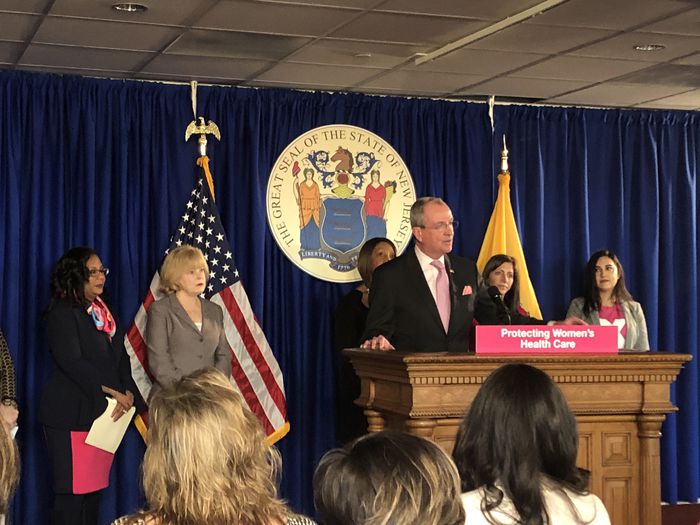
Gov. Phil Murphy speaks at his office in Trenton on Thursday.

New Jersey will provide $9.5 million more in state taxpayer money to family-planning clinics such as Planned Parenthood to make up for federal funding they forfeited by opposing a controversial abortion rule from President Donald Trump’s administration.

Gov. Phil Murphy on Thursday signed a bill into law that immediately allocates the funding for the current fiscal year — which he said will help clinics across the state provide health services for tens of thousands of New Jerseyans.

Last summer, Trump’s administration introduced a rule barring clinics that receive federal aid from telling patients where they can get an abortion.

In response, Planned Parenthood announced it was withdrawing from the federal Title X program, which provides $8.8 million in funding to women’s health and family-planning centers in New Jersey.

About 100,000 residents in the state — largely women — use such clinics. Of those, about 77,000 use Planned Parenthood.

The rule was one of many steps the Trump administration has made to restrict access to abortion, a key issue for many of conservative Christian voters who support the Republican president.

Murphy, a Democrat who often opposes Trump, said the president “made a conscious decision to block women from vital information critical to their health.”

“Planned Parenthood made a conscious decision to continuing providing vital information to their patients, knowing it would cost them much-needed federal funds,” Murphy, dressed in a pink tie, pocket square, and socks to match the color of Planned Parenthood’s logos, said before signing the law at his office in Trenton.

“And today, we’re making a conscious decision to stand with Planned Parenthood and with all who stand for reproductive rights, and to stop President Trump from harming our fellow New Jerseyans,” the governor added.

This law (A5802) allocates money in the current state budget that runs through June 30, to replace federal funds the New Jersey clinics gave up. The state Department of Health is in charge of disbursing the funds.

The Democratic-sponsored bill passed the Democratic-controlled state Legislature along party lines late last year. The state Senate approved it 25-15 and the state Assembly 49-21 with one abstention.

For the additional aid to continue after July 1, the governor and Legislature would have to allocate the funds again in the next state budget.

Lt. Gov. Sheila Oliver noted that Planned Parenthood clinics focus on much more than abortion, providing family planning, cancer screenings, and other health-care services — largely to low-income women but also to some men.

“Women’s health care and reproductive rights are not just the ‘A word,’” Oliver said. “We cannot have a group of men in Washington, D.C. … make determinations about women having access to the care they need.”

Murphy and Democratic state lawmakers have long been supporters of Planned Parenthood. In 2018, they restored $7.5 million in the state budget after eight years of it being cut by former Gov. Chris Christie, a Republican. It was the first the first bill Murphy signed into law after succeeding Christie.

Marie Tasy, executive director of New Jersey Right to Life, criticized the new law Murphy signed Thursday, calling it “a disgraceful money grab” by the governor and lawmakers to use tax dollars help a group that supports Democrats in elections.

“The taxpayers of New Jersey should not be forced to fund abortion — and make no mistake, that is what this bill will do,” Tasy added.

Meanwhile, state Senate President Stephen Sweeney, a sponsor of the legislation, praised Murphy for signing it. But Sweeney, D-Gloucester, also criticized the governor — a frequent rival — for continuing to freeze other money in the state budget, including funding for a program fighting cancer.

Murphy signed an executive order last year freezing $235 million in the budget to make sure revenue projections pan out. Sweeney slammed the move, saying it largely hurt South Jersey, the region he represents.

The governor has since released $114 million. But Sweeney suggested Thursday that Murphy is being hypocritical by providing more funding for women’s health services while still withholding money for cancer patients.

“The women of New Jersey deserve the best health care that Planned Parenthood and other clinics can provide, just as cancer patients seeking services in South Jersey do,” Sweeney said in a statement.

Murphy’s administration stressed there are no plans to put the new $9.5 million for family planning in reserve.

Source: https://www.nj.com/politics/2020/01/murphy-approves-nj-giving-millions-to-planned-parenthood-after-trumps-abortion-rule.html?fbclid=IwAR3hOA8G0vMv5gY9KCejFl52db_SKeZ_0NQfwUMpBNJA9ouIFCc8BSx-yTE

Michelle Williams took home a best actress Golden Globe Sunday night, but not before shining the spotlight on abortion rights. The actress used her time on stage to advocate for a “woman’s right to choose” — a right she said enabled her to be where she is today.

Williams, who is pregnant, won the award for best performance by an actress in a limited series or a motion picture made for television, for her role as Gwen Verdon in FX’s mini-series “Fosse/Verdon.” The show was also nominated for best actor in a mini-series and best mini-series.

“As women and as girls, things can happen to our bodies that are not our choice. I’ve tried my best to live a life of my own making, and not just a series of events that happened to me,” she said. “… And I wouldn’t have been able to do this without employing a woman’s right to choose. To choose when to have my children and with whom.”

Cameras at the awards show honed in on the women of the room, including Busy Philipps, who could be seen tearing up and nodding in support of Williams’ remarks. Philipps has been a vocal advocate for abortion access and has often urged more conversation about women’s experiences with the procedure and how it shaped their lives.

“I know my choices might look different but thank God or whomever you pray to that we live in a country founded on the principle that I am free to live by my faith and you are free to live by yours,” Williams said. “Women, 18 to 118, when it is time to vote, please do so in your own self-interest. It’s what men have been doing for years.”

People and organizations watching the Globes quickly took to Twitter to comment on Williams’ speech, including Planned Parenthood.

One user said her response was equal to that of Tiffany Haddish, who helped present Williams with the award. Haddish could be heard screaming “Preach!” as Williams gave her speech.

Source: https://www.cbsnews.com/news/golden-globes-michelle-williams-advocates-for-womens-rights-in-golden-globes-speech/?fbclid=IwAR1nzDsWSn7gS2EXKkSzz4tQn52uUK-BoKLdqemVBV672OxJE1iU-bQP-yU

According to Americans United for Life and conservative lawmakers, everyone expects the Supreme Court to end legal abortion eventually, so why wait when the Court could do so this summer in June Medical Services?

[Photo: U.S. Supreme Court Chief Justice John Roberts gives a grieving look during a ceremony.]

More than 200 members of Congress, along with the largest anti-choice advocacy group in the United States, filed amicus briefs Thursday urging the U.S. Supreme Court to use this spring’s abortion rights case to end legal abortion. Brendan Smialowski – Pool/Getty Images

More than 200 members of Congress, along with the largest anti-choice advocacy group in the United States, filed amicus briefs Thursday urging the U.S. Supreme Court to use this spring’s abortion rights case to end legal abortion.

Americans United for Life (AUL) and conservative lawmakers called on the Court to revisit and overturn Roe v. Wade and Planned Parenthood v. Casey at its “earliest opportunity,” describing the historic decisions as “unworkable” and arguing that the U.S. Constitution does not recognize the right to an abortion. AUL and anti-choice lawmakers made these arguments in amicus briefs filed in June Medical Services, LLC v. Gee, a case challenging both a Louisiana admitting privileges requirement and the ability of providers to challenge certain types of abortion restrictions on behalf of their patients.

The Roberts Court will hear arguments in the case in March. A decision is expected this summer.

Roe did not actually hold that abortion was a ‘fundamental’ constitutional right, but only implied it,” the lawmakers argue in their brief. “Casey clearly did not settle the abortion issue, and it is time for the Court to take it up again.”

Roe’s assumptions have changed considerably since 1973,” AUL’s brief argues. “Biological and technological developments, including the development of in vitro fertilization since the 1970s, have reinforced the medical conclusion of the 19th century that the life of the individual human being begins at conception.” 

“Since abortion is not a right derived from the federal constitution, it is a matter for the people to decide through the democratic process in the States,” the AUL brief continues.

Abortion rights advocates said the appeal to the Supreme Court was the clearest sign yet that anti-choice legislators and organizations were eager to use the Court’s conservative majority to undo longstanding constitutional precedent.

“The anti-choice movement is no longer trying to hide their real agenda. They are gunning to end Roe, criminalize abortion and punish women,” Ilyse Hogue, president of NARAL Pro-Choice America, said in a statement. “If it wasn’t clear why we fought like hell to stop Brett Kavanaugh’s confirmation before, it should be crystal clear now. They gamed the system and stacked the Supreme Court just for this moment. But we will not back down. We will hold these anti-choice politicians accountable for working to rip away our reproductive freedom.”

June Medical Services is the first abortion rights case the Court will hear with its newly minted and solidly anti-choice conservative majority. Abortion rights opponents are seizing the moment to advance their most radically anti-choice positions. Those arguments include claiming that state safe-haven laws that allow infants to be surrendered by parents to social services without fear of prosecution or laws that protect people from being fired for becoming pregnant negates the need for legal abortion.

While those arguments are bad, it’s astonishing for lawmakers and advocacy organizations to ask the Court to revisit and overturn Roe and Casey in June Medical Services. That’s because June Medical Services doesn’t directly call those cases, and the fundamental right to an abortion, into question. At issue in June Medical Services is whether Louisiana’s admitting privileges law unduly burdens abortion rights and whether providers can sue to block abortion restrictions designed to protect the health and safety of their patients. That’s it. It’s even more astonishing that lawmakers and anti-choice activists are making those arguments in June Medical Services considering that this is an election year and conventional wisdom suggests the last thing conservative lawmakers nervous about electoral prospects want is a national fight about overturning Roe v. Wade. 

Except that when it comes to abortion rights and the courts, nothing the right does is surprising anymore, and conventional wisdom no longer applies. President Trump campaigned on appointing judges committed to overturning Roe v. Wade and has made good on that promise.

With the help of Republicans in the U.S. Senate, 1 in 4 federal appeals court judges is a Trump appointee. The federal judiciary has been remade in conservatives’ image, and that image is decidedly hostile to abortion rights and overtly political in its drive to upend them. Republicans have loudly and proudly proclaimed they are coming for abortion rights; there’s no longer any political need for them to pretend otherwise.

AUL acknowledges this fact in its brief: “The current presidential administration, as have numerous previous administrations, campaigned on and calls for the overruling of Roe. As demonstrated by the 2019 state legislative sessions, the increasing expectations—on both sides of the issue—is that the Court will eventually overturn Roe.” 

In other words, according to AUL and conservative lawmakers, everyone expects the Roberts Court to end legal abortion eventually, so why wait when the Court could do so this summer in June Medical Services?

“As RoeCasey, and Hellerstedt have shown, this Court cannot settle the abortion issue,” AUL’s brief continues. “Even if the Court unanimously reaffirmed Roe, it would merely preserve the legal schizophrenia that exists between the Court’s policy and state and federal law, and do nothing to change the basic social and legal factors that have made Roe immune to settlement.”

“The Court should reconsider Roe v. Wade at the earliest practical opportunity.”

Source: https://rewire.news/article/2020/01/02/its-happening-congressional-lawmakers-ask-supreme-court-to-end-legal-abortion/

“The fact that men, myself included, are determining how women may choose to manage their reproductive health is a sad irony not lost on the court,” wrote federal district court judge Carlton W. Reeves last year when he ruled that Mississippi’s 15-week abortion ban violated the U.S. Constitution. “As a man, who cannot get pregnant or seek an abortion, I can only imagine the anxiety and turmoil a woman might experience when she decides whether to terminate her pregnancy through an abortion. Respecting her autonomy demands that this statute be enjoined.”

On Friday, the U.S. Fifth Circuit Appeals affirmed that sentiment, ruling in a decision in Jackson Women’s Health Organization v. Dobbs that the state cannot ban abortion before viability, according to Supreme Court precedent in Roe v. Wade and Casey v. Planned Parenthood.

(NARAL Pro-Choice America)

“The Fifth Circuit recognized today what is obvious: Mississippi’s abortion ban defies decades of Supreme Court precedent,” Hillary Schneller, senior staff attorney at the Center for Reproductive Rights, said in a statement“With this ruling, Mississippi—and other states trying to put abortion out of reach—should finally get the message. Instead of wasting taxpayer dollars to defend multiple abortion bans that won’t stand up in court, they should be working on other issues—like addressing the state’s alarming maternal mortality rates.”

Indeed, Mississippi ranks dead last in health for women and children. It is the worst state for low birthweight babies, preterm birth, infant and neonatal mortality; and ranks 28th for maternal mortality. But rather than working to address the appalling state of women’s and children’s health in the state, legislators are fixated on making abortion more dangerous, more expensive and less accessible.

Legislators banned abortion after 15 weeks from the last menstrual period—13 weeks into pregnancy—with exceptions only when there is a “severe fetal abnormality” or a medical emergency, defined narrowly as a life-threatening physical condition or when a pregnancy poses a “serious risk of substantial and irreversible impairment of a major bodily function.” The law has no exceptions for medical emergencies resulting from mental illnesses or other risks to a woman’s health, nor for pregnancies resulting from rape or incest.

Mississippi also passed an ever more stringent ban at six weeks this year, joining eight other states that banned abortion in 2019: Alabama, Arkansas, Georgia, Kentucky, LouisianaMissouriOhio and Utah. In a separate suit, the Center for Reproductive Rights is challenging the earlier ban, which a federal court blocked in May.

According to the Center for Reproductive Rights, abortion is very difficult to access in Mississippi. There is only one clinic and many hurdles for pregnant patients, including “a requirement that a pregnant person make two in-person trips to the clinic and delay their abortion by at least 24-hours after the first visit, state-mandated biased counseling, a medically unnecessary and onerous regulatory scheme that applies only to abortion providers, a ban on the use of telemedicine for abortion care and a law that restricts the provision of abortion to physicians only, which bars other qualified clinicians from providing abortion.”

Judge Reeves also called out lawmakers’ hypocrisy in passing abortion restrictions but refusing to expand Medicaid. “Mississippi Legislature’s professed interest in ‘women’s health’ is pure gaslighting,” he declared. “Its leaders are proud to challenge Roe but choose not to lift a finger to address the tragedies lurking on the other side of the delivery room: our alarming infant and maternal mortality rates.”

Noting the history sexism and racism in Mississippi, including that the state didn’t ratify the 19th Amendment until the 1980s, Judge Reeves described the abortion ban as “closer to the old Mississippi—the Mississippi bent on controlling women and minorities.”

The Fifth Circuit ruling on the Mississippi law is the first federal appellate court to rule on a recent abortion ban.

“Mississippi politicians have done everything in their power to cut off abortion access in our state. Despite these attempts, abortion remains legal in Mississippi and our clinic is open,” said Shannon Brewer, director of Jackson Women’s Health Organization. “But year after year, the state makes it harder to access abortion. Because of that, many of our patients drive hundreds of miles and spend weeks or months saving money to reach us—for abortion care and for gas, a hotel and to cover childcare.”

Source: https://msmagazine.com/2019/12/17/mississippis-15-week-abortion-ban-struck-down-again/?fbclid=IwAR0-0xeQPSjdxbn0mBs-clumD4Roag8BjM7QkPyRrq3iPFrhnSEzgQnb_70

Even as Republican-dominated legislatures passed laws designed to shut down clinics from coast to coast, some states saw an uptick in abortion clinics.

[Photo: An illustration of 4 state stamps.]

New York, New Jersey, Maine, and Massachusetts saw marked upticks in abortion clinics over the past decade as Republican legislative majorities in many states systematically shut down clinics. Shutterstock

In a decade in which dozens of abortion clinics were shut down by medically unnecessary state laws, around 14 states—mostly in the Northeast and West—have seen an increase in clinics, according to data from the Guttmacher Institute.

While the latest Guttmacher data is from 2017, other research, including a recent Abortion Care Network report focusing on independent clinics, indicates that clinics continue to close at an alarming rate. These closures include abortion clinics in states with Democratic-majority legislatures, like Whole Woman’s Health in Illinois, which closed in June, the same month Gov. J.B. Pritzker (D) signed a landmark pro-choice law.

Many states passed strict regulations as Democrats lost legislative majorities throughout the decade, though they clawed back some of those majorities in 2018. Across the United States, state lawmakers passed 394 abortion restrictions between 2011 and 2017. In 2019, these increasingly took the form of near-total abortion bans, despite their unpopularity and unconstitutionality.

The Guttmacher data indicates that states where the number of clinics increased also passed fewer restrictions on abortion. Of the eight states that added more than one clinic between 2011 and 2017—Connecticut, Maine, Maryland, Massachusetts, New Jersey, New York, Vermont, and Washington—none passed a single law restricting abortion. Many of the restrictions passed in other states are targeted regulations of abortion providers (TRAP). The reduction of abortion clinics in many states demonstrates the effectiveness of TRAP laws in reducing the availability of abortion.

Perhaps unsurprisingly in a decade marked by Republican domination on the state level, one of the biggest expansions was achieved not through political means but through technology and the work of organizers. Starting in 2016, Maine Family Planning (MFP) used its telemedicine program to bring abortion to Maine health-care centers in its network that had previously been limited to providing other reproductive health services.

“Using telehealth technology to provide abortion care meant that we could offer medication abortion at an additional 17 MFP sites, many located in underserved areas,” Deirdre Fulton-McDonough, director of communications at Maine Family Planning, told Rewire.News. “Patients who would otherwise have had to drive long distances to access services, potentially having to arrange for time off work or child care, were now able to access care much closer to home. At the time, Maine was just the third state where abortion was available via telemedicine, and we are proud of how this program helped knock down barriers to access especially for low-income and rural Mainers.”

Maine’s expansion of abortion services reduced the number of women of reproductive age living in counties without an abortion clinic from 55 to 24 percent from 2014 to 2017.

Many of the states, including Maine, that saw increases in clinics passed laws codifying abortion rights and adding other protections. In 2018, Maine elected a Democratic governor, Janet Mills, ending eight years under Republican Gov. Paul LePage, an abortion rights foe. Mills signed a law in June allowing more health-care providers, such as trained nurse practitioners and physicians’ assistants, to perform abortions. Think Progress reported that the bill could increase the number of abortion clinics in Maine that provide aspiration abortion from three to as many as 18. While many Maine family planning clinics already provide medication abortions up to 11 weeks’ gestation, aspiration abortions—the most common form of surgical abortion—can be performed up to 14 weeks.

Andrea Irwin, executive director of the Mabel Wadsworth Center in Bangor, Maine, said pro-choice laws in her state meant the clinic could focus on other reproductive services, including ensuring affirming abortion and prenatal care for transgender men, transmasculine people, and other groups of pregnant people beyond cisgender women.

“We’re really fortunate to be able to look at these other aspects beyond abortion care,” she told Rewire.News.

Also in New England, Vermont’s Democratic-led legislature codified abortion rights and advanced a 2022 referendum on a pro-choice constitutional amendment. Vermont added three clinics between 2011 and 2017.

Lawmakers in New York, where the number of clinics increased by 19 from 2011 to 2017, passed the Reproductive Health Act in 2019. The law repealed criminal abortion statutes, permitted abortions after 24 weeks in some situations, and clarified that trained nurse practitioners and physicians’ assistants can provide abortion services.

After Massachusetts repealed an outdated abortion ban in 2018, legislators introduced a variety of pro-choice laws in 2019, but the bills are still pending. Massachusetts added seven abortion clinics between 2011 and 2017.

On the opposite coast, Oregon Democrats passed the Reproductive Health Equity Act in 2017, a law that not only codified Roe v. Wade but required insurers to fully cover reproductive health care and barred discrimination against transgender and gender-nonconforming people in reproductive health coverage. The state was one of the first to defend the right to abortion against President Donald Trump, who has nominated more than 150 federal judges since taking office. From 2011 to 2017, Oregon added a single clinic.

Several of the states where clinics increased also added state funding for abortion services, required private insurers to cover abortion, or both. Maine, for example, passed a law in June that required all insurers cover abortion and provided state dollars to fund abortions through Maine’s Medicaid program. And in New Jersey, which added 17 abortion clinics between 2011 and 2017, Democratic lawmakers restored funding for Planned Parenthood in 2018.

California, which added one clinic during that time frame, announced in 2014 that insurers cannot refuse to cover abortion. Only 3 percent of California women of reproductive age live in a county without a clinic.

Source: https://rewire.news/article/2019/12/23/these-states-have-more-abortion-clinics-today-than-they-did-a-decade-ago/