According to Americans United for Life and conservative lawmakers, everyone expects the Supreme Court to end legal abortion eventually, so why wait when the Court could do so this summer in June Medical Services?

[Photo: U.S. Supreme Court Chief Justice John Roberts gives a grieving look during a ceremony.]

More than 200 members of Congress, along with the largest anti-choice advocacy group in the United States, filed amicus briefs Thursday urging the U.S. Supreme Court to use this spring’s abortion rights case to end legal abortion. Brendan Smialowski – Pool/Getty Images

More than 200 members of Congress, along with the largest anti-choice advocacy group in the United States, filed amicus briefs Thursday urging the U.S. Supreme Court to use this spring’s abortion rights case to end legal abortion.

Americans United for Life (AUL) and conservative lawmakers called on the Court to revisit and overturn Roe v. Wade and Planned Parenthood v. Casey at its “earliest opportunity,” describing the historic decisions as “unworkable” and arguing that the U.S. Constitution does not recognize the right to an abortion. AUL and anti-choice lawmakers made these arguments in amicus briefs filed in June Medical Services, LLC v. Gee, a case challenging both a Louisiana admitting privileges requirement and the ability of providers to challenge certain types of abortion restrictions on behalf of their patients.

The Roberts Court will hear arguments in the case in March. A decision is expected this summer.

Roe did not actually hold that abortion was a ‘fundamental’ constitutional right, but only implied it,” the lawmakers argue in their brief. “Casey clearly did not settle the abortion issue, and it is time for the Court to take it up again.”

Roe’s assumptions have changed considerably since 1973,” AUL’s brief argues. “Biological and technological developments, including the development of in vitro fertilization since the 1970s, have reinforced the medical conclusion of the 19th century that the life of the individual human being begins at conception.” 

“Since abortion is not a right derived from the federal constitution, it is a matter for the people to decide through the democratic process in the States,” the AUL brief continues.

Abortion rights advocates said the appeal to the Supreme Court was the clearest sign yet that anti-choice legislators and organizations were eager to use the Court’s conservative majority to undo longstanding constitutional precedent.

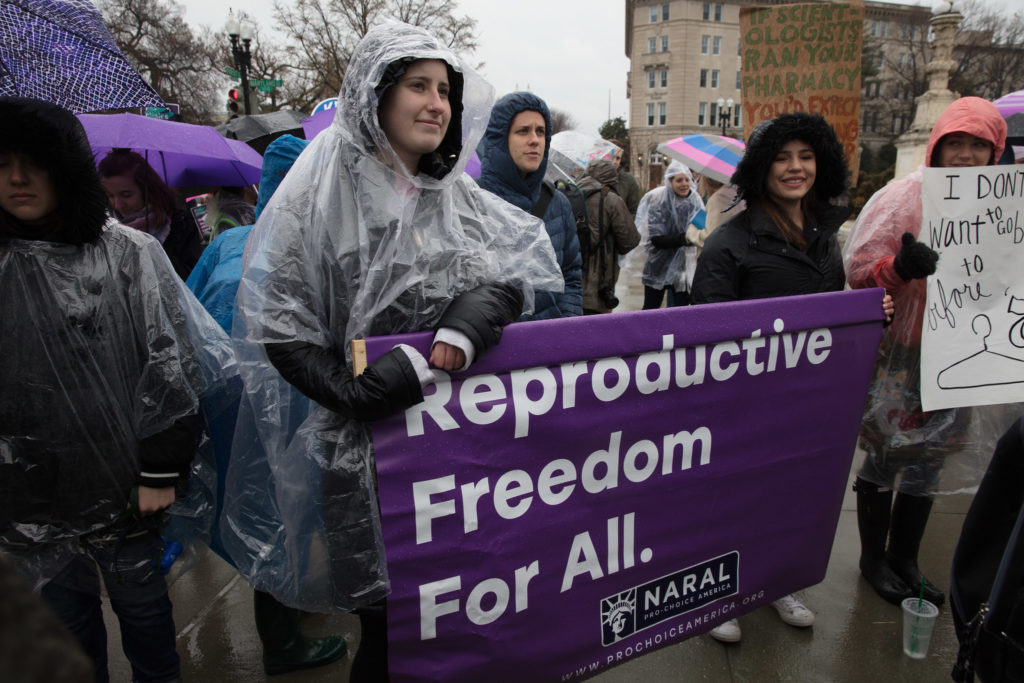
“The anti-choice movement is no longer trying to hide their real agenda. They are gunning to end Roe, criminalize abortion and punish women,” Ilyse Hogue, president of NARAL Pro-Choice America, said in a statement. “If it wasn’t clear why we fought like hell to stop Brett Kavanaugh’s confirmation before, it should be crystal clear now. They gamed the system and stacked the Supreme Court just for this moment. But we will not back down. We will hold these anti-choice politicians accountable for working to rip away our reproductive freedom.”

June Medical Services is the first abortion rights case the Court will hear with its newly minted and solidly anti-choice conservative majority. Abortion rights opponents are seizing the moment to advance their most radically anti-choice positions. Those arguments include claiming that state safe-haven laws that allow infants to be surrendered by parents to social services without fear of prosecution or laws that protect people from being fired for becoming pregnant negates the need for legal abortion.

While those arguments are bad, it’s astonishing for lawmakers and advocacy organizations to ask the Court to revisit and overturn Roe and Casey in June Medical Services. That’s because June Medical Services doesn’t directly call those cases, and the fundamental right to an abortion, into question. At issue in June Medical Services is whether Louisiana’s admitting privileges law unduly burdens abortion rights and whether providers can sue to block abortion restrictions designed to protect the health and safety of their patients. That’s it. It’s even more astonishing that lawmakers and anti-choice activists are making those arguments in June Medical Services considering that this is an election year and conventional wisdom suggests the last thing conservative lawmakers nervous about electoral prospects want is a national fight about overturning Roe v. Wade. 

Except that when it comes to abortion rights and the courts, nothing the right does is surprising anymore, and conventional wisdom no longer applies. President Trump campaigned on appointing judges committed to overturning Roe v. Wade and has made good on that promise.

With the help of Republicans in the U.S. Senate, 1 in 4 federal appeals court judges is a Trump appointee. The federal judiciary has been remade in conservatives’ image, and that image is decidedly hostile to abortion rights and overtly political in its drive to upend them. Republicans have loudly and proudly proclaimed they are coming for abortion rights; there’s no longer any political need for them to pretend otherwise.

AUL acknowledges this fact in its brief: “The current presidential administration, as have numerous previous administrations, campaigned on and calls for the overruling of Roe. As demonstrated by the 2019 state legislative sessions, the increasing expectations—on both sides of the issue—is that the Court will eventually overturn Roe.” 

In other words, according to AUL and conservative lawmakers, everyone expects the Roberts Court to end legal abortion eventually, so why wait when the Court could do so this summer in June Medical Services?

“As RoeCasey, and Hellerstedt have shown, this Court cannot settle the abortion issue,” AUL’s brief continues. “Even if the Court unanimously reaffirmed Roe, it would merely preserve the legal schizophrenia that exists between the Court’s policy and state and federal law, and do nothing to change the basic social and legal factors that have made Roe immune to settlement.”

“The Court should reconsider Roe v. Wade at the earliest practical opportunity.”

Source: https://rewire.news/article/2020/01/02/its-happening-congressional-lawmakers-ask-supreme-court-to-end-legal-abortion/

“The fact that men, myself included, are determining how women may choose to manage their reproductive health is a sad irony not lost on the court,” wrote federal district court judge Carlton W. Reeves last year when he ruled that Mississippi’s 15-week abortion ban violated the U.S. Constitution. “As a man, who cannot get pregnant or seek an abortion, I can only imagine the anxiety and turmoil a woman might experience when she decides whether to terminate her pregnancy through an abortion. Respecting her autonomy demands that this statute be enjoined.”

On Friday, the U.S. Fifth Circuit Appeals affirmed that sentiment, ruling in a decision in Jackson Women’s Health Organization v. Dobbs that the state cannot ban abortion before viability, according to Supreme Court precedent in Roe v. Wade and Casey v. Planned Parenthood.

(NARAL Pro-Choice America)

“The Fifth Circuit recognized today what is obvious: Mississippi’s abortion ban defies decades of Supreme Court precedent,” Hillary Schneller, senior staff attorney at the Center for Reproductive Rights, said in a statement“With this ruling, Mississippi—and other states trying to put abortion out of reach—should finally get the message. Instead of wasting taxpayer dollars to defend multiple abortion bans that won’t stand up in court, they should be working on other issues—like addressing the state’s alarming maternal mortality rates.”

Indeed, Mississippi ranks dead last in health for women and children. It is the worst state for low birthweight babies, preterm birth, infant and neonatal mortality; and ranks 28th for maternal mortality. But rather than working to address the appalling state of women’s and children’s health in the state, legislators are fixated on making abortion more dangerous, more expensive and less accessible.

Legislators banned abortion after 15 weeks from the last menstrual period—13 weeks into pregnancy—with exceptions only when there is a “severe fetal abnormality” or a medical emergency, defined narrowly as a life-threatening physical condition or when a pregnancy poses a “serious risk of substantial and irreversible impairment of a major bodily function.” The law has no exceptions for medical emergencies resulting from mental illnesses or other risks to a woman’s health, nor for pregnancies resulting from rape or incest.

Mississippi also passed an ever more stringent ban at six weeks this year, joining eight other states that banned abortion in 2019: Alabama, Arkansas, Georgia, Kentucky, LouisianaMissouriOhio and Utah. In a separate suit, the Center for Reproductive Rights is challenging the earlier ban, which a federal court blocked in May.

According to the Center for Reproductive Rights, abortion is very difficult to access in Mississippi. There is only one clinic and many hurdles for pregnant patients, including “a requirement that a pregnant person make two in-person trips to the clinic and delay their abortion by at least 24-hours after the first visit, state-mandated biased counseling, a medically unnecessary and onerous regulatory scheme that applies only to abortion providers, a ban on the use of telemedicine for abortion care and a law that restricts the provision of abortion to physicians only, which bars other qualified clinicians from providing abortion.”

Judge Reeves also called out lawmakers’ hypocrisy in passing abortion restrictions but refusing to expand Medicaid. “Mississippi Legislature’s professed interest in ‘women’s health’ is pure gaslighting,” he declared. “Its leaders are proud to challenge Roe but choose not to lift a finger to address the tragedies lurking on the other side of the delivery room: our alarming infant and maternal mortality rates.”

Noting the history sexism and racism in Mississippi, including that the state didn’t ratify the 19th Amendment until the 1980s, Judge Reeves described the abortion ban as “closer to the old Mississippi—the Mississippi bent on controlling women and minorities.”

The Fifth Circuit ruling on the Mississippi law is the first federal appellate court to rule on a recent abortion ban.

“Mississippi politicians have done everything in their power to cut off abortion access in our state. Despite these attempts, abortion remains legal in Mississippi and our clinic is open,” said Shannon Brewer, director of Jackson Women’s Health Organization. “But year after year, the state makes it harder to access abortion. Because of that, many of our patients drive hundreds of miles and spend weeks or months saving money to reach us—for abortion care and for gas, a hotel and to cover childcare.”

Source: https://msmagazine.com/2019/12/17/mississippis-15-week-abortion-ban-struck-down-again/?fbclid=IwAR0-0xeQPSjdxbn0mBs-clumD4Roag8BjM7QkPyRrq3iPFrhnSEzgQnb_70

Even as Republican-dominated legislatures passed laws designed to shut down clinics from coast to coast, some states saw an uptick in abortion clinics.

[Photo: An illustration of 4 state stamps.]

New York, New Jersey, Maine, and Massachusetts saw marked upticks in abortion clinics over the past decade as Republican legislative majorities in many states systematically shut down clinics. Shutterstock

In a decade in which dozens of abortion clinics were shut down by medically unnecessary state laws, around 14 states—mostly in the Northeast and West—have seen an increase in clinics, according to data from the Guttmacher Institute.

While the latest Guttmacher data is from 2017, other research, including a recent Abortion Care Network report focusing on independent clinics, indicates that clinics continue to close at an alarming rate. These closures include abortion clinics in states with Democratic-majority legislatures, like Whole Woman’s Health in Illinois, which closed in June, the same month Gov. J.B. Pritzker (D) signed a landmark pro-choice law.

Many states passed strict regulations as Democrats lost legislative majorities throughout the decade, though they clawed back some of those majorities in 2018. Across the United States, state lawmakers passed 394 abortion restrictions between 2011 and 2017. In 2019, these increasingly took the form of near-total abortion bans, despite their unpopularity and unconstitutionality.

The Guttmacher data indicates that states where the number of clinics increased also passed fewer restrictions on abortion. Of the eight states that added more than one clinic between 2011 and 2017—Connecticut, Maine, Maryland, Massachusetts, New Jersey, New York, Vermont, and Washington—none passed a single law restricting abortion. Many of the restrictions passed in other states are targeted regulations of abortion providers (TRAP). The reduction of abortion clinics in many states demonstrates the effectiveness of TRAP laws in reducing the availability of abortion.

Perhaps unsurprisingly in a decade marked by Republican domination on the state level, one of the biggest expansions was achieved not through political means but through technology and the work of organizers. Starting in 2016, Maine Family Planning (MFP) used its telemedicine program to bring abortion to Maine health-care centers in its network that had previously been limited to providing other reproductive health services.

“Using telehealth technology to provide abortion care meant that we could offer medication abortion at an additional 17 MFP sites, many located in underserved areas,” Deirdre Fulton-McDonough, director of communications at Maine Family Planning, told Rewire.News. “Patients who would otherwise have had to drive long distances to access services, potentially having to arrange for time off work or child care, were now able to access care much closer to home. At the time, Maine was just the third state where abortion was available via telemedicine, and we are proud of how this program helped knock down barriers to access especially for low-income and rural Mainers.”

Maine’s expansion of abortion services reduced the number of women of reproductive age living in counties without an abortion clinic from 55 to 24 percent from 2014 to 2017.

Many of the states, including Maine, that saw increases in clinics passed laws codifying abortion rights and adding other protections. In 2018, Maine elected a Democratic governor, Janet Mills, ending eight years under Republican Gov. Paul LePage, an abortion rights foe. Mills signed a law in June allowing more health-care providers, such as trained nurse practitioners and physicians’ assistants, to perform abortions. Think Progress reported that the bill could increase the number of abortion clinics in Maine that provide aspiration abortion from three to as many as 18. While many Maine family planning clinics already provide medication abortions up to 11 weeks’ gestation, aspiration abortions—the most common form of surgical abortion—can be performed up to 14 weeks.

Andrea Irwin, executive director of the Mabel Wadsworth Center in Bangor, Maine, said pro-choice laws in her state meant the clinic could focus on other reproductive services, including ensuring affirming abortion and prenatal care for transgender men, transmasculine people, and other groups of pregnant people beyond cisgender women.

“We’re really fortunate to be able to look at these other aspects beyond abortion care,” she told Rewire.News.

Also in New England, Vermont’s Democratic-led legislature codified abortion rights and advanced a 2022 referendum on a pro-choice constitutional amendment. Vermont added three clinics between 2011 and 2017.

Lawmakers in New York, where the number of clinics increased by 19 from 2011 to 2017, passed the Reproductive Health Act in 2019. The law repealed criminal abortion statutes, permitted abortions after 24 weeks in some situations, and clarified that trained nurse practitioners and physicians’ assistants can provide abortion services.

After Massachusetts repealed an outdated abortion ban in 2018, legislators introduced a variety of pro-choice laws in 2019, but the bills are still pending. Massachusetts added seven abortion clinics between 2011 and 2017.

On the opposite coast, Oregon Democrats passed the Reproductive Health Equity Act in 2017, a law that not only codified Roe v. Wade but required insurers to fully cover reproductive health care and barred discrimination against transgender and gender-nonconforming people in reproductive health coverage. The state was one of the first to defend the right to abortion against President Donald Trump, who has nominated more than 150 federal judges since taking office. From 2011 to 2017, Oregon added a single clinic.

Several of the states where clinics increased also added state funding for abortion services, required private insurers to cover abortion, or both. Maine, for example, passed a law in June that required all insurers cover abortion and provided state dollars to fund abortions through Maine’s Medicaid program. And in New Jersey, which added 17 abortion clinics between 2011 and 2017, Democratic lawmakers restored funding for Planned Parenthood in 2018.

California, which added one clinic during that time frame, announced in 2014 that insurers cannot refuse to cover abortion. Only 3 percent of California women of reproductive age live in a county without a clinic.

Source: https://rewire.news/article/2019/12/23/these-states-have-more-abortion-clinics-today-than-they-did-a-decade-ago/

Abortion clinics that aren’t connected to large national organizations like Planned Parenthood provide more than half of all abortions.

Imagini pentru Indie Abortion Clinics Can’t Be Replaced, but They’re Dying Out

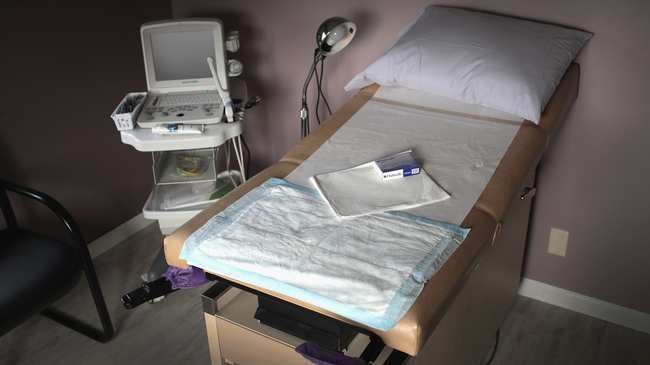
AN EXAMINATION ROOM IN A WHOLE WOMEN’S HEALTH CLINIC IN SOUTH BEND, INDIANA. PHOTO BY SCOTT OLSON/GETTY

Laurent Delli-Bovi is used to operating her Brookline, Massachusetts, abortion clinic in a state of financial precarity. Women’s Health Services, which has been around for almost 28 years, has been in the red for the last 13 of them.

Delli-Bovi, the clinic’s medical director, said those years have mostly consisted of “robbing Peter to pay Paul”: putting off paying some bills in favor of more urgent ones. The independent clinic runs on a “day-to-day” basis, its future never guaranteed.

But recently it’s become untenable. After losing a chunk of grant funding earlier this year, WHS will have to close within the next three months unless it either finds a new funding stream or locates a larger clinic network, hospital, or individual donor to acquire the clinic. In the meantime, WHS is trying to get by on the funds it’s raised through a GoFundMe its staff launched on December 2—as of this writing, the clinic has raised about $15,400 of its $250,000 goal. The purpose of the GoFundMe, Delli-Bovi said, is to buy time.

“Truthfully, we’ve been living this way for a very long time,” Delli-Bovi said. “The difference now is that we haven’t received any of the funding we need to offset our debts. There really isn’t a way forward for us.”

Independent clinics are clinics that aren’t connected to national organizations like Planned Parenthood. And most of them are familiar with the circumstances Delli-Bovi describes: According to a new report from the Abortion Care Network, a national association of independent abortion providers, 39 indie abortion clinics closed in 2018 and 2019, and the total number of indie clinics in the United States has fallen by more than 32 percent since 2012, as a states have enacted hundreds of anti-choice laws making it harder for people to access abortion, as well as more difficult for clinics to operate. This has had devastating effects, as indie clinics provide 58 percent of all abortions.

Though larger clinic networks aren’t immune to the effects of state- and federal-level abortion restrictions, they tend to hit independent clinics like WHS even harder, even when those clinics are located in blue states like Massachusetts that are not hostile to abortion rights. When the Trump administration announced that providers receiving money from Title X, the nation’s only federally funded family planning program, could no longer refer people for abortions, all 31 indie clinics in the Abortion Care Network left the program, giving up millions in federal funding.

Planned Parenthood left the Title X program as well, but since it’s a nonprofit, the organization is eligible for many grants and alternative funding streams that indie clinics—most of which are for-profit businesses—are not. And Planned Parenthood’s staff and infrastructure mean it has the capacity to raise millions of dollars each year in private donations.

“By virtue of being independent, these indie clinics aren’t connected to a large organization or larger system that can provide a safety net, or centralized marketing, communication, and fundraising,” said Jay Thibodeau, the communications director at the Abortion Care Network. “Every individual clinic is on their own when it comes to making sure that donors and volunteers know about them. When you’re operating this way—essentially as a small business—you’re much more vulnerable because you don’t have that scaffolding of support.”

Thibodeau said another factor that makes indie clinics more vulnerable to closure is the fact that they are often one of just a handful of providers in their states—or, in the case of Kentucky, North Dakota, and Mississippi, the sole provider—which makes it easy for anti-choice lawmakers to tailor legislation targeting them.

This type of legislation is known as a TRAP law, which bury abortion clinics under costly and medically unnecessary regulations. In 2013, more than half of the abortion clinics in Texas shuttered when they weren’t able to comply with HB2, a TRAP law which required providers to have admitting privileges at nearby hospitals. Many of the clinics that closed their doors were indies that couldn’t afford to meet the requirements, and most of them haven’t been able to reopen, despite the 2016 Supreme Court decision that declared the law unconstitutional.

The services indie clinics provide often can’t be replaced if they close. According to the Abortion Care Network report, more than 82 percent of indie clinics offer both medication abortion and in-clinic abortion care, whereas just 44 percent of non-indie clinics offer both options. Most non-indie clinics only provide medication abortion, a procedure only available to patients in their first trimester of pregnancy.

And though the vast majority of abortions occur in the first trimester, when barriers to abortion or unexpected complications result in the need for an abortion later in pregnancy, it is more likely patients will receive that care from an indie clinic: Sixty-nine percent of all clinics that provide abortion services after 16 weeks are indies. After the 22-week mark, they make up 94 percent.

“Independent abortion providers are a key part of the ecosystem of abortion access, and are essential parts of their communities,” said Bonyen Lee-Gilmore, the director of state media campaigns at Planned Parenthood Federation of America. “They serve the lion’s share of patients in need of safe and legal abortion nationwide—and when state politicians chip away at abortion access, independent providers can carry the heaviest burdens while fighting with fewer resources.”

Because WHS is the only non-hospital clinic in the state to provide abortions later in pregnancy, Delli-Bovi has had to staff the clinic with anesthesiologists and build an ambulatory surgical center in order to comply with the mandate—a $1.5 million undertaking. These costs have made the everyday demands of running an independent abortion clinic too expensive to sustain, Delli-Bovi said. And since low-income people make up a large percentage of the patients the clinic serves, WHS sometimes doesn’t take any money for its services. “No one gets turned away if they can’t afford to pay,’ Delli-Bovi said.

Alison Dreith, the deputy director at Hope Clinic in Illinois, said that much like WHS, her clinic has been in the red for the last decade due to waiving the costs of patient procedures. Because it borders Missouri, a state with just one remaining—and endangered—abortion clinic, Hope Clinic has seen a surge of patients, more than half of whom are Missourians.

“We know patients are dealing with so many hurdles to get to us,” she said. “We don’t want to be another one.”

If WHS is forced to close its doors in the coming months, that means the only option for patients seeking abortion after the first trimester will be a local hospital, where the cost of the procedure will be much higher, or a clinic out of state. “We’re not financially sustainable, but we’re worthy of being sustained because of the people we take care of,” Delli-Bovi said.

“I think it’s the same struggle everywhere—no one is in this business to make money,” she continued. “It’s a completely non-remunerative business. People do it because they’re committed to the care.”

Source: https://www.vice.com/en_us/article/qjdp4x/independent-abortion-clinics-are-closing-thanks-to-abortion-restrictions?fbclid=IwAR3zfmG_lQkcRcDbyVd89QIYFIHBj4rekuxYpiw9XD1KCXTmxEmxZG8cY2g

The crisis pregnancy center, called the Resource Center, displays on its website and on tabling signs that it offers abortion and birth control information—but that information is misleading at best.

[Photo: Two students speak during a presentation.]

Because of how established the Resource Center is with locals, I knew I would need to create my own campaign specific to this center if I wanted students and Greeley residents to understand its deception. This is how the Truth4Greeley campaign began. Courtesy of Abigail Hutchings

I graduated from the University of Northern Colorado (UNC) in Greeley, Colorado, in May. During my internships as a student, I learned about crisis pregnancy centers, also known as “fake clinics” or “anti-abortion counseling centers.” These centers, which are unregulated, often offer free services in order to appear to be comprehensive health clinics, but instead they try to keep people from seeking abortion care and birth control options.

I realized that one had been hiding under my nose less than a mile from campus: The Resource Center, frequently known in its publicity materials as “Tests4Greeley.”

The center, which advertises access to complimentary pregnancy and sexually transmitted infection testing, is well funded by the community, with support from around 60 churches in the area and a $150,000 donation in 2014 from the prominent Monfort Family Foundation. Because of the foundation’s standing with locals, I knew I needed to create my own campaign specific to this center if I wanted students and Greeley residents to understand its deception. This is how the Truth4Greeley campaign began this fall.

The first step in the process was gathering stories from students who had gone to the center for the free testing they saw advertised. I began with a post to my Facebook page, asking my UNC friends if they had any experiences with the center. Almost immediately, I received messages from current and former students who had been given a mountain of medically inaccurate propaganda as the Resource Center’s staff tried to shame them about their lack of faith, sexually active lifestyle, sexual orientation, and more. They had no idea going in that this was a religious organization, let alone an anti-choice one; that disclosure is absent from any advertisements. As word of the campaign spread around campus, the volume of stories I received only continued to grow.

One student recalled after a visit with a counselor, “She told me that when I sleep with someone, I sleep with every person they have ever slept with. She then began to try and calculate with me how many people that would be. She purposely struggled to calculate this number to show me just how ‘outrageous’ my ‘number’ was …. This woman made me feel shame for something that I should never feel shame for. This response was something that was completely inappropriate especially considering she knew the history of my sexual abuse and assault.”

Another student who went to the center for an STI test said she was handed a pamphlet on why oral sex is wrong after disclosing her sexually active lifestyle, she then recalls that the staff members present were “basically telling me that everything I’m going through could be solved with Jesus. … She was trying to make me feel like what I did was something I needed to ask for forgiveness.”

I knew that stories alone might not be enough to sway the minds of the Resource Center’s supporters, so I needed to hear what they said directly. I recruited a colleague, Isabel Serafin. Serafin, a current UNC student, later approached the center equipped with a vial of a pregnant friend’s urine and her phone set to record audio.

Serafin’s appointment lasted nearly two hours. During that time, Resource Center staff told her that contraception is dangerous, condoms are ineffective, and that she would likely die from the abortion pill. They also showed her animated videos of abortions that ended with the disclaimer: “not intended to constitute medical advice or replace the individualized counsel of a doctor.”

Though Serafin made it clear that she did not want to continue her pregnancy, she left with a Bible, a religious DVD on abortion, a “Before You Decide” magazine riddled with inaccurate information, prenatal vitamins, a onesie, and more than 20 pamphlets outlining why sex outside of marriage is wrong, tips for a successful pregnancy, a Biblical guide to adoption, abortion timelines, referrals to local churches, and more.

“I just kept thinking about all the kids who were going in there completely unaware of the nature of the situation they were walking into,” Serafin said. “I kept thinking of how unsettling and even scary it would be to be facing the possibility of a real pregnancy, only to have that compounded by the clinic’s fear tactics. Young college students who are usually by themselves out here don’t need to be ambushed with that extreme religious rhetoric.”

“I just want the clinic to be transparent and honest about their services and what they do, especially if they are to advertise on campus,” Serafin continued.

The Resource Center’s website and tabling signs display that it offers abortion and birth control information, but it doesn’t make clear that the information is misleading at best and outright false at worst. Its Statement of Principle states it will never “recommend, provide, or refer for abortion or abortifacient” or “recommend, provide, or refer single women for contraceptives (married women seeking contraceptive information should be “urged to seek counsel, along with their husbands, from their pastor and physician).”

After our campaign started, the Resource Center added a page to its website titled “medical credentials” that pushes back against claims that it is a “fake clinic.” It also added two testimonials, in a clear response to our student stories.

As reported in the Colorado Sun, there are more than 50 of these anti-abortion fake clinics like the Resource Center throughout the state. They outnumber abortion providers and Planned Parenthood clinics, and in five rural counties, the only pregnancy center or clinic available is faith-based.

It is also important to note that because anti-abortion counseling centers like this only pose as medical facilities and do not charge for their services, they are generally not subject to the Health Information Portability and Accountability Act (HIPAA). In other words, they may not be subject to medical privacy laws, and they are not legally required to receive a patient’s consent before revealing their identity or releasing their personal health information for any reason.

As a young woman looking forward to determining the course of my own life, I know one of the most important things will be deciding if and when to have children. Those decisions need to be made with truth—which is not what the Resource Center provides.

Source: https://rewire.news/article/2019/12/20/meet-the-college-student-exposing-an-anti-abortion-counseling-center-in-colorado/

Six states require providers tell patients they might be able to “reverse” their abortions. It’s not clear if that’s true — but the study suggests “abortion reversal” is dangerous.

Cover: The abortion drug Mifepristone, also known as RU486, is pictured in an abortion clinic February 17, 2006 in Auckland, New Zealand. (Photo by Phil Walter/Getty Images)

Cover: The abortion drug Mifepristone, also known as RU486, is pictured in an abortion clinic February 17, 2006 in Auckland, New Zealand. (Photo by Phil Walter/Getty Images)

There’s no conclusive evidence that it’s possible to “reverse” a medication-induced abortion, but six states have laws on the books that require abortion providers suggest it might be an option anyway.

Now, a study published last week is raising questions about the dangers of even attempting an “abortion reversal.” The study, which sought to determine whether medication abortions can be halted with a hormone, instead ended early after three women started hemorrhaging so much blood they went to the ER.

Despite these findings, multiple state legislators are standing by laws mandating providers tell patients about the possibility of reversing their abortions. VICE News reached out to dozens of lawmakers who had supported that kind of legislation in Arkansas, Idaho, Kentucky, Nebraska, South Dakota, and Utah. VICE News also reached out to legislators in North Dakota and Oklahoma, where court challenges have temporarily blocked similar laws from going into effect.

Just five of those legislators replied to inquiries. Four were adamant that there’s no need to amend the laws.

“It is up to the woman to decide if she wishes to take the risk. So for me, you know, it’s informed consent,” said Oklahoma state Sen. Julie Daniels, who sponsored a law requiring abortion clinics post a sign about abortion reversal, with contact details for an anti-abortion group.

Daniels, a Republican, told VICE News she had “no regrets at all for authoring this bill.”

“There are many procedures that could have harmful effects,” she said. “I think it’s troubling that if ever we’re attempting to save a child, that these things become so important, but for other medical procedures, we take it as part of the risk that something might not go correctly. But for those of us who propose trying to save the child, we appear to be held to a higher standard of perfection.”

Typically, in a medication abortion, a patient would end her pregnancy by taking doses of two drugs, mifepristone and misoprostol, several hours apart. But if a woman regrets her abortion after taking mifepristone, proponents of abortion reversal say she can skip the misoprostol and instead try progesterone.

While those supporters have published a few studies that they say show that progesterone can work, abortion reversal is not recommended by the American College of Obstetricians and Gynecologists. Experts have also said that one of those studies was poorly designed. Another involved just seven patients.

So researchers from the University of California, Davis, had planned to enroll 40 women in what’s thought to be the first randomized, double-blind study on abortion reversal.

The women who participated in the UC Davis study took mifepristone before receiving either progesterone or a placebo. (All of them were ultimately set to undergo surgical abortions.) But the study only enrolled 12 women before three of the patients started bleeding from their vaginas so severely they had to be taken to the ER in ambulances. One woman even needed a blood transfusion. Of those women, one had taken progesterone.

The study concluded that patients who take mifepristone on its own, regardless of whether they use progesterone afterward, could be at “high risk of significant hemorrhage.”

“We don’t have any evidence that disproves the possibility that abortion reversal exists,” the study’s lead researcher, Mitchell Creinin, told VICE. “But I do have evidence that not completing the regimen as it’s designed is dangerous.”

South Dakota Republican Rep. Fred Deutsch said he still supported his state’s law, which mandates that doctors give patients a statement telling them that it may be possible to “discontinue” an abortion after taking mifepristone.

“I think it’s part of informed consent,” Deutsch told VICE News in a phone interview. “We have a whole list of items that we require physicians to provide women. For example, a woman must be informed that an abortion will terminate the life of a whole, separate, unique human being.”

In response to a question about the research he had relied on when deciding to support South Dakota’s law, Deutsch emailed links to studies that examined the efficacy and safety of misoprostol — the second drug typically taken in a medication abortion, and the drug that women who may wish to “discontinue” their abortions are not supposed to take. (Multiple studies have found that misoprostol taken alone can effectively and safely induce an abortion early in pregnancy. Using mifepristone in combination with misoprostol is more effective and generally has fewer side effects.)

“We reviewed a host of studies pertaining to both drugs. I provided you links to the drug you apparently weren’t inquiring about,” Deutsch told VICE News via email when asked why he felt misoprostol’s safety was relevant to whether doctors should tell patients about a drug regimen that doesn’t involve it.

Deutsch did not reply to a request for the studies he’d looked at involving mifepristone.

Of the legislators who backed an abortion reversal bill and returned VICE News’ inquiries, only Utah state Rep. Timothy Hawkes, a Republican, said that he would be open to revisiting his state’s law. In Utah, abortion patients must receive a printed statement on how mifepristone may not end a pregnancy. While the UC Davis study “raises concerns,” Hawkes said, he still wants to do more research into this issue.

Instead of repealing the abortion reversal law entirely, Hawkes suggested amending it to include information about the potential dangers of attempting the regimen.

“We would want a woman in that situation to have access to all of that information. Is it reversible, if the science supports it? Yes, that’s good information for the woman to have,” Hawks said. “Does it raise a risk of severe vaginal bleeding that could lead to other complications? Well, that would be good information to have as well.”

“I’m no expert on the state of the medical research on this issue, either way,” he went on.

The UC Davis study has already triggered at least one attempt to repeal an abortion reversal law: Nebraska Democratic state Sen. Megan Hunt has announced that she plans to author legislation that will roll back her state’s measure when the legislature opens for its 2020 session in January.

“When we talk about procedures that are experimental, untested, we’re not talking about the morality of life,” Hunt said. “It’s possible to be an anti-abortion, Christian, right-wing conservative and oppose this bill because it’s not really about saving a child. It ends up being about hurting a mother.”


Source: https://www.vice.com/en_us/article/k7een3/an-abortion-reversal-study-left-women-hemorrhaging-state-lawmakers-still-support-doctors-telling-patients-about-the-treatments?fbclid=IwAR10BGumnOF4XhHB17SKcH7XPqvF_N-8TLoi8E9f2dEP4aV9WN5wzRWQHYo

European court orders UK government to reimburse mother and daughter forced to travel to England for abortion

The building of the European court of human rights issued a written decision on Thursday. Photograph: Vincent Kessler/Reuters

The building of the European court of human rights issued a written decision on Thursday. Photograph: Vincent Kessler/Reuters

A mother and daughter from Northern Ireland who were forced to travel to England for an abortion are to be compensated by the government over their costs.

The European court of human rights has instructed the government to reimburse the women for the cost of travel and the termination at a private English clinic seven years ago.

Known only as A and B, the pair began legal proceedings after they were forced to raise £900 to make the trip for A to have the termination.

Northern Ireland was up until recently the only part of the UK where abortion was illegal except in extreme circumstances, such as a direct threat to a mother’s life.

In July the Labour MP Stella Creasy introduced legislation through the House of Commons that will ensure regulations for free, legal and local abortion services in Northern Ireland by 31 March 2020.

In their battle for compensation A and B pursued an application to the European court of human rights, claiming that forcing them to pay for a termination in England breached their rights to a private life under article 8 of the Human Rights Act and article 14 in terms of discrimination.

As a result of a written decision by the ECHR published on Thursday the pair will not only receive the full costs of the treatment and travel but also their legal costs in the case.

Angela Jackman, a partner at A and B’s lawyers, Simpson Millar, said: “A and B’s application to the European court has finally resolved through a friendly settlement between the parties. Terms include payment of compensation by the UK government to A and B, and a contribution towards their legal costs.

“This is a very important case, which proved instrumental in raising widespread awareness of the discrepancy in access to NHS-funded abortion services for women in Northern Ireland.”

Jackman, who is also senior law lecturer at the City Law School, added: “A and B’s tenacity in pursuing litigation for over six years is deeply commendable and they have appreciated the consistent support they received throughout.

“Of course, they are relieved that after almost seven years they are finally able to have closure on these difficult issues. “

Emma Campbell, the co-convenor of the Northern Ireland-based Alliance For Choice campaign group welcomed the decision to compensate the two women.

She said compensation should be followed by a “general state apology” to the thousands of women in the same predicament as A and B over decades in Northern Ireland.

On whether more Northern Irish women might now come forward seeking compensation as well for being forced to travel to England for private non-NHS terminations, Campbell said: “A and B went through a long hard battle in the courts but if other women did come forward looking for compensation then we would put them in direct contact with the proper legal representation.”

A and B were only able to afford the treatment and travel costs due to the extra financial support of the charity Abortion Support Network.

Source: https://www.theguardian.com/world/2019/dec/19/northern-ireland-women-win-abortion-costs-compensation-case?fbclid=IwAR3Zm0ohMdIHPGeRlDmN7Gr6p48NlZEHKSzTPHDDSoYEodRuj4XsOYfduHU

McLeod-Mia_2

COLUMBIA — With a Senate showdown looming over a measure to essentially outlaw abortions in South Carolina, a Democratic lawmaker wants to make sure women who would be forced to bring unwanted pregnancies to term are compensated for them.

State Sen. Mia McLeod on Wednesday prefiled legislation arguing that women compelled to give birth against their will are “gestational” surrogates who have a right to be paid for their services.

“Clearly the state has indicated it has a vested interest in this issue, so if that is the case, and if we are about to do what would be required under the fetal heartbeat bill, then surely there would be some provisions made for the women and girls who are forced to carry these babies to term,” McLeod said of her South Carolina Pro Birth Accountability Act.

Last month, the Senate Medical Affairs Committee voted 9-6 along party lines to advance a bill that would prohibit abortions as soon as a heartbeat is detected by ultrasound — sometimes as early as five weeks into a pregnancy.

Providers who violate the law or fail to determine whether a heartbeat is present before ending a pregnancy could be jailed for two years or fined $10,000. Lawmakers included exceptions for victims of rape or incest up to 20 weeks pregnant with verification from law enforcement.

House approval for the bill, H. 3020, came in April, and Gov. Henry McMaster has said he’ll sign it with or without the exemption for crime victims.

Eight states have similar laws on the books, but all of them are facing legal battles due to the 1973 Roe v. Wade ruling by the U.S. Supreme Court that legalized abortion. McLeod said her proposal is the first of its kind in the nation.

The financial impact of her proposal isn’t yet clear, but she said it likely would run into the millions of dollars.

Under her bill, compensation would take several forms, including automatic eligibility for public assistance programs, income and other tax credits; health insurance until a child turns 18; and state paid funeral and burial expenses if a woman or the fetus die during the gestational period, labor or delivery.

“It’s not a tongue-in-cheek kind of bill. It took a lot of thought and a lot of preparation because no other state has introduced anything remotely similar and it certainly warrants a very thoughtful and deliberate discussion and debate, and I hope that we’ll have that,” McLeod of Columbia said. “Every year, there is some bill that seeks to take from women. This is a way to give them a real chance at life.”

Ann Warner, CEO of Columbia-based Women Rights’ Empowerment Network, said McLeod’s measure is a byproduct of unnecessary legislation.

“This bill makes the point that legislators are not only wasting our precious time and resources with these extreme abortion bans; they will also create multiple new problems for people in South Carolina,” she said.

The concept of gestational surrogacy is not unique to McLeod. During House deliberations last year, several reproductive rights groups and advocates, including former gubernatorial candidate Marguerite Willis, said such a provision should be enacted alongside the “fetal heartbeat” bill.

“As a matter of constitutional law, a state may not force a citizen to serve in any capacity without fair payment or to take a citizen’s property without just compensation … a woman’s uterus is not unlike rental property, as a commissioning couple agrees to pay a gestational surrogate certain compensation for carrying a fetus to term and giving birth to a child,” McLeod’s bill says.

McLeod’s bill also targets absentee fathers by allowing jail terms of up to three years for men who accrue more than $5,000 in missed child support payments.

State Rep. John McCravy, R-Greenwood, and lead sponsor of the fetal heartbeat bill, said he wouldn’t support McLeod’s proposal if it comes to a vote in the House.

“There are many crisis pregnancy centers across our state that already offer help and assistance with prenatal, adoption and/or child care,” McCravy said, referencing the CrossRoads Pregnancy Center in his district.

“Not only is material and spiritual help already out there, but I believe most people recognize the infinite blessing of life given by our Creator,” he said.

McLeod, who underwent two high-risk pregnancies, said the bill is personal for her.

“We have no regard for the children born in this state, regardless of whether abortion is an available option and we don’t often think about the impact on the mom. If the fetal heartbeat bill were to have passed, I could have easily been one of those women who might not be around right now,” she said.

Source: https://www.postandcourier.com/politics/sc-lawmaker-wants-payment-for-women-deprived-of-abortion-right/article_a4ea14e4-1dc8-11ea-9c78-0bf0937ce9c8.html

A Minnesota pharmacist said he could not give Andrea Anderson the emergency contraceptive because it goes against his “beliefs,” a lawsuit claims.

Andrea Anderson is suing CVS and a local pharmacist for refusing to fill her prescription for emergency contraception.

Andrea Anderson is suing CVS and a local pharmacist for refusing to fill her prescription for emergency contraception.Ellie Leonardsmith

A Minnesota woman is suing a former local pharmacist and CVS for allegedly refusing to fill her prescription for a morning-after pill.

Andrea Anderson filed the suit on Monday in Aitkin County District Court claiming she was denied the drug ella because of a pharmacist’s beliefs and was then lied to and misled when she tried to get the medication at another location.

On Jan. 21, 2019, Anderson, a mother of five, called her doctor and had a prescription for an emergency contraceptive sent to the Thrifty White Pharmacy in McGregor.

But she was told by the pharmacist “that he would be unable to fill her prescription,” the complaint states. The pharmacist, George Badeaux, said he could not give her the medication due to “personal reasons” and his “beliefs,” and he also tried to discourage her from trying to obtain the drug at another store.

“He did not clarify what his beliefs were or why they interfered with his ability to perform his job as a medical professional,” according to the complaint.

Andrea Anderson, a mother of five, had to drive more than 50 miles in a snowstorm to have the prescription filled at another location

Andrea Anderson, a mother of five, had to drive more than 50 miles in a snowstorm to have the prescription filled at another locationEllie Leonardsmith

Ella is an emergency contraceptive that is to be taken as soon as possible or within five days of unprotected intercourse or a known contraceptive failure, according to a FDA data sheet.

Knowing that such medications work best the sooner they are taken, Anderson called a CVS in Aitkin to try and have the prescription filled and was told that the store did not stock the drug. The CVS pharmacist also told Anderson that she had called a nearby Walgreens but that it also did not have it in stock.

Anderson, however, called the Walgreens herself and was told that it did have ella in stock and could fill the prescription. She had to drive more than 50 miles in a snowstorm the following day to obtain the medication, according to the suit. Anderson did not become pregnant.

She is claiming sex discrimination and is seeking damages.

CVS Pharmacy said in a statement Friday that it is “committed to providing access to emergency contraception, whether it is at the pharmacy counter for patients who have a prescription for it, or in our store aisles where we have sold over-the-counter emergency contraception for several years.”

The company continued: “We have policies and procedures in place to help ensure that customers seeking emergency contraception receive prompt service. We will review and investigate the allegations made in the complaint.”

A woman who answered the phone at Thrifty White Pharmacy told NBC News that Badeaux was “no longer employed there” and declined to comment further.

In a statement, Anderson accused the pharmacists of ignoring her health needs.

“Like anywhere, there are challenges to living in a rural area,” she said in a statement posted on her attorney’s website. “But I never expected that they would include the personal beliefs of our local pharmacists, or that they would hold — and wield — such enormous decisionmaking power over my life.”

Her attorney Jess Braverman, legal director of Gender Justice, a Minnesota-based nonprofit, said in a statement that the Thrifty White pharmacist denied Anderson her prescribed medication because of “his own personal beliefs about emergency contraception – which he decided are more important than our client’s health, and more important than her own right to decide if and when she gets pregnant.”

Source: https://www.nbcnews.com/news/us-news/woman-s-doctor-prescribed-morning-after-pill-pharmacists-refused-fill-n1101586?fbclid=IwAR2ypQqAqNKRGpU837fOQpA9v1w2-_bm-szcHupgrKLVBZnAg5r8LESqAAg

Independent abortion clinics lack the visibility, institutional support, and financial resources of other providers, like Planned Parenthood.

[Photo: An illustrated map of the United States on a yellow background depicting states with independent abortion clinics.]

In some states, including Wyoming, Louisiana, and Alabama, independent abortion clinics are the only sources of abortion care, meanwhile they are the last clinics remaining in four states: Kentucky, Mississippi, North Dakota, and West Virginia. Shutterstock

A new report details the crucial role independent abortion clinics play in ensuring access in parts of the country most hostile to abortion rights—and the struggle for them to stay open.

Anti-choice state-level restrictions have led to a decrease of over 32 percent in the number of independent abortion clinics in the United States since 2012, according to the Abortion Care Network report. As of November, 26 independent abortion clinics have closed this year—double the number that closed in 2018.

Independent abortion care providers represent about 25 percent of facilities offering abortion care nationwide, yet they provide a little more than half of abortion procedures, according to the report. Three out of five people in the United States who receive abortion care do so at an independent clinic, and these facilities provide about 58 percent of all abortion procedures, compared to 37 percent at Planned Parenthood, 3 percent in hospitals, and 1 percent in private physician’s offices.

In some states, including Wyoming, Louisiana, and Alabama, independent abortion clinics are the only sources of abortion care. Six states have only one abortion provider, and independent providers operate the last clinic remaining in four of those states—Kentucky, Mississippi, North Dakota, and West Virginia. Planned Parenthood operates the only clinics in the other two states, Missouri and South Dakota.

“Meaningful abortion care in the United States truly depends on independent abortion care providers,” Nikki Madsen, executive director of the Abortion Care Network, told Rewire.News. “Independent abortion providers have been providing the majority of care since Roe was established. The vital role they play in making abortion access a reality in this country is really an untold story.”

Though 88 percent of abortions are performed in the first trimester, barriers to accessing abortion care, like forced waiting periods, bans on insurance coverage of abortion, or needing to travel to receive care, can cause people to seek abortion care later in pregnancy, said Alison Dreith, deputy director of Hope Clinic for Women, an abortion clinic in Granite City, Illinois. For those needing abortion care after the first trimester, many turn to independent clinics, which operate 62 percent of clinics that provide abortions after the first trimester.

“Patients seeking care have to face so many burdens to get to us, whether it’s travel or arranging child care—add the rising cost of their procedure as they get later in pregnancy, and continuing to have to save up that money because it is not covered by insurance,” Dreith said.

Independent clinics represent 69 percent of all clinics that provide care at and after 16 weeks of pregnancy and 77 percent of clinics providing care at and after 19 weeks of pregnancy, according to the report. In Arkansas, Nevada, Oklahoma, and Georgia, the only providers of surgical abortion are independent clinics, and without them, abortion access in these states would be limited to medication abortion within the first ten to 11 weeks of pregnancy.

“When there are increased barriers, people need more access to later care,” Madsen said.

Increased state regulations on abortion providers since Republicans came into power in state legislatures a decade ago have forced many clinics to shut their doors, Madsen said. This year alone, state legislatures in the South and Midwest have passed 58 abortion restrictions, and lawmakers in five states have passed near-total abortion bans, though none are in effect.

Medically unnecessary targeted regulations on abortion providers, or TRAP laws, hit independent clinics especially hard because they are not financially able to make the changes necessary to comply, Madsen said. Lawmakers in 11 states have banned private insurance coverage for abortion except in cases of life endangerment, so independent clinics are working to keep costs low for their patients, while also dealing with increased costs of security in hostile regions where protesters often harass patients and staff.

“It’s a combination of factors, and it’s not simple, but it is a targeted effort by politicians and extremists to close clinics,” Madsen said.

Independent abortion providers also lack the visibility, institutional support, and financial resources of other providers, like Planned Parenthood. While Planned Parenthood health centers are 501(c)(3) nonprofits, which allows them to engage in some lobbying efforts, 85 percent of independent clinics are not, which limits their ability to influence policy decisions.

“All of our staff are front line staff,” Dreith said. “They are seeing patients every day, and so we oftentimes don’t get to talk about our unique experiences to legislators. Then when it comes to these new policies, we are first to shut down, because we also can’t raise the funds to offset the cost of fixing our building or otherwise complying with that law.”

Because they lack the resources of other, larger providers, independent clinics rely on volunteers and community support to stay open.

“This is why we need the public and communities to get involved because they really need their community’s support,” Madsen said.

Source: https://rewire.news/article/2019/12/11/untold-story-independent-abortion-clinics-are-closing-at-a-rapid-pace/