HOUSTON — The circle of students sat quietly, scribbling down answers to the prompt they’d just been given: “Write down three similarities between the Holocaust and abortion.”

After a minute or two, they launched into discussion. Innocent people were, and are, being killed, they said. The Nazis discriminated against the Jews, just as “the unborn” face discrimination today. Bystanders aren’t doing enough to stand up against injustice.

Sarah Ruiz, the Texas A&M University senior leading the group, added another idea. Sometimes, she said, people who support abortion rights will say they wouldn’t get an abortion but they don’t want to stop anyone else from getting one.

“You can draw parallels … to slavery, to child abuse, to animal cruelty,” she told her students, as other clusters of students debated the same topic nearby. “‘Well, I wouldn’t kill my neighbor. But what you do is up to you. I wouldn’t beat my child. But what you do is up to you. I don’t like slavery, don’t own a slave.’

“You can plug in literally anything into that.”

As Ruiz spoke, her voice soft and solemn, her pupils nodded along, their faces determined. This was, after all, very serious business: If they could convince someone that abortion in the United States is a holocaust, they might be able to keep them from getting one — and save a life.

Welcome to pro-life boot camp.
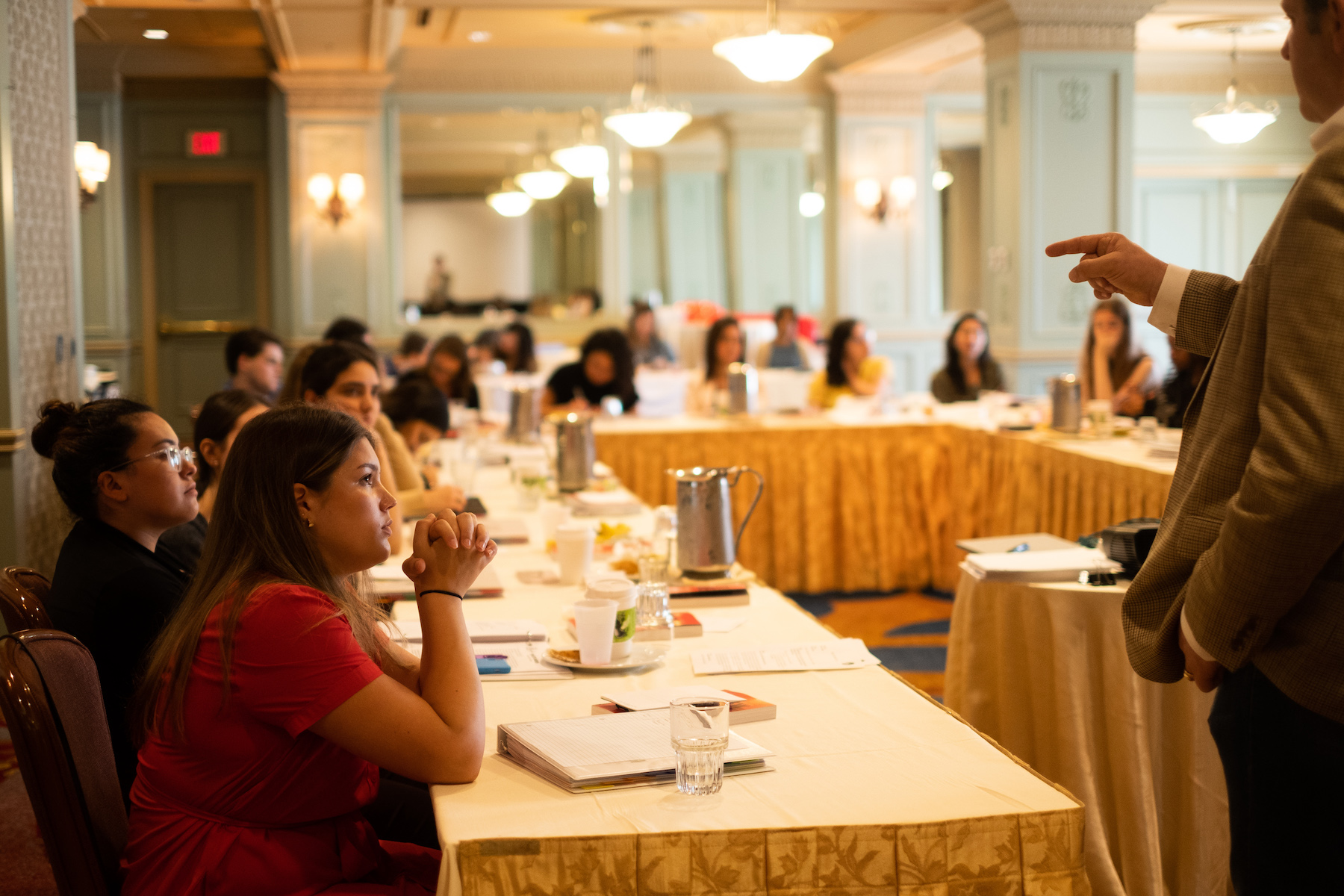
1565024613617-Final2_small

Madeline Hill listens to James Steward, one of the speakers at the training. (Photo by Madeleine Peters)

In June, 24 Texas college students spent a week of their summer break at a hotel in downtown Houston, learning how to become anti-abortion activists through the Dr. Joseph Graham Fellowship for College Pro-Life Leaders. The seven-day training is run by Texas Right to Life, the Lone Star State’s preeminent anti-abortion group. Afterward, in exchange for 50 hours of activism, participants will receive a $1,000 scholarship every semester.

This school year alone, Texas Right to Life is investing almost $100,000 in new students, between these fellows and 25 others who participated in a training in July. (It’s their largest class since the fellowship began, in 2008.) That’s not counting the cost of the four-star hotel, students’ travel, older fellows’ scholarships, or the programs that the group runs for high school students and graduate students.

But for Texas Right to Life, it’s worth it. Because as countless speakers will remind them over the course of the week, the fellows make up the front lines of the national war over abortion rights. And with President Donald Trump in the White House, a majority-conservative Supreme Court, and a spate of abortion bans sweeping across the South, it’s a war they’ve never been closer to winning.

“Well, we are trying to save the world,” said Veronica Arnold Smither, the head of Texas Right to Life’s education division, with a wry smile and a snap of her fingers, as if to punctuate the obvious.

The group is just one of many that are training students; anti-abortion summits, conferences, and camps similar to this one, run by both national and state-level groups, dot the country.

“Life begins at the beginning. There’s no arbitrary line here. So it’s black and white. It’s yes or no. It’s life or death.”

These ground soldiers in Houston don’t look much like the stereotypical anti-abortion activists angrily picketing clinics on a Sunday. They’re polite, curious, and generally like all other college students, chatting together about struggling to wake up early and who Hannah should end up with on “The Bachelorette.” In interviews, some declined to label themselves as “Republicans”; some said they support traditionally Democratic causes, like gun control and ending the death penalty.

Sure, many were Christian. Breakfast always included a group prayer, and talk of Jesus saturated speakers’ lectures. One young woman floated away from her conversations with a VICE News reporter with a sincere trill of “Blessings!” But the fellows regularly insisted that their anti-abortion beliefs were not rooted in their religion, and over the course of the week, they were not taught to argue that God believes abortion is a sin.

Rather, they practiced using secular, biology-based arguments to convince skeptics that life begins at conception. They listened to lectures that traded on the terminology and tenets of social justice causes. In short, they learned how to harness their enemies’ weapons of choice, including feminism.

“We’re not 40-something-year-old women with 11 children and a long braid. We’re not a rich white man making policy,” said Therese Delgado, an incoming freshman at the University of North Texas with impressive posture and a fondness for cool, witchy black heels. “We’re a diverse body of kids — and just past kids — who have these beliefs, who are living in the modern era, and affected by all the issues that affect young people today. But we happen to have these beliefs on top of that.”
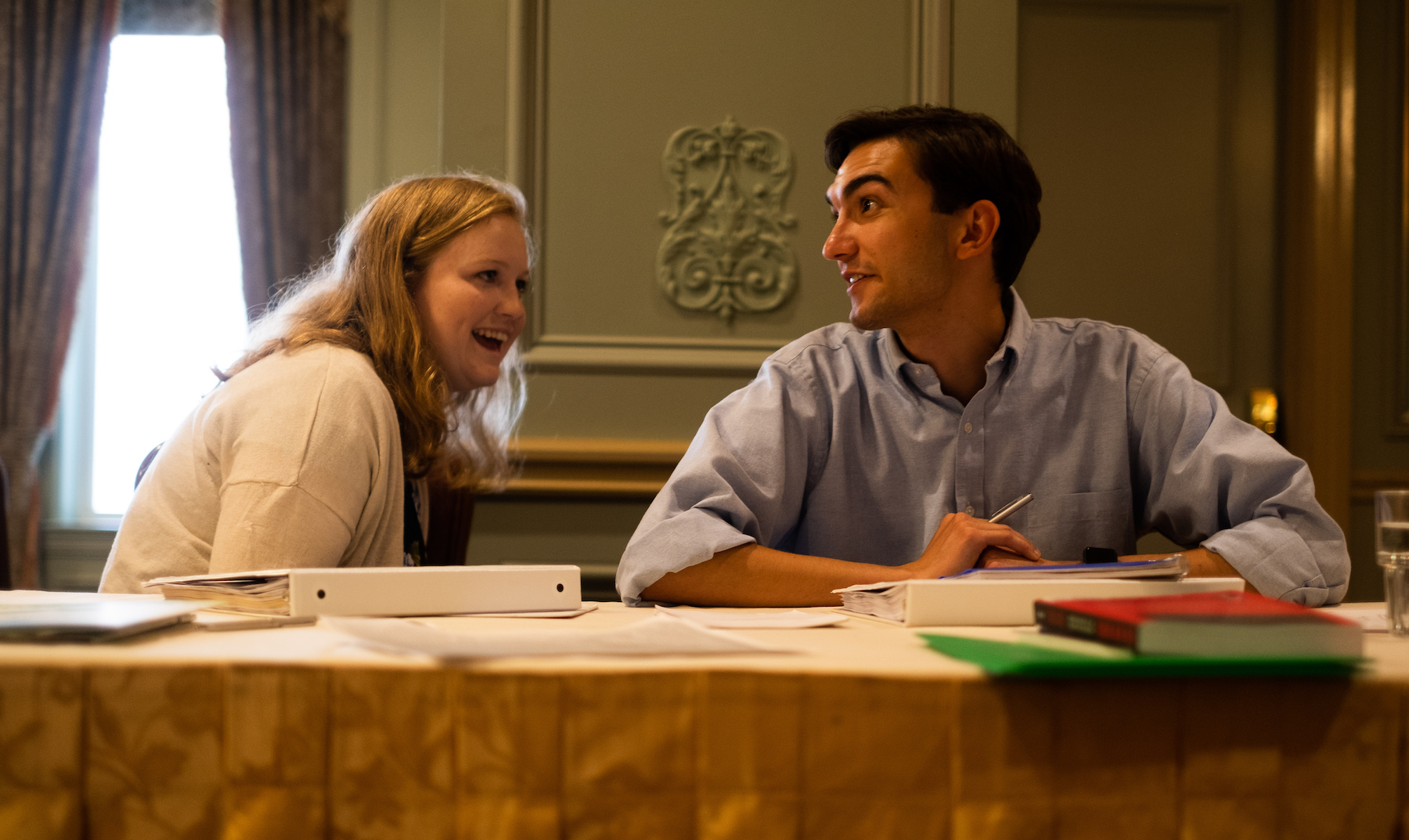
1565025190593-Final11_small

Liz Miller and Jordan Marget. (Photo by Madeleine Peters)

By the standards of the anti-abortion movement, these fellows’ beliefs were often uncompromising. Some do not support abortions even in the case of rape or incest, and Texas Right to Life taught them that common hormonal birth control methods, like the pill, the patch, and IUDs, could induce abortions.

Such attitudes set these students apart from many of their liberal-leaning Generation Z peers. In a survey this year, 62% of Americans between the ages of 18 and 29 told Gallup they consider themselves “pro-choice”; just 33% said they’re “pro-life.” Thirty-six percent of young Americans said they thought abortion should be “legal under any circumstances” — more than any other polled age group.

On the first afternoon of the June training, a Sunday, a group of fellows wearing royal-blue polos with a red Texas Right to Life logo settled onto lobby couches. They’d all met just minutes before but quickly found themselves nodding in agreement with one another.

“It’s comforting, having people that believe the same things as you,” said Liz Miller, a rising senior at Stephen F. Austin State University. “There’s a lot of people our age that are pro-choice, and so it’s nice to have the pro-life movement be like, ‘You’re not alone.’ I stand in my truth, and I stand in this, and it’s empowering.”

Another student chimed in, “It’s nice to be around people who aren’t always arguing with you.” One laughed, and others murmured “yes,” “ yes.”

“By forming this sort of web of people at various universities, you’re attacking what is essentially a lot of the pro-choice source at the heart of it, in university campuses,” Gunnar Osteen, who will be a sophomore this fall at the University of Texas at Austin and who’s one of just four male students at the training, said later. “By forming that coalition, you’re able to effect change at a greater pace and a greater scale.”

“PRO-LIFE 101”

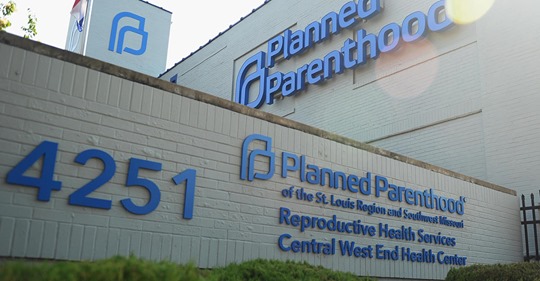
Throughout the week, students attended talks on subjects ranging from in vitro fertilization to the emotional consequences of abortion, as well as took field trips where they learned how to turn the lessons into action. One day, they went to a strip mall in western Houston to tour a pregnancy center, sandwiched between a liquor store and a gun shop, that hopes to convince women not to get abortions. On another trip, they gathered in a time-honored anti-abortion tradition: They prayed on the sidewalk outside a Planned Parenthood abortion clinic, for the women inside.
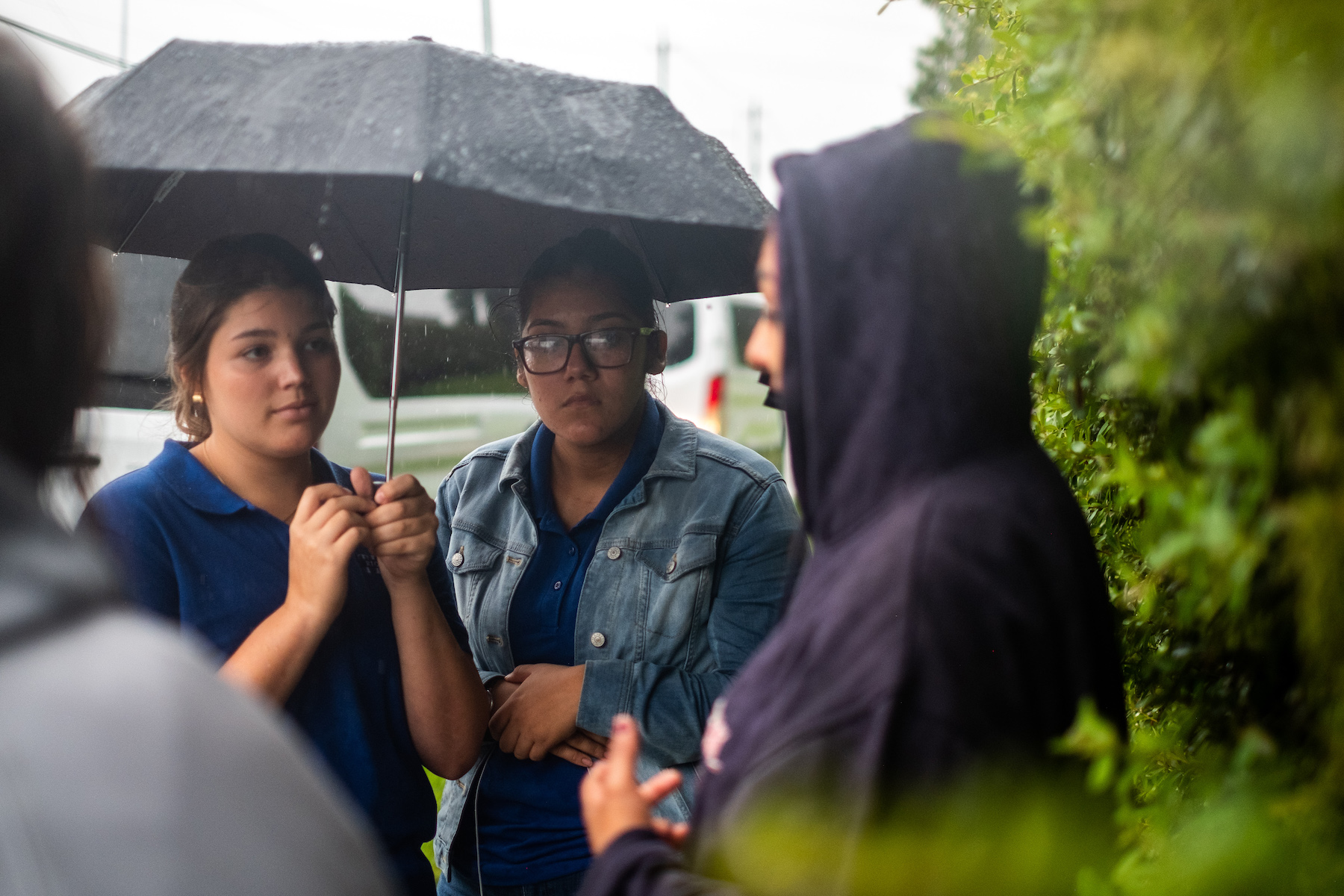
1565025863166-Final3_small

As the students prayed at an abortion clinic, a woman stopped to talk to Madeline Hill and Briana Arvizu. (Photo by Madeleine Peters)

They also dived into the fundamentals of effective organizing. The students studied tactics to magnify a club’s presence on campus, like consistent branding on social media and writing a comprehensive mission statement.

All these activities were in the service of one mission, laid out on the first day of training, in a talk called “Pro-Life 101”: “I don’t want abortion to just be illegal; I want it to be unthinkable,” Austin Cruz, a theology teacher at a local Catholic school, told the group.

That motto was reiterated endlessly throughout the week. During an exercise on body language when talking to strangers, Arnold Smither lobbed a question at the group: “What would you say is our ultimate, absolute goal as pro-lifers?”

Miller immediately rose onto her toes to answer, thrusting her arm — complete with a bright-blue rubber bracelet that read “PRO-LIFE” — into the air.

“To make abortion unthinkable,” she said promptly. It was, of course, the correct answer.

“They’re longing for the bigger picture,” Arnold Smither said of her program’s fellows, in an interview. “They’re longing for the long-term strategy. And this training provides that. It provides them with science, history, political strategy, dialogue techniques, so that they can see the big goal at the end and learn, ‘OK, this is what we’re actually going for.’”

Abortion foes’ plan has never been a secret: They want to overturn Roe v. Wade, the 1973 Supreme Court decision that legalized abortion nationwide. For years, they took a slow-but-steady approach, passing laws that gradually gnawed away at Roe’s protections. Between 2010, when Republicans seized majorities in many state legislatures, and 2018, they managed to enact 424 restrictions on abortion around the country — more than a third of all the anti-abortion laws passed since 1973.
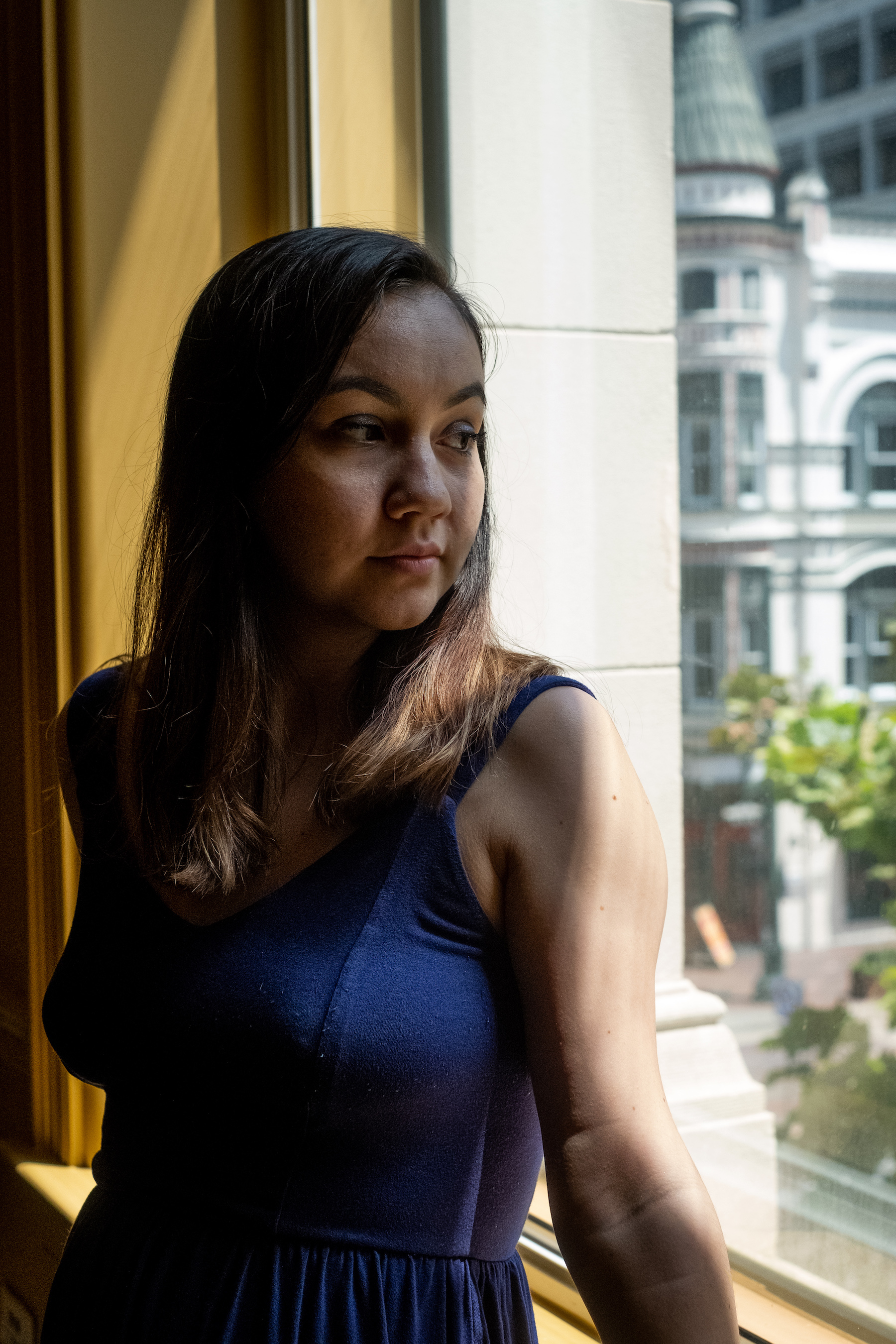
1565027844704-Final15_small

Sarah Ruiz. (Photo by Madeleine Peters)

But after Brett Kavanaugh’s confirmation to the Supreme Court late last year, Republican state legislators went for Roe’s jugular. In 2019, Mississippi, Louisiana, Georgia, Kentucky, and Ohio all passed laws that could ban abortion at as early as six weeks, before many people even know they’re pregnant. Missouri outlawed abortion as early as eight weeks.

A new law in Alabama bans all abortions except in cases where a pregnancy poses a “serious health risk” to the mother. There are no exceptions for rape or incest, and a doctor who performs the procedure could be imprisoned for up to 99 years.

None of these bans are in effect, thanks in part to court challenges. But if the surge of legislation alerted many to these activists’ long-gestating crusade, it also fueled anti-abortion young adults’ faith that Roe could be overturned within their lifetimes.

As long as they just work hard enough.

SEEING A MODERN-DAY HOLOCAUST

The urgency of the mission was made clear on the first full day of activities. Texas Right to Life kicked things off with two documentaries about the Holocaust, including one produced by the United States Holocaust Memorial Museum. While the training’s administrators stressed that abortion in the United States is not the same as the Holocaust wrought by Nazi Germany, they do see useful parallels.

After the videos, Arnold Smither walked students through a short history of post–World War I eugenics.

“One of the big proponents of eugenics in the United States, pre–World War II, was Margaret Sanger, the founder of Planned Parenthood,” she told them. “So it’s easy to see the slippery slope.”

This is true: Sanger courted eugenicists to her birth control movement by selling her mission as helping to rid the country of “the weeds” of humanity and “[breeding] a race of human thoroughbreds.” What’s less true is how that idea was echoed in a discussion minutes later, when one student said Sanger had gotten “a lot of her ideas from Hitler.”

The Holocaust Memorial Museum says it “unequivocally rejects efforts to create analogies between the Holocaust and other events, whether historical or contemporary,” but this remains a common comparison within anti-abortion circles. The text of the Alabama near-total ban declares, “More than 50 million babies have been aborted in the United States since the Roe decision in 1973, more than three times the number who were killed in German death camps, Chinese purges, Stalin’s gulags, Cambodian killing fields, and the Rwandan genocide combined.”

By the time students show up at the Texas Right to Life training, they already know what they believe, but they want to be able to wield those beliefs to change hearts and minds. That’s never easy to do, but it’s especially perilous when you’re young, want friends, and are likely surrounded by classmates who disagree with you. So, much of the training focuses on learning how to engineer what one speaker called “courageous conversations and compassionate conversations.”

Spread out across the mirrored ballroom and second-floor hallway where many of the talks took place, students repeatedly role-played “tabling,” as though they had set up a table on campus to talk to students about abortion rights. They were encouraged to ask one another questions, to dig into any potential gaps between somebody’s support for abortion rights and why they support them — and then, hopefully, widen those gaps, until there’s enough room for doubt.
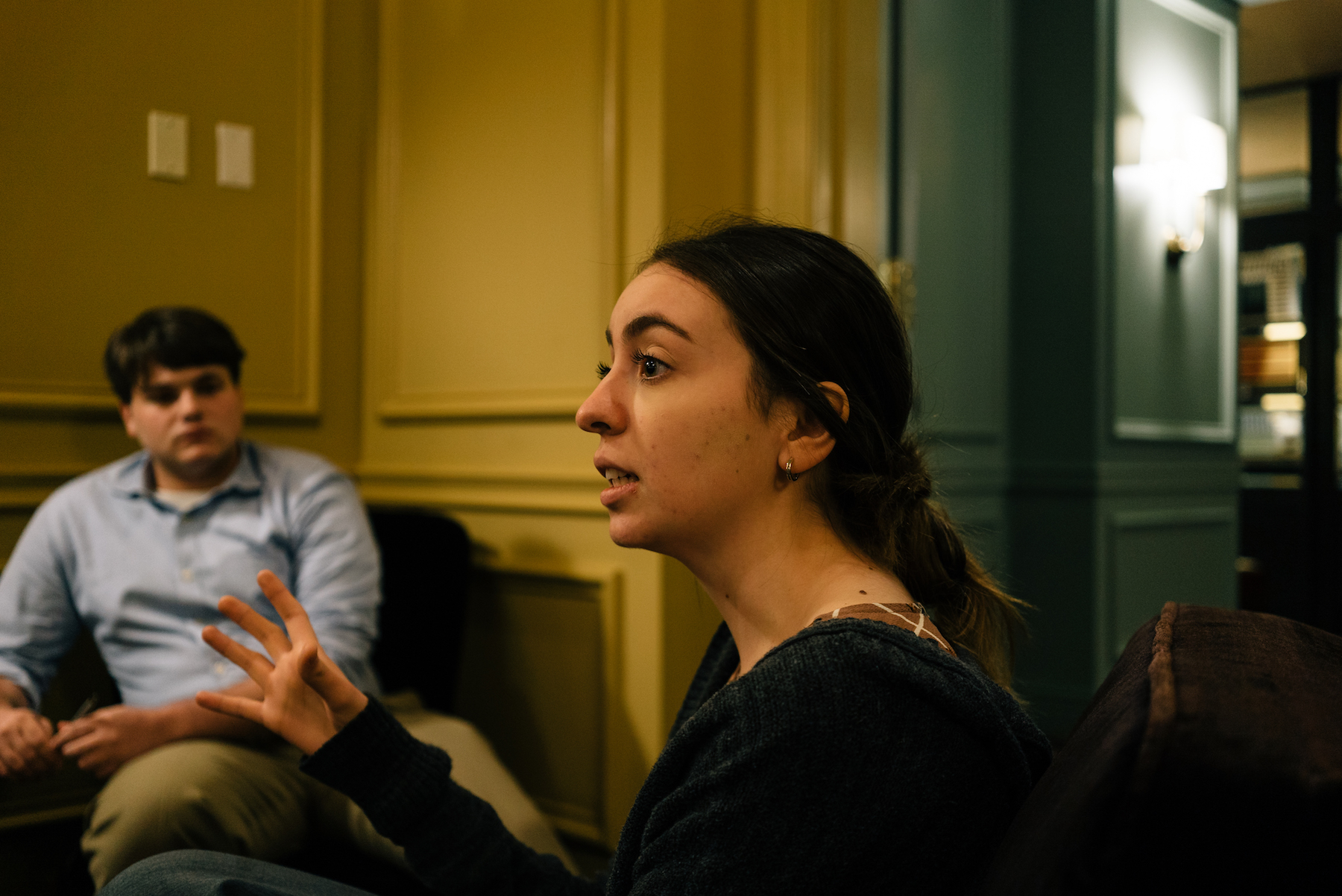
1565025995495-Final10_small

Desireah Rodman. (Photo by Zach Caldwell)

During one practice, Texas Right to Life education associate Rachel Bush stepped in with an encouraging smile after one fellow missed an opportunity to ask another why she doesn’t believe life starts at conception.

“Ask a follow-up question,” Bush advised. “Well, ‘why do you think — why do you pick that point?’ Because that’s gonna tell you a lot too.”

“So you can keep bringing it back to the questions, to get her to think, because sometimes people honestly just have not thought out their opinion,” she went on, adding, “And you’re building the relationship, too. So they feel like they can trust you, and you’re not just trying to force them to believe what you believe.”

Through this practice, students develop a small arsenal of responses to common pro-abortion rights arguments, though Arnold Smither said in an interview that they always encourage students to do more critical thinking and research on their own.

“After every talk, we give the students an opportunity to regurgitate what they learned with their partners,” she said. “They’re looking at their notes and saying, ‘OK, if someone were to ask me, what do I do about these hard cases?’” (Such as rape, incest, or a pregnancy that threatens the life of the woman.) “So the students know how to respond to that, and respond with compassion and science and facts.”

“FACTS ARE IMPORTANT”

Thirty years old, 5’2”, and four months pregnant during the training, Arnold Smither is unfailingly unflappable, even when chasing after her young son, who loved toddling around the hotel. But hit on the right topic, like biology, and Arnold Smither’s passion for her cause cracks through.

“There are seven criteria for a living organism and a human zygote — one-celled zygote — has all seven of them,” she exclaimed, curling her index finger and thumb to demonstrate just how small that zygote might be. “A human being has all seven of them from the beginning, so life begins at the beginning. There’s no arbitrary line here. So it’s black and white. It’s yes or no. It’s life or death.”
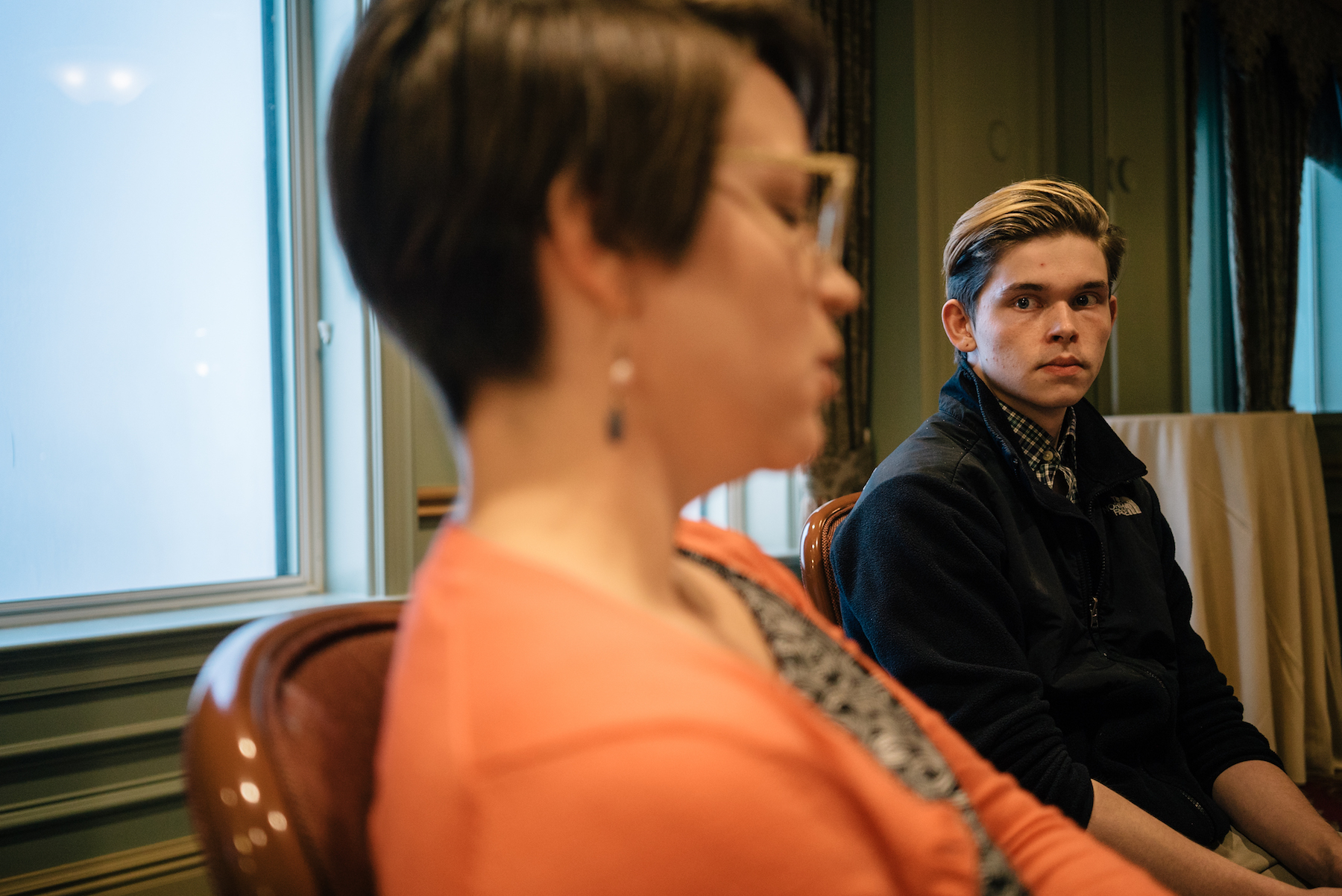
1565026074285-Final9_small

Veronica Arnold Smither, Texas Right to Life’s education director, led discussions for students like Austin Kendrick. (Photo by Zach Caldwell)

Texas Right to Life is far from the only anti-abortion group trying to ground its arguments in science. This year, the theme of the March for Life was “Unique from Day One,” based on the idea that a fertilized fetus has its own individual DNA. The six-week bans on abortion have spread thanks to Faith2Action, a nonprofit that bills itself as the “birthplace of the Heartbeat bill.” Its model legislation bans abortion after a “heartbeat” is detected, which it calls a “key medical predictor” that a fetus will be born alive. Versions of the “heartbeat” bill have been introduced in about two-dozen state legislatures, an Arizona Republic–USA Today investigation found.

While those six-week bans are not yet in effect, laws that would ban abortion after 20 weeks are, including in Texas. Groups like the powerful nonprofit Americans United for Life have pushed those kinds of restrictions; AUL’s model legislation instructs states to ban abortion “because of the pain felt by an unborn child upon being aborted.” (Texas Right to Life backed its state’s version of that ban.)

Americans United for Life literally writes the book on how to restrict abortion access, through its annual “pro-life playbook” of model state legislation. The Arizona Republic–USA Today report dubbed the group “the most prolific author of copycat abortion legislation” in the United States.

“If you’re engaging in dialogue with someone who does not believe in the same truth as you believe, that does not take the Bible as word, that maybe isn’t the same religion as you, and you’re Bible-thumping, you have no ground to stand on,” explained Ruiz, the Texas A&M senior who led one of the discussions about the Holocaust. Now in the second year of her fellowship, she also works as an intern in Texas Right to Life’s education department.

1565025789016-Final6_small

Sarah Ruiz holds her infant daughter as Therese Delgado looks on. (Photo by Zach Caldwell)

Last year, Ruiz stopped taking the injectable contraceptive Depo-Provera. Like most hormonal birth control, “the shot” primarily works by stopping ovulation, but it can also potentially block an egg from becoming fertilized or implanting in a woman’s uterus. Ruiz believes that a fertilized egg is already a person — and so the shot, in her mind, could cause an abortion.

Weeks after she stopped taking it, Ruiz attended her own first-year fellowship training. On the Friday night of that week, with just one day left in the program, Ruiz took a pregnancy test.

It was positive.

“I wanted to scream it at the rooftops!” Ruiz said, clapping her hands in excitement. “Like, oh my God, we’re at a pro-life camp, a pro-life fellowship, and there’s life inside me! I just wanted to tell everyone.”

Ruiz will graduate college in December. Her daughter is now five months old.

The creation of new life is much more of a gray area than this kind of rhetoric would suggest. Medically speaking, a pregnancy starts when a fertilized egg is implanted in the uterine lining, so blocking that egg from implantation is not an abortion.

At six weeks, a doctor can’t detect what’s typically described as a heartbeat — the thud of valves closing — because the fetus doesn’t have a fully formed heart. Instead, they can find the “electrically induced flickering of a portion of the fetal tissue that will become the heart,” Ted Anderson, president of the 58,000-member-strong American College of Obstetricians and Gynecologists (ACOG), told the Guardian earlier this year. While this flickering is usually a good sign that a pregnancy is healthy, it’s not necessarily more important than other milestones in a pregnancy.

Fetuses also cannot feel pain until the onset of viability, generally placed at around 24 weeks, according to ACOG (which has taken to titling its press releases about abortion “Facts Are Important”).

Texas Right to Life staffers say something is alive if it’s composed of cells; can pass along hereditary traits; has a metabolism; maintains homeostasis; and can grow, reproduce, and respond to its environment. But even the concept of life itself is, kind of absurdly, unresolved. While scientists do sometimes create similar lists of features that living organisms possess, there is no single, widely accepted definition of “life” or the qualities that prove something is “alive.”

At the same time, life is far more expansive than humans tend to think; biologists universally consider bacteria to be alive.

PRO-LIFE FEMINISM

Several of the sessions and lectures were closed to VICE News, including ones on topics like birth control, in vitro fertilization, and Planned Parenthood’s business model. But of the public sessions, none generated more wide-eyed fervor than Aimee Murphy’s.

Murphy arrived in Houston looking, well, cool. Her dark hair was streaked with vibrant blue and teal, and she just happened to mention that she has a tattoo (twice). Before her talk, called “Embracing the ‘F Word’: Learning to Love Pro-Life Feminism,” Murphy shrugged off a jacket bearing a patch demanding, “RESTORATIVE JUSTICE NOW.”

“I personally am a large clump of cells standing in solidarity with small clumps of cells, as long as they’re human,” Murphy told the students during her talk. She peppered it with phrases that wouldn’t sound too out of place on your average feminist Tumblr, but with an anti-abortion twist.

1565027678260-Final12_small

Kateri Remmes. (Photo by Madeleine Peters)

People believe that abortion will help them because of “the patriarchal structures which insist that the womb-less male body is the default,” Murphy said, and that treat pregnancy like a disease. Feminism that supports abortion rights also really “reinforces structures of inequality, discrimination, and violence,” while abortion deepens people’s “implicit bias,” ageism, and ableism against what Murphy calls the “preborn.”

According to Murphy’s logic, the fellows in the room all benefit from “born privilege,” in the same way white people enjoy white privilege.

“We’re learning that we can be powerful as a pregnant woman. We can be powerful as a mother.”

The students, fluent in the lingua franca of social justice, were enraptured. They may have grown up watching celebrities like Beyoncé and Taylor Swift declare themselves feminists, but their opposition to abortion has seemingly locked them out of joining that party. Murphy offered them not only an invitation but also historical proof that, apparently, they were the real feminists all along.

“The first wave of feminists in the U.S. were almost unanimously pro-life,” Murphy said, referring to the activists who primarily worked to secure women the right to vote in the 19th century and early 20th. “Because they understood that saying that women were less than men or were inherently disempowered through maternity was a form of the patriarchy’s insidious web into our culture.”

Second-wave feminists, in the 1960s through the ’80s, championed the sexual revolution; their luminaries signed a 1972 letter declaring, “We have had abortions.” By highlighting first-wavers’ opposition to abortion, the feminism of their descendents is framed as in need of a course correction.

It’s a seductive pitch, and Murphy isn’t the only member of the modern anti-abortion movement who’s making it. After all, one of the most powerful anti-abortion groups in the United States is the Susan B. Anthony List, named after the famous suffragette.

“We do want women in the workplace, because we want equal rights, because we’re feminists,” said Erin Quinn, a rising junior at the University of Dallas who said she was a feminist before Murphy’s talk. When she talks about being pro-life, her green eyes warm and her voice grows breathy. She’s alight with purpose.

“I love it. I feel like we’re thriving in this,” Quinn added. “Because we’re learning that we can be powerful as a pregnant woman. We can be powerful as a mother.”

1565027767872-Final13_small

Shiva Baradaran, Kateri Remmes, and Erin Quinn. (Photo by Zach Caldwell)

The abortion wars have long been portrayed as a standoff between the side that argues it is morally wrong to abort unborn children and the side that argues that reproductive choice is fundamental to women’s liberty. Anti-abortion advocates often fend off accusations that they’re merely “pro-birth” because they’re not focused on advancing policies that benefit infants and mothers, like parental leave or lessening maternal mortality.

“Typically, it’s Republicans who are like, ‘Abortion’s wrong,’ but typically it’s Democrats who are like, ‘No, we need to pour money into Medicaid, into food stamps, into WIC,” said Ruiz, referring to a federal assistance program for low-income mothers and children. Both parties, she said, should “get their heads on straight and come together.”

“Why can’t we save babies in the womb but also support mothers that maybe, at this point in life, don’t have resources? Like, she shouldn’t have to end the life of her child to provide food for herself and for her other children.”

At the training, the speakers and fellows tried to prove that they were women’sreal champions, because they don’t want to penalize them for becoming mothers. They talked about giving scholarships to pregnant and parenting students, about running diaper drives. In a talk entitled “Post-Abortive Counseling,” students moaned in sympathy as a local therapist spoke about helping women recover from “post-abortion syndrome,” whose symptoms were compared to a kind of post-traumatic stress disorder. (In 2008, an American Psychological Association task force concluded that one first-trimester abortion is no riskier to a woman’s mental health than carrying a pregnancy to term.)

Though past generations of activists might have lurked outside clinics with posters of aborted fetuses and yelled “murderer!” at women who walked in, those kinds of tactics disgust many of the fellows today. When asked about them, Miller groaned. “That’s what also makes pro-life people look bad. Oh no, I hate that.”

“That is not gonna change their minds,” she explained. “That’s gonna make them more scared. It’s gonna make them worse. And then they’re gonna go to Planned Parenthood and they’re gonna be like, ‘Oh, we can help you, like, you know, blah blah, we can take care of it.’”
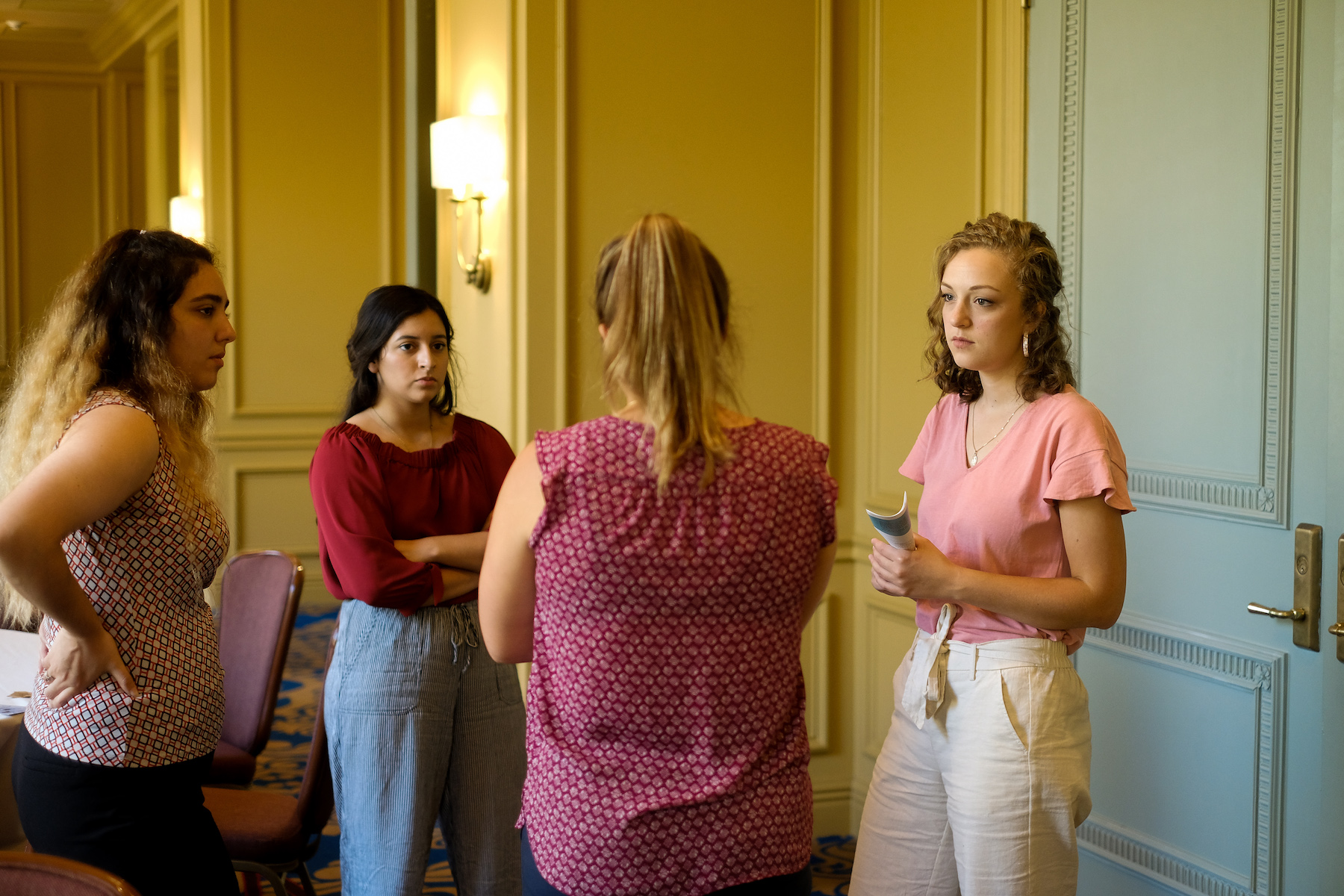
1565028963028-Final20_small

Shiva Baradaran, Ana Leal, Madeline Hill, and Kateri Remmes practice “tabling,” or talking to peers about abortion. (Photo by Madeleine Peters)

Toward the beginning of Murphy’s talk, she asked how many fellows considered themselves feminists. Only a handful raised their palms. But afterward, when Murphy asked how many people were now at least comfortable with the idea of feminism, nearly the entire room threw up their hands. Students mobbed Murphy, thanking her profusely for her speech and wondering aloud whether she could come speak at their schools.

Miller, for example, is all in.

“When [Murphy] said the nonviolence part, I was like, ‘OK, I’m here for this. I like this,’” she said. “It really is empowerment and equality, and I think that’s really, really important.”

IN THE STREETS, IN THE CAPITOL

The fellows might talk about changing the culture around abortion, but the Texas Right to Life has a clear legislative agenda. And it’s got the deep pockets and electoral firepower to turn it into reality.

A state affiliate of the powerful National Right to Life Committee, its political action committee spent about $3.5 million during the 2018 election cycle. It’s helped steer millions toward Texas’ controversial “Alternatives to Abortion” program, which uses state dollars to persuade women to not get abortions.

While Texas Right to Life hasn’t endorsed any “heartbeat” bills, it has successfully shepherded abortion restrictions like House Bill 2, which halved the number of abortion clinics in Texas, banned most abortions after 20 weeks of pregnancy, and ultimately triggered a historic Supreme Court battle. This state legislative session, Texas Right to Life deployed a record six full-time lobbyists to Austin.

It’s a comprehensive operation, and fellows are encouraged to throw themselves into it. A few weeks before the training in downtown Houston, second-year fellows in the Texas Right to Life program traveled to the Capitol to practice lobbying their representatives to fight abortion.

1565126528955-Final21

Victoria Ramos-Mata, Gunnar Osteen, and Midori Pedroza give tabling another shot. (Photo by Madeleine Peters)

Ruiz was among those fellows. Despite her qualms about the Republican Party, ultimately, she said, “I personally vote first on abortion. So I will not vote for someone who is pro-abortion.”

The fellowship involves other perks, like an all-expenses-paid pilgrimage to the March for Life, a massive annual gathering of anti-abortion activists in Washington, D.C., that concludes with a protest on the steps of the Supreme Court. While the March doesn’t track the number of student groups who show up, it’s impossible to miss the scores of young people holding identical black-and-white signs that announce, “I am the pro-life generation.”

That’s the “signature sign” of Students for Life, which has nearly doubled its number of chapters over the last eight years. Today, it has more than 1,100 chapters, in all 50 states.

The March for Life also illustrates just how far the lessons taught in this Houston hotel have already travelled. Pull a student out of the herd to ask why they’re marching in Washington and they’ll tell you the same thing the Texas Right to Life fellows are repeating nearly 1,500 miles away: They want to make abortion not just illegal, but unthinkable.

But while Texas Right to Life and its fellows want to reinvent what being “pro-life” looks and sounds like, there are certain things that remain nonnegotiable. They might grimace at the protesters who yell at women outside Planned Parenthood, but they still go, too.

The day the fellows planned to stand outside a Planned Parenthood abortion clinic, Houston’s sweltering humidity and sunshine gave way to pouring rain. The fellows went anyway. Careful not to block the street or the clinic’s driveway, they stood on the sidewalk, huddling over rosaries and stretching their arms to the sky. As they sang hymns, one young woman’s crystalline voice soared above the patter of rain.

“We’re praying and just staying in solidarity with the women who are going in there, trying to show support, so they don’t feel like they have to go through an abortion,” said Kateri Remmes, a rising junior at the University of Dallas. She serves as president of her school club Crusaders for Life.

“It’s a life-or-death situation in this case, so I take it pretty seriously.”
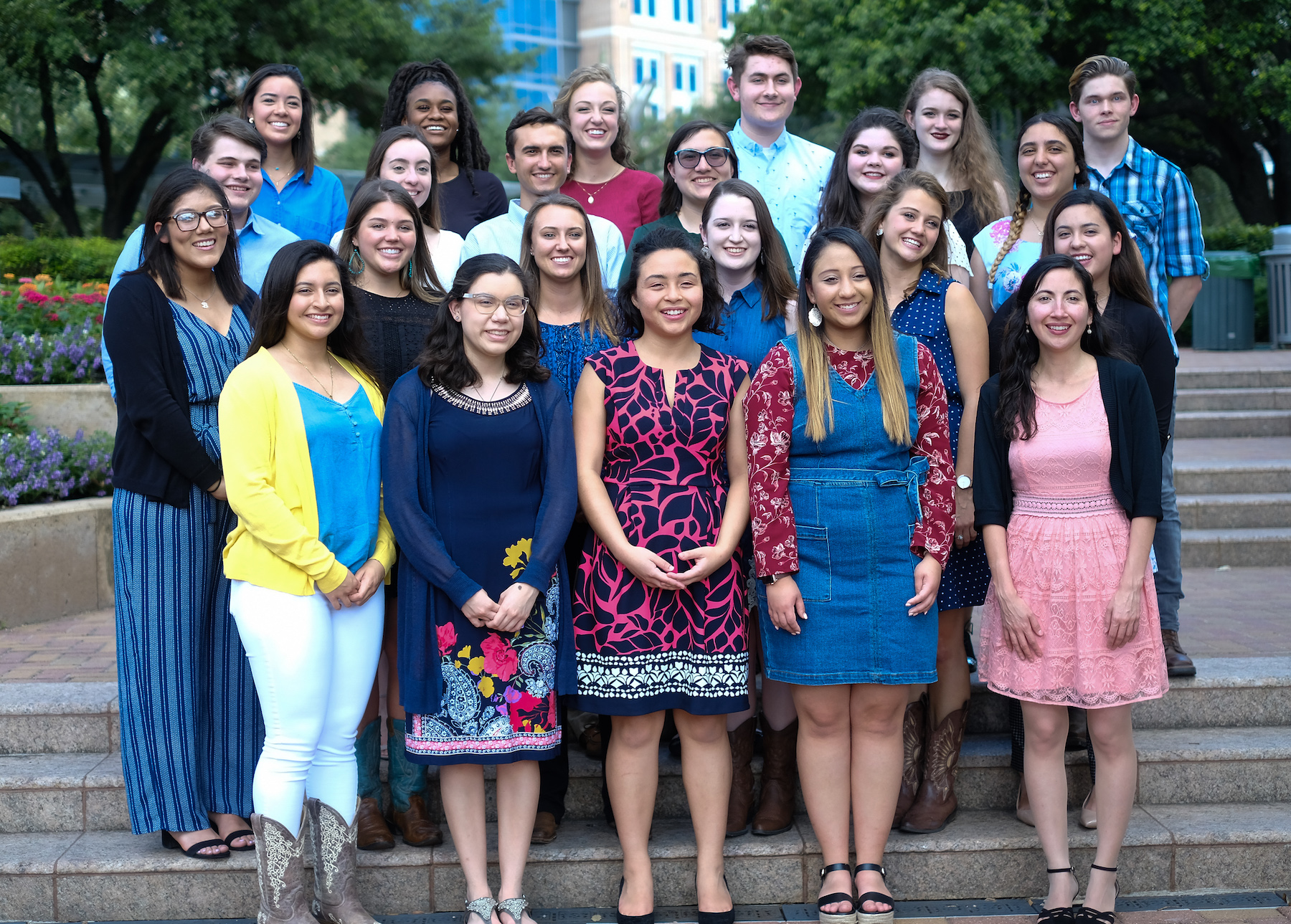
1565027510019-Final5_small

At the end of the training, the students took a group photo before heading out to dinner with the donors. (Photo by Madeleine Peters)

Cover: Students spent hours learning how to talk to strangers about abortion, right down to making sure they had welcoming body language. (Photo by Zach Caldwell.)

Source: https://news.vice.com/en_us/article/ne8j9m/7-days-inside-an-anti-abortion-summer-camp-training-the-next-generation-of-activists?fbclid=IwAR1v3PWWGELZDIgB1RaM4rqpG-1fRcN8z0oSooyGOO8REoX5Xtkhlto8jCw

Even in states most hostile to reproductive rights, less than one quarter of respondents favor a total ban on abortion.

“Support for complete bans is not there, even in the south, even in the most conservative states,” Natalie Jackson, PRRI research director, told Rewire.News.
Rena Schild / Shutterstock.com

Public backing of draconian abortion restrictions remains low, with no state having more than 23 percent support for a total ban, according to a recent poll by Public Religion Research Institute (PRRI), a nonpartisan research organization.

Although the overall result—58 percent support abortion being legal in all or most circumstances—mirrors the split reported by pollsters for decades, the PRRI poll is unique in that it includes a significant sample of people in each state. This reveals that even in states most hostile to abortion rights, less than one-quarter of respondents in favor a total ban.

“Support for complete bans is not there, even in the South, even in the most conservative states,” Natalie Jackson, PRRI research director, told Rewire.News.

The PRRI polling comes three months after the Kaiser Family Foundation showed that support for “heartbeat” banslaws that end legal abortion about six weeks into pregnancyplummeted when respondents were told what the laws actually do.

As reproductive rights advocates often point out, even states often thought of as conservative include significant numbers of people who are least able to travel long distances or comply with onerous and medically unnecessary requirements like forced waiting periods.

The disconnect partly explains why so many states that enacted near-total abortion bans this year also have laws to suppress voter turnout. For example, Georgia Gov. Brian Kemp (R) used his position as secretary of state when running for governor last year to purge voter rolls, delay voter registrations, and accuse Democrats of hacking without evidence. After defeating Democratic gubernatorial candidate Stacey Abrams in 2018, Kemp signed a near-total abortion ban in March 2019.

“These results demonstrate that the Republican-controlled legislatures who have passed state laws that amount to a virtual ban on abortion are out of touch not just with Americans overall but with residents of their own states and members of their own party,” PRRI CEO and founder Robert P. Jones said in a statement.

Because of the large sample size, the PRRI survey was able to cover a broader variety of religious faiths than most studies. While Christianity is associated with lower support for abortion, the same doesn’t hold true for other faiths.

“There’s kind of an assumption that religious equals more conservative,” Jackson said. “Particularly, the non-Christian religious, move in the opposite direction.”

A majority of Jewish, Muslim, Buddhist, Hindu, New Age, and Unitarian Universalist respondents supported legal abortion in all or most cases. Unitarian Universalists, had the highest level of support, at 83 percent.

The survey was partly funded by Unitarian Universalist Veatch Program at Shelter Rock in New York, as part of $50,000 they gave to PRRI. The organization gives money to a variety of civic and progressive causes, including $50,000 to Planned Parenthood of Nassau County and Planned Parenthood of Hudson Peconic.

Even within Christianity, opinions vary on abortion rights by race and denomination. White and Hispanic evangelical protestants have the lowest levels of support for legal abortion, at 30 percent and 32 percent, respectively, while Black non-evangelical protestants have the highest, at 67 percent.

While faiths other than Christianity are each a small sliver of the population, they collectively make up five percent of the population, or about 16 million people, according to a 2016 Gallup poll. The PRRI study suggests an additional explanation for the disconnect between residents and legislators in states that have passed bans on abortion: anti-abortion Republican voters seem more likely to treat abortion as a litmus test than pro-choice Democratic voters.

The PRRI poll complements existing research. Pew, another organization focused on religion and policy, has polled Americans on abortion for years, consistently finding between 55 percent and 60 percent of Americans think abortion should be legal in all or most cases. Gallup polls typically find that about 78 percent of Americans think that abortion should be legal in some or all circumstances. The results are also largely confirmed by polls that approach the question using different models.

The PRRI survey showed that people ages 18 to 29 “have changed their opinion to be more supportive (19%) rather than opposed (10%) to abortion by nearly a margin of two to one,” while other age groups show “more balanced changes.”

Avalanche Strategy, a progressive research organization, released a survey in June that found 72 percent of Americans are opposed to regulating abortion. Twenty-nine percent are personally uncomfortable with abortion rights but prioritize freedom and are against government preventing people from choosing abortion care. Only 26 percent are both uncomfortable with abortion and want abortion care to be illegal. 

The survey uses a mix of traditional close-ended polling questions and more open-ended that the company then analyzes. Tovah Paglaro, COO of Avalanche Strategy, described their approach as “human-in-the-loop.” Initially, experts categorize a small number of the responses, then train a computer to mimic their analysis on a larger scale, which is then verified. Paglaro told Rewire.News that the open-ended approach helped uncover what they call the “freedom first” group—voters who are uncomfortable with abortion but against government limiting the right.

“The freedom first segment is a little different,” she said. “They don’t necessarily identify as pro-choice the same way…They want to protect individual freedom to choose.”

Source: https://rewire.news/article/2019/08/13/total-abortion-bans-are-overwhelmingly-unpopular-in-every-state/

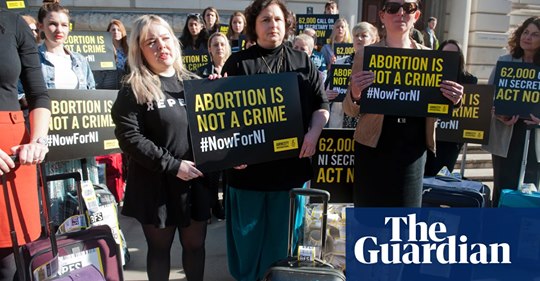
Pro-choice organisation opposes medics being forced to report women to the police

A protest in February against Northern Ireland’s strict abortion laws. Photograph: Jill Mead/The Guardian

A new pro-choice doctors’ organisation has been established in Northern Ireland to defend physician-patient confidentiality over the use of banned abortion pills.

Doctors for Choice Northern Ireland said they were opposed to healthcare professionals in the region being forced to report women and girls to the police if they procured abortion pills.

A Northern Irish woman faces a criminal prosecution later this year for buying abortion pills online for her then 15-year-old daughter. The woman, who cannot be named to protect her daughter’s identity, is accused of two charges of unlawfully procuring and supplying abortion pills in 2013.

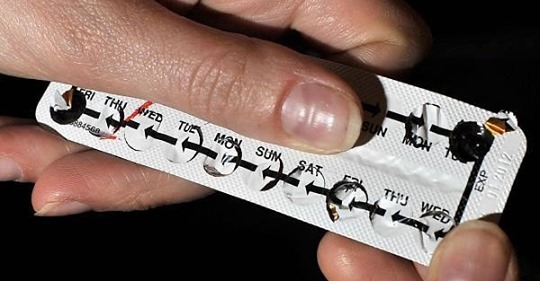
At present, doctors and medical professionals in Northern Ireland who find out their patients have used abortion pills could be prosecuted if they fail to report them to the authorities. In their first ever statement, Doctors for Choice Northern Ireland said no one should be prosecuted for buying or using abortion pills.

The organisation said: “Whilst abortion pills are safe and are widely prescribed in the same form and dose to treat miscarriage within the hospital setting in Northern Ireland, some people can experience complications such as heavy bleeding or infection.

“We encourage anyone who has taken abortion pills outside a hospital setting to not delay seeking medical assistance or attending Accident and Emergency should any complications, such as heavy bleeding or becoming unwell, arise. A delay in treating heavy bleeding or infection can put a person’s health and life at risk.”

The group said the issue put the patient-doctor bond of trust at risk.
“We believe that doctors have a duty of care and confidentiality to their patients and do not believe that healthcare professionals should report patients to the police for taking abortion pills. Patients should be able to trust their doctor to respect their confidentiality and act in their best interests. The current legislation puts doctors in a difficult position and erodes and undermines the integrity of the doctor-patient relationship,” the pro-choice lobby group said.

A spokesperson for Doctors for Choice Northern Ireland said recent prosecutions and referrals to the Public Prosecution Service of Northern Ireland of women and girls who procured abortion pills could deter patients from seeking urgent emergency medical help.

They said: “Under the current law in Northern Ireland, we understand why some people would be reluctant to disclose to a healthcare professional if they have taken abortion pills … the current law is untenable in that it is a barrier to compassionate care and can deter patients from attending accident and emergency promptly.”

Northern Ireland’s strict anti-abortion regime is set to change if by 22 October this year there has been no return to devolved government in Belfast.

Last month MPs at Westminster voted by 332 votes to 99 to support legislation proposed by Labour’s Stella Creasy in July. The vote extended the same abortion rights for women in Great Britain to Northern Ireland. Northern Ireland was the only region of the UK where abortion was still illegal and the 1967 Abortion Act did not apply.

The only way left to block abortion reform would be for the restoration of power-sharing government and for local parties to take control of legislation dealing with issues like abortion and same-sex marriage. The DUP, the largest party in the last power-sharing Stormont assembly, has used parliamentary vetoes to block abortion reform.

Creasy and her allies pushed forward the abortion reform legislation in July because the Stormont assembly had not sat for more than two years since powersharing between the DUP and Sinn Fein collapsed.

Pro-choice MPs like Creasy argued that Northern Irish women could no longer afford to wait for local politicians to reach agreement to resurrect power-sharing, and then possibly agree to reforming the region’s strict anti-abortion regime.

It is unclear yet how the new regime would operate and if GPs for instance would be able to prescribe abortion pills legally after the new legislation is enacted.

Source: https://www.theguardian.com/world/2019/aug/11/northern-irish-doctors-defend-confidentiality-of-patients-seeking-abortion?fbclid=IwAR11FrcVUZDgvn3A903bjVPY4LvmLh1MWR7NKsnPRswEPnztYFfaGh5LKdg

Moving ahead despite objections, the Trump administration on Friday set a timetable for federally funded family clinics to comply with a new rule that bars them from referring women for abortions.

The action is part of a series of efforts to remake government policy on reproductive health to please conservatives who are a key part of President Donald Trump’s political base. Religious conservatives see the family planning program as providing an indirect subsidy to Planned Parenthood, which runs family planning clinics and is also a major abortion provider.

The administration’s move came as Planned Parenthood is threatening to leave the Title X family planning program over the restrictions, and a federal court in San Francisco plans to hear arguments in a lawsuit to block the regulation.

The Department of Health and Human Services sent notices to program participants saying they must certify by Sep. 18 that they’re complying with most major provisions of the rule. Plans on how the clinics intend to comply are due earlier, by Aug. 19.

In addition to the ban on abortion referrals, the rule’s short-term requirements include financial separation from facilities that provide abortion, designating abortion counseling as optional instead of standard practice, and limiting which staff members can discuss abortion with patients. Clinics have until next March to separate their office space and examination rooms from the physical facilities of providers that offer abortions.

Known as Title X, the federal family planning program serves about 4 million women a year. The government distributes about $260 million a year in state grants to keep the program running. Many low-income women also get basic health care from the clinics. Organizations representing the clinics say the administration’s rule violates basic ethical requirements that medical providers fully inform patients of their options.

HHS said Friday it will work individually with clinics making a “good-faith” effort to comply. The agency also said it has received no official notice from providers who may be planning to drop out. Officials expect the reaction to the rule to vary considerably from state to state. Politically conservative states are likely to accept the restrictions, while in some more liberal parts of the country, state officials have signaled they’d be willing to step in so clinics can continue to make abortion referrals.

The controversy may come to a head next month. The federal appeals court in San Francisco has scheduled oral arguments the week of Sept. 23, right around the same time HHS expects the clinics to comply.

Abortion is a legal medical procedure, but federal laws prohibit the use of taxpayer funds to pay for abortions except in cases of rape or incest or to save the life of the woman.

Source: https://www.winknews.com/2019/08/09/trump-administration-moves-to-enforce-abortion-restriction/

Allowing women to access contraception from their pharmacist without a prescription would “dramatically improve access to essential healthcare for thousands of women”, Ireland’s main pharmacy union has said.

The Irish Pharmacy Union (IPU) said being able to access oral contraception without a prescription is “at least as important” as providing contraceptives free of charge, which has been recommended by the Committee on Eighth Amendment of the Constitution.

The IPU, which has made a proposal to Health Minister Simon Harris on the issue, said Mr Harris had convened a working group on access to contraception in April. A public consultation seeking submissions on the issue was launched last month by the working group.

The union said studies carried out in Oregon, the first state to allow pharmacists to independently prescribe hormonal contraception, found that in the first two years after the policy change, pharmacist prescribing of contraception averted more than 50 unintended pregnancies and saved Oregon an estimated $1.6 million (circa €1.4 million) in public costs.

It also cited a World Health Organisation recommendation in June which said “oral contraceptive pills should be made available without a prescription”.

“Not all barriers to contraception are financial, and free contraception alone may not necessarily lead to increased use,” an IPU spokesperson said.

“Financial and non-financial barriers to access are often connected; a woman who can’t afford to take time off work can’t access a free consultation with a GP, but she can often see a pharmacist in her free time.

“If the Government is sincere about improving access for all, the prescription-free element of our proposal is at least as important as the free-of-charge component.”

The public consultation closes on Monday, August 5.

Source: https://amp.irishexaminer.com/breakingnews/ireland/not-all-barriers-to-contraception-are-financial-say-irish-pharmacy-union-941564.html?__twitter_impression=true&fbclid=IwAR2-UTMj74RaFMBZhtOgCzixqu0sQe8SFaqckCeYUuvSkXQv3KAzeReT8hU

NARAL is shifting its strategy to embrace the term “reproductive freedom,” which polls well with moderates and independents.

NARAL Pro-Choice America, one of the largest pro-choice organizations in the country, is changing its communications strategy amid mounting attacks on abortion rights. In an exclusive interview, the group said it will place a greater emphasis on “reproductive freedom,” a framework its leadership believes will bring together a wider swath of the population in support of safe and legal abortion. Though NARAL has used the term in its messaging before, the group has relied more heavily on terms like “reproductive rights,” and “abortion access” to talk about their cause.

The changes are the result of new research the organization commissioned from Avalanche Strategy, a consulting firm that provides groups with “a data-driven set of messaging recommendations” to reach broad constituencies. Avalanche’s findings reflect the commonly cited statistic that somewhere between 60 and 70 percent of people support abortion in the United States: According to their polling, which was conducted in May and June—the months during which several state abortion bans passed into law—72 percent of American voters support the right to the procedure.

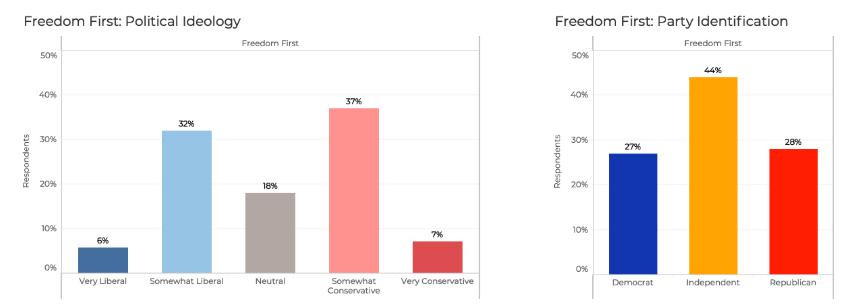
But Avalanche’s researchers pinpointed a specific subset of those supporters whom they call the “freedom first” segment, a group that is personally opposed to abortion, but believes in other people’s right to access it free from government intervention. That group made up 29 percent of respondents.

“Freedom first” voters, their data shows, are more likely to share in feelings of anger and frustration over abortion restrictions when they’re framed as “attacks on personal freedom” and “untoward government control.” And as a group, they are more middle-of-the-road in their political orientation: They’re “likely to be conservative or liberal, but unlikely to be strongly either,” Avalanche states. In short, these are moderate voters. (The full text of Avalanche’s research appears below, with permission.)

NARAL freedom first supporters from avalanche research

POLITICAL IDEOLOGY OF THE “FREEDOM FIRST” SEGMENT. COURTESY: AVALANCHE STRATEGIES

“Having a deep understanding of people’s values, emotions, and perspectives helps us to continue mobilizing Americans who are intensely dedicated to abortion rights and effectively communicate with those who strongly believe that people should have the freedom to make their own decisions about pregnancy, with those they trust, free from political interference,” a NARAL spokesperson said.

NARAL spokespeople also emphasized that the new messaging is intended as a guide for the group’s members, whose language, they say, won’t be policed by the national organization—something that was called into question recently when Splinter published a leaked emailfrom the group’s deputy field director instructing field staff and volunteers not to say or write slogans such as “abortion is normal” and “abortion should be safe and legal.” (In a statement to VICE, NARAL said the email was a “mischaracterization” of the organization’s directives.)

NARAL is the second major pro-choice organization to shift its external messaging in the last month. On July 16, former Planned Parenthood President Leana Wen was pushed out after spending her eight-month tenure attempting to depoliticize abortion and frame it solely as a healthcare concern. Similar to NARAL, the group is moving away from traditional categories in the fight for abortion rights like “pro-choice” and “pro-life,” focusing instead on attacks on abortion and what it means not to have the ability to access it, according to a Planned Parenthood spokesperson.

The shake-ups at the two national organizations have some advocates worried that the de facto leaders of the pro-choice movement are scrambling to find cogent, unified messaging at a time when they need it most. Others say these changes resurface longstanding questions about who has the power to shape the overarching message of the abortion rights movement, what that message should be, and if it’s even necessary that the movement coalesce around a single rallying cry.

Advocates argue it’s not just about branding: They say influential groups like NARAL and Planned Parenthood can influence how everyday people talk and think about abortion, and how they feel when they show up at a clinic to ask for one.

“When we’re talking about these big organizations, they really need to get their shit together,” said Alison Dreith, the deputy director of Illinois’ Hope Clinic. Dreith also served as executive director of NARAL’s Missouri affiliate, and is a former organizer for Planned Parenthood of the St. Louis Region and Missouri. “It is important to bring in a broader swath of the 7 in 10 people who support Roe v. Wadein, but I hope not at the expense of patients and providers, who are supposed to be at the root of what the movement is advocating for.”

The stakes are high if they miss the mark. “Messaging from organizations like Planned Parenthood and NARAL has the power to entrench stigma even more deeply,” added Amelia Bonow, the cofounder of Shout Your Abortion, an abortion storytelling organization.

In 2014, Bonow got an abortion at a Planned Parenthood in Seattle. She had an overwhelmingly positive experience: Later, in the viral Facebook post that led to the founding of Shout Your Abortion with writer Lindy West, Bonow wrote that getting the procedure made her happy “in a totally unqualified way.”

But the following year, Planned Parenthood became the target of a conservative conspiracy centering on heavily doctored videospurportedly exposing the group for profiting from the sale of aborted fetal tissue. As calls to defund Planned Parenthood ramped up, Bonow expected pro-choice advocates to make bold statements in defense of the largest single abortion provider in the country. Instead, she saw people reviving a common talking point: that abortion only made up 3 percent of Planned Parenthood’s services. Though Planned Parenthood didn’t refer to this statistic in its official response to the controversy, the group had cited it before, and in 2015, it still appeared on a fact sheet on Planned Parenthood’s website.

Bonow says she is “personally immune” to feeling bad about her abortion, but she viewed the 3 percent figure as an implicit apology for abortionthat could put shame and stigma on people seeking the procedure. “A bunch of domestic terrorists are out here saying your healthcare organization is a baby-killing chop shop and your response is ‘We don’t even do that many abortions!’” Bonow said. “That’s such a capitulation to the other side.”

She felt the same when she saw Wen assert that abortion was “not a political issue,” writing in a piece for The New Republic last month that there “has never been a worse time for the pro-choice movement to retreat in this manner.”

A Planned Parenthood spokesperson told VICE on Thursday that the organization will continue affirming that abortion is healthcare, while simultaneously confronting the way that the procedure has been politicized by its anti-choice opponents, echoing recent statementsfrom its acting president, Alexis McGill Johnson.

Bonow said she understands why groups might have a hard time messaging abortion. Even if the vast majority of people support it, abortion remains an issue that’s difficult to distill in a single tagline or slogan. And she and other pro-choice supporters say perhaps it shouldn’t be: Instead, the movement for reproductive rights may need more ways to discuss abortion, not fewer.

“I think we have a unified message—the message is abortion should be safe, legal and accessible,” said Monica Simpson, the director of SisterSong, a Georgia-based reproductive justice group. But beyond that, she said she doesn’t think it’s necessary for “large mainstream organizations to be the sole architects of the message, and then pass that down to other people.”

Simpson says SisterSong’s messaging is tailored to center the most marginalized people, who are always the first to feel the impacts of abortion restrictions. And having a reproductive justice framework—which links racial justice, economic justice, indigenous rights, and other movements to the fight for reproductive rights—means the way SisterSong’s members talk about abortion may depend on what group of people they’re talking about, recognizing that a black woman has different obstacles to accessing abortion than a white woman, for example.

“We can’t expect one single message to be the thing that works, and if we do people end up getting left out,” Simpson said.

The National Network of Abortion Funds (NNAF) also encourages a diversity of messages within its organization. Lindsay Rodriguez, the group’s senior communications manager, said each of NNAF’s more than 100 affiliates is free—and encouraged—to tailor messaging to the communities they serve.

“We don’t direct them to use any of our messaging at any time,” Rodriguez said. “it is something they often ask our help with, but we provide guidance and then they take it or leave it. Their messaging is very individualized, and very specific to what the fund needs and where they’re based.”

Amy Hagstrom Miller, the president and CEO of Whole Woman’s Health, a group of clinics in multiple states across the country, said she has long argued that much of the language groups and individuals use to advocate for abortion excludes her patients. “No one has ever come into one of our clinics and said, ‘I’m coming in to exercise my civil right to an abortion,’” she said. “That doesn’t resonate with my patients, and most pro-choice language doesn’t.”

Hagstrom Miller says in her own work she tries to use a framework of “empathy and compassion” to approach the subject of abortion. She likes to remind people, for example, that “everyone knows and loves someone who has had an abortion,” and that people who have abortions are the same people who “go to your church, attend your synagogue, and ride the subway with you.” She thinks that if larger organizations embraced this approach, it might help create a broader cultural shift around how people view abortion, rather than entangling it in a binary “war,” as it has been for decades.

Hagstrom Miller and the other pro-choice advocates VICE spoke to wanted to resist the narrative that the recent changes inside prominent abortion rights groups is a sign of a movement in disarray. Debates over the best way to advocate for abortion have always been happening within large organizations, and different groups might play different roles in the broader movement for abortion rights.

“This isn’t an indication that movement is fucked and it’s all discord,” Bonow said. She said she feels positively about NARAL’s embrace of the term “freedom,” which she has used in her own advocacy for abortion rights. Still, it doesn’t change her fundamental belief that no single group can speak for an entire movement.

“Organizations aren’t movements: People are going to talk about abortion however they want, and true cultural change is going to come from the grassroots, not from a progressive think tank.”

Source: https://www.vice.com/en_us/article/a35zkp/a-huge-pro-choice-group-is-changing-its-messaging-to-appeal-to-moderates

Since the passage of Ohio’s extreme anti-abortion law, we’ve heard from people actively seeking abortion care, people worried about their options for the future, and people just curious about what was happening.

As soon as Gov. Mike DeWine (R) signed the abortion ban into law this spring, our phones started ringing.
Justin Merriman / Getty Images

Over the last decade, politicians in Ohio have hijacked our state legislature and turned it into a conveyor belt of anti-abortion legislation, most recently a ban on abortion before most people even know they’re pregnant. Through it all, our message has been clear: Abortion is still legal in the state of Ohio.

At Preterm, an independent, nonprofit abortion clinic in Cleveland, we have been working to protect our patients’ access to care for decades. As Ohio’s largest clinic, we provide abortion and sexual health care for nearly 6,000 Ohioans every year, and we have taken the state of Ohio to court time and time again to fight for our patients. 2019 has been no different.

As soon as Gov. Mike DeWine (R) signed the abortion ban into law this spring, our phones started ringing. Each caller had the same question: Is abortion still legal in Ohio? As Georgia, Kentucky, Louisiana, Mississippi, and Missouri all enacted their own unconstitutional and dangerous bans into law, the confusion only increased. Thanks to court decisions, none of those laws are currently in effect. Still, we heard from people actively seeking abortion care, people worried about their options for the future, and people just curious about what was happening, all wondering if abortion was now illegal throughout the Midwest and southern United States.

So, together with our friends at Women Have Options/Ohio and the Digital Defense Fund, and following in the footsteps of reproductive justice groups in Georgia like ARC Southeast, Feminist Women’s Health Center, Sister Song, SisterLove, SPARK Reproductive Justice Now, and URGE, we launched Abortionislegalinohio.com. Both Georgia’s site and ours are dedicated to informing people about the status of abortion in two states where radical, anti-abortion, extremist politicians have muddied the waters with intentionally confusing and cruel legislation and rhetoric. This confusion is happening around the country, but particularly in the Midwest and South—where anti-abortion legislation has reached a zenith.

Just a few days after our Ohio site launched, we learned of a woman who discovered she was pregnant around the same time the six-week abortion ban in Ohio was signed into law. She assumed the law was in effect and she no longer had the option of considering abortion. A few days later, she called Preterm to find out more about her options and discovered that abortion was indeed still legal here. Unfortunately, her time to access abortion care within the legal limit was quickly running short. She still needed to get to the clinic, wait the mandatory 24 hours between appointments, receive her state-mandated counseling, and come up with the money to help finance her health care. Confusion around whether abortion is legal shortened her timeline for care, limited her options, and increased her expense. Although the abortion ban never took effect in Ohio, we know it affected people like her.

We serve some of the most vulnerable people in the country. Poverty rates are high; opioid addiction is rampantmaternal and fetal mortality ratesparticularly for people of color, are some of the highest in the world; and immigrantsLGBTQ people, and people living at the intersections of these identities are under daily threats to their lives. Anti-abortion legislation is just one more attack on targeted groups’ ability to thrive.

It has led to all the things you would expect. More lawsuits. More action days. More boots on the ground. When abortion is under attack, we are on the front lines, answering questions, scheduling appointments, assuaging fears, and getting accurate information to the public.

We are challenging the constitutionality of Ohio’s six-week abortion ban, but despite a restraining order blocking the law from going into effect, confusion about the status of abortion access and legality is still rampant across Ohio. We hope our site can alleviate some of the confusion and give Ohioans a central place to find a clinic, donate to the cause, and get involved with the grassroots organizations working to ensure access across the state.

Together, Ohio’s coalition of reproductive health, rights, and justice organizations and allies are more aligned and stronger than ever. We are proud to be in solidarity with independent abortion providers across the Midwest and South, and to be the lead plaintiff on the lawsuit challenging Ohio’s dangerous and unconstitutional abortion ban. We’re here. We’re open. We’re providing care and fighting back. Abortion is still legal in Ohio.

Source: https://rewire.news/article/2019/08/02/keep-repeating-this-abortion-is-legal-in-ohio/

They’re fearless, defiant, and increasingly angry at the mounting threats in the US to reproductive rights. Here, they reveal why the reasons why they choose to go public

In a frigid evening in January, Dr Katie McHugh welcomed 20 guests into her Indianapolis home and prepared to tell them a secret she had kept for seven years. They had come for a Planned Parenthood fundraiser party; among them were her father and two sisters. As they gathered in her living room, sipping wine, McHugh’s hands shook.

“I was quite nervous, but I wanted to get my secret out as soon as I could,” she says. “I said, ‘Welcome. I’m glad you’re all here. I’m Katie McHugh. I’m an OB-GYN here in Indianapolis, and I’m also an abortion provider.’ My father visibly flinched. Then I stopped to take a breath, and everyone applauded, including my family.”

After the event, to her surprise, her Republican father donated to Planned Parenthood. “He gave me this big hug and said, ‘I’m so proud of you, but I’m worried about you.’”

Until that night, McHugh had told no one but her husband and a few close friends about her part-time work as an abortion provider at one of nine abortion clinics in Indiana. She had never told her conservative-leaning parents or three sisters, despite them being an unusually tight family. Nor had she told her two young children, neighbors, or colleagues at the university where she works as a professor of clinical obstetrics and gynecology.

“I knew it would cause angst in my community and potentially increase risk to my family,” she says. “I worried that certain relatives would be ashamed of me.”

Despite living in the proverbial closet, McHugh had been receiving hate mail from anti-choicers since April 2016, when she published an op-ed in the Washington Post arguing against new legislative restrictions on abortion in Indiana. (She identified herself in the op-ed as an obstetrician-gynecologist, but did not mention that she herself moonlights as a provider.) Letters admonishing her that “abortion is murder” arrived at her office in Indianapolis. Her Twitter and Facebook inboxes flooded with messages saying she should get raped or murdered.

The harassment she endured after simply advocating for reproductive rights confirmed her belief that it was safer to keep quiet – to let people keep assuming that she “just liked to talk about abortion” but didn’t actually provide it herself.

That changed this past winter, when she was the target of another wave of vitriol on social media. This time, the hate mail came not from strangers, but from people she knew. Outraged that she had posted about reproductive rights in a Facebook group, conservative acquaintances banned her from the group and told her that she didn’t deserve to be a doctor, that they would never refer to her practice again.

“It was the only response I’ve gotten that really upset me,” she says. “I’ve gotten consistent hate mail from my local peers since then.”

Instead of pushing her into deeper silence, this harassment provoked her to come out of the closet.

“I thought, ‘This is ridiculous.’ I’m playing into this game by being quiet and secretive. It makes me feel like I’m ashamed of this work, which I’m not – I’m actually so deeply proud of it.”

McHugh is one of five formerly closeted abortion providers who spoke to the Guardian about their recent decisions to come out about their work. Fed up with mounting threats to reproductive rights – including a pending abortion ban in Alabama that would punish providers with up to 99 years in prison, a push to close the last clinic in Missouri, and a president who tweets about doctors “executing babies” – these providers are finally breaking their silence about the cause to which they have devoted their lives.

Dr Katherine Farris works as an abortion provider at several Planned Parenthood clinics.
 Dr Katherine Farris works as an abortion provider at several Planned Parenthood clinics. Photograph: Jeremy M Lange/The Guardian

Pushed into the closet

Before Roe v Wade, the landmark 1973 ruling that enshrined a woman’s right to choose, anyone who helped terminate an unwanted pregnancy was a criminal under US law. Criminalization did not put a stop to abortion, of course – estimates of the number of illegal abortions in the 1950s and 1960s range from 200,000 to 1.2m per year – but it did force so-called back-alley providers to perform the procedure under extreme secrecy.

Take, for example, the Jane Collective, an underground network of amateur female abortionists that launched in Chicago in 1965: to avoid being identified, “The Janes”, as they dubbed themselves, often blindfolded their patients. In 1972, police raided one of the collective’s secret apartments and arrested seven members. While shackled in the police van, the Janes fished the index cards bearing their patients’ names from their pockets, tore them up, and swallowed them. Each was charged with up to 110 years in prison. (The charges were dropped after Roe v Wade passed the following year.)

Nearly 50 years later, many providers still feel pressured to operate in secrecy, even when the job “feels like a calling”, as McHugh puts it. In a 2014 study about abortion stigma, 66% of providers reported difficulties surrounding disclosure. Many fear getting shunned by their communities, fired from their day jobs, or targeted by anti-choice protesters.

Death threats, intimidation and harassment have increased drastically at US abortion clinics since Donald Trump’s election, according to the National Abortion Federation. A survey found that, in 2018, nearly half of US abortion clinics experienced at least one incident of severe violence, threats of severe violence and/or severe harassment.

Feeling muzzled can take a psychological toll. Dr Angela Marchin, an OB/GYN in Colorado, says that lying by omission to her conservative, midwestern Catholic family about providing abortions made her feel “almost like a fraud”, as if she were leading a double life.

“I was one person when I was around my friends and coworkers, then would go home and have to be someone different,” Marchin says. “I almost felt ashamed or guilty about it, like I wasn’t standing up for what I believed in. But I didn’t want to be shunned by my family.”

In April, when Texas lawmakers were considering a bill that would allow the death penalty for patients who get abortions, Marchin tweeted her own abortion story. During her first year of medical school, she got pregnant after being unable to pay $70 a month for birth control. Her local Planned Parenthood helped her get a medical abortion. “Now I am an OB/GYN dedicated to helping other women achieve their goals,” she wrote.

The tweet went viral. Since then, she has been building up the courage to come out as a provider to her family during an upcoming family vacation.

“I’m planning to put my foot down and stand up for what I believe in to my family,” she says. “It’s so important for people to understand how normal and common [abortion] is, especially now, and that I’m not a bad person for doing this. In fact, I’m doing it out of the goodness of my heart and at great risk to myself.”

Dire consequences for speaking up

While moonlighting at an abortion clinic in Oklahoma City, from 2016 to 2018, Dr Maya Bass used a burner phone to communicate with her patients. Knowing that protesters sometimes go through clinics’ garbage, she had all her paychecks and other mail from the clinic sent to her parents’ house in Philadelphia.

“I didn’t want anyone to know my address,” Bass says.

She set up security cameras at her house, even though her neighborhood had “zero crime”. When she gave guest lectures to Oklahoma University’s Medical Students for Choice group, on such subjects as “how to use a manual vacuum aspirator”, she insisted that the lectures be listed as “taught by an anonymous doctor”.

Her car was listed in the name of her husband, a member of the military, so that if a protester at the clinic looked up her license plate, “they’d get this military guy”, she says. “The backup plan was that if any protesters ever came to our home, we’d move to the military base and be protected by giant tanks.”

It wasn’t just the wrath of anti-choice activists that concerned Bass. She also worried that disclosing her part-time involvement in abortion care would get her fired from her full-time job as a family medicine physician.

“The CEO of the health center where I worked was extremely anti-choice,” she says. “I was nervous that if he found out, I wouldn’t be able to do family medicine any more.”

“The problem of employment discrimination is enormous for doctors who want to perform abortion healthcare,” says Noel Leon, a lawyer at the National Women’s Law Center. “I have talked to dozens of clinicians who have faced – or who fear – dire employment consequences when they have disclosed their commitment to abortion access.”

Dr Rathika Nimalendran works as an abortion provider at a health clinic in North Carolina.
 Dr Rathika Nimalendran works as an abortion provider at a health clinic in North Carolina. Photograph: Jeremy M Lange/The Guardian

A 2018 report authored by Leon, who provides legal support to doctors who perform abortions, offers the disconcerting example of a doctor who was threatened by a senior partner of a private OB/GYN practice during a job interview: “If I ever find out you did elective abortion any time in your professional life, you’ll never practice medicine in [this state] again. Do you understand that?” the partner said.

Such discrimination is particularly harsh at Catholic-owned or affiliated hospitals, which make up 14.5% of all acute-care hospitals in the United States, and which often explicitly prohibit their doctors from performing abortions in their off hours, even at unaffiliated clinics. Since many abortion clinics are staffed primarily by part-time employees, these restrictions can lead to staffing shortages where providers are needed most. In some cases, a doctor’s ability to keep helping women is contingent on whether she keeps quiet about it.

Dr Rathika Nimalendran, who drives by a giant Confederate flag every morning on her way to her full-time job at a family health clinic in rural North Carolina, keeps the fact that she moonlights as an abortion provider a secret from her mostly conservative Christian patients.

“I feel like I’m two different people,” she says. “But I grew up in a south Asian family in Florida, so I’m used to the idea of code-switching. As a woman of color, I feel doubly careful. A few of my patients have made comments about my gender and ethnicity.” Sharing her commitment to abortion access could invite further scrutiny and jeopardize her work at the family clinic.

Last September, tired of staying quiet, Bass moved from Oklahoma back to her hometown of Philadelphia, where she talks openly with friends and family about working in abortion care.

“I’m still in the process of coming out,” she says. “Coming out on social media is the hardest. I keep wondering, if I tweet about reproductive health, is this going to bring protesters to my house?”

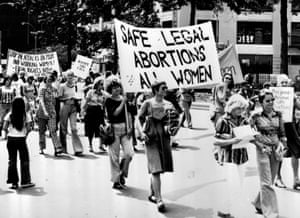
Women protest in New York to demand safe legal abortions for all women.
 Women protest in New York to demand abortion rights for all women. Photograph: Peter Keegan/Getty Images

‘It sucks to have to hide what I do’

Dr Katherine Farris, a self-described former “pro-life, Catholic girl” and family physician in North Carolina, long feared that coming out as an abortion provider could impact not just her own career, but her husband’s, too.

When she first decided to become a provider, after reading The Story of Jane: The Legendary Underground Feminist Abortion Service, written by a former member of the covert collective, she never expected she would have to maintain some of the secrecy under which the Janes operated. But then she moved to a town in “the buckle of the Bible Belt in the south”, she says. “We had a lot of anxiety about the impact it could have on my husband’s job if it became known that I’m a provider.”

She has now lived for 16 years hiding her part-time work as a provider at Planned Parenthood from all but her immediate family and a handful of friends. When people ask what she does, she answers vaguely, saying she works at a “multistate women’s healthcare organization”.

“I truly believe I’m making the world a better place by helping women have bodily autonomy,” she says. “It sucks to have to hide what I do.”

She came out to her closest friends only after knowing them for years. “I’ve been terrified every time I’ve done it,” she says. “But I’ve been met with nothing but love [and] gratitude, actually, for what I do. If I could be confident that that would be everyone’s response, I would be more open.”

When it comes to anti-abortion acquaintances, she says, “it would never occur to them that I might be a provider, because I’m fun and friendly, and they have this idea that providers are demons”.

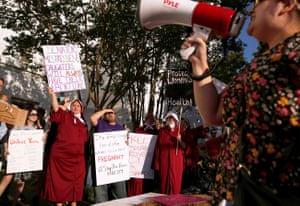
Pro-choice supporters protest in front of the Alabama state house as the state senate votes on the strictest anti-abortion bill in the US.
 Pro-choice supporters protest in front of the Alabama state house as the state senate votes on the strictest anti-abortion bill in the US. Photograph: Christopher Aluka Berry/Reuters

As Roe v Wade hangs in the balance, pro-choice advocates now fear a day when all abortion providers are once again forced underground. In the first five months of 2019, 378 abortion restrictions were introduced across the United States. Nine states have now passed laws to outlaw abortion or forbid it past a certain point in pregnancy.

So many women in the US lack access to reproductive healthcare that secret networks around the country are now emulating the Janes, discreetly training women to provide safe abortions outside of the law and the medical establishment, hoarding misoprostol and building manual vacuum aspirators from mason jars in their bedrooms.

“We can never go back to that,” Farris says. In recent months, she has taken steps to break her silence, getting involved in more advocacy work: along with McHugh, Nimalendran, Marchin, and Bass, she is a 2019 fellow at Physicians for Reproductive Health, a not-for-profit organization offering doctors advocacy training such as the Leadership Training Academy.

“My rage is overcoming my anxiety,” Farris says. “This legislation is going to tear women’s lives apart. I can’t stay silent in the face of it. It feels a bit scary to be open. But it’s been exhausting to keep such an important part of my life a secret. I can’t imagine that what will come in the future will be more exhausting.”

Scared, but proud

Since coming out to friends and family at her Planned Parenthood fundraiser, McHugh has started talking about her work “all the time”, she says.

On the 10th anniversary, in June, of Dr George Tiller’s murder at the hands of an anti-abortion extremist in his church, she tweeted: “Being an #abortion provider can be scary, intimidating, and challenging but it is some of the most fulfilling work I do. This would not be possible if not for the work of the giants before me, like Dr. Tiller. #AbortionIsHealthcare and I am #Proud2Provide.”

After this announcement, many of her local colleagues vowed to stop referring patients to her family medicine practice. Extended family members stopped talking to her and her husband. She was not surprised.

“I’m not going to change their minds and they’re not going to change mine,” she says. “I’m okay with that. It’s their choice. Turns out I’m all about choice.”

Source: https://www.theguardian.com/world/2019/aug/05/doctors-who-provide-abortions-us-choice

Obria focuses on a “couple” — as opposed to a woman as an individual — and “the benefits of commitment and marriage.”

The Trump White House wants to roll back Obama’s birth control mandate and defund Planned Parenthood. But women’s health advocates are bracing for a fight. (Video: Luis Velarde/Photo: Brian Monroe/The Washington Post)

Thousands of California women and teenagers seeking free or discounted reproductive health services through a federal program could find themselves in clinics that focus on abstinence and natural family planning as methods of birth control.

Operated by the California-based Obria Group, the health centers appear to be modeled after faith-based crisis pregnancy centers, designed to persuade women to continue their pregnancies, but with a twist: Obria’s clinics encourage young clients to use online apps, developed with funding from religious conservatives, to “move them away from sexual risks as their only option in life, to an option of self-control.”


Antiabortion advocates gather outside the Planned Parenthood clinic in St. Louis in June. (Jeff Roberson/AP)

Some Obria centers participating in the federal family planning program, known as Title X, also offer “abortion pill reversal,” which involves administering large doses of the hormone progesterone to patients who have taken the first dose of the two-pill medication abortion regimen, according to the group’s site. The procedure, which the American Congress of Obstetricians and Gynecologists says is not supported by scientific research, is not reimbursable under Title X.

Chief executive Kathleen Eaton Bravo is pitching Obria as a “pro-life” alternative to Planned Parenthood — by far the largest recipient of family planning funds under the $287 million program, which offers services to about 4 million low-income women and girls. Planned Parenthood is at risk of losing that funding because of a recent rule change that requires abortions to be delivered in separate places than family-planning services and bars directive counseling that mentions abortion.

Bravo, in an emailed response to questions, said that many women “want the opportunity to visit a professional, comprehensive health care facility — not an abortion clinic — for their health care needs.”

“Obria gives women that choice,” she said.

Political analysts have called the Obria grant a game-changer for the antiabortion movement that may lead to similar clinics being eligible for more types of federal grants, reimbursement from Medicaid and participation in private insurance plans.

The Department of Health and Human Services granted $1.7 million to Obria in fiscal year 2019, with the possibility of renewal for two more years for a total of $5.1 million — part of a larger effort by religious conservatives in the Trump administration to transform women’s health-care services by encouraging alternatives to abortion and hormonal birth control, such as birth control pills, and promoting traditional marriage.

Historically, Title X grants have been used to fund clinics that provide a broad range of family planning options, including condoms, birth control pills and intrauterine devices (IUDs). Although taxpayer funds could not be used for abortion services, the clinics have provided referrals and counseling about continuing a pregnancy as well as terminating one. Crisis pregnancy centers — which have been criticized by mainstream medical groups as deceptive because of their opposition to birth control and abortion — did not apply for funds or were rejected by past administrations.

When the award to Obria was announced in March, women’s rights groups expressed concern. Obria’s application was initiated when Health and Human Services official Valerie Huber, a former abstinence advocate, was in charge of steering the family planning funds, and it was approved by Diane Foley, who previously led crisis pregnancy centers in Colorado. Foley took over from Huber as deputy assistant secretary in the Office of Population Affairs in May 2018.

Few details were available, and Obria officials declined to elaborate to media organizations, but documents obtained by the Campaign for Accountability under the Freedom of Information Act and shared with The Washington Post detail Obria’s vision for the health centers.

The first set of 21 Title X Obria-branded centers, which will include brick-and-mortar operations as well as telemedicine and mobile clinics, are scattered across Los Angeles, Orange, San Diego and Santa Clara counties and serve about 36,000 girls and women over the three years of the grant. They offer reproductive health screenings for sexually transmitted diseases and infections, HIV and cancer, as well as pregnancy testing, ultrasounds and prenatal education and care.

Obria clinics will not offer hormonal birth control or sterilization but will operate in conjunction with more traditional health clinics that do provide such options. Those partners include Share Our Selves (SOS), which provides primary and specialty care in Orange County, and Hurtt Family clinics, which focus on the uninsured and homeless in Southern California. Officials for SOS and Hurtt declined to comment. The setup allows Obria to fulfill a federal checklist of services through referrals to other clinics listed as part of its project.

Alice Huling, an attorney with the Campaign for Accountability, said allowing Obria to participate in the federal family planning program could mislead patients.

“This means women will be going to a clinic to talk about options and not know that they are at a place driven by a very narrow ideological view on birth control and reproductive health,” Huling said.

A review of Obria’s website shows that it promotes services such as “pregnancy decision consultations,” without disclosing its opposition to abortion. The section of the site offering information about abortionmentions the procedure’s side effects and risks, without noting that it is a safe and common procedure.

HHS officials said women who are seeking family planning services can access profiles of each center through the program’s online clinic locator tool. “It will be clear what services are offered at each site,” a spokesperson said.

Obria is made up of 50 clinics, only about half of which are participating in Title X, and its goal is to have more than 200 sites by 2022. It recently rebranded itself as “the fresh new face of comprehensive care.”

Despite not offering forms of hormonal birth control approved by the Food and Drug Administration, Obria’s health-care providers would take part in birth control “discussions” and “emphasize the value of abstinence,” according to Obria’s Title X application to HHS.

“Contraceptive education and counseling, especially for adolescents, will emphasize that avoiding sex is the only 100-percent effective method to prevent pregnancy and STDs,” the company wrote.

“Fertility awareness” is another key part of Obria’s approach. The company wrote that patients would have the option of using a program/app called FEMM to monitor their hormonal cycles to either decrease the risk of pregnancy or achieve it.

FEMM, which the nonprofit says has been downloaded more than 400,000 times in 161 countries, provides a data-driven approach to help women track their period, ovulation, body temperature, medications and other physical or emotional symptoms to find patterns to help avoid or achieve pregnancy. It has been promoted internationally by the Catholic Church’s diplomatic arm, according to a report in the Guardian, and tax filings show it was funded by a charity, the Chiaroscuro Foundation, backed by Sean Fieler, a New York hedge fund manager who opposes abortion.

FEMM chief executive Anna Halpine said in an emailed statement that the company “is committed to informed choice for all women.”

“A growing number of women, in both developed and developing nations, prefer to be the primary agents of their health care choices and actions,” she wrote. “They choose to know and understand how their body works before making their own reproductive health decisions.”

Although many health professionals agree that educating women about their hormonal cycles is a worthy objective, the Centers for Disease Control and Prevention has said this approach, similar to what’s known as the “rhythm method,” is not as effective as other forms of birth control, having a failure rate of 24 percent. It also does not protect against sexually transmitted infections. Another controversial aspect of the app has been its tips and advice, such as its emphasis on the side effects of hormonal birth control.

Throughout its Title X application, Obria emphasizes the importance of a “couple” — as opposed to the needs and desires of the woman as an individual — and “the benefits of commitment and marriage.”

It describes how the clinics would encourage patients to develop a “reproductive life plan” that takes into account “partner relationship and communication, long-term family planning in regard to number of children desired and spacing of children.”

Obria also plans to use another popular program funded by religious conservatives to counsel adolescents about “sexual risk avoidance,” according to its application. Known as Relationship Education and Leadership (REAL) Essentials, it was written by abstinence advocate Joneen Mackenzie, a registered nurse and former Air Force lieutenant in Denver.

Obria described in its Title X application how the REAL curriculum, combined with a telehealth app, could provide real-time coaching for teens: “Obria can have a nurse or health educator right there with them, in any location, and move them away from sexual risks as their only option in life, to an option of self-control.”

The Title X program is in a time of major transition. In February, the Trump administration took aim at Planned Parenthood — which serves about 41 percent of the program’s clients nationwide — when it barred groups that provide abortions or abortion referrals from federal funding. The most controversial of the provisions — called a “gag rule” by critics — prohibits providers from providing “directive” counseling for abortions. Conservative groups, such as the Susan B. Anthony List and the Family Research Council, celebrated the decision. A number of state governors, medical groups and Planned Parenthood took to the courts and sued in cases that are still pending.

HHS officials announced on July 15 that they would start immediately withholding funds from clinics that do not comply with several provisions. A two-page guidance released late Saturday extended that deadline to Sept. 18. Clinics have until March 4 to ensure that operations related to abortion are physically separate from non-abortion services.

Source: https://www.washingtonpost.com/health/2019/07/22/new-federally-funded-clinics-california-emphasize-abstinence-natural-family-planning/?fbclid=IwAR1hsnC9Cu_X6vlNsSyBJkqA8n2sGeUvNsniK8B42gU4NnMmyZjvvHS5VR4&utm_term=.1cc0168ff799

Though CNN’s moderators failed to address reproductive rights during this round of debates, some candidates did bring it up on their own.

Sen. Kamala Harris (D-CA) challenged former Vice President Joe Biden’s shifting positions on the Hyde Amendment’s ban on federal funding for abortion care—a policy that disproportionately harms people of color and those with low incomes.
Scott Olson / Getty Images

Debate moderators failed to ask a single question about reproductive rights, including abortion, during the second round of Democratic presidential debates. The oversight concerned advocates, who say the issue is especially critical in the current political environment.

“Voters need to know what candidates will do to protect their reproductive health care—yet tonight all they got was deafening silence,” said Alexis McGill Johnson, acting president of Planned Parenthood Action Fund, in a statement. “We’re talking about our health, our rights, our futures. We can, and we must, do better.”

“Voters deserve better from these primary debates. Right now, 25 million women in America are one Supreme Court case away from losing the right to access abortion—even though 77 percent of Americans support access to safe, legal abortion,” McGill Johnson said. “The Trump administration has spent the past three years pushing policy after policy to take away access to birth control, to allow discrimination in health care, to block patients from getting care at Planned Parenthood. This is more than a health care issue. It is a matter of economic justice, racial justice, and reproductive freedom.”

“Over the course of two Democratic debates with significant time spent discussing health care, both the moderators and candidates failed to focus on access to abortion and other reproductive health services,” said Andrea Miller, president of the National Institute for Reproductive Health (NIRH) Action Fund, in a statement. “With reproductive freedom under attack and millions of people waking up each day wondering whether they will be able to access essential health services they need, including abortion care, we urge candidates and moderators to address this crisis.”

Though CNN’s moderators didn’t address reproductive rights, some candidates did bring the topic up on their own. Most notably, Sen. Kamala Harris (D-CA) challenged former Vice President Joe Biden’s shifting positions on the Hyde Amendment’s ban on federal funding for abortion care—a policy that disproportionately harms people of color and those with low incomes.

“You made the decision for years to withhold resources to poor women to have access to reproductive health care,” Harris said, referring to the anti-choice restriction. “Do you now say that you have evolved and that you regret that?”

Biden replied that everybody on stage who had served in the U.S. Congress had voted for Hyde Amendment at some point, referencing Democrats—Harris among them—who have voted in favor of including Hyde language in government spending bills in order to pass them with Republican support.

“Once I wrote the legislation making sure that every single woman would in fact have an opportunity to have health care paid for by the federal government, everyone, then that could no longer stand,” said Biden.

As Li Zhou interpreted this statement for Vox, Biden “acknowledged that his health care proposal wouldn’t be able to work if abortions and other reproductive health care were not included in it since it relies on federal money.”

Biden faced scrutiny in June for a series of flip-flops on his position on the Hyde Amendment. Ultimately, Biden announced that he opposed the policy, telling attendees at a Democratic National Committee gala that “if I believe health care is a right, as I do, I can no longer support an amendment that makes that right dependent on someone’s ZIP code,” according to the New York Times. When the former vice president released his health-care platform in July, it included a call to end the restriction.

“This brief exchange underscored the critical importance of hearing from the candidates on how they will defend Roe v. Wade and protect reproductive freedom,” said Ilyse Hogue, president of NARAL Pro-Choice America, in a statement. “It also highlighted the immense pressure all the candidates face from the millions of voters who know that abortion rights are in jeopardy and are demanding real leadership.”

Ronald Newman, national political director for the American Civil Liberties Union (ACLU), lauded the discussion around Hyde that took place on the debate stage Wednesday evening.

“There’s a reason our volunteers have been pushing candidates for months on this issue. For more than four decades, Hyde and other bans on abortion coverage by government insurance programs have pushed abortion care out of reach for low-income people, particularly poor women of color,” Newman told Rewire.News. The ACLU has sought to engage candidates on the issue as part of its Rights For All Campaign. “Abortion is a constitutional right, and access to it shouldn’t depend on where you live or how much money you make. We’re glad to see it receive time on the debate stage last night and plan to ensure it continues to be an issue in this campaign,” Newman said.

Following years of advocacy from women of color, permanently eliminating the Hyde Amendment has gained unprecedented support among Democrats. Democratic presidential candidates have overwhelmingly condemned the ban, and the party included ending the restriction in its official platform in 2016.

Source: https://rewire.news/article/2019/08/01/two-nights-of-debates-zero-questions-about-abortion/