AROOSTOOK COUNTY, Maine — When Calleena Boyce learned her birth control was going to cost $147.75, she didn’t exactly say, out loud, that she couldn’t afford it.

The 18-year-old, tanned from long days working at a local day care, had sat and listened patiently as a nurse practitioner at a small health care clinic in the middle of northern, rural Maine, walked her through her options for birth control.

The nurse practitioner eased Boyce’s fears about IUDs — they can shift, but very rarely do. She warned her that estrogen-heavy contraception would likely magnify Boyce’s migraines. By the end, Boyce decided she wanted a Nexplanon implant, the most effective form of birth control.

There was just one issue: Boyce didn’t have insurance.

The $147.50 was just the down payment — Boyce would have to pay a total of $283.50. And that’s the discounted version. Without the sliding fee scale at the Presque Isle Family Planning clinic, the implant would cost Boyce $1,050.

Boyce could apply for MaineCare, the state’s Medicaid program, but she likely wouldn’t get approved for at least three months. What if, the nurse practitioner suggested, Boyce instead used her second choice of birth control?

“In a perfect world, we’d all abstain from sex, whatever. But that’s not gonna happen.”

A shot of the slightly less-effective Depo-Provera would cost her just $16.20 at the Presque Isle clinic, and it would protect her until she started college near Bangor, Maine, this fall. Once her university gave her coverage, Boyce could go to Bangor Family Planning, a sister clinic of Presque Isle, and get the Nexplanon implanted there.

“I honestly don’t know what I would have done if I couldn’t have come here,” Boyce told VICE News in an interview. “At least with my circle of friends, there’s a lot of lower-income families. This is where we get our free birth control and our free condoms, and stuff like that. The stuff we need. I mean, in a perfect world, we’d all abstain from sex, whatever. But that’s not gonna happen.”

After Boyce left, the nurse practitioner, Christina Theriault, said many of her appointments turn into a conversation about cost. “Here we are again, playing this game of ‘What can you afford?’” she said. “Which is not the way medicine should ever be practiced, but it is.”

It’s about to get harder. In mid-July, the Trump administration announced that providers who receive funding from the federal family planning program known as Title X would no longer be allowed to refer people for abortions. Within a day, Theriault’s employer, Maine Family Planning, became the first Title X grant recipient to announce it would rather withdraw from the program than comply with what it sees as a “gag rule” on providers’ ability to refer for a legal procedure.

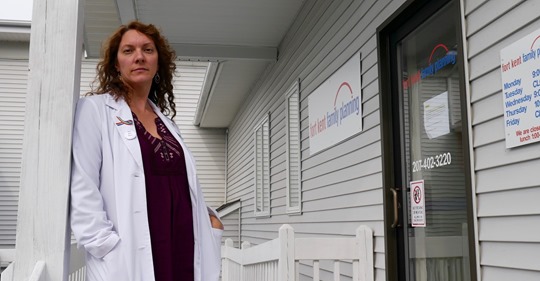
1564502446503-fort-kent-clinic

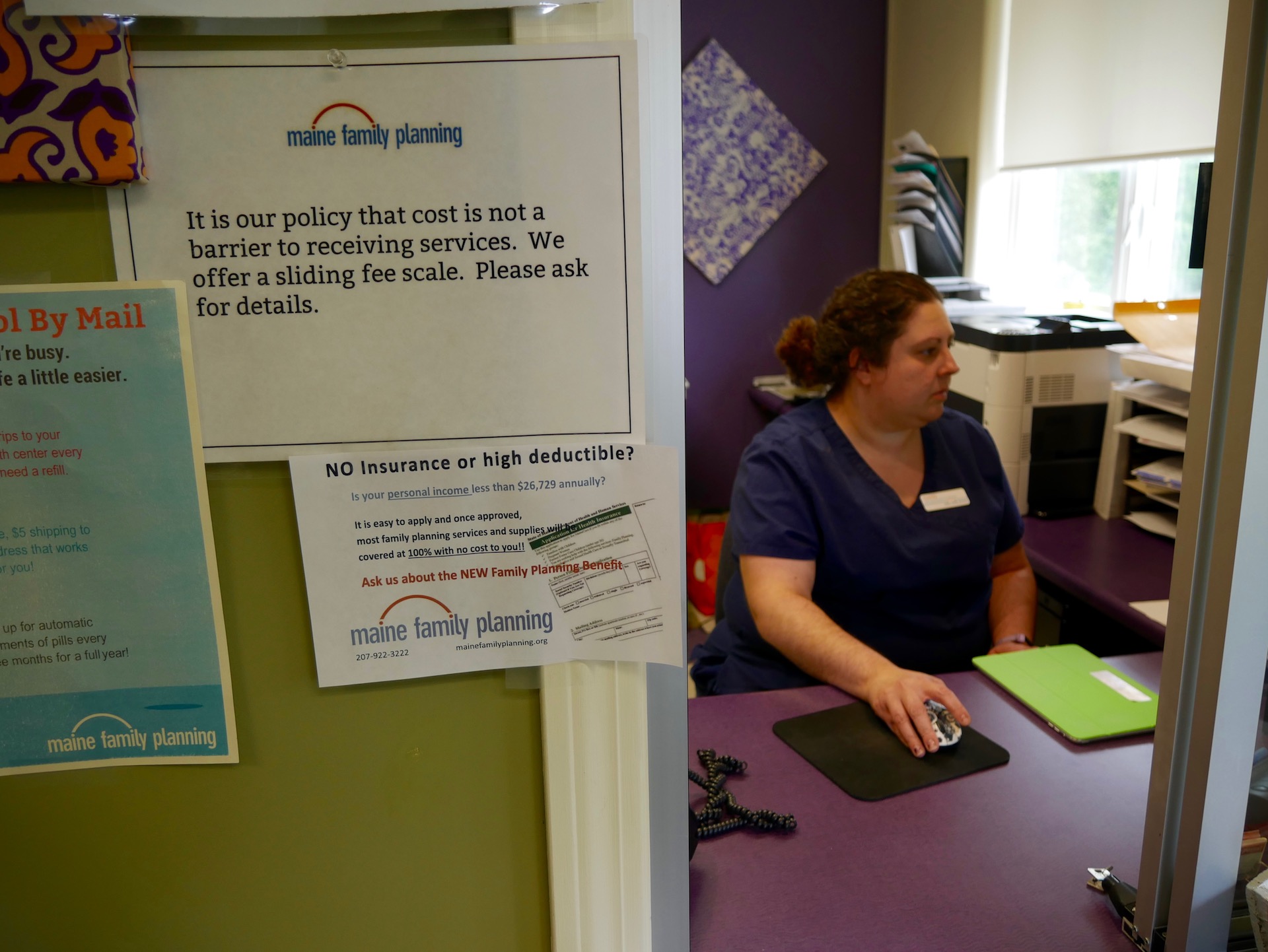
Cassidy handles the front desk at both clinics in Presque Isle and Fort Kent, where she helps patients navigate their insurance (or lack thereof). She asked to be identified by her first name only. (Photo: Carter Sherman/VICE News)

Title X is the only federal program dedicated to funding family planning services, like STI tests, cancer screenings, and birth control, and about 4 million low-income people rely on it each year. Leaving it will mean that Maine Family Planning will lose $1.8 million annually, or roughly 30% of its total funding, which it doles out to 47 clinics across the state serving about 23,000 people.

Providers across the country are now weighing whether to stay and comply with the rule or forfeit millions and risk closing clinics. After Maine Family Planning’s announcement, Illinois Gov. J.B. Pritzker announced that his state would stop taking money from Title X too; the governors of Washington, Oregon, and Hawaii have made similar pledges in the past.

Planned Parenthood, which serves about 40% of all Title X patients nationwide, has also announced that it has stopped using the program’s money. Instead, the massive reproductive rights organization is now relying on limited emergency funds.

If these changes to Title X lead clinics to close, rural communities with few providers will be among the hardest-hit. The people of Aroostook County, where Maine Family Planning operates three clinics, could be forced to drive hours to find cheap family planning services. Or, potentially, they may simply choose to go without.

Evelyn Kieltyka, senior vice president of program services for Maine Family Planning, told VICE News that not taking the money is preferable to the alternative: not being able to tell patients where they can go to end a pregnancy.

“As a provider, it’s unthinkable that you can’t actually give your patient what you want,” she said. “And it’s incredibly safe, legal, available — and yet I can’t tell you where to go. There’s no other health care service where that kind of restriction is placed.”

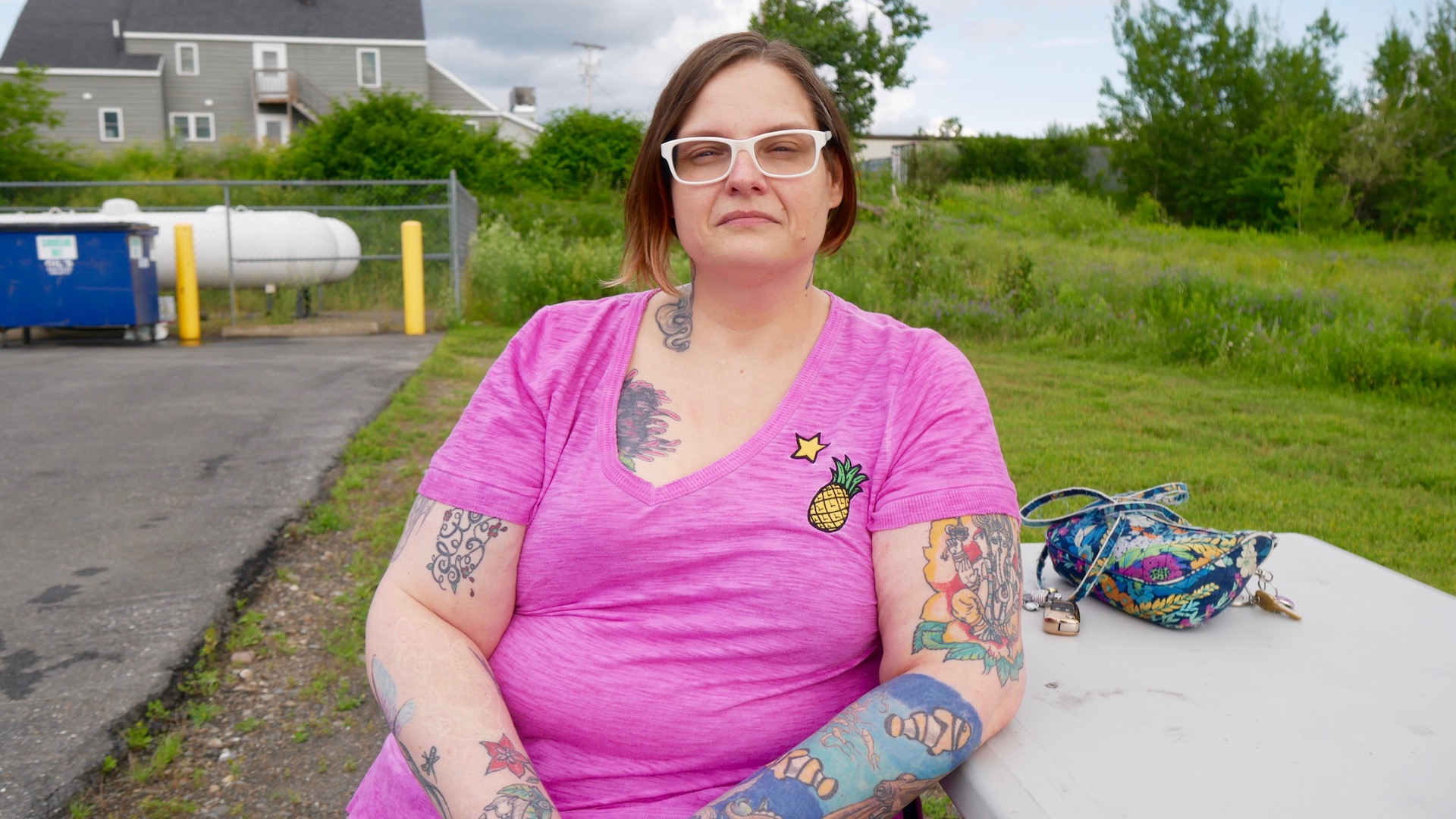
1564502499286-tammy-pelletier

Tammy Pelletier, 44, has gotten birth control from the Presque Isle Planning clinic for years. (Photo: Carter Sherman/VICE News)

Trump officials and anti-abortion advocates say that the changes to Title X are necessary to ensure that no taxpayer money “intermingles” with abortion services or “promotes” abortion. The new rules also stipulate the clinics financially and physically separate any services that involve abortion from those that don’t, though the latter requirement will not go into effect until next year.

“Planned Parenthood and others want to use public Title X funds to support their abortion services in blatant disregard of the fact that Congress explicitly and statutorily excluded abortion from the scope of Title X projects and funding,” Catherine Glenn Foster, president of the powerful anti-abortion group Americans United for Life, said in a statement.

It is already illegal to use federal funding to pay for abortions, except in the case of rape or incest, or when the pregnancy endangers the mother’s life. Many of the almost 4,000 clinics that rely on Title X don’t provide abortions at all.

Proponents of the Title X changes also argue that federally qualified health centers, which receive government funding to care for underserved communities, can step in to fill the void left by Planned Parenthood. But a Kaiser Family Foundation survey found that half of health centers say their staffers could only handle about a 10-24% increase in their patient loads, and clinics that don’t take Title X funding are also less likely to offer a full range of birth control options.

1564502567874-condoms-clinic

Patients at Fort Kent Family Planning can grab some free condoms before they leave. (Photo: Carter Sherman)

To compensate for the end of Title X, Maine Family Planning is trying to raise private donations and find other public funding sources. Deirdre Fulton-McDonough, director of communications for the non-profit, declined to say how long that money may last.

“Our reserves are not yet exhausted,” Fulton-McDonough said in an email. “Suffice to say, this is a short-term solution that we are actively seeking to resolve. For now, however, we are committed to not closing clinics and to preserving the network as it has been.”

The remote towns of Presque Isle and Fort Kent, which lie about an hour apart, both have Maine Family Planning clinics. In addition to providing Nexplanon, IUDs, and other family planning care, the clinics do offer medication abortion, enabled by telemedicine.

Only about 9,000 people live in Presque Isle, and another 4,000 in Fort Kent. (Both Presque Isle and Fort Kent are almost exclusively white, according to census records.) Ask people to describe the towns, and the same words will keep popping up. They’re “old-school.” They’re “traditional.” And they’re certainly “conservative”: Trump won Aroostook County in 2016 with 55% of the vote.

“People don’t talk about birth control, people don’t talk about sex,” said Rebecca, a 23-year-old nursing student who studies at the University of Maine’s Fort Kent campus. She started visiting Maine Family Planning for birth control after having an abortion, and asked to be identified only by her middle name. “It’s kind of stepped back in time.”

The towns’ residents must frequently drive hours to get what much of the rest of the country takes for granted. Hours from the nearest highway, Fort Kent is a two-stoplight town along the border of Canada and the St. John River. Its tallest building is the Catholic church’s gleaming white spire.

While Presque Isle has a mall, it’s a ghost town. On a recent Tuesday morning, a cluster of seniors played bingo in the remains of the food court, while, at the other end of the mall, so many stores had shuttered that management hadn’t even bothered to turn on most of the lights.

1564502628454-kent-clinic

About a tenth of the patients at Presque Isle Family Planning relied on Title X in fiscal year 2019. (Photo: Carter Sherman/VICE News)

About a fifth of the patients who visited Fort Kent’s family planning clinic in fiscal year 2019 relied on Title X to help pay for their care; over that time period, about 10 percent of Presque Isle patients did the same.

“We have a lot of people who do things like hairdressing on the side, or cleaning houses, or working at the mill, or working at gas stations. They don’t make enough to get any coverage, and fall under the poverty level, even with working on the side,” said Theriault, who lives in Fort Kent with her husband and two young sons, but serves as the nurse practitioner at both clinics. “A lot of our patients come to see us and don’t have primary care providers, because they can’t afford it. But they can afford to see us.”

Tammy Pelletier started going to the Presque Isle Family Planning clinic six years ago, after she got divorced, lost her job, and was uninsured for nine months. There, she was able to get a shot of Depo-Provera every three months. Sometimes, she’d pay what she could; other times, she didn’t pay a dime.

“They were the one agency that was willing to help at the time,” said Pelletier, 44. “I had been going to my regular PCP [primary care provider] for all my woman care, but it wasn’t — when I started going to Maine Family Planning, it became a whole new experience for me.”

Even now that she’s employed, Pelletier says she still finds herself living paycheck to paycheck. A Republican, she’s not sure how the Trump administration’s changes to Title X will impact her vote in 2020.

“That doesn’t mean I agree with every decision Donald Trump makes, and this is a terrible one for women. I don’t agree with it at all, and that’s hard for me to say,” she said. Still, the Democrats running for the presidential nomination, Pelletier went on, “have pie-in-the-sky ideas, and I just don’t know if they know what it takes to accomplish that.”

There’s still some uncertainty over what lies ahead for Title X. Scores of states and reproductive health groups have sued over the rule changes to Title X, and a panel of judges on the U.S. Circuit Court of Appeals for the 9th Circuit have agreed to consider their challenge. But the 9th Circuit also ruled to let the administration implement the changes while that litigation plays out in the courts.

While Trump officials have said that the changes are in effect, they’re also giving clinics until September to actually prove that they’re complying with them. As long as providers show they’re making “good-faith efforts” to follow the new rules, they won’t face enforcement consequences.

In the meantime, few of Theriault’s patients know just how imperiled their providers are.

“It’s frustrating that for, much as we’re yelling and screaming and saying, ‘This is what’s going on,’ people aren’t hearing it,” Theriault said. “It’s gonna be most frustrating when it’s too late and we go under. And all of our patients are gonna be affected and all of our patients are gonna be screaming. But then it’ll be too late.”

They overwhelmingly support repealing the Hyde Amendment and codifying Roe v. Wade into law.

People hold signs during a protest against recently passed abortion ban bills at the Georgia State Capitol building, on May 21, 2019, in Atlanta, Georgia. Elijah Nouvelage/Getty Images

With near-total bans on abortion passing in state after state — and others responding by loosening restrictions on the procedure — the right to terminate a pregnancy is emerging as a major election issue in 2020.

When CNN pollsters asked Iowa Democratic voters earlier this month what issues were must-haves in a presidential candidate, support for abortion rights came out on top, with 79 percent of in-person caucus-goers listing it as crucial. And on Saturday, voters got to hear 20 of the 24 Democratic presidential candidates speak on abortion and broader issues of reproductive justice, including sex education and contraceptive access, at a forum convened by Planned Parenthood.

Earlier this year, many candidates condemned the restrictive anti-abortion laws passing in Alabama and elsewhere, but fewer put forth specific policies for defending reproductive rights. Sens. Kirsten Gillibrand, Kamala Harris, Elizabeth Warren, and Cory Booker stood out from the field by issuing detailed plans for safeguarding abortion access.

Since then, more candidates have made policy statements, like expressing support for the Women’s Health Protection Act, which would enshrine in federal statute the right to an abortion guaranteed by Roe v. Wade. But Vox wanted to take a holistic look at the abortion rights policies of all 24 candidates in the race. So we asked all of them what their positions were on abortion rights and access, and what policies they’d support to make this a reality.

While not every candidate responded to Vox’s direct inquiry, all 24 have discussed their position on abortion rights in some capacity in the past. For the candidates who did not respond to our request, we examined statements they’ve made in interviews, town halls, and reports in other publications including BuzzFeedThinkProgress and HuffPost.

Some of the candidates offered Vox more details than others about how they’d protect reproductive rights. Booker, for example, said he would create a White House Office of Reproductive Freedom, while Harris said she’d require states that have passed laws that violate Roe in recent years to obtain DOJ approval for any abortion-related laws they’d like to implement down the line.

But what stands out at this point in the Democratic primary campaign — and was highlighted at the Planned Parenthood forum on Saturday — is the extent to which the candidates have converged around a series of policies on abortion that would have seemed remarkably progressive just five years ago, especially when it comes to the Hyde Amendment, which bans federal funding for most abortions. As the Republican Party has backed increasingly restrictive laws, the Democratic Party has responded by moving toward increasing and multilayered support for abortion rights.

“What’s going on in this country right now is not just an attack on women,” Warren said at the Planned Parenthood forum on Saturday. “It’s an attack on women who have fewer resources. It’s a class attack on women. It’s a race attack.”

Her words encapsulated what has, at this point, become a shared position among virtually the entire Democratic field: that abortion should be not just legal but affordable and accessible for all Americans.

Many Democrats have converged on a set of policies to protect abortion rights and access

In our survey, a few commonalities quickly emerged. Many of the candidates we heard from support the following policies:

  • Repealing the Hyde Amendment. The ban on federal funding for abortions bars Medicaid from covering the procedure, putting it out of reach for many low-income Americans. The president doesn’t have the power to repeal Hyde; that authority rests with Congress. But presidential pressure to repeal Hyde still matters, and since Hyde was often treated as politically untouchable before 2016, the fact that so many Democratic candidates now back its repeal is a sign of the times.
  • Codifying Roe v. Wade in statute. In May, Sens. Gillibrand, Warren, and others put forth plans calling on Congress to make the right to abortion established in Roe v. Wade a part of federal law, so that it would stand even if Roe is overturned. Such a law could be challenged in court in the event of a repeal of Roe, but candidates see it as an important bulwark against the loss of reproductive rights. Like a repeal of Hyde, this is something only Congress could accomplish.
  • Repealing the domestic and global gag rules. Like every Republican president since Reagan, President Trump reinstated the global gag rule, which bars organizations abroad that take American aid from providing or discussing abortion (Trump expanded this ruleto apply to a larger pool of money than in previous administrations). He then went further by imposing a domestic gag rule, barring organizations in the United States that receive federal family planning funds under Title X from providing or referring patients for the procedure. Unlike repealing Hyde or codifying Roe, this is something a president could do without help from Congress. It’s also a reminder that the Trump administration has taken a number of actions to restrict both abortion and contraceptive access; the next president would have the power to roll any of these back.
  • Roe litmus test for federal judges, including Supreme Court justices. Several candidates (though not all) have said they would only appoint judges who support Roe v. Wade to the federal court system. Trump made the opposite promise in 2016 and has made good on it by appointing Justices Neil Gorsuch and Brett Kavanaugh to the Supreme Court, as well as judges seen as anti-abortion to lower federal courts; it’s largely because of his appointments that Roe is at risk today. It’s unclear how many opportunities the next president will have to make a Supreme Court appointment, but lower federal judges also hold great influence over the interpretation of abortion law. And, like repealing the gag rules, this is an action the president can take (though judges do require congressional approval).

Given how similar the candidates’ response are overall, we spoke with NARAL, an advocacy group that’s fought for stronger protections for abortion rights, about how to best differentiate them.

The key thing to look out for, according to NARAL vice president of communications Adrienne Kimmell, is more specifics. Since repealing Hyde and codifying Roe have become baseline positions, candidates who are able to offer more details in their proposals suggest that they’ve engaged with the issue further.

“Voters should look for candidates who step up with concrete plans to protect access to care and guarantee reproductive freedom for every American,” she says. “We’re heartened to see that candidates like Elizabeth Warren, Kamala Harris, Cory Booker, and Kirsten Gillibrand are already leading the way by announcing specific plans laying out how they would defend reproductive freedom.”

Some of the Democratic candidates support abortion rights policies beyond the commonly shared positions on Hyde and Roe as well. It’s also important to note that while we chose to focus on abortion for the purpose of this survey, many advocates see that right as part of a larger spectrum of issues, including maternal health (the subject of another survey to be published soon) and equal access to health care for people of all races and genders.

Here’s where the candidates stand on abortion based on responses they shared — and other public statements

Sen. Amy Klobuchar (D-MN)

“I believe in Roe v. Wade,” the senator said at a Fox News town hall in May. “Of course, there are limits there in the third trimester that are very important,” she added. “But I think overall, what we want to do is make sure women have the right to make their own decisions.”

In an interview with Fox News later that month, she said, “If the Supreme Court overturns Roe v. Wade I would make sure that we are codifying Roe v. Wade into law.” She has also co-sponsored legislation to repeal the Hyde Amendment.

At the Planned Parenthood forum, she added that if elected, she would repeal the domestic and global gag rules. She also mentioned the importance of “making sure that we have judges that follow the law of the land” when it comes to Roe v. Wade.

Andrew Yang

The entrepreneur supports codifying Roerepealing Hyde, and providing “safe and affordable abortion services” to all Americans. “I have the feeling that if men became pregnant instead of women, there would be absolutely no restriction on reproductive rights,” he said in a statement on his campaign website.

At the Planned Parenthood forum, Yang also said that his plan to give all Americans a universal basic income of $1,000 a month would help low-income people afford abortion care.

Sen. Bernie Sanders (I-VT)

“Bernie believes that abortion is a constitutional right for all women,” said Sarah Ford, deputy communications director for the Sanders campaign.

The senator supports a Roe litmus test for judges, and his Medicare-for-all plan would make abortion free to all patients, effectively making the Hyde Amendment moot. “Abortion rights are part of what Medicare-for-all is,” he said at the Planned Parenthood forum.

Sanders is also a co-sponsor of the Women’s Health Protection Act, which would codify Roe in federal statute.

Beto O’Rourke

The former Congress member from Texas has released a reproductive rights plan that includes repealing Hyde and guaranteeing private insurance coverage for abortion, codifying Roe in statute, and “appointing judges who respect Roe v. Wade as the settled law of the land.” He also promises, if elected, to reverse the Trump administration’s domestic gag rule. And he says he would direct the Food and Drug Administration to remove “labeling regulations that impose barriers to the use of medication-based abortions.”

“Beto would mobilize the full force of the federal government to protect women’s reproductive rights and access to abortion,” a spokesperson for the campaign told Vox. “Throughout Beto’s career, he has fought to protect women’s access to health care and their right to make their own decisions about their bodies, dating back to his first run for Congress where he took on a Democratic primary opponent who opposed federal funding for Planned Parenthood.”

New York City Mayor Bill de Blasio

The mayor has supported repealing Hyde. He’s previously called out former Vice President Joe Biden for his prior position backing Hyde. “If you don’t support repeal, you shouldn’t be the Democratic nominee,” de Blasio tweeted.

New York City has also been at the forefront of expanding abortion rights during de Blasio’s tenure. Most recently, it became the first city in the country to directly fund abortions.

Sen. Cory Booker (D-NJ)

The senator released a reproductive rights plan on May 22, amid the passage of state-level abortion bans around the country. In it, he pledges to work to repeal Hyde and codify Roe in statute, as well as to nominate judges who are supportive of Roe.

In addition, he promises to take a number of executive actions to protect reproductive rights, including ending the domestic and global gag rules, reversing the Trump administration’s guidelines prioritizing abstinence-based programs for federal teen pregnancy prevention funding, and undoing the administration’s rules allowing health care providers to refuse to perform abortions on the basis of their “conscience” or religion.

If elected, the senator says he would also create a White House Office of Reproductive Freedom, “charged with coordinating and affirmatively advancing abortion rights and access to reproductive health care across my administration  —  addressing all barriers to full reproductive autonomy, such as access to health care, including maternal and infant health, quality, affordable child care, and comprehensive paid family leave.”

At the Planned Parenthood forum, Booker called on men to stand up for reproductive rights. “This is not a woman’s issue,” he said. “Don’t tell me just because you have a wife or a mother or a daughter, that that’s how you relate to this. You have a body.”

Sen. Elizabeth Warren (D-MA)

Warren was among the first candidates to put forth a detailed reproductive rights plan. The plan, released May 17, calls for codifying Roe in statute, repealing Hyde and the domestic gag rule, and guaranteeing private insurance coverage for abortion.

“We must build a future that protects the right of all women to have children, the right of all women to not have children, and the right to bring children up in a safe and healthy environment,” Warren wrote in announcing her plan.

Rep. Eric Swalwell (D-CA)

Swalwell is an original co-sponsor of the EACH Woman Act, which would repeal Hyde. He is also a co-sponsor of the Women’s Health Protection Act and of legislation to repeal the global gag rule. As president, he would support codifying Roe in statute, according to his campaign.

“We will defend Roe v. Wade and a woman’s right to choose at all costs,” Swalwell said in a statement to Vox. “As president, I’ll work with Congress to protect women’s control of their own bodies without government interference and ensure women in every state retain access to abortion care. But I also want to encourage America’s young men to stand up and link arms with women in this fight — we need to be vocal, active allies in defending freedom.”

“I will be a president who negotiates up on this issue rather than down,” he promised at the Planned Parenthood forum.

Washington Gov. Jay Inslee

Inslee supports repealing Hyde and codifying Roe in statute, his campaign said. As governor, he signed Washington state’s Reproductive Parity Act, which guarantees public and private insurance coverage for abortion, and he would support similar legislation as president. He would also repeal both domestic and global gag rules; the attorney general of Washington state was one of several to sue the Trump administration to block the domestic rule.

Joe Biden

After stating in early June that he supports Hyde, Biden changed course and says he now believes the amendment should be repealed. At the Planned Parenthood forum, he said that he had changed positions on Hyde because his health care plan would need to include coverage of abortion.

“I laid out a health care plan that’s going to provide federally funded health care for all women and women who now are denied even Medicare in their home states,” he said. “It became really clear to me that although the Hyde Amendment was designed to try to split the difference here, to make sure women still had access, you can’t have access if everyone’s covered by a federal policy. That’s why at the same time I announced that policy, I announced that I could no longer continue to abide by the Hyde Amendment.”

The former vice president also supports codifying Roe in statute and repealing the global gag rule, according to his campaign. A practicing Catholic, Biden has said he is personally opposed to abortion. But, he said at a vice presidential debate in 2012, “I just refuse to impose that on others.”

John Delaney

Delaney supports repealing the Hyde Amendment, according to his campaign. His universal health care plan, BetterCare, would cover reproductive health care, including abortions.

John Hickenlooper

The former Colorado governor supports repealing Hyde and increasing and protecting Title X family planning funding. “Governor Hickenlooper always has been a strong advocate of a woman’s right to choose,” a spokesperson for his campaign said. “He believes that all decisions should be made between a woman, her faith, and her doctor.”

Julián Castro

The former housing and urban development secretary has committed to nominating judges and Cabinet members who are “pro-choice.” Additionally, he backs repealing Hyde and codifying Roe v. Wade. “All women should have access to reproductive care, regardless of their income or the state they live in,” he previously tweeted.

Sen. Kamala Harris (D-CA)

Harris is among the Democrats who’s offered a more detailed plan on abortion rights that seeks to curb state laws attempting to infringe on them. Under Harris’s proposal, which is modeled after the Voting Rights Act, states whose abortion-related laws have recently been struck down by courts for violating Roe would have to obtain federal approval from the Justice Department before they’re able to implement any new abortion laws.

“As president, I will stop dangerous state laws restricting reproductive rights before they go into effect,” Harris said in a statement. She also backs undoing Hyde, making Roe v. Wade law, and appointing judges that support abortion rights.

At the Planned Parenthood forum, Harris pledged “to do the work on the defense, and to fight, but also work on the offense” when it comes to abortion rights.

Sen. Kirsten Gillibrand (D-NY)

Gillibrand has made gender equity and reproductive rights a central piece of her campaign and is considered a leader on the issue. She was the first 2020 Democrat to commit to appointing judges that support Roe, and in the wake of state laws restricting abortion access laid out a wide-ranging plan to protect abortion rights.

In addition to repealing Hyde and codifying Roe, Gillibrand supports undoing the gag rule the Trump administration has imposed. She would also establish a new funding stream in order to ensure that every state has a reproductive health center.

“We must come together to declare, loud and clear, that reproductive rights are human rights. They are civil rights. And they are nonnegotiable,” she wrote in a Medium post.

Marianne Williamson

The author and spiritual adviser, who has described herself as “one hundred percent pro-choice,” backs codifying Roe and repealing the Hyde Amendment.

“I believe the decision of whether or not to have an abortion lies solely with the pregnant woman, according to the dictates of her conscience and in communion with the God of her understanding,” she notes on her campaign website. “I do not feel the government has an appropriate right to deny or restrict that decision.”

Sen. Michael Bennet (D-CO)

Bennet supports “enshrining Roe v. Wade into federal statute, preempting states that try to interfere with women’s health rights, repealing the Hyde Amendment, and standing up against other efforts to undermine access to necessary care,” according to a campaign spokesperson.

“Women’s reproductive rights are under assault all over the United States. Women’s health care is under assault all over the United States,” he said during a CNN town hall earlier this year. Bennet has also said he would only appoint judges that back Roe.

Mike Gravel

Former Alaska Sen. Gravel, a candidate who’s notably in the race in order to prompt debate, has an expansive and unique abortion rights agenda. Gravel’s landmark provision would tie an individual’s ability to become a specialized physician with a commitment to providing abortions.

“Our signature point on abortion access is mandating the ability and willingness to provide an abortion as a condition of obstetrician licensing,” according to a campaign spokesperson. “In addition, we support a constitutional amendment guaranteeing a right to an abortion, as well as lawmaking through the People’s legislature, a fourth branch of government that Mike Gravel supports setting up that would allow direct lawmaking by the American people.”

Gravel also backs repealing Hyde and codifying Roe into law.

South Bend, Indiana, Mayor Pete Buttigieg

Buttigieg supports repealing Hyde, codifying Roe into law, and appointing judicial nominees who would support Roe. “The mayor is pro-choice and trusts women to make their own health care decisions. He also recognizes the harm in having men legislate women’s bodies,” said a campaign spokesperson.

Buttigieg has previously called for more men to speak out about abortion. “I think it’s particularly important from a political stance for men to stand up,” he said during a campaign event earlier this year, according to HuffPost.

Rep. Seth Moulton (D-MA)

Moulton backs the repeal of the Hyde Amendment and enshrining Roe in federal law. He’s said undoing Hyde ensures that all women have the funding they need for health care and compared it to the funding the military needs.

“It’s sort of like saying, you know, I support the troops but don’t want to pay them,” Moulton said of Hyde in a CNN interview. “That’s the analogy here, and I think it’s wrong.”

Moulton has also said he will exclusively appoint judges that support Roe and added that he backs Harris’s proposal to require DOJ review of certain state laws.

Montana Gov. Steve Bullock

Bullock supports ending Hyde, codifying Roe, and strengthening Title X funding, which provides money for family planning and preventive health care clinics (though the domestic gag rule currently restricts it to institutions that do not provide abortions).

“As governor, Bullock has stopped every single effort to restrict reproductive health care, and made Title X funding permanent so it would no longer be a political football,” a campaign spokesperson said.

“It’s not what I think, it’s what does an individual woman need to do with her body and with her health care,” Bullock recently told CNN.

Rep. Tim Ryan (D-OH)

Ryan supports codifying Roe and repealing Hyde. He had previously expressed opposition to abortion rights but explained in a 2015 editorial why he’s changed his position.

“I came in as a Catholic school kid from northeast Ohio who didn’t think a whole lot about the issue and went into Congress pro-life,” Ryan told BuzzFeed. “My opinion changed that there should not be anyone from the federal government between a woman and her doctor.”

Rep. Tulsi Gabbard (D-HI)

Gabbard is supportive of abortion rights, according to a campaign spokesperson, and would back using federal money to provide abortions. Gabbard has previously been anti-abortion but has since changed her position.

Miramar, Florida, Mayor Wayne Messam

Messam supports codifying Roe and using federal money to provide abortion services. He emphasized, in an interview with WBUR, that he sees Roe as “settled law.”

“I think when a woman is faced with a tough decision to abort a pregnancy, it’s tough enough by itself to have to make such a personal decision — a tough decision to make — and currently right now in our country this issue has been demagogued, and I think that primarily us men are making the decisions in the laws,” he said.

Source: https://www.vox.com/2019/6/22/18693279/abortion-rights-2020-democrats-hyde-amendment-roe?fbclid=IwAR03ZJDAgyE-dJ5hHyUhClrhIOUxNSV3MNbomtf2D7_f2F5BiGiMWvqNGAc

With health care under fire across the U.S., it can be difficult to parse the negative feelings you’re having about the potential revocation of your bodily autonomy. I’ve picked out 15 nonfiction books about reproductive rights you should be reading right now, because conservatives are inching closer to overturning Roe v. Wade everyday.

Last week, the Trump administration pushed through a plan to revoke Title X family planning program funding from clinics that perform or refer patients for abortions. Title X funding helps to ensure that poor and low-income people with vaginas have access to otherwise expensive birth control, STI screenings, and examinations. In its nearly 50-year-long history, Title X has never funded abortion procedures, but now clinics and other providers can be prevented from providing many other types of life-saving care if they mention abortion as an option to pregnant people.

It’s unclear whether the new Title X regulations make exceptions for rape, incest, or other extenuating circumstances that are typically exempt from abortion restrictions. Although the Department of Health and Human Services (HHS) says it “[r]equires referrals for those conditions deemed medically necessary,” the portion of the document that focuses on victims of “child abuse, child molestation, sexual abuse, rape, incest, intimate partner violence, and trafficking” makes no mention of pregnancy termination at all.

It’s clear that these new regulations aren’t taking the health care needs of poor and low-income people with vaginas into account. Additionally, because 75 percent of patients at organizations receiving Title X funding in 2017 were people of color, there is an added layer of racism to the Trump administration’s new policy. And because 59 percent of people who receive abortions in the U.S. are parents already, the new restrictions on Title X funding put children’s well-being at risk. So much for being “pro-family,” amirite?

Several organizations have already taken legal action against what Planned Parenthood Federation of America V.P. of Government Relations & Public Policy Jacqueline Ayers called the “unethical and dangerous” requirement that “health care providers to withhold important information from patients,” but no one can be sure of whether or not their efforts will succeed. Additionally, because of legal challenges against the unconstitutional abortion restrictions and bans that have cropped up around the country over the last two years, Roe v. Wade, the 1973 Supreme Court case that secured our right to abortion care, could soon be overturned.

In short, there’s no better, more important time to read these nonfiction books about your reproductive rights.

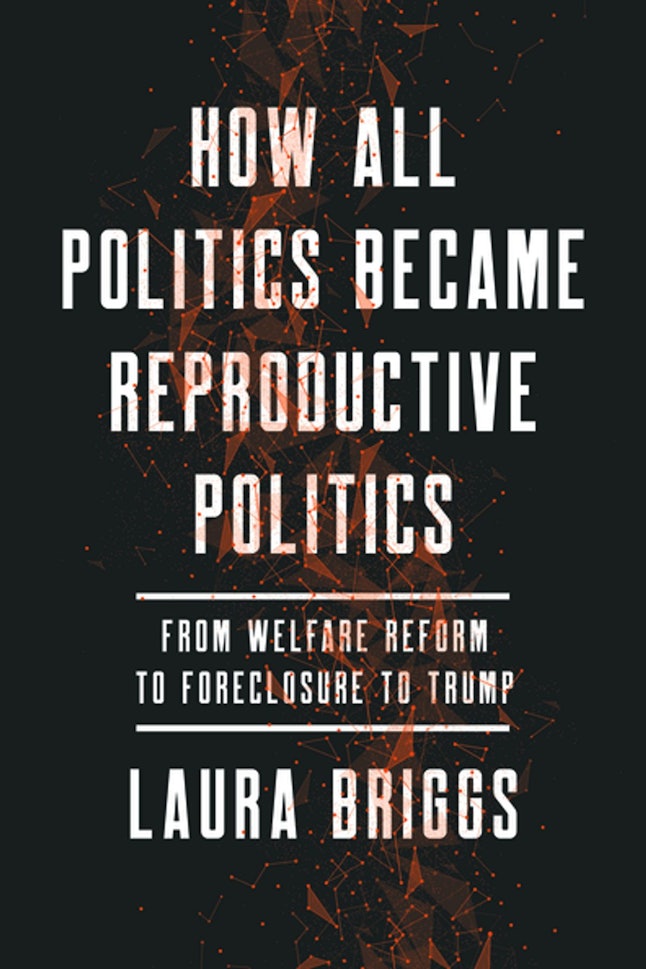
‘How All Politics Became Reproductive Politics: From Welfare Reform to Foreclosure to Trump’ by Laura Briggs

In How All Politics Became Reproductive Politics, Laura Briggs traces the correlation between racist political jabs at families of color and what publisher’s copy calls “the government and business disinvestment in families.” As rising costs of living leave the federal minimum wage behind, pushing more and more families below the poverty line, Briggs argues that every political decision made today impacts reproductive justice.

‘Generation Roe: Inside the Future of the Pro-Choice Movement’ by Sarah Erdreich

Published at the start of President Barack Obama’s second term in office, Sarah Erdreich’s Generation Roe envisions the new challenges that reproductive rights advocates must face in order to push abortion out from the shadows of social taboo, exposing it for the common, life-saving reality it is.

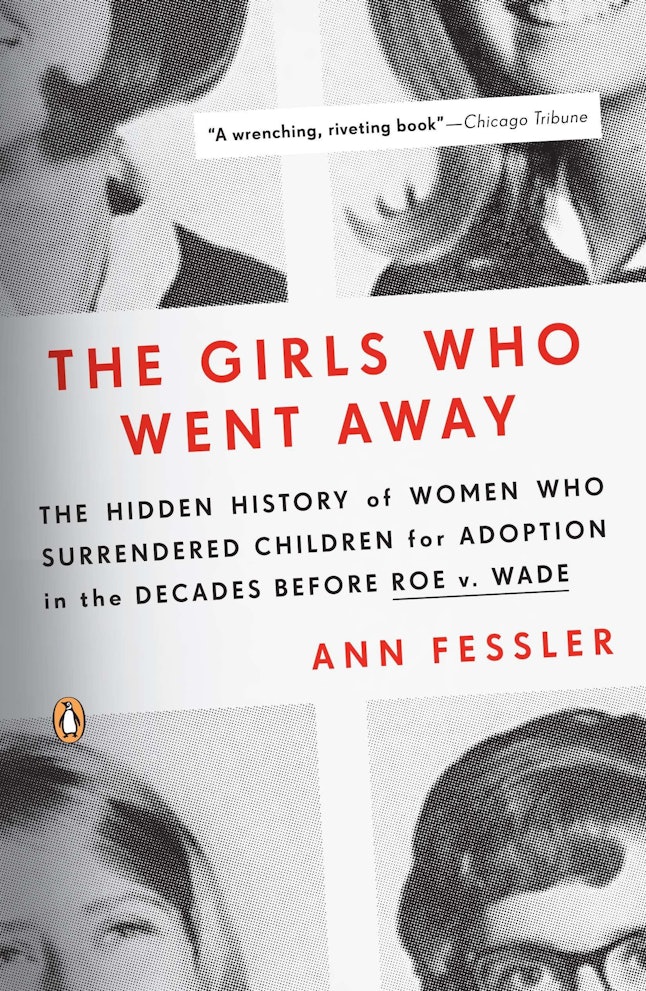
‘The Girls Who Went Away: The Hidden History of Women Who Surrendered Children for Adoption in the Decades Before Roe V. Wade’ by Ann Fessler

Written by a woman who was adopted from her teenage mother in the mid-20th century, The Girls Who Went Away offers an eye-opening look at the tragedies suffered by unwed parents in the decades before Roe v. Wade. Ann Fessler’s book is not an easy read, but it is a necessary one, if you want to fully understand what a return to “family values” means for the U.S.

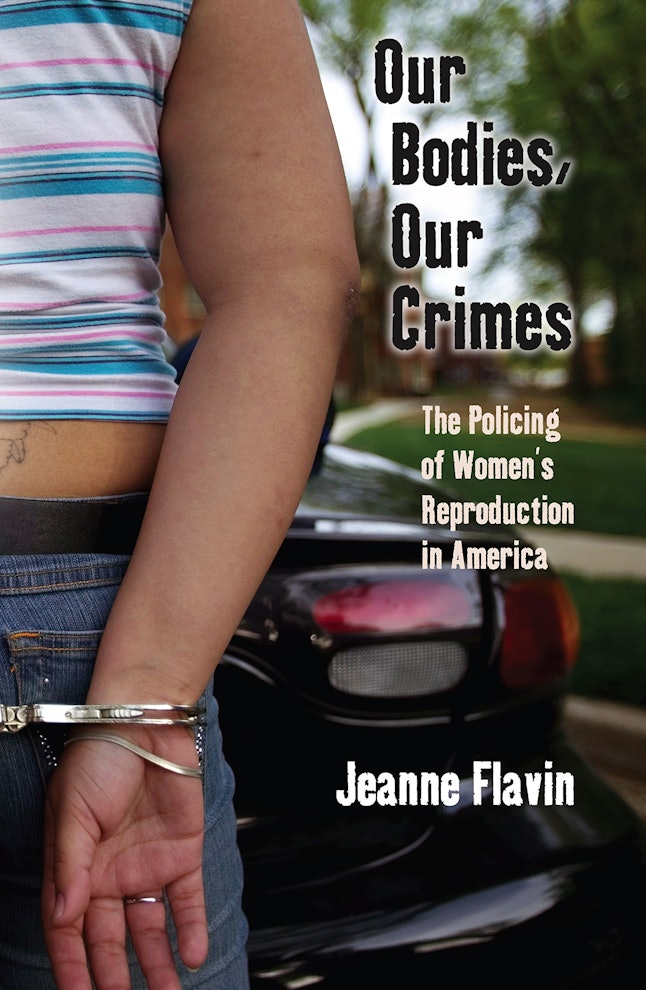
‘Our Bodies, Our Crimes: The Policing of Women’s Reproduction in America’ by Jeanne Flavin

Written by Fordham University Associate Professor of Sociology and Anthropology Jeanne Flavin, Our Bodies Our Crimes examines the myriad ways in which people of color are punished for having children — and rewarded for not reproducing. The right to be pregnant and the right to not be pregnant are of equal importance, and this book is a fantastic and depressing primer on an often-overlooked aspect of reproductive justice.

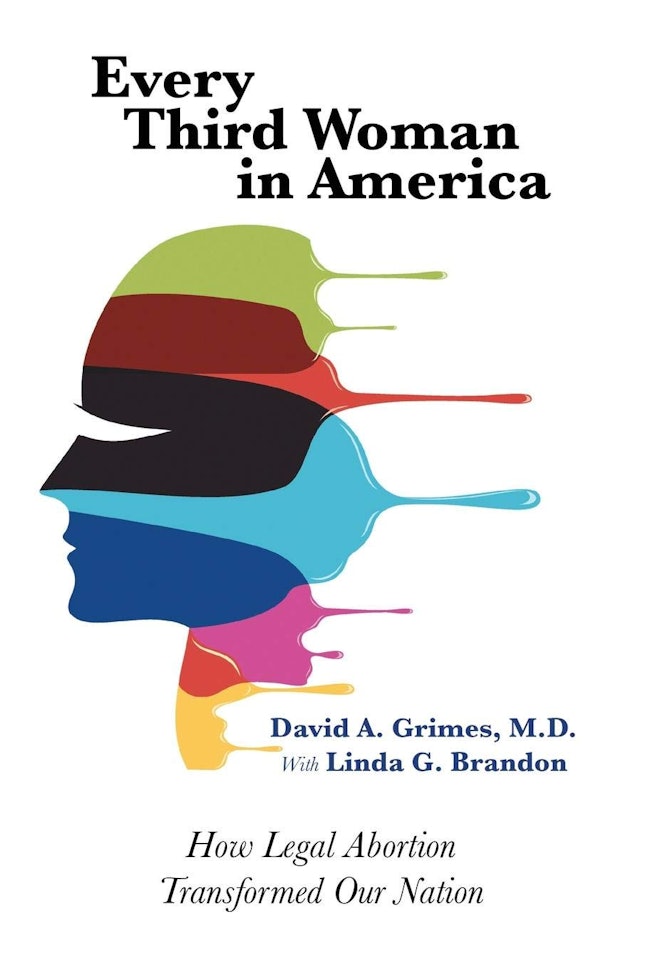
‘Every Third Woman in America: How Legal Abortion Transformed Our Nation’ by David A. Grimes and Linda G. Brandon

Written by abortion-performing doctor and former Chief of the Abortion Surveillance Branch at the Centers for Disease Control and Prevention, Every Third Woman in America examines the social history of abortion, including how the U.S. changed in the wake of Roe v. Wade, and what those of us who have grown up in a world of legal abortion should know.

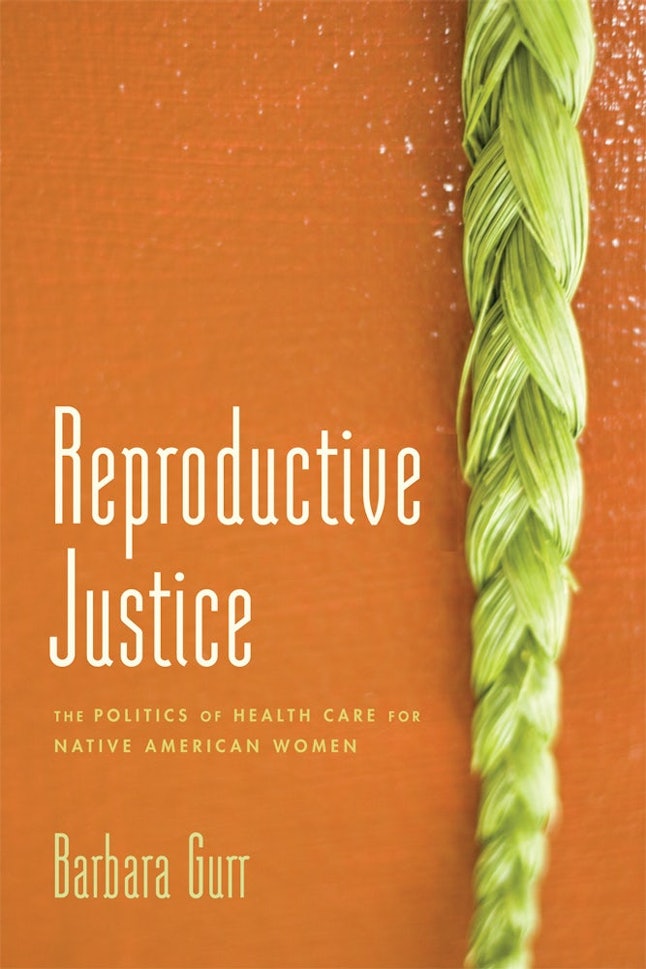
‘Reproductive Justice: The Politics of Health Care for Native American Women’ by Barbara Gurr

Focusing on the Pine Ridge Reservation in South Dakota, Barbara Gurr’s Reproductive Justice takes readers inside Native American women’s struggle to access adequate reproductive care, including prenatal treatment, through the Indian Health Service.

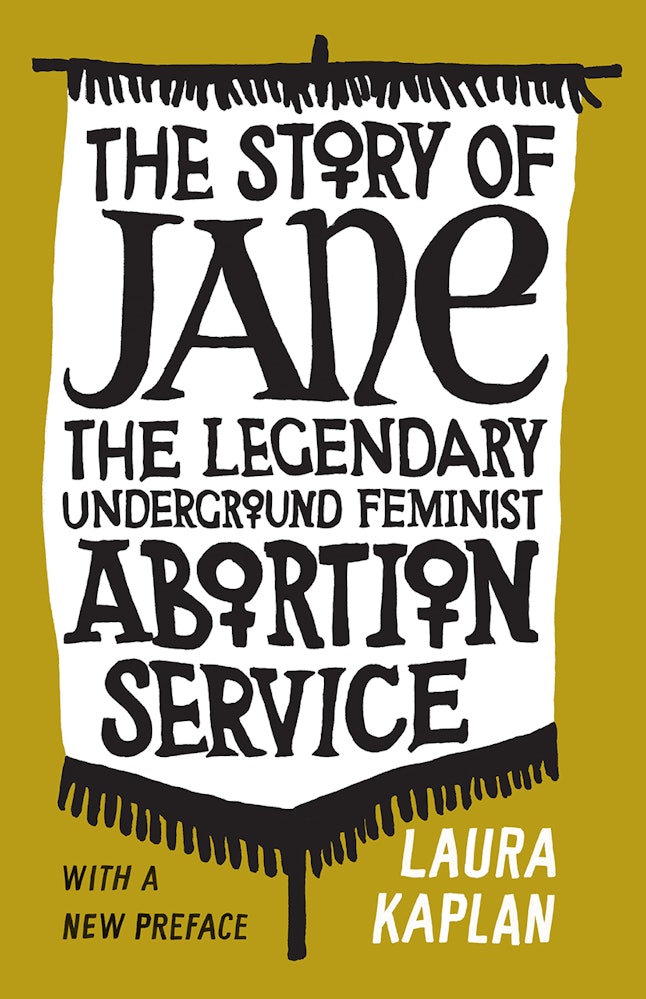
‘The Story of Jane: The Legendary Underground Feminist Abortion Service’ by Laura Kaplan

In operation for years before Roe v. Wade, the Jane Collective was an underground network of people who conspired to secure safe abortion and low-cost health screenings for thousands of pregnant individuals in Chicago, accepting $100 or whatever women could pay. Laura Kaplan tells all about Jane’s inspiring history in this fantastic book.

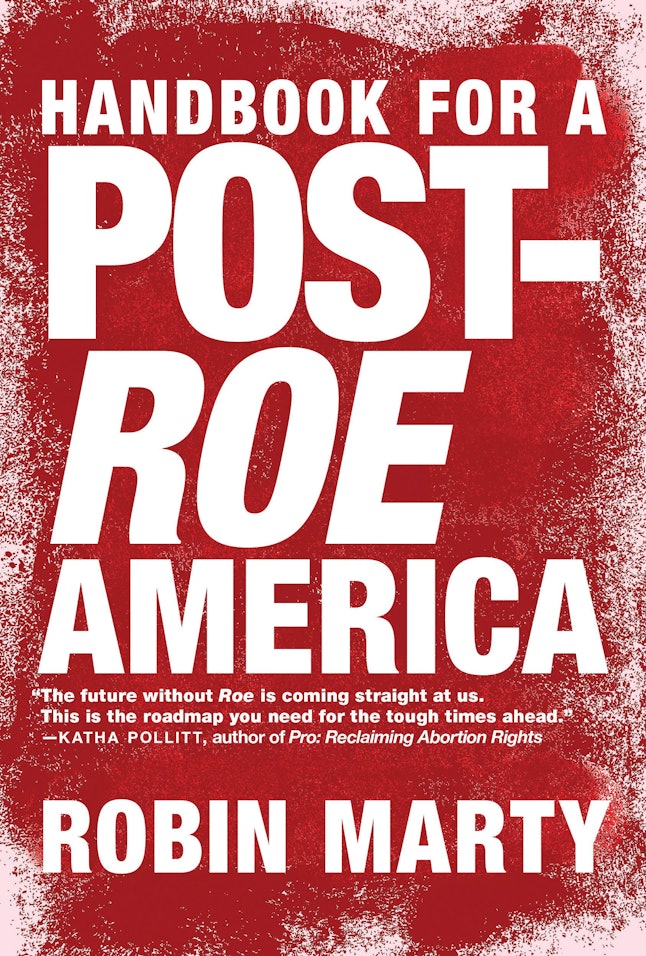
‘Handbook for a Post-Roe America’ by Robin Marty

Robin Marty’s Handbook for a Post-Roe America is a necessary primer on organizing, fundraising, and avoiding legal trouble when and if you must break an unconstitutional law.

‘How the Pro-Choice Movement Saved America: Sex, Virtue, and the Way We Live Now’ by Cristina Page

If you’re on the fence about abortion’s impact on and importance to the well-being of this country, look no further than Cristina Page’s How the Pro-Choice Movement Saved America. This handy microhistory, written during the second Bush administration, exposes how increased family planning choices have improved the quality of life for millions of people across the U.S.

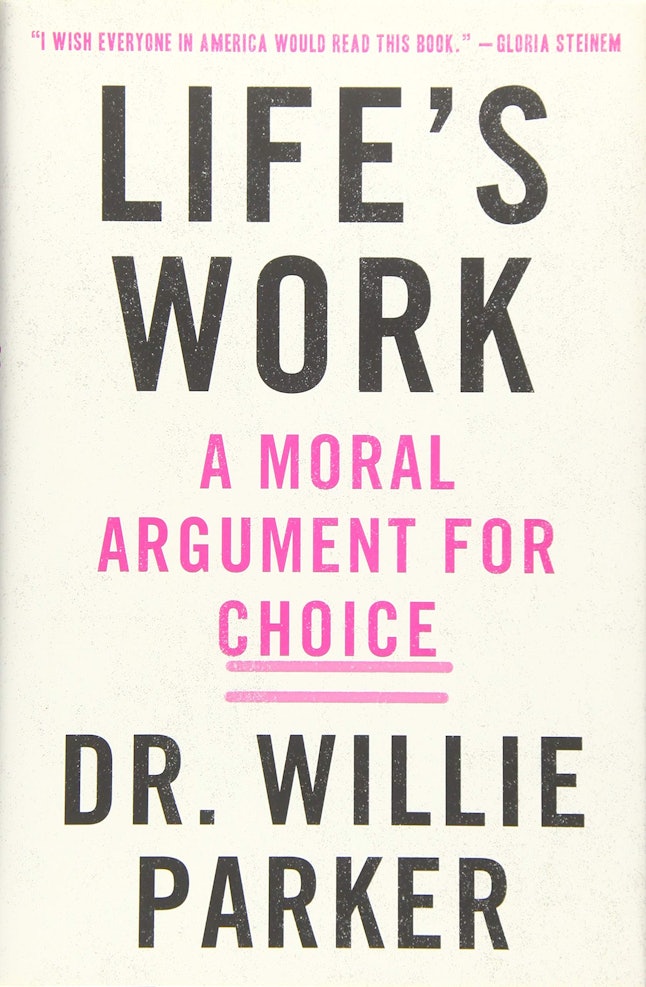
‘Life’s Work: A Moral Argument for Choice’ by Dr. Willie Parker

Believe it or not, in the years before Roe v. Wade, many religious leaders and activists took it upon themselves to help people secure safe abortions. In Life’s Work, Christian abortion provider Willie Parker lays out a religious and moral defense of abortion and reproductive freedom.

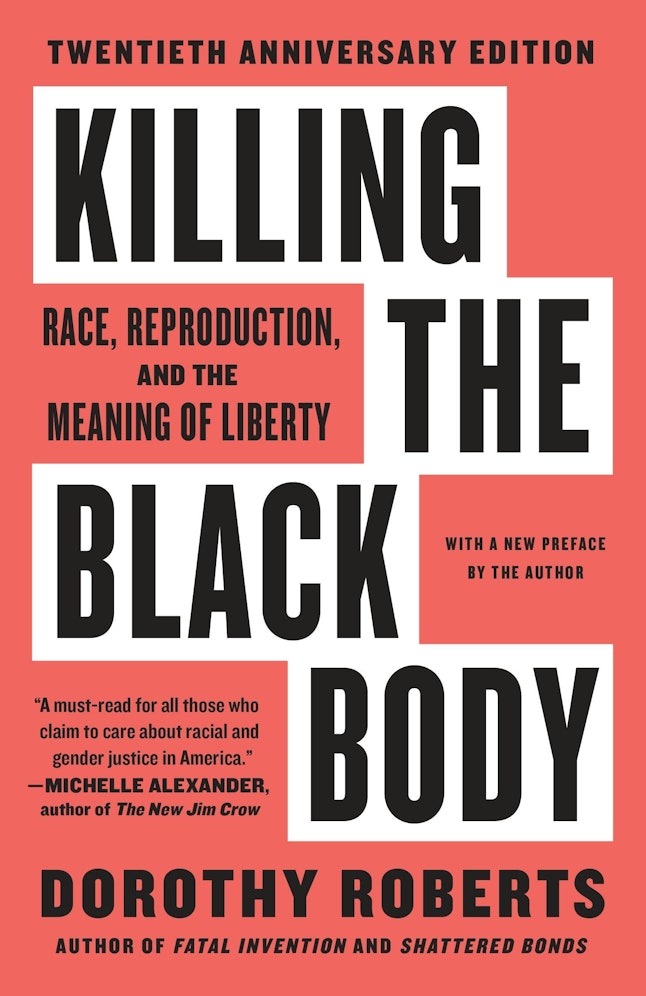
‘Killing the Black Body: Race, Reproduction, and the Meaning of Liberty’ by Dorothy Roberts

A black feminist anthem and a rallying cry to civil rights activists who have gone soft, Dorothy Roberts’ Killing the Black Body exposes how recent legislation has restricted the reproductive rights of black people, particularly those who live in poverty. No discussion of reproductive or racial justice is complete without this book.

‘Undivided Rights: Women of Color Organizing for Reproductive Justice’ by Jael Silliman, Marlene Gerber Fried, Loretta J. Ross, and Elena R. Gutiérrez

One of the criticisms lobbied at the Jane Collective was the overwhelming whiteness of its staff, who served a largely black clientele. In Undivided Rights, authors Jael Silliman, Marlene Gerber Fried, Loretta J. Ross, and Elena R. Gutiérrez unearth the history of women of color’s reproductive organization and activism, through archival research and interviews.

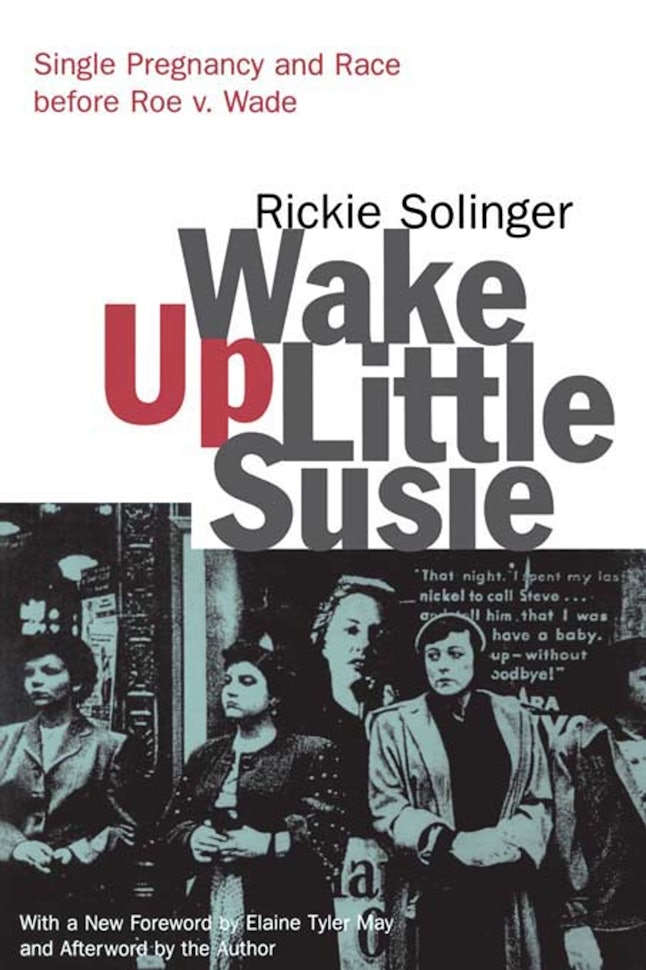
‘Wake Up Little Susie: Single Pregnancy and Race Before Roe v. Wade’ by Rickie Solinger

Focusing on the two decades that followed World War II, Rickie Solinger’s Wake Up Little Susie dissects the double standard that emerged toward unwed pregnancy in the postwar period. White parents gave up children for adoption, which was not available to black parents, and this disparity was used — and continues to be used today — to argue against black families’ worth and self-direction in the U.S.

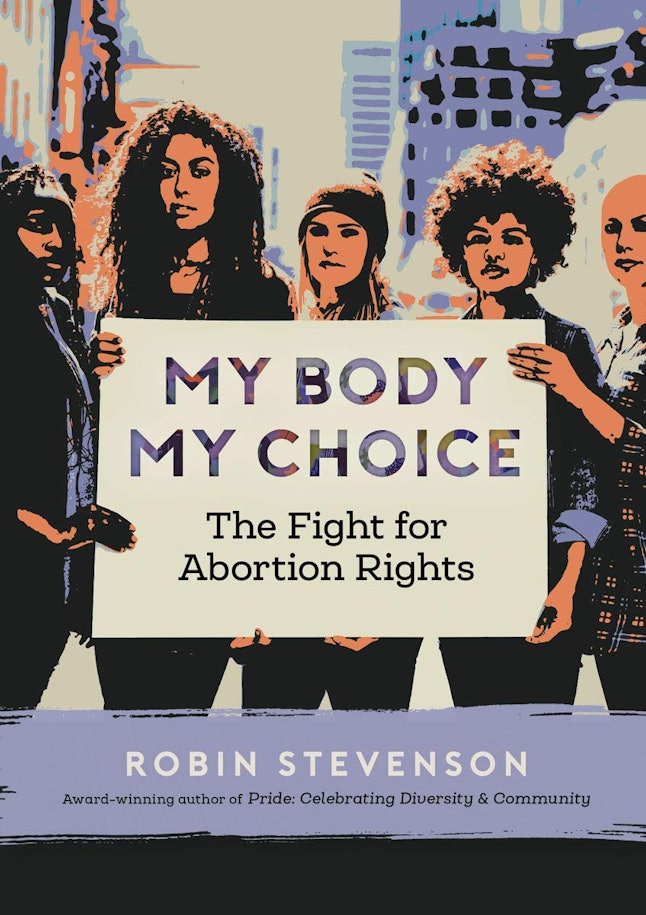
‘My Body My Choice: The Fight for Abortion Rights’ by Robin Stevenson

Clocking in at just over 200 pages, My Body My Choice is a quick-and-dirty primer on the facts surrounding abortion in the U.S. For people who are new to reproductive activism, this is an excellent place to begin reading.

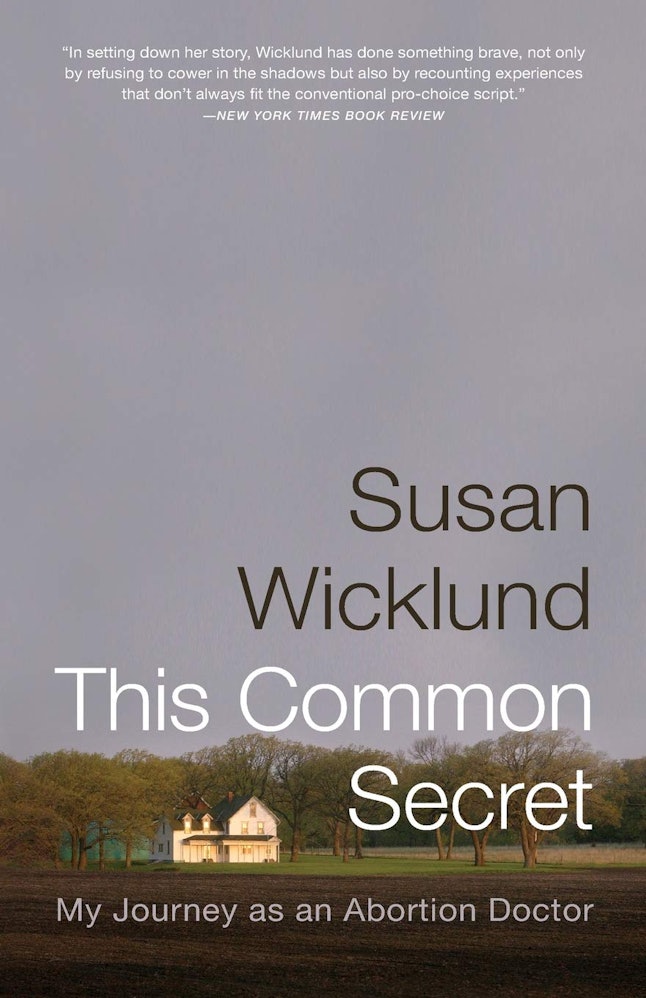
‘This Common Secret: My Journey as an Abortion Doctor’ by Susan Wicklund and Alan Kesselheim

Written by an doctor compelled to wear a bulletproof vest and carry a gun for protection, This Common Secret combines Susan Wicklund’s 20 years of experience in abortion clinics with patient testimonies, giving readers a fascinating and important look beyond the protesters and behind the closed doors of American clinics.

Source: https://www.bustle.com/p/15-nonfiction-books-about-reproductive-rights-you-should-be-reading-right-now-18222303

The decision blocks three anti-abortion measures, including a ban on abortions at 18 weeks, from taking effect in Arkansas. But with Trump’s takeover of the federal courts, will the win last?

It is all but certain that Arkansas will appeal Wednesday’s decision to the conservative Eighth Circuit Court of Appeals. The Eighth Circuit has previously refused to reverse rulings blocking unconstitutional pre-viability abortion bans, including an early twelve-week ban from Arkansas. If all goes as it should, if the rule of law continues to matter, the Eighth Circuit will do so again here.
Shutterstock

A federal district court in Arkansas on Wednesday temporarily blocked three anti-choice restrictions from taking effect, declaring unconstitutional a proposed ban on abortions at 18 weeks of pregnancy, a ban on abortion based on a patient’s reason for seeking care, and a law prohibiting qualified physicians from providing abortions.

The decision is clearly good news. The restrictions were slated to go into effect on Wednesday absent of the order and would have severely limited abortion access in Arkansas, where it is already hanging by a thread. The restrictions would have unquestionably affected low-income patients the most in a state with some of the worst health outcomes based on income disparity in the country. And Wednesday’s order keeps the number of federal courts that have upheld a pre-viability abortion ban like Arkansas’ 18-week ban at zero. In this climate, where the attacks on reproductive health care and the rule of law are daily and relentless, the 159-page opinion blocking the restrictions is something to celebrate.

But. There is almost always a “but” when it comes to abortion rights cases, and this time the “but” involves arguments made by attorneys for the State of Arkansas. They argued that the clinics and providers did not have legal standing to challenge the restrictions. My colleague Imani Gandy wrote a great explainer on legal standing, so I won’t get into the details of how it works other than to say there is a long line of precedent that recognizes the legal standing of abortion clinics and providers to challenge abortion restrictions on behalf of patients.

Thankfully the court rejected these attacks on the standing entirely. And—here’s where that “but” I said matters—as of July 11, President Donald Trump has made 128 appointments to the federal bench, placing him third among presidents since Teddy Rosevelt in the total number of judicial appointments. He leads all presidents in appellate court appointments and is fifth in district court appointments. And he’s not even finished with his first term in office.

Those numbers are the stuff of nightmares for abortion rights advocates because, like his promise to “ban Muslims” or “build a wall”—both of which the president has delivered on thanks in part to the federal courts—Trump campaigned on a promise to appoint judges that would overturn Roe v Wade. He said on the campaign trail that there should be “some kind of punishment” for people who terminate pregnancies, and there’s no reason to doubt the over 100 mostly white conservative men he’s appointed to the federal bench agree with him.

Which is why I worry it is only a matter of time before a federal court accepts arguments like the ones made in Arkansas. Arguments that doctors cannot challenge abortion restrictions on behalf of patients because “‘[w]hen a state enacts regulations to protect the health and safety of abortion patients and to promote dignity and respect for the unborn child, the interests of physicians and patients diverge.’” According to attorneys for the State of Arkansas, when lawmakers pass restrictions to promote the “dignity of the unborn,” it creates a conflict of interest between providers and patients, which makes it impossible for providers to adequately represent those patients’ interests in court when challenging restrictions like the 18-week ban.

As the court on Wednesday rightly noted in rejecting that claim “[t]his argument could be made with respect to any abortion regulation that purports to advance a valid state interest.” And indeed it could, which is why attorneys for the State of Arkansas raised it. If they can get a federal court to bite on limiting who can challenge abortion restrictions, they increase the odds that even blatantly unconstitutional abortion restrictions go unchallenged.

A decision limiting, or removing entirely, the ability of providers and clinics to raise such claims on behalf of current and future patients would have devastating effects on the ability to enforce the constitutional rights of vulnerable patients. The burden would fall on patients seeking an abortion to also seek a court order challenging whatever unconstitutional restriction lawmakers cooked up to try and block that abortion from happening. That places the burden of seeking a lawsuit, both financial and otherwise, on those least able to carry it. So it’s easy to see why anti-choice activists are so eager to attack standing in these cases and how it would be devastating should they succeed.

The arguments made by the State of Arkansas are dangerously appealing to federal judges already opposed to abortion rights. They are framed to appeal both to their inherent dislike of “abortionists” by suggesting a conflict between a patient’s interests and a provider’s interests that does not exist, and to their desire—unspoken or not—to create some kind of punishment for patients who want or need to terminate a pregnancy.

And what better punishment could there be—while abortion is still legal at any rate—than forcing vulnerable people to plead for their reproductive autonomy before a privileged, likely white and male, federal judge.

It is all but certain that Arkansas will appeal Wednesday’s decision to the conservative Eighth Circuit Court of Appeals. The Eighth Circuit has previously refused to reverse rulings blocking unconstitutional pre-viability abortion bans, including an early 12-week ban from Arkansas. If all goes as it should, if the rule of law continues to matter, the Eighth Circuit will do so again here.

But with the Trump takeover of the federal judiciary nearly complete it is increasingly likely these cases will not turn out as they should.

Source: https://rewire.news/article/2019/07/24/a-win-and-a-warning-for-abortion-rights-in-arkansas/

I was stunned to discover that abortions, strictly speaking, are still not legal in Germany

‘Under paragraph 219a of the penal code in Germany, gynaecologists who publish details of their methods may be prosecuted.’ Activists in Berlin protest against German abortion law in January. Photograph: Michele Tantussi/Getty Images

hen I was 30, in 2011, I had an abortion. I was living in Berlin, a city known, since the fall of the Wall, for championing freedom. Or at least it was until attention turned to my womb. Born in France in the 1980s, and brought up on the internet, the Erasmus European studies programme and love without borders, I was under the happy illusion that everything relating to women’s bodies – from abortion to assisted reproduction – was covered by rights secured after long, hard struggles.

I blithely assumed that the milestones on the road to liberating French women – the May 1968 uprising, the 1971 “Manifesto of the 343” signed by women admitting to having had an abortion, Simone Veil, the health minister who legalised abortion, and the first test-tube babies – were all sufficiently European to be taken for granted, whatever the language.

I was stunned to discover that ever since the Third Reich, Germany has been very concerned about the fate of its foetuses. Abortions, strictly speaking, are still not legal. Under paragraph 219a of the penal code, abortion is no longer a criminal offence, but gynaecologists who publish details of their methods may be prosecuted. German courts treat any form of information on abortion as “illegal publicity”.

Fortunately no one assaulted me with knitting needles, nor was I thrown into prison. But I was subjected to a bureaucratic obstacle course. I was quizzed by medics and social workers, then made to wait for a long time; I was issued with an official permit, which was duly rubber-stamped, and then made to wait again. Finally, I was given the details of a “certified” doctor.

The experience led to my rebirth as a feminist. Somewhere along the way I began to wonder how – in the 21st century and after more than 60 years of European integration – legislation on women’s bodies could be so different from one European Union member state to the next.

As a journalist I’d focused my work for many years on women, from Warsaw to Nicosia, and their desire (or not) to have children. Having a remarkable range of choices and almost complete freedom seemed emblematic of women of my generation. I had observed eastern Europe’s absurd patchwork of reproductive rights and the geographical manoeuvres it entailed. I’d talked to women in Poland who had travelled to Germany to abort, Germans over 40 going to Greece for one last try at in vitro fertilisation, down-at-heel Ukrainians acting as surrogate mothers for same-sex couples in the west, and Czech donors selling their egg cells to their less fertile sisters in France.

I had investigated abortion tourism, IVF trips and huge legal discrepancies, rooted in religious, moral or family values. Poland, for instance, has a ban on abortion, but is much the most liberal country for assisted reproductive technology: in the field of frozen embryo implants almost anything is possible, with state funding to boot.

Embryologist
Pinterest
 ‘Poland has a ban on abortion, but in the field of frozen embryo implants almost anything is possible, with state funding to boot.’ Photograph: Ivan Couronne/AFP/Getty Images

In what is supposedly a union, I saw women subjected to frontiers, national restrictions, and blame-laden or increasingly retrograde language. Did the passport-free Schengen area not apply to our wombs? Despite having built a single market, a single currency, shared institutions and a common capital, Europe offered no universal rule for women’s bodies.

Friends in Paris travelled to Brussels to have their eggs frozen. Others, single or gay, had to make several trips to Spain. One woman I know had to have an abortion in the Netherlands because she was over the 12-week German limit. Surely for gender equality to have any real meaning it must start with that?

It has often crossed my mind that if men had to abort, special drive-thru clinics and morning-after-pill vending machines would have sprung up all over our cities. There would be legal provision for all comers, no one forced to undergo abortion at sea in order to escape national restrictions, no court battles. It would all be above-board and freely accessible, with the benefit of EU-wide health insurance. How can the EU’s 28 member states agree on edible snails or shower heads, yet remain silent on the reproductive rights of half the population of the continent? Every year Europe issues hundreds of directives and legislative packages, but I’ve never heard of any plans to harmonise EU legislation on abortion.

Now that I have a little girl I dream of European integration advancing in leaps and bounds, rather than stumbling. I wish the EU would take risks and be a pioneer for women’s rights. I refuse to applaud the fact that the gender pay gap is “only” 16.2%, that parental leave for both parents has been extended by 10 days, that violence against women has been outlawed. Much more is needed. Only societies that enjoy greater freedom can make up for increasingly tame political ideals, for a stagnant economy and for a historical miracle (the EU) in danger of turning out to be a mirage.

If nation states can pool their currency or borders, then surely reproductive rights should be child’s play. It’s time to deliver a women’s Europe, even if it requires forceps. Christine Lagarde and Ursula von der Leyen, we eagerly await your next move.

Source: https://www.theguardian.com/commentisfree/2019/jul/24/europe-abortion-laws-germany?fbclid=IwAR0L_5bKuvaDJTtW0k9lRSEgVWtu6jv9rE-OhlvQzG0u3wwgzR5WBmt4B9M

Depending on the outcome of a court decision this week, Arkansas could become the seventh state in the country to have only one abortion clinic. Women in the state could also lose access to any abortions after 10 weeks into their pregnancy.

On Monday, Judge Kristine Baker, appointed by President Obama in 2012, heard challenges to three of Arkansas’ recently-passed anti-abortion bills. If the laws are allowed to be implemented, it would force the closure of the state’s last surgical abortion clinic, Little Rock Family Planning Services. Planned Parenthood Little Rock would be the state’s last remaining abortion clinic, but would only be authorized to provide medical abortions, a method used up until 10 weeks into a woman’s pregnancy.

If Judge Baker doesn’t block the legislation from going into effect, the new laws will begin on Wednesday.

Arkansas’ anti-abortion laws in question are among the more than 300 pieces of legislation introduced this year that regulate and restrict access to abortion, the most in any single legislative session since the 1973 Roe v. Wade decision, according to the Guttmacher Institute, a pro-abortion rights research organization. In six states, lawmakers have successfully passed “heartbeat” bans, laws that prohibit abortions after a fetal heartbeat is detected, which typically happens five or six weeks into a woman’s pregnancy. Critics of the new laws say that’s before most women know they’re pregnant.

Alabama’s lawmakers went a step further, passing a total ban on abortions in the state.

The new state laws have not taken effect, and all but Missouri’s face court challenges.

This legislative session, Arkansas lawmakers passed 12 anti-abortion bills, three of which are being challenged in this week’s lawsuit. The state’s “Cherish Act” bans the procedure after 18 weeks into a woman’s pregnancy and its “Down Syndrome Discrimination by Abortion Prohibition Act” makes it a felony offense for physicians to perform an abortion if they believe the woman is seeking the procedure because fetal Down Syndrome was detected.

However, Senate Bill 448 could have the most impact on abortion access. The law, which was never given a name, requires that “a person shall not perform or induce an abortion unless that person is a physician licensed to practice medicine in the state of Arkansas and is board certified or board-eligible in obstetrics and gynecology,” according to the bill’s language.

As of Monday, Arkansas only had two functioning abortion clinics, both in Little Rock: Planned Parenthood and Family Planning Services. If SB448 is allowed to be implemented, Family Planning Services, the only clinic the provides surgical abortions in the state, would be forced to close because the clinic’s one provider “isn’t OB/GYN board-eligible or certified,” said Elizabeth Nash, a senior states issue manager at Guttmacher. While Planned Parenthood has physicians who would meet the requirements of the new law, the clinic only provides medical abortions and can’t accommodate additional patients, according to Nash.

Emails to Planned Parenthood and Family Planning Services were not immediately returned.

If Judge Baker does not block the laws from implementation, Arkansas will become the seventh state with only one abortion clinic, joining Kentucky, Mississippi, Missouri, North Dakota, South Dakota and West Virginia. According to the American Civil Liberties Union, the state had eight abortion facilities in 1992. The number dropped to four by 2014.

Earlier this month, Arkansas went down to two providers when Planned Parenthood Fayetteville announced that it would be closing its doors due to “increasing problems with our landlord,” Planned Parenthood Great Plains Chief Executive Officer Brandon Hill said in a statement. In a court filing, Hill wrote that Planned Parenthood had contacted dozens of properties, but had been unable to find a willing landlord.

Source: https://www.cbsnews.com/news/abortion-in-arkansas-arkansas-could-become-seventh-state-with-one-abortion-clinic-this-week-2019-07-22/

In 2016, candidate Donald Trump said that determining whether abortion is legal should “go back to the individual states.”

Today, states are indeed setting the terms. While hundreds of laws restricting abortion have passed in the states since Roe, creating significant barriers for many, particularly low-income women, women of color, young women and women living in rural communities, this year, a shocking number of states from Alabama to Ohio have acted with exceptional vigor, passing near-total bans in rapid succession.

But the actions of politicians racing to inspire a challenge to Roe v. Wade have not gone unanswered. Following, and in expectation of, the new anti-abortion restrictions, many states have moved with renewed resolve to protect abortion rights, building on the groundwork advocates and legislators have been laying for years. Their actions brim with an urgency that is on the rise across the country, as voters come face-to-face with the reality that, with a conservative majority on the Supreme Court, abortion access as we know it could truly disappear.

Recent polling shows that in no state do a majority of people want to ban abortion in all circumstances. Yet that is essentially what a handful of states pushed through. The result? An invigoration of the political will to ensure that abortion rights remain a reality that has set the country on a new trajectory as we head into the 2020 election.

This reaction mirrors what the National Institute for Reproductive Health (NIRH) has observed in focus groups across the country. When we asked voters if they would take action to improve abortion access, they often gave lukewarm responses — presuming that access is secure even in states with severe abortion restrictions. But when participants learned of the hundreds of restrictions that states have passed to try to push abortion out of reach – scripts that providers must read containing inaccurate information, waiting periods, medically unnecessary ultrasounds, politically motivated regulatory schemes that shuttered clinics and more – people grew enraged at these attacks on abortion access. Once the threat is revealed, action soon follows.

The momentum is unprecedented.

A number of blue states passed laws to protect abortion rights in the 1990s, but since then most have relied on federal law – after all, Roe ensures that abortion is still legal in all 50 statesIn the first six months of 2019, however, states have enacted 94 bills designed to protect and expand access to not just abortion but to the full range of reproductive care, including contraception, maternal health and sexuality education – a nearly 30 percent increase in proactive legislation from this timeframe last year, according to NIRH’sGaining Ground: 2019 Midyear Report. And specifically related to abortion, eight states enacted eleven laws to protect abortion rights and expand access to this care.

New York’s Reproductive Health Act (RHA), passed in January, removed abortion from the state’s criminal code and now treats the procedure as health care, and it enshrines the same protections guaranteed by Roe. Since then, Illinois and Rhode Island have followed suit with similar legislation, as has Vermont, which passed an even more expansive law, and is led by a Republican governor. Nevada passed a law to ensure women cannot be prosecuted for ending a pregnancy, and Maine passed legislation requiring the state’s Medicaid program to cover abortions, demonstrating another way for states to increase access. And although it did not pass a law, New Mexico moved further than it ever has toward repealing its pre-Roe criminal abortion ban, setting the stage for future action.

The renewed threat has created pushback even in states that have been noteworthy for their legislature’s antipathy toward reproductive freedom. In Wisconsin, four anti-abortion bills were passed, but newly elected Governor Tony Evers promptly vetoed the dangerous legislation, following in the footsteps of North Carolina Governor Roy Cooper who also recently vetoed an anti-abortion bill saying it was “unnecessary interference between doctors and their patients” and would have criminalized healthcare providers for a “practice that simply does not exist.”

Recent abortion bans have brought to the fore the fact that abortion rights and access to reproductive health care is a fundamental part of the fabric of our society. And, nationwide, it’s clear: with the exception of a small minority of extremists, people across the country want that fabric to remain intact.

Source: https://time.com/5624770/abortion-rights-states-nirh-report/?fbclid=IwAR2PUM_d_De0Z4XhwRXq7Xkg0r_29PysgobbcoORvIFg4jFOtbPKmAkpO4s

A lawsuit claims two anti-choice North Dakota laws violate doctors’ constitutional rights by forcing them to “convey false information and non-medical statements” to patients.

The plaintiffs say such laws harm patients and jeopardize the patient-physician relationship. The lawsuit says these two laws violate the constitutional rights of doctors by forcing them to “convey false information and non-medical statements” to patients.
Shutterstock

A law passed by North Dakota Republicans requiring physicians to misinform their patients about medication abortion being “reversible” won’t go into effect on August 1 as a legal challenge continues.

The American Medical Association (AMA) and the Center for Reproductive Rights filed a lawsuit last month on behalf of the Red River Women’s Clinic, North Dakota’s only abortion clinic. The suit challenges two laws that require doctors to tell their patients “misleading and patently false information.”

HB 1336, signed by Gov. Doug Burgum (R) in March, would force doctors to tell patients that “it may be possible to reverse the effects of an abortion-inducing drug”—a medically unsupported statement.

The state reached an agreement with plaintiffs last week that it would not begin enforcing HB 1336 until Chief U.S. District Judge Daniel L. Hovland rules on the request for a preliminary injunction.  The state’s response to the request for a preliminary injunction is due Friday, and the plaintiffs may file a response by July 31. The federal judge is expected to issue a decision in a month. The state attorney general’s office is reviewing the complaint, a spokesperson said in an email.

Though the concept of abortion reversal has not been accepted by legitimate medical organizations, it remains popular among anti-choice legislation mills and state lawmakers.

“Our claim in this lawsuit is that the government should not, and really cannot, constitutionally force physicians to act as a mouthpiece for the state, speak controversial messages, or messages which are patently false, as it entails forcing physicians to violate their medical ethics and impose harms on their patients,” Molly Duane, an attorney with the Center for Reproductive Rights, told Rewire.News.

Medication abortions involve a combination of two drugs—mifepristone, taken first, and then misoprostol. The abortion pill “reversal” is “unproven and unethical” according to the American College of Obstetricians and Gynecologists (ACOG). A paper by two California doctors opposed to abortion rights has been used as evidence by Republican lawmakers to pass “reversal” bills, even though the study only involved six women, as Rewire.News reported in its 2017 False Witnesses series.

Filed June 25, the AMA lawsuit also challenges the state’s 2009 Abortion Control Act, which forces doctors to inform their patients that an abortion “will terminate the life of a whole, separate, unique, living human being.”

The plaintiffs say such laws not only harm patients and jeopardize the patient-doctor relationship but also violate doctors’ constitutional rights by forcing them to “convey false information and non-medical statements” to patients.

Tammi Kromenaker, director of Red River Women’s Clinic in Fargo, told Rewire.News she is “pleased to be partnering with the AMA to fight for the integrity of the information that we have to give to our patients. We believe that it is important for all of those who believe in integrity in medicine and that, simply put, patients shouldn’t be lied to, come together to take a stand against misinformation. Patients should not be given medically inaccurate information as part of their decision making process.”

The abortion landscape in North Dakota is “bleak,” Kromenaker said, with a quarter of her clinic’s patients having to drive between two-and-a-half to four hours each way.

Burgum signed a bill in April banning dilation and evacuation abortions and criminalizing physicians who perform the common second trimester abortion procedure, though the bill will not take effect until a federal appeals court or the U.S. Supreme Court allows its enforcement.

North Dakota has a range of abortion restrictions in place, according to NARAL. These include a ban on abortions after 20 weeks, a parental consent requirement for minors, a forced 24-hour waiting period, a ban on private health insurance covering abortion, and a law preventing abortion coverage for public workers.

Lawmakers in eight states have passed laws requiring abortion providers to tell patients about abortion “reversal,” and in five states those requirements are in effect. In March, Arkansas expanded its existing law to require providers to notify patients in writing that medication abortion can be stopped midway. Oklahoma legislators approved a similar bill criminalizing physicians who fail to inform patients about the possibility of reversing the process.

Arizona paid $550,000 in legal fees in 2017 after facing a challenge over a 2015 law promoting abortion “reversal.” Arizona doctors called the law “tantamount to quackery,” and the governor eventually signed a bill repealing the measure, Rewire.News reported.

“This is a troubling trend in abortion restrictions because this isn’t really about the abortion procedure itself, so much as it is targeting physicians who happen to provide abortion care and really their free speech rights and their ability to provide the best and most quality care to their patients,” Duane said. “The premise of this lawsuit is to highlight the fact that physicians have First Amendment rights just like everybody else, and that they do not lose their rights just because they are providing abortion care.”

Source: https://rewire.news/article/2019/07/17/north-dakota-law-forcing-doctors-to-spread-abortion-misinformation-wont-take-effect-yet/

It seems some people don’t know what they have until it’s almost gone.

Escalating attacks on abortion rights may be contributing to a surge in pro-choice sentiment, according to a new ABC News/ Washington Post poll.

The findings show support for abortion has hit a 24-year high in the U.S., with 60 percent of Americans agreeing that the procedure should be legal “in all or most cases,” and 27 percent saying it should be legal “in all cases.”

The poll was conducted between June 28 and July 1, in the aftermath of a wave of extreme anti-abortion legislation from states like Alabama and Georgia, whose proposed laws criminalized providers and made no exceptions for survivors of rape or incest. Conservatives see the passage of these laws as a sign that they’re winning the fight over abortion rights—but pro-choice adovcates say the growing extremity of anti-abortion legislation has only encouraged more Americans to stand up in support of choice. Others say the upward trend is something 2020 presidential candidates in particular should take note of, as abortion will likely be top of mind for many voters at the ballot box.

“American people see how extreme these attacks are, and they see the real intention of these politicians—which has nothing to do with medicine and science, but everything to do with misogyny, and control, and power over women’s bodies,” Planned Parenthood President Leana Wen told VICE. “We’ve known for many years that there is a big disconnect between these extreme bans that politicians are passing and the will of the American people.”

In May, polling from HuffPost/YouGov found that 56 percent of Americans didn’t think other states should follow Alabama’s example of passing legislation amounting to a total ban on abortion. HuffPost polling editor Ariel Edwards-Levy explained that the reason the law was so “deeply unpopular” was simple: “Most Americans don’t hold absolutist opinions on abortion,” she wrote, “and even fewer hold views as unwaveringly anti-abortion as the legislation itself.”

As ABC News points out, public opinion on legal abortion hasn’t been consistent over time. The last two decades have seen significant dips in support for abortion rights, as well as fleeting spikes. Though it can be difficult to pinpoint a clear cause and effect for polling results, Alina Salganicoff, the director of women’s health policy at the Kaiser Family Foundation, suggested the equivalent 1995 peak in support for abortion rights might have been due to the rise in restrictions resulting from the landmark 1992 Supreme Court ruling on Planned Parenthood v. Casey.

Casey really allowed states to regulate abortion,” Salganicoff explained. “Out of Casey, we ended up having all of these laws requiring waiting periods and parental consent—all of the things that have challenged abortion access.”

For decades, a majority of Americans have believed abortion should be legal “under certain circumstances,” but Salganicoff said it’s not unusual to see support swell amid renewed attacks on certain rights and protections. She saw something similar when Republicans threatened to repeal the Affordable Care Act: The Kaiser Family Foundation tracked the favorability of the Obama-era healthcare law every month since it was signed, and found support began to rise after President Donald Trump, who campaigned on “repeal and replace,” took office.

“In situations where a particular law or protection has been threatened, there’s increased awareness about what that law means, and what would happen if it went away,” Salganicoff said. “With the ACA, people were suddenly concerned about losing pre-existing protections, essentially health benefits, preventative care services—all of these things people might not have known were in the ACA before.” It seemed that some people didn’t know what they had until it was almost gone.

It may not be a completely analogous situation, she said, but attacks on abortion have at the very least raised people’s awareness and highlighted what’s at stake.

Grassroots organizations involved in electoral politics say the rise in support represents an opportunity for the Democratic Party to take a more unapologetic stance on abortion. Though historically Democrats have been thought of as the definitive party for choice, last year House Speaker (then House Minority Leader) Nancy Pelosi said though she’d like to see all 2018 Democratic candidates support abortion rights, the party shouldn’t impose a “litmus test” on its members. And in May, the Democratic Congressional Campaign Committee drew ire for again throwing its support behind anti-abortion Democrat Dan Lipinski, who is being challenged from the left for the second time by pro-choice candidate Marie Newman.

“The party has not always embraced abortion rights fully and it certainly should,” said Maria Langholz, a spokesperson for the Progressive Change Campaign Committee, which helps progressive candidates get elected. “We believe it’s every woman’s right to choose and that this is about recognizing the dignity and humanity of women. That’s where the Democratic Party should be.”

Langholz says Democrats have begun to move further left on the issue, and she finds it promising that abortion rights have already been a point of discussion for 2020 presidential candidates. Langholz said Massachusetts Senator Elizabeth Warren has distinguished herself especially by rolling out a comprehensive plan to protect abortion access if Roe v. Wade were to be overturned. Among other strategies, Warren has proposed passing federal legislation to enshrine abortion rights into law, taking the decision out of the hands of a conservative-leaning Supreme Court, as has New York Senator Kirsten Gillibrand.

Democratic strategists agree, and say 2020 candidates should take advantage of swelling support for abortion rights, and show voters they take seriously the conservative threats posed to them right now.

“Democrats must clearly and emphatically embrace abortion rights, and that includes a litmus test for judges,” said Rebecca Katz, the founder of Democratic consulting firm New Deal Strategies. “At a time when the Republicans are systematically taking away women’s rights state by state, we can’t afford to have a Democratic nominee waver on abortion access.”

That means it may no longer be enough to merely say one is “pro-choice.” Langholz said she would like to see more 2020 Democrats hash out their policies on reproductive health, and take cues from recently elected progressive members of Congress, who she sees as pushing the party further left.

“On the whole, I would say that right now the progressives in Congress have shifted what is possible, and this is true on abortion, this is true on climate,” Langholz said. “To me this is proof that by talking about our values we’re able to move what is considered the center or mainstream. These polling numbers to me suggest exactly that.”

Source: https://www.vice.com/en_ca/article/j5wzag/conservative-attacks-are-making-abortion-rights-more-popular-poll?fbclid=IwAR0P0oeTa0g-wVhz3sQ_X7L3FCfBHphb0_wO5StJmNtUkz7-DxYJG8O723g

“How can you sit back? The rapidity with which some of these laws have taken place is very frightening. It’s happening way too quickly,” one activist said.

Grandmothers for Reproductive Rights at the Women’s march in Washington on Jan. 21, 2017.Bill Tompkins / Getty Images file

Jane Fisher still remembers feeling terrified driving to New York City from her Connecticut college campus for a 3 a.m. appointment with an abortion doctor almost 50 years ago. She had heard countless horror stories of women getting sick and dying from unsafe abortions, so she decided to travel in the dead of night to a clandestine clinic in the neighboring state, which recently legalized abortion.

The procedure, which safely terminated her unwanted pregnancy, yielded a sigh of relief for Fisher, but the panic-ridden experience resonated for a long time, eventually sparking a passion in her for reproductive rights.

Jane Fisher
Jane Fisher in Concord, New Hampshire in 1979.

“Women deserved better,” she said. “I needed to do something about it.”

After college, she began protesting and working with well-known reproductive rights activist Bill Baird until abortion became legal in 1973 with the landmark Roe v. Wade Supreme Court decision.

Now at 70, the retired clinical social worker has once again felt the call for action after feeling like what she’d fought so hard for is facing a new threat.

“Abortion rights are under attack in such a deep way now,” she said, referring to the wave of anti-abortion laws recently passed. “How can you sit back? The rapidity with which some of these laws have taken place is very frightening. It’s happening way too quickly.”

Fisher belongs to an abortion-rights group comprised of women who grew up in the pre-Roe v. Wade era called Grandmothers for Reproductive Rights. The group lobbies state legislatures, has an avid presence at women’s marches and hosts educational discussions on reproductive justice.

Like Fisher, many activists who spoke out in defense of a woman’s right to choose in the ’60s and the ’70s said they have felt the call to action again, and this time they feel a greater urgency to get involved because they remember what life was like when abortions were criminal.

Jane Fisher and Judy Kahrl
Jane Fisher and Judy KahrlCourtesy Grandmothers for Reproductive Rights

“We can’t go back to that,” said Karen Mulhauser, 76, who protested for reproductive justice in the ’60s. “Young people sometimes don’t believe that Roe could be reversed because they’ve grown up seeing abortion always being available, but that’s why women need to tell stories of what it was like when it wasn’t.”

Mulhauser said she was forced to self-induce an abortion at 19 years old when she had no legal way to obtain one. She still remembers standing in a “pool of blood” struggling to get back to campus afterwards.

She went on to become the executive director of the National Abortion Rights Action League in the ’70s and the ’80s, after working as a pregnancy counselor and a volunteer for Planned Parenthood.

These days, she’s busier than ever doing voter engagement work and mentoring young women who are looking to further the abortion rights cause.

In the last year, anti-abortion advocates have made a concerted push to siphon access to the procedure by pressuring states to pass restrictive abortion laws aimed at triggering the Supreme Court to overturn more than 40 years of federal abortion protection under Roe v. Wade.

So far, nine states have passed such laws, including Alabama, whose law makes abortion at any stage of a pregnancy a felony punishable by 10 to 99 years or life in prison if it goes into effect.

Other states, such as Ohio and Louisiana, have introduced “heartbeat” bills which outlaw abortions when a fetal heartbeat is detected, which usually occurs around six weeks, before many women know they are pregnant.

Heather Booth, 73, founded an underground network as a college student out of Chicago in 1965 called “Jane” that helped women obtain abortions until they became legal.

After Roe was decided, Booth began working on a host of other social change efforts including financial reform, marriage equality and immigration policy.

But in the wake of the recent challenges to abortion, Booth has lent her voice back to women’s reproductive rights by promoting strong organization and voter mobilization in the face of what she feels is a more powerful opposition than before.

“The opposition is now more virulent, partisan, well-funded and organized for political purposes in ways that it was not quite the same before Roe,” she said. The strict and very clear partisanship surrounding this issue wasn’t the same level back then, she said.

Several other activists from the pre-Roe era echo Booth’s sentiment.

“Watching the last year or two has been absolutely agonizing,” said Sheila Spear, 78, a ’60s activist who recently joined Grandmothers for Reproductive Rights’ educational outreach branch. “In the ’60s, I don’t think many women were openly pursued by the law the way people are now. They weren’t threatened with going to jail for the rest of their lives.”

Sheila Spear
Sheila SpearCourtesy Sheila Spear

“It’s ridiculous that despite our past efforts, this next generation of women may still be denied their reproductive rights,” she said. “It’s worse this time because we know better.”

Spear feels the threat to abortion rights has reached peak level.

Abortions will not cease, even if it’s outlawed, said Norma Dreyfus, 79, a retired doctor who worked the septic abortion ward in New York City as a medical student in the mid-1960’s. She still vividly remembers the horrors of seeing women who underwent illegal or self-induced abortions, who were infected, hemorrhaging and dying.

Women will go back to doing whatever it takes out of desperation, which will lead to unsafe and dangerous outcomes, she said. “We’ve already seen it happen.”

In 1965, illegal abortions accounted for 17 percent of all deaths attributed to pregnancy and childbirth, according to the Guttmacher Institute, a group that studies reproductive rights. Although the numbers of deaths was likely higher as the data only reflected reported deaths, the institute reported.

Dreyfus feels her unique perspective on the medical side of botched abortions will help spread the cause, which is why she’s actively involved in advocacy and has even testified in front of the Maine Legislature regarding two bills on abortion rights.

Jeanne Galatzer-Levy, 68, a former member of “Jane,” had retired into a quiet life after working as a science writer in Chicago until she too felt the winds around abortion begin to shift.

Jean Galatzer Levy
Jean Galatzer-Levy in the 1960s.

“I’ve become much more active than I ever was before,” she said. “It’s important to tell our story because the story is still relevant. I wish it wasn’t, but it still is.”

She’s particularly worried about low-income women, who are almost always disproportionately affected by restrictive abortion access.

“Middle-class women are always going to be able to get abortions because there will always be places they can go that will give them safe abortions. It’ll just be harder for poor women to gain access to safe places,” she said.

According to a 1960’s study of low-income women in New York City, 77 percent said that they had attempted a self-induced procedure, the Guttmacher Institute reported.

But Galatzer-Levy is hopeful the new generation will take heed the stories of women who knew life before abortion was legal and will help move the cause forward.

“I’m really excited by what I see in the new women’s movement and the new activism,” she said. “They are moving it along,” she said.

Fisher has charged herself up for the next round of action with nothing short of the same passion she had as a young college student. She now has a new generation of women to fight for and to fight alongside, she said.

“It’s time we all get active and pay attention to reproductive justice because these rights are fundamental to all women, and we have to have each other’s backs,” she said. “We absolutely cannot go backwards.”

Source: https://www.nbcnews.com/news/us-news/call-action-activists-who-fought-roe-v-wade-are-back-n1028631