Georgia state Sen. Jen Jordan (D) drew on her own personal struggles with pregnancy to issue a powerful rebuke against the “heartbeat” abortion bill last week.
SCREENSHOT/TWITTER

A Georgia state lawmaker’s decision to share of her own personal struggles with pregnancy to rebuke the “heartbeat” abortion bill went viral on Saturday.

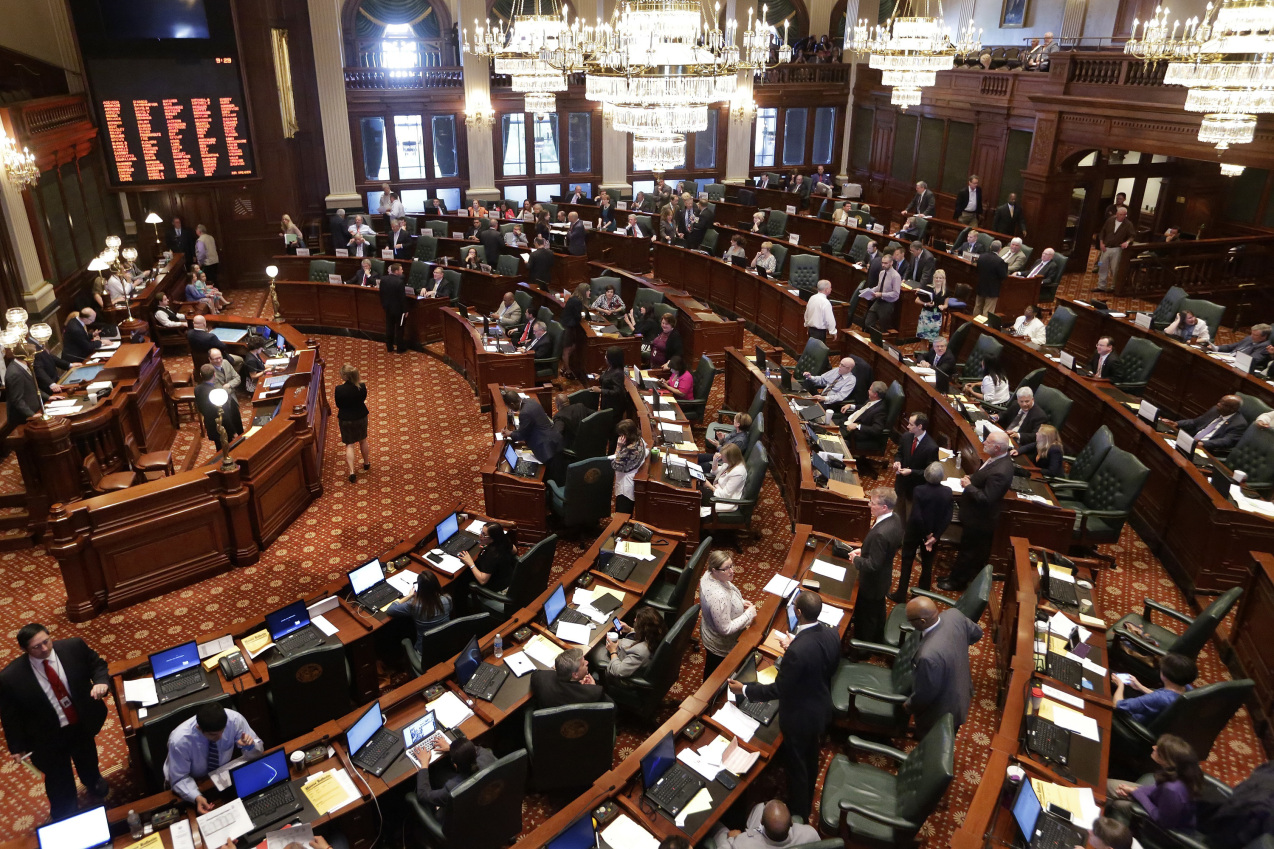
Last week, state Sen. Jen Jordan (D) delivered a powerful speech in the chamber against the state’s “heartbeat” abortion bill, a legislation that, if signed, would ban abortions after a heartbeat is detected which the state House eventually voted to pass on Friday. The bill was then sent to Gov. Brian Kemp (R) to be signed. Kemp has stated he plans to approve the legislation.

To denounce this severe restriction on abortion procedures, Jordan drew on her own personal experiences to explain the importance of a woman’s right to privacy.

“My husband and I were talking about this bill the other night and he told me that he didn’t want me to share anything personal because no one was entitled to that information. And I have always fiercely guarded my privacy,” Jordan said. “But the deepest, darkest times of my life have occurred in the presence of and with my physician.”

The Democratic lawmaker revealed that despite being pregnant 10 times, she had only given birth twice. “I have lost seven pregnancies in varying points of time before 20 weeks. And one after five months. Her name was Juliette,” she said. “I have been escorted out the back door of my physician’s office so as not to upset the other pregnant women in the waiting area, my grief on full display and uncontainable.”

Jordan then emphasized the importance of the “basic principle that woman must be able to make her decisions, in consultation with her God and her family.”

“It is not for the government or the men of this chamber to insert itself in the most personal, private, and wrenching decisions that women make every single day,” she continued. “Matters such as a woman’s ability to decide whether to terminate a pregnancy involve the most intimate and personal decisions a person can make.”

Jordan added: “At the heart of liberty is the right to define one’s own concept of meaning, of the universe, and of the mystery of human life.”

On Saturday, a day after the the Georgia House approved the bill, Jordan’s speech went viral on social media, gathering millions of views and shared by a range of users. The measure, if enacted, could limit the period for abortions to as early as six weeks, a time frame in which many women will likely not even be aware they are pregnant. Under current law woman can seek abortions up until 20 weeks into a pregnancy.

Speaking to Newsweek about the “intent” of the fetal heartbeat bill, Jordan said: It’s a race to the U.S. Supreme Court, with all of these conservative states to be the one that gets Roe overturned… I think they’re trying to be as outrageous as they possibly can, and they’ve definitely done it here.”

Although rape and incest are the exceptions under the bill, the woman is required to first file a police report, reported Associated Press.

Source: https://www.newsweek.com/georgia-state-lawmaker-shares-her-struggles-pregnancy-rebuke-heartbeat-1380917

If it feels like you’ve been seeing more headlines than usual about attempts to restrict abortion rights across the country, it’s not just you. States across the nation have introduced an alarming number of anti-abortion bills in 2019 compared to 2018, according to a new report from Planned Parenthood and the Guttmacher Institute, a research center focused on reproductive health policy.

In their 2019 State Abortion Restriction Snapshot, Planned Parenthood and the Guttmacher Institute revealed that 41 states have seen more than 250 bills introduced in state legislatures this year alone. About half of those bills have the goal of banning abortion entirely or in certain circumstances. Six states currently have only one abortion provider serving the whole state: the Dakotas, Missouri, Kentucky, West Virginia, and Mississippi.

“Energized by a new Supreme Court, anti-abortion activists and politicians have kicked into high gear their decades-long agenda to ban abortion through a series of increasingly radical and dangerous abortion bans,” said Elizabeth Nash, senior state issues manager at the Guttmacher Institute, in a Planned Parenthood press release. “At their core, abortion restrictions are about exerting control and power over pregnant people.”

Compared with 2018, states have also introduced almost 63 percent more six-week abortion bans so far this year.

Six-week abortion bans are often called “heartbeat bills” because they attempt to ban abortion once doctors can detect a fetal heartbeat. They effectively amount to a full abortion ban, because many women don’t even realize they’re pregnant until right around or after six weeks.

As the Guttmacher Institute explained, numerous six-week abortion bans have already been struck down in court when states passed them in previous years. Now that opponents of reproductive rights see perceived allies in both the White House and the Supreme Court, however, they’ve moved to the forefront of the strategy to overturn Roe v. Wade.

“Today, the reality we live in is a terrifying one for women around the country,” Planned Parenthood President Dr. Leana Wen said in a press release. “Access to abortion care is disappearing in states, forcing women to travel hundreds of miles for health care or to go without health care completely.”

“The surge in attempts to ban abortion in the earliest stages of pregnancy drives home that the end goal of anti-abortion politicians and activists is to ban all abortion — at any point during pregnancy and for any reason,” Nash said in the same release, referring to six-week bans.

These moves by Republican lawmakers come despite numerous polls showing that a growing majority of Americans support Roe and don’t want to see abortion rights disappear in the United States. And as Wen explained, closing clinics that provide abortion services also prevents women from receiving other necessary care, like cancer screenings, birth control, and STD testing.

“The politicians pushing these dangerous policies are directly interfering with medical practice and endangering women’s lives,” Wen said in her statement. “Abortion is a safe, legal medical procedure that nearly 1 in 4 women will have in their lifetime.”

With so many state governments working to limit abortion access, reproductive rights advocates can take action by telling lawmakers in their state what they think of their proposed legislation. As Wen explained:

“Those of us who work to protect women’s health and rights must aggressively push for policies that protect and expand reproductive health access in the states, which are the critical backstop to protecting safe, legal abortion.”

Source: https://www.bustle.com/p/2019-has-seen-abortion-bills-introduced-at-a-seriously-alarming-rate-16994061

House Bill 481 has a dangerous, unintended consequence for the thousands of Georgia women who undergo fertility treatment including in vitro fertilization (IVF). In some cases, it is necessary to replace more than one embryo into the patient’s uterus with the hopes that she will become pregnant when one embryo attaches. IVF increases the chance of multiple pregnancy in most cases with rates are much higher than in natural pregnancy.

A procedure known as fetal reduction of pregnancy is recommended at 13 to 16 weeks gestation for some women whose pregnancies involve three or more fetuses. Many IVF patients are already deemed high-risk for pregnancy and the presence of three or more fetuses in the womb is dangerous to her health. HB 481 would render this live-saving procedure as an illegal abortion and the physician who performs this widely-accepted surgery would be charged with a felony, sentenced to prison, pay thousands of dollars in fines, be subject to civil lawsuits and lose their medical license.

Multiple pregnancy has an increased risk for premature birth, birth defects, maternal hypertension, low birth weight and many other complications. Pregnancies with triplets or more fetuses always deliver prematurely — about four to six weeks early for triplets and a dangerous six to eight weeks early for quadruplets. These extremely premature infants are at risk for many complications including long term neurological problems, handicaps and death. The increased illnesses and deaths occur due primarily to premature delivery, unequal blood flow to the developing fetuses, loss of fetal blood supply, premature separation of the placenta and compression of the umbilical cord.

Multiple pregnancies can lead to emotional and financial strain for families and a very expensive, prolonged hospitalization for the mother before birth and for both the mother and the infants upon delivery. In a state that already claims the worst maternal mortality rates in the United States, this bill both increases the likelihood of death and long-term handicaps for newborn babies and their mothers.

HB 481 has unintended consequences that will leave pregnant women who find themselves in this situation left with two choices. First, they will be presented with an expensive option of finding another state where they can get the care they need. They would be required to find a new doctor, a new hospital (which likely will be out-of-network and more expensive), pay for travel costs and recover in a strange environment away from their family members who cannot make the trip. Or second, Georgia women can wait until they are sick enough and their life and the lives of their unborn children are in danger, when this bill would allow them to get the care they need. But their doctor will still be exposed to a prison sentence, huge fines, lawsuits and career-ending sanctions.

The law of unintended consequences will not be repealed with the passage of House Bill 481. The General Assembly should slow down, listen to patients and their doctors and allow those undergoing fertility treatment to continue to receive the best care available. This bill ties the hands of pregnant women who have been trying desperately to have a child of their own while endangering their lives and pregnancies. We can and should do better.

Andrew A. Toledo, M.D. is CEO of Reproductive Biology Associates, where he has treated infertile couples in the Atlanta area for over thirty years.

Note: This column is authored by Andrew A. Toledo, a Georgia OB/GYN with 30 years of experience in Fertility Treatment.

Source: https://medium.com/@johnwalraven/georgia-abortion-bill-has-trap-door-for-women-in-fertility-treatment-d52557df40f5?fbclid=IwAR1bT5jogXzW3c-4A44FAX3lemJLEuFuA_-8zDfH2dOnIyU8FfXt3u1B3Ac

Florida Republicans are pushing legislation that would “disregard young people’s moral agency and decision-making abilities while placing enormous burdens” on teens seeking abortion care, an advocate said.

Approved last week by the House Health Quality subcommittee, HB 1335 would require a physician—at the risk of a felony—to obtain written consent from a parent or legal guardian before performing an abortion on a minor.
Shutterstock

Kristen Erichsen was 15, pregnant, and “terrified” when she appeared in court for a judge to decide her future. Erichsen knew she couldn’t be a parent and was scared she would become homeless.

“My mom had really terrible health, had an issue with painkillers, and we had been evicted multiple times that year, so there was no way I could talk to her about this. I was also under the impression that if I did, I would be kicked out,” Erichsen, 26, told Rewire.News this week.

That was in 2007. Florida had a parental consent law in place for pregnant minors seeking abortions. Erichsen’s social worker told her she was lucky to get a sympathetic judge to provide a judicial bypass that day. Many others didn’t. But it still wasn’t easy accessing an abortion—from having to get someone to drive her to court 45 minutes away, securing $400 to pay for the abortion, and navigate a sea of anti-choice protesters outside the clinic, the process was agonizing.

In the past six years, Florida legislators have tried to pass more than 50 anti-choice laws. And Republican lawmakers this month have introduced an anti-choice bill that could add more restrictions for teenagers seeking abortion care.

Approved last week by the House Health Quality subcommittee, HB 1335 would require a physician—at the risk of a felony—to obtain written consent from a parent or legal guardian before performing an abortion on a minor. Exceptions include cases of medical emergency or if the minor obtains a court order bypassing the parental notification and consent requirements. The GOP measure is pending in the state house judiciary committee.

A similar bill introduced March 13 in the state senate, SB 1774 or the “Parental Consent for Abortion Act,” would prohibit a physician from performing an abortion on a minor without obtaining consent from at least one parent or guardian.

Organizations like the American Medical Association (AMA) and the American College of Obstetricians and Gynecologists (ACOG) oppose mandatory parental involvement in abortion decision-making, as do groups supporting teens and adolescents.

Forced parental involvement laws “disregard young people’s moral agency and decision-making abilities while placing enormous burdens” on young people seeking abortion access, wrote Jessica Goldberg, manager of attorney and pro bono programs at If/When/How, a national network of law students and legal professionals working for reproductive justice.

More than 50 organizations and advocates, including the National Women’s Law Center, Emergency Medical Assistance, and Equality Florida, have co-signed a Planned Parenthood letter urging the Florida legislature not to pass these bills.

“There is nothing more important than keeping our young people healthy and safe, but as the medical community has made abundantly clear, this bill would do just the opposite,” said Laura Goodhue, executive director of the Florida Alliance of Planned Parenthood Affiliates. “Most young people seek the counsel of a trusted parent or guardian without the government interfering and mandating it. And you can be sure those who don’t [tell a parent or guardian] have very good reasons.”

While several states have parental involvement requirements for minors considering abortion care, only five other states have both parental involvement and consent requirements—Oklahoma, Texas, Utah, Virginia and Wyoming, according to the Guttmacher Institute.

“Parental consent requirements are just another way that abortion opponents try to limit access to services. Young people know how to make decisions about their own health care including abortion,” said Elizabeth Nash, senior state issues manager at Guttmacher. “Laws that require parent involvement only serve to deny and delay access, not improve family communication. The judicial bypass process is also well-documented as causing stress and trauma and is difficult to navigate. What young people do need is care that allows them to make the best decision for their lives and future and from individuals that they trust.”

In effect for more than five years, Oklahoma’s notification and consent laws require physicians to send notification letters to parents, telling them of the intent to abort, and for minors (unless emancipated or married) to get written consent via a state-mandated form, or waive that via a judicial bypass, Tamya Cox-Touré, regional director of public policy and organizing at Planned Parenthood Great Plains, told Rewire.News. These policies have created obstacles for minors and have significantly decreased the number of judicial bypasses granted in recent years, she said.

“We already had consent laws, but this notification really created an additional barrier,” she said. “It is already hard for minors to navigate a judicial bypass in Oklahoma—we don’t make it easy at all. Navigating the judicial system is hard for anyone but to ask a minor to do that is even worse.”

Providers encourage parental involvement but recognize there could be problems like parents being absent, she said.

The American Academy of Pediatrics (AAP), that supports the protection of rights of adolescents to confidential care when considering abortion, stated in a 2017 article that “legislation mandating parental involvement does not achieve the intended benefit of promoting family communication, and it increases the risk of harm to the adolescent by delaying access to appropriate medical care.”

The organization cited studies indicating that most minors involve a parent in the decision, even when it is not required by law. In states that don’t have parent involvement laws, 34 percent to 91 percent of minors told their parents about their plan to have seek abortion care. A survey of 1,519 unmarried pregnant minors in states where parental involvement isn’t mandatory found that 61 percent told one or both parents about their decision to have an abortion.

Minors strongly opposed to informing parents often have good reasons to fear the outcome which could range from violence to rejection and homelessness, echoing Erichsen’s experience.

Now a fourth-year graduate student pursuing a PhD in sociology at Florida State University, she finds it “ridiculous and hypocritical” that “the party that is supposedly against government intrusion is trying to mandate the way parents should communicate with their children, and I think it’s very ignorant of the experience that women and teens face. People who have good relations with their parents would tell them, and if they aren’t, there’s probably a good reason.”

Since Roe v. Wade legalized abortion in 1973, anti-choice groups have aimed laws at both the state and federal levels to restrict access. Forced parental involvement laws are part of that framework in Republican-majority legislatures like the one in Florida.

The Florida Supreme Court has struck down parental consent laws—once in 1989 and again in 2003—stating that the anti-choice measures violate the state’s constitutional right to privacy and a minor’s right to abortion care. In 2004, voters approved a constitutional amendment to allow for parental notification laws, essentially overruling the 2003 decision. Lawmakers wasted no time passing a law requiring parental notification 48 hours prior to a minor’s abortion; one that still holds, Planned Parenthood advocates pointed out.

Erichsen said lawmakers’ arguments make no sense. “I keep hearing Republican legislators say that teens aren’t mature enough to make the decision on their own,” she said. “I think that’s just so ignorant. If teens aren’t mature enough to make that decision on their own, how are they mature enough to be parents or mature enough to navigate the legal system by themselves?”

She discussed her abortion with her mother several years later, after her mother recovered from addiction. “She was supporting, accepting and upset that she wasn’t able to be there for me,” Erichsen said.

Source: https://rewire.news/article/2019/03/28/teenagers-abortion-rights-are-about-to-be-further-eroded-in-florida/

North Carolina’s ban on women having abortions after the 20th week of pregnancy is unconstitutional, a federal court ruled Monday.

But the ruling won’t go into effect immediately. The judge gave state lawmakers 60 days to either write a new abortion law or appeal his ruling.

“This court declines to act in a manner that would deprive the North Carolina legislature the opportunity, in the first instance, to either pass legislation or challenge this decision on appeal, whichever they decide may be in the interests of the citizens they represent,” wrote District Judge William Osteen.

North Carolina has had various abortion bans in state law for many decades. The 20-week ban that’s now under fire was updated by state lawmakers in 2015, and this lawsuit challenging it was filed in 2016.

Irena Como, an attorney for the American Civil Liberties Union, said in a press release that the abortion law should have been overturned because it “was written by politicians to intimidate doctors and interfere in a woman’s personal medical decisions.”

The state’s abortion ban does have exceptions for certain emergencies, but critics said it doesn’t comply with past court rulings. Osteen, who was appointed to the court by Republican President George W. Bush, agreed.

“North Carolina law criminalizes all non-emergency abortions performed after twenty weeks, without regard to the type of procedure or how the abortion is obtained,” he wrote.

Spokesmen for legislative leaders Tim Moore and Phil Berger declined to comment Tuesday, since the legislature’s legal team was in Washington, D.C., at oral arguments for a gerrymandering case and had not yet had the chance to review the abortion ruling.

The ruling was a win for Planned Parenthood, the Center for Reproductive Rights and the ACLU who sued to overturn the law.

“All decisions about pregnancy, including abortion, are deeply personal and should be decided between a woman and her doctor, without medically-unnecessary interference from politicians,” said Jenny Black, President and CEO of Planned Parenthood South Atlantic, in a press release. “This ruling affirms that right and (sends) a clear message to politicians that women deserve our care, not our judgment.”

Rev. Mark Creech, a Baptist preacher who leads the NC Christian Action League, said that regardless of the judge’s ruling, “history will one day condemn those who defend what all people will someday recognize to have been the wanton killing of innocent children.”

“A child in the womb at 20 weeks can recognize its mother’s voice,” Creech said.

Tami Fitzgerald, executive director of the socially conservative Christian group NC Values Coalition, saw a silver lining in the ruling. The judge ruled that the state can continue banning abortion once the fetus reaches viability, which is the point when it can live on its own outside the womb.

“Today’s federal court ruling confirms North Carolina lawmakers have the constitutional right to restrict abortion when the child in the womb is viable,” she said. “Our hospitals and physicians are finding viability at points once thought inconceivable just a decade ago.”

Fitzgerald also said her group will urge lawmakers to take action quickly on the ruling. “Our coalition will continue to advocate for the preborn and we will seek immediate actions during this legislative session to strengthen our State’s laws that protect the unborn,” she said.

Osteen wrote that he was not creating any new precedent but simply following other federal legal decisions. He pointed specifically to cases out of Arizona, Arkansas, Idaho, Mississippi, North Dakota and Utah that dealt with this or similar topics.

According to the Center for Reproductive Rights, which is one of the plaintiffs in the case, “every time a court has considered the constitutionality of a 20 week ban, it has been blocked.”

Source: https://www.charlotteobserver.com/news/politics-government/article228421354.html?fbclid=IwAR1UsTzIZp6ZrXoxdE4X88N9PdsX0KENDdZPn8IT045e6OYepXjRgagydDs

States across the country are preparing for a possible day when Roe v. Wade is overturned.

Roe, the 1973 Supreme Court decision, specifies that a woman has a right to an abortion, and states are not allowed to interfere with that right. But abortion activists — both for and against — say the high court will be forced to rule on it in upcoming sessions.

Five states have already outlawed abortions with “trigger laws,” legislation that isn’t active unless Roe v. Wade is no longer in effect. “Trigger laws” are a way to ensure that abortion will be automatically illegal in the event that states are allowed to regulate the procedure.

Another eight states have introduced bills this legislative session that, if passed, would also outlaw abortion. Though three of those aren’t technically “trigger laws, all will be inactive unless Roe becomes ineffective, either through a full repeal or a handful of small anti-abortion-rights decisions.

“Trigger laws” date back to the year Roe was decided, and one or two conservative states have historically introduced them every legislative session. But those measures failed. This year has been different.

“There’s been so much more this year,” Elizabeth Nash, a senior state issues manager at the Guttmacher Institute, said. “And these are getting attention. They’re not just getting introduced and fizzling out like they used to.”

Liberal states are also preparing for a post-Roe v Wade world, passing laws that would maintain or expand access to abortion. In New York, lawmakers passed the “Reproductive Health Act” in January, which protects access to abortions after 24 weeks if the fetus is not viable or if there is risk to the mother’s health. Similar proactive laws in New Mexico, Virginia, Vermont have been introduced and gained traction.

The following is a list of every state that has enacted or proposed a “trigger law” or a full ban on abortion.

States that have enacted “abortion ban” laws

Arkansas

Name of law: Act 180, “An Act to Create the Arkansas Human Life Protection Act; to Abolish Abortion in Arkansas and Protect the Lives of Unborn Children; and for Other Purposes.”

Date passed: February 19, 2019

In February, Arkansas become the fifth state to have a “trigger law” on its books. It states “abortion in Arkansas is abolished” in the event that Roe v. Wade is overturned and does not make exceptions for rape or incest.

The legislation also implores the Supreme Court to reconsider Roe v. Wade. Act 180 likens abortion access rights to that of racial segregation laws, stating “a crime against humanity occurs when a government withdraws legal protection from a class of human beings resulting in severe deprivation of their rights.”

“The State of Arkansas urgently pleads with the United States Supreme Court to do the right thing, as they did in one of their greatest cases, Brown v. Board of Education, which overturned a fifty-eight year-old precedent of the United States, and reverse, cancel, overturn, and annul Roe v. Wade, Doe v. Bolton, and Planned Parenthood v. Casey,” Act 180 reads.

Louisiana

Name of law: “Human Life Protection Act

Year passed: 2006

Louisiana already has some of the most restrictive abortion access laws in the country, but in the event that Roe v. Wade is overturned, the procedure will automatically be illegal. The “Human Life Protection Act” reads that the law would “become effective immediately” in the event a decision by the Supreme Court “reverses, in whole or in part… thereby, restoring to the state of Louisiana the authority to prohibit abortion.” The law does not give exceptions in the case of rape or incest.

A more recent abortion restriction proposed in Louisiana, which would have required abortion providers to obtain admitting privileges at a nearby hospital, was temporarily blocked by the Supreme Court in February. It was the first abortion-related case that Justice Kavanaugh decided on since joining the court last year.

Even though Kavanaugh wrote the dissenting opinion, abortion rights activists didn’t get a clear look into how the new justice may view abortion issues in the future, said Travis Tu, lead counsel on the case for the Center for Reproductive Rights, a pro-abortion rights legal advocacy group.

“Justice Kavanaugh plays his cards very close to the vest in this ruling,” Tu said in a telephone interview with CBS News. “This is just one step in a long game.”

Mississippi

Year enacted: 2007

In the event that the Supreme Court overturns Roe v. Wade, Mississippi’s state attorney general would first have to certify the decision and that “it is reasonably probable that [an abortion ban] would be upheld by the Court as constitutional.” The state’s abortion ban makes exceptions in the event that the mother’s life is at risk and in cases of rape “if a formal charge of rape has been filed with an appropriate law enforcement official.”

Physicians who administer abortions could face between one and ten years in prison, according to the law. Mississippi only has only operational abortion provider.

South Dakota

Year enacted: 2005

South Dakota has had a trigger law in its books for nearly 15 years. The law dictates that physicians are prohibited from administering any kind of abortion — medicinal or surgical — except if the mother’s life is at risk. The law does not make exceptions for rape and incest.

Physicians who perform an abortion would be guilty of committing a Class 6 felony in the state if the law is in effect.

The law notes that the act is only “effective on the date that the states are recognized by the United State Supreme Court to have the authority to regulate or prohibit abortion at all stages of pregnancy,” meaning that as long as Roe v. Wade is in effect, South Dakota’s law isn’t.

North Dakota

Year enacted: 2006

In the event that Roe v. Wade is overturned, administering an abortion would be considered a felony for the provider under North Dakota’s “trigger law.” The law provides exceptions if the women’s life is in danger or if the abortion “was to terminate a pregnancy that resulted from gross sexual imposition, sexual imposition, sexual abuse of a ward, or incest.”

North Dakota has only one operating abortion clinic.

States with proposed “abortion ban” laws

Georgia

Name of lawHouse Bill 546

Date proposed: February 28, 2019

Status: It was read a second time in the state’s House of Representatives on March 1, 2019. It hasn’t been assigned to a committee yet.

Unlike other “trigger laws,” Georgia’s legislation is a simple ban on abortion. The proposed law calls for up to 10 years in prison and a fine of as much as $100,000 for physicians who perform one.

Because the bill doesn’t explicitly say this law only goes into effect if Roe v. Wade is overturned, it can’t be considered a true “trigger law,” said Nash. The bill includes exceptions for rape, incest and medical emergencies.

When it was proposed in February, Democrats and pro-abortion rights advocates criticized the legislation. In response to it and another restrictive bill on reproductive rights, one Georgia lawmaker said she plans to introduce a “Testicular Bill of Rights.” It was inspired by “what the reaction would be from some males and male legislators if the tables were turned and we started to talk about their reproductive rights and organs,” said Democratic Rep. Dar’shun Kendrick, who plans to introduce the legislation.

Kentucky

Name of law: House Bill 148, “AN ACT related to abortion

Date proposed: January 10, 2019

Status: Delivered to Gov. Matt Bevin on March 14, 2019 who is anticipated to sign it into law.

Kentucky’s abortion ban is a traditional “trigger law.” The legislation reads that no person may “administer to, prescribe for, procure for, or sell to any pregnant woman any medicine, drug or other substance with the specific intent of causing or abetting the termination of the life of an unborn human being.” The law also specifies that doctors may not “use or employ any instrument or procedure upon a pregnant woman with the specific intent of causing or abetting the termination of the life of an unborn human being.”

The law would make performing an abortion a felony, punishable by up to five years in prison for a health provider. It does not make exceptions in cases of rape or incest, but does make an exception if the woman’s life is in danger.

Tennessee

Name of lawHouse Bill 1029, “Human Life Protection Act”; Senate Bill 1257, “Human Life Protection Act”

Date proposed: House Bill – February 6, 2019; Senate Bill – February 7, 2019

Status: House Bill – referred to committee on February 13, 2019; Senate Bill – referred to committee on February 11, 2019. If the bill is successfully voted out of committee, each respective chamber will vote on the bill.

Lawmakers in Tennessee introduced matching bills in the House and Senate with the same objective: outlawing abortion in the event that Roe v. Wade is overturned. Both bills say, “a person who performs or attempts to perform an abortion commits the offense of criminal abortion. Criminal abortion is a Class C felony.”

The legislation gives exception to when the woman’s life is in danger, and specifically notes that mental health concerns would not qualify for exceptions.

The bill also notes that a full repeal of Roe v. Wade isn’t necessary for the law to go into effect. Many abortion rights scholars believe a full, clean overturn of the landmark Supreme Court case is unlikely and anticipate a slow chipping away at the decision that would eventually render it ineffective. In Tennessee, lawmakers have considered this possibility and included it in their bill.

Oklahoma

Name of lawSenate Bill 195, “Personhood Act”

Date proposed: February 4, 2019

Status: Passed in the Senate on March 14, 2019. It nows goes to the House for a vote.

The original language of Senate Bill 195 was that of a traditional “trigger law,” outlawing abortions in the state in the event that Roe v. Wade is ever overturned. However, the bill was updated to instead put that to voters, proposing a state ballot measure that would amend Oklahoma’s constitution to say that the state didn’t secure or protect the right to perform or receive an abortion. The bill clarifies that it “concerns only the rights guaranteed by the Oklahoma Constitution” and “would not alter any rights guaranteed by the United States Constitution.”

The bill makes exceptions for when the woman’s health or life is at risk, the fetus has died, or in the events of criminal assault on the mother.

This bill is one of a handful of pieces of anti-abortion legislation that lawmakers in Oklahoma have introduced this session, each with slightly different nuances and success rates. One proposal, Senate Bill 13, would reclassify abortion as murder, but it was killed in committee by Republican state Senator Jason Smalley.

South Carolina

Name of law: “The Personhood Act of South Carolina” House Bill 3289Senate Bill 485

Date proposed: House Bill – January 8, 2019; Senate Bill – February 6, 2019

Status: House Bill was referred to the Committee on Judiciary on January 8, 2019; Senate Bill referred to the Committee on Judiciary on February 6, 2019. If the bill is successfully voted out of committee, each respective chamber will vote on the bill.

Unlike other bills, South Carolina’s proposed abortion banlegislations in the House and Senate aren’t true “trigger laws” because they don’t clarify that they only take effect if Roe v. Wade is overturned. Instead, these bills seek to “establish that the right to life for each born and preborn human being vests at fertilization.”

By defining the beginning of life at fertilization, the proposals would effectively prohibit abortion, granting that the unborn can’t be “deprived of life without due process of law nor denied the equal protection of the laws.”

The House bill makes exceptions for when the mother’s life is at risk, and specifically clarifies that the bill would not impact access to birth control methods. The Senate’s legislation has similar exceptions, but it also proposes that having or performing an abortion be deemed a felony, referring to abortion as “the shedding of innocent blood.”

South Carolina lawmakers, including the lawmaker who proposed the Senate bill, have introduced several “personhood” measures in the statehouse in previous sessions, but all have failed to pass.

Missouri

Name of law: House Bill No. 126, “Missouri Stands for the Unborn Act”

Date proposed: Prefiled on December 3, 2018

Status: The state’s House of Representatives passed the bill on February 27, 2019. It now goes to the Senate for a vote.

Missouri’s abortion ban is part of House Bill 126, a wide-reaching piece of legislation that aims to restrict abortion access in the state. As it relates to Roe v Wade, its intention is clear: “This bill specifies that if there is in any change in federal law or court decisions that allow it, it is the intent of the state of Missouri that abortion shall not be permitted in the state under any circumstances,” the bill reads.

The bill makes exceptions for “medical emergency,” but not for rape or incest. Doctors who continue to perform abortions would be subject to a felony charge.

Even if Roe v Wade remains the law of the land, other pieces of House Bill 126 would further reduce abortion access in Missouri. The bill includes a ban on abortion based on race, sex or genetic abnormality as well as a requirement that both parents be notified if a minor receives the procedure.
The state already has some of the most restrictive abortion access laws in the country. Missourians seeking an abortion are subject to a 72-hour waiting period and only one abortion clinic exist in the state.

Indiana

Name of law: House Bill No. 1430, “Protection of Life”

Date proposed: January 15, 2019

Status: Referred to the Committee on Public Policy on February 15, 2019. If the bill is successfully out of committee, it’ll go to the full House for a vote.

Indiana’s proposed legislation goes several steps past other states’ “trigger law.” The “Protection of Life” bill refines that life begins “when a human ovum is fertilized by a human sperm” and “any act, law, treaty, order, rule or regulation for the United States government that fails to protect a person’s inalienable right to life in null, void, and unenforceable in Indiana.” In other words, the bill proposes that Indiana not recognize Roe v Wade.

The bill would also augments the definition of “child” to also include “an unborn child,” which effectively redefines abortion as murder in the state. There are no exceptions given for medical emergency, rape or incest.

Texas

Name of law: House Bill 896, “Abolition of Abortion” Act

Date proposed: January 17, 2019

Status: The bill was introduced in January, but has not been assigned to committee.

Similar to Indiana’s proposed legislation, Texas House Bill 896 aims to outlaw all abortions “regardless of any contrary federal law, executive order, or court decision.” The bill’s strategy is to redefine the beginning of life as the “moment of fertilization,” thereby making abortion akin to murder. The bills text specifies that both the mother and the doctor could be held liable.

House Bill 896’s sponsor, Representative Tony Tinderholt, introduced identical legislation in 2017, but that bill failed to pass.

Source: https://www.cbsnews.com/news/abortion-laws-by-state-2019-abortion-automatically-illegal-in-these-states-roe-vs-wade-overturned-2019-03-19/

The Hungarian “conference demonstrates the insidious connections between authoritarian governments, far-right nationalists, and anti-choice movements who conspire to strip women and gender diverse people of their rights.”

Under Orbán’s leadership, Hungary has chipped away at access to abortion care.


Trump administration officials and prominent anti-choice activists appeared at a conference hosted by the Hungarian Embassy earlier this month designed to promote government policies to encourage women to have more babies.

The “Make Families Great Again” conference, which was held at the Library of Congress on March 14, promoted far-right Hungarian Prime Minister Viktor Orbán’s seven-point “Family Protection Action Plan.” The plan is “designed to promote marriage and families and spawn a baby boom” through financial incentives, according to a Washington Post report on the event. White House special assistant Katy Talento, White House Strategic Communications Director Mercedes Schlapp, and U.S. Department of Health and Human Services (HHS) Senior Advisor Valerie Huber spoke at the event.

HHS spokesperson Caitlin Oakley confirmed Huber’s attendance at the event to Rewire.News. Huber, best known as an abstinence-only activist who helped rebrand abstinence-only sexual education as “sexual risk avoidance,” has held several high-level political positions within HHS. She was appointed senior policy advisor at the department’s Office of Global Affairs in January.

Talento, who works on the president’s domestic policy agenda, has pushed myths about contraception, including false statements that contraceptives cause abortions, miscarriages, and reduced fertility. She reportedly helped craft the Trump administration’s policy to roll back the Affordable Care Act’s birth control benefit.

According to a schedule tweeted by Katalin Novák, the Hungarian state secretary for family and youth affairs, three members of Congress—U.S. Reps. Andy Harris (R-MD), Paul Gosar (R-AZ), and Chris Smith (R-NJ)—gave the event’s closing remarks. Requests to their offices for comment were not returned.

Under Orbán’s leadership, Hungary has chipped away at access to abortion care. In 2011 the Hungarian parliament succeeded in inserting personhood language giving fetuses legal recognition into the country’s constitution. And in 2012 the government refused to make medication abortion available in the country.

Tony Perkins, president of the anti-choice and anti-LGBTQ Family Research Council, also spoke at the event, as did representatives from the Heritage Foundation and Concerned Women for America. Perkins praised Hungary’s commitment to what he called “pro-family” policies in a blog post the day after the event, though he noted that the United States isn’t likely to support direct subsidies to increase the birth rate.

Robert Berschinski, senior vice president of policy for nonpartisan advocacy group Human Rights First, suggested according to the Washington Post that “Hungary’s birth plan is at odds with accepted best practices in other countries.”

“The critique is—in effect and by design—it does not encourage women to rejoin the labor force, but keeps them home and pregnant in more of a traditionalist sense through financial incentives,” said Berschinski, who previously served as deputy assistant secretary of state for democracy and human rights and “helped lead U.S. policy toward Hungary in 2016,” according to the Post.

According to a Christian Post report, Orbán’s plan is designed to boost the country’s birth rate to “replacement level,” the fertility rate at which a population sustains itself, without taking a more open approach to immigration policy. Hungary “spends nearly 5 percent of its GDP towards incentives for those in the predominantly-Christian nation to get married and have children—lots of them,” the Christian Postreported.

“Orbán is really quite scary,” Amanda Klasing, acting co-director of the women’s rights division at Human Rights Watch, said in an interview with Rewire.News. “Our big concern is that this anti-gender equality, anti-woman, anti-LGBT rhetoric is being picked up in all of these different places by leaders that are prepared to undermine human rights. And this is one way that they’re doing it. The Trump administration is embracing Hungary’s approach to reproduction with the tacit approval of its efforts to undermine the civil society working on women’s rights.”

Hungary’s programs have reportedly drawn interest from the Trump administration and U.S. conservatives who support its anti-choice and anti-LGBTQ priorities. “We are working closely with the U.S. administration on family issues,” Novák, who gave a keynote address at the event, told the Christian Post. “They would also like to get some detail on our pro-family policies and the measures that we have introduced in the last nine years.”

Cooperation between the two governments sparked alarm from Shannon Kowalski, director of advocacy and policy at the International Women’s Health Coalition. “The ‘Making Families Great Again’ conference demonstrates the insidious connections between authoritarian governments, far-right nationalists, and anti-choice movements who conspire to strip women and gender diverse people of their rights,” she said in a statement to Rewire.News. “Under Viktor Orbán, Hungary has systematically dismantled efforts to achieve gender equality and provide women with the information and services they need to exercise control over their bodies and lives.”

Kowalski tied the event’s agenda directly to efforts by the Trump administration to roll back global support for women’s rights and gender equality at the U.N. Commission on the Status of Women last week. “The Trump administration has now brought this extreme agenda to negotiations at the Commission on the Status of Women, where they have tried to put the rights of ‘the family’ above those of women and girls. It’s important that people see these efforts for what they are: a brazen attempt by ideologues in the Trump administration to rob women of their agency and choice.”

According to Klasing, it’s impossible to separate Hungary’s anti-immigration policies from its anti-choice domestic agenda. “Xenophobia and racism plays out on policies related to women’s bodies,” she told Rewire.News. “There’s so much more that goes into the choice to whether or not to have a family, or whether or not to give birth. There’s so many policies that could improve families and that’s not what this is about. This is about controlling women’s bodies.”

Source: https://rewire.news/article/2019/03/25/trump-officials-attend-hungarian-conference-to-promote-women-having-more-babies/

Lawmakers convene on the House floor during a session at the Illinois State Capitol in Springfield. | Seth Perlman/AP file

There is a lot of noise these days about abortion. Tweets and speeches from partisan places bounce around in our heads, creating doubt and replacing facts with lies. This OB-GYN would like to set the record straight: No one is murdering newborns or ripping them out days before birth. Contrary to the way some headlines are presented, 88 percent of all abortions occur in the first trimester. Only 1.3 percent occur after 20 weeks gestation, and the vast majority of these are for dangerous fetal or maternal medical conditions I wouldn’t wish on my worst enemy.

I should know. I ended a loved and wanted pregnancy in 2009 in the second trimester, after learning my son, Thomas, would have suffocated to death had he been born. For my family, this was intrauterine palliative care. I am on the front lines of women’s health care. I have story after story of women and families who have ended pregnancies. It is never simple, never flippant.

It is always health care. It is always personal. It is never a place for government.

As a mother and OB-GYN, I strongly support HB 2495: The Illinois Reproductive Health Act. This bill would repeal the outdated and unenforceable criminal penalties for abortion care. It is terrible legal design to have multiple, contradictory laws on the books.

Counseling women on their pregnancy choices is my job. I trained long and hard for it. I spend sleepless nights worrying about moms and their babies. I have always found it ironic that those who call for the smallest government want to squeeze it into my exam room and uterus. Medical providers, like me, are the ones to listen to for health care guidance — not politicians.

Abortion is health care and has been since ancient times. It has no place in the criminal code.

Dr. Cheryl Axelrod, Wilmette

Repeal parental notification of abortion

I commend the Sun-Times for its editorial “For safety’s sake, repeal the Illinois Parental Notification Act” (Tuesday). I also commend our state legislators for advancing SB 1594, the bill to repeal the act and, in doing so, protect the health and safety of the young women of Illinois.

State law cannot dictate family dynamics. Young women who may decide to have an abortion will tell a parent, if they can. For those who can’t, they must have the ability to make their own decisions about their own future. Requiring judicial intervention is an extraordinary obstacle and punishment. Please contact your legislators now and entreat them to vote yes on SB 1594.

Source: https://chicago.suntimes.com/opinion/repeal-outdated-unenforceable-criminal-penalties-abortion-care-cheryl-axelrod/

The Trump administration is trying to exclude abortion providers, so the state is trying to fund its own Title X program.

On Saturday, the Maryland House of Delegates passed a bill that would end the state’s participation in Title X, if the administration prevents the program’s federal family planning funds from going to clinics like Planned Parenthood that provide abortion or refer patients for abortion elsewhere. Instead, beginning in 2021, the governor would be instructed to set aside more state dollars to effectively create its own family planning program.

In 2017, Gov. Larry Hogan (R) signed a bill that created a state-based family planning program, in case the federal government decided to impose a gag rule. This new bill takes an additional step, declaring Maryland would not participate in a program that provides substandard care, explained Robyn Elliott, lobbyist for Planned Parenthood of Maryland.

“This is really about equity across Maryland,” Elliott told ThinkProgress. “Maryland has worked for many years to ensure everyone has access to a broad range of evidence-based contraception…. Why would we leave a part of Maryland out in terms of having access to the same high standard of care?”

The Maryland Department of Health receives between $3 million and $4 million dollars annually from the federal government under the Title X program, Elliott said. The state doles out these federal dollars to various providers, including eight Planned Parenthood clinics. Should the administration’s rule barring abortion providers from participating in Title X take effect, the state would no longer be able to dispense federal dollars to these clinics.

Under current law, federal dollars can’t pay for abortion services. Providers use Title X dollars to pay for other health services like contraception, pelvic exams, and cervical or breast cancer screenings. In 2010, Title X clinics prevented 53,450 cases of chlamydia, 8,810 cases of gonorrhea, 250 cases of HIV, 1,900 cases of cervical cancer, and 6,920 cases of pelvic inflammatory disease, according to the National Family Planning and Reproductive Health Association.

But the Trump administration argues that by allowing providers like Planned Parenthood to participate in the Title X program, federal officials are basically subsidizing abortion. (It’s worth noting Title X-funded clinics receive more money from Medicaid, a federal-state insurance program for low-income people.)

The administration’s new rule, issued in early March, fundamentally reshapes the country’s sole grant program dedicated to family planning. The grant program would require providers to physically and financially separate abortion from other medical services. Providers wouldn’t even be able to provide abortion referrals during pregnancy counseling. The administration is also giving crisis pregnancy centers an opportunity at receiving federal dollars, even though these centers have a history of misleading patients. Under the Trump administration, the Title X program would emphasize fertility awareness and abstinence education.

The administration is mirroring what conservative states have long tried to do. In 2011, Texas excluded Planned Parenthood from a Medicaid-based program that served around 244,000 women. Within a year, 82 clinics closed, a third of them run by Planned Parenthood.

“The exclusion of Planned Parenthood affiliates…in Texas was associated with adverse changes in the provision of contraception,” a 2016 study published in the New England Journal of Medicine found. “For women using injectable contraceptives, there was a reduction in the rate of contraceptive continuation and an increase in the rate of childbirth covered by Medicaid.”

Under the proposed bill, Maryland would create a state-based family program that continues to include abortion providers like Planned Parenthood.

“We want to make sure Marylanders who get family planning services under Title X have access to the very same methods as people with private insurance. It’s that plain and simple,” said state Rep. Shane Pendergrass (D), sponsor of the Maryland Title X bill.

“… Because of the federal rules, they will no longer have that access under Title X. So it’s time to walk away from the federal Title X dollars,” she added.

ThinkProgress reached out to the governor’s office for comment on the bill, but did not hear back by the time of publication.

Maryland is likely the first state aiming to mitigate the gag rule’s damage through legislative action. The state is also one of 21 others suing the administration over the rule. There are currently at least six lawsuits challenging the administration’s changes to the Title X program.

“We are singularly focused on and confident that the courts will block this unlawful regulation. Communities across the country recognize the peril that will befall their most marginalized residents if this rule takes effect. We are all fighting to protect providers and their patients however possible, and our hope is that our legal action will make it so that states don’t have to bear this burden, and many will be unable to do so,” Jessica Marcella, vice president of advocacy and communications at the National Family Planning & Reproductive Health Association, said in a statement to ThinkProgress.

Most legal experts think these lawsuits will have a tough time prevailing in federal court, as the Supreme Court previously upheld a similar Regan-era regulation.

Source: https://thinkprogress.org/maryland-bill-could-become-first-state-to-stop-participating-in-title-x-program-after-trump-gag-rule-abortion-a262ae1a3ad9/

In the most restrictive nations, women who terminate their pregnancies face lengthy jail terms

Women in England and Wales have had the right to seek an abortion since 1968, but more than 50 years on, many women around the world do not have the same choice.

A 2017 report by the Guttmacher Institute, which studies reproductive health laws, found that 42% of women of reproductive age live in countries where abortion is either banned or only allowed in specific circumstances.

The most common legal grounds for abortion worldwide is to protect the life of the mother, followed by serious risk to her physical or mental health.

Around half of the countries in the world allow abortion in cases where the pregnancy was the result of rape or incest, and a similar proportion recognise serious foetal abnormality.

However, in a few countries, abortion remains the ultimate taboo.

Which countries have the strictest abortion laws?

All but a handful of countries allow an abortion to be performed when the life of the mother is at risk. The exceptions are Malta, El Salvador, Nicaragua and Dominican Republic

Strongly Catholic Malta is the only European country to have a total ban on abortion, and a survey carried out last year by Malta Today suggests that liberalisation is a long way off.

Overall, 95.2% of those surveyed were opposed to abortion by request – known as elective abortion – even if it were restricted to the first 12 weeks of pregnancy. Less than half said that abortion should be allowed to save the life of the mother.

El Salvador’s harsh anti-abortion laws have come into the international spotlightin recent years, due to high-profile cases of women imprisoned for terminating their pregnancies, some of whom claimed to have actually suffered a miscarriage.

Unsurprisingly, abortion is also totally banned in Vatican City – however, given that the Holy See’s 800-strong population is overwhelmingly made up of Catholic clerics, this prohibition is largely theoretical.

Where is elective abortion legal?

At the other end of the scale, 63 countries and territories permit women to terminate their pregnancies at their request, although usually with some conditions – most commonly, a time limit on when the procedure can be performed.

Canada is the only Western nation where a woman can seek an elective abortion at any time in her pregnancy, although in practice only a handful of terminations occur during the third trimester, HuffPost reports.

What about the UK?

In all parts of the UK except Northern Ireland, women can freely obtain an abortion up to 24 weeks into their pregnancy. Terminations can be performed after this limit in exceptional circumstances, such as to save the life of the mother or due to a severe foetal abnormality.

Office for National Statistics and Department of Health and Social Care figures show that in 2017, 192,900 abortions were performed in England and Wales, compared to 679,106 live births.

Figures like these are often used to claim that more than 20% of all pregnancies are terminated. However, The Journal points out that this statistic is misleading as it does not take into account the thousands of pregnancies which end in miscarriage every year.

Source: https://www.theweek.co.uk/100132/countries-where-abortion-is-legal-and-where-it-is-totally-illegal?fbclid=IwAR1AVp4nUYyPq01LeyDm65IiRCg59lzmH_q2xXbM8YI2vXsx9A9g-EMK0bw