In an unprecedented move, a probate court in Madison County, Alabama, has recognized a woman’s aborted fetus (dubbed “Baby Roe”) as a person with rights, allowing a man to proceed with his lawsuit against the women’s health clinic where his ex-girlfriend obtained abortion care two years ago. Ryan Magers says he begged his ex-girlfriend not to have an abortion and that the aim of his lawsuit is to “give a voice” to other men who want a say in a woman’s reproductive choices.
First reported by ABC 31 in February, Magers has named Alabama Women’s Center and the pharmaceutical company that makes the so-called “abortion pill” (which is actually two pills containing the medications mifepristone and misoprostol) that terminated the woman’s pregnancy in a wrongful death lawsuit. “I’m here for the men who actually want to have their baby,” Magers told the station at the time. “I just tried to plead with her and plead with her and just talk to her about it and see what I could do, but in the end, there was nothing I could do to change her mind.”
Ryan Magers, who is suing the abortion clinic where his ex-girlfriend terminated her pregnancy.
In an interview Tuesday with Refinery29, Magers’ lawyer J. Brent Helms said that before Mager’s ex got the abortion when she was six weeks pregnant, he had sought legal action to try and stop her. “Ryan was all about family. He took on extra jobs to be able to pay for the birth of Baby Roe,” Helms said. “He doesn’t know why she didn’t want to go through with the pregnancy. He’s not giving me a definitive answer to that question,” Helms said. The attorney could also not give an exact age for Mager’s ex at the time of the pregnancy, saying she was either 17 or 18 years old. After the abortion, Helms said the couple’s relationship fell apart and they broke up.
Helms said the lawsuit isn’t about controlling his ex-girlfriend, “it’s about the opportunity for family. I think Ryan is so family-oriented, he badly wanted a child. It’s about the opportunity to raise a child.”
When asked if Magers is considering adopting since he so badly wants a child, Helms said he isn’t. “At this point, he’s not considered any adoption right this moment, no. The two of them were really close. It was something that they wanted together at the time,” he said. In a follow-up email, Helms said the pregnancy was actually unplanned.
Magers’ side of the story is the only one being heard, however, as his ex-girlfriend’s identity cannot be made public due to laws protecting the privacy of women who undergo the procedure. But Helms said she may be named, depending on how the defendants in the lawsuit respond. “Until it is absolutely necessary, it is not our intent to name Ryan’s [ex-]girlfriend in the suit. When that point arises, we or the defendants will have no choice but to name her,” he said.

This man was unable to force his girlfriend to continue a pregnancy and so he’s taking an extreme action to exert control.

ELIZABETH NASH, GUTTMACHER INSTITUTE
Helms couldn’t answer basic questions on how giving a man decision-making power in a woman’s choice to get an abortion or not would play out, like how paternity would be proven so early in pregnancy, who would be responsible for caring for the child if a woman is forced to give birth, and what would happen in cases of rape and incest. “I think the answers to a lot of these questions will have to play out in the future depending on what the court rules,” he said. “There could be a situation where a father has to give consent to an abortion, also, our Alabama legislature could carve out exceptions. It’s almost too early to tell.”
Although Magers said his lawsuit is about “family,” his own attorney revealed it’s actually about ending abortion rights. “If we win this case for wrongful death, then the result may be the elimination of abortion altogether in the state of Alabama,” Magers told Refinery29. Alabama already has a law on the books that gives fetuses the same rights as people.
He further explained: “This case is about wrongful death so if the abortion clinic is held responsible, if the manufacturer of the pill that terminated Baby Roe’s life is held responsible for Baby Roe’s death, then obviously in the future, if there is an abortion where a father doesn’t agree and a suit for wrongful death is brought, it would create a lot of liability for these abortion clinics … the manufacturer of the pill, the doctors, for everyone involved.”
This explanation is perfectly in line with the pattern of anti-choice activists and politicians working to pass laws to limit access to abortion while working within existing federal laws. These sorts of policies and maneuvers have led to the closure of dozens of abortion clinics throughout the country. “I think the lawsuit is an attempt to get around fundamental protections in our nation’s abortion law, to undermine a woman’s right to an abortion,” Andrew Beck, senior staff attorney with the ACLU’s Reproductive Freedom Project, told Refinery29. “It’s definitely unlawful, it’s definitely bad policy, and it’s really designed as an end-run around [Roe v. Wade].” Beck said while he can’t predict the outcome of the lawsuit, he believes it is totally incompatible with the constitution. “You can imagine that if every person that sought an abortion could be brought into a lawsuit by an ex-boyfriend and have her decision questioned and interfered with and have the provider sued years later … that’s clearly the point of this,” he said.
Beyond being an attempt to curb access to abortion, Elizabeth Nash, senior state issues manager at the Guttmacher Institute, believes the lawsuit is ultimately about power. “This man was unable to force his girlfriend to continue a pregnancy and so he’s taking an extreme action to exert control,” she told Refinery29. The lawsuit can be seen as case of reproduction coercion, when a person seeks to interfere with the reproductive health decisions of a partner, like sabotaging a woman’s birth control, removing a condom during sex, and pressuring a woman to get or not get an abortion. Why Magers’ ex-girlfriend chose to terminate her pregnancy is irrelevant as it is her choice and her choice alone. The woman — not Magers — would’ve been left to deal with the physical and psychological effects of pregnancy. And, she has federal law on her side.
In a statement to Refinery29, Adrienne Kimmell, vice president of communications at NARAL Pro-Choice America, said the case is coming at a time when President Donald Trump and the GOP are ramping up their incendiary rhetoric around abortion. “The case in Alabama is chilling because it represents the real-life consequences of anti-choice ‘personhood’ policies, which, by design, seek to demote the fundamental rights of women, and are a stepping stone in the anti-choice movement’s ultimate goal of criminalizing abortion and punishing women,” she said. “The dangerous and backward policies, as well as the inflammatory lies, are wholly out of touch with the majority of Americans who support access to legal abortion and believe the government should not intervene.”
Alabama Women’s Center and the other defendants listed in the lawsuit have until April 1 to respond.

One of the first things Donald Trump did upon taking office was reinstate the Mexico City Policy, better known as the Global Gag Rule. The law prohibits global recipients of U.S. healthcare funding from mentioning abortion. For 35 years, every Republican administration has implemented the policy and every Democratic administration has revoked it. The Trump version of the policy is especially restrictive, expanding the prohibition to all groups receiving any funding from any U.S. department or agency.

Research consistently finds that restrictive policies affecting state abortion clinics harm women and girls. A new study directly links the Mexico City Policy to an increase in the abortion rate.

How Banning Abortion Discussions Might Increase the Abortion Rate

The study, authored by Yana ven der Meulen Rodgers of Rutgers University, is published in the new book The Global Gag Rule and Women’s Reproductive HealthFor the analysies, Rodgers analyzed data from 51 developing nations that included more than 6 million women each year. Using a regression analysis, she assessed the likelihood that a woman would have an abortion for years 2001-2008.

Rodgers found that Latin American women were about three times more likely to have an abortion during times when the Global Gag Rule was in effect. Abortion rates were about 23% at the beginning of the Clinton administration. After two terms of the Bush administration’s Mexico City Policy, abortion rates had risen to 32%.

Studies consistently find that banning abortion doesn’t stop women from seeking abortions. It just makes abortion less safe. Between 2010-2014, 75% of Latin American abortions were illegally performed. Just 23.6% of Latin American abortions were classified as safe. When El Salvador banned abortion, 11% of women who sought an abortion died.

The WHO reports that 47,000 women die from unsafe abortions each year. That accounts for 13% of maternal deaths. In nations where abortion is safe and legal, abortion-related deaths are almost nonexistent, and abortion is no more dangerous than minor dental surgery.

Does Banning Abortion Increase the Abortion Rate?

Anti-choice attacks on abortion have never been about protecting lives. Otherwise, right-wing politicians would be more concerned about how their policies drive unsafe abortions. Proving yet again that anti-choice laws are about punishing women and not saving lives, some research suggests that banning abortion may actually increase the abortion rate.

Latin American nations that ban abortion have higher abortion rates than the United States. The abortion rate is three times as high as in the U.S., at 44 abortions annually per 1,000 women. In the U.S., the abortion rate fell under President Obama. Many analysts think this was due to greater access to healthcare and family planning services.

Taken together, the data on the Global Gag Rule and nations that ban abortion point to a troubling conclusion: restrictive abortion policies don’t stop abortion, but they may increase the risk of dying from abortion.

That’s exactly the point. Punish women for having sex or choosing abortions at all costs—even when both the mother and the fetus die.

Source: https://www.dailykos.com/stories/2019/3/7/1840208/-Study-Links-Rise-in-Abortion-Rate-to-US-Cuts-in-Funding-for-Women-s-Health-Clinics

Many of the poorest and sickest patients end up at public hospitals when their pregnancies go wrong. But little-known laws leave people in need with nowhere to turn.
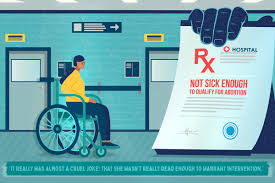
Image by Rommy Torrico
Shutterstock

When she arrived at the public hospital in Texas, the woman was so sick she couldn’t walk. About four months pregnant, she needed an abortion to save her life. A previous pregnancy had led to heart failure. This time she faced a higher risk of death from cardiac arrest that increased as the pregnancy advanced.

But the hospital’s leadership denied her the abortion she needed.

“It was decided that she was not going to be dying at that moment,” Dr. Ghazaleh Moayedi, who cared for the patient, told Rewire.News. “It really was almost a cruel joke: that she wasn’t really dead enough to warrant intervention.”

Many of the poorest and sickest patients end up at public hospitals when their pregnancies go wrong. But little-known laws in 11 states—Arizona, Kansas, Kentucky, Louisiana, Mississippi, Missouri, North Dakota, Ohio, Oklahoma, Pennsylvania, and Texas—prohibit abortion care in various kinds of public facilities, according to an analysis conducted by the Guttmacher Institute for Rewire.News. Louisiana, Mississippi, Ohio, Oklahoma, and Pennsylvania allow exceptions to the laws for victims of rape or incest, but the latter three states require the crime be reported to authorities. Only Mississippi and Texas make allowances in cases where the fetus can’t survive. Although exceptions exist in all 11 states if a patient’s life is in danger, hospital officials are free to interpret what that means and thereby deny abortion care to the sick and dying.

Such scenarios recall the days before abortion was legalized nationwide, when hospital panels approved cases on an individual basis if a patient’s life was in danger. Even after the U.S. Supreme Court established the right to abortion in 1973, many hospitals have refused to provide the care for a range of financial, religious, or political reasons. While many of the laws targeting abortion in public facilities date back decades, the Guttmacher Institute, which monitors anti-choice legislation, did not have a list until Rewire.News requested one, nor does NARAL Pro-Choice America track these measures. Elizabeth Nash, senior state issues manager at Guttmacher, said the laws, often passed years apart, may have been overlooked because they were never part of an obvious trend—or because there are so many attacks on abortion, it’s hard to highlight them all.

Abortion is among the safest medical procedures performed in the United States. In 2013, 89 percent of abortions took place in the first 12 weeks of pregnancy, and two-thirds were at or before eight weeks. Generally, these early abortions are easily handled by outpatient clinics, which tend to be far more affordable than hospitals. Major complications occur in less than half a percent of first-trimester abortions. Roughly 10 percent of abortions occur between 13 and 20 weeks, and while risks increase as pregnancies advance, most of these safely happen in clinics too. An extremely small percentage of abortions take place later in pregnancy; due to legal barriers, violent threats, and even the murder of physicians, there are few clinics left to provide such care.

But patients with medical conditions that make pregnancy and labor dangerous also need higher levels of care to manage risks such as hemorrhaging or cardiac arrest during an abortion. Outpatient clinics will often refer such patients to hospitals, where about 4 percent of abortions take place. Some states also require abortions after a certain point in pregnancy to be performed in a hospital.

When hospitals in states with restrictive policies deny care to sick patients, providers may face a wrenching choice: Perform an abortion in an outpatient setting for someone who would most safely be seen in a hospital, or refuse care to a patient who might die without it.

In Texas, a 2011 law effectively bans abortion in “hospital districts”: publicly funded entities that provide subsidized care to the poor. The only exceptions, at least for now, are cases where the fetus can’t survive outside the womb or the patient’s condition “necessitates the immediate abortion of her pregnancy to avert her death or to avoid a serious risk of substantial impairment of a major bodily function.” (A Texas lawmaker just introduced legislation to repeal the first exception.) Access to abortion is so limited in Texas that it’s difficult to pin denials of care like the one Moayedi described on any single measure. Some hospital districts refused to provide abortions except in cases of life endangerment even before legislators enshrined these restrictions in law.

When Moayedi broke the news, the patient was devastated. She was too ill to be seen in an outpatient clinic that lacked advanced resuscitation and heart monitoring equipment. Her options were to travel to New Mexico and pay thousands of dollars for a hospital abortion there—which she couldn’t afford—or continue a pregnancy that might kill her. Like millions of people in Texas, she lacked health insurance.

Moayedi doesn’t know what happened to the patient. She never saw her again.
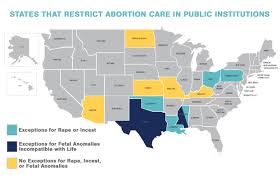
Too Sick for a Clinic, Not Sick Enough for a Hospital

After she moved to another part of Texas, Moayedi appealed to a different public hospital for a patient with a pregnancy condition that put her at risk for complications including hysterectomy and hemorrhaging. The case seemed urgent to Moayedi, who had already watched one patient who carried a pregnancy to term with this condition require a 13-unit blood transfusion—more blood than a human body typically contains.

Again, hospital leadership said no to the abortion.

“The response was that it was not actually imminently life-threatening, that sometimes people lived from the condition and so they would not intervene,” Moayedi said.

This time, Moayedi was able to refer the woman to a private hospital.

When such patients can’t find a willing hospital where they can afford care, it puts outpatient abortion providers in an unsettling bind. Doctors in multiple states told Rewire.News they sometimes perform abortions in clinics that should ideally be done in a hospital, because the alternative is to force patients to continue a potentially fatal pregnancy. Freestanding clinics generally lack the equipment to perform emergency hysterectomies or blood transfusions. (Anti-choice laws that require abortion providers to have hospital admitting privileges purport to address this concern. But such policies are intended to close clinics, not make patients safer; under existing federal law, hospitals must already accept patients in emergencies.)

Dr. Bhavik Kumar, an abortion provider at a stand-alone facility in Texas, said he recently safely performed an abortion for a patient whose placenta was in danger of growing into her cesarean-section scar. Another doctor had recommended the woman have her abortion in a hospital, but she said two hospitals—one that was part of a public hospital district, the other a faith-based nonprofit—refused to do the procedure. In New York, where he trained, Kumar said he “absolutely” would have referred this patient to a hospital. In Texas, he had no other option.

“For this patient, the safest thing is for her to be not pregnant as soon as possible,” Kumar said.

Dr. Carley Zeal has seen this play out in Missouri, which has a ban that prevents providers in public facilities from even referring for abortion, as well as a 72-hour waiting period, restrictions on public and private insurance coverage of abortion, and targeted regulations that have shuttered all but one clinic in the state. “Because access is so restricted, and there are so few places for people to go, we practice at the brink of what we find safe,” Zeal said. “We do as much as we can in an outpatient center [that] we consider possibly safe.”

Zeal faced this same bind when she worked at an abortion clinic in neighboring Oklahoma, which has similar restrictions on insurance and public facilities and where—as in several states with similar laws—more than a quarter of hospital beds are in Catholic facilities that oppose abortion on religious grounds.

“There were definitely patients that were referred [to the clinic] for abortion services for a life-endangering pregnancy for medical co-morbidities that in other places would definitely warrant an in-hospital procedure,” Zeal said. “But that just was not an option for them, because there was no way they could access a hospital that would provide the service.”

The patients most affected by these laws are those too sick to be seen in outpatient clinics, but not sick enough for their hospital to allow an abortion. Patients with uncontrolled diabetes, for example, may end up having to travel hours for care, Dr. Meredith Pensak, an OB/GYN in Ohio, told Rewire.News.

“They are not sick enough that their life is at risk, but they’re too sick to be safely done in a freestanding abortion clinic,” Pensak said. “So we have to wind up sending them away to a hospital setting,” in another city or out of state.

Compounding existing restrictions on public funding of abortion in the state, Ohio’s 2011 law bans public facilities, including those at state universities, from providing abortion except when the pregnancy results from rape or incest that has been reported to the police, or when a pregnancy endangers a patient’s life.

Chrisse France, executive director of the Cleveland abortion clinic Preterm, said it’s not unusual for providers there to deem someone too sick for outpatient care. That patient may have nowhere else to go. Private hospitals may refuse to accept her if she is uninsured or using Medicaid, which in Ohio and most other states covers abortion only for rape, incest, or life endangerment. And the public hospital, typically a safety net for poor patients, is out of the question.

“She cannot be seen at our public hospital unless pretty much she’s going to die today or maybe tomorrow,” France said. “For example, if she has cancer and needs chemo—and going without chemo is obviously bad for her health—and she wants an abortion, they can’t do it unless she’s literally ready to die.”

“Death by a Thousand Cuts”

In Ohio, as in most of the 11 states with laws targeting public facilities, there is no exception for fetal anomalies. In December 2018, Chelsea, who asked Rewire.News not to use her last name, was about 15 weeks into a planned pregnancy when a specialist at University of Cincinnati Medical Center told her that her fetus had triploidy, a condition where three sets of chromosomes develop in each cell instead of two. Babies with triploidy are stillborn or die shortly after birth.

The news devastated Chelsea, who had suffered a miscarriage months earlier. The condition also put her at higher risk for choriocarcinoma, a fast-growing cancer, and preeclampsia, a potentially deadly pregnancy complication characterized by high blood pressure. Chelsea’s blood pressure had already been unusually high. Then the doctor delivered the final blow: Affiliated with a public university, the hospital would end her pregnancy only once Chelsea was too sick to continue it.

“My head was spinning because of the information that I was being given, but I just felt like I was on an alien planet,” Chelsea told Rewire.News. “There was no question in my mind: I’m not going to risk my organ function to carry a non-viable pregnancy to term.”

The “best-case scenario [was] the baby would be stillborn, or the baby would suffocate to death, which to me was not something that I was willing to put my child through,” she said.

University of Cincinnati Medical Center did not respond to requests for comment.

In greater Cincinnati, the last private hospital to perform abortions for fetal anomalies reportedly stopped doing so in late 2015. Deepening Chelsea’s stress was the fact that Ohio was on the verge of eliminating the procedure she needed; the week of her diagnosis, state lawmakers approved a ban on the most common and safe method of second-trimester abortion, with no exception for fetal anomalies. The day after the doctor called to confirm her diagnosis, Chelsea wrote a letter to one of the bill’s co-sponsors, Ohio Republican Sen. Louis Terhar.

“I cannot have a dilation & curettage (D&C) in a hospital like I did with my last loss, as this baby has a heartbeat,” Chelsea wrote. “Instead I have to go to an abortion clinic with doctors and staff that I do not know. I have to go in with protesters screaming at me on the worst day of my life. I am praying for a miscarriage. I never thought I would say that after experiencing one before. But I thank God termination is an option for people like me.”

Chelsea called Planned Parenthood, where she needed three visits to comply with Ohio’s 24-hour waiting period: One for counseling and an ultrasound, one to sign a consent form after the doctor who would perform her procedure had signed it, and a third for the abortion. She was also forced by law to read a packet about how she could instead parent her child—something she desperately wanted to do—or put her baby up for adoption. Each barrier felt like another blow.

“It just feels like death by a thousand cuts,” Chelsea said. “I kept saying, stick the knife in and keep twisting it, because it just made a bad situation horrific.”

Fortunately, she was healthy enough to be seen in a clinic. Unlike the hospital, Planned Parenthood didn’t offer general anesthesia, although Chelsea would have preferred to be asleep. Three days after her procedure, Ohio Gov. John Kasich signed the law banning the surgery she had undergone. (The law is not yet in effect; Ohio providers have filed a lawsuit challenging it.)

“My Hands Are Tied”

Many of the laws banning abortion in public facilities date back to the 1970s and 1980s, but some states, including Texas, passed measures in recent years to target specific programs for abortion care or training, Elizabeth Nash of the Guttmacher Institute told Rewire.News. This, in turn, has worsened a trend for would-be providers that was set in motion in the 1970s by the Hyde Amendment, which bans federal funding for most abortions.

“Once the Hyde Amendment was passed, and Medicaid stopped covering the costs of abortion for many states, hospitals stopped performing them because they weren’t getting reimbursed for them,” Jenifer Groves, who directs abortion clinics in New Jersey, Pennsylvania, and Connecticut, told Rewire.News. “And so that pushed the procedures out into the clinics, which meant that residents didn’t have anybody to train on, unless there was a program in the clinic.”

In 1989, the Supreme Court upheld a Missouri law that included a ban on abortion in public facilities, with an exception to save a patient’s life. Since then, anti-choice activists have widened their assault.

“Over time, abortion opponents have been adding on to this idea of what is a publicly funded abortion,” Nash told Rewire.News. State lawmakers have targeted abortion coverage in public employee health plans, transfer agreements between abortion clinics and public hospitals, and funds used by Planned Parenthood for non-abortion services.

Amid a national rise in maternal mortality, the patients most affected by restrictions on public hospitals are people with pregnancy complications often exacerbated by racism or poverty. They are also among those most at risk for dying from the health issues they face; the leading causes of maternal death include cardiac conditions and preeclampsia, along with infection and hemorrhage.

There’s no data on how many patients who die in childbirth were denied an abortion they sought for health reasons, but there is evidence linking state limits on abortion to worse outcomes for maternal health.

“People’s inability to access the care that they need because of [anti-choice limits on] public insurance, religious restrictions, and anti-abortion politics may worsen a maternal health crisis, and all of this is preventable,” Monica McLemore, assistant professor in the Family Health Care Nursing Department at the University of California at San Francisco, told Rewire.News.

Public hospitals, nationwide, see a higher percentage of poor patients than private hospitals. Low-income patients who are denied abortion care at these institutions are less likely to be able to get to another facility that can help them. Black women, who are three to four more times more likely to die from pregnancy-related causes than white women, are more likely to have public insurance and to give birth in Catholic hospitals, where care is restricted by religious rules.

Indeed, Catholic hospitals, which make up one in six acute-care beds nationwide, have sent miscarrying patients home while bleeding and in pain under religious directives that ban most abortions. A doctor at a Catholic hospital in Wisconsin told Rewire.News she had to wait overnight for a patient’s temperature to soar—a sign of infection—before she could end the pregnancy the woman was losing at 18 weeks.

At some hospitals subject to the public facilities laws, there’s a similar policy. A doctor in the Midwest, who requested anonymity, said that her institution waits for patients to run a fever if their water breaks long before fetal viability—a scenario where infection is all but inevitable.

“For a patient who has the means to leave the hospital, go to another hospital, and get better medical care, she can do that,” the doctor said. “But for patients who don’t have the means to travel, or maybe the medical savvy to know that that’s an option, they stay until they have a fever and then we can induce them.”

These situations present a moral dilemma for providers.

“I’ve had this conversation with my colleagues, you know: Do we tell a patient, ‘We think you should leave against medical advice, and then we think you should just walk into this other hospital that can take care of you’?” the doctor said. “What are the legal and ethical ramifications of that?”

Because of her hospital’s policies, the doctor in the Midwest said she has seen patients remain pregnant after they were unable to access an abortion to preserve their health. Discussions about whether to allow an abortion in each case can involve an ethics board, risk management officials, high-risk OB/GYNs, and other specialists. In one case, a patient who had suffered cardiac arrest shortly before getting pregnant did not meet the hospital’s threshold for life endangerment and was unable to afford to travel and pay for an abortion at the nearest hospital that would see her, about four hours away. She ended up miscarrying in her second trimester. In another case, a patient who was dying from metastatic cancer needed abortion care. The hospital took so long to deliberate, she miscarried too.

“Our conversation should have been like, ‘How can we help you heal and meet whatever your goals are in this terrible situation’, and not about this stupid law,” the doctor said.

“My hands are tied,” she continued. “I can’t do what’s right for the patient.”

Source

Restrictions on use of aid money to be set aside following abortion reform in Ireland

Taoiseach Leo Varadkar and Tánaiste Simon Coveney during the Government’s launch of A Better World, February 28th. Photograph: Brian Lawless/PA Wire

A ban on the use of Irish government aid money to fund abortion services in developing countries is likely to be set aside as a consequence of the changes to the legalisation on abortion in Ireland.

The Department of Foreign Affairs says it will launch a new initiative on “sexual and reproductive health and rights” in the developing world as part of the work of Irish Aid, the development aid programme of the government.

The new plan is likely to take account of the changed Irish position on abortion and will set aside a previous rule against funding abortion. The ban on funding for abortion was in place because of a rule that aid should not be used for purposes in conflict with domestic Irish policy. In the past, Irish embassies abroad have specifically requested of aid recipient countries that they do not use Irish funding for abortion services.

In a statement, the department said: “Coherence with our domestic policies has always been a key priority for Ireland in our international development programmes and this will continue to be the case.

“With regard to sexual and reproductive health rights, we are liaising very closely with other government departments, in particular the Department of Health, and we are currently engaged in analysing the implications of the changes in our national legislation for our work in this area,” the department said.

Following the repeal of the constitutional ban on abortion in the 2018 referendum, abortion services became legal in Ireland on January 1st of this year.

Conditions

Previously, Irish Aid said that it did not provide funding for abortion services, and stipulated a condition for aid that it should not be used for such activities as they were in conflict with Irish law.

Last week, Taoiseach Leo Varadkar and Minister for Foreign Affairs Simon Coveney launched A Better World, a new policy on development aid which will guide the work of Irish Aid for the next decade.

It promised “a new initiative around sexual and reproductive health and rights”.

“Access to health services, including access to comprehensive sexual and reproductive health services, is fundamental for realising sexual and reproductive health rights and transforming women’s health outcomes,” the document says.

“Prioritising gender equality” is one of the four priorities of the new policy, along with “reducing humanitarian need”, “climate action” and “strengthening governance”.

Irish Aid provides support to a large number of countries but the department says that its main focus is on sub-Saharan Africa where it has long-term development assistance programmes in eight countries: Ethiopia, Mozambique, UgandaMalawi, Sierra Leone, Kenya, Tanzania and Zambia. Irish Aid also has long-term programmes in Vietnam and supports work in South Africa, ZimbabweLiberiaand Palestine.

Last year, Ireland spent almost €750 million on development aid, and has pledged to reach the UN target of 0.7 per cent of GNP by the year 2030. In cash terms this will require increases of €100-€150 million every year for the next 10 years, Mr Coveney said at the launch of A Better World.

He said Ministers discussed and approved the long-term commitments at the Cabinet meeting last week, and were committed to making the choice to fund projects in the developing world in the knowledge that this would impact on budgets at home. However, there is no statutory obligation to increase or maintain aid budgets which were cut back during the years of austerity.

Source


House Democrats want the Trump administration to explain recent changes that reshape the federal government’s family-planning grant program.

In a letter to the Department of Health and Human Services (HHS), House Energy and Commerce Committee leaders said the administration’s new rule undermines congressional intent for the program by reducing — instead of increasing — access to health care.

“We have serious concerns regarding the final rule’s compliance with the Title X statute, the public health implications of this action, and the administration’s rationale for these changes,” the Democrats wrote to HHS Secretary Alex Azar.

The letter was signed by Energy and Commerce Chairman Frank Pallone Jr. (D-N.J.), Health subcommittee Chairwoman Anna Eshoo (D-Calif), and Oversight and Investigations subcommittee Chairwoman Diana DeGette (D-Colo.).

Under the rule, released late last week, family planning clinics that provide abortions or refer patients for abortions will not be eligible for federal funds under the Title X program.

The rule requires women’s health clinics to be “physically and financially” separate from abortion providers to be eligible for Title X grants, which fund organizations providing reproductive health services to low-income women.

The Democrats want HHS to explain the evidence that justifies the need for physical and financial separation. Conservative groups celebrated that the rule effectively cuts tens of millions of dollars in funding for Planned Parenthood, which offers both family planning as well as abortion.

Clinics will also not be allowed to refer women to other facilities for abortions, or promote or support abortion as a method of family planning.

“The success of Title X is largely due to the network of qualified family planning providers that have implemented the program’s goals since its creation. It is disturbing that the administration has chosen to undermine the ongoing success of this program by finalizing this rule,” the Democrats wrote.

Source: https://thehill.com/policy/healthcare/432202-house-democrats-demand-trump-administration-justify-new-abortion-gag-rule

Since 1973, many pro-choice activists have been wedded to a romantic vision of federal judges as the ultimate protectors of women’s rights. But that dream hasn’t aligned with reality. In fact, the Supreme Court has refused to treat reproductive freedom like other fundamental rights since the late ’80s, shifting the nation’s most contentious debate to the rough and tumble of state politics. Opponents of reproductive rights have taken advantage of that retreat by electing anti-abortion politicians who, in turn, have pressed for ever tighter restrictions.

The Supreme Court’s refinement of the landmark Roe v. Wade decision has paved the way for opponents of abortion to block a woman’s access to care at every turn. They’ve enacted waiting periods (from 24 to 72 hours), mandatory information sessions, bans on medical abortion, prohibition of abortion based on fetal anomaly or disability, invasive procedures like trans-vaginal ultrasounds, and disturbing laws like Indiana’s requirement that fetal remains be cremated or buried.

And just this month, the latest and most egregious bill comes from Tennessee where a House committee voted 15-4 in favor of a law which bans nearly all abortions the moment a fetal heartbeat is detected. That’s at about six weeks, which is around the time many women realize that they’re pregnant.

The Supreme Court has turned a blind eye to these restrictive laws, using a vague legal test to judge a law’s constitutionality: Does the law impose an “undue burden” on a woman’s right to end her pregnancy before a fetus is viable or put her life or health at risk after that point?

But with Brett Kavanaugh’s confirmation, the Roberts Court is now ready to test the limits of Roe v. Wade once again. That’s why all eyes will be on the next term when a Louisiana law will come before the Supreme Court.

THE 2014 LOUISIANA law is merely another gambit in the anti-abortion activist playbook, which often calls for thwarting a pregnant woman’s access to care. Eventually, the hope is that she will give up and carry the baby to term, whether or not she has the emotional and financial resources to care for a child. These tactics are especially burdensome on the poor because those most affected by these laws often cannot travel across state lines for help or make multiple trips to receive the procedure.

Slyly billed as a women’s health initiative, the Louisiana law requires every doctor who performs abortions to have “active admitting privileges” at a hospital within 30 miles of a clinic. (Note that legal abortions have few health risks; complications are almost unknown.) The legislators knew this law would derail providers, and sure enough, hospital administrators impeded qualified physicians at every turn. When a longtime abortion doctor applied for privileges at his local hospital, the hospital administrator informed him that it was too “controversial” for the institution to be associated with his practice; instead, the doctor’s request had to first be vetted by the hospital’s “lobbyists.” Although he eventually received limited privileges with conditions, most Louisiana abortion providers never heard back from the hospitals to which they applied. Unable to comply with the new law, the three women’s health clinics left in the state are now at risk of closing.

This result came as no surprise in Missouri where a similar law led to multiple clinic closings. Now only a single clinic serves the entire state, forcing women to travel long distances, in some cases hundreds of miles, to obtain an abortion.

The federal district judge overseeing a challenge to the Louisiana law ruled that because the hospital privileges requirements would significantly reduce the number of clinics and doctors who could legally provide care, it created a major hardship for its most impoverished citizens. (The state already required its citizens to make two separate trips to their providers: the first to undergo mandatory counseling and an ultrasound; the second, only after a 24-hour waiting period, to receive the actual procedure.)

In contrast, a 2-1 decision in the federal appeals court sitting in New Orleans accepted at face value the state’s claim that the privileges requirement promoted women’s health and that four of the five doctors had not made enough efforts to obtain privileges.

That’s when the US Supreme Court stepped in. Chief Justice John Roberts surprised many conservatives February 7 when he joined the Supreme Court’s four liberals to temporarily block Louisiana’s law, finding that the challengers would experience a hardship if the law were enforced and that they had shown “a fair prospect” of victory.

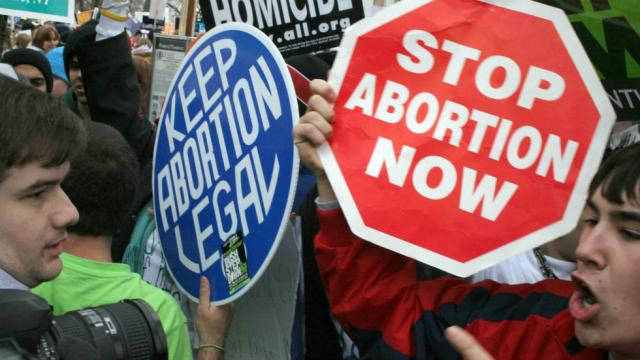
WASHINGTON, DC - JANUARY 18: Protesters on both sides of the abortion issue gather in front of the U.S. Supreme Court building during the Right To Life March, on January 18, 2019 in Washington, DC. The Right to Life Campaign held its annual March For Life rally and march to the U.S. Supreme Court protesting the high court's 1973 Roe V. Wade decision making abortion legal. (Photo by Mark Wilson/Getty Images)
The Supreme Court has turned a blind eye to restrictive laws, using a vague legal test to judge a law’s constitutionality: Does the law impose an “undue burden” on a woman’s right to end her pregnancy before a fetus is viable or put her life or health at risk after that point?
Mark Wilson/Getty Images

WHILE ABORTION RIGHTS advocates breathed a collective sigh of relief, this last-minute reprieve should not be seen as a bellwether of how the Supreme Court will rule on abortion rights in the future.

Reproductive freedom advocates lost support when Justice Anthony Kennedy retired in July 2018. He helped save Roe v. Wade in 1992 by co-authoring the plurality opinion in Casey v Planned Parenthood, but also was responsible for watering down legal protections.

And with the appointment of Kavanaugh to his seat, pro-choice advocates have more reason to worry. As a federal appeals court judge, Kavanaugh had voted against a pregnant teenage immigrant in federal custody who sought an abortion, using popular anti-abortion rhetoric in accusing his colleagues of creating a right to “immediate abortion on demand.” Predictably, Kavanaugh also voted against a stay in the Louisiana case. He wanted to uphold the hospital privileges law, even though it didn’t seem supported by medical necessity, and force doctors to try harder to comply with it even when it seemed futile.

Many freedom of choice advocates hope that Roberts will rule in their favor on the case’s merits. Indeed, Roberts has shown that he cares a great deal about the institutional reputation of the federal judiciary. When faced with the prospect of striking down the Affordable Care Act in 2012, for example, he was reportedly troubled as he tried the ruling on for size, because such a decision would involve striking down a president’s signature accomplishment, making the Court appear overtly political. He worried that such a dynamic might erode the Court’s prestige, which depends entirely on its power to persuade.

But make no mistake: Roberts is no closet defender of reproductive freedom. He has derided the notion of privacy as a “so-called right,” and as a lawyer argued that Roe was “a tragedy.” In fact, he’s never met an abortion regulation that he thinks runs afoul of the Constitution. If he follows up his vote to block the Louisiana law with a vote to strike it down next term, it would mark the first time he actually enforces Roe.

In fact, it’s likely that Roberts will try to vote with conservatives. To do so, he will have to grapple with Whole Woman’s Health v. Hellerstedt, a 2016 Supreme Court decision that struck down a remarkably similar Texas law requiring abortion providers to have hospital privileges. If there’s no way to distinguish that precedent with a straight face, then his desire to avoid thrusting the Supreme Court into national politics might nudge him to join, grudgingly, a narrow ruling that invalidates the Louisiana law.

Even if Justice Roberts were to help strike down Louisiana’s law, it would not augur any major shift on the Court’s thinking about a person’s constitutional right to terminate a pregnancy, which can already be restricted in many ways both large and small. Nor would it signal newfound love for pro-choice rights on the part of Roberts. The law’s challengers would only win because Roberts could find no daylight between the Texas and Louisiana statutes.

Some federal judges will surely take advantage of the solidly conservative bloc on the high court by becoming more ideologically aggressive, teeing up lawsuits to further narrow Roe or overrule it completely. That’s what happened in the Louisiana case, as two federal judges on the appeals panel engaged in major contortions to rewrite the findings made by the trial judge — a highly unusual move.

Meghan McMurray, right, of St. Paul, Minn., listens to a speaker during an anti-abortion rally on the 33rd anniversary of Roe v. Wade, the U.S. Supreme Court decision that legalized abortion, Sunday, Jan. 22, 2006, at the state Capitol in St. Paul, Minn. (AP Photo/Craig Lassig)
The Supreme Court’s refinement of the landmark Roe v. Wade decision has paved the way for opponents of abortion to block a woman’s access to care at every turn.
Craig Lassig/ASSOCIATED PRESS/file 2006

WHERE DOES THIS leave Americans who believe that reproductive freedom is about liberty and equality? There’s a reason abortion foes have turned to the states; choice advocates should do the same.

State protections in general are more secure because state courts are the final arbiter of state law. They can’t be overturned by the Supreme Court unless the law or constitution directly conflicts with federal law. Further, states can grant their citizens more rights than the US Constitution does. Many states, for example, have read their constitutions more broadly to protect their residents’ right to free expression, religious liberty, and against unreasonable searches and seizures.

When states protect reproductive rights, they are almost certainly acting in accordance with the wishes of constituents. There are many more democratic mechanisms to rein in runaway judges at the state level than at the federal level, where impeachment is the only remedy if a federal judge with life tenure goes too far. In all but two of the states that protect reproductive rights, justices must stand for reelection; a governor, too, is much easier to dislodge than a president; and that’s all on top of impeachment and judicial qualification commissions as mechanisms to remove a state court judge.

This local approach has already led to some surprising and enduring pro-choice successes. Overall, 12 states currently protect reproductive rights under their own state constitutions, including Massachusetts, Florida, Iowa, Montana, and New Mexico. They’ve done so by declaring a person’s “right to reproductive choice” as “necessary for . . . civilized life and ordered liberty.” In Montana, the high court called the right to seek such services an essential part of “a woman’s moral right and moral responsibility.”

Most states protect reproductive rights by relying on concepts of privacy built into their constitutions, something that the US Constitution lacks. Ten states — Alaska, Arizona, California, Hawaii, Illinois, Florida, Montana, Louisiana, South Carolina, Washington — contain a privacy provision, though some have not yet applied such language to protect reproductive rights. Fourteen more have ruled that their constitutions imply a right to privacy even in the absence of clear language. Minnesota’s Supreme Court extended an implied right to privacy to encompass abortion in 1995, saying, “We can think of few decisions more intimate, personal, and profound than a woman’s decision between childbirth and abortion.” Perhaps even more surprising, Tennessee’s Supreme Court did the same in 2000, holding that the right to choose is an “inherently intimate and personal enterprise.”

Of the states that guarantee reproductive freedom, seven — Alaska, California, Florida, Minnesota, New Jersey, New York, and Tennessee — view choice as a fundamental right, and have even overturned restrictions on public funding of abortions, two things the US Supreme Court has staunchly refused to do.

A few states have even begun to develop the idea that abortion restrictions discriminate against women on the basis of sex. It’s important to note that the US Constitution contains no explicit guarantee of sex equality beyond voting, though it does promise “equal protection of the laws.” An Equal Rights Amendment to the US constitution was proposed in 1972, and thus far has been ratified by 37 states. In 2019, there has been a renewed push to ratify the ERA, so it’s worth repeating the actual language of that amendment here: “Men and women shall have equal rights throughout the United States and every place subject to its jurisdiction.”

This simple call for sex equality at the national level has been opposed by Americans who want to outlaw abortion, as well as slow the recognition of rights for sexual minorities. But this hasn’t stopped voters in a number of states from pushing equality-based arguments to ensure reproductive rights.

Indeed, state-level equal rights provisions have been potent instruments in protecting reproductive freedoms. In 1998, a unanimous New Mexico Supreme Court ruled that a law restricting public funding of abortion violated the state’s ERA. In New Jersey, the highest state court has similarly held that a law that banned public funding of abortion unless the woman’s life was endangered was presumptively unconstitutional because it treated different classes of women unequally.

A Vermont case from 1972 overturned a law that prohibited the help of a doctor to secure an abortion to be “unreasonable, inappropriate, oppressive or discriminatory.” At the end of January, Delaware enacted an ERA. There is even renewed support for an ERA in Virginia, where the measure has passed the Senate on multiple occasions but for the moment remains stuck in the House.

State legislators have also combed their books for old laws that criminalize reproductive decisions. Recently, Massachusetts, Delaware, and New York have repealed such laws ahead of any Supreme Court decisions. Protecting funding that will treat poor men and women more equitably when it comes to necessary medical procedures — including abortion — is another path. In Texas, abortion foes have skillfully wielded funding to deny providers the resources they need.

Several states, including Arizona and Colorado, have liberty of conscience provisions, which offer another path for freedom of choice advocates. These provisions use the idea that terminating a pregnancy is, in certain circumstances, an exercise of faith. Though less developed to date, liberty of conscious provisions offer another way to re-characterize and defend a woman’s interests in equality and control over her own body.

Even in states where voters are generally opposed to reproductive freedom, winning a key office or two can make a huge difference. Two offices critical to the protection of rights in each state are the governor and attorney general. A governor can veto legislation that is hostile to abortion rights, while an attorney general can refuse to enforce a law that is believed to be unconstitutional. In 2018, Ohio Governor John Kasich, a moderate Republican, vetoed a bill that would have prohibited abortion as soon as a heartbeat could be detected. A year earlier, Pennsylvania Governor Tom Wolf vetoed a bill that would have outlawed abortion after 20 weeks and banned the most common procedure used during second-trimester abortions.

Last year, three Indiana prosecutors joined forces to announce that they would refuse to enforce a law that required doctors to report any “abortion complications” to the state health department, saying it would dissuade women from exercising their constitutional rights. While an intriguing exercise of prosecutorial discretion to safeguard the right to choose, their resistance remained limited because they couldn’t secure the support of the state’s attorney general, who could have done more to block an abortion regulation that goes too far if he had been sympathetic.

DESPITE THE MORAL complexity of the abortion issue, polls consistently show that reproductive freedom is valued by the majority of Americans. But even when a national politician is generally sympathetic to these rights, he or she usually avoids taking a clear stand on such a polarizing issue. It’s even harder to get a national figure to focus on the needs of poor people in difficult circumstances, or the plight of their caregivers. That’s why this issue will continue to play out at the state and municipal levels.

Fortunately, even as the nation’s highest court moves to restrict citizens’ freedoms, Americans have plenty of power to secure liberty and equal healthcare for everyone.

Source: https://www.bostonglobe.com/ideas/2019/02/28/abortion-goes-trial-again/PidLaRq6TvS66AYVf7wrKL/story.html

The president’s incendiary tweets about a recent U.S. Senate vote represent an escalation in anti-choice rhetoric that could lead to more violence against abortion providers.

President Trump’s tweets this week about the defeat of a misleading anti-choice U.S. Senate bill were irresponsible and dangerous.
Win McNamee/Getty Images

President Trump’s tweets this week about the defeat of a misleading anti-choice U.S. Senate bill were irresponsible and dangerous. The tweets, far from being scientifically or medically accurate, were intended to incite extremists.

This type of rhetoric, absurdly chargingthat Democratic lawmakers “don’t mind executing babies AFTER birth,” could lead to more attacks and violence against abortion providers, staff and patients—violence that has increased since Trump took office. This isn’t the first time the president has accused his political opponents of “executing” babies.

The National Abortion Federation (NAF) has kept close track of anti-choice threats and violence, which have seen a massive uptick since Trump won the 2016 election: “With anti-abortion extremists feeling emboldened by the current political environment, NAF members reported an escalation of hostility and targeted activity in 2017. Trespassing more than tripled, death threats/threats of harm nearly doubled, and incidents of obstruction rose from 580 in 2016 to more than 1,700 in 2017,” according to an NAF report released last year. “We also continued to see an increase in targeted hate mail/harassing phone calls, clinic invasions, and had the first attempted bombing in many years.”

In response to the president’s Twitter tirade and legislative attacks, people who have had abortions later in pregnancy are sharing their stories. These are personal, profound, sometimes tragic, sometimes hopeful accounts. But we should not need to compel people to share their stories—unless they want to—in order to protect access to abortion care. We need to elevate the experience and wisdom of those who have had abortions to educate everyone. And we need to respect, not vilify, the providers who offer much needed medical care to so many.

In Colorado and around the country, we have seen shootings, fires, bomb threats, and a steady stream of menacing protesters making the lives of patients and providers difficult. In November 2015, three people were killed in an attack on a clinic in Colorado Springs; the attacker, who repeated rhetoric from an anti-choice propaganda campaign at his court hearing, has still not gone to trial. Whether these domestic terrorists were encouraged from a pulpit, a podium, or Twitter, we should take the repetition of dangerous rhetoric and its potential impact seriously. So should the president of the United States.

The vast majority of people in the United States—more than seven in ten—support the constitutional right to choose abortion established in Roe v. Wade. That number is even higher in Colorado, where I have worked to advance abortion rights. And the 2018 midterms reinforced this notion by sweeping a wave of pro-choice legislators into office, even in supposedly purple districts. In my view, this wave was a direct repudiation of the attacks on women and their health care we’ve heard for the past two years. Pro-choice candidates did not run on abortion, but they didn’t run from it, and those candidates won across the country.

With their power slipping at the grassroots level, reproductive rights opponents are getting louder, more frenzied, more extreme, and more determined to use access to abortion care and peoples’ lives as a political football. We’ve seen this with the lies and attacks on the legislation in Virginia and New Yorkintended to remove barriers to care. We saw it with Trump’s call in his State of the Union address for a ban on abortion care after 20 weeks, and with the Senate bill on Monday opposed by major medical organizations.

The increasingly extreme and violent language around abortion has a desperate quality to it. If anti-choice activists were serious about reducing the abortion rate, they would join with us on policies that are proven to work: comprehensive sex education and access to contraception. They have refused. Every. Single. Time. Because this is not what the anti-choice movement is about. It is about demonizing patients, controlling women, and intimidating doctors out of providing safe and compassionate health care.

Abortion is a part of health care. Period. The notion of separating it from the range of care, and weaponizing it against people, has become extremely dangerous. I recognize that the particulars of a medical procedure are something many people do not wish to think about or discuss. This discomfort has been successfully exploited by anti-choice organizations for years. Consider, for a moment, any other medical procedure. If you are not the patient accessing that procedure, do you truly believe you can or should weigh in when a doctor and patient discuss options? Would you want government to get between you, your doctor, and any other medical decision—especially one with a significant effect on your life? Is there any other answer than “no”?

We need to lean in to, not run away from, the belief that abortion is a social good. We need to ensure pregnant people have access to abortion care. We need to lean in to the idea that physicians and patients know best, not politicians. We need to fight back against medically nonsensical, artificial, and dangerous restrictions on abortion care. This is not the time to turn away, but to lean in and remind leaders like Trump that “no means no.”

Source: https://rewire.news/article/2019/02/27/trump-is-inciting-violence-against-abortion-clinics/

CBS Miami / YouTube

While discussing abortion policy on Thursday night, Florida House Speaker José Oliva referred to pregnant women as “host bodies” for fetuses no fewer than five times in one interview, CBS Miami reports. He later apologized, explaining in a statement that he was trying to be “dispassionate.”

Oliva made the comments while discussing abortion in an interview with CBS Miami. Although he says that the issue isn’t a priority of his as a lawmaker, Oliva has consistently voted to restrict abortion access during his time in the Florida legislature.

“The challenge there is that there are two lives involved,” Oliva told interviewer Jim DeFede at one point in the conversation. “It’s a complex issue because one has to think, well, there’s a host body, and that host body has to have a certain amount of rights. because at the end of the day, it is that body that that carries this entire other body to term. But there is an additional life there.”

Oliva also used the term while discussing fetal viability, noting that “as technology moves along, a human body can exist outside of its host body earlier and earlier.”

“And so then one has to think,” Oliva continued, “until what time does the host body have veto power over this other life?”

During the interview, DeFede asked Oliva if his use of the term “host body” was demeaning to women. He replied that he was trying to use “technical terms on both sides.”

“You understand that when this discussion is being had, the fetus is also a person and that is being seen as a fetus,” Oliva replied. “And so we can either use technical terms on both sides or we can just use ‘both lives.’ I’d be happy to do either. The real question is, there are two lives. There is a weight and a quality to both. Both need protection. What is that balance?”

It’s worth noting, however, that in several of his comments, Oliva didn’t use equivalent terminology while discussing pregnant women and fetuses. Instead, he described fetuses as “lives” and women as “host bodies.”

“I mean, the only definition of science of life is something that grows,” Oliva said at one point. “From the moment that conception occurs there begins to be growth. And so scientifically, that’s what it is. But that’s not the question. The question is: What is the value of that life? And is it subordinate to the value of its host body?”

Oliva later released a statement apologizing for his use of the term:

In a recent interview where the very controversial topic of abortion was raised I used the term “host’ to describe a pregnant woman. It was an attempt to use terminology found in medical ethics writings with the purpose of keeping the discussion dispassionate. The reaction undoubtedly shows it had the exact opposite effect. I apologize for having caused offense, my aim was the contrary. This is and will continue to be our societies [sic] greatest challenge. I strongly believe both mother and child have rights and the extent and balance of those rights remain in question. I regret my wording has distracted from the issue. My apologies to all.

State Democrats have condemned Oliva for the remarks, with state Democratic Chair Terry Rizzo saying that “you’d expect to hear this offensive language in the ‘Handmaid’s Tale’ — not from the Speaker of the Florida House of Representatives,” according to the Orlando Sentinel.

Although Oliva said in the interview that restricting abortion wouldn’t be his priority in the new term, he did say that he supports laws that create “cooling off periods” — that is, delays — for women seeking abortions.

Source: https://www.bustle.com/p/florida-lawmaker-jose-oliva-calls-women-host-bodies-in-interview-about-abortion-16441570

Mike Pence and Kellyanne Conway were at CPAC praising President Trump for restricting access to reproductive health care.

Pence touted anti-choice restrictions including the “global gag rule” and drew raucous applause for a law signed by Trump allowing states to restrict state Medicaid funds from going to Planned Parenthood.
MANDEL NGAN/AFP/Getty Images

Vice President Mike Pence and other senior Trump administration officials promoted the president’s anti-choice agenda at this week’s Conservative Political Action Conference (CPAC).

Speaking to a standing-room-only crowd at the conference on Friday morning, Pence touted anti-choice restrictions including the “global gag rule” and drew raucous applause for a law signed by Trump allowing states to restrict state Medicaid funds from going to Planned Parenthood. “Life is winning in America once again,” he said in the speech before taking aim at pro-choice Democrats. “But for all the progress we’re making, tragically, at the very moment that more Americans than ever before are embracing the right to life, leading members of the Democratic Party are embracing a radical agenda of abortion on demand.”

Pence falsely accused Democrats of supporting “infanticide,” referencing an out-of-context quote from Virginia’s embattled governor, Ralph Northam. “Just four short days ago, Democrats in the Senate—including every Democratic senator running for president—voted against a bill that would prevent newborn babies that survived failed abortions from being killed,” he said, referring to the failed Born-Alive Abortion Survivors Protection Act, which is based on the anti-choice myth that doctors are committing infanticide as a form of abortion.

Erica Sackin, senior director of communications for Planned Parenthood Action Fund, expressed frustration with the misinformation peddled at CPAC this year in a statement Thursday. “Speakers at CPAC are delivering tired lies, dangerous ideology, and offensive misinformation about abortion and women’s health care as part of their destructive agenda to take away women’s autonomy and end access to safe, legal abortion,” said Sackin. “Let’s be clear: There is no basis in truth or medicine for any of the comments we heard today from CPAC speakers. It’s women who pay the price when politicians use these lies to push policies that shut down clinics and cut off access to care.”

A common refrain in the first two days of the gathering of prominent conservatives was the claim that Trump is the “most pro-life president in American history.” Pence, White House Adviser Kellyanne Conway, and Susan B. Anthony List President Marjorie Dannenfelser—a Trump ally who gave a speechThursday morning praising the president—all made a version of the claim.

At her CPAC session, Conway tied the administration’s anti-choice stance to its approach to the opioid epidemic, citing the importance of treating neonatal abstinence syndrome (NAS), a set of symptoms that babies may experience after being exposed to a drug in utero.

“One in 100 babies born in this country are already exposed or chemically dependent on some type of drug or substance,” said Conway of the condition. “That’s 150 babies each day struggling to take their first breaths. And since we already have the most pro-life president in American history—just let me get that in there—this is a natural extension of that, is trying to help these newborns.” But as Rewire.News has reported, mothers of babies born with NAS have been criminalized in the United States just for taking a drug prescribed and monitored by their doctors.

U.S. Housing and Urban Development Secretary Ben Carson also commented on abortion in a panel discussion Thursday. Carson, a former brain surgeon, recounted an alleged incident with a patient in which he claims to have talked her out of having a later abortion. “I remember there was a young woman who came to me and she was 33-weeks [pregnant], and the child had been diagnosed with a congenital abnormality. And she was on her way to Kansas to get an abortion, and no one in this area would do it at that late stage. I talked her out of it,” he said to applause from the CPAC crowd.

Carson was a vocal anti-choice advocate on the campaign trail in the 2016 GOP presidential primary.

Source: https://rewire.news/article/2019/03/01/at-cpac-trump-lauded-as-historys-most-pro-life-president/

New York Governor Andrew Cuomo Tuesday night signed the state’s Reproductive Health Act. The Act preserves the right to an abortion if federal law changes. It also removes abortion from the state’s criminal code.

Research consistently finds broad support for at least some access to abortion. A PerryUndem survey released this month found that more Republicans want to keep Roe vs. Wade (49%) than want it overturned (48%). The same survey found that 73% of voters support Roe. Despite this broad support for abortion rights, states continue to pass sweeping abortion restrictions. Some have even moved to criminalize some forms of abortion.

New York’s Reproductive Health Act

New York’s Reproductive Health Act has already been the subject of scare tactics by the far right, who assert that it legalizes abortion up to labor and childbirth. Instead, the Act preserves the legal right to abortion up to 24 weeks. Thereafter, a woman can only seek an abortion to save her life or if the fetus is non-viable. Without this legislative change, an assault on Roe v. Wade could remove access to abortion in New York. It would also force a woman to die rather than receive an abortion if the fetus died and the pregnancy threatened her life after 24 weeks.

The Act also removes abortion from certain sections of the criminal code. This would prevent the state from prosecuting women who seek abortions. Though Donald Trump has asserted that women who seek abortions should be punished, many anti-choice activists insist that the woman is a victim who should face no penalty. Their opposition to this law suggests they may actually support penalties for abortion if given the chance to impose them.

New State Abortion Restrictions

Last week alone, Republicans in Colorado, Indiana, and Texas proposed total abortion bans.

In Colorado, abortion would be classified as murder, and punishable by the death penalty or life in prison.

Indiana’s new abortion restriction also criminalizes abortion, but with an even more onerous twist: the bill is so broad that a miscarriage could be considered abortion, and therefore murder. Because the law labels embryos human beings, it might also lead to the ban of in vitro fertilization (IVF).

A similar bill in Texas would criminalize abortion as homicide, and propose anyone involved in the procedure—doctors, nurses, the pregnant person, and possibly other parties. The bill contains no exception for rape, incest, or severe fetal anomalies. The bill’s sponsor, Tony Tinderholdt, introduced similar legislation in 2017. Back then, he asserted that his bill would “force” women to be “more personally responsible,” and that the legislation would lower the pregnancy rate “when they know that there’s repercussions.”

Do Voters Take Seriously the Threat of an End to Abortion Rights?

The number of state-level abortion restrictions has steadily risen for years. In 2017, the latest year for which data is available, 19 states adopted 63 new abortion restrictions—the largest number of new restrictions passed since 2013. Despite this, many voters don’t take seriously the possibility of an end to abortion rights. Just 42% of respondents to the PerryUndem survey knew that the right to abortion is at risk.

Sixty-three percent of survey respondents said they want their state to protect abortion, as New York just did.

Source: https://www.dailykos.com/stories/2019/1/24/1829093/-New-York-Moves-to-Protect-Abortion-as-More-States-Pass-Abortion-Restrictions-Criminal-Penalties