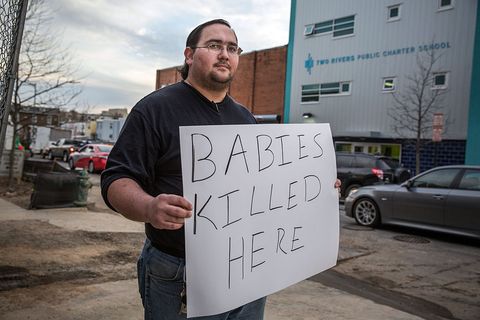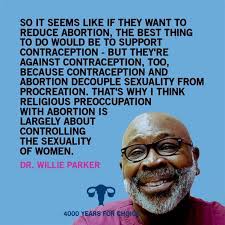
If you believe the social media posts, television screeds, and scare tactics of Republicans, women are murderous by nature. Given half the chance, they’ll undergo invasive surgery to kill a baby for the sheer joy of it. If their unwanted baby is somehow born alive, they’ll happily ask a doctor to snuff out its life.

It’s a nightmarish vision that runs counter to all reason and all evidence. For generations, women have stood at the forefront of every movement to protect human life and dignity. They commit fewer crimes. And though they spend, on average, significantly more time with their children, they’re far less likely to abuse them. When you really start digging into Republican views, it’s hard for them to mask their true feelings: they hate women. They don’t trust them. This depiction of women as infanticidal monsters also ignores hundreds of heartbreaking stories of women who choose to abort children they love, either to spare the child the misery of a few agonizing seconds of life on Earth, or because the child is already dead.

It’s time for liberals to reframe the debate. We need to stop assuming anti-choicers are an audience who will listen to reason or care about the suffering of women and families. The real truth, and the one we must discuss as frequently as possible, is that Republican policies force women to have abortions.

Republicans: Opposing Every Measure That Could Lower Abortion Rates

In 2014, abortion rates reached historic lows. The data suggest this was due to the Affordable Care Act, which made healthcare more accessible to more vulnerable women. Republicans opposed and continue to oppose this piece of legislation.

The same trend holds true with virtually every other policy that could slash abortion rates. Reducing abortion is not a mystery. Researchers consistently identify a handful of policies that could lower abortion rates. Republican lawmakers oppose them all. Those policies include:

  • Comprehensive sex education. States with abstinence-only sex education have the highest teen pregnancy rates, and some of the highest abortion rates. It should come as no surprise that, when teens aren’t taught how to prevent pregnancy, sexually active teens don’t take measures to prevent pregnancy.
  • Free contraceptives. Republicans have doggedly worked to make contraceptives less accessible. Some even want them to be illegal. Many Republicans who support insurance coverage for Viagra and other medically unnecessary drugs think contraceptives should not be covered. A study of teens with access to free contraceptives found that those who got free birth control had 20% as many abortions as teens without access to free birth control.
  • Better birth control. Funding birth control research, including birth control for men, can lower the abortion rate.
  • Supporting a consent culture. When women feel empowered to decline sex, rates of unwanted pregnancy and abortion decline. Republicans remain defenders of rape, telling women to just enjoy it or instructing us all that women lie about rape. Many insist that marital rape should be legal.
  • Improved health care access. Healthcare costs in the U.S. are among the highest in the world, with some of the worst outcomes. Research shows that making health care more accessible, especially by ensuring reproductive health care access to teens, can lower the abortion rate.

How Republican Policies Drive Abortion

Republicans don’t just oppose policies that could lower the abortion rate. They actively promote policies that encourage women to have abortions.

Research on women seeking abortions consistently finds three reasons for the abortion: 1) concern about the woman’s ability to care for other people, including children she already has; 2) the inability to afford a child; 3) the fear that having a child will make it difficult or impossible to finish school or work.

Republicans frequently point to these motives as signs of women’s fundamental selfishness, as if the desire to work or to not live in deep poverty indicates a moral failing. Meanwhile, they continue to push for policies that make life even worse for women who keep their babies. The U.S. has the worst maternal mortality rate in the developed world. For black women, the picture is even grimmer. In states such as Georgia, it is more dangerous for a black woman to give birth than it is for women to give birth in Iraq, Iran, or the West Bank.

What are Republicans doing about this? They’re rejecting Medicaid expansion, which has been shown to save lives. They’re aggressively pushed to reinstate the ability of insurers to deny care to pregnant women. They don’t want health care coverage for everyone—or a guaranteed baseline of care for anyone. They want the fetuses they so aggressively advocate for to be born to mothers who might die, might not be able to afford medical treatment, or might go into bankruptcy because of birth. They claim these “unborn babies” are precious, and then they advocate for insurers to be able to deny them care.

Republican platforms have long included opposition to any sort of welfare or public support for mothers and families. They don’t want to guarantee the babies they claim to care about food at school. They don’t want them to live in safe or affordable homes. They don’t want them to have access to safe or affordable childcare.

minimum standard of maternity leave is “government regulation.” It’s fine to regulate women’s bodies, even to force them to give birth to dead babies or to keep pregnancies that will kill them. But regulation that could allow women to recover from birth and care for their babies is another matter altogether.

They don’t want supportive workplaces. They’ve historically opposed any measure to prevent discrimination at work against mothers or pregnant women. They oppose worker safety regulations, minimum wage, fair labor rules, sexual harassment protections, and any other measure that could keep pregnant women safe at work or ensure that babies have healthy mothers.

At nearly every moment in history, at nearly every chance, Republicans have taken up the mantle of making life worse for mothers and babies. They don’t really oppose abortion at all. They just want to punish women in every way possible. After all, as their social media posts about women who have abortions make clear, they think women are monsters.

Source: https://www.dailykos.com/stories/2019/2/28/1838316/-How-Republican-Policies-Force-Women-to-Choose-Abortion?utm_campaign=trending

The “Born-Alive Abortion Survivors Protection Act,” a piece of legislation that echoed existing laws and medical practices, had little chance of passing in the Senate on Monday evening. And as predicted, it ultimately failed.

But its introduction and subsequent debate underscores something larger and more substantial than the bill itself: a push by the conservative right to reframe the reproductive rights debate toward third-trimester abortions.

In their comments leading up to Monday’s decision on the legislation, Democratic and Republican lawmakers painted starkly different pictures the bill. Republican Sen. Mitch McConnell called it a “straightforward” piece of legislation, while Sen. Tammy Duckworth, a Democrat from Illinois, called the bill a “political stunt.”

The legislation — which fell seven votes short of the 60 it needed to move forward — would have required doctors to provide care to infants who survive botched abortions, mirroring previously passed legislation from 2002. The only difference between the 17-year-old law and Monday’s was that the most recent one would have imposed fines and potential jail time for doctors who failed to comply.

Abortion rights advocates rebuked the legislation and the rhetoric surrounding it, saying that the situation described in the bill — infants surviving botched abortions — simply does not exist. “When you’re providing abortion care, this isn’t something that happens,” Elizabeth Nash, a senior state issues manager at the Guttmacher Institute, said in a telephone interview Monday with CBS News.

“This legislation is based on lies and a misinformation campaign, aimed at shaming women and criminalizing doctors for a practice that doesn’t exist in medicine or reality,” Planned Parenthood Federation of America President, Leana Wen, wrote in an email to CBS News.

Sen. Mazie Hirono from Hawaii called the bill “a solution in search of a problem.”

Still, Republicans posed hypothetical scenarios to argue for the bill’s passage during Monday’s Senate debate. Sen. Ben Sasse, the sponsor of the bill, asked his colleagues to “picture a baby that’s already been born, that’s outside the womb, that’s gasping for air. That’s the only thing that this bill is about.”

Democrats pointed out that doctors are already required by federal law to provide care to infants born alive after an attempted abortion. “It is, and always has been, a crime not to,” Hirono said Monday.

Democratic Senators Doug Jones of Alabama, Bob Casey of Pennsylvania and Joe Manchin of West Virginia joined Republicans in voting to move the bill forward.

The push for the legislation is part of an ongoing attempt by Republicans to shift the debate on reproductive rights to focus on so-called late-term abortions, an area of the abortion debate that’s more controversial than others. Although 60 percent of Americans believe abortion should be generally legal in the first three months of pregnancy, just 13 percent say the procedure should be generally legal in the third trimester, according to a Gallup poll from May 2018.

That shift in rhetoric was evident during Monday’s debate. Nearly every Republican senator who argued in the bill’s favor mentioned Virginia Gov. Ralph Northam’s comments on very late-term abortion, invoking his remarks to imply the embattled Democrat supports infanticide. President Trump also used the rhetoric, falsely saying in a tweet Monday, “The Democrat position on abortion is now so extreme that they don’t mind executing babies AFTER birth….”

Per the landmark 1973 Roe vs. Wade Supreme Court ruling, states may prohibit abortions after a fetus is determined to be viable, or can survive outside of the womb. In certain states, women whose pregnancies have become unviable or jeopardize their own health have legal access to an abortion in the third trimester. But just over one percent of abortions that occurred in 2015, the most recent year for which data is available, were after the patient’s 21st week of pregnancy, according to the Centers for Disease Control and Prevention.

Despite the rarity, rhetoric surrounding third-trimester abortions reignited after New York passed legislation in January protecting abortions late in pregnancy when a woman’s health is endangered. Debate intensified later last month when Virginia lawmakers proposed a similar bill and embattled Governor Northam commented on it.

“As soon as the ink was dry on the New York abortion protections we started to see conservative policymakers raise issues around abortion later in pregnancy, and those attacks were heightened in the aftermath of the Virginia bill,” Nash said. “These attacks, while aimed at abortion later in pregnancy, do double-duty because they also demonize abortion providers as well as the patients, which makes it easier to pass total or near total abortion bans. That is their real goal: to ban abortion outright.”

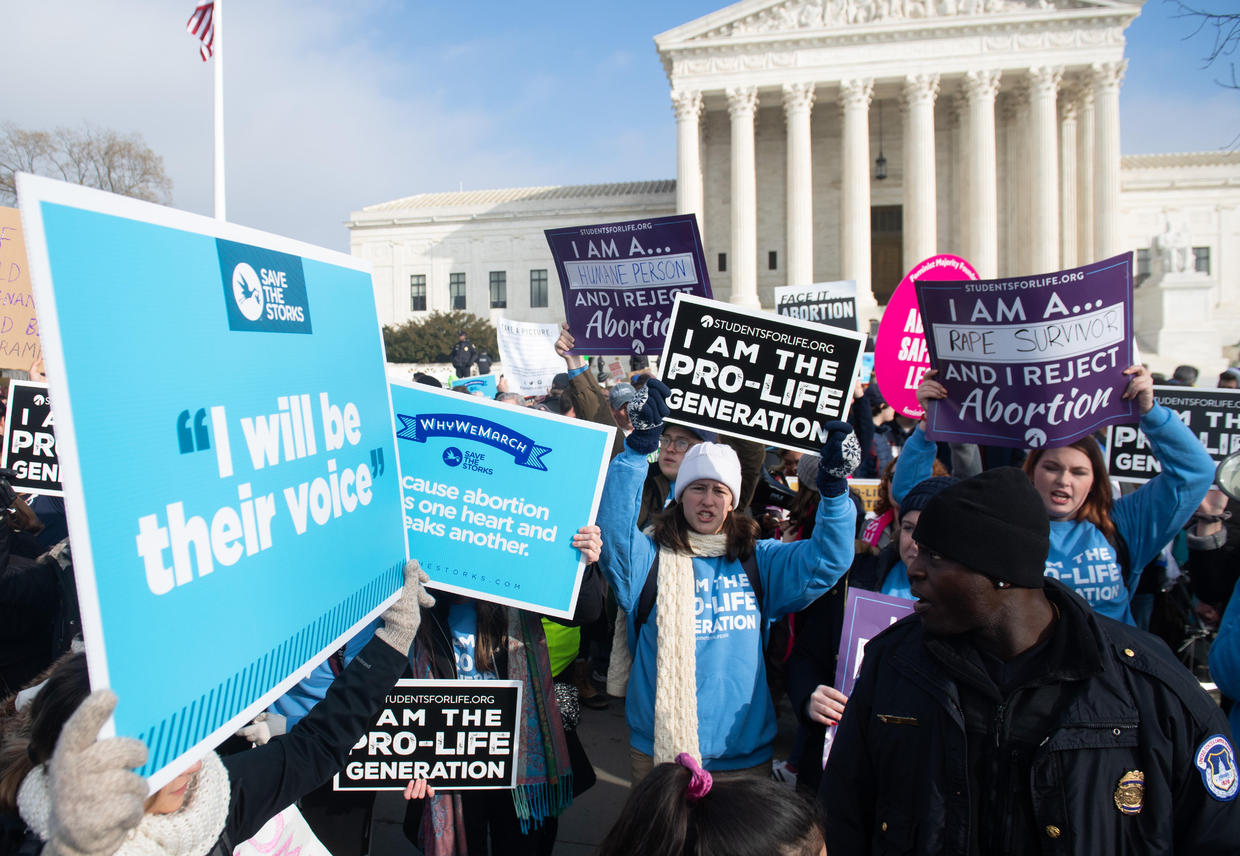
Anti-abortion activists participate in the “March for Life,” an annual event to mark the anniversary of the 1973 Supreme Court case Roe v. Wade, outside the U.S. Supreme Court in Washington, D.C., on Jan. 18, 2019.
GETTY


Source

Arkansas Republicans are ensuring legal abortion will end in the state should Roe v. Wade fall, while GOP lawmakers in Missouri push a so-called fetal heartbeat abortion ban.

Arkansas Governor Asa Hutchinson last Tuesday signed SB 149, which would end legal abortion statewide if Roe v. Wade is overturned.
Alex Wong / Getty Images

Arkansas became the fifth state to have a “trigger law” that would ban abortion if Roe v. Wade fallsabortion restrictions advanced across multiple states, and Republican lawmakers in Texas are still obsessed with ending marriage equality.

Arkansas

Arkansas Gov. Asa Hutchinson (R) last Tuesday signed SB 149, which would end legal abortion statewide if Roe v. Wade is overturned. Except in cases of medical emergency, the “Human Life Protection Act” would make it a felony—punishable by up to ten years in prison—to perform or attempt to perform an abortion. The GOP-backed law does not include any exceptions for rape or incest. The move makes Arkansas the fifth state (after Louisiana, Mississippi, South Dakota, and North Dakota) to have a “trigger law” that would re-criminalize abortion, should conservatives on the U.S. Supreme Court strike down Roe v. Wade. Similar measures are being considered by Republicans in Kentucky and Tennessee. Kentucky’s measure has already passed the state house.

That same day, the house public health, welfare, and labor committee approved a measure that would ban most abortions 18 weeks into a pregnancy. Except in cases of medical emergency, the “Cherish Act” would make it a felony, punishable by up to six years in prison, to perform an abortion if a fetus has reached 18 weeks’ gestational age. Current state law prohibits abortion at 20 weeks’ gestation. The measure now heads to the state house for debate.

In a 71-13 vote, the Arkansas House of Representatives passed HB 1399, which would prohibit state funds from being used to buy or receive gametes or human embryos if it’s known that they would ultimately be destroyed. Certain types of research or procedures would be exempt from the funding ban, including in vitro fertilization and the administration of fertility-enhancing drugs. The “Prohibition of Public Funding of Human Cloning and Destructive Embryo Research Act” is now pending in the state senate public health, welfare, and labor committee.

Georgia

Republican lawmakers on Friday introduced a measure that would require abortion providers to inform their patients that it may be possible to “reverse” the effects of a medication abortion. Four states (ArkansasIdahoSouth Dakota, and Utah) currently require physicians to provide similar information, which has been debunked by the medical community. Georgia is the sixth state this year (after KansasNebraskaNorth CarolinaNorth Dakota, and Oklahoma) to consider requiring physicians to promote the unproven treatment.

Indiana

Indiana’s GOP-held house on Thursday passed HB 1211, a measure that would would make it a felony to perform a “dismemberment abortion” unless it’s necessary to prevent serious health risks to the pregnant person or to save their life. The measure targets dilation and evacuation (D and E) bans—the most common method of performing second-trimester abortions. The bill now heads to the state senate for consideration. The procedure is prohibited in Mississippi and West Virginia, but similar bans have been blocked by courts in seven states. Ohio was the latest state to pass a D and E ban in December. That law is being challenged in court.

State senate lawmakers last week passed SB 201, which would allow nurses, physician assistants, and pharmacists to refuse to participate in an abortion—or prescribe abortion-inducing drugs—if doing so would be contrary to any religious or moral belief. The measure was amended in committee and passed the full state senate by a 39-1 vote.

Minnesota

Lawmakers from both chambers last week introduced measures to ban abortion after 20 weeks. Except in cases of medical emergency, HF 1312/SF 1609 would prohibit physicians from performing or inducing an abortion without first determining the probable gestational age of the fetus. It would be a felony to perform an abortion once a fetus has been determined to be at 20 weeks into pregnancy. The measures are based on copycat legislation drafted by the National Right to Life Committee (NLRC). Seventeen states ban abortion at about 20 weeks post-fertilization, according to Guttmacher.

Missouri

The state house advanced a couple anti-abortion measures last week. A house panel approved HB 339/HB 680—which would ban abortion after 20 weeks unless it’s necessary to prevent a serious health risk to the pregnant patient. A separate panel—the house administrative oversight committee—approved HB 126, which would prohibit the performance of an abortion once a fetal heartbeat has been detected. A fetal heartbeat can be detected as early as six weeks into a pregnancy, well before many people realize they are pregnant. Advocates refer to so-called heartbeat bans as total abortion bans. Lawmakers in 13 states this year have introduced “heartbeat” bans.

The measures now head to the full state house for consideration.

Ohio

Republicans are once again trying to achieve an “abortion-free society,” by introducing legislation to develop and spread informational material trumpeting the “humanity of the unborn child.” HB 90 would require the state health department to develop and distribute materials about pregnancy and abortion through public service announcements. The materials would need to “clearly and consistently state that abortion kills a living human being.” The bill is nearly identical to HB 619—which failed to pass in 2018—and to Oklahoma’s “Humanity of the Unborn Child Act,” which became law in 2016.

South Dakota

In an 11-2 vote, the house state affairs committee on Friday approved HB 1177, which would make it a felony for a physician or qualified technician to fail to perform an obstetric ultrasound on a pregnant person prior to an abortion, unless there is a medical emergency. The physician would need to provide a verbal explanation of the images and display them so the patient can view them. The patient may decline to view the images.

On Thursday, a house committee advanced a measure that would prevent transgender students from playing on high school sports teams consistent with their gender identity. HB 1225 would override statewide policy allowing participation for all students regardless of their gender identity or expression. While the state house health and human services committee voted to advance the bill without a recommendation, the bill failed Monday in a full house vote.

Texas

Republican lawmakers in Texas still haven’t given up in their fight against same-sex marriage. State Sen. Brian Birdwell (R-Granbury) and state Rep. Dan Flynn (R-Van) introduced HB 2109 and SB 1009, respectively, which would prohibit anyone authorized to conduct a marriage ceremony from being required to perform the ceremony if doing so would violate their “sincerely held beliefs.” The First Amendment already protects clergy members from being required to perform certain marriages, but this measure would also allow judges to refuse to perform same-sex marriages.

On Friday, state Sen. Bob Hall (R-Edgewood) introduced a measure that would require a minor who has obtained judicial bypass to obtain an abortion without parental consent to receive verbal explanations of sonogram images prior to an abortion. That same day, Republican lawmakers introduced SB 1103, which would prohibit certain selective abortions and require perinatal palliative care information for patients carrying a fetus with a life-threatening disability. The measure would prohibit abortion once a fetus is viable unless it’s necessary to save the pregnant person’s life.

Utah

State lawmakers last week advanced a measure to ban abortion at 18 weeks. HB 136—sponsored by state Rep. Cheryl Acton (R-West Jordan)—passed out of the house judiciary committee last Wednesday by a 7 to 5 vote. Originally introduced as a 15-week ban, Acton modified the measure to prohibit abortion at 18 weeks and included an exception for cases where a fetus has a severe brain abnormality.

The abortion restriction measure is now in the state house for debate. If it were to pass, it would almost certainly face a lawsuit.

On Friday, the state senate business and labor committee approved the “Down Syndrome Nondiscrimination Abortion Act.” The measure—which passed the state house earlier this month—would prohibit an abortion if the pregnant person’s sole reason for seeking the abortion is because the fetus has or may have Down syndrome. Physicians would be required to provide patients with materials containing contact information for state and national nonprofit Down syndrome organizations that provide information and support services for parents. The bill is similar to a 2016 Indiana law signed by then-Gov. Mike Pence (R) that was blocked twice in federal courts and is pending before the U.S. Supreme Court.

The measure now heads to the full state senate for a vote.

Source

Scott Olson/Getty Images News/Getty Images

According to court records obtained by a local newspaper, a Missouri Planned Parenthood can’t resume abortions after a judge ruled in favor of restrictive laws. Per The Columbia Missourian, Judge Brian Wimes ruled on Friday that the clinic will continue to be unable to perform abortions until it meets a specific state requirement: that the clinic has a physician with admitting privileges at a nearby hospital. As a result of this ruling, Missouri will only have one abortion clinic (in St. Louis) for the indefinite future, according to NPR.

The Columbia clinic stopped providing abortions last October, because it was unable to meet the requirement explained above. According to The Guardian, the clinic then filed a motion in December, asking to be exempt from that requirement and arguing that the ruling posed an “undue burden” for women seeking an abortion in the area. Wimes disagreed.

Per The Columbia MissourianWime’s ruling reads in part,

The record does not include evidence of the other relevant burdens associated with (admitting privileges). In particular, (Planned Parenthood did) not present evidence of attempts to find physicians with hospital privileges willing to provide abortion services at the Columbia Facility, or evidence of fewer doctors, longer wait times, and increased crowding at (the clinic in St. Louis that provides abortions).

“Finally,” Wimes concluded, “the record does not provide a basis in evidence to approximate the number of women who will forego or postpone surgical abortion incidental to the inoperability of the Columbia Facility.”

A quick search on Google maps reveals the distance between St. Louis and Columbia, Missouri to be approximately two hours, without traffic. What’s more, there’s a massive portion of the state that is located even farther from St. Louis than Columbia is, which means that some women might be traveling hours and hours to access an abortion clinic. Per NPR, there were five working abortion clinics in Missouri in 2008; in the last 11 years, all but one have shut down or been prevented from performing abortions.

Of course, you might be wondering whether a clinic’s inability to employ a physicianwith admitting privileges could somehow risk the health of the women obtaining care. According to Planned Parenthood Great Plains spokeswoman Emily Miller, the couldn’t be farther from the truth. To NPR in October, Miller explained,

The idea behind that restriction is that it somehow makes patients safer if they experience complications from the abortion. But in reality, abortion is already incredibly safe, and a patient’s ability to access help at the hospital is the same, whether or not the provider has admitting privileges.

The battle over abortion access between the Columbia Planned Parenthood clinic and the state of Missouri has been ongoing since 2015, following the creation of a Senate Interim Committee on the Sanctity of Life investigation by MU Healthcare, after videos emerged in of Planned Parenthood officials talking about selling fetal tissue in 2015. Per The Columbia Missourian, that investigation led to the firing of Colleen McNicholas, who was, at the time, the only doctor performing abortions in Columbia.

Since then, the Columbia clinic (along with other clinics in the state) has faced a number of obstacles that have prevented it from providing consistent access to abortion procedures for women. You can read the full timeline of the legal battles between the state of Missouri and Planned Parenthood here, via The Columbia Missourian.

Source: https://www.bustle.com/p/a-missouri-planned-parenthood-cant-resume-abortions-after-a-judge-let-restrictive-laws-stand-16107222

Anti-choice groups and activists lauded the Trump administration for acting to restrict federal family planning funds.

Susan B. Anthony List (SBA List), which has worked closely with the Trump administration on anti-choice priorities, called the final rules a “victory” in a press release.
Oliver Contreras-Pool / Getty Images

Activists in the anti-choice movement are ecstatic about the Trump administration’s Friday announcement that it had finalized the language of its restrictions on Title X family planning funds, also known as the “domestic gag rule.”

The anti-choice policy, an apparent attempt to target Planned Parenthood, prohibits providers receiving federal Title X funding from referring patients for abortion services and forces abortion providers under the program to physically separate abortion services from other family planning services. Reproductive rights and health advocates say the policy could potentially devastate the program, which provides access to family planning and reproductive health care to more than 4 million people.

Susan B. Anthony List (SBA List), which has worked closely with the Trump administration on anti-choice priorities, called the final rules a “victory” in a press release. “We thank President Trump for taking decisive action to disentangle taxpayers from the big abortion industry led by Planned Parenthood,” SBA List President Marjorie Dannenfelser said in a statement, though the Hyde Amendment already bans federal funding for abortion. “We thank President Trump and Secretary [Alex] Azar for ensuring that the Title X program is truly about funding family planning, not abortion.”

Jeanne Mancini, president of March for Life, called the domestic gag rule “absolutely appropriate” in a statement. “We applaud HHS Secretary Azar and the Trump administration on this move,” she said. Mancini claimed the rule “protects low-income women who rely on Title X assistance because no funds will be cut from the program,” though reproductive health care advocates note that the domestic gag rule would “fundamentally dismantle [the federal family planning] program.”

Students for Life of America President Kristan Hawkins used politically charged language in a statement on the finalized rule to dubiously connect abortion services to infanticide. “The radicalized abortion industry as seen in blatant support for virtual infanticide in late-term abortions must be defunded in every program,” said Hawkins. “This is the on-going priority for Students for Life and the Pro-life Generation because we know that our own money is being used against us and future generations.”

“Healthcare dollars should fund real, full-service medical care, not abortion vendors,” Hawkins said.

Tony Perkins, president of the Family Research Council, suggested the Trump rule was “a major step toward the ultimate goal of ending taxpayers’ forced partnership with the abortion industry.”

In a statement on the Trump administration’s rule, Perkins claimed that “Planned Parenthood and other abortion centers will now have to choose between dropping their abortion services from any location that gets Title X dollars and moving those abortion operations offsite. Either way, this will loosen the group’s hold on tens of millions of tax dollars.”

Perkins, whose organization has been designated an anti-LGBTQ hate group by the Southern Poverty Law Center, praised the Trump administration for its actions, saying the president “has been persistent in fulfilling his pro-life campaign promises.”

Concerned Women for America called the anti-choice rule “desperately needed” in a blog post and praised the finalized policy for forcing Planned Parenthood to choose between receiving federal family planning funds and providing abortion care. “Thank you President Trump!” the organization added in a tweet.

Live Action, whose discredited videos have often targeted Planned Parenthood, cheered the administration’s rule as “an important victory.”

“We thank President Trump and Secretary Azar for taking steps to ensure that the Title X program does not fund corporations that profit from the pain of women and the deaths of their children,” Live Action President Lila Rose said in a statement. Rose dismissed the federal family planning program as “a slush fund for these human rights abuses.”

Source: https://rewire.news/article/2019/02/22/victory-anti-choice-groups-cheer-trumps-plan-to-decimate-family-planning-program/

The rule is an attack on good family planning care, reproductive health advocates say.

On Friday, the Trump administration announced that it will impose a domestic gag rule for health care providers that aims to defund Planned Parenthood and restrict people’s access to quality reproductive health care.

This rule would upend Title X, a federal grant program administered by the Department of Health and Human Services (HHS) and the country’s only federal family planning program. Planning services funded through Title X support testing and treatment for sexually transmitted infections, cervical and breast cancer screenings, birth control, and contraception education.

The rule does not allow abortion referral and does not allow agencies that receive Title X funds to provide abortion, even though they are using nonfederal funds to do so. Regardless of what pregnant patients say they want from their reproductive health care, the rule would mandate that physicians refer those patients for social services and prenatal services. The rule also requires the financial and physical separation of Title X projects and facilities “from programs and facilities where abortion is a method of family planning.”

Earlier this month, Emily Stewart, vice president of public policy at Planned Parenthood Federation of America/Planned Parenthood Action Fund, said the rule will harm the 4 million people the program serves, the majority of whom have an income at or below the federal poverty level.

“This is a program that is designed to make sure that people who are struggling to make ends meet are able to get not only birth control but STD screenings and cancer screenings and well woman exams. For a lot of people receiving care under this program, this program is the difference for them in terms of whether they have access to health care or not,” she said.

The rule is set to take effect gradually 60 days after it is published in the Federal Register. However, the mandatory financial and physical separation of facilities’ activities will take effect later, at 120 days and one year after it is published in the register, respectively.

Stewart added, “The rule itself seeks to dismantle the nation’s birth control program in two ways — No. 1 is to gag health providers, which makes it illegal for people participating in the program to refer patients for abortion. This is completely unethical and that is why it has been opposed by every major medical association including the American Medical Association. Everyone regardless of income deserves access to the best medical care.”

This practice would go against informed consent and shared decision-making in medical ethics as defined by the American Medical Association. The AMA says physicians should tell patients about “the burdens, risks, and expected benefits of all options, including forgoing treatment.”

The American Nurses Association (ANA) released a statement condemning the proposal in May. Their statement read:

As the most “honest and ethical” profession, nurses must guard against any erosive policy that hinders patients from making meaningful, informed decisions about their own health, or that blocks access to care. The Code of Ethics for Nurses outlines that the nurse’s primary commitment is to the patient, whether an individual, family, group, community, or population. This proposed rule interferes with that relationship and violates basic ethics of the profession.

In a statement to ThinkProgress, Guttmacher Institute Senior Policy Manager Kinsey Hasstedt said about the rule, “Since day one, the Trump administration, along with its anti-abortion and anti-contraception allies, has made it clear that they want to undermine and restrict people’s access to family planning care. The Title X program, which provides confidential, high-quality, medically accurate family planning services to four million people every year, has been one of their main targets.”

HHS has already taken a number of steps to restrict reproductive health services.

Last year, HHS created a new division within the Office for Civil Rights, called the Division of Conscience and Religious Freedom. This division is supposed to ensure that health care providers don’t have to provide services, such as abortion, that they object to morally or religiously. The department also released guidelines for Title X grant applications that concerned physicians and reproductive health groups. The document mentioned “natural family planning” such as the rhythm method and other tactics for preventing pregnancy that do not involve contraceptives.

Stewart said that all of the policies that HHS has pursued are part of the same attack.

“The intent here that the administration is pursuing is to completely dismantle the birth control program that has been operating for decades and to replace it with a health care system designed to deny access to full information and care,” Stewart said. “It’s part of a much larger agenda designed to undercut people’s access to health care … They are trying to deny people access to information about their bodies and they are using every single tool in their toolbox to do it.”

“Title X is our nation’s gold-standard family planning program that serves low-income patients for free,” Ruth Harlow, ACLU Reproductive Freedom Project Senior Staff Attorney, said in a statement to ThinkProgress on Friday. “Now the Trump administration wants to prevent Title X patients from receiving full information about their care options and drive many of the most experienced health care providers from the program. Nobody should be denied access to reproductive health care or receive inadequate care because of their lack of income. We won’t sit back while Trump upends the family planning safety net as part of his anti-woman, anti-poor, and anti-health care agenda.”

The International Women’s Health Coalition released a statement to ThinkProgress explaining that it believes the funding restrictions will lead to increases in unwanted pregnancies and delay diagnosis and treatment of sexually transmitted infections and reproductive cancers.

Numerous studies have found that other health care providers would be unable to fill the gap left by Planned Parenthood. One study from the National Campaign to Prevent Teen and Unplanned Pregnancy found that in 105 counties across the country, Planned Parenthood is the only clinic offering comprehensive contraceptive services.

Source

Legislators proposed several anti-choice amendments in the house judiciary committee’s debate on H.57, which would codify abortion rights into state law.

Legislators proposed the amendments in the Vermont house judiciary committee’s debate on H.57, which would codify abortion rights into state law. The committee voted down the amendments.
Jordan Silverman/Getty Images

Vermont Republicans on Wednesday tried to jam seven anti-choice amendments into legislation designed to protect abortion rights in the state should Roe v. Wade be overturned by the U.S. Supreme Court’s conservative majority.

GOP legislators proposed the amendments in the Vermont house judiciary committee’s debate on H.57, which would codify abortion rights into state law. The committee voted down the amendments.

The amendments ran the gamut of typical anti-choice efforts to curtail reproductive rights, ranging from fetal “personhood,”which would outlaw abortion and many kinds of contraception, to physician-only abortions and parental consent requirements. Vermont state Rep. Carl Rosenquist (R-Franklin 1), who proposed the “personhood” amendment, compared women to kangaroos that apparently value their roos more than women do their babies.

Vermont House Rep. Nader Hashim (D-Windham 4), who voted against the anti-choice measures, said the amendments were an attempt by abortion rights opponents to create more restrictions when Democrats are trying to secure reproductive rights in Vermont with a conservative majority on the Court.

“I think a lot of these amendments are partly an attempt to subvert what H.57 is meant to do, which is protect what has already been in practice for the last 46 years. Some of these would completely turn around H.57 and actually create more restrictive laws for women,” Hashim told Rewire.News.

The Roe protection bill will be debated on the house floor and is expected to pass with a majority vote tonight before it heads to the state senate. Democrats control both of Vermont’s legislative chambers, and Gov. Phil Scott (R) has said he would support legislation to protect Roe. 

Vermont would become the latest state to codify Roe protections into state law.

Source: https://rewire.news/article/2019/02/20/vermont-legislators-try-to-use-roe-legislation-as-vehicle-for-anti-choice-measures/

The volunteers who walk women past lines of anti-choice protestors say things are getting worse out there.

Despite the fact that abortion is still technically legal everywhere in America, actually obtaining one is getting harder and harder. One reason: the increasing numbers of anti-abortion activists stationed outside the clinics. Reports of trespassing and harassment by these protestors have more than tripled since 2016, making clinic “escorts” more important than ever. Here, three of them tell us their stories:

image
COURTESY OF RACHEL Z.

Rachel Z., 29, Chicago, Illinois

Yes, there are protestors in blue states too.

In college, I had a friend who got an abortion. It was really emotionally difficult for her, not because she was unsure of her choice but because the protestors outside the clinic were so awful. What she went through made me so angry that I decided to do something about it.

I started volunteering as a clinic escort through an independent volunteer network. At the facility where I’m stationed most often, there’s a parking lot across the street. Escorts stand outside the clinic and over by the lot to watch for patients. We can usually spot them: They’ll look lost, or it’ll be a young woman with a partner. That’s our cue. We say hi and offer to walk them across the street, to create a barrier between them and any protestors. It’s funny—people think of Chicago as this liberal bastion that wouldn’t have anti-choice protestors, but we definitely do. On a given day, there are between 5 and 15 activists standing outside our clinic. Occasionally, they keep their distance and just kind of pray quietly, but they can also get very physical with the patients and escorts. Our rules are not to engage with them, and I agree with that. But they’ve put their hands on us; they’ve put their hands on the patients. It’s technically assault, but calling the cops is kind of a coin flip—we don’t know who they’re going to side with or if they’ll even care.

image
GETTY

Since 2016, the protestors have definitely gotten more confident. It used to be a lot quieter at our clinic—they’d say Hail Marys, but they wouldn’t really bother anyone. Now there are a lot more of them, and they’re more aggressive. They’ll tell the patients they’re murderers; they’ll get up in their faces and hold up huge pictures of fake, bloody fetuses. One man screams so loud we can hear him even when we get inside the clinic. There’s even a Christian school in the suburbs that busses kids down here once a month to protest for extra credit.

“People think of Chicago as this liberal bastion that wouldn’t have anti-choice protestors, but we do.”

One time, an ambulance pulled up to the clinic. It was a particularly heavy day with a lot of antis—that’s what we call the anti-choice protestors—and they went NUTS. They swarmed the ambulance, screaming and yelling, and filming this person on the stretcher being wheeled out. It’s possible they thought it was a botched abortion (we found out later from staff that someone had fainted and seized in the waiting room). The paramedics actually yelled at them for violating the patient’s privacy and said they would call the cops if they didn’t stop. The antis claim to be out there to counsel and help patients, but that incident reminded me that they’re really there to shame and violate.

image
GETTY

Another time, a man came outside to smoke a cigarette and seemed very shaken. He started to talk with us escorts and told us that his wife had been pretty far along, but that the fetus was incompatible with life—the delivery would have been a stillborn. He had clearly never really thought much about the abortion debate, so to speak. He was grieving and heartbroken over a very wanted baby and horrified that people were waving signs and screaming that he and his wife were murderers. Seeing him walk his sobbing wife out to their car later in the shift has stayed with me for many years.


image
COURTESY OF ASHLEY J.

Ashley J., 35, Louisville, Kentucky

When your state has only one clinic, things can get intense.

I escort a few times a month at EMW Women’s Surgical Center, the only remaining abortion clinic in the entire state of Kentucky. We have people coming from all over the state as well as from Tennessee, Indiana, and West Virginia. West Virginia has one clinic left. Indiana has a fair amount of them, but it can be easier to get an abortion in Kentucky. Indiana has a very burdensome informed-consent process where you have to go to the clinic, wait 18 hours, then come back. Kentucky also has a waiting period, but you can do the first appointment over the phone.

I don’t think people really understand what escorting looks like in a state with only one abortion clinic. We draw a lot of protestors, usually 50 to 60 people outside whenever the clinic is open, from Tuesday through Saturday. There are only about 20 escorts each day, so we’re outnumbered. It can get really hostile—they’re definitely more emboldened now. On Mother’s Day 2017, protestors sat down in front of the clinic doors to block patients from coming in, in order to “save the mothers” from getting abortions.

“I DON’T THINK PEOPLE REALLY UNDERSTAND WHAT ESCORTING LOOKS LIKE IN A STATE WITH ONLY ONE ABORTION CLINIC.”

We don’t spend a lot of time with the patients, so we don’t really get to hear their stories. We just walk alongside them, maybe give them an idea about what to expect. I like to say things like, We’re coming up on protestors, they’re probably going to hand you a pamphlet, you’re welcome to take it but don’t have to, things like that. Sometimes I just make small talk about the weather, to keep their spirits up. I think most patients just like that they have someone to walk with.

image
GETTY

It’s none of our business why they’re having abortions. If they go in the clinic and decide abortion isn’t for them, that’s fine. We just want to support them in having safe access to a doctor and making whatever decision they want.


image
COURTESY OF HELEN L.

Helen L., 29, San Diego, California

I saw a “crisis pregnancy center” divert patients from the clinic.

I started escorting in 2015 at a clinic in San Diego. We’d be there every Saturday morning from 7 a.m. until around lunchtime. The clinic opened at 8, but a lot of patients would drive in early from Tijuana and wait in their cars, so we’d wait there with them. We’d also get a lot of terrified-looking teenagers who had come without their parents. I think it’s so important for someone to be there to say, It’s your right to do this, and you should be allowed to do it freely.

Unlike Planned Parenthoods, which have private parking lots, our clinic was on the upper level of a strip-mall-type area with a public parking lot. A lot of times, we didn’t know where the protestors were legally allowed to be, and so they’d get really close to the patients, even sometimes riding up in the elevator with them. The escorts had bright yellow shirts because we wanted to be as visible as possible. We’d always have someone speaking Spanish, if we could. A lot of the antis spoke Spanish and lied to the patients, saying there were risks of cancer and infertility from having an abortion. They’d show women a picture of an ambulance outside our clinic and tell them the paramedics were just there last week, when really the ambulance had come once, years ago. They’d lie to patients and say the doctor hurt women and that people had died.

image
GETTY

In 2016, a crisis pregnancy center opened up right next door. Now the anti-choice “sidewalk counselors,” as they call themselves, no longer had to redirect patients to another address miles away. Their new clinic had a very similar name, and the tactics they used were horrifying. They’d put a little chair outside with a box of donuts on it, to lure women over there. If they could trick a patient into taking a donut, she wouldn’t be allowed to get surgery, since she had eaten. We had to stand outside and say “Don’t eat anything! You won’t be able to get your procedure!”

“THEY’D LIE TO PATIENTS AND SAY THE DOCTOR HURT WOMEN AND THAT PEOPLE HAD DIED.”

Having rights doesn’t really mean anything if people are tricked out of exercising them or are too afraid to exercise them because of a line of protestors. I’m about as privileged as it gets—white, British, cisgender—so it’s important for me to be out here.

Source: https://www.cosmopolitan.com/politics/a26357018/abortion-clinic-escort/?fbclid=IwAR3UJxKF_OzFiy_-KwrURs4egwkztcRvsgJqpFZL7SJJf8rf5FHU57cUWLQ

Illinois Democrats’ pro-choice push could help providers cope with an influx of out-of-state patients by expanding the number of medical professionals who can provide in-clinic abortion services.

Illinois Democrats’ efforts to secure access to reproductive health care are in stark contrast to surrounding states. Republicans in Missouri and Indiana have enacted some of the most restrictive abortion laws in the United States, including mandatory counseling and forced waiting periods to receive abortion care.
Shutterstock

Illinois Democrats recently introduced legislation to secure and expand reproductive rights, changes that could have far-reaching effects, as people travel to Illinois to secure abortion care that is difficult to access in neighboring states.

And one part of that legislation could help providers cope with that influx of out-of-state patients by expanding the number of medical professionals who can provide in-clinic abortion services.

The two bills proposed last week in the Illinois General Assembly would repeal decades-old statues intended to criminalize abortion providers and require parental notification for minors to receive abortion care. The measures have large Democratic support in the general assembly where Democrats hold supermajorities in both chambers.

“It’s pushing back against a deliberate strategy of the anti-abortion movement of stigmatizing and siloing women’s reproductive health care, and these bills are saying we need to treat reproductive health care like any other health care,” Colleen Connell, executive director of the American Civil Liberties Union (ACLU) of Illinois, told Rewire.News.

The Reproductive Health Act (HB 2495), proposed in the Illinois House by state Rep. Kelly Cassidy (D-Chicago), would repeal a 1975 law that includes criminal penalties for doctors who offer abortion care, though it has been largely blocked by the courts. The legislation also seeks to repeal targeted regulations on facilities that provide abortion services, repeal laws that have allowed husbands to block their wives from obtaining abortions, and require all private health insurance companies in the state to provide coverage for abortions. The Reproductive Health Act builds on a law Illinois lawmakers passed two years ago requiring Medicaid and state group health insurance plans to cover abortion, Connell said.

The legislation would repeal the state’s ban on so-called partial-birth abortion, which is unenforceable. Anti-choice activists use “partial birth abortion,” an unscientific term, to describe an uncommon type of dilation and evacuation abortion (D and E) known as an “intact D and E.”

Another key provision of the Reproductive Health Act would allow advanced practice nurses and clinicians to provide in-clinic abortions. Current law only allows for physicians to provide these procedures while advanced practice nurses are limited to providing medication abortion. Allowing nurse practitioners to provide in-clinic abortions will increase the number of providers in the state, potentially meeting an increased demand should patients from surrounding areas continue to seek care in Illinois, said Liz Higgins, associate medical director of Planned Parenthood of Illinois.

“Adding in-clinic abortions for nurse practitioners would be a huge benefit of this bill,” Higgins said, noting that nurse practitioners already provide a range of reproductive health care, including IUD insertion and other gynecological procedures. “Limiting in-clinic abortions for advanced practice nurses is really just harming our patients by limiting access to health care in a timely manner.”

Illinois Democrats’ efforts to secure access to reproductive health care are in stark contrast to surrounding states. Republicans in Missouri and Indiana have enacted some of the most restrictive abortion laws in the United States, including mandatory counseling and forced waiting periods to receive abortion care. It’s not uncommon for providers in Illinois to see women traveling from surrounding states to seek care they couldn’t receive closer to home, said Julie Lynn, spokeswoman for Planned Parenthood of Illinois. In 2017, more than 5,500 women traveled from out of state to terminate a pregnancy in Illinois, according to the Chicago Tribune.

“We’re always thinking about how our patients are going to be impacted as well as people at large because there are states surrounding us with extremely restrictive laws regarding reproductive health care access,” Lynn said. “So if there’s anything we can do in Illinois to lessen that burden on anyone then we want to make sure to do that.”

Missouri is one of five states with a forced 72-hour waiting period between counseling and an abortion procedure. Both Missouri and Indiana ban the use of telemedicine to administer medication abortion and require minors to receive parental consent before terminating a pregnancy.

Illinois had 40 abortion-providing facilities in 2014, according to the Guttmacher Institute. Last year Missouri only had one. Planned Parenthood operates 17 health centers in Illinois, 15 of which provide medication abortion and five that provide in-clinic abortions, Lynn said.

The second bill, SB 1594, which was introduced in Illinois’ state senate last week, would repeal the 1995 Parental Notice of Abortion Act, which requires  minors to notify a guardian before receiving abortion care or otherwise appear before a judge and receive a judicial bypass. The law was blocked by the courts from 1995 to 2013, but has been enforced in Illinois for the past five years after the Illinois Supreme Court upheld it.

Although the measure is smaller in scope than the Reproductive Health Act, Higgins said repealing the Parental Notice of Abortion Act is crucial to eliminating barriers to health care for minors.

“A majority of minors are already telling a family member or trusted adult if they are getting an abortion, but unfortunately a handful of patients live in dangerous family situations and aren’t able to tell their parents or a trusted adult,” Higgins said. “Making them go before a judge is putting more barriers in front of these patients, and we want to make sure we’re not making this harder on young people.”

The pro-choice proposals in Illinois follow similar efforts in states like Massachusetts, where lawmakers are working to expand access to medication abortion. New York Democratic lawmakers recently passed a measure to secure abortion rights should conservatives on the Supreme Court overturn Roe v. Wade, while lawmakers in New Mexico are working to repeal the state’s decades-old abortion ban. Rhode Island Democrats are working to pass a measure that would enshrine abortion rights into law despite resistance from anti-choice Democratic leaders in the state.

“It’s extremely important to modernize the law because with the current landscape and makeup of the Supreme Court, no one knows what the future of reproductive rights in this country is going to be,” Lynn said. “Looking at the makeup of the Supreme Court, it’s not in favor of reproductive health so we want to make sure we are doing whatever we can to protect and expand those rights and most importantly acknowledge abortion as health care and take it out of the criminal code.”

Source: https://rewire.news/article/2019/02/19/pro-choice-bills-could-cement-illinois-as-the-midwests-abortion-care-oasis/

Democratic governors in Illinois, Maine, Kansas, Wisconsin, Michigan, and California are seeking to expand health-care access and LGBTQ protections.

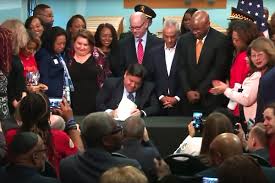
One week after taking office, Gov. J.B. Pritzker issued an executive order declaring his commitment “to ensuring that Illinois is the most progressive state in the nation for protecting women’s reproductive rights.”
WGN News / YouTube

As Republicans maintain a hold over the U.S. Senate and the Trump administration continues to threaten health care, reproductive rights, and LGBTQ rights, new governors are flexing their muscles to address those issues on the state level.

“At a time when the Trump Administration is rolling back LGBTQ acceptance at every opportunity, it’s reassuring that the nation has governors … who will put their foot down and make sure LGBTQ people and marginalized communities have a seat at the table,” said Zeke Stokes, GLAAD’s chief programs officer, in a statement to Rewire.News. “Their inclusive approach to governing sends a signal to others that all voices must be present in order to get things done for the people they serve.”

Democrats flipped seven governorships in 2018, bringing the total number of states under Democratic leadership to 23. Breaking up the GOP’s hold over multiple state governments will make it harder for those states to enact legislation that endangers the LGBTQ community or limits access to health care.

Here are six states where new Democratic governors have issued executive orders expanding health care, reproductive rights, and LGBTQ rights since taking office last month.

California

Gov. Gavin Newsom’s predecessor, Jerry Brown, was also a Democrat who worked to expand health-care coverage and protect reproductive rights. Already, California’s new governor has made it clear that he plans to continue down the same path.

Newsom’s first official act in office was centered around health care—specifically, lowering prescription drug and health-care costs. The executive order he signed the day he was sworn in tasked his Department of Health Care Services with negotiating the pricing and purchasing of prescription drugs so that public and private purchasers don’t have to negotiate with drug companies themselves. Assembly Health Committee Chair Jim Wood told Kaiser Health News last month that negotiating prices could save the state hundreds of millions of dollars that could go toward insurance subsidies or coverage for young unauthorized immigrants.

Newsom’s state budget proposal also seeks to expand Obamacare subsidies for health-care coverage and create the nation’s most generous paid parental leave policy by guaranteeing six months of partially paid leave. He also called for the state’s Medicaid program to cover undocumented immigrants up to the age of 26. Undocumented youth were previously only eligible until the age of 19.

Illinois

One week after taking office, Gov. J.B. Pritzker issued an executive order on the anniversary of Roe v. Wadedeclaring his commitment “to ensuring that Illinois is the most progressive state in the nation for protecting women’s reproductive rights.” His directive moved to ensure the state government complies with a law signed by former Republican governor Bruce Rauner in 2017 that removed provisions of the state’s “trigger law” and allowed abortion coverage in Medicaid and state health plans.

Pritzker’s order guarantees that state employees’ health insurance covers abortion. According to local news outlet WQAD, the new governor’s directive acted “to make sure state departments are complying with the law.” A circuit judge dismissed a lawsuit by anti-choice groups seeking to stop the law from taking effect, and an appellate court upheld that dismissal last fallPritzker said he was “concerned” that the law wasn’t being properly enforced for state employees, as the Chicago Sun-Times reported.

When it comes to protecting or expanding abortion access, Elizabeth Nash, senior state issues manager at the Guttmacher Institute, explained that it’s rare for governors to use their executive powers. “Governors haven’t used their authority in this way very often. Obviously, we’ve seen it on the other side,” Nash said, pointing to South Carolina Republican Gov. Henry McMaster’s 2017 executive order directing state agencies to stop funding medical practices affiliated with abortion clinics.

“Illinois made its changes before [Pritzker] became governor, and that took several years … to get that bill through the legislature,” Nash said. “This is one way to put your stamp on an issue.”

While Pritzker’s order focused on better enforcing the existing law, it also allowed him to highlight where he stands on the issue.

“This executive order will ensure there are no barriers to women exercising their right to choose under state employee group health insurance plans,” Pritzker tweeted in January. “Access to reproductive health care is a right—for women of all incomes, for women in all areas of our state, and for women with both private and government-funded health insurance.”

Kansas

Gov. Laura Kelly’s first official action after taking office in January was to ban anti-LGBTQ discrimination against state employees. The executive order, signed on January 15, states that no state agency shall “discriminate, harass, or retaliate against an individual in employment” on the basis of sexual orientation, gender identity or expression, or other factors such as race and religion. The order reversed former Republican governor Sam Brownback’s 2015 repeal of a previous iteration of the ban and extended the protections to state contractors.

“In a perfect world, we wouldn’t need executive orders like this,” Kelly told reporters at a January news conference, according to the Associated Press. “It’s important that, until we become a perfect world, that we make sure that we’ve got the kinds of things in place that move it towards perfection.”

Kansas’ first two openly LGBTQ state lawmakers are now working to ban discrimination based on sexual orientation and gender identity by all employers in the state. Kelly has indicated she would sign the bill if it reaches her desk.

Maine

Gov. Janet Mills’ first executive order fulfilled her campaign promise to expand Medicaid. State residents voted for expansion in 2017, but former Republican governor Paul LePage refused to implement it and fought expansion in court. The lawsuit ultimately only delayed when Maine residents could sign up for MaineCare health insurance, as Mills began implementing the expansion as soon as she took office.

“Expanding health care and lowering the cost for Maine people and small businesses is a top priority of my administration, and I look forward to working with the Legislature to achieve that goal,” Mills said in a press release.

Later that month, Mills reversed her predecessor’s attempt to enforce work requirements for Medicaid and require people to pay premiums if they only use Medicaid for family planning services. LePage’s proposal had already been approved by the Trump administration, but Mills informed the U.S. Centers for Medicare & Medicaid Services that the state would no longer accept the terms of the pending Medicaid waiver.

“Making sure people are healthy is the first step in making them eligible for work,” a spokesperson from Mills’ office said in an email to Rewire.News last month.

Michigan

Michigan’s new governor took the same stand against LGBTQ discrimination as Kansas. In an executive order issued her first month in office, Gov. Gretchen Whitmer put into place additional LGBTQ protections for state employees by prohibiting any type of discrimination based on sexual orientation or gender identity. The protections also extended to state contracting, grants, and loan programs.

“The State of Michigan must be a model of equal opportunity—reaching out to people, knocking down barriers, treating everyone fairly, and dispelling prejudices that hold Michigan and its residents back,” the January 7 directive reads.

The move was praised by LGBTQ organizations, including the Human Rights Campaign (HRC), which noted in a January press release that Michigan is one of 31 states that lack “fully inclusive, comprehensive statewide non-discrimination protections for the LGBTQ community.”

“Elections matter,” HRC Michigan State Director Amritha Venkataraman said in the press release. “In one of her first actions as governor, pro-equality champion Gretchen Whitmer has extended long overdue non-discrimination protections to members of the LGBTQ community.”

Wisconsin

Gov. Tony Evers took action last month to fulfill his campaign promise to increase access to health care. In one executive orders, Evers called for the state’s Department of Health Services to develop a plan to expand Medicaid. In a second executive order, he directed state agencies to protect people with pre-existing conditions.

Evers’ directives didn’t actually expand Medicaid, as he would need the approval of Wisconsin’s Republican-controlled legislature to do so. But they sent the message that his administration is committed to finding ways to improve access and affordability.

“Giving more people access to healthcare is a no-brainer,” he tweeted January 22. “My budget will seek to expand Medicaid—providing care to more people while saving taxpayers hundreds of millions of dollars.”

In another executive order, Evers prohibited state agencies from discriminating against employees on the basis of sexual orientation, gender identity, or other factors such as disability or political affiliation.

“Discrimination in any form is wrong, and through his actions today—signing his first executive order since taking office — Governor Evers continues to demonstrate that he will fight day in and day out to uphold the Wisconsin values of fairness, justice and equality,” HRC Wisconsin State Director Wendy Strout said in a January press release.

Source: https://rewire.news/article/2019/02/18/six-newly-elected-democratic-governors-are-moving-enact-agenda/