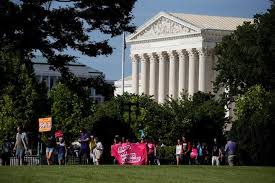
Janet Porter knew that to get her near-total abortion ban to the U.S. Supreme Court, she first had to get passed in Ohio.

As the former legislative director of Ohio Right to Life, Porter has a lengthy history within the anti-choice movement.
Faith2Action/YouTube

She may not be a household name, but you’ve undoubtedly heard of her handiwork. Anti-choice activist Janet Porter has spent years pushing her “heartbeat” legislation, which would outlaw abortion as early as six weeks into pregnancy—before many even know they are pregnant.

Porter’s push is again gaining momentum in the waning days of Ohio’s legislative session. Its latest iteration, HB 258, was approved by Republicans in the state house in November and passed by an 18-13 vote in the state senate last week. Though Republican Gov. John Kasich vetoed a similar measure in 2016, even if he does so again, there may be enoughvotes for lawmakers to override it. If not, the anti-choice restriction will see a friendlier ally next time around in incoming-Gov. Mike DeWine (R), who has promised to sign such legislation.

Porter is the president and founder of anti-choice group Faith2Action, which claims on its website to be “the nation’s largest network of pro-family groups.” Before founding the organization, she was the national director of the Center for Reclaiming America from 1997 to 2002, according to a biography of Porter provided on her organization’s website. As the Daily Beast reported in a July 2013 feature on Porter, “Among the center’s most prominent projects was ‘Truth in Love,’ a nationwide ad campaign promoting gay-conversion therapy through the testimony of ‘ex-gays’ and accusations that pro-gay forces were trying to stymie discussion.”

Faith2Action’s website is home to anti-LGBTQ sentiment. Under its section on so-called liberty is a 16-page document detailing what it deems to be the “dangers of homosexuality.” Another section outlines biblical quotes against “homosexuality.”

Porter has taken to conservative websites and her own radio program to voice her views on the matter, as has been extensively documented by People for the American Way’s Right Wing Watch. According to a blog post from the organization, Porter “has also long warned that increasing acceptance of gay rights will turn Christians into criminals who will eventually be rounded up and tossed in jail, going so far as to try and prevent the Supreme Court from ruling on the issue of gay marriage. [In 2015,] she produced an anti-gay documentary called ‘Light Wins’ that featured a variety of Republican members of Congress, GOP presidential hopefuls, and anti-gay activists warning that gay activists are ‘grooming’ and endangeringchildren, for which they should be held criminally liable.”

Other bullet points on Porter’s resume include a failed run for the state legislature and losing her radio show with Christian broadcaster VCY America after championing “dominionism,” the belief that Christians should control all institutions, including governmental bodies, and that there should be a return to biblical law. In 2017, during the Alabama special election to replace Jeff Sessions in the U.S. Senate, Porter was one of Republican candidate Roy Moore’s most vocal defenders amid accusations of sexual misconduct with young women and girls. In November of that year, Porter convened a press conference of anti-choice extremists who remained loyal to Moore despite the allegations against him. She continued defending Moore throughout the special election and acted as a spokesperson for the campaign during appearances in media outlets like CNN.

As the former legislative director of anti-choice group Ohio Right to Life (ORTL), Porter has a history within the anti-choice movement. Faith2Action’s website states she worked there from 1988 to 1997 and “successfully lobbied for passage of the nation’s first Partial-Birth Abortion Ban.” So it’s no surprise that she later set her sights ending legal abortion.

Porter’s Crusade for a ‘Heartbeat’ Ban

Though these sorts of near-total abortion bans are becoming increasingly common, they first appeared in the Ohio legislature in 2011. Porter, according to the Daily Beast, was one of the measure’s original architects. Speaking to the publication in 2013, she reminisced about how the idea for the legislation came to her during the funeral for her former boss at ORTL.

“I was overwhelmed by the revelation that we don’t have much time on planet Earth,” she said in the interview. “I thought, ‘We’ve got to end this, and we need to end it now.’” During the funeral, she reportedly began to assemble a team to draft the ban.

In 2011, Republican state Rep. Lynn Wachtmann introduced Porter’s measure. From the beginning, its supporters, including Wachtmann, were upfront that it was meant to be a challenge to overturn or dismantle Roe v. Wade. “I’m introducing this bill to get the debate going to see how far we believe we can push the U.S. Supreme Court in upholding as strong a bill as possible, that is saving as many unborn babies as possible,” Wachtmann said, according to the Times Bulletin. “It’s been bandied around by the pro-life community around the country for a number of years, and Mrs. Porter, like myself, is wanting to take a bigger bite out of the proverbial apple, to try to push the agenda more toward a lot less abortion and a lot more life by going with this Heartbeat Bill.”

But to get it to the Supreme Court, Porter first had to get the measure through the state legislature. It’s a task Porter, who had by then founded Faith2Action, took to heart. After the bill was introduced in 2011, her organization sent red heart-shaped balloons to lawmakers to urge them to vote for it. The next month, the group brought pregnant women to a committee hearing and gave them an ultrasound in front of the group.

In January 2012, Faith2Action sent children to deliver to lawmakers teddy bears that made the sound of a heartbeat when squeezed. The next month, they sent 2,000 roses to Ohio state senators on Valentine’s Day as part of what the Daily Record reported was a “weekly push” to get the lawmakers to take up the anti-choice bill after it was passed in the state house the year prior.

“Republican Senate President Tom Niehaus and other members of the chamber’s leadership received 144 flowers each,” the report noted. “Members of the committee considering the legislation received nine dozen.” According to the Columbus Dispatchthe roses came with a note: “Bring this bill to a vote before the roses and babies die.”

“This is the largest rose delivery in Statehouse history,” Porter told the Toledo Blade at the time. “Last year we had the largest balloon delivery in Statehouse history, but helium balloons aren’t allowed in the Senate as it turns out, so we had a delivery of red roses.”

Versions of Porter’s “heartbeat” bill would continue to be proposed and ultimately fail in the proceeding years. Porter continued to take extreme measures to get it passed. In November 2015, the group sent activists to picket the homes of state lawmakers in hopes of getting the legislation a vote.  In 2016, another version, HB 493, cleared the legislature. Porter attributed “divine intervention” to its passage, but the measure was vetoed by the governor.

The next year, Porter made her way to Washington, D.C., where she worked with Rep. Steve King (R-IA) to introduce the U.S. Congress’ first-ever heartbeat ban in January 2017. As Right Wing Watch reported at the time, Porter said she had first spoken with King about the bill at Phyllis Schlafly’s funeral. “I gave him a packet and he has agreed to introduce a federal Heartbeat Bill, which would protect every baby whose heartbeat can be detected,” she said. “That will actually end abortion in nearly every case. Ninety to 95 percent of the abortions will be ended with that bill.” Porter also claimed she had spoken with Vice President Pence about the measure and that “he seemed very agreeable to that.”

Though King’s measure never got a vote in the GOP-held House, it did get the support of 173 co-sponsors. And later that year, Porter joined former-U.S. House of Representatives Majority Leader Tom DeLay at the White House to lobby for the total abortion ban.

Now, another version of the ban in Ohio is again awaiting Kasich’s signature or veto. And Porter isn’t staying quiet about how she hopes it will end. “The bill itself is one that we believe the Supreme Court is ready for,” she told NBC News last week.

She noted that the current version of the bill had been “‘crafted in such a way that it actually doesn’t have to bring down’ Roe v. Wade but rather changes what marker that the Supreme Court uses for determining life in unborn babies.”

Porter did not respond to an interview request from Rewire.News.

Source: https://rewire.news/article/2018/12/19/janet-porter-architect-heartbeat-bill/

A Salvadoran woman accused of the attempted murder of her newborn baby under the country’s strict abortion laws after she was raped by her stepfather was freed by a court on Monday after more than 18 months in jail.

Imelda Cortez, 20, gave birth in a latrine in April 2017 and left the baby there. When Cortez was treated at a hospital afterward, doctors suspected she had tried to perform an abortion.

The court determined that Cortez, who had not known she was pregnant, did not try to kill her infant daughter. The child survived.

As she left court, Cortez, who was arrested shortly after the birth, was greeted by cheering relatives and human rights activists holding signs demanding her freedom.

Cortez’s stepfather has been arrested and is awaiting trial, Salvadoran prosecutors said.

For the past two decades, El Salvador has had some of the world’s most severe laws against women who have abortions or those who are suspected of assisting them, even when the life of the woman is at risk.

Some 22 more women are serving sentences of up to 35 years for aggravated homicide linked to abortion, according to the Group for Decriminalizing Abortion.

“This sentence … represents hope for women who are still in prison and are also being tried for aggravated homicide,” defense lawyer Ana Martinez said.

President Salvador Sanchez Ceren in 2017 proposed a law to allow abortions in cases of rape or when the mother’s life is at risk, but Congress did not pass it.

https://www.reuters.com/article/us-elsalvador-abortion-idUSKBN1OH050?fbclid=IwAR20-4bv0c0QTV550_cBoLnWQaZD7YwVyzj7intbNCiF3JixjqTipDHe3Ug

Abortion rights foes in Ireland failed to implement a range of provisions that have been pushed by anti-choice legislators across the United States.

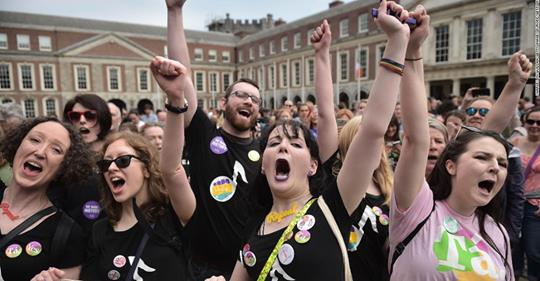
Yes campaigner and ROSA activist Keishia Taylor celebrates as the count in the Irish referendum on the Eighth amendment concerning the country’s abortion laws takes place at the RDS centre on May 26, 2018, in Dublin, Ireland.
Charles McQuillan/Getty Images

Abortion in Ireland will be free, safe, and legal up to 12 weeks into pregnancy starting January 1, a major blow to the Catholic Church and opponents of the country’s abortion rights law, who tried to drag out the legislative process with support from U.S. anti-choice advisers.

To Bríd Smith, People Before Profit member of Irish parliament, the repeal of the Eighth Amendment banning abortion in Ireland was “one of those rare moments in life when you feel such joy, the sheer joy of beating back the Catholic Church’s agenda, really beating it back for once. And pride, because we put a huge amount of effort into it and had witnessed a new generation of young Irish people completely different to what we had known.”

On December 5, Smith and 89 other members of the Dáil Éireann voted to pass the legislation, clearing the way for legal abortions to begin in Ireland in January 2019. And on December 13, the bill passed the Seanad, the upper house of the Irish parliament, meaning that on the president’s signature, abortion care will for the first time be legally available in the Republic of Ireland. Yet Smith notes that as in May after the referendum’s passage, there is still much to be done.

Lynn Boylan, a member of the European Parliament from Sinn Féin and a longtime pro-choice campaigner, told Rewire.News that a “small number of politicians who have disregard for democracy” threw in myriad amendments meant to drag out the process of making abortion care legal in Ireland. Much of the rhetoric and the proposals, she said, would sound familiar to Americans.

There was a proposal to force abortion patients to undergo ultrasounds or watch DVDs describing the procedure; there was a battle over burial of fetal remains, despite, Boylan said, Ireland only recently learning the extent to which babies and children born at infamous “Mother and Baby Homes” for the unmarried were buried in mass graves. “My own brother is buried in a mass grave. He died in childbirth because he wasn’t baptized,” Boylan said. “The hypocrisy of the same people who are saying, ‘You should be burying fetuses … ’—there was disregard given to dead babies for a long time in Ireland.”

Ireland’s abortion services will be based around primary care clinics, and rely mainly on the use of the abortion pill. It will be legal until 12 weeks’ of pregnancy without restrictions. After that point in a pregnancy, if two doctors certify there is risk to the life or “serious harm to the health of” the pregnant person, or in the case of fatal fetal abnormalities, abortion care may be permitted. The legislation includes a three-day forced waiting period, which Smith opposed, noting that with the 12-week deadline and Ireland’s occasional long wait times for physician appointments, this could push some people over the line, putting abortion out of reach.

Abortion access will be free of charge. Ireland does not have a British-style universal health-care system, but, Smith explains, abortion will be covered under the health service’s Maternity and Infant Care Scheme, which was introduced in the 1950s over the objections of the Catholic church and provides free maternity health care.

There was a struggle over the question of conscientious objection from physicians. In a country where the Catholic Church has long been in control of health care, this was a major point of contention. To get around the issue, the state will institute a 24-hour hotline where pregnant people can get information about where they can find a physician who will perform an abortion. Doctors who don’t want to perform it will be instructed to refer people to another physician or to the hotline.

“It is better really that way because then it is up to the health service, the government health service, to make sure that you get a referral rather than the individual [general practitioner (GP)],” Smith said.

The GP model, Boylan said, minimizes the likelihood of protesting outside of clinics where abortions are performed, though it doesn’t prevent it. There will still be a need for some surgical abortions, and organizations like the Irish Family Planning Association, Smith said, are gearing up to provide abortion care at the clinics already in operation.

“They always have been this source of support for information, for counseling, for getting the appointments in Britain in the past. I think that will seamlessly move over to them being a port of call for getting an abortion here,” she told Rewire.News. While not in the legislation, clinic buffer zones to protect people seeking care from protesters will be a priority for pro-choice activists in 2019.

Mandy La Combre of the Trade Union Campaign to Repeal the Eighth points out that by the time it came to a vote on the legislation, “It was done to death. People knew what they were voting for. Every debate was talked about. Every inch of it.”

The benefit of a referendum, she said, was that everyone in the country had debated the issue thoroughly, and the decisive 66.4 percent victory for Repeal meant that anti-choice members of parliament had little excuse for trying to halt the legislation. Yet there is still much to fight over in the coming months. And while many activists, La Combre said, were thoroughly “burnt out” after the Repeal fight, they are not taking the final vote as an excuse to stop working.

“There is no separation, really, in Ireland of church and state,” Lynn Boylan said, noting the ongoing fight over a new National Maternity Hospital to be build with state funding in Dublin. The site chosen for the hospital is owned by St. Vincent’s Healthcare Group, which is owned by the Sisters of Charity. While the St. Vincent’s hospital is no longer run on a daily basis by the nuns, Smith said, “The board of management still run the hospital, still have their Catholic ethos.”

The concern, Smith told Rewire.News, is that the state is handing over to a Catholic organization control of a major site where pregnant people will likely go for abortion care. In a small country like Ireland, she said, where Dublin is only a couple hours away from any other geographical point, “It is no biggie to have just one major place that would look after these things, but to deliver abortion services, we have to be sure that the Catholic Church have no say in anything to do with that hospital.”

Protests have been held and members of multiple parties have expressed deep concern about religious influence over reproductive health care. St. Vincent’s executives have promised the Sisters are no longer involved, but pro-choice campaigners are not satisfied.

Another coming struggle is over the continued criminalization of abortions outside of the strict guidelines the new legislation puts in place. “There was a 14-year [jail] sentence for abortion put into the Protection of Life During Pregnancy Act, which was brought in after Savita Halappanavar died in Galway,” Smith explains. In the new legislation, that 14-year sentence remains, “not for the woman or the pregnant person, but for the doctor or the midwife or whomever might perform an abortion outside of the parameters of the legislation. We want that gone because, if there is any uncertainty about dates, or it might be three days over 12 weeks or you might be 13 weeks, not 12, this will act as a serious chill factor on the medical services.”

Beyond improvements to abortion care, activists are taking lessons from the campaign to other struggles. The trade union repeal campaign, La Combre said, was important because it introduced the issue of class into the reproductive rights battle. “What we were talking about was the real socioeconomic issues: the working women who can’t afford to travel, who can’t afford to have an abortion, who can’t afford to make those choices.”

Their campaign taught trade union members the importance of broadening their definition of what is and is not a “workplace” issue—and the support from older men within the labor movement was key.

The struggle taught important lessons in solidarity for activists who might not have been directly affected, Boylan agrees. Arguments that abortion rights are “identity politics” don’t wash, but activists had to take into account the intersections. “Gathering that solidarity together and mobilizing around it is what the left should be doing,” she said. “I don’t think we give up identity politics, but we have to instill solidarity and bring class back into the narrative. People in Ireland don’t really want to talk about class.”

The repeal process has changed the major political parties in Ireland. While small parties like People Before Profit took a strong pro-choice position, others had only recently come around, led by grassroots activists like La Combre. “They got on board because it was the political will of the people,” La Combre said. “Fine Gael, for example, they knew the young people wanted this and they needed the young Fine Gael vote,” she continued, naming Ireland’s conservative ruling party.

The referendum changed the left-leaning Sinn Féin, which has its roots in Ireland’s long and at times bloody struggle for independence from England. At the party’s annual gathering in June, Boylan handed out T-shirts printed with the total vote count for Repeal and the slogan “The North is Next,” and the party voted decisively to adopt a pro-choice position—while it had campaigned for a Yes vote on repeal, prominent party members were public about their anti-choice politics during the referendum, making the unambiguous shift significant.

“That has been a long struggle for a lot of us who were pro-choice within the party,” Boylan said. “You join a party, and [you don’t] agree with them 100 percent, but you try and advocate for change within the party. It took longer than I would have liked in Sinn Féin, but we have gotten there. I came away very inspired by those who had been fighting for longer even than me.”

The question of the North—of Northern Ireland, which finds itself at the nexus of geopolitical conflict in the Brexit negotiations but still has no legal abortion despite being a part of the United Kingdom—came up repeatedly. Both Sinn Féin and People Before Profit campaign in both the North and South of Ireland, and both have taken part in major post-repeal actions calling for the North to catch up.

The question of Ireland’s health-care system remains. “We have a crisis in GP service just like we have a crisis in Emergency Medicine. We have a crisis in delivering children’s medicine,” Smith told Rewire.News. “There were years and years of austerity and cutbacks, closures of beds, attacks on the pay of doctors and nurses, and we haven’t got over that yet, despite the growing economy.”

Such a crisis has meant waiting periods to see doctors—something that could make accessing an abortion difficult, particularly if some practitioners opt out of providing abortion care.

To make matters worse, Boylan said, “Any scandals that happen in the Irish health-care system tend to be scandals about women’s health. Whether it is about bodily autonomy when it comes to abortion, or the cervical cancer scandal, and that maternalistic approach that was taken to the women not to tell them and it wasn’t in their interest to let them know that they were having these false negatives.”

It is time, she said, to “radically reform the health service in Ireland.”

The political fights upcoming have been in some ways muddled by the fact that Fine Gael, for years considered Ireland’s most conservative party, has become the face of abortion liberalization. “I see Fine Gael as a really right-wing party. Economically, completely right-wing. But, they use being socially aware to win people over,” La Combre said.

Boylan, too, wonders how the excitement among young people for the Repeal campaign will shake out politically.

“I think it is really important that particularly the left-wing parties go out and try and engage those young people, but I would be that little bit cautious that they are not all going to show up. We are not going to have a #hometovote hashtag for the next general election.” It will be important, she said, to continue reaching out to the networks created by Repeal, because, “We do have a serious problem with how we treat women in this country and that hasn’t gone away just because we voted for repeal. There is still an uphill battle there.”

Source: https://rewire.news/article/2018/12/17/sheer-joy-ireland-will-have-free-abortion-care-on-january-1/

Campaigners in Dublin celebrate in May, as Irish voters supported legalizing abortion in a referendum.

Ireland’s Prime Minister has hailed a “historic moment” for women in the country, after a bill to legalize abortion passed through the final stages of parliament.

The bill is now set to be signed into law by President Michael D. Higgins, following a marathon debate in parliament’s upper house Thursday, and will come into force in January.

Two-thirds of Irish voters agreed to amend the constitution and allow women to access abortion in a momentous and emotionally charged referendum in May.
Prime Minister Leo Varadkar thanked the bill’s supporters on Twitter and commended Health Minister Simon Harris for steering it through parliament. The bill passed through parliament’s lower house, the Dáil, last week.
The vote would “end lonely journeys, end the stigma and support women’s choices in our own country,” Harris said on Twitter Thursday.
But its passage also prompted vandals to target a regional office of Ireland’s governing party Fine Gael overnight, writing “baby killers” and “Herods” on its wall.
“I was so disappointed to see this morning (Friday) that my busy constituency office in Sligo has been vandalized and defaced overnight,” Tony McLoughlin, the assistant government whip, wrote on Twitter.
“We live in a proud democracy and despite anyone’s opinion on any referendum, this behavior can never be condoned,” he added.
The new laws make abortion legal and unrestricted in the first 12 weeks of pregnancy, subject to a medical consultation and a cooling-off period. Terminations after 12 weeks would be permitted only under exceptional circumstances.
After the vote, Harris paid tribute to “the campaigners who fought for 35 years to change a nation, to change hearts and minds,” the UK Press Association reported. “I want to thank the minority who fought the battle in here when it was convenient for the majority to ignore.”
“But today, I think mostly of the thousands of women who were forced to make the journey to access care that should have been available in their own country,” he added.
Around 3,000 Irish women annually have traveled to Britain to terminate a pregnancy in recent years, according to UK government figures.
Source: https://edition.cnn.com/2018/12/14/health/ireland-abortion-bill-parliament-scli-intl/index.html

Proposed legislation in Kentucky this week would reportedly make abortion punishable by up to five years in prison.

State Rep. Robert Goforth (R) prefiled a bill on Thursday that would ban abortion after a fetal heartbeat is detected, according to WAVE, an NBC affiliate.

Under the terms of the measure, abortion providers would be required to check for a heartbeat before performing the procedure. If they detect a fetal heartbeat, it would then become a Class D felony to go through with the abortion unless it’s deemed a medical emergency.

In Kentucky, Class D felonies are punishable by up to five years in prison.

“My proposal recognizes that everyone has a right to life,” Goforth said in a statement, according to Kentucky Today. “My personal belief is that life begins at conception and ends at natural death. A heartbeat proves that there’s life that deserves protection under law — if a heart is beating, a baby needs to be protected and given an opportunity to live.”

Anti-abortion groups and lawmakers have been emboldened by the Trump administration and changes to the makeup of the Supreme Court, ramping up their push for restrictions on abortion as part of a strategy to get the Supreme Court to re-examine Roe v. Wade, the landmark decision that legalized abortion.

“We’re talking about viable babies,” Goforth said. “This is the most pro-life piece of the legislation that has ever been filed in the Kentucky Legislature.”

Goforth added that he knows his proposal might face legal challenges if it becomes law but said it is worth the trouble.

“I look forward to the day our laws and our court system give unborn children the legal right to life that they deserve so they can grow and live happy and productive lives,” he said.

The bill will reportedly be considered in the Kentucky General Assembly’s next session, which is scheduled to begin on Jan. 8.

Similar bills, dubbed “heartbeat” bills, have been voted on by lawmakers in Ohio and Iowa earlier this year.

Gov. John Kasich (R-Ohio) has reportedly vowed to veto that legislation if it makes it to his desk. Gov. Kim Reynolds (R-Iowa) has not indicated whether she will sign the measure.

https://thehill.com/homenews/state-watch/421398-bill-proposed-in-kentucky-would-make-abortion-a-felony?fbclid=IwAR1i3H349Elj7QfIxlO6lEv3LBrgZR1-PWpmLFLGN6Ya3U-Lj6RGWt8XUPw

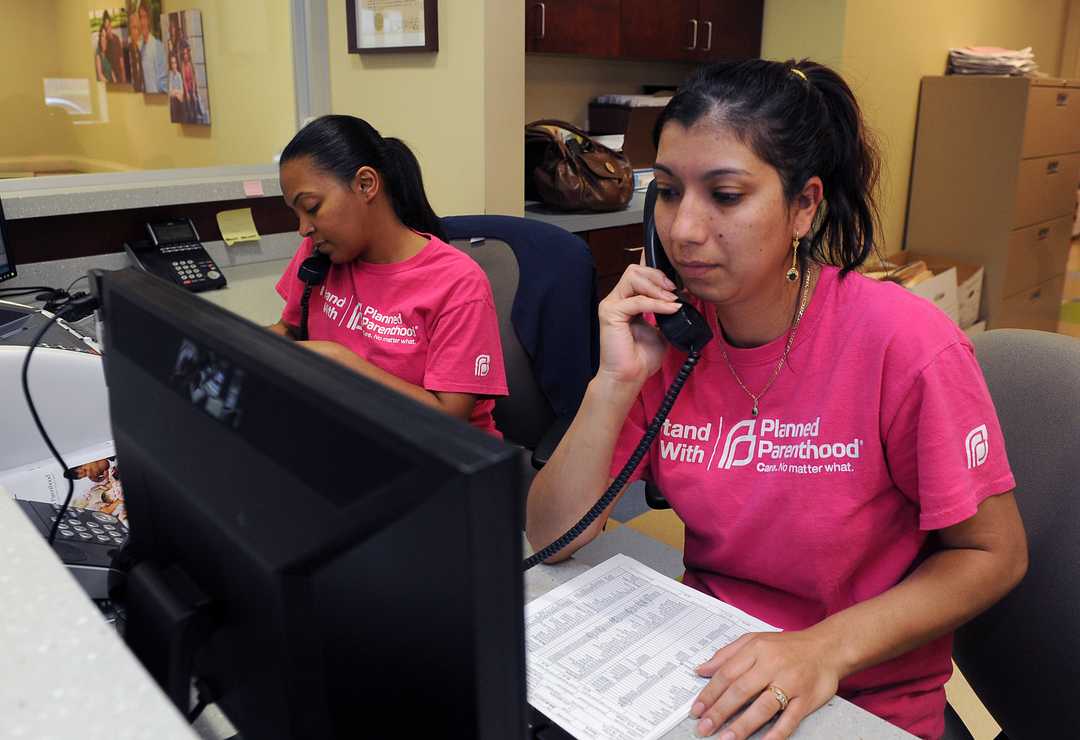
Planned Parenthood staff members Kelana Love, left, and Monica Encalada answer phone calls at the Nashville clinic. A Nashville synagogue will host a fundraiser for the group that the Gordon Jewish Community Center backed out of agreeing to hold at its facilities. Shelley Mays / The Tennessean

NASHVILLE, Tenn. – The only remaining abortion clinic in Tennessee’s capital has ceased offering abortions, instead referring patients to clinics 200 miles away in Knoxville and Memphis.

Officials with Planned Parenthood of Tennessee and North Mississippi, which operates the north Nashville clinic, could not say when its clinic would resume abortions. The organization has a shortage of physicians to do the procedure, a spokeswoman said.

The clinic is also “undergoing a period of quality improvement and will return with these services soon,” a statement said. It is the second clinic in Nashville to stop abortions this year.

The Women’s Center closed in August after the sale of its building, and its operators said they hoped to reopen. No target date was set, and its reopening has not happened yet.

► Dec. 10: Supreme Court won’t consider state efforts to defund Planned Parenthood
► Nov. 20: Mississippi’s 15-week abortion ban overturned by federal judge
► Oct. 26: Fight over abortion comes to Oregon as GOP targets reproductive rights

The suspension of abortion services at Nashville’s only abortion clinic comes at a time when the number of abortion providers in Tennessee and throughout the Southeast continues to dwindle.

Tennessee now has six abortion providers, down from 16 in 2000 but more than in any other neighboring state except North Carolina.

Also Monday, the U.S. Supreme Court refused to consider Republican-led states’ efforts to defund Planned Parenthood. The court let stand federal appeals court rulings that allowed the reproductive health organization’s patients to contest laws in Louisiana and Kansas that stripped its Medicaid money.

In Tennessee, more than 9,700 abortions were performed in 2016, up from about 9,100 in 2015, according to the Tennessee Department of Health’s most recent data.

Nashville’s Planned Parenthood clinic was the largest provider of abortions in the state, serving women in rural Middle Tennessee counties as well as neighboring as Alabama, Kentucky and Mississippi.

► Oct. 25: Abortion cases offer test for the Supreme Court
► Oct. 10: Pope Francis compares abortion to hiring a hit man to solve problems

Some women now will have to travel even further to obtain an abortion. And under Tennessee’s 48-hour waiting-period law, they will have to make the trip twice.

The law, enacted in 2015, requires two trips to an abortion clinic with a two-day wait between the first appointment to obtain counseling and then a subsequent office visit to undergo the procedure.

Tennessee Right to Life, which advocates against abortions, already is seeing a spike in women callers who could not obtain abortion appointments in Nashville, said Brian Harris, the organization’s president. The organization advertises services for women who are pregnant and need help but does not perform abortions or refer women to abortion clinics.

Instead, the organization provides free pregnancy tests and ultrasounds. It also offers to connect women to services intended to assist them in continuing their pregnancies to term.

“The phone has been very busy here with women calling and looking for abortion referrals – busier than they’ve ever been,” Harris said.

► Sept. 28: Federal judge strikes down Kentucky restriction on abortion clinics
► June 29: 72-hour wait for abortions struck down by Iowa Supreme Court

On Monday, the Nashville Planned Parenthood clinic was open for other women’s medical services including birth control and sexually transmitted disease testing, but its waiting room was empty. Operators at the organization’s scheduling line are referring callers who want abortions to other locations.

“As of right now we’re only scheduling for other locations,” said an operator who answered the phone at the clinic’s line. The woman, who did not give her name, said abortion services were suspended “indefinitely.”

The Women’s Center, along with other abortion providers in Tennessee, are still fighting to overturn the 48-hour waiting period rule in federal court.

https://eu.usatoday.com/story/news/nation/2018/12/10/planned-parenthood-nashville-abortions-suspended/2271428002/

“This bill would ensure that our State Department maintains its vital role as an international watchdog and protector of women’s rights,” said Rep. Katherine Clark (D-MA).

Democrats in the U.S. House of Representatives introduced a bill Monday that would require the State Department to again include a subsection on reproductive health in its annual human rights report.

The State Department is responsible for producing a report each year detailing human rights abuses in each country receiving U.S. foreign aid. Starting under the Obama administration, reproductive health information such as systemic international issues with access to contraception and abortion care was included in the report. That practice ended this year under the Trump administration.

The bill, introduced by Reps. Katherine Clark (D-MA), Barbara Lee (D-CA), Nita Lowey (D-NY), Eliot Engel (D-NY), and Lois Frankel (D-FL), was filed on International Human Rights Day and the 70th anniversary of the signing of the Universal Declaration of Human Rights. It would require the State Department to recognize reproductive rights in its annual human rights report.

“Documenting and reporting human rights violations is a major part of eradicating their existence,” said Clark in a statement. “This bill would ensure that our State Department maintains its vital role as an international watchdog and protector of women’s rights no matter the ideology of our White House.”

The bill currently has the support of 45 reproductive rights and social justice advocacy groups, including Planned Parenthood and the Center for Reproductive Rights. “Reproductive health care is health care, and health care is a basic human right,” said Dr. Leana Wen, president of Planned Parenthood Federation of America, in a statement. “The Trump-Pence administration’s erasure of reproductive rights from the State Department’s human rights report is an attack on women around the world, and the communities that depend on them.”

In October of this year, 129 Democratic members of the U.S. House of Representatives sent a letter to Secretary of State Mike Pompeo demanding the State Department again include the removed subsection. The bill comes as the Trump administration nominated former Fox News anchor and current State Department spokesperson Heather Nauert to become ambassador to the United Nations. Nauert defended the department’s decision to exclude reproductive health information from the State Department human rights reports.

According to a January Politico report, Nauert said in a statement that the way the department “presents the report’s material has changed from time to time,” and that “this year we are better focusing some sections of the report for clarity.” She added that the department was not “downgrading coverage of LGBT or women’s issues.” The subsection of the report was renamed from “Reproductive Rights” to “Coercion in Population Control,” a move which left advocates concerned.

“This erasure puts real lives in danger,” said NARAL Pro-Choice America President Ilyse Hogue in a statement Monday. “Using backdoor tactics to erase all mention of reproductive rights—including abortion, contraception, and maternal mortality—from vital reports and resources in order to push an extreme, ideological agenda is a true testament to just how dangerous and corrupt this administration is.”

The Center for Reproductive Rights (CRR) filed a lawsuit in early December against the State Department over a failure to produce records regarding exclusion of the reproductive rights subsection requested under a Freedom of Information Act (FOIA) request. “This erasure is tantamount to an outright rejection of the basic principle that reproductive rights are human rights,” said Stephanie Schmid, U.S. foreign policy counsel for CRR, in a statement regarding the suit. “The Center will continue to use the power of the law to hold this administration accountable in order to ensure that the foreign policy of the United States promotes, rather than hinders, women and girls’ access to basic health care like contraception, safe abortion, and maternal health care in order for them to achieve economic, social, and political empowerment.”

This isn’t the first time the State Department has moved against international reproductive health access. The Trump administration reinstituted the “Mexico City Policy”, otherwise known as the Global Gag Rule, immediately after taking office in January 2017. Administered by the State Department, the rule prevents foreign aid from going to organizations which perform, make referrals for, or counsel about abortion care for patients. It has already had a negative effect for pregnant people worldwide.

Source: https://rewire.news/article/2018/12/11/democrats-push-state-department-to-reinsert-reproductive-rights-in-human-rights-reports/

‘Change is coming,’ writes Health Minister Simon Harris following the passing of abortion legislation through the Dáil.

SIX MONTHS AGO, 1.42 million people voted to repeal the Eighth Amendment and to care for women in crisis pregnancies in this country.

Many of them had waited 35 years to cast their vote. Many others voted with the weight of their own personal experiences upon them.

It took three decades to build the revolution. For that brave minority of campaigners, it may have seemed a tireless and fruitless exercise.

However, every time those men and women stood up against this injustice, the walls of oppression and resistance began to fall.

Their perseverance resulted in the galvanisation of a generation eager to break free from the shackles of the past and shape the society it wanted to live in.

As Minister for Health, it is my responsibility to act on the mandate given to me by the Irish people and today, we move one step closer to achieving that aim.

The Dáil has now passed the Termination of Pregnancy Bill by and the Seanad will now consider the legislation.

As outlined prior to the referendum, the Bill allows for access to abortion within the first 12 weeks of pregnancy with no restriction to reason.

Beyond that terminations will only be permitted when a woman’s life or health is at risk. Abortions will also be accessible when there is a diagnosis of a fatal foetal abnormality.

As legislators, it is our job to scrutinise the Bill before us, but we must remind ourselves of the realities still facing women in crisis pregnancies daily.

Since the people voted, over 2,300 women have found themselves in crisis and despite the overwhelming referendum result, the State has been unable to offer them the care they need.

I have listened to hours of debate in the Oireachtas over the past number of weeks. Many of the TDs have raised genuine issues of concern and I have always sought to engage constructively with them.

But there were others who obstructed and delayed this legislation. Some TDs wanted to rerun the referendum and blatantly disregard the will of the people.

With respect to the genuinely held feelings of the minority, we have a duty to the principles of the majority decision to provide women the right to safe and compassionate care in their own country.

Introduction of abortion services

In the aftermath of the referendum, I asked for abortion services to be introduced in this country in January. This is not a political deadline, as some commentators have suggested but an acknowledgement that women have waited too long for these services and without a deadline, their wait will continue.

There has been lots of discussion over the past number of days about the introduction of the services and again, most people are raising genuine questions. But there is a small minority trying to create a fictional crisis, aided by some aspects of the media.

So, let me clear about the work that is underway by the Department of Health, the Health Service Executive and Dr Peter Boylan to provide this service in January.

An agreement has been reached between the Irish Medical Organisation and the Department of Health on a fee for GPs providing the service. Each GP has been written to, expressions of interest in providing the service have been sought and details of the level of participation should be known over the coming weeks.

The HSE has also been working closely with the Irish Family Planning Association and the Well Woman Centre to ensure they are able to provide the service from January.

Hospitals have provided a plan for the rollout of termination services from January. These are currently being examined by Dr Boylan and the Women and Infants Programme.

For the service user, there will be a 24-hour helpline. It will offer the information, non-directive counselling, and if required, free face to face counselling. Crucially, it will direct the woman to her nearest provider willing to provide the service.

When the legislation is enacted, the HSE will run radio advertisements and digital advertisements informing the public of this phone line.

The HSE will also have new content on abortion services ready to go live on sexualwellbeing.iewhen the legislation is enacted.

Posters and leaflets for the counselling line, along with a new leaflet on contraception, will be delivered to GP surgeries and acute hospitals.

This is all matched by significant resources allocated in Budget 2019.

The introduction of any new service will bring challenges and difficulties but none of these issues should delay the introduction of the service.

The women of Ireland have demanded political leadership and I believe the majority of the Oireachtas has delivered upon that instruction.

We now require clinical leadership and I know the medical profession will respond.

I accept there is more work to be done in this area. I am committed to introducing safe access zones to assist medical professionals willing to provide this service and to protect women from harassment and discrimination. Work is underway by the Department and the Attorney General in drafting a Bill for publication in 2019.

There is significant work still to be done in reducing the number of crisis pregnancies. Work is ongoing to explore all the issues associated with enhancing access to contraception, including associated costs.

The chief medical officer in my Department Dr Tony Holohan has been working extraordinarily hard in this area and I look forward to progressing proposals in this regard in 2019.

We will also proceed with a Women’s Health Action Plan next year.

‘Change is coming’

The journey has been long but we have at the end been given a clear direction by the people and we will not be diverted from the path.

I know there are many women reading this article who have experienced crisis pregnancies and who have had to travel abroad for assistance. I want you to know I am committed to ensuring women will not have to endure similar journeys.

I know there are doctors, midwives and nurses working tirelessly to play their part in the provision of services. Your dedication to providing care to women in crisis will not be forgotten and will be matched by government resources.

I know there are medical professionals reading this who have a conscientious objection to providing this service. I want your rights to be respected and upheld.

I also know there are people who are engaged in conscientious obstruction and I want you to know your efforts will not succeed. You will not deter me or my colleagues in ensuring a safe, woman-centred service is in place in January.

Change is coming. You will not alter its inevitably or change its character.

This is the beginning of a new era for women’s health ushered in by a prevailing spirit of solidarity, inclusivity and equality.

Source: https://www.thejournal.ie/readme/simon-harris-opinion-abortion-legislation-4378874-Dec2018/?fbclid=IwAR3eklnJgiLfFMJcoD4teTYk5SRe36ypQIlM45disjpaHTtyv1TNfHBAhvs

WASHINGTON (Reuters) – The U.S. Supreme Court on Monday rejected appeals by Louisiana and Kansas seeking to end their public funding to women’s healthcare and abortion provider Planned Parenthood through the Medicaid program, with President Donald Trump’s appointee Brett Kavanaugh among the justices who rebuffed the states.

The justices left intact lower court rulings that prevented Louisiana and Kansas from stripping government healthcare funding from local Planned Parenthood affiliates. The case was one of a number of disputes working their way up to the Supreme Court over the legality of state-imposed restrictions involving abortion.

Three conservative justices – Clarence Thomas, Samuel Alito and Neil Gorsuch – dissented from the decision by the nine-member conservative-majority court, saying it should have heard the appeals by the states.

At least four justices must vote to grant review for the court to hear an appeal. Along with the four liberal justices, Kavanaugh and Chief Justice John Roberts – the court’s two other conservative justices – opposed taking up the matter.

Planned Parenthood’s affiliates in Louisiana do not perform abortions, but some in Kansas do. Medicaid, the state-federal health insurance program for low-income Americans, pays for abortions only in limited circumstances such as when a woman’s life is in danger.

It marked the first-known vote by Kavanaugh in a case since he joined the court in October after a fierce confirmation fight in the Senate. Kavanaugh was named by Trump to replace the retired Justice Anthony Kennedy, a conservative who sometimes sided with the court’s liberals on social issues like abortion.

Some Kavanaugh opponents feared he would back legal efforts to overturn or further restrict the legal right to abortion.

Thomas suggested the justices who rejected the appeals put politics over the law.

“So what explains the court’s refusal to do its job here? I suspect it has something to do with the fact that some respondents in these cases are named ‘Planned Parenthood,'” Thomas wrote in dissent.

“Some tenuous connection to a politically fraught issue does not justify abdicating our judicial duty,” Thomas added.

Louisiana and Kansas announced Republican-backed plans to terminate funding for Planned Parenthood through Medicaid after an anti-abortion group released videos in 2015 purporting to show Planned Parenthood executives negotiating the for-profit sale of fetal tissue and body parts. Planned Parenthood denied the allegations and called the videos heavily edited and misleading.

The organization’s affiliates in each state, as well as several patients, sued in federal court to maintain the funding.

“We regret today’s decision from the U.S. Supreme Court announcing that it fell one vote short of taking our case against Planned Parenthood,” Kansas Governor Jeff Colyer, a Republican, said in a statement.

‘FUNDAMENTAL RIGHT’

Leana Wen, president of the Planned Parenthood Federation of America, praised the court’s action, saying in a statement: “Every person has a fundamental right to healthcare, no matter who they are, where they live or how much they earn.”

Legal battles over other laws from Republican-led states could reach the court in the next year or two. Some seek to ban abortions in early pregnancy, including Iowa’s prohibition after a fetal heartbeat is detected. Others impose difficult-to-meet regulations on abortion providers such as having formal ties, called admitting privileges, at a local hospital.

The cases from Kansas and Louisiana did not challenge the constitutionality of abortion itself.

Many social and religious conservatives in the United States have argued against government funding of Planned Parenthood, and Republican politicians have made efforts at the state and federal level to eliminate public funding for abortion services.

The New Orleans-based 5th U.S. Circuit Court of Appeals in 2016 blocked Louisiana’s Medicaid cuts, saying the action would harm patients. The 5th Circuit said no one disputed that Planned Parenthood was actually qualified to provide the medical services it offers and the state was seeking to cut funding “for reasons unrelated to its qualifications.”

In February, the Denver-based 10th U.S. Circuit Court of Appeals ruled Kansas could not block funding because states “may not terminate providers from their Medicaid program for any reason they see fit.”

Source: https://news.yahoo.com/u-top-court-rebuffs-state-bids-cut-planned-144246538.html?re=0&.tsrc=notification-brknews&fbclid=IwAR3Q8pJh8Z6ixMfk8D5OC5-g83NNUUhLPa6_XGZ5n2pzRedBy7kohpa6xT0

That’s partly because Catholic institutions may not want it known.

A 2005 study found that 54.9 percent of Catholic hospitals do not provide emergency contraception for any reason, compared with 42.2 percent of non-Catholic hospitals. 
 Shutterstock

As Catholic health systems that restrict care on religious grounds have expanded, Maryam Guiahi had what she thought was a simple question. Guiahi, an associate professor of obstetrics and gynecology at the University of Colorado School of Medicine, wanted to know what happens to patients who are denied reproductive health care by Catholic institutions.

So she and fellow researchers trawled through thousands of papers dating back to at least the 1960s in scientific databases, looking for data on patient outcomes.

They found one study. It happened to be one Guiahi had written.

“We don’t know, when patients get denied a service, do most of them figure out a way to get it in some other way?” Guiahi told Rewire.News. “Or do most of them end up having outcomes that they were not hoping for?”

Guiahi and her fellow researchers—who published their review in the latest issue of Obstetrics & Gynecology—found just 27 studies on reproductive health care at Catholic institutions, which now account for one in six acute-care beds in the United States. While these facilities follow religious directives that ban an array of reproductive care, most studies focused on the availability of birth control, sterilization, or emergency contraception. Two focused on abortion care. One looked at miscarriage management and one at infertility care.

Part of the reason for this lack of information is that Catholic institutions may not want it known, according to Guiahi, who has been thwarted in her research.

“At one institution, I just wanted to survey women to understand what they thought they could get at this institution—like did they think they could get a birth control pill?” Guiahi said. “And the response I got was: We prefer not to make our patients aware of what we don’t offer.”

This secrecy seems to be working. More than a third of women who rely on a Catholic hospital for reproductive services don’t realize it’s Catholic. One in five of these institutions don’t disclose their religious identity on their website, Guiahi found in another study.

Another barrier is that researchers within Catholic institutions may fear retaliation if they report on reproductive care, Guiahi said. That could explain why only two studies have been conducted by researchers within these facilities, meaning the bulk of the research comes from outsiders who don’t have access to patient information. Providers who have found ways to get around the rules and provide reproductive care at Catholic hospitals may also want to avoid publicizing the workarounds, lest the Catholic bishops find out and stop them.

But Guiahi’s lone study on patient outcomes is enough to raise concerns.

That study, from 2011, looked at what happened when the Catholic Loyola University Medical Center restricted access to injectable contraception for patients who had just given birth. Pregnancy rates over the ensuing year increased, particularly for young women of color. Overall, women of color are more likely to give birth in Catholic institutions.

Other research excluded from Guiahi’s review points to the devastating effect of reproductive health-care denial, showing, for example, that women who are denied abortions and carry unwanted pregnancies to term are more likely to suffer serious medical complications and mental health issues, or to stay with abusive partners. Their children fare worse than their peers and are more likely to live in poverty.

The lack of data on Catholic hospitals hampers meaningful public dialogue about how to regulate these hospitals, which receive billions in public funding through Medicare and Medicaid, and deprives patients of the ability to make informed choices about where to seek care. Mergers, hospital closures, and insurance policies that dictate where patients seek care have made Catholic institutions the only accessible option for many people.

There is one obvious conclusion that emerges from the research on Catholic hospitals. The availability of reproductive care in these institutions—as in secular institutions—can vary widely. A 2005 study, for example, found that 54.9 percent of Catholic hospitals do not provide emergency contraception for any reason, compared with 42.2 percent of non-Catholic hospitals. But another from 1999 found 82 percent of Catholic emergency departments do not provide emergency contraception, even for rape.

Even within the same Catholic system, religious rules around sterilization and contraception can differ.

That makes it seem a tall order for patients to understand how these directives can impact their lives, especially when not even researchers have the answer.

Source: https://rewire.news/article/2018/12/06/theres-almost-no-data-about-what-happens-when-catholic-hospitals-deny-reproductive-care/