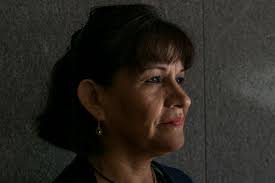
A decade before Roe, Pat Maginnis’ radical activism—and righteous rage—changed the abortion debate forever.

There was nothing remarkable about the small woman carrying a box of leaflets—certainly nothing to justify the clutch of reporters waiting for her across from San Francisco’s Federal Building on a July morning in 1966. Still, there they were. She arrived at exactly 9 a.m., greeted them, and began distributing fliers to anyone who passed. There were two of them: One was a yellow slip of paper titled “Classes in Abortion,” listing topics like female anatomy, foreign abortion specialists, and police questioning. The other—which she gave only to the assembled journalists and the five women who signed up for her class that Wednesday evening—described two techniques for DIY abortions. “I am attempting to show women an alternative to knitting needles, coat hangers, and household cleaning agents,” she told the reporters, adding that she had notified San Francisco police of her whereabouts and plans.

The woman was Patricia Maginnis, a laboratory technician and founder of the Society for Humane Abortion, an organization that she ran out of the front room of her small apartment in San Francisco. She’d started the SHA in 1962 (back then, it was called the Citizens Committee for Humane Abortion Laws). Arguably the first organization of its kind in America, its mandate was radical: The SHA sought to repeal abortion laws, endorse elective abortions, and offer women any resources it could in the meantime. These resources would come to include “the List,” an up-to-date directory of safe abortion specialists outside the country, classes on DIY abortions, and symposia where sympathetic doctors could confer with each other about the safest and best abortion techniques. SHA would eventually formalize its legal strategy with a branch called the Association to Repeal Abortion Laws (ARAL, which would form the basis for NARAL), specifically devoted to challenging legislation.

But on this particular day, and on this particular mission, Maginnis claimed she was acting alone, outside of her organization. The leaflets were her way of knowingly violating both a city ordinance and Section 601 of the California Business and Professions Code, which declared it unlawful to distribute information about abortion. She was also flouting Penal Code 276, which made it a crime to “solicit[] any woman to submit to any operation, or to the use of any means whatever, to procure a miscarriage.” The violation was the point: Maginnis had politely informed the police of her every move in advance. The aim was to goad the legal apparatus into an ugly confrontation that it preferred to keep as merely a threat; she wanted to make the system own the consequences of its laws. “I could get arrested for soliciting women to undergo a felony,” Maginnis told the alt-weekly Berkeley Barb, “but I feel it is necessary at this point to have a test case.” To get a law thrown out, you first need to go to court. And to get to court, you must be arrested.

Then it happened. While the reporters watched, a documentarian named Gary Bentley interviewed Maginnis for 10 minutes with a camera crew. Content with his footage, he asked his cameraman to film as he walked up to Maginnis. Here’s Hooper describing what happened next:

With microphone in hand and cameraman turned on, he said, “I’m placing you under citizen’s arrest for violating Section 188 of the Municipal Police Code. What do you think of that?”

“Excuse me, please,” Pat Maginnis said, and she hurried after one more woman to give her a leaflet.

When the police arrived in response to Bentley’s citizen’s arrest, they did so unwillingly. They tried to argue that they weren’t the ones arresting her even as they helped Maginnis into a cop car. It didn’t matter. Maginnis’ “test case” paid off. San Francisco’s Section 188 would be declared unconstitutional, and the case against her would be thrown out in court. It was the first of her many legal victories.

A social history of American abortion shows two things: 1) that it’s always been around, and 2) that anti-choice efforts tend to intensify in response to women’s perceived “liberation.” This was certainly true when Pat Maginnis came of age. Women had joined the workforce in unprecedented numbers during World War II, and the 1950s were engaged in the genie-rebottling project of fetishizing traditional gender roles. One result, as Leslie Reagan points out in When Abortion Was a Crime, was a sharp increase in the (medicalized) oversight of women’s choices. A system in which abortions were decided between the patient and her doctor or midwife would eventually give way to hospital committees, which debated on a case-by-case basis whether women deserved “therapeutic” abortions. The discussions were humiliating and sometimes even coercive, particularly when they concerned lower-income women and women of color: It wasn’t uncommon for committees to approve the requested abortion if the woman agreed to be sterilized. As medical bureaucracies solidified, hospitals started reporting abortions (and attempted abortions) to police.

That this compromised women’s privacy and subjected their health care to literal policing barely registered in these discussions, which tended overwhelmingly to prioritize the physicians’perspective rather than women’s needs. Doctors worried about the semilegal status of “therapeutic” abortions, but they also didn’t like committees telling them what to do with their patients. In either case, the debate revolved around doctors’ preferences and anxieties. There were plenty of organizations trying to reform abortion laws, ranging from Planned Parenthood—which in 1955 held an “abortion conference” to address possible reform efforts—to the California Committee to Legalize Abortion. Some abortion activists also chose to work within the existing framework: steering patients toward favorable hospital committees or training women on what to say to get “therapeutic” abortions, whether by emphasizing excessive vomiting or offering up stories that would earn them permission on psychiatric grounds.

Maginnis aimed for more than reform. She wanted a total system overhaul. As a figure in feminist history, Maginnis, now 90 years old, may not loom as large as a Margaret Sanger or a Betty Friedan. But while she’s finally getting some belated recognition, she was never particularly interested in taking credit for her work. Nor was she much invested in making herself or her positions respectable or palatable to mainstream culture. This may have made her an awkward figure for a movement that was then treading delicate territory. And yet, a decade before Roe, with her ungainly activism, her proclivity for wearing clothes she’d found on the street, and her righteous, unquenchable rage, Maginnis helped to fundamentally reshape the abortion debate into the terms we’re still using today. She was the first to take a passionate, public stance arguing that the medical stranglehold over women’s reproductive lives was corrosive. And the Society for Humane Abortion was arguably the very first American organization to advocate a pro-choice position that centered the woman, instead of the legal dilemmas of the physician—specifically, her right to privacy and choice. Rejecting the finicky gatekeeping protocols, the committees and evaluations and red tape, Maginnis proposed that the only question anyone should ask prior to approving an abortion was a simple one: whether the woman wanted it.

Pat Maginnis grew up with six siblings in Okarche, Oklahoma, during the Great Depression. Her father, a veterinarian, barely scraped by. Her family’s troubles were compounded by Catholic strictures: Her mother had converted in order to marry her father and—because birth control was not an option—consequently continued having children long after the doctors advised against it. “She had constant ‘female trouble,’ ” Maginnis says, recalling her mother’s unhappiness and pain. “I don’t know what that meant, but she had constant problems.” Her father, the illegitimate son of an opera singer, was differently scarred by the vagaries of unplanned pregnancy. “My grandma was on her way to be a star,” Maginnis says, “but she got pregnant. And apparently pregnancy was just a killer of dreams.” Her father never got over the humiliating circumstances of his birth. “He was a good soul, but forever tortured because he had been conceived out of wedlock.”

It’s hard to separate Maginnis’ refusal to become a parent herself from the misery that this litany of reproductive events inflicted on her family. Maginnis says that her father was so abusive that her older brother confessed to her that growing up he’d feared for his life more than once. Her family was not, in consequence (and despite its size and religious piety), particularly close. Some years after she started the SHA, her mother sent her a letter: “Dear Patricia,” Maginnis reads now, affecting a formal, slightly prissy voice, “I was thinking you must be about 40 years old. I do think you could do something besides teaching these girls to commit murder. P.S. If you come this way, do look us up. Love, Mother.”

It was a sufficiently chilly relationship—and Maginnis was so eager to get away—that she describes her banishment to a boarding school as a relief and remembers her mother’s trip to visit her in California with some acidity. “I never talked to her about my sex life,” Maginnis says. I’d asked whether she ever discussed abortion with her mother; that her answer took this form surprised me slightly. I wouldn’t necessarily have used the phrase “sex life” (which, to me, connotes pleasure) to include abortions. But Maginnis would; in fact, that was sort of her point. Any campaign for elective abortion is, of course, at least in part aimed at granting that women, too, might find joy and delight in sex (rather than just pain, danger, and obligation). As a guilt-ridden ex-Catholic myself, I was both baffled and impressed by Maginnis’ immunity to the shame that ailed her family: How does a soft-spoken, scrupulously polite Oklahoma girl who attended Catholic schools with strict Catholic parents shed her sexual guilt to become not just sexually adventurous, but a pioneer in activist lawbreaking?

Instead of going straight to college like her sisters, she went to work in a lab at the Bureau of Mines in Bartlesville, Oklahoma, and funded her own sea voyage to the Netherlands to meet a longtime pen pal and notional fiancé. They did not marry in the end. (“I knew that the intimacy required and the responsibilities and the thought of children I couldn’t face,” she says. “I decided that marriage was not for me.”) Then, partly because a friend told her the uniforms were cute, she joined the Women’s Army Corps. She was stationed at Fort Bragg in North Carolina until she was spotted walking with a black soldier: “The captain called me in and scolded me. She said, ‘You’re setting a bad example for young white women who might join the military.’ ” She was shipped off to Panama as punishment.

During those two years in Central America, she experienced a different kind of discrimination. She’d trained as a surgical technician, but instead of being allowed to work in surgery as she’d hoped, she was assigned to the pediatrics and obstetrics wards—the realm of women. There, she was exposed to women suffering from botched abortions, women being forced to give birth, infants with terrible abnormalities. What she didn’t get in surgical experience, she got in perspective. “A general overview of the status of women,” as she puts it to me. “And I wasn’t at all happy with it.” Then she went to college at San Jose State—and got pregnant. She’d been fitted for a diaphragm. Used foam. None of it worked.

She got her first abortion in Mexico and swore to herself that she would never again leave her own country to get medical care. She spent the next decade producing a list of legitimate abortion providers outside the country while also working quietly with those within it. Despite her best efforts, she would get pregnant twice more. But she would continue to have a sex life. And the horror of having to wrestle down her own fertility forged her into the formidable antagonist to the law that she became.

It helped, perhaps, that Maginnis was no longer young by the mid-1960s. She came of age long before the sexual revolution, which meant she had a particular experience of—and a particular fury about—what women had been routinely expected to tolerate. It’s hard for statistics to express just how urgent the abortion conversation was in the 1960s, or how difficult it was to even have the conversation, given the laws. In 1961, Los Angeles County Hospital admitted over 3,500 patients treated for illegal abortions. As of 1967, almost 80 percent of the women who died as a consequence of botched abortions were nonwhite.

Maginnis can’t pinpoint a single moment that turned her into an activist. She admits to once feeling great sympathy for a celebrity who was pilloried for needing an abortion, but it’s clear that there was no single precipitating incident. Her work, rather, was inspired by a slow and building rage. “What I saw was law, medicine, and religion were largely at fault for our problems,” she says.

When Maginnis launched her leaflet campaign, she chose a location that would maximize her ability to confront a medical community she saw as at best patronizing to women and at worst exploitative and controlling. The state Board of Medical Examiners had gathered at the University of San Francisco to discuss the implementation of hospital committees that would determine whether women could receive abortions. As the mostly male board debated the circumstances under which women could be forced to give birth, Maginnis was outside handing out information on how to abort without the help of the doctors within. She was shocked at how unseriously the board took their mandate. She told the Berkeley Barb that when she’d handed some board members a leaflet titled “Are you Pregnant?” with abortion information on it, they “twittered like a bunch of schoolgirls.”

Maginnis wasn’t. She relied on logistical help from two women, Lana Phelan and Rowena Gurner, who joined her to form the Society for Humane Abortion’s central trio, which came to be known as the “Army of Three.” Maginnis was the fire, Gurner the strategist and organizational genius, and Phelan the organization’s eloquent mouthpiece. Gurner, like Maginnis, also worked full time, professionalizing the organization in her spare hours. She spent many nights sleeping on SHA’s floor. Gurner “had polish,” Maginnis tells me, her eyes lighting up. “She gave me $20 once. Now, Patricia!” she says, mimicking her. “You go buy a new dress for this occasion, and don’t bring something that you found on the street or in the thrift store!

Gurner’s gift for strategy and Maginnis’ grit turned the leafleting plan into an all-out, accelerating assault on laws they saw as punitive or unjust—using themselves as bait. “I plan to leaflet for abortion until they get sick of me and arrest me or repeal the law,” Maginnis had announced to the Berkeley Barb when she launched her campaign on June 16, 1966. Her initial plan had been to distribute a thousand leaflets. A week later, when she hadn’t been arrested, she escalated. “My minimum goal is to distribute 50,000 leaflets by July 25, telling women where they can get abortions,” she announced through the press. When she finally was arrested (in late July, thanks to that “citizen’s arrest” by Gary Bentley), she caused the city ordinance under which she was arrested to be ruled unconstitutional. She had no intention of stopping there. “I was arrested under a local ordinance,” she told the Barb in 1966. “Now it’s the state laws that need changing.”

Abortion aftercare tips: "1) No tub baths or swimming for at least 2 weeks (preferably 4) afterwards. Showers and sponge baths permitted. 2) No sexual intercourse for one month after the abortion. 3) Avoid constipation. Do not wait until you are actually constipated to eat the stewed prunes. 4) Do not introduce Tampax nor anything else into the vagina for one month. If you wish to douche, use a mild Phisohex solution made according to directions on the package. Sterilize douche equipment each time before using by washing thoroughly with strong Phisohex solution or by boiling for 15 minutes."
Los Angeles Free Press

When the San Mateo County district attorney announced that if Maginnis and Gurner showed up, he intended to enforce California’s state law forbidding the dissemination of written matter on abortions, the pair immediately arranged a class in San Mateo that covered abortion laws and DIY abortions. As Gurner put it to the Barb: “We just want to get this law on trial. … We obviously and willingly broke the law. And we did it so that no DA could weasel out because of ‘insufficient evidence.’ ” It worked. They were arrested on Feb. 20, 1967, and faced (according to the Barb) a sentence of five to seven years in state prison if found guilty. While their hearing was in progress—in a courthouse in Redwood City—an unrepentant Gurner and Maginnis advertised that they were still looking for a place in Berkeley they could rent on Thursday nights to hold more abortion classes. (The room needed to hold 50 people, and they were willing to pay $10 a night.)

It took six years from their 1967 arrests for Maginnis and Gurner’s efforts to pay off. Initially, both women were convicted of violating Section 601 of the California Business and Professions Code—the state statute that made it unlawful to advertise abortion. But in 1973, the state Court of Appeals overturned their convictions, ruling that Section 601 was overly broad—for one thing, it “does not distinguish between abortions which are permitted and those which are not”—and thus unconstitutional.

The Army of Three hadn’t been trying to get arrested merely as a matter of strategy: They had real information to distribute, information that was hardest to obtain for women who weren’t rich. Maginnis was incensed by a medical consensus that effectively discriminated against the poor. “The medical profession’s committee idea of legalized abortion is very discriminatory,” she told the Barb. “It will help those with lots of money or contacts, not the majority of women.” Lower-income women suffered—like the third member of the Army of Three, Phelan, who struggled to collect the $50 she needed for an illegal abortion. Women in search of abortions were also easy to exploit. According to Maginnis, some parties whose phone numbers and addresses were being circulated (or sold) as abortion providers weren’t actually doctors. This discovery, and the accompanying stories of botched abortions and sexually exploitative abortionists, spurred her to create “the List.” Essentially a Yelp for abortion seekers, the List offered a continuously updated and reliable list of qualified abortion providers in Japan, Sweden, and Mexico. The Jane Collective in Chicago would follow suit a few years later, performing the abortions themselves.

By 1969, the Society for Humane Abortion claimed to have sent 12,000 women out of the country to get abortions from reliable, trustworthy providers. To give you a sense of just how necessary the List was, here’s an excerpt from one List user’s earlier attempt to obtain an abortion domestically (as printed in a set of letters to ARAL published by the Los Angeles Free Press): “I was two weeks along then and he made me wait until I was 3 months along. Then he said it was too late to get any help from anyone but he would do it if I would sleep with him!” The classes SHA organized instructed women on every aspect of an abortion: how to schedule one, how to prepare, what to expect, how it was done, how to respond to police interrogations if you had to be hospitalized, and how—if you couldn’t travel—to perform your own.

The classes sometimes included DIY abortion kits with items like gauze, a thermometer, cotton, and a syringe. Maginnis was by all accounts a vivid teacher. Newspapers reported that she lectured using an IUD for a pointer and that she “graphically illustrated the dangers of unsanitary abortion by holding up anal bacteria cultures and infected blood samples.” The class taught women female anatomy. It instructed them on how to calculate how many weeks pregnant they were. It instructed them on exactly how to call for an appointment (the woman, not the man, should place the call).

These classes were understood by many to be essential but legally risky. When the Los Angeles Free Press took the bold step of republishing the entire class’s contents across several pages of an October 1967 issue, the layout was anxiously peppered with editor’s notes and legal disclaimers like: “The Free Press can not and does not advise women who are not legally entitled to an abortion to follow the advice of Pat Maginnis.”

Legal disclaimer for abortion guide printed in the Los Angeles Free Press: "When we first received this article we wondered about the legality of publishing this material. We have learned that although Pat Maginnis has repeatedly and publically raised this possibility of legal conflict and asked to be arrested in order to clarify the situation, she has been permitted in California and the nation to publish, print, mail, circulate, and lecture on how to have a safe abortion. To the best of our knowledge no legal authority has asked for a halt to her propagation of the material on this page. Since for the last year anyone in California could have obtained the information on this page from the Society for Humane Abortion for the price of a five cent stamp, and since it is undoubtedly true that law enforcement agencies in the state knew of this activity without interfering with it, we feel legally as well as morally entitled to print this article."
Los Angeles Free Press

The Society for Humane Abortion didn’t interact much with the feminist movement or Planned Parenthood directly, at least at first. “It was too touchy,” Maginnis says. In the SHA’s early days, Planned Parenthood was more invested in advocating for contraception than abortion. Margaret Sanger’s theory was that abortion would become unnecessary if women had sufficient access to contraception. Maginnis disagreed. “Margaret Sanger, bless her,” she says. “We can’t thank her enough for Planned Parenthood, but it isn’t enough.” Under Maginnis’ leadership, the SHA spoke out—and in certain regards, provoked change—in ways Planned Parenthood wouldn’t. “We used to say we made Planned Parenthood respectable,” Maginnis laughs.

Her admiration of Sanger, though, is genuine. “Sanger took rotten eggs and tomatoes and rotten fruit thrown at her when she went out, and I don’t think people know that today,” she says. She understood that an organization with Planned Parenthood’s institutional heft needed to keep some distance from the SHA; Maginnis’ strategy of flagrantly flouting the law had made her something of a too-hot-to-handle legend.

"Secret Phones," a list of phone numbers for organizations including the ACLU, Planned Parenthood, and the Berkeley Police Department.
Berkeley Barb

When the Therapeutic Abortion Act was signed into law by California Gov. Ronald Reagan in 1967, the Army of Three planned a program of civil disobedience. The act, an unhappy compromise between groups whose politics hadn’t yet coalesced into well-defined positions like “pro-choice” and “pro-life,” ostensibly aimed to make legal abortion more widely available. (National Review called the signing of this bill Reagan’s “darkest hour.”) Abortion at the time was only legal to save the life of the mother; the act made “therapeutic” abortion legal in cases that would “gravely impair” women’s mental as well as physical health. But it also added a draconian 20-week limitation and required that any medical committee discussion of a prospective abortion for reasons of rape or incest include the relevant district attorney. Functionally, as even some attorneys at the time argued, it meant that wealthy women (who dealt with private hospitals) would have access to abortions, whereas women in public hospitals would be bound by a more conservative take on the law: They would need to show sufficiently “severe” mental distress—like psychosis—to obtain a legal abortion. (“How much for a psychosis?” reads a political cartoon Maginnis once drew, depicting a patient asking a psychiatrist for a diagnosis that would legitimize a therapeutic abortion.)

“We’re going to instruct women in the arts of phony psychosis and false hemorrhage,” Pat Maginnis told reporters. “This unbelievable piece of legislative slop must be violated to the point that the medical profession and legislature is pressured into accepting more modern abortion techniques.” ARAL issued a leaflet asking members of Congress whether they would request permission to get a vasectomy or treatment for venereal disease from a panel of female doctors.

It was a combative stance—and a sign of SHA’s uncompromising position on the right to choose—for a bill that Planned Parenthood, among others, now credits with being among the first to functionally legalize abortion.

The “Che Guevara of abortion reformers,” as alt-weeklies called her at the time, now seems like an unlikely avatar of female rage. When I visited her at her home this summer, I found a 90-year-old woman who laughs a lot and peppers her speech with gentle exclamations. “Oh, my goodness,” she chuckles, remembering the time she invited police to attend a class she was teaching on DIY abortions—and they asked her to pay $3 an hour for a female officer’s time. “I think a policewoman did show up, but more out of personal interest,” Maginnis says wryly. She conveys a bemused mildness I found hard to reconcile with the working-class firebrand I’d expected.

But there’s no real contradiction here: The woman who said “excuse me” to the man detaining her in 1966 is also the woman who faced down the San Francisco homicide squad in 1959 in the hospital while recovering from a self-induced abortion. Had she given herself an abortion? the police asked. “Sure I did,” she replied. “Want me to demonstrate how in court?”

In her 10th decade, Maginnis remains equal parts polite and independent. She lives alone in a house in the San Antonio neighborhood of East Oakland that she bought back in 1979 for a song (the owner had tried to burn it down for the insurance money). Until just a few years ago, when she gave her archives to a library, her house was filled with several decades’ worth of handwritten letters from women telling her about their abortions or asking for help.

In the ’60s, especially given the respectable caution that characterized organizations like Planned Parenthood, there was a radical politics to the matter-of-factness with which the Army of Three openly talked about their own abortions. And that matter-of-factness still feels radical today. The second time she got pregnant, Maginnis recalls, she was deeply frustrated at the prospect of being forced to leave the country again for an abortion. But by then, she says, “I had figured out, if I start just giving my uterus no rest, that fetus is going to fall out.”

Startled, I ask Maginnis to explain. She elaborates that her plan was to “squat down and take my clean, scrubbed fingers and manipulate until I could get it to rebel and kick the fetus out.”

“So you could reach your cervix?” I ask.

“Oh yeah, very easily. You probably could too.”

“Does that work?”

“I manipulated, I worked on it, and finally, at five months, the fetus went into—I went into labor. It took a long time and a lot of work.”

Five months of daily effort to induce an abortion, followed by labor and police questioning—all instead of a simple, fast, safe procedure. In telling me this story, she betrays none of the story’s weight; rather, there is a relationship between her tight understatement and her rage.

In interviews, Phelan was less circumspect and much more graphic about the horrors she endured because safe abortions weren’t easily available. After she had one child, her doctor told her another pregnancy would kill her but didn’t tell her how to avoid getting pregnant. When she did—as a woman, she once said, “you don’t know how to say no to your husband. That silly Bible says you can’t say no!”—it took her so long to gather the $50 she needed for an illegal abortion that by the time she’d saved it, she was four months pregnant. The abortionist—a woman on the outskirts of Tampa, Florida—stuffed her uterus with slippery elm bark and told her not to come back. She was at her sister-in-law’s house when she started to feel extremely ill. She’d told no one, not even her husband. As she recalled in 2004:

This is a thing you do yourself. And if you die and go to hell, it’s you that goes, not anybody else. So I excused myself to go to the bathroom because it was hurting so. When I sat down on the john and looked down, there was a little tiny hand protruding from my vagina and the blood was just flying, and I thought, “Oh my God, what do I do now?”

I didn’t take as long to think about it as Bush did the war … [laughs] I gathered up all the toilet tissue I could get in my hand and stuffed it back inside of me, pushed everything back up inside my vagina and just packed it. And got all the blood off I could and cleaned everything up. And then I went out back inside and said I had to go home because I was so sick, and that was not a lie.

She was 16. First came fear. The anger would follow. This seems to be a pattern: Restrict women’s rights, force them to suffer needlessly, blame them when they fail impossible tests, and you will eventually create unsuspected forces for change. “It seemed to me when I got involved wasn’t really when I got involved [in the abortion rights movement],” Maginnis says. “I’d been involved for years before, just not driven to do anything except be angry. In a constant rage over it. And wondering why women, in addition to myself, were in a constant upheaval.”

Was Roe v. Wade a relief when it was passed? I ask her. “For me it wasn’t a big relief,” she says. It had felt more like the expected course of events—reality inching closer to how things should be. But then she continues: “I thought, yeah, that is a good thing. Now, let’s hope we can at least maintain the healthy ideas of it being available. We don’t have to sneak, we don’t have to beg.”

If the Federalist Society—which supplied the list of judges from which Donald Trump chose Brett Kavanaugh for the Supreme Court—has its way, we’re in danger of returning to the times when women had to sneak and beg. Trump pledged during his campaign that Roe would be overturned “automatically” through the pro-life judges he would nominate. It probably won’t be so straightforward: The route the GOP is taking to greatly restrict women’s access to abortion has been circuitous, with progress marked by legal restrictions, by expanding definitions of fetal personhood, by permitting women to be lied to in the service of a single end goal. As my colleague Dahlia Lithwick has written, “women’s experiences, memories, and suffering don’t matter; their control over the truth of what they themselves have lived through is determined by those who win.”

Faced with a similar orthodoxy half a century ago, Maginnis and her cohort refused to let it stand.

The classes a modern-day SHA might teach would likely be different. There’s the internet, for one. The first time we met, I asked Maginnis what she thought women should be doing now, as the country seems poised once again to try to control our bodies. “I’ve thought about that,” she said then. “If I was going to reinvolve myself at this point, what would be the entry point? Kind of like setting out a map, looking for an entry.” She doesn’t quite have an answer. Yet.

It’s late afternoon on my final visit with Maginnis, and the warmth and long conversation have made the upstairs room where we sit feel especially lived-in. Her compatriots Gurner and Phelan died years ago. It’s not lost on me that I’m talking to someone who fought for reproductive freedom pre-Roe, at a moment when a Supreme Court justice has just been hand-picked to take it away again. In recent months, rage has been much on my mind. If over half of Americans stand to have a committee of men overrule their right to bodily autonomy after a mere 45 years, we can learn a lot from Pat Maginnis—about how women survived, and how they died, and how they fought. So what should we do now? I ask her again, as she raises the blinds to open the window overlooking the street below. “Keep talking about the issue,” she says. “Sure, not everyone is a brilliant speaker, but I think people have to keep talking about it.” She looks at me, her eyes bright. “Don’t you?”

Source: https://slate.com/human-interest/2018/12/pat-maginnis-abortion-rights-pro-choice-activist.html?fbclid=IwAR0KJgdknE077yygecG8kxtbbIf_ReVXLwk8jNDMOviRPLG3kqkzDRDh08Y


His nomination as attorney general spells trouble.

While attorney general for President George H.W. Bush, William Barr was a vocal critic of abortion rights.
Wikimedia Commons

President Donald Trump on Friday announced he plans to nominate William Barr to replace Jeff Sessions as attorney general. Under Sessions’ guidance, the U.S. Department of Justice supported restrictive voter ID laws, defended the Muslim ban, endorsed separating asylum-seeking parents from their children, reversed Obama-era guidance protecting LGBTQ rights, and argued for a right to block undocumented immigrant minors in their custody from obtaining abortions. It’s hard to imagine the situation getting any worse for vulnerable people.

But if Barr is confirmed, that’s exactly what could happen.

Barr, a corporate lawyer who served as attorney general to President George H.W. Bush from 1991 to 1993, has long been a vocal critic of abortion rights. He’s called abortion a result of secular “fanatics” wreaking havoc on the “Judeo-Christian moral tradition.” During his 1991 confirmation hearings he told members of the Senate Judiciary Committee he believed Roe v. Wade was wrongly decided and should be overturned. While an attorney at the Department of Justice (DOJ) in 1991, Barr urged a federal court to lift an injunction preventing clinic protesters in Wichita, Kansas, from blocking access to abortion clinics there, saying it was better to let state law enforcement handle the protesters. This was at a time when the anti-choice “rescue” movement sent protesters to clinics in the hundreds and thousands to do whatever they could to disrupt clinic access, including forming human chains in front of clinics, barging in, and handcuffing themselves to medical equipment.

Of course, contrary to Barr’s belief, state law enforcement was often ill-equipped or unwilling to deal with abortion clinic protesters—to the point where Congress eventually stepped in and passed the Freedom of Access to Clinic Entrances (FACE) Act in 1994.

In 1992, the American Bar Association adopted a resolution to oppose state and federal restrictions on abortion rights. Barr, then attorney general, publicly opposed the resolution. And when Congress was considering federal legislation to protect abortion rights, he said he would advise President Bush to veto it. Barr repeatedly bemoaned the “permissiveness” of the “sexual revolution,” arguing it created moral upheaval leading to the country’s decline. He railed against the separation of church and state, especially in public schools. “This moral lobotomy of public schools has been based on extremist notions of separation of church and state or on theories of moral relativism which reject the notion that there are standards of rights or wrong to which the community can demand adherence,” Barr said in 1992 in a speech on juvenile crime.

Barr also defended the Bush administration’s use of DOJ staffers to investigate Anita Hill to try to discredit her testimony against U.S. Supreme Court nominee Clarence Thomas. More recently, he’s criticized the special counsel’s investigation into Russian interference in the 2018 presidential election.

By these measures, Barr may be the best candidate for attorney general Trump could choose to carry on Sessions’ mission at the Justice Department. And that should, frankly, terrify us.

During its first two years, the Trump administration has enabled and encouraged the rise of violent xenophobia through its own policies and statements. There’s little reason to believe a Justice Department run by Barr—who has publicly praised the administration’s militarization of force against immigrants—will do anything to tamp this problem down.

Despite the existence of federal law designed to protect abortion clinic access, the anti-choice movement under Trump has been more emboldened than ever to defy that law and dare the Justice Department to enforce it. With Barr at the helm, the chances of such enforcement are slim.

Barr’s nomination also comes at a time when evangelicals, backed by the DOJ, are urging the federal courts to allow them license to discriminate against LGBTQ people in all forms, from selling cakes to refusing adoptions and foster care placements based on religious beliefs. It comes as evangelicals lobby for more direct government funding of religious activity and greater entanglement of church and state, and for the right to deny care and services to thousands in the name of religious liberty.

As attorney general, Barr will almost certainly be a fierce supporter of those efforts.

Barr still must be confirmed by the Senate, but with Republicans in control and his time serving in the H.W. Bush White House that confirmation is all but a given. As attorney general, Jeff Sessions advocated brutal policies and used the force of the Justice Department against the most vulnerable. Should Barr be confirmed, he will no doubt do the same.

Source: https://rewire.news/article/2018/12/07/william-barr-once-said-roe-v-wade-should-be-overturned/

Joseph Silk is among a growing number of anti-choice activists holding or running for office who have called for the right to legal abortion to be ignored.

When it comes to his latest effort to criminalize abortion, Silk said: “I’m going to keep introducing it every year.”
Joseph Silk/YouTube

Oklahoma Republican state Sen. Joseph Silk says he wants to abolish abortion—and he won’t give up on bills to make that happen.

Silk pre-filed SB 13, the “Abolition of Abortion in Oklahoma Act,” in late November, prompting national headlines about the extreme bill. The legislation would criminalize abortion care in Oklahoma, making it a felony homicide punishable by life imprisonment. As Rewire.News’ Brie Shea reported, should the bill become law, “all parties involved in an abortion (physicians, nurses, the pregnant person, etc.) could potentially face murder charges.”

The bill isn’t Silk’s first attempt to pass such legislation. Silk introduced the “Oklahoma Bill Prohibiting Abortion After Conception” in 2017 but it wasn’t taken up for a vote. And the year prior, he introduced SB 1118, to define abortion as murder and criminalize it. State Republican leaders blocked the bill from proceeding that time as well, though it passed out of committee.

That 2016 bill was considered by extreme anti-choice group Abolish Human Abortion to be “the first abolitionist bill (of abortion) in the history of the United States.” The group is a part of a subset of anti-choice activists who seek the immediate and total abolishment of abortion rather than steadily chipping away at abortion rights. They call themselves “abolitionists” and liken their work to anti-slavery efforts.

“I’m an abolitionist,” Silk told Rewire.News. “I believe that the government has a primary role to protect life, especially innocent life.” Silk, too, compared the position to those who fought against slavery in the United States. It is “similar to slavery—there were groups that were abolitionists,” he said. “There were people that wanted to kind of regulate slavery and allow people to kind of earn their freedom, and then there’s abolitionists that know slavery is morally wrong and all people are created equal and we need to abolish slavery.’”

He hasn’t always viewed abortion this way. “I used to, when I was first elected, I would kind of run the typical pro-life measures that don’t really actually do anything—such as you can’t commit an abortion until you’ve watched an ultrasound first or hear a heartbeat first,” he said. But then, Silk said, he had a “paradigm shift” in his views after meeting with other “abolitionists” and having a “conversation of how pro-life groups and pro-life bills have really not done anything at all to curb abortion.”

“I only run abolition bills now,” he said.

Silk is one of a growing number of anti-choice activists holding or running for office who have called for the right to legal abortion to be ignored. Among them are Dan Fisher, who launched an unsuccessful bid for the Republican gubernatorial nomination in Oklahoma during the last election cycle. Fisher, a former Oklahoma state representative, ran on a platform that centered on “abolishing” abortion. When questioned about the punishments Fisher would propose for those who have or provide an abortion, a spokesperson for his campaign told Rewire.News it would be treated “much like your homicide laws.”

Silk supported Fisher’s run for office and extreme platform, introducing Fisher in March 2018 as part of a two-day campaign rally. As Right Wing Watch reported, Silk used the appearance to call those who opposed his anti-choice legislation the “enemy.”

“If you use your position of authority to protect the continuation of the slaughter of unborn children, you will always be my enemy,” he said. “And if you use your position of authority, I don’t care what level it’s at, but if you use your position of authority to keep the abortion mills running and protected, what is that other than a very, very evil act and abuse of authority?”

Also speaking at the rally, according to Right Wing Watch, was Matt Trewhella—an anti-choice radical who once signed a pledge suggesting that killing an abortion provider was “justifiable”—and Operation Save America’s Rusty Thomas. Trewhella has promoted Silk’s most recent anti-choice bill on his personal Facebook page, and has written about traveling to Oklahoma to promote his agenda in the state legislature.

The anti-choice activist traveled to Oklahoma in February of that year to “to conduct a citizen’s initiative calling for immediate interposition for the pre-born and total abolition of abortion,” according to a 2016 newsletter produced by one of Trewhella’s organizations, Missionaries to the Preborn. The newsletter notes that almost immediately after, Silk first moved on his legislation to criminalize abortion: “Just 72 hours later—an Oklahoma senator introduced the citizen intitiative [sic] in bill form,” it said.

Silk says Trewhella’s visit to the state in 2016 was not what motivated him to first introduce the bill. “However, I would say it was encouraging to see somebody very adamant and passionate about the abolitionist movement as well,” he said. “And so, he didn’t have anything necessarily to do … [with me] becoming an abolitionist, but he’s definitely been supportive of all that language which is very, very good to see.”

When it comes to his latest effort to criminalize abortion, Silk said: “I’m going to keep introducing it every year.”

In an interview with Oklahoma News 4, Silk appeared unconcerned that women could be punished for abortions under his legislation. When asked what he would say to a woman sentenced to life in prison for an abortion, the Republican replied: “I don’t know. The exact same thing I would say to a mother who just killed a 1-month-old or a 1-year-old child.”

“It’s a horrific act and there shouldn’t be any tolerance for it,” he said, referring to abortion. His legislation makes no exceptions for cases of rapeincest, or life endangerment.

Silk has suggested that the legislation isn’t designed to challenge the landmark abortion rights case Roe v. Wade, as it would instead instruct the state to ignore federal law on abortion. “The attorney general shall direct state agencies to enforce those laws regardless of any contrary or conflicting federal statutes, regulations, executive orders, or court decisions,” the legislation says. Silk told Rewire.News that “the goal of it is to essentially use state sovereignty to say … Roe v. Wade was constitutionally illegitimate, and it was immoral. So we as a sovereign state are not going to participate in the act of abortion.”

However, he sees a potential avenue for his bill to help undo abortion rights in federal courts. “I would love to see a bill be challenged all the way up to the Supreme Court and then the Supreme Court overturnRoe v. Wade or just say its a state issue. I would actively support those measures,” he said. “I’m looking at some things we can do to maybe get there.”

“I think, depending on what happens with Senate Bill 13 through the committee process, and there’s amendments and stuff like that, it may become a vehicle that would end up going up to the federal courts.”

Silk said in 2016 that his legislation could be used to tee up a challenge to abortion rights at the U.S. Supreme Court. “We need to attack the issue directly,” he told conservative conspiracy website WorldNetDaily. “Life begins at conception, and abortion is murder,” he said. “Until we start doing that, [the Supreme Court is] never going to be forced to overturn that ruling.”

Silk has introduced or co-sponsored several other anti-choice bills. Those include a failed measure he introduced in 2017 to require death certificates be issued to all aborted fetuses in Oklahoma and a failed effort to amend Oklahoma’s Heartbeat Informed Consent Act to force providers to determine if there is the presence of a fetal heartbeat before performing an abortion. In that case, if a fetal heartbeat was detected, the bill would have required the provider to tell the pregnant person that an “unborn human individual” has a heartbeat and inform them of the statistical probability of bringing the “unborn human individual” to term.

He expanded on his views on reproductive rights while speaking with Rewire.News, explaining that he “absolutely” supports banning some forms of birth control—something that could happen should his belief that “life begins at fertilization” be enshrined in law. “[A]ny birth control that allows an egg to be fertilized and then somehow disrupts the process, that should be banned because it is essentially taking human life,” he said. “Now, all other birth control types that don’t allow fertilization, that would be completely fine and there’s nothing morally wrong with any of that.”

Though he noted that SB 13 doesn’t specifically address it, Silk also objects to some in-vitro fertilization practices, which he said were “immoral.” “They fertilize a lot of eggs, use a couple of them, discard all the other fertilized eggs. Or freeze them for an indefinite period of time,” he said.

Silk has made efforts to restrict LGBTQ rights. He sponsored multiple iterations of a “Conscience Act,” which would allow for discrimination against LGBTQ people by allowing anybody in the state to refuse to provide “services, accommodations, advantages, facilities, goods or privileges to be used to promote, advertise, endorse or advocate for a specific marriage, lifestyle or behavior.” In an interview with the New York Times about so-called conscience measures in 2015, Silk said that “[Gay people] don’t have a right to be served in every single store.”

Silk doubled down on the statement, according to the Advocate in a subsequent post to his campaign website. “Yes, I did say that homosexuals do not have the right to be served in every store, just as I do not believe that I, my family, or anyone else have the right to be served in every private business,” he reportedly said. “The right to provide services should be the decision of the business owners. We need to keep our country free and stop this radical, intolerant, movement.”

Source: https://rewire.news/article/2018/12/05/meet-joseph-silk-the-oklahoma-republican-trying-to-make-abortion-a-homicide/

The Dáil should listen to the voters, not generate red tape that could stop vulnerable people getting the care they need

Dublin Castle on 26 May 2018. ‘In May 2018, after 35 years of harm and hypocrisy, the Irish people delivered an unequivocal mandate.’ Photograph: Charles McQuillan/Getty Images

In 1983, as the Irish electorate voted in favour of a constitutional ban on abortion, campaigners warned in bold print: “This Amendment Could Kill Women.”

It did.

Following the tragedy of Savita Halappanavar’s death in 2012, Irish politicians were forced to legislate on a 20-year-old supreme court decision, one that consecutive governments had conspicuously kicked into the long grass. In 1992, a judge had ruled that a suicidal teenage rape victim had the right to an abortion. When the government finally produced the Protection of Life During Pregnancy Act 2013, it was so clearly unfit for purpose that the Abortion Rights Campaign doubted it would enable a suicidal teenage rape victim to access a termination at all.

Those campaigners were right.

In 2014, a suicidal teenage victim of rape and torture was forced to carry her pregnancy to viability and deliver by C-section.

In May 2018, after 35 years of harm and hypocrisy, the Irish people delivered an unequivocal mandate – 66% of voters said it was time to repeal the eighth amendment. The rationale behind this result is not opaque, as some would have us believe. Neither is it a reflection of lesser-of-two-evils logic – where middle-ground voters accepted universal access to abortion up to 12 weeks because they understood it as the only way to protect victims of rape or incest.

Rather, exit polls show that 62% of people cited a woman’s right to choose as the motivation for their votes, and 55% cited women’s health. These were the electorate’s two main priorities. There is no ambiguity about what the people want.

With this mandate, you would think that Irish activists could stop playing Cassandra; could be done, finally, with issuing chilling prophesies that their country seems cursed to ignore.

Yet, as the regulation of termination of pregnancy bill emerges from the circus of the Dáil debates, it is apparent that our representatives are still not listening. A mandatory three-day waiting period; unnecessary criminalisation; casting the patient’s views of risks to her health or of the probable gestational date as clinically irrelevant; creating an unworkably high bar for access to abortion where the health of the pregnant person is at risk; and regulations that seem designed primarily to create barriers to safe, legal care – this is not what the Irish people voted for.

The three-day wait is a political concession that has no basis in best medical practice or clinical evidence. Its only purpose is to make access to care more difficult. And, as always, the most vulnerable will be the most affected – people with disabilities, single parents, people suffering partner abuse, people in precarious employment, people on low incomes, people who live in remote areas, and asylum seekers in Direct Provision facilities will all find it much harder to attend multiple appointments.

Add the stipulation that the doctor who originally examined the patient must be the one to carry out the procedure, and we run into senseless bureaucracy and scheduling issues. This requirement fails to acknowledge the team-based nature of medical care and, of course, it presents more obstacles to patients.

If you don’t stop to think through the actual ramifications of these unnecessary regulations, they might seem minor. What’s a three-day wait period? What difference does it make if the doctor who originally examined you must carry out the termination? But abortion is time-sensitive. For someone at 10 weeks of pregnancy, with childcare and work commitments, these stalling tactics are the difference between accessing safe, legal care at home and begging money for the boat to Liverpool.

The purveyors of red tape know this. They know that their hoop-jumping exercises will effectively prevent many vulnerable women, trans and non-binary folk accessing the care they need and should be legally entitled to.

Lawyers for Choice have expertly analysed the legislation and found myriad potential human right abuses. If our representatives fail to listen, I will surely soon be writing another column about another tragedy, another frustrated screed about how, once again, Ireland’s pro-choice advocates were right.

 Emer O’Toole is associate professor of Irish performance studies at Concordia University in Canada

Source: https://www.theguardian.com/commentisfree/2018/dec/04/abortion-law-ireland-voted-dail-listen?fbclid=IwAR0–s8d5a-VPATGmq1T30ZyZuIAO66dMVX8haGvOriX-rLjuMGMQzG-5kk

ThinkProgress asked House members if they support lifting the federal funding ban on abortion care. Here’s what they said.

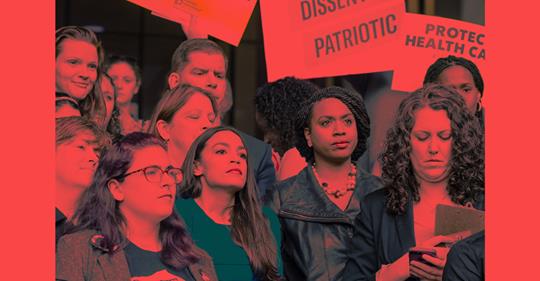
BOSTON, MA – OCTOBER 01: NEW YORK DEMOCRATIC CONGRESSIONAL CANDIDATE ALEXANDRIA OCASIO-CORTEZ (IN BLUE) STANDS WITH BOSTON CITY COUNCILOR AND DEMOCRATIC CONGRESSIONAL CANDIDATE AYANNA PRESSLEY (R) AT A RALLY CALLING ON SEN. JEFF FLAKE (R-AZ) TO REJECT JUDGE BRETT KAVANAUGH’S NOMINATION TO THE SUPREME COURT ON OCTOBER 1, 2018 IN BOSTON, MASSACHUSETTS. (PHOTO BY SCOTT EISEN/GETTY IMAGES; EDIT BY: DIANA OFOSU/THINKPROGRESS)

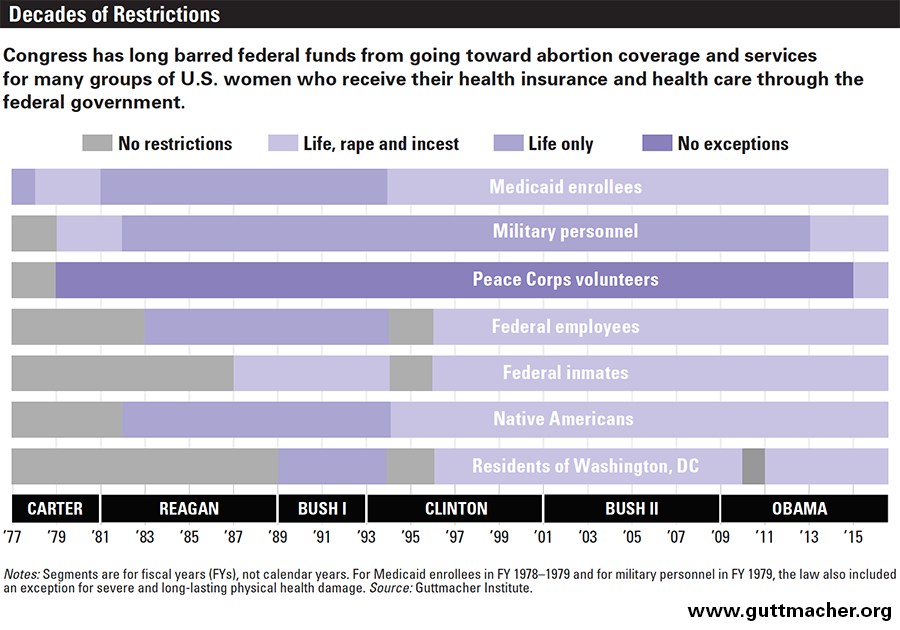
For the past four decades, lawmakers in Washington, D.C. have largely prohibited federal dollars from paying for low-income people’s abortions. But with a record number of Democratic women elected to office in November and their party holding the majority in the House next year, momentum is building to lift the ban.

By ThinkProgress’ count, at least 183 House members support repealing the Hyde Amendment, a legislative provision that prohibits federal Medicaid dollars from covering abortion except in cases of rape, incest, or life endangerment. Hyde is not permanent law but written and passed through congressional appropriations bills annually. Reproductive rights and justice advocates are cautiously optimistic 2019 is finally the year Congress doesn’t attach the coverage restriction or other similar riders to an appropriation bill. The number of members backing repeal so far is a feat of its own.

Lawmakers will also have the opportunity to formally put an end to Hyde. Rep. Barbara Lee (D-CA) told ThinkProgress she will re-introduce the EACH Woman Act for the second time next year; the legislation ensures that anyone who gets health care through the federal government will have coverage for abortion services and that legislators cannot interfere with what private insurance covers. The bill needs support from at least 35 more representatives to pass, according to a ThinkProgress analysis.

ThinkProgress looked at the bill’s current co-sponsors, as well as endorsements from the pro-abortion rights group NARAL, which only supported candidates this election cycle who expressed support for repealing Hyde and the EACH Woman Act. We reached out to every House member who was not a co-sponsor or endorsed by NARAL to determine their position on Hyde, but did not hear back from every office by publication.

“As Co-Chair of the Pro-Choice Caucus, I’m looking forward to working with both the newly-elected and returning members to advance a pro-woman agenda in the new year,” Lee told ThinkProgress by email.

“That includes fighting against the Administration’s efforts to gut the Teen Pregnancy Prevention Program, protecting access to birth control and reproductive health care, ending discriminatory bans on abortion coverage, and ensuring students receive comprehensive sex education, grounded in evidence and science. It’s time to get to work.”

There’s a sense of optimism given the composition of the incoming House of Representatives. While a member’s gender doesn’t guarantee they’ll support Hyde repeal, it’s a strong predictor, according to a Data for Progress study that looked at Democratic House members’ stances on Hyde. That means the 35 newly elected Democratic women who will serve on the House next year increase the odds of repealing Hyde and codifying protections for abortion coverage. At least 102 women will serve on the House next year, including at least 43 women of color; of the 102, 89 are Democrats.

Of course, nothing is a guarantee. Members of Congress have been known to vote against bills they’ve co-sponsored and endorsements don’t always forecast someone’s future voting record. Still, the amount of support to repeal Hyde on the record so far is unprecedented. Support could even grow as pro-choice activists visit Capitol Hill next year.

All* Above All, an organization dedicated to lifting abortion coverage bans, noted the historic shift after the midterm elections and will now be spending a lot of time educating new members about the EACH Woman Act.

Simultaneously, they’ll be asking House members to pass clean appropriation bills. Usually, the Hyde Amendment is attached to an appropriation bill for the Department of Health and Human Services (HHS), along with other language that is used to block abortion coverage for other groups who also get health care through the federal government like the military, federal inmates, or Peace Corps volunteers.

“Given what the freshman class looks like, I think we’re going to have a lot of positive outcomes from that outreach,” said Destiny Lopez, co-director of All* Above All. “It’s like constant, vigilant education of members because yes, we have all of these amazing women and women of color and younger folks who have come into Congress now who hopefully are going to be with us without a lot of explanation because they’ll just get it.”

Congresswoman-elect Ayanna Pressley (D-MA) is among those who won’t need to be convinced.

“The Hyde Amendment disproportionately impacts low-income women, women of color, immigrants, and young people who rely on Medicaid for their healthcare coverage,” said Pressley in a statement to ThinkProgress. “I called for the Amendment’s repeal as part of the Equity Agenda I put forward during the campaign, and remain committed to working with advocates and activists to ensure unfettered access to abortion services, including through the passage of the EACH Woman Act.”

While the ultimate goal is to pass the EACH Woman Act (which won’t happen next year with this Senate and president), the short-term objective is to continue to garner more support. Five years ago, it was unconscionable that legislation like the EACH Woman Act would even exist, said Lopez; the bill was first introduced in July 2015. Holding a hearing or vote on the matter would be a step forward.

Meanwhile, prominent figures within the anti-abortion movement are concerned about the sea change. Just last year, the House passed a bill to codify the Hyde Amendment. Now, they are going to have to defend their gains.

“[W]e must also face the reality of a now pro-abortion led House of Representatives that is determined to thwart President Trump’s pro-life policy agenda. The pro-life movement cannot be complacent. We must be prepared to fight to hold the line on important pro-life policies such as the Hyde Amendment,” said Susan B. Anthony List President Marjorie Dannenfelser in a statement the day after the election.

The Hyde Amendment initially passed when only 19 women served on the House. After failing to pass the Human Life Amendment — which recognized the fetus as a “person” from the moment of conception — anti-choice lawmakers conceded to denying low-income people abortion coverage. Led by late Rep. Henry Hyde (R-IL), Congress first barred Medicaid from paying for abortion care in 1976. (There are a few narrow exceptions like for rape or incest but they generally don’t work. States can also opt to use public funds to cover abortion care, but less than half do.)

The 94th Congress looks very different than the 116th Congress, with female voters supporting Democrats more than usual in recent years.

“We brought the power of women of color in particular to the voting booth. And so when I think about abortion rights issues, one of the issues that most impact women of color is the Hyde Amendment,” Lopez told ThinkProgress.

About 51 percent of Medicaid enrollees of reproductive-age subjected to abortion coverage restrictions are women of color, according to All* Above All. When Medicaid doesn’t pay for the abortion, people who live near or below the federal poverty level have to apply for non-profit funds or pay for the procedure themselves; it’s usually a combination of both. An abortion can cost upwards of $3,500, depending on the zip code, facility, and how far along the pregnancy is.

“Just as we’ve been there for them right now, it’s time for our elected leaders to be there for us,” she added.

Source: https://thinkprogress.org/record-number-of-women-congress-repeal-the-hyde-amendment-3bfb3c527a49/?fbclid=IwAR3u03A-26OCSuptAhJoOGYV2NVkzUQ1Hpyz8WSann3UPq7ZAt7il4jOH5E

And a groundbreaking Supreme Court case could determine the fate of tribal land in Oklahoma—and the nation.

Abortion clinics and the ACLU are banding together to challenge a state policy that bans payment for abortion services before the mandated two-day waiting period is over.
Shutterstock

The American Civil Liberties Union announced last week that it will be appealing state citations issued against three Arkansas abortion clinics. The state board of health had upheld the citations after the state department of health determined that the clinics violated state law prohibiting physicians from collecting payment during the mandated 48-hour waiting period for people seeking abortions. The ACLU’s Reproductive Freedom Project and the ACLU of Arkansas will claim the law is unconstitutional and a violation of the fifth and 14th amendments’ right to equal protection and the right to privacy.

Now for a pressing reminder of why courts matter: Justice Daryl Hecht, a pro-choice judge on the Iowa Supreme Court, is retiring this month for health reasons. His retirement leaves a vacancy on the court, and Republican Gov. Kim Reynolds gets final pick from a group of nominees sent by the state’s judicial nominating commission. The Iowa Supreme Court will be deciding the constitutionality of a blocked fetal heartbeat law that bans abortion as early as six weeks into a pregnancy. We can be certain Reynolds—who signed the law and who earlier this year appointed her father to the judicial nominating commission—won’t be replacing Justice Hecht with another liberal. At the Faculty Lounge, Anthony Gaughan breaks down why this may spell trouble for abortion rights in Iowa—and ultimately for the rest of the country.

Courts

The U.S Supreme Court heard arguments last Monday in a case that will decide whether citizens can talk back to law enforcement without fear of consequences. Garrett Epps, a professor of constitutional law at the University of Baltimore, provides a great explanation of the case, including the legal history of citizens suing for “retaliatory arrest.”

Last week, the nation’s high court also heard a case over jurisdiction stemming from a crime committed in Native American territory in Oklahoma, which could have huge implications for tribal land rights and state rights. Rebecca Nagle, a writer, advocate, and citizen of the Cherokee Nation, provides a historical accounting of tribal land grabs and why Cherokee land rightswhich could affect half the stateshould be restored.

LGBTQ Rights

A handful of pending petitions before the U.S. Supreme Court involving employment, education, military, and religion could greatly expand LGBTQ equality or set back rights for generations to come.

Voting Rights

Former Georgia gubernatorial candidate Stacey Abrams and her allies last week filed a lawsuit over Georgia’s 2018 election. The suit claims the secretary of statewho was Abrams’ opponentand the state election board “grossly mismanaged” the election and deprived Georgians of the right to vote. Fair Fight Georgia, which was formed by Abrams, and Georgia Care in Action hope the lawsuit will fix the electoral system for future elections. At SlateRichard L. Hasen breaks down why the lawsuit’s method of attack—targeting the entire state electoral process rather than a singular focus like voter purges—is actually pretty genius.

Source: https://rewire.news/article/2018/12/03/gavel-drop-arkansas-will-be-in-court-in-case-over-abortion-fees-and-waiting-periods/

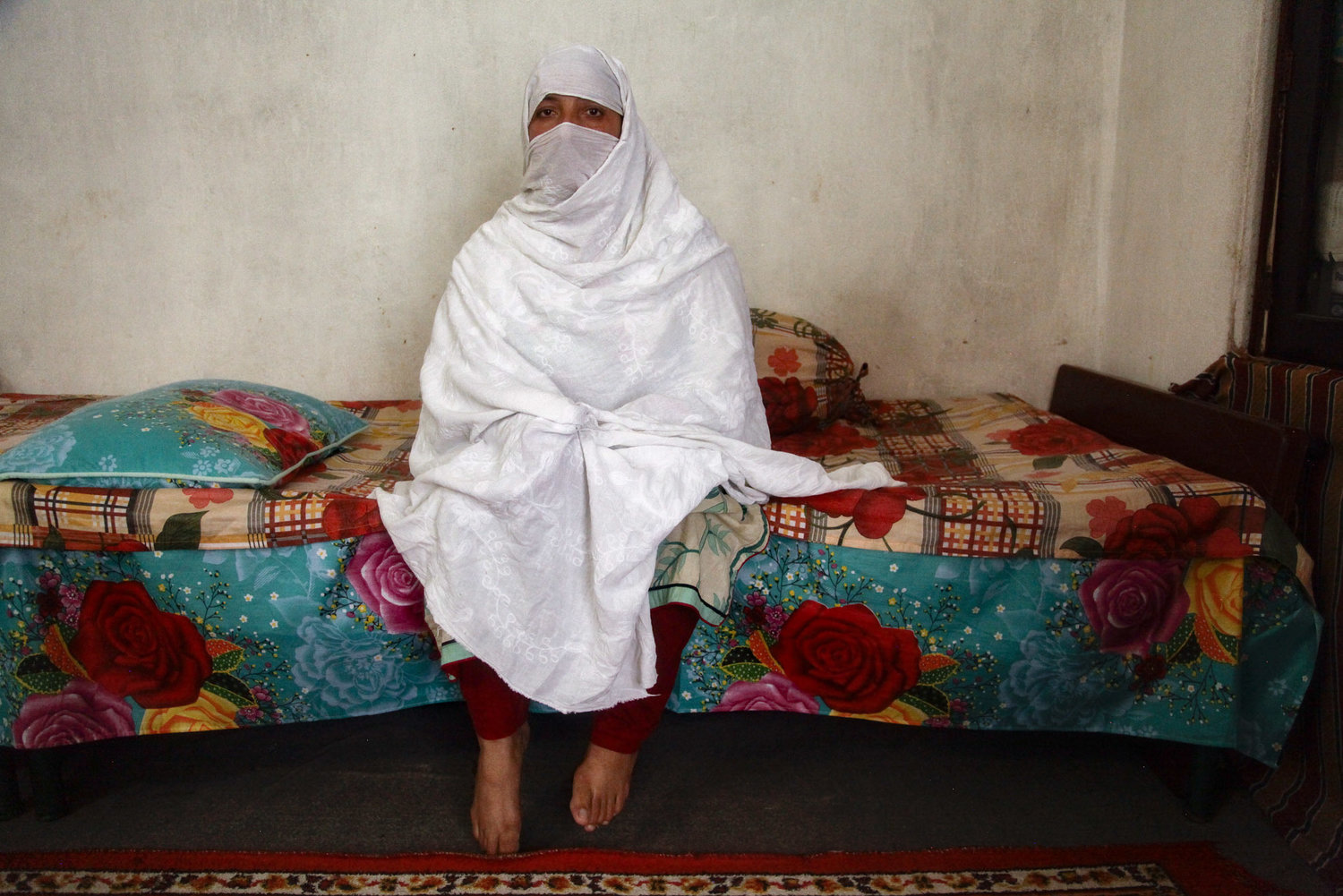
Mehnaz sits inside her home in Abbottabad, northern Pakistan. She has one son and six daughters. She has also had three abortions, fearing she would have more girls.
Diaa Hadid/NPR

When at 19 Mehnaz became pregnant for the fifth time, she panicked. She already had four daughters, and her husband was threatening to throw her out if she had another. So she did what millions of Pakistani women do every year: She had an abortion.

Like many of those women, her abortion was partly self-administered. “I kept taking tablets — whatever I laid my hands on,” she says. “I lifted heavy things” — like the furniture in her tiny living room. She drank brews of boiled dates — many Pakistanis believe the beverage triggers labor.

Mehnaz says she felt “a terrible pain in my stomach.” Her husband took her to a midwife, who told him the baby was dead. “She gave me injections and it came out,” Mehnaz says.

That was eight years ago. Since then she has had two more abortions, each time because she feared the baby would be a daughter.

Mehnaz, whose last name is being shielded to protect her identity, is one of millions of Pakistani women who have abortions each year. The deeply conservative Muslim country is estimated to have one of the highest rates of abortion in the world, based on a 2012 study by the New York-based Population Council, a nonprofit that advocates family planning. The rate that year was 50 abortions for every 1,000 women aged 15 to 44 — roughly four times higher than in the U.S.

According to family planning researchers, abortion provisions in the country’s penal code are vague. The procedure is “legal only in very limited circumstances,” notes the Guttmacher Institute.

The circumstances include a pregnancy that is dangerous to a woman’s health — or if there is a “need” for abortion, according to Zeba Sathar, the Pakistan director of Population Council, and Xaher Gul, a Karachi-based public health policy expert and lecturer who advises nonprofits. But what constitutes a “need” is not defined, they say.

What’s more, hospitals generally refuse to perform an abortion because most doctors believe it is illegal, Sathar and Gul say. Even when doctors know abortion is allowed in certain circumstances, they cite their own cultural beliefs to not undertake abortions except in urgent cases — for example, if a woman walks in with “an incomplete abortion,” Gul says.

That has left Pakistani women at the mercy of back-alley abortion providers.

Some of these women, like Mehnaz, will abort a fetus if they fear they are carrying a female child, who can be seen as an economic burden. But that’s not the only reason.

Pakistani women largely seek abortions because they either don’t know about contraception or cannot access reliable contraception — or they’ve stopped using contraception after suffering complications, Sathar says. According to her research, most of the women who seek abortions are married, poor and already have children. Only 30 percent of fertile-age women use modern contraceptives, according to a 2017 U.N. report.

“We found to our surprise that most of the women had more than three children, maybe as many as five,” Sathar says. “They were almost all — 90 to 95 percent — married. They were older, so they tended to be poorer, less educated.”

Pakistan’s high abortion and low contraception rates reflect a family planning policy in shambles, says Abdul Ghaffar Khan, director general of Pakistan’s population program wing. His office is meant to set the national family planning agenda, but Khan described the situation as “a bureaucratic mess.”

Family planning used to be the job of the federal government, but approval for a national policy languished for years.

In 2011, national authorities passed the matter to provincial governments. But at the provincial level, family planning is not part of the health ministry’s portfolio. It is part of a different office and has long been neglected and underfunded, Khan says.

That means women aren’t advised about contraception or supplied contraceptives when they are most amenable: after childbirth, receiving postnatal care or immunizing their babies, says Sathar of the Population Council. She described it as one of the chief “structural flaws of how we provide family planning.”

The issues with family planning are partly why Pakistan has one of the world’s fastest population growth rates, says demography expert Mehtab Karim, vice chancellor at Malir University of Science and Technology in Pakistan. That population boom has strained Pakistan’s land and water resources, crowded its schools, outstripped development plans and may lead to more instability in this nuclear-armed state. “It has a tremendous impact,” Karim says.

But changes may be coming. On July 4, Pakistan’s Supreme Court demanded hearings into the country’s family planning failures. A national policy may be put into action in the coming months, Khan says.

All this is too late for Mehnaz, who was married at 13 to her cousin in their tiny village and had four daughters in quick succession and seven children in all — six girls, one son. And three abortions. She is illiterate and said she didn’t know anything about sex or contraception early in her marriage.

In a group interview with NPR, about a dozen midwives who also provide abortions said they would only help a woman who already appeared to be miscarrying — like Mehnaz, who induced her own abortion before seeking help.

Mumtaz Begum, 60, stands in her clinic in Karachi, Pakistan. Begum says a midwife taught her how to induce abortions using medications freely available in Pakistan. Citing her religious faith, she says she would only help women who she believed were already miscarrying.

Diaa Hadid/NPR

“I don’t help with murder,” says Mumtaz Begum, a 60-year-old who lives in a slum in the port city of Karachi. She has no medical qualifications but says a midwife taught her how to induce abortions decades ago, using medications freely available in Pakistan.

On a recent day, Begum showed NPR those pills and injections. They were clustered on a dusty table alongside religious texts and a bag of onions in a dank room with peeling paint. The gurney where she treated women was littered with clothing. “I wipe it down before women come in,” she says.

Because many providers aren’t properly qualified, researchers estimate about a third of all women who undertake abortions in Pakistan suffer complications, ranging from heavy bleeding to a perforated uterus and deadly infections.

Health workers do reach out to women to provide information about family planning. Some 130,000 women are employed by provincial health ministries to do house visits across the country, teaching about birth control.

But Gul says health workers are poorly trained and in short supply. Budgetary shortages, supply problems and corruption mean they often don’t have contraceptives, or distribute expired contraceptives — and that there’s little follow-up on how to use them.

Mehnaz was paid a visit by two such workers. She says they gave her an injectionmeant to prevent conception for three months. She became pregnant again anyway. As before, she tried taking pills to induce an abortion but says they made her sick so she stopped taking them.

Three years ago she had her seventh child, a girl. She then tried taking the pill, offered by the visiting health workers.

She says it made her dizzy and she stopped taking it.

She again became pregnant but miscarried — and pleaded with doctors to sterilize her.

She says they told her she had to wait until she was 40 — or get a permission slip from her husband. He refused: “He says he can’t sign this, it’s a sin.”

She says he also refuses to use condoms or to stop having sex with her.

If she has another girl, her husband may well abandon her. If she tries to induce another abortion, her health could deteriorate.

“I am stuck,” she says.

With additional reporting by Saher Baloch in Karachi, Pakistan

Source: https://www.npr.org/sections/goatsandsoda/2018/11/28/661763318/why-the-abortion-rate-in-pakistan-is-one-of-the-worlds-highest?fbclid=IwAR0sSDlSQm_xN44iIbbeOFPAKCQTGMClFfv9SQr3XxerrUyEGqMpQ5z0JX8

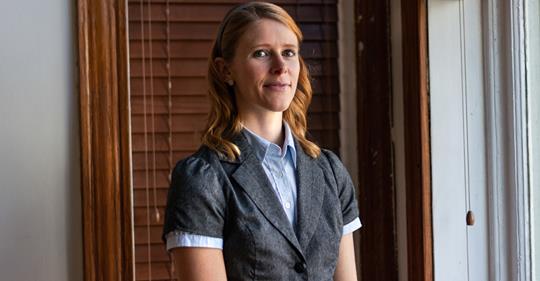
Dr. Kimberly Remski was told by a potential employer that she couldn’t provide abortions during her free time, something she felt called to do. “I realized it was something I really needed to do,” she says.
Kim Kovacik for NPR

Doctors who are opposed to abortions don’t have to provide them. Since the 1970s, a series of federal rules have provided clinicians with “conscience protections” that help them keep their jobs if they don’t want to perform or assist with the procedure.

Religious hospitals are also protected. Catholic health care systems, for example, are protected if they choose not to provide abortions or sterilizations. Doctors who work for religious hospitals usually sign contracts that they’ll uphold religious values in their work.

But as the reach of Catholic-affiliated health care grows, these protections are starting to have consequences for doctors who do want to perform abortions — even as a side job.

Religious hospitals often prohibit their doctors from performing abortions — even if they do so at unaffiliated clinics, says Noel León, a lawyer with the National Women’s Law Center. León was hired about two years ago to help physicians who want to be abortion providers. They have little in the way of legal protection, she says.

“Institutions are using the institutional religious and moral beliefs to interfere with employees’ religious and moral beliefs,” León says.

This kind of legal argument, León says, may prevent doctors from providing care they feel called to offer. And since many clinics that provide abortions rely heavily on part-time staff, it may also prevent these clinics from finding the doctors they need to stay open.

Dr. Kimberly Remski sought help from León when she was job hunting. She is a primary care physician but had always been interested in women’s health. When she first set foot in a clinic that provides abortions, she realized it was her passion.

“A lot of the things we spend our time doing in training are monotonous, or you’re getting swamped in work,” she says. “I just remember leaving the clinic feeling like I was doing something really important.”

She interviewed for a job as a primary care doctor with IHA, one of the largest physician groups in Michigan, in 2017. She says she was clear about her desire to work one day a week in an independent clinic that provides abortions.

Part-time work is common for outpatient physicians, and Remski says the doctors she interviewed with were receptive.

“I was very upfront. I told that them that was a special interest of mine. I wanted to be able to pursue it,” she says.

She signed a contract, and started preparing for her move. Then she got a call that the offer was off.

Noel León oversees a National Women’s Law Center program that provides legal support to doctors who want to perform abortions.

Mary Mathis for NPR

Remski learned that her potential employer was actually owned by a larger Catholic hospital network called Trinity Health, and it requires physicians to “provide services in a manner consistent with the Ethical and Religious Directives for Catholic Health Care Services,” according to her contract.

And, she says, she was shocked to learn Trinity Health would also have had a say over how she spent her free time. IHA officials told her that she couldn’t work on the side as an abortion provider if she took the job, Remski says.

Trinity Health had merged with IHA in 2010, part of a wave of mergers that has led to a net increase in Catholic ownership of hospitals. According to a 2016 report from MergerWatch, an organization that tracks hospital consolidation, 14.5 percent of acute care hospitals are Catholic-owned or affiliated. That number grew by 22 percent between 2001 and 2016, while the overall number of acute care hospitals dropped by 6 percent.

And as Catholic-affiliated health care expands, says León, doctors increasingly encounter morality clauses that prohibit them from performing abortions.

León says she has worked with at least 30 physicians and nurse practitioners from 20 different states who faced problems similar to Remski’s when they disclosed to their employers, or potential employers, that they planned to provide abortions.

“They’re being told, ‘We can’t provide the care we went into medicine to provide,’ ” León says. “We shouldn’t be putting providers in the position of caring for their patients or keeping their jobs.”

Representatives of IHA would not agree to a phone interview about Remski’s situation, but spokesperson Amy Middleton explained in an email that IHA “works hard with our physicians to enable them to pursue other positions.” But, she added, “outside work that interferes with a physician’s ability to serve patients or contradicts the organization’s practices could present a conflict of interest.”

IHA physicians follow Catholic health care guidelines, Middleton wrote, which requires that physicians “not promote or condone contraceptive practices.”

Dr. Barbara Golder, the editor of the Catholic Medical Association journal, Linacre Quarterly, says that language about morality is ubiquitous in contracts — and that it is reasonable that religious institutions might not want to be associated with abortion providers.

“The person is seen primarily as Dr. X of Catholic hospital Y, and then it turns out that Dr. X of Catholic hospital Y is doing abortions on the weekends,” Golder says. “There’s sort of a cognitive dissonance about that. It’s in opposition to what Catholic health care is.”

According to Lance Leider, a Florida attorney who has reviewed hundreds of physician contracts, it is “exceedingly common” for contracts, not just at religiously affiliated hospitals, to include language about the reasons an employer can fire a doctor, including but not limited to morality clauses.

“There’s always a laundry list of things the employer can terminate the contract for,” Leider says. “There’s usually a catch-all. Anything that calls into question the reputation of the practice.”

These clauses tend to be vague, León adds, which means employers can invoke them to prevent a wide range of activities, like political activity, controversial posts on social media or, in religious hospitals, physicians spending time at clinics that provide abortions.

The restrictions may have ramifications not only for physicians but for many clinics that provide abortions. Smaller clinics may be staffed almost entirely with part-time doctors, and when they can’t find enough, they’re sometimes left unable to meet the demand for services.

“We don’t have full-time doctors,” says Shelly Miller, the executive director of Scotsdale Women’s Center in Detroit, one of the clinics where Remski worked. “We really cannot afford to have a provider sit here all day and wait for patients to come in.”

Through her involvement with the National Abortion Federation, Miller often talks with other directors of small clinics that provide abortions and sometimes other women’s health services. She says that many of her counterparts say they exclusively hire part-time physicians because they simply don’t need somebody full time. If more physicians are prohibited from part-time abortion work, it may put some smaller clinics out of business, Miller worries.

It’s hard to know exactly how many of these clinics primarily use part-time staff, according to Rachel Jones, who studies the demographics of U.S. abortion services at the Guttmacher Institute, a family planning research organization. Ninety-five percent of abortions take place in clinics as opposed to hospitals, Jones notes, which may be more likely to utilize a team of part-time staff.

León doesn’t have data to show how common it is for physicians to be threatened with termination for providing abortions. She guesses that doctors will either give up on providing abortions — or, like Remski did, look for a different job that allows them to. León spends much of her time speaking to groups of doctors about how to approach contract negotiation if they want to provide abortions.

Ultimately, Remski says, she parted amicably from IHA, since “it felt like the wrong place for me.”

She ended up finding a job at an urgent-care clinic in Michigan, which allowed her to work part time at three separate clinics that provide abortions. She has since moved to Chicago, where she also splits her time between providing abortions and primary care.

“I was providing a service that was needed and necessary,” Remski says. “I realized it was something I really needed to do.”


Mara Gordon is a family physician in Washington, D.C., and a health and media fellow at NPR and Georgetown University School of Medicine.

Source: https://www.npr.org/sections/health-shots/2018/11/26/668347657/for-doctors-who-want-to-provide-abortions-employment-contracts-often-tie-their-h?fbclid=IwAR0OSHpHRFZpwwY_WLrPBnmzeGEohrOF2_WwHwtOuGwVO1uTBU_8r9AUe5E

The latest slate of President Trump’s judges include longtime abortion rights foes who could undo reproductive rights for decades to come.

McConnell has pushed through federal judges who oppose a range of constitutional rights, including abortion rights.
Shutterstock

Senate Republican leaders are poised to advance dozens of President Trump’s judicial nominations before the new U.S. Congress convenes in January, despite an attempt from Sen. Jeff Flake (R-AZ) to impede the process.

The Senate Judiciary Committee was scheduled to advance six Circuit Court nominees on Thursday, but the committee canceled its meeting after Flake vowed to vote against judicial nominations unless Senate Majority Leader Mitch McConnell (R-KY) schedules a vote on bipartisan legislation to protect special counsel Robert Mueller’s investigation into Trump.

While Flake’s tactic could slow down the nomination process, McConnell could still bring nominees directly to the floor. He has repeatedly stated the judiciary remains his top priority during the lame duck session.

Trump has already appointed a record-breaking number of federal judges, pushing more federal judges through the Senate than any recent president. Trump and congressional Republicans have packed federal courts with ultra-conservative judges, many of whom are opposed to abortion rights and are members of the far-right Federalist Society, a nationwide organization of conservative lawyers.

The Senate has confirmed 53 Trump nominees for federal district courts, most of whom replaced Democratic appointees. Trump has also filled 29 vacancies on federal appeals courts—the last stop before the U.S. Supreme Court, thus reshaping the judicial landscape. As Republicans in more and more states pass anti-choice legislation, the makeup of federal courts could have a lasting effect on reproductive rights.

Here are some of the most vocal opponents of reproductive rights, LGBTQ rights, and voting rights set for confirmation of lifetime appointments to federal courts.

Wendy Vitter, U.S. District Court for the Eastern District of Louisiana Nominee

Vitter is the general counsel for the Roman Catholic Archdiocese of New Orleans and wife of former GOP Louisiana Sen. David Vitter. She has withheld information from the Senate Judiciary committee about her anti-choice record, publicly misrepresenting her background in a confirmation hearing, and failing to state whether the landmark cases Brown v. Board of Education and Roe v. Wade were correctly decided.

Vitter, in May 2013, gave a speech in protest of a new Planned Parenthood clinic in New Orleans, saying at the time, “Planned Parenthood says they promote women’s health. It is the saddest of ironies that they kill over 150,000 females a year.”

In November 2013 Vitter led a panel called “Abortion Hurts Women,” where she appeared to endorse a pamphlet featuring debunked claims linking birth control to breast and cervical cancer. That panel included Dr. Angela E. Lanfranchi, a breast cancer surgeon featured as one of Rewire.News‘ “False Witnesses” for her dubious talking points on abortion care and breast cancer.

Jonathan Kobes, Eighth Circuit Nominee

Kobes serves as general counsel for U.S. Sen. Mike Rounds (R-SD). Kobes represented an anti-choice women’s health center in South Dakota, defending a state law requiring physicians to make deceptive statements to people seeking abortion care, including disproven claims about the risk of suicide. Kobes claimed that abortion terminates the life of a whole, separate human being, also known as fetal “personhood.” The American Bar Association rated Kobes as “not qualified” to serve as a federal appellate judge, the second of Trump’s nominees to the Eighth Circuit to receive such a rating.

Matthew Kacsmaryk, District Court of the Northern District of Texas Nominee

Kacsmaryk serves as deputy general counsel to the First Liberty Institute, a nonprofit legal organization dedicated to religious liberty. Kacsmaryk has represented religiously affiliated institutions which oppose the Affordable Care Act’s birth control benefit, advancing arguments that falsely equate certain methods of contraception to abortion. Kacsmaryk has disputed the legal foundation of Roe v. Wade, and has arguedthat the legal right to abortion has weakened the institution of marriage.

Michael Truncale, U.S. District Court for the Eastern District of Texas Nominee

Truncale is a Texas lawyer and a partisan conservative. In 2012, Truncale called for “defunding” Planned Parenthood and boasted about marching in an anti-choice rally. He has criticized former Texas state Sen. Wendy Davis, who undertook a 13-hour filibuster in 2013 to delay a vote on a GOP-backed anti-abortion bill.

In a 2016 article in the Golden Triangle Republican Woman Gazette, titled “The Reason to Vote for Trump,” Truncale wrote, “The liberal Supreme Court will also consider President Obama’s actions in rewriting laws like Title IX, which prohibits discrimination based on sex—by redefining the word ‘sex’ to mean ‘gender identity’ or even a person’s ‘internal sense of gender,’” and that liberals want to “force Christian photographers to use their artistic skills to celebrate same-sex weddings.”

Brian Buescher, U.S. District Judge for the District of Nebraska Nominee

Buescher is an attorney based in Omaha, Nebraska, with a track record of conservative activism and hostility toward reproductive freedom and LGBTQ rights. In response to a 2014 questionnaire from the anti-choice organization Nebraska Right to Life, Buescher stated he believes abortion should be illegal in all instances except to prevent the death of the pregnant person.

In a 2014 voter guide video from the Nebraska Family Alliance, Buescher said, “When regulating abortion, my view is this, we should regulate abortion as much as we possibly can. I’m in favor of banning abortion.”

Thomas Farr, U.S. District Court for the Eastern District of North Carolina Nominee

Farr is a lawyer based in Raleigh, North Carolina, with a history of opposing voting rights, representing North Carolina against voting rights groups accusing the state of discrimination. North Carolina’s GOP-controlled legislature hired Farr in 2013 to defend a set of voting restrictions a federal appeals court ultimately struck down for targeting Black voters. The North Carolina legislature hired Farr to defend redistricting maps that have since been invalidated in court due to racial gerrymandering.

Flake voted against Farr’s confirmation Wednesday afternoon, forcing Vice President Mike Pence to break the 50-50 tie in the Senate. The next vote to advance Farr’s nomination was scheduled for Thursday, but has been moved to next week. GOP Sens. Lisa Murkowski (AK) and Tom Scott (SC) were hesitant on Farr’s confirmation as of Thursday afternoon.

Source: https://rewire.news/article/2018/11/29/mitch-mcconnell-determined-to-confirm-trumps-radical-anti-choice-judges/

As Mexico’s largest Catholic health-care system, Christus restricts a range of reproductive health services, including contraceptives, sterilization, abortion, and in vitro fertilization.

Catholic hospital restrictions like the ones at Christus meant Sonia Gutiérrez Leon couldn’t get the tubal ligation she sought.
Meghan Dhaliwal / Rewire.News

It costs about a month’s salary for the average Mexican to deliver a baby at the the hospital that looms, with a cross on top, over a busy street in the commercial hub of Monterrey. For an extra 10 percent per night, the equivalent of $133, patients can stay in hotel room-like “master suites.” In 2007, this hospital, Christus Muguerza Alta Especialidad (“High Specialty”), became the first in Mexico accredited by the prestigious Joint Commission International. Among its state-of-the-art offerings are intrauterine fetal surgery and a specialized treatment for oxygenating blood outside the body.

But there are some services this facility won’t offer—including intrauterine devices (IUDs), as Rewire.News discovered when we called its obstetrics division to ask about the availability of contraception.

“It’s a religious hospital,” a representative told us. “By policy, it’s not allowed.”

A company executive later confirmed to Rewire.News that the restrictions apply to a range of reproductive health services, including contraceptives, sterilization, and in vitro fertilization (IVF).

That’s not because contraceptives are restricted in Mexico, where 81 percent of the country is Catholic—in fact, they are available in pharmacies without a prescription, and getting an IUD inserted postpartum may be easier in Mexico than in the United States. But this hospital is part of Christus Health, a Catholic system based in Irving, Texas, that has grown to become Mexico’s third largest private health-care provider—and the only U.S.-based Catholic health system operating in Mexico. Christus describes itself as Mexico’s largest Catholic health-care system. In keeping with Catholic teachings, it restricts reproductive care.

Christus bought a majority stake in Mexico’s Catholic Hospital Muguerza in 2001 with an eye toward luring U.S. patients to Mexico, where health care is cheaper, although the company now says less than 3 percent of Christus Muguerza services are through medical tourism. Muguerza’s projected profit margin around the time of the purchase was better than that of most Christus facilities. The company’s expansion into Latin America “makes good business sense in the long term,” a Christus official wrote in 2016.

Rewire.News has reported extensively on the spread of Catholic hospitals in the United States, where they account for one in six acute-care beds. Christus Health, one of the ten largest U.S. Catholic health systems and the sole hospital for at least four U.S. communities, has taken this expansion international, becoming a leading health-care provider in three countries in Latin America. In total, more than 60 Christus hospitals and long-term care facilities and 350 outpatient centers sprawl across Texas, Arkansas, Louisiana, New Mexico, Iowa, and Georgia, as well as Mexico, Colombia, and Chile. Last year, Christus made headlines when it paid $12 million to settle claims it bilked a U.S. program that provided funds to hospitals to treat poor people. With control of more than $6 billion in assets and a CEO who makes more than $4 million a year, it is—like many Catholic hospitals—a nonprofit exempt from U.S. taxes.

[Photos: Staff members stand in a hallway in Christus]

Staff in Irapuato stand inside one of Christus Muguerza’s four ambulatory surgery centers. (Amy Littlefield / Rewire.News)

Wherever it operates, Christus Health refuses to “perform, promote, or condone” abortion or sterilization, according to its ethics code. To interpret these rules, Christus Muguerza consults with Catholicbishops in the United States and Mexico, where it runs ten hospitals, four ambulatory surgery centers, and 14 outpatient medical centers, according to Alberto Sánchez, the regional operations director. Christus Muguerza also runs two nursing schools, four low-income clinics, and its own maternity home and adoption agency, Casa Cuna Conchita, which seeks to “protect life from its beginning,” and which Sánchez said allows adoptions only to heterosexual couples.

In Mexico, abortion is illegal except in Mexico City—where Christus has no health centers—but allowed in cases of rape and, in some states, a threat to the pregnant person’s life. In an interview at the company’s gleaming new surgery center in Irapuato, Sánchez said abortion cases where a patient’s life is in danger would go before ethics committees composed of lawyers, doctors, priests, and representatives of society. While the company’s ethics code does not mention IVF or contraception, Sánchez said these services are banned too.

But as with Catholic hospitals in the United States, in practice, it is more complicated. When Rewire.News called Christus Muguerza facilities to ask about contraception, some said they offered it. Company officials attributed the discrepancy to the fact that independent physicians who rent office space in Christus facilities may offer it in their private practices, although “we don’t recommend it,” Sánchez said. Sánchez also said Christus Muguerza sells contraceptives over the counter in pharmacies located inside its facilities because they can be used for medical purposes like regulating menstruation.

The same discrepancy emerged when Rewire.News asked about tubal ligations. A representative at the Alta Especialidad hospital in Monterrey, for example, said patients can get a tubal ligation after a cesarean section if they meet certain medical criteria—a loophole that is not uncommon in U.S. Catholic hospitals.

Asked to clarify the discrepancies, the company said in a statement that “there are clinical situations and medical reasons that a physician in one of our facilities in the U.S. or Mexico would provide” tubal ligations or contraception. They cited a provision of the ethical directives issued by U.S. bishops that allows sterilization to address “a present and serious pathology.”

“In the same way, some contraceptive treatments may be prescribed to address other serious medical issues, such as a type of IUD, which has been approved by the FDA to help manage excessive menstrual bleeding,” the statement said.

Yet in a country where birth control is widely available, reproductive health activist Oriana López Uribe laughed at the idea of a multinational health-care company trying to restrict access for paying clients.

“Who’s going to go to a hospital that doesn’t provide contraceptives? Especially if they are going to charge you,” López Uribe said.

Her bemusement stems from the fact that Mexico, unlike the United States, has a robust publicly run health system that covers contraception. Today, most Mexicans can access their health care through one of three publicly administered programs that each have their own health-care facilities, depending on whether a patient is a private employee, public worker, or outside these work forces.

Over the past 15 years, the Mexican government has moved to bolster access to health care for the poor, earning praise on the international stage for enrolling more than 50 million people in publicly subsidized health insurance. While the country has made strides toward universal insurance coverage, its health outcomes remain unequal. Married women who lack health insurance, for example, have an unmet need for contraception that is almost double that of their insured counterparts. (Overall, 28.9 percent of single women have an unmet need for contraception, versus 11.5 percent of married women.) Meanwhile, poor people with diabetes live eight years less than their wealthy counterparts, a discrepancy that reflects a “chronic crisis” caused by underfunding, according to Dr. Rafael González, a professor at the National Autonomous University of Mexico’s School of Medicine.

At the same time, the private health-care sector, which accounts for about half of the country’s health-care spending, has seen a rise of major corporations. Hospitales Angeles is part of a sprawling corporation that includes the Camino Real hotel chain, a newspaper, and a TV channel. Mexican billionaire Carlos Slim, one of the world’s richest men, has moved into the the country’s health-care system with his company, Hospitales Star Médica. And then, of course, there is Christus.

Experts and advocates repeatedly told Rewire.News that private hospitals like Christus, which exist outside of the public system and where patients pay out of pocket or with private insurance, are only for the rich.

“The people who are going to go to these hospitals are people who have money, and who are accustomed to making their own decisions,” López Uribe said, expressing disbelief such patients would tolerate restrictions on birth control.

But more than a third of Mexicans covered by public programs still turn at times to private outpatient care. Even among Mexico’s lowest socioeconomic classes, about 18 percent of patients seek care from a private doctor as their point of first contact. Patients enrolled in publicly run programs may turn to the private sector to avoid what can be months-long wait times for certain services or because they believe—accurately or not—that they will get better care.

Dr. Noé Alfaro Alfaro, a professor at the University of Guadalajara, says there is a “hidden privatization” of health-care services in Mexico, including through government outsourcing of public services to private companies. Like other major companies, Christus Muguerza participates in these types of arrangements; in Chihuahua, for example, the company has a contract to provide care for state employees. On a broader level, Christus is trying to attract Mexicans enrolled in public programs with promotions, memberships, and high-end technology.

Sánchez said there are many Mexicans who “look for private health care that is cheap, affordable.” That’s why Christus is moving toward ambulatory care that allows it to “have very competitive prices,” he said.

Christus also runs four clinics for low-income patients in the cities of Monterrey, Chihuahua, and Saltillo. When Rewire.News called these clinics, two said they offered no contraception while the other two said they don’t insert contraceptive devices, but offered consults with gynecologists.

Reliance on private facilities like these that follow Catholic dictates can have a profound effect on patients’ lives.

Sonia Gutiérrez Leon, now in her mid-50s, lives in Guadalajara: the capital of the western coastal state of Jalisco, one of Mexico’s most conservative states. After she got married, she planned to have no more than two children, so that she could keep working and pursue her plans to study and travel. So when she was pregnant with her second son in her late 20s, she asked her doctor to tie her tubes. She delivered in a private Catholic hospital paid for by her employer, a major bank. But the doctor refused to perform the tubal ligation, saying Gutiérrez Leon was too young. When she insisted, he said she might divorce and want to start another family. But Gutiérrez Leon was adamant: Even if she got divorced, she didn’t want more kids.

“And finally he told me: It’s because it’s a Catholic hospital, and we can’t operate on you,” Gutiérrez Leon recalled in an interview with Rewire.News.

“I was angry, because even though I was Catholic at that time, I didn’t think he should be able to make the decision about something that I wanted.”

By the time she got pregnant again, Gutiérrez Leon had left her job to care for her two young children. Hoping to avoid what she thought would be poor treatment in the public hospitals, she chose a less expensive private facility that also turned out to be Catholic. A doctor again refused to perform a tubal ligation.

Her husband kept promising he would have a vasectomy, but he never did. Before long, she was pregnant for a fourth time. This time she found a non-Catholic hospital, but by then she and her husband were struggling financially; she forewent an epidural to save money and couldn’t afford a tubal ligation. After her fourth son was born, she broke off her sexual relationship with her husband. She was too terrified of getting pregnant again.

“I look at my sisters, who had no more than two kids, and they could travel, they had more chance to advance,” she said. “And I didn’t. With four kids, no. I couldn’t.”

[Photo: A picture of new-looking medical equipment]

Like its other facilities, Christus’ ambulatory surgery center in Irapuato will not provide sterilization procedures or IVF. (Amy Littlefield / Rewire.News)

The hospitals at which Gutiérrez Leon sought care weren’t operated by Christus, but they shared the company’s religious tenets. In the decades since her experience, Catholic hospitals have maintained a presence across Mexico—including Christus, which has expanded rapidly. One of its newer facilities is an ambulatory surgery center in the industrial city of Irapuato, set in a commercial area near an upscale bowling bar and a luxury housing complex. On a tour of the facility, Christus representatives proudly displayed its offerings: the area’s most modern ultrasound equipment and endoscopy processes, the state’s only plasma autoclave for sterilizing instruments, the city’s most advanced blood analysis machine.

But this facility won’t provide sterilization procedures or IVF, Sánchez said. Nor will it perform abortions, even in cases of rape, a circumstance under which it is legal across Mexico. Asked how Christus Muguerza handles this legal right to abortion for rape victims, Sánchez said, “We prefer to avoid it.”

A Christus communications official interjected: “They refer the cases, no?”

Sánchez clarified that if a rape victim came to their facility, they would attend to them before referring them elsewhere. But he said they do not provide a crucial piece of this attention: emergency contraception.

In addition to greater investment in the public health sector, supporters of incoming President Andrés Manuel López Obrador are hoping for a liberalization of Mexico’s harsh anti-abortion laws. While López Obrador himself raised concerns by building an alliance with a conservative, evangelical party, his chosen interior minister, Olga Sánchez Cordero, has called for decriminalizing abortion in the first trimester. In late October, two legislators from López Obrador’s MORENA party introduced legislation aimed at legalizing abortion nationwide. These moves come amid a rising tide of protests across Latin America demanding the legalization of abortion and an end to religious attitudes that have kept women from living full lives.

On September 28, Sonia Gutiérrez Leon, now a political activist who supported López Obrador’s campaign, was among hundreds of people who marched through Guadalajara as part of the so-called Green Wave of abortion rights protests that began in Argentina. Gutiérrez Leon sees Catholic hospitals as part of the oppressive religious dogma that this movement is up against. So she was discouraged to hear about U.S.-based Christus expanding in Mexico.

“I think these companies can bring us other, more positive things, like technology and invention and other things that can come out of their development, and not these religious dogmas,” she said. She went on to tick off a list of U.S. exports she would appreciate: culture, American football, ballet teachers. Anything but more Catholic dogma. “If Mexico has anything, it’s churches,” she said.

Source: https://rewire.news/article/2018/11/27/meet-christus-the-us-catholic-health-chain-restricting-access-to-reproductive-care-in-mexico/