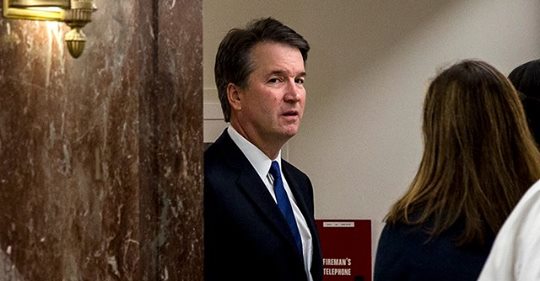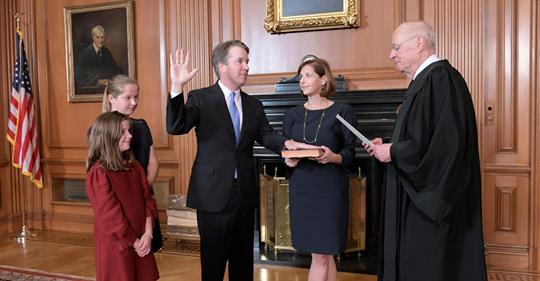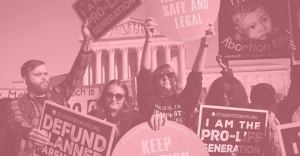
A city council member from Parkersburg City, W.Va., on Saturday celebrated Brett Kavanaugh’s confirmation to the Supreme Court with a Facebook comment saying liberals “better get … [their] coathangers ready,” according to Newsweek.

Parkersburg City councilman and anti-abortion activist Eric Barber made the comment in response to Sen. Joe Manchin‘s (D-W.Va.) “yes” vote on Kavanaugh, which solidified Kavanaugh’s confirmation to the high court.

“Coat hangers” are typically invoked as a reference to highly dangerous back-alley abortions.

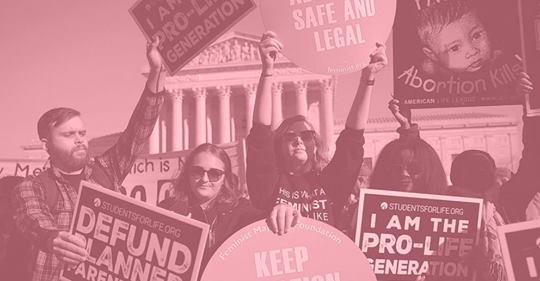
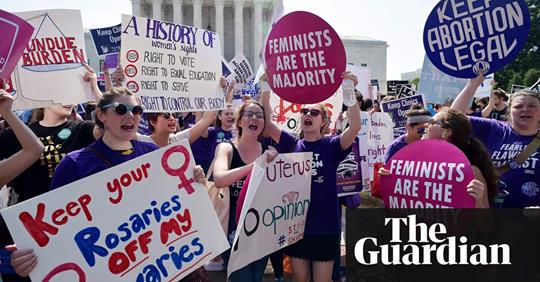
Kavanaugh’s nomination was surrounded by anxious speculation by abortion rights advocates who said he could be the determining vote in overturning the landmark case Roe v. Wade, which legalized abortion in the U.S.

Barber deleted the post but community members have continued to circulate a screenshot of it, Newsweek reported.

Barber’s fellow councilman Bob Mercer told local outlet Deep South Voice that he was not intentionally referencing self-induced abortions.

“When he was in Washington, D.C., this year the day Justice Kavanaugh was nominated, a lady threw a coat hanger at him and hit him in the face for being happy about it,” Mercer told Deep South Voice. “He admitted that he should have explained it instead of letting it sit there.”

Barber himself did not respond to Deep South Voice’s requests for comment.

“We on Council are kept to a higher standard,” Mercer said, according to the Deep South Voice. “Understand that this statement does not reflect the feelings [of others on the Council].”

Kavanaugh stated during his first set of Senate Judiciary Committee hearings that he understands “the importance of the precedent set forth in Roe v. Wade.”

Sen. Susan Collins (R-Maine), a pivotal swing vote in his confirmation, said she believes he will not overturn Roe v. Wade based on private conversations she had with him.

Democrats have continued to raise concern about the future of abortion in the U.S., with Sen. Mazie Hirono (D-Hawaii) on Sunday claiming future judicial and legislative decisions will nullify Roe v. Wade.

Source: https://thehill.com/homenews/state-watch/410471-west-virginia-councilman-responds-to-kavanaugh-confirmation-get-your

Confirmation likely to push America’s highest court to the right for a generation and give Republicans swing vote in ideologically charged legislation

Brett Kavanaugh’s confirmation to the Supreme Court on Saturday is widely expected to swing America’s highest court to the right for generation.

He was appointed in spite of accusations of sexual assault and amid questions over his impartiality, stoked further when he launched a blazing attack on Democrats questioning him.

Though he demurred during his confirmation hearings when asked how he would vote on controversial topics from abortion rights to impeachment he is expected to be a key swing vote for Republicans

Abortion rights (Roe v Wade)

The ruling which guaranteed women in all states access to abortion is under regular attack from conservative and religious groups. There are regular test cases brought to the Supreme Court which could be used to weaken or overturn the original ruling.

Mr Kavanaugh is likely to occupy the deciding vote in future cases and has said he sees previous judgements uphold these rights as “important precedent”. This was enough to reassure Republican senator Susan Collins, a deciding vote in his confirmation, to back Mr Kavanaugh.

However President Trump has repeatedly said he would appoint justices to overturn Roe v Wade and Mr Kavanaugh declined to say, during his hearings, what he would do if such a case came up.

In a 2017 opinion as a Washington DC circuit judge Mr Kavanaugh opposed a decision to allow a girl who was an undocumented minor in the government’s care to have an abortion, and may well support changes that increase red tape or delays in accessing treatment.

He has also opposed Obamacare principles which required religious organisations to provide contraception to employees, saying this infringed their religious liberties.

Gun control

Mr Kavanaugh may resist cases seeking to restrict or limit the “right to bear arms” set out in the second amendment.

He has opposed the District of Columbia’s ban on semi-automatic rifles. In a 2011 opinion he said the constitutional protections afforded to semiautomatic handguns should be logically extended to the high powered assault weapons and DC’s ban was unconstitutional.

Mr Kavanaugh was pressed on this objection during the Supreme Court nomination process and said that “semiautomatic rifles are widely possessed in the United States”.

“That seemed to fit common use in not being a dangerous and unusual weapon.”

Semi-automatic rifles, modified with a “bump stock” which allows the weapon to be continuously fired without releasing the trigger between shots, were used in the massacre of 59 people in Las Vegas in 2017.

Investigation into Russian collusion and impeachment

Another reason suggested for the president’s backing of Mr Kavanaugh is his belief in executive power. He wrote in a 2009 article in the Minnesota Law Review that Congress should consider a law “exempting” the sitting president from criminal prosecution and investigation.

However in the same argument he said that the impeachment process would still be available “if the president does something dastardly”.

President Trump has repeatedly called special counsel Robert Mueller’s investigation into Russian interference in the 2016 election a “rigged witch hunt”. Though it has so far not uncovered evidence against the president that might spark a move to impeachment.

Climate change and the environment

Mr Kavanaugh wrote in response to Obama-era rules to limit emissions by power plants that he recognises “the Earth is warming and humans are contributing” and said actions to tackle this are “laudable”.

However he has opposed the plans, and others by the Environmental Protection Agency seeking to limit emissions or other forms of pollution, when the body has acted without specific authorisation from Congress.

State surveillance and national security

Mr Kavanaugh has said the mass collection of US citizens’ phone records, exposed by former National Security Agency whistleblower Edward Snowden, did not fall foul of constitutional rules prohibiting search and seizure without a warrant.

He added that preventing terrorist attacks through the collection of phone numbers and call duration addresses a “critical national security need” that “outweighs the impact on privacy occasioned by this programme”.

Source: https://www.independent.co.uk/news/world/americas/brett-kavanaugh-roe-wade-abortion-christine-ford-gun-control-trump-impeachment-environment-a8573186.html?utm_term=Autofeed&utm_medium=Social&utm_source=Facebook#Echobox=1538980510

The Senate is slated to vote on Judge Brett Kavanaugh’s nomination to the U.S. Supreme Court this week, and should Kavanugh be confirmed, the ideological makeup of the nation’s highest court would shift instantly and dramatically.

With the midterm elections looming and control of Congress hanging in the balance as well, women’s health and reproductive rights lawyers are expressing concern about the effect a conservative court and a Republican-controlled Congress could have on women’s access to abortion care.

They believe that — should Kavanaugh be confirmed — the anti-abortion movement would be poised to do what President Donald Trump promised two years ago during his campaign: to limit or even scrap American women’s access to abortion care altogether.

During his 2016 presidential campaign, then-candidate Donald Trump said the Supreme Court would “soon” overturn the landmark case, Roe v. Wade, which made abortion legal nationwide, because as president he planned to only appoint specifically “pro-life” justices willing retry and reevaluate those cases.

“With the nomination of Brett Kavanaugh, women [would] be facing the greatest threat to their constitutional right to abortion since Roe v. Wade was decided in 1973,” former Secretary of Health and Human Services Kathleen Sebelius told reporters on a call with Planned Parenthood political activists on Wednesday.

Should Republicans maintain control of both the House of Representatives and the Senate Congress could, in theory, pass a nationwide ban and wait for a lawsuit against the new law to move the case through the courts and challenge the Supreme Court to re-evaluate Roe v. Wade again.

Currently four states — Mississippi, Louisiana, North Dakota and South Dakota — have so-called “trigger laws” on the books, which would automatically ban and criminalize abortion for patients and providers if Roe v. Wade were to be overturned.

However, it is more likely that instead of scrapping Roe v. Wade all together, the Supreme Court could uphold new restrictions on abortion care access passed at the state level. Without formally overturning the Roe v. Wade decision, per se, states could still seriously limit how and when American women can receive an abortion.

“The threat to abortion access is very imminent and real, because there are dozens of cases regarding abortion and reproductive rights making their way through the lower courts that could get to the Supreme Court soon,” Diana Kasdan, senior staff attorney at the Center for Reproductive Rights, told ABC News over the phone.

“The court does not have to overturn Roe to fully undermine the right to abortion.”

Nationwide, there are at least 14 relevant cases currently pending before federal courts of appeals, making each one of those 14 cases potentially just one step away from being heard by the Supreme Court.

“Brett Kavanaugh’s nomination is really a culmination of a long-term strategy to get rid of Roe, whether that is formally overturning it or gutting it so completely that it is meaningless. The anti-abortion movement sees Brett Kavanaugh as their ability to do that,” Gretchen Borchelt, Vice President for Reproductive Rights and Health at the National Women’s Law Center, told ABC News.

During his confirmation hearing before the U.S. Senate, Kavanaugh referred to Roe v. Wade as “settled” precedent of the Supreme Court and this “entitled to respect.”

“It has been reaffirmed many times over the past 45 years,” he continued, talking to senators. However, anti-abortion leaders argue that the issue is not settled culturally or politically in the country.

The National Women’s Law Center categorizes these major legal cases as well as other pending legislation into buckets: bans on when during a pregnancy a woman can get an abortion, restrictions on how a woman can receive an abortion medically (which includes proposed bans on certain procedures), and limitations and restrictions placed on abortion providers.

WHEN: Laws and legislation about when a woman can get an abortion

Several states have passed successive laws banning abortions earlier and earlier into a woman’s pregnancy. Last spring, Iowa legislators signed into law one of the nation’s most restrictive abortions rules, prohibiting any abortions after a fetal heartbeat could be detected with an ultrasound, which is normally around six weeks into a pregnancy. A state court in Iowa temporarily halted the ban and the law is still being litigated.

Similarly, a federal court judge temporarily halted a Mississippi ban on abortions after 15 weeks of pregnancy. The case is pending before a federal district court and could be appealed to the Supreme Court after a ruling.

Louisiana followed Mississippi’s lead and also passed a ban on abortions after 15 weeks. Louisiana’s law remains in limbo, waiting on the court decision regarding the Mississippi ban.

Last spring, a federal appellate court ruled that an abortion-related law passed in Indiana was unconstitutional. The law, among other provisions, prohibited women from seeking abortions at any time in a pregnancy, based on a medical diagnosis of a disability, such as Down syndrome.

The state of Indiana specifically asked for and was granted an extension until the end of this month to consider appealing the decision to the U.S. Supreme Court.

HOW: Laws and legislation about how a woman can get an abortion

The legislation passed in Indiana, which was ultimately struck down by lower courts, also required all aborted fetal or embryonic tissue be buried or cremated.

Medical providers successfully argued that those legal mandates regulations would be too burdensome for clinics and doctors. However, Indiana could still appeal that ruling, if necessary, all the way to the Supreme Court.

Similarly, Indiana’s sweeping law included rules about how long a woman would have to wait between doctor visits to receive an abortion, and if she would be required to have an ultrasound. All of those provisions are still working their way through the court system too.

Indiana’s Right to Life organization wrote in a statement to local papers after various parts of the Indiana law were struck down, saying that the organization hoped the state would appeal the last decision and petition the Supreme Court to weigh in.

“This is the civil rights battle of our time,” Sue Swayze Liebel, the organization’s vice president of public affairs, said in a statement. “Previous Supreme Court decisions that give states authority to regulate abortion give us great hope that the justices would side with Indiana’s right to recognize civil rights protections for children in the womb.”

Texas and Louisiana legislators had also tried to enact laws requiring cremation or burial of embryonic or fetal tissue after an abortion. The Center for Reproductive Rights worked with a team of other activists and blocked the Texas law in a lower district court, but Texas has already decided to appeal that decision to the Fifth Circuit Court of Appeals.

States governments have long tried to ban specific abortion procedures as well. In August, a federal court struck down a restriction that legislators in the state of Alabama passed, which would have banned the most common type of surgical abortions.

Father Frank Pavone of the National Pro-Life Religious Council and Priests for Life organization applauded the president’s nomination of Kavanaugh to the bench. Kavanaugh, while on the Washington, D.C. circuit court bench, had previously sided with their organization in a lawsuit against the federal government.

“We knew his judicial philosophy already and it was one that we thought was correct.” Pavone told ABC News on the phone. Pavone argued that while the patchwork of abortion laws across the country can be difficult, but perhaps reflects the varying constituencies state to state. “The court has made itself the arbiter of every abortion law that the states pass. It should not have to be that way. We actually want a less heavy-handed approach from the court when it comes to abortion legislation.”

On the other hand, Pavone conceded that ultimately they believe the U.S. Supreme Court will have to weigh in again and re-evaluate the fundamental question of constitutional rights and woman’s right to abortion care.

Limitations and restrictions placed on providers and more

In 2016, health leaders won a major victory with the Supreme Court case referred to as Whole Woman’s Health v. Hellerstedt.

The case struck down a Texas law which aimed to close abortion clinics and limit providers. The U.S. Supreme Court decided a state could not place such substantial obstacles in the path of women seeking an abortion and that undue burdens violates the Constitution.

With the nomination of Brett Kavanaugh, women (would) be facing the greatest threat to their constitutional right to abortion since Roe v. Wade was decided in 1973.

Women’s reproductive healthcare leaders worry though that states and lower federal courts already push the boundaries of that decision from two years ago, with the hope of bringing some of the issues back to the top court, if the makeup of the court changes.

“I do think we face a moment now where courts that are looking for a way to uphold restrictions are going to push the line,” Kasdan added. She said that without the Supreme Court providing clear standards, it would be harder for groups like hers, the Center for Reproductive Rights, to go up against the onslaught of proposed state-level restrictions in recent years.

The Eighth Circuit Court of Appeals lately interpreted the Whole Woman’s Health v. Hellerstedt standard very differently when weighing in on a case in Missouri, allowing several restrictions similar to those struck down in Texas to stand.

There are also a handful of states that have attempted to enact laws that cut off funding to Planned Parenthood clinics by prohibiting patients on Medicaid from using their benefits at those clinics for any services.

“Most people don’t think they are going to need an abortion, that is not something they expect, but if they were to find themselves in a situation, they think they could just go get one. They don’t realize how many restrictions have passed in the last few years,” Borchelt said.

“If Judge Kavanaugh become Justice Kavanaugh, [anti-abortion legislators] will be ready,” she said. “It won’t be the day after, but I expect [that in] January 2019, there would be a slew of new kinds of abortion restrictions that state legislatures are introducing in the hope of getting that perfect case up to the court,” she continued.

Borchelt added, though, that an influx of Democrats or new state lawmakers could stem the tide of abortion access restrictions passed at the local level.

Source: https://abcnews.go.com/GMA/News/talks-roe-wade-womens-health-groups-supreme-court/story?id=58253693

If Judge Brett Kavanaugh is appointed to the US Supreme Court, his tenure could represent the greatest threat to reproductive freedoms since the landmark 1973 case Roe v Wade legalized abortion in America, many reproductive rights groupshave said.

Although Kavanaugh’s record on reproductive rights is limited, President Trump made pro-life views a litmus test for filling retired Justice Anthony Kennedy’s seat. Kavanaugh is a Catholic, and in the past argued against allowing a pregnant 17-year-old undocumented migrant to obtain an abortion.

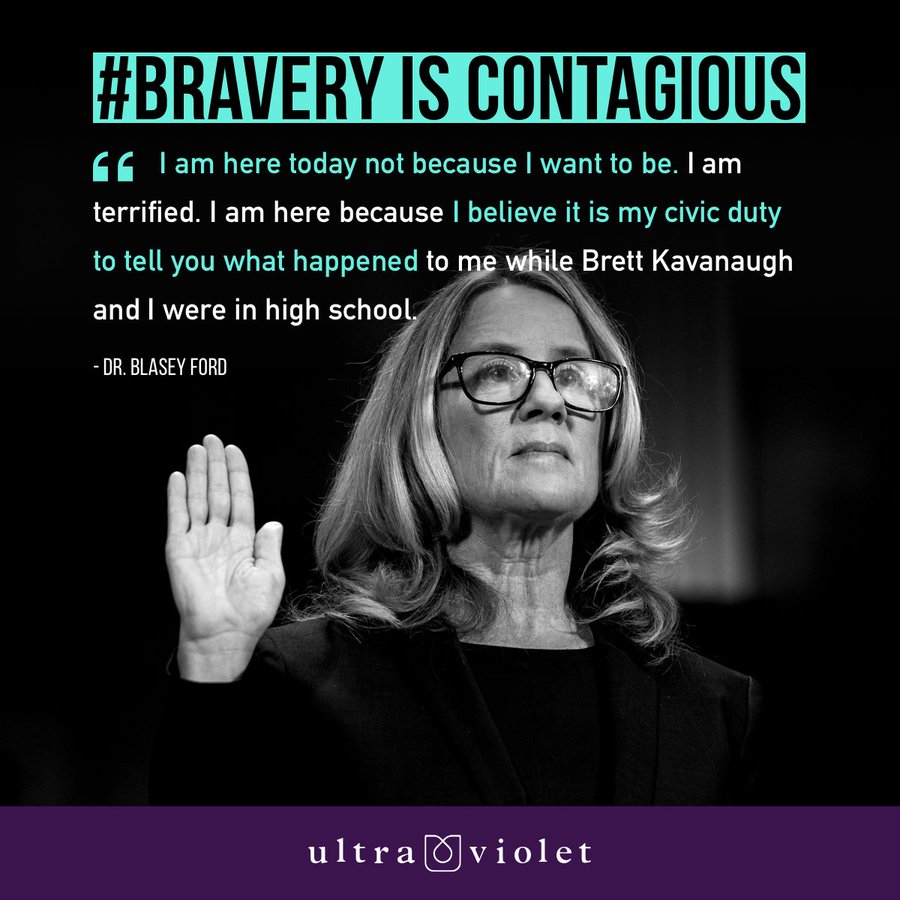
A final vote on Kavanaugh’s confirmation could come as early as Saturday. Republicans have a two-vote margin to approve Kavanaugh, whose confirmation process has been mired in allegations of attempted rape and sexual assault. He denies the allegations.

Already, there are cases in the pipeline that could give the supreme court an opportunity to severely limit women’s access to abortion, either by overturning Roe v Wade or hollowing out its protections.

  • Nearly half of US states could limit abortion within two years

    There are already two cases before appellate courts, one level down from the supreme court, that could give the country’s highest court an opportunity to limit abortion access as soon as June 2019.

    If Roe v Wade was overturned, 24 US states would likely move to ban or severely limit abortion upon reconvening, at earliest within seven months of the supreme court’s decision.

  • If Roe v Wade was overturned, four states would automatically ban abortion

    Mississippi, Louisiana, North Dakota and South Dakota, already have “trigger laws”, or statutes that would automatically ban abortion if Roe v Wade were overturned.

    However, across broad parts of America, the move would also likely prompt many other state legislatures to try to pass new laws to restrict abortion access. Those most likely to do so are those which have already enacted severe restrictions.

  • Twenty-one states already have severe limits

    For example, 21 states limit when a pregnant woman can get an abortion based on the age of the fetus. For example, in Iowa, that restriction is based on when doctors can hear a heartbeat, at about six weeks. Because that is before most women know they are pregnant, it is effectively a de facto ban on abortion.

    Laws that ban abortion before a fetus can survive outside the womb are unconstitutional, but 21 states have nevertheless passed such bans, most at 20 weeks. Most fetuses do not survive outside the womb before 24 weeks. A full-term pregnancy is 39 weeks. Many of these laws are the subject of court challenges.

  • Twenty-four states have anti-abortion legislatures

    Twenty-four states have anti-abortion legislatures, making it likely they would move to enact abortion restrictions after a supreme court decision further restricted abortion. They would also be likely to several restrict access.

Source: Center for Reproductive Rights

Source: https://www.theguardian.com/world/ng-interactive/2018/jun/30/abortion-supreme-court-law-anthony-kennedy?CMP=fb_gu

The internet’s mood can be described in two words, one hashtag: #CancelKavanaugh.

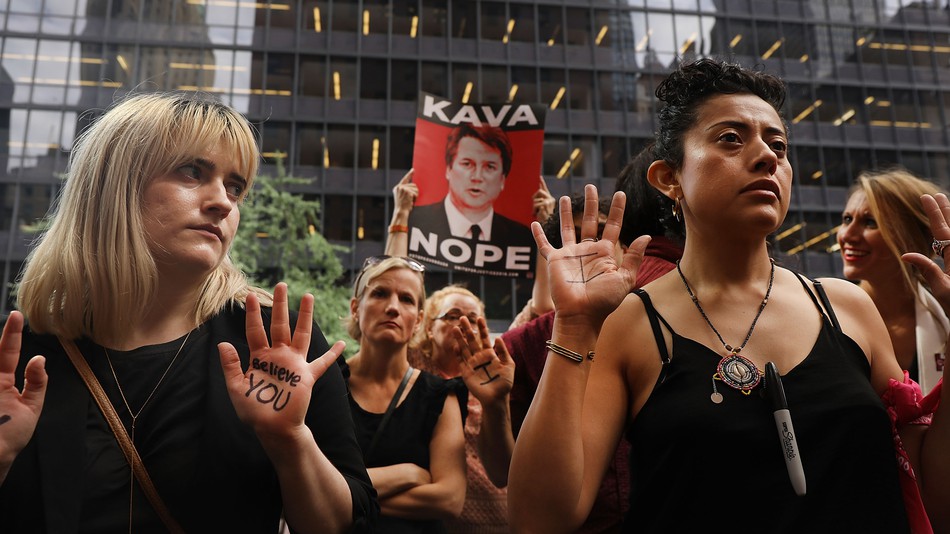
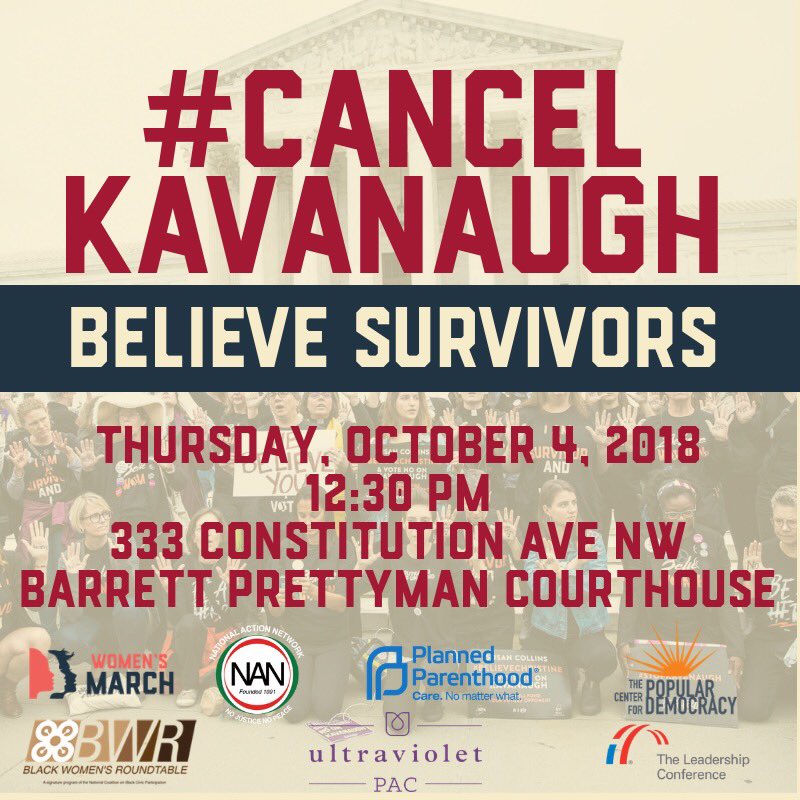
In a final effort to stop Brett Kavanaugh’s confirmation, the Women’s March and other organizations have announced the Cancel Kavanaugh march, which will take place in Washington, D.C. on Oct. 4. Nationwide demonstrations are also scheduled for the next few days.

Some reports say the FBI’s investigation into the sexual assault allegations against Kavanaugh could wrap up sooner than the end of the week, which means the Senate might vote on his nomination by Friday. But don’t panic because the fight is not over.

Liberal activists believe they have a shot at convincing Republican senators Susan Collins of Maine, Lisa Murkowski of Alaska, and Jeff Flake of Arizona, along with Democratic senators Heidi Heitkamp of North Dakota and Joe Manchin of West Virginia, to vote no on Kavanaugh’s confirmation. Protestors and sexual assault survivors have confronted some of those senators to discuss their decisions, and Mitch McConnell, the Senate Majority Leader, saidRepublicans “will not be intimidated by these people.”

If McConnell’s tone-deaf sentiment inspires you even more to hold elected officials accountable in person, or you just want to take part in the #CancelKavanaugh movement, here’s everything you need to know about Thursday’s march:

Who is organizing?

The march will be hosted by the Women’s March, UltraViolet, CPD Action, Demand Justice, the National Action Network, the ACLU, the Leadership Conference on Civil and Human Rights, the Planned Parenthood Action Fund, and MomsRising.org, according to the “Cancel Kavanaugh: Believe Survivors” event page.

When and where is the march?

The march will take place on Thursday, Oct. 4 at 12:30 p.m. ET at the E. Barrett Prettyman Courthouse, located at 333 Constitution Ave NW, and will move toward the Supreme Court building.  If you’d like to participate, make sure to register here.

Is transportation provided?

As of right now, the Women’s March is coordinating free buses to Washington, D.C. from New York CityBoston, and West Virginia. The event’s registration form suggests bus transportation from both Philadelphia and Atlanta may also be available.

Can people donate to the cause?

If you can’t attend the Cancel Kavanaugh march, you can still support it by donating to this CrowdRise campaign.

Whether you attend the march or not, it’s crucial you contact your senators. Make your voice heard because abortion rights, LGBTQ rights, and voting rights (to name a few) could be at stake if Kavanaugh is confirmed. Giving Kavanaugh a lifetime appointment to the Supreme Court would also send a disturbing message to survivors of sexual abuse and assault.

“The stakes are too damn too high to let the GOP railroad this vote,” Jess Morales Rocketto, the political director at National Domestic Workers Alliance, said in a statement Wednesday. (Rocketto confronted Sen. Ted Cruz in an elevator last week and shared her story of sexual assault.) “Any way that we need to speak truth to power, we will do it. That’s why we’re literally everywhere: in the Senate halls, in elevators, in front of the courthouse, and on your TV channel. Brett Kavanaugh’s time is up!”

Source: https://mashable.com/article/womens-march-cancel-kavanaugh/?europe=true#.ylrPeUKHPqm

Women seeking abortions will have to go to Planned Parenthood’s St. Louis clinic or travel to neighboring states, said a Planned Parenthood spokesperson.

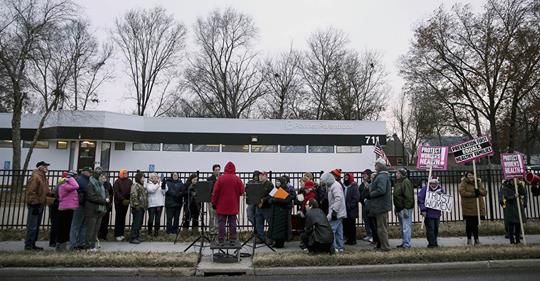
JEFFERSON CITY, Mo.— Missouri is down to one clinic providing abortions Wednesday, after the only other clinic in the state that performs the procedure failed to adhere to new state requirements.

Federal appeals court judges ruled last month that Missouri can enforce a requirement that doctors must have admitting privileges at nearby hospitals before they can perform abortions. The judges issued a mandate Monday for that rule to officially take effect.

The Columbia Planned Parenthood clinic was unable to secure physician privileges to comply with the requirement, so it cancelled abortions scheduled for Wednesday, which would have been the first since the mandate was issued, Planned Parenthood Great Plains spokeswoman Emily Miller said. The clinic continues to provide other health care services.

“We are unable to provide abortion services now, so we’ve been working with patients who were on the schedule for today for abortion appointments to let them know what their alternatives are,” Miller said.

Women seeking abortions can go to Planned Parenthood’s St. Louis clinic — which is now the only facility in Missouri where abortions can be performed — or travel to neighboring states, she said.

Planned Parenthood attorneys had asked U.S. Western District Court Judge Brian Wimes to temporarily exempt the Columbia clinic from the requirement before Wednesday. Wimes hasn’t yet ruled on that request.

If Wimes does decide to grant a temporary restraining order on the law, abortions could resume in at the clinic.

Planned Parenthood affiliates with Missouri health centers filed the underlying lawsuit to block state requirements on admitting privileges and mandates that clinics meet hospital-like standards for outpatient surgery. The U.S. Supreme Court in 2016 struck down similar rules in Texas.

U.S District Judge Howard Sachs in May 2017 issued a temporary restraining order to block the admitting privileges rule. But his action was undone in September by judges on the 8th U.S. Circuit Court of Appeals, who argued Sachs didn’t do enough to weigh the cost benefits of Missouri’s rules and sent the case back to the lower court.

The underlying challenge to the Missouri abortion regulations is still pending.

Source: https://www.nbcnews.com/news/us-news/missouri-down-one-abortion-clinic-new-law-takes-effect-n916241?cid=sm_npd_nn_fb_ma

Governor works late to sign or veto bills on last day of session

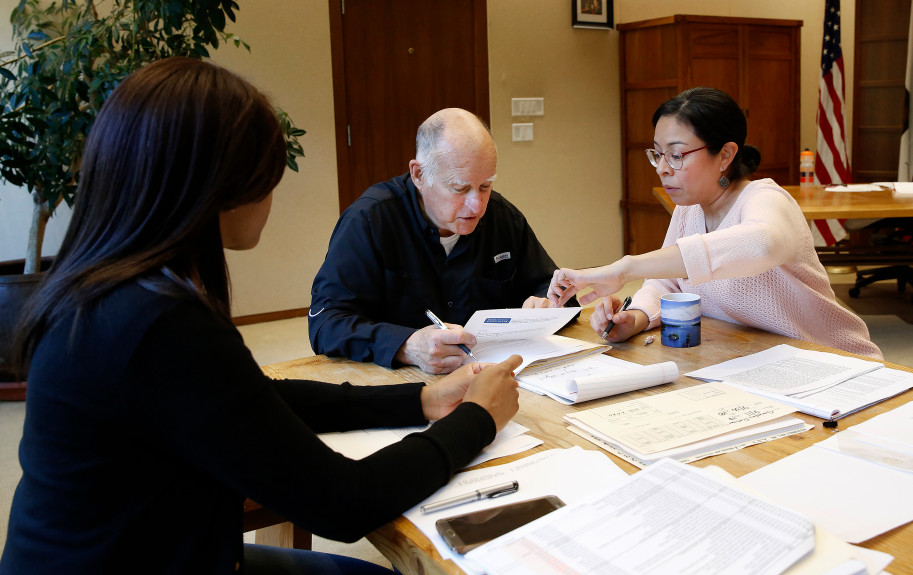
Gov. Jerry Brown reviews a measure with staff members Camille Wagner, left, Graciela Castillo-Krings at his Capitol office, Sunday, Sept. 30, 2018, in Sacramento, Calif. Sunday is the last day for Brown to approve or veto bills passed by the legislature. Brown, who will be leaving office in January, is acting on some on the last pieces of legislation in his tenure as governor. (AP Photo/Rich Pedroncelli)

Gov. Jerry Brown on Sunday vetoed a measure that would have required public university student health centers to provide abortion medication by no later than Jan. 1, 2022.

Brown noted in his veto message that “the average distance to abortion providers in campus communities varies from five to seven miles, not an unreasonable distance.”

“Because the services required by this bill are widely available off-campus, this bill is not necessary,” he wrote.

To pay for the cost of implementation, the bill would have required $9.6 million in private funding to provide a $200,000 grant to all public universities. It also would have provided a $200,000 grant to both the University of California and California State University systems to provide 24-hour telephone patient support for abortion medication recipients.

When the bill’s author, Connie Leyva, D-Chino, introduced the bill, she said that “a woman should always have the right to decide when she incorporates a family into her life.”

She vowed Sunday to reintroduce the proposal next session“As the Trump Administration continues to unravel many of the critical health care protections and services for women, legislation such as this is urgently needed to make sure that Californians are able to access the full range of reproductive care regardless of where they may live,” Leyva said in a statement.

“As the Trump Administration continues to unravel many of the critical health care protections and services for women, legislation such as this is urgently needed to make sure that Californians are able to access the full range of reproductive care regardless of where they may live,” Leyva said in a statement.

Also Sunday, Brown signed Assembly Bill 1976, which starting next year, requires employers to provide their workers with a private area that is not a bathroom to pump.

The measure, by Assemblywoman Monique Limón, D-Goleta, allows businesses to apply for an exemption if they can show that making a space available for breast pumping would be an undue hardship.

Existing law already requires employers to make a reasonable effort to provide both a lactation space that is not a bathroom stall and breaks for workers who need to pump breast milk.

Proponents of AB 1976 argued that the bill would create cleaner and safer areas for pumping. They noted that the American Academy of Pediatrics recommends children be fed breast milk until at least six months of age, but an unsupportive work environment presents a significant hurdle to many mothers, especially women of color.

Opponents said the bill would be onerous for employers, and that it will expose them to frivolous lawsuits.

Brown vetoed another measure, Senate Bill 937, that would have gone even further by requiring amenities such as access to a power source and either a refrigerator or cooler in the private pumping area.

California will also require its workers to take regular sexual harassment training and forbid secret settlements when they sue their employers.

Brown on Sunday signed several bills that aim to prevent workplace harassment and help victims of sexual misconduct seek justice.

After explosive reporting last fall uncovered widespread abuse by Hollywood producer Harvey Weinstein, the #MeToo movement ignited a national discussion on sexual harassment, including in California politics.

Lawmakers responded this session by passing more than a dozen measures that experts said could make the state a national leader on the issue.

Among the proposals Brown signed were:

▪ Senate Bill 820, by Sen. Connie Leyva, D-Chino, which prohibits secret settlements and non-disclosure agreements in sexual harassment cases. While a victim could choose to keep his or her name private, the perpetrator’s identity cannot be confidential. “For decades, secret settlements have been used by wealthy and well-connected perpetrators to offend repeatedly with no public accountability,” Leyva said in a statement. “This critical legislation will empower victims and offer them the opportunity to finally say #TimesUp to those that have hurt them.”

▪ Senate Bill 1300, by Sen. Hannah-Beth Jackson, D-Santa Barbara, which forbids companies from requiring their workers to sign releases of liability as a condition of continued employment or in exchange for a bonus. “California is stating clearly that we believe and support victims,” Jackson said in a statement.

▪ Senate Bill 1343, by Sen. Holly Mitchell, D-Los Angeles, which expands a biannual sexual harassment training mandate to nearly all California employees.

▪ Assembly Bill 1619, by Assemblyman Marc Berman, D-Palo Alto, which provides victims up to a decade to seek civil damages from a sexual assault.

▪ Senate Bill 419, by Sen. Anthony Portantino, D-La Cañada Flintridge, which prohibits the Legislature from firing or discriminating against an employee or lobbyist who files a harassment complaint. It also requires the Senate and Assembly to maintain records of harassment complaints for at least 12 years.

▪ Assembly Bill 2055, by Assemblyman Marc Levine, D-Greenbrae, which adds information about the Legislature’s sexual harassment policy to ethics training for lobbyists.

▪ Assembly Bill 3118, by Assemblyman David Chiu, D-San Francisco, which requires a statewide audit of untested rape kits. “Given the current national conversation around sexual assault, it is more important now than ever that survivors of sexual assault know that California is working to get them the justice they deserve,” Chiu said in a statement.

Brown vetoed a handful of bills that he said went too far, including:

▪ Assembly Bill 1867, by Assemblywoman Eloise Reyes, D-Grand Terrace, which would have mandated that large companies maintain records of sexual harassment complaints for at least five years after the end of the alleged harasser’s employment. Brown said in his veto message that the time expansion, which could lead to even unsubstantiated claims being maintained for decades, was “unwarranted.”

Assembly Bill 2713, by Assemblyman Freddie Rodriguez, D-Pomona, which requires the state to publish an annual report on sexual harassment reports and settlements in California government agencies. The Bee reported last year that the state does not officially track such cases across departmental lines. Brown said the measure “covers an important topic but current management practices are taking the necessary steps to assure a suitable work environment.”

Earlier in the year, the Legislature extended whistleblower protections to Capitol employees and developed a new process for reporting and investigating internal complaints of sexual harassment.

Current and former staff had complained of a culture of fear and retaliation, which women said discouraged them from reporting pervasive harassment and allowed it to go unpunished. Three members ultimately resigned amid public allegations of sexual misconduct, and complaints were lodged against at least four more.

Sacramento Bee staff writer Andrew Sheeler contributed to this report.

Source: https://www.mercurynews.com/2018/09/30/abortion-pill-mandate-for-state-universities-vetoed-by-brown/

‘In your memory, and towards our liberation, we continue the fight for reproductive justice’

Emma Warson has written an open letter to Dr Savita Halappanavar, who died in 2012 at the age of 31 after being denied an abortion in Ireland.

Dr Halappanavar, who worked as a dentist, had been 17 weeks pregnant with her first child when she and her husband found out that she was extremely likely to experience a miscarriage.

After asking if she could have an abortion to terminate the pregnancy, Dr Halappanavar and her husband Praveen were told that it wasn’t allowed “under Irish law”, unless there was evidence that her life was at risk.

On October 28 2012, Dr Halappanavar died from cardiac arrest caused by a septic miscarriage.

Her death made a huge impact in Ireland and spurred a movement in the country to repeal the eighth amendment, the law in the constitution that banned abortion in almost all circumstances, and stated that a pregnant woman and a foetus have an “equal right to life”.

In Watson’s letter, which is published in Porter magazine, she opens saying: “Dear Dr Savita Halappanavar, you didn’t want to become the face of a movement; you wanted a procedure that would have saved your life.

“When news of your death broke in 2012, the urgent call to action from Irish activists reverberated around the world – repeal the eighth amendment of the Irish constitution.”

She continues, highlighting the significance of the “historic feminist victory” that took place in Ireland when the country voted to repeal the eighth amendment of its constitution on May 25 this year.

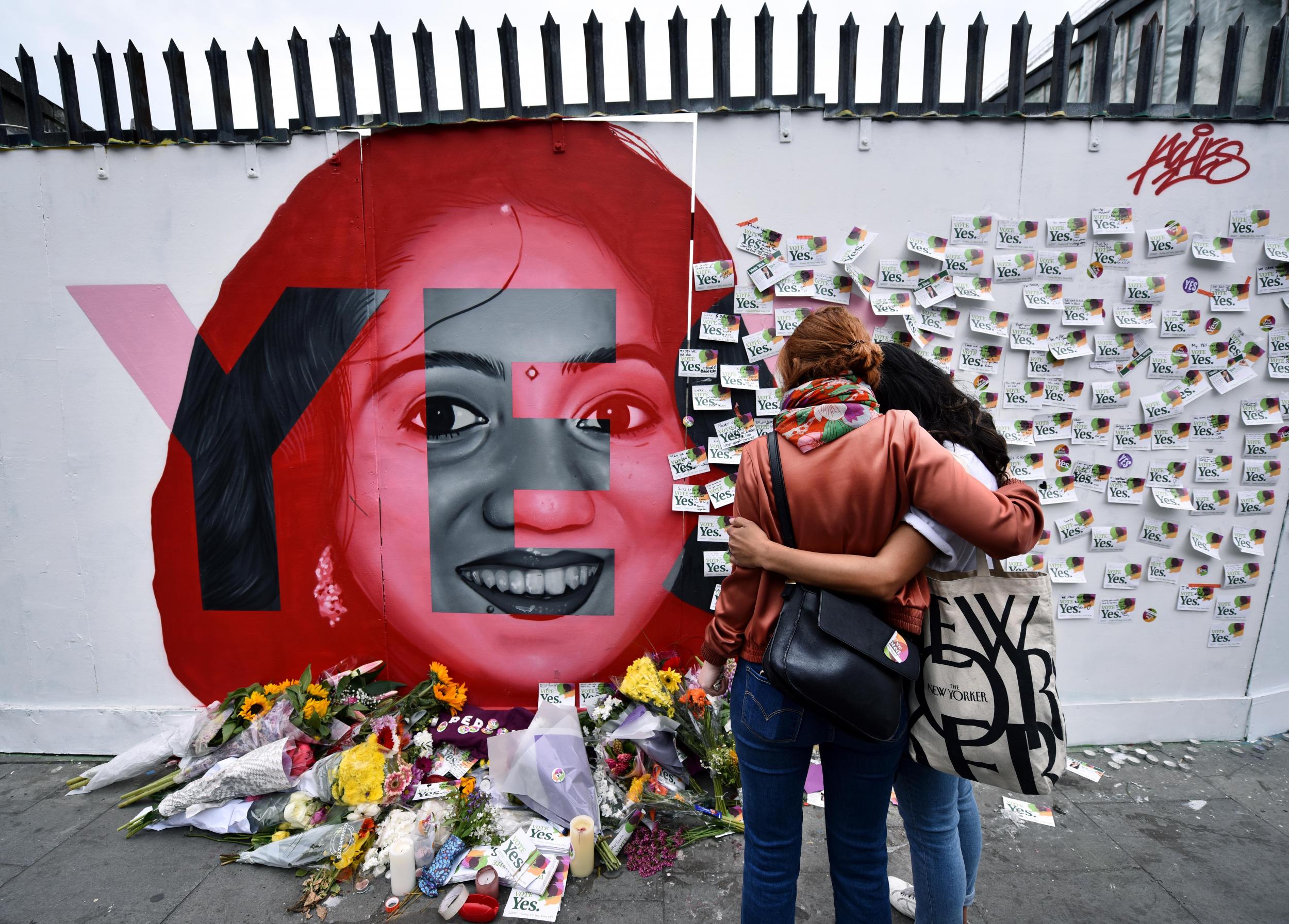
As people in Ireland voted to repeal the eighth amendment in May, many also left flowers and messages at the site of a mural of Dr Halappanavar in central Dublin, which had been created in tribute to her.

“A note on your memorial in Dublin read, ‘Because you slept, many of us woke.’ That the eighth amendment enabled valuing the life of an unborn foetus over a living woman was a wake-up call to a nation,” Watson writes.

Following the referendum in Ireland, there have been multiple calls for abortion law in Northern Ireland to also be reformed.

According to the Guttmacher Institute, there are currently 26 regions around the world where abortion is completely outlawed, with no exceptions.

These regions include Egypt, Madagascar, Iraq and the Philippines.

“From Argentina to Poland, restrictive abortion laws punish and endanger girls, women and pregnant people,” Watson writes.

The mural of Savita Halappanavar in Dublin, Ireland, on May 26 (Photo by Charles McQuillan/Getty Images)

“Still, Northern Ireland’s abortion law predates the lightbulb.

“In your memory, and towards our liberation, we continue the fight for reproductive justice.”

You can read the full letter in Porter magazine here.

Source: https://www.independent.co.uk/life-style/women/emma-watson-savita-halappanavar-abortion-ireland-death-miscarriage-letter-porter-magazine-a8563131.html?utm_medium=Social&utm_source=Facebook#Echobox=1538410798

Up to one in five U.S. voters may not know what the law really is.

Ever since Roe v. Wade established the constitutional right to abortion, federal and state policymakers have been chipping away at what it really means for people seeking abortion care. Since 2011, states have passed more than 400 abortion restrictions. Now, with President Donald Trump’s promise to appoint justices to the U.S. Supreme Court committed to overturning Roe v. Wade (such as current nominee Judge Brett Kavanaugh), the threat of government action to more fully undermine abortion access looms large.

Based simply on laws already on the books, if Roe v. Wade were overturned, abortion would automatically be banned in four states and could become more restricted in 12 additional ones. This urgent threat to people’s ability to obtain abortion care has been the focus of recent advocacy campaigns, particularly when spurring opposition to Kavanaugh’s nomination.

These efforts assume that people have a basic idea of what is at stake. But they might not.

A recent poll by the California-based marketing and opinion research firm Probolsky Research, which I analyzed, assessed knowledge of abortion legality. Over a 12-day period in March and April 2018, 1,000 U.S. voters were asked: “As far as you know, is abortion legal in your state?” Nearly 8 in 10 voters answered “yes,” but 12 percent responded that they did not know and 8 percent thought it was illegal.

Knowledge of abortion legality did not differ by race and ethnicity, age, or gender. Instead, education and political climate were the main characteristics associated with knowledge. Some 35 percent of polled voters with a high school degree or less did not know if abortion was legal in their state compared to 16 percent of voters who were college graduates. Living in a state with abortion restrictions was also associated with lower levels of knowledge. At the time the poll was conducted, the Guttmacher Institute considered 29 states to be hostile to abortion rights because they had enacted four or more key restrictions. In hostile states, nearly 24 percent of voters did not know if abortion was legal compared to 11 percent in states that were supportive of abortion rights. This association between policy climate and knowledge remained constant even when we controlled for education levels and other personal characteristics

The idea that individuals with less education have less accurate knowledge has been found to apply to a range of political and other issues. Associations between abortion policy climate and awareness of abortion legality require a little more explanation. A number of states considered hostile to abortion rights have enacted numerous abortion laws over the last decade. These restrictions were quite controversial in some states and received extensive local, and even national, media coverage. For example, when HB 2 was enacted in Texas, more than half of the abortion facilities closed, and this was covered by domesticand international news agencies. Abortion restrictions imposed in smaller states may not have received as much national attention, but were covered by local media. Some individuals, particularly those living in restrictive states, may have been “passively” exposed to this coverage. They may not have paid close attention to the content of the stories, but merely noted that one or more abortion laws had been passed. They may have assumed that these laws made abortion illegal or, upon being questioned about the legality of the procedure, realized they did not know how the laws affected abortion in their state.

The data discussed in this article is not without its flaws. Like polls conducted by Pew and Gallup, this one had a low response rate, and the information cannot be considered to be representative of all U.S. voters. Still, there is undoubtedly some truth in the patterns that emerged from information provided by 1,000 respondents. It is possible that accurate knowledge of the legality of abortion is even lower among nonvoting individuals—as voters are more educated, on average, than non-voters.

Abortion rights have always been embattled and have become more so over the last decade. This situation promises to get worse if the Supreme Court becomes increasingly hostile to abortion access. Even in the absence of an anti-choice individual being appointed to the Court, state-level efforts to restrict or abolish legal abortion will undoubtedly persist. Abortion restrictions not only make it harder for individuals to terminate their pregnancies, but attention around them may have the secondary effect of making people question whether abortion is even legal. Findings from this poll suggest that efforts to oppose state and national abortion restrictions need to be placed in a larger context. If people don’t even know that abortion is legal, they may not realize just how much is at stake.

https://rewire.news/article/2018/09/20/as-danger-to-roe-grows-many-voters-may-not-even-know-that-abortion-is-legal/

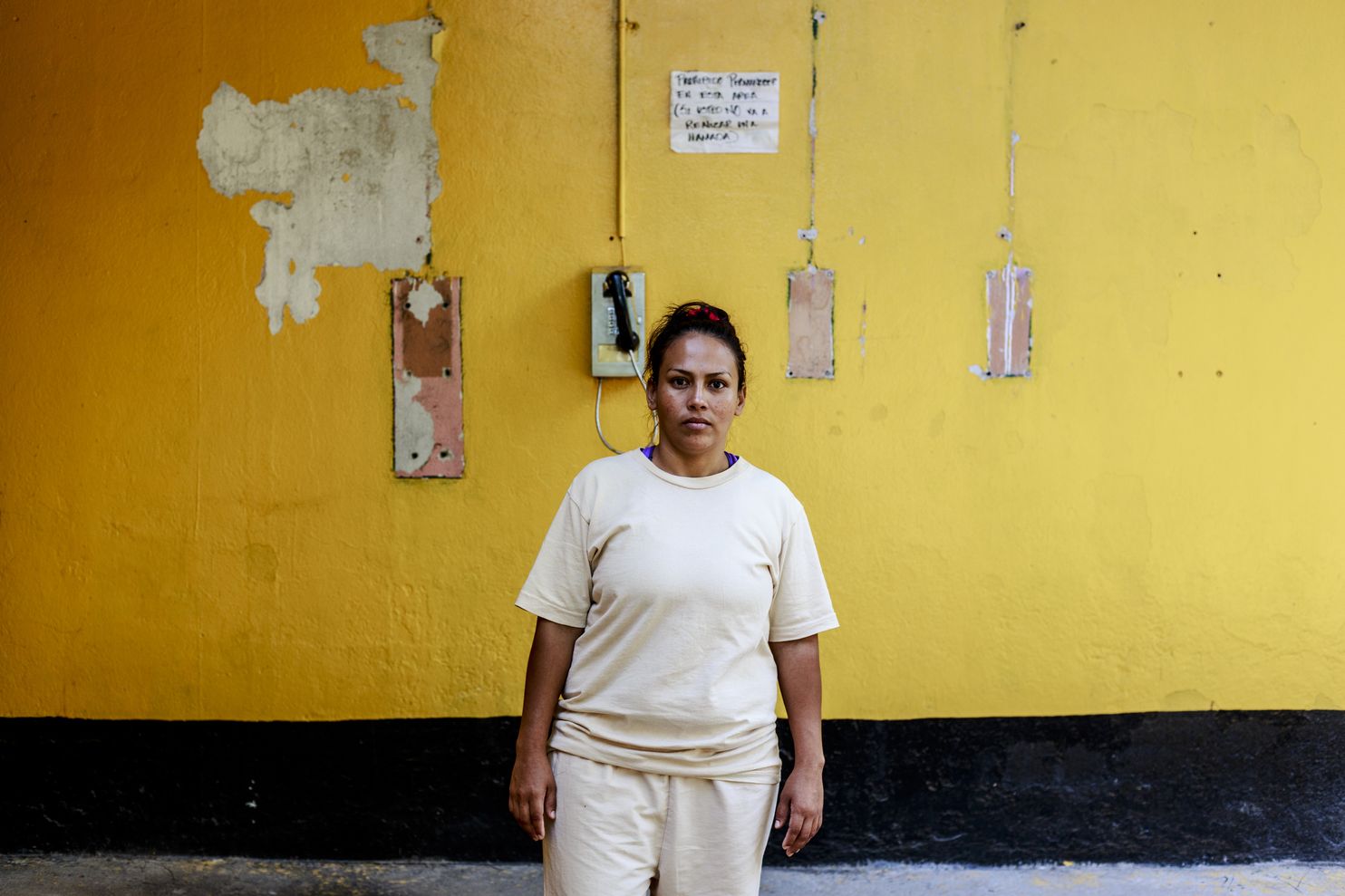
Alba Lorena Rodríguez poses for a portrait inside of Ilopango women’s prison on Sept. 3.

 Alba Lorena Rodríguez was five months pregnant when she started to feel sharp pains in her stomach while at home in December 2009. She fainted.

When she awoke, she says, she realized she had lost her baby.

Rodríguez, now 39, says she had a miscarriage. But the state accused her of killing the fetus, and she was convicted of aggravated homicide in a suspected abortion case. She denies having an abortion and says she mourned her miscarriage.

“Tell me, if I had intended to kill the baby, would I have held a vigil?” Rodríguez said during an interview at Ilopango women’s prison on the outskirts of San Salvador, where she has served eight years of a 30-year sentence.

Rodríguez is one of at least 25 women who have been incarcerated — many facing decades-long sentences — since El Salvador made abortion illegal under all circumstances in 1998. Most of these women claim to have had late-term obstetric emergencies or stillbirths. Many have been separated from their children while in prison.

Two of them were released this year after they successfully appealed their convictions. Now, Rodríguez is petitioning to have her sentence shortened based on a lack of evidence. Lawyers, activists and legislators are hoping the rulings to release these women will eventually translate into a more lenient abortion law.

El Salvador is one of 26 countries with an absolute ban on abortions, and its battle over abortion rights is echoed around the globe, with several countries grappling with changes to legislation. Ireland, Brazil and Chile, among others, have made moves to loosen restrictions on abortion in recent months.

In other places, including ­Poland and parts of the United States, abortion rights are facing renewed challenges. In August, legislators in Argentina voted by a narrow margin against legalizing abortion for pregnancies of up to 14 weeks.

In El Salvador, Rodríguez is part of a group of women referred to as “Las 17” — “The Seventeen” — for the 17 identified cases of women imprisoned under the country’s abortion laws when the campaign to release them began in 2013.

Victor Hugo Mata, a lawyer with the Citizens’ Group for the Decriminalization of Abortion, which works to free the women, said he thinks bias plays into ­judges’ decisions to condemn these women.

“When [these types of miscarriages] happen to a woman, judges assume it’s because there’s something more there. To them, it’s not possible that they could be innocent,” Mata said. “There are very few judges who see it differently.”

Rodríguez said she was barely given a chance to speak at her trial. Her attorney, a public defender she had met that day, knew few details about her case, she said. On July 15, 2010, Rodríguez was sentenced to 30 years in prison.

Thousands of Salvadoran women have abortions each year. The most recent statistics from the Salvadoran Health Ministry report an estimated 19,290 clandestine abortions from 2005 to 2008. Women who can afford it pay for abortions at private clinics or travel outside the country to have an abortion, according to activists.

The Salvadoran state has started to review cases and release some of the imprisoned women. In ­February, Teodora del Carmen Vásquez was released after 10 years behind bars for aggravated homicide for what she says was a late-term miscarriage.


Women cry outside the Isidro Menendez Judicial Center after a December 2017 hearing to review the sentence handed down to Teodora del Carmen Vásquez in 2008 under a draconian antiabortion law. (Oscar Rivera/AFP/Getty Images)

After reviewing Vásquez’s case, the Salvadoran Supreme Court ­determined that there was not enough evidence to prove that she had caused harm to the fetus. The court stated that “justice, equity and other legal reasons” led to the decision to commute her sentence.

One month later, in March, Maira Verónica Figueroa Marroquín, who was accused of aggravated homicide in 2003 at age 19, was released when the Salvadoran Justice Ministry determined that her charges were “excessive and immoral.”

The Citizens’ Group has been successful in securing the release of some women, but passing progressive legislation has been more challenging.

Two proposals in El Salvador’s legislature this spring gave abortion rights activists new hope.

Johnny Wright Sol, a member of the right-wing ARENA party, broke with his party line to introduce a bill that would legalize abortions in two cases — the rape of a minor and when the mother’s life or health is in danger.

A bill by Lorena Peña of the left-wing FMLN party went further, proposing that abortions be allowed in all cases of rape and cases of an unviable fetus.

In April, evangelical and Catholic groups showed their dis­approval for the proposals in a “March for Life” through the streets of San Salvador.

“We see the legislation proposed in our country, proposed by representatives from FMLN, mainly Lorena Peña, to depenalize abortion as a danger and a threat,” evangelical pastor Numa Rodezno, one of the organizers, told local media on the day of the march.

But the two proposals were not brought for a vote before the Salvadoran national assembly. On May 1, new representatives took office, and the right-wing ARENA party, which now holds the most seats in the assembly, is unlikely to consider any measures decriminalizing abortion.

Yet activists believe the proposals contributed to a shift in attitudes on abortion in El Salvador. A 2018 public opinion poll by the University of Central America showed that more than 50 percent of Salvadorans support legalizing abortion when a mother’s life is in danger or when the fetus is not viable.

“The discussion in the public sphere generated by the proposals to depenalize abortion has caused other people and groups, besides just the feminist groups that were already talking about the issue, to take a stand,” said Sara García of the Citizens’ Group.

As of September, Rodríguez remains behind bars while awaiting a decision on her appeal. She said the worst part of being imprisoned is being separated from her two daughters, now 10 and 14.

“My daughters always ask me, ‘When are you going to leave here, Mom? When are you going to be home with us?’ ” Rodríguez said. “And I tell them that I’m leaving soon and that I’m going to be with them soon.”


People demand the release of Teodora del Carmen Vásquez in front of the Isidro Menendez Judicial Center in San Salvador in December 2017. Vásquez was released in February 2018. (Oscar Rivera/AFP/Getty Images)
Source: https://www.washingtonpost.com/world/the_americas/women-serving-decades-long-prison-terms-for-abortion-in-el-salvador-hope-change-is-coming/2018/09/26/0048119e-a62c-11e8-ad6f-080770dcddc2_story.html?noredirect=on&utm_term=.89b4681c68bc