“The good news is Oregon is a pro-choice state and we have a pro-choice electorate. We know that voters largely recognize these attempts to reduce access for what they are.”

A July poll of Oregon voters found 53 percent opposed a “ban on the ability to obtain an abortion in Oregon,” as Northwest Public Broadcasting reported. About one-third said they’d support a ban.
Michael B. Thomas/AFP/Getty Images

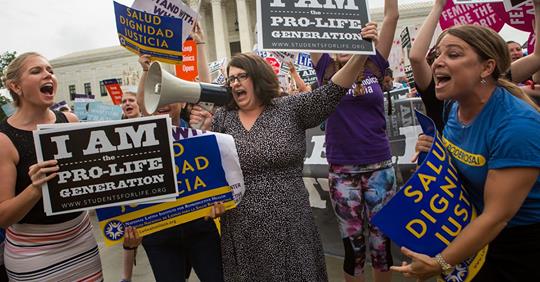
Pro-choice activists mounted a counterattack the moment word spread: An Oregon ballot initiative to ban state funding for abortion care had gained enough signatures to appear on the November ballot.

Within 48 hours, more than 1,000 Oregonians had promised to vote no to Measure 106, organizers said.

The site NoCutstoCare.com went live with this message: Measure 106 would amend the state constitution to strip abortion insurance coverage from some 327,000 Oregon women. These were low-income women of reproductive age with public insurance or women with government jobs.

“This would really dramatically decrease access to abortion for many, many women in Oregon, including the most vulnerable who really already face high barriers to care,” said Grayson Dempsey, executive director of NARAL Pro-Choice Oregon. NARAL is part of the campaign opposing Measure 106 that includes the American Civil Liberties Union of Oregon, the Oregon Nurses Association, and Catholics for Choice.

The anti-abortion insurance initiative isn’t new. But this year is the first time it will appear before voters after three failed attempts to qualify for the ballot. The Oregon secretary of state verified the signatures last week.

Dempsey is skeptical that voters in a state without a single restriction on abortion care will support Measure 106.

“The good news is Oregon is a pro-choice state and we have a pro-choice electorate,” Dempsey told Rewire.News. “We know that voters largely recognize these attempts to reduce access for what they are.”

A July poll of Oregon voters found 53 percent opposed a “ban on the ability to obtain an abortion in Oregon,” as Northwest Public Broadcasting reported. About one-third said they’d support a ban.

Oregon is one of 19 states that cover abortion under Medicaid, according to the Guttmacher Institute. The use of direct federal funds for abortion is illegal under the federal Hyde Amendment in all 50 states, except in rare circumstances. Last year, Oregon’s Democratic-led state legislature went a step further, extending abortion coverage and other reproductive services to undocumented immigrants.

It’s unclear how the measure’s backers intend to mobilize the state’s 2.7 million registered voters, about 36 percent of whom are registered Democrats.

Campaign records indicate the political action committee Stop the Funding spent at least $120,000 in in-kind contributions, typically goods or services, this year to get the initiative on the ballot. The PAC now has $900 cash on hand.

Jeff Jimerson, the head of Oregon Life United and the PAC’s chief organizer and main sponsor of Measure 106, did not respond to Rewire.News‘ request for comment. Jimerson told Oregon Public Broadcasting that Measure 106, if successful, wouldn’t outlaw abortion, but it might force pregnant people to reconsider their decision by adding “a little bit of a speed bump.”

NARAL’s Dempsey said the last time a similar proposition appeared on the ballot in the state was 1986. It failed.

In 2016, during an attempt to qualify the measure the ballot, the state supreme court ordered Jimerson to change the ballot language. The sponsors were forced to make it clear that the measure’s overarching effect was to deny abortion coverage to people with low incomes, as Rewire.News reported.

The measure’s title now says Measure 106 “reduces abortion access.”

“I do feel confident that doing the hard work, and reaching voters, that we will be able to defeat this in November,” Dempsey said.

Source: https://rewire.news/article/2018/08/02/oregon-pro-choice-advocates-mount-defense-of-state-funding-for-abortion-care/

Dawn Barlow offered more specifics about her views on abortion, including her support for the discriminatory Hyde Amendment, in a statement to Rewire.News.

A doctor who describes her political views as "moderate," Barlow is vocal on social media about being anti-choice.   Dawn Barlow / YouTube

A doctor who describes her political views as “moderate,” Barlow is vocal on social media about being anti-choice.
Dawn Barlow / YouTube

Dawn Barlow, a Democrat running in Tennessee’s Congressional District 6 primary on August 2, makes no secret of her opposition to abortion rights.

Barlow is a doctor and the director of hospital medicine at Livingston Regional Hospital. She describes her political views as “moderate.” While her campaign platform includes several mainstream Democratic positions such as saving the Affordable Care Act (ACA), advocating for public education, raising the minimum wage, and supporting pay equality, she strays from much of the party—or at least its 2016 national platform—when it comes to reproductive rights.

Barlow’s campaign site does not highlight abortion as a key issue, but she is vocal on social media about being anti-choice. On Twitter, she has repeatedly said that she is a “pro-life Democrat, proudly endorsed by” the anti-choice group Democrats for Life of America (DFLA). Barlow shared a Facebook post from DFLA on June 20, adding “I’m not running away from my values—I’m running on them!”

It’s a theme she hit on when announcing her campaign. “For far too long, common sense has taken a backseat to political hyperpartisanship,” she said in a statement, according to the Overton County News. “I am a pro-life democrat who values human life at all its stages and will fight for the well-being of all Tennesseans.”

Barlow offered specifics about her views in a statement to Rewire.News. “I oppose abortion except in cases of rape or life of the mother. I support the Hyde Amendment which prohibits federal funding of abortion. I also oppose physician assisted suicide,” she said. “Taking human life is fundamentally incompatible with the role of a healer. During my medical education, training and practice, I’ve cared for patients in all stages of life and in all stages of pregnancy.  I have a deep respect for human life in all its stages from the womb to the tomb. True reproductive justice will never be achieved as long as we refuse to acknowledge the basic fact that a human fetus is a human being.”

When it comes to policies she supports, Barlow pointed to the “Pregnant Women Support Act – Pregnancy Assistance Fund.” According to DFLA’s website, it is one of the organization’s “proudest accomplishments” and was introduced in Congress in hopes of reducing the number of abortions. Barlow said she would “work to improve the economic situation of women via support for raising the Federal Minimum Wage, support legislation for paid parental benefits, support Child Care For Working Families Act, support universal preK and support funding for before/after school programs.”

“Opposing abortion alone is simply not enough,” she said. “A whole life approach is necessary to save human life.  I spend my life caring for others and saving lives. I want to continue that fight of caring for others and saving lives in Congress.”

She did not directly answer questions about whether she would support funding for Planned Parenthood or if she would seek to restrict abortion access if elected.

One of the candidates Barlow faces in the Democratic primary is Merrilee Wineinger, an ordained United Methodist Church minister who has out-raised her. Wineinger “believes in protecting a woman’s right to safe, accessible, affordable and high-quality reproductive health care, or as she calls it, reproductive justice,” according to a post from Wineinger’s campaign manager on Daily Kos.

Asked about Barlow’s DFLA endorsement, Wineinger said, “The organization seeks to achieve zero abortions, which is unrealistic. Should we all strive to make abortions a rare occurrence? Absolutely! However, should we make it more difficult for women to receive one? No.”

In another statement, Wineinger said: “Let me start out by declaring, No one is for abortion. I refuse to stand across the political divide screaming at each other. It gets us nowhere. Therefore, I declare that I am Pro-Reproductive Justice and will protect a woman’s right to a safe and legal abortion.” She went on to define reproductive justice as “the right for women to care for their whole being, to have children or not, and the right to take care of her family by earning equal pay, by accessing affordable, quality healthcare, and by providing a secure home in a safe neighborhood.”

If elected, Wineinger said she “will work for comprehensive reproductive health and family planning services to prevent unplanned pregnancies. I will fight for better policies and funding for family planning and access to affordable, high-quality health care.”

Christopher Martin Finley and Peter Heffernan also qualified to appear on the Democratic primary ballotfor the district. No public polling appears to be available for the race.

The winners in this week’s primary will compete in November’s general election to replace Republican Rep. Diane Black, who is running in the state’s gubernatorial race. Black, a vocal opponent of reproductive rights, has aligned with anti-choice activists.

The Republicans running in the District 6 primary have noted anti-choice views. Multiple GOP candidates in the district have pulled in more than $1 million in fundraising.

The Inside Elections with Nathan Gonzales/Roll Call ratings rank the seat as “solid Republican.” The district voted for Trump by a 49-point margin in the 2016 presidential election, according to the Cook Political Report‘s 2017 Partisan Voter Index. Black won the seat when Democrat Bart Gordon retired in 2010 after serving 13 terms in Congress.

Source: https://rewire.news/article/2018/08/01/tennessee-democrat-hoping-to-flip-u-s-house-seat-opposes-reproductive-rights/

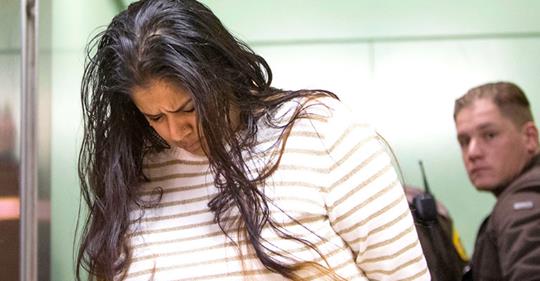
In this March 30, 2015, file photo, Purvi Patel is taken into custody in South Bend, Indiana, after being sentenced to 20 years in prison for feticide and neglect of a dependent. Robert Franklin/South Bend Tribune via AP

In this March 30, 2015, file photo, Purvi Patel is taken into custody in South Bend, Indiana, after being sentenced to 20 years in prison for feticide and neglect of a dependent. Robert Franklin/South Bend Tribune via AP

Roe v. Wade is in trouble. The 1973 Supreme Court decision protecting a woman’s constitutional right to terminate her pregnancy is under attack from every branch of the federal government and a majority of the states. Most members of Congress want to see it overruled, as do most governors and state legislatures. The president and vice president of the United States believe individual states should be able to prohibit abortion. In the federal judiciary, lower court judges have attacked Roe both obliquely and explicitly. Donald Trump’s judicial appointees were selected in part because of their opposition to Roe. And if Brett Kavanaugh replaces Justice Anthony Kennedy on the Supreme Court, the constitutional right to abortion access is almost certainly doomed.

Progressives are right to speak of Roe’s demise in apocalyptic tones. A reversal of the ruling would lead to the recriminalization of abortion in large swaths of the country. Four states have “trigger laws” that would automatically outlaw abortion in a post-Roe world. Ten have retained pre-Roe abortion bans that could take effect once again. Another eight have statutes that compel their legislatures to restrict abortion as stringently as possible if Roe goes. At least a few more conservative states that have already curtailed abortion rights, particularly those with unified Republican control, would likely forbid the procedure as well. And Congress could, if it wanted, outlaw abortion nationwide in one fell swoop.

This is a truth that pro-life advocates like to obscure. But if abortion is, indeed, murder, as so many of its opponents assert, then a woman who obtains an abortion should be guilty of homicide or manslaughter. Some anti-abortion advocates do take this position. Kevin D. Williamson, the National Review writer who was hired and then let go from the Atlantic,explained in 2014 that he was “absolutely willing to see abortion treated like regular homicide under the criminal code.” And in March 2016, when MSNBC’s Chris Matthews asked then-presidential candidate Donald Trump about what should happen to women who get abortions, Trump said, there “has to be some form of punishment.”

The notion that women who get abortions are actually victims, and thus shouldn’t be prosecuted for their crimes, is a common one in pro-life circles. But this victimhood model is dubious for two reasons. First, most women do not actually regret their abortions. Second, it requires abortion to be seen as something that is done to a woman and thus something she is not responsible for perpetrating or choosing.

For instance, National Review’s David French wrotein April that “If abortion is ever criminalized in this nation, I think only the abortionist (and not the mother) should face murder charges for poisoning, crushing, or dismembering a living child.” But French’s position rests on an outdated notion of how abortions are carried out in America. The medical reality is that abortion is increasingly something a woman can do to herself. As Irin Carmon explained in a chilling, thorough Washington Post article last year, it would be impossible to enforce a ban on abortion without prosecuting a huge number of women. That means there is no way to oppose abortion in 2018 without supporting the punishment of women who terminate their pregnancies.

In the pre-Roe era, an illegal abortion was often a dangerous “back-alley” operation, one conducted in unsanitary conditions at great risk to the woman undergoing the procedure. Large public hospitals had “septic abortion wards” to treat women who got potentially deadly infections following botched abortions. Some women tried to self-terminate by penetrating themselves with knitting needles or coat hangers; others swallowed turpentine and bleach. In 1965, illegal abortion accounted for 17 percent of all deaths stemming from pregnancy and childbirth. Today, in the U.S. that number is about zero percent.

While the landscape has changed dramatically in the past 45 years, there are still sizable chunks of the country where Roe is effectively dead letter. Kentucky, Mississippi, Missouri, North Dakota, South Dakota, West Virginia, and Wyoming each have only one abortion clinic. All of those states, as well as many others, impose strict burdens, like waiting periods and counseling requirements, that make the procedure difficult to obtain. As of 2017, 58 percent of women of reproductive age lived in states that severely restricted access to abortion.

Buying misoprostol without a prescription is illegal in every state. That hasn’t stopped women from going online to purchase it.

In South Dakota, for example, a woman who seeks an abortion must be warned that pre-viable fetuses can feel pain (they can’t) and that the procedure has negative long-term psychological consequences (it doesn’t). She must then wait 72 hours, excluding weekends and holidays, before terminating her pregnancy. If she is younger than 18, she must notify her parents, or ask permission from a judge.

For many women, these state-erected barriers are too high to scale. But those who are thwarted from terminating their pregnancies via clinic-based care often don’t give up—and they no longer have to turn to back-alley abortion clinics. Instead, they can go to the internet, where it is easy and cheap to obtain the abortion-inducing drug misoprostol on the black market.

Buying misoprostol without a prescription is illegal in every state. That hasn’t stopped women from going online to purchase it. Once acquired, misoprostol can reliably terminate a pregnancy in the first trimester—without a single visit to a medical provider. (Misoprostol remains effective in the second trimester, but the woman may need extra doses, and she’s more likely to experience complications that require medical attention.)

In a clinical setting, misoprostol is administered as the second pill in a medical abortion. The first pill, mifepristone, halts the pregnancy and loosens the lining of the uterus. Misoprostol, usually taken a day later, softens the cervix and causes uterine extractions to expel the pregnancy. While mifepristone potentiates misoprostol, the latter is a highly effective abortifacient by itself.

In countries that ban abortion—and in U.S. states that severely limit it—women frequently turn to black-market misoprostol to terminate their pregnancies. American distributors of both mifepristone and misoprostol are obligated to comply with strict Food and Drug Administration rules. Mifepristone is so carefully regulated that health care professionals must receive special certification before they can dispense it. A compulsory label warns patients that the drug may only be legally prescribed through this “restricted program.” Misoprostol is not regulated quite as rigorously in the U.S. and, unlike mifepristone, is available in generic form. When prescribed for ulcers, it must include extensive warnings about the dire risk it poses to pregnant women when used off-label without a doctor’s counsel.

But internationally, the production and sale of both drugs are substantially more lax—and American women who take the drugs illegally often buy a generic version on the internet that was originally retailed in another country. Some countries have followed America’s lead in cracking down on its distribution. Sales of the drug appear to have spiked in Brazil in the 1980s after women noticed a warning on the label cautioning them not to take it while pregnant. Abortion is illegal in the country, with limited exceptions, and women have been prosecuted for ending their pregnancies, subject to a prison term of three years. But while the Brazilian government eventually tightened regulations on misoprostol, women in the country still manage to obtain the drug illicitly.

The same is true in the U.S. According to studies conducted at the University of Texas, between 100,000 and 240,000 women in the state between the ages of 18 and 49 have tried to end their pregnancies on their own, with misoprostol ingestion as the most common method of self-termination. Clinic-based abortion care remains difficult to access in much of Texas, even after the Supreme Court invalidated the state’s most draconian regulations in 2016. Lower-income women may not be able to drive for hundreds of miles to see a licensed abortion provider, but they can cross the border and buy misoprostol without a prescription for $50 in Mexico.

If Roe falls, the question will not be whether women self-terminate. The question will be what legislators, police, and prosecutors decide to do about it.

Women who live farther from the border can purchase the drug online with minimal hassle. Pro-choice activists will also ship the drugs to women who can’t acquire them.
Mifepristone-misoprostol combinations—that is, the cocktail used in a complete medical abortion performed in a clinic—are also available online, though they’re often more expensive than misoprostol alone.

For a study published in the journal Contraception in April, researchers purchased these drugs from a variety of websites, then tested them to see whether they were what they claimed to be. For the most part, they were. Mifepristone tablets contained within 8 percent of the labeled amount of the drug; misoprostol tablets contained a bit less of the drug than advertised but still enough to be effective. Moreover, the products, on average, shipped quickly and cost less than clinic-based care.

Are DIY abortions—performed at home, using drugs bought online, with no medical professional on hand—safe for women? Mifepristone-misoprostol is about 98 percent effectivewhen used in the first 10 weeks of pregnancy; misoprostol is about 85 percent effective in the first 10 weeks when used by itself. Neither drug is particularly dangerous, and if the first dose doesn’t work, women can safely take another one a few days later. Professional medical supervision may be ideal, but in most cases, it isn’t necessary. Daniel Grossman, an OB-GYN and professor of reproductive health at University of California, San Francisco, told me that with “access to accurate information and high quality drugs, women can safely do this on their own.”

In fact, hundreds of thousands if not millions of women in the U.S. have already undergone this process by themselves. Most of them successfully terminated their pregnancies. The few who experienced severe complications were typically too far along in their pregnancies to safely undergo a medical abortion; after the first trimester, surgery becomes necessary.

Grossman told me that most women who self-terminate do so because of “financial barriers and barriers to accessing care.” But he added that “there’s a bucket of other reasons,” including “a preference for self-care,” fear of the stigma associated with getting an abortion, and a desire for a “less invasive process than going to a clinic.” Undocumented women may also have a deep fear of the medical establishment. In addition, sales of mifepristone in Mexican border towns appear to have surged when Texas enacted the anti-abortion laws the Supreme Court eventually struck down. And abortion pills have cropped up at flea markets in Texas, suggesting that some enterprising individuals are buying the drug in Mexico and then reselling it for profit across the border. If Roe falls, the question will not be whether women in anti-abortion states self-terminate. The question will be what legislators, police, and prosecutors decide to do about it.

It’s possible to cobble together a vision of the post-Roe future by looking at events from the recent past. In 2013, Indiana prosecutors charged Purvi Patel with feticide after she allegedly took misoprostol and mifepristone that she had purchased online. (Patel reportedly believed she was two months pregnant at the time she self-terminated, while pathologists believed she was 26 weeks pregnant. Patel also denied taking the misoprostol and mifepristone, but prosecutors presented evidence that she’d ordered them from China.) A jury convicted Patel, and she was sentenced to 20 years in prison. An appeals court eventually overturned the conviction, finding that Indiana’s feticide law wasn’t intended to punish women who self-terminate. Patel spent a total of 525 days in prison.

In 2015, Georgia prosecutors subjected Kenlissia Jones to similar treatment. Jones terminated her pregnancy using abortion pills she bought online, but she was five months pregnant—too far along for a safe, unsupervised medical abortion—and went to the hospital due to complications. A county social worker called the police to report Jones. When law enforcement officials determined Jones had taken black-market misoprostol, they kept her in jail for three days. Prosecutors later charged her with malice murder, punishable by death or life imprisonment. The county district attorney reluctantly dropped that charge after concluding it did not encompass Jones’ DIY abortion but threatened to charge her with possession of a dangerous drug. (He never did.)

Jennie Linn McCormack underwent a comparably harrowing experience in 2011. McCormack, a single mother of three living in Idaho, self-terminated using abortion pills she bought online; she didn’t have the time or money to comply with the law requiring she pay two visits to an abortion clinic, as the nearest facility was more than 100 miles away. McCormack told a friend about her self-induced abortion. That friend told her sister, who reported the abortion to law enforcement, and the police arrested McCormack at her home. While Idaho law expressly criminalizes self-termination with a prison sentence of up to five years, McCormack fought the charges, and in 2015 a federal appeals court struck down the law under Roe.

While prosecutions like these aren’t common, they certainly aren’t unheard of. Jill Adams, an attorney and pro-choice activist who launched the SIA Legal Team in 2015 in response to a series of high-profile prosecutions of women who illegally self-induced abortions, told me that at least 20 people have been arrested in connection with self-induced abortions since Roe, most within the past 15 years. Self-termination is expressly illegal in Arizona, Delaware, Idaho, Nevada, New York, Oklahoma, and South Carolina. Ten states have laws on the books that criminalize harm to a fetus and could be read to encompass self-termination. Fifteen states maintain criminal abortion laws that can be applied to women who self-induce. In other states, prosecutors have found creative ways to charge these women, under criminal statutes as broad as murder and as obscure as improper disposal of human remains.

Anti-abortion groups have also devised schemes to punish those who help women terminate their pregnancies. Donna Crane, the former director of government relations at NARAL Pro-Choice America, noted that congressional Republicans have introduced a bill that would criminalize the transportation of a minor across state lines without her parents’ consent to obtain a legal abortion.* Any individual who does so may be imprisoned for a year. (The bill was sponsored by Rep. Ileana Ros-Lehtinen, who is considered one of the most moderate Republicans in the House of Representatives.) Texas has already passed a law that prohibits anyone from helping a woman obtain a second-trimester abortion—by, for instance, driving her to a clinic. And in 2014, a jury convicted Jennifer Whelan for purchasing abortion pills online for her 16-year-old daughter, who wished to terminate her unplanned pregnancy. A judge sentenced Whelan to prison.

Crane told me these tactics echo those used by prosecutors in the pre-Roe era. While few women were imprisoned for getting abortions in those days, prosecutors would often “snag the woman and force her to say everybody who was involved with the process,” Crane said. “They put these women in impossible situations and aggressively flip them.” Prosecutors could pursue a similar strategy if Roe were overturned. They might not charge a woman who self-terminated, but they could threaten her with dire consequences unless she named everyone who helped her—a friend who directed her toward black-market misoprostol, or a parent who helped her as she miscarried.

Talcott Camp, deputy director of the American Civil Liberties Union’s Reproductive Freedom Project, agreed. “People who assist in the commission of a crime are generally criminally liable,” she told me. “You can’t drive somebody to the appointed spot for some criminal activity and not be liable.” In a post-Roe world, the family and friends of women who self-terminate would face investigation and criminal charges. States could also enshrine the victimhood model into law, passing legislation that bars the prosecution of women for self-termination but allows the prosecution of those who don’t assist the police in identifying those who helped her procure the procedure. “The idea that that’s not punishing women,” Camp said, “is ludicrous.”

As the cases of Patel, Jones, McCormack, and others illustrate, prosecutors could bring any number of charges against women who self-terminate. Even if lawmakers decided not to further criminalize DIY abortions, prosecutors could charge women for murder, infanticide, or lesser crimes like the unauthorized practice of medicine. We might not see prosecutions skyrocket if Roe falls—but we would, without a doubt, see an uptick in the number of arrests of women who self-induce. Prosecutions would become commonplace if not ubiquitous, a recurring reminder of the fate that befalls women who attempt to end their pregnancies illegally. Priscilla Smith, a clinical lecturer at Yale Law School, told Irin Carmon, “No matter what the national anti-abortion movement says, it’s not up to them—it’s up to local prosecutors who are trying to make a name for themselves … [and] the movement sets the tone by calling it murder.”

Does the anti-abortion movement remain vociferously opposed to “punishment” for women who self-terminate? For this article, I hoped to speak to a major pro-life organization to hear its views on the criminalization of self-induced abortions. I reached out to the American Life League, March for Life, the Susan B. Anthony List, Americans United for Life, National Right to Life, the American Family Association, Concerned Women for America, and the Family Research Council. A spokeswoman for March for Life told me the organization was “unavailable to comment at this time.” No other group responded to my requests for comment.

I was able to speak with Charles C. Camosy, a professor of ethics and theology at Fordham University and a board member of Democrats for Life of America, a group that believes the Democratic Party should accommodate pro-life positions and candidates. In his book Beyond the Abortion Wars, Camosy distinguishes between medical and surgical abortions. “A surgical abortion is a direct attack on a prenatal child with a sharp object,” Camosy told me. “A medical abortion is a refusal to aid a prenatal child. It’s kicking the child out early. That could still be wrong and problematic, but it’s a different moral situation. A refusal to aid somebody is not the same as aiding death.”

Camosy compared medical abortions to parental negligence and surgical abortions to murder. He pointed out that the law already makes a distinction between parents who allow their children to die due to neglect and parents who “murder their child.” But he also told me that “the woman should not be on the hook for any of this.”

“America has too patriarchal a culture,” Camosy said. “There are too many examples of explicit and structural coercion to criminalize the woman for anything in any of these contexts. If there are any criminal penalties, they should fall on health care providers who willfully flout the law.”

There is no way for the government to prevent women from getting abortions. States could try to outlaw mifepristone and misoprostol or crack down on the drugs’ illicit sale. But so long as those medications remained available in pro-choice states, women could travel across state lines to buy them. Even if Congress itself took dramatic action—say, banning abortion, as well as the sale and manufacturing of abortifacients—the drugs are too widely available around the world to keep them out of the U.S. Misoprostol, in particular, has flooded the international market for decades. Plenty of countries will continue to produce and sell the drug, for abortion and other purposes. American women who want it will always be able to get it.

If the Trump administration is eager to go after lawyers who helped a woman get a legal abortion, it will surely be willing to target those who help women get illegal abortions.

But women who self-terminate may face even more danger than they did before 1973If Roe falls, state prosecutors, most of whom are elected, will face pressure to go after anyone who facilitates abortions. Prosecutors have sweeping authority to investigate and intimidate women who might procure, share, or use misoprostol. They have already targeted womenhospitalized for illegally induced miscarriages.

On the federal level, we’ve recently seen a preview of the post-Roe future, as the Trump administration has displayed an appetite for punishing women who seek abortions. In March 2017, Trump’s Office of Refugee Resettlement took the position that undocumented minors in federal custody would not be allowed to terminate their pregnancies. Even in cases of rape, a functionary who implemented the policy explained, these minors must carry their unwanted pregnancies to term, because doing so is in their “best interest.”

As soon as the ACLU discovered this rule, it sued on behalf of a minor known as Jane Doe who was denied abortion access. It won, and a court ordered the administration to step aside. With the ACLU’s help, Doe obtained her abortion. Yet the administration asked the Supreme Court to sanction Doe’s lawyers, an effort to retaliate and intimidate these attorneys for facilitating the termination of a pregnancy. (The court declined to impose sanctions.)

If the Trump administration is eager to go after lawyers who helped a woman get a legal abortion, it will surely be willing to target those who help women get illegal abortions. And while Trump may profess no desire to punish the women themselves, that’s not his decision to make. The president has already stacked the federal judiciary with anti-abortion ideologues, and his replacement of Kennedy with Kavanaugh will clear the way for ultra-restrictive abortion laws and even the outright reversal of Roe. In his current position on the U.S. Court of Appeals for the District of Columbia Circuit, Kavanaugh sat on the three-judge panel that first heard Jane Doe’s appeal. He ruled that the Trump administration could continue to delay Doe’s abortion, even though the holdup could make the procedure more dangerous. And, when overruled by the full court, he penned a cutting dissent that accused his colleagues of underestimating the government’s interest in “fetal life.”

Kavanaugh has, in other words, telegraphed his opposition to Roe. Presuming he is confirmed—and he very likely will be—the Supreme Court will weaken Roe to the point that states can restrict or even outlaw abortion in any manner they wish. Once states can regulate abortion without clear constitutional limits, prosecutors will be unleashed to target whomever they want.

“Before Roe, there was no organized, synchronized, digitized anti-choice movement,” Donna Crane, the former NARAL official, told me. “There was no system for finding these cases, bringing them to prosecutors, and putting political pressure on district attorneys to prosecute. We have all that now, and I would expect prosecutions to multiply if Roe fell.”

I asked Crane whether she was heartened by the widespread rejection of Trump’s improvised assertion that “there has to be some form of punishment” for women who abort. She told me she was not. “The anti-choice side was horrified, because they engage in the convenient political fiction that any woman who wants an abortion has been duped by society and culture,” Crane said. “But that’s an untenable position. Trump didn’t misspeak. He stumbled into the truth.”

Correction, July 31, 2018: This piece originally misidentified Donna Crane as the director of government relations at NARAL Pro-Choice America. She is NARAL’s former director of government relations.

Source: https://slate.com/human-interest/2018/07/misoprostol-and-roe-v-wade-abortion-is-increasingly-something-a-woman-can-do-to-herself.html

An excerpt provided exclusively to Rewire.News from Abdul El-Sayed’s civil rights agenda said he would move to repeal a 1931 law criminalizing abortion in Michigan.

Michigan's Democratic gubernatorial candidates, from left, Shri Thanedar, Gretchen Whitmer, and Abdul El-Sayed, gathered for a televised debate in June. An excerpt provided exclusively to Rewire.News from El-Sayed’s soon-to-be-released civil rights agenda included many of the same action points listed in Whitmer’s plan. Both would move to repeal a 1931 law, PA 328, criminalizing abortion in Michigan.   Wood TV8 / YouTube

Michigan’s Democratic gubernatorial candidates, from left, Shri Thanedar, Gretchen Whitmer, and Abdul El-Sayed, gathered for a televised debate in June. An excerpt provided exclusively to Rewire.News from El-Sayed’s soon-to-be-released civil rights agenda included many of the same action points listed in Whitmer’s plan. Both would move to repeal a 1931 law, PA 328, criminalizing abortion in Michigan. Wood TV8 / YouTube

Facing the prospect of a conservative U.S. Supreme Court majority overturning the landmark ruling Roe v. Wade, Michigan’s Democratic gubernatorial candidates have again articulated their commitment to protecting abortion rights in the state.

Gretchen Whitmer, the former Democratic leader of the state senate, on Wednesday released a plan to protect abortion rights regardless of the Supreme Court’s future rulings on legal abortion. “The stakes in this election couldn’t be higher for Michigan women and families,” Whitmer said in a statement announcing the plan. “As Governor, I will work fiercely to defend the rights of every Michigan woman, including women’s access to all forms of reproductive care and contraception. I am going to fight like hell to pass state laws that will protect women’s legal right to control their bodies and make their own decisions about whether and when to become a parent.”

Abdul El-Sayed, whose progressive platform recently won him endorsements from Sen. Bernie Sanders (I-VT) and New York congressional candidate Alexandria Ocasio-Cortez, would “implement a Roe v. Wade action plan should federal precedent be overturned,” said Adam Joseph, his communications director.

An excerpt provided exclusively to Rewire.News from El-Sayed’s soon-to-be-released civil rights agenda included many of the same action points listed in Whitmer’s plan. Both would move to repeal a 1931 law, PA 328criminalizing abortion in Michigan. This “zombie law” puts Michigan in line with roughly a dozen other states that have an unconstitutional and unenforceable near-total abortion ban on the books.

The excerpt noted El-Sayed would support “bills introduced by Michigan Democrats in the [state] house and senate in June of 2017” including legislation to “prohibit health facilities from refusing to provide reproductive health services, remove the 24-hour waiting period before an abortion can be performed, and repeal the law requiring a separate insurance rider for abortions, as well as prohibit government interference with physician-patient treatment programs or laws that place a burden on access to abortion.”

“Dr. El-Sayed would also repeal the harmful abortion riders that restrict insurance companies from covering abortion, until MichCare (which will cover all comprehensive family planning services) is implemented,” according to the candidate’s plan, referring to El-Sayed’s state Medicare for All plan and the restriction on the books that would block it from covering abortion care.

Whitmer’s plan, like El-Sayed’s, calls for the repeal of the “rape insurance” restriction—a measure she spoke against when it was first up for a vote in the state legislature by telling the story of her own sexual assault. Then minority leader in the state senate, she later introduced legislation to repeal it—and sought the repeal of the state’s forced waiting period for abortion services.

Her plan as governor contains several other proactive pro-choice policies, such as reinstating family planning funding, requiring insurance companies to cover a year’s worth of prescription contraception, and addressing the state’s sex education laws in part by implementing policies such as requiring affirmative consent curriculum.

Shri Thanedar, who is also running for the Democratic nomination for governor, has faced questions over the authenticity of his embrace of progressive policies. Should he be elected, however, Thanedar says he would create a “Women’s Rights Task Force” to address the threat to Roe. That task force would review PA 328 “and make it a central focus of their recommendations to advise repeal of this antiquated law” while the administration asks the state’s attorney general to issue an opinion on it, according to a fact sheet on the plan. The task force would review “statewide protocols, practices, and procedures” to make recommendations to the administration on ensuring that services wouldn’t be interrupted in the absence of Roe legal protections. Should the decision be overturned, Thanedar would “take legal action to request a stay on the requirement to act and implement” PA 328.

A spokesperson for Michigan Attorney General Bill Schuette, the frontrunner in the state GOP’s primary, told the Detroit News that while the candidate wouldn’t weigh in on what he would do should Roe fall, “as governor he would enforce the laws on the books, just as he does now as attorney general.”

But that’s not necessarily what voters in the state want. A 2014 Pew Research Center poll found the majority of Michigan residents believe abortion care should be legal in all or most cases.

Ruth Lednicer, a spokesperson for Planned Parenthood Advocates of Michigan, which endorsed Whitmer in the gubernatorial race, told Rewire.News that the possibility of abortion being criminalized demonstrates how critical elected officials can be in the fight for reproductive rights.

“What we’re seeing with the pressure on the Supreme Court with the possibility of Roe being, if not overturned, gutted,” she said, “shows the importance of having state-level elected officials, both in the governor’s office but also the legislature who are champions of reproductive rights and abortion access.”

Source: https://rewire.news/article/2018/07/26/michigan-democratic-gubernatorial-candidates-take-aim-at-zombie-law-banning-abortion/

The head of Indiana Right to Life says the state should appeal the federal judge’s decision so “it will be argued before a Supreme Court bench that includes Judge Brett Kavanaugh.”

Judge Ilana Rovner wrote in the ruling that while it is a legitimate goal for the state to attempt to dissuade pregnant people from having an abortion, the law seeks to accomplish that goal by creating a barrier to abortion “without any evidence that it serves the intended goal of persuading women to carry a pregnancy to term.”   Shutterstock

Judge Ilana Rovner wrote in the ruling that while it is a legitimate goal for the state to attempt to dissuade pregnant people from having an abortion, the law seeks to accomplish that goal by creating a barrier to abortion “without any evidence that it serves the intended goal of persuading women to carry a pregnancy to term.” Shutterstock

A federal court on Wednesday upheld a lower court’s decision to block an Indiana law requiring pregnant people to obtain an ultrasound and complete an 18-hour waiting period before receiving abortion services.

A three-judge panel of the U.S. Court of Appeals for the Seventh Circuit affirmed a district court’s ruling that the law constitutes an “undue burden,” and dealt the latest legal blow to Indiana Republicans’ legislative efforts to restrict access to abortion care.

Judge Ilana Rovner wrote in the ruling that while it is a legitimate goal for the state to attempt to dissuade pregnant people from having an abortion, the law seeks to accomplish that goal by creating a barrier to abortion “without any evidence that it serves the intended goal of persuading women to carry a pregnancy to term.”

“Rhetoric and persuasion are certainly legitimate methods for a state to assert its preference, but it cannot force compliance with its otherwise legitimate views by erecting barriers to abortion without evidence that those barriers serve the benefit the state intended,” Rovner wrote.

Jane Henegar, executive director of the American Civil Liberties Union (ACLU) of Indiana, said in a statement that Indiana lawmakers continue to create “new and ever more demeaning ways” to restrict access to abortion care.

“The ruling affirms that deeply personal decisions about abortion should be made by women in consultation with their doctors, not politicians pursuing an extreme ideological agenda,” Henegar said.

The challenged law, HB 1337, requires a physician to perform an ultrasound on a pregnant person considering an abortion at least 18 hours prior to the procedure. It must be conducted in conjunction with state-mandated forced counseling.

The anti-choice omnibus bill passed by wide margins in the GOP-dominated Indiana legislature, and was signed into law in March 2016 by then-Gov. Mike Pence (R).

The ACLU of Indiana and Planned Parenthood of Indiana and Kentucky (PPINK) filed a lawsuit in July 2016 challenging the forced counseling and waiting period provisions of the law. U.S. District Judge Tanya Walton Pratt in April 2017 granted a preliminary injunction of the law, and the district court’s ruling was subsequently appealed by the state.

Christie Gillespie, president and CEO of PPINK, during a Thursday press conference said the ruling was a “win for our patients,” and that the law would have a disproportionate effect on women in marginalized communities.

“There is absolutely no medical and no legal purpose for requiring an ultrasound to be 18 hours in advance of the procedure,” Gillespie said. “Placing those undue burdens … is absolutely impactful for woman who have to make these difficult decisions, and women particularly living in rural areas and women who happen to be low-income.”

Mike Fichter, president and CEO of Indiana Right to Life, denounced the court’s decision and said in a statement that the Seventh Circuit is “playing politics” by blocking the law from taking effect. “We urge the Indiana attorney general to appeal this ruling and fervently hope it will be argued before a [U.S.] Supreme Court bench that includes Judge Brett Kavanaugh,” Fichter said.

Republican Attorney General Curtis Hill, who has been embroiled in investigations relating to allegations of sexual misconduct, has not announced whether he will appeal the circuit court’s ruling. His office has not yet responded to a request for comment from Rewire.News.

Source: https://rewire.news/article/2018/07/26/pence-era-indiana-anti-choice-law-dealt-major-legal-blow/

Being for reproductive justice is non-negotiable for a feminism based on economic justice. 

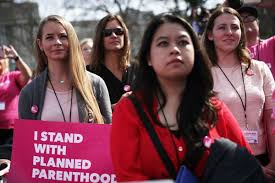
WASHINGTON, DC - MARCH 01: Activists participate in a rally to support Planned Parenthood March 1, 2017 on Capitol Hill in Washington, DC. Planned Parenthood held a 'We Are Planned Parenthood Capitol Takeover Day' to lobby legislators not to defund the organization.   Alex Wong/Getty Images

WASHINGTON, DC – MARCH 01: Activists participate in a rally to support Planned Parenthood March 1, 2017 on Capitol Hill in Washington, DC. Planned Parenthood held a ‘We Are Planned Parenthood Capitol Takeover Day’ to lobby legislators not to defund the organization. Alex Wong/Getty Images

I’ve always considered so-called “pro-life” anti-abortion zealots to be virulently pro-death. Not just the male stalkers who terrorize and police women with plastic bloody fetuses outside of abortion clinics (apparently with immunity), but the female anti-abortion architects who wear their complicity with white supremacist patriarchy proudly and unabashedly; rail against birth control and welfare; and demonize Black children warehoused in foster care, jails, and in the streets because of the neoliberal destruction of the social safety net.

In a 2014 discussion between feminist cultural critic bell hooks and trans activist and actress Laverne Cox, hooks argued that folks who are against reproductive health care can’t be considered feminists. In this era, when women’s right to self-determination is under siege on multiple levels, being for reproductive justice is nonnegotiable for a feminism based on economic justice.

The Trump administration’s potential restoration of the so-called domestic gag rule—on which the DHSS will only take public comments through July 31—is the latest act of state violence against women’s right to self-determination, which directly attacks poor women of color. Originally implemented by the Reagan administration in 1988 and rescinded by Clinton in 1993, it would not only prohibit health care providers who receive federal Title X funds from informing patients about abortion services, but it would also “require both physical and financial separation” of a clinic’s abortion-related services from its Title X services.

Instituted under the Nixon administration, Title X funds are specifically designated for family planning and preventive health care for low-income and uninsured patients. Title X provides funding for birth control, cancer and STD/STI screening, and pregnancy counseling services. As part of the Religious Right’s “death by a thousand cuts” strategy to overturn Roe v. Wade, the policy takes direct aim at Planned Parenthood, one of the biggest sources of health care for women in the United States. Planned Parenthood and other health care providers that receive Title X funding are frequently the only federally funded providers in rural and low-income communities. The gag rule is opposed by the American College of Physicians and the American College of Obstetricians and Gynecologists.

Restricting providers from giving women full and accurate information about their options for abortion subverts the very foundation of trust between patient and practitioner. Like the totalitarian prohibitions on speech and information in George Orwell’s 1984, the gag order would effectively condemn working-class women to incomplete and/or inaccurate information while middle-class women with private health coverage would continue to be empowered with the resources and information to control their bodies.

Women of color overwhelmingly rely on Title X-funded clinics for comprehensive care and counseling on family planning. According to California Latinas for Reproductive Justice, Latinas comprise 53 percent of the nearly one-million women who receive services at Title X clinics in California alone.

Nearly a million African-American women rely on Title X-funded health care. According to the Black Women’s Health Imperative, 21 percent of patients who rely on Title X for birth control and reproductive health care are Black. The gag rule—coupled with the wave of reproductive health care clinic closures that have devastated poor communities of color in the South and Midwest—are clear examples of how abortion is an economic justice issue, a vital pathway that affords women access to jobs, housing, education, and wealth equity when they’re in control of their bodies and destinies. Any entity that would aid and abet Trump’s criminal gag rule is not “pro-life” but an accessory to state violence.

Source: https://rewire.news/religion-dispatches/2018/07/27/trumps-abortion-gag-rule-is-state-violence/

“Today I want to … paint a picture of how much more unequal life would be for women in the United States of America should Judge Kavanaugh be confirmed.”

Sen. Patty Murray (D-WA) on Wednesday denounced the threat U.S. Supreme Court nominee Brett Kavanaugh could present to reproductive health-care access—including contraception—from the U.S. Senate floor.

Murray recounted the story of a college friend who became pregnant after surviving a sexual assault. ”She didn’t know where to get a safe abortion and she wasn’t wealthy so she knew she couldn’t afford it either. The botched procedure she ended up having left her unable to bear children,” said Murray, the ranking member of the Senate Health, Education, Labor, and Pensions (HELP) Committee. “I saw my friend hurt and frightened, alone and unable to get the care she needed because someone else’s beliefs mattered more under our laws than her health and her future.”

“That impacted me a lot, and has stayed with me to this day,” said Murray, who told the stories of other women who had abortions after the procedure became legal. “Roe and the rulings that have upheld made clear that what women across the country know at their core to be true, that reproductive freedom is essential to a woman’s ability to control her future, to plan her family, and to contribute to her community as she may choose to.”

“The progress women have made and the prospect of future progress today truly hangs in the balance,” said Murray. “Today I want to not only emphasize how real this threat is, but paint a picture of how much more unequal life would be for women in the United States of America should Judge Kavanaugh be confirmed and add a fifth vote on the Supreme Court for overturning Roe v. Wade and roll back reproductive rights women have had for over four decades.”

Murray noted that President Trump vowed on the campaign trail to appoint justices who would vote to overturn Roe v. Wade and that his administration has waged a war on reproductive rights. “Anyone who says President Trump isn’t applying an anti-choice litmus test in this nomination or thinks it’s unclear where President Trump’s allegiance lies when it comes to women’s health should take a look at what he’s said and done.”

Kavanaugh’s record on reproductive rights, as Murray explained, includes a ruling in which he blocked a pregnant 17-year old from accessing abortion care despite a Texas court granting the minor the right to have the procedure. In that case, Kavanaugh sided with Trump administration lawyers who argued that releasing the unaccompanied immigrant minor in the custody of the Office of Refugee Resettlement would “facilitate” access to a procedure to which the administration was opposed—legal abortion. Kavanaugh’s decision was ultimately reversed by the full panel of D.C. Circuit judges, but if it had been allowed to take effect it would have delayed the minor’s procedure past 20 weeks of pregnancy, outside the timeframe of legal abortion in Texas, where she was in custody.

The ruling was a precise undermining of abortion rights by Kavanaugh without going outside the bounds of abortion rights jurisprudence. Kavanaugh manipulated the law to get to a desired outcome—in this case, blocking access to legal abortion and directing a patient to continue a pregnancy against her will.

Murray called attention to a ruling made by Kavanaugh against the Affordable Care Act’s (ACA) birth control benefit, which allows women to receive contraception care and counseling without co-pays. The case involved Priests for Life, a nonprofit anti-choice advocacy organization that had sued the Obama administration, challenging its process for accommodating religious objections to the birth control benefit. The D.C. Circuit twice ruled against claims by Priests for Life that the accommodation process, which included filling out a form identifying the existence of an employer’s religious objection and with information related to their insurance carrier, was a substantial burden on their religious rights.

Kavanaugh dissented, arguing Priests for Life had made enough of a case that the accommodation was a burden. To support his conclusion, Kavanaugh turned to the concurring opinion of then-Tenth Circuit Court of Appeals Judge Neil Gorsuch in a contraception challenge, Hobby Lobby v. Burwell. In Hobby Lobby, the Supreme Court would ultimately adopt much of Gorsuch’s analysis and find that some for-profit businesses could raise religious objections to the ACA’s birth control benefit.

“Judge Gorsuch has explained well the complicity issue that arises in these circumstances: ‘All of us face the problem of complicity. All of us must answer for ourselves whether and to what degree we are willing to be involved in the wrongdoing of others. For some, religion provides an essential source of guidance both about what constitutes wrongful conduct and the degree to which those who assist others in committing wrongful conduct themselves bear moral culpability. [Plaintiffs] are among those who seek guidance from their faith on these questions. Understanding that is the key to understanding this case,’” Kavanaugh wrote before explaining why completing a form was a substantial burden on corporate religious rights.

It would take the November election, an executive order from Trump, and a few new rules from the U.S. Department of Health and Human Services purporting to absolve businesses of their obligation to comply with the birth control benefit to bring the law in line with the vision Kavanaugh articulated in that dissent.

“If an employer tries to deny his employee affordable birth control because he thinks he knows better, or if a politicized federal agency is detaining a young woman in hopes it can impose its beliefs on her, or if a woman does not want to carry her rapist’s child to term, our nation must affirm her autonomy because our laws are her last place of resort,” said Murray. “But under Judge Kavanaugh’s vision for our country based on his assessments of traditions and conscience, women wouldn’t have that last resort. Instead, a woman’s ability to get reproductive health care would overwhelmingly depend … on whether she could afford it, and therefore disproportionately on her race and zip code as well.”

“The only way to stop this is for people to take action,” Murray said, asking citizens to share stories of why reproductive rights matter and to register to vote. She pointed to a groundswell of grassroots support that helped block congressional Republicans from gutting the ACA, also known as Obamacare, and said she hoped a similar wave of support would rise against Kavanaugh’s nomination.

Source: https://rewire.news/article/2018/07/25/patty-murray-just-ripped-into-brett-kavanaugh-from-the-senate-floor/

Health groups say the move undermines a bipartisan public health program that has provided critical family planning services for decades.

A federal judge decided against reproductive rights groups that sought to block the Trump administration’s latest efforts to undermine the federal Title X family planning program, ruling in favor of prioritizing abstinence and natural family planning methods over contraception.

In May, three Planned Parenthood affiliates and the National Family Planning & Reproductive Health Association (NFPRHA) filed a lawsuit in a federal district court, challenging proposed changes to the country’s only program dedicated to family planning, known as Title X.

The proposed changes affect the quality of care for low-income people who depend on public funds for their family planning care. People of color make up half of Title X clients; roughly 21 percent identify as black or African American and 30 percent identify as Hispanic or Latinx.

The Department of Health and Human Services (HHS) — packed with anti-abortion sympathizers — released a funding announcement in February, where they told interested parties they’ll be giving Title X dollars to groups who cooperate with faith-based organizations and have a “meaningful emphasis” on “stable, healthy marriages” and avoid “sexual risk.” The 60-page announcement made no mention of contraception, but instead, emphasized infertility services. By contrast, the Obama-era announcement promoted comprehensive contraceptive services, pregnancy testing, and counseling, in addition to basic infertility services.

The changes prompted current family-planning grantees to sue HHS, saying officials violated the Administrative Procedure Act and Title X law because revisions were made in an “arbitrary and capricious” manner without public notice and rule making.

But Federal Judge Trevor McFadden — who was appointed by President Donald Trump in 2017 — ruled in favor of HHS, saying that “courts cannot… require formal rule-making for a change in agency procedure.”

It is unclear whether health groups will appeal the decision.

Credit: Guttmacher Institute
CREDIT: GUTTMACHER INSTITUTE

The grants total roughly $260 million, and Planned Parenthood receives $50 million to $60 million in annual funding. These dollars pay for the contraceptive care of 1.6 million of Planned Parenthood’s 3.8 million clients who need it.

The next Title X funding cycle starts in September and, given the new administration’s priorities, it’s possible this new program will open the door to abstinence-only providers and crisis pregnancy centers (CPCs) and shut out providers like Planned Parenthood.

ThinkProgress reached out to HHS for comment, but they did not immediately respond.

“This administration is attempting to undermine a public health program that was created with bipartisan support and that for decades has provided critical family planning services available to millions of people who could not otherwise afford it,” said Clare Coleman, president and CEO of NFPRHA. “We will continue to fight against attacks on family planning to ensure highly qualified health care providers can remain in the program and continue to deliver patient-centered contraceptive care for all who seek it.”

“Planned Parenthood will not stop fighting for our patients and the four million people who depend on this health care,” said Dawn Laguens, executive vice president of Planned Parenthood Federation of America, in a statement. “This program is meant to ensure that every person — regardless of where they live, how much money they make, their background, or whether or not they have health insurance — has access to basic, preventive reproductive health care, such as birth control, cancer screenings, STI testing and treatment, and regular check-ups.”

Credit: Kaiser Family Foundation
CREDIT: KAISER FAMILY FOUNDATION

This isn’t the Trump administration’s final footprint on the Title X program. Officials recently issued a new proposed rule that shores up the funding announcement, blocking federal funds to clinics that provide abortion services, like Planned Parenthood, and prevent groups from providing comprehensive counseling and referrals to abortion services. Title X dollars are already not permitted to pay for abortion services.

“These actions could shrink the network of providers that offer low-income women comprehensive family planning services using federal support,” according to a Kaiser Family Foundation brief on proposed changes to Title X. “In addition to the abortion-specific provisions, there are other notable changes in the proposed regulations that are administratively burdensome, weaken the clinical standards of family planning care offered by Title X providers, and redefine programmatic eligibility standards to promote Administration priorities.”

This proposed rule hasn’t been challenged by reproductive advocacy groups yet.

Source: https://thinkprogress.org/trump-appointed-judge-federal-family-planning-program-prioritize-abstinence-f0624cb629f8/

PHOTO: GETTY IMAGES

After President Donald Trump nominated Judge Brett Kavanaugh to serve on the Supreme Court, Senator Kirsten Gillibrand (D–N.Y.) made her opinion of his pick clear: No. Way.

At a rally against the conservative judge held outside the high court, Gillibrand chanted along with protesters, one hand raised in a fist, the other brandishing a sign reading, “We the People Reclaim the Constitution.”

“Everyone here knows what is at stake,” she said, backed by a cheering crowd. “What is at stake is women’s freedom—our freedom to make our own decisions…. Our voices, our stories, are what will make the difference in this nomination.”

Gillibrand, who’s generated buzz as a possible 2020 White House contender, suggests Kavanaugh’s nomination is a matter of life or death for women’s rights—and possibly women themselves. She’s convinced that, if Kavanaugh replaces retiring Justice Anthony Kennedy, he’ll work to undermine the protections of Roe v. Wade—potentially sending the clock spinning back to a time when American women secretly sought dangerous, illegal abortions.

In an interview with Glamour, Gillibrand lambasted Trump’s SCOTUS pick as “dangerous” and framed his nomination as the biggest women’s rights issue in her lifetime. Here are the highlights:

Glamour: So what’s the plan—how are you going to stop Brett Kavanaugh?

Kirsten Gillibrand: I’m going to speak out as loudly as I can, [and] I hope that every woman in America speaks out as well…. This is literally the biggest civil rights issue, certainly in my lifetime, for women. We are at the brink of not having reproductive freedom in this country, not having the ability to decide when and how many children we’re going to have. This nominee believes that a boss should decide whether I get access to birth control…. We should fight back with everything we have—because everything’s at stake.

Glamour: Kavanaugh has called late Supreme Court Justice William Rehnquist, who dissented in Roe v. Wade, one of his heroes, but he’s also said in past confirmation hearings that Roe is the law of the land.

KG: He said more than that. For example, he gave a speech to the American Enterprise Institute praising Rehnquist’s dissent in Roe. He’s saying, I see no reproductive freedom in the Constitution, under any amendment. Add to that [his] dissent in Garza [v. Hargan], where he said that allowing a woman to get access to abortion in a timely manner would create a new right to obtain immediate “abortion on demand.” So I think he is directly opposed to Roe, and it shows in his decisions and his speeches. Also, he said he believes employers have a right to deny their employees health insurance coverage for birth control—so he believes his values [and] his religious beliefs are more important than any other woman’s in America.

Glamour: Kavanaugh’s opponents say he would mean the end of Roev. Wade. But that is not something that happens overnight.

KG: It could happen overnight. I think [he’ll take] any opportunity to vote against Roe in any form, whether it’s narrowing it or overturning it. He literally believes he can rule outside of precedent. And I think we’ve seen that in a number of decisions. The most bizarre, bizarre quote [was when he said], “Under the Constitution, the president may decline to enforce a statute that regulates private individuals when the president deems the statute unconstitutional, even if a court has held or would hold the statute constitutional.” I think [Kavanaugh] is someone who will not follow precedent. And if he says he will, I think he’s lying.

Glamour: The author Barbara Ehrenreich recently tweeted, “I’ve heard enough about Kavanaugh. It’s time to revive the spirit of Jane, the Chicago women’s collective that performed safe, though illegal, abortions from 1969 to 1973. As vital services are taken away, we have to learn how to replace them.” She’s talking about a crisis specific to this nomination.

KG: I think she’s right. I think [Kavanaugh] intends to overturn Roe v. Wade, or limit it. I think he intends to make it a states’ rights issue, which if he does, then Southern states and various states in the country will deny women access to abortion services, may deny their access to birth control and reproductive freedom. I mean, it’s literally about whether a woman has civil rights in this country, basic civil rights to control her body and her reproductive rights…. [If] you’re going to force women to take babies to term even in the circumstances of rape, incest, or medical emergency, you are saying they have no right to the basic civil right of ‘life, liberty, and pursuit of happiness’…. The fear is [if abortion is not accessible], then they will be left to their own actions. And it’s not safe for women. Their lives will be at risk…. I hope that the women of America listen to what he said and how he’s ruled in the past, and understand that if he is successfully sworn in as the next Supreme Court justice, that the likelihood of women’s reproductive freedom being preserved is low. It is a huge risk that those basic rights and privileges will be denied for American women—particularly American poor women.

Glamour: You say you want the strategy to stop Kavanaugh from being confirmed to be about 50 states and 100 senators. But a few female senators could be end up key to the outcome on Kavanaugh, including pro-choice Republicans Susan Collins of Maine and Lisa Murkowski in Alaska and red-state Democrat Heidi Heitkamp of North Dakota.

KG: I think we have to talk to every senator. You never know who will be the final person to stand up and do the right thing. And so if you’re talking to allRepublicans and all Democrats, your likelihood of finding enough to block him is greater.

There might be people who are concerned that he puts corporate interests over human interests, that he believes corporate free speech rights are more important than human free speech rights, that he has undermined voting rights, that he has undermined LGBTQ rights. All of these things are of concern, so it depends on which issues motivate which senators.

Glamour: Conservatives and anti-abortion advocates are enthusiastically pushing for Kavanaugh as Democrats fight him. How do convince politically moderate women to side with you?

KG: If they’re pro-life, I would talk to them about some of the other concerns they have. He has a very conservative, severe record on lots of things, like opposing net neutrality, supporting corporations over people, opposing the [Consumer Financial Protection Board], opposing criminal investigations into the President…. And frankly the issue of health care should appeal to everyone.

Glamour: When Kavanaugh was nominated, he talked about his mom, his wife, his daughters. He’s clearly aware that it’s important to be perceived as an ally of women.

KG: Well, I hope that voters and Americans realize that his voting record does not show that he values women.

Glamour: But when you become president, this won’t be a problem?

KG: [Laughs.]

Glamour: Moving on—are you concerned with people saying, “Maybe you don’t agree with Kavanaugh’s rulings, but that doesn’t mean he’s not qualified for the Supreme Court”?

KG: I believe his record is disqualifying.

Glamour: It’s Trump’s prerogative to nominate justices. What do you say to someone who makes the political argument, “If you want to pick the Supreme Court justices, win the presidency. This is what the people voted for.”

KG: My job is to represent New Yorkers and my values and speak out loudly against nominees who oppose everything we hold dear in our state. That’s my Constitutional responsibility…. I’m going to keep elevating [Kavanaugh’s] record [so] people can be informed and know who this man is and what he stands for and how contrary to our values his past statements and decisions are so that they can call their senators and be heard on this issue. I think it is a moment for activism, a moment for speaking out, a moment for outrage, and I hope that people understand what’s at stake and fight back.

Glamour: This could be a huge issue in the midterms. Historically, a lot of Americans aren’t excited to vote in nonpresidential years. Will this make a difference?

KG: I do. [This year] people are turning out. They are voting. You have new candidates running; you have more women running than in the history of America…. Between voter turnout, between grassroots activism, between this desire to be heard and to make a difference, I think the midterms will be extraordinarily impactful—and I think we have an opportunity to flip the House and the Senate.

Glamour: When you look at Brett Kavanaugh in comparison to other conservative justices already seated, where do you think he measures up? Do you think he’d be the most right-wing guy, way beyond Trump’s first SCOTUS pick, Justice Neil Gorsuch, or…

KG: I do. I think he’s more conservative than Gorsuch—and more conservative than any justice, and because he has such an extraordinary résumé in terms of education and experience…. I think he is more dangerous than any previous justice nominee because of his education and his experience and because of the track record he’s laid out about what he intends to do. I think he is going to be very destructive to basic civil rights and civil liberties for millions of Americans.

Glamour: Just to clarify, when you say “more dangerous than any previous justice nominee,” do you mean nominated by Trump or ever in the history of the United States?

KG: Ever. I just know from the time I’ve been in the Senate, he certainly is the most conservative nominee that I have ever seen, and he would tip the balance of the Supreme Court even more against women’s reproductive rights, workers’ rights, civil rights. He would be the deciding vote on so many critical issues that could shift the court solidly conservative for an entire generation, such as overturning Roe v. Wade—which is exactly what the President said he wanted to do.

Source: https://www.glamour.com/story/kirsten-gillibrand-womens-lives-risk-illegal-abortions-brett-kavanaugh-supreme-court

The amendment, which opens up the party to people holding anti-choice views, was introduced by a former board member of Democrats for Life of America.

A former state lawmaker with ties to an anti-abortion organization failed to insert “personhood” rhetoric into the Missouri Democratic Party platform—but she succeeded in getting the party to welcome candidates who oppose abortion rights.

Missouri Democrats on June 30 approved an amendment to the party’s state platform almost identical to language posted on the website of anti-choice group Democrats for Life of America (DFLA) as “proposed platform language to [sic] unites Democrats around historic Democratic principles.”

The amendment, introduced by former state Rep. Joan Barry, states: “We respect the conscience of each Missourian and recognize that members of our party have deeply held and sometimes differing positions on issues of personal conscience, such as abortion. We recognize the diversity of views as a source of strength, and welcome into our ranks all Missourians who may hold differing positions on this issue.”

“We are losing votes because people think you can’t possibly be a Democrat and be pro-life,” Barry, who has worked as an OB/GYN nurse, told the Kansas City Star last week. “We are tired of being second-class citizens in our party. We just want to know we are accepted in the party under our broad umbrella.”

Kristen Day, executive director of DFLA, confirmed to Rewire.News Wednesday that Barry had served on the organization’s board but said that “[Barry] brought the language herself” to Missouri Democrats. Sources told Rewire.News that Barry did not disclose her past connection to DFLA during discussion of the amendment.

Day said the language on DFLA’s website was “historically significant” because it echoes since-removed language from the 1996 national Democratic platform. She added that Barry “did a great job of just inclusion for those of us who are pro-life and want to be active participants in the party.”

While in the Missouri House of Representatives, Barry, who did not return requests for comment, sponsored and voted for abortion restrictions. In September 1996, for example, she voted to override then-governor Mel Carnahan’s (D) veto of a bill placing restrictions on abortion clinics, including a requirement for annual clinic inspections, which reproductive rights advocates said was intended to shut down abortion clinics, as the St. Louis Post-Dispatch reported at the time.

In 1999 Barry sponsored a “partial-birth abortion” ban, and in 2000 she tried to amend legislation so that it would block the state’s share of a national tobacco settlement from being used for abortion services. The following year, Barry introduced a so-called informed consent bill requiring a 24-hour waiting period and mandating that doctors inform patients of risks associated with abortion. As the Guttmacher Institute has noted, such laws often force doctors to provide patients with “information that is irrelevant or misleading.” That year Barry co-sponsored another “informed consent” bill to require a waiting period for patients seeking a medication abortion.

An archived version of Barry’s 2004 campaign website from her failed run for U.S. Congress show an endorsement from the anti-choice Susan B. Anthony List Candidate Fund.

Megan-Ellyia Green, a St. Louis alderwoman who served as vice chair of the Missouri Democratic Party’s platform committee, explained in a June 30 statement that reproductive rights had been a “contentious part of the platform creation process.” She said the committee approved a platform stating “that we support ‘a woman’s right to chose, and [to] be free from government intrusion in medical decisions, including a decision to carry a pregnancy to term, and oppose any efforts to limit access to reproductive healthcare.’”

“No one was asking any democrat [sic] to choose to have an abortion. Rather we were asking our democratic candidates to not support making that decision for other people,” Green said in her statement. “Although support for this [phrase] was not unanimous on the committee, the majority approved it and felt that it was a way to support what we heard on the listening tours, be conscious that not all people will personally chose to have an abortion, and that the continued position of Democrats must be that we support women in making the personal choices that they feel are best for them regardless of what we may feel personally,” she wrote.

During the platform committee’s deliberations, Barry attempted to include anti-choice language regarding “life from conception until natural death,” which ultimately did not make it into the platform. Such phrasing uses so-called personhood rhetoric that, if implemented into law, could criminalize abortion and some forms of contraception.

Pamela Merritt, a longtime reproductive justice activist in Missouri and a member of the state party’s platform committee, said in an interview that she “immediately saw it as personhood language” and that she “objected to it along with several other members of the committee, and that language did not make it into the final draft that was voted on.”

Jalen Anderson, a Democratic state committee member and chair of the platform committee, said that while Barry’s language regarding “life from conception to natural death” did not make it into the platform, ultimately a “middle ground” was found that he considered acceptable.

But shortly before the platform was scheduled to be voted on by the Democratic state committee, Barry introduced her anti-choice amendment, which was then voted into the platform in a move that opens up the party to people holding anti-choice views.

Criticism of the party for the new language is misplaced, Anderson said, when “it should be focused on those that created the language and not the party itself. Because I know that this party is not at all wanting to go back to the day of putting women as second-class citizens when it comes to health care.”

Anderson plans to push for Barry’s language to be removed from the platform. “I think it is of great urgency that the state committee would reconvene and remove the amendment that Joan and others agreed to,” he said. “And I don’t believe that the language that was added reaffirms our morals. It weakened us, it makes us look foolish, and I don’t believe it has any place on the platform. So I would intend to do everything that I can as a state committee person and as the platform chair to have the state committee remove the language that was added.”

Anderson said removing the language would take 15 members of the state committee writing to Missouri Democratic Party Chair Stephen Webber to call for an emergency meeting.

Merritt said she would support action to remove the language. “The sooner the better,” she said. “It is insulting to Missourians who are passionate about reproductive health care and look to the Missouri Democratic Party to represent their interests politically … to have national Democrats fundraising off of this incredible historic threat to [the U.S. Supreme Court] and have the state party essentially be holding language that celebrates the threat to Roe and also would celebrate its ultimate destruction.”

When asked whether DFLA intended to seek the inclusion of similar language in other states’ Democratic platforms, Day told Rewire.News the organization would work “once again on the national level” to get it into the platform. “I know some people would rather be in the minority than have pro-life Democrats back in the party, but we have to look at the big picture of what are our goals,” said Day. “Yes, we would like to see abortion eliminated, but we also think there’s more we can do to support women to help them with the opportunity to parent,” she said, pointing to the organization’s advocacy for paid family leave.

Source: https://rewire.news/article/2018/07/20/anti-choice-ex-lawmaker-behind-missouri-democrats-abortion-platform/