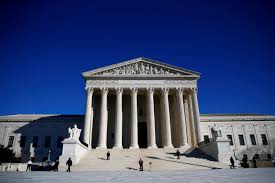
WASHINGTON — The Supreme Court issued a narrow decision this morning vacating an appeals court ruling that allowed a young immigrant woman, known as Jane Doe, to obtain an abortion over the objections of the Trump administration. The decision does not affect the ongoing-class action lawsuit challenging the government’s policy barring young immigrant women in government custody from getting abortions.
The case will now go back to the lower courts where the American Civil Liberties Union has already obtained a preliminary injunction blocking the administration’s policy. The Supreme Court’s decision considered only whether the trial court’s decision requiring the government to provide abortion access to Jane Doe had become moot, given that she had the abortion. It did not reverse or comment on the appeals court’s reasoning and did not address the underlying claims regarding access to abortion.
“Today’s decision doesn’t affect our ongoing efforts to ensure that all Janes can get an abortion if they need one. The district court has blocked the Trump administration’s cruel policy of obstructing unaccompanied immigrant minors’ access to abortion while the case continues, and we won’t stop until we strike it down once and for all,” said Brigitte Amiri, deputy director of the ACLU Reproductive Freedom Project.
After the administration barred Doe, an unaccompanied immigrant minor in federal custody at a government-funded shelter, from obtaining an abortion for a month, a federal court found that the government’s interference with her decision likely violated her constitutional rights and ordered the government to step aside. The U.S. Court of Appeals for the D.C. Circuit rejected the government’s request to put a hold on that order.
The Trump administration could have taken an immediate appeal to the Supreme Court, but failed to do so, and Doe had her abortion the next day. Nine days later, under pressure from abortion opponents, the Department of Justice asked the Supreme Court to vacate the appeals court’s ruling.
Today’s ruling vacates the appeals court’s decision, but does not affect the trial’s court decision certifying a class of pregnant immigrant minors and preliminarily blocking the Trump administration’s policy.
“In the time since we succeeded in stopping the Trump administration from blocking Jane Doe’s abortion, at least three more young women have come forward who were being barred from getting abortions,” Amiri said. “To the Janes out there, we’ll keep fighting for you. To the government, we’ll continue to see you in court.”
The Department of Justice has attempted to blame the ACLU for the government’s failure to file an appeal with the Supreme Court in time to block Doe’s abortion, arguing that the ACLU acted unethically by not informing the Department of Justice about the precise timing of the abortion. But legal experts have explained that had the ACLU done so, it would have been contrary to their client’s interests and their ethical obligations, and they have described the administration’s request as an alarming attempt to intimidate civil rights lawyers from doing their jobs. The Supreme Court declined the government’s request to sanction the ACLU lawyers.
“We are gratified that the court rejected this extraordinary request,” said David Cole, national legal director of the ACLU. “In protecting a woman’s access to abortion, the lower courts did what they are supposed to do. And the ACLU did what lawyers are supposed to do, namely, pursue the best interests of our clients.”
Doe’s treatment is part of a new Trump administration policy to block access to abortion for young immigrants in detention. Since Doe was allowed to obtain her abortion in October, the three women who came forward saying they were being blocked from getting abortions have become plaintiffs in the ACLU’s lawsuit challenging the policy. On March 30, the district court ruled that the case could proceed as a class action, and it blocked the policy while the case continues. The government has pursued an appeal of that order.
Carter Phillips of Sidley Austin LLP was lead counsel on the case in the Supreme Court. ACLU lawyers on the case include Amiri, David Cole, Meagan Burrows, Jennifer Dalven, Lindsey Kaley, and Daniel Mach; Arthur Spitzer, Scott Michelman, Shana Knizhnik of the ACLU of the District of Columbia; Melissa Goodman of the ACLU of Southern California; Elizabeth Gill of the ACLU of Northern California; and Mishan Wroe of Riley Safer Holmes & Cancila LLP.
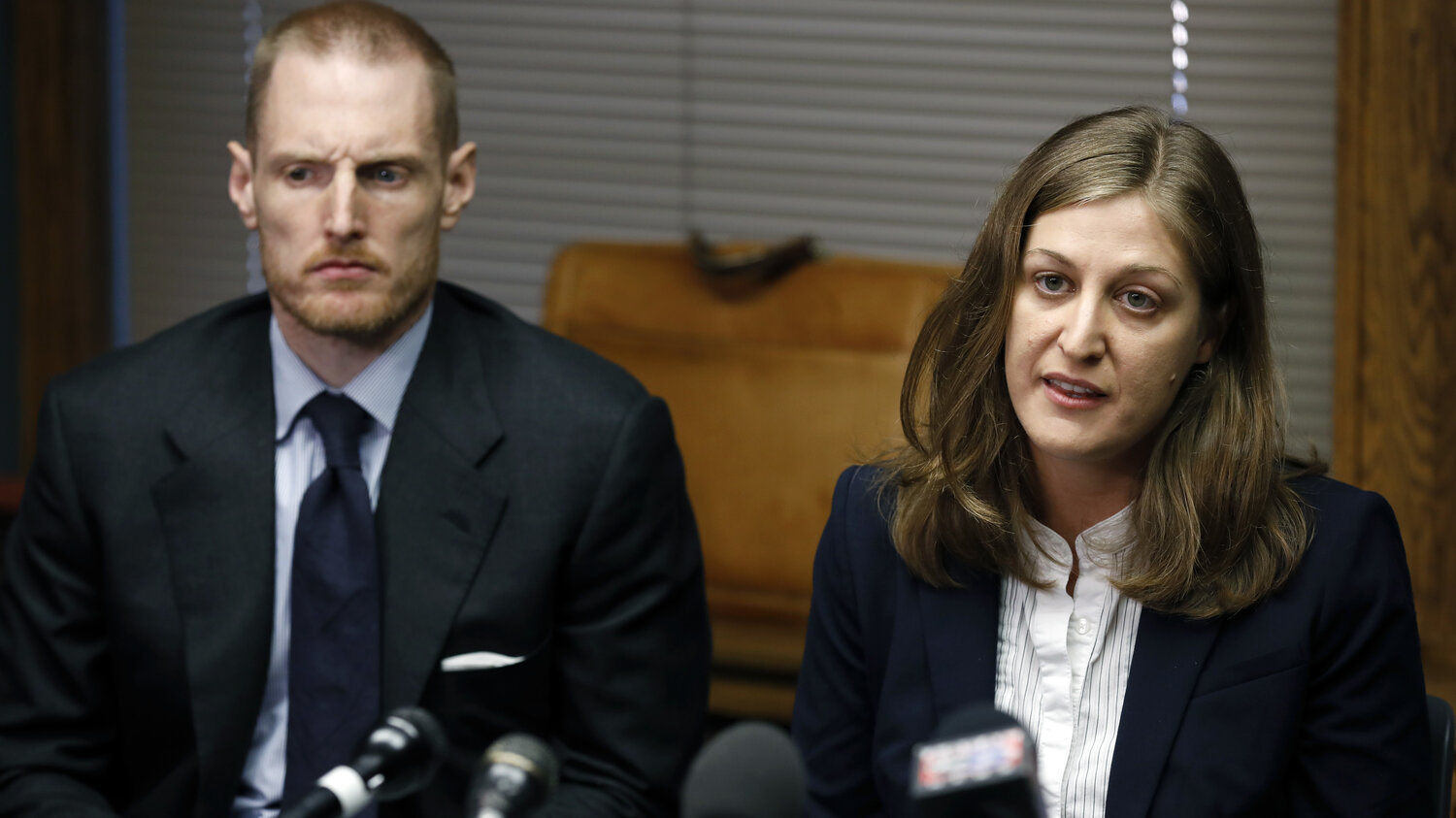
ACLU of Iowa legal director Rita Bettis, shown with Emma Goldman Clinic attorney Sam Jones, said a judge’s decision to temporarily block Iowa’s newly passed abortion law removes uncertainty as a legal challenge to the law proceeds.
Charlie Neibergall/AP
A judge in Iowa has placed a temporary injunction on the state’s “heartbeat law,” one of the most restrictive abortion measures in the United States. The controversial new law bans nearly all abortions once a fetal heartbeat can be detected, at about six weeks of pregnancy, and was slated to take effect July 1.
The law quickly drew a legal challenge from Planned Parenthood and the ACLU of Iowa, which said the measure would make abortions illegal in cases in which women might not have realized they’re pregnant.
“Not only is this law blatantly unconstitutional — it’s extremely harmful to women,” Planned Parenthood said of the lawsuit filed on behalf of Planned Parenthood of the Heartland and the Emma Goldman Clinic in Iowa City.
Katarina Sostaric of Iowa Public Radio reports that “the lawyers for the state agreed to the injunction” to postpone the law while the suit moves forward.
Sostaric adds via Twitter, “Court proceedings to decide the fate of the fetal heartbeat abortion law will take months, if not longer.”
Iowa Gov. Kim Reynolds signed the legislation into law in early May, banning abortions once a fetal heartbeat has been detected. The law provides some exceptions — as in cases of rape or incest, fetal abnormalities or to save the mother’s life.
When she signed the bill, Reynolds issued a statement that reads in part, “I believe that all innocent life is precious and sacred, and as governor, I pledged to do everything in my power to protect it. That is what I am doing today.”
ACLU of Iowa’s legal director, Rita Bettis, lauded the judge’s decision putting the law on hold.
“Women in Iowa don’t have to live with the burden of that uncertainty of knowing whether or not they’ll have abortion rights come July 1,” Bettis said, according to Sostaric.
“In terms of next steps,” Bettis added in a statement to NPR, “the attorneys defending this ban will have to file an answer to our petition, which is their opportunity to respond to our allegations.”
The 15-week abortion ban will only go into effect if a federal court upholds a similar law in Mississippi.
SB 181, sponsored by Democratic state Sen. John Milkovich, prohibits a physician from performing an abortion after 15 weeks’ gestation. Joe Raedle/Getty Images
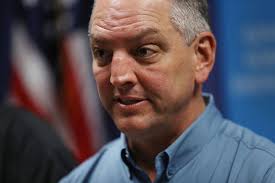
Louisiana’s Democratic Gov. John Bel Edwards on Wednesday signed a bill establishing one of the most extreme abortion bans in the United States, representing the latest victory for anti-choice activists’ coordinated effort to “eradicate Roe.”
SB 181, sponsored by state Sen. John Milkovich (D-Shreveport), prohibits a physician from performing an abortion after 15 weeks’ gestation, except in the case of a medical emergency. While a patient seeking abortion care could not be criminally charged under the law, a doctor who performs an abortion could face up to two years in prison and a $1,000 fine.
While Milkovich praised the governor’s decision to sign the bill, it will only take effect if the U.S. Court of Appeals for the Fifth Circuit upholds a similar Republican-backed law in Mississippi.
“The Mississippi law is blatantly unconstitutional,” said Jessica Mason Pieklo, vice president of law and the courts for Rewire.News. “It should be an easy call for the Fifth Circuit to continue to block the measure which would also keep Louisiana’s similarly unconstitutional abortion ban from taking effect.”
Amy Irvin, executive director of the New Orleans Abortion Fund, said in a statement that the Louisiana anti-choice law “blatantly ignores” the longstanding U.S. Supreme Court precedent that guarantees the right to decide whether to end a pregnancy.
“Women are moral agents, and we call on Louisiana legislators to respect a woman’s right to follow her own conscience when making moral decisions,” Irvin said.
“As an ob/gyn in Louisiana, I believe it’s my duty to meet my patients’ needs without judgment,” Dr. Valerie Williams, a board member of Physicians for Reproductive Health, said in a statement. “Not only do restrictive laws make it harder for me to do my job, but this abortion ban is also an assault on patients in my state and would have drastic effects on access to abortion care,” Williams said.
In recent years, lawmakers in several states have passed increasingly severeabortion bans as a “vehicle” to attack constitutional protections for abortion care.
Williams said these types of anti-choice laws “endanger the health of women.”
“For my patients’ sake, I urge the Legislature and Governor Edwards to turn their attention to policies that will improve the health and lives of the people of Louisiana, rather than enacting medically unsound restrictions on abortion,” Williams said.
The Government is to make it illegal to harass patients or protest within a certain distance outside premises providing abortion services.
Sources say Health Minister Simon Harris wants to create exclusion zones, or ‘buffer zones’, to protect patients from abusive behaviour or offensive images.
The proviso will form part of legislation currently being drawn up to introduce abortion in to the State.
The minister is said to be conscious of balancing any such prohibitions with the well- established right to freedom of expression, of which the right to protest is key.
However, during the referendum, the use of graphic imagery, and the over-bearing presence of anti-abortion campaigners outside maternity hospitals and schools caused considerable upset to patients and parents.
Gardaí were called to the Rotunda Maternity Hospital in Dublin at one point when doctors became concerned about the psychological impact such activity was having on women and their families.
Billboards were placed in such a way that the images were unavoidable, and gardaí said they had no authority to order the protesters to leave.
Meanwhile, the Government is also considering subsidising the cost of the GP service for abortion to ensure no woman is disadvantaged because of her economic circumstances.
“Our priority is that no woman is treated differently because of her economic circumstances – part of the reason we legalised abortion is to ensure women no longer turned to the web for abortion pills,” a source told the Irish Independent.
Some GPs have said the cost of an appointment for abortion services would be in excess of the basic fee as it would be more comprehensive and take longer. In addition, women will have to pay for at least two appointments because of the 72-hour mandatory period of reflection. The cost of the process could reach €300, pricing some women out of the service.
But sources also say that while the Department of Health is only beginning negotiations with GPs about how to provide the service, Mr Harris is said to be eager to ensure access to abortion forms part of State-provided healthcare for women, as it is in most EU member states such as Spain, Portugal and Germany. It may even come under the Maternity and Infant Care Scheme, which provides State-supported family doctor and hospital care.
“We want women to have a full range of options open to them, and while some will opt to have a termination after the 72-hour pause period, others will not,” said the source.
Another element of the Government’s thinking is to prevent the creation of an abortion-provider industry by keeping the service strictly within the state system.
“In the UK, private clinics like Marie Stopes are charging €400 for an abortion pill – the department wants to keep that industry out. This is not the UK system, which is much more dated,” said the source.
The Health Products Regulatory Authority (HPRA) is now open to receive applications from drug companies for the license to provide Mifepristone and Misoprostol, the two tablets taken in a medical abortion. This is likely to happen through mutual recognition procedure by a company operating in another EU state.
And because Planned Parenthood couldn’t find any doctors willing to contract with its two Arkansas clinics, which only perform medication abortions, the organization now has to cease offering the procedure in the state.
“Arkansas is now shamefully responsible for being the first state to ban medication abortion. This dangerous law immediately ends access to safe, legal abortion at all but one health center in the state,” Dawn Laguens, Planned Parenthood’s executive vice president, said in a statement. “If that’s not an undue burden, what is?”
While the text of the Arkansas measure doesn’t explicitly outlaw medication abortions, enacting the law constitutes an effective ban on the procedure. Only one abortion clinic, in Little Rock, can still able to offer abortions.
A patient undergoing a medication abortion takes two pills several hours apart. The procedure is overwhelmingly safe: A landmark study on the safety of American abortion from National Academies of Sciences, Engineering, and Medicine found earlier this year that complications arose after medication abortion in “no more than a fraction of a percent of patients.”
In 2015, however, Arkansas lawmakers passed a measure mandating that doctors who hand out abortion-inducing pills maintain a contract with a physician who has hospital admitting privileges, to handle all potential complications. Planned Parenthood, which operates clinics in Fayetteville and Little Rock that offer only medication abortions, reached out to every OB-GYN in the state, according to court records. None were willing to contract with the organization.
Planned Parenthood started notifying patients Tuesday morning that they couldn’t continue with their planned procedures, even if they wanted to or medically needed to.
A federal district court initially blocked Arkansas’ law from going into effect after the judge found the provisions would likely pose an unconstitutional “undue burden” to women in the state who wanted abortions. A three-judge panel for the United States Court of Appeals for the Eighth Circuit then vacated that decision, after the judges found that “the district court failed to make factual findings estimating the number of women burdened by the statute.”
In its appeal to the Supreme Court, Planned Parenthood contended that the court didn’t need that information to issue a preliminary injunction against the law. After all, Supreme Court hadn’t asked for such data in past abortion cases like Whole Woman’s Health v. Hellerstedt — a case in which the justices struck down a Texas abortion restriction similar to Arkansas’.
“This [law] will particularly affect women who strongly prefer medication abortion, including those who find it traumatic to have instruments placed in their vaginas because they are victims of rape, incest, or domestic violence, as well as women for whom medication abortion is medically indicated and safer than surgical abortion,” Planned Parenthood lawyers wrote in their briefs to the Supreme Court.
As usual, the justices didn’t explain why they declined to review the case.
“As Attorney General, I have fully defended this law at every turn and applaud the Supreme Court’s decision against Planned Parenthood today,” Arkansas’ Republican Attorney General Leslie Rutledge said in a statement to the Associated Press. “Protecting the health and well-being of women and the unborn will always be a priority. We are a pro-life state and always will be as long as I am attorney general.”
Planned Parenthood, however, is now scrambling to ask the district court for “emergency relief” from the law.
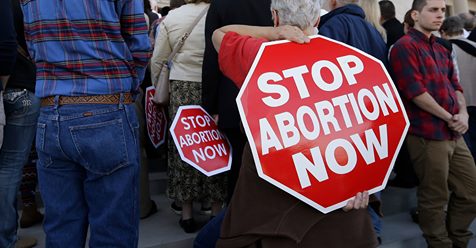
Cover image: A woman carries an anti-abortion sign on her back during a rally at the Arkansas state Capitol in Little Rock, Ark., Sunday, Jan. 18, 2015. (AP Photo/Danny Johnston)
By rejecting the legal challenge, the justices allowed a lower court order to lapse that had blocked enforcement of the law, which was passed in 2015. As a result, the restriction will soon take effect.
It applies to medication abortions, which do not require surgery and are available only in the early stages of pregnancy. Patients are given a pill in a doctor’s office and take a second one at home a few days later.
Arkansas Attorney General Leslie Rutledge said in a statement that as the state’s top law enforcement official, “I have fully defended this law at every turn and applaud the Supreme Court’s decision against Planned Parenthood today.”
“Protecting the health and well-being of women and the unborn will always be a priority. We are a pro-life state and always will be as long as I am attorney general,” Rutledge said.
Planned Parenthood sued to block the law, calling it medically unnecessary. In the rare case when complications arise, the group said, patients are at home and typically seek treatment at a hospital emergency room. And it said because its clinics could not find any doctors willing to accept a contract with a Planned Parenthood-affiliated physician, clinics in Little Rock and Fayetteville would stop offering abortion services if the law went into effect.
“Arkansas is now shamefully responsible for being the first state to ban medication abortion. This dangerous law also immediately ends access to safe, legal abortion at all but one health center in the state,” Dawn Laguens, Planned Parenthood’s executive vice president, said in a statement. “If that’s not an undue burden, what is? This law cannot and must not stand. We will not stop fighting for every person’s right to access safe, legal abortion.”
The state countered that the procedure is not common, with just 14 percent of Arkansas abortion patients opting for a medication abortion, and that those who seek it are more likely to experience complications.
Arkansas also called the law “a carefully targeted response to medication abortion’s unique risks profile” and said it would impose a system similar to one adopted earlier by Texas which required abortion providers to have a working arrangement with a doctor who had hospital admitting privileges.
A federal judge in Little Rock blocked enforcement of the law, finding it similar to a Texas law declared unconstitutional by the Supreme Court two years ago. It required doctors providing abortion services to have admitting privileges at nearby hospitals.
But the Eighth Circuit Court of Appeals ordered the lower court’s stay to be lifted and sent the case back to the trial judge for further proceedings to find an estimate of how many women would be burdened by the contract physician requirement. The appeals court allowed the stay of enforcement to remain in effect until the Supreme Court decided whether to hear the case.
As legislators around the nation mount challenges to curtail the landmark 1973 Roe v. Wade decision legalizing abortion in the U.S., advocates here are pushing the state to stand up for women’s rights and choice.
The measure, sponsored by state Acting Senate President Harriette L. Chandler (D-Worcester), would repeal three antiquated laws previously overturned by state and federal courts so they couldn’t be used in practice WCVB Channel 5 Boston
Religious imposition laws are designed to shield private individuals and businesses from complying with nondiscrimination laws based on a religious objection to that service.
Four months after the Massachusetts Senate unanimously agreed to repeal “archaic” laws targeting women’s access to health care, the NASTY Women Act is still waiting to be called for a vote in the state house.
An Act Negating Archaic Statutes Targeting Young Women (S 2260) is also known as the “NASTY Women Act” in reference to Republican President Donald Trump taunting Democrat Hillary Clinton in the 2016 presidential election cycle. The measure, sponsored by state Acting Senate President Harriette L. Chandler (D-Worcester), would repeal three antiquated laws previously overturned by state and federal courts so they couldn’t be used in practice: a 19th-century ban on all abortions, a state requirement that all non-emergent abortions after the 12th week of pregnancy be performed in a hospital, and a ban on contraception use for unmarried women.
“We are living in a time when leaders at the highest levels of power in our country are demeaning women and attempting to roll back their rights,” Chandler said in a statement after the bill passed in the state Senate on Jan. 25. “Massachusetts must affirm its commitment to protecting women’s rights to essential health care and expunge these dangerous laws.”
As legislators around the nation mount challenges to curtail the landmark 1973 Roe v. Wade decision legalizing abortion in the U.S., advocates here are pushing the state to stand up forwomen’s rights and choice.
“We don’t believe Massachusetts can truly lead the nation as a beacon of reproductive freedom unless it gets archaic statues off the books that could be used to limit access to abortion care if Roe fell,” Rebecca Hart Holder, executive director of NARAL Pro-Choice Massachusetts, told Rewire.News on Wednesday.
S 2260 is currently under review in the house Ways and Means Committee, chair and state Rep. Jeffrey Sánchez (D-Boston) told Rewire.News in an emailed statement. If passed there, it must then be called up for a vote on the state house floor.
Sanchez did not comment on the current legislation but noted that the state house has been proactive on other legislation related to women’s rights and reproductive health.
Holder said the time is right to continue the momentum by passing the NASTY Women Act in 2018. “We think there is no better time to send a statement about the value of women to the Commonwealth of Massachusetts than by taking this antiquated law off the books,” she said
Advocates warn it will not be an easy vote as several Democrats are reluctant to discuss abortion issues, much like inneighboring Rhode Island, where some Democratic leaders remain staunchly anti-abortion.
Rhode Island House Speaker Nicholas Mattiello (D-Cranston) recently said the push to codify abortion rights into state law in the Ocean State, is “irrelevant.”
But already the Guttmacher Institute has counted 347 measures to restrict access to either abortion or contraception in 37 states during the first quarter of 2018, and ten abortion restrictions have been adopted in five states this year.
Thomas Koch, the mayor of Quincy, Massachusetts, and a staunch Catholic, recently left the Democratic party over the abortion issue, the Patriot Ledger reported.
As Trump continues to wage war on reproductive rights, advocates warn that even states considered more liberal like Massachusetts have to be vigilant about laws that could be deployed to outlaw abortion if Roe v. Wade is overturned.
“We all know that states across the country have passed more than 1,000 laws restricting access to abortion since 1973. These restrictions in states like Texas and Iowa often capture the media’s attention, but what often goes unnoticed are the antiquated, pre-Roe laws that even many of our ‘blue’ states still have on the books that criminalize abortion, as is the case in Massachusetts and New York. In both states, these laws would be deployed to push abortion out of reach if Roe v. Wade gets eroded. Indeed, these laws are already being used to criminalize women who self-manage their abortions,” Andrea Miller, president of the National Institute for Reproductive Health said to Rewire.News in an emailed statement.
“In both Massachusetts and New York, there are bills pending in the legislatures to change these antiquated laws. Those bills should be at the top of legislators’ list of priorities,” added Miller.
Ireland voted in a landslide to support abortion rights. But making abortion care available will take much more.
“It is not enough for it to be legal. It also has to be accessible, and really the only way you can do that is through a public health service. That is going to be the next battle for socialist campaigners, pro-choice campaigners,” said Dublin City Councillor Éilis Ryan. Charles McQuillan / Getty Images
Abortion is among the safest medical procedures in the United States. Yet, myths about its safety abound. False Witnesses reveals the individuals behind these lies.
To Isolde Carmody, Ireland’s overwhelming vote to repeal the Eighth Amendment to the Constitution was a vote to continue down the road that her great-grand-uncle, Joseph Plunkett, and his contemporaries fought for in 1916, in the first steps toward an independent Irish Republic.
“Joe was definitely a feminist, a revolutionary. He deeply believed in equality and in social justice, and that was why he was involved in the revolution in 1916,” Carmody told Rewire.News. Her great-grandmother and grandmother fought for women’s health care and access to information on abortion rights. She continued that tradition campaigning for “yes” in Leitrim.
Irish voters turned out on Friday to repeal the Eighth Amendment, with around 68 percent voting to decriminalize abortion care, according to exit polling. Final results were not available at the time of publication.
Carmody was infuriated to see Plunkett’s image and the reference to the 1916 proclamation on an anti-choice sign urging a “No” vote in the referendum on Ireland’s total abortion ban. “It is just a complete misrepresentation of what they were all about and the values on which this state was founded,” she said. “We released a statement saying that if Joe were still around, he would definitely be voting to repeal the Eighth Amendment. He would have voted against it being introduced in the first place.”
There was plenty of noise for a “yes” vote, even in the conservative part of Ireland where she lived. And the results proved that it was Carmody’s view of Ireland’s past and future that held.
A busload of canvassers from Dublin went to Roscommon and Leitrim the day before the vote to do some last-minute visibility for the “yes” campaign. In Carrick-on-Shannon, they stretched out along the Cumann na mBan bridge, named for the revolutionary women’s organization that fought in 1916 in all garrisons but one—the one led by Eamon de Valera, a former president of Ireland, who oversaw the writing of Ireland’s Constitution. The symbolism was important to the organizers, who like Carmody believed in the unfulfilled promise of that rebellion, in a different kind of Ireland that saw women’s role in the struggle for justice and equality as essential and equal.
“I am really glad I finished my last day of canvassing outside of Dublin, meeting new people. Sometimes you are in a bit of a bubble and you forget that there is a whole country of people involved in this, local campaigns big and small,” said Sen. Lynn Ruane, an independent member of the upper house of the Irish parliament.
Ruane was a member of the parliament’s committee on the Eighth Amendment, which recommended repeal as well as legalizing abortion up to 12 weeks into pregnancy. “I was always optimistic, but I am feeling so much more positive. To be able to go from sitting inside a committee room to making the recommendations to coming out and meeting people all over Ireland that want to support the recommendations, it really is a privilege and an honor.”
Even before the results were announced, she said, “I think Ireland has changed.”
Ireland’s Future After the Eighth Amendment
What happens now? Nothing will change immediately, according to Wendy Lyon, a lawyer and pro-choice organizer based in Ireland and born in the United States, because the anti-choice law is still on the books. “We are guaranteed that there will be some attempt to challenge it,” she said. “They have done this with pretty much any referendum that has advanced a liberal agenda. They have failed every time, but they will try it again.”
Government officials have said they want to change legislation by the end of the year.
“We obviously have a huge body of work to do in relation to the legislation. You will have people taking lots of amendments and trying to hold up the legislation,” Ruane said. “I think we will get it through the houses eventually, but we definitely will have a fight and there will be probably lots of filibustering and we probably will need to just stay strong and get through together. Whoever is in agreement needs to work together and put politics aside just to get that legislation through.”
To Dublin City Councillor Éilis Ryan, the question is how abortion care is best provided once legalized. “It is not enough for it to be legal. It also has to be accessible, and really the only way you can do that is through a public health service. That is going to be the next battle for socialist campaigners, pro-choice campaigners, is ‘How can we ensure that this isn’t yet another service that is outsourced to a private company that doesn’t have women’s best interests at heart?’”
The question of abortion care, in other words, is intrinsically tied to questions about the broader health-care system. The Catholic Church remains deeply involved in the hospitals, and, Lyon said, even apart from the Eighth Amendment, the model of birth care is controlling. “You hear people say, ‘Doctors are the new priests.’ It is not that you won’t still have doctors trying to pressure women, but the difference is that they won’t have the Constitution to back up their arguments anymore. People would threaten to go into the High Court and they would cite the Eighth Amendment as their justification. If the Eighth Amendment is gone, obviously, it makes it that much harder.”
There question remains of what kind of country Ireland will be. On that front, too, the campaigners look to the history of Irish struggles for independence. “We have to have states that serve everybody no matter what their religion is,” Meehan said. “It was buried in history and forgotten, but when the young Irelanders started off in the 1840s, inspired by the 1848 rebellions, one of their main opponents was the Catholic Church. They came up with a very good slogan, actually. Two of them. One of them was ‘Priests Out of Politics.’ The other was, ‘You can take your religion from Rome, but take your politics from home.’ That has been forgotten, lost in the dustbin of history and all that, but it has a very contemporary 21stcentury relevance.”
Lynn Boylan, a Member of the European Parliament from Sinn Féin, agreed. “Today’s result is seismic,” Boylan said. It is an historic breaking of the old Ireland with it’s attachment to the church and conservative politics in favor of a new future”
“While of course the Marriage Equality referendum was hugely significant and was a sign of a new era, it was a vote about tolerance and respect. The Repeal campaign was so much more than that, it was not just a vote for women and their rights over their own bodies. It was, I believe also a cathartic experience for the people of Ireland. It brought out into the open the decades of mistreatment of women, the hidden family secrets, the reality of pregnancy and showed people that their experience was not a unique one.”
“When the euphoria of the vote has died down,” Boylan continued. “I really believe that this campaign will serve as a healing process for the Irish people, particularly the older generations who will have finally broke the control of the church over their private lives.”
The Repeal Campaign
The vote to legalize abortion care was the hard work of organizers like Izzy Kamikaze (the name she’s gone by for years), a veteran of abortion rights referenda and Ireland’s marriage equality referendum. It was important to her for Roscommon and Leitrim—the only places to vote against marriage equality, though the district boundaries have since changed—to improve its showing, to prove that even in supposedly conservative parts of Ireland, women had talked to each other about their experiences, people had made contact, if quietly.
“Down here we are a little grassroots campaign. Very underfunded, under resourced,” she said. “Never enough people to do what we are trying to do, but … we have been very well received by people.”
Kamikaze noted the importance of putting a human face on the “yes” campaign. “A big thing for me is the fetishization of the images of fetuses. There are no women in these posters. There is nobody whose body this is growing inside. She is completely cut out of the picture,” she said. So she gathered “yes” campaigners to stand near a massive billboard erected by the Iona Institute, a Catholic organization that has opposed changes to Ireland’s abortion laws. “It is this huge, huge billboard with this CGI fetus floating in empty space, removed from the womb, the mother, the world. The caption on it is ‘One of us.’ A bunch of us got together with our own posters and placards and we did a little photo shoot in front of that billboard and the caption for it was, ‘What is missing from this poster? One of us,’ meaning the women who were standing underneath holding the posters who have been very invisible, certainly in the ‘no’ campaign.”
Activists in rural Ireland counted social media visibility as important, staging photoshoots in town to spread on Twitter and Facebook. They wanted to show that even in the heart of conservative towns there was, in fact, support for “yes.” The final referendum results showed that to be true.
It was the involvements of all parts of Irish society—not in a partisan fight, since the vote often split parties, but in a social movement that dared do what few pro-choice organizers even in the United States do: talk honestly about abortion care, about pregnancy, about what it means to have a medical crisis or to not have had any choice about the life you were to have. Family members told their stories for the first times to one another—one canvasser had met a mother and daughter who had both had abortions and only told their stories to one another because of the campaign to repeal the Eighth Amendment. It was striking to walk around Dublin and pass hundreds of people in “yes” buttons, stickers, or the hotly-coveted Repeal jumpers. A country dominated for so long by the Catholic Church and its view of morality was having a public conversation about what has been the most private of issues.
And in a repeat of the country’s 2015’s marriage equality referendum, thousands of young people driven abroad in part by economic austerity came #HomeToVote for a future Ireland that might once again be theirs.
Campaigns like Choice Ireland formed in 2007, started years before the referendum was called. Organizer Wendy Lyon said of that time, “I distinctly remember saying that it would be about 20 years to get to the point that we are at now, which is just over ten years.”
But the campaign built slowly and steadily over that time, she said. “There is no real point at which I think we can really say, ‘OK, the campaign actually started.’ Certainly when the Citizens Assembly issued its decision, that was sort of the first hint that, yes, we were going to have a referendum, but we were all a little bit afraid that then it was going to go to the Oireachtas Committee and the Oireachtas Committee was going to scale it back to an ‘exceptional cases’ kind of thing. I suppose it was such a gradual build up that by the time they finally said, ‘Yes, there will be a referendum’ we all knew there was going to be a referendum.”
There was the trade union campaign to repeal the country’s anti-choice amendment, which began years ago with activists in Ireland’s labor movement pushing the trade unions to take a position on the Eighth. John Meehan, a longtime pro-choice and trade union activist, points to unions like Mandate, which represents mainly women who work in shops, for their leadership on the issue, and to the combined union support for a survey called “Abortion Is a Workplace Issue.” The survey dug into the ways Ireland’s laws, which relegate most people who need abortion care to traveling to England or elsewhere, have affected women in the workplace—from taking time off and needing doctor’s notes that are impossible to get for an abortion to the question of low wages that make abortion services inaccessible. “When groups of people just sat down and just talked about the issue, it was much more of a trade union issue than they conceived of in their little box,” Meehan said.
The U.S. anti-choice movement spent heavily on the Irish referendum. “These days the Irish church isn’t so strong and there is no question the money in this campaign is coming from the [United States],” said Kamikaze. “It is coming from American evangelicals and the general ragtag and bobtail alliance that backed Trump and that backed Brexit in the UK and that are trying to turn back the tide everywhere. Abortion rights is a big issue for them.”
Sarah Jones at the New Republic pointed out the global networks that promote anti-choice (and anti-LGTBQ) legislation and their role in sending campaigners to Ireland. BuzzFeed reported on the apps created for two anti-choice campaigns, LoveBoth and Save the Eighth, and the Washington, D.C. company that created them. The data given to these apps, it turns out, could be shared with the firm’s other clients, which include the Trump campaign, the National Rifle Association, and other anti-choice organizations in the United States.
“These things are done kind of in a clever way,” said Ryan. “A lot of the organizations might have been funded by American money until the start of the referendum campaign. After that point, it is no longer legal to accept it, but they have had the benefit of using that to develop their messaging and their branding over a long period of time. Then, certainly there were online ads that were being funded from the United States and being directed to Ireland. That was something that was definitely against regulations.”
The New York Times reported on the Irish referendum as a “test” for social media corporations’ ability to block ads that don’t meet local regulations.
The long slog of Irish pro-choice activists dating to before 1983, when the Eighth Amendment was made law—through bomb threats, excommunication threats, through horror stories like the X case and the death of Savita Halappanavar—got Ireland to this point.
“The remarkable thing about this campaign—and it has been so intense for so many women—but 170,000 Irish women have travelled in the last 35 years and have had abortions,” Kamikaze said. “One of the things in this campaign is that women have talked about that, women that have kept that silent for years have talked to their friends and family about that and about why the law needs to change. This whole silent underground campaign that is going on with women who are talking about their personal experiences under the law. And not just of abortion, because the Eighth Amendment also affects the care of women in every pregnancy.”
It was that quiet conversation that spoke so loudly on Friday. Even the longtime campaigners were shocked, and broke down in tears.
Voters in deeply Roman Catholic Ireland support by a 2-to-1 margin repeal of a 1983 constitutional ban on abortions, the official vote tally shows.
Official results of Friday’s referendum showed that of about 2.1 million votes cast, 1.4 million were in favor of repealing the Eighth Amendment to Ireland’s Constitution that says a mother and unborn child have an “equal right to life.” About 723,000 voters wanted to retain the ban.
Irish Prime Minister Leo Varadkar, a medical doctor who campaigned for ending the decades-old ban, hailed the result as a “quiet revolution.”
“The people have spoken,” Varadkar said. “The people have said that we want a modern Constitution for a modern country, that we trust women and we respect them to make the right decision and the right choices about their health care.”
“A quiet revolution has taken place,” he tweeted, “A great act of democracy.”
Peter Morrison/AP
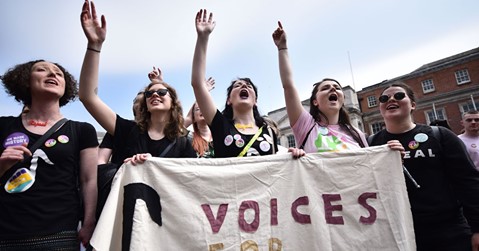
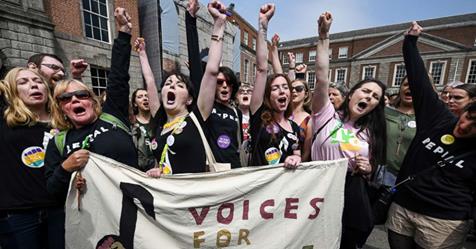
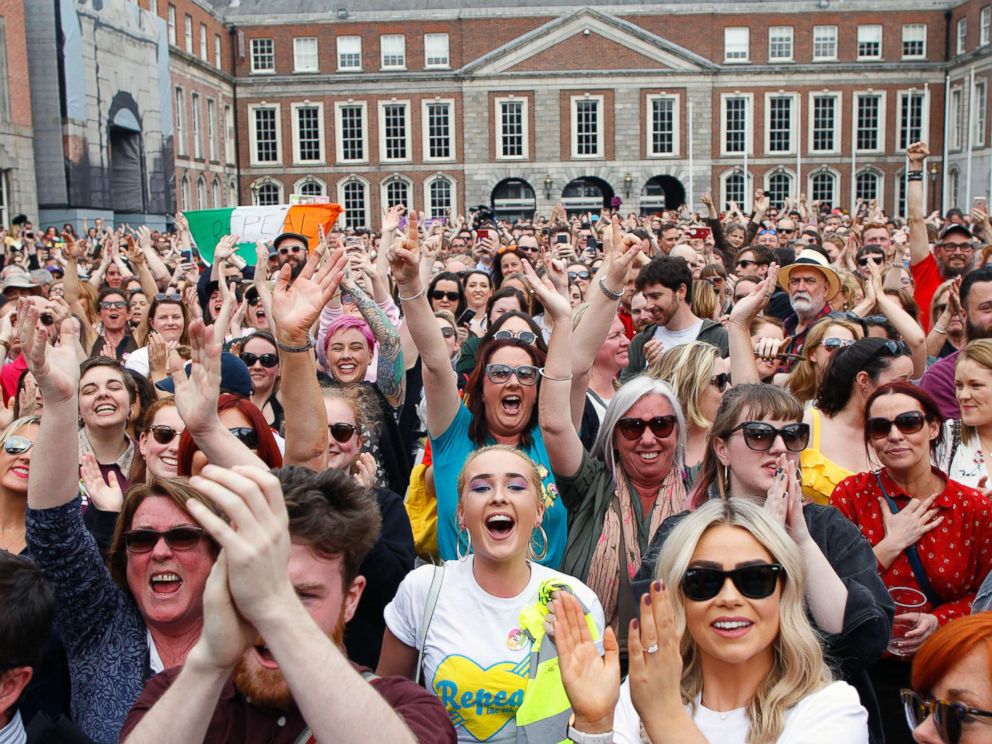
People from the “Yes” campaign react as the results of the votes begin to come in, after the Irish referendum on the 8th Amendment of the Irish Constitution at Dublin Castle, in Dublin, Ireland, May 26, 2018.more +
Charles McQuillan/Getty Images
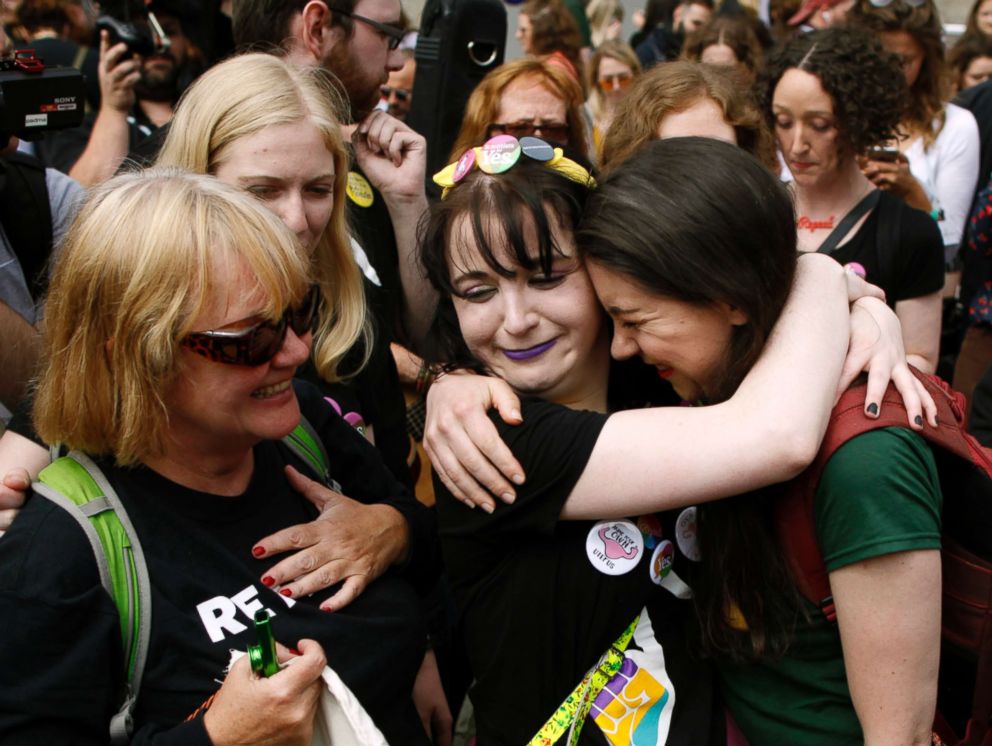
A woman breaks down in tears as the results in the Irish referendum on the 8th amendment concerning the country’s abortion laws takes place at Dublin Castle on May 26, 2018 in Dublin, Ireland.more +
One person involved in the campaign to overturn the ban called the results “momentous.”
“The polls suggest all generations voted with us,” Catherine Conlon, a Trinity College professor told ABC News, after exit polls showed overwhelming support for repeal of the amendment. “I’m so heartened to know so many of my fellow citizens reflected on this debate and came to trust women … Thank you to every single ‘yes’ voter that walked into a polling station yesterday. You have changed Ireland for my daughters and son.”
Seeking or providing an abortion in Ireland is currently a criminal offense that carries up to 14 years behind bars. As a result, thousands of Irish women make the trip abroad, often to England, to have an abortion.
More than 170,000 women traveled from Ireland to access abortion services another country between 1980 and 2016, according to the Irish Family Planning Association.
Peter Morrison/AP
People from the “Yes” campaign react as the results of the votes begin to come in the Irish referendum on the 8th Amendment of the Irish Constitution at Dublin Castle, in Dublin, Ireland, May 26, 2018.more +
Jeff J. Mitchell/Getty Images
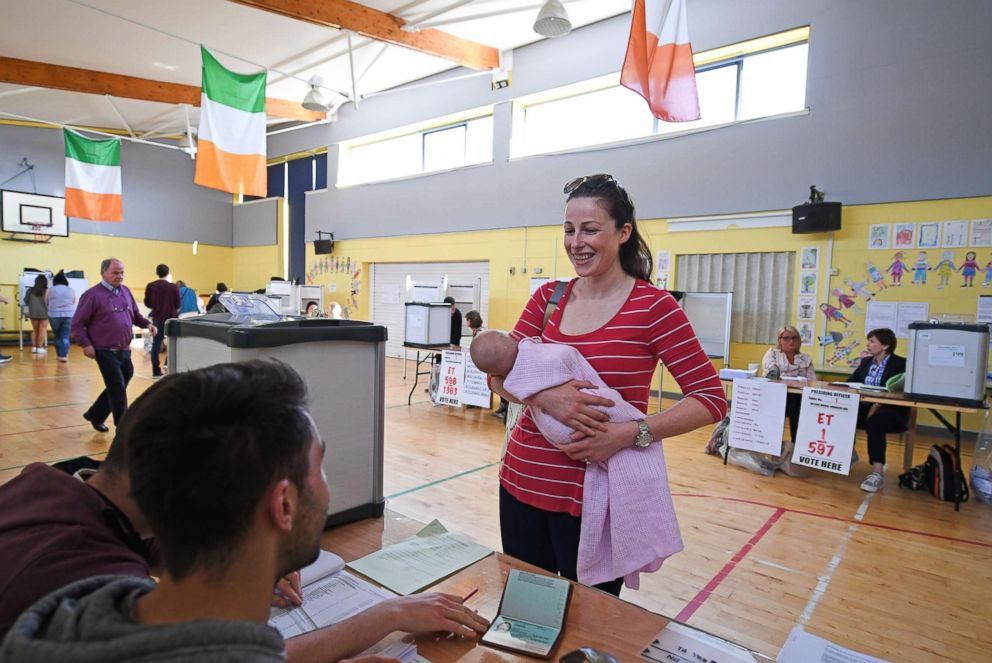
A polling station collects people’s votes on Ireland’s abortion referendum at Scoil Thomas Lodge, May 25, 2018 in Dublin, Ireland.more +
Repealing the amendment means that abortion could be regulated as it is in both the United States and the United Kingdom, clearing the way for Ireland’s government to implement more liberal abortion laws. Lawmakers are now expected to debate proposed legislation allowing abortions within the first 12 weeks of pregnancy, and after that in cases of fetal abnormalities or serious risks to the mother’s health.
The vote pitted conservative backers of strict abortion laws against those supporting a woman’s right to choose. After the vote Friday and exit polls showing overwhelming support for overturning the abortion ban, anti-abortion advocates showed their concern on social media.
Although the Yes campaign was supported by the country’s prime minister, neither of the major political parties took a side in the debate, allowing individual politicians to make up their own minds. The No campaign was largely backed by so-called pro-life groups — the most prominent being The Iona Institute, a socially conservative Roman Catholic advocacy group.
Jeff J Mitchell/Getty Images
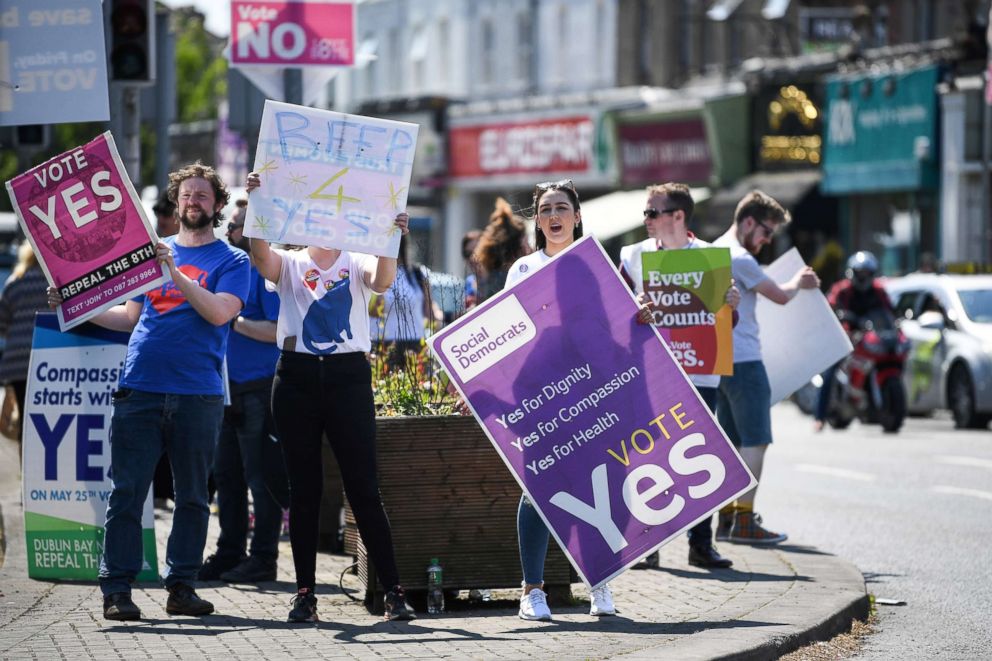
People hold ‘yes’ placards as the country heads to polling stations, May 25, 2018 in Dublin, Ireland. Voters will decide whether or not to abolish the 8th amendment which makes abortions illegal, except when the mother’s life is at risk.more +
Jeff J Mitchell/Getty Images
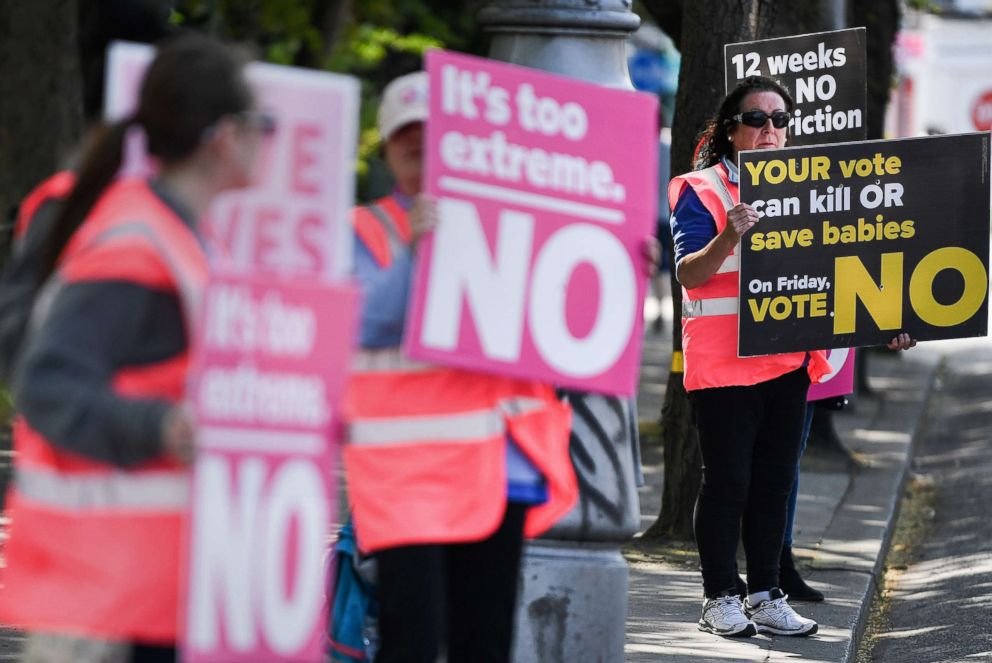
Members of the public hold ‘no’ placards as the country heads to the polls, May 25, 2018 in Dublin, Ireland.
As the date of Friday’s referendum approached, the debate between the two sides had grown deeply contentious, with both being accused of illegally removing each other’s street posters. The hot-button issue also motivated a number of Irish ex-patriots to fly home from around the globe to cast their ballots, with many posting their positions on social media beside the hashtag #HomeToVote.
The heated, emotional campaign saw limits placed on social media advertisements nationwide, with Facebook and Google banning campaign ads after concerns from experts that some campaign ads were funded by U.S. based anti-abortion groups.
Following a 2015 vote, Ireland legalized same-sex marriage.
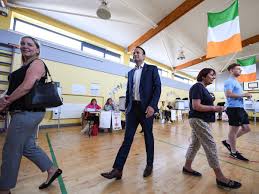
Leo Varadkar, Ireland’s prime minister, or taoiseach, leaves a Dublin polling station after casting his vote in Friday’s referendum. Varadkar has campaigned aggressively for repealing Ireland’s abortion ban.
Two exit polls in Ireland’s referendum on abortion rights indicate that a majority of voters want to do away with a constitutional amendment that recognizes the “right to life of the unborn.”
Irish broadcaster RTE’s exit poll of Friday’s vote indicates that about 69 percent of voters were for repealing the 1983 amendment, and an exit poll from The Irish Timesindicated a similar response, projecting that 68 percent of the vote was in favor of repeal.
Polling heading into the vote had indicated that the results would be far more closely contested than the 2-to-1 split suggested by the exit polls. Official results are expected Saturday afternoon local time.
The referendum comes after weeks of anticipation, acrimony and more than a little heated discussion around a simple yet deeply divisive question: Should the country repeal a constitutional amendment that bans abortion in nearly all circumstances?
A “yes” vote, if the exit polls hold up, would ease the way for Irish lawmakers to pass legislation allowing abortions in the first 12 weeks of pregnancy. Abortion currently is outlawed in all cases except those that could endanger the mother’s life, some of the strictest abortion laws in the Western world.
More than 3.2 million people registered to weigh in on the historic referendum. Thousands of Irish expatriates returned home to make their own voices heard — so many, in fact, that the wave of flights home spawned a popular hashtag on Twitter: #hometovote. Social media feeds filled with images of boarding passes, personal testimonials and stories of flights packed with Irish voters.
One such voter, Michelle McHugh, tweeted the travails she faced to lend her own voice in favor of repeal: “No flights left from London, so I have a 4 hour train, 4 hour wait and 3 hour ferry to make it home to vote — which is a walk in the park in comparison to the journey that Irish women are making every day to the UK” — where, unlike in Ireland, abortion is legal before 24 weeks and under certain other conditions.
Ireland’s prime minister, Leo Varadkar, has said nearly 200,000 women have traveled to Britain to terminate pregnancies in the 35 years since the amendment was passed. He has actively campaigned in recent weeks to have the ban abolished.
“It’s not a vote on me, not a vote on the government,” Varadkar said this week in Dublin, according to the Financial Times. “It’s a vote as to whether we trust the women of Ireland to make decisions about their own lives for themselves.”
Nevertheless, given the extent to which he has thrown his weight behind “yes,” many observers regard this vote as a referendum partly on the popularity of his still-young tenure as prime minister. It’s also a test of the apparent leftward shift of the electorate recently — also represented by Varadkar himself, the first openly gay prime minister in a once-deeply conservative country that had banned homosexuality until just a quarter-century ago.
As NPR’s Alice Fordham noted Thursday, Ireland in recent years has eased access to contraceptives and has legalized divorce, homosexuality and same-sex marriage — becoming the first country in the world, in fact, to legalize gay marriage by popular vote.
Still, the country remains predominantly Roman Catholic, and the church has come out strongly against the measure.
“Life is God’s gift and the right to life comes from God and not from any law or constitution. Because it terminates human life which begins at conception, abortion can never be condoned in any circumstances,” priests in the Diocese of Achonry wrote in an open letter published by the Irish Catholic Bishops’ Conference last week.
“The Eighth Amendment to our Constitution gives protection to the most vulnerable and voiceless members of our society,” the letter added. “The forthcoming referendum calls us to be their voice and defend their right to life.”
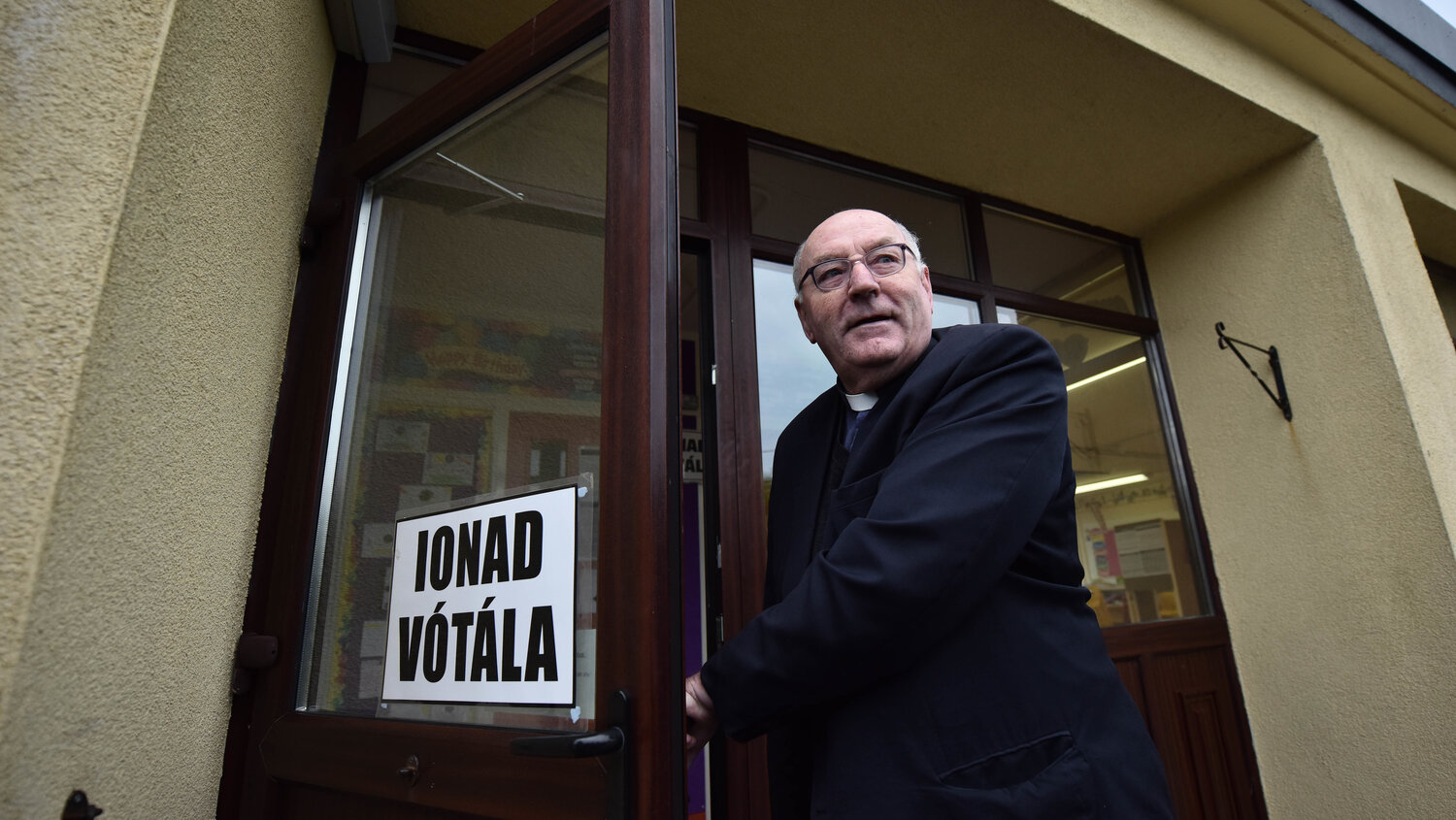
Ted Harrington, a Catholic priest, casts his vote at a polling station Friday in Knock, Ireland. The Catholic Church has come out strongly against the effort to repeal the country’s eighth amendment, which bans nearly all abortion.
Charles McQuillan/Getty Images
It is a sentiment echoed by one medical doctor, who told Alice that while he is “very proud to be part of this new Ireland” and that “we’ve all known women who felt that they’ve no other options,” he supports “no,” because “human rights extend to everybody, not just the strong.”
Saturday’s official results are likely to be the final word on the issue for the foreseeable future. Varadkar told The Irish Times that the government would not hold another referendum if the repeal effort were defeated.
“This is a once-in-a-generation decision,” he said.
RTE says it conducted its poll with a sample size of 3,800, and that the survey had a margin of error of +/- 1.6 percentage points. The Irish Times conducted its poll of 4,500 voters with Ipsos/MRBI — a branch of the company NPR partners with for its polls. That survey had a margin of error of +/- 1.5 points, the newspaper said.
















 Abortion - Abortion Clinics, Abortion Pill, Abortion Information