The Eighth Amendment of the Irish constitution gives equal right to life to the mother and the unborn child.

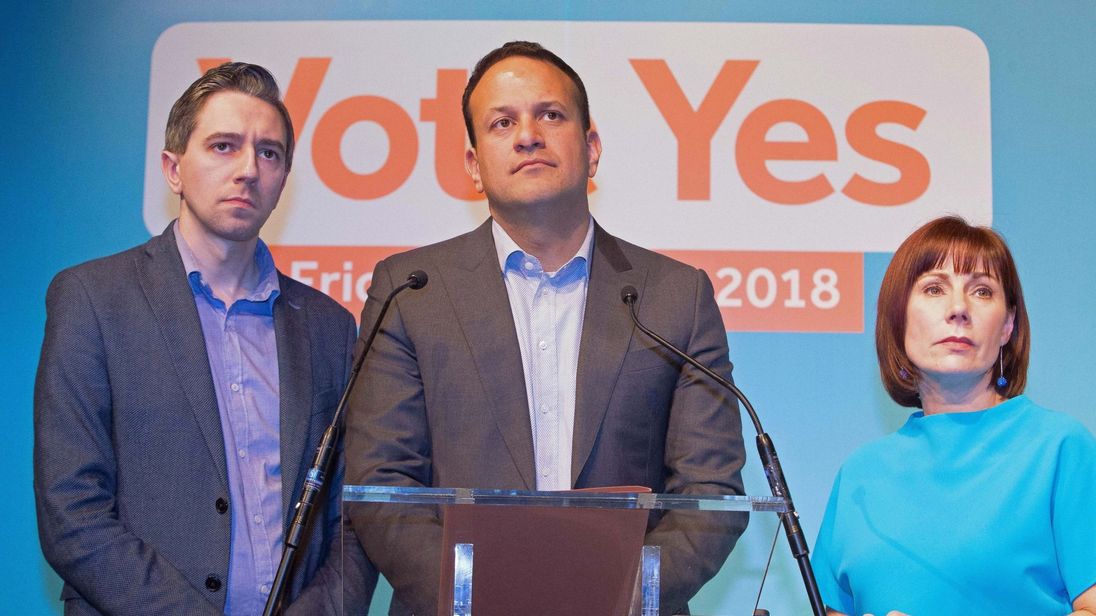
 Minister for Health Simon Harris, Taoiseach Leo Varadkar and Fine Gael Campaign Co-ordinator Minister Josepha Madigan during an event organised by members of Fine Gael pressing for a yes vote in the upcoming referendum on the Eighth Amendment, at the Smock Alley Theatre in Dublin. PRESS ASSOCIATION Photo. Picture date: Saturday April 21, 2018. See PA story IRISH Abortion. Photo credit should read: Tom Honan/PA Wire
Image:Fine Gael officially launched their Yes campaign at a theatre in Dublin on Saturday

Ireland’s Prime Minister has urged his country to vote “yes” in next month’s referendum to overturn strict abortion laws in the country.

Leo Varadkar said the repeal referendum on 25 May could represent a coming-of-age moment when the nation stops cold-shouldering those in crisis.

At the moment, the Eighth Amendment of the Irish constitution, introduced in 1983, gives equal right to life to the mother and the unborn child.

Abortion is currently only available when a mother’s life is at risk and it is illegal for a woman to have an abortion even if there is a fatal foetal abnormality, or in the case of rape or incest.

Voters will be asked whether they want to remove the Eighth Amendment, and replace it with wording that would allow politicians to set Ireland’s abortion laws in the future.

During a speech in Dublin marking the start of the Yes campaign, Mr Varadkar drew on the experience of rape and child incest victims.

The Taoiseach said: “I am calling for a yes vote because I trust women and I trust doctors and instead of fearing the worst I choose to believe the best about us as a nation.

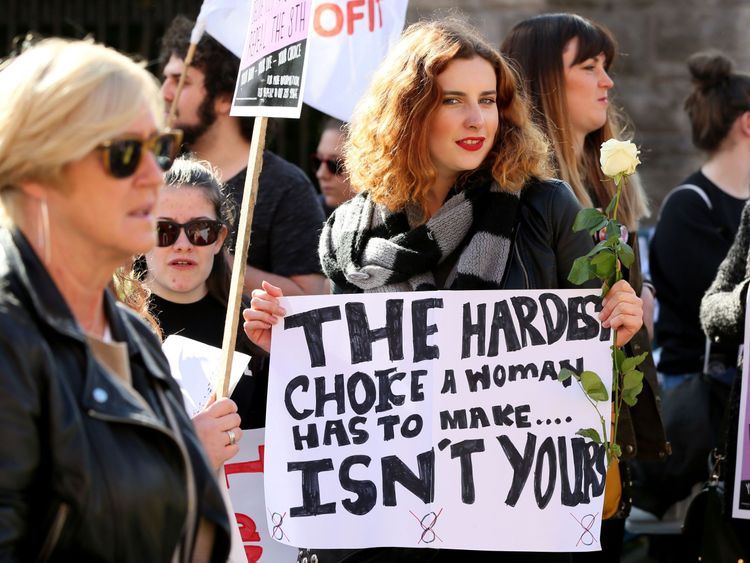
Protesters hold up placards as they take part in the March for Choice, calling for the legalising of abortion in Ireland after the referendum announcement, in Dublin on September 30, 2017. Tens of thousands are expected at a rally for abortion rights in Dublin on September 30, campaigning on one side of a fierce debate after Ireland announced it will hold a referendum on the issue next year. / AFP PHOTO / Paul FAITH (Photo credit should read PAUL FAITH/AFP/Getty Images)
Image:Activists supporting the legalising of abortion during a March in September

“I believe a yes vote will allow us to look our sisters, our friends and our families in the eye when for far too long we have looked away.

“Now is the time to change and to put compassion at the centre of our laws.”

He added: “In Ireland in 2018 we still export our problems and import our solutions, and in the Ireland of 2018 we still turn a blind eye and a cold shoulder to our sisters, nieces, daughters, colleagues and friends when in need or when in crisis.”

The referendum campaign is likely to be fiercely debated.

Parts of Ireland are becoming increasingly secular, but the Catholic Church is among those campaigning for a No vote, those who argue that a baby’s life is sacrosanct.

A statement from Save the Eighth campaigners said Mr Varadkar’s position was too extreme, and said he had been unable to unite his governing Fine Gael party around his position.

Source: https://news.sky.com/story/irish-pm-urges-country-to-trust-women-in-bid-to-overturn-abortion-restrictions-11341185

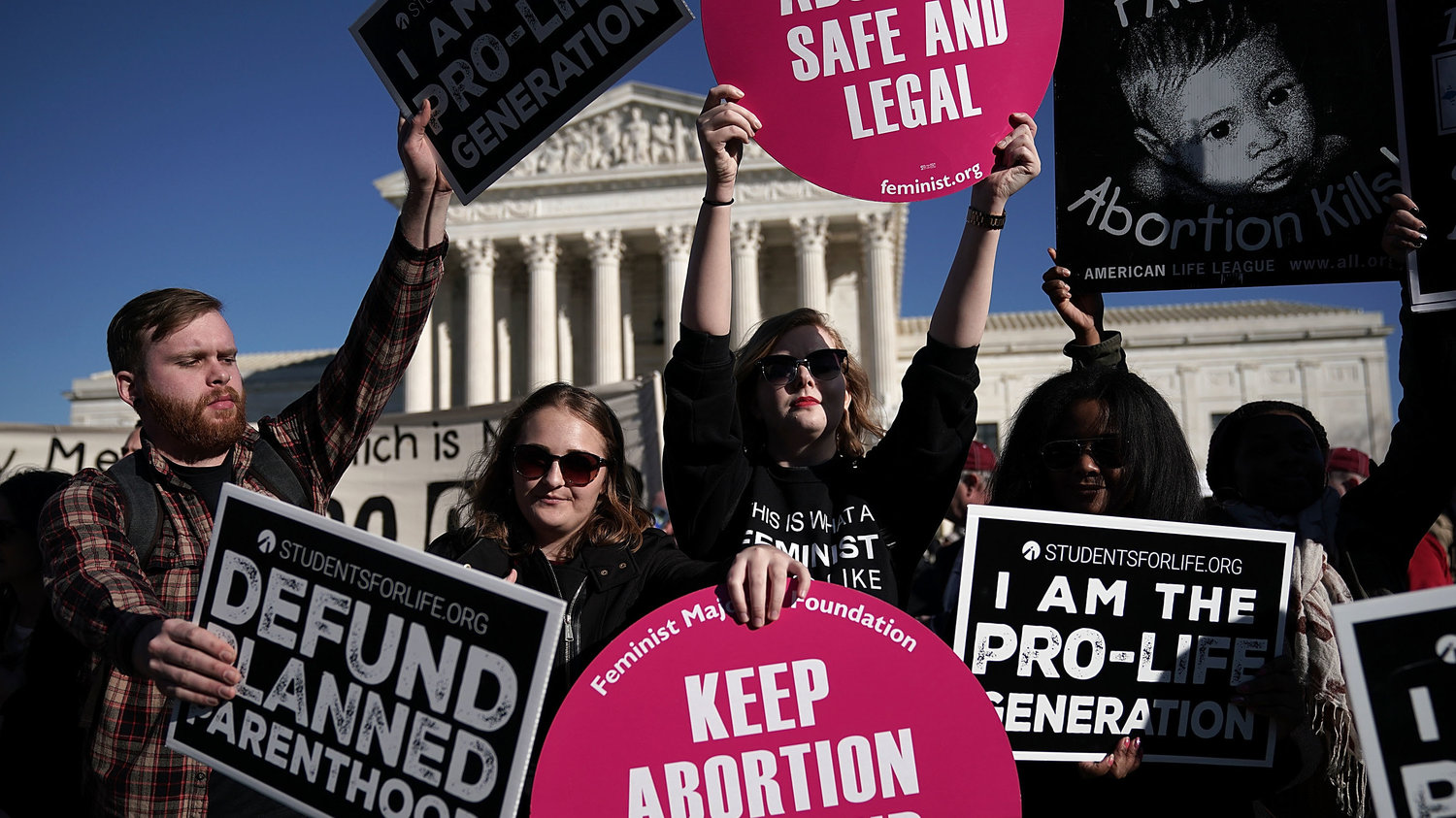
People gather ahead of the 45th annual March for Life on the Mall in January. (Salwan Georges/The Washington Post)

Mississippi’s governor just signed a law, more restrictive than in any state, banning abortions after 15 weeks. Iowa’s state Senate is trying to go even further and stop abortions at around six weeks. And 20 Ohio legislators have proposed outlawing all abortions, even if the woman’s life is in danger.

In many state capitols, Republican lawmakers are backing unusually strict antiabortion laws. Many are emboldened by President Trump, who has been more supportive of their agenda than any president in decades. Conservative lawmakers also are eager to get more restrictions on the books in case November’s elections bring a surge of Democrats hostile to them.

Federal courts have immediately blocked many of these antiabortion laws, including Mississippi’s. But they still have a purpose: to set up legal challenges to Roe v. Wade, the Supreme Court decision that legalized abortion nationally, at a time when Trump could appoint the justice who helps overturn it.

“Trump has given hope to the pro-life movement,” said Ron Hood, a Republican state representative who introduced the total abortion ban in Ohio.

Under Hood’s bill, women could be criminally punished for aborting an “unborn human.” In an interview, Hood said prosecutors would decide what charges to seek, just as they do in cases of manslaughter or murder.

For years, many antiabortion groups have argued that laws should penalize the doctor, not the woman, but Hood — who calls abortion an “atrocity” — said about a quarter of his colleagues in Ohio’s 99-member House chamber are lined up behind his bill.

“We are seeing extremism on many fronts in the United States today,” said Nancy Northup, chief executive of the Center for Reproductive Rights, which supports abortion rights. “Those who oppose abortion rights are seeing this as a time to push for the most extreme measures.”

About 1 in 4 women have an abortion in their lifetime, according to a report by the Guttmacher Institute, a reproductive rights research organization, recently published in the American Journal of Public Health.

In the Trump era, the long-running abortion wars are heating up again, and the country is increasingly divided when it comes to the availability of abortions.

Many Republican-controlled states are ratcheting back access — establishing waiting periods, outlawing common medical procedures and cutting off Medicaid funding.

At the same time, Democratic-controlled states are expanding access to contraception and reproductive health; in Washington state, the governor just required insurers to cover abortion costs.

Charles Donovan, president of the research institute of the Susan B. Anthony List, which promotes politicians who oppose abortion, said the looming midterm elections “certainly do add a push” to get antiabortion laws in the pipeline for a potential Supreme Court challenge.

In 2017, Trump’s first year in the White House, 19 states passed 63 antiabortion restrictions, according to Guttmacher.

Collectively these measures send a loud message, Donovan said. “It’s a cultural message, not just a legal message, to the court,” he said.

Before Trump ran for president, he publicly said he was “very pro-choice.” But when he became a candidate, he promised to appoint judges to reverse Roe v. Wade and won over many Republican voters, including from the religious right, who remain among his steadfast supporters.

They applauded his nominee to the Supreme Court, Neil M. Gorsuch, who has never ruled in an abortion case and evaded questions at his confirmation hearings about Roe v. Wade but who has consistently voted with the court’s conservative majority. Another vacancy on the court would give Trump a chance to increase that majority, a prospect that has thrilled Trump supporters.

The opportunity has not worked out in the past. Justice Anthony M. Kennedy was once thought to be the missing vote to overturn Roe but instead affirmed the right of women to seek an abortion.

And although Kennedy has been generally supportive of abortion restrictions, he joined the court’s liberals two years ago to strike down a Texas law that was found to impose an undue burden on women.

But Kennedy is 81 and is said to be considering retirement. Two of the court’s liberals, Ruth Bader Ginsburg and Stephen G. Breyer, are 85 and 79, respectively.

The chance to replace one of the three offers abortion opponents “something they never thought they would have: a potential majority on the Supreme Court” who would overturn this landmark decision, said John Weaver, a Republican strategist who has advised Ohio Gov. John Kasich.

While many in Washington are consumed with presidential scandals about alleged mistress payoffs and FBI raids, many people across the country care more about other issues, such as abortion, Weaver said.

“It’s an issue that keeps them tethered to an untethered president,” he said.

Northup said Trump has unleashed a “new level of aggression” among abortion opponents. Recent bills include those that would prosecute doctors who perform an abortion as early as six weeks, make no exception for rape, forbid women from getting an abortion if the reason is a high probability of Down syndrome and, as in Ohio, allow a prosecutor to seek criminal charges against women.

“People better vote on November 6th like their life depends on it,” said Kellie Copeland, executive director of NARAL Pro-Choice Ohio. She said the discussion in Columbus of criminally prosecuting women “is so far out of the mainstream” that there is urgency for voters to turn out.

Democrats overwhelmingly support preserving the rights of women to end an unwanted pregnancy.

Democrats say energy is high and record numbers of women are running in November, and they are hoping for wins that could shift the power balance in state capitols.

Conservatives also say they are energized.

Susan Swayze Liebel, coordinator of the National Pro-Life Women’s Caucus for the Susan B. Anthony List, said abortion opponents are working to turn out their base and “keep the momentum going in the states.”

“The Trump effect is the hope effect for the pro-life movement,” Liebel said.

More than 90 percent of abortions are performed before 13 weeks, according to the Centers for Disease Control and Prevention.

Pew Research poll last year found that 69 percent of Americans did not want Roe v. Wade. to be overturned. That ruling gives a women the right to an abortion up to the point where the fetus is viable outside the uterus, which is generally considered around 24 weeks.

But Pew also showed a stark party split — 75 percent of Democrats said abortion should be legal in all or most cases, while 65 percent of Republicans believed it should be illegal in those cases.

A big Republican-wave election in 2010, after the election of Barack Obama, sharply increased GOP and conservative clout in states, and that clout remains today.

Since then, 33 states have passed laws to limit abortion.

In Texas, an increasingly hostile environment for abortion providers contributed to the closures of 20 clinics, abortion rights groups said, about half of those in the state. In the Republican strongholds of Mississippi and Kentucky, only one clinic is left.

In certain parts of the country, “it is unequivocally much harder now to access abortion care than any year since Roe v. Wade,” Northup said.

Elizabeth Nash, the state policy analyst at Guttmacher, said abortion services are increasingly out of reach for many women because of the distance they would have to travel to a clinic and the cost. Women in Texas, Louisiana, Mississippi and other states have a far harder time than those on the West Coast and in many parts of New England, where ending an unwanted pregnancy is easier and cheaper.

About 75 percent of women who seek abortions are poor or have a low income, according to Guttmacher.

Roe has already fallen in the practical sense for many women,” said Copeland, of the abortion rights group in Ohio. “They are forced to continue pregnancy, sometimes even if it’s not what is best for their health, because they cannot get past the travel and financial hurdles.”

Source: https://www.washingtonpost.com/politics/abortion-wars-are-heating-up-ahead-of-november-elections/2018/04/19/74c7b4ee-3d8f-11e8-974f-aacd97698cef_story.html?noredirect=on&utm_term=.ac2356a00c25
Lawmakers passed bills that would make a slate of maternal, abortion, and other reproductive health care available to inmates while providing them with free menstrual hygiene products.

Maryland legislators have passed landmark legislation to protect the health and dignity of incarcerated women.

Maryland’s Democratic-majority General Assembly last week passed two bills with bipartisan support to ensure the prison system develops policies on medical care for pregnant inmates and detainees, and provides free feminine hygiene products to people who are incarcerated.

“We are the first in the nation to do this and it says a lot,” Diana Philip, executive director of NARAL Pro-Choice Maryland, told Rewire.News. “It is a great foundational law and a good risk-management tool for the administration. These two bills will lead the reform that so many people are looking for.”

Expected to go into effect October 1, HB 787/SB 629 requires every correctional facility in the state to have a robust policy in place for the medical care of pregnant inmates, including prenatal testing, labor and delivery, abortion care, postpartum care, access to child placement services, and counseling. Incoming women have to be provided with the policy. This is important, advocates said, because pregnant people often don’t know their rights or even expect health care in prison.

Former inmates have shared harrowing stories of never getting prenatal testing results, a total absence of pregnancy options counseling, denial of abortion care, unlawful shackling, and even forced cesarean sections, Philip said.

“Pregnant inmates are not any less deserving of proper medical care to ensure their own health and the health of their child,” said lead sponsor of the house bill Del. Kathleen Dumais (D-Montgomery County).

The companion bill, HB 797/SB 598, requires correctional facilities in Maryland to have a written policy and sufficient supply of free menstrual hygiene products as needed. It sounds like a basic necessity, but many imprisoned women go without pads or tampons. The products can be expensive or simply unavailable, advocates said.

“Menstrual hygiene products should be considered basic necessities for women,” said state Sen. Susan Lee (D-Montgomery County), who sponsored the Senate bill. “Ensuring women in prison have access to these products is simply the right thing to do.”

Even vendors realize when prisons cut shipments from 1,000 to 200 pads a month to save money, said Monica Cooper, former inmate and co-founder of the Maryland Justice Project, an advocacy group that pushes for prison reform.

These are “dignity bills” and she hopes Maryland lawmakers will inspire other state lawmakers to follow suit, Cooper told Rewire.News.

Despite a 700 percent increase in women’s incarceration since 1980, prison policies and services have not been updated to better accommodate women. “It’s almost as if incarcerated women are an afterthought,” Cooper added.

It’s “mind blowing” that these commonsense policies are not in place everywhere, especially during a woman’s most vulnerable and at-risk time of her life, said Julie Magers, leader of the Maryland Prisoners’ Rights Coalition.

“I’ve received many many complaints from women I’ve interviewed about the lack of basic hygiene and health care so to have these bills pass. It’s landmark and so incredibly needed,” she told Rewire.News.

She has heard from a woman who was put into medical isolation after she miscarried with no aftercare provided; a woman who was shackled during labor and was forced to walk in chains after giving birth; women threatened with solitary confinement for bleeding through their uniforms during menstruation when they had maybe three pads for their entire menstrual cycle, or worse, none.

Maryland already has an anti-shackling law on the books but that policy is often not enforced, advocates said.

“You’re a prisoner so it doesn’t matter. We hear that frequently. I think that’s how (women) are made to feel,” Magers said. “One of the problems women face a lot is the lack of proper care being directly related to the fact that they are prisoners. That’s not how it should be. It shouldn’t be a matter of whether they are prisoners; they are human beings.”

Formerly incarcerated women like Kimberly Haven recently amplified the subject via the #MeToo campaign by sharing how she made sanitary products using toilet paper during her 15-month stint at a Maryland prison. This led to toxic shock syndrome and eventually,  an emergency hysterectomy.

“We had no access some days to pads or tampons and some days not even to toilet paper,” said Sherell Evans, a former inmate and member of the Maryland Justice Project. “As you can imagine, in a facility that houses over 1,000 inmates, things can get pretty messy. Some people would tear up sheets to use as sanitary napkins, they were making homemade tampons out of paper and different stuff …. It was a very, very terrible situation.”

While accurate numbers of incarcerated women are hard to find, the Maryland Correctional Institution for Women in Jessup, the state’s only all-female facility, houses between 800 to 1,000 women. Advocates estimate there are more than 2,000 women detained or imprisoned statewide.

Both bills were priorities for the statewide coalition Reproductive Justice Inside, which advocated for the reforms with partner members that included doctors, midwives, lawyers, professors, and students.

“I commend our partners in the Maryland ​General ​Assembly and at Reproductive Justice Inside who worked tirelessly to pass these important measures,” said Gloria Totten, president and founder of the nonprofit Public Leadership Institute, a nonpartisan nonprofit. “I would encourage other states to follow this example and ensure that incarcerated women have access to essential health care needs such as menstrual hygiene products and information ​about​ all pregnancy outcome options including abortion.”

Republican Gov. Larry Hogan’s office did not return messages seeking comment on if he would sign the bills, but the legislation passed both chambers of the legislature with enough votes to override a potential veto.

Source: https://rewire.news/article/2018/04/18/maryland-give-inmates-new-reproductive-health-care-rights/

The GOP-backed, anti-choice omnibus law “was, in effect, trying to overrule the U.S. Supreme Court,” said Kenneth Falk, legal director of the ACLU of Indiana.

The U.S. Court of Appeals for the 7th Circuit on Thursday affirmed a district court’s ruling striking down two provisionsof an Indiana law that restricts access to abortion care and imposes burdensome regulations on abortion providers.

Officials from Planned Parenthood of Indiana and Kentucky (PPINK) and the American Civil Liberties Union (ACLU) of Indiana on Friday praised the court’s decision during a joint press conference.

Kenneth Falk, legal director of the ACLU of Indiana, said during the press conference that existing law makes it “crystal clear” that a pregnant person has an absolute right to determine whether to terminate a pregnancy.

“Indiana sought to invade that right,” Falk said. “The law was, in effect, trying to overrule the U.S. Supreme Court.”

HB 1337 made numerous changes to state laws, including requiring forced counseling and mandatory ultrasounds for abortion patients, creating regulations on physicians who provide abortion care, and banning fetal tissue donation that has led to the development of vaccines and has had other public health benefits.

Physicians are prohibited from providing abortion care if the physician knows that the pregnant person is seeking the common medical procedure solely because of the “race, color, national origin, ancestry, sex, or diagnosis or potential diagnosis of the fetus having Down syndrome or any other disability.”

The omnibus anti-choice bill was passed by wide margins by the GOP-dominated Indiana legislature. It was signed into law in March 2016 by former Gov. Mike Pence (R).

The ACLU of Indiana in April 2016 filed a lawsuit in federal court on behalf of PPINK, as well as two abortion providers. The lawsuit challenged the so-called final disposition and anti-discrimination provisions of the law. The plaintiffs claim the law imposes an undue burden on a person’s right to choose abortion care, that the the law violates due process and equal protection under the 14th Amendment, and that it infringes upon the First Amendment right of free speech.

District Court Judge Tanya Walton Pratt in September 2017 ruled that the law was unconstitutional, and the Seventh Circuit Court’s three-judge panel unanimously upheld Pratt’s decision.

Judge William Bauer wrote in the 40-page decision that anti-discrimination provisions “clearly violate well-established Supreme Court precedent” and the fetal tissue regulations “have no rational relationship to a legitimate state interest.”

Christie Gillespie, president and CEO of PPINK, said in a statement that there was “no medical basis for these restrictions,” and that the state was interfering in the relationship between patients and medical professionals.

“Every person deserves the right to make their own personal decisions about abortion,” Gillespie said.

Indiana’s Republican Attorney General Curtis Hill has not stated if the state will appeal the court’s decision. Falk said he would not be surprised if the state sought review in the U.S. Supreme Court.

Source: https://rewire.news/article/2018/04/20/court-deals-blow-pence-era-indiana-anti-choice-law/

“This victory is critically important for tens of thousands of Ohioans across our state that rely on Planned Parenthood for care and education each year.”

An Ohio federal appeals court on Wednesday affirmed a lower court order blocking a law that would have stripped Planned Parenthood clinics in the state of family planning money used to provide health-care services to people with low incomes.

The Sixth Circuit Court of Appeals sided with Planned Parenthood and ruled unconstitutional a law that would have effectively defunded the health-care provider.

Gov. John Kasich (R) in February 2016 signed into law a measure that would have stripped Planned Parenthood of $1.3 million in state and federal taxpayer funds, and diverted that money to health-care clinics that don’t perform abortions and don’t contract with organizations that provide the medical procedure.

The GOP-backed law would have barred Planned Parenthood from providing health care and educational services through six federal health programs, none of which are related to abortion care. These include the Healthy Moms, Healthy Babies program and access to free screenings for sexually transmitted infections. These programs are of particular benefit to people of color, those with low incomes, and LGBTQ people.

Weeks after Kasich signed the bill into law, Planned Parenthood officials filed a lawsuit and sought a preliminary injunction to block it. Planned Parenthood argued that the law infringed on its First Amendment rights by denying state and federal funds “because of–and in retaliation for–their constitutionally protected advocacy for abortion rights and affiliation with other organizations that also advocate for abortion rights and/or provide abortion services.”

The district court sided with Planned Parenthood.

Applying the unconstitutional conditions doctrine—a legal doctrine that bars conditioning a person’s receipt of a governmental benefit on that person waiving a constitutional right—the district court determined that the anti-choice law impermissibly conditioned funding under programs unrelated to abortion based on a recipient’s forgoing exercise of its First Amendment rights to free speech or association, and forgoing provision of abortion services protected by the Due Process Clause.

The state appealed to the Sixth Circuit, but the Sixth Circuit sided with Planned Parenthood.

Writing for the three-judge panel, Helene White—a George W. Bush appointee—wrote that the law “violates Plaintiffs’ due process rights by imposing unconstitutional conditions.”

White was troubled by the reduced access to health care that would result if Ohio could condition the provision of public funds on forgoing abortion services. White noted that clinics would no longer be able to provide health-care services for free: “Thus, as a condition of retaining access to abortion free of undue governmental interference, Ohio women must [forgo] the extensive and subsidized access to health services under federal programs that they previously enjoyed,” she wrote.

“Although Ohio women do not have a right to the programs, they do have a right not to have their access to important health services curtailed because their major abortion providers opted to protect women’s abortion rights rather than yield to unconstitutional conditions.”

Reproductive rights advocates applauded the decision.

“We are thrilled that today’s decision will safeguard our patients’ access to care,” Jerry Lawson, CEO of Planned Parenthood Southwest Ohio, said in a statement.

“This victory is critically important for tens of thousands of Ohioans across our state that rely on Planned Parenthood for care and education each year. Our patients deserve to have their health care come before political agendas; this isn’t about politics, it’s about access to health care.”

Source: https://rewire.news/article/2018/04/18/sixth-circuit-ohio-republicans-cant-defund-planned-parenthood/

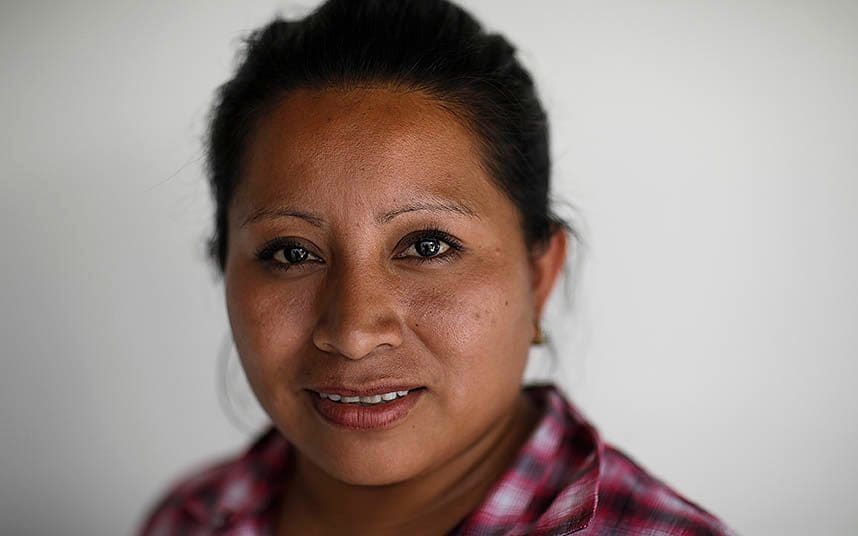
Teodora Vásquez spent 10 years in jail after giving birth to a dead baby girl CREDIT: JOSE CABEZAS/REUTERS

Nine months pregnant, Teodora Vásquez woke up on the day she would lose her second child concerned that the baby wasn’t moving. By early evening she was crumpled under searing pain as she finished her shift at the cafeteria of a private school in San Salvador.

Ms Vásquez called for an ambulance but waited for three hours and by that time she had given birth to a dead baby girl in the toilet. When she staggered out to look for help she was met by a police officer who accused her of murder.

Six months later Ms Vásquez was sentenced to 30 years for aggravated homicide. After 10 years and seven months in jail she walked free in February, her sentence commuted, and finally hugged the teenage boy she had barely seen since he was a toddler.

“My son gave me the strength to keep going while I was inside even though I didn’t see him,” the softly-spoken 35-year-old told the Daily Telegraph a month after her release. “I had lost one child, and I was not prepared to lose the other.”

Her son, who she describes as beautiful, was brought up by his grandparents while she was in jail.

“He says is that he is proud of me. Proud to have a mother like me. And we want to make the most of the time we now have together.”

They committed a real injustice with me but I don’t want to feel resentment. I don’t want revenge. I want to enjoy what I have now.Teodora Vásquez

Ms Vásquez was jailed because of El Salvador’s anti-abortion legislation that outlaws all terminations without exception. The country implements the legislation with a crusading zeal that seems intent on equating not just abortions, but any obstetric emergencies, with murder.

There are no official statistics on the number of women imprisoned for such crimes leaving the activist organisation that helped secure Ms Vásquez’s release, known as the Citizen’s Group, to rely primarily on word of mouth to identify cases.

Monica Herrera, who heads the group, says there are currently 24 women in prison serving sentences ranging from six to 35 years, and another 19-year-old accused of attempted homicide and facing a possible 15-year sentence after she gave birth to her stepfather’s child in a latrine. The baby was found alive.

But while El Salvador may be an extreme case many countries clamp down on women’s reproductive rights, limiting access to abortion, contraception and sexual and maternal healthcare. A recent report by US women’s rights organisation the Guttmacher Institute highlights the 64 other countries around the world that either prohibit all abortions, or only allow them to save a woman’s life.

Figures from Family Planning 2020, a global coalition of partners including the UK Department for International Development, the United Nations and US Aid, show that more than 220 million women in developing countries who don’t want to get pregnant have no access to contraception and voluntary family planning information and services.

Reproductive rights | In numbers

  • More than 220 million women in developing countries who don’t want to get pregnant cannot get hold of contraceptives
  • Less than 20 per cent of women in Sub-Saharan Africa and one-third of womenin South Asia use modern contraceptives
  • In 2012, an estimated 80 million women in developing countries had an unintended pregnancy
  • In the same year around 20 million women in developing countries had an unsafe abortion
  • There are on average 56 million abortions performed every year
  • There are 220 deaths for every 100,000 abortions

Source: WHO and Bill and Melinda Gates Foundation

The coalition says that enabling women to make informed decisions about whether and when to have children reduces unintended pregnancies as well as maternal and newborn deaths. It also increases educational and economic opportunities for women.

For women in countries which restrict access to reproductive health care the stigma attached to abortion or stillbirth is great. For five years Ms Vásquez told nobody why she was in prison for fear of being beaten up. She only realized she was not alone when lawyers from Citizen’s Group sought her out along with other prisoners in similar situations.

“We began to lose our fear a little because there were more of us,” she recalled, her voice cracking just a little. “We started to talk about it and that helped. It helped me to get those feelings out so that when I finally left prison I wasn’t eaten up by anger, resentment, and hate.”

And poverty also made things worse. Vásquez didn’t see her son for the last four years of her incarceration because her family couldn’t afford the time or money to do the onerous paperwork required, or make the long journey from their small village to the prison in the capital.

“Every one of us who was in prison for these crimes was poor and came from a rural area,” she said. “Every one.”

In December last year she returned to court for a review of her case but the same judge who handed down the original verdict reconfirmed the sentence.

“It felt the same as the first time. Even if you don’t want to you get your hopes up. You start hoping that you will get out. Especially when you know you didn’t do anything wrong. I was full of hope that I would be leaving prison, but instead I was sent back with the same sentence.”

And when she finally did hear that she had been released it took a while for the news to sink in. “I couldn’t believe it. I read that piece of paper about 20,000 times until I was absolutely sure that I hadn’t read it wrong,” she says.

In El Salvador attempts are being to made to reform the country’s strict abortion laws, with a proposal to permit abortion to save a woman’s life and in cases of rape.

Vásquez says she bears no grudges and seeks no revenge because she is too busy enjoying her freedom. But, she leans forward to emphasize the point, she also feels an obligation to try to change things so that younger women can avoid the kind of suffering she endured.

“I changed in prison and now I think that we women have the right to decide what happens to us,” says the woman who entered prison with three years of primary schooling and now plans to become a lawyer. “Now I think that if somebody gets pregnant and doesn’t want to have the child, then that is something personal to them.”

She adds: “They committed a real injustice with me but I don’t want to feel resentment. I don’t want revenge. I don’t want any of that, because it would take away the time I have now.”

Source: https://www.telegraph.co.uk/news/0/revealed-woman-jailed-having-miscarriage/

Many of the questions answered in the Congressional Research Service’s report speak directly to talking points used by anti-choice lawmakers to demonize later abortion care.

New analysis about Republicans’ proposed 20-week abortion ban says the common medical procedure is safe, and that delays in care caused by restrictions are why some are forced to seek abortion care later in pregnancy.

The Congressional Research Service (CRS), a division of the Library of Congress that provides policy analysis to members of the U.S. Congress, sought to respond to common questions about the ban in a report published last week. It did not address issues of constitutionality or state regulations on abortion at 20 weeks, nor did it “provide an ethics or morality discussion of second trimester abortion or whether a fetus is a person and has a right to life.”

Dr. Diana Greene Foster, director of research at University of California, San Francisco’s Advancing New Standards in Reproductive Health (ANSIRH), who was cited in the report, called it “very good” in an in email to Rewire.News. “It succinctly compiles a lot of the recent research on later abortions,” Foster said. “I hope that policy makers read it.”

Many of the questions answered in CRS’ report speak to talking points used by the GOP to demonize later abortion care.

For example, Republicans have long pushed a ban on abortion at 20 weeks, or 22 weeks’ gestation, based on the dubious claim that a fetus can feel pain at this point in a pregnancy. But CRS’ report pointed to a fact sheet from the American College of Obstetricians and Gynecologists (ACOG) as the authority on the matter, quoting a 2013 statement that said a “human fetus does not have the capacity to experience pain until after viability.”

“Rigorous scientific studies have found that the connections necessary to transmit signals from peripheral sensory nerves to the brain, as well as the brain structures necessary to process those signals, do not develop until at least 24 weeks of gestation,” the statement said.

The CRS report addressed how mental health can be affected by having abortions. In particular, it pointed to research finding that having an abortion does not increase the risk of mental health disorders.

Abortion rights opponents often claim that the procedure can have harmful long-term psychological effects, though there is no evidence to support that charge. A 20-week ban authored by the anti-choice group Americans United for Life and adopted by the GOP-majority Arizona legislature in 2012 falsely suggests that those who have abortions are at risk for  “psychological or emotional complications.”

When it comes to whether later abortions are safe, the report says that “for women in the United States, the mortality rate associated with childbirth or continuing the pregnancy is higher than the abortion mortality rate.” Though it notes that the risk of mortality goes up as gestational age increases, CRS pointed to research from the National Academy of Sciences, Engineering, and Medicine that found the risk of death from abortion care to be less than the risk of death during colonoscopies, dental procedures, and adult tonsillectomies.

The report mentioned how often later abortion care is performed due to fetal anomaly and life endangerment, speaking to pro-choice advocates who say that later abortions are often for these reasons. Here, CRS again pointed to Foster’s work.

“Based on limited research and discussions with researchers in the field, Dr. Foster believes that abortions for fetal anomaly ‘make up a small minority of later abortion’ and that those for life endangerment are even harder to characterize,” it said.

Though she referred to it as “an extremely minor point in an otherwise excellent report,” Foster noted a small difference between her opinion and how it was characterized in CRS’ analysis.

“What I really believe is that nobody knows what fraction of later abortions are for these reasons,” said Foster. “I wouldn’t state that fetal anomaly and life endangerment are a small minority of later abortions because nobody has statistics on this.”

The report addressed the question of why some may experience delays in seeking or receiving abortion care. Along with factors such as a delay in finding out about a pregnancy and difficulty finding funds for care, the report pointed to federal and state-level restrictions on abortions as a factor.

CRS’ analysis noted recent iterations of the Pain-Capable Unborn Child Protection Act and the Born-Alive Abortion Survivors Protection Act “would require that infants born alive following an abortion procedure be transferred to a hospital for treatment.”

But, the report says, “the legislation makes no provision for the treatment costs or subsequent care needed to support these children, who could become wards of the state.”

“Infants born at 23 weeks’ gestation do not have sufficiently developed lungs and cannot breathe on their own; such infants will die at birth if not given life-sustaining therapies,” it goes on, later explaining that the long-term costs associated with premature infants may also be higher.

“In addition to the health care costs that extremely premature infants will generate post-NICU, other costs—such as day-care services, respite care, school—are likely to be much greater than those for full-term babies,” it said.

CRS’ report did not address whether there is evidence of infants “born-alive” after an abortion, another myth perpetuated by anti-choice activists, though it did address the “medical issues” premature infants face.

Source: https://rewire.news/article/2018/04/18/congressional-report-debunks-anti-choice-talking-points-gops-20-week-abortion-ban/

Activists both supporting and opposing abortion rights gathered in front of the the Supreme Court during the March for Life on Jan. 19.

Alex Wong/Getty Images

A new national poll finds a growing divide between younger and older Americans on abortion and reproductive health care — a shift that may be driven in large part by changing attitudes toward religion.

In the survey from the Public Religion Research Institute, or PRRI, respondents between the ages of 18 and 29 were more likely to report that their views on abortion had changed in recent years — and when they moved, they tended to move in favor of abortion rights. Of those young people whose opinions had changed, 25 percent said they became more supportive of legalized abortion compared to 9 percent who became less supportive.

Older respondents, meanwhile, were less likely to report they had changed their opinions; those who had changed their minds were more likely to have shifted towardopposing abortion rights.

“This moving in opposite directions has led us to a greater polarization between the generations on this issue,” said PRRI CEO Robert Jones.

The poll also looked at personal beliefs about abortion — in other words, opinions on the morality or ethics of abortion apart from the legal or political status of the procedure. More than half of Americans, 54 percent, said abortion “goes against my personal beliefs,” while 44 percent said it did not.

A substantial number of respondents appeared to separate their personal views from their public policy position; 34 percent said that while abortion violates their personal beliefs, they believe it should be legal in most or all cases.

Here, too, a generational divide was apparent: 60 percent of older respondents said abortion violates their personal beliefs, compared with 44 percent of younger people.

Jones said he believes the generational divide on abortion is explained at least in part by a larger shift among young people away from religion, particularly among white evangelical Protestants.

While some religious traditions support abortion rights, Jones notes that white evangelicals have consistently opposed abortion in larger numbers than other religious groups. In the PRRI poll, 78 percent of white evangelical Protestants said abortion goes against their personal religious beliefs compared with 59 percent of Catholics, 56 percent of black Protestants and 54 percent of white mainline Protestants.

But while white evangelicals remain a dominant religious group in America, the tradition is losing younger members.

Taken together, Jones said that may help to account for generational shifts in attitudes toward abortion.

Americans under 30 also were more likely than their elders to say that health insurance should cover abortion services and that the procedure should be available in their local communities.

“I think part of that is a clue to how younger people are seeing this, I think, less as a culture war, political issue, and more really as a health care issue,” Jones said. “And that I think puts it in different political terrain for younger people today.”

Overall, more than half of respondents, 54 percent, said abortion should be legal in “all or most cases,” while 43 percent said it should usually or always be illegal. A majority, 51 percent, said publicly funded health insurance programs, such as Medicaid, should not cover abortion.

The survey found one point of broad agreement: nearly two-thirds of Republicans and three-fourths of Democrats said elected officials are spending too much time talking about abortion rather than focusing on other issues.

The survey was conducted in March 2018 among 2,020 adults ages 18 and older living in the United States. Respondents were contacted by telephone, including cellphones, and the interviews took place in English and Spanish. The margin of error is 2.6 percentage points.

Source: https://www.npr.org/2018/04/17/603050482/young-people-more-likely-to-shift-toward-supporting-abortion-rights-poll-finds

“I stand with a chorus of women who say … ‘Why did I have an abortion: It’s none of your business,’” said state Rep. Athena Salman (D-Tempe).

UPDATE, April 16, 10:28 a.m.: Arizona Gov. Doug Ducey (R) last week signed SB 1394.

Controversial Arizona legislation expanding the amount of information collected about abortions performed in the state and questioning patients about their abortions is one step away from the governor.

The bill adds requirements for abortion care providers to report medical complications to the state health department, and it asks patients to explain whether their reason for getting an abortion was rape, incest, fetal or maternal health, domestic violence, sex trafficking, or coercion.

An earlier version had asked if one of the reasons for the abortion was an extramarital affair. Abortion patients can choose not to answer these questions.

SB 1394, which cleared the GOP-majority house Monday on a party-line vote, needs a quick approval in the Republican-controlled state senate before going to Gov. Doug Ducey (R), an abortion rights foe.

The Republican backers of SB 1394 maintain the bill safeguards women’s health, but Democratic lawmakers during a floor vote on Monday called the legislation burdensome, intrusive, and politically motivated.

“I stand with a chorus of women who say … ‘Why did I have an abortion: It’s none of your business,’” said state Rep. Athena Salman (D-Tempe).

Laws in nearly every state require physicians to send a report every time they perform an abortion. Arizona law already requires abortion care providers to ask patients about their marital status, race, ethnicity, and education, past miscarriages, and prior abortions.

Some state laws hew to draft legislation from the influential anti-choice group Americans United for Life, which maintains that “American abortion data is inaccurate and often misleading.” Mostly Republican-controlled states have advanced 80 new abortion reporting requirements since January 2017, with mixed success.

Rep. Kirsten Engel (D-Tucson) questioned the motivation for adding a new layer of regulation on abortion, which is safer than childbirth.

Championing the bill was the state’s influential Center for Arizona Policy, a lobbying group behind dozens of abortion restrictions. Opposing it were representatives from the American Congress of Obstetricians and Gynecologists, Arizona Public Health Association, Arizona Chapter of the American Academy Of Pediatrics, and Arizona Medical Association.

“Why don’t we have docs in favor of this? They don’t want to do more reporting,” suggested Rep. Eddie Farnsworth (R-Gilbert), when a member noted that medical groups oppose the bill.

Democrats attempted to amend the bill to roll back existing abortion restrictions. Salman introduced an amendment to impose reporting requirements on crisis pregnancies centers, or fake clinics, which are unregulated even though, Salman said, the facilities often look like health clinics and typically offer pregnancy tests and ultrasounds.

Responding to Salman’s amendment, Farnsworth said fake clinics were not medical providers. “They’re not practicing medicine. If they are, then they’re already breaking the law.”

Rep. Daniel Hernandez (D-Tucson) suggested if the bill’s sponsors were serious about protecting reproductive health, then patients should also be asked whether the reason for the abortion was that they lacked inadequate access to affordable birth control or comprehensive sexual education. He offered an amendment to do so.

The Democrats’ amendments were defeated.

An earlier Republican-led amendment would’ve required a fetal tissue sample from patients who said the reason for the abortion was sexual assault. But the fetal-tissue provision didn’t make the final cut.

“This is not about women’s health,” Salman said before the vote. “This puts the government in the room with a woman and her doctor in a decision that is intimate and private that the Supreme Court has found constitutional.”

Source: https://rewire.news/article/2018/04/10/arizona-republicans-want-know-want-abortion-care/

The Together for Yes campaign says the removal of the Eighth is needed to regulate the use of abortion pills.

“I HAVE BEEN ashamed to be a doctor practicing in this country.”

Consultant obstetrician and gynaecologist in the Coombe Women’s and Infant University Hospital and Tallaght Hospital, Dr Cliona Murphy says the Eighth “is punitive to women”, particularly poorer ones.

My experience in active practice has been that those with means can travel, the have-nots are discriminated by our laws.

The Together for Yes campaign published a position paper this morning stating that the removal of the Eighth Amendment is needed to regulate the use of abortion pills.

Two consultant obstetrician and gynaecologists spoke at the launch.

8436 Yes Campaign_90541957

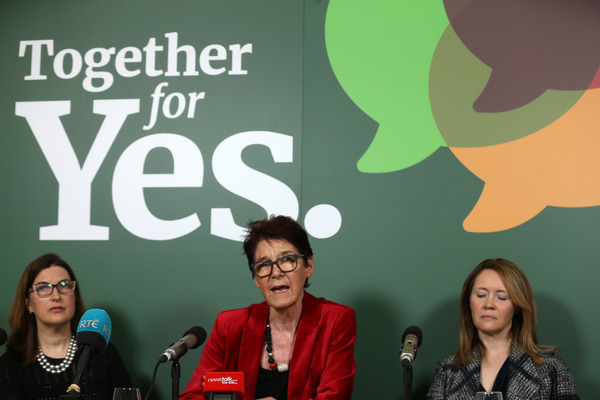
Dr Cliona Murphy (left) with Ailbhe Smyth (centre) and Dr Aoife Mullally (right) during a press conference for the Repeal the Eighth groupSource: Sam Boal via RollingNews.ie

Dr Aoife Mullally, consultant obstetrician and gynaecologist in the Midlands Regional Hospital and the Coombe Women’s and Infant University Hospital said:

“When women take abortion pills under medical supervision it is extremely safe and extremely effective but the complications of taking it without supervision include heavy bleeding, retained pregnancy tissue, infection, ongoing pregnancy and the psychological stress of taking medication and undergoing a medical procedure without any medical backup.”

Dr Mullally added that without medical supervision, women tend to take more than they need as they are desperate for it to work and if it doesn’t they are then terrified for the rest of the pregnancy.

She added that women can also delay getting a check up as they fear they will be judged.

They then present with a failed abortion at an advanced stage and they have to spend their entire pregnancies terrified that they baby may be born with awful health complications.

“We know the use of abortion pills is happening every single day and it needs to be regulated and Irish women and girls need to be able to access their doctors.”

Doctor Murphy echoed this stating that travel is not an option for many women. ”We need to acknowledge that abortion is in Ireland.

If you’re not for safe abortion, you’re for unsafe abortion.

“For those with complex medical histories whose health would be impacted by pregnancy, it is not true to say the Eighth doesn’t impact how we practice.

She said that instead of offering women options and being able to discuss the risks of continuing or not – there is a “cumbersome practise under the protection of life during pregnancies act”.

“We need to organise multidisciplinary team meetings between ourselves and other medical physicians and then a decision is made as to whether the woman deserves the right to safe abortion care in her own country.

Whether she does earn this right is depended on this meeting and, in my experience, her voice isn’t heard. We have this meeting, the risks of her life and her health is discussed but her actual voice is not really heard. In no other area of medicine is this acceptable.

“In no other area of medicine do we pass judgement like this and doctors do not want to be judge and jury on patients.”

She said she has found it hard to look women in the eye and say she cannot help.

“Whether abortion is legally restricted or not the evidence shows the likelihood a woman will have an abortion for a crisis pregnancy is about the same. Countries with a more liberal regime have a lower instance of abortion than those with restrictive ones.”

Source: http://www.thejournal.ie/ashamed-to-be-a-doctor-repeal-the-eighth-abortion-campaign-3951452-Apr2018/