Those at the head of the discredited anti-choice campaign have tried for years to release surreptitiously recorded video from a National Abortion Federation private event.
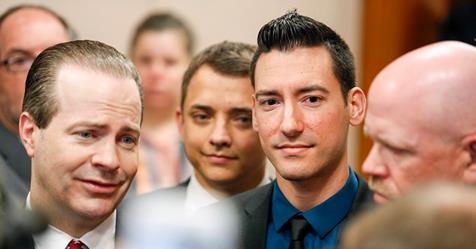
The activists include David Daleiden, who founded the anti-choice front group known as the Center for Medical Progress (CMP), and Troy Newman, one of CMP’s founding board members. Eric Kayne/Getty Images
The U.S. Supreme Court on Monday dealt another blow to the anti-choice activists behind the discredited smear campaign against Planned Parenthood when it declined to hear an appeal seeking permission to release videos under a gag order in the National Abortion Federation’s (NAF) lawsuit against the activists.
The activists include David Daleiden, who founded the anti-choice front group known as the Center for Medical Progress (CMP), and Troy Newman, one of CMP’s founding board members. The petition for a writ of certiorari, which the Supreme Court rejected, was filed on behalf of Newman—founder and president of radical anti-choice group, Operation Rescue—by the American Center for Law and Justice and President Trump’s personal attorney, Jay Sekulow.
It was the latest loss for the anti-choice activists in NAF’s lawsuit against Daleiden, CMP, Troy Newman, and others related to the videos that Daleiden and his associates surreptitiously recorded at one of NAF’s private events and later edited to insinuate that Planned Parenthood has profited from the sale of fetal tissue.
The videos have been blocked from release for nearly two and a half years, and thus far, efforts to release the videos have been stymied in court—first by the district court, then by the Ninth Circuit Court of Appeals, and now by the U.S. Supreme Court.
Daleiden, who founded CMP, began releasing the videos in July 2015 as part of something he called the “Human Capital Project,” which coordinated with Republican lawmakers to attack funding for Planned Parenthood. The purpose of the project was to demonstrate that Planned Parenthood employees were unlawfully profiting from fetal tissue donation and violating the “partial-birth abortion” ban. Daleiden insisted that the videos contained proof of Planned Parenthood’s misdeeds.
Almost immediately after the videos’ release, NAF filed a federal lawsuit against Daleiden, CMP, and his associates in federal court in San Francisco alleging civil conspiracy, racketeering, fraud, and breach of contract, among other civil and criminal allegations, stemming from the release of the deceptively edited video footage.
NAF sought a temporary restraining order blocking further release of the videos in order to protect its members from anti-choice activists’ harassment and violent threats.
Judge Orrick issued the temporary restraining order in July 2015, and in February 2016 converted that order into a preliminary injunction in a scathing opinion in which he said the defendants had “engaged in repeated instances of fraud” and that the products of Daleiden’s Human Capital Project “thus far have not been pieces of journalistic integrity, but misleadingly edited videos and unfounded assertions.”
The injunction blocks CMP and Daleiden from publishing or disclosing “any video, audio, photographic, or other recordings taken, or any confidential information learned at any NAF annual meetings.”
For more than two years, CMP and Daleiden have battled NAF in court for the right to release these videos, claiming their infiltration scheme was simply citizen journalism—although many journalists have concluded otherwise—and that the injunction blocking them from releasing the videos is an infringement on their First Amendment rights.
NAF countered that Daleiden and CMP waived their First Amendment rights when they signed nondisclosure agreements, promising to maintain the confidentiality of information they gleaned from NAF’s meetings. Due to the threats of violence—including from people like Newman, who has argued that the killing of abortion providers is justifiable homicide—NAF has had to increase its security. One element of their security system requires every event attendee to sign confidentiality agreements.
“That defendants intended to infiltrate the NAF Annual Meetings in order to uncover evidence of alleged criminal wrong doing … does not give defendants an automatic license to disregard the confidentiality provisions.”
In his appeal to the Supreme Court—which was joined by more than 20 state attorneys general—Newman argued that the injunction blocks people from voluntarily sharing information concerning possible criminal, illegal, or unethical acts with federal, state, and local government investigators and the public.
But Republican-led investigations on the state and federal level found no wrongdoing on the part of Planned Parenthood. Judge Orrick also found no such wrongdoing: “The products of [the Human Capital Project]—achieved in large part from the infiltration—thus far have not been pieces of journalistic integrity, but misleadingly edited videos and unfounded assertions (at least with respect to the NAF materials) of criminal conduct.”
The Supreme Court’s refusal to hear the case leaves the injunction in place.
Reproductive rights advocates raised concerns about the further stigmatization of abortion care, and the impact the law could have on pregnant people who are diagnosed with mental illness.
“This bill does what 27 other states have done to gather information on these procedures without restricting access to them,” Holcomb said. Scott Olson/Getty Images
Evidence provided to Congress by state attorneys general and health departments proves that abortion is both extremely safe and highly regulated. Searchable by state.
Indiana Republican Gov. Eric Holcomb on Sunday signed a bill into law that mandates reporting requirements for abortion providers, and requires extensive and detailed information about patients and their health outcomes. That includes a requirement that medical professionals report any “psychological or emotional complications, including depression, suicidal ideation, anxiety, and sleeping disorders,” supposedly connected to an abortion.
Reproductive rights advocates raised concerns about the further stigmatization of abortion care, and the impact the law could have on pregnant people who are diagnosed with mental illness. Abortion opponents have often made claims that abortion can independently lead to long-term psychological effects. However, there is no medical evidence that abortion directly leads to mental illness.
Aimee Arrambide, a storyteller with the We Testify leadership program of the National Network of Abortion Funds, told Rewire.News that her ability to access abortion care was critical in her ability to seek treatment for bipolar disorder.
“Especially in light of legislation that tries to stigmatize abortion and blame abortion for mental health issues, my abortion actually allowed me to overcome and treat my mental health illness and become a successful person,” Arrambide said.
However, having an abortion can make it difficult to access unbiased mental health care. Candice Russell, another storyteller with We Testify, told Rewire.News that when seeking treatment for bipolar disorder, she has been shamed by mental health professionals for having had an abortion.
“I’ve gone through the process of being shamed by people who were supposed to be giving me accurate medical care,” Russell said. “It made a lot of my recovery very difficult.”
Christie Gillespie, president and CEO of Planned Parenthood of Indiana and Kentucky (PPINK), said in a statement that the law creates unnecessary restrictions for abortion providers and is the “perfect example of government intrusion” into the relationship between doctors and patients.
“This law is not about enhancing patient safety, and does absolutely nothing to reduce unintended pregnancies,” Gillespie said.
Holcomb said in a statement that the legislative language is similar to laws passed in several other states.
“This bill does what 27 other states have done to gather information on these procedures without restricting access to them,” Holcomb said.
Indeed, Indiana is the latest state to increase reporting requirements for abortion providers as part of a national effort by anti-choice activists to manufacture data to support the claim that abortion care is unsafe, despite the overwhelming evidence that abortion is a safe and heavily regulated medical procedure.
Elizabeth Nash, senior state issues manager at the Guttmacher Institute, told Rewire.News that extensive complication reporting requirements are a response to court decisions that struck down other laws restricting abortion that were justified with dubious evidence and data.
“This is abortion opponents trying to develop some kind [of] evidence to try to show that abortion is dangerous and that abortion requires restrictions,” Nash said.
Forty-six states require medical facilities and physicians that provide abortion services to submit regular reports to state agencies, and 27 states require providers to report post-abortion complications, according to the Guttmacher Institute.
The Indiana law will require physicians, hospitals, and abortion clinics to report to the Indiana State Department of Health each case involving a patient suffering from an “abortion complication” including infections, hemorrhaging, blood clots, and cardiac arrest.
Failure to report an abortion complication would be considered a Class B misdemeanor, which is punishable by up to 180 days in jail and a fine of up to $1,000.
SB 340, sponsored by state Sen. Travis Holdman (R-Markle), will also make various other changes to the state’s laws regulating abortion, including creating disclosure requirements for abortion clinic license applications, and mandating annual clinic inspections.
Richard Feldman, legislative chairman of the Indiana Academy of Family Physicians, told the Indianapolis Star that the reporting requirements would interfere with the doctor-patient relationship.
“We opposed this bill and felt compliance was onerous for physicians, especially in light of non-compliance being treated as a criminal violation including jail time,” Feldman said. “Further, the list of complications is astonishingly long and many are inappropriate in regard to current standards of care, research value, clinical relevance, or reasonable time frames for patient contact.”
Many of the provisions in these laws are similar to those found in model legislation by Americans United for Life (AUL), the self-described “legal architect” of the anti-choice movement. The organization creates copycat legislation and distributes the anti-choice proposals to state lawmakers, who then push the measures through legislatures.
The organization advocates for a federal law to create a national database of abortion statistics and for increased reporting requirements for states.
A detention center in McAllen, Tex., for undocumented minors.CreditTodd Heisler/The New York Times
A federal judge in Washington issued a sweeping order on Friday that temporarily prevents the government from blocking access to abortion services for undocumented, pregnant minors who have been detained in federal immigration custody.
In issuing the preliminary injunction, Judge Tanya S. Chutkan of United States District Court barred the government from interfering with hundreds of teenagers’ access to medical appointments, counseling, abortion procedures or other care, writing that the government’s practice of doing so infringed on the teenagers’ constitutional rights.
Judge Chutkan also allowed the case to proceed as a class action that will include four plaintiffs whose high-profile cases date to October 2017.
Since March 2017, the Office of Refugee Resettlement had instructed employees at federally funded shelters to not take “any action that facilitates an abortion without direction and approval from the director of O.R.R.,” court documents say. The Trump administration has argued that their policies do not create a so-called undue burden because undocumented teenagers seeking an abortion can obtain one by finding a sponsor or voluntarily deporting themselves to their home country.
Photo
Judge Tanya S. Chutkan of United States District Court for the District of Columbia.CreditUnited States Courts
“This court does not find that either of these ‘options’ mitigates the undue burden that O.R.R.’s policy imposes on the young women in its custody,” Judge Chutkan wrote, calling the government’s proposal a “Hobson’s choice.”
While the Office of Refugee Resettlement and its director “are certainly entitled to maintain an interest in fetal life,” and even to prefer that pregnant teens in their custody choose one course over the other, federal officials “may not create or implement any policy that strips” the undocumented children “of their right to make their own reproductive choices,” Judge Chutkan, who was appointed by President Barack Obama, continued.
“With today’s rulings, we are one step closer to ending this extreme policy once and for all and securing justice for all of these young women,” she said.
It was unclear late Friday whether the Trump administration would appeal the ruling. The Justice Department did not immediately respond Friday night to email and phone messages seeking comment.
A new study suggests that some U.S. teens may have trouble getting emergency contraception at pharmacies even though it’s legally available without a prescription for consumers of all ages.
Researchers had mystery callers posing as physicians or teens call 993 retail pharmacies in five U.S. cities. Four in five pharmacies said they had emergency contraception available for purchase that day, but roughly 1 in ten teens were incorrectly told they were too young to get it without a prescription.
Pharmacists were more likely to correctly state that emergency contraception was available without a prescription when teen boys called than when adolescent girls or female doctors called asking on behalf of a 17-year-old patient.
“Emergency contraception works better the sooner you take it,” said lead study author Dr. Tracey Wilkinson, a pediatrics researcher at the Indiana University School of Medicine in Indianapolis.
“Barriers to access can lead to delays in getting emergency contraception or prevent someone from getting it at all,” which can lead to unintended teen pregnancies, Wilkinson said by email.
Emergency contraception, also known as the morning-after pill, can prevent pregnancy by stopping the ovary from releasing an egg, preventing sperm from fertilizing the egg or blocking the fertilized egg from implanting in the womb. It works best when taken within 24 hours of unprotected sex or condom failure, although it can work for up to 72 hours.
The U.S. Food and Drug Administration initially cleared over-the-counter emergency contraception access for people age 18 and older, in part because of concerns about whether younger teen girls would use the medication properly. Later, the FDA lowered the age for non-prescription access to 17 before ultimately extending access to people of all ages in 2013.
Overall, about 11 percent of teen boys, 8 percent of teen girls, and 2 percent of physicians calling on behalf of a young patient were incorrectly told they couldn’t obtain emergency contraception because of age, researchers report in the Journal of Adolescent Health.
Only 52 percent of teen girls were correctly told they could get the morning-after pill without a prescription, compared to 62 percent of teen boys and 57 percent of female physicians.
One limitation of the mystery caller study is the possibility that what happens on the phone might not reflect what would happen in person.
It’s also not clear whether callers spoke to pharmacists or other staff at drugstores, and researchers lacked data to show whether emergency contraception wasn’t provided due to an incorrect understanding of the law or a religious or moral objection.
Labels on the box may be part of the problem, said Dr. Brian Nguyen, assistant program director of family planning at the Keck School of Medicine of the University of Southern California in Los Angeles.
Older packaging stated that emergency contraception was for women over 17, while newer labels are gender neutral and have no age restriction, Nguyen, who wasn’t involved in the study, said by email.
Cost is an additional barrier.
“While emergency contraception may be over-the-counter, it is not free,” Nguyen said. “Many adolescent health providers have adopted an evidence-based model of prescribing emergency contraception in advance so that the adolescent’s insurance provider will cover the cost of the drug.”
Getting it ahead of time is the best way for teens to ensure they’ll have access to emergency contraception when they need it, Wilkinson said. Parents can also discuss this option as part of a conversation about safe sex.
“I encourage all of my patients to have emergency contraception in advance of needing it and I prescribe it whenever I am prescribing birth control to ensure my patients have it,” Wilkinson said. “I also tell all patients – girls and boys – about emergency contraception and that they should be able to access it at a pharmacy.”
Ireland has some of the strictest abortion laws in the developed world.
Ireland will hold a referendum on whether abortion should be legalized on May 25, Irish Housing Minister Eoghan Murphy announced Wednesday.
Irish Prime Minister Leo Varadkar had earlier pledged to hold a vote to change the constitution, which guides the Catholic-majority country’s abortion laws, some of the strictest in the developed world.
Protesters call for the country to repeal the 8th Amendment in Ireland, at a rally in Dublin on September 30, 2017.
Murphy tweeted:“I’ve just signed the order for polling day on the referendum on repealing the 8th amendment to the constitution.”
The amendment places the right to life of an unborn child on equal footing with the mother’s right to life.
Ireland isamong just 50 countries that allow terminations only when a woman’s life is at risk, according to the Pew Research Center. Incest or rape do not provide legal grounds for abortion in Ireland. Six other countries ban abortion under all circumstances.
An anti-abortion protester holds rosary beads in Dublin at a rally on July 10, 2013.
Irish voters approved the 8th amendment in 1983, but calls to repeal it have been steadily growing in recent years.
Irish MPs, nonetheless, have debated the issue in Parliament, while anti-abortion groups vow to protect the amendment.
Abortion was not legal before the 8th amendment, but the laws were ambiguous and ignited debate in the 1970s and 80s, as religious leaders led a campaign to clamp down on the liberalization of Irish society.
The incendiary language used in abortion bills like HB 565 is designed to make my community turn against me.
For people who have had an abortion, or those who provide them, abortion stigma feels like a cloud overhead wherever we go. Shutterstock
Abortion is among the safest medical procedures in the United States. Yet, myths about its safety abound. False Witnesses reveals the individuals behind these lies.
I’m a lifelong Ohioan. When someone says “O-H,” I say “I-O.” I can identify different types of soybeans, breeds of dairy cattle, and high school football teams based on their colors. I’ve always been proud to live in the ultimate bellwether state, but now I’m beginning to wonder if we’ve become the what-are-they-thinking state.
Earlier this month, two Republican legislators introduced a total abortion ban.Abortion restrictions are as common as potholes in Ohio, so abortion rights advocates weren’t surprised to see another one.
But when we started reading House Bill 565, we were horrified. Spanning over 284-pages, the bill calls for the “abolition of abortion in the state of Ohio and the protection of unborn humans” with absolutely no exceptions. In fact, people who provide or have abortions could be charged with murder under the proposed law.
Yes, you read that correctly. This bill would allow people who have abortions to be charged with murder, which is punishable by the death penalty in Ohio.
I’m not worried about that, though. Like several of Ohio’s recent attempts to block abortion access, this bill almost certainly won’t become law. I’m confident that the bill’s language is too extreme, too polarizing, and too unconstitutional to gain a stamp of approval from our very conservative legislature and our not-so-moderate Republican governor, presidential hopeful John Kasich. Even if the bill does pass and Gov. Kasich signs it, experts on both sides of the debate agree that it won’t hold up in court.
Abortion opponents in Ohio have been engaged in a years-long fight to overturn Roe v. Wade, using the state as a testing ground for laws that might one day be challenged in the U.S. Supreme Court. Abortion opponents know that a bill doesn’t have to pass to make an impact. As we saw with the 2016 iteration of the ill-fated six-week ban, which would have eliminated access to abortions at a point in pregnancy when most people don’t even know they’re pregnant, these extreme bills are often partnered or countered with harmful restrictions or bans that seem mild and compassionate when compared to the more restrictive alternative. This is how Gov. Kasich and the Ohio GOP managed to pass the 20-week abortion ban, ending access to abortions after 20 weeks’ gestation with few, very limited exceptions, without much controversy in 2016.
Even when bills like these aren’t partnered with complementary legislation, they still wreak emotional havoc on people who have had or might have an abortion. The suggestion that those who provide or have abortions deserve to be criminalized—possibly put in prison or sentenced to death—is unbelievably wrong and dangerous, but it will continue to linger in people’s minds long after this ridiculous bill is put to rest.
In our polarized political climate, we’ve seen incendiary anti-abortion rhetoric like this fuel fears and hateful behavior that often becomes violence. Admitted killer Robert Lewis Dear Jr., referred tothe debunked and doctored smear campaign directed at Planned Parenthood as part of his motive for entering a Colorado Springs clinic and killing three in November 2015. Dr. David Gunn and Dr. George Tiller were murdered by abortion opponents after decades of inflamed rhetoric labeling both physicians as murderers in the mainstream media.
Reading headlines about murder charges for Ohioans who have abortions made me fear for my family’s safety for the first time since my abortion in 2013. I’m an Ohioan who had an abortion. I share my story widely and frequently to bust abortion stigma, and most people I know are aware of my feelings about abortion access. There’s even a pro-choice sign in my front yard.
Will this bill push one of my neighbors over the edge and encourage violent behavior? Will someone confront me on the sidewalk with my dogs, try to hurt me in my home, or do something to put my infant son at risk? I hope not, but I feel uneasy these days.
I’m not a murderer, and I know this. I’m a mom, a wife, a daughter, a dog owner, a gardener, a writer, and a friend. I know having an abortion was the right decision for me and my family, and if I faced the same choice today I wouldn’t consider changing my decision.
Having an abortion allowed me to escape a dangerous and abusive marriage, focus on my career, and start a family with someone I want to spend the rest of my life with, on my terms. The incendiary language used in abortion bills like HB 565 is designed to make my community turn against me. The stigma it creates around abortion is another facet of John Kasich and the Ohio GOP’s plan to reduce access to abortion care in the state by making it easier for anti-abortion politicians to pass anti-choice legislation.
For people who have had an abortion, or those who provide them, abortion stigma feels like a cloud overhead wherever we go. Even people like me who live in progressive, pro-choice communities and are surrounded by supportive, abortion-positive friends worry about abortion stigma in new environments.
I worry that one of my son’s teachers might learn about my abortion advocacy work and treat him differently because of it. I worry that someone with a gun might confront me in a grocery store or a library while I’m wearing a pro-choice shirt. I worry that my doctors might treat me differently when I tell them about my medical history. I’m not going to stop fighting against abortion stigma, but it shouldn’t be this hard.
Republicans in Ohio should be ashamed of themselves for putting people like me in this position. We’re part of our communities, our families, our workplaces, and our faith groups. Everyone loves someone who has had an abortion, whether they realize it or not.
Becoming the latest state to crack down on a woman’s right to choose, Indiana passed a new abortion law — and it’s a pretty shocking one. Beginning in July this year, women in Indiana that are suffering from potential “abortion complications” are required to provide detailed information about their abortion history to their care providers. If medical professionals don’t report these details to the state, they’ll face fines and possible jail time.
On Sunday, Indiana Gov. Eric Holcomb — who considers himself “pro-life” — signed into law Senate Enrolled Act 340, which dictates that medical providers treating women with any complications from abortions must report the age and race of the patient, in addition to the location and date of any abortion procedures in their past. According to the law, complications include physical ailments like hemorrhaging and blood clots as well as psychological disorders like depression and anxiety.
If healthcare providers don’t give the State Department of Health that information on their patients, it’s considered a Class B misdemeanor and they’ll face a fine of $1,000 or up to 180 days in prison.
Scott Olson/Getty Images News/Getty Images
Supporters of the law, according to the Associated Press, believe it will ensure abortions are administered safely. But critics argue that the major complication rate for abortion is extremely low, occurring about less than a quarter of a percent of the time, according to a UC San Francisco study published in Obstetrics and Gynecology. That’s about the same frequency as complications after colonoscopies, according to the Centers for Disease Control and Prevention.
Those against the law fear it will only make the stigma surrounding abortion worse. “It seems to me that this is an attempt to make this appear like a dangerous procedure, and it’s not,” Democratic Rep. Sue Errington told the Indy Star.
However, Holcomb believes this law is a step in the right direction. “This bill does what 27 other states have done,” he said in a statement, “to gather information on these procedures without restricting access to them.” According to the Guttmacher Institute, 27 statesrequire providers to report post-abortioncomplications, though each law is enforced a little differently.
“It seems like our Legislature’s dead set on passing radical abortion restrictions every single year,” ACLU Indiana director of advocacy, Katie Blair, told the Associated Press.
Drew Angerer/Getty Images News/Getty Images
Meanwhile, anti-abortion groups are celebrating the new law. Indiana Right to Life, a nonprofit “dedicated to restoring and protecting the Sanctity of Life,” according to its site, tweeted after the law was signed “BIG weekend for LIFE in Indiana!”
In addition to Senate Enrolled Act 340, Holcomb also signed legislation over the weekend that allows additional charges if a murder victim is pregnant. Senate Bill 203 mandates that murder and voluntary and involuntary manslaughter may be committed against a fetus in any stage of development, with the exception of legal abortions.
Both of these new laws are expected to go into effect July 1.
The Nebraska GOP plan to deny Title X funds to health centers that perform, counsel about, or refer for abortion services would harm family planning health centers in the state, potentially setting them up to violate federal law.
Eighty-nine percent of Title X recipients are women, the majority of them younger than 30 and living at or below poverty level. Shutterstock
Evidence provided to Congress by state attorneys general and health departments proves that abortion is both extremely safe and highly regulated. Searchable by state.
Chelsea Dappen didn’t know where to turn after she was sexually assaulted on her college campus in Nebraska. She retreated into her dorm room, a shell of her former self for weeks, until her roommate realized what was going on and encouraged her to go to Planned Parenthood.
“A friend told me about her experience and how Planned Parenthood was very understanding and respectful, and had a certain sensitivity when she was in a similar situation,” Dappen said. “I don’t know if I could have gone anywhere else. I felt safe there.”
The staff at Planned Parenthood gave her a lifeline, she said, not only with the health care she needed, including STI screening, a pregnancy test and a general checkup, but by referring her to counseling and support groups that she still uses today, nearly six years later. She says those services have been critical in her recovery.
The services Dappen utilized at Planned Parenthood were covered by Title X, a federal family planning program that may no longer be accessible to thousands of Nebraskans if lawmakers move forward with a budget that includes a proposal denying Title X funds to any health center that performs, counsels about, or refers for abortion services. It’s a move that would block access to care for nearly 28,000 Nebraskanswho rely on Title X for family planning and reproductive health care.
Republican Gov. Pete Ricketts put the provision in the state’s budget for the second year in a row, saying it was a reflection of the state’s “pro-life” values. Last year the provision was struck down after pushback across the political spectrum.
President Trump in April 2017 cleared a path for state lawmakers to more easily block Planned Parenthood from public funds by rescinding an Obama-era rule that stated a qualified provider could not be excluded “for reasons other than its ability to provide Title X services.” Should Nebraska lawmakers approve the state budget with Ricketts’ provision, it would be the first direct attack on Planned Parenthood’s Title X funds since that move by the Trump administration, which has sought to undermine reproductive health care in myriad ways.
“For the second year in a row, Governor Ricketts and Lieutenant Governor [Mike] Foley are taking aim at people’s rights and access to care through Title X,” said Meg Mikolajczyk, associate general counsel and senior public affairs manager for Planned Parenthood of the Heartland. “Title X is meant to assure every person can access basic preventive health care regardless of where they live, how much money they make or whether they have health insurance. We have to keep fighting to make sure everyone gets the health care they need without politicians controlling when, how, or where they get their care.”
Ricketts’ proposal would not only jeopardize Planned Parenthood, but would harm other family planning health centers in the state, potentially setting them up to violate federal law, said Danielle Conrad, executive director of the American Civil Liberties Union (ACLU) of Nebraska. The proposal excludes Title X funding from any entity that provides information about or referrals for abortion care. However, federal Title X regulations require providers to give information about abortion to any patient who asks.
“When it comes to patient care and ethics, when a patient expresses to you a need for additional information, you need to be able to have a candid conversation without the heavy hand of government in the middle of that private and personal conversation,” Conrad said.
The Title X family planning program was created in 1970 to fund preventive health services for people with low incomes. Title X services include breast and pelvic exams, pap smears, HIV testing, pregnancy testing, cancer screenings, and birth control. Eighty-nine percent of Title X recipients are women, the majority of them younger than 30 and living at or below poverty level.
Planned Parenthood makes up about 5 percent of all Title X providers in Nebraska, yet in 2015 saw more than one-third of all Title X patients. Ninety-three percent of Planned Parenthood patients in Nebraska rely on Title X services.
“We know that women and men in Nebraska and across the country trust Planned Parenthood and rely on Planned Parenthood, and other family planning providers to meet their basic health care needs,” Conrad said. “Really the crux of this issue is the government saying if you have the means to choose your doctor you are allowed to go to a family planning clinic or Planned Parenthood or a private practitioner. But if your income is such that you rely on Title X or Medicaid to access these life savings programs, we’re going to tell you which doctors you can or can not go to.”
This is something with which Dappen identifies, telling Rewire.News she went to Planned Parenthood because she trusted them, and she would not have been comfortable with another provider.
“It takes a lot of trust between a patient and their doctor, especially when you have experienced trauma, so to take away that from from me in choosing my health care provider, I just don’t think that’s right,” she said.
Under federal law, neither Title X nor Medicaid funds can be used for abortions, yet anti-choice legislators across the United States have tried for years to strip Planned Parenthood of public funds. Between July 2015 and the end of 2016, mostly Republican lawmakers in 24 states have tried to and those in 15 states have succeeded in adopting some kind of funding restriction on Planned Parenthood, according to the Guttmacher Institute. Many of those funding restrictions, however, have been tied up or struck down in court and therefore are not currently in effect.
Conrad said the ACLU is lobbying against Ricketts’ proposal and “exploring all of their options,” including litigation should the proposal pass. The GOP-majority Nebraska legislature discussed the budget on Wednesday, during which legislators read from the Trump administration’s recent funding order that encourages funding go to abstinence-only providers. After extensive debate, legislators put the budget on hold. The legislation will need to be finalized by April 18, the last day of the legislative session.
Dappen has lobbied her legislators and said she hopes they listen.
“After giving out my story, it’s just something difficult and vulnerable, and if they choose to ignore that part of the issue, it will be difficult not to take it personally,” Dappen said. “It’s not just statistics. There’s a human side to this.”
I can’t imagine a world where party leaders welcome candidates just as long as they pinky swear not to legislate based on their personal views.
Tom Perez, chairman of the Democratic National Committee, seems to envision a “big tent” political party that can include anti-choice legislators, even when that runs contrary to the national platform. Justin Sullivan/Getty Images
Abortion is among the safest medical procedures in the United States. Yet, myths about its safety abound. False Witnesses reveals the individuals behind these lies.
Last month, my Twitter feed erupted in joy when Missouri Democrats flipped state House District 97 in a special election. Even Democratic National Committee (DNC) Chairman Tom Perez issued a statement congratulating Mike Revis (D-Fenton) for his hard-fought win. I went to sleep dreaming of progressive momentum, but I woke up to the harsh reality that the 97th district had sent another anti-choiceDemocrat to Jefferson City.
Our current legislative session shows that the last thing Missouri needs is more anti-choice lawmakers in Jefferson City. So far, 24 anti-choice bills have been filed, including fetal heartbeat bills and a personhood resolution proposing an amendment to the U.S. Constitution that would deem fertilized eggs full legal persons. While Missouri and national Dems are celebrating the election of an anti-choice legislator in Revis, reproductive health and justice advocates have to add his name to the long list of legislators who need to be educated and vigorously lobbied if we are to defeat Missouri’s regressive 22-week abortion ban bill moving this session.
Why is Democratic support of anti-choice politicians an urgent concern? Because we need all hands on deck to defeat attacks on access to reproductive health care at the state and federal level. We are in a critical election year, and we need to make sure that those who seek to benefit from the Democratic brand are willing to champion progressive values.
I find it insulting and unacceptable that party leaders treat support for access to reproductive health care and abortion like throwaway wedge issues even as they talk a good game about fighting for everyday Americans. There can be no economic justice without reproductive justice. For millions of people in America, access to abortion and reproductive health care means the difference between just getting by and financial crisis. And abortion access and reproductive health care are winning issues. Recent polls show broad support for birth control access and abortion rights. More importantly, Dems must not overlook the fact that the “backbone” of the party, Black women, overwhelmingly support a person’s right to abortion care. It boggles the mind that any political party would run away from these issues instead of enthusiastically embracing them. And yet here we are.
As a reproductive justice activist and a Missourian, I have called on the state Democratic Party to work with candidates to increase support for abortion rights because ready access to reproductive health care is critical for equality and justice. After the general election in 2016, I joined the platform committee of the Missouri Democratic Party in part to advocate for stronger support for abortion rights. When Democrats fail to support access to reproductive health care, they undermine their work to build strong and healthy communities.
But what is often overlooked is when and under what circumstances anti-choice Democrats break with the party on key issues like taxes, racial justice, sensible gun regulations, and LGBTQ rights. There’s more at stake than you might think at first glance—namely, future support for progressive policies within the party. But that hasn’t stopped Democratic leaders from asking anti-choice Dems to thedance.
Let’s explore the courting of anti-choice Dems. In May 2017, House Minority Leader Nancy Pelosi described abortion as a “fading” issue for Democratic voters. Pelosi’s shockingly out-of-touch statement came on the heels of Perez’s fumbling defense of the party’s decision to champion Heath Mello, a Democratic mayoral candidate in Omaha, Nebraska, who had an extensive anti-abortion voting record. Perez went on to derail his attempt to reassure abortion rights activists of the party’s commitment to abortion rights when just weeks later he met with Democrats for Life of America at DNC headquarters in Washington, D.C.
The national debate over whether the Democratic Party should support anti-choice candidates quickly made its way to Missouri. The new chair of the Missouri Democratic Party, Stephen Webber, caused alarm within progressive circles by seeming to signal a similar soft commitment to abortion rights. In an effort to clarify his statement, Webber wrote a St. Louis Americaneditorial stating, “Democratic candidates are welcome to their personal views on abortion, but the Missouri Democratic Party will never advocate that they use an elected office to limit or take away a woman’s ability to make her own reproductive health decisions—including the right to a safe, legal abortion.”
I can’t even imagine a world where party leaders would welcome anti-union or anti-Medicare candidates just as long as they pinky swear not to legislate based on their personal views. But apparently we are supposed to trust anti-choice legislators to not do what all anti-choice legislators eventually do.
I’ve been a reproductive justice activist organizing in Missouri for more than a decade, and the last thing I want to do right now is debate whether the Democratic Party should embrace so-called “pro-life” candidates. I would have preferred to hear political leaders champion access to abortion because our state’s relentless war on access to reproductive health care hurts women, causes financial hardship, diverts millions in tax dollars meant to feed hungry children to anti-abortion fake clinics, and prioritizes the anti-choice movement’s agenda over the pressing needs of Missourians.
I wish this debate had been triggered by the Democratic Party’s enthusiastic and full-throated support for abortion rights, but that’s just not the case. The reality is that the Missouri Democratic Party has long had a diverse mix of candidates and elected officials, including those who are anti-choice, mixed record, or solidly supportive of abortion access. There is a national platform, which states, “Democrats are committed to protecting and advancing reproductive health, rights, and justice. We believe unequivocally, like the majority of Americans, that every woman should have access to quality reproductive health care services, including safe and legal abortion—regardless of where she lives, how much money she makes, or how she is insured. We believe that reproductive health is core to women’s, men’s, and young people’s health and wellbeing.”
And then there are the people who run as Democrats in Missouri.
Any discussion of anti-choice Democrats must keep it real about what being an anti-choice Democrat in Missouri means. “Pro-life” as a political position is just that: a political position that demands a pattern of voting against access to birth control, reproductive health care, and abortion access. We’re not talking about personal convictions that folk just share over beer while tailgating. We’re talking about how a person will vote on bills like those that have already been proposed in our statehouse: a bill that would would give pharmacists the right to refuse to fill prescriptions based on their personal beliefs, demand women get permission from a man to have an abortion, force women to endure medically unnecessary and inaccurate propaganda prior to receiving care, and gut funding for preventative care and treatment in a state with high sexually transmitted infection rates.
Missouri Right to Life’s (MRL) policy statements are a helpful way to understand what anti-choice politicians are about. For example, MRL is opposed to abortion; exemptions for rape and incest except “in rare instances”; emergency contraception because the organization believes “like Russian roulette, it may kill at any time”; and school-based health clinics providing birth control services. MRL also opposes the Equal Rights Amendment; embryonic stem cell research; chimeras (seriously); living wills and advanced directives; euthanasia; organ donations; and the work of the March of Dimes; the Susan G. Komen Foundation and Race for the Cure; and the Girl Scouts. When we demand that the Democratic Party resist calls to open up a “big tent” and embrace anti-choice candidates, this broad regressive agenda is what we’re fighting against.
What does that look like in practice?
Former state Rep. Linda Black (R-Bonne Terre) supported Missouri’s 72-hour mandatory waiting period law. Black eventually switched parties to become a Republican, saying that she hoped the switch would help her pass a bill requiring a doctor show a video containing state-mandated information about abortion to a woman in addition to verbally sharing the information and giving it to her in writing.
But Black’s abandonment of the Democratic Party wasn’t motivated solely by opposition to abortion. In a 2014 Missouri Times interview, Black said this when asked why it was important to switch parties:
It was such an important decision to make because, just recently, the ruling on gay marriage—and the Missouri Constitution very specifically defines what marriage means in Missouri. The voters voted several years ago—71 percent of the people—said that marriage is between a man and a woman. Here we are with Democratic leadership who will not support Missouri’s position on marriage. That was one tipping point.
Then there’s former state representative and current business manager for the St. Louis Police Officers’ Association, Jeff Roorda. Roorda gained national attention for his incendiary rhetoric about the Ferguson uprising after the fatal shooting of Michael Brown by former Ferguson police officer Darren Wilson. He stoked controversy by fundraising for Wilson and for his comments after the not-guilty verdict in the trial of former St. Louis police Officer Jason Stockley for the shooting death of Anthony Lamar Smith. Jeff Roorda even went so far as to blame President Obama for a sniper attack on Dallas police officers at a Black Lives Matter rally.
During a failed state senate run, Jeff Roorda said his record while in office has “been consistently conservative on social issues my entire eight years.” He voted to override then-Gov. Jay Nixon’s (D) veto of a 72-hour mandatory waiting period for abortion. Roorda also voted to override Nixon’s veto of a bill allowing open carrying of firearms. But Jeff Roorda was a solid pro-union vote who spoke out against the Republican effort to pass regressive anti-union legislation like a so-called right-to-work measure. Missouri ultimately passed the right-to-work measure in 2017, and Jeff Roorda continues to be a controversial figureand to seek office as a Democrat.
Are the political pundits calling for a big tent on abortion also demanding the party accept candidates who think Missouri should have launched a political war with the federal government over marriage equality? Have they given interviews calling on voters to keep an open mind when considering the race-baiting opinions of divisive candidates like Jeff Roorda? Nope, because calls for a big tent on abortion are more about a strategic move to sell out abortion rights than accepting new political viewpoints to expand the candidate pool.
The aforementioned Rep. Mike Revis has already cast anti-choice votes in the Missouri House. Revis was one of five Dems to vote for HB 1383, a bill that requires two-parent notice prior to an abortion in addition to the existing requirement that a patient under the age of 18 obtain the written informed consent of one parent or guardian. His next bad vote was for HB 1288, a bill to allow tax credits for faith-based anti-abortion fake clinics. The next test Revis is likely going to fail will be on HB 1266, the 22-week abortion ban.
Anti-choice candidates become anti-choice politicians, and when they take office, they vote for regressive policies, medically unnecessary restrictions, and insulting hurdles meant to shame and humiliate women. Anti-choice Democrats in the Missouri General Assembly have not proposed policies to reduce the state’s infant or maternal mortality rates. They have not challenged the state budget practice of sending millions of dollars in federal hunger relief funds to anti-abortion fake clinics, and they aren’t pressuring the pro-life movement to take a stand against the death penalty, gun violence, or violence and discrimination against LGBTQ folk.
So when candidates like Robert Butler, the likely Dem nominee for state Senate District 22, say things like, “As a Catholic and person of faith, I will vote my conscience and defend life,” they are saying so much more. We know from past experience that these anti-choice candidates will turn into legislators who will refuse to protect LGBTQ Missourians from discrimination, will push policy to attack birth control access, will support the use of tax credits to fund shady anti-abortion fake clinics, and won’t vote to protect workers’ right to reproductive health-care coverage on the job.
To quote Maya Angelou, “when someone shows you who they are, believe them the first time.”
Missouri Republicans are banking on benefiting from gerrymandering, voter suppression, and the unchecked influence of big money campaign contributions. Those aren’t advantages that developed overnight and they won’t be overcome in a single election cycle by selling out abortion rights for political expediency.
If Missouri Dems want to make progress, they need to respect that it can’t be achieved by circumnavigating progressive issues, including abortion rights. Then they must educate candidates on why it can’t be achieved that way and build campaigns that enthusiastically share that knowledge with voters.
There can be no victory, no giant blue wave win, built through the deliberate and strategic disregard for the key role access to reproductive health care and abortion play in the lives of all Missourians.
The inundation of misinformation about abortion is one of the most significant hurdles women face when attempting to make informed decisions about their own reproductive care. Thanks to newly released research from the National Academies of Science, Engineering, and Medicine, at least one pervasive misconception about women’s health care can be cleared up once and for all: the false notion that abortion procedures are dangerous. According to the study’s conclusions, it’s actually restrictive legislation, not the abortion procedure itself, that places women’s health in danger.
This newly released study, The Safety and Quality of Abortion Care in the United States, measured the quality of American abortion care against six standards: safety, effectiveness, timeliness, patient-centeredness (care that is based on individual patient needs and preferences), efficiency, and equity. Thirteen independent researchers convened to closely examine the patient experience before, during, and after receiving an abortion. Scientists were able to measure the safety of different abortion methods, determine the types of clinics and clinicians that can safely administer high-quality abortion care, and define the long-term effects an abortion has on the patient.
Find a sampling of the abortion-related myths that this study found to be false below:
Myth #1: Women who receive abortions are at a heightened risk for breast cancer, infertility, and other health problems.
Having an abortion does not increase a woman’s risk of the following physical health problems: secondary infertility, pregnancy-related hypertensive disorders, abnormal placentation, preterm birth, or breast cancer.
Having an abortion does not increase a woman’s risk of the following mental health problems: depression, anxiety, or post-traumatic stress disorder (PTSD).
Myth #2: Abortions are highly dangerous procedures.
Serious complications resulting from an abortion are rare and occur far less frequently than during childbirth.
Abortions are safer the earlier they are performed, meaning mandatory waiting periods and required precounseling (laws that are in effect in 27 and 35 states, respectively) cause greater risk of complication.
Myth #3: Doctors in hospitals are the only medical professionals who can safely perform abortion procedures.
Most abortions can be safely performed in office-based settings, meaning a hospital setting is often unnecessary.
No special equipment or emergency arrangements are required for medication abortions.
Advanced practice clinicians (APCs), physician assistants (PAs), certified nurse-midwives (CNMs), and nurse practitioners (NPs) can safely and effectively provide medication and aspiration abortions.
Clinicians performing abortions do not require hospital privileges to ensure a safe outcome for patients.
Dr. Monica R. McLemore, a research scientist at Advancing New Standards in Reproductive Health(ANSIRH) and assistant professor at the University of California, San Francisco, summarized the study’s conclusions to POPSUGAR as a confirmation of what she says abortion care providers have recognized for some time. “The quality of abortion care and patients’ experiences of that care are high,” McLemore explained, adding that the level of abortion care provided is compromised when lawmakers “create barriers to care by imposing medically unnecessary restrictions that ultimately push abortion out of reach.”
“Understanding any actual risks associated with abortion is important because we need to be able to provide medically proven information about all pregnancy decisions — including risks associated with continuing and spacing pregnancies — to anyone who walks through our doors,” Dr. McLemore told POPSUGAR.

















![[Photo: Tom Perez ]](https://rewire.news/wp-content/uploads/2018/03/GettyImages-464367921-740x525.jpg)



 Abortion - Abortion Clinics, Abortion Pill, Abortion Information