With abortion rights advocates on the defensive at the federal and state levels over the last four years, Planned Parenthood’s advocacy arm is endorsing former Vice President Joe Biden in his race to defeat President Trump.

Activists are putting their hope in Biden, whom some see as having a mixed record on abortionas they watch a U.S. Supreme Court reshaped by Trump appointees for key decisions that could scale back access to abortion and birth control. They’re also reeling from a series of policy reversals related to reproductive health during the Trump administration.

“This is literally a life and death election,” Alexis McGill Johnson, acting president of Planned Parenthood, told NPR ahead of the announcement. We felt like we can’t endure another four years of Trump; we have to do everything we can to get him out of office.”

In a video statement announcing the endorsement, Biden pledges his support for reproductive rights and highlights his work on the Affordable Care Act during his time as President Barack Obama’s vice president. The law required participating insurers to cover reproductive health screenings and contraception without a co-pay.

“We will protect women’s constitutional right to choose, and I am proud to stand with you in this fight,” the presumptive Democratic nominee says in the video released Monday by the group’s advocacy and political arm, Planned Parenthood Action Fund.

Planned Parenthood is contrasting Biden’s record with that of Trump, who has won praise from abortion rights opponents for appointing conservative judges, and for blocking domestic and international organizations that provide abortions from receiving federal funds to cover other reproductive health care such as birth control and sexually transmitted infection screenings.

McGill Johnson told NPR that it’s urgent to reverse Trump’s policies.

“I think that’s where most Americans are,” she said. “We need to be able to kind of move past this very challenging, divisive, polarized era and move into a place where we can actually rebuild our lives after this disaster.”

In response, Jeanne Mancini, president of the anti-abortion rights group March For Life, said in a statement, “It is offensive to hear our nation’s largest abortion provider, Planned Parenthood, an organization that claims the lives of 345,672 American babies annually (a third of all of the abortions in this country each year), call the 2020 cycle a ‘life and death’ election. Those who really care about protecting life realize that the election of Planned Parenthood-endorsed candidate, Joe Biden, will result in a major increase of tax dollars going to the billion-dollar organization, including direct payment for abortions, among other deadly consequences.”

Planned Parenthood has endorsed the Democratic presidential candidate in every election cycle since 2004 when former U.S. Sen. John Kerry was the nominee. After endorsing Hillary Clinton in the Democratic primary four years ago, Planned Parenthood did not make a primary endorsement this year.

While Biden has long supported abortion rights, he’s been seen as less progressive on the issue than many other Democrats, including his former rivals for the nomination. For decades he supported the Hyde Amendment, which bans federal funds for most abortions, before reversing that position last year as he was starting his presidential campaign.

At a presidential primary forum hosted by Planned Parenthood Action Fund last year in South Carolina – which did not result in an endorsement for any candidate – Planned Parenthood Action Fund Executive Director Kelley Robinson noted that Biden had “evolved” on some issues, including the Hyde Amendment, and asked him how he’d ensure access to abortion for low-income women.

Biden responded by suggesting that he’d supported the policy in the past in an effort to compromise and achieve larger goals. He said he wants to expand access to health care for low-income people, including abortion.

“It became really clear to me that, although the Hyde Amendment was designed to try to split the difference here to make sure women still had access, you can’t have access if, in fact, everyone’s covered by a federal policy,” Biden said during the forum in June 2019.

Asked by NPR if Biden’s record on the issue could dampen enthusiasm for him this fall among the Democratic base, a broader concern for many in the party, McGill Johnson said he’s shown a willingness to “listen” and adjust his views.

“What we know is that he’s somebody that folks can work with. We know that he will deliver on basic — I mean birth control, access to abortion — these are actually bread-and-butter issues, and I think that’s what we really need right now,” McGill Johnson said.

In the midst of a coronavirus pandemic, nationwide protests for racial justice and what abortion rights advocates see as relentless incursions from the Trump administration, McGill Johnson said now seemed like the right moment to announce the endorsement.

In a sign of the urgency advocates are feeling around the issue, groups on both sides of the abortion debate said they’re spending tens of millions of dollars this year; the anti-abortion rights group Susan B. Anthony List, which supports Trump, has announced plans to spend more than $50 million during the 2020 campaign cycle. Planned Parenthood officials said they’re spending $45 million this election cycle, 50% more than four years ago.

Source: https://www.npr.org/2020/06/15/876893948/planned-parenthood-backs-biden-seeing-a-life-or-death-election-ahead?fbclid=IwAR1wWDyfC19N0HRrezv5ioIDxQJX5koHDI6D_s692rQqOg9ZkTXosMkgqmw

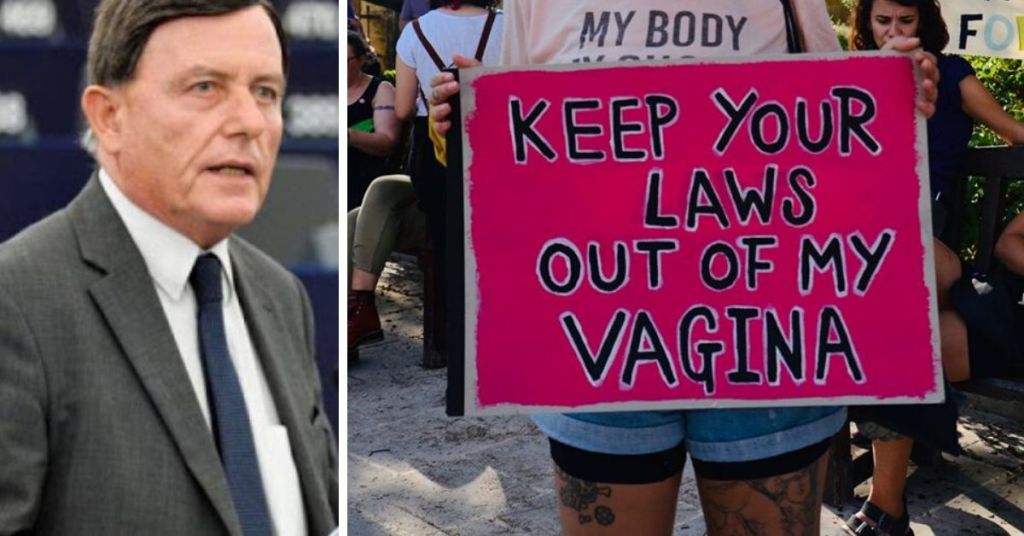
Former Maltese Prime Minister and current MEP Alfred Sant confirmed he is “leaning towards pro-choice” on the issue of abortion, saying its legalisation is “inevitable”.

Malta’s blanket ban on abortion made international news with anonymous testimonies of Maltese women who had abortions; interviews with local pro-choice NGOs and a surprising revelation from Maltese MEP Alfred Sant.

Whilst he told the Guardian that he leans towards being pro-choice, he also said the issue is “not a cut and dried one”.

Sant was the only Maltese MEP of six to vote in favour of an EU resolution in March to protect reproductive health services in the pandemic.

“In private, people admit that there’s a hypocrisy to our stance. Politicians, too,” Sant told the English newspaper.

“They know that Maltese are going abroad to get abortions and that there are local doctors who recommend abortions. They admit that there are scenarios when abortion is justified. But they won’t say so publicly.”

There were at least 58 women in Malta who got an abortion in 2019, the UK’s figures on the medical procedure shows. Meanwhile, others in Malta travel to other countries around Europe to terminate their pregnancies, with Italy, France, Spain, and Germany providing women with access to the medical procedure.

Sant says local dialogue on the taboo topic is shifting and it is “inevitable” that abortion will eventually be legalised.

Source: https://lovinmalta.com/news/maltese-mep-comes-out-as-leaning-pro-choice-and-says-legalising-abortion-is-inevitable/?fbclid=IwAR1TxQXhfGD23c7_0XMRdh_uHPP_JH7ZVFraQc0EVCFFmhM8JQX0laozNv0

Donald Trump‘s administration has rolled back nondiscrimination healthcare protections for women and transgender people by reversing a rule that would prevent healthcare workers and insurance companies that receive federal funds from refusing to provide services like abortion or gender-affirming care.

The rule changes could allow health providers to deny coverage and care to women and transgender people, as the nation is in the grip of the coronavirus pandemic.

They also arrive in the middle of Pride month on the anniversary of the Pulse massacre, when 49 people were gunned down inside a gay nightclub in Orlando, Florida.

Invoking “religious freedom”, the Department of Health and Human Services had revised a rule under the Affordable Care Act to revert to “the government’s interpretation of sex discrimination according to the plain meaning of the word ‘sex’ as male or female and as determined by biology”.

The changes revoke discrimination protections on the basis of ”gender identity” and sex, including patients seeking an abortion.

They are likely to be challenged in court: the American Civil Liberties Union, Lambda Legal and the Human Rights Campaign and other groups have already announced plans to sue the administration.

“In the middle of a global pandemic, with our nation in uproar over a systemic devaluing of Black lives, this administration chose to prioritise a rule change attempting to roll back anti-discrimination protections in health care,” said LGBT+ legal advocacy organisation Lambda Legal. “Despicable doesn’t begin to describe it.”

Human Rights Campaign president Alphonso David, said: ”LGBTQ people should not live in fear that they cannot get the care they need simply because of who they are. It is clear that this administration does not believe that LGBTQ people, or other marginalised communities, deserve equality under the law.”

Initial rules under former president Barack Obama‘s administration established civil rights protections in healthcare, barring discrimination on the basis of race, colour, national origin, age, disability or sex as well as gender identity. Health providers and insurers, under those anti-discrimination rules, would have to cover costs associated with gender-affirming care

Sought by Christian conservative groups that the president has courted for his campaign, the rule changes have been widely condemned by health advocates who fear that the administration is endangering already-vulnerable patients amid the Covid-19 crisis.

The rule changes also end Obama-era requirements that health providers offer non-English signage, alarming health organisations that serve immigrant communities.

“Neither a global pandemic, nor national uprisings over racist violence, nor Pride month will stop the Trump administration from doing everything in its power to discriminate, divide, and reduce access to healthcare,” Planned Parenthood said in a statement.

“This cruel and discriminatory rule will only make it harder for transgender people, immigrants, and people seeking sexual and reproductive services to get care, and could even prevent people from getting the care they need entirely.”

The move is part of the administration’s sweeping attempts to rewrite sex discrimination across housing, education and employment policy.

A number of transgender health and advocacy groups are also joining legal challenges to the rule changes, which “contradict federal law and two decades of court rulings and put up more unnecessary barriers between 2 million trans people in the US and the healthcare and insurance coverage they need,” according to the Transgender Law Centre.

“Trans people should be able to seek medical care when we need help without being turned away or denied treatment because of who we are,” executive director Kris Hayashi said in a statement. “This appalling move by the Trump administration puts the lives of trans people in jeopardy – especially trans people living with HIV, Black trans people and trans people of colour, trans people with disabilities, and trans people living in rural areas and in Southern states.”

Source: https://www.independent.co.uk/news/world/americas/us-politics/trump-lgbt-healthcare-hhs-aca-section-1557-a9564131.html?fbclid=IwAR3iMljtQ4m8NKlS33T87btcBxgjHvCAqaHsmHehV7_QDiIdVTSTigH-EGM

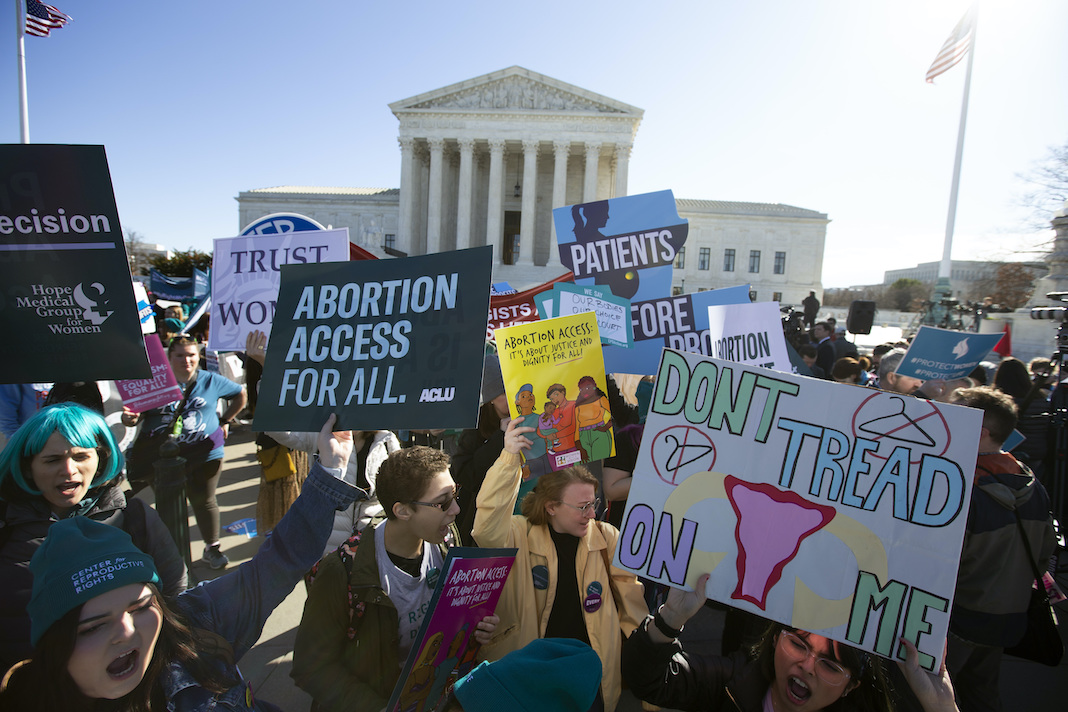
Abortion rights demonstrators along with Anti-abortion demonstrators rally outside of the U.S. Supreme Court in Washington, Wednesday, March 4, 2020. The Supreme Court is taking up the first major abortion case of the Trump era Wednesday, an election-year look at a Louisiana dispute that could reveal how willing the more conservative court is to roll back abortion rights. (AP Photo/Jose Luis Magana)

Recent GOP attacks haven’t shifted the public’s support of abortion.

Anti-abortion lawmakers have made concerted efforts thus far in 2020 to implement more bans and restrictions on the medical procedure. But those efforts may have been in vain when it comes to changing people’s minds. According to a new CBS poll published Monday, a large majority of people in the country still support abortion rights.

As the country awaits a Supreme Court decision in a case that could radically reshape the availability of abortion, the poll found that 63% of Americans support keeping Roe v. Wade intact. Almost half — 49% — of self-identified Republicans agree with that view as well.

The poll was taken in advance of the Supreme Court decision in June Medical Services LLC v. Russo, a major case looking at abortion restrictions. As the current Supreme Court term ends June 30, a decision is expected before then.

But some states haven’t been waiting on the Supreme Court to help them ban abortion. The beginning of the year saw a spate of so-called “born-alive” abortion bills, which conservatives have argued are necessary to protect children who may be born during an abortion. Experts have said these bills serve no medical purpose, but instead rely on inflammatory language and unrealistic hypotheticals to stigmatize both doctors and patients.

In February, Sen. Ben Sasse (R-NE) conducted a hearing on such a bill, allowing anti-abortion activists to repeat long-debunked talking points about how abortion providers have a financial stake in providing abortions later in pregnancy.

West Virginia passed a “born-alive” bill that some GOP backers outright admitted was only about sending a political message — not solving an actual problem. Kentucky tried to pass a similar bill but ran out of time to overrule a veto by Democratic Gov. Andy Beshear.

In Wyoming, the legislature passed a “born-alive” bill that was so unnecessary even the state’s hard-line anti-abortion governor, Republican Mark Gordon, vetoed the bill. In his veto statement, he pointed out that laws in Wyoming already prevent people from denying care to a child.

The coronavirus pandemic also provided many states with a convenient excuse to ban abortion for a time by declaring that the procedure was “nonessential.” As a result, for several weeks in March and April, the status of abortion access was unclear for anyone seeking care in those states.

Arkansas initially banned it entirely but then said people could have an abortion if they had a COVID-19 test within 48 hours prior to the procedure, even though the tests weren’t widely available. Lengthy litigation in Texas during April meant the availability of abortion there changed nearly daily. And Alabama, Iowa, Kentucky, Ohio, and Oklahoma all tried to use the pandemic as an excuse to ban abortion, with varying degrees of success.

However, these recent GOP attempts to restrict and ban abortions have done little to change the fact that most Americans believe abortion should be legal and available.

But they have succeeded in making abortions harder to get. A recent study in Ohio found that as the state placed greater restrictions on abortions, patients were getting the procedure later. Another study showed that abortion regulations can dramatically increase the cost of the procedure without providing any added safety.

Research has shown that when costs increase, access decreases. A report released by Ibis Reproductive Health found that searching for financial resources to cover the costs of an abortion can delay people from receiving abortion care, “forcing some women to have later abortions and increasing the costs and potential health risks of an unintended pregnancy.”

The country is waiting to learn whether the Supreme Court will give the green light to further restrictions. But for now, the American public stands firmly behind the right to get an abortion.

Source: https://americanindependent.com/abortion-support-poll-roe-v-wade-supreme-court-reproductive-rights-gop-scotus/?fbclid=IwAR29lesuGRb1p9-yMCl4Kuki0Tulu6U2jVq1JTbq4l_TqiI0Vfe7XrLMEic

Black, brown, Indigenous, disabled, and low-income people have historically been victim to state-sanctioned forced sterilizations and reproductive coercion.

With no protection from the control of their abusers and limited access to health services during the pandemic, many survivors have little or no opportunity to access reproductive care.
Shutterstock

During the coronavirus pandemic, advocates have predicted a surge in domestic violence in the United States. Some worry that in addition to forcing survivors to stay in lockdown with their abusers, recent COVID-19-related abortion restrictions could lead to reproductive coercion.

In at least four cities across the country, police reports of domestic violence have actually gone down during the pandemic, when compared to the same weeks in recent years. The decline is actually a cause for concern; these stats may not reflect reality, given that many survivors do not report violence at the hands of family members to the police. Among the abusive behavior that is difficult to track is reproductive coercion—attempts to control someone’s reproductive health and decision-making as a means to maintain power over them, which typically occurs within the context of an abusive intimate relationship.

According to an analysis of 2011’s National Intimate Partner and Sexual Violence Survey, Black, Indigenous, and multiracial women are disproportionately victimized by intimate partner violence compared to their white counterparts.

While women of color are disproportionately impacted by domestic violence, they also experience reproductive control from the state. And so organizations that work across issues of reproductive justice, criminal justice reform, and immigration continue to address reproductive coercion, control, and gender-based violence more broadly. In particular, groups like Sueños Sin FronterasSisterSongSanctuary for Families, and National Bail Out are working to address the holistic needs and political interests of women of color, including incarcerated and detained women and pregnant people.

Reproductive coercion during COVID-19 lockdown

During the COVID-19 crisis, state governments have restricted abortion care, citing coronavirus precautions in order to ban or block the availability of abortion services by labeling the surgical procedure as “elective” and “nonessential.” (While most abortion bans have been lifted as states reopen and as litigation proceeds, Arkansas is requiring abortion-seekers to first get a negative COVID-19 test within 48 hours of the procedure.)

These onerous restrictions during a massive public health emergency made it necessary for many pregnant people to travel outside of their state to access care, risking COVID-19 exposure; otherwise, they would be forced to carry an unwanted pregnancy to full term. For survivors of domestic violence sheltering in place with their abusers, the latter outcome—or other more dangerous outcomes—is far more likely than the former. Forcing people to carry unwanted pregnancies to term results in a myriad of poor health outcomes, as well as material poverty, unemployment, hunger, and compounded psychological effects.

“Reproductive coercion, lack of access to abortion care, and restrictions on women’s choice are a form of gender-based violence,” said Luba Reife, deputy director of the family law project at Sanctuary for Families, which serves and advocates for survivors of gender-based violence in New York. Reproductive control in abusive relationships can look like coerced sex without contraceptives, attempting to impregnate someone against their will, or interfering with a person’s contraceptive methods or right to obtain an abortion.

COVID-19 restrictions particularly affected survivors of intimate partner violence, Reife said, with family and criminal courts reluctant to grant orders of protection that exclude the abuser from the home they share with the survivor due to public health concerns.

With no protection from the control of their abusers and limited access to health services during the pandemic, many survivors have had little or no opportunity to access reproductive care. Remote options to seek help like telemedicine and other telehealth services can be complicated options for survivors who are trapped with their abusers.

State-sanctioned reproductive control

Denying a person’s reproductive autonomy is a form of violence and abuse—whether it’s exerted by an intimate partner or by state forces. Reproductive control is not limited to the domestic sphere; in fact, pregnant people in jails, prisons, and immigrant detention centers have throughout history been systematically victimized by reproductive coercion at the hands of the state. As always, Black, brown, and Indigenous communities are most at risk.

“Pregnant and detained women cannot exercise [the] right to seek an abortion,” said Laura Molinar, founder and executive director of Sueños Sin Fronteras, a community-based organization that supports immigrant, undocumented, asylum-seeking folks and their families. In recent years, the Trump administration attempted to stop unaccompanied pregnant minors in immigrant detention from obtaining abortions.

“Women are subject to inhumane conditions, poor access to medical care in unhealthy environments. Women are having stillbirths and miscarriages, complications with pregnancy in detention,” Molinar said. “There are documented accounts of them being shackled, having hands and feet shackled.”

Black, brown, Indigenous, disabled, and low-income people have historically been victim to state-sanctioned forced sterilizations and reproductive coercion.

From forced sterilizations at women’s prisons to limiting or refusing abortions, the criminal justice system has long imposed discriminatory practices of reproductive control on Black and brown people in the carceral system—practices rooted in racism. In 1991, Darlene Johnson, a Black mother of four, was forced by a judge to get a birth control device implanted into her arm for three years after pleading guilty to three counts of felony child abuse. In 2010, Kimberly Jeffrey, a Black mother who served time at the Valley State Prison in central California for a parole violation, had to advocate for herself against pressure to be sterilized while she was sedated and strapped to a surgical table for a cesarean section. Between 2006 and 2010, 148 people incarcerated at the Valley State Prison and another California state prison were illegally sterilized via tubal ligations by the California Department of Corrections and Rehabilitation.

What’s being done about this?

Reproductive justice organizations have long pushed policy changes to better protect the reproductive freedom of people who are incarcerated—as well as those under lockdown during the pandemic.

Sanctuary for Families provides legal help for survivors and works with them to develop a safety plan to keep them and their children safe during and after the pandemic. Sueños Sin Fronteras’s health advocate program offers an umbrella of services to support its communities at different phases of the legal immigration process, including advocating for better health care for migrant and refugee families.

Meanwhile, Black women-led reproductive justice organizations work to address the needs of mamas of color. SisterSong, a Southern-based reproductive justice collective, provides holistic health resources and advocates for the right to live, give birth, and parent in safe, sustainable communities. Notably, the group mobilized to end the shackling of pregnant people in prisons and jails across various states. National Bail Out’s #FreeBlackMamas campaign addresses the elevated risks of COVID-19 for people in jails and prisons by bailing out Black mamas and caregivers.

These organizations acknowledge that they’re addressing issues that are systemic and require strategies that address institutionalized sexism and racism while working to eliminate the structural issues that reinforce reproductive coercion.

We need multi-pronged approaches to address the coercive forces experienced by domestic violence survivors, people who are incarcerated, and immigrant communities across multiple institutional contexts. As advocacy organizations confront the dynamic violence that treats certain bodies as more disposable than others, they show the transformative power of grassroots networks and community care structures.

Source: https://rewire.news/article/2020/06/10/advocates-fear-another-devastating-impact-of-covid-19-more-forced-pregnancies-and-reproductive-control/

More than 250 protesters - chased indoors by a spring rain storm -- gather Tuesday, May 21, 2019,  at the Iowa Capitol a

More than 250 protesters – chased indoors by a spring rain storm — gather Tuesday, May 21, 2019, at the Iowa Capitol as part of the national #StopTheBans Day of Action for Abortion Rights. (Rod Boshart/The Gazette)

Pandemic disease. High unemployment. Business closings. Police violence against African Americans. Mass protests.

The State of Iowa has a lot on its hands. And the Legislature has not been able to meet since March, when it shuttered due to the danger of COVID19.

Yet now that the Legislature is back in session, the Republican majority has decided that among its highest priorities is to pursue its war on abortion.

Their tactic is to try to undo history. In 2018, the Iowa Supreme Court ruled that the state constitution protected the right to abortion. The decision nullified a 2017 law that mandated a 72-hour waiting period before a client could terminate a pregnancy. In 2019, the same decision was cited in nullifying the state’s “fetal heartbeat” law, which – had it gone into effect – would have been the most restrictive in the country.

Like a child who doesn’t like rules that prevent her from winning a game, the Republican majority now wants to change the rules rather than admit defeat. Their proposal: Senate Joint Resolution 2001, which would amend the state constitution to declare that it does not protect the right to abortion.

But this isn’t a child’s game. It’s the constitution. And it’s the health and well-being of Iowans who work hard to make the best decisions for themselves and their families in complex circumstances. In a truly audacious move, the Republicans are proposing a constitutional amendment intended to reduce – rather than protect or expand – Iowans’ liberties.

Throughout this difficult season, Iowans have continued to rely on the services of abortion providers like the Emma Goldman Clinic in Iowa City. Those providers have responded with enormous dedication and self-sacrifice, revamping procedures to ensure the safety of clients and staff. They’ve done so because they are passionately committed to Iowans’ health, safety, and well-being. They know that the fight for reproductive rights is inextricable from the fight for racial and economic justice, as poor people and people of color are especially likely to be denied bodily autonomy – whether that means lack of access to health care or outright violence.

Iowans are mature enough to make their own health decisions. A constitutional amendment eroding their right to do runs counter to the advice of professional medical organizations, which support access to safe abortion care. And it runs counter to public opinion: a large majority of Americans support abortion rights. Members of the Iowa Legislature need to reject this bald attempt to limit our liberties.

Elizabeth Heineman is a member of the board of directors of the Emma Goldman Clinic in Iowa City.

Source: https://www.thegazette.com/subject/opinion/guest-columnist/iowa-republicans-ignore-real-crisis-threaten-abortion-rights-instead-20200609

The Supreme Court is set to radically alter immigration, abortion rights, and employment discrimination law—all in a matter of weeks.

The Supreme Court is set to decide its first abortion rights case since Justice Brett Kavanaugh joined the bench, and the stakes are predictably sky high. Doug Mills-Pool / Getty Images

It’s shaping up to be one hell of a summer as the country wrestles with Depression-era unemployment levels, nationwide police brutality protests, and state leaders reopening businesses in the middle of a pandemic that shows no signs of abating.

These wild and unpredictable times are about to become even wilder once the U.S. Supreme Court decides the following cases, potentially altering the landscape of LGBTQ rights, immigration, abortion rights, family planning funding, and government funding for religious schools. 

Workplaces could become a lot less equal 

Can your boss fire you for being gay or transgender? Any day now the Supreme Court will release its opinion in a series of cases that answer that very question. 

At issue in the three cases is Title VII of the Civil Rights Act of 1964. More specifically, these decisions will determine whether Title VII’s prohibition on discrimination “because of sex” includes discrimination on the basis of a person’s sexual orientation or gender identity.

When the Roberts Court heard oral arguments in the cases in October, the justices appeared largely split along ideological lines. If civil rights advocates have any hope of succeeding, they are going to need the vote of at least one of the Court’s conservatives, with Justice Neil Gorsuch being the likely candidate. He offered signs that he was possibly sympathetic to arguments that Title VII protects LGBTQ workers.

I remain skeptical, however, that any of the Supreme Court’s conservatives will side with workers in these cases.

The potential impact here is enormous. Workers in 25 states have no laws protecting them from employment discrimination if they are gay or transgender. In addition to facing discrimination in hiring and firing, LGBTQ workers can experience significant wage disparities. A decision from the Supreme Court finding that federal law does not protect LGBTQ workers will exacerbate those disparities and leave workers with a patchwork of job protections that are dependent on what state, and in some instances what city, they happen to live in.

The Title VII cases aren’t the only major employment discrimination cases looming at the Supreme Court. Two California Catholic schools have asked the Court to rule that religious employers don’t have to comply with state or federal laws like Title VII that ban workplace discrimination. 

Our Lady of Guadalupe School v. Morrissey-Berru and St. James School v. Biel involve what’s known as the “ministerial exemption” to anti-discrimination laws. The exemption is designed to preserve the distinction between church and state by recognizing that religious groups enjoy some constitutional freedom to select their own leaders and run their own affairs free from government interference.

But who is a minister, and just how far does that exemption reach? That’s what the Court is poised to decide. Both cases involve claims by former teachers that they were unlawfully fired. One teacher claims she was the victim of age discrimination, and the other says the school fired her because she had cancer, in violation of disability rights laws. The schools used the ministerial exemption to defend the firings. 

If the Supreme Court sides with the schools in these cases, it would greatly expand the ability of religious employers—including Catholic hospitals and universities—to fire and hire workers based on religious beliefs, regardless of whether a particular job is religious in nature. 

John Roberts could decide the fate of nearly 700,000 DREAMERs

The deportation status of nearly 700,000 people hangs in the balance, with the Supreme Court poised to decide if the Trump administration properly rescinded Obama-era protections for undocumented people brought to this country as children.

In September 2017, the Trump administration announced it was ending the Deferred Action for Childhood Arrivals (DACA) program and would begin deportation proceedings for those who had previously been spared under the program. Federal courts blocked those initial plans, ruling the administration did not offer sufficient justification for ending DACA.

Supreme Court conservatives have backed the Trump administration’s most racist policies, including its Muslim Ban, with Roberts providing the critical fifth vote to bless the administration’s actions. The DACA case is set to add another decision with devastating human consequences to Roberts’ tarnished legacy. 

Brett Kavanaugh’s first big abortion rights case could be devastating

The Supreme Court is set to decide its first abortion rights case since Justice Brett Kavanaugh joined the bench, and the stakes are predictably sky high.

In 2016, abortion rights advocates celebrated a historic win in Whole Woman’s Health v. Hellerstedt, when the Court declared that that abortion restrictions designed to advance the health and safety of a patient needed to be supported by evidence and couldn’t place a substantial burden on the patient seeking abortion care. That entire ruling, along with the ability of abortion providers to sue on behalf of their patients, now stands at risk in June Medical Services v. Russo, a case out of Louisiana that is a repeat of Whole Woman’s Health. I’m not kidding.

The principle difference between the two cases is that Whole Woman’s Health involved a challenge to a Texas abortion restriction, while June Medical Services is a challenge to that same restriction, but in Louisiana. The other difference between the two cases is that conservatives now have a majority on the Court thanks to Kavanaugh’s appointment. That’s left abortion rights advocates looking to Roberts as a potential swing vote in this case. And when it’s up to Roberts to rescue abortion rights, well, that’s never a good spot to be in.

A decision in Louisiana’s favor could not only usher in a whole new wave of bad-faith abortion restrictions, but could make it astronomically more difficult to challenge those restrictions in court. 

Trump’s attack on international family planning organizations 

You know it’s been a bananas year at the Court when a case involving international family planning and abortion barely makes the radar. But that’s just 2020’s vibe, I guess. 

In January 2017, Trump announced he was reinstating and expanding the “Mexico City Policy.” Also known as the “global gag rule,” the Mexico City Policy requires foreign non-governmental organizations to certify they will not “perform or actively promote abortion as a method of family planning” using non-U.S. funds as a condition for receiving U.S. family planning funds.

Think of it as the Republican effort to defund Planned Parenthood here in the United States. But on steroids. And global. In May, the Supreme Court heard arguments in a case that could determine whether the Trump administration can condition family planning funding on excluding abortion services and information. And given the fight over the Trump administration’s efforts to upend family planning programs here in the United States, a ruling in the global gag rule case could signal how the Court would decide challenges to those domestic defunding efforts as well. 

Yes, Virginia, we’re still fighting about birth control 

Why is it that it’s 2020 and we are still fighting about the birth control benefit in the Affordable Care Act? Is it because Republicans keep trying, and failing, to repeal the ACA altogether?

That’s my running theory, because there is no reason the Supreme Court should be wasting its time on attempts by the Trump administration to roll back the benefit while also sneaking in a massive expansion of employers’ abilities to raise “moral” objections to laws they don’t like. Yet here we are. If the Supreme Court gives the Trump administration’s efforts a thumbs up here, expect to see more regulatory carve-outs from the administration, as employers will test the limits of these new moral exemptions.

Don’t like single moms in the workplace? Believe the government has no authority to set a minimum wage? These are the kinds of arguments we could see in the future if the Trump administration gets its way here.

Religious schools could get a lot more government cash 

Montana is one of 37 states with a constitutional amendment barring taxpayer dollars from directly or indirectly going to religious schools. Known as “baby” Blaine Amendments, these state prohibitions are based on a similar federal ban introduced in Congress in 1875 by former U.S. House Rep. James Blaine (R-ME).

The federal ban failed to pass, but the “baby” Blaines swept across states as part of a wave of anti-Catholic sentiment. Religious conservatives have long sought to upend Blaine Amendments in the states and open up religious schools to taxpayer funding. Espinoza v. Montana Dept. of Revenue may finally give them their chance. 

Source: https://rewire.news/article/2020/06/09/while-you-protest-the-supreme-court-is-poised-to-pummel-your-rights/

Doctor patient op-ed

The pandemic challenges all of my patients, Dr. Kristyn Brandi says. People who might have been excited to be pregnant are now concerned about impacts on their health and that of their potential child. I have had patients lose their jobs and the ability to pay for medical care or a new mouth to feed. I have had patients lose their spouse or parent to COVID-19, making the decision to have a new child seem impossible.

I heard it twice in one day: “I don’t know what to do.”

As a doctor practicing in Newark, I see patients with a broad diversity of lived experiences. Itis unusual to hear the same story back to back. But we are in unusual times. Two people: one, a patient in my obstetrics clinic, the other a close friend. Both were concerned about being pregnant in the time of COVID-19.

The pandemic has been eye-opening to many of us in the health care system. As an OB/GYN providing both prenatal and abortion care, I support my patients through the best and worst times, through exciting and hard decisions. But the pandemic challenges all of my patients.

People who might have been excited to be pregnant are now concerned about impacts on their health and that of their potential child. I have had patients lose their jobs and the ability to pay for medical care or a new mouth to feed. I have had patients lose their spouse or parent to COVID-19, making the decision to have a new child seem impossible.

There is much attention at this time on ensuring access to safe birth care, but much less on ensuring safe abortion care. This political response highlights the critical nature of abortion care and the barriers to accessing it.

New Jersey Gov. Phil Murphy has rightly identified abortion as “essential health care.” It is time-sensitive care that, if delayed, can significantly impact the patient’s life. Because of that leadership, I have been fortunate to continue providing abortion care throughout the pandemic. The fact that this is not the case elsewhere has caused mass confusion and distress. Health care should not be determined by your zip code, and states should not treat the same care differently based on politics rather than science.

Moreover, COVID-19 has made typical barriers to abortion care even worse. If you have lost your job – a common reason people cite as to the reason they are accessing abortion in the first place – can you pay for the procedure? If you need to travel by bus to access abortion care, can you do so without the risk of infection? With schools out, who will watch the kids while you are at your appointment? Many of these barriers hit Black, brown, Latinx, Asian and Pacific Islander communities, immigrants, and low-income patients the hardest even during normal times.

So, what do we do now to ensure abortion access during another pandemic or, ideally, a pandemic-free future? Here is a humble suggestion from a health care provider: make abortion care affordable for all.

The first way to do this is to end the Hyde Amendment, an addition to the federal budget that prohibits federal tax dollars from covering abortion care. With the Hyde Amendment in place, patients with federal insurance (like military members and dependents, veterans, federal employees) have holes in their coverage based solely on where they work. Just as I want patients to be able to afford their prenatal care and pap smears, I want my patients to also be able to afford their abortion care regardless of their source of insurance.

The second and most immediate step is for each of us to support our local abortion funds. As a trustee of the New Jersey Abortion Access Fund, I see the impacts of these barriers firsthand. Many patients without coverage for their abortion never make it into my exam room because they cannot overcome the barriers of cost – not just the cost of the procedure but those of transportation, time off from work, or childcare.

The New Jersey Abortion Access Fund is a volunteer-run 501(c)(3) organization providing financial assistance to those seeking safe, legal abortions. We partner with independent abortion providers in New Jersey to help individuals access quality, compassionate care. We help cover some of the costs of the procedure so people have one less barrier to getting the care they need and deserve.

I cannot wait until we’ve put the COVID-19 pandemic behind us. But even during this challenging time, health care doors are still open. I am proud to take care of my patients and show up to work every day. But we need much more to make sure people like my patients can access the care they need, today and tomorrow.

Dr. Kristyn Brandi is an assistant professor of Obstetrics, Gynecology, and Women’s Health at Rutgers New Jersey Medical School and the Board Chair of Physicians for Reproductive Health.

Source: https://www.nj.com/opinion/2020/06/abortion-is-essential-especially-during-this-pandemic-opinion.html?fbclid=IwAR2zFSZiGVfUucBWbwUK-kq9l0xLZPf4usTKwxUtnzKWrdmMc-LY89yK3fg

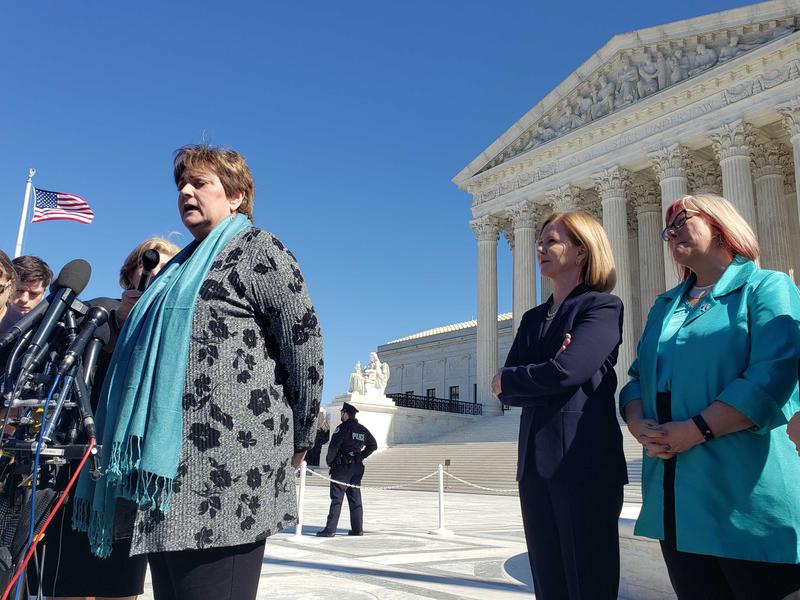
Kathaleen Pittman (left), the administrator of the Hope Medical Group for Women abortion clinic in Shreveport, addresses journalists on the steps of the U.S. Supreme Court on March 4.
ROSEMARY WESTWOOD / WWNO

It’s been three months since reproductive rights and anti-abortion groups swarmed the steps of the U.S. Supreme Court while lawyers for a Shreveport abortion clinic and the state of Louisiana faced off before the black-robed justices.

The landmark reproductive rights case — June Medical Services v. Russo — could decimate abortion access here, and potentially across the country. With just weeks left for the Court to release its decision, anticipation is rising.

“We are definitely doing what is called SCOTUS Watch just now,” said Kathaleen Pittman, the administrator of the Hope Medical Group for Women abortion clinic in Shreveport.

Back in 2014, it was her clinic and two doctors that sued the state over a law that would force abortion doctors to obtain admitting privileges at nearby hospitals, arguing that the law placed an undue burden on the constitutional right to abortion.

“I’m torn,” she said. “On the one hand, I want it to be over with. Let’s move on. I’m certainly still hopeful for a good win. But then, on the other hand, I worry, well, if it’s not a good win, or not a win at all, you know, where is that going to leave this?”

A district court found that if the law were to take effect, Louisiana would drop from three abortion clinics to just one. Most of the state’s few abortions doctors weren’t able to meet the requirement, which allows a doctor to admit and treat a patient in a hospital, through no fault of their own, the judge found. In some cases, anti-abortion sentiment seemed to be a factor. In others, it was the fact that abortion doctors rarely need to admit patients, because the procedure is exceedingly safe. (The clinic’s case was supported by the American Medical Association and the American College of Obstetricians and Gynecologists, among other leading national medical organizations.)

Since then, it’s not clear whether all three clinics might shut down, making Louisiana the first state without an abortion clinic since the aftermath of Roe v. Wade. Women could end up traveling hundreds of miles to Mississippi, Arkansas, Texas or Alabama.

The law is one of an estimated 450 anti-abortion restrictions passed around the country in the last decade, many aimed at abortion providers themselves — and one of 89 abortion restrictions passed in Louisiana since 1973, the most of any state. (The next state down, Indiana, has passed 63.)

It’s also identical to a Texas law that the Supreme Court struck down just four years ago. In that case, Whole Woman’s Health v. Hellerstedt, the court found that the admitting privileges law served no medical benefit, but would shut down half of Texas’s clinics.

“In Texas, it would have closed half the clinics,” said Nancy Northup, the CEO of the Center for Reproductive Rights, the legal non-profit that represents the Shreveport clinic. On a call with journalists last week, she called Louisiana’s case “identical in its lack of a medical purpose” but with a more devastating impact.

Northup and other abortion-rights advocates were outraged when the New Orleans-based Fifth Circuit Court of Appeals upheld Louisiana’s law in 2018 and 2019, despite that precedent set in Texas.

What’s changed in the years since the Texas case, though, is the occupant of the White House.

“The context of this is that the president of the United States, when he was running for office, said that he was — is — only going to put justices on the Supreme Court who would overturn Roe v. Wade,” Northup said.

Few observers believe the high court will use this case to overturn the decades-old ruling establishing a constitutional right to abortion, even though it’s been pushed to the right by two appointments from Donald Trump: Justices Neil Gorsuch and Brett Kavanaugh.

But other outcomes favorable to the anti-abortion movement are possible. And Benjamin Clapper, the executive director of Louisiana Right to Life and one of the law’s instigators, is hopeful the law will be upheld.

“We certainly hope that they’re going to see the logic that we began with, that abortion facilities don’t need protections,” he said. “The Supreme Court doesn’t need to be in the business of protecting the abortion industry.”

Louisiana, led by stridently anti-abortion Attorney General Jeff Landry, has argued that the law places no undue burden on abortion access; that doctors didn’t try hard enough to gain admitting privileges; and that the law should be allowed to stand even while Texas’s was struck down because, it argues, there are different circumstances in this case.

It’s also said the law only forces abortion facilities to comply with standards set for other outpatient surgical centers, an argument that leaves aside the contentious question of whether that level of regulation is necessary for abortion in the first place.

“For us, it was not about closing or not closing facilities, it was about applying those same health standards across the board,” Clapper said.

Senator Katrina Jackson was a member of the House when she authored the law, and she told a rally of supporters outside the Supreme Court this spring that the law is necessary for patient safety.

“I thank God that Louisiana has led the forefront of putting women first,” Jackson said, to cheers from the crowd. “For so long this nation put the abortion industry before the health and safety of the women.”

Lawyers for the Shreveport clinic have asked how a requirement found to do nothing to improve abortion safety in Texas could have some benefit the next state over. And if Louisiana’s law is upheld, it would likely be replicated in other states, sparking similar legal battles that might likewise result in the mass closure of abortion clinics.

As Pittman puts it: “If it works in one state, well, let’s try it in another state.”

But Pittman and her lawyers are worried about another aspect of the case. In addition to defending the law, Louisiana is arguing that abortion clinics and doctors should not be allowed to challenge state laws that might infringe on their patient’s right to an abortion.

The issue is critical, said Julie Rikelman, the lawyer who argued the case before the Supreme Court, becuase the vast majority of abortion rights suits are not brought by patients, but by their providers.

“There are dozens of cases in the federal courts right now where the plaintiffs, the parties who brought the case, are medical practices or physicians,” she said.

If doctors and clinics couldn’t sue over abortion restrictions, coronavirus abortion bans would likely have simply taken effect.

For abortion rights groups, the case is a perfect example of how Roe v. Wade can remain intact, while the practical access to the procedure crumbles.

“If there’s no meaningful access to abortion, if states can pass laws like this one, which close clinics and make it extremely difficult for anyone to actually access abortion, even while Roe remains the law, that is deeply troubling,” Rikelman said. “And the legal right does not mean a lot to a lot of people if they can’t actually access the care that they need.”

There’s no doubt that upholding Louisiana’s law would signal to anti-abortion politicians that there’s a new Supreme Court when it comes to one of the most incendiary issues in American politics.

Source: https://www.wwno.org/post/scotus-watch-anticipation-builds-major-supreme-court-abortion-decision-nears

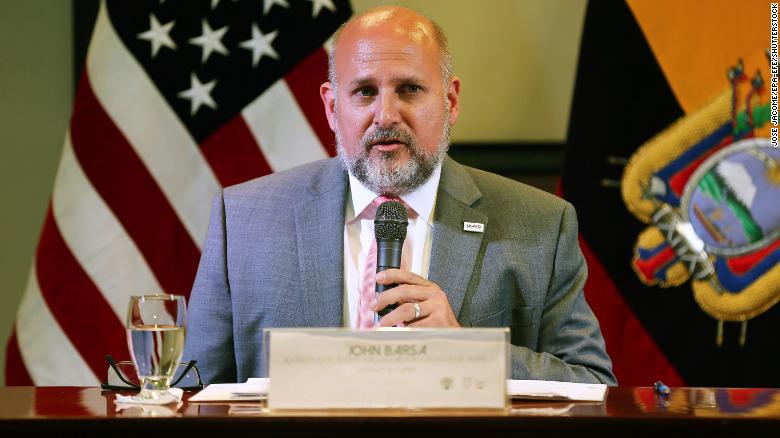
Assistant Administrator for the US Agency for International Development’s Bureau for Latin America and the Caribbean, John Barsa, addresses a press conference in Quito, Ecuador, on August 16, 2019.

The daughter of the acting head of the US Agency for International Development is rebuking her father over the agency’s push for the United Nations to remove abortion as an “essential service” in its response to the coronavirus pandemic.

“I am utterly disgusted that you choose to stand by this administration and take part in stripping people of their human rights. I am truly embarrassed to call you my father,” a Twitter account appearing to be that of Camille Barsa, acting USAID Administrator John Barsa’s daughter, posted Friday.
CNN has attempted to contact a number listed for Camille Barsa, but has not yet received a response. The USAID declined to comment, citing a family matter.
The tweet came in response to acting Administrator Barsa’s post: “Under @POTUS & @Mike_Pence’s leadership, the US prioritizes the protection of innocent life. Great to discuss my letter to @UN requesting the removal of abortion as an essential service in their COVID response & religious freedom protection with @tperkins.”
Barsa wrote a letter last month to the UN secretary general urging him to remove any references to “sexual and reproductive health,” including abortion, from the UN’s humanitarian response plan to the coronavirus pandemic to “avoid creating controversy.”
The UN “should not use this crisis as an opportunity to advance access to abortion as an ‘essential service,'” wrote Barsa, who assumed the role of acting administrator in April after working as the assistant administrator for USAID’s Latin America and Caribbean bureau.
UN health documents often refer to sexual and reproductive health and say it is central to the international agency’s broader goal of accelerating development, particularly efforts to improve mother and child mortality and health care. Global health experts say now is not the time to launch an attack on sexual and reproductive services.
The letter raised criticism from human rights groups and global health experts, who argued during a global pandemic is not the time to launch an attack on sexual and reproductive services.
Some state officials have pushed to include abortions among nonessential surgical procedures that must be deferred or canceled as coronavirus cases flood the health care system. Those efforts have been challenged in court.