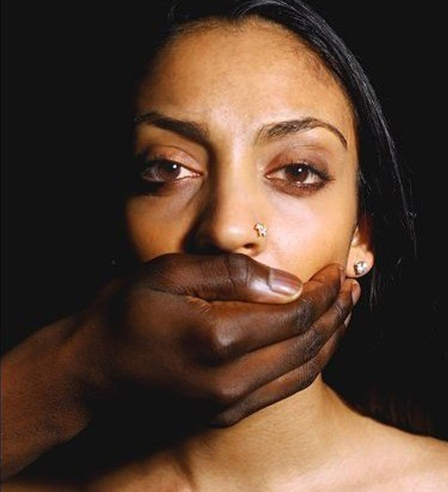
Moore, a candidate in an upcoming special election to fill a U.S. Senate seat, has connections to the most radical parts of the anti-choice movement.

Roy Moore, a Republican vying for his party’s nomination in the special election for a U.S. Senate seat in Alabama, is touting the endorsement of an anti-choice activist who once signed a letter endorsing the murder of abortion care providers as a “justifiable” act.

The endorsements listed on Moore’s campaign website list the Rev. Matt Trewhella as a key supporter of the Alabama Republican’s Senate bid, as People of the American Way’s Right Wing Watch first reported.

“Trewhella has long been an activist on the far fringes of the anti-choice movement,” Right Wing Watch’s Miranda Blue wrote. “In the early 1990s, he was one of 34 anti-abortion extremists to sign a statementdeclaring that the murder of abortion providers is ‘justifiable.’ Another signer of the statement, Paul Hill, went on to murder an abortion provider and the provider’s bodyguard. Around that time, Trewhella was videotaped calling for churches to arm children in order to form militias.”

Moore’s campaign site identifies Trewhella as the “author of ‘The Doctrine of the Lesser Magistrate.’” In a blog post for what is his website of the same name, Trewhella defended President Trump’s notorious suggestion on the campaign trail that women who have an abortion should face “some form of punishment” should the medical procedure be made illegal, calling it a “no brainer.”

“If abortion is murder—and it is—the woman should be punished,” wrote Trewhella, going on to suggest abortion is a “capital crime.”

“When we are asked what the punishment should be for women who have illegal abortions, we should unashamedly respond—whatever the penalty is for murder in the state where it takes place,” he wrote.

Trewhella served time in jail for actions associated with his anti-choice activism, as Rewire reported. He co-founded the anti-choice group, Missionaries to the Preborn, and was “one of a half dozen anti-abortion activists [then] under investigation as possible conspirators in a campaign of violence against abortion clinics,” according to an August 1994 report from Newsweek.

Though Trewhella later removed his name from the aforementioned statement suggesting that the murder of an abortion doctor was “justifiable,” he nonetheless “was a mentor for potentially violent anti-abortion extremists” according to a Newsweek investigation.

Trewhella is a part of an arm of the anti-choice movement advocating that states ignore federal law and court decisions that safeguard abortion rights. Moore has twice been removed from his position as a justice on Alabama’s Supreme Court, including once for refusing to comply with the U.S. Supreme Court’s landmark marriage equality decision.

Moore has numerous ties to anti-choice extremists, including Operation Save America, according to another report from Right Wing Watch. The anti-choice group’s leader, Rusty Thomas, has donated toMoore’s campaign, and Moore has spoken to the group’s supporters and accepted an award from it.

The campaign’s website notes endorsements from anti-abortion radicals, Operation Rescue’s Troy Newman and Personhood USA’s Jason Storms.

Moore faces Sen. Luther Strange in Alabama’s runoff for the Republican nomination for the special election for U.S. Senate on September 26. The winner will face Democrat Doug Jones in the December general race.

https://rewire.news/article/2017/09/22/roy-moore-endorsed-activist-suggested-murder-abortion-provider-justifiable/

How the anti-abortion movement uses children to legitimize its message.

JENAVIEVE HATCH/HUFFPOST
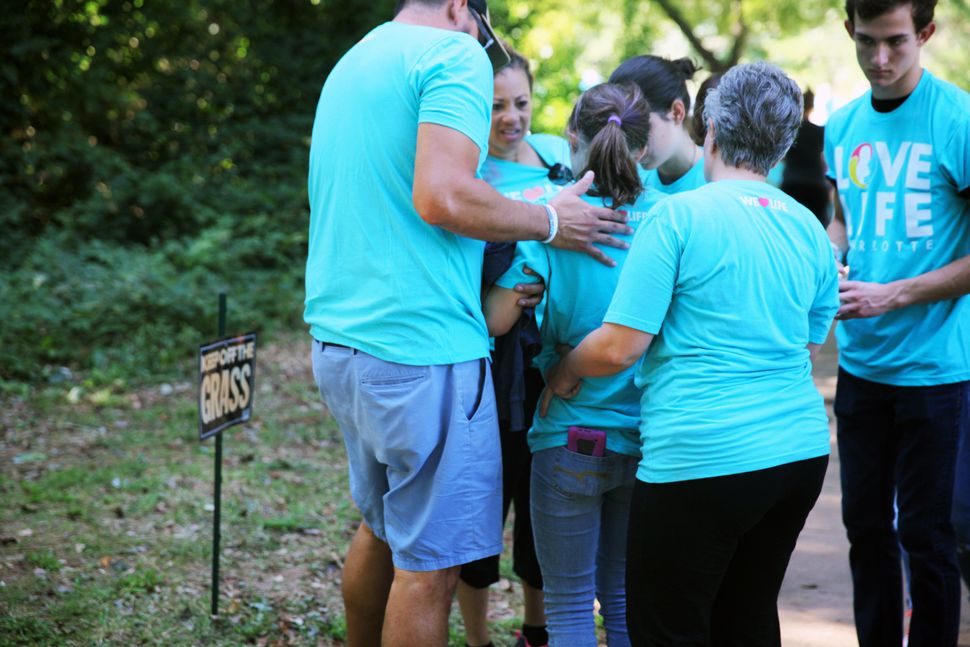
Kids link arms outside A Preferred Women’s Health Center in Charlotte to protest abortion access. 

Annie* was just 8 years old when her Southern Baptist parents started taking her to protest outside abortion clinics in Southern California. She marched in anti-abortion rallies, stood outside clinics with signs, and volunteered at crisis pregnancy centers.

Now, looking back at age 29, Annie wishes her parents hadn’t pushed her so hard to actively participate in a cause she didn’t quite understand at the time.

“I know, somewhere,” she told HuffPost, “there’s a picture of me holding a sign as a kid that read, ‘Would You Kill Me, Too?’”

“[Being forced to protest at such a young age] made me yell slogans for an issue I did not comprehend, and I deeply regret the hurt I probably caused as a child,” said Annie. “I remember women walking past me into a clinic, crying when they saw me.”

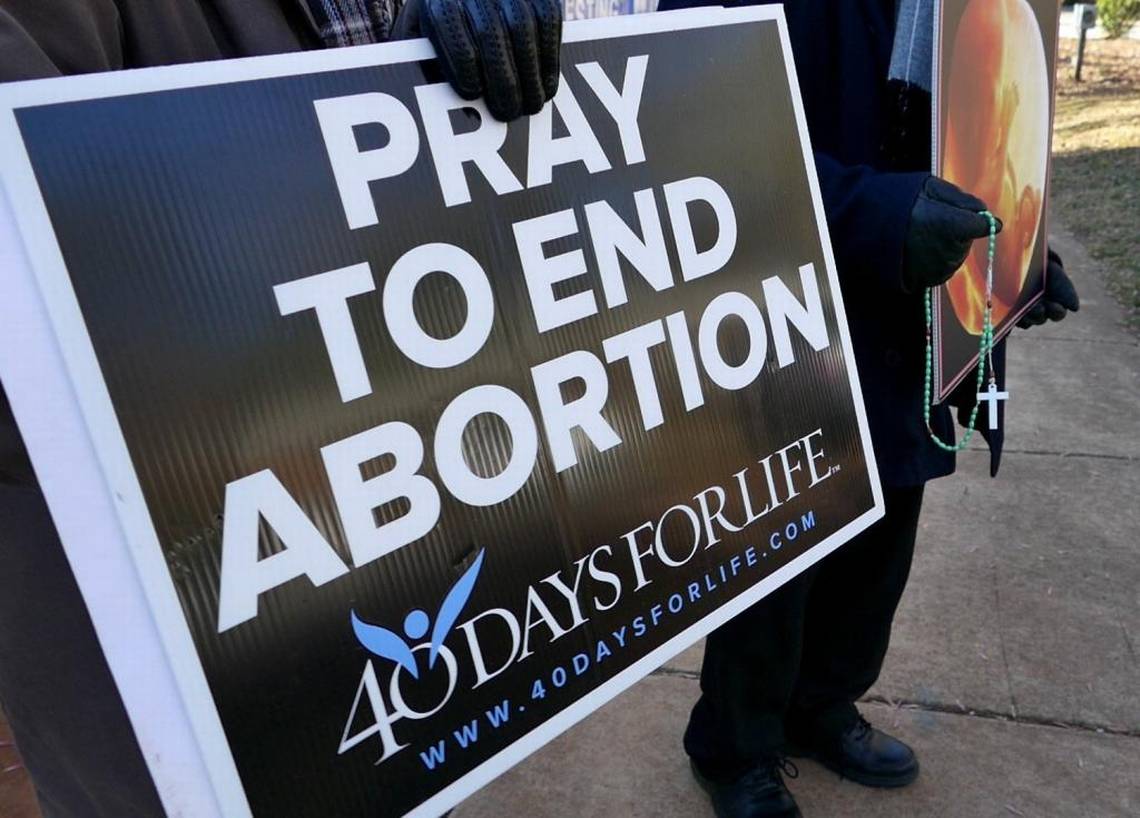
Annie’s experiences as a young child in the anti-abortion movement (if not her feelings about those experiences) are far from unique. Across the U.S., kids of all ages are woken up early on Saturday mornings and brought to local abortion clinics to protest with their parents. They pray, sing, pass out fliers, decorate sidewalks with chalk, or hold signs and posters.

While passing down religious and political beliefs is a natural part of parenting, and certainly not a bad thing, many patients, companions, clinic escorts and abortion providers that HuffPost spoke to question the role children are pushed to play in the anti-abortion movement. While anti-abortion leaders see children as an integral part of their protesting strategies, abortion rights advocates see young people being used as pawns to harass women making private health care decisions.

JEAN-MARC GIBOUX VIA GETTY IMAGES
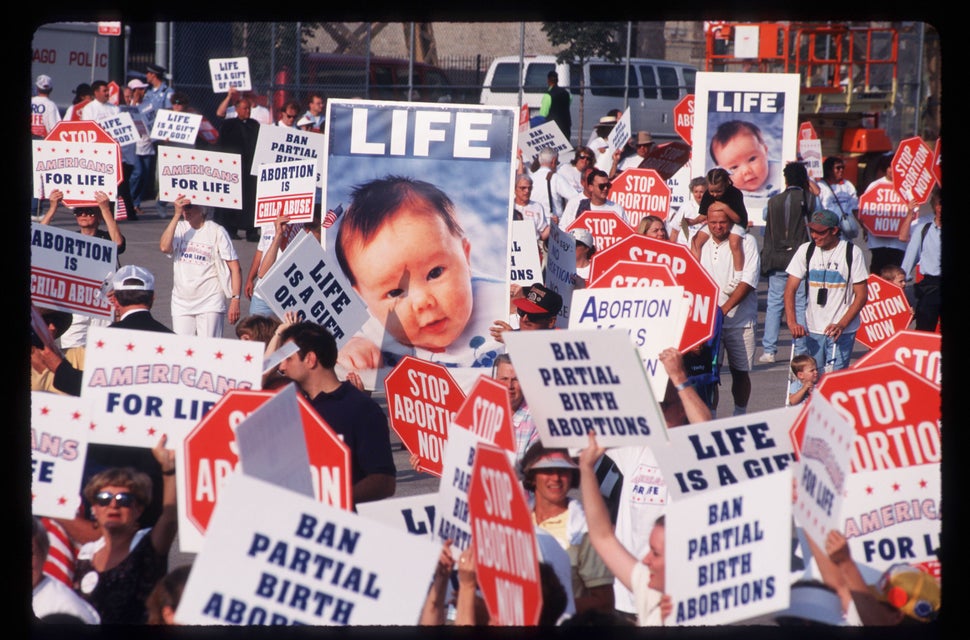
A 1996 protest in Chicago, Illinois during the Democratic National Convention.  

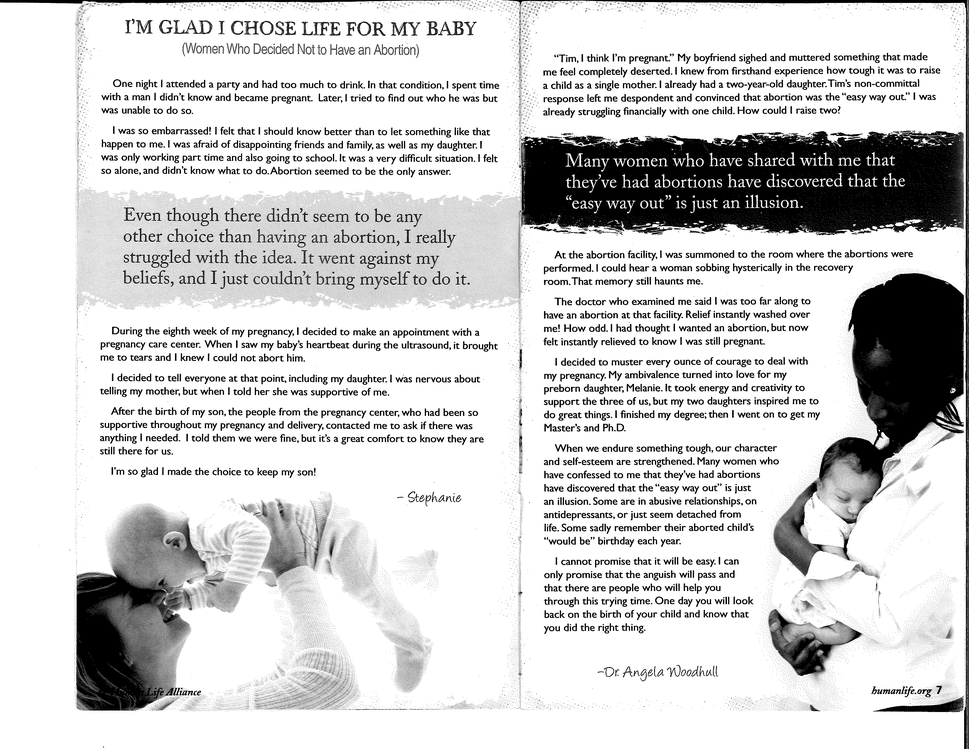
The anti-abortion movement has long used images of children in their marketing materials and posters. Protesters might carry posters featuring a baby or a young child’s face,  with words like, “Would you kill me, too?” overlaying the photo. Many volunteers at Crisis Pregnancy Centers pass out pamphlets and fliers outside abortion clinics that include photos of happy-looking families or smiling children.

HUFFPOST
A page from a Human Life (crisis pregnancy center and anti-abortion organization) pamphlet. 

But the role children play extends outside of appearing on posters.

Kids are also leading prayers or engaging in group prayers led by religious leaders, speaking anti-abortion rhetoric into megaphones or microphones, and passing out literature from crisis pregnancy centers.

There is perhaps no better manifestation of the movement’s use of children than last Saturday morning’s Youth For Life march in Charlotte, North Carolina, outside of A Preferred Women’s Health Center (APWHC), one of the biggest abortion providers in the south.

Love Life Charlotte, a conglomeration of churches in the Charlotte area who have come together to protest abortion access, was granted a parade permit by the city for Saturday morning for their Youth For Life march. According to Love Life Charlotte, about 40 churches bused in children of all ages to march outside the clinic.

Justin Reeder, the founder of Love Life Charlotte, told HuffPost that the event was an opportunity for youth members to “see how being pro-life is not just being against abortion but also offering love and life to those who feel abortion is their only option.”

“As our nation continues to become more pro-life (Editor’s note: a recent Gallup poll showed that 49 percent of Americans currently identify as “pro-choice” while 46 percent identify as “pro-life”) it’s important for young people to see how much love and life the Church can bring to those who feel abortion is their only option,” Reeder said. “The youth are not engaging people, but rather praying that God ushers in a culture of love and life to a place where mothers feel so alone and afraid.”

The youth march drew close to 1,000 participants on Saturday, according to Love Life Charlotte. The patients and patient companions that HuffPost heard from said that the sheer number of people marching outside the clinic coupled with the noise that they were making ensured an overwhelming and distressing experience for anyone moving in and out of APWHC. Two volunteer clinic escorts were so upset by the number of children participating in the demonstration that they left in tears.

Though Reeder said that the aim of the march was not to “engage” with the clinic’s patients, the protest very much affected the appointments of APWHC’S  patients. Although the participants never touched any of the patients, they did address them, often directly.

At one point, a 17-year-old member of Love Life Charlotte wept into a microphone, begging women who she called “Mom,” not to murder their babies. A small group of kids performed live music into microphones so that their songs could be heard from inside the clinic.

A Preferred Women’s Health Center is located at the bottom of Latrobe Drive, home to various local businesses on a wide two-lane road. Because Love Life Charlotte had been granted a parade permit, they were able to block off one of those lanes, thus disrupting the usual flow of traffic.

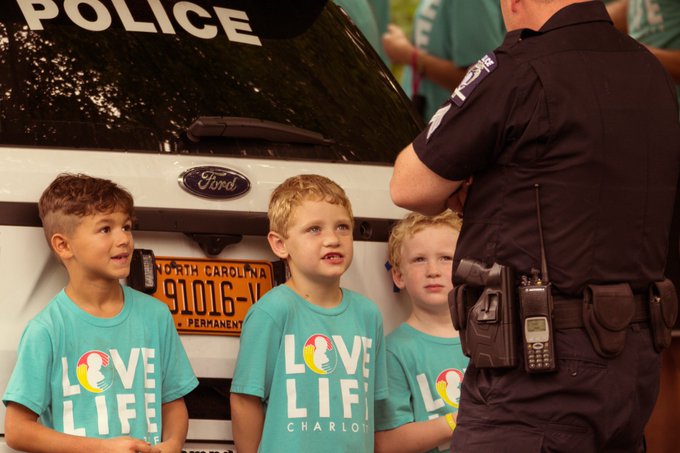
Members of the Charlotte-Mecklenburg Police Department were present to direct traffic and make sure members of all parties ― Love Life Charlotte, other anti-abortion groups, and Pro Choice Charlotte counter-protesters ― were abiding by all of the rules.

Calla Hales, clinic administrator at APWHC, has been skeptical of the police presence at these protests for a long time ― especially after an incident this summer in which members of CMPD were seen entertaining young kids from Love Life Charlotte while their parents prayed and protested outside APWHC.

(HuffPost reached out to CMPD for comment about this incident and did not hear back in time for publication.)

View image on Twitter

On Saturday morning, in preparation for the youth march, Hales created confidential questionnaires for patients to fill out once they’d made their way into the clinic. Just entering the clinic on Saturday meant passing not just the parade of children praying and singing at them, but also the usual gamut of aggressive protesters, and  the three mobile crisis pregnancy centers and their nurses who often try to divert traffic away from the clinic.

Of the 22 patients or patient companions who filled out the questionnaires, which were obtained by HuffPost, 12 of them said that the number of people on the street made them consider leaving their already-hard-to-get appointments.

One woman wrote, “I was scared to death of all those protesters.” Another person, who was a patient’s companion, commented, “I should not have to watch my friend be shamed and emotionally attacked for one of the hardest personal choices she has ever made.”

“They yelled into my car and embarrassed and upset my friend,” a second patient companion wrote on their feedback form. “Music ridiculously loud, able to hear inside the clinic. Very disturbing.”

And one woman, who had brought her daughter to the clinic, complained in her feedback form that on her way down Latrobe Drive to get to the clinic, she had been told by anti-abortion protesters to park “way way away from where I was supposed to be ― I am also handicapped.”

PORTLAND PRESS HERALD VIA GETTY IMAGES
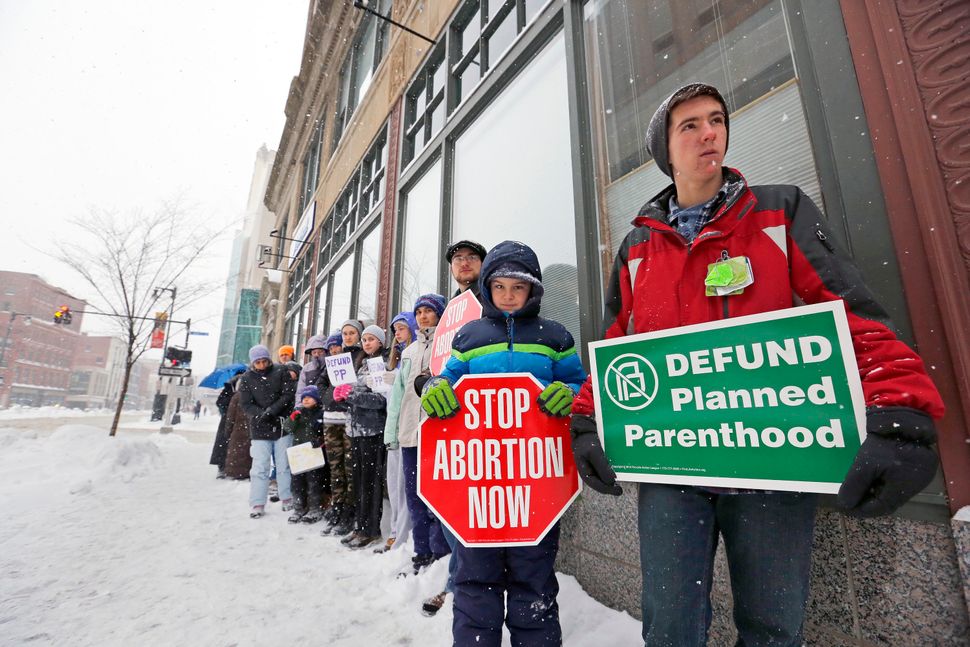
Children protest in the snow outside of Planned Parenthood’s Portland, Maine clinic last Februrary.  

While Love Life Charlotte’s youth march was an extreme example of child-based anti-abortion demonstrating, children all over the country are party to anti-abortion protests at the behest of their parents and their parents’ religious groups. According to patients and clinic staffers that spoke to HuffPost, this participation sometimes crosses the line from simply attending a protest to engaging in harassment.

One volunteer clinic escort based in Atlanta, Karen, told HuffPost that at the clinic she volunteers at, she’s seen an increase in this kind of harassment since the 2016 election.

“Since the election, we have a group from Abolish Human Abortion (AHA) and they often bring at least one little girl to participate in holding giant signs and speaking into the wireless-amplified megaphone,” Karen said. “The little girl will read from the Bible or from an AHA script. It’s clear [these girls] have no real understanding of what they are reading.”

Karen recalled an incident in which one of these young girls looked at her and called her “evil.”

“With direct eye-contact she asked me, ‘Why are you doing this? Why do you want to make money off of murdering babies? Do you know you are evil? Do you know you will burn in hell?’” Karen told HuffPost. “It’s chilling to see young children used this way … I’ve seen babies being carried as props, and toddlers tagging along as props with the AHA group.”

In Michigan at Northland Family Planning, one anti-abortion protester, Elvis Kesto, regularly brings his son, a toddler, to stand outside and protest with a sign that says, “Babies Are Murdered Here.” Kesto regularly posts photos of this onto his Facebook page.

Jessica James, a clinic escort at Northland Family Planning, argues that forcing children to engage in the abortion debate outside clinics is akin to “religious and emotional abuse.”

“My issue is with the long-term effects of what I consider to be religious and emotional abuse on a child that doesn’t have a choice in the matter,” Gird, who is training to be a social worker, told HuffPost.

FACEBOOK
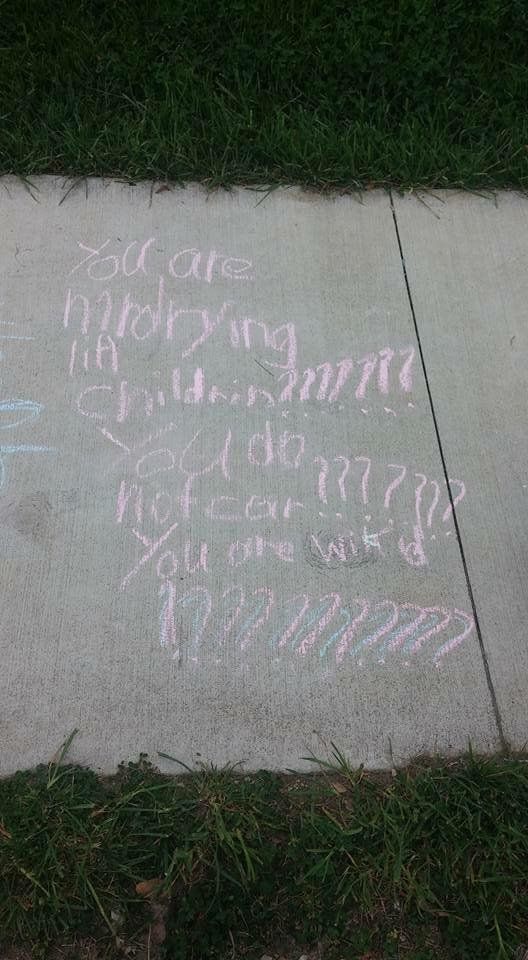
At the Planned Parenthood in Columbus, Ohio, two young girls regularly use chalk to write messages on the sidewalk by the clinic.

Steven Meyers, clinical psychologist and professor of psychology at Roosevelt University in Chicago, told HuffPost children that young “have limited perspective taking abilities, so they will have difficulty understanding what others experience.”

“Their emerging cognitive abilities mean that they don’t understand the complexity of issues and are more likely to perceive events in black-and-white terms,” he said. “Their stage in moral development involves mainly pleasing their parents and avoiding punishment rather than having the ability at this point to grapple with abstract or complicated decisions.”

In other words, anti-abortion protesters’ kids will follow the lead of their parents, regardless of the emotional consequences it will have on patients, because of their innate want to do right by their mother and father.

Of course, parents across the political spectrum encourage their kids to engage in political discourse. There were many children at the Women’s March on Washington the day after President Donald Trump’s inauguration, and many of their photos and posters went viral.

Meyers sees a clear difference between the Women’s March ― or any other peaceful march in a neutral space ― and anti-abortion protests, which often involve targeting individuals outside of clinics.

“The main difference between [the Women’s March and anti-abortion protests] is the amount of conflict and negative emotion that children are exposed to at these events,” he said. “Peaceful and orderly marches have the advantage of allowing parents to share their values with their children in ways that are more likely to be constructive teaching experiences. High conflict demonstrations can become more volatile and potentially distressing to young children.”

Annie, whose political views have changed since she held signs outside her area abortion clinic, agrees with this assessment.

“I remember first hearing about the concept of abortion when I was 6, I believe, when Bill Clinton got elected,” Annie told HuffPost. “My parents said it was a crime, for he wanted to kill babies.”

She also said that she’s had a hard time engaging in political demonstrations, because it brings back uncomfortable memories.

“I tried to attend an anti-Trump [protest] recently, and almost had a panic attack at the yelling, because it reminded me of the hurt I probably caused as a kid,” she said. “Whenever I see kids in any sort of political protest now, I just want to hug them and hide them away, even if I fundamentally agree with the idea they’re protesting.”

By 11am on Saturday, after the Youth For Life rally and over an hour of marching and praying in the humid North Carolina end-of-summer heat, two young girls from Love Life Charlotte fainted.

JENAVIEVE HATCH/HUFFPOST
A young member of Love Life Charlotte tries to stand up after suffering dehydration and heat exhaustion on Saturday.

The two young teenagers were too faint to stand up. They were both ultimately fine, but the rest of Love Life Charlotte, including Reeder, carried on up the hill to finish their parade, while only a handful of youths and a couple of adults waited with the girls.

As all of this was happening, a member of another anti-choice group, Cities4Life, yelled prayers into a microphone, and begged women to come out of the clinic.

“Abortion is child abuse,” he said.

Women will soon be able to book abortions directly, province to cover abortion pill

Nova Scotia women will soon be able to get an abortion without a doctor's referral.

Nova Scotia women will soon be able to get an abortion without a doctor’s referral. (Shutterstock)

Nova Scotia will soon no longer be the only province in Canada where women must get a referral from a doctor before booking an abortion.

The province announced Friday that women will be able to book a surgical abortion directly through the termination of pregnancy unit at the QEII Health Sciences Centre in Halifax.

The Nova Scotia Health Authority will also be setting up a phone line so women can call and make appointments. The new measures are expected to take effect in the next few months. The actual phone number hasn’t been decided on yet.

“We believe that women should have control over their reproductive health and that’s why we’ve made that decision,” Kelly Regan, the minister responsible for status of women, told reporters at Province House.

Advocates have said Nova Scotia has some of the highest barriers in Canada to getting an abortion; women have been required to get a doctor’s referral for a surgical abortion, there are lengthy wait times for the time-sensitive procedure and no provincial coverage for medical abortions using pills.

Abortion pill to become free

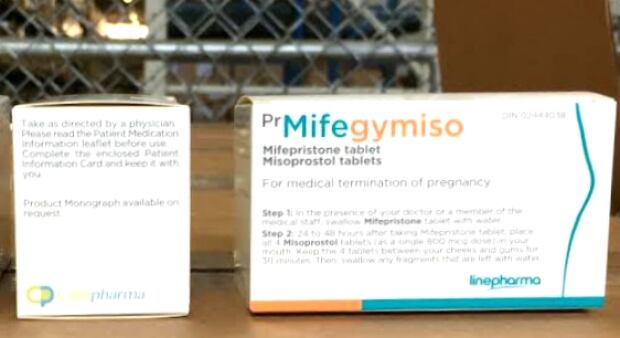
As part of Friday’s announcement, the province said it will make the abortion pill Mifegymiso available for free to all Nova Scotia women looking to terminate an early pregnancy, up to 49 days.

Beginning in November, women with a valid health card and prescription will be able to get the drug at pharmacies.

“If they already have a health benefits plan we would ask them to use that and then any remainder the province will cover,” Regan said. “If they don’t have a health plan, we will cover that cost.”

The province expects the measure to cost up to $200,000 per year.

Mifegymiso

Mifegymiso is a drug treatment for women to end pregnancies. (CBC)

To receive the abortion pill, women must get a prescription and have an ultrasound performed to rule out health risks and confirm how far along they are in the pregnancy.

Women seeking the pill will be given “same-day and urgent access” to ultrasound equipment in the diagnostic imaging department of the QEII, according to Kim Munroe, the Nova Scotia Health Authority’s director of ambulatory care.

The province said it’s working on ensuring the same standard is in place outside metro Halifax.

On its own, the pill would cost about $350.

In August, Health Minister Randy Delorey said the practice of requiring a referral for an abortion was likely “historical practice,” not law.

Not all family doctors and pharmacists in Nova Scotia have been trained to prescribe Mifegymiso. The province said that as of Sept. 16, 15 physicians and 55 pharmacists in Nova Scotia had take the online course for prescribing the pill.

http://www.cbc.ca/news/canada/nova-scotia/nova-scotia-abortion-no-referral-pill-mifegymiso-1.4301943


Abortion protesters at the A Preferred Women's Health Center of Charlotte go too far, and the city lets them.

Controversial reproductive health bill awaits Governor Brown’s signature
KMTR – Springfield, OR

Oregon Gov. Kate Brown held a signing ceremony Monday to commemorate a new law making abortion free for everyone in the state, including illegal immigrants.

The event was attended by members of the state legislature and pro-choice advocates, who regularly broke into rousing cheers and applause to celebrate the enactment of the Reproductive Health Equity Act.

“To lead productive and thriving lives, Oregonians must have the ability to control their bodies and make informed decisions about their health care,” Ms. Brown, a Democrat, said in a statement. “I am proud to sign legislation that expands access to basic reproductive health services for all Oregonians regardless of where they live, where they come from, or how they identify as a person.”

Jonathan Lockwood, a spokesman for the Oregon Senate Republicans, said celebrating abortion may be macabre, but it’s not surprising given that Ms. Brown was an abortion rights lobbyist before entering public life.

“Gov. Brown celebrating abortion and averting moderation is nothing new,” Mr. Lockwood said.

Ms. Brown officially signed HB 3391 on Aug. 15. The $10.2 million legislation allocates $500,000 to pay for abortions for women who would otherwise be eligible for the state’s Medicaid program, if it weren’t for their immigration status.

State Rep. Jeff Barker, a Democrat and chief sponsor of the legislation, said the law “ensures Oregonians can use these health care services when they need them, regardless of their economic status, their gender identity or their citizen status.”

“Oregon has a long history of defending reproductive freedom,” Mr. Barker said, “but rights don’t matter if you can’t afford access to them.”

He also read a postcard that he said was from his daughter thanking him for standing up for women’s reproductive health.

“It says, ‘Dad, thanks for being a sponsor of HB 3391. As your daughter, it means a lot to me that you take women’s health care so seriously,’” Mr. Barker read, drawing appreciative noises from the audience. “‘I love you. Thanks. Your daughter, Heather.’”

The first-of-its-kind law went into effect immediately after it was signed and requires Oregon insurers to provide 100 percent of the cost of abortions without co-pays or deductibles.

Qualifying state residents covered by Providence Health Care, a nonprofit Catholic insurance company that does not provide abortions, will be reimbursed for the procedure by the state.

Linda Roman, director of health policy and government relations of Oregon Latino Health Coalition, said the abortion law is a “validation of humanity in every Oregonian.”

“At the heart of the Reproductive Health Equity Act was always the deep belief that no one should be denied health care just because they are low income, people of color, transgender or undocumented,” Ms. Roman said at the signing ceremony.

http://www.washingtontimes.com/news/2017/sep/18/oregon-governor-celebrates-law-abortions-free-all/

Dude said it was a joke after I shared my abortion advocacy job while online dating. I wasn’t amused.

Last week, online dating giant OKCupid announced a partnership with Planned Parenthood. Site users can choose to answer a question about the health-care organization and earn an #IStandwithPP badge for their dating profiles. OKCupid says that about 200,000 people have now identified themselves as Planned Parenthood supporters.

This move, which allows me to see if someone disagrees with efforts to defund Planned Parenthood, couldn’t come at a better time for me. Last week, I had a run-in with the shadiest of online dating characters: the secretly anti-choice guy. We met on OKCupid and matched on a number of variables. We both have young kids; we both like travel and the outdoors.

I thought he was cute, so I suggested moving off the site to text, adding a humorous pre-admonishment not to send dick pics. I didn’t realize this would be nearly prophetic.

He texted, “What type of work do you do?” I replied, “abortion rights.”

I work in abortion rights advocacy in North Carolina. No lie, it’s a sweet gig and I’m super proud of it. I’ve worked for more than a decade for feminist causes, and it’s such a personal victory to say my career is specifically in abortion access.

But sure enough, my would-be-dreamboat showed me his—metaphorical—dick.

“Ugh your [sic] a baby killer.”

In that moment, I was the physical manifestation of the “typing” ellipses that tell you when someone begins typing but hasn’t hit send. I sat agog, staring at the hateful words.

Working in abortion advocacy means knowing some people find your work controversial. When I go to a clinic or step into the halls of my state’s legislature, I steel myself for the attacks. I harden myself against those who would take away the rights of others who choose abortion.

But when I’m online dating, I’m a bit softer. I have an expectation that the guys trying to hook up with me—the guys who had to see a picture of me holding a pro-abortion sign to reach my profile—will treat me with a modicum of respect.

While I sat in shock, another text followed.

“Hahah jkjk I believe it’s choice”

And another.

“I was looking for a fire up on your end.”

Oh, buddy. You have no idea what kind of fire you just set.

There is a rich tradition of men being offensive and then gaslighting those who don’t laugh, accusing them of not being able to take a joke. It felt like I was being set up to fail, no matter how I replied. Since the forum was online dating—in theory, a lighthearted space—I could feel my own internalized pressure to laugh it off and reassure this man that he was still in my good graces.

It was frightening to respond with my own truth.

“I mean, it’s not a great joke,” I wrote back after some consideration. “It’s my life’s work, you know?”

Long pause from my suitorduring which I experienced the self-doubt and adrenaline dump that confrontation brings.

Clearly, this should have been it. I should have written off the guy and moved on to other prospects. But because I am a communicator, a consensus seeker, and a glutton for punishment (and maybe because I just wanted to win, dang it), the conversation continued. If I were in any other career, I argued, it’d be offensive for him to make a joke at my expense.

“I’m not sure when it was made clear to me you were passionate about … oh well as I said I didn’t mean to offend you,” he wrote.

I wished him best of luck in his endeavors and closed the chat window.

As a woman, my body is a target. As a public-facing abortion rights activist, my work can be in the crosshairs. I receive hateful, even threatening Facebook messages almost weekly. Some even question my parenting abilities. I’ve been called a “baby killer” more times than I could ever count. I have no expectation that abortion rights is a 40-hour-a-week endeavor. But when it creeps into my dating life, I’m knocked off kilter.

A few years ago, newly divorced and fresh to the world of dating, I went out with a guy who didn’t know about my work before we sat down for drinks. When talk turned to careers, he asked me, “Don’t you think some people use abortion as birth control?” To my shame, I quickly changed the subject; I was more afraid of losing his attention than I was passionate about standing up for my values.

This time was different. Although I didn’t respond with anger and outrage, at least I pushed back. I had to wonder: How would have this been different if I were in a professional context?

Had I been on a street with a protest sign, I would have spoken with authority, telling him how his words were incorrect, and how they hurt women. If I were on the record with a TV station or a newspaper I would have quoted statistics or given a powerful quote.

But since I was in the odd interstitial space of online dating, where we are all concurrently strangers and also potential intimate partners, I didn’t have a snappy clapback waiting in the wings.

Two years ago when I built my first-ever online dating profile, I listed my profession as “nonprofit communications” and left my profile pictures apolitical. Since that time, I’ve had some good dates—great dates even—where I revealed my work, and I’m lucky that I seldom encountered negative responses.

That luck is probably more a statement about my liberal bubble. Stigma against abortion—and against those working in abortion advocacy—is very real and documented. Many of us don’t tell our potential dates what we do—at least not at first—because you don’t know what response we’ll get. People who work in abortion, like me, often cluster together to avoid the violence, harassment, and pain involved in dealing with people who accuse you of murder.

Unfortunately in online dating, there is no true safe space and no way to really cluster with like-minded individuals. An online badge like #IStandWithPP could even be a method creepy anti-choicers use to gain access to abortion advocates like me.

If I sound paranoid, I’m not. A local abortion provider recently revealed that she’d been raped by an online dating match, who talked about her work while assaulting her.

I’ve realized that I concealed the true nature of my work not out of personal privacy, but because I was afraid of rejection based on it. Realizing the absurdity of working specifically in abortion communications while being shadowy on OKCupid, I switched to a more “out loud” dating profile. My number of responses immediately went down, but the quality went up.

“I love the work you do! Get it!” wrote one anonymous dude a few weeks ago.

I just checked, and my gaslighting chat companion doesn’t have the #IStandWithPP flare on his profile. Then again, neither did I until a few days ago when I read about the promotion. It might be a helpful sign in the uncertain universe of online romance, but like any bumper sticker, yard sign, or T-shirt, it can’t be the only sign of a paramour’s convictions.

I join OKCupid in standing with Planned Parenthood, but I also stand with every woman who has been gaslighted in an interaction with a man—especially by a stranger on a dating site.

OKCupid, could you make a badge for that? It might save us all some hassle.

https://rewire.news/article/2017/09/20/match-called-baby-killer/

The Graham-Cassidy bill has all the problems of its predecessors — and some new ones.

Supporters of Planned Parenthood at a rally in Los Angeles on June 21, 2017.
 MARK RALSTON / Getty Images

Republicans’ latest effort to repeal Obamacare may look a little different from previous attempts — sponsors argue, for instance, that the plan lets states keep Obamacare if they want to. But when it comes to reproductive health care, the bill sponsored by Sens. Bill Cassidy (R-LA) and Lindsey Graham (R-SC) is a lot like previous repeal bills, except in areas where it’s much harsher.

Like previous bills, Graham-Cassidy imposes new restrictions that would make it harder for people to get insurance coverage for abortion, and for low-income patients to visit Planned Parenthood. Also like the other bills, it threatens Medicaid coverage and makes it easier for states to get rid of maternity care requirements.

A new element in this bill is that its program of block grants would create new ways for the federal government to restrict abortion coverage. Republican-led state legislatures have been working to curtail abortion access and pull funds away from Planned Parenthood for years now; Graham-Cassidy would accomplish both goals on a national scale.

Graham-Cassidy includes a lot of familiar abortion restrictions

The bill includes a provision, similar to those in previous repeal bills, that would effectively bar the use of federal Medicaid funds to pay for care at Planned Parenthood clinics. This would mean low-income patients who rely on Medicaid wouldn’t be able to get care at Planned Parenthood. Backers of such provisions have often claimed that community health centers would be able to fill in the gaps left by Planned Parenthood, but many reproductive health experts say this is unrealistic, since those centers would have to double or even triple the number of patients they saw for certain services. In order to replace Planned Parenthood’s contraceptive services, one of the many services they offer, health centers would have to see 2 million extra patients nationwide, according to the Guttmacher Institute.

What’s more, Planned Parenthood is a trusted and familiar provider for many patients, who may not necessarily know anything about their local community health center. As Dan Ramos, a state representative from Ohio, told the New York Times last year, “If someone doesn’t know where to turn, they know that Planned Parenthood provides a service that they might need.”

Like its forebears, Graham-Cassidy also includes restrictions on abortion coverage. Patients who got a tax credit to buy insurance on the individual market wouldn’t be able to use it to purchase insurance with abortion coverage, and small businesses that received a tax credit for providing insurance to their employees wouldn’t be able to offer plans covering abortion. Over time, this would mean fewer people would be able to buy individual plans that covered abortion, and so fewer insurers would offer them. Patients who can’t get insurance coverage for abortion are sometimes forced to forgo food or other necessities to pay for the procedure and may try to self-induce an abortion, which can be dangerous.

Graham-Cassidy would let states cut requirements that insurers cover essential health benefits, meaning insurance companies could stop offering maternal care or prescription drug benefits. Thirteen million women could lose access to maternal care.

Finally, the bill would end the Medicaid expansion, potentially depriving millions of low-income Americans of coverage. (The Congressional Budget Office announced on Monday that it would release a “preliminary” analysis of the bill early next week, but that won’t include an estimate of how many would lose coverage.) One in five women of reproductive age get their health insurance through Medicaid, and cuts to the program would put essential reproductive health services out of reach of many low-income Americans, especially black and Latino patients. More than half of all births and three-quarters of publicly funded family planning services are currently covered by Medicaid.

The bill also adds a new way for the federal government to restrict abortion at the state level

The new concerns for reproductive rights in Graham-Cassidy largely stem from its block grant program. As Vox’s Sarah Kliff explains, the bill would repeal Obamacare’s individual tax credits and the Medicaid expansion in 2020, and replace them with grants to the states. Those grants could then be spent in a variety of ways — on high-risk pools, for instance, or on programs “to help individuals purchase health benefits coverage.” But, crucially, none of the money from the grants could be spent on insurance coverage for abortion.

Many states already have restrictions on insurance coverage for abortion. But Graham-Cassidy would require all states to ban abortion coverage in any program that gets federal block grant money. If it took money to offer subsidies for individual coverage or otherwise bolster the individual market, then it would have to restrict abortion coverage on that market. If it used federal funds to offer subsidies to employers, the ban on abortion coverage would affect the employer market too.

Essentially, the federal government would have the states over a barrel — if they wanted money to help keep their residents covered, they’d have to sacrifice abortion coverage to get it.

Because there’s no telling yet exactly what states would do with the block grants, or how the law would be interpreted, it’s not clear what the impact of the abortion restrictions would be. But the block grant program would certainly offer the federal government a new and powerful tool to restrict abortion coverage, including in states that have few restrictions in place now.

It’s also worth noting that spending for the bill would expire in 2026, meaning that unless Congress acted to replace the block grant money somehow, anybody who relied on that money for any reproductive health care — or, indeed, any health care at all — would be out of luck.

Moderates in the Senate have expressed reservations over past repeal bills that would have left millions of low-income Americans uninsured. Sens. Lisa Murkowski (R-AK) and Susan Collins (R-ME) have opposed stripping funding from Planned Parenthood — and have votedagainst every repeal bill so far. As Vox’s Dylan Scott reports, the bill still needs a CBO score and the approval of the Senate parliamentarian before it can come to a vote, and in order to pass it, the bill’s sponsors can only afford to lose two Republican votes.

Graham-Cassidy would leave millions without coverage and severely curtail reproductive health coverage nationwide. It remains to be seen if that’s enough to kill it.

Correction: This article originally stated that the Graham-Cassidy bill would require states that got federal block grant money for their Medicaid programs to stop using state Medicaid funds to cover abortion. The bill would not do this.

https://www.vox.com/policy-and-politics/2017/9/19/16328928/obamacare-repeal-cassidy-graham-health-care-women

As the founder and CEO of Whole Woman’s Health, it’s the right thing to do.

As soon as I heard Hurricane Harvey was coming to wreak havoc on Texas, I decided to offer free abortion care at Texas Whole Woman’s Health clinics to women affected by the storm. As independent abortion care providers rooted in the communities we serve, we stand up for the people who need us most. We did it after Hurricane Katrina in August 2005, we did it for Hurricane Rita in September 2005, and we did it for Hurricane Ike in September 2008. Until the end of September, we’ll be doing it again for those affected by Harvey. This is who we are, and this is what we do.

In trying times like these, I remember something one of my fellow reproductive rights warriors told me years ago. We were tangled in a Supreme Court case to fight Texas’ TRAP law House Bill 2, which passed in 2013. HB2 required that any clinic offering abortion services be classified as an “ambulatory surgical center” and any doctor performing an abortion have admitting privileges at a hospital within 30 minutes of the clinic. As founder and CEO of Whole Woman’s Health, those years were a difficult blur (although our eventual triumph made every second worth it). HB2 was unnecessary—abortion, being 14 times safer than childbirth, is very safe—and its devastating passage forced us to close our clinics in Austin and Beaumont. (Our Austin clinic has since reopened).

As we fought that exhausting battle, a colleague said to me, “It is always the right time to do the next right thing.” I carry that with me always, especially in these times. Right now, as abortion rights are threatened throughout the country, offering no-cost abortion care to women affected by Hurricane Harvey is the right thing to do.

Natural disasters like hurricanes can compromise abortion access in many ways.

At Whole Woman’s Health, our values are based in the moral and ethical human rights work of supporting and caring for people. To us, quality abortion care is health care. But it is also an integral part of economic justice, racial justice, and true reproductive justice for all. Our care model is rooted in the belief that access to quality abortion care is not only vital to women’s autonomy and self-determination, it is essential to our ability to function in society with true equality.

After devastation from a storm like Harvey, everything changes. People often lose their homes, their cars, and their jobs. People may have to evacuate to an area without accessible abortion care. Work schedules are cut, school is canceled, and people worry about lost pets. Daycares are closed. Local health care clinics are, too. There are countless ways a natural disaster can make it difficult to find a health center that offers abortions or make it impossible to pay for one. That’s why we’re here to help.

Whole Woman’s Health can’t fix everything after storms like Harvey, but we sure can offer our expertise and compassion to ease the financial, logistical, and emotional burden of getting an abortion after a natural disaster. Our highly-trained team is ready to offer cost-free abortions throughout the month of September at our San Antonio, Austin, McAllen, and Fort Worth clinics. This is who we are. We take care of each other.

Responses to our providing free abortions to those affected by Harvey have, unsurprisingly, been mixed.

Our efforts have drawn the attention of right-wing zealots. They have responded to our no-cost abortion care relief efforts with great vitriol. They’ve trolled us by asking whether anyone has been raped by the hurricane. They’ve targeted me personally in memes with my photo, saying simply awful things like, “There is a place in hell for you, Amy.” It appears our kindness to people in need makes them hostile. Go figure.

Delightfully, we have also had a great outpouring of support online, as well as generous donations to our Stigma Relief Fund, which is how we’re able to provide these services for free. We currently have 74 patients who have had care or are booked for care using this program. To date we have raised $15,000 for this effort, but the total cost of care for these patients will come to $40,000. If you’d like to donate, you can do so here. These contributions will serve the women who need them the most.

Let me tell you about a woman who is coming to one of our clinics this week after her life was devastated by the hurricane. She will have to take three overnight buses to access the Whole Woman’s Health closest to her, which will get her to town at 6:00 in the morning. Then she needs to take an Uber or a Lyft to a coffee shop or restaurant that is open early to wait for our clinic to open. And this is just for her “consult visit,” where she has to have a state-mandated sonogram and a script meant to intimidate her read to her by the physician. After that, she’ll have to spend the night away from home, unable to get her abortion until 24 hours after her sonogram, because of Texas’ cruel 24-hour delay law.

After she finally has her abortion with us, she’ll repeat the ride-sharing and bus routine back to her home. Through generous donations to our Stigma Relief Fund, we’ll be able to pay for all of this. Even when it seemed we had everything in place, she called late yesterday and said she still needed to find child care for those two days away from her children. We hope to help her with that, too. This is all to get a five-minute, much-needed, first-trimester abortion she simply cannot afford. This is her right. It should be, no matter where she lives or her ability to pay.

It is for her and for the many people like her that we at Whole Woman’s Health do the work that we do. In these times in our country, in light of the devastation on so many levels, doing this one small thing is our honor. Along with all my staff and physicians at Whole Woman’s Health, I’m grateful to help Texans rebuild their lives with dignity.

https://www.self.com/story/whole-womans-health-harvey-abortions

Dan Fisher insists that government officials should simply disregard any abortion-related court ruling with which they disagree.

If Republican candidate Dan Fisher wins Oklahoma’s 2018 gubernatorial election, he plans to ignore court rulings protecting abortion access.

“If elected, I will do everything in my power to bring this evil to an end and take executive action to ensure that all Oklahomans are equally protected, including the preborn,” the former Oklahoma state representative said in a video posted to his campaign’s YouTube page last week. “I will disregard any unjust rulings or perversions of the U.S. Constitution that claim that there is a right to murder preborn human beings in the womb.”

Fisher said in the video that anti-choice laws passed by Republican lawmakers “really only spell out the requirements for killing a preborn baby,” suggesting that they don’t go far enough. “Every one of these pro-life laws affirm abortion as legal, treat it as an acceptable choice, and seek to regulate the practice. If you think about it, these laws are basically pro-choice.”

“I am not running for governor of Oklahoma as a pro-lifer,” he said. “I am not running to regulate abortion. I am running to abolish it.

He called for the U.S. Supreme Court’s rulings on the matter to be disregarded. “When the courts are wrong they should be ignored,” he said, pointing to the Court’s 1857 decision in Dred Scott to uphold slavery.

Fisher struck a nearly identical tone in late August when he kicked off his bid for the GOP nomination for governor of Oklahoma. At a rally of supporters in Oklahoma City, he called the common medical procedure “murder” and said that “if you accept that abortion is murder, you’ll treat it like murder.” He did not say what the penalties would be for having or providing an abortion, but Rick Carpenter, a spokesperson for Fisher’s campaign, told Rewire that it would be treated “much like your homicide laws.”

Despite no longer holding office, Fisher was present when Oklahomans United for Life visited the state legislature to support the Oklahoma House’s passage of a resolution instructing state officials “to exercise their authority to stop murder of unborn children by abortion.” The text of the measure includes a line recognizing that “procuring or administering a non-life-saving abortion in Oklahoma is a criminal offense,” pointing to two statutes on the books criminalizing abortion in the state.

Those statutes state that receiving abortion care in Oklahoma is punishable by up to one year in prison and up to $1,000 in fines.

“In 2018, we’re going to have a new governor, and the governor better enforce the will of the people as expressed in this Resolution today,” Fisher said, according to an email newsletter from Oklahomans United for Life.

The anti-choice group sent a letter to Gov. Mary Fallin (R) after the resolution passed, demanding that the state’s chiefs of police and county sheriffs “station guards at the doors of” abortion clinics to block anyone trying to obtain care. “If these officials refuse to cooperate, you have authority under the Oklahoma Constitution to declare an emergency and direct National Guard personnel or state police officers to carry out your orders,” the letter stated.

Oklahomans United for Life confirmed in an email to Rewire that it has endorsed Fisher’s gubernatorial bid.

During his two terms as a state representative for District 60, Fisher introduced several anti-choice measures including attempts to prohibit certain types of research on human embryos. Eliminating legal abortion in Oklahoma is the first issue listed on Fisher’s campaign website, which includes a call to “turn Oklahoma into the first Abortion-Free-State.”

In a video posted online in July that depicts an appearance at an Oklahoma Conservative Political Action Committee (OCPAC) event, Fisher named abolishing abortion as one of the “four main planks” of his platform. In that same speech, he compared being a “pro-life Republican” in office without acting to end legal abortion to “liv[ing] in a community next to one of the concentration camps in 1944 Germany” and passing laws regulating the camps instead of ending them.

His platform calls for renewed focus on “state sovereignty,” protecting the “rights of gun owners,” and removing regulations on the energy industry.

Fisher received money in previous campaigns from energy companies, including small donations from Koch Industries, American Electric Power/AEP, and Spectra Energy, according to campaign finance records obtained through the National Institute on Money in State Politics’ database.

Fisher will compete against an increasingly crowded field of Republicans for the party’s nomination to replace Oklahoma’s term-limited governor.

Fallin won re-election in 2014 with nearly 56 percent of votes compared to Democrat Joe Dorman’s 41 percent. The seat is rated “likely Republican” by Inside Elections with Nathan Gonzales and Roll Call, meaning Republicans have “a substantial advantage, but an upset is still possible.”

https://rewire.news/article/2017/09/19/abortion-court-rulings-ignore-says-oklahoma-gop-gubernatorial-candidate/

There is no reaction except horror whenever my friend Rebecca shares her birth story. At 33 weeks pregnant with twins, she was diagnosed with intrauterine growth restriction and preeclampsia, a serious blood pressure condition, and had an emergency caesarean section in the hospital where she worked.

“After giving birth, I got very sick. I was really dizzy, started vomiting and my blood pressure dropped somewhere around the 50s over 30s,” recalls Blake, who is now the director of nutrition at a pediatric center in New York. She describes an “impending sense of doom” when no one could figure out what was going on, and the catastrophes that followed were straight out of a nightmare. After multiple blood transfusions and forced expulsion of blood clots—”I felt like the OB was punching the shit out of my belly after a C-section”—the last thing she remembers is signing a waiver for an emergency hysterectomy to remove her uterus.

She woke up several days later in the ICU terrified. In that time, she had received as many as 35 blood transfusions and developed a lethal blood clotting disorder. While her uterus was fine, a radiologist finally discovered why her health deteriorated so quickly: She had three bleeding arteries. Multiple emergency procedures also resulted in a temporarily paralyzed bowel and several infections that kept her in the hospital for three weeks after giving birth.

How those arteries were injured remains a mystery, and six years later her frustration and fury is still palpable when she tells her story. Ultimately, malpractice attorneys told her that despite the near-death trauma, she had no case against the OB-GYN or the hospital. Why? Because she came out of the experience alive with no permanent physical damage.

You may have heard the story of Lauren Bloomstein that ended in tragedy: The 33-year-old neonatal nurse died 20 hours after giving birth due to undetected preeclampsia in 2011. Her story made nationalheadlines this summer as part of a ProPublica and NPR investigation. Like Blake, she suffered a devastating series of problems after her delivery, which ultimately led to bleeding in the brain and a drop in her blood platelet count. With a platelet supply shortage in the hospital, she died within hours.

When women who are medical professionals—who have access to quality prenatal care and who deliver in the hospitals where they work—have life-threatening births, it suggests there is a much bigger, more systemic problem with childbirth in the United States. Every year, about 1,200 women in the US have fatal complications from pregnancy and childbirth, and another 60,000 have near-fatal complications, according to the World Health Organization. And for every headline-grabbing story, there are countless other women whose suffering is overlooked. Often, they are women of color.

Although women dying during and after childbirth is a relatively rare occurrence among the 4 million births in the US each year, the numbers tell a dark story. Our country ranks a dismal 50th among 59 developed countries for maternal mortality, according to Amnesty International. (We were 60th out of 180 countries in a 2014 study.) Bucking global trends, the rate of deaths in the US is rising, not falling, jumping dramatically from 16.9 deaths per 100,000 live births in 1990 to 26.4 per 100,000 live births in 2015. Though changes in how maternal mortality is tracked may account for some of that growth, the figures are still staggering. And about half of those deaths were preventable, according to the WHO.

Overall, the WHO reports that “the poorest and most marginalized women” continue to face the highest death risk from pregnancy- and childbirth-related causes. Domestically, that fact is all too clear: Black women are almost 3.5 times as likely as white women to die as a result of pregnancy (43.5 deaths per 100,000 live births for black women versus 12.7 deaths per 100,000 live births in white women). Texas—which has the highest maternal mortality rate in the country and in the developed world, at 35.8 deaths per 100,000 live births—has particularly shocking outcomes among black women. Though black women make up 11 percent of live births in the state, they account for 29 percent of the maternal deaths.

How could this be the case? “In pregnancy, the body makes significant physiological adjustments, and that can put a woman at risk,” says Haywood Brown, a maternal-fetal medicine specialist in North Carolina and president of the American Congress of Obstetrics and Gynecology (ACOG). “These days, we’re also seeing increasingly more risk factors—giving birth later in life, chronic diseases, poverty, limited access to care—so when you have a cascade of events of things going wrong, they can go really wrong.”

Surprisingly, those health factors are less linked to “direct” causes of death including hemorrhage, infection, and blood pressure disorders like preeclampsia which can develop quickly. Instead, cardiovascular disease is the number-one cause of maternal death within a year of giving birth, followed closely by other chronic diseases such as high blood pressure and diabetes.

“For women with known or unknown cardiac conditions, the [physiological] stress might tip the balance and she may well decompensate,” says William Callaghan, chief of the Maternal and Infant Health Branch at the Centers for Disease Control and Prevention. “This could take many forms such as a heart attack, heart muscle failure, or the rupture of a blood vessel.”

In 2014, the Center for Reproductive Rights, the National Latina Institute for Reproductive Health, and SisterSong released a joint reporttitled, “Reproductive Injustice: Racial and Gender Injustice in US Health Care.” The report notes that cities and states with high African American populations have the highest rates of maternal mortality in the country, and the takeaway isn’t just the enormous racial disparity, but intersectional factors that can stack the deck against marginalized women.

For one, many black women are at a health disadvantage to begin with. The CDC reports that nearly 57 percent of black women over 20 years old are obese and nearly 45 percent have high blood pressure. Other disenfranchising factors include dismal sex education and contraception access, higher rates of unintended pregnancies, restricted abortion access, subpar prenatal care—particularly for women covered by Medicaid—and poor communication and trust between doctors and patients.

Callaghan points out that when underlying health risks aren’t recognized and properly managed, they can drastically impact pregnancy and childbirth. In a perfect world, those risk assessments would take place during a preconception or prenatal appointment, but that often isn’t the scenario for disadvantaged women who may not have health insurance.

A 2010 report from Amnesty International, “Deadly Delivery: The Maternal Health Care Crisis in the USA,” reports that women of color are 2.5 times more likely than white women to delay prenatal care. Bureaucratic hurdles within insurance coverage and Medicaid (which covers nearly half of all births in the US) can make it difficult to find a doctor, while women in rural areas are faced with a dwindling numberof healthcare providers. Factor in logistical issues like transportation, taking time off work and arranging childcare, and the roadblocks to seeing a doctor in a timely fashion can be insurmountable.

Meanwhile, women with unintended pregnancies are also more likely to delay care; in the US, 45 percent of pregnancies are unintended, with rates highest among poor women, women of color, according to the Guttmacher Institute. And poor women are more likely to carry an unintended pregnancy to term: This group has an unplanned birth rate nearly seven times that of higher-income women. While 75 percent of abortion patients were poor or low-income, white women are still more likely than black or Hispanic women to have an abortion.

Then, when women with underlying health conditions make it to the delivery room, they may not have the birth that’s best for them. Almost a third of babies in the US are delivered via C-section, up 50 percentsince 1996, and experts believe that women of color and low-income women are less likely than other groups to have medically necessary C-sections and more likely to have medically unnecessary C-sections. Both of these situations are bad for women’s health, and the decision to do a C-section is often made by a doctor on their behalf. C-sections are inherently more dangerous than vaginal deliveries, putting women at risk for infection, hemorrhage, injury, and scar tissue adhesion, and reaching a death rate of 11 out of 100,00 pregnancies. But if a woman needs a C-section and doesn’t get one, that’s also dangerous.

Since the passing of the Affordable Care Act in 2010, experts hoped maternal health outcomes would improve. After all, prenatal and maternal care and annual well-woman visits were established as essential health benefits covered without co-pays or deductibles and the eligibility for Medicaid was expanded. The goal was to take measured steps toward providing holistic care—including free prescription birth control, quality prenatal care, and in-hospital labor and delivery care—that could help prevent fatal complications among expecting mothers. (By the way, the Trump administration is expected to undo the free contraception rule any day now.)

But only 32 states chose to expand Medicaid and the ACA has been under attack ever since it was signed into law. And Obamacare still doesn’t cover everyone: There were 28 million Americans without health insurance in 2016. With the repeal of the ACA under threat once again by Republican lawmakers, counteracted by a swelling, Bernie Sanders-sponsored movement toward universal health coverage, the future of women’s healthcare access remains unclear. Sanders introduced a single-payer bill today, the same day two Republican Senators unveiled their last-ditch repeal bill.

In the meantime, experts are addressing the glaring need for collecting and analyzing data to get clearer understanding of what is going wrong in delivery rooms and to tackle those problems. Currently, maternal mortality tracking is done at a national level and essentially categorized by checking a box on a death certificate—a practice that means we could be vastly underreporting the number of maternal deaths. After all, if a woman dies of heart failure within a year of giving birth, it may not necessarily be categorized as pregnancy-related.

The CDC Foundation has determined that between 20 and 50 percent of maternal deaths in the US are preventable through the work of maternal mortality review committees (MMRCs). By relying on a cross-section of experts who represent areas such as obstetrics and gynecology, maternal-fetal medicine, forensic pathology, mental health, and social work, states can take a deeper dive into the causes of death and share that data more effectively. Bringing this type of analysis down to the state level is the goal of HR 1318, the Preventing Maternal Deaths Act of 2017, introduced by Representative Jaime Herrera Beutler of Washington state.

Many experts are looking to California, which has gone against the national trend and has seen a decrease, not increase, in maternal mortality. California Maternal Quality Care Collaborative is an initiative to make births safer for mothers through real-time data and toolkits that began in 2006. In the program’s first seven years, California has seen maternal mortality decline by 55 percent, and first-birth C-section rates have gone down more than 20 percent in participating hospitals. North Carolina has also reduced the gap in racial disparities through a Medicaid-based program called Pregnancy Medical Home in which doctors identify high-risk pregnancies sooner than before, have a toolkit of medical procedures to help prevent problems at birth, and have a comprehensive postpartum follow-up appointment.

In fact, redefining postpartum care is a core goal of ACOG. In busy OB-GYN offices, a six-week postpartum checkup may be limited to a brief exam and a birth control prescription to help women space their pregnancies. “The postpartum period is critical for counseling for postpartum depression, breastfeeding continuation, pregnancy spacing, and contraception without ever considering a pelvic exam,” Brown says.

However, longer-term postpartum care is a luxury that many new mothers can’t afford in any capacity. “As many as 40 percent of women on Medicaid or who are uninsured don’t make it to their six-week postpartum appointment,” says Brown of ACOG. In addition to healthcare access issues, lack of paid maternity leave and work-family support often force mothers back to work before their babies can even hold own their heads up—much less make OB appointments—just so they can keep their jobs. In states that didn’t adopt the Medicaid expansion, women above the federal poverty line who don’t have insurance through work lose their pregnancy-related coverage at 60 days postpartum, while infants are covered for up to one year.

The fact is, our nation’s medical and political systems have invested a lot of resources keeping fetuses and infants alive, and with demonstrable results: Although the number of babies that die each year still outpaces the number of women who die, infant mortality has dropped to its lowest point in 50 years, the CDC says, while maternal mortality is rising. The ProPublica/NPR report found stark differencesin the level of care between infants and their mothers: hospitals that have state-of-the-art neonatal intensive care units may not have the same level of care for high-risk pregnant women, and some doctors training to specialize in maternal-fetal medicine may have never spent time in a labor and delivery unit.

As the healthcare debate rages on, mothers-to-be are at a huge risk of slipping through the cracks. “We fought the ACA repeal because it would have a great impact on women being able to have affordable health care, have access to contraception and prenatal care,” Brown says. “If states that expanded Medicaid eliminate it, and those who make too much to qualify for Medicaid can’t get insured, women would lose those essential health benefits and that will only increase the risk for maternal mortality.”

It’s darkly ironic with our “pro-life” administration at the helm.

https://tonic.vice.com/en_us/article/mb7j4p/black-women-are-3-times-more-likely-to-die-from-being-pregnant