Planned Parenthood volunteers Kate Steir, 27, and Christian Deegan, 31, discuss their route while canvassing for Democratic gubernatorial candidate Ralph Northam in Arlington last month. (Photo by Astrid Riecken for The Washington Post)
 September 11

Abortion, a long-simmering issue in Virginia — a purple state where rural evangelicals sharply differ from urban progressives — has been elevated in this year’s gubernatorial contest because of changing dynamics on the federal level.

President Trump has vowed to appoint antiabortion judges who could unravel federal protections, turning the power to decide whether women can terminate pregnancies back to governors and state legislatures.

Virginia, the first to have a competitive statewide contest since Trump took office, offers a window into how abortion politics may reshape gubernatorial races to be held in about three dozen states in 2018.

“It’s so fundamentally different with a Republican in the White House and a national threat to Roe v. Wade, a threat that hasn’t existed in a decade,” said Jesse Ferguson, a Democratic strategist with roots in Virginia. “This has animated and motivated a lot of voters to move this issue even higher up as a priority.”

Democratic gubernatorial candidate Ralph Northam, the sitting lieutenant governor and a physician, has positioned himself as a champion of abortion rights. Republican rival Ed Gillespie said he’d like to see the procedure banned, with exceptions for rape, incest and to save the mother’s life.

Steir talks with voter Andy Leighton at his home in Arlington. (Photo by Astrid Riecken for The Washington Post)

The Republican-controlled state legislature has tried for years to restrict abortion, foiled by Gov. Terry McAuliffe (D), who has vetoed bills to defund Planned Parenthood and says the governor’s mansion is the “brick wall” against attempts to limit women’s reproductive rights.

If the Supreme Court overturns Roe v. Wade, the 1973 decision that established a woman’s right to an abortion, at any time in the next four years, McAuliffe’s successor could decide the legality of abortion in the Old Dominion.

Planned Parenthood’s Virginia arm has launched a $3 million field operationto support Northam and other Democrats — surpassing its spending to elect McAuliffe in 2013.

Foes of abortion rights, energized by success in Washington, see a chance to tear down McAuliffe’s wall.

Opponents of abortion are working with urgency, concerned that Virginia’s changing demographics — growing urban areas, more residents of color — are turning the swing state blue. All five of the current statewide officeholders — Sens. Tim Kaine and Mark R. Warner as well as McAuliffe, Northam and Attorney General Mark R. Herring — are Democrats who support abortion rights.

Northam’s election would mean “eight years of consecutive Democrat, anti-life leadership, and it would be very difficult to retract any of that and regain the ground we would lose,” said Don Blake, president of the Virginia Christian Alliance.

Democratic gubernatorial candidate Ralph Northam, left, and Republican rival Ed Gillespie. (Bob Brown/AP)
The Gorsuch appointment

Trump pleased abortion opponents when he appointed Neil M. Gorsuch, seen as favorable to their cause, to fill the vacancy left by Justice Antonin Scalia on the Supreme Court.

He’ll have a chance to change the court’s ideological balance if any of three justices older than 78 retire or die during his tenure. The GOP-controlled Senate has also scrapped the filibuster option for Supreme Court nominees, making it easier for the majority to advance antiabortion judges.

In addition to cutting funding for Planned Parenthood, abortion opponents in Virginia want to bar abortions after 20 weeks of pregnancy. Gillespie says he would support such bills; Northam opposes them.

Abortion rights activists lined up early behind Northam, citing the need for a steadfast ally in a changed national climate. During the Democratic primary, some abortion supporters attacked Northam’s opponent, former congressman Tom Perriello — even though Perriello was running as a progressive who backs abortion rights — because he once opposed public subsidies for insurers who cover abortion.

“We need someone who is unwavering,” said Tarina Keene, executive director of NARAL Pro Choice Virginia, which has deployed dozens of canvassers for Northam since March. “We have seen that happen before where our rights could be put on the table, on the negotiating block. We cannot tolerate that anymore.”

The national Democratic Party has been enmeshed this year in a debate about whether to back Democratic candidates who oppose abortion. In an effort to reach out to disaffected voters, particularly in rural areas, several party leaders, including House Minority Leader Nancy Pelosi, say Democrats should not use litmus tests. Others insist that reproductive rights are a core value of the party.

National antiabortion groups think that defeating Northam in Virginia would send a message that Democrats should not enforce party purity when it comes to abortion.

“We want to see Democrats see this extremism on this issue as a political vulnerability,” said Mallory Quigley, a spokeswoman for the Susan B. Anthony List, which is planning to run digital advertisements on behalf of Gillespie later this year.

But Democrats say that supporting abortion rights is a winning stance for them in Virginia.

A Washington Post poll in 2013 found 55 percent of Virginia voters favored allowing abortion in all or most instances. A poll from Christopher Newport University this year found a slim majority opposed bans on abortion after 20 weeks of pregnancy.

Geoffrey Garin, a pollster for the Northam campaign, said his initial surveys showed Gillespie’s comment during a primary debate that he would “like to see abortion be banned” drew some of the sharpest reaction from voters in the heavily populated areas of Northern Virginia, Richmond and Hampton Roads.

“The opposition to a woman’s right to choose is a dealbreaker for a lot of voters who otherwise would be willing to consider supporting a Republican,” Garin said. “It’s created an important bright red line for a lot of voters up and down the urban crescent and well into the exurbs.”

Other campaign issues

Gillespie has tried to play down abortion and instead focus on the economy and public safety. Asked about Gillespie’s views on abortion, his spokesman, Dave Abrams, responds that Northam’s views “are outside the mainstream” and that the lieutenant governor supports late-term abortions — which are illegal in Virginia and opposed by most voters.

Northam has said that the timing of abortions should be determined by a woman and her doctor, but he does not want to change the state law that limits late-term abortions.

The number of abortions performed in Virginia declined by one-third between 2009 and 2015, according to state data. The decline coincided with a rollback of abortion rights by the state’s past GOP governor, Robert F. McDonnell, whose term ended in 2014.

In 2011, he signed legislation regulating abortion clinics as hospitals — a move that critics said was meant to drive the clinics out of business. The regulations have since been dropped by the state health board dominated by McAuliffe appointees.

McDonnell in 2012 also signed a bill mandating abdominal ultrasounds before abortion. As originally written, the bill would have required women seeking an abortion early in a pregnancy to undergo a vaginal ultrasound. It made Virginia fodder for late-night comedians.

Northam, then a state lawmaker, raised his profile — and won the allegiance of abortion rights supporters — with a speech on the floor of the Senate where he said the ultrasounds would be about as useful as a probe of a bottle of Ga­tor­ade.

The proposed requirement of an invasive ultrasound was ultimately defeated. But it continues to resonate in this year’s down-ballot races.

The Republican candidate for lieutenant governor, state Sen. Jill Vogel, was the sponsor of the ultrasound legislation, and she is trying to defend it against attacks by Democratic rival Justin Fairfax.

In the race for attorney general, incumbent Herring issued a legal opinionpaving the way to liberate abortion clinics from requirements that they meet the same standards as hospitals. His Republican opponent, lawyer John Adams, has accused Herring of politicizing the office.

Mark Rozell, who has studied Virginia’s religious right, says the combination of Trump’s election, earlier policy debates and the defeat of an antiabortion Republican ticket in 2013 have made abortion an especially important issue this year.

“In this election cycle, it’s much more difficult for Republicans to maneuver,” said Rozell, the dean of the public policy school at George Mason University. “Democrats are not going to let that issue go. It’s going to come up relentlessly.”

On a recent Saturday in Arlington, Planned Parenthood volunteers knocked on doors in the deep-blue stronghold to get people to pay attention to the governor’s race amid a blizzard of news from Washington.

Andy Leighton, a 70-year-old retired musician, told a volunteer wearing a #PinkOutVa shirt that he had donated to the organization for at least 25 years. But asked if he was following the governor’s race, he responded, “Not until right now.”

“The choice is really, really stark,” said Kate Steir, the volunteer. “Ed Gillespie is very open about wanting to defund Planned Parenthood.”

Leighton promised to vote for Northam.

“I believe in a woman’s right to make decisions about her own life,” Leighton later told a reporter. “And I believe it’s under threat.”

Meanwhile, religious organizations are planning to assemble voter guides reminding people about the stakes for abortion in the governor’s race.

Some pastors are planning to impress upon their congregations the importance of the election.

Gary Hamrick, pastor of the Cornerstone Chapel in Leesburg where Gillespie recently attended, often gives Election Day sermons in presidential years touting the importance of family values and protecting Israel.

With a state-level contest this year, he plans to focus his sermon on one important theme.

“God values life from the womb to the tomb, and we need to also protect life ourselves,” Hamrick said. “And we need to do what we can to be involved in the political process, to protect life ourselves.”


https://www.washingtonpost.com/local/virginia-politics/for-both-sides-of-abortion-debate-unusually-high-stakes-in-virginia-governors-race/2017/09/11/d651a198-787d-11e7-8839-ec48ec4cae25_story.html?utm_term=.8468cb42657d

“Stop calling anti-abortion activists ‘pro-life.’ They’re not.”

Abortion

Getty

These are not great times for choice in America. These are not great times to be a woman in America.

At least, not if you are a woman who believes that your body is your own.

The Trump administration may be the most fervently anti-abortion since Reagan.

This will likely come as a surprise to every man who, prior to Trump’s election, assured me, “don’t worry, he’s really a democrat! He’s not going to do anything about abortion!”

It seems you guys were wrong.

Trump has reinstated the global gag rule, preventing funding for overseas reproductive health organizations that offer abortion related services. Closer to home, Trump signed a bill on April 13 that allows states to cut off funding from organizations like Planned Parenthood that provide abortions. He has suggested that federal funding could continue to go to the women’s health organization only if they stopped performing abortions.

All of this falls under the banner of a “pro-life” agenda.

Indeed, Vice President Mike Pence and counselor to the President, Kellyanne Conway, both spoke enthusiastically at the March for Life. There, the Vice President proclaimed, “We will not rest until we restore a culture of life in America.”

Perhaps when people enact these laws, they imagine what a world with more restrictive abortion rights—or a “culture of life”—looks like. I do not think these people are evil. I suspect they have a vision of a world that is flawed. I think when they imagine that world of outlawed abortions, they imagine a world full of adorable, bouncing babies. They imagine happy mothers, and fathers who are, unexpectedly, delighted and doting fathers.

That is not reality.

“The U.S. is a place where having a baby means risking your own life, as our Maternal Mortal Rate is the highest in the developed world.”

It’s not hard to see what a pro-life world looks like. It looks like a world with a lot of dead women in it.

El Salvador has a “culture of life.” There, abortion is banned for any reason. Estimates from the Ministry of Health put the number of illegal abortions performed at 19,290 between 2005 and 2008. However, it’s difficult to trace illegal activity properly, so some other estimates claim this is closer to the annual average. We do know, from a 2011 study by the World Health Organization that 11 percent of the women undergoing these illegal abortions die. That is, at the bare minimum, over 2,000 women.

Amnesty International reports that suicide now accounts for 57 percent of deaths of pregnant females ages 10-19 in El Salvador. Because in an attempt to terminate their pregnancies, women are “ingesting rat poison or other pesticides, and thrusting knitting needles, pieces of wood and other sharp objects into the cervix.”

It was not so long ago that women in the United States were in a position similar to the one women in El Salvador find themselves in today.

Before the passage of Roe. Vs. Wade in 1973, it’s estimated that between 250 and 8,000 American women were dying per year of illegal abortions.

Today, in the United States, women experience complications from safe, legal abortion less than one percent of the time. And whether or not anyone talks about it, it’s a common medical procedure—30 percent of women in the U.S. have had a safe, legal abortion.

There will be people—like Republican Sen. Dan Foreman, an Idaho lawmaker who recently proposed a bill that would try women who have abortions for first degree murder—who will reply, “why don’t they just give the baby up for adoption instead?”

I suspect if someone turned up and asked to live in Dan’s house for nine months he would decline, and that’s infinitely less invasive than something taking up residence in your body.

Still, the best answer to that is, perhaps because the United States is not such a wonderful place to have a baby. It is a place where, for many, the cost of prenatal care and birthing in a hospital runs around $3,500, and pre and post-natal care can raise that price to around $8,802. That doesn’t take into account the incredibly costly proposition of raising a child and the fact that most companies still don’t provide maternity leave.

Abortion protest
Getty

More troublingly, the United States is a place where having a baby means risking your own life, as our Maternal Mortality Rate is the highest in the developed world.

The Maternal Mortality Rate (MMR) in the United States is, according to a study published in Obstetrics & Gynecology, now 24 in every 100,000. For perspective, if that does not seem like a significant enough number to cause concern, the odds of being an American killed in a terrorist attack by a foreign born individual are one in 3.6 million.

But then, don’t we have it so much better than so many other countries? Well, in terms of women’s reproductive health, not especially.

The Federalist makes an argument that women should not be dressing up to protest restrictions on abortion in Ohio because, “To compare restrictions on abortion… to the abuses many women still suffer around the world today is both intellectually insulting and downright dishonest… In Saudi Arabia, women aren’t allowed to drive, wear makeup, or clothes that ‘show off their beauty.’”

Pretending that women should remain quiet on the topic of their rights because women have it worse in other countries is absurd. We do not live in other countries. This argument should carry all the weight of a C student, who, when told to do better by their parents, replies by shouting, “I could be getting Fs! I could be shooting heroin into my eyeballs!” Which is to say, it should carry no weight at all.

The comparison to Saudi Arabia as a country that doesn’t value women’s existence is interesting and timely, though. Our Maternal Mortality Rate puts us statistically on par with Saudi Arabia. Though, in fairness to Saudi Arabia, the CIA dates that statistic regarding their MMR to 2010. Maternal mortality rates are generally on the decline, so Saudi Arabia’s rate may have improved in the past seven years. The U.S. is the only country in the developed world where the Maternal Mortality Rate is rising.

So, it is very nice that we are allowed to wear makeup, but it might be nicer still if having a baby were not so likely to kill us. You want to talk about how much better the U.S. is for women than Saudi Arabia? Stop letting pregnant women die at the same rate as Saudi Arabia.

“It’s not hard to see what a pro-life world looks like. It looks like a world with a lot of dead women in it.”

If the goal of anti-abortionists is to protect life in all its forms, then our MMR should be cause for great concern. It’s especially high in places like Texas. While causes for women’s deaths during and post pregnancy can vary wildly, and range from drug abuse to cardiac events, The Nation notes that, “We do know that most of them died because they were low-income women who lacked good medical care.”

Today, as the Republican-led negotiations over the Affordable Care Act occur, experts, like Adriana Kohler, a senior health policy associate at Texans Care for Children, have voiced their concerns to Dallas News. She remarks that changes in funding—like those cutting back on Medicaid, which pays for more than 50 percent of the births in Texas—will “pose a real threat to prenatal care for Texas women and undermine efforts to address maternal mortality.”

This is not a change that a group that actually values the sacredness of human life should be enthused about.

So, if you live in the U.S.—especially if you live in the U.S. as a low income woman—pregnancy is a dangerous business.

But you know one good thing about living in the U.S.? Citizens are not required to risk their own lives to save another individual. You do not, for instance, have to fling yourself onto the subway tracks to pull out someone who has fallen in. Unless you are a woman carrying a collection of cells which may become an individual—in which case, it would appear some people really, bewilderingly, expect you to.

But, you are not required to.

Not yet, at least. We have, thank God, not yet restored Mike Pence’s “culture of life.”

Though we may be coming closer. Missouri just passed a bill imposing additional restrictions on facilities that perform abortions, making it harder for them to operate. A prayer walk of 600 people in Charlotte North Carolina just declared that abortion is “more a man’s issue than a woman’s issue.” (Spoiler: it is not.) In Ohio, a bill is being debated banning most abortions after the first trimester.

All of these changes may seem very slight. However, as The Handmaid’s Tale notes, “nothing happens all at once. In a slowly heating pot of water you’ll be boiled alive.”

So, it’s important to start regarding limitation on abortions as the profoundly anti-woman act it is.

A UN Special Rapporteur on Torture categorized denying women access to abortion as torture in 2013. That definition may seem hyperbolic. But then, demanding that women suffer through pain, expense and possibly death because they do not want to do something that a man in power wants them to do seems like the definition of torture.

Napoleon was fairly forthright about his reasons for outlawing abortion. He quippedthat he did it because he wanted more cannon fodder.

“We are not a generation that will be happy to be ‘hosts.’ We are not a generation who considers gestation our ‘sole purpose’.”

Today, we do it to “make America great again” by insuring that women are confinedto the same unthreatening maternal roles that they were in whatever ambiguous time America was “great.” Today, outside abortion clinics, “Patients are told that abortion is a violent act and that a woman’s sole purpose is to bear children.”

Their “sole purpose.”

Just like in the great old days.

Beyond the financial cost, the cost to a woman’s ability to pursue her own happiness if she has to birth a child and possibly raise an unwanted child is obvious—and of absolutely no interest to men like the Oklahoma lawmaker who regards pregnant women merely as “hosts.”

We are not a generation that will be happy to be hosts. We are not a generation who considers gestation our “sole purpose.” Acting as an unwilling host for a younger woman or a man is not an acceptable proposition for most women. But it is a proposition that thousands consider worth risking death over.

There are certainly going to be people who will reply to this by shouting, “then women should keep their damn legs shut.”

No. Go crawl back to the time capsule you came out of. Ninety-five percent of Americans have pre-marital sex. Nine months of unwanted pain and possibly death is not an acceptable punishment for being unlucky while engaging in an almost universally practiced past time. It is the punishment for 0 percent of men, which is the correct percentage.

Abortion protest
Getty

According to a study from the Transnational Family Research Institute, 49 percent of pregnancies in the United States are unintentional. The highest rate of unintended pregnancies fall to women of lower socioeconomic brackets between the ages of 18 and 24. So, the women with perhaps the most to lose by having to bear a child. In countries where abortion is an option, 54 percent choose to have one.

And in countries where abortion is not an option? Well, a mother raising an unwanted child doesn’t result in a child with the great home life that some conservatives might, bizarrely expect. Being “born unwanted” carries significant psychological risk. A study of children of women who were denied abortions experienced significantly more mental health problems and issues with conflict than wanted children. We also know that, legalized abortion accounts for a significant drop in crime by the time children are adults (in the ’90s, following the legalization of Roe vs. Wade in 1973), and studies indicate that post-legalized abortion, we also saw fewer social ills like infanticide, teen age drug use, and teen age childbearing.

That’s not because mothers raising children they didn’t want were necessarily cruel or neglectful or even unloving. Many of them were likely doing the absolute best they could with very limited help. And they do get very little help. Because anti-abortion advocates only love that baby so long as it’s utero—once it is born, they then expect a woman to raise it without childcare assistance or maternity leave. No matter that 40 percent of women cite financial concerns as their reason for having an abortion.

“If anti-abortionists are going to keep calling pro-choice people baby killers, then it’s time to start referring to them for what they are: people who would kill women.”

If anti-abortionists are going to keep calling pro-choice people baby killers, then it’s time to start referring to them for what they are: people who would kill women.

At the very least, they are people who will stand by cheerfully, smugly, while they enact a system that leads to 14-year-old girls drinking rat poison.

That is unconscionable.

We don’t need to bend over backwards to appease those people. We certainly don’t need to open the democratic party up to them, as some politicians, like Nancy Pelosiand Bernie Sanders, suggest. As nice as it is to be inclusive, the cost of budging on abortion is too high. The cost is too high, because the cost will be life itself for ourselves and our daughters.

It is easy for some politicians to bank on women being too polite to fight about gendered issues.

Don’t be. If we’re polite about this issue, we will die.

Start calling, start shouting, don’t be polite.

And if you don’t know where to start? Here are some ideas:

http://www.harpersbazaar.com/culture/features/a10033320/pro-life-abortion/

“This total abortion ban is designed as a test case for a Trump-influenced US Supreme Court to obliterate Roe v. Wade and outlaw abortion.”

Two Ohio Republicans are teeing up a potential total abortion ban test case for the U.S. Supreme Court by seeking co-sponsors for a new “personhood” bill to make performing or having an abortion murder.

GOP Reps. Nino Vitale (Urbana) and Ron Hood (Ashville) are circulating the co-sponsor request for anti-choice legislation that gives legal rights to a fertilized egg and grants whistleblower protections to those who report abortion providers or patients to law enforcement, according to the document reviewed by Rewire.

“Up until this point, legislators have only regulated abortion,” the lawmakers wrote in the two-page memo dated September 8. “They have decided which classes of people have a right to life by creating exceptions to abortion, which is tantamount to creating exceptions to pre-meditated murder.”

Aggravated murder in Ohio is punishable by life imprisonment or the death penalty.

A co-sponsor request is a way to gauge support and enlist backers before draft legislation is filed for introduction, a representative from Vitale’s office told Rewire. Co-sponsors have until 5 p.m. on October 6 to sign on in support of the proposed measure, which would be called the Ohio Life at Conception Act.

Republicans control both legislative chambers and the governor’s office. Gov. John Kasich last year signed a 20-week ban on abortion.

If enacted, the Ohio Life at Conception Act could set up a constitutional challenge to the legal right to abortion in the United States, which appears to be the lawmakers’ goal. Calling out the landmark decision in the memo to fellow legislators, they note, “Since the Supreme Court’s 1973 decision on Roe v. Wade, countless innocent children have died at the hands of the abortion industry. … The time for regulating evil and compromise is over. The time has come to abolish abortion in its entirety, and recognize that each individual has the inviolable and inalienable right to life.”

The Supreme Court in Roe v. Wade rejected the notion that a fetus is a “‘person’ within the language and meaning of” the Constitution.

Hood’s and Vitale’s offices did not respond to Rewire‘s inquiry about whether the impending measure was an avenue to overturn Roe v. Wade. But reproductive rights advocates believe it’s likely.

“This total abortion ban is designed as a test case for a Trump-influenced US Supreme Court to obliterate Roe v. Wade and outlaw abortion,” NARAL Pro-Choice Ohio Executive Director Kellie Copeland said in an emailed statement.

The Ohio Life at Conception Act, she noted, isn’t the first effort by Ohio Republicans to overturn the landmark abortion rights decision. Copeland sees an identical aim in current legislation to outlaw abortion in cases involving Down Syndrome and in a bill to make it a felony to perform a common second-trimester procedure known as dilation and evacuation.

“Elected officials should work in the service of their community, not to abuse their position to impose their personal beliefs on their constituents,” she said.

Republican lawmakers in recent years have repeatedly pushed to give legal status to fertilized eggs. In 2015, legislators in 12 states introduced so-called personhood measures that ultimately failed. Colorado was the first state to put the “personhood” issue to voters in a 2008 ballot initiative. It failed that year, and in 2010, 2012, and 2014.

https://rewire.news/article/2017/09/11/ohio-republicans-aim-make-abortion-care-aggravated-murder/

New California Initiative Could Make Abortion First-Degree Murder
Getty Images
In this file image, anti-abortion activists hold a rally opposing federal funding for Planned Parenthood. (Photo by Olivier Douliery/Getty Images)

A new measure aimed for the 2018 ballot could criminalize abortion as first-degree murder, announced Secretary of State, Alex Padilla on Friday.

Anti-abortion supporters have been cleared to begin collecting signatures for a proposal that would not only make abortion murder but also seeks to expand the definition of abortion, including forms of birth control and in vitro fertilization, according to a report from the Sacramento Bee.

The proponent, Daniel Ehinger, announced the news on his Facebook pagestating, “We received our circulating title to gather signatures and work to get Abolishing Abortion on the November 6th, 2018 ballot through a state ballot initiative that would amend our constitution. Please pray for our efforts. JESUS!”

In order for the initiative to qualify for the ballot, Ehinger, would need to gather 585,407 registered voter signatures.

If the measure does reach the 2018 ballot it is expected to be challenged on constitutional grounds for eliminating women’s rights, the Sacramento Bee reports.

http://www.nbclosangeles.com/news/california/New-California-Proposal-Could-Make-Abortion-First-Degree-Murder–443483903.html?_osource=SocialFlowTwt_LABrand

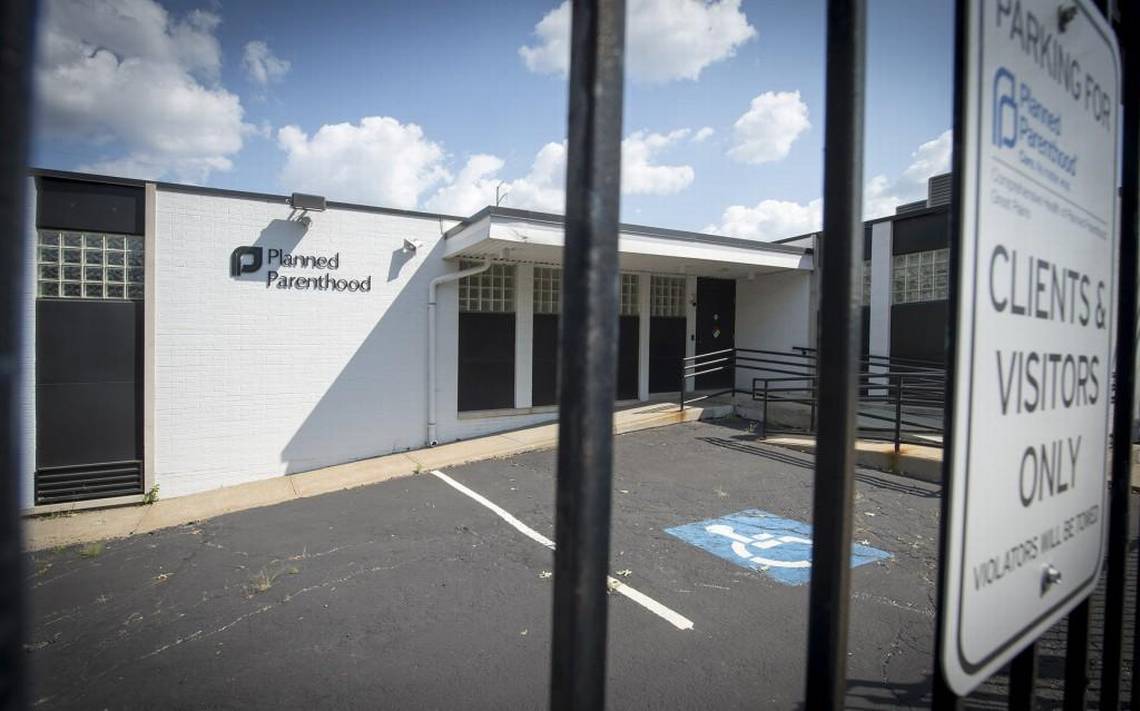
Planned Parenthood, 1001 Emanuel Cleaver II Blvd. in Kansas City, plans to resume abortions at the clinic in Kansas City. Tammy Ljungblad tljungblad@kcstar.com

Medical professionals told they will not face prosecution if they refer women to clinics in England and Wales for abortions

Pro-choice and anti-abortion campaigners at a rally in Belfast.
 Pro-choice and anti-abortion campaigners at a rally in Belfast. Abortion in Northern Ireland is permitted only in very restricted circumstances. 

Medical staff in Northern Ireland have been told they will not face prosecution if they refer women to clinics in England and Wales for abortions, a development that campaigners say will ease the climate of fear under which many have been operating.

In a significant clarification of the law, the director of public prosecutions for Northern Ireland, Barra McGrory, has said he does “not see the issue of criminal liability arising in the context of NHS staff advising or informing patients of the availability of abortion services in England and Wales”.

Until now the threat of prosecution has made many medical professionals feel constrained in the advice they give women seeking abortions elsewhere. Abortionin Northern Ireland is permitted only in very restricted circumstances, and Northern Ireland has the harshest criminal penalty for illegal abortion in Europe – life imprisonment for the woman undergoing the abortion and for anyone assisting her.

Although the government ruled this year that it would fund the medical costs of women from Northern Ireland who travel to England for an abortion, GPs in Northern Ireland were concerned that they were unable to discuss making referrals without exposing themselves to the risk of prosecution.

Grainne Teggart, from Amnesty International’s Northern Ireland office, received the response from the Northern Ireland Public Prosecution Service in response to a letter requesting clarification of the law. She welcomed the development, but said the Department of Health in Northern Ireland needed to revise its guidance to make the situation less confusing.

“The threat of prosecution has long loomed over medical professionals in Northern Ireland, who have previously felt unable to refer women to other parts of the UK for abortion services for fear of criminal prosecution. This has acted as a significant barrier for women seeking to access abortion,” she said.

“The Public Prosecution Service has now stated clearly they can see no risk of criminal prosecution in these circumstances. This is hugely important and should relieve the profession of this chilling threat. This is a significant breakthrough in the fight for abortion rights here.”

One woman described the unhelpful response she received from a Belfast gynaecologist about how to travel to England for an abortion, after she learned that the foetus she was carrying was unlikely to survive.

“They said: ‘We can’t tell you anything, we would be prosecuted if we gave you that information.’ They weren’t allowed to talk about the options; no phone numbers; no clinic address,” she said. “They were frustrated, but they said their hands were tied.”

Guidelines published by Northern Ireland’s Department of Health last year reveal that the courts in Northern Ireland have “never considered the issue of whether it would be lawful to ‘advocate or promote’ in Northern Ireland the termination of a pregnancy in another jurisdiction”, and this lack of clarity added to unease felt by medical practitioners.

senior committee member of the Royal College of Obstetricians and Gynaecologists in Northern Ireland said last year: “There is a real sense of fear, and concern that one of us could end up in prison.”

Breedagh Hughes, NI director of the Royal College of Midwives, welcomed the clarification. “Midwives have been operating in a climate of fear of prosecution. Women in Northern Ireland have not been getting the care and referrals to services in the UK that they really need because of this threat which we now know does not exist,” she said.

“Healthcare professionals will now be able to refer women to the rest of the UK for abortion services, confident that they will not face prosecution. This will enable us to look after women who seek or need abortion services.”

https://www.theguardian.com/uk-news/2017/sep/07/no-prosecution-risk-for-northern-ireland-medical-staff-over-abortion-referrals

Shortly after the election last fall, I called my doctor’s office. When I told the receptionist on the other end of the line that I was hoping to set up an appointment for IUD placement, she laughed. Not dismissive or mocking: just a little sad, a little rueful, the kind of laugh that happens when you’re faced with something too big to fit into words.

“You know, you’re the fifth woman that’s called today to make a placement appointment?” She said after finding my information online. “We’re booked through for the next month.” Her voice softer. “I got mine last week. It felt like a choice; and it was a great feeling. Needed.” And then she cleared her throat and put me on the schedule for December 31st, sent me an email with the confirmation information, and told me she’d update me if anything sooner opened up.

I’d been on extended-cycle pills for four years at that point, and had only given the IUD cursory thought.  I am (immovably so) a creature of habit and inertia, and I’d gotten used to that 8 AM alarm on my phone, that little pink box on my nightstand, the little pillbox tucked into my bag in case I had an early morning. If it isn’t broken, don’t fix it, right? But the night of the election, when all else seemed insurmountable, I found myself searching for something, anything to do at 2 AM. So I read through four years of prescriptions and insurance claims and calculated how much my birth control would cost if I suddenly had to start paying out-of-pocket. $881. Per year.

So, I decided to get an IUD.

I spent the weeks before my appointment researching my options and contacting my parents’ insurance company to make sure my choice would be covered. I decided on the Mirena, a five-year hormonal IUD that multiple friends had raved about, and that was fully covered by my plan. I read testimonial after testimonial about what the appointment was like: some women talked about a consultation first, some about going straight into a placement. I had my annual well-woman visit scheduled for early December, when I got home from college, and the receptionist that I’d spoken to had advised me to just ask my doctor to add an IUD consultation onto the visit (she explained that for their office, a consultation was required, but just involved talking a little bit about my medical background, and then measuring my uterus with a sounding device to make sure the IUD would fit).

Still, I worried about the hidden out-of-pocket costs that seemed to come up so often when things get lost in the havoc of healthcare claims and communications in the U.S. One wrong code from a practitioner, one out-of-network lab, and all of a sudden, you have a $300 bill springing into your life. And yet, I couldn’t find any detailed information about the actual costs of an IUD placement. This, I know, is mostly because healthcare costs can fluctuate so dramatically across states, regions, even towns. There’s no guarantee at all that what I paid (or would have, without insurance) would be what anyone else getting a similar procedure in a similar part of the U.S. would pay. With that said, the following is every test, procedure, and payment that was involved in my IUD placement (in addition to notes about what each test was for/where hidden charges may come in), in the hopes that someone, somewhere might find it helpful in the course of making a decision about their contraception.

Consultation Visit: These are all of the charges from my “consultation,” which in my case was just part of my annual well-woman visit. Most practitioners recommend — or even require — that you’ve had a recent pelvic exam/Pap smear before your IUD placement to avoid potentially spreading infection during the procedure, so these tests will often be done during your consultation in addition to any measurements or medical advisements.

Because of my HMO plan, I’m required to have my primary care physician recommend any specialists that I need, before I can qualify for coverage for those specialized visits; so during my visit, I made sure that my PCP had written a recommendation for the OB/GYN scheduled to place my IUD, and that my insurance company had been contacted. I also confirmed with the nurse on shift that the lab processing my test results was also in-network. Additionally, I know that on my plan, I would have had to pay a copay for the consultation office visit if I’d already had my well-woman visit that year; so that may be a thing to keep in mind if you’ve already maxed out your plan’s office/physician’s visits for the year.

(I do not even know what to do about the number of acronyms in that paragraph. Merp.)

Pap Smear (Lab): $90

HPV DNA Test (Lab): $77

Chlamydia Test (Lab): $77

First Office Visit (IUD consultation, uterus measurement): $137

Placement Visit: These are all of the charges from my second visit for the actual IUD insertion, after I had been approved for placement. A note: Bayer, the company that makes Mirena IUD, works with healthcare providers to supply a certain number of free IUDs to qualifying women (so the only costs would be that of the placement procedure, and a potential office visit charge). My OB/GYN’s office has a fairly straightforward application process for this, though I’m not sure if that extends to other practices. There’s also a recommended string check for 8-12 weeks after your insertion, to make sure the IUD is still in place. I visited my college’s free clinic for mine (with a nurse practitioner; it was easy-breezy!), so I’m not quite sure what costs might be affiliated with a more formal office visit.

Mirena: $868

Placement Procedure: $147

Second Office Visit (the office visit charge for the procedure): $137

Three Month Follow-up/String Check: $0 (at my college’s free clinic)

Total:

$1533 (+ a bottle of Tylenol, two hot pads, and a $2.99 movie rental. They said after-care?)

Eight Months After:

Again, due to my family’s generous insurance policy, as well as the ACA requirements for insurance coverage of any FDA-approved birth control methods, I didn’t pay for any of this out-of-pocket. I know that I have been — and am — incredibly privileged to not only have reliable and generous health insurance through my parents, but also to have ready access to healthcare both at home and in my college town. I am so lucky, and so grateful.

I’ve loved my IUD. I didn’t realize how freeing it’d feel to turn off that alarm (four years!); and I think part of me feels that if my Mirena’s there already, the government can’t decide to also situate itself in my uterus? Of course, that’s not true, and perhaps to articulate it in that way is to dismiss all of the work that still needs to be done to keep affordable care for women at the forefront of healthcare policy. But for me, that privilege — that tiny, plastic, t-shaped bit of privilege — is an everyday reminder not to stop fighting.

The Real Cost Of An IUD

Anti-choice activists may have a better shot than you think at getting the Supreme Court to revisit Roe v. Wade under Donald Trump. (Photo by ZACH GIBSON/AFP/Getty Images)

A series of court battles over onerous reproductive rights restrictions in one conservative state could help right-wing activists challenge ‘Roe v. Wade.’

When Donald Trump ran for president, despite his long history of pro-choice positions, he essentially offered evangelical Christians a dealHelp elect me, and I will appoint pro-life, conservative justices to the Supreme Court. Sure enough, less than three months into his presidency, Trump’s first SCOTUS appointee—Neil Gorsuch—was confirmed, and anti-choice advocates seemed to be one step closer to their ultimate goal of overturning Roe v. Wade.

It may take another appointee to truly tilt the scales of justice against reproductive rights in America’s highest court. But in the meantime, conservatives have been eyeing the Eighth Circuit Court of Appeals, based in St. Louis, Missouri, as a vehicle to bring such a challenge. That’s where, in 2015, appellate judges urged the nation’s highest court to revisit existing abortion jurisprudence, and turn matters over to the states, as conservatives have long dreamed.

Now that same federal appeals court, which may be more hostile than any other to abortion rights, is getting a bunch of new opportunities to go after a woman’s right to choose in Arkansas—and maybe even set the stage for the end of Roenationally.

Over the past several years, legislators in Arkansas—one of seven states under the Eighth Circuit’s purview—have passed some of America’s most restrictive abortion laws. Already in 2017, Arkansas passed a statute that would criminalize doctors who perform dilation and evacuation (the most common second-trimester procedure), and also permit husbands to sue to prevent their wives from obtaining abortions—with no exceptions even for rape or incest.

Set to go into effect on July 30, the law was blocked after the American Civil Liberties Union, the ACLU of Arkansas, and the Center for Reproductive Rights sued over it and three other recently passed abortion restrictions. Lawyers brought the suit on behalf of a physician working at one of the last two abortion clinics in the state, and argued the laws posed unconstitutional burdens on a woman’s right to choose.

On July 28, federal judge Kristine Baker blocked the laws’ enforcement, and Arkansas Attorney General Leslie Rutledge filed for an appeal two weeks ago. A spokesman for the AG did not return multiple requests for comment.

What should worry abortion-rights advocates is that there’s plenty of reason to suspect the Eighth Circuit will be sympathetic to Rutledge’s challenge. In March 2016, Judge Baker issued another injunction against a 2015 Arkansas lawrequiring physicians who prescribe abortion-inducing drugs to secure contracts with doctors with hospital-admitting privileges—a high bar to meet in the increasingly conservative state, and one the American College of Obstetricians and Gynecologists and the American Medical Association said had no medical basis. This past July, the Eighth Circuit lifted Baker’s injunction, ruling she would need to more concretely prove that a sizable number of women will face harm under that law.

In an interview with VICE, Steve Aden, chief legal officer and general counsel for Americans United for Life, said he felt the Eighth Circuit’s request for “some real math” was reasonable. He also defended the admitting privileges requirement as a common-sense measure to protect women’s health, noting that other outpatient surgical procedures generally require it. “If you or I go to a clinic and get Lasik or a colonoscopy, chances are really good that the doctors will have admitting privileges,” he said.

Meanwhile, the US Supreme Court last year heard arguments for Whole Woman’s Health v. Hellerstedt, widely considered to be the most significant reproductive rights case in nearly 25 years. In a 5–3 decision, the justices ruled that a package of Texas abortion restrictions imposed an unconstitutional burden on women seeking to end their pregnancies.

Fatima Goss Graves, the president and CEO of the National Women’s Law Center, told VICE anti-abortion opponents haven’t been much deterred by that outcome. On the contrary, she said, they are eagerly working to put more abortion cases before the Supreme Court as soon as possible. “They are still purposely trying to pass extreme laws that conflict with Whole Women’s Health, with Roe, so they’ll [then] be challenged in court,” she said. “That is the strategy.”

Another Arkansas case that could reach the Supreme Court concerns conservative boogeyman Planned Parenthood. In 2015, following the release of doctored videos purporting to show Planned Parenthood illegally profiting from the sale of fetal tissue, Arkansas Republican governor Asa Hutchinson announcedhe would be terminating Medicaid contracts with the women’s health organization. Judge Baker blocked the move that September, but last month, a three-person panel on the Eighth Circuit decided Arkansas could cancel its Medicaid contract with Planned Parenthood—a notable departure from rulings in the Fifth, Seventh, and Ninth Circuits. On August 30, the plaintiffs appealed to make their case again before the entire Eighth Circuit.

Aden, of Americans United for Life, thinks this case stands a shot of reaching the Supreme Court given the Eighth Circuit’s first decision diverged so sharply from other Appeals Courts nationwide.

I asked Bonyen Lee-Gilmore, a spokesperson for Planned Parenthood Great Plains (an affiliate overseeing Arkansas, Kansas, Missouri, and Oklahoma), if they would appeal to the Supreme Court, should the full Eighth Circuit uphold the Medicaid ruling. “When it comes to next steps in the legal world, we really play it one step at a time,” she said. “Every time a decision comes down, we’re evaluating all our legal options, and the reality is we could end up in the Supreme Court, but we’re not there yet. Right now, we’re just seeing if we can successfully secure an en banc appeal.” (To hear a case ‘en banc’ means before the entire bench of judges, rather than a three-person panel.)

It’s worth noting that even though Arkansas’s governor cancelled state Medicaid contracts with Planned Parenthood over the 2015 fetal tissue videos, three Republican-led congressional investigations and 13 state-level probes—including one by a Texas grand jury—found no evidence of wrongdoing.

Gillian Metzger, the Stanley H. Fuld Professor of Law and vice dean at Columbia Law School, thinks the Eighth Circuit “has really pushed the envelope” on constitutional retraction of reproductive rights in America. But whether these specific cases make it to the Supreme Court, she said, comes down—as always—to how willing justices are to engage with the abortion issue again. “The bigger question is does the Court have an appetite for this after 2016? And my guess it might wait a little bit to see how the Whole Women’s Health decision plays out,” she said.

In the meantime, President Trump will have the opportunity to fill three vacancies on the Eighth Circuit. If all are confirmed, according to longtime legal writer Rox Laird, only one of the Eighth Circuit’s 11 judges will have been appointed by a Democratic president, making it “the most ideologically lopsided of all the US Court of Appeals.”

Even if pro-choice advocates secure Medicaid funding for Planned Parenthood and defeat this round of abortion restrictions in the Eighth Circuit—by no means a safe bet—advocates aren’t expecting legislators to slow down their anti-abortion efforts anytime soon. In mid August, Planned Parenthood Great Plains and the ACLU argued yet another case in Arkansas federal court, protesting a law mandating the suspension of an abortion provider’s license for any minor error found during an inspection. That rule doesn’t apply to any other licensed health center in the state.

“We’ll be on high alert when the legislature returns in 2019 and continue to fight these extreme attacks on women and their rights,” said Rita Sklar, the executive director of the ACLU of Arkansas. “Often, the only way to get Arkansas politicians out of the exam room is to take them to court.”

https://www.vice.com/en_us/article/bjj984/a-legal-war-in-arkansas-threatens-abortion-rights-everywhere

GETTY

The statistics aren’t good. According to recent estimates, women make up just under 20 percent of Congress and less than 25 percent of all state legislatures. Only six of our nation’s governors are women. But we are 51 percent of the population. And the research shows that when women participate in government, we make it run better, more collaboratively. Historically, women have needed to be convinced to enter politics. But within weeks of the 2016 presidential election, thousands of women announced they plan to run. And we want them to win. So we’re giving them a weekly example of a woman who has run and won — or in this week’s case, a woman who’s well on her way. The point: You can, too.

Kate Brown is the current Governor of Oregon. Previously, she was the Oregon Secretary of State and in the Oregon State Senate. She succeeded former Governor John Kitzhaber when he resigned in February 2015 and won her own special election in 2016, making her the first openly bisexual governor ever to serve in the United States. Since Trump was inaugurated, Oregon has codified a woman’s right to choose, just in case the Supreme Court overturns Roe v. Wade and has passed protections against deportations. Brown herself has issued an executive order to reaffirm Oregon’s commitment to immigrants, strengthening its status as a sanctuary state and defying Trump’s hardline positions. Last month, she signed the Reproductive Health Equity Act into law The measure requires all insurers to cover birth control and abortion — without a copay. It has been widely deemed the most progressive reproductive health policy in the country.

I remember telling my mother in the third grade that I wanted to be President of the United States. I remember her saying, “But we don’t have enough money.” It wasn’t that I was raised in a low-income home. It was more, I think, “You’re not the right type of person that runs for president.” It seemed like her way of telling me, “That’s not a job that girls do.”

Growing up, I was a 1960s baby in Minnesota, and books were my sort of portal to the world. I read extensively and read about a lot of really strong women, like Amelia Earhart and Julia Gordon Low, who founded the Girl Scouts, and of course Harriet Tubman. Back then, my teachers were really important for me; they were role models, pushing me and encouraging me to succeed. And that continued throughout my undergraduate classes at the University of Colorado and in law school in Oregon.

I had always wanted to go to law school because I knew that being a lawyer would give me the tools to fight for justice and equality, and later, I got into public service because I wanted to be a voice for the voiceless. So, in 1982, I moved to Oregon to go to law school. While I was there, one of my biggest mentors in law school was the associate dean, and she happened to mentor another woman in the class before me, whose name you probably know, [North Dakota Sen.] Heidi Heitkamp. The fact that she mentored both Heidi and me is pretty extraordinary, I must say.

On her “from birth” feminism

At Lewis and Clark [Law School], I really fell in love with Oregon. It was like I came home. I’d been somewhat active in high school, not so active in college; I was quite active here when I was in law school, working and volunteering at one of the local women’s health centers. This is when we were having the battle of making sure women could get into health clinics without being harassed by protestors. After law school, I continued my activism, both through volunteering and getting involved working [to oppose] some of the anti-choice ballot measures.

http://www.elle.com/culture/career-politics/a12157267/kate-brown-oregon-governor-abortion/

A review by Rewire found that at least $3.1 million in grants have been awarded to religiously affiliated organizations or crisis pregnancy centers, also known as fake clinics.

The Trump administration in recent weeks has awarded millions in grants to state governments and organizations to fund abstinence-only sex education. More than $3 million in federal funds has gone to organizations that distribute inaccurate and misleading information about sexual health.

The U.S. Department of Health and Human Services (HHS) awarded $8.9 million in grants to 21 organizations and agencies through the Competitive Abstinence Education (CAE) program. HHS has awarded an additional $2.1 million in grants and sub-grants to 34 organizations and agencies through the abstinence education program created by the Affordable Care Act (ACA).

The grants for abstinence-only sex education programs come in the wake of the Trump administration’s decision to eliminate $213.6 million in grants for teen pregnancy prevention programs and research.

A review of the abstinence education grants by Rewire found that at least $3.1 million has been awarded to religiously affiliated organizations and crisis pregnancy centers, or fake clinics that use anti-choice propaganda to dissuade people from seeking abortion care.

ThriVe was awarded a $433,021 grant to provide abstinence-only education to youth in the St. Louis area. The organization operates three fake clinics in the St. Louis area, and has regularly organized protests of Planned Parenthood. ThriVe’s Best Choice abstinence-only program has faced criticism from parents, and several school districts in the St. Louis area have discontinued or suspended the program to review the curriculum.

Pamela Merritt, executive director of Reproaction, told Rewire in an email that the Trump administration’s grant to ThriVe is “outrageous.”

“Missouri is already one of seven states rerouting millions in federal TANF dollars intended to alleviate hunger to these fake clinics,” Merritt said. “The state’s best interests are not well served by Trump sending even more hard-earned tax dollars to a controversial anti-abortion fake clinic that systematically misleads and shames women seeking abortion care.”

Elizabeth’s New Life Center, an Ohio-based self-described Christ-centered ministry organization with several locations throughout the state, was awarded a $442,019 grant. Gov. John Kasich (R) in July approved a budget that included $1 million in funding for fake clinics in the state.

“Abstinence-only programs and crisis pregnancy centers commit a sin of omission when they deny real facts to students and families. Taxpayers do not want their money to go to anti-abortion groups that lie to women and girls,” NARAL Pro-Choice Ohio Executive Director Kellie Copeland said in a statement. “These funds are desperately needed in our communities, but they have to get to real health care organizations and groups that provide comprehensive sex education classes. Abstinence-only programs are not effective at delaying the initiation of sexual activity or in reducing teen pregnancy. They’re a harmful waste of taxpayer dollars. Period.”

Other religiously affiliated or anti-choice organizations awarded CAE grants were Bethany Christian Services, which received $441,577; Ambassadors for Christ Youth Ministries, awarded $442,019; and Trinity Church, which received a $442,019 grant.

Three religiously affiliated organizations were awarded sub-grants as part of the ACA’s abstinence education grant to the New Jersey Department of Health. Mount Olives Church of God was awarded $263,236; Free Teens USA was awarded $306,164; and Lifeguard Inc received $343,144.

https://rewire.news/article/2017/09/07/trump-gives-away-millions-anti-choice-fake-clinics/