A much larger group of employers will be able to opt out of offering insurance plans that cover birth control. Photo: Adam Hart-Davis/Science Photo Library/Getty Images/Science Photo Libra

On Thursday, The Wall Street Journal reported that the White House is on the verge of implementing a rule to roll back the Obama-era requirement that employers offer health-insurance plans that include contraception. The news was confirmed by “two people familiar” with the new rule’s contents, which they say is very similar to a draft leaked in late May.

Much like the draft, this rule would reportedly let a “much broader” set of employers opt out of offering plans that cover birth control, if offering that coverage conflicts with their religious beliefs. It also abolishes a “work-around” the Obama White House put in place that would let women circumvent their employers to get free birth control:

[The] process, which the Obama administration dubbed an accommodation, in which an employer notifies the government of its unwillingness to cover contraceptives. That prompts the insurer administering the employer’s health benefits to assume the cost and administration of providing contraceptives, effectively cutting out the employer.

Trump’s religious base has been after him for months about implementing the rule, which they said “would go a very long way to restoring religious freedom and conscience rights.” But reproductive-rights advocates say it “allow[s] an employer’s religious beliefs to keep birth control away from women,” and is therefore vulnerable to a legal challenge.

From a practical standpoint, this could mean that some of the more than 50 million women the rule has benefited could be forced to pay for their contraception out of pocket — something one in three women voters have struggled to do, according to a 2010 poll. And much like his presidency as a whole, Trump’s new rule would go against popular opinion; according to a January Kaiser poll, 77 percent of women and 64 percent of men supportno-co-pay contraception coverage.

Those “familiar” with the rule told WSJ that, rather than open the rule to public comment, they expect it to take effect as soon as it’s published.

https://www.thecut.com/2017/08/trump-end-obamacare-birth-control-coverage-mandate.html

Hundreds of bills aimed at restricting abortion access are introduced in state legislatures every year, and the ones that become law can have an immediate impact on providers across the country. States that currently have just one abortion clinic are proof of how strict, superfluous requirements force clinics to shutter, leaving women with fewer healthcare options.

Kentucky, Mississippi, Missouri, North Dakota, South Dakota, West Virginia, and Wyoming each have only one abortion clinic. One. For the whole state.
“Of course, states that have shut down all but a single clinic didn’t get there by accident, but as the result of deliberate steps to deny women access to constitutionally protected healthcare,” James Owens, a NARAL Pro-Choice America spokesperson, told Refinery29. “Unfortunately, these states are not alone, as there has been a concerted, nationwide effort to undermine a woman’s access to abortion for more than a decade.”
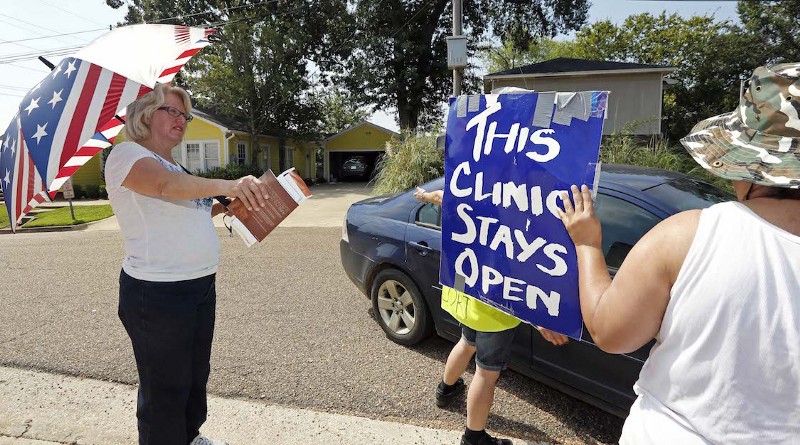
Mississippi was left with just one clinic providing abortion procedures 11 years ago — Jackson Women’s Health — and it’s been fighting to stay open ever since. Most recently, a crisis pregnancy center moved in right across the street. These types of anti-abortion organizations advertise as clinics offering women advice on pregnancy options, but in reality, they distribute misleading or false information, exaggerate the risks of having an abortion, and pose “counselors” as medical professionals.
So far, Jackson Women’s Health has managed to keep its door open, but now another one-abortion-clinic state is battling to not become the first state with zero clinics.
Kentucky’s Republican governor, Matt Bevin, has effectively shut down abortion clinics and kept an existing Planned Parenthood from providing abortion procedures, leaving the E.M.W. Women’s Surgical Center as the only abortion provider in the state. The American Civil Liberties Union (ACLU) sued Kentucky on behalf of the E.M.W. Women’s Surgical Center in April after the state threatened to revoke the clinic’s license because its agreements with a local hospital and ambulance service allegedly weren’t sufficient. A federal judge allowed the E.M.W. Women’s Surgical Center to stay open until the case concludes.
State requirements forcing abortion clinics to have admitting privileges at nearby hospitals are known as TRAP laws — targeted regulation of abortion providers — because the American Medical Association and the American College of Obstetricians and Gynecologists consider them medically unnecessary and they force clinics that can’t meet those strict standards to close.
In fact, the Supreme Court ruled last summer that similar laws in Texas were unconstitutionalbecause they create an undue burden for women seeking to end a pregnancy, but other states (like Kentucky) still have these types of laws on the books.
Besides the fact that abortion is legal in the U.S., the main problem with having just one (or zero) abortion clinics in an entire state comes down to access. Do women really have the right to choose an abortion if there’s no feasible way for them to get one?
A lack of clinics forces women to travel really far to get healthcare. When Texas abortion clinics closed after the state withheld their funding in 2011, women whose closest clinic shuttered drove an average of 85 miles for health services. This means an increase in travel costs, childcare expenses, and time off work, all of which make it more difficult for anyone — but especially low-income women — to get an abortion. And if a state is left without any abortion clinics, all of those factors would escalate even further.
The ACLU’s case in Kentucky is set to go to trial in September and will determine whether or not the war against abortion will succeed in creating an abortion-free state in 2017.

HB 214 bars private, state-offered, and ACA abortion coverage

Sen. Brandon Creighton, R-Conroe, carried the Senate’s version of HB 214, a bill that bans insurance coverage of abortion care. He failed to accept amendments carving out exceptions for rape or incest survivors. (Photo by Jana Birchum)

Ecstatic to bring their first child into the world, Austin residents Scott Ross and Jeni-Putalavage Ross approached the 21st week of pregnancy with joy.

But a routine trip to the doctor soon revealed a rare and severe chromosomal fetal abnormality. Their future baby would not survive birth. The doctor recommended termination of pregnancy, a decision the couple did not make lightly. Scott said: “We felt a lot of mental anguish, but we knew the anguish – physical and mental – would be even harder if we carried the baby to term.”

Due to complications, Jeni spent seven days in the ICU. All said and done, the Rosses’ medical bill totaled a whopping $64,000. Thankfully, employer-based insurance covered 90% of the tab. However, an anti-choice Texas bill – inches away from becoming law – would have prevented the Rosses and couples like them from receiving insurance coverage for abortion care. “Under the bill, we would have had to pay out of pocket and would have been in dire financial straits, on top of the pain we felt losing our child,” said Scott, who likened the bill to a “pregnancy tax.”

One of Gov. Greg Abbott’s special session agenda items, HB 214 by Rep. John Smithee, R–Amarillo, (and Senate counterpart SB 8 by Sen. Brandon Creighton, R-Conroe) bars abortion coverage from private, state-offered, and Affordable Care Act (ACA) insurance plans, with an exception for a narrowly defined “medical emergency” but no exceptions for rape, incest, or fetal abnormalities – an especially cruel aspect of the bill that compelled critics and some legislators to dub it the “rape insurance” bill. Women would be forced to somehow anticipate the need for abortion care – an unpredictable life event – and purchase supplemental coverage, defying the point of insurance.

“It’s so frustrating to hear lawmakers call it an ‘elective abortion’ – we didn’t elect to have a child who is incompatible with life,” said Scott. “Like all abortions, it was unforeseen.”

Further, the bill doesn’t require insurance plans to offer the added coverage, or even notify clients if they don’t offer it. “You can be basically flying blind when choosing your insurance plan and not know the plan you’re buying for your family didn’t cover pregnancy termination even if it’s the result of rape or incest,” health care attorney Blake Rocap of NARAL Pro-Choice Texas, pointed out to the Senate’s Business and Commerce committee during a Friday hearing (Aug. 11).Bill authors claim the legislation is about “economic freedom” and allowing those who “philosophically disagree” with abortion to not have to subsidize the procedure, but the measure will end up unnecessarily and unfairly pushing abortion further out of reach for women, especially low-income women, pro-choice advocates caution. Texas isn’t alone in banning abortion insurance coverage; other GOP-controlled states have taken on similar laws: 10 states ban abortion from private insurance, and 25 states bar the procedure from health exchanges, according to the Guttmacher Institute.

On Saturday, during a hearing held well after 5pm, Senate Republicans left their empathy and compassion at the door while swatting down Democrat-authored amendments that sought to carve out exceptions for rape and incest victims and for women with severe fetal abnormalities, before eventually ushering the bill along to third reading in a 20-10 vote on party lines. It’s highly expected to pass the Senate’s final hurdle and eventually head to Abbott’s desk to become law. (House Democrats similarly attempted to include those exceptions, but Republicans callously shot them down when passing through HB 214 earlier this week, as noted in this week’s issue.)

“No one plans to be raped. No one plans to have an abortion. This is what I find so egregious about this bill,” said Sen. José Menéndez, D-San Antonio, who offered an amendment to protect victims of sexual assault from the potential new law – it was knocked down in a 20-10 vote. “This shouldn’t be a partisan issue. It should be about us caring about sexual assault survivors.”

With his amendments killed on the floor, the Senate GOP showed Texans how much they care about sexual assault survivors and all women, loud and clear.

https://www.austinchronicle.com/daily/news/2017-08-13/rape-insurance-bill-close-to-becoming-law/

Uganda’s highway A-109 shoots across the plain from Kampala past the occasional storefront shops and open-air kiosks common to the continent’s roadsides. After rising into the verdant tea plantations of the country’s Western Region, it passes through Fort Portal near the Congolese border. From there, a turn off the main road leaves the reasonably well-maintained tarmac behind in favor of red clay washboard and bone-shaking potholes. Finally, it devolves into a footpath running between a few dozen housing compounds in a village called Kalera.

Though Kalera is poor by western standards, it doesn’t approach the desperation found in many poorer parts of Africa. Flinty, hard-working women tend small plots of bananas, potatoes, maize and soybeans. These plots border larger fields of tea, a cash crop. Goats and chickens roam. The village teems with children. Today, at least, there are no men in sight.

 By limiting women’s family planning options in Uganda, “we are likely to get a higher number of abortion cases and more maternal deaths.” Jemiima Mutooro is a village health worker trained by Reproductive Health Uganda (RHU) using U.S. Agency for International Development (USAID) funds provided through the International Family Planning Foundation. She walks through Kalera carrying a black satchel. Inside the satchel is a day planner, pens, bandages, alcohol swabs and, most important, several small tamper-proof foil packages. Sayana Press, the novel, possibly revolutionary, family planning device within those packages is the subject of a pilot program sponsored by an international consortium that, along with RHU, includes the Uganda Ministry of Health and the Bill and Melinda Gates Foundation.

Global Gag Rule Uganda
Akiiki Jemiima Mutooro is one of 40 village health workers trained by Reproductive Health Uganda using USAID funds. (Charles Ledford)

Developed by Pfizer and the Seattle-based non-profit PATH, Sayana Press is as simple in form as it is obvious in function: a fingernail-sized clear plastic bubble holds a milky liquid – a three-month dose of the contraceptive progestin – and is attached to a short needle. The device is small, easy to use, disposable and effective. And because it’s also suitable for self-dosing, Sayana Press could give women in remote areas like Kalera – where isolation, cultural pressures and economic marginalization severely constrict contraceptive options – a previously unimaginable degree of reproductive autonomy.

Or the initiative could be severely curtailed – an early victim of a radical and asymmetric “America first” doctrine that pits the richest country on the planet against, among others, more than 200 million women worldwide who are in need of family planning services.

Global Gag Rule Uganda
A health worker holds a Sayana Press progestin-only contraceptive before administering it in Kalera Village.(Charles Ledford)

By any measure, most of those women are far removed from the White House, Trump Tower, Mar-a-Lago and the fundamentalist churches and cathedrals of America’s conservative faithful. But what geography, wealth and power once separated, Republican President Donald Trump brought together three days after his inauguration when he reinstatedRonald Reagan’s Mexico City Policy.

Also known as the Global Gag Rule, the Reagan-era document cut off US family planning assistance funds to foreign non-governmental organizations (NGOs) that perform abortions or even so much as mention the option of legal abortion to their clients. Since its inception in 1984, the policy has been a convenient political ping pong ball. Each subsequent Republican administration has renewed it, and each Democratic administration has rescinded it.

Global Gag Rule Uganda
A patient receives the injection of the contraceptive progestin from the Sayana Press. (Charles Ledford)

Trump’s version of the policy expands the restricted funds beyond family planning assistance to include all US “global health assistance.” According to the Kaiser Family Foundation, that’s at least $9.5 billion that now go toward efforts to fight malaria, Zika, HIV/AIDS and even malnutrition.

Just as the flawed rollout of the president’s immigration ban sowed widespread chaos, Trump’s gag rule has left NGOs involved in sexual and reproductive health worldwide scrambling to fully understand its scope. No one is yet sure exactly what this expanded language will mean or how the new restrictions will be implemented.

One thing is certain: More than 150 organizations have denounced the global gag rule’s previous iterations as having caused serious harm around the world. And legacy organizations like the International Planned Parenthood Federation (IPPF) and Marie Stopes International have said that, on principle, they will refuse to accede to the new policy’s restrictions. That means their local member associations, like Reproductive Health Uganda, will lose USAID funding and could be crippled.

Global Gag Rule Uganda
Surrounded by pregnant women and their caretakers, Jackeline Nikungu, 32, (center) waits to give birth to her fifth child. (Charles Ledford)

During an interview in his office in Fort Portal, Dr. Richard Obeti, assistant district health officer for Uganda’s Kabarole District, which includes Kalera, acknowledged both the uncertainty and the risk. “We are worried,” he said. “We rely on groups like Reproductive Health Uganda to bridge the gaps in our health care system.” He finds the Global Gag Rule’s potential negative impact on programs like the Sayana Press initiative to be particularly troubling: “Sayana Press prevents unwanted pregnancies which would otherwise end in abortion,” he said. By limiting women’s family planning options in a country where abortions have for years been legal only under the most extraordinary of circumstances, he said, “we are likely to get a higher number of abortion cases and more maternal deaths.”

And therein lies the irony. In 2011, the most recent year for which government figures are available, half of all pregnancies in the country were unintentional, according to the Uganda Bureau of Statistics. A 2017 Guttmacher Institute study estimates that 26 percent of these unintended pregnancies end in abortion.

More unintended pregnancies mean more unsafe abortions and more children than a family can afford. The original Mexico City Policy claims that “U.S. support for family planning programs is based on respect for human life, enhancement of human dignity, and strengthening of the family.”

On the ground in countries like Uganda, the actual consequences of the policy may be more ruined lives, more undignified death and more poverty.

https://qz.com/1051605/trumps-anti-abortion-global-gag-rule-and-its-impact-in-uganda/

8_10_17_abortion.jpg

A college student has traveled to the D.C.-area from Georgia for an abortion, only to learn at her check-up at the clinic that the procedure will cost $4,000 more than she anticipated.

The D.C. Abortion Fund shared the student’s story, without providing identifying details, to help raise money on her behalf. The nonprofit provides grants to pregnant people who need assistance paying for the procedure. While a majority of the patients are local, about 15-20 percent of their cases are from other parts of the country.

“By the time she figured out that she was pregnant, she was too far along to be seen by a clinic in Georgia,” says Meghan Faulkner, the co-director of case management at DCAF. The cut-off for abortions in Georgia, and 23 other states, is 20 weeks post-fertilization. “One of the closest clinics available [for her procedure] was a clinic in Germantown … It’s not uncommon at all for patients to be traveling that far.

Compared to Georgia and, more nearby, Virginia, Maryland has significantly fewer restrictionson abortion. There is no waiting period (Virginia requires patients to get an ultrasound and then, in most cases, wait 24 hours before an abortion), and can be performed any time before the fetus is viable.

The patient was largely paying her own way, with some assistance from DCAF and other abortion funds.

The cost of an abortion varies, depending on how far along in a pregnancy the patient is, the type of anesthetic, and whether there are health complications. A first trimester procedure costs a couple hundred dollars on average, and increases as the pregnancy progresses.

“The later second-trimester procedures that patients come to our area for, it can be $5,000, $6,000, $7,000. $8,000 is the highest we see on a more regular basis,” says Faulkner. What can be tricky is that, as women are trying to raise money for the procedure, the cost for it continues to rise. “A lot of the reason patients need our support and face high costs is because they aren’t able to get coverage.”

The Hyde Amendment, a budget rider attached annually to Congressional appropriations bills since 1976, prevents the use of federal funds to pay for abortion, with few exceptions, affecting people on Medicaid, federal employees, Peace Corps volunteers, federally incarcerated women and women in immigration detention centers, military personnel, and Native Americans. A similar rider called the Dornan Amendment ties D.C.’s hands when it comes to using locally raised funds to pay for the procedure (Congress keeps trying to make the policy permanent law). Virginia doesn’t use its state funds to pay for the procedure in most cases, a choice made by commonwealth officials.

Plus, there are costs beyond the actual abortion. “If someone is traveling from out of state, they’re paying for travel,” says Faulkner. “There’s a hotel cost. There’s also your companion—folks usually travel with someone to have an escort to be with them. There’s lost wages, because most of the people that we are helping don’t have paid sick leave or much, if any, vacation time. And childcare is another big one.” Later second trimester abortions generally take at least two days, unlike the outpatient procedure for those undergone in the first trimester.

DCAF exists to help fill the monetary gap. In fiscal year 2015, the organization assisted 1,200 patients, according to Faulkner, a number they well exceeded the following year, though they haven’t finalized the numbers for 2016 yet.

For the student from Georgia, her costs rose by $4,000 because she miscalculated when her pregnancy began. DCAF has already pledged to help pay the difference. “This particular patient was a college student who doesn’t have a ton of resources to say, ‘great, l’ll just pay $5,000 on my credit card.”

“We’ve worked with a number of patients who’ve faced similar things, especially if they’ve already come up with the money and gotten themselves here,” says Faulkner. “It”s often panic and feeling like, ‘How is this happening? I’ve done everything I possibly could and I’m facing another barrier.'”

http://dcist.com/2017/08/georgia_student_maryland_abortion.php

I lived in liberal Washington, D.C., with a tight-knit circle of progressive pro-choice friends, and I still wasn’t sure whom I could lean on for support.

abortion

If the test was positive, I was going to have an abortion. I made my decision in the aisle of CVS when I was calculating whether I could afford FirstResponse Early Result or if I should just go generic.

I was 24, just two years out of college, living in a group house, with a career that had just started to take off. I wasn’t financially or emotionally prepared to carry, have, or raise a child. Nor did I want to. That’s why I was on birth control. It was why I’d taken Plan B. Neither, in this instance, had worked.

If you’d been in my bedroom the night I found out, you would have seen used tissues scattered on the floor next to the pregnancy-test packaging. I wasn’t crying about my decision, or even about the pregnancy. I was crying because of how alone I felt.

I lived in liberal Washington, D.C., with a tight-knit circle of progressive pro-choice friends and a family I trusted just a phone call away. But we weren’t having frank, open conversations about abortion — and when we did, they were rarely grounded in personal experiences. So I wasn’t sure whom I could talk to, whom I could lean on for support. Worse, I found myself worrying that people might judge me for my decision, for not feeling the slightest bit guilty, remorseful, or sad about it.

That’s how potent the stigma surrounding abortion is.

Because of stigma, women are made to feel ashamed about a routine procedure. Because of stigma, women are made to feel isolated — even though 1 in 3 will have an abortion in her lifetime. Because of stigma, there are women who go through this process on their own — and never tell a soul.

Many women, like me, choose abortion because they don’t want children yet. Other women don’t want children, period. Some desperately want children but find out during their pregnancy that the fetus isn’t viable. Some women, already mothers, know they can’t afford to raise more children.

The decisions and experiences and reasons surrounding abortions are as different as the many women who choose to have them. But stigma — albeit, varying levels of it — is something we all have in common.

Ultimately, I told my best friend — someone I trust deeply — because I needed someone to take me in for my procedure. Her outpouring of love and support prompted me to tell others close to me. They all responded with some variation of “I’m here for you. How are you? Let me know what I can do to help.”

Not one of them questioned my decision or my character. No one jumped in with their personal opinions or asked me to explain myself. I know I was fortunate though: Not all women in this situation have this kind of experience. Ultimately, talking about my abortion became a sort of healing process — a way to break down that stigma for myself and assuage the fear that those close to me might judge me for the choice I made.

And somewhere along the way, I realized that people weren’t just offering their support — they were really listening, they were really engaging. Friends would ask about my experience because they had questions they could never ask anyone else before: Was it painful? Where did you go? How long did it take? What was your recovery like? Others started sharing stories about their own pregnancy scares and abortions for the first time. Some began reaching out because they needed support themselves.

And so, the circle of people who I’d tell about my abortion began to widen — from friends, to friends of friends, to family, to colleagues. With every candid conversation — especially those that happened in person — abortion (not just my own) began to feel a bit more relatable, for everyone. So I made the circle wider still. I talked to new acquaintances about my abortion, posted about it on social media, and would even — given the opportunity — bring it up on dates.

Recently, a woman I hadn’t spoken to in five years contacted me. She’d seen that I had shared my story and advocated for Planned Parenthood on social media. “Hey Tania! This is still your number right?” It was. “Full disclosure, I’m in a panic. I may be pregnant. Who can I call?” I gave her the number to Planned Parenthood and also to an abortion provider in her area.

When I talk about my abortion now, I talk about how — because I had missed the window during which the abortion pill is most effective (the first seven to nine weeks of pregnancy) — I had a 15-minute procedure called a dilation and evacuation (or D&E). I always mention the nurse who stood by my side and let me squeeze her hand when I felt cramps the pain medication didn’t dull.

I talk about how, yes, the weekend after the Thursday afternoon procedure was physically draining; I took off work Friday because I was bloated, reeling from cramps, and dealing with what resembled the absolute worst period I’d ever had.

I talk about the relief I felt after my abortion — and how my doctor nodded when I told her, saying that’s how the vast majority of women feel after their procedures.

And I always, always talk about how lucky I was to be employed, with quality insurance, and living in Washington, D.C, which meant I could call and schedule my appointment within one week. Had I lived in a state like Missouri, I would have had to drive across the state (local lawmakers have shut down all but one abortion-providing clinic), sit through state-directed counseling designed to discourage abortion, and then wait 72 hours before being provided the procedure.

Even if I weren’t talking about it, I would still think about it every day. Because every day, I’m living the life I chose for myself — with a career, ambitions, and a lifestyle that wouldn’t have been possible had I been forced to carry the pregnancy to term. My sense of relief hasn’t faded and I don’t expect it ever will.

It’s been two years since my abortion, and I talk about it openly, out loud and often, because I know that there are women out there who might, one day, benefit from hearing about it.

Of course, not everyone has been so receptive to my story. Someone else I know confronted me through Instagram for my support for “killing babies.” When I offered to talk about our views by phone, she refused.

Her inflammatory language, though, wasn’t what bothered me most. She has daughters, and I imagine what they would do if they ever found themselves with pregnancy tests and tissues scattered on the floor of their bedrooms, and needed someone who wouldn’t judge them for asking, “What do I do?”

So I’m going to keep talking about my abortion.

Because every woman should know she’s not alone. Because abortion is a safe, normal procedure — and should be talked about as such. And because every woman should have the right to choose, and she should feel empowered — never ashamed — to make the choice that’s right for her.

http://www.cosmopolitan.com/politics/a9598266/abortion-stigma-pro-choice/

'Handmaids' protesters silently urge Rauner to sign abortion rights bill
Silent protesters gathered outside of The James R. Thompson Center Aug. 9 urging Gov. Bruce Rauner to sign a reproductive rights bill.

Dressed in red robes and white bonnets—a nod to the Hulu original show “The Handmaid’s Tale” based on the book of the same name by Margaret Atwood—demonstrators stood in silence outside Gov. Bruce Rauner’s Chicago office on Aug. 9, asking him to hold true to his campaign promises.

Rauner campaigned as a fiscal conservative and a supporter of reproductive rights during Illinois’ 2014 governor election. However, Rauner has threatened to veto a bill that would strengthen abortion rights in Illinois.

If Rauner were to veto House Bill 40 it would be “unconscionable,” said Sarah Illiatovitch-Goldman, 30, who helped organize the Aug. 9 silent protest outside the James R. Thompson Center, 100 W. Randolph St.

Introduced by state Rep. Sara Feigenholtz, D-Chicago, in December 2016, HB40 aims to eliminate “trigger” language in Illinois law that would criminalize abortion in the state if Roe v. Wade was overturned.

The bill would also remove any provision that would bar insurance coverage for abortion services to women who rely on Medicaid or state employee health insurance. It passed the House in April, 62–55, and the Senate in May, 33–22. However, because of Rauner’s veto threats, Democrats have yet to send him the bill, according to state legislative records. 

“I applaud my colleagues in the Senate for standing up for women’s rights today,” Feigenholtz said in a May 10 press release when the bill passed the Senate. “Illinois took another important step toward healthcare equality for all women who deserve access to all reproductive health options. The burden of giving millions of women in Illinois these fair and equal rights now rest squarely on the shoulders of Bruce Rauner.”

Illiatovitch-Goldman, a freelance writer and artist who lives in Lincoln Square, said most people are unaware that Illinois does not have protections for reproductive rights. It is important to support HB40 to prevent Illinois from reverting back to 1970s law, she added.

“Not all forms of insurance are accepted by healthcare providers for abortion [in Illinois], and that’s not OK,” Illiatovitch-Goldman said. “You should have equal access to things regardless of what your job, insurance provider or income level is. It’s discriminatory otherwise.”

Valerie Bodurtha, a 20-year-old Hyde Park resident, said she immediately volunteered for the silent protest when she learned about the bill and Rauner’s opposition because she thinks people are more concerned about legislation at the federal level.

“Once I found out this bill was being threatened and might be vetoed, I knew I had to jump in and let people know about it,” said Bodurtha, who is a senior classical studies major at the University of Chicago.

Illiatovitch-Goldman and Bodurtha both said they do not know the likelihood of Roe v. Wade being overturned. However, Bodurtha said states should modernize their laws and prepare in the event it is overturned to reflect the public’s approval of reproductive rights.

According to March 2016 poll by the Paul Simon Public Policy Institute, Illinois voters are generally in favor of women’s reproductive rights. Thirty-six percent of voters said abortion should be legal under any circumstance, 44 percent said it should be legal under certain circumstances and only 15 percent said it should be illegal under all circumstances.

Illiatovitch-Goldman and Bodurtha both said numerous people have been open to talking to them about the issue. However, Illiatovitch-Goldman said there had been some negative comments directed at them, adding that “one of our volunteers was told that we should all close our legs.”

While Illiatovitch-Goldman said she does not know why Rauner flipped his position on the subject, she suspected that pressure from social conservatives and his need for their support in the upcoming election may have acted as a motivator.

“Like so many of our other billionaire leaders at the moment, I don’t trust him one way or the other,” Illiatovitch-Goldman said. “All I can do is come out here and [encourage people to sign] our petition from Planned Parenthood Illinois.”

Demonstrators were outside the Thompson Center for eight hours, 7 a.m.–3 p.m., and were able to obtain more than 500 signatures, according to the group’s Twitter page.

A Rauner spokesperson did not reply to request for comment as of press time.

“If there’s one thing that progressives have learned from [the 2016] election is that we can’t wait for the bad thing to happen to start responding,” Illiatovitch-Goldman said. “Regardless of Roe v. Wade, Illinois should be protecting its citizens.”

http://www.columbiachronicle.com/metro/article_e86d92fe-7e10-11e7-83f1-2719bc792509.html

State Sen. Mae Beavers (R), an outspoken opponent of abortion rights and transgender rights, was an early supporter of President Trump and his call to ban Muslims from entering the United States.

Tennessee state Sen. Mae Beavers (R-Mt. Juliet) on Saturday announced her candidacy for governor while embracing the rhetoric President Trump deployed in his presidential campaign.

Beavers repeated the refrain “Tennessee first” in a speech to kick off her gubernatorial run.

Beavers, one of the most outspoken and controversial members of the Tennessee legislature, has been extremely unreceptive to criticism, once suggesting the enforcement of a state law that allows the imprisonment of anyone who “disrespects a legislator.”

Beavers announced her candidacy for governor in front of hometown supporters, saying she has “consistently championed the same conservative values and principles.”

“I have not wavered one inch,” Beavers said.

The event was attended both by the lawmaker’s supporters and detractors.

Chris McCarthy, who was among those protesting, told the Chattanooga Times Free Press that Beavers would not represent all Tennesseans. “We think she’s the epitome of what is wrong with the Tennessee Legislature with divisive [speech], polarization, and her inability to listen to her constituents,” McCarthy said.

Beavers was an early supporter of Trump, and, like the president, she has made many inflammatory statements and dubious claims. Beavers, like Trump, promoted the “birther” conspiracy theory created to delegitimize President Obama.

Muslims have long been one of Beavers’ targets, and she supported Trump’s call for a ban on all Muslim immigrants. She has claimed that Muslims are “infiltrating churches,” later admitting the information was not “entirely accurate.”

Beavers said in a statement before her announcement that she would make the “terrorist threat from radical Islam” a focus of her campaign, claiming in her announcement that Tennessee “communities have been made unsafe” because of “unvetted refugees.” Tennessee was the first state to file a lawsuit attempting to block the federal government from resettling refugees in the state.

“Terrorism is a threat right here at home,” Beavers said. “I intend to make safety and security a centerpiece of my campaign.”

Beavers pledged during her announcement that she would promote the same policies she championed during her 23 years as a state legislator.

Beavers has sponsored legislation to characterize pornography as a “public health crisis,” sponsored bills to reject the U.S. Supreme Court’s decision legalizing same-sex marriage, sought to impose an unconstitutional ban on abortion after 20 weeks of pregnancy, pushed to require pregnant people to complete a 48-hour waiting period before an abortion, and backed a measure to force people to undergo an ultrasound prior to abortion care.

She also wants to restrict the rights of transgender people to use the bathroom that corresponds to their gender identity. “That safety and security extends to making sure that men are not allowed into the bathrooms and locker rooms of little girls,” Beavers said.

Beavers sponsored a bill in the 2017 legislative session that would require students in public schools and public colleges to use restrooms and locker rooms that are assigned to people of the sex indicated on the students’ original birth certificates. The bill failed to pass.

Two other Republican candidates have entered the gubernatorial race: former state Economic and Development Commissioner Randy Boyd and business owner Bill Lee, reported the Tennessean.

https://rewire.news/article/2017/06/06/tennessee-state-senator-aligns-with-trump-gubernatorial-campaign-kicks-off/

Our vision for a healthy, thriving society—with access to and support for the health care we need—requires it.

Over the past several years, the country has seen a steady drumbeat of bad news out of state capitols when it comes to reproductive health and rights. That trend continued in 2017, as conservatives possessed historic control over state legislative chambers nationwide.

The good news: There’s now widespread recognition of the power of states and the need to channel resistance efforts toward reclaiming progressive control from the ground up. State leaders are pushing back against the Trump administration’s agenda on a variety of fronts, and women are at the center of these efforts. As progressives rebuild, and as debates that ought to be settled threaten to resurface, we must make sure that the voices of those most affected by anti-choice efforts are heard—and that reproductive autonomy continues to be a central tenet of the progressive agenda. As the director of the State Innovation Exchange’s (SiX) new Reproductive Rights Program, I’m committed to making this goal a reality.

Conservatives’ drive to roll back reproductive rights is nothing new. States have been laboratories for testing anti-abortion policies for decades. But since 2010, conservatives have accrued a historic number of state legislative majorities, and anti-abortion legislation is at a fever pitch. In 2017 alone, 1,257 provisionsrelated to reproductive health were introduced at the state level. And since 2010, state legislators have enacted more than 350 abortion restrictions across the country. Restrictions have included unnecessary clinic regulations intended to shut down providers, biased counseling requirements, mandatory delays before receiving care, and more.

This avalanche of abortion restrictions at the state level was no mistake. It was a calculated, purposeful strategy driven by national anti-abortion organizations capitalizing on well-funded conservative state legislators. When conservatives won back so many majorities in 2010, they were prepared to act—thanks to a years-long financial investment to the tune of hundreds of millions of dollars from huge donors like the Koch brothers. Republicans’ party platform has explicitly called for a constitutional amendment outlawing abortion, and they now control more than 30 governorships, the majority of state attorney general offices, and two-thirds of all state legislative chambers. The consequences are clear.

The effect of conservatives’ try-everything strategy extends well beyond the impact of the policies themselves. Even when abortion restrictions don’t pass, legislators learn from them. State lawmakers who push these restrictions gain real-time feedback on how to message them from their constituents, the press, and their colleagues. They learn who their legislative allies and opponents are—and how strongly they will or will not fight back. They also learn whether and how the media will cover their efforts, and they can gauge the public’s willingness to accept junk science and outrageous claims. Additionally, the sheer volume of abortion restrictions and the resulting media coverage contribute to a culture of abortion stigma.

And though the results are expensive and outrageous, state legislators who repeatedly introduce restrictive legislation learn how to better advance their anti-women agenda. They become part of a pipeline of elected officials who know how to enact these restrictions. In fact, some of Congress’ leading proponents of criminalizing abortion, like U.S. Reps. Trent Franks (R-AZ) and Matt Gaetz (R-FL), began their careers pushing abortion restrictions in their own statehouses.

Meanwhile, progressive legislators have historically been under-resourced and under-supported, lacking training opportunities and access to the messaging and policy resources they need, even though public opinion—not to mention the medical community—is on our side. Seven in ten women and mencontinue to agree that Roe v. Wade, the U.S. Supreme Court case legalizing abortion, should not be overturned, and major medical organizations throughout the country continue to recognize that abortion is health care and ought to be treated as such.

So what can we do to address this gap?

The rebuilding of our state progressive infrastructure and the shoring up of our pipeline of progressive elected leaders must include explicit attention to and training around issues of reproductive health, rights, and justice. State lawmakers and leaders must boldly embrace and understand how crucial these issues are to their constituents’ well-being, and they must articulate how connected reproductive health, rights, and justice are to virtually every other part of the progressive platform. SiX’s new Reproductive Rights Program will prepare legislators for this task by helping them identify and articulate their own values around reproductive freedom, as they learn how to move the conversation beyond the four corners of their statehouse and into the hearts and minds of their communities and constituencies.

From the Stupak amendment during the 2010 health care reform fight, to the rights of D.C. residents, to ongoing debates among Beltway insiders, abortion is historically one of the first issues up for negotiation. Let’s learn from these mistakes and work to holistically incorporate issues of reproductive freedom as we invest in rebuilding our progressive movement from the state and local level up. After all, our vision for a healthy, thriving society—with access to and support for the health care we need—requires it.

https://rewire.news/article/2017/08/10/dont-leave-abortion-rights-rebuilding-state-power/

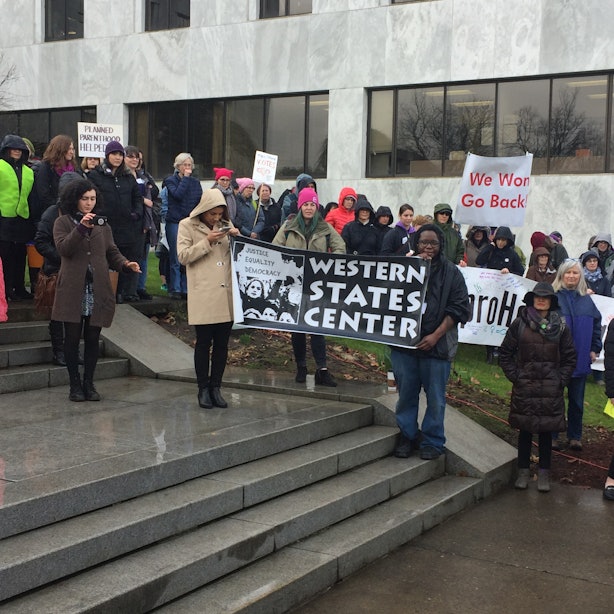
Western States Center

Oregon has achieved something that seems impossible in the Trump era: With one single piece of legislation, Oregon has protected abortion access, lifted a ban on abortion coverage, and ended restrictions on health coverage based on immigration status. How did the state achieve this? It wasn’t an easy road — but the journey may be helpful for others looking to advance reproductive health in their home states.

As the Gender Justice Program Director at the Western States Center, I know that on a federal level, the landscape for abortion rights looks bleak. The United States has a president who has vowed to appoint anti-abortion judges (who would overturn Roe v. Wade) and has said that women should be punished for having abortions. In the states, a tidal wave of medically unnecessary restrictions on abortion have been passed — 438 new restrictions since 2010 alone — and politicians are not letting up.

Yet despite these challenges, there’s a movement afoot to introduce legislation to advance a proactive policy agenda that strengthens reproductive health care access. In the first six months of 2017, legislators in 49 states and the District of Columbia have introduced 581 pieces of proactive legislation to advance access to reproductive and sexual health care, including abortion.

In some states, these bills face an uphill battle, and it might take years of building power or an electoral shift to see them made into law. But in Oregon, the Western States Center and our coalition partners did more than just dream big — we made our dream come true.

Western States Center

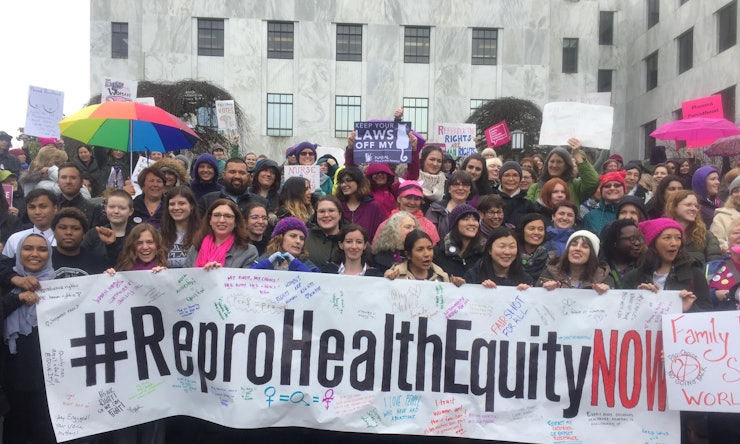
Any day now, Oregon Gov. Kate Brown is expected to sign the Reproductive Health Equity Act (RHEA). RHEA ensures that most Oregonians, regardless of income, citizenship status, gender identity, or type of insurance have access to the full range of preventive reproductive health services, including family planning, abortion, and postpartum care. No one should be forced to pay out of pocket and be pushed to the economic brink by having to pay for necessary care.

We refused to compromise our values or leave people behind.

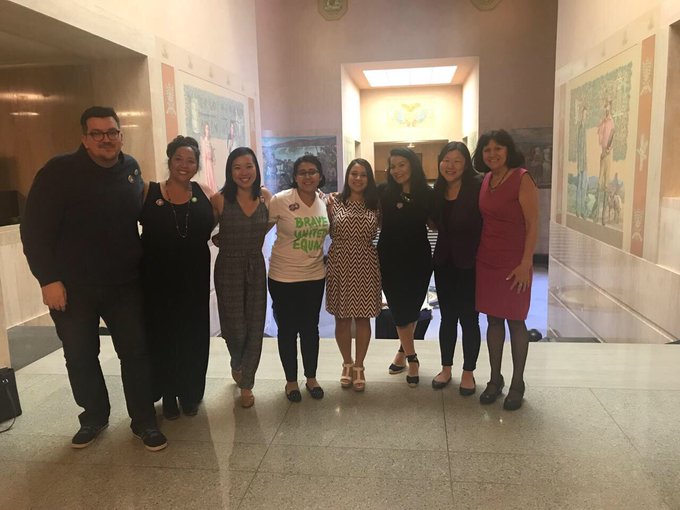
The journey to this moment began in 2015, with a bold vision and a small but mighty group of advocates. Over time, the Western States Center helped build a diverse coalition united around shared values — like putting the communities most affected by reproductive oppression at the center of our work. At the heart of RHEA is a deep belief that no one should be denied health care just because they are low-income, or transgender, or undocumented.

To some, it might seem politically expedient to exclude certain communities in order to pass a “compromise” bill — but we refused to compromise our values or leave people behind.

View image on Twitter

Part of the success of the Western States Center and our coalition partners’ work can be attributed to the leadership of those living with the harms of reproductive inequity. Women, people of color, immigrants, and transgender and gender-nonconforming people played key roles in informing and executing our strategy.

The political challenges were real, but so was our resolve to stay together.

Leading with race helped us to confront racism and white supremacy. Doing so made our coalition stronger, helped to build our power, and ultimately contributed to getting the bill passed. It was hard work — lots of deep and difficult conversations, but we built relationships that will last a lifetime.

Our definition of success was clear from the start. Improving reproductive health equity in Oregon meant that we had to lift the ban on abortion coverage, so that low-income people could meaningfully access abortion care. It also meant that we had to include undocumented people, who for decades were unfairly singled out and denied health insurance. The political challenges were real, but so was our resolve to stay together.

Western States Center

And we learned something amazing: When you ask for what you want, and refuse to let others drive a wedge to privilege one community over another, you just might win.

My advice for others who have a bold vision for proactive policy in your state? Dream big. Define success by sticking together and seizing on the opportunity to envision, challenge, and fight for reproductive freedom. Ask your communities what they want and need. Confront the dynamics of race and gender within activist spaces. And keep fighting, because the moment requires us to rise up and fight for our values and the world we want to live in.

What’s next for Oregon? Now that we’ve won, we’ll have to fight to keep and effectively implement RHEA. If the attempts by congressional leadership and Trump to repeal Obamacare teach us anything, it’s that we must be ever-vigilant. There are always those who will want to tear down good policies for political points or personal gain.

And our proactive work continues. The Western States Center’s vision for health equity in Oregon is a future where all in our state can get the health care they need and where our families can thrive.

We’ll keep working until we get there, but in the meantime, I’m taking a moment to celebrate this win.

https://www.bustle.com/p/oregons-fight-for-abortion-access-didnt-leave-anyone-behind-75607?utm_content=buffer90ad3&utm_medium=social&utm_source=facebook.com&utm_campaign=buffer