“By gutting Medicaid, repealing significant insurance protections, defunding Planned Parenthood, and expanding harmful abortion coverage restrictions, it would devastate women and families,” said Debra Ness, president of the National Partnership for Women and Families.

Republicans in the U.S. Senate have proposed an alternative to the Affordable Care Act that they claim would result in “better care”—the so-called Better Care Reconciliation Act.

But their plan would result in 22 million more people uninsured than under Obamacare over ten years, starting with 15 million people without coverage by next year, according to a hotly anticipated Congressional Budget Office (CBO) scoreout Monday afternoon. In their bill, Senate Republicans doubled down on anti-choice provisions that will prevent Medicaid patients from accessing potentially life-saving care at Planned Parenthood affiliates, including cancer screenings, sexually transmitted infection testing, and contraceptive services. And people with private insurance will face abortion restrictions that their counterparts on Medicaid have long experienced under the discriminatory Hyde Amendment.

The consequences of the Senate bill mirror those of the U.S. House of Representatives’ American Health Care Act, which would leave 23 million more people than under Obamacare uninsured over the same ten-year period.
CBO determined that just like the House version, the Senate’s bill “defunds” Planned Parenthood, and only Planned Parenthood, at the expense of poor and rural people who disproportionately rely on the health-care organization. That finding could provide more justification for the Senate parliamentarian, the arbiter of the chamber’s rules and procedures, to rule that targeting Planned Parenthood alone represents a partisan vendetta and violates the fast-track process Republicans are using to pass repeal with only a simple majority.

As the report notes:

To the extent that access to care would be reduced under this legislation, services that help women avoid becoming pregnant would be affected. The people most likely to experience reduced access to care would probably reside in areas without other health care clinics or medical practitioners who serve low-income populations. CBO projects that about 15 percent of those people would lose access to care.

Beyond reproductive health care, the ability of Medicaid patients to access any health-care services in general will suffer. The largest portion of the Senate bill’s $320.9 billion in savings over ten years would come from cuts to the joint federal and state program for people with low incomes; in fact, spending for Medicaid would decrease by $772 billion in that period. This represents a 26 percent decrease from under Obamacare. The House bill, by comparison, saves $119 billion—again, through Medicaid cuts that limit access to life-saving care.

CBO’s score of the “heartless” Senate repeal effort “offers no surprises,” Debra Ness, president of the National Partnership for Women and Families, said in a statement.

“By gutting Medicaid, repealing significant insurance protections, defunding Planned Parenthood, and expanding harmful abortion coverage restrictions, it would devastate women and families,” Ness continued.

https://rewire.news/article/2017/06/26/cbo-gop-senators-reproductive-care/

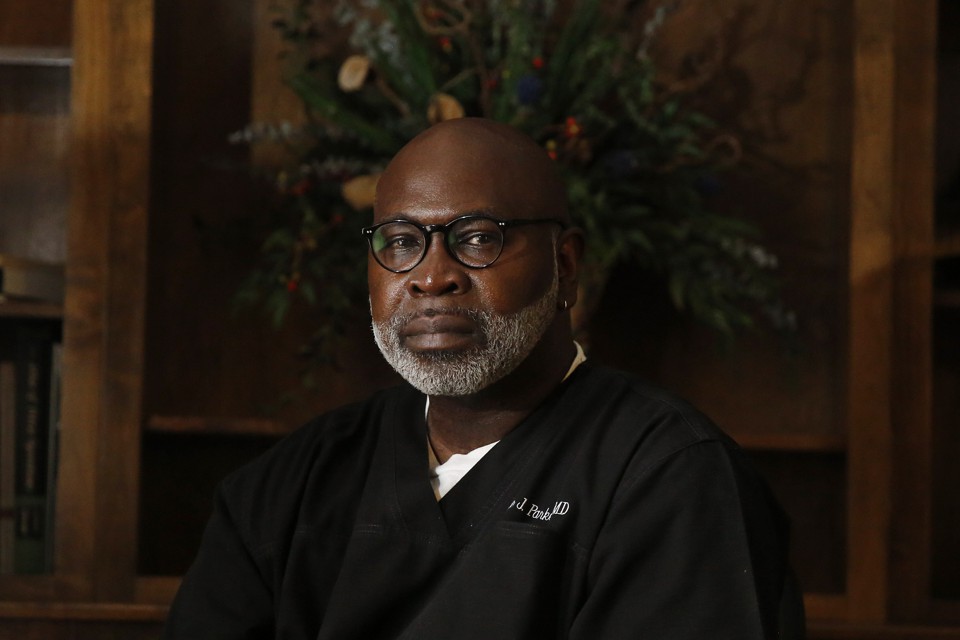
Advocating for access to safe abortions, Willie Parker decided to attack the root of the problem.

Willie ParkerBrynn Anderson / AP
Willie Parker became a Christian at age 15. Well into his career as an obstetrician-gynecologist, he refused, on religious grounds, to perform abortions.

Over the years, he saw more and more patients who were victims of sexual assault and intimate-partner violence. He was forced to confront his idea of what it meant to “be a man.” Parker eventually started performing abortions—largely in the southern United States—and he is now an outspoken advocate for access to safe abortions. In his new book, Life’s Work: A Moral Argument for Choice, Parker traces his anti-abortion-access stance to Biblical literalism and obliviousness to societal power structures. Over decades, as he realized that health equity required dismantling of the patriarchy, he worked to understand how he could be effective in that as a man.

Christianity is still a major part of Parker’s identity. When we met, it was one of four self-identifiers he listed on four fingers: Christian, heterosexual, black, and male. Though he isn’t the first person to attempt patriarchal dismantling, he would be among the few who match these identifiers. Parker is broad-shouldered and bearded and deep-voiced. His physical presentation makes no departure from gender norms. Parker does not challenge that gender is rooted in biology, and he doesn’t renounce masculinity. His mission is to reform it into something productive, or at least not oppressive, from within.

During the Spotlight Health conference in Aspen on Friday—part of the Aspen Ideas Festival—Parker was invited to pose a “big idea” to everyone in attendance. It was big: “divesting of what I feel to be the cornerstone of most structural oppression in the world.”

Parker argued that dismantling patriarchy would “cause many injustices to crumble: racial and ethnic tension, class wars, sexual identity oppression, Islamophobia. Imagine if men could see reproductive justice as their battle to fight—not from a place of chivalry, but from a duty to humanity.”

He also told the story of how he met his hero Gloria Steinem a year and a half ago, and she gave him a bracelet. It was inscribed, “Imagine if we were all linked, and not ranked.” That has become his personal mantra. The audience was into this, and even more into his culminating challenge: “I will continue to divest of the patriarchy, and I call upon all patriarchs—both male and female—to join me. Then and only then can we be linked and not ranked. Imagine that.”

I wanted to know more about how a person might divest, in practical terms. So we talked the next afternoon. A condensed version of our conversation follows, lightly edited for clarity.


James Hamblin: If I’m aware of problems with conceptions of masculinity and want to not be part of the problem, what do I do?

Willie Parker: The first thing is to become responsible. Acknowledge that life chances in this country aren’t uniformly equal, and that there is such a thing as privilege. There’s such a thing as male privilege, and that is institutionalized as patriarchy. That’s heavily influenced by religion, and it influences government, and business, and everything else.

So the first step is to recognize that we live in a patriarchal world. You’re born into that from the very moment that the birth attendant says “It’s a boy.”

Once you realize that, you have to recognize, okay, what about that feels right or wrong to you? If you start with the premise that we’re all humans, then you start to question, what are the real differences between men and women? There are certainly biological differences, but that doesn’t mean there should be differences in people’s access to opportunity.

So when you get all of that, then you have to figure out what is my role?

That requires you to be self-aware. In what ways am I privileged? A racial system in a society that values white privilege puts me at a disadvantage. But being male in a patriarchal society puts me at an advantage. And in both cases, I conclude that isn’t fair. Privilege—in ways that you haven’t worked for—isn’t fair.

Hamblin: So then the only moral option is to divest of that privilege? And this doesn’t just mean saying I value all people equally and wearing a t-shirt that says “Male Feminist.”

Parker: Even if you’re at that point, there are still probably biases you’re not seeing. Do you balk at taking directions from female bosses more than male bosses? Think back. Or if they’re gay when you’re straight? They’re black and you’re white?  If so, then you’ve got to work harder to recognize and divest of that sense—any sense that’s still somewhere in there, of “I should be the boss because I’m white, and I’m male, and I’m straight.”

Apply that lens, to every aspect of your life. Do you perceive assertiveness by female colleagues as “bitchiness” versus, “Wow, Rob’s a go-getter”?

Everybody has the power to divest of the privilege that they hold. It’s like holding a stock. And that stock rises in value, and the stock certificate is in your name just for being born with a certain skin color or of a certain gender. The benefits accrue the same way.

Hamblin: So I give that stock away? Is that possible?

Parker: All analogies break down at some point. If you decide that the way you acquired the stock was at the expense of someone else, you don’t have to take a vow of poverty, but you have to accept the responsibility that comes with that wealth. If you hold a lot of power, it’s incumbent on you to work for a society that’s more equitable.

We live in a rape culture, meaning there are ways in which society facilitates men being able to rape. I personally do not rape people, and I don’t make sexist remarks. But that’s not enough. I have to actively be anti-rape, anti-sexism and work to dismantle these structures. If we each individually divest of the privilege we’re born into, then we can be in a position to demand that the world becomes fair, and to make it so.


That evening I went to Parker’s book-reading event in town. There were about 30 people there. Five were men, including Parker and me. One in the audience asked a question, a very long question which turned out to be a statement about how he’s against access to abortion, and how now-a-days a lot of women and minorities have impressive jobs, and so he doesn’t really see the big problem.

https://www.theatlantic.com/health/archive/2017/06/the-moral-case-for-choice/531555/?utm_source=atlfb

AUSTIN, Tex. — She was a state senator Tuesday morning. By Wednesday, she was a political celebrity known across the nation. But also hoarse, hungry and thirsty.

The leg-numbing filibuster by Wendy Davis, a Fort Worth Democrat — in which she stood and talked for more than 11 hours at the Capitol here, never sitting, eating, drinking or even using the bathroom to help block passage of an anti-abortion bill supported by the state’s top Republicans — was not the longest such marathon, by Texas standards.

But it didn’t matter.

Her feat of stamina and conviction gained thousands of Twitter followers in a matter of hours. Pictures of the sneakers she wore beneath her dress zoomed across computer and television screens. The press corps demanded to know her shoe brand. (Mizuno, it turned out.) Hundreds of men, women and children waited for hours at the Capitol to sit in an upstairs gallery and watch her in action, standing in lines that snaked around the rotunda. Even President Obama noticed, posting a Twitter message on Tuesday that read, “Something special is happening in Austin tonight.”

Ms. Davis, 50, has known long odds and, for Democrats, was the perfect symbol in a fight over what a woman can do. She was a teenager when her first child was born, but managed as a single mother to pull herself from a trailer park to Harvard Law School to a hard-fought seat in the Texas Senate, a rare liberal representing conservative Tarrant County. According to Mark P. Jones, a political science professor at Rice University in Houston, she had the second-most liberal voting record in the Senate in 2011.

Photo

State Senator Wendy Davis of Texas, was flanked by her father, left, and her two daughters while giving her victory speech on Nov. 6. Senator Davis, a Democrat, was first elected in 2008. CreditRobert W. Hart for The Texas Tribune

“We have a State Capitol that is made up of people, for the most part, who are elected by Anglo communities, suburban and rural, and they are the majority voice in the Capitol, although they aren’t reflective of the majority of the state of Texas,” she said in a previous interview.

I would like to thank Wendy for showing the country what a true Texan woman looks like. She stood up for her beliefs and didn’t back down. …

On Tuesday night, as she stood in her salmon-colored running shoes on the green carpeted floor of the Senate chamber and spoke about the bill from 11:18 a.m. to about 10 p.m., Republicans monitored virtually her every move and word, waiting to catch her violating Texas’ obscure filibuster rules, which prohibited her from leaning on her desk or straying off topic. At one point they objected when a fellow Democrat tried to help put a back brace around Ms. Davis, who at that point had been standing for about seven hours straight.

“I’m tired, but really happy,” Ms. Davis told reporters in the Senate chamber at 3:20 a.m. Wednesday as she finally made her way out of the building. “I’m pleased to know that a spotlight is shining on Texas, a spotlight is shining on the failure of our current leadership.” She was congratulated by lawmakers and women’s rights advocates. But the celebration was short-lived. Hours later, Gov. Rick Perry announced that a second special session would begin Monday so lawmakers could take up the abortion bill once more. Analysts said the bill would probably pass this time because Democrats in the Republican-controlled Senate would be unable to delay for an entire 30-day session.

As a lawmaker elected to the Senate in 2008, Ms. Davis has shown charisma and guts, and her life story has moved voters. At the age of 14, she worked after-school jobs to help support her mother and three siblings.

Photo

State Senator Wendy Davis at her Harvard Law School graduation in 1993, with her daughter, Amber. CreditDavis Family

“My mother only had a sixth-grade education, and it was really a struggle for us,” she said in a 2011 video for Generation TX. She said she fell through the cracks in high school, and shortly after she graduated, she got married and divorced, and was a single mother by age 19.

“I was living in a mobile home in southeast Fort Worth, and I was destined to live the life that I watched my mother live,” she said in the video. A co-worker showed her a brochure for Tarrant County College, and she took classes to become a paralegal, working two jobs at the same time. From there she received a scholarship to attend Texas Christian University in Fort Worth — becoming the first person in her family to earn a bachelor’s degree — and then went on to Harvard. “When I was accepted into Harvard Law School, I remember thinking about who I am, and where I came from, and where I had been only a few years before,” she said.

These days, she said, her life outside the Capitol is nice and boring — she has two daughters, ages 24 and 30, and tries to run regularly. She has been dating a former mayor of Austin, Will Wynn, who put his arm around her shoulder early Wednesday as they walked out of the Senate chamber together.

It was an exhausting filibuster, but it did not break the record. The longest filibuster in American history took place 36 years earlier in the same place when Senator Bill Meier filibustered a bill for 43 hours in 1977.

Photo

Ms. Davis in elementary school in the 1970s.  CreditDavis Family

Ms. Davis pushed her Republican rivals to make an embarrassing and rare public reversal. Their attempts to derail her filibuster as the midnight deadline neared caused the gallery to erupt in screams, throwing the results of the vote on the bill into disarray. Hours after saying that they had passed the bill, Republican leaders reversed course and said the vote did not follow legislative procedures, rendering the vote moot and killing the bill.

It was Ms. Davis’s second star turn: In 2011, she filibustered a budget bill that included huge cuts to public education, forcing Governor Perry to call a special session in order for it to pass. And it cemented her reputation as a Democrat in a Republican-dominated state who many hope will run for statewide office.

“She’s carrying every woman in the state of Texas, if you will, on her shoulders,” said Cecile Richards, president of the Planned Parenthood Federation of America and a daughter of Ann Richards, a former governor.

The bill seeks to ban abortions after 20 weeks of pregnancy, require abortion clinics to meet the same standards as hospital-style surgical centers and mandate that a doctor who performs abortions have admitting privileges at a nearby hospital. Opponents say it could lead to the closing of most of Texas’s 42 abortion clinics.

Rocking back and forth in her sneakers — to ease the pain in her lower back, she said — Ms. Davis read from letters sent to her office, testimony submitted to committees and an article published in The Austin Chronicle. At 10 p.m., the Senate’s presiding officer, Lt. Gov. David Dewhurst, sustained a violation for straying off the topic, which Democrats disputed. She had been talking about a law that prohibited abortions without the mother first undergoing a sonogram.

As the clock neared midnight, Republicans tried to end the debate and to vote, causing the crowd to erupt. At midnight, another senator stood at Ms. Davis’s paper-cluttered desk and raised her arm in victory. The crowd roared. Ms. Davis smiled. It was not until about 1 a.m. — about 14 hours after she first rose at 11:18 a.m. — that she quickly walked to the Senate lounge and, for the first time, sat down.

Clinic director Calla Hales was a victim of the extreme violence abortion providers face simply for doing their jobs and helping women.

The guy wanted to know if she worked at an abortion clinic.

On their first date, a day or two earlier, she’d told him she worked in “women’s health.” Now, he was texting her about specifics. She answered yes and asked if that was a problem. He said no.

But from the start of their second date, she knew something was wrong.

“He acted really weird the whole time,” Calla Hales said. “Really standoffish. Closed off. Downright rude at times.”

About halfway through the meal, when he got up to go to the bathroom, Hales asked for the check. Her date got angry but still asked her to go home with him. When she declined, he walked her to her parking spot, and as she was getting into her car, she says, he came up behind her, pulled her into the backseat, and raped her.

“He had me in between the seats, wrapped the seat belt around my neck, and at some point, bit me on my chest,” Hales said. “He said things like I should have expected this and that I deserved it. He asked how I could live with myself and said I should repent. That I was a jezebel. That I was a murderer. That he was doing no worse to me than I had done to women. He said he would make me remember him.”

After about 15 minutes, a noise spooked her attacker and he left. Terrified and stunned, Hales drove to her friends’ house and showed them the bruises. They wanted to call the police, but Hales said no, she wanted to get herself together and go home. She went back to work the next day.

“I worked all weekend and didn’t say anything to anybody,” Hales said. “But the whole time I was bleeding.”

Hales is the director of A Preferred Women’s Health Center (APWHC), which operates four abortion clinics across North Carolina and Georgia. At 27, she oversees a staff of 60 and the administration of the clinics, which collectively provide care for more than 20,000 patients a year. Her mother and stepfather opened the first APWHC in Raleigh in 1998, when Hales was 8. Her mother was the director of the clinics and her stepfather was the doctor. Like her three older sisters, Hales began working in the Raleigh clinic as soon as she was old enough to be helpful. After getting a bachelor’s degree and MBA at Hofstra University in New York, she moved back and became the communication and budget coordinator before taking over the director role in January 2017.
 Hales and her mother outside A Preferred Women’s Health Center (APWHC) in Charlotte.
ALICE PROUJANSKY

“What my parents did has always been in the air, and we never thought it was weird or frowned upon,” Hales said. “But growing up, my parents were always telling us to be careful who we talked to and mindful of what we said.”

Hales was schooled on how to answer the phone and what to say when asked what their parents did. Both parents own bulletproof vests, as does Hales, and have a license to carry.

“I’m a gun-toting Democrat,” her mother said from her perch on the desk in the clinic’s front office, her 40-caliber handgun tucked away in her purse. “It’s always scary because you never know what’s going to happen and, oh my god, I have always worried about my daughters’ safety. We are always a target.”

Ever since the Supreme Court ruled in Roe v. Wade in 1973 that women have a constitutional right to an abortion, extreme opponents of abortion have subjected providers and patients to disruption, harassment, and violence, including murder, arson, and bombings. Clinics have had acid poured through their mail slots and received anthrax through the mail. In its 2016 report, the National Abortion Federation (NAF), which monitors clinic harassment and violence, found that picketing, vandalism, obstruction, invasion, trespassing, burglary, stalking, assault and battery, and bomb threats are all on the rise. Clinics reported 60,000 incidents of picketing that year, an all-time high since the NAF began tracking these statistics in 1977. The report also documented a five-fold increase in hate speech and internet harassment, which escalated after the election. The 2016 National Clinic Violence Survey, published by the Feminist Majority Foundation, found that the percentage of clinics reporting the most severe types of anti-abortion violence and threats of violence has dramatically increased from the first six months of 2014 to the first six months of 2016 — from 19.7 percent to 34.2 percent. Hales was raped in November 2015.

Now abortion rights advocates fear the violence and harassment may get even worse. The Freedom of Access to Clinic Entrances (FACE) Act, passed in 1994, made it a federal crime to use force, threat of force, or physical obstruction to interfere with a person’s right to obtain or provide reproductive health services, but it’s only effective if enforced.

Pro-choice volunteers engage with anti-abortion protestors across the street from APWHC in Charlotte.

ALICE PROUJANSKY

“Sometimes I get the sense that the police officers here are just winding down the clock,” said Alixandra Taylor, who volunteers as a clinic escort at APWHC in Charlotte. “Like it’s not going to be an issue for much longer, so why uphold the law now? Clearly no one has said that to me, but when things are getting heightened and the officers are leaning up against their cars on their phones, it’s a pretty clear indication.”

Attorney General Jeff Sessions has a legacy of voting against measures that would protect clinics and abortion opponents have expressed delight over his appointment. Vicki Saporta, president and CEO of NAF, says she is concerned that the current Department of Justice will not enforce laws that protect abortion clinics with the same vigor as previous administrations and this will take pressure off local law enforcement. Without that layer of accountability, threats and violence will continue to escalate.

“Trump has encouraged people to express their basest emotions and to threaten people — he has given the anti-abortion movement license to increase their vitriol, if not their criminal activities,” Saporta said. “We’ve seen time and time again that if anti-abortion extremists are allowed to get away with lower-level criminal activities, those escalate into [extreme violence].”

On the Monday after the rape, Hales went to a Planned Parenthood. They gave her a blood test but recommended she go to an emergency room for stitches. Hales went to a hospital where she was least likely to encounter someone who knew her or her family, but, she says, the nurses told her to come back the next day to be evaluated by an ob-gyn to determine if she needed stitches. When she returned, the hospital staff had no record of her previous visit.

“When they couldn’t find me in the system, I opened the paperwork they gave me the day before and realized it was for a 56-year-old man with angina,” Hales said. “Finally I was like, ‘Fuck it. I don’t care about anonymity anymore. I need to get seen.’”

 Hales at her desk at APWHC in Charlotte.
ALICE PROUJANSKY

At UNC Medical Center, Hales received a series of blood tests, took prophylactic antibiotics, and went through the process of completing a SANE (Sexual Assault Nurse Examiner) report that documented her physical injuries. She decided to file a blind, or anonymous, report with the Raleigh Police Department.

“I did not want to press charges for a few reasons,” Hales says. “The idea of retribution on my parents, my friends, my business, and my staff. I didn’t know if I could survive the mental and emotional trauma of a court case at the time. There also was, and still is, a large amount of embarrassment and misplaced guilt — feeling like I should have done something to fight back, like I should have worn different clothes, that I missed a warning sign.”

The next morning, after calling her parents to tell them what happened, Hales went to the clinic where she worked.

“It was a conscious choice to not do anything different,” Hales said. “I think I thought that if everything was normal, it would be OK.”

Within weeks, though, Hales began to see her attacker’s face in the crowd of protesters outside the Raleigh clinic. At first, she thought she was being paranoid. But then, she says, the protesters began to yell things they hadn’t yelled before, echoing words said to her during the assault.

“The protesters outside started calling me a jezebel a lot more,” Hales said. “And I got letters in the mail saying that I deserved it.”

Hales seen through the reception window at APWHC in Charlotte.

ALICE PROUJANSKY

They also said things they could have known only from talking to her attacker or seeing her rape kit. Hales has a tattoo of a serotonin molecule on her left rib and one day, a protester asked what molecule her tattoo was of.

Hales received a barrage of anonymous text messages, phone calls, and voicemails. She’d pick up the phone and hear someone breathing heavily. She’d get voicemails that said, “Do you remember it?” Some days, she received hundreds of blank text messages. One night while at dinner with friends, she got a text from an unknown number that said, “That shirt looks pretty on you.”

“I lost it,” Hales said. “I had a layer of panic everywhere I went. I’d get to the clinic at 6 in the morning and not leave until 4 p.m. I wouldn’t walk outside. I’d refuse to leave until I knew there were no protesters.”

In early January 2016, Hales left her own birthday party early because she thought she saw her attacker in the crowd. She was feeling increasingly fearful, paranoid, and alone, so she picked up and moved to Charlotte. It’s where the APWHC’s main office is located – and 170 miles away from the man who sexually assaulted her because she worked at an abortion clinic.

The protests at the Charlotte clinic are among the most intense in the country.

On a recent May morning, about 150 demonstrators had gathered outside by 10 a.m. A clinic volunteer had gotten into a yelling match with protesters who were leaning on her car and Hales walked past the police barricade to talk to the cops.

“They murder innocent babies in there,” a man yelled, his voice amplified by a speaker system.

 Catholic anti-abortion protesters pray outside APWHC in Charlotte.
ALICE PROUJANSKY

On the other side of the road, a swarm of people in matching teal T-shirts raised their hands in supplication toward the sky as another man with a microphone expounded on the evil unfurling inside the brick building. A cluster of children near the front of the group clutched baby dolls. Another group waved gruesome signs that purported to show images of aborted fetuses and approached every car that drove up with pamphlets. Down the road, a group of Catholics bowed their heads in prayer.

After a short conversation with one of the officers, Hales returned to her office.

“So this is Saturday,” she said wryly. Saturdays are the biggest protest days at the clinic, and crowds, microphones, grisly signs, ultrasound buses, praying, and shouting have become the norm.

More recently, on June 10, a group called Love Life Charlotte called for 1,000 men to join them at their Men for Life prayer walk at the clinic. “The truth is that this is more of a man’s issue than it is a woman’s issue,” founder Justin Reeder said in a video posted on the organization’s website.

 An ultrasound machine inside an RV run by anti-abortion activists parked across the street from APWHC in Charlotte.
ALICE PROUJANSKY

The regular protests are nothing new. In the early 2000s, Operation Rescue, a group known for blockading entrances to clinics during the 1980s and early 1990s, moved to Concord, North Carolina, about a 40-minute drive from Charlotte. One of the leaders was the Rev. Philip L. “Flip” Benham, and when internal feuding split Operation Rescue in two, Benham became the head of his faction, Operation Save America — still one of the most extreme anti-abortion groups in the country. In 2011, Benham was found guilty of stalking after following abortion doctors to their homes and creating “WANTED” posters with their names and home addresses. A judge ordered a new trial on appeal due to a procedural error but the district attorney ultimately dropped the charges.

In 2010, Benham’s sons founded Cities4Life, a group that deploys protesters outside the Charlotte clinic six days a week. Daniel Parks, the director of Cities4Life, says he’s been there every Saturday for the past 12 years and his wife, Courtney, a registered nurse, mans one of the two “mobile ultrasound” buses outside the clinic. “We know that we can’t force anyone to do anything,” Daniel Parks says. “If a mom goes on the mobile unit and still decides to go through with an abortion, all we can do is pray for her.”

Another group, Reformation Charlotte, is not only there to protest abortion, but also to try to convert the Catholics. “There are people out here from all walks of life who we believe are dying in their sin and it’s not just people that are going here to have abortions,” Jeff Maples, Reformation Charlotte’s director, told me when I visited. “There are Roman Catholics over there who are pro-life but don’t believe the gospel.”

 Anti-abortion protestors affiliated with Love Life Charlotte stand across the street from APWHC in Charlotte.
ALICE PROUJANSKY

Protesters told me their goal is to help women, but according to the office manager of the Charlotte clinic, their presence can be harrowing.

“We see it a lot on patients’ surveys, about how mad the protesters are, about how they yell slurs,” she says. “We just had a patient get called a ‘filthy whore.’ The protesters say things about doctors too and that gets the patients scared.”

Hales, meanwhile, moved from Raleigh to feel safer but entered an environment that is even more virulent.

“It’s like trading one evil for another,” Hales said.

A year and a half after the attack, Hales avoids crowds when she can and changes her appearance (sweats one day, a dress another; contacts one day, glasses another), so she is not easily recognizable. She lives in a secure apartment building, but even though one of the local anti-abortion groups posted her address online, she says she’s more concerned about potential harm to her cats than to herself.

Hales said it’s hard to tell whether the protests have gotten worse since Trump was elected because the protest climate around APWHC in Charlotte was already so hostile, and city officials and law enforcement already didn’t provide much in the way of support. However, like one of the clinic volunteers, she has a sense that the people standing outside the clinic feel emboldened, as if it’s just a matter of time before legal abortion is gone for good. Hales is also concerned about how policies — like the Republican health care plan and new state abortion restrictions — could affect her patients, the clinics, and people, like her, who have been sexually assaulted.

 Hales speaks to new volunteers during a training for clinic escorts inside APWHC in Charlotte.
ALICE PROUJANSKY

The silver lining to the election, she says, is the clinic has seen an outpouring of support from local supporters of reproductive rights. The number of people volunteering as clinic escorts and defenders has surged since November, providing a critical support system that helps patients get into the clinic safely.

If anything, the rancor of the protesters has strengthened Hales’s resolve. “There is a certain level of therapy in doing it,” she said of her work at the clinic. “I wanted to prove that I could because it’s like an angry ‘fuck you’ to the people outside.”

That Saturday, she wore a black Planned Parenthood T-shirt with the words “Wicked Jezebel Feminist” scrawled across the front, a nod to the words used to describe her during and after the attack.

“They haven’t kept me from doing my job and from wanting to be a human,” Hales said. “The best thing I can do to prove them wrong is to continue to live and be a loudmouth. I mean, what could happen that’s worse than what’s already happened?”

http://www.cosmopolitan.com/politics/a10029357/calla-hales-abortion-clinic-rape-harassment/?src=socialflowFB

Are you surprised? A recent Guttmacher Institute report systematically documents anti-choice laws and the research that debunks their claims.

A recently released Guttmacher Institute report finds that at least ten common categories of state laws and policies restricting abortion run contrary to science.

These anti-evidence laws are prevalent across the country, leaving almost a third of all U.S. women of reproductive age (ages 15-44) living in a state with at least five such restrictions.

This conclusion may sound obvious to those familiar with the hostile legislative landscape regarding reproductive rights and health. But “Flouting the Facts: State Abortion Restrictions Flying in the Face of Science” systematically documents the sheer scope of policies that ignore public health and social science research about the safety of abortion, among other issues. In this political environment—where anti-science attitudes at the state level are increasingly echoed by the Trump administration—researchers must keep reiterating there are such things as evidence and actual facts.

Rachel Benson Gold, Guttmacher vice president for public policy, and Elizabeth Nash, senior state issues manager, co-wrote the report, which was released in May. They note that “much of the anti-abortion universe has long been an evidence-free zone.”

This analysis comes just a year after the U.S. Supreme Court used research to declare some Texas abortion restrictions unconstitutional in Whole Woman’s Health v. Hellerstedt. In its 5-3 decision, the Court clearly was convinced that there were no public health reasons undergirding Texas’ admitting privileges and ambulatory surgical center provisions, which required abortion providers to obtain rights to admit patients to a hospital within 30 miles of their practice and forced clinics to have hospital-like facilities. The Court decided that the provisions did not improve women’s health, but actually worked to impede access to abortion.

The data-driven decision apparently didn’t sway many state legislators. According to Guttmacher datareleased in June, 1,257 reproductive health-related provisions were introduced in statehouses across the country in 2017; more than 40 that restrict abortion were enacted.

Those provisions join a deluge of pre-existing anti-choice legislation, which the May report categorized into three broad areas: those that target abortion providers, require various types of counseling or waiting periods, or use fetal pain as a pretext for restricting abortion access.

For each policy identified, scientific evidence or consensus contradicts the legislation’s claims or purpose:

  • Ambulatory surgical center and hospital admitting privileges requirements: These two restrictions at the center of the Whole Women’s Health case have been shown to restrict care without improving safety. While some states have blocked these restrictions by court order, some before and others after the Whole Woman’s Health decision, 18 states still have ambulatory surgical center requirements in place, and three still have admitting privileges laws. Both provisions place onerous facility requirements on providers and contributed to the closing of 16 of Texas’ 41 abortion clinics.
  • Telemedicine bans for abortion: Despite a 2014 joint American College of Obstetricians and Gynecologists (ACOG) and Society of Family Planning practice bulletin and recent studies asserting the safety and effectiveness of using telemedicine in abortion provision, 18 states still ban the use of telemedicine for abortion care.
  • Restrictions on medical staff who can perform abortions: In 38 states, equipped health-care providers—such as physician assistants, nurse practitioners, and certified nurse midwives—are prohibited from performing abortions in the absence of a doctor. The World Health Organization’s 2012 guidelines disagree with such restrictions, and studies in various states have concluded that these health-care professionals can equally and safely provide abortion care.
  • “20-week bans” and fetal pain bills: The two most common pieces of legislation built on the fetal pain pretext are “20-week bans,” which exist in 17 states, and policies that require a woman to be informed that a fetus can feel pain, which are on the books in 13 states. Bans at 20 weeks are unconstitutional, arbitrary, and counter to statements and recommendations published by leading U.S. and international OB-GYN groups.
  • Mandatory waiting periods: These laws exist in 27 states and require people to wait between 18 and 72 hours after receiving counseling to have an abortion. Framed as a way to provide possible patients with time to consider whether they want to have an abortion, research has disproven this narrative. A 2008 survey found that 92 percent of women were confident about their choice to have an abortion when they made the initial appointment. A subsequent 2017 study found the majority of patients’ decisions to be unaffected by waiting period laws, and in some cases the laws only increased rates of confidence in decisions to have an abortion.
  • Mandatory counseling: Three of the remaining policies require a doctor to counsel their patients about the effects that abortion can have on their mental health, breast cancer risk, or future fertility—all claims that have been roundly contradicted by research. A 2015 statement of facts from ACOG affirmed there is no link between abortion and breast cancer or future fertility; nor is there an increased risk of mental health conditions. The National Cancer Institute, American Cancer Society, and other medical organizations have all come to the same conclusions about the connection between having an abortion and one’s increased risk of breast cancer: There isn’t one.

Overall, 28 states have at least two of these restrictions in place. These restrictions are harmful: intervening in the patient-provider relationship, greatly limiting access to abortion care, or spreading misinformation. Individually or en masse, such restrictions amount to an unnecessary mountain of barriers for people seeking abortion care.

Nikki Madsen, executive director of Abortion Care Network, said in a press release:

Since 2010, state lawmakers have been engaged in a relentless crusade to push abortion out of reach: They’ve quietly passed more than 334 new restrictions on abortion. It doesn’t come as a surprise to abortion care providers or the women who seek their services that these laws aren’t based on science—but it should be a shocking wake-up call to lawmakers. We see what you’re doing, and it has nothing to do with women’s health and safety. This study shows that there’s no claim too specious for an anti-abortion lawmaker to use to justify taking away a woman’s health care.

While the Guttmacher report focuses on state level restrictions, it acknowledges that changes at the federal level are also of concern—and essentially create a compounding anti-abortion effect.

Various administration appointments and federal policy efforts are promoting anti-science rhetoric and action. In particular, the Trump administration has appointed individuals who subscribe to anti-choice, anti-science beliefs and whose track records show a commitment to restricting abortion access. President Donald Trump is packing the Department of Health and Human Services (HHS) with a science-denying cast; HHS Secretary Tom Price has previously that stated “there’s not one” woman who can’t afford birth control, and Charmaine Yoest was appointed as HHS assistant secretary for public affairs. Yoest previously worked as president and CEO for Americans United for Life, a prominent anti-choice organization that, as Rewire’s Ally Boguhn detailed last month, has been the architect of some of the legislation outlined in the Guttmacher report.

Combined with these federal appointments, the state-level policies outlined by Guttmacher paint a clear picture of an ever-present and overarching anti-choice agenda. Guttmacher’s sobering report illustrates that each law, policy, or court case is not an isolated example of “alternative facts.”

https://rewire.news/article/2017/06/21/study-anti-abortion-state-laws-deny-science/

Senate Bill 8 will likely face a lawsuit this summer. The problem for abortion-rights advocates is that legislation often moves faster than the courts.

“Why don’t we just stop passing unconstitutional laws?” asked an exasperated Representative Chris Turner, D-Grand Prairie. He spoke in May as the House debated a sweeping new anti-abortion bill that Governor Greg Abbott has since signed into law. Turner didn’t really get an answer to his question and he probably didn’t expect to, but it is an interesting one. So why do anti-abortion lawmakers keep passing unconstitutional laws? One answer is: because it works.

Five hours and 25 amendments after the debate started, what began as a limited set of requirements emerged as Senate Bill 8, an omnibus measure that mandates burdensome clinic regulations and outlaws a safe, common abortion procedure. Abortion-rights advocates and their opponents alike call Texas’ new anti-abortion law the most sweeping since House Bill 2 was passed four years ago. It comes less than one year after the U.S. Supreme Court struck two major provisions from the 2013 law for placing an unconstitutional burden on abortion access. Reproductive-rights attorneys say the state will face a similar lawsuit against SB 8 this summer.

The HB 2 saga left both sides something to claim as a victory. The Supreme Court gave reproductive-rights groups a decisive win, but plenty of damage was already done. HB 2 forced the closure of more than half the state’s abortion clinics, and only three have reopened since. The problem for abortion-rights advocates is that legislation often moves faster than the courts.

The fallout from SB 8 could be similar. “We’re looking at again the possibility of clinic closures and other restrictions that force women to leave the state if they need abortion care,” said Amanda Allen, senior state legislative counsel at the Center for Reproductive Rights, which filed the lawsuit against HB 2 and has pledged to fight SB 8. “In terms of access on the ground, this presents a huge threat to Texas.”

State Representative Donna Howard, D-Austin, speaks against SB 8 Friday evening.  SAM DEGRAVE

Reproductive-rights attorneys are focused on two provisions that would most restrict abortion access: a requirement that fetal remains be buried or cremated, and a ban on “dismemberment abortions” — a nonmedical term that refers to dilation and evacuation (D&E) abortions, the most common type of second trimester procedure.

Abortion clinics may not be able to find third-party vendors to comply with the funeral-like requirements for fetal tissue disposal, and costs could be prohibitive, attorneys say. Failure to comply could cause more clinic closures. Meanwhile, the D&E ban could effectively prohibit abortions after 13 weeks.

“This is going be another sweeping, sweeping anti-abortion restriction if it takes effect,” Allen told the Observer.

Those who battled HB 2 take comfort in the fact that both measures have already been successfully challenged in court. In January, a federal judge blocked new Texas regulations that would’ve required burials for fetal remains. And D&E abortion bans have been halted in four other states.

These restrictions are “more of the same” as HB 2, so similar legal arguments can be expected, said Stephanie Toti, the former Center for Reproductive Rights attorney who argued last year’s Supreme Court case.

But if SB 8 plays out the same way as HB 2, that’s bad news for those who favor abortion access. Anti-abortion advocates are prepared for a long fight, and win or lose in court, SB 8 could have lasting consequences.

“I’m not concerned about [a lawsuit] at all. That’s what we need,” said John Seago, legislative director of Texas Right to Life, an anti-abortion advocacy group aligned with the far-right House Freedom Caucus. “The pro-life movement is ultimately set on overturning Roe v. Wade. You have to do that in court.”

Seago wants to push the D&E ban — his priority legislation — all the way to the Supreme Court. He says this would force a conversation centered around protecting the fetus rather than regulating clinics.

“The courts recognize state interests in prohibiting elective abortion that have nothing to do with maternal health, but with protecting unborn life,” he told the Observer, pointing to Gonzales v. Carhart, the 2007 Supreme Court case that upheld the partial-birth abortion ban.

Other anti-abortion advocates favor a more incremental approach. This faction wants to chip away at access with HB 2-like restrictions until the makeup of the Supreme Court changes in their favor.

Joe Pojman  TEXAS ALLIANCE FOR LIFE/FACEBOOK

“It’s very clear now that [Justice Kennedy] will not uphold any state or federal provision that makes abortion less accessible, that’s the unfortunate reality,” said Joe Pojman, executive director of Texas Alliance for Life, an anti-abortion group aligned with House leadership. His group lobbied the Texas Legislature against the D&E ban, saying it would be struck down and the state would again face hefty legal fees.

“Let’s not pass it at this time, but wait until we have more votes on the Supreme Court that understand the U.S. Constitution allows states to regulate abortion,” Pojman told the Observer. “We’re not at that point now.”

The fetal remains requirement was Pojman’s top priority this session. He says it will ultimately withstand a court challenge, even though a federal judge in Austin has ruled otherwise. The U.S. Fifth Circuit Court of Appeals is likely to be more sympathetic than the Austin district court, Pojman said.

“It’s typical modus operandi [for judges in the Western District of Texas] to strike down these laws,” he said. “But the 5th Circuit has done a very good job of overruling them, realizing the state has every basis for passing a law like this.”

“We need to push the case higher,” Seago agreed, his sights set on the Supreme Court.

https://www.texasobserver.org/how-texas-anti-abortion-lawmakers-win-while-losing-in-court/

Saying “Abortion is not family planning,” the United States rejected part of a United Nations resolution designed to help female victims of violence around the world. The one point of contention is the portion of the resolution calling on countries to provide abortions to women who’ve been abused and to give information about abortions.

The U.S. objection to the abortion provision is in keeping with the Trump administration’s pro-life position. For example, in January, President Trump signed an executive order banning international agencies from providing abortion services or offering information about abortions if they receive US funding.

Thursday the U.N. Human Rights Council unanimously adopted a resolution condemning the abuse and discrimination of women and girls, particularly in war-torn countries. The measure says the Council, made up of 47 countries, feels “outrage at the persistence and pervasiveness of all forms of violence against women and girls worldwide”, and suggests countries change their policies to help females who have been victimized or neglected.

The U.S. representative, Jason Mack, voiced strong support for the overall “spirit” of the resolution, telling the council “The United States fully supports the principle of voluntary choice regarding maternal and child health, and family planning.”

However, he told the council the United States does not agree with the portion in the resolution which advocates the killing of unborn children. Mack said that the U.S. “must dissociate from the consensus” specifically on abortions.

The clause in the resolution states that countries should make sure their health care systems provide “quality comprehensive sexual and reproductive health care services,” including “safe abortion where such services are permitted by national law”.

“The United States fully supports the principle of voluntary choice regarding maternal and child health and family planning,” Mack said, adding however, “we do not recognize abortion as a method of family planning, nor do we support abortion in our reproductive health assistance,” he read in a statement to the council in Geneva, according to the Christian Post.

http://www1.cbn.com/cbnnews/world/2017/june/trump-administration-rejects-u-n-call-for-abortions

WASHINGTON — The Senate health care bill contains sweeping new restrictions on abortion coverage and defunds Planned Parenthood, setting up a complicated fight that could potentially imperil its passage.

Under the Better Care Reconciliation Act released by Republicans on Thursday, insurance plans that customers can buy on the individual market with tax credits would be banned from covering abortion services, with exceptions for rape, incest and the health of the mother. The House bill contained a similar provision.

The Senate bill also cuts off funding next year to Planned Parenthood, which is already barred from receiving federal money for abortion but is reimbursed by Medicaid for providing other health services.

The ongoing policy standoff contains echoes of Obamacare’s passage in 2009 and 2010, which featured a series of negotiations to bring pro-life Democrats on board who were concerned that the bill’s new subsidies could be used to fund abortion.

“It was a huge flashpoint which almost killed the bill in the House and Senate in 2010,” John McDonough, a public health professor at Harvard who was a Senate aide at the time, told NBC News. “That fight is erupting again.”

Bernie Sanders on Health Care Bill: Thousands will Die 3:16

Pro-choice groups immediately condemned the bill, which would cause private insurers who participate in the health care exchanges to drop abortion coverage en masse.

NARAL Pro-Choice America President Ilyse Hogue decried the legislation as “a savage attack on women’s healthcare.”

Making matters more complicated, blue states like California and New York currently require insurers to cover abortion. Unless the states changed their laws to comply, the House and Senate bills would potentially block subsidies for all insurance plans on the individual market.

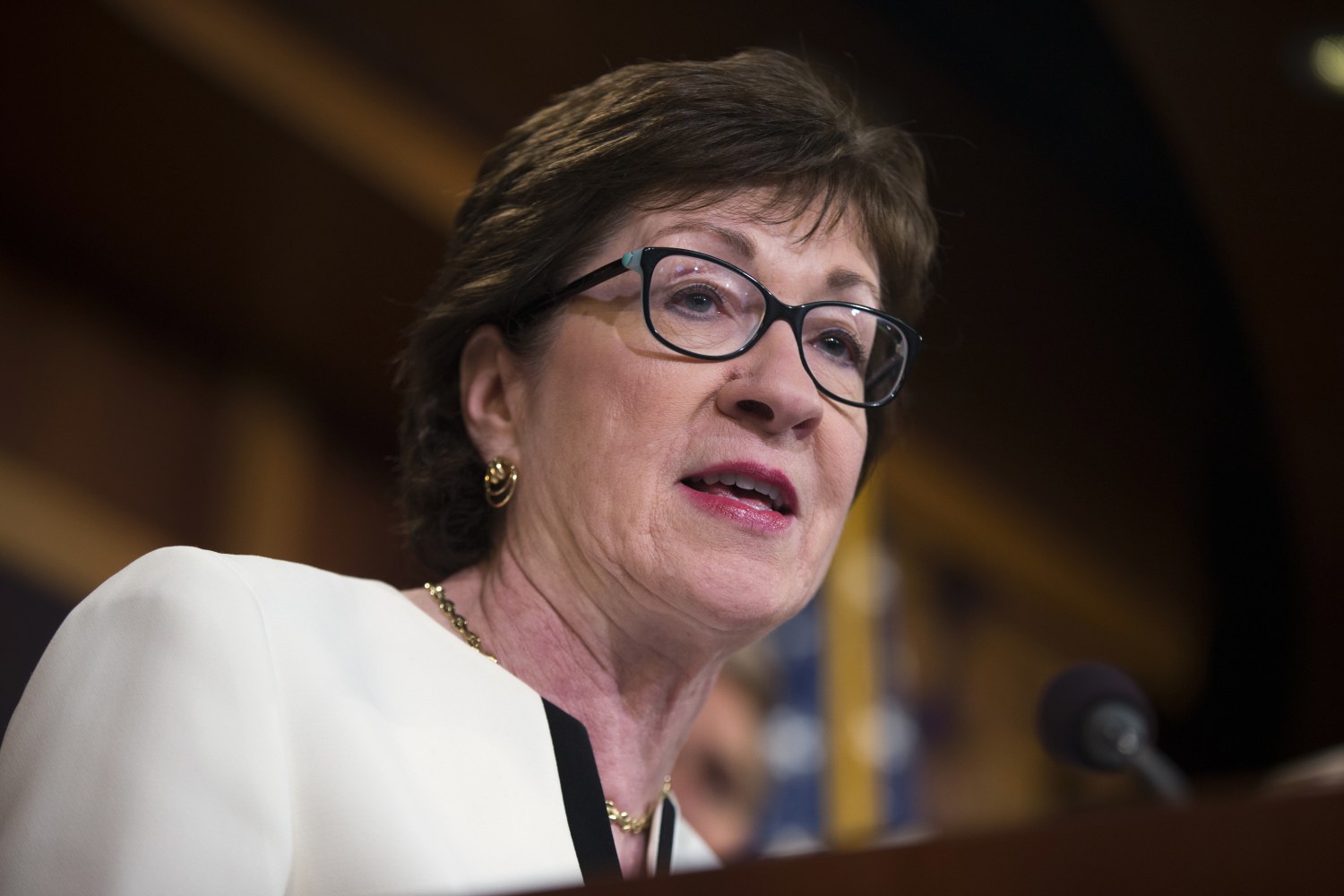
IMAGE: Susan Collins
Sen. Susan Collins, R-Maine, speaks during a news conference on Capitol Hill in Washington, Tuesday, June 21, 2016, to unveil a new gun legislation proposal. Evan Vucci / AP

But there’s a strong chance the abortion ban on private plans could be stripped by the Senate parliamentarian for failing to meet reconciliation rules, which require that legislative items directly impact the budget.

Key moderate Republicans, including Sens. Susan Collins (R-Maine) and Lisa Murkowski (R-Alaska), have also expressed opposition to the measure targeting Planned Parenthood.

With these challenges in mind, pro-life activists cautiously hailed the proposed legislation on Friday.

“The Senate discussion draft includes these pro-life priorities, but we remain very concerned that either of these priorities could be removed from the bill for procedural or political reasons,” Family Research Council President Tony Perkins and Susan B. Anthony List President Marjorie Dannenfelser said in a joint statement.

On Wednesday, 30 members of conservative House Republican Study Committee sent Senate Majority Leader Mitch McConnell (R-Ky.) a set of four demands for any bill that included defunding Planned Parenthood and the restriction on abortion coverage. Leaving out the items “may jeopardize final passage” in the House, they warned.

Under the longstanding Hyde Amendment, federal funding cannot go toward abortion. President Barack Obama eventually worked out a compromise in which only money from premiums could cover abortion through a separate fund, upsetting activists on both sides of the issue, but securing enough key votes to enable the bill’s passage.

Beyond the abortion measures, reproductive health is emerging as a rallying cry for Democrats and activists opposed to the bill.

Both the House and Senate bills allow states to waive Obamacare’s requirements that insurers cover items like maternity care, which was frequently left out of private plans before Obamacare went into effect. According to the nonpartisan Congressional Budget Office, the House’s changes could increase out of pocket costs for pregnancy-related expenses by “thousands of dollars in a given year” as a result.

http://www.nbcnews.com/politics/congress/abortion-debate-roils-final-health-care-push-n776141?cid=sm_npd_nn_fb_np

Gonzalo Arroyo Moreno/Getty Images News/Getty Images

After multiple incidents of vandalism over the past few months resulting in some major damage to its building, a Cleveland, Ohio abortion clinic is taking a standagainst anti-choice harassment as it tries to raise money for repairs.

Preterm, the only abortion clinic in Cleveland, has seen multiple windows broken by what police and employees believe to be a repeat offender targeting the clinic.

Preterm’s executive director Chrisse France told local news that ten windows have been broken in eight incidents over the last three months, with the latest occurring earlier this week. This most recent incident was caught on surveillance video — a shirtless man was seen throwing bricks at the building.

As France told reporters, she believes the repeated incidents are meant as an attack on abortion providers:

Just the same, as the clinic looks toward their repair costs, France promises that they are “not going to be intimidated.” The clinic has a reputation for being unapologetic advocates for choice, known in the area for abortion-positive billboards that proudly proclaim “I’m grateful for my abortion.”

 That same spirit of defiance carries over to the description on its generosity.com crowd-funding page where representatives from the clinic explained their lofty $20,000 goal:

The damage to Preterm is, for many, considered a symptom of a larger cultural problem surrounding abortion in the United States. With a growing anti-abortion presence in positions of political power and reports of “increased violence and threats of violence” to abortion clinics around the country, pro-choice advocates see attacks on clinics as a dangerous progression.

Furthermore, Preterm insists that the vandalism is another act of intimidation that can’t be ignored. Such violent actions work only to make the space seem less safe for patients seeking healthcare that they’re legally entitled to access.

As Cleveland Police continue searching for the person behind the brick-throwing, one thing remains certain: The advocates, employees, and volunteers at Preterm refuse to be rattled.

https://www.bustle.com/p/clevelands-only-abortion-clinic-refuses-to-let-vandalism-intimidate-it-66007

“People living at the intersections ultimately are the ones who suffer under this bill, although again, I think we can’t forget that they’re coming for you if you have private coverage too.”4212

Congressional Republicans want to use their Obamacare repeal bill to prohibit any health insurance plan, private or public, from covering abortion care.

But that goal could sink under the weight of its own ambition.

The American Health Care Act (AHCA) in the U.S. House of Representatives and the Better Care Reconciliation Act (BCRA) in the U.S. Senate prevent private health insurance plans, individual plans, and at least some employer-sponsored plans, from covering abortion. Republicans impose the restrictions through federal tax credits that are less generous than those enacted under the Affordable Care Act (ACA), President Obama’s signature health-care reform law. The structure of the tax credits differ between the two chambers.

Senate Republicans included the restrictions in the BCRA discussion draft they released Thursday morning, contradicting initial projections by theWashington Post and other news outlets. The working group of 13 Republican men and zero Republican women who crafted the repeal plan behind closed doors had toyed with the restrictions, given concerns that they might not have the procedural power to limit abortion access. Ultimately, they pulled the restrictions from the version that their counterparts across the Capitol forced through the House in May.

Overtly partisan abortion restrictions could violate the rules of the special fast-track “budget reconciliation” process that Republicans are using to pass a repeal bill in the Senate with a simple 51-vote majority, rather than the 60 votes typically needed in that chamber for controversial legislation. Banning abortion coverage so broadly appears to be on the same uncertain footing as a separate provision in both the House and Senate versions “defunding” Planned Parenthood via a one-year moratorium on reimbursements for Medicaid patients.

Senior GOP Senate staff told reporters on a press call Thursday that Republicans will continue discussions about the hits to abortion and Planned Parenthood access with the parliamentarian, the arbiter of the chamber’s rules and procedures.

Senate Republicans turned to other House GOP provisions that reproductive rights advocates have said will disproportionately hurt women. Both versions of the health-care bill allow states to waive guaranteed essential health benefits (EHBs), including maternity care.

“If states can waive the EHB requirements, millions of women could be left without the coverage they need or forced to pay more for plans that include the coverage of critical services, such as maternity care, prescription drugs and mental health services,” National Partnership for Women and Families President Debra Ness said in a statement.

Ness pointed to a nonpartisan Congressional Budget Office (CBO) forecast that detailed the vast human cost of the House-passed AHCA. The CBO estimated that maternity coverage could cost more than $1,000 per month.

GOP Sens. Ted Cruz (TX), Ron Johnson (WI), Mike Lee (UT), and Rand Paul (KY) issued a joint statement saying they were “not ready to vote for this bill” because it didn’t go far enough to repeal Obamacare. Two other Republicans, Sens. Susan Collins (ME) and Lisa Murkowski (AK), may defect over the Planned Parenthood provision. Senate Majority Leader Mitch McConnell (R-KY) can still pass the bill if he loses two votes and brings in Vice President Mike Pence to break the tie, mimicking what happened in March when the GOP shredded Obama-era Title X family planning protections.

Destiny Lopez, co-director of All* Above All, a reproductive justice group that fights the Hyde Amendment and other discriminatory abortion restrictions, identified the hypocrisy underlying Senate Republicans’ plan.

“Not only is this bill going to make it harder to prevent unintended pregnancy and nearly impossible to get an abortion covered by insurance, they’ve also added provisions that would penalize folks for having children,” she said in a phone interview. So, you’re kind of damned if you do, damned if you don’t.”

The Senate’s BCRA phases out Medicaid expansion over a longer period than the House-passed AHCA but cuts the program more deeply. Andy Slavitt, the former acting administrator for the Centers for Medicare and Medicaid Services under President Obama, described on Twitter how Senate Republicans provide incentives to decimate Medicaid through state waivers.

Provisions like these will disproportionately hurt people living at the intersection of marginalized groups.

“We know that low-income people, in particular communities of color, gender nonconforming folks, are the ones who bear the brunt of these kinds of political ploys,” Lopez said, adding that one in five U.S. women of reproductive age enrolled in Medicaid breaks down to one in three Black women of reproductive age and one in four Latina women of reproductive age.

“People living at the intersections ultimately are the ones who suffer under this bill, although again, I think we can’t forget that they’re coming for you if you have private coverage too,” Lopez said.

That warning circles back to the abortion restrictions that could leave even those with private insurance on the hook for the cost of what can be a cost-prohibitive procedure. Will congressional Republicans ultimately place abortion out of reach for all but the wealthiest or most privileged Americans who can pay for it in full?

#ThrowbackThursday Abortion Restrictions Burden Women

For all of House and Senate Republicans’ bluster about abortion, they’re recycling the anti-choice playbook from the original Obamacare debates in 2009 and 2010.

The abortion restrictions in the House-passed AHCA mirror the ACA’s failed Stupak-Pitts Amendment, according to Guttmacher Institute Senior Policy Manager Adam Sonfield, who spoke with Rewire in the lead-up to Thursday’s reveal in the Senate. Senate Republicans also appear to rely on the Stupak-Pitts model.

For the uninitiated, then-Reps. Bart Stupak (D-MI) and Joe Pitts (R-PA) in 2009 played into the GOP myth that taxpayer money is fungible. Their amendment sought to bar the ACA’s tax credits from subsidizing any health insurance plan that covers abortion, not just abortion care itself in compliance with longstanding federal policy. The amendment passed the House with the help of 64 Democrats.

Congress ultimately went with the Nelson Amendment from then-Sen. Ben Nelson (D-NE). The ACA’s tax credits can subsidize any plan that covers abortion as long as insurers wall off abortion care into a separate fund that only draws money from individuals’ or employers’ private contributions to premiums.

“The way it works in practice is that the insurance company has to segregate the dollars and make sure that the federal dollars aren’t touching abortion,” Sonfield told Rewire.

That’s bad enough from Sonfield’s perspective; the Nelson Amendment empowered legislators in 25 states to enact restrictions of abortion coverage in their exchanges. Ten of those states apply the restrictions to all private health insurance plans that they regulate and are available in their borders. Two states, California and New York, require private plans to cover abortion care, and AHCA puts them “in an untenable position,” Sonfield wrote in an article for Health Affairs. “They might be forced to reverse or stop enforcing their abortion coverage requirement, or state residents might find themselves unable to use federal subsidies to buy any insurance plan offered in the state— effectively, an abortion surcharge of thousands of dollars.”

If congressional Republicans get their way, they’ll apply the restrictions to the tax credits for all private health insurance plans sold to people and families available in the United States, à la Stupak-Pitts. Republicans will hold the existing ACA subsidies, including those for small businesses that offer employer-sponsored plans, to the restrictions until phasing them out, per Sonfield’s article. Doing so “could have a chilling effect on some employers’ willingness to include abortion coverage in the plans they sponsor,” Sonfield warned.

The bottom line: Republicans “are trying to make it the norm for insurance plans to exclude abortion,” Sonfield said.

That’s already the norm for cisgender women, transgender people, and gender nonconforming people enrolled in public insurance plans like Medicaid and a companion program, the Children’s Health Insurance Program (CHIP). For 7.5 million women of reproductive age, more than half of whom are women of color, legal abortion is often a right in name only, according to Guttmacher figures from January.

People with private insurance could soon join their ranks.

Four in ten abortion patients who have private insurance use it to pay for abortion care, according to Sonfield’s Health Affairs article. Those who don’t use it may face high deductibles or any number of hurdles, including abortion stigma.

Republicans may try to claim that people can purchase a separate “rider” at additional cost to cover abortion care. Rep. John Shimkus (R-IL) sparked an uproar in March when he suggested that women buy maternity riders, even though insurance works by pooling risks, not by spinning off specific benefits. The disconnect became all the more evident after Michigan in 2013 banned private insurance from covering abortion care—and no insurance companies subsequently stepped up to offer abortion riders on the individual market. A limited number of insurance companies offered the riders for employer-sponsored plans.

And employers aren’t going to want to buy separate abortion coverage for their employees with so many disincentives at play, warned Andrea Flynn, a women’s economic security policy expert and fellow at the Roosevelt Institute.

“What you’re seeing now is that the government is basically saying, ‘You can either have our subsidies or provide abortion coverage,’ and that’s a tough place to put small businesses in,” Flynn said in a phone interview. It’s a tough place for women, too, she said, since so many work for small businesses.

Where does that leave them?

Abortion, Planned Parenthood Provisions Face Test

There is good reason to believe that restricting abortion access and defunding Planned Parenthood won’t get through Congress—at least, not in their current forms.

Both are on the Senate parliamentarian’s radar. The parliamentarian has “flagged” the abortion restrictions, according to a June 8 report in The Hill. The report, citing unnamed Senate sources, indicated that the parliamentarian had issued a formal warning to Republicans, who were undeterred.

“There’s still not a clear ruling from the parliamentarian about the House Hyde language…I don’t think we go to contingencies or Plan Bs until we know that. But I do think there’s been some gaming out of how you address it if the House language isn’t acceptable,” Sen. John Thune (R-SD), a member of the group, told Politico the same day as The Hill report.

Republicans are trying to figure out how to maneuver around the Byrd rule, the linchpin of budget reconciliation. The Byrd rule kills provisions that are “merely incidental” to the budget. In other words, Congress can’t wield the reconciliation process with a lower vote threshold for the sake of a political agenda—or a partisan vendetta against abortion and Planned Parenthood.

One potential workaround for some of the abortion restrictions: The Senate bill funnels a “stability fund”of more than $100 billion at the expense of taxpayers to brace for the impact of dismantling the ACA’s state exchanges through CHIP, which can’t cover abortion care due to the Hyde Amendment. Doing so prevents that money from going to abortion coverage too, Guttmacher’s Sonfield said.

The anti-abortion restrictions baked into the tax credits for private insurance remain.

It’s hard to know how the parliamentarian will rule on any of the restrictions. Elizabeth MacDonough, who was appointed to the role by then-Senate Majority Leader Harry Reid (D-NV) in 2012, now serves at the behest of Senate Majority Leader Mitch McConnell (R-KY). MacDonough in 2015 gave the green lightfor the ACA repeal bill that defunded Planned Parenthood for one year. Obama vetoed that bill.

But this time around, reproductive rights advocates appear to have the CBO on their side. The CBO unequivocally determined that Republicans intend to defund Planned Parenthood, and only Planned Parenthood in the House-passed AHCA bill. Many Senate aides believe that violates the rules of reconciliation, according to a recent CNN report.

“Experts agree the ‘defund’ Planned Parenthood provision is a violation of the Byrd Rule because it is politically-motivated policy, similar to the tax credit provision related to abortion,” Planned Parenthood Federation of America said in a statement.

“It has no place on reconciliation because it violates these rules, and it has no place on any legislation because it is the epitome of a mean-spirited policy that hurts millions of women.”

All* Above All’s Lopez advised people to remain vigilant, regardless of the short-term outcome. If the abortion restrictions on the state stability fund fail to pass muster with the parliamentarian, she said, Republicans could try to include them in must-pass CHIP reauthorization this September.

“I don’t know that there aren’t some tricks that they could figure out to make that not be the case,” she said. “That’s how it would normally be—this is not a normal political environment that we’re working in.”

No one can predict with certainty the fate of the abortion restrictions—or for that matter, the fate of the Planned Parenthood provision. Only the consequences of Republicans’ anti-abortion machinations are clear, per a new Kaiser Family Foundation report that now seemingly applies to the Senate’s BCRA too: “If the AHCA’s restriction of the use of tax credits for any plan that covers abortion beyond the Hyde restrictions becomes law, there will be very limited abortion coverage in private plans in all states.”

https://rewire.news/article/2017/06/22/republicans-trying-end-abortion-access-obamacare-repeal/