Imagine a stay-at-home mom who can do an abortion. Or a college student. Imagine she knows how to administer local anesthesia, has the medicines to induce miscarriage, can dilate a cervix, scrape a uterus. Imagine a group — with no medical training — performing dozens of abortions a week, in secret, at great risk to themselves, their families and the women they serve.

That is the story of Jane, an underground group in Chicago that carried out thousands of abortions between 1969 and 1973, when abortion was illegal. It’s a story of code names and safe houses, a story of women taking control of their lives and teaching other women to do the same.

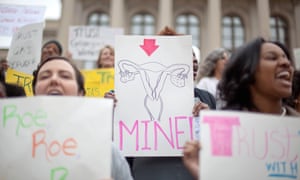
Abortion providers and the women they serve now fear that such an underground service may again become necessary. Abortion remains legal, but one conservative justice has just joined the Supreme Court and many are concerned that another will follow. This month the president signed a bill to cut funding to Planned Parenthood and other providers. Many states have enacted laws that make obtaining an abortion exceedingly difficult: About 90 percent of counties have no abortion clinics. In many areas, the procedure is nearly as inaccessible as it was in the days of Jane.

Back then, if a woman was pregnant and didn’t want to be, doctors would not help her. Abortion was a felony in 49 states. Many “back alley” abortionists could not be trusted. What to do? Call Jane.

In 1965, a University of Chicago student, Heather Booth, then 19, helped a friend’s sister find a doctor willing to do an abortion. “I was told she was nearly suicidal,” Ms. Booth told me. “I viewed it not as breaking the law, but as acting on the Golden Rule. Someone was in anguish, and I tried to help her.”

 Ms. Booth was eventually deluged by so many similar pleas for help that she “saw the need to set up some kind of system.” By 1969, she had enlisted a group of women who formed the Abortion Counseling Service of Women’s Liberation. They advertised in student and underground newspapers: “Pregnant? Need help? Call Jane.” (Why “Jane”? One member just liked “sweet names.”)

By 1970, Jane was referring two dozen women a week to a few willing doctors for abortions. Callers left a message on an answering machine. “Callback Jane” would collect information and pass it on to “Big Jane,” who would supply an address — “the front” — where patients would receive counseling. Eventually they’d be taken to a different address — “the place” — such as a member’s home or a motel room, where a doctor would induce miscarriage or perform a surgical abortion. Patients were sometimes blindfolded so that they couldn’t identify who’d helped them. Each was sent home with antibiotics and instructions for follow-up care.

Soon, it was not only college students who called. Many patients were already mothers, many of them poor, some of them abused. The Janes — all of them women — took careful notes on each caller and held weekly meetings to discuss safety. They were troubled by the male abortionists’ tendency to shame patients and the procedure’s high cost ($500 to $1,000).

Then, in 1971, the group discovered that one of the abortionists was not, as he’d claimed, a doctor. But he was performing up to 20 abortions a day and was “more skilled than a doctor who performed only a few abortions a year,” writes Laura Kaplan, a former Jane member, in her book, “The Story of Jane.” The women realized, “If he can do it, then we can do it, too.”

One of the Janes persuaded him to teach her. Within months she had learned the procedure and soon trained others. The Janes were able to cut ties with back alley abortionists, dispense with blindfolds and lower the price to $100, with poor women paying less.

Only about four of the 100 or so women who joined Jane ever became skillful enough to perform surgical abortions. The others mostly answered calls, found safe apartments and assisted by sterilizing instruments and changing bedsheets. They acted as counselors, chauffeurs, nurses. No woman is known to have died at the hands of the Jane abortion providers. One Chicago obstetrician, who had agreed to provide follow-up visits to Jane patients, attested that these practitioners had a safety rate roughly the same as that of the legal clinics then operating in New York.

 In 1972, the police raided an apartment where Jane operated. Three patients waiting for abortions were taken to a hospital. Seven Jane members were arrested, among them a high school English teacher, several housewives with young children, and a student who was about to adopt a baby. In the police van, one removed from her purse a stack of 3-by-5 cards with contact information for women who’d called for help. They ripped off the corners with the patients’ names and addresses, and swallowed them.

The “Abortion Seven” were indicted. But before their case went to trial, the Supreme Court legalized abortion in the 1973 Roe v. Wade decision. The charges were dropped. Jane disbanded.

Ms. Booth is now an organizer with the consulting group Democracy Partners. “We will never go back underground,” she said. “Women and men assume that abortion will be available, that women can determine when or whether to have a child. That change is enormous.”

And yet abortion restrictions are once again so widespread that some activists are preparing for a modern-day service like Jane. Elizabeth Ziff, a member of an “underground feminist group,” is one of them. “They — this administration — are coming for all of it, the morning-after pill, birth control, abortion, all of it,” said Ms. Ziff, who is also a singer and guitarist for the feminist rock band Betty. “Women will suffer if we aren’t willing to take radical steps. And that includes learning how to perform abortions.”

But the situation for women seeking abortions and the activists who might help them is today far different from that of the Jane era. Charlotte Taft, a former director of the Abortion Care Network, said no one should “unravel a coat hanger,” especially now that “medication can create abortion far into a pregnancy.”

A woman who wishes to end a pregnancy up to 10 weeks, when most abortions happen, can get pills from a doctor — a combination of mifepristone and misoprostol — and miscarry at home. If she cannot arrange or afford an appointment with a doctor, there is another way, though it is risky and illegal. The medications can be ordered online and taken with instructions available from groups like the International Women’s Health Coalition — but the drugs aren’t always from safe sources, and several women have been prosecuted for doing this.

 And what if surgery is required? Dr. Paul Blumenthal, a professor of obstetrics and gynecology at Stanford University School of Medicine, points out that in developing countries, laypeople are trained to do many procedures normally performed by doctors in the West, including C-sections. “You can train anybody to do just about anything,” he said. “Would I figure out a way to have a safe house somewhere? Would I teach? I might.”

Groups like the National Network of Abortion Funds already offer financial and logistical assistance to women seeking abortions. Ms. Ziff thinks things might get much worse. “We’re stockpiling the morning-after pill, everything,” she said.

No woman wants an abortion from a rock musician or the mom down the street. Abortion is a normal medical procedure and belongs in the mainstream of health care, safe, legal and accessible. But if that is no longer the case, women will call for it anyway, as they always have, and there’s no doubt that modern-day Janes will answer, ready to help.

Source: NY Times

Anti-abortion activist Charmaine Yoest, whom President Donald Trump on Friday named assistant secretary for public affairs at the Department of Health and Human Services, has gone on record as saying she believes that having an abortion increases a woman’s risk of breast cancer.

From 2008 to 2016, Yoest, herself a breast cancer surivor, served as president and CEO of an anti-abortion organization that makes the same claim, in all caps, on its website. “Abortion is associated with an increased risk of breast cancer,” according to Americans United for Life (AUL), an Arlington, Va.-based group that describes itself as the “legal architect of the pro-life movement.”

“The association between having an induced abortion and a subsequent increased risk of breast cancer has been examined in 70 studies,” according to AUL. “Of these studies, 57 showed a positive association between having an abortion and developing breast cancer, 34 of which were statistically significant.” In part because of model legislation drafted by AUL, five states require that women be counseled about the purported breast cancer link before they undergo an abortion.

And yet, the National Cancer Institute (NCI)–which, like the rest of the National Institutes of Health, the Centers for Disease Control and Prevention and the Food and Drug Administration, falls under the HHS umbrella–has concluded that induced abortion does not affect breast cancer risk. So have the World Health Organization, the American Cancer Society, the American College of Obstetricians and Gynecologists and Susan G. Komen. (Interestingly, Komen decided to defund Planned Parenthood as a result of a 2011 AUL report entitled “The Case for Investigating Planned Parenthood.”)

In this July 1, 2010, file photo, anti-abortion activist Charmaine Yoest testifies on Capitol Hill in Washington.  Donald Trump has appointed Yoest to a top post at the Department of Health and Human Services, spurring critics to wonder how someone they say disregards the latest scientific evidence about the safety of abortion can help lead a department that oversees most of the federal agencies  responsible for Americans’ health. (AP Photo/Pablo Martinez Monsivais, File)

As far as I can tell, only anti-abortion organizations such as AUL, the American Association of Prolife Obstetricians and Gynecologists and the American College of Pediatricians claim research shows that having an induced abortion–one performed surgically or with medication–increases a woman’s breast cancer risk. These groups argue that since a full-term pregnancy at a young age appears to protect against breast cancer, terminating a pregnancy must increase a woman’s risk of the disease.

 Scientists are pretty much agreed that women who deliver a full-term baby before age 20 have a lower risk of one type of breast cancer than women who don’t have their first baby until after age 30. But that doesn’t necessarily mean that ending a pregnancy before it is full term raises a woman’s breast cancer risk above that of someone the same age who has never been pregnant.

The confusion, say the scientific bodies that found no connection between abortion and breast cancer, stems from the fact that earlier studies of a possible link between the two were flawed.

For the most part, that research took the form of “case-control” studies in which scientists would compare the abortion histories of breast cancer patients and women who did not have the disease. These studies sought information about medical history from the women themselves, not from their medical records. The problem is that women diagnosed with breast cancer, eager to find an explanation for their illness, are more likely to reveal that they had an abortion than healthy women, a tendency referred to as “recall bias.”

Newer studies, on the other hand, collected data about abortion history and other purported or known breast cancer risk factors from large numbers of women who had not yet been diagnosed with the disease. Scientists then followed the women over time, collecting information about their health from their medical records. These prospective studies have consistently found no connection between induced abortion or miscarriage–which, of course, also ends a pregnancy before it is full term–and breast cancer risk.

As described on the HHS website, the assistant secretary for public affairs “serves as the principal point of contact regarding communications and press issues” for the department, raising concerns that, under Yoest’s direction, agencies such as the NCI will scrub their websites of scientific information that is not politically correct under the Trump administration. After all, HHS Secretary Tom Price, an orthopedic surgeon, has been a member of the Association of American Physicians and Surgeons, which opposes abortion.

“Someone who opposes abortion and contraception, along with other forms of reproductive healthcare, has no business shaping policy or handling communications for our nation’s health department,” Andrea Miller, president of the National Institute for Reproductive Health, said in a prepared statement about Yoest’s appointment.

Yoest’s beliefs shouldn’t supersede the science, says Dr. David Grimes, a retired obstetrician/gynecologist who formerly served as chief of the abortion surveillance branch at the Centers for Disease Control and Prevention. One chapter in Grimes’ 2014 book, Every Third Woman in America: How Legal Abortion Transformed Our Nation, is entitled “Breast cancer: the jury is in.”

“I don’t know about the claims of Yoest, but her beliefs are unimportant. As are mine,” Grimes told me. “The important thing is the evidence…and the judgments of major medical and public health organizations around the world.”

“What insight might Ms. Yoest have that has escaped notice at the WHO, CDC, NIH, etc.? And by virtue of what special training and expertise does she reach her opinion? What are her scientific credentials? What research has she done in this field?”

 Well, Yoest did earn a Ph.D. from the University of Virginia in 2004. But it was in American government, not a STEM field.

“Women rely on HHS for accurate information about their health,” Cindy Pearson, executive director of the National Women’s Health Network, a nonprofit advocacy organization based in Washington, D.C., told me. “How can we trust HHS if their spokesperson  has supported requiring doctors to lie to women” about an abortion-breast cancer link?

Source: Forbes

https://www.forbes.com/sites/ritarubin/2017/04/30/trumps-new-hhs-appointee-yoest-thinks-abortion-raises-breast-cancer-risk-but-wheres-the-evidence/2/#d54467d5aacd

This is not the advocate you’re looking for.

Ivanka Trump, daughter and adviser of U.S. President Donald Trump arrives for the W20 summit in Berlin, Tuesday, April 25, 2017. CREDIT: Michael Kappeler/dpa via AP

Ivanka Trump wants the world to know that she’s a feminist. Under the hashtag #womenwhowork (also the title of her new book on women in business, which was released on Tuesday), she’s spent the past few years building a brand based on how to be a woman who “has it all” — the adorable children, the high-powered job, and the tasteful Ivanka Trump™️ sheath dress, too, of course.

Now, as the first daughter and as an official White House aide, Ivanka has said she plans to be a “moderating” force on her brash father, and wants to turn her focus on women’s empowerment from selling pumps to crafting policy.

The problem? Ivanka’s advocacy is often all style and no substance, and she has repeatedly revealed fundamental misunderstandings about the actual barriers facing many women and gender non-conforming people who don’t benefit from the privileges afforded to men.

Last week, she championed economic empowerment for women around the globe in an op-ed, without mentioning that the Trump administration is actually gutting funding for aid programs focused on women, girls, and entrepreneurship. During the campaign, she offered a parental leave policythat would primarily benefit wealthy women like herself.

And on Tuesday, a line in a New York Times profile on Tuesday highlighted yet another area of ignorance: reproductive rights.

Here is the relevant section, from near the end of the article (emphasis mine).

“with congressional Republicans threatening to cut all funding to Planned Parenthood (even though the women’s health organization says it receives no federal funding for abortions), Ms. Trump approached its president, Cecile Richards, to start a broader dialogue. She also had a proposal: Planned Parenthood should split in two, Ms. Trump suggested, with a smaller arm to provide abortions and a larger one devoted to women’s health services.”

Firstly, Planned Parenthood doesn’t just say it doesn’t receive federal funding for abortions — it doesn’t, full stop. That’s because it’s currently illegal under the Hyde Amendment, which prohibits taxpayer funds from paying for abortion.

In reality, most of Planned Parenthood’s federal funding comes from Medicaid payments for basic health care services. That means that congressional Republicans’ current crusade to defund Planned Parenthood is actually a push to prevent low-income people on Medicaid from going to the organization’s clinics for care such as cancer screenings, birth control consultations, prenatal care, and STD tests. Stripping federal funding from the group will mean preventing many low-income people from being able to access this care at all.

But Ivanka’s solution — to segregate Planned Parenthood’s abortion care from its other health care services — also betrays a deep misunderstanding of the interconnected nature of reproductive health.

Abortion care is health care. It cannot be neatly separated from other medical decisions; for many people, having control over when and if to have a child is fundamental to their health and economic well being. And though abortion care may represent a small percentage of Planned Parenthood’s overall services, it is central to the group’s mission of providing reproductive care.

Source: Think Progress

https://thinkprogress.org/ivanka-trump-doesnt-understand-how-reproductive-health-care-works-cdab743f60fe

Law professor Teresa Manning once claimed ‘contraception doesn’t work’

Planned Parenthood says Manning ‘promotes myths about birth control’

Manning’s appointment would give her oversight of Title X, a quarter-of-a-billion dollar federal program that provides contraceptive services to low-income and uninsured women and men.
Teresa Manning’s appointment would give her oversight of Title X, a quarter-of-a-billion-dollar federal program that provides contraceptive services to low-income and uninsured women and men. Photograph: David Goldman/AP

Donald Trump has reportedly appointed to a position overseeing the US’s family planning safety net a law professor who once stated that “contraception doesn’t work” and “family planning is something that occurs between a husband and a wife and God, and it doesn’t really involve the federal government.”

The prospect of Teresa Manning becoming deputy assistant secretary for population affairs at the Department of Health and Human Services, first reported by PoliticoPro, has led reproductive rights activists to demand that Trump withdraw the appointment, saying his choice could jeopardize the federal program responsible for preventing millions of unplanned pregnancies, and by extension, abortions.

Manning’s appointment would give her oversight of Title X, a quarter-of-a-billion-dollar federal program that provides contraceptive services to low-income and uninsured women and men, and a hand in guiding the federal government’s policy toward teen pregnancy, family planning, and pregnancy prevention.

“Teresa Manning’s appointment is unacceptable,” said Dawn Laguens, Planned Parenthood’s executive vice-president. “This is the fox guarding the hen house, and women with low incomes will pay the price. We are at the lowest rate of unintended pregnancy in 30 years and a historic low for teen pregnancy because of access to birth control. Someone who promotes myths about birth control and reproductive care should not be in charge of the office that is responsible for family planning at HHS.”

Manning is an adjunct law professor teaching legal research and writing at George Mason University. She previously worked with the National Right to Life Committee, an anti-abortion group, and the Family Research Council, an arch-conservative lobbying group known for its virulent opposition to LGBT rights.

Manning once sued the University of Iowa law school for passing her over for a professorship, claiming the dean of the law school had discriminated on the basis of her political views. (The school claimed that Manning didn’t offer to fulfill all of the job’s requirements.)

The administration has not publicly confirmed Manning’s appointment, but PoliticoPro reports that she already appears in the agency’s directory.

Manning made her comments on contraception and family planning during a 2003 media tour to promote a book she had edited about the future of the anti-abortion movement.

“I always shake my head,” she told C-Span, explaining her views on family planning. “You know, family planning is something that occurs between a husband and a wife and God, and it doesn’t really involve the federal government, much less the United Nations, where we hear about family planning all the time. What are they doing in that business?”

In an interview with Boston’s NPR affiliate, Manning, who at the time went by Teresa Wagner, claimed that “contraception doesn’t work”.

“Its efficacy is very low,” she said, “especially when you consider over years – which, a lot of contraception health advocates want to start women in their adolescent years, when they’re extremely fertile, incidentally, and continue for 10, 20, 30 years. The prospect that contraception would always prevent the conception of a child is preposterous.”

In fact, many types of contraception, particularly IUDs and other implants designed to stay in the body for long periods of time, have a nearly 100% success rate at preventing pregnancy.

The federal family planning program which Manning will oversee has provided thousands of such devices to US women.

In 2014, Title X provided contraceptive drugs, devices, and counseling for nearly 4 million women who rely on the public safety net for their family planning needs. The same year, the program prevented nearly 1 million unintended pregnancies and more than 300,000 abortions.

Earlier this year, in a move that could weaken the network of family planning clinics that use Title X funds, Trump signed legislation encouraging states to divert Title X funding away from Planned Parenthood.

Manning is not the first opponent of reproductive rights to receive a high-level appointment in the Trump administration.

Tom Price, the head of the HHS, opposes the Obama-era requirement that health insurance plans cover contraception with no co-pay and once challenging a reporter to “bring me one woman” who struggled to afford contraception on her own.

In February, Trump named a health policy aide to the White House Domestic Policy Council, Katy Talento, who believes that taking birth control before pregnancy can lead to miscarriages and infertility, assertions unsupported by any medical evidence.

And on Friday, the administration named Charmaine Yoest, the former president of Americans United for Life, to head the health department’s public communications strategy. Yoest is a longtime foe of abortion rights who dismisses the notion that contraception has a role to play in reducing abortions as a “red herring”.

Source: The Guardian

https://www.theguardian.com/us-news/2017/may/01/trump-teresa-manning-family-planning-role

Kaylie Hanson Long is the national communications director for NARAL Pro-Choice America

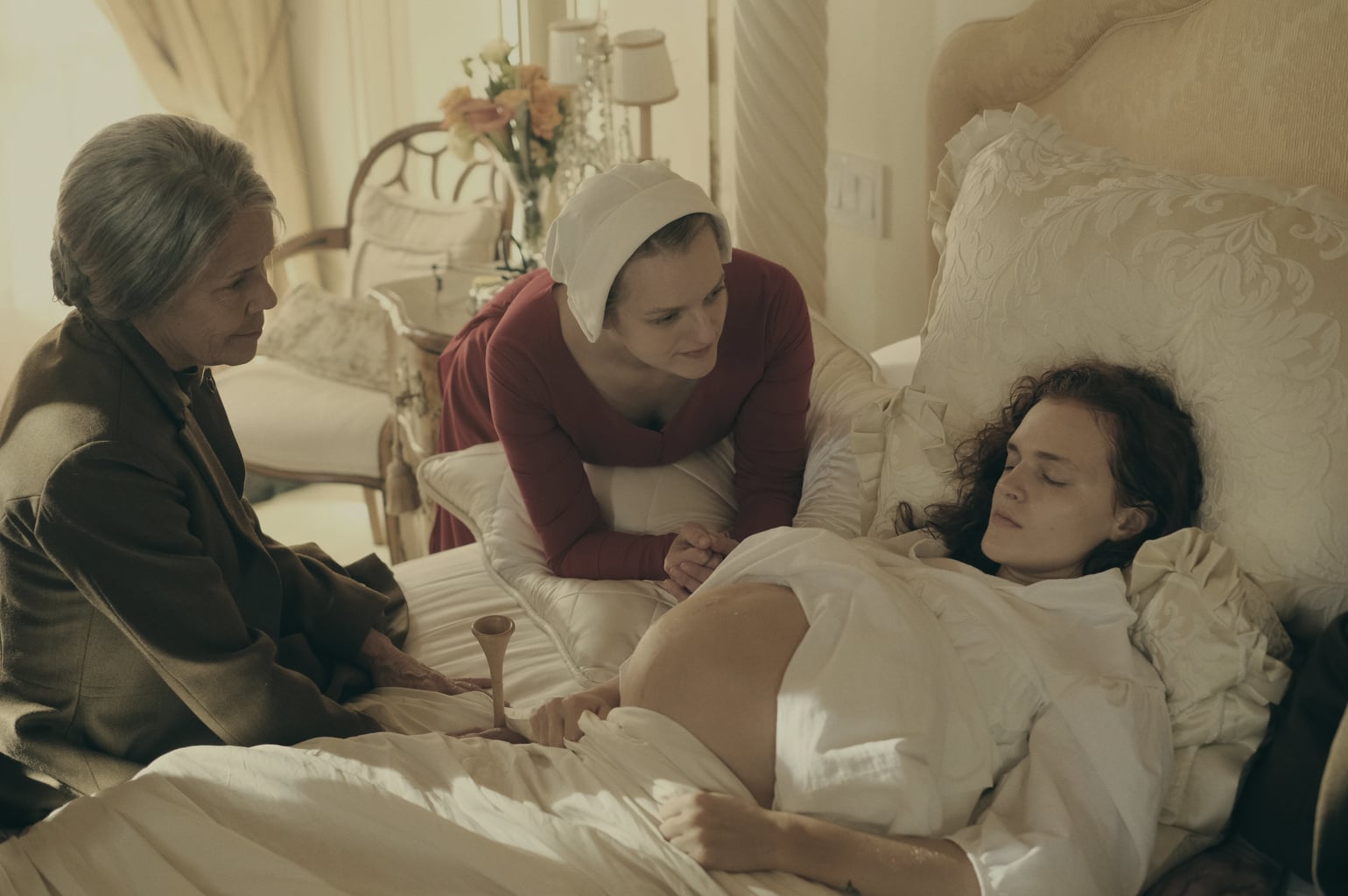
With the TV adaptation of Margaret Atwood’s The Handmaid’s Tale, people across the world will get a visceral preview of what happens when a regime defined by misogyny, cynicism, and a distaste for facts rises to power. Atwood’s dystopian vision depicts a fictional world in which women are nothing more than childbearing vessels, nothing more than domestic servants, and nothing more than wives whose sole claim to power rests in the hands of their husbands. Women who think, who rebel, who choose — and also women who fail to bear children, who fail to live up to an idea of “womanhood” that has nothing to do with humanity and everything to do with biology — are declared “unwomen.”

Sound familiar?

If you’re a woman in 2017, you might recognize this world thanks to the rise of politicians who have felt less and less pressure to hide the misogyny driving their attempts to control the most intimate aspects of a woman’s life. And this rise has been made possible by none other than President Donald Trump.
The government of The Handmaid’s Tale is fueled by a misogynist agenda and systematically enacts policies that rob women of their autonomy. After the leadership’s rise to power, the main character of The Handmaid’s Tale stops by a convenience store to pick up a pack of cigarettes before work only to learn that her bank account has been shut down. When she arrives at work, she learns that this isn’t a fluke: the government has not only frozen every woman’s bank account but has also made it illegal for women to hold a job and hold property at all.

“It’s only a job,” the central character’s husband says when she returns home that day. “You know I’ll always take care of you.” It is clear that he has missed the point.

In our reality, women are already treated like second-class citizens in so many ways: women of color make as little as 58 cents for every dollar their white male counterparts make. Pregnant women lose their jobs because they need an extra bathroom or water break. Republicans in Congress want to drag us back to the days of charging women more for our health care and when being a woman was considered a pre-existing condition. And the onslaught of antichoice legislation in this country has chipped away at our fundamental right to control our bodies and decide whether, when, how, and with whom to start or grow a family.
President Trump’s misogynist agenda only promises to pull us backward and erase the progress we have made on the road toward gender equality. He has laid bare the real motive behind the war on reproductive rights waged by antichoice politicians and extremist groups: it has very little to do with abortion and everything to do with keeping women in our place by limiting our options and freedom.

Trump let the cat out of the bag last year when he matter-of-factly claimed “there has to be some form of punishment” for women who choose abortion. Of course the people who cheer him on are the same people who believe that birth control pills and IUDs — the most basic tools women use to control their futures — should be illegal. One even claimed that a world without these forms of contraception would be “ideal.” And antichoice state legislators from Wyoming to Missouri make their real feelings about women clear when they compare us to livestock and quip that we should go to zoos to access basic health care.

The examples are endless, and it is clear that the rise of a reality where women do not have basic rights is made possible not only by politicians bent on controlling women, but also by a populace that tells itself, “That can’t happen here.”

“There were marches, of course,” writes the unnamed narrator of The Handmaid’s Tale, reflecting on the protest movements women led against the rise of this catastrophic and misogynist theocracy, “but they were smaller than you might have thought.”
The good news for us is that our marches have not been small. Across the country and the world, people have made it clear that the majority does not believe in the dystopian worldview peddled by extreme antichoice groups and politicians like President Trump and Vice President Mike Pence. Seven in 10 Americans believe abortion should be legal and accessible, and the same number think the Supreme Court should not overturn Roe v. Wade. This majority is fueling the resistance against the dangerous antiwoman, antifamily agenda pushed by President Trump and his Republican allies from Washington to the state legislatures.

Luckily, leaders at every level of government are getting the message, and they understand that Americans will support those who stand strong behind reproductive freedom and gender equality. In states like Nevada and Washington, legislators are leading a proactive resistance by working to make birth control even more accessible. States like Massachusetts, Oregon, and Tennessee are also working on laws that would require insurance providers to cover a broad range of birth control, not just certain types or brands.

It is no surprise that America’s appetite for dystopian fiction skyrocketed after President Trump’s election. We must look to it not only as a warning of what could be, but also as a guide to how we can push history in the right direction. We must stand up, stand strong, and stand together in support of the fundamental idea that every woman deserves the same opportunity and freedom as men to control her body and her future.

Source: Pop Sugar

https://www.popsugar.com/news/Handmaid-Tale-Reproductive-Rights-43473588?utm_source=nar.al&utm_medium=urlshortener&utm_campaign=Facebook

The Senate bill passed out of committee, despite both women voting against it

Two weeks after President Donald Trump signed a bill that will make it easier for states to defund Planned Parenthood, the South Carolina Senate has taken a major step in conservatives’ effort to make abortions impossible within their borders.

 On Wednesday, Sens. Mike Gambrell, Rex Rice, and Scott Talley voted in favor of a so-called “personhood” bill that would legally define a human being as a fertilized human egg, according to a report by The Post and Courier. The the two female senators on the panel voted against the measure.

The personhood bill is very unlikely to be passed by the time the 2017 legislative year ends next month. When the full Senate Judiciary Committee convenes next year, the bill will be held under consideration.

Critics of the bill claim that it will effectively outlaw abortion in all circumstances (including during rape, incest, or when the life of the mother is in jeopardy). They also note that the bill would have far-reaching ramifications beyond the issue of abortion, potentially undermining access to birth control, in vitro fertilization, and even cancer treatments that could potentially harm a fertilized egg. The state lobbyist for Planned Parenthood, Vicki Ringer, has also argued that it will be very expensive for the state of South Carolina to defend the personhood bill against the inevitable judicial challenges if it passes. Nevertheless, Ringer also told The Post and Courier that she recognized her testimony against the bill on Wednesday was “an exercise in futility.”

Source: Salon

http://www.salon.com/2017/04/27/south-carolina-is-close-to-basically-outlawing-abortion-through-a-personhood-bill/

President Trump’s appointment legitimizes the former president and CEO of Americans United for Life, an anti-choice copycat legislation mill looking to restrict access to comprehensive reproductive health care.

President Trump on Friday installed virulent anti-choice activist Charmaine Yoest as assistant secretary for public affairs at the U.S. Department of Health and Human Services (HHS).

The appointment vaults Yoest to one of the top positions at HHS, the agency that sets public health policy in the United States. She will report to HHS Secretary Tom Price, serving as his “principal counsel on public affairs—providing executive leadership, policy direction, and management strategy.”

In other words, Yoest will communicate the policy decisions of her boss, who believes “there’s not one” woman who can’t afford birth control, to the press and the public.

Yoest’s record on reproductive rights is arguably even more extreme than Price’s.

Trump’s appointment legitimizes the former president and CEO of Americans United for Life (AUL), an anti-choice copycat legislation mill looking to restrict the right to access comprehensive reproductive health care nationwide. The federal courts have largely blocked AUL’s efforts.

By tapping Yoest, the Trump administration sends a clear signal that it plans to use HHS to restrict reproductive rights as much as possible, no matter how much money that will cost taxpayers.

“It is unacceptable that someone with a history of promoting myths and false information about women’s health is appointed to a government position whose main responsibility is to provide the public with accurate and factual information,” Dawn Laguens, executive vice president of Planned Parenthood Federation America, said in a statement. “Charmaine Yoest has spent her whole professional life opposing access to birth control and a woman’s right to a safe, legal abortion. While President Trump claims to empower women, he is appointing government officials who believe just the opposite.”

As Emily Bazelon wrote in a 2012 profile of Yoest for the New York Times, the anti-choice activist’s “end goal isn’t to make abortion safer. She wants to make the procedure illegal.”

“She leaves no room for exceptions in the case of rape or incest or to preserve the health of the mother,” Bazelon wrote. “She believes that embryos have legal rights and opposes birth control, like the IUD, that she thinks ‘has life-ending properties.’” Yoest reportedly dismissed using contraception to bring down the abortion rate as a “red herring.”

Yoest worked as a senior adviser to Mike Huckabee’s failed 2008 presidential campaign. Huckabee holds a hardline opposition to abortion rights, and in 2015 suggested he would be open to the idea of using federal troops to stop legal abortion. Yoest also worked as vice president at Family Research Council, which has been classified as an anti-LGBTQ hate group by the Southern Poverty Law Center.

Yoest served on the Trump campaign’s anti-choice advisory council. She came to Trump’s defense when he faced allegations of sexual assault.

Yoest is one of many anti-choice advocates installed at HHS since Trump took office. Paula Stannard, who ProPublica reports was hired to the agency as a “beachhead” in January, worked at HHS in the George W. Bush administration. Anti-choice activist Hadley Arkes has claimed that during Stannard’s time at HHS she worked on dubious “born-alive” efforts.

“Trump has broken nearly all of his promises to the American people in his first 100 days, but he has certainly stuck to his pledge to erode the constitutional right to abortion, punishing women in the process,” said Ilyse Hogue, president of NARAL Pro-Choice America. “This nomination helps fulfill that twisted promise and speaks volumes about the Trump administration’s continued disdain for reproductive freedom and women’s rights.”

Yoest has already influenced the U.S. Supreme Court for decades to come, per White House pool reports. Yoest, along with other prominent anti-choice activists who helped guide the process, convened at the White House on February 1, the day after Associate Justice Neil Gorsuch’s nomination.

Congressional Republicans are already pressuring HHS officials to wield regulatory power undermining reproductive rights.

A day before Yoest’s appointment, Republicans in the U.S. House of Representatives met with Price to discuss so-called conscience protections, according to a press release from House Majority Leader Kevin McCarthy (R-CA). McCarthy, House Budget Committee Chair Diane Black (R-TN), Rep. Chris Smith (R-NJ), and other prominent anti-choice lawmakers swayed Price to examine the Weldon Amendment, which prohibits states that receive federal family planning funding from discriminating against health-care plans based on whether they cover abortion care.

Congressional Republicans have falsely alleged the Weldon Amendment doesn’t go far enough and forces doctors to provide abortion care. They sought to codify and expand it last year in a successful House vote, but the legislation failed to advance to the U.S. Senate.

McCarthy said the Republicans are “fully confident” that their meeting with Price would yield a “fresh look” at the “controversy and other conscience violations.”

Source: Rewire

https://rewire.news/article/2017/04/28/breaking-trump-appoints-anti-choice-extremist-prominent-hhs-post/

The Montana GOP’s “Pain-Capable Unborn Child Protection Act” relies on junk science claiming a fetus can feel pain at 20 weeks’ post fertilization.

Montana’s Democratic governor plans to veto legislation that outlaws abortion care at 20 weeks, a spokesperson told Rewireon Thursday.

Gov. Steve Bullock “strongly believes a woman’s medical decision should stay between herself, her doctor, her family, and her faith,” said Bullock’s press secretary, Marissa Perry.

SB 329, known as the Pain-Capable Unborn Child Protection Act, relies on junk science claiming a fetus can feel pain at 20 weeks post fertilization—which doctors call 22 weeks’ gestation, calculated from the first day of a person’s last menstrual period. The bill bans abortions at 20 weeks’ fertilization, except in cases of serious physical health risk or life endangerment. In those instances, the emphasis remains on the fetus, with medical practitioners instructed to end the pregnancy in a way that gives the “best opportunity for the unborn child to survive.”

Violators of the Republican-backed measure could face fines of $1,000 or up to five years behind bars.

Perry said Bullock had not yet seen the bill, but said the governor has a record of vetoing anti-abortion legislation. Bullock has ten days from when legislation reaches his desk to veto it, or the bill becomes law without his signature, Perry said.

Republicans control both of Montana’s legislative chambers. The bill’s lead sponsor, state Sen. Keith Regier(R-Kalispell), has backed various anti-choice bills over the years. He sponsored failed legislation to make abortion a homicide, and an unsuccessful ban on administering abortion pills via telemedicine. Regier was behind a 2012 fetal homicide bill, which went into law without the governor’s signature.

The influential anti-choice groups Americans United for Life and the National Right To Life Committee drafted the first “Pain-Capable Unborn Child Act” for Nebraska in 2010, as Rewire reported. Since then, Republicans and reproductive rights opponents around the country have advanced or enacted unconstitutional 20-week abortion bans under the guise of preventing a fetus from “feeling pain.”

The medical establishment holds fetal pain is unlikely before the third trimester.

Source: Rewire

https://rewire.news/article/2017/04/27/montana-governor-says-hell-veto-20-week-abortion-ban/

(Photo: Getty Images)
State legislatures across the country are proposing and, in some cases passing, antiabortion bills. (Photo: Getty Images)
More

On Tuesday a bill passed the Illinois State House that would keep abortion legal in the state even if Roe v. Wade were to be overturned by the Supreme Court — but Illinois Gov. Bruce Rauner, a pro-choice Republican, has vowed to veto it.

The events in Illinois today are a perfect example of just why the focus of reproductive justice advocates and supporters needs to be fixed firmly on the states. While all eyes have been focused on the White House and Congress, state legislatures across the country have been proposing and passing bills to make access to abortion care even more difficult for those in need of it.

“Reproductive health and rights continue to be attacked by politicians at the state level,” Diane Horvath-Cosper, MD, the reproductive health advocacy fellow at Physicians for Reproductive Health, tells Yahoo Beauty. “Whether it’s interfering with the provider-patient relationship or trying to limit access to family planning, it is clear that attempts to dismantle access to women’s health care continue during this year’s legislative sessions.”

Or, as Nikki Madsen, the executive director of the Abortion Care Network, tells Yahoo Beauty, “there are some politicians who will stop at nothing to burden abortion care providers and bully people who need this care.”

Here’s a look at some of the bills that are currently moving — and some that have recently passed — and what you need to know about them.

Arizona

In late March, Gov. Doug Ducey signed a number of antiabortion bills into law — including one that would require doctors to do everything possible to resuscitate an aborted fetus that is “born alive,” a term being defined by the state as any fetus born with a heartbeat and respiration, and having movement of voluntary muscles. Yet research shows that a fetus does not develop the nerves and neural capacity to experience pain until the third trimester, and a fetus is not traditionally thought of as viable outside the womb until 26 weeks gestational age. According to the Guttmacher Institute, only 1.3 percent of abortions in 2013 were performed after 21 weeks gestation.

“Arizona politicians need to get out of the exam room and start treating women and families with some basic human dignity,” says Madsen.

Arkansas

Two weeks ago, Gov. Asa Hutchinson signed into law a first-of-its-kind piece of legislation that would require doctors to investigate their patients’ medical histories before being able to provide a pregnant women with abortion care. Doctors who fail to adhere to the law could face up to a year of prison, $2,500 in fines, and civil penalties.

“In Arkansas, politicians want to turn abortion providers into the thought police,” muses Destiny Lopez, the co-director of All* Above All, a grass-roots organization that works to oppose all forms of bans on abortion coverage and to advocate for the repeal of the Hyde Amendment. “It’s insulting, not to mention unworkable.”

Kansas

The Kansas House recently passed legislation that would require women to receive written information — in 12-point type in black ink in the Times New Roman font — about abortion before being allowed to make a decision as to whether to have the procedure.

“Not content to only play doctor, politicians now want to be graphic designers too,” says Lopez.

And yet, as Horvath-Cosper notes, “a bright spot is that there are efforts at the state level to safeguard reproductive health, such as by enshrining the protections of the Whole Woman’s Health v. Hellerstedt decision and protecting funding for the vital services Planned Parenthood provides. As physicians, we know that timely access to high-quality reproductive health care services is essential to women’s health.”

Oklahoma

In March, lawmakers in the Oklahoma House passed a bill that would ban abortion solely on the basis of whether the fetus had a genetic abnormality, with no exceptions made even for cases of rape or incest. Now the Oklahoma State Senate is considering the measure. Should it pass, Oklahoma would be the third state in the U.S. with this kind of abortion ban.

“Abortion care providers treat their patients with compassion and respect; politicians have no place forcing them to target women with needless restrictions,” says Madsen of the Oklahoma bill.

Montana

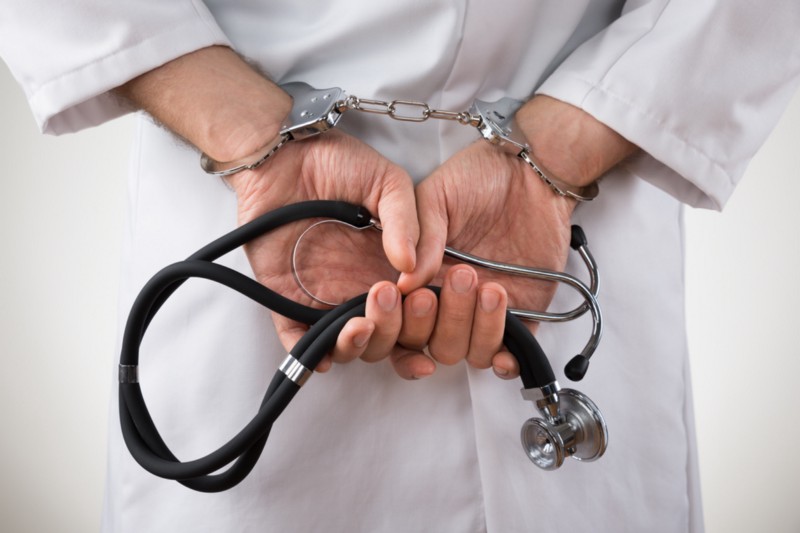
A bill is headed to Gov. Steve Bullock’s desk to be signed into law that would restrict abortions and criminalize doctors by banning all abortion care performed after 24 weeks gestation, even in the event of a medical emergency. In situations where a woman’s life is endangered, she would then have to undergo a C-section or induced labor should there be at least a 50 percent chance that the fetus might survive outside the womb. Doctors who are found performing abortions after 24 weeks could face homicide charges.

Says Madsen, “It is not always possible for a woman to get an abortion as soon as she has made her decision. With this restriction, politicians are interfering with doctors’ ability to provide care that is right for their patients.”

Texas

A budget bill passed the Texas House two weeks ago that would divert $20 million from environmental regulators and instead direct that funding to “programs that critics accuse of coercing women against having abortions.” It now remains to be seen whether the budgeting provision will pass through the reconciliation process between the state’s House and Senate.

“Texas is in the middle of a maternal health crisis — but instead of funding programs to support women’s health, they’re spending precious resources lying to and coercing women,” notes Lopez.

West Virginia

The West Virginia Legislature is advancing a measure that would require minors to go to court to seek approval before being able to access abortion care. The bill is currently on the floor of the state Senate and is also being considered by a House committee, so it could be approved as soon as this week.

“It’s hard enough for a young person facing an unwanted pregnancy to get care — now they have to go to court?” says Lopez. “For young people from small towns, this undue burden is also a disaster for privacy.”

Source: Yahoo News

https://www.yahoo.com/beauty/7-states-quietly-moving-restrict-abortion-access-215450138.html

Restrictions on abortion perpetuate economic inequality.

 
U.S. Sen. Bernie Sanders, I-Vt, speaks at a Democratic National Committee rally, Friday, April 21, 2017, in Mesa, Ariz. CREDIT: AP/Matt York

Sen. Bernie Sanders (I-VT) took a firestorm of criticism over the weekend for campaigning for an Omaha mayoral candidate who supported abortion restrictions. In the slew of coverage following Sanders’ support of Democratic Nebraska lawmaker Heath Mello, media outlets and Sanders himself framed abortion access as separate from economic issues — when in reality, abortion restrictions hurt low-income people the most.

In 2009, his first year in Nebraska’s state legislature, Mello supported a bill mandating doctors offer an ultrasound before performing an abortion, which he said was a “positive first step to reducing the number of abortions in Nebraska.” Mello also sponsored the final version of a 20-week abortion ban and voted for a law banning insurance plans from covering abortion, Rewire reported. Mello’s campaign manager told The Huffington Post that he received a 100 percent rating from Planned Parenthood, but Planned Parenthood Voters of Nebraska said the statements about a 100 percent rating were misleading.

Understandably, Sanders’ support for Mello was seen as running counter to progressive values.

In response to Sanders’ support of Mello and the resulting criticism from progressives, the Atlantic ran a story with the headline “Rifts over abortion and economic populism threaten to divide Democrats.” In the article, a former Sanders campaign staffer calls the support of abortion rights an unreasonable standard:

I don’t think the senator is anointing anyone or imposing a litmus test on candidates, and I don’t think he sees it that way either. He’s always cared about a core set of economic issues, which is why people flocked to his campaign, and he wants to make sure he supports people who believe in the same things.

The New York Times published a similar piece about how the Omaha election is “pitting abortion rights activists against economic populists.” The Times piece poses this question:

But the ferocity of the dispute this time reveals a much deeper debate on the left: Should a commitment to economic justice be the party’s central and dominant appeal, or do candidates also have to display fealty to the Democrats’ cultural catechism?

Last week, Sanders told NPR that in order for Democrats to get control of the House and Senate, they have to “appreciate where people come from.”

“But I think you just can’t exclude people who disagree with us on one issue,” Sanders said.

The low-income people most affected by abortion restrictions might disagree with Sanders and the media on the characterization that abortion is just “one issue” or a social or cultural issue, rather than an economic one.

Seventy-five percent of abortion patients were poor or low-income in 2014, according to the Guttmacher Institute. Due in part to barriers to contraceptive access, poor women and other people trying not to conceive are three times more likely to get pregnant than higher income people and five times more likely to give birth, according to a 2015 Brookings Institution paper. Abortion rates were also lower for the poor, because although middle-class women abort more of their pregnancies, they have less unintended pregnancies, and thus fewer abortions overall, Slate explained.

With lack of access to affordable abortion options — thanks to the Hyde Amendment, which officially prohibits federal taxpayer dollars from paying for abortions — many women have attempted to induce their own abortion. Only 17 states direct Medicaid to pay for all or most medically necessary abortions, according to the Guttmacher Institute, but the national average for an abortion in the first trimester is around $500 and as much as $2,000 for the second trimester.

The Hyde Amendment has restricted abortion access for many economically distressed groups, such as low-income Washington, D.C. residents, incarcerated people, military personnel, and Native Americans.

Alicia Hupprich, whose husband serves in the military and could not use his insurance to pay for an abortion, shared her story for NARAL Pro-Choice America. She became pregnant in 2015 and after 18 weeks, discovered her baby had fetal hydrops, which has a very high mortality rate. Hupprich and her husband had to travel very far to find a clinic that would provide an abortion.

Because of the Hyde Amendment, my husband’s military insurance would not pay anything towards our termination for fetal anomaly. Though every doctor mentioned that termination was an option in our severe situation, our doctors would not perform the procedure, and they would not point us in the direction of a safe and legal place to have it done. We had to travel over 250 miles to a clinic that could help us.

States continued to pass restrictions on abortion last year. Fourteen states passed 30 laws to make it more challenging to get an abortion in 2016. Today, 31 states have at least one restriction on abortion, including waiting periods, requiring doctors to have admitting privileges, restricting health insurance coverage for abortion, and banning abortion after 20 weeks. And these requirements have very real consequences for low-income women and women of color.

A 2016 University of Buffalo study looked at 3,999 intakes from the George Tiller Memorial Fund, a National Network of Abortion Funds-affiliated nonprofit fund, and found that about half of the women who tried to get assistance from the fund were black, which squares with data on black women facing more health care barriers than white women. Thirty-seven percent of the women already had multiple children. The average distance they traveled to get an abortion doubled from 2010 to 2015.

Low-income people face difficult decisions when they don’t have the resources to get an abortion. Somewhere between 100,000 and 240,000 women of reproductive age living in the state of Texas alone have tried to induce their abortion without any medical assistance, according to a 2015 report from the Texas Policy Evaluation Project (TxPEP), a group of researchers at the University of Texas. Most of the women surveyed said they would have gone to a clinic if they had the option.

Sanders was not the only progressive who faced blowback for his support of Mello. Democratic National Committee Chair Tom Perez, who has been traveling the country with Sanders on what they’re calling a “Unity Tour” to address political differences between Sanders and DNC supporters, did not attend the event but has also supported Mello.

Sanders, Perez, and others who ignore the economic realities of abortion — or pit the two as separate issues — would do better to reconsider.

Source: Think Progress

https://thinkprogress.org/abortion-is-economic-1b05be2b3d