Norma McCorvey did not live to see the case overturned. But today’s abortion access may more closely resemble the country of her youth than she imagined

20-feb-17

In 1998, Norma McCorvey, the “Jane Roe” in the Roe v Wade supreme court decision, testified before a group of senators about the case fought in her name 25 years earlier. “I am dedicated,” she said, “to spending the rest of my life undoing the law that bears my name.”

McCorvey did become an activist against abortion rights, although she wouldn’t live to see Roe, which in 1973 established a right to abortion, overturned. She died on Saturday in Katy, Texas, at the age of 69.

Knowing the end was near, McCorvey gave her friends and fellow activists a mission the day before she died, according to her friend Janet Morana. “She wanted to tell everyone to continue the fight,” said Janet Morana, executive director of Priests for Life.

But while McCorvey died in a country still shaped by the case that bears her pseudonym, the practical realities of abortion access may more closely resemble the country of her youth than she imagined.

Anti-abortion activists began to chip away at Roe v Wade almost as soon as the supreme court handed the decision down. In 1976, Congress began prohibiting poor women from using Medicaid to cover abortions. Conservative state lawmakers have unleashed a tidal wave of abortion restrictions, such as an Ohio law signed in December, that make the procedure more difficult to obtain. The most effective of these laws forced abortion clinics to close down. Since 2011, abortion clinics have closed at a record pace of more than 30 clinics per year.

McCorvey wasn’t a soldier in the early battles. In the 1980s, she revealed her identity publicly and spent time volunteering in a Dallas abortion clinic and taking part in abortion rights rallies. It wasn’t until 1995, when she converted to evangelical Christianity – later, to Catholicism – that she began to join activists who wanted abortion to be abolished.

For the most part, she was active with religious groups and ordinary people who wanted to see abortion outlawed as quickly as possible. Occasionally, she lent her name to legal efforts that challenged Roe head-on. In 1997, she wrote a friend-of-the-court brief in a long-shot case claiming Roe had led to untold numbers of coerced abortions, and must be overturned.

The most successful contingent of the anti-abortion movement had long since left those tactics behind. In 1984, at a conference sponsored by Americans United for Life, a participant proposed what would become the movement’s most powerful weapon against Roe: laws that allowed the courts to chisel away at its doctrine.

It is a strategy that has proved highly effective. Activists have sufficiently narrowed Roe so that states can require women seeking an abortion to attend anti-abortion counseling; require minors seeking an abortion to receive the permission of one or both parents; require women to wait 24 hours or more before receiving an abortion; extensively regulate abortion after 20 weeks; and block public funding for abortion.

All the while, fewer women have found they needed abortions. This year, US researchers announced that the proportion of pregnancies that ended in abortion had reached its lowest point since the supreme court decided Roe v Wade. The decline was largely due not to new abortion restrictions, they believed – with the exception of unconstitutional laws that forced clinics to close – but to more effective and widely available methods of contraception.

Anti-abortion activists have credited the low abortion rate to the triumph of their tactics and rhetoric, and have largely hailed the Republican takeover of Congress and the White House. The party has historically aided their fight against abortion rights, and its leaders have announced plans to gut widespread access to contraception and place new restrictions on abortion.

All of this, of course, is achieved with an eye toward overturning Roe v Wade. Donald Trump, in his election-season efforts to win the support of anti-abortion groups, promised to appoint judges to the supreme court who would be open to overturning the decision. Many legal experts are skeptical, however, given the amount of precedent that now exists to protect abortion rights, that overturning Roe v Wade is even possible.

With this in mind, anti-abortion campaigners have noted the difference between overturning Roe v Wade and making it as though Roe v Wade had never happened. Activist groups and conservative lawmakers have shown that they can achieve one without the other.

Twenty-one states have laws allowing a parent to all but prevent minors from having abortions. The ban on using Medicaid to cover abortion has foreclosed the option of abortion to at least 1 million women. The closure of half of Texas’ abortion clinics, under a law that was later ruled unconstitutional, caused a 50% drop in abortions in areas where the distance to the nearest clinics suddenly increased by more than 100 miles.

Owing to a record number of clinic closures, thousands of women each year travel great distances for abortions and even cross state lines. An unknown number of women have attempted to perform their own abortions, including some who have tried to do so with sharp objects. The difficulties begin to recall a time before abortion was legal in all 50 states.

Two years ago, one abortion provider reflected on the changes, saying: “Sometimes, I feel like I’ve gone back 40-some years.”

Source: The Guardian

https://www.theguardian.com/world/2017/feb/20/roe-v-wade-norma-mccorvey-death-abortion-rights

18-feb-2017

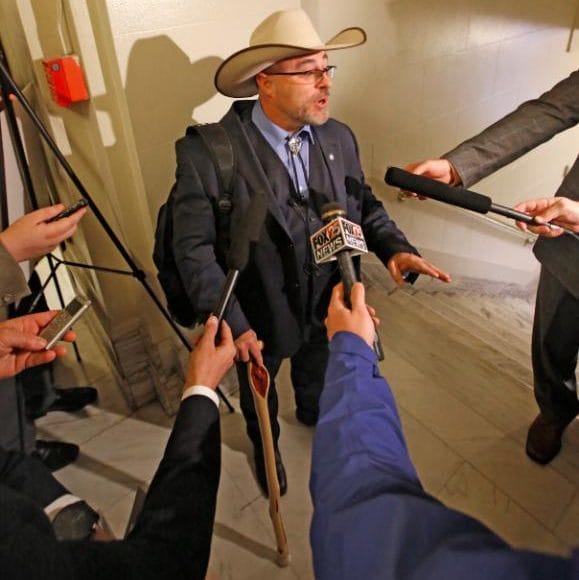
Republican Oklahoma lawmaker who defended his description of pregnant women as “hosts” won approval on Tuesday for his bill that would require women seeking an abortion to first receive written consent from the father.

The state House Public Health Committee voted 5-2 in favour of the bill by Rep. Justin Humphrey, despite Mr Humphrey’s own concession that it might be unconstitutional. It now proceeds to the full House, where it’s likely to pass if granted a hearing.

“The thing I wanted to spark in a debate is that fathers have a role. Exactly where that role is, I’m not sure,” said Mr Humphrey. “I’m proud that I’ve gotten a chance to start the conversation.”

The bill would require women seeking an abortion to provide the name of the father and would prohibit her from going through with it without his written informed consent. It also would allow the father to demand that a paternity test be performed and would provide exceptions in cases where the woman is the victim of rape or incest or if the pregnancy would endanger her life.

Mr Humphrey acknowledged the bill might not pass constitutional muster, but said he wanted to ensure that fathers had a role in the abortion process.

Tamya Cox, a spokeswoman for Planned Parenthood Great Plains, said the US Supreme Court already ruled against requirements to notify the father in a 1992 decision in Planned Parenthood of Southeastern Pennsylvania v. Casey.

“Courts have said that states cannot create undue burdens and create unnecessary obstacles when it comes to a woman’s right to access abortion,” Ms Cox said. “To waste taxpayer dollars on bills like this does not represent what’s best for Oklahomans.”

Ms Cox also lambasted Mr Humphrey for referring to women as “hosts,” a comment she said was inflammatory and unacceptable but which Mr Humphrey defended again on Tuesday.

“I think I used the proper verbiage. When I used the term host, it’s not meant to degrade women,” Mr Humphrey said. “If there’s better verbiage out there, I will gladly use better verbiage. I just couldn’t find it.”

I think I used the proper verbiage. When I used the term host, it’s not meant to degrade women. If there’s better verbiage out there, I will gladly use better verbiage. I just couldn’t find it.Justin Humphrey

The same committee on Tuesday also approved a separate measure prohibiting abortions based on the diagnosis of a fetal abnormality or Down syndrome.

Oklahoma’s Republican-led Legislature has passed some of the country’s most far-reaching anti-abortion legislation, but at least five of the proposals have been tossed by the courts in the last six years. Three additional bills remain tied up in court.

At least 11 anti-abortion bills have been introduced this session, including one that classifies the procedure as first-degree murder, but it’s unlikely many of those will reach the governor’s desk. The Legislature last year approved a bill to make it a felony punishable by up to three years in prison for anyone who performs an abortion, but Republican Governor Mary Fallin vetoed it, saying it was clearly unconstitutional.

Source: The Telegraph

http://www.telegraph.co.uk/news/2017/02/15/oklahoma-backs-bill-requiring-partners-consent-abortions-lawmaker/

17-feb-17

Letters from Women Pleading for Abortion, Sent in 1917, Mirror Emails Sent Today

In the early 1900s, desperate American women wrote letters to the founder of Planned Parenthood begging for help with unwanted pregnancies. A century later, they’re sending eerily similar messages to an international abortion-by-mail service.

“I’m in the family way again, and I’m nearly crazy, for when my husband finds out that I’m going to have another baby, he will beat the life out of me… Please write to me and help me.”

“I am in need of help desperately. I am pregnant and cannot have this baby. My husband is very abusive and did it on purpose because I want to leave. I need help… Please help me.”

Both of these pleas come from American women—both of them pregnant against their will, with few options, and fearing for their lives and safety. The first was written in 1917 and published in Birth Control Review, a twentieth-century magazine devoted to extolling the virtues of contraception. The second was written almost a full century later. It’s one of countless frantic emails sent by American women to Women on Web, an abortion-by-mail service located in the Netherlands.

On the surface, the circumstances surrounding these letters seem starkly different: In 1917, abortion and contraception were both illegal, and even sharing information about how to prevent pregnancy was considered a criminal act. In the 100 years that have passed since then, the feminist movement has made huge strides towards sexual and reproductive liberty; birth control was fully legalized in 1972, and abortion followed suit in 1973.

But conservative politicians have worked tirelessly to attack and undermine these rights in recent years—passing legislation that shuttered hundreds of abortion providers throughout the South and Midwest, preventing low-income women from being able to afford abortion care, attempting to make contraception as expensive as possible, and waging constant legislative battle on Planned Parenthood. As a result, the right to choose is a right in name only for many women throughout the US, poor women and women of color in particular.

 Birth Control Review, published between 1917 and 1940, was edited by Planned Parenthood founder Margaret Sanger. Though she was openly opposed to abortion, Sanger would regularly print heart-wrenching correspondences from women suffering from unintended and unwanted pregnancies who thought she might be able to help them. Her goal in doing publishing these—which she referred to using epithets like “Letters from Harassed Mothers” and “Letters Showing the Dilemma Faced by Many Mothers”—was to highlight the moral imperative of legalizing birth control, which, she argued, could prevent such pregnancies and decrease the number of illegal abortions in the country.

An editorial cartoon published in Birth Control Review in the 1920s

A century later, Women on Web receives the same type of correspondence—messages from women struggling with unwanted pregnancies, terrified at their lack of options—on a daily basis. The organization, which was founded in 2006, sends the abortion pill to women in countries where abortion is illegal and advocates for its safe use at home.

Women on Web has provided Broadly with several of the emails they’ve recently received from American women. The similarities between these and the letters published in Birth Control Review are striking: The women in both groups often go into great lengths describing how dire their situations are, and they typically outline their reasons for needing abortion in detail. Though the forces causing their distress have changed, the tone of the letters has remained fairly constant through the years, suffused with the desperate pragmatism of someone for whom the last resort is the only option.

As Leslie Regan argues in When Abortion Was a Crime, a landmark survey of the history of abortion law in the US, for the vast majority of the women writing into Birth Control Review, “abortion was not associated with personal freedom, but with family needs.” The same, generally, can be said of the women contacting Women on Web in recent years. Though the decision to terminate a pregnancy is typically framed as a choice, it is often one born of several constraints: Nearly half of abortion patients are below the federal poverty level, and 59 percent have had at least one previous birth.

One woman described herself in an email to Women on Web as 24 years old, “a single mother with three children.” Her ex-husband had left her, she wrote, and he refused to pay child support. “I am almost seven weeks pregnant… I need help, and I am feeling very desperate,” she continued. “I want desperately to be a good mother to the children I already have. I need an abortion. Please help me.”

I want desperately to be a good mother to the children I already have. I need an abortion. Please help me.

During the first half of the 1900s, women contacted Sanger with similar concerns; many wondered how they’d be able to afford to feed more children and worried that their existing family members would suffer if they were forced to carry another pregnancy to term. “I would like to see my children have some education, but if we get some more it will be impossible,” wrote one woman, in a letter printed in 1918. Another woman, writing in 1925, said she had five children. The youngest of these was just a few months old, and the mother was still recovering from that delivery.

 She was pregnant again, she confessed, and frightened: “I never dreamed of getting that way again. I am 41 years old.”

She added that her husband had gone to the doctor looking for a way to end her pregnancy to no avail, and she nervously asked whether there was anything she could do. “I don’t do this to be mean. No mother loves her babies any more than I do,” she said. “I don’t believe in doing things like [getting an abortion], but in all conditions I honestly think it is best for my four-month-old baby… Sometimes I think I will end it all, and try not to on account of my baby and little girl and the rest of my four children.”

Unlike the women who wrote to Birth Control Review in the 1900s, those contacting Women on Web today do technically have the right to terminate their pregnancies safely and legally—they just cannot afford to do so because of several interlocking obstacles constructed by the political arm of the anti-abortion movement. The mother of three who contacted the organization, for instance, wrote that she lives in Ohio, which has some of the harshest abortion restrictions in the country. Half of the clinics in the state have been forced to close their doors since 2011, and any woman seeking an abortion must go in person to the provider, then return home for 24 hours to reflect on her decision before getting the actual procedure.

Coupled, these factors made the procedure prohibitively expensive for the Ohio woman: “To get an abortion I would have to drive two-and-a-half hours from my house, pay $388 (that is after the help from the abortion fund for people with low income), and then wait 24 hours and then return to the clinic (two-and-a-half hours from my house),” she said. “There is absolutely no way I can afford to do this.”

For many of the women contacting Women on Web, cost is a barrier; another common concern is arranging for childcare. “I’m a single parent. I just lost my job then I found out I’m pregnant. I can’t afford it at the moment,” wrote one woman. “I don’t even have source of income. Please help me!!” Another said that she works full-time but lacks medical insurance, adding, “I won’t be able to afford a visit to the doctor, and I won’t have time to go see a doctor between taking care of my daughter and working.”

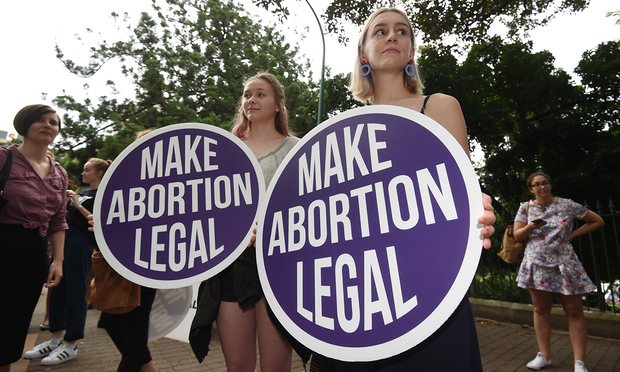
Pro-choice protesters in front of the Supreme Court in 2016. Photo via Wikipedia

For those who live in one of the 14 states with mandatory waiting periods and in-person counseling sessions, the most pressing issue is frequently related to the cost of traveling long distances to reach a clinic and paying for lodging. “I’m in the US but in my state it’s nearly impossible. The governor passed a law and now our state has barely any abortion clinics open, and the closest one to me is almost 300 miles away,” one woman wrote. “And, to get the abortion, it is done over two weeks in three to four [separate] appointments. I was just wondering if there was any way we could work something out and you could send me the pill. Please!!”

 Another woman, living in Michigan, wrote that she felt “alone and helpless.” She is disabled, she added, “only able to walk short distances” and surviving off disability payments; over a dozen abortion clinics in the state have closed in the past few years, and she worried about her ability to drive several hours to reach the nearest provider.

“Even if I could make the long drive downstate, I’d never be able to afford to stay somewhere to comply with Michigan’s 24-hour consent law,” she added. “Is there any way your organization can help? Is there any advice you may have for me? I’m feeling desperate and alone, and I know that time is of the essence. Please… is there anything you can do to help? I’m running out of options quickly, and feel like I’m simply banging against the same brick wall.”

Copious research shows that restricting access to abortion doesn’t make it any less frequent; it just makes it more likely that women will seek out unsafe, illegal methods. Despite a century of tireless fighting for reproductive justice, this is still a reality for as many as hundreds of thousands of women in America. Though abortion and contraception are no longer banned outright, conservative legislators have worked with alarming efficacy to ensure that both of these things are essentially inaccessible for the most marginalized groups in our country.

I’m feeling desperate and alone, and I know that time is of the essence. Please… is there anything you can do to help?

In April of 1923, a woman wrote to Birth Control Review, blithely referencing the routine way she had tried to terminate pregnancies on her own. “Every time I get that way, I always take everything I can to get out of it, and it never helps me any, only hurts my health,” she said. A few months later, a woman shared a similar account, saying she had tried to prevent pregnancies by using “an antiseptic douche,” but that had failed, so she began taking drugs recommended to her by a doctor to induce miscarriage: “I have been using [the drugs] since and fear it will kill me for I am getting weaker every day… I know I cannot live long, constantly taking these awful drugs.”

Several decades later, someone emailed Women on Web, describing her own regimen. “I tried taking parsley and vitamin C at 10 weeks, added dong quai and black cohosh a week later, trying an herbal abortion. It didn’t work,” she said. “I started punching myself in the stomach repeatedly for two days.” That didn’t work, either. She wondered what options she had left.

Since the dawn of the reproductive rights movement, advocates have argued that forcing unwilling women into motherhood is dehumanizing, unconscionable, and unjust. In 1923, a woman from California described the effects of this type of reproductive oppression as she witnessed them on her own mother. Once “a person of refinement and culture,” her mother, who had given birth nine times by the age of 45, had been reduced to “a human breeding machine,” she said.

This week, a conservative lawmaker in Oklahoma referred to women in similar terms, while defending a widely maligned law that would require pregnant women to obtain written permission from their sex partners before getting abortions. “I understand that they feel like that is their body,” he told the Intercept. “I’m like, hey, your body is your body and be responsible with it. But after you’re irresponsible then don’t claim, Well, I can just go and do this with another body, when you’re the host, and you invited that in.”

Even after a century of progress, politicians are still trying to push policies that only recognize pregnant women as “hosts,” as ambulatory wombs, as breeding machines. At what point will women be able to know with certainty—rather than just “feeling like”—their bodies are their own?

Source: Broadly

https://broadly.vice.com/en_us/article/letters-from-women-pleading-for-abortion-sent-in-1917-mirror-emails-sent-today

Rob Pyne braces for an unfavourable report by a parliamentary committee on his proposed changes to the Health Act

16-feb-17

The independent MP leading a push to remove criminal sanctions for abortion in Queensland says he is concerned reforms will be defeated amid opposition from key former Labor colleagues.

The Cairns MP, Rob Pyne, said he was bracing for an unfavourable report by a parliamentary committee on proposed amendments to the state Health Act, his second attempt at abortion law reform.

The report, due on Friday, would be a decisive influence on a parliamentary vote for the bill amid escalating pressure from church and anti-abortion groups that have flagged targeting pro-choice MPs at the next state election, Pyne said.

Pyne said he was “concerned a majority of MPs on the current committee”, which includes three Labor MPs, “are anti-women’s choice on abortion”.

“And I am very concerned that, with an election just around the corner, more excuses will be found by committee members and MPs to vote down my bill, just to keep their jobs, while Queensland women remain criminalised for seeking abortion healthcare.”

Queensland and New South Wales are the only two Australian states where abortion remains an offence under criminal law, except under certain circumstances.

The Liberal National party opposition, from whose MPs the bill will need votes to pass, is to consider the report before it reveals whether it will allow a conscience vote.

One of its staunchest abortion opponents, the Cleveland MP and born-again Christian Mark Robinson, was appointed to the health, communities, disability services and domestic and family violence prevention committee just three days before the report was due.

Robinson told Guardian Australia that the report was “largely done and dusted” when he joined the committee and his contribution was “minimal”.

He said Pyne’s efforts at reform had been “amateur hour”.

The committee recommended that Pyne’s previous bill to take abortion from the criminal code, which allows a woman to be sentenced to up to seven years’ jail, be voted down.

Two Labor MPs on the committee, Leanne Linard and Aaron Harper, previously declined to declare their position on that bill before their report to avoid perceptions of bias. The third, Leanne Donaldson, could not be reached for comment.

Pyne’s proposed amendments to the Health Act are an attempt to address earlier concerns. He said they were consistent with his and “women’s rights group’s assertion that abortion is an important health issue not a criminal law issue”.

They specify that only doctors can perform abortions and that doctors and nurses are under no duty to perform abortions unless a woman’s health is seriously at risk.

For terminations of foetuses older than 24 weeks, two doctors would have to agree a woman’s physical or mental health would be at greater risk if she continued the pregnancy.

The bill would mean a woman does not commit an offence by “performing, consenting to or assisting in an abortion on herself”. It would also create “safe zones” of at least 50 metres around abortion facilities.

The parliamentary inquiry into the bill drew an extraordinary 1,275 submissions, most by individuals opposed. But most professional organisations, including the Australian Medical Association and the Queensland Nurses Union, largely supported the bill.

Public debate flared after the Catholic archbishop of Brisbane, Mark Coleridge, compared late-term abortions to Nazi eugenics at an anti-abortion rally last Saturday. Coleridge later apologised for the remark.

But he also offered to “counsel” the deputy premier, Jackie Trad, a pro-choice Catholic, for whom he said “it may be more a political judgment than a moral judgment”. Trad rejected the offer, adding she “would have thought the archbishop had more important things to focus on”.

She spoke at a pro-choice rally on Thursday, calling on MPs to support the move to decriminalise abortion.

Anna McCormack, a spokeswoman for the Women’s Abortion Rights Campaign, said the vote of opposition LNP MPs whom the group had identified as “sympathetic” to reforms would be crucial. “We have concerns about the LNP ones because we think they’re under a lot of pressure to not vote according to their conscience,” she said.

“I think if the LNP ones who we believe are sympathetic are allowed to vote according to their conscience, the bill could get through – just. But if the report comes down recommending against the bills, it won’t get up. There’s no hope.”

Both Labor and the LNP previously said they would allow “conscience” votes on the issue. An LNP spokesman said despite this “all LNP members” had supported the findings of the committee which rejected Pyne’s first bill removing abortion from the criminal code. “On the second bill … the LNP will consider the report and it will be discussed by the party room after it is received,” he said.

McCormack said a defeat of abortion law reform in Queensland in 2017 would trigger “deep, deep anger and deep disappointment not just in our group but across many areas in the community”.

“Why would Queensland go this way when other states like Victoria and WA, South Australia, Tasmania have removed abortion from their crimes acts or criminal codes?”

She said her group, which formed last September to support Pyne’s push, was composed of “old women who were young in the 70s and 80s, which is when we first campaigned for abortion rights”.

“I take a sign to protest rallies that says, ‘I can’t believe I still have to protest this fucking shit’ – the old woman’s placard,” she said.

A Galaxy poll commissioned by the Australian Family Association last May found 53% of Queensland people wanted abortion laws to stay the same or be made stricter. A 2010 Newspoll commissioned by GetUp found that 72% of Queenslanders supported decriminalising abortion.

Source: The Guardian

https://www.theguardian.com/world/2017/feb/16/queensland-pro-choice-mp-fears-abortion-reform-doomed

Campaigners say women are risking prosecution by buying pills online

15-feb-17

Desperate women are thought to be turning to illegal abortion pills in rising numbers, a charity has warned.

The British Pregnancy Advisory Service (Bpas) said women were risking prosecution by using the pills to induce an abortion, but most were unaware of the risk.

Bpas, which provides abortions at its clinics across the country, obtained data from the Medicines and Healthcare products Regulatory Agency (MHRA) which shows 645 abortion pills were seized in 2015 and 2016 on their way to addresses in England, Wales, and Scotland.

The number of pills seized as part of Operation Pangea has risen from five pills in 2013 to 375 in 2016.

Bpas, which wants abortion to be decriminalised, said many women were unaware they could face prosecution and lifetime imprisonment for buying pills online to induce their own abortion.

The law states that abortions can be provided only when women meet certain requirements and two doctors approve the request.

Ann Furedi, chief executive of Bpas, said: “At Bpas, we do all that we can to make abortion services as accessible as possible. However, it is clear that for some women the barriers to clinic-based treatment feel insurmountable.

“These are women in desperate and difficult circumstances. They are not criminals deserving of life imprisonment.

“Evidence suggests that as awareness of online abortion pills is increasing, so too are the numbers of women using these methods.

“Women in these circumstances should not face criminal punishment and we should not support a legal framework which threatens just that.”

Women on Web, a not-for profit online abortion provider, sends abortion pills to countries where abortion is illegal. It will also send them to women in the UK under exceptional circumstances.

British women contacting Women on the Web show some of the reasons being given for seeking pills online.

One woman wrote: “I’ve just found out I’m pregnant and I can’t keep the baby, can you tell me if I can get the tablets from you please.

“I am in the UK but it’s impossible for me to get to a clinic due to having a disabled daughter who I can’t leave and I have no one else I can trust.

“I’m in a complete mess, clinics said I have to leave my daughter at home but I have no one else at all to have her, due to her disabilities a nursery can’t have her. I’m one week late.

“I’m in good health and have no allergies or medical conditions. Please I’m really desperate for help.”

Another said: “I live in [a rural area in England] and have no friends and the relatives I have I am not close to.

“I was hoping to have a termination in the comfort of my own home without judgmental eyes and without worrying about my husband knowing.

“I fear what would happen if he did. I have three children and my third is 11 months old. I considered an abortion when he was conceived and had a terrible pregnancy and still suffering from post natal depression.

“I will try to seek help, anonymously if possible. I’m in great need of help.”

Sophie Walker, leader of the Women’s Equality Party – which supports decriminalisation, said: “Women’s equality and wider choices depend on having control of our own bodies.

“In 2017, it should not be the case that women still have to fight for their reproductive rights and access to sexual health care.”

Source: Independent

http://www.independent.co.uk/news/uk/home-news/abortion-pill-access-online-illegal-decriminalise-woman-british-pregnancy-advisory-service-danger-a7580566.html

14-feb-17

As numerous state legislatures are looking to limit women’s reproductive rights, Arkansas just passed one of the most restrictive abortion measures in the country. A law signed last week by Republican Governor Asa Hutchinson not only outlaws dilation and evacuation abortions, but it allows a woman’s spouse or family members to sue the physician who performs such procedures for civil damages or “injunctive relief,” essentially blocking the woman from having an abortion.

In a dilation and evacuation abortion, a physician will use surgical tools to remove fetal tissue from the womb. For women who are in their second trimester, it is the most common and safe method to terminate a pregnancy. But in passing the Unborn Child Protection From Dismemberment Abortion Act, the Arkansas state legislature has effectively outlawed abortions after 14 weeks and made dilation and evacuation procedures a Class D felony—one that is punishable by up to six years in prison or a $10,000 fine.

Even more alarming, within this same legislation, a clause exists that would allow the husband of a woman seeking an abortion to block the procedure from happening. If the man is the father of the fetus, he now has the power to file a civil lawsuit for monetary damage against the physician who performed the abortion or file an injunctive relief to block the procedure from happening (a woman’s health care provider is also allowed to take similar legal action, and in the case of a minor, a young woman’s parents or legal guardians can sue). According to Representative Andy Mayberry, one of the men who introduced this latest bill governing a woman’s body, a man cannot sue a doctor for financial compensation in the case of “criminal conduct”—meaning instances of spousal rape or incest—but he is still protected under the injunctive relief clause to try to stop an abortion from happening.

“We’ve tried to account for all the worst-case scenarios,” Mayberry told The Daily Beast. But as women’s reproductive rights activists note, in planning for these “worst case scenarios,” legislators have given an alarming amount of control to a woman’s family over her care health decisions.

According to Reuters, laws banning dilation and evacuation abortions exist in Mississippi and Louisiana (similar measures in Alabama, Kansas, and Oklahoma have encountered legal challenges and have yet been carried out in full). The new Arkansas law is scheduled to go into effect as early as this spring, but already the ACLU’s Arkansas branch is planning to take the law to court—and it’s doubtful that the fight against the law will end there.

“The law puts an undue burden on a woman’s constitutional right to obtain a second-trimester abortion,” Rita Sklar, an attorney for ACLU Arkansas, told Reuters. “I think the legislature knows it and doesn’t care.”

Source: Glamour

http://www.glamour.com/story/a-husband-can-block-his-wifes-abortion-under-a-new-arkansas-law

13-feb-17

Emilee Body had heard much about the protesters outside Albury’s Englehardt Street abortion clinic. Feeling nervous as she approached it, she turned a corner and immediately saw them.

She remembered stories of women being harassed, being filmed and even being handed plastic foetal dolls as they entered the clinic.

Ms Body was stressed enough as it was, and did not want to suffer the indignity of their protests. But as her car entered the clinic’s driveway they started to approach. She locked eye contact with them and panicked.

Zipping past and parking out the back, Ms Body rushed into the building. Once inside, a doctor and nurses reassured her, apologising for the protesters outside. And they also gave her the option to reconsider her choice and leave.

Having made her decision, the procedure was performed under general anaesthetic and afterwards Ms Body went home to rest, supported by her close friends.

Four years later, the issue of abortion law reform has flared once again, with Albury MP Greg Aplin asserting: “abortion can have profound physical or psychological effects and side-effects”.

Upon hearing Mr Aplin’s words, Ms Body said she felt compelled to send a message to NSW politicians who will debate this year whether to decriminalise abortion and enforce safe access zones around clinics, therefore putting an end to the Englehardt Street protesters:

“I have no profound physical or psychological effects or side-effects,” Ms Body said.

“I made a calculated and well thought-out decision that I would never change.

“Yes, some women may experience these effects, but a lot of women won’t, and just because something can be harmful doesn’t mean it should be banned.”

And Ms Body said she is proof that not every woman who has an abortion in a controlled environment suffers long-term side-effects. Three years later, the 27-year-old gave birth to a baby boy in December 2015.

Before her abortion, she had fallen pregnant while on the pill. Her personal and financial situation was totally unsuitable to raise a baby, she said.

As politicians return to Parliament in Sydney this week, some will have in mind the findings of a Lonergan Research poll in 2015 that interviewed 1015 NSW residents about abortion.

It found 83 per cent of Liberal and National party voters supported enforcing safe access zones around clinics as Victoria has already done.

Ms Body said she wants politicians like Mr Aplin to listen to women like her.

“It wasn’t an easy decision, but if someone’s made that decision, don’t try and get in a woman’s way to change it,” she said.

Source: Herald

http://www.theherald.com.au/story/4462632/mum-speaks-out-amid-abortion-reform-fight/?cs=2452#slide=1

2-feb-17

WASHINGTON ― Dr. Yashica Robinson, a 40-year-old gynecologist in Huntsville, Alabama, experiences what she calls a “constant mental beatdown” from protesters every day as she tries to do her job.

At her private practice, Robinson provides birth control, pap smears and maternity care. She also provides abortions at a separate clinic in Huntsville. But throngs of protesters show up daily at both practices to block the entrance and harass her and her patients, including those who are visibly eight months pregnant and just coming in for an ultrasound. Robinson said the protesters sometimes touch or grab the patients, videotape and photograph them, call them “murderers” and leave “WANTED” posters on their cars plastered with photos of Robinson.

“It’s unnerving,” Robinson said. “I call when I get up to my driveway to make sure someone has the door ready for me, so I don’t have to put my head down and take my eyes off the protesters. I never know what they’re going to do.”

“I had a patient who wrecked her car trying to get into the driveway,” she recalled ― a woman in her early 20s who was just coming in for a Depo-Provera birth control shot, and who found herself having to navigate a gauntlet of protesters lining Robinson’s narrow drive. “The protesters pointed and laughed at her.”

Robinson’s patients “come in confused and shaken,” she said. “They’re like, ‘What’s going on out there?’”

The scene outside women’s health clinics has become dramatically more threatening to patients and providers since 2015, when anti-abortion activists produced a series of heavily edited videos that purported to show Planned Parenthood workers negotiating the sale of fetal body parts. The videos have been thoroughly debunked, and Planned Parenthood has been cleared of wrongdoing in multiple investigations. But the percentage of clinics reporting violence and threats by anti-abortion activists nearly doubled after the videos were released, from 19.7 percent of clinics in the first half of 2014 to 34.2 percent in the first half of 2016.

The most common types of violence and intimidation that clinics have reported include stalking, bomb threats, death threats and people blocking access to clinics. In 2015, at one Colorado Planned Parenthood facility, a man broke in and shot 12 people, killing three. He cited the alleged sale of “baby parts” as his motivation. Nearly half of clinics (49.5 percent) reported at least one incident of severe violence or harassment in 2016, such as a break-in, robbery or instance of arson or vandalism. A quarter of all facilities said they experience harassment by anti-abortion protesters on a daily basis.

“This is just not tolerable behavior in a democracy,” said Ellie Smeal, president of the Feminist Majority Foundation, a nonprofit. “This would never happen to men walking into a medical clinic.”

The FMF released a new report ahead of a nationwide protest of Planned Parenthood funding this weekend, which women’s health advocates worry will turn violent. At the “Defund PP” rally on Feb. 11, anti-abortion demonstrators are expected to protest at more than 200 Planned Parenthood health centers in 44 states.

“This weekend, Planned Parenthood is the target,” Smeal said. “The public must be aware that this is no ordinary protesting… This hostile climate at women’s health clinics and towards health care workers is accompanied by an increase in severe violence and threats.”

One of the organizers of the rally, Eric Scheidler of the Pro-Life Action League, said the concerns about violence are unwarranted.

“Of course we say on [our] website we oppose all forms of violence,” he said. “There’s a lot of hype in the media about violence at abortion clinics, but it’s in fact extremely rare. Generally speaking, the experience outside an abortion clinic is, if anything, boring.”

The Feminist Majority Foundation released a video Thursday alongside its 2016 violence report to shed light on the experience of “walking the gauntlet” to get into a women’s health clinic. Watch the video below:

11-feb-17

NEW YORK (Reuters) – Anti-abortion groups have called demonstrations at more than 200 Planned Parenthood locations throughout the United States on Saturday to urge Congress and President Donald Trump to strip the women’s health provider of federal funding.

Planned Parenthood supporters in turn have organized 150 counter-demonstrations outside politicians’ offices and government buildings.

Anti-abortion activists have said they were energized by the election of Republican Trump, who selected their long-time ally Mike Pence as vice president and nominated conservative jurist Neil Gorsuch to the U.S. Supreme Court.

On Jan. 27, tens of thousands converged on Washington for the 44th March for Life, where Pence became the most senior government official to speak in person at the annual anti-abortion rally, organizers said.

“We have the wind in our sails. The election was a real benchmark. Pro-life voters were really a key constituency and the Trump administration has taken note,” said Eric Scheidler, executive director of Pro-Life Action League, one of the main backers of Saturday’s demonstrations.

In Washington, demonstrators will meet at the Supreme Court and march to a Planned Parenthood location. Other demonstrations have been called in 45 states in cities large and small.

Planned Parenthood, a 100-year-old organization, provides birth control and other women’s health services in addition to abortion at 650 health centers, according to its website.

Its leaders say abortions rights supporters have also been energized by Trump’s election, as exemplified by the hundreds of thousands who flooded Washington a day after Trump’s inauguration in favor of women’s rights, including abortion rights.

The pro-Planned Parenthood events were organized spontaneously, without the group’s initiative, a spokeswoman said.

“All across the country, Planned Parenthood supporters are taking it upon themselves to organize in their communities on their own,” Kelley Robinson, a leader of Planned Parenthood Action Fund Support, said in a statement. “Saturday, and every day, Planned Parenthood advocates and activists show that they refuse to be intimidated and they won’t back down.”

Although U.S. law prohibits the use of federal funds for abortions, anti-abortion activists say funding for other purposes acts to subsidize abortions.

Planned Parenthood receives federal funds from Medicaid reimbursements and Title X, a federal program that supports family planning and preventive health services.

Planned Parenthood says cutting off those funds would make it more difficult for women to get birth control, Pap smears or testing for sexually transmitted diseases.

Source: Markets Insider

http://markets.businessinsider.com/news/stocks/r-activists-on-both-sides-of-abortion-issue-to-protest-across-us-2017-2-1001742648

27-october-post

(CNN)A new Arkansas law will let a husband sue a doctor to stop his wife from getting a particular type of abortion. And it makes no exception for cases of spousal rape.

The law, called the Arkansas Unborn Child Protection From Dismemberment Abortion Act, was passed and signed by Gov. Asa Hutchinson, and goes into effect later this year. It prohibits dismemberment abortion, the most common procedure used in second-trimester abortions.
A clause in the law states that the husband of a woman getting the abortion can sue the doctor to stop his wife’s abortion. The husband has to be the father of the child. And because there’s no exemption in the law for rape or incest, a woman’s rapist could theoretically file suit to stop the abortion.
The ACLU of Arkansas claims the law is unconstitutional and plans to challenge it in court before it goes into effect.
One Arkansas lawmaker said there wasn’t much debate about those parts of the law.
“It was not something that was talked about on the Senate floor,” state Sen. Joyce Elliott told CNN affiliate KARK. “If we cannot make headway on something like an exception for rape and incest, I think it just felt kind of fruitless to make some sense out of the rest of what was in the bill.”
Elliott added, “They don’t see the outrage in constantly putting the thumb on women to dictate what they can do and not do.”
But another lawmaker believes husbands should have a voice in these decisions.
“I think a woman does have control over her own body, but when you have created a life, you created a life with someone else,” said state Sen. Missy Irvin.
Kansas and Oklahoma passed similar abortion laws, which are tied up in the courts, according to CNN affiliate KFSM.
A few states, with conservative lawmakers emboldened by President Donald Trump’s election, have passed strict new abortion laws, including Ohio, which passed a measure banning abortion after 20 weeks of pregnancy.
Source: CNN