17-jan-17

“No man has the right to give his opinion on abortion,” controversial PN candidate Salvu Mallia said on INDEPTH.

Interviewed by The Malta Independent news editor Rachel Attard, Mr Mallia said that, “I should have never pronounced myself against abortion because I am not a woman. The issue of abortion is an issue that only women should speak about.”

Mr Mallia said that abortion is an issue that concerns the woman and the foetus, and the man should have no say in the matter or interfere in the decision. Mr Mallia said that women should stop allowing men to get involved in what is a woman’s right.

Salvu Mallia was confirmed as a PN candidate for the upcoming general elections during a meeting of the Executive Council that was held last October. He will contest the 2nd and 12th electoral districts.

http://www.independent.com.mt/articles/2017-01-17/blogs-opinions/INDEPTH-Salvu-Mallia-does-not-regret-comparing-Muscat-to-Hitler-6736169001

Source: The Independent MT

16-jan-17

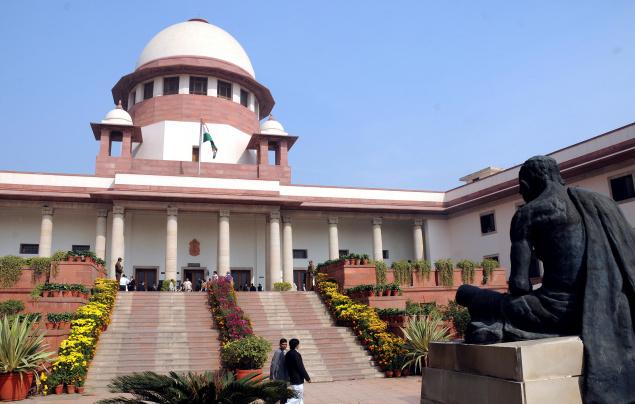
MUMBAI: The Supreme Court permitted a 22-year-old woman in her 24th week of pregnancy to undergo termination of pregnancy after medical reports found the foetus to be without a skull.

The woman had found out about the defect in the 21st week of gestation when she had a sonography done at a private clinic in the western suburbs of Mumbai.

Under the Medical Termination of Pregnancy Act, 1971, abortion is legal in India only up to 20 weeks of pregnancy provided it involves a risk to the life of the pregnant woman or poses a threat of grave injury to physical or mental health, or involves a substantial risk that if the child were born it would suffer from such physical or mental abnormalities.

Recently, in a rare judgment, the Supreme Court permitted a rape survivor to terminate her pregnancy at 24 weeks.

The Supreme Court had asked the same committee of doctors from KEM Hospital that had given its opinion in the rape survivor’s case in July 2016, to look into the current case.

An amendment drafted in 2014 to a 1971 Act sought to increase the abortion time limit from 20 weeks to 24 weeks. Additionally, the draft bill also recommends that termination be allowed without a time limit in cases where doctors detect a foetal anomaly.

http://www.newindianexpress.com/nation/2017/jan/16/supreme-court-permits-termination-of-pregnancy-at-24-weeks-1560127.html

Source: New Indian Expres

14-jan-17

A move to legalise access to abortion for women who experience fatal foetal abnormalities in Northern Ireland will not be considered because of the collapse of the assembly, the Stormont health minister has said.

Sinn Fein has said it will prioritise increasing abortion access and other equality issues if it is in talks with the DUP after a likely election this year.

Abortion is banned in Northern Ireland in all but a small number of circumstances. In December 2015, the Belfast high court ruled that denying access to the procedure in cases of rape, incest and fatal foetal abnormalities was a breach of human rights.

David Ford, who was justice minister at the time, ruled out legislating for terminations for victims of sexual crime but tried to progress a bill for women who experienced fatal foetal abnormalities. An expert group was also established last year to consider the possible change in the law.

If the assembly is dissolved ministers will no longer be able to consider the possible change in the law from the expert commission or Mr Ford’s bill.

“I indicated previously that I would work with the justice minister to bring forward proposals in the new year for consideration by the [ministerial] executive, taking account of the findings of the fatal foetal abnormality working group,” Michelle O’Neill, the Sinn Fein MLA and health minister, said.

“The current situation is that there is no longer an executive in place to consider those proposals, as a result of the fallout over the renewable heat incentive controversy.”

Unlike the Republic, abortion rights could be extended in Northern Ireland through a straightforward legal change without the need for a referendum.

A Sinn Fein spokesman yesterday told The Times that the party would push for legislative changes if it is in talks to form the next Northern Irish government.

The party had said last week that Mr McGuinness’s resignation was partly due to the DUP’s reluctance to progress issues such as abortion and marriage equality.

“The apparent collapse of the executive means that there is now no end in sight to the trauma inflicted on women with fatal foetal diagnoses of being forced to travel to England to seek lawful abortion,” Patrick Corrigan, Amnesty International’s Northern Ireland programme director, said.

“Whoever is in ministerial office after the election must address this disgraceful situation and also that of other women left with a choice between boarding a plane or facing prosecution simply for seeking healthcare available on the NHS in every other part of the UK.”

Northern Ireland has a vocal anti-abortion lobby and Stormont has previously rejected calls to relax abortion laws. Jim Wells, the former DUP health minister, welcomed the delay in considering new abortion legislation.

“The minister is saying that she cannot take this issue forward because there is currently no executive to refer it to,” he said. “If the executive returns then the issue may come back on to the table as it were. I believe that there is no need whatsoever for any change in the current law on abortion in Northern Ireland.”

The 1967 UK Abortion Act effectively made the procedure available to any woman who needed it after a spate of deaths from backstreet terminations. The act was never extended to Northern Ireland, which is still regulated under the 1861 Offences Against the Person Act.

The Republic had operated under the same law until the 2013 Protection of Life During Pregnancy Act was passed which clarified how suicidal women could access a termination.

Performing the procedure or procuring an abortion is punishable by a criminal conviction in both jurisdictions.

Three women have appeared before the courts in Northern Ireland in the last year facing charges relating to ordering abortion pills online.

The most recent case involves a 21-year-old woman and a 22-year-old man. This week, Belfast high court was told that the woman accused of taking drugs to induce a miscarriage would be at heightened risk of suicide if she was identified.

http://www.thetimes.co.uk/edition/ireland/abortion-rights-on-hold-in-stormont-turmoil-ztpp6jk7t

Source: The Times

7-nov

A federal appeals court has upheld a New Hampshire law allowing buffer zones around abortion clinics that supporters say protect women from harassment.

The law allowing buffer zones up to 25 feet has been on New Hampshire’s books since 2014, but no clinic has set up a buffer zone.

The 1st U.S. Circuit Court of Appeals in Boston said in its Wednesday ruling that anti-abortion activists had no standing to challenge the constitutionality of the law because with no buffer zones in place, their protests have not been affected. It said the case was premature.

“The act is not currently preventing the plaintiffs from engaging in expressive activities in whatever public areas they please,” the court wrote.

The court also rejected allegations that the challenge was valid based on fears that protesters could be prosecuted someday if the zones are set up. The ruling called the arguments “overly speculative allegations of injury.”

While supporters say the zones protect women, opponents say they infringe on their free speech rights. An attorney for the plaintiffs said Thursday the group would decide whether to appeal to the Supreme Court.

“An unconstitutional law shouldn’t remain on the books just because abortionists haven’t taken advantage of the power the law gives them to silence speech,” said attorney Michael Tierney.

The Supreme Court struck down a similar law in Massachusetts shortly after New Hampshire’s law took effect. But unlike the Massachusetts law, New Hampshire’s law does not mandate the buffer zones.

Jennifer Frizzell, vice president for public policy at Planned Parenthood New Hampshire Action Fund, called the ruling good news for women seeking reproductive health care in New Hampshire. She said she hopes lawmakers considering proposals to repeal the law will keep it in mind.

“No one should face violence, harassment, or threats when accessing safe, legal health care. New Hampshire women deserve safe passage when entering or exiting reproductive health care facilities,” she said. “Yesterday’s decision preserves the thoughtful law crafted by the (New Hampshire) legislature ….”

Source: ASSOCIATED PRESS

http://abcnews.go.com/Health/wireStory/court-upholds-states-law-buffers-abortion-clinics-44739983


Court rulings in several states have created a patchwork when it comes to what jail and prison administrators are required to do when a woman inmate requests an abortion. Here’s a look at four of the cases that presented that question. Video by Stacey Barchenger / The Tennessean. Wochit

  • A woman has filed a federal lawsuit in Nashville against Maury County Sheriff Bucky Rowland.
  • The woman says she was denied an abortion while in custody, in violation of her constitutional rights.
  • She had the child in April and wants a judge to order the sheriff to pay damages of $1.5 million.
  • Courts have generally recognized an inmate’s right to an abortion, but there is still some gray area.

12-jan-17

A Tennessee sheriff is named in a civil lawsuit after he denied a 29-year-old inmate access to an abortion, saying the woman’s life was not in danger and her pregnancy was not the result of a crime, according to newly filed court papers.

The woman, Kei’Choura Cathey, was not released until it was too late for the procedure and had the child in April, the court filing says. Her lawsuit alleges Maury County Sheriff Bucky Rowland illegally denied her access to an abortion, which the nation’s top court has protected as a woman’s right for decades.

The case, and others around the country, pose questions about what obligations top law enforcement officers have when women who are incarcerated request abortions.

“Courts have generally said prisoners retain their right to access abortion even if they’re incarcerated,” said Brigitte Amiri, senior staff attorney for the ACLU’s Reproductive Freedom Project.

But there’s still some gray area, including on questions of who has to pay and whether a judge’s order is necessary, because each case is different and presents different circumstances for a judge to consider. And the high court has not weighed in.

“The U.S. Supreme Court has not spoken on this issue, so we don’t have a definitive answer on some of these questions,” Amiri said. “Because different cases raise different facts, it’s a little bit of a patchwork.”

More than 10 years ago, in a controversial Knoxville case, a federal judge allowed an inmate temporary release to get an abortion, saying the woman had a constitutional right to the procedure. And in 2008 the nation’s top court let stand a ruling out of Arizona that overturned a county policy banning off-site elective procedures.

Amiri and the ACLU brought that legal challenge in Arizona. The national civil rights organization is not involved in the pending case against Maury County.

A highly publicized case in 2015 in Alabama detailed a sheriff’s refusal to allow a 29-year-old inmate to have the procedure, saying she needed a court order. The ensuing legal battle ended in federal court when the woman decided to keep the child, according to media reports.

Cathey, also 29, was arrested in July 2015 on robbery and murder conspiracy charges and found out weeks later she was pregnant, according to the lawsuit. Columbia police records say she and three others lured Javontay Garrett to a home to steal drugs and money and then shot him. Garrett lived despite the head wound, according to Brent Cooper, the district attorney in Maury and three other counties.

Weeks later Cathey told Rowland, via her lawyer, that she wanted to have an abortion, but Rowland responded that he would not provide funding or transportation for the procedure, the lawsuit states. Rowland said that would not happen unless the abortion was “medically necessary to save the mother’s life or the pregnancy was the result of rape or incest,” according to the lawsuit.

The sheriff did not return an email and several calls from The Tennessean seeking comment, and the county has not yet responded to the lawsuit. Cathey’s lawyer, Lee Brooks of Columbia, also did not respond to calls or an email.

Brooks says in the lawsuit he attempted to get a lower bond, but by the time Cathey was able to post that amount it was January 2016 and too late to have the procedure. The lawsuit does not say whether Cathey also asked a judge to allow her release; a court clerk said no such motion was in the court file.

The child was born in April.

The case was filed Dec. 29 in federal court in Nashville. It argues that the sheriff’s denial, and his failure to have department policies that allowed access to abortions, inflicted cruel and unusual punishment on Cathey in violation of her Eighth Amendment rights. It also says Cathey’s civil rights and 14th Amendment rights to due process were violated.

Now, she wants a judge to order the sheriff and Maury County to pay her $1.5 million in damages.

http://www.tennessean.com/story/news/2017/01/10/woman-denied-abortion-while-jail-sues-tennessee-sheriff/96122846/

Source: The Tennessean

24-dec

She wasn’t trying to start a revolution. But it was September 2015, the House had just voted to defund Planned Parenthood — and Amelia Bonow found the one-sided conversation exhausting.

“Women like myself were feeling so incredibly angry and disillusioned and helpless about the way that our rights were being taken away from us,” says Bonow, a Seattle bartender and grad student at the time. “It was clear to me I was not using the full range of my voice as a feminist and a woman who’d had an abortion.”

On a whim, she made a Facebook post stating that she’d had an abortion and was not only grateful for it but happy about it. “The narrative of those working to defund Planned Parenthood,” she wrote, “relies on the assumption that abortion is still something to be whispered about.”

Her friend, popular Jezebel writer Lindy West, tweeted a screenshot of the post to her 60,000 followers with the hashtag #ShoutYourAbortion — and a movement was born. Within a few days, the hashtag was used 250,000 times as women all over the world tweeted about their own abortion experiences: the good, the bad, and the unapologetic.

There’s the mother of five who didn’t want more kids. The women whose contraceptives failed or for whom Plan B failed. Those who were raped or in abusive relationships. Women with cancer or whose fetuses had fatal abnormalities. Or who simply didn’t want to have a baby.

“It was an organic explosion of ‘We’re not going to be quiet about this anymore,’” says Bonow, 32, pointing out that most Americans identify as pro-choice. “The anti-choice movement has really capitalized on our silence. And I don’t think they can get away with legislating this issue in a way that is so profoundly out of touch with the lives, values, and experiences of mainstream Americans if we’re actually talking about our abortions.”

Of course, the brazenness of the movement enraged opponents. “There were a lot of people saying, ‘How dare you? You should be ashamed of yourselves,’” says Bonow, who moved out of her apartment for a while after receiving personal threats.

But she makes no effort to soft-pedal her stance — and doesn’t much care how others may judge her. In a piece she wrote for Salon.com, she talks about stealing a pregnancy test from Walgreen’s and getting high on pills before her abortion (“because I like getting high, not because I was scared”).

Does she worry that her brash tone might play right into her opponents’ narrative that abortion is a too-easy out for irresponsible — even immoral — people?

“I’m not trying to shock anyone or make anyone uncomfortable,” says Bonow, who insists that she’s merely a conversation starter, not the new voice of the abortion-rights movement. “I’m just helping women talk about their lives, and there are as many kinds of abortion stories as there are individuals in this world. But my experience is well within the range of a normal experience — and we’ve never been told that’s ok. It seems shocking because we’ve never heard a woman talk about her abortion at all, let alone be casual or flippant about it.”

Bonow hopes to reach out beyond the coasts and urban areas to women in red states who are ready to share their abortion stories — without having to apologize for it, finally.

“Abortion is not a ‘necessary evil,’” she says. “It’s a positive component of a society helping women live their best lives. And we can’t fight against what’s being lobbed at us by saying we’re sorry all the time.”

Amelia Bonow will speak on Wednesday, January 18, at the New Vic (33 W. Victoria St.) at 6 p.m. as part of the Santa Barbara Pro-Choice Coalition’s celebration of the anniversary of Roe v. Wade.

http://www.independent.com/news/2017/jan/11/shout-your-abortion/

Source: Independent

10-jan-17

The Canadian judge also said that children could be at risk

Last week, a Canadian judge banned an anti-abortion group from airing graphic ads on transit buses in the city of Grande Prairie, Alberta.

The proposed advertisement in question displays images of fetuses and reads, “Abortion kills children. End the killing.” In the ruling, Judge C. S. Anderson explained that the city’s decision was made to protect women and children who could be negatively affected by witnessing the public advertisement.

“They may not be familiar with the word abortion, but they can read and understand that ‘something’ kills children,” the judge wrote in the decision, according to the Canadian Press. “Expression of this kind may lead to emotional responses from the various people who make use of public transit and other users of the road, creating a hostile and uncomfortable environment.”

The judge argues that the ads can potentially cause psychological harm to women who have had abortions or are thinking about having one.

Joyce Arthur of the Abortion Rights Coalition of Canada told the news agency that she believes the ruling will inspire communities to reject ads that carry the potential of confusing and instilling fear in children.

Before the ruling, an anti-abortion group called the Canadian Center for Bioethical Reform appealed the city’s decision to decline running the ads. Now, they’re criticizing the judge’s decision.

“If government can tell its citizens what’s upsetting and what isn’t upsetting in their speech, then democracy is threatened and, indeed, progress is threatened,” legal counsel for the group told reporters. That might sound like a nice argument, but progress is actually threatened when women can’t go out in public without being confronted and criticized for the choices they make about their reproductive health.”

http://www.independent.co.uk/news/world/americas/canada-judge-bans-anti-abortion-ads-transit-buses-psychological-harm-to-women-a7518471.html

Source: The Independent UK

9-jan-17

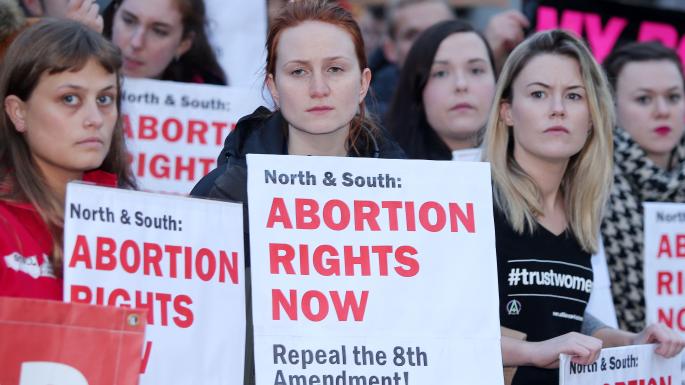
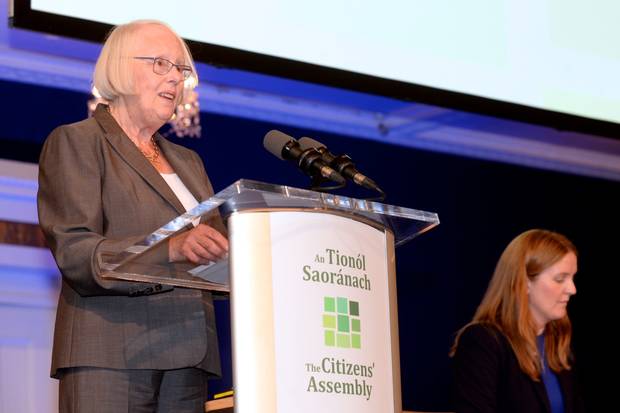
The Citizens Assembly appears to be leaning towards a change in Ireland’s abortion laws.

The chair of the Assembly said a “heavy burden” had been placed on the 99 volunteers as they discuss the matter.

Ms Justice Mary Laffoy said the group would sit for an extra weekend due to the complexity of the issue.

The Assembly’s work is now expected to be completed in mid-April. It will then feed back into the Oireachtas for further direction.

It was envisaged the highly divisive issue would be explored over four weekend sessions of the Assembly.

But at the close of the January meeting in Malahide Ms Justice Laffoy said it had agreed to timetable an extra weekend.

Mental

The Assembly, which is hearing evidence in public sessions from a wide range of experts and interest groups, has been deluged with more than 13,500 submissions on the matter.

During this weekend’s meeting, it appeared the Citizens Assembly is leaning towards change in the abortion laws.

One member said her table felt Ireland’s abortion legislation “was not fit for purpose”.Another spoke of mental health issues, feeling the Eighth Amendment was “too restrictive, degrading, prohibitive and inhumane”. Another said the amendment should be repealed.

The 99 Assembly members were chosen at random from across Ireland and their views on abortion were not known in advance.

One said the constitution “should continue to represent the rights of the unborn” while others said “clarity was needed” to direct GPs and so that their personal beliefs did not take precedence.

Others wanted to know more about the consequences of repealing the Eighth Amendment.

Those opposing abortion in Ireland said they were concerned about the prevalence in Iceland of the termination of foetuses with Down syndrome.

The Assembly heard no baby had been born with Down syndrome in Iceland for the past four years since DNA tests had been widely introduced for pregnant women.

But the overall tone of the viewpoints expressed will concern the Pro Life Campaign, which said the Assembly was “given an impossible task by the Government from the outset”.

Nonsense

“It is nonsensical to expect us to consider 13,000 submissions over a weekend or two, then report back to the Oireachtas with well argued and carefully considered recommendations. It won’t happen,” said Assembly spokesperson Cora Sherlock.

Ms Justice Laffoy later announced that Assembly meetings would be extended. She spoke after a private discussion was held with members.

“We imposed a heavy burden on the members to get their heads round what we were putting before them… all we could do is a preliminary view of what the members responded to the questions.”

Among the questions put to the group were whether Ireland now needed to regulate abortion, whether rules and standards would have to be adopted, and how would regulation be effected.

Ms Justice Laffoy said, although the assembly meetings would be extended, “it was important to note this does not affect my previous commitment to complete the work in respect of the Eighth Amendment within the first half of 2017”.

“I am determined to deal swiftly and comprehensively with this matter,” she said.

In Ireland, a pregnancy can be terminated under the Protection Of Life During Pregnancy Act if there is a risk to a woman’s life, including suicide.

The procedure can involve a medical or surgical termination or an early delivery by induction or Caesarean-section.

Figures from the Health Service Executive showed 26 terminations were carried out under the legislation in 2014 and the same number again in 2015. In both years, 14 arose from a risk to the life of the mother from physical illness, three in relation to suicide and nine following emergencies arising from physical illness.

http://www.herald.ie/news/assembly-needs-more-time-as-it-leans-towards-change-in-abortion-law-35350792.html

Source: Herald IE

8-jan-17

A French pharmaceutical company will apply for FDA approval to make a progestin contraceptive pill available over the counter in the US. It’s about time.

Over-the-counter birth control is very likely to become a reality in the United States, Vox has learned. It will be several years, at least, before the Food and Drug Administration actually approves an oral contraceptive pill for use without a prescription — but the first steps of the process are underway.

The best way to prevent unwanted pregnancy is to make it as easy as possible for women to access birth control. But in most states, women can only get hormonal contraception with a prescription from a doctor — which requires time and money for doctors’ visits that some women just don’t have. And since oral contraceptive pills are incredibly well-studied and incredibly safe, many advocates and experts think it’s time to make them available over the counter without a prescription.

The American College of Obstetricians and Gynecologists, the American Medical Association, and the American Academy of Family Physicians agree that oral contraceptives are appropriate for over-the-counter use. The idea even has bipartisan support in Congress, although there are sharp disagreements over issues like whether and how insurance should pay for it.

The problem with making over-the-counter birth control a reality hasn’t been evidence, or even necessarily politics. The problem has been finding a pharmaceutical company that is actually willing to go through the long slog of getting one of its own drugs approved by the FDA for over-the-counter use.

But now that company has been found. HRA Pharma in Paris is partnering with advocates and experts from Ibis Reproductive Health, an international nonprofit research organization for reproductive health, to start the process of bringing an over-the-counter oral contraceptive to the US market.

“At HRA, we are proud of our pioneering work to expand access to contraception for millions of women,” the company told Vox in a statement. “Oral contraceptives are some of the best-studied medicines on the market today and enjoy longstanding support from medical and public health experts.”

Ibis president Kelly Blanchard told Vox that she doesn’t want to speculate on how long it will take to bring the pill to market, and that the exact name or chemical composition of the pill isn’t public yet. But their aim is to submit an application to the FDA “within a few years,” she said, and some pieces of the application and research are already underway.

The first OTC pill will be progestin-only, not combined estrogen and progestin

There are two major types of oral contraceptives, progestin-only and combined pills that contain both progestin and estrogen. Ibis and HRA plan to seek FDA approval for a progestin-only pill.

Progestin-only pills present the fewest barriers for the broadest population, Blanchard said. Both types of pills are equally effective, but combined pills with estrogen cause potential problems for women who smoke or have high blood pressure, for instance, that progestin-only pills don’t.

The other benefit is that emergency contraception, which is already FDA-approved, is also a progestin pill. That means it will probably be easier to get the progestin-only oral contraceptives approved.

But Blanchard said that after the first OTC pill is approved, it shouldn’t be difficult to get other forms of birth control approved, too. That’s important so that women can have more than one over-the-counter option, since not every pill or every birth control method is right for every woman.

What about the politics of it all?

While it’s true that OTC birth control is a bipartisan idea, there’s a bit of a catch.

A major legacy of the Affordable Care Act (ACA) was making health insurance cover contraception at no additional cost to women. Not making women pay extra on top of their insurance premiums makes birth control much more accessible.

But Republicans, of course, say they want to repeal the ACA, and the birth control benefit along with it. Republicans proposed legislation in 2015 to speed up the FDA’s over-the-counter approval process for contraception — but Democrats and women’s health advocates criticized that bill as a cynical ploy to undermine the ACA while only appearing to support birth control and women’s health.

That bill would have imposed an 18-and-over age restriction, which Blanchard said was completely unnecessary; women’s health advocates have already had a similar fight with the FDA over age restrictions for emergency contraception (which is even more politicized than regular birth control because of the false belief that it can cause abortion).

“Unfortunately, it seems that no matter what you do around birth control in the US, there is going to be some kind of political backlash,” said Krishna Upadhya, an assistant professor at the Johns Hopkins University School of Medicine and a member of the Oral Contraceptives Over-the-Counter Working Group, which Ibis convened in 2004 to study and advocate for OTC birth control. “But I actually think this is one of the great reasons to support having over-the-counter access,” she added.

When women don’t have to go through doctors or pharmacies to get birth control, they are less subject to the whims of regulation changes, religiously objecting pharmacists, or other potential hassles and headaches. And the FDA’s decision-making process is based on evidence, not partisanship.

As for whether Trump’s appointees could cause political problems for approving over-the-counter contraception, Blanchard said she hopes that the FDA “will follow their process and judge it on its merits. And we think the merits are strong.”

http://www.vox.com/2016/12/30/14120874/birth-control-over-the-counter-fda-ibis-hra-pharma

Source: Vox


7-jan-17

On Saturday, a United States district judge ruled that doctors may turn away women who have had abortions and transgender patients on the basis of religious freedom.

In his order, Judge Reed O’Connor argued laws that would otherwise forbid gender-based discrimination require doctors “to remove the categorical exclusion of transitions and abortions (a condition they assert is a reflection of their religious beliefs and an exercise of their religion) and conduct an individualized assessment of every request for those procedures.” In other words, doctors would have to argue on an individual basis their refusal of a patient.

This requirement, O’Connor said, “imposes a burden” on doctors’ ability to exercise their religion.

O’Connor cited 2014’s Burwell v. Hobby Lobby ruling, which allowed family-owned corporations to refuse insurance coverage for birth control under the Affordable Care Act if it went against their religious beliefs.

At the time, the New York Times predicted the 5-4 Supreme Court decision would “[open] the door to many challenges from corporations over laws that they claim violate their religious liberty.” And, given O’Connor’s interpretation of the decision, it seems the outlet was right.

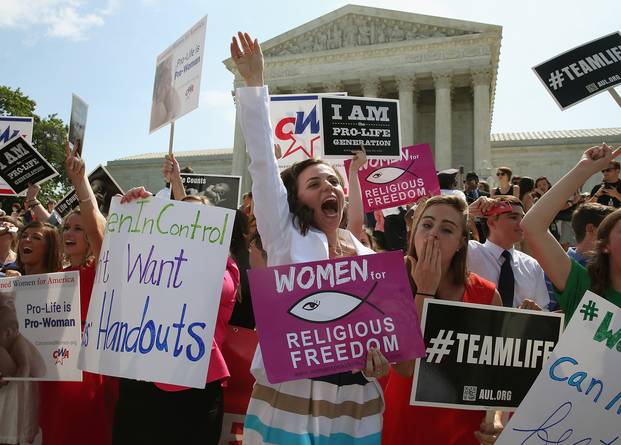
Anti-abortion activists celebrate the Supreme Court’s Burwell v. Hobby Lobby ruling in June 2014.Source: Mark Wilson/Getty Images

Slate‘s Mark Joseph Stern called O’Connor’s ruling “an extreme extension of the dubious logic” behind Burwell v. Hobby Lobby, as it flouts the nondiscriminatory guidelines of the Affordable Care Act and the Department of Health and Human Services.

Whereas they both include discrimination based on “gender identity” and “termination of pregnancy” under the umbrella of sex discrimination, O’Connor’s ruling only acknowledges a more rudimentary definition of gender discrimination — “hostility against a man or woman for being a man or a woman,” Stern wrote.

O’Connor also justified his ruling by claiming that individual doctors’ refusal to treat trans patients or women who have had abortions does not limit their access to health care and coverage. He argued that the government doesn’t seem to be too concerned about specifically trans people’s access to health care anyway.

The government’s own health insurance programs, Medicare and Medicaid, do not mandate coverage for transition surgeries; the military’s health insurance program, TRICARE, specifically excludes coverage for transition surgeries,” O’Connor wrote in his judgment.

O’Connor’s ruling, though, will only continue to limit options for trans people and add fuel to the fire in terms of punishing women for their reproductive choices — objectives conservatives have been steadily working toward with the trans bathroom bill in North Carolina and a number of anti-abortion laws in other states.

With his ruling, O’Connor paved the way for even more discrimination on the grounds of religious freedom.

https://mic.com/articles/164234/judge-rules-doctors-can-refuse-trans-patients-and-women-who-have-had-abortions?utm_source=dailydot&utm_medium=social&utm_campaign=partner#.XSbeUAhgJ

Source: Mic