24-dec

Washington D.C. [USA], Dec. 24 (ANI): Abortion care in the UK is ‘heading towards a crisis’ and reformation of the law is needed to remove stigma, encourage doctors to provide terminations and improve equitable access to excellent, modern abortion services, says a new study.

The study was published in the journal of Family Planning and Reproductive Health Care.

“Among the challenges women seeking abortion face include inequitable access, a lack of trained staff, stigmatisation and a culture of exceptionalism,” said a researcher Dr Sandy Goldbeck-Wood from Cambridge University Hospitals.

The law is, therefore, widely seen by clinicians as “hypocritical and anachronistic,” explains Dr Goldbeck-Wood.

Organisations calling for the law to be reformed include the British Pregnancy Advisory Service, the Royal College of Nursing, the Royal College of Midwives and other women’s health organisations.

And if the law is to be reformed, says Dr Goldbeck-Wood, there will be a strong need for debate which is respectful and acknowledges the ethical complexity in this sensitive area of health care.

Another problem is that abortion care has become artificially separated from the rest of reproductive health care, she adds.

Trainees in obstetrics and gynaecology – among them the potential service providers of the future – have too little opportunity to benefit from the learning environment that abortion care offers.

The lead study author Dr Louise Keogh from the University of Melbourne assessed the decriminalisation of abortion in the Victoria state of Australia in 2008.

The findings indicated that a change in the law has empowered women and increased clarity and safety for clinicians, but has failed to address stigma, access to services and workforce sustainability.

“Removal of specific criminal prohibitions against abortion should not be seen as a panacea, even though it is important to remove criminal law prohibitions and to establish abortion care as a health issue,” said another researcher Sally Sheldon from Kent University in the London.

Much more work is needed to remove stigma, encourage doctors to provide terminations and improve “equitable access to excellent, modern abortion services,” she concludes. (ANI)

http://www.sanjosesun.com/index.php/sid/250427433

Souce: San Jose Sun

7-nov

An Illinois judge has suspended a state requirement that health care providers who oppose abortion must give information or referrals to patients seeking the procedure.

Winnebago County Judge Eugene Doherty granted an injunction Tuesday in a lawsuit brought by medical providers who oppose abortion, saying they “raised a fair question as to whether their right to be free from government compelled speech is violated.” The ruling applies to northern Illinois clinics that brought the lawsuit, including Aid for Women, which has centers in Chicago, Cicero and Des Plaines. The injunction stands until the case is decided or there’s a further court order. Doherty has said he anticipates the case would be appealed regardless of how he ruled.

The group of clinics filed the lawsuit against Republican Gov. Bruce Rauner and the secretary of the Illinois Department of Financial and Profession Regulation in August after a state law was amended in July to include the new requirements. The amended law was slated to take effect on Jan. 1.

The medical providers asked Doherty to prevent the state from penalizing doctors and medical staff who cite objection to abortion as the reason for not providing such information or referrals.

The group’s attorney, Matt Bowman, commended the judge’s ruling and called it a “victory for free speech and the freedom of conscience.” Bowman has noted that the punishment for not providing information about abortion can result in a fine of $10,000 or revocation of a health care provider’s medical license. He said such punishment “chills our speech.”

Terry Horstman, a spokesman for the Illinois Department of Financial and Professional Regulation, said the state could not comment on pending litigation.

Officials with the Illinois attorney general have said the statute is triggered only when a patient asks for information and that the law was amended to ensure a patient’s rights are not violated because of someone else’s religious objections.

Under the amended law, patients who ask for and aren’t provided with information or a pamphlet on abortion may file a complaint with the Department of Financial and Professional Regulation. A complaint must be filed with the department before it can investigate a doctor or clinic.

http://abcnews.go.com/US/wireStory/judge-medical-providers-give-info-abortion-44326321

Source: ABC News

22-dec

In an online survey, 39 percent of 2,000 self-identified Donald Trump voters reported that they thought women should be punished for seeking abortions if the procedure is ever banned in the U.S. A full 60 percent of those polled said abortion should be illegal; 18 percent of all the poll’s Trump voters said it should be illegal without exceptions for rape, incest, or to save a pregnant woman’s life.

The poll, conducted by the Glover Park Group and Morning Consult earlier this month, indicates that a large chunk of Trump voters may take a harder-line stance on legal abortion than the mainstream anti-abortion movement would have laypeople believe.

During his presidential campaign, Trump said that there should be “some form of punishment” for women who obtain an abortion in his ideal America, where abortion is outlawed. He quickly rolled back that statement after learning that most anti-abortion politicians and advocacy groups only publicly endorse punishments for abortion providers, not patients. (For some truly inscrutable reason, punishing women for seeking health care doesn’t play well with the electorate. Weird!) Trump contended that he had meant women who get abortions punish themselves.

But anything more than a cursory look at mainstream abortion policies in the U.S. will reveal and underlying ethos of punishment for women. Anti-choice legislators pass laws requiring women to listen to state-sponsored misinformation and wait days between requesting an abortion and getting one, revealing a fundamental mistrust of women’s capacity to make their own decisions. Laws in many states make women travel to clinics more than 100 miles away for multiple appointments, separated by days, costing them unnecessary time and money. Restrictions on when women can get abortions force some women to carry to term fetuses with no chance of surviving outside the womb. Women are charged with felonies and incarcerated in the U.S. for trying to induce abortions on their own.

The co-sponsor of a recent Ohio bill that would have banned all abortions after six weeks, before many women know they’re pregnant, said the bill would “give people the incentive to be more responsible so we reduce unwanted pregnancies.” Here’s another way to describe that incentive: forced birth as punishment.

It seems only logical that if abortion is truly a murderous crime, a woman who pays someone for that crime should be punished. That’s an understandably disturbing notion for many people, especially women, making it a politically unpopular position. So, anti-abortion legislators and activists try to obscure their logical inconsistency with paternalistic claims that women who seek abortions are “victims” of abortion providers. This gives me a warped, horrified measure of respect for a radical Florida group that’s trying to get abortion classified as first-degree murder, with the potential for jail time or even the death penalty for women and their doctors. If you’re going to try to convince one-issue abortion voters that the procedure is murder and it must be stopped at all costs, at least be honest about the sadistic end where that logic leads.

http://www.slate.com/blogs/xx_factor/2016/12/20/poll_women_should_be_punished_for_abortions_say_39_percent_of_trump_voters.html

Source: The Slate

21-dec

Challenges to Roe v Wade presage battles to come in the Trump era

DONALD TRUMP was once a staunch supporter of abortion rights, declaring in 1999 that he was “pro-choice in every respect”. But Mr Trump campaigned for president as an opponent of Roe v Wade, the Supreme Court’s abortion-rights ruling from 1973. (He had a change of heart when he observed that a child of a friend who “was going to be aborted” was instead brought to term and went on to become a “total superstar, a great, great child”.) In post-election interviews, the president-elect has repeated promises to name pro-life justices to the Supreme Court, starting with a replacement for Antonin Scalia, the justice who died in February. After a couple of nominations, Mr Trump said during a debate in October, Roe will “automatically” be overturned and the question of abortion rights will return to the states.

In recent weeks, several states have signalled how they would handle the matter if the nationwide constitutional standard were to disappear. There is little doubt that many states would quickly criminalise abortion. Fresh from a loss in Whole Woman’s Health v Hellerstedt, a ruling from June that struck down the state’s clinic regulations as thinly disguised attempts to limit abortion access, Texas, for one, would jump at the chance. In the meantime, the Lone Star state has passed a symbolic measure to announce its displeasure toward women who exercise their constitutional right.

On December 19th, the same day the electoral college meets to officially elect Mr Trump as the 45th president, new rules go into effect in Texas. The change, an ostensibly innocuous tweak of the “definition, treatment and disposition of special waste from health-care related facilities”, will require fetal remains from abortions and miscarriages to be interred. No more disposing of the tissue in sanitary landfills, the destination of all other biological waste from hospitals and clinics. The Texas Department of State Health Services will now require fetal remains to be buried.

The tissue-burial idea was the brainchild of Greg Abbott, the Republican governor of Texas. Days after the Supreme Court scolded Texas for cynically citing woman’s health as its excuse for clamping down on abortion clinic regulations—rules that would have shuttered more than half the state’s clinics—Mr Abbott composed a fundraising letter introducing the burial concept. “Human life is not a commodity”, the email stated. Owing to an “imperative” that Texas adopt “higher standards that reflect our respect for the sanctity of life”, Mr Abbott wrote, the state “will require clinics and hospitals to bury or cremate human or fetal remains”. Opponents of the rule, he said, “refuse to recognise ANY rights of the unborn”. Lamenting the “soulless abortion industry” in his state and promising to “turn the tides…in defence of life”, Mr Abbott announced his intention to make Texas “the strongest pro-life state in the nation”.

Unsurprisingly, abortion-rights advocates are expressing alarm at these developments. NARAL Pro-Choice America says the burial bill in Texas “unduly burden[s] both abortion patients and providers without any discernable, proven medical benefit”, thereby violating the Hellerstedt ruling from last summer. The same organisation says the Ohio heartbeat bill is a “drastic” challenge to abortion rights. Planned Parenthood is rallying its troops to oppose both measures, along with laws in Alaska, Missouri and North Carolina that look similar to the onerous regulations the Supreme Court struck down in Hellerstedt.Mr Abbott has a formidable competitor in Ohio, a state whose legislature is apparently emboldened enough by Mr Trump’s victory that it has passed what would be the most restrictive ban since Roe: a prohibition on abortion at the point in pregnancy when a fetal heartbeat can be detected. This threshold means that abortion would be available only until the sixth or seventh week—before some women are even aware they are pregnant. The fetal heartbeat bill is a direct assault on the current constitutional rule permitting abortion until about 24 weeks, the point at which fetuses are “viable”, or able survive outside the womb. The ban makes no exceptions for cases of incest or rape. John Kasich, Ohio’s pro-life governor, has until December 17th to sign or veto the bill; if he does nothing, the bill becomes law—and will immediately trigger lawsuits. Mr Kasich has another option: he can veto the heartbeat bill and sign another bill that bans abortion at 20 weeks. While both are inconsistent with Roe, the latter constitutes a subtler attack.

These are the incipient stirrings of a battle likely to grow after Mr Trump is inaugurated on January 20th. A pro-life ninth justice joining the Supreme Court next year will not, by itself, put Roe in immediate danger: the court’s four liberal members and Anthony Kennedy remain a reliable five-justice bloc that will stand up for Roe and its progeny. But with three members of that group—Mr Kennedy, Stephen Breyer and Ruth Bader Ginsburg—aged 80, 78 and 83, respectively, the future of abortion rights in America is anything but secure.

http://www.economist.com/blogs/democracyinamerica/2016/12/roe-rows

Source: The Economist

20-dec

Legislation forcing rape victims to prove that a crime had occurred before they could have an abortion would be unworkable, Rape Crisis Network Ireland has warned.

The victim’s support group said that women should not be forced to endure a judgmental process to prove they have been raped to access a safe and legal termination if the Eighth Amendment was repealed.

The government set up a citizens’ assembly to consider potential changes to Ireland’s strict anti-abortion laws, particularly in cases of rape.

Almost a quarter of victims who became pregnant after being raped terminated the pregnancy, new research has shown.

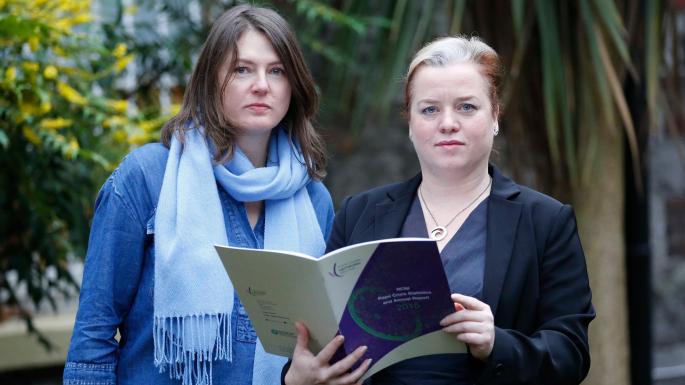
The RCNI annual report, which was launched yesterday by Clíona Saidléar, the executive director, and its secretary Claire Gledhill, said that 5 per cent of the 1,060 female rape victims who attended rape crisis centres last year became pregnant as a result of the crime. Some 24 per cent terminated the pregnancy. More than 10 per cent chose adoption or fostering, while 37 per cent continued with the pregnancy.

Pregnancies resulting from rape ended in a stillbirth or a miscarriage in 28 per cent of cases. The RCNI said it was possible that women who terminated a pregnancy themselves with pills bought online would have claimed it was a natural miscarriage, because of a fear of being arrested.

The citizens’ assembly was set up to recommend whether or not to repeal the Eighth Amendment will report by next June. Polling has indicated that some of the strongest support is for access to abortion in cases of fatal foetal abnormalities and for victims of rape and incest.

In its submission to the citizens’ assembly, the RCNI warned that a law which would grant access to abortion in cases of sexual crime would fail. Ms Saidléar said that access to abortion had to be made available on health grounds, including mental health.

“You have to bear in mind that trauma will impact; the trauma response may mean that they [rape victims] have left it late,” she said. “There will be a range of impacts on them in terms of their capacity to make a choice, which is to get a termination, because in Ireland that involves having to travel. If you look at it in terms of trauma that a survivor experiences and how you support trauma, you are then putting them into a process where they are judged and assessed and maybe fail.

“When we looked at it from all those sides, we just don’t think a rape clause is workable. So we have said it must be under health grounds because a survivor shouldn’t have to prove and be judged to access a choice. A choice that they’re making already; 24 per cent of them already choose [to terminate].”

The Protection of Life During Pregnancy Act sought to clarify the law and make abortion available on grounds where a woman’s life was at risk, including a risk of suicide. A woman must convince three physicians that she is suicidal before she can access the termination. The Irish Family Planning Association had said that all of the women it counselled who qualified for abortion under the PLDPA chose to travel to terminate instead of going through the process of proving their mental health problems to a panel of doctors.

The RCNI has said that the burden of proof would be too great on the rape victim, and would encourage suspicion that women were pretending to be raped to access abortion.

“Look at what we’ve done in terms of suicidal ideation; the idea of having a sort of panel for rape, with someone assessing and judging if you’ve been raped or if you’re simply trying to get an abortion by just lying and saying she was raped [is wrong]. And also, it feeds into that myth about people lying about rape,” Ms Saidléar said.

Northern Ireland, similar to the Republic, enforces a near-ban on abortion. Last year, the Belfast High Court ruled that restricting access to abortion in cases of rape, incest and fatal foetal abnormalities was a breach of human rights.

David Ford, the former Northern Ireland justice minister, refused to consider legislating for access to terminations for sexual crime victims because he said it would be too legally difficult without the woman securing a rape conviction first.

On the Isle Of Man, a rape victim must report the crime and sign an affidavit before she can access a legal termination.

Katherine Zappone, the children and youth affairs minister, said she believed the Irish public strongly supported access to abortion for rape and incest victims. The minister said she was against any laws that would force a victim to report a crime to access an abortion.

http://www.thetimes.co.uk/article/allowing-abortion-in-rape-cases-wont-work-7rbflww30

Source: The Times UK

19-dec

MUMBAI: When 34-year-old Kusum Rao, a Mumbai-based lawyer, was told that the brain of her 19-week-old unborn child didn’t have a membranous partition called the ‘cavum septum pellicidum’, she panicked.

Some websites linked its absence to mental retardation, blindness, learning disabilities as well as an increased risk of schizophrenia. Moreover, she had days before the 20-week deadline for abortion under the Medical Termination of Pregnancy Act expired.

But reassured by recent court interventions that allowed abortions beyond the deadline, she decided to wait and undergo more tests before making her final decision. “Once the pressure of the deadline is removed from women’s mind, they want to make a studied decision vis-a-vis abortion. They feel secure that doctors and the courts will listen to them,” said gynaecologist Dr Nikhil Datar of Cloud Nine Hospital in Mumbai who guided Rao (name changed on request).

He said many pregnancies were unnecessarily terminated on account of “unfounded fears” created by insufficient investigations as the deadline approaches.

In 2008, Datar moved the SC, seeking permission for another patient, Mumbai resident Niketa Mehta, to abort her fetus, which had been found to have cardiac abnormalities, after the deadline. Doctors say that many anomalies in the brain and heart show up around 20 weeks into pregnancy, and that the MTP Act should be tweaked accordingly.

The Centre, a couple of years ago, released the draft of a revised MTP Act that sought to push the deadline to 24 weeks, but there has been no progress since.

In Rao’s case, Dr Datar advised her to undergo an MRI scan and then seek the opinion of at least two paediatric neurologists. The reports showed that while the cavum septum pellicidum was indeed absent, there were no other brain abnormalities. “Its mere absence isn’t significant. But if it is accompanied by other structural anomalies in the brain, it is an indicator of severe problems,” said Dr Datar.
The ‘extra time’ Rao took helped her arrive at a correct decision.

Rao, who is now 27 weeks pregnant, is happy she waited to get the correct picture.

Another city doctor said one of his pregnant patients had a borderline result for the Down’s Syndrome blood test.

“The results say she has a one in 76 chance of delivering a child with Down’s Syndrome. She has opted for more tests to rule out the condition as she was told she could seek permission to terminate if there was confirmation of abnormality. She, too, missed the deadline.”

Priya John, associated with a coalition for health and safe abortion, said, “The MTP Act’s Section 5 can be interpreted…to allow women to undergo a medical termination of pregnancy beyond 20 weeks if there is a danger to their lives.”

http://timesofindia.indiatimes.com/india/moms-on-abortion-deadline-fight-for-ailing-fetuses/articleshow/56055678.cms

Source: Times of India

Hippocratic betrayal and obstetric violence On February 2015, a 19-year-old pregnant woman ingested abortive pills in São Bernardo do Campo, Brazil. She started feeling abdominal pains, so her aunt took her to hospital. After she was treated, her doctor called the police, saying he would autopsy the fetus if she did not confess to trying to abort. She was handcuffed to her hospital bed, and freed only after paying a 250€ bail.Denunciation by doctors is not uncommon in Brazil, Peru or El Salvador.  Women who are reported for attempting abortion can be detained in hospitals for weeks or months. Many doctors claim they are legally required to notify authorities when they suspect an abortion, in contradiction of professional codes of doctor-patient confidentiality. Note: photographic reconstruction. Laia Abril / INSTITUTE


In 2006, a Polish woman named Justyna heard a rumor about a new abortion pill. The thirty-year-old mother of three was eleven weeks along in a new pregnancy, and her marriage wasn’t going well. Abortion in Poland is illegal in most circumstances, but after several weeks she was able to get the pills. She took them at home, while her kids were down the hall. She didn’t tell anyone, not even her husband; she’s now divorced. “It took me two weeks to process all the feelings, but then I felt released,” she told the Spanish photographer Laia Abril. “I feel able to make my own decisions.”

Justyna is one of a group of women whose experiences Abril documents in her photo series “On Abortion.” The first installment in a broader project titled “The History of Misogyny,” the series collects artifacts of abortion from across eras and cultures alongside the stories of women who were forced to pursue procedures outside of the law. Justyna’s portrait is shown beside an image of a packet of mifepristone, one of the drugs that she used to abort, and another showing her cell phone resting on a shag rug. She now runs a hotline that Polish women can call before taking abortion pills, to make sure they’re using them correctly. She gets about five calls a day.

Abril’s project makes clear that Justyna was one of the lucky ones. Across the world, millions of women undergo unsafe abortions each year, and tens of thousands die from complications from unsafe procedures. “On Abortion,” which is featured this month in Apertures On Feminism issue, begins at the Museum of Abortion and Contraception, in Vienna, where Abril found centuries-old soap syringes, fish-bladder condoms, and a glass box filled with long reeds and thorns; they were surgically removed from African women who had used them to abort. Other images show the improvised abortion tools that women described to Abril directly: rat poison, a forty-pound rock, a grapevine stalk, bundles of herbs, a clothes hanger, a steaming-hot bath, a flight of stairs. There’s the letter that a twenty-two-year-old Brazilian woman wrote to her boyfriend before an abortion, in 1928, telling him that she might not survive the procedure. (She did not.) And, from El Salvador, whose abortion ban is one of the strictest in the world, there are the fat, spiral-bound court files of the seventeen women, known as “Las 17,” who, between 1999 and 2011, were accused of having abortions and sentenced to up to forty years in prison on charges of homicide, after they lost their babies in obstetric emergencies. (Two of the women have since been freed on parole; the rest remain in prison.) The only bright colors in the series come from a sheet of Peruvian newspaper ads, selling remedies for “menstrual delay” in glaring yellow, red, and blue. The tiny ads all have the same narrow white block lettering, and pictures of unhappy female faces.

Abril has documented abortion both in places where it is entirely prohibited, such as Malta and Chile, and in those where it is ambiguously legal or highly regulated, like Uganda and some parts of the United States. A section of the series labelled “Death Wall” features closeups of the faces of women who died after receiving botched abortions or being denied them, including an Indian dentist living in Ireland, an Indiana teen-ager, and a college student in San Salvador who committed suicide by leaping from the roof of her dormitory. Some of the women documented in “On Abortion” are middle-aged, while others are still children: one image is an ultrasound taken from a pregnant nine-year-old girl in Nicaragua, who was forced to give birth after her father raped her.

Cumulatively, the stories and images collected in the series make inescapably clear how abortion restrictions endanger women. But they are also testaments to endurance, showing us evidence of the lengths that women will go to retain control of their bodies and their lives even when the law stands in their way. One of the longest interviews Abril conducted was with Lucía, a Chilean woman who became pregnant after being raped at the age of twenty-four and chose to have an illegal abortion, in 2003. Chile, like El Salvador, makes no exceptions for pregnancies that result from rape or that threaten the life of the mother, and imposes jail sentences on women who are found to have had the procedure. Still, advocates estimate that between seventy thousand and a hundred and forty thousand clandestine abortions are carried out in Chile each year.

“The whole procedure turned out to be not very medical,” Lucía said, of the operation she underwent at an underground clinic. “You have to go alone and bring five hundred euros in cash.” But, in the end, she was O.K.: “Everything went well and I threw a party to celebrate with the people who helped me.” Two months later, she saw the clinic on the TV news; it had been raided by police. Lucía panicked. “I prayed they wouldn’t find any information about me,” she said. “I hadn’t just risked my life but my freedom.”

http://www.newyorker.com/culture/photo-booth/looking-at-how-abortion-restrictions-endanger-womens-lives

Source: The Newyorker

17-dec

“We will not stand for Texas putting more undue burdens on women,” a prominent advocate in the case said Monday.

AUSTIN, Texas, Dec. 12 (UPI) — An international abortion advocacy group on Monday filed a federal lawsuit against the state of Texas to head off a new law that requires all aborted fetal remains to be buried or cremated.

The Center for Reproductive Rights filed the suit in U.S. District Court in Austin on Monday.

In its lawsuit, the group called the new Texas law unconstitutional because it imposes a substantial burden on medical clinics, personnel and the women who choose to have an abortion.

Texas’ legislature and Gov. Greg Abbott signed off on the law, which is set to go into effect Dec. 19. Under the statute, all clinics are legally required to bury or cremate aborted fetuses — no matter how developed or undeveloped they are.

Abbott said the law is intended to treat the unborn fetuses with dignity, but opponents say it is a political measure designed to deter women from seeking abortions.

“It is imperative to establish higher standards that reflect our respect for the sanctity of life,” the governor said. “This is why Texas will require [abortion] clinics and hospitals to bury or cremate human and fetal remains.”

Texas first raised the new law in June, immediately after the U.S. Supreme Court ruled that frivolous restrictions on legal abortion can’t impose burdens on a woman’s right to the procedure — a decision that blocked plans by the state to cut down the number of abortion clinics statewide. Critics say the new Texas law is in direct conflict with the high court ruling.

“These regulations are an insult to Texas women, the rule of law and the U.S. Supreme Court, which declared less than six months ago that medically unnecessary restrictions on abortion access are unconstitutional,” Center for Reproductive Rights President Nancy Northup said in a statement Monday.

“Texas’ profound disrespect of women’s health and dignity apparently has no bounds with this new regulation,” Amy Hagstrom-Miller, president of the advocacy group and lead plaintiff Whole Woman’s Health, said. “We will not stand for Texas putting more undue burdens on women and families who deserve the safe and compassionate abortion care.”

Texas Attorney General Ken Paxton’s office said Monday it looks forward to defending the new law in court.

“All human beings deserve to be treated with respect after death. To that end, Texas will continue to defend the safety and dignity of the unborn up to and as far as Supreme Court precedent will allow,” spokesman Marc Rylander said. “These new rules simply provide for the humane disposal of fetal tissue … They do not, in any way, interfere with a woman’s access to abortion.”

http://www.upi.com/Top_News/US/2016/12/12/Abortion-rights-advocates-sue-Texas-to-block-controversial-burial-law/9041481574594/

Source: UPI

6-nov-2016

A U.S. judge on Thursday temporarily halted until Jan. 6 a Texas regulation that would require abortion providers to dispose of aborted fetal tissue through burial or cremation, court documents showed.

The regulation, which was supposed to go into effect on Dec. 19, also would require hospitals and other medical facilities to bury or cremate miscarried fetuses. It is seen by women’s health providers as part of a nationwide agenda to place new restrictions on abortions.

Under the temporary restraining order issued in the U.S. District Court for the Western District of Texas, Judge Sam Sparks will hold hearings on Jan. 3 and 4, according to electronic court filings.

“This restriction, just like the many before it, all across our nation, does not create any health benefit for women and is strictly designed to limit access to safe, quality abortion care,” Amy Hagstrom Miller, founder and chief executive officer of Whole Woman’s Health, said in a statement.

State officials were not immediately available for comment.

Republicans opposed to abortion proposed new restrictions on the procedure in several states after the U.S. Supreme Court in June struck down some regulations in Texas.

At the time, the Supreme Court said provisions of the Texas law requiring abortion doctors to have difficult-to-obtain “admitting privileges” at local hospitals and requiring clinics to have costly hospital-grade facilities violated a woman’s right to an abortion.

Abortion rights providers in legal filings against the Texas fetal tissue measure said it “imposes a funeral ritual” on women who have a miscarriage or an abortion, whether they want it or not. The measure would also require women who miscarried at places such as their homes to arrange for burials.

Abortion rights groups contend the regulations could impinge on funeral homes in the socially conservative state, which might face a backlash if they are perceived as being aligned with abortion providers.

The Texas limitations would be far more stringent than regulations in almost every other state, which allow aborted fetal tissue to be disposed of in a similar fashion to human tissue, according to the Guttmacher Institute, an abortion rights group.

http://www.reuters.com/article/us-texas-abortion-idUSKBN1442W7

Source: Reuters

4-dec

(Reuters Health) – Women who are denied abortions have a higher risk for mental health problems soon afterward compared to women who are allowed to go through with the process, a new study suggests.

For five years, researchers tracked nearly 1,000 women who either received or were denied abortions from 30 facilities in 21 U.S. states.

Altogether, 273 women received an abortion in their first trimester, 413 received an abortion within two weeks of the facility’s gestational limit, and 231 were denied an abortion because their pregnancy fell within the three weeks after the facility’s limit.

A week later, compared to women who received abortions, those who were turned away were more likely to report anxiety symptoms, lower self-esteem and lower life satisfaction.

“Those differences disappear after six months to a year,” said lead author Antonia Biggs of the University of California, San Francisco. By six months, women who had abortions and those who were turned away had similar mental health profiles.

Nine states have laws that force healthcare providers to tell women that having an abortion will increase their risk for mental health problems, Biggs and her colleagues point out in JAMA Psychiatry, online December 14th.

“This research shows the information they are mandating women receive (is)inaccurate and out of date,” Biggs told Reuters Health. “We don’t have evidence that abortion leads women to have worse mental health.”

“It’s true that we haven’t had great evidence looking at this particular question before,” she said. “Now that we do, we should really go back and think about the information we’re giving women and making sure it’s accurate and up-to-date.”

Biggs and colleagues write that numerous studies of the mental health effects of abortion on women found no evidence that it leads to poor outcomes, but those studies were often flawed. This new study, Biggs said, addressed limitations in past research. Women seeking abortions were compared to other women seeking abortions, and not women who wanted their pregnancy. Additionally, the comparisons were made among women who were around the same point in their pregnancies.

In a statement, the chief medical officer of Planned Parenthood Federation of America said the results show why politicians should not play doctor.

“Every woman should have accurate information about all of her options,” said Raegan McDonald-Mosley in the statement. “That information should support a woman, help her make a decision for herself, and enable her to take care of her health and well-being. It should not be provided with the intent of coercing, shaming, or judging a woman.”

The researchers caution that the new study can’t say denying women abortions caused the increase in symptoms. Additionally, only 40 percent of invited women agreed to participate in the study, and nearly a third of participants did not complete all five years of follow-up.

http://www.reuters.com/article/us-health-abortions-mental-idUSKBN1432ZT

Source: Reuters