Oklahoma Republican Governor Mary Fallin makes remarks before the opening of the National Governors Association Winter Meeting in Washington, DC, U.S. on February 22, 2014. REUTERS/Mike Theiler/File Photo

The Oklahoma Supreme Court on Tuesday struck down a state law requiring doctors who perform abortions to have admitting privileges at a hospital near their clinic, saying the measure “places an undue burden on a women’s access to abortion.”

The court said the 2014 law violates the state’s constitution and if it remained on the books, it would have left the state of about 4 million people with only one abortion clinic.

Its decision comes after the U.S. Supreme Court in June struck down a similar restriction in neighboring Texas. Abortion providers challenged the Texas law, saying the requirement it stipulated was medically unnecessary and specifically intended to shut clinics. [nL1N19J0NI]

“We find there is no evidence to support defendants’ position that this legislation protects and advances women’s health,” the Oklahoma court wrote.

Oklahoma Republican lawmakers who backed the law said requiring admitting privileges would ensure continuity of care if there were complications from an abortion. Abortion rights advocates said complications are rare and could be treated at any emergency room.

“I’m disappointed to see another pro-life law struck down by the courts,” Oklahoma Governor Mary Fallin, a Republican, said in a statement.

“Like many bills passed in Oklahoma, this bill was designed to protect the health and welfare of the mother along with the life of the unborn, which always should be among our society’s priorities,” she said.

The Oklahoma court cited the views of the Oklahoma State Medical Association, a leading group of medical professionals, which opposed the measure on the grounds that it did nothing to advance or protect women’s health and the regulation was not in the best interest of patients.

Since the law on admitting privileges was passed in late 2013 in Texas, the number of abortion clinics in the state with about 27 million people, had dropped to 19 from 41, court documents show.

“Evidence matters and the evidence shows that there was no compelling public health interest for the measure,” said Elizabeth Nash, senior state issues associate for the Guttmacher Institute, an abortion rights group whose data is used by both sides in the debate.

Lawmakers in Texas, Oklahoma and several other Republican-led states have been lining up a new series of restrictions on abortions for legislative sessions that start next year.

Abortion rights advocates believe that many Republican lawmakers feel emboldened by the upcoming presidency of Republican Donald Trump and view his administration as supporting their restrictions on the procedure.

http://www.reuters.com/article/us-oklahoma-abortion-idUSKBN1422PJ

Source: Reuters

13-dec

Planned Parenthood officials are scrambling to prepare for the likelihood that Congress next year will cut off more than a half-billion dollars in federal funding to the group, fulfilling the wishes of abortion foes who are planning an aggressive push to roll back abortion rights under President-elect Donald Trump.

Officials with the 100-year-old women’s health nonprofit organization are leaning on donors, new and old, and preparing to lobby friendly lawmakers at the state and local level to stem some of the loss. They have started gaming out which communities might be able to withstand a loss of services. They are asking supporters to get their medical care at Planned Parenthood clinics to increase the proportion of privately insured patients.

The effort to defund Planned Parenthood is likely to be just the opening salvo in a new battle over abortion rights touched off by the election. Empowered by joint Republican control of Congress and the White House for the first time since 2006, antiabortion activists see a historic opportunity to outlaw certain procedures and perhaps reverse Roe v. Wade, the Supreme Court decision that legalized abortion nationally four decades ago.

Rep. Diane Black (R-Tenn.) said in an interview that she plans to introduce a bill that would eliminate the provider’s funding as “one of the first orders on the agenda” when the new Congress convenes next month.

The federal dollars to Planned Parenthood — most of which flow to the organization in the form of Medicaid reimbursements — make up more than 40 percent of its budget. Such a loss, Planned Parenthood officials say, would force them to close many programs and turn away many of the 2.5 million patients their clinics see annually.

“Obviously we are doing everything we can through advocacy and everything else to make sure we can continue to serve patients,” said Erica Sackin, spokeswoman for Planned Parenthood. “But at the end of the day, this is a fight of a scale that we haven’t seen before and we need to be realistic about how much is at stake.”

Among the other hopes of antiabortion groups that now seem plausible: A federal ban on dilation and extraction, the most common abortion procedure in the second trimester. Legislation to make permanent the Hyde Amendment, currently renewed every year, to bar federal funds from being used to pay for abortions. A ban on the procedure at 20 weeks of pregnancy.

And with Trump’s pledge to appoint justices who oppose Roe v. Wade , the 1973 Supreme Court decision legalizing abortion nationwide, abortion foes also see a chance to overturn that landmark ruling. Last week, in a direct challenge, Ohio lawmakers passed a ban on abortions as soon as a fetal heartbeat can be detected, as early as six weeks. Gov. John Kasich (R) has not yet said if he will sign the measure.

The first strike, however, is likely to be aimed at crippling an organization that not only performs more than 300,000 abortions a year but also is the best known advocate for the unfettered rights of women to obtain the procedure.

Planned Parenthood’s federal funding comes primarily from Medicaid as well as Title X, which provides family-planning grants. Although the money cannot be used for abortions, critics say it indirectly supports the procedures and that Americans want no part of such work.

“It is time that taxpayers are taken off the hook for supporting an organization that supports the killing of innocent children,” said Rep. Trent Franks (R-Ariz.), a longtime Planned Parenthood foe.

Antiabortion groups have urged congressional leaders to try to defund the group immediately in the new Congress as part of the budget reconciliation process, which requires a simple majority to pass. They sent a similar bill to President Obama in 2015; he vetoed it. Trump has pledged to sign such a measure.

“It was one of the conditions that the pro-life movement had” for supporting Trump, said Penny Nance, president of Concerned Women for America, a conservative group. Since his election, Trump has not addressed the controversy over Planned Parenthood and his transition team did not return a request for comment.

Such a vote is likely to meet fierce resistance among reproductive rights advocates, who would no doubt challenge the effort in court. Federal law protects the right of patients on Medicaid to use the providers of their choice, and previous efforts at the state level to defund Planned Parenthood have been blocked by the courts.

But Congress has broad leeway in setting laws, and it is likely that the decision would ultimately rest with the Supreme Court.

“We know that we have the will in both the House and the Senate” to pass a new version of the Defund Planned Parenthood Act, said Black, as well as willing partners in Trump and Vice president-elect Mike Pence, who as governor of Indiana signed one of the nation’s strictest abortion laws. While in Congress, Pence filed the first legislation to bar Planned Parenthood from receiving federal dollars and tried to shut down the government over giving money to the organization.

There are other ways the Trump administration could target the organization. The Health and Human Services Department could back off what has been an aggressive defense under the Obama administration to stop states from cutting off Medicaid funds to the group. The Justice Department could redouble efforts by Congress to find evidence, so far lacking despite multiple investigations, that Planned Parenthood illegally sold fetal tissue for a profit.

In several polls over the past year, sizable majorities of respondents opposed cutting off all funding to Planned Parenthood. In a January CBS News/New York Times poll, 57 percent of those surveyed said Planned Parenthood should continue to receive funding from the federal government.

Across the country, leaders of Planned Parenthood’s 52 affiliates are groping their way forward, unsure of exactly what is to come but operating with certainty that it will be bad. They spent part of last week in Washington, exchanging notes and strategizing.

The impact is likely to be greater for clinics that have a large number of patients on Medicaid, and less so on clinics that have fewer Medicaid patients. States that have more restrictive Medicaid policies have taken away the state matching portion of Title X funding. Other states, including Kansas, have refused to disburse Title X dollars to Planned Parenthood.

Nationally, about half of the organization’s patients rely on Medicaid to get their preventive care, raising the prospect that a complete loss of federal funds will force clinics to turn some patients away.

Laura McQuade, president and chief executive of Planned Parenthood Great Plains, which serves four states, believes her health centers will be in a better position than others: Republican governors and legislators have already stripped away much of the federal funding her organization receives. She is asking donors who have private insurance to start using Planned Parenthood as a health-care provider to boost revenue.

“Blue-state affiliates, for lack of a better phrase, are going to be hit much, much harder than those of us operating in deeply red states. We have lost the majority of our money already,” she said.

Vicki Cowart, president of Planned Parenthood of the Rocky Mountains, which covers all or parts of five states, said her staff is analyzing which clinics might be most affected. A program that provides vasectomies to men in New Mexico, for instance, would have to shut down if its funding source, Title X, is cut off.

“We’re looking at this from a massive planning perspective, but then you put yourself in the shoes of the person who needs a vasectomy, and it’s a profound event for them,” she said. “The cost of human misery in this setting is huge, and I don’t want us to lose sight of the fact that these are people, not some stupid political game.”

Communities that have been supportive of Planned Parenthood are pledging to step in if the organization is defunded. New York Mayor Bill de Blasio (D) last week tweeted that “if GOP threatens federal funding for Planned Parenthood of NYC, we will ensure women receive the health care they need.”

Anxious women have flocked to Planned Parenthood out of fear that their nearby clinic will close or policy changes might make birth control or other health care harder to get. In the immediate aftermath of the election, the organization said, there was a 10-fold increase at its clinics in the number of women seeking intrauterine devices — a long-acting and costly form of birth control that is now available for many women free of charge because of the Affordable Care Act.

The organization also said it has seen a surge of donations, some offered in Pence’s name as a jab at the incoming vice president, and a flood of people seeking to volunteer.

Amid all the uncertainty, clinics have sought to reassure patients that they have withstood political attacks before and will do so again.

“Planned Parenthood is not about to go away based on anything that happened in this election,” said Sarah Stoesz, president of Planned Parenthood of Minnesota, North Dakota and South Dakota. “We’ve built muscle over 100 years.”

https://www.washingtonpost.com/national/planned-parenthood-fears-it-may-be-first-casualty-of-rekindled-abortion-war/2016/12/12/4e253f84-bd7d-11e6-ac85-094a21c44abc_story.html?utm_term=.b2d78decc0c0

Source: The Washington Post

HIGHLIGHTS

  • Health ministry has recommended recognising “failure of contraceptive” and “unplanned pregnancy” as lawful reasons for abortion among all women, married or otherwise
  • At present, the law recognises these two reasons for abortion only in case of “married” women
  • The proposal is likely to be taken up by the Cabinet soon after the ongoing Parliament session ends


NEW DELHI: In a move that will make it easier for single women to safely and legally terminate unwanted pregnancies, the health ministry has recommended recognising “failure of contraceptive” and “unplanned pregnancy” as lawful reasons for abortionamong all women, married or otherwise. At present, the law recognises these two reasons for abortion only in case of “married” women. The relief is part of a series of recommendations made by the health ministry for amendment of the Medical Termination of Pregnancy (MTP) Act.

The proposal is likely to be taken up by the Cabinet soon after the ongoing Parliament session ends, sources said. The existing MTP Act requires a doctor to indicate a reason for abortion. This could be to save the life of the woman, in case of rape or incest, or due to the physical or mental health of the woman. Recognising the growing reality of sexually active single or unmarried women, the government’s recommendations aim to widen the purview of legal abortion. Experts say the move is progressive and will give women safe and legal abortion options.

Other amendments to the law dating back to 1971 would allow abortion any time during pregnancy for “selective” foetal abnormality, which cannot be detected during the 20-week gestation period. Currently, the law allows medical abortion only till 20 weeks of pregnancy.
It will also help address the social taboo attached to sexual activity of single or unmarried women and instead allow them a right over their body.

The ministry has also recommended allowing homoeopaths, nurses and midwives to conduct non-invasive abortions with training. The proposed amendments also include extending the gestation period from 20 weeks to 24 weeks for “special categories”, which is also likely to include single women with unwanted pregnancy, apart from disabled and other vulnerable women. “Once the amendments bill is passed by Parliament, the ministry will elaborate on implementation of the law by notifying rules. That will bring more clarity,” an official said.
“The amendments will increase women’s access to safe abortion and we are hoping the government will attempt to pass the bill in Parliament at the earliest,” said Vinoj Manning, executive director of

IPAS India, a non-profit organisation working to increase women’s ability to exercise their sexual and reproductive rights, and to reduce maternal mortality.

http://timesofindia.indiatimes.com/india/Government-plans-equal-abortion-rights-for-single-women/articleshow/55931155.cms

Source: The Times of India

11-dec

Back in August, two friends set up the account @TwoWomenTravel and tweeted the experience.

From the plane journey, to sitting in the waiting room of the clinic, she described how difficult both the decision and procedure were in her first ever radio interview.

“The waiting room was small – there was one couple who (were) definitely Irish, one girl (who was) definitely Irish,” she told Alive and Kicking on Newstalk.

“Then we went to Liverpool which was a much bigger waiting room and there was another Irish couple.

“We got talking to these two young Irish women who were in the exact some circumstances we were: one friend and one having the procedure.”

She said the fact they had to travel to a different country made the experience even more difficult.

“It was really stressful, it was really tiring. We were up at 4 in the morning. I hadn’t slept, I don’t think she had slept either.

“Abortion is never taken lightly because pregnancy happening to a woman is not something that is cavalier; it’s not something that is to be dismissed.

“You have to maintain a sense of normalcy and you’re in mourning – no matter what happens, no matter the circumstance – you’re in mourning”.

The account garnered much reaction at the time, both nationally and internationally.

Many of the tweets were aimed at Taoiseach Enda Kenny, calling for a referendum on the Eighth Amendment.

“Pretty ordinary sights, in a place away from home. Can’t say it’s comforting though, Enda”.

Cora Sherlock, of the Pro-Life campaign, said the tweets “trivialised” abortion.

“When we talk about two women travelling, I would like to say that I spoke to women who at the time had travelled for abortions.

“What they said to me is they felt it was trivialising the whole matter by having a Twitter discussion which would culminate in the ending of the life of an unborn child.”

Disagreeing with Cora Sherlock’s views, Labour Senator Ivana Bacik said women need to be trusted to make decisions about their own reproductive systems.

“I would say it does boil down to an issue of trust – do we trust women or not? What I hear from people who want to retain the Eighth Amendment, is a distrust of women, a desire to judge women, women who speak publicly about their experiences, that is up  to them.

“We have to trust women. We are in 2016, we are no longer in an era where women have to be treated as children.

“That’s the sort of society I want for my daughters. And that’s why I’m for a repeal of the Eighth Amendment.”

http://www.independent.ie/irish-news/abortion-is-never-taken-lightlyyoure-in-mourning-irish-woman-behind-twitter-account-documenting-friends-journey-to-uk-for-termination-35284850.html

Source: The Independent

10-dec

A Catholic anti-abortion group connected to the Times investigation into crisis pregnancy agencies has admitted that abortion does not cause breast cancer.

The Good Counsel Network, which operates in Ireland and the UK, has compared abortion to terrorism, defended the Magdalene Laundries and described using contraception as an act of narcissism.

It is linked to The Women’s Centre on Berkeley Street in Dublin, where an undercover reporter filmed a counsellor claiming that abortion caused breast cancer and would turn women into child abusers. The Dail is now legislating to regulate crisis pregnancy agencies after an investigation by The Times in September.

The Times undercover at a Dublin abortion advice clinic

The Dublin centre is registered to the same London address and phone number as the Good Counsel Network.

“The Good Counsel Network recognises that there is not a proven link between abortion and breast cancer. However we do not hide the fact that well over 50 medical studies have suggested a possible link,” the anti-abortion group said in a statement posted on its UK website.

“We are not medical advisers and therefore share with women the information about these studies as well as the information that there is no proven link,” it added.

The Times revealed that the agency advised an undercover reporter that abortion could make women infertile and abusive. In October, a British investigation by Channel 4’s Dispatches programme found that UK abortion clinics run by the same organisation were making the same claims.

A woman claiming to be a counsellor in the Dublin clinic did not tell The Timesreporter that there was no proven link between abortion and breast cancer.

Referring to women who have abortions, she said: “I can’t tell you, she will get breast cancer. She won’t. But what I can tell you is there is more breast cancer found in groups of women who’ve had abortions than any other group. The reproductive system is all connected.”

She gave the reporter literature that claimed that side-effects of abortion included frigidity, crying, sighing, constant swallowing, an intense interest in babies, helplessness, a preoccupation with death, loss of organs, seizures, future child abuse, a compulsion to end relationships, lower self-esteem, feeling dehumanised and exploited, a lack of confidence in decision-making, insomnia, nightmares, nervousness and guilt.

Peter Boylan, the president of the Institute of Obstetricians and Gynaecologists of the Royal College of Physicians of Ireland, said that the medical claims being made by the centre were outrageous, dangerous and unfounded.

The Times contacted a man running the clinic, who claims to be called Patrick Jameson, for a comment but he did not respond. He is identical in appearance to Eamon Murphy, sometimes spelt Eamonn Murphy, an anti-abortion campaigner and director of the ProLife Alliance.

The Good Counsel Network appeared to have paid to be one of the first Google results for those searching from an Irish IP address for advice on how to access an abortion.

The Women’s Centre also lists an address at Bell Street, north London, on its website. In 2013 the UK Advertising Standards Authority (ASA) ruled that the London centre was in breach of its code of standards for giving the “misleading and irresponsible” impression that it was an abortion clinic. It runs abortionchoices.org, a UK website that the ASA said made “problem claims.”

“The Women’s Centre, previously known as Central London Women’s Centre, is in breach of the UK Advertising Standards Code for failing to make clear that a service offering advice on unplanned pregnancy did not refer women directly for a termination and also for giving the misleading impression that [it] was an abortion clinic,”it said.

“Despite repeated requests to amend the ad in line with the ruling [it] has failed to do so.”

http://www.thetimes.co.uk/edition/ireland/abortion-does-not-cause-cancer-group-admits-f88xh6btd

Source: The Times

Ohio lawmakers passed a second piece of legislation in two days on Thursday restricting abortion access in the state by banning the procedure after 20 weeks of gestation.

Senate Bill 127 was passed by the state House 64-29 on Thursday and then again later in the evening by the Senate 23-8. The Senate had approved the bill early last year but had to approve it again because of changes made by the House.

The bill is less strict than the “heartbeat” measure passed on Tuesday that outlaws an abortion as early as six weeks after conception, once a fetal heartbeat is detected.

Neither of the measures make exceptions for rape or incest, although both allow for abortions that would save the mother’s life.

Supporters of the bill say they are trying to protect the lives of unborn babies.

Both pieces of legislation await the signature or veto of Republican Ohio Governor John Kasich, who critics said on Thursday was using the dueling legislations as politic cover.

“Passing both anti-abortion measures in a lame-duck session is political maneuvering by the Republican-dominated state legislature steered by Governor Kasich,” said Gabriel Mann, a spokesman for the NARAL Pro-Choice Ohio.

“John Kasich has a masters degree in political calculus.”

Kasich could veto the six-week ban and sign the 20-week ban in an effort to appear moderate, Mann said.

Twenty-week abortion bans have been passed in more than 10 states, but federal courts in Arizona and Idaho have ruled that they are unconstitutional.

Under current law, Ohio prohibits abortion once a fetus is considered viable outside the womb, which is from 24 to 26 weeks of gestation.

The American Civil Liberties Union of Ohio testified against both bills, saying the measures unconstitutionally restricted women’s access to reproductive healthcare.

“Bans such as these only hurt women and their families and waste taxpayer dollars by defending laws that federal courts have routinely declared unconstitutional,” Mike Brickner, a senior policy director at the ACLU, said on Wednesday before the vote.

“Governor Kasich should veto any bill that infringes upon reproductive freedom,” he said.

Also passed on Thursday was an healthcare bill that included a last-minute amendment that makes “knowingly assisting” in a suicide a felony punishable by up to five years in prison.

Both the abortion and healthcare bills were rushed through committee and voted on in late-night sessions as the two-year legislative session wrapped up.

http://www.reuters.com/article/us-ohio-abortion-idUSKBN13Y0AP?feedType=RSS&feedName=domesticNews

Source: Reuters

8-dec

The last five years have seen sweeping changes in laws governing social and sexual rights in Malta.

In 2011, it was one of the last two countries in the world where divorce was illegal.

On Tuesday, it became the first European country to ban “gay conversion therapy”, eliciting cheers from LGBT (lesbian, gay, bisexual, transgender) campaigners as well as psychologists.

In recent years, the staunchly Catholic country has:

  • Legalised divorce
  • Granted rights equivalent to marriage to homosexual couples, including the possibility to adopt children, and become one of only five countries to accord LGBT people equal rights at constitutional level
  • Passed the Gender Identity, Gender Expression and Sex Characteristics Act (GIGESC Bill), banning invasive “normalising” surgery on intersex people, outlawing their sterilisation and allowing people to self-determine their own gender in law without medical examination
  • Been named the best European country for LGBT rights by advocacy group ILGA-Europe

And yet Malta is now the only EU country where abortion is banned outright.

Why has so much changed in five years?

In 2011, social pressure for change had been building and the “lid was lifted” by a referendum that backed legalising divorce, says Herman Grech of the Times of Malta newspaper.

“The referendum changed everything – and the results were pretty surprising for a country where the Church has been dominant,” he told the BBC, and where the centre-right Nationalist party was in power.

“Suddenly people and the younger generation voted in favour as they realised it was one of only two countries [including the Philippines] that outlawed divorce.”

“That tilted everything – people started saying we can start tackling other social issues.”

That process accelerated once the Labour Party came to power in 2013, says Herman Grech.

He believes Malta joining the EU in 2004 changed the outlook of its young people. Travelling and studying in Europe “opened their minds”, he says.

Malta has one of the highest per capita usages of social media in Europe.

And yet Malta’s abortion laws remain among the strictest in the world, don’t they?

In Maltese law abortion is banned even in cases where the mother’s life is threatened (though, in practice, there is an exception if the foetus is harmed in the course of essential treatment for the mother, the so-called “double effect” law).

For women’s rights campaigner Francesca Fenech Conti, women’s reproductive issues represent one of the last bastions of conservatism in a patriarchal society dominated by the Church.

“There are a lot of women Church followers who are still devout, and think they should be mothers first,” she told the BBC. “Condom machines were only provided in universities last year.”

For Mr Grech, abortion remains a “delicate subject – even for those in favour of gay marriage. At the back of our minds we’ve always been told it is murder”.

What is the Church’s view of all this?

The Catholic Church in Malta is led by Archbishop Charles Scicluna, described by one commentator as “pragmatic rather than fire and brimstone – a bit like Pope Francis”.

Asked by the BBC for his view of social changes in Malta, he said in a statement that although the Church “remains committed to promoting the values of the family and of marriage between a man and a woman”, it also “recognises that Maltese society is changing at a sustained momentum… [and] that there are positive aspects to the increased respect for the dignity of every person, irrespective of their gender or their sexual orientation.”

Will the abortion ban be swept away too?

Not if the Church has its way.

It has campaigned on issues that it feels could erode the ban – intervening in a recent debate over access to the morning-after contraceptive pill to argue that the pill is itself a form of abortion.

“We remain committed to defend the most vulnerable and the voiceless in society, such as the unborn child,” said Archbishop Scicluna. “The Church believes that unborn children too deserve to be treated with dignity, a belief that is also shared by the vast majority of Maltese society.”

But for Ms Conti, Malta will be unable to hold back the tide of change – even in this hitherto taboo area.

“There will be changes soon – that we are even having this conversation is evidence. A year and a half ago I couldn’t discuss these issues with my own sister and cousin – now we talk about it all the time.

“I’m in touch with campaigners in Ireland and Poland [where campaigners are challenging abortion laws]. It will happen.”

Mr Grech says it depends on whether campaigners can gain popular backing.

As before, he says, “if people start speaking up, the parties will follow”.

http://www.bbc.com/news/world-europe-38235264

Source: BBC

7-dec

Seven years after Victoria decriminalised abortion, there are fears publicly funded services have deteriorated across the state, causing women to travel long distances for private care that can cost hundreds of dollars. There are also concerns about a shortage of doctors willing to carry out the procedure.

Leading women’s health researcher Louise Keogh is urging the Victorian government to make abortion services mandatory at some hospitals, after interviews with 19 abortion workers revealed public services may have shrunk since law reform, and that there is an ageing workforce not being replaced.

Associate Professor Keogh, from Melbourne University, said most of the research participants, who included doctors, nurses and clinic managers, were concerned about reduced access to surgical abortion, and abortion after 20 weeks’ gestation. They were also worried that some hospitals were opting out of the service altogether.

The state government’s Better Health website lists only three public hospital abortion services and they are all in Melbourne.

“There was a strong consensus that there was ‘unfinished business’ in the provision of abortion services,” Professor Keogh wrote with others in the Journal of Family Planning and Reproductive Health Care.

“Law reform, while positive, has failed to address a number of significant issues in abortion service, and may have even resulted in a ‘lull’ in action.”

The chief executive of the Royal Women’s Hospital, Sue Matthews, said her staff were not able to meet demand for abortions and that they were working with other regional services to increase their capacity.

“The level of demand for the Women’s services exceeds what we can deliver, and as such, we prioritise our services for women from disadvantaged and low socio-economic backgrounds,” she said.

“The Women’s supports the right for all women to access reproductive services and supports a state-wide approach to abortion service provision to allow women across the state to have access to timely services that are provided as close to home as reasonably possible.”

Writing in the journal, Professor Keogh said her research highlighted the need for law reform to be followed by “policy and practice changes that enforce the intent of the law and ensure the delivery of the services the community needs”.

A spokesperson for Health Minister Jill Hennessy said the government was developing a statewide sexual and reproductive health strategy to improve Victorian women’s access to reproductive health services.

“This work is supported by a $6.6 million investment in this year’s budget. We also established Victoria’s first ever safe access zones to ensure women can safely and confidentially access abortion services without being subject to verbal and psychological abuse,” the spokesperson said.

In 2008, abortion was decriminalised, so that women could have one up to 24 weeks for any reason. After 24 weeks, two doctors need to agree based on the woman’s medical circumstances and her current and future physical, psychological and social circumstances.

A health professional who has a conscientious objection to providing abortion is not required to provide it but must refer any woman seeking information about it to a health practitioner who does not object.

http://www.thecourier.com.au/story/4340144/fears-for-abortion-services-seven-years-after-victorian-law-reform/?cs=7

Source: The Courier AU

6-dec

Website domain name for Women’s Life Centre in Albury registered to the Wagga Wagga Catholic diocese

The Catholic church has denied any link to a New South Wales pregnancy centre accused of deceptively pushing an anti-abortion agenda to women, despite records showing the local diocese set up its website.

The Women’s Life Centre has operated for several years in Albury, NSW, marketing itself as a service that helps “any woman facing an unplanned pregnancy or worried that they may be pregnant”.

The centre is currently crowdfunding to buy an ultrasound device and says it offers pregnancy testing, counselling, resources on pregnancy and abortion, future planning and abortion grief counselling.

The centre is staffed by pro-life volunteers and staff but its website makes no mention of its anti-abortion stance, nor does its shopfront, which advertises “free pregnancy help” and “free pregnancy testing”.

The website domain name for the clinic is registered to the Wagga Wagga Catholic diocese, which covers Albury.

It also receives funding support from a café next door, named Esencia, which is owned by the church, according to the Australian Business Register and the Australian Securities and Investments Commission database.

A spokesman for the Wagga Wagga diocese said he did not believe there was any link between the church and the pregnancy centre. He said there may have been “technical assistance” to help the centre set up its website but nothing further.

Staff at the centre say they are openly pro-life and that there is no deception involved.

A volunteer, Myra Hogan, told Guardian Australia that women who came to the centre for help would be immediately aware of its pro-life stance.

“From my point of view, yes 100%,” Hogan said. “I feel like we’re very upfront and honest … That’s why I approached them, because that’s my own personal belief. I’m very pro-life.”

But senior Albury obstetrician and gynaecologist Pieter Mourik has accused the centre of covertly pushing an anti-abortion agenda.

“This [women’s life centre] is a vile deception of vulnerable women who have an unplanned pregnancy,” he said. “No member of this clinic would ever agree with a woman who wants or medically needs a termination but will use any tactic to dissuade them every time.”

The US has seen thousands of “crisis pregnancy centres” set up across the country, which purport to offer free medical advice but actually attempt to discourage abortion and the use of contraceptives.

The US centres have been accused of lying to women, overstating the health impacts of abortions and using misleading films and images to frighten those seeking help.

In France, MPs last week voted to approve a plan to outlaw abortion information websites that masquerade as neutral, official services with freephone helpline numbers but promote anti-abortion propaganda and pressure women not to terminate pregnancies.

https://www.theguardian.com/world/2016/dec/06/catholic-church-denies-link-to-pregnancy-centre-accused-of-covert-anti-abortion-agenda

Source: The Guardian

5-dec

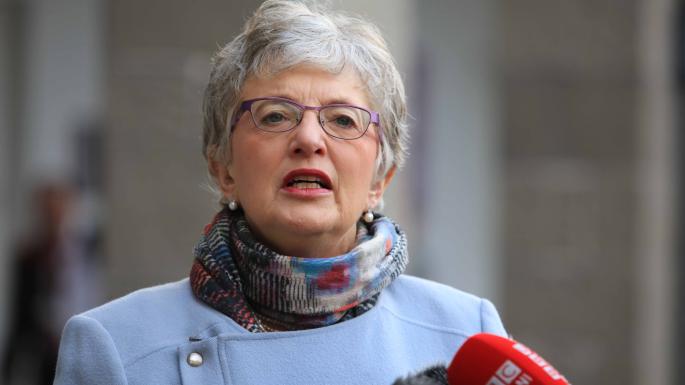
Katherine Zappone has suggested she is in favour of replacing the Eighth Amendment with a “radical” plan to enshrine a woman’s right to choose in the constitution.

The minister for children and youth affairs said she was concerned that a foetus could still have constitutional rights that would block an abortion, even after a repeal of the Eighth Amendment.

The government is seeking to appeal against a High Court ruling from July which suggested that the constitutional rights of unborn children extend beyond the right to life. The court suggested that a constitutional reference to the state’s duty to protect “all children” could also refer to a foetus. The ruling has led to suggestions that even if the Eighth Amendment was repealed, a foetus would still be entitled to some rights under the Irish constitution.

The judgment was made in the case of a Nigerian man who was facing deportation. The man and his partner, who was pregnant at the time, secured an injunction on his deportation after the court ruled that the couple’s unborn baby was also entitled to rights and a legal position.

Speaking at the National Women’s Council of Ireland’s Femfest event for young women on Friday, Ms Zapppone said: “We don’t want anything in our constitution that has to do with abortion. But we might want to put something in there that says something about women’s right to their health, to their autonomy and to their self-determination.

“Talk about radical. Because as you probably know, There are currently senior counsel and legal folks who are arguing on both sides of this that if we got rid of [the Eighth Amendment] there are still implicit constitutional rights that could block women’s access to abortion.”

She added that her instinct was to support taking all reference to terminating pregnancies out of the constitution and legalising access to abortion through legislation but that a new amendment should be considered.

Ms Zappone was forced to defend her position after she was heavily criticised by pro-choice campaigners for supporting Enda Kenny’s plans to consider abortion through a citizens’ assembly rather than the Oireachtas. Earlier this year the first-time independent TD voted with the government against a bill which would have legalised abortion in cases of fatal foetal abnormalities, which she had supported when she was an independent senator. She also voted against an Anti-Austerity Alliance/People Before Profit bill calling for a referendum in October.

Ms Zappone said that she did not believe that a referendum to repeal the Eighth Amendment would win if it was held ahead of the citizens’ assembly completing its work. The assembly, led by Ms Justice Mary Laffoy, met on November 26 to begin examining whether the constitutional ban on abortion needs to be repealed and will also meet over three more weekends in January, February and March. At the end of the fourth weekend, assembly members will vote on what their recommendations to the Oireachtas will be.

If the assembly decides to recommend a referendum, it could recommend replacing the Eighth Amendment with another addition to the constitution, or granting legal access to abortion in specific circumstances through legislation alone.

Various opinion polls have suggested that most people support legal access to abortion on grounds of rape, incest and fatal foetal abnormalities.

Ms Zappone said that she did not want victims of sexual crime to have to go through an arduous process to access an abortion. “I would be in favour of legislation that doesn’t name rape and incest or circumstances or conditions. Because they’d have to prove it. We know what women now have to go through to demonstrate or prove that they were raped, we don’t need that in our legislation,” she said.

The Independent Alliance ministers have threatened government stability twice over the issue of abortion by demanding a free vote on two bills. In a thinly veiled reference to Shane Ross, John Halligan and Finian McGrath, Ms Zappone said she had been the only one to raise the issue of the Eighth Amendment during government formation talks. “Many of my colleagues who were around the table weren’t that keen, but they had to agree to it because I said I wouldn’t stay if they wouldn’t agree to at least that,” she said.

http://www.thetimes.co.uk/edition/ireland/abortion-rights-could-be-put-in-constitution-n2dhp5m58

Source: The Times UK