4-dec

EVEN DONALD TRUMP’S most ardent supporters would be at pains to describe his career swap as a seamless one.

After all, while this month’s victory saw him become the sixth US President to attain the role as their first public office, that number tells only half the story. Of those who preceded him on that score, three had esteemed military résumés, and the other two were long-time cabinet secretaries.

Trump’s fortune can’t buy that kind of experience

And yet, rather than a hill to die on, it was upon that very inexperience that the 70-year-old built his church. Unsullied by the careerism of party politics, his followers have lauded his aptitude to speak freely without fear of reproach.

Unfiltered frankness is undoubtedly an admirable character trait, but the fact that it could just as easily be boasted by a puckish toddler is hardly a ringing endorsement of one’s presidential credentials.

Then again, it would be remiss to suggest that Trump’s was the first campaign to target heart over head.

Cults of personality 

One need look no further than the tidal wave which swept Barack Obama into office for confirmation of that. But whereas Obama’s candidacy may have appeared at least superficially populist, it was built on unwavering ideals.

Like Kennedy and Reagan before him, he used charisma to cause change. Publicity was a means to an end.

For Donald Trump, publicity is the end

His success has centered on one emptily bombastic soundbite after another, his bumper-sticker policies catering tragically well to the Snapchat attention span of modern media.

Trump’s very lack of conservatism belied his status as this year’s Republican candidate, with even his own party balking at his liberal positions on matters such as gun control. And yet, if concerns about the President-elect can best be boiled down to fear of the unknown, those swirling around his closest ally amount to quite the opposite.

Mike Pence is the GOP’s answer to Ronseal, after all, his steadfastness a tangible yin to Trump’s yang. If nothing else, that courage of conviction promises to keep Trump’s increasingly erratic train on the track, but at what cost?

Pence is none the richer

Vice President-elect Mike P

On the face of it, Pence’s primitive views concerning climate change and same-sex marriage appear to tally more readily with the Westboro Baptist Church than much of the US electorate. Given the current climate on this side of the Atlantic, however, it’s his regressive stance on abortion which will likely have caught the Irish eye.

Pence has been among the brashest opponents to America’s regulation of the issue, after all, dubbing the Roe vs Wade ruling “the Supreme Court’s worst since Dred Scott.” During his time as Governor of Indiana, he endeavoured to redress that perceived imbalance, invoking some of America’s most restrictive counter-legislation.

Just 7% of Indiana counties have been left with direct access to an abortion clinic following his tenure in the Midwest, compared to a rate of 95% in states such as California.

‘I’m pro-life’

Logistics surrounding the medical procedure itself were also stymied under his watch. Pence became the first governor to place a blanket-ban on abortions which cited a foetus’ race, sex or disability.

“I’m pro-life and don’t apologise for it,” affirmed the would-be VP on the campaign trail. “I signed that legislation with a prayer that God would continue to bless these precious children, mothers and families. In time, we’ll see Roe v Wade consigned to the ash heap of history where it belongs.”

That Pence’s pro-life politicking is rooted in his Christianity is hardly a foreign concept to those with an Irish sensibility. A simple Google search of my own namesake should serve as proof enough of that that.

Yesterday’s men decide women’s futures

Disconcerting though it may be, the narrative of 2016 remains heavily shaped by tenets from a bygone age and the rights of tomorrow’s women continue to be abridged by the whims of yesterday’s men.

Even in a society where a White House without a Y chromosome remains elusive, calls for women to be the protagonists in the discourse surrounding their own human rights hardly seem unreasonable.

America’s decision to plump for a Pence-Trump ticket has gone some way to ensuring those calls fall on deaf ears for some time yet. It is incumbent on the rest of the world to shout a little louder.

http://www.thejournal.ie/readme/do-men-control-womens-reproductive-rights-3109478-Nov2016/

Source: The Journal


Amanda Mellet was told the child she was carrying would die in the womb or shortly after birth.

3-dec-2

THE GOVERNMENT HAS offered a woman €30,000 in compensation because she was forced to travel abroad to have an abortion.

Amanda Mellet was 21 weeks pregnant in 2011 when she was told the foetus had congenital defects meaning it would die in the womb or shortly after birth.

Mellet chose to travel to the UK to have a termination, staying there for only 12 hours because that was all she could afford.

In June, the UN’s Human Rights Commission ruled that Ireland had subjected Mellet to “discrimination and cruel, inhuman or degrading treatment” because of its laws against abortion.

It found that the State was obliged to provide compensation to Mellet, who has spoken previously about the “heartbreaking” loss she felt losing the child she named Aoife.

Source: SineadOCarrollTJ/YouTube

Minister for Health Simon Harris met with Mellet and her husband yesterday evening to outline Ireland’s response to the UN ruling.

Harris has confirmed today that the State has offered her “an ex gratia sum of €30,000″.

An ex gratia payment describes a payment made that is not legally obligated.

Harris also said that he will direct the HSE to ensure that Mellet has access to “all appropriate psychological services.”

The UN had also told Ireland it was obliged to provide Mellet with psychological treatment.

Ireland has until next Tuesday to respond to the UN committee and detail the steps it intends to take to ensure it is complaint under human rights law.

In his statement, Harris says that Ireland’s response to the committee will outline the constitutional protection of the unborn under Irish law and the establishment of the Citizens’ Assembly to consider whether this should be changed.

The Health Minister previously outlined his view that his is in favour of a referendum so that people who have never voted on the Eighth Amendment have an opportunity to do so.

The minister also said that he found Mellet’s particular case “deeply upsetting”.

Health Minister Simon Harris met with Amanda Mellet and her husband yesterday evening.

In a statement this afternoon, Mellet said that the minister offered her a personal apology and that she is “immensely grateful”:

I am immensely grateful to Minister Harris for his personal apology to me last night and offer of compensation and counselling. It goes a long way towards closure for what was the most painful chapter of my life.I am hopeful that ensuring the legal change outlined by the UN Committee will now be the government’s next step

“I personally will not feel able to move on while knowing that other women continue to have to leave this country to access reproductive health services,” she added.

Heartened

Amnesty International has welcomed the offer made to Mellet saying that it showed the government “accepted the UN committee’s findings”.

, Leah Hoctor, Centre for Reproductive Rights and Katrine Thomasen, legal

“This response acknowledges the harm caused to women by the current law,”said Amnesty International’s Colm O’Gorman.

The government must now comply with the committee’s ruling that Ireland reform its laws to ensure that no woman or girl will ever face similar human rights violations.

“We have tentatively welcomed the Citizens’ Assembly process,” he added.

The Centre for Reproductive Rights has represented Mellet as part of her case and has described the government’s offer as “a symbolic step”.

“The government’s promise of compensation to Ms Mellet is a hugely important and symbolic step towards recognising the pain she suffered,” said Europe director at the centre Leah Hoctor.

“Women’s health and well-being are put in jeopardy when they have to travel to another country for abortion services,” she added.

Hoctor has also said that the government must “repair the wrongs” Hoctor experienced by “ensuring effective law reform takes place”.

TFMR Ireland, a group that works with people bereaved by fatal foetal anomalies, has welcomed Harris’ apology and compensation offer but criticised the timeframe being set aside to consider to recommendations of the Citizens’ Assembly.

“There is no appreciation of the urgency with which this solution is required by all of the women and their families who continue to suffer these tragedies,” said TMFR Ireland’s Gerry Edwards.

http://www.thejournal.ie/amanda-mellet-compensation-3111497-Nov2016/

Source: The Journal

2-dec

Government seeking to criminalise sites that pose as neutral sources of information but promote anti-abortion propaganda

The French National Assembly has approved a plan to outlaw abortioninformation websites that masquerade as neutral, official services with freephone helpline numbers but promote anti-abortion propaganda and pressure women not to terminate pregnancies.

The Socialist government’s proposal seeks to criminalise any websites that deliberately mislead, intimidate or “exert psychological or moral pressure” on a woman seeking information about terminating a pregnancy, with punishment of up to two years in prison and a €30,000 fine.

It will now need to pass through the French senate.

The issue has sparked a row in recent days, with a Catholic archbishop writing to François Hollande, the president, warning of a threat to freedom of expression. MPs debating the bill heckled each other and complained of vicious insults in committee hearings.

France legalised abortion more than 40 years ago and already has a law that makes it a criminal offence to intimate or pressure a woman in order to stop her terminating a pregnancy. This law was initially aimed at anti-abortion protesters in the 1980s who tried to physically obstruct women from accessing clinics or advice centres, and was later extended to anyone exerting moral or psychological pressure on women.

The government now wants to extend the law further to include websites, claiming that the anti-abortion battle that used to take place outside clinics has now moved online.

A first attempt to pass the new law was blocked by the senate earlier this year.

On Thursday the Socialist women’s minister, Laurence Rossignol, told parliament that the government was not seeking to clamp down on anti-abortion opinion in general, but on sites that she said deliberately hid their true nature and tried to manipulate women with an “insidious” pressure.

“Everyone is free to affirm their hostility to abortion online or anywhere else, but on condition of doing it in all honesty, because freedom of expression can’t be confused with manipulating people,” she told MPs. “Thirty years ago, campaigners chained themselves to the gates of family planning clinics or operating tables to stop women accessing terminations. Today the next generation continues this battle online.”

She said anti-abortion groups “now act in a masked way, hidden behind platforms that appear neutral and objective and which copy and compete with official government information sites”, thus “deliberately seeking to trick women”.

She said these sites often had helplines run by “anti-choice activists with no training who want to make women feel guilty and discourage them from seeking an abortion.”

Rightwing opposition MPs firmly opposed the bill. Dominique Tian, a Republican MP, said there was a “very heavy atmosphere in parliament” and accused the government of “attacking freedom of expression”.

He said the government’s proposals were “dangerous for democracy and probably anti-constitutional”, and his party would do all it could to block them.

Last week Georges Pontier, the archbishop of Marseille and head of the French bishops’ conference, warned Hollande that the plans posed a threat to freedom of expression and “freedom of conscience”, and represented “a very serious attack on the principles of democracy”. Another bishop said the government was trying to act as “thought police”.

The issue of abortion also arose during the right’s primary race to chose its presidential candidate. François Fillon, who on Sunday won the Republican party’s nomination and is now favourite to win the presidency next year, had said earlier this year that because of his personal Christian faith he could not “approve abortion”. During his nomination campaign, however, he stressed he would never make any changes to French abortion law.

https://www.theguardian.com/world/2016/dec/01/french-mps-debate-plan-to-ban-abortion-websites-that-intimidate-women

Source: The Guardian

1-dec

Lawsuits in Alaska, Missouri and North Carolina include one against 20-week ban on abortions, a challenge that could have national repercussions

Reproductive rights advocates announced a significant slate of challenges to anti-abortion laws on Wednesday, taking aim at major restrictions in three states which advocates say are unconstitutional.

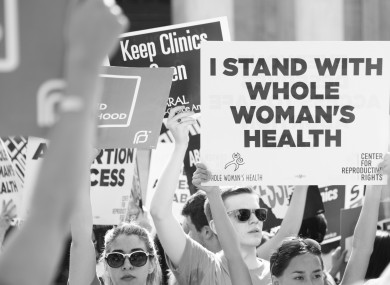
Planned Parenthood, the American Civil Liberties Union, and the Center for Reproductive Rights, a legal advocacy group which argued a landmark abortion case earlier this year, filed three lawsuits in Alaska, Missouri and North Carolina. In Missouri, the groups will challenge a pair of abortion restrictions that have reduced the number of abortion providers to just one. They are taking aim at a similar clinic restriction in Alaska. In North Carolina, they will mount a challenge to a 20-week ban on abortion that has some of the nation’s strictest exceptions.

The two Missouri restrictions are highly similar to laws in Texas that the US supreme court struck down in June. They require abortions to be performed in expensive, hospital-like facilities and require abortion providers to have certain professional relationships with a local hospital.

The supreme court ruled that such restrictions served no medical purpose and were unconstitutional. But similar restrictions remain on the books in several states. In Missouri, where 1.2 million women of reproductive age live, the laws have forced two Planned Parenthood clinics, in Columbia and Kansas City, to stop providing abortions in recent years. The only remaining clinic is located in St Louis, forcing many Missouri women seeking an abortion to travel long distances.

“Because of laws like the ones we are challenging today, for too many women across our country the constitutional right to have an abortion is more theoretical than real,” said Jennifer Dalven, the director of the ACLU’s Reproductive Freedom Project.

But it is the North Carolina challenge that may have the bigger impact on abortion rights nationwide. This is only the second time reproductive rights advocates have challenged a 20-week ban on abortion in federal court – potentially setting the table for these restrictions to go before the supreme court.

North Carolina’s law bans abortions after 20 weeks except in a medical emergency where a woman’s condition is so grave that she requires an abortion immediately. That is stricter than other 20-week bans, which have health exceptions but don’t require there to be a medical emergency.

The bill defines medical emergency as a condition which “so complicates the medical condition of the pregnant woman as to necessitate the immediate abortion of her pregnancy to avert her death or for which a delay will create serious risk of substantial and irreversible physical impairment of a major bodily function” not including mental health.

In their lawsuit, the ACLU, Planned Parenthood and the Center for Reproductive Rights argue that the language essentially forces women having an abortion for health reasons to wait until she becomes gravely ill.

Laws banning abortion several weeks before a fetus is viable outside the womb are increasingly common. Across the country, more than a dozen states ban abortion two weeks before viability on the medically dubious grounds that the fetus can feel pain.

But despite the fact that Roe v Wade prohibits states from banning abortion before the point of viability, most of those laws have not faced a legal challenge. Only Arizona’s 20-week ban, passed in 2012 and struck down permanently over the next two years, was ever the subject of a legal battle in federal court.

Advertisement

The challenge is especially significant now that Donald Trump has been elected president. Trump, in a wholesale embrace of the anti-abortion movement’s top priorities, has promised to sign into law a nationwide ban on abortion at 20 weeks.

One reason is that very few abortion providers have standing for such a challenge. “To challenge these laws, you would have to be actually doing abortions after 20 weeks,” said Priscilla Smith, an abortion rights advocate and a senior fellow at Yale law school. “And there are just so few states where you can obtain abortions at that stage of pregnancy. Despite the anti-abortion world’s focus on post-20-week abortions, they’re very rare.”

But another reason may be that reproductive rights advocates have been hesitant to launch a lawsuit that could reach the supreme court. In the past several decades, many such legal challenges have resulted in the supreme court chipping away at abortion rights.

That changed this summer, when the court ruled 5-to-3 to strike down a set of harsh Texas abortion restrictions. The ruling prohibited states from enacting abortion restrictions based on medically questionable arguments about protecting women’s health. Justice Anthony Kennedy, who is often skeptical of abortion rights, joined the majority.

With Trump potentially empowered to shift the balance of the court rightward, Smith said, reproductive rights advocates are probably facing the friendliest bench possible under the new president.

Courts have struck down early bans on abortion before, including an Arkansas law banning abortion at 12 weeks and a North Dakota law banning abortion at six weeks – before many women realize they are pregnant. In defense of 20-week bans, abortion foes commonly argue that fetuses at that stage of development will feel pain during the procedure. But the evidence is slim. While select studies have found evidence for this, the most recent systematic review of studies on this topic concluded that the fetal nervous system is not developed enough to feel pain until the third trimester.

Still, bans on abortion at 20 weeks occupy fraught emotional territory. Public support for abortion restrictions grows with gestational age, and a substantial portion of Americans are ambivalent or opposed to abortion rights in the second trimester.

Anti-abortion activists place an emphasis on these cases, even though they account for only 1% to 2% of all abortions in the US. Abortion rights advocates argue that many women obtaining later abortions are doing so for health reasons or after discovering a severe or fatal fetal anomaly – although the evidence suggests these are not the majority of cases.

On Wednesday, representatives for Planned Parenthood, the ACLU and the Center for Reproductive Rights said the three lawsuits were the beginning of a spate of legal challenges the groups would mount jointly.

“We are going to fight back state by state and law by law until every person has the right to pursue the life they want,” said Dr Raegan McDonald-Mosley, Planned Parenthood’s chief medical officer.

https://www.theguardian.com/world/2016/dec/01/planned-parenthood-aclu-challenge-abortion-ban

Source: The Guardian

30-nov

Texas will soon require abortion providers to cremate or bury all fetal remains. Lawmakers defend the legislation by arguing that it places no undue burden on women, but many are concerned about how this will affect women’s healthcare in Texas.

Texas Department of State Health Services officials finalized new rules for abortion providers on Monday that will mandate all aborted fetuses be cremated or buried, regardless of trimester. The rules are set to take effect on December 19 to the dismay of reproductive rights activists, the medical community and the Funeral Consumers Alliance of Texas.

The administrative rule was instituted in July and was supported by a number of pro-life and Christian organizations, but it did not receive any blessings from medical associations, civil rights groups or social worker groups who all spoke out against the regulation. The cost of cremation or funerals would not be shouldered by the patients but rather the clinics and hospitals.

Some see this as an attempt to force medical providers from providing abortions due to the basic funeral service fee of $2,000, according to a letter from the Funeral Consumers Alliance of Texas to the State Health Service in late July.

Health department spokeswoman Carrie Williams countered this argument, telling the Dallas Morning News: “While the methods described in the new rules may have a cost, that cost is expected to be offset by costs currently being spent by facilities on disposition for transportation, storage, incineration, steam disinfection and/or landfill disposal.

The health commission also defended the measure as a move to enhance the “protection of the health and safety of the public.” However, the Texas Medical Association and the Texas Hospital Association both disagreed with this, as did the Healthcare Waste Institute of the National Waste and Recycling Association (HWI), which felt it posed more risks than benefits.

The HWI pointed out that these rules require generators that can separate waste materials for proper handling, which is impossible for the commercial facilities that handle this kind of medical waste.

Even attempting to do so would place employees at great risk,” the HWI commented.

The American Congress of Obstetricians and Gynecologists also commented that there is no evidence that current disposal methods pose any public health risk, commenting that “the current laws and professional standards already require safe and respectful disposition of medical waste.

The regulation originally called for the same funeral treatment to be extended to miscarried fetuses or abortions that occur at home, such as women who procure a medical abortion via pill. That provision was later removed, further complicating the logic behind requiring cremation for fetal tissue resulting from abortions.

Reproductive rights activists believe that the upcoming law has nothing to do with safely disposing medical waste.

This regulation has no basis in public health, and it’s just a pretext for putting an additional burden on women who choose abortion or who suffer miscarriage,” staff attorney for the Center for Reproductive Rights, David Brown, told Broadly.

The American Civil Liberties Union (ACLU) expressed similar thoughts. Trisha Trigilio, a staff attorney for the ACLU, told Broadly, “These are special regulations that only apply to fetal tissue, not other human tissue, and the rules only apply to health care facilities like abortion providers, not women who may miscarry in their homes. Texas has advanced zero evidence – zero – that there is a public health reason to treat miscarriages and abortions differently.

https://www.rt.com/usa/368639-abortion-laws-texas-funerals/

Source: RT

3500

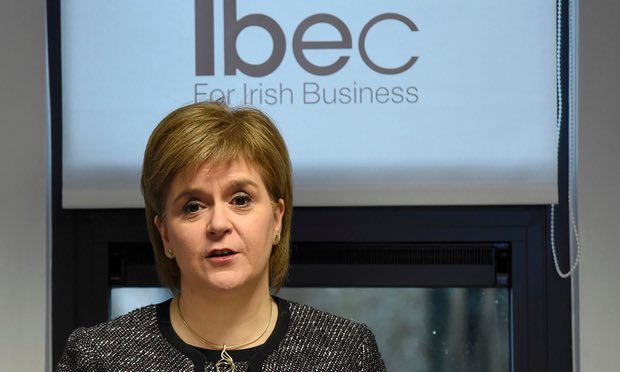
Nicola Sturgeon has confirmed that the Scottish government is to explore how to allow Northern Irish women to obtain free access to abortions in Scotland’s NHS hospitals.

Scotland’s first minister, during a visit to Dublin on Tuesday, said that the Edinburgh devolved government would hold talks with the Scottish NHS that may enable women from Northern Ireland to have terminations for free on the health service.

Across the UK, the NHS has so far refused to pay for abortions for women from Northern Ireland who travel to Britain. The procedure is only available in Northern Ireland’s hospitals when the pregnancy poses a direct threat to the mother’s life. It is illegal in all other cases.

Last week. Patrick Harvie MSP, the leader of the Green party in the Scottish parliament, said it can cost between £400 and £2,000 for a woman from Northern Ireland to obtain an abortion at a private clinic in Britain.

The supreme court in London is considering an application from a Northern Irish teenager, who, as a 15-year-old, had to go to England to terminate a pregnancy. She is challenging the NHS’s refusal to fund abortions for women from Northern Ireland.

Sturgeon said: “I was asked a question specifically in parliament about the scenario where a woman from Northern Ireland chooses to access an abortion in Scotland and whether they should be charged for that or not.

“Now I said that we would explore that, so we are looking in terms of the process and will discuss with the NHS what would happen now routinely, and whether there are options to change that, to make the process safer for the women concerned.

“My view is that if a woman is going to access an abortion then the important thing is that it is as safe as possible … I am not putting a timescale on it but I will report back to parliament in due course.”

An estimated 2,000 women a year have to raise the money to travel to private English clinics and hospitals from Northern Ireland to have terminations.

However, there is strong opposition from both unionist and nationalist members of the Northern Ireland assembly to liberalising the province’s strict anti-abortion laws. The Abortion Act 1967 was never extended to Northern Ireland and an attempt to ease the law to include cases of fatal foetal abnormalities and pregnancy via sexual crime was rejected this year.

Sturgeon was speaking at an event organised by IBEC, the Irish employers’ organisation, on the second day of her official visit to Ireland. Later on Tuesday she will become the first leader of Scotland to address the Irish parliament when she will deliver a speech in its upper house, the Seanad.

Before her lunchtime speech, Sturgeon said she would press London to retain an open border between the Republic of Ireland and Northern Ireland and this was central to her discussions with the British government over the impact of Brexit.

“It is absolutely essential to maintain an open border … It is important to emphasise the unique status of Ireland, the peace process and the Good Friday agreement, and keeping an open border. Out of all of the things that we no doubt find disagreements on in terms of Brexit – what does it mean and what paths the UK take – I would hope that something everybody in the UK and also in the European Union can agree on is that there has to be solutions found to avoid some of the implications of Brexit for the island of Ireland,” she said.

She also addressed what she called the “ill will” that exists between London and Brussels since the EU referendum.

Sturgeon said: “I don’t think ill will on this is inevitable but I think it will occur if the UK continues to display the kind of attitude towards this whole situation that it has been doing. But I don’t think ill will is inevitable and that is related to the issue of a plan. If the UK gets itself into a position that is clear, reasonable about what it’s trying to achieve then there may be scope to have a relatively harmonious process that delivers a compromise position.

“There is no plan at present and anyone who tries to suggest otherwise is just indulging in hope over reality. I think Whitehall has been discovering day by day just how complicated the whole situation is. Do I have confidence that there will be a coherent plan? As I say, the jury is out on that and it is still not highly clear to me how the UK gets from where it is now to having a clear consistent plan by the end of March.”

https://www.theguardian.com/world/2016/nov/29/sturgeon-confirms-scottish-talks-on-free-abortions-for-northern-irish-women

Source: The Guardian


As Donald Trump promises new restrictions on abortion, emails reveal the desperation of women who have no place to go to end unwanted pregnancies

28-nov-2

“Hello. I just found out that I am four weeks pregnant.

“I cannot carry on with this pregnancy for numerous reasons and I want to have an abortion. Though it is an option for me in the United States, in reality, it is not really an option because the $600-$700 to have it done is simply out of the question.

“I’m hoping you can advise me and are able to help. I am absolutely desperate.”

Martina read through her email once again and hovered her finger over the send button. The message was addressed half a world away to Women on Web, a Dutch not-for-profit group that mails abortion drugs to pregnant women who live in countries where abortion is outlawed.

Martina lives in Texas, where abortion is restricted but legal – making it one of the places where Women on Web refuses to mail the drugs. Still, Martina thought she would try her luck. She had lost her job to downsizing, and in its place she had found only part-time work. Her rent had gone up. Lately, she was borrowing money for gas.

There was no question that she couldn’t afford to have a child. The question was whether she could even afford an abortion.

Martina had an inkling that what she was asking for – help performing her own abortion – might not be fully legal. But she was out of answers. She hit send. Then she began to case the internet for other ways she could cause her own abortion.

If this scene feels out of place in 2016, that may be because there was a time in this country’s history when thousands of back-alley and coat-hanger abortions prompted calls for the procedure to be legal. After the US supreme court established a right to a legal abortion, in the 1973 decision Roe v Wade, self-induced abortions were supposed to become a thing of the past.

But almost as soon as the court legalized abortion, opponents of abortion rights began to whittle them away. Congress began prohibiting poor women from using Medicaid to cover abortions in September 1976. Obamacare, the largest healthcare expansion in decades, allowed insurers to continue to pick and choose the circumstances under which they would cover abortion and allowed states to ban the coverage altogether. The two decisions have ensured that millions of women who have sought an abortion have had to pay for it out of pocket. And a sweeping wave of anti-abortion laws has closed clinics in many states, cresting with an awesome force over the last five years.

In such a hostile climate, it is no wonder that self-induced abortions are still a significant, if largely hidden phenomenon – one that even pro-abortion rights groups are only just beginning to grasp. One study of abortion patients found that 2.2% had tried to, at some point in their lives, induce their own abortions without professional medical assistance. Another estimated that potentially 4.1% of Texas women have tried to self-induce – or at least 100,000 women.

There is no concrete data on how many women in the US have tried to self-induce. But there is some evidence – although it is inconclusive – to suggest that self-abortion attempts are on the rise. From 2008 to 2011, as the economy worsened and a wave of new restrictions choked abortion access around the country, online queries about self-induced abortion almost doubled, according to Seth Stephens-Davidowitz, an economist who analyzes Google searches.

Into this crisis of reproductive rights now walks Donald Trump. As president, Trump has promised to restrict abortion even further. He has vowed to nominate justices to the supreme court who might overturn Roe v Wade. Roe, because the court is loath to reverse itself, has survived such threats before. But Trump has explicitly promised to nominate justices who might put Roe in their crosshairs.

In his first major interview after winning office, Trump described – truthfully – what might happen to some women if Roe v Wade were overturned. “They’ll perhaps have to go, they’ll have to go to another state,” he said. “And that’s OK?” he was asked. Trump replied, “Well, we’ll see what happens.”

But we don’t have to wait and see what happens. History has already shown us what happens when women in the US can’t access abortion. So has the present day.

In 2015 alone, Women on Web, the Dutch not-for-profit, received more than 600 emails from US women looking for a way to end their own pregnancies. (The group does not send abortion drugs to the US, because the US does not outright ban abortion.) Women on Web agreed to share scores of these emails with the Guardian, providing an unprecedented window into the lives of women who feel they have no other option but to end their pregnancies themselves.

Among the hundreds who wrote to Women on Web was Martina. She contacted the Guardian shortly after she found out about her unwanted pregnancy and shared every step of her journey, which eventually took her across an international border. (As corroboration, she provided photographs, including of her travel documents. Her name has been changed for her privacy.) She wasn’t sure if she faced a potential legal risk. And in fact, self-induction is in a legal gray area, and many enterprising prosecutors have charged women who carried out their own abortions with crimes. Nevertheless, Martina felt compelled to speak.

“I feel like there’s such a negative stigma to this,” she said. “It’s kind of kept under the radar, hushed, so it needs to be talked about.” People needed to know, she added, that abortion restrictions had real victims. “You’re not really helping anyone. You’re not really protecting anyone. You’re just causing women who are in these situations who feel desperate to take desperate measures.”

The letters to Women on Web form a uniform chorus of desperation. “Please” and “afford” and “help” and “fear” appear in dozens of places, signaling the nature of how these women became stranded.

“now he is threatening me, saying I can never leave.”

“I am afraid of what he is capable of.”

“For a variety of reasons, an abortion must look like a miscarriage.”

“this has to look like a miscarriage.”

“I don’t have $600.”

“Planned Parenthood wants $650. My bf and I live in our car.”

“I can’t afford an abortion.”

“I simply cannot afford an abortion.”

A teenager in a state where minors need parental consent for an abortion said her parents were forcing her to have her baby.

A woman in Missouri wrote to say that she had gone to her state’s only abortion clinic, “but the protestors shamed me into going back. I’m not a citizen and its a little scary coz I feel very lonely.”

“I am beside myself,” read another woman’s email. One month before she wrote her email, she was raped. She received her coverage through Tricare, the insurance plan for military personnel and their families. Tricare’s policy is to cover abortion in cases of rape as long as a doctor has a “good faith belief” that the rape occurred, according to a spokesman. But this woman wrote that Tricare refused to pay for her abortion on the basis that she never reported the rape.

“To end this nightmare,” she wrote, “it would cost me one-third of my family’s monthly income.” She continued, “I have seen a doctor. I have had a sonogram. Tricare covers that. I can give birth to my rapist’s baby for free.”

“Please I am out of options,” the letters read.

“Can u please.”

“please please please.”

“I cry and pray every night that the Lord take this child from me somehow.”

“I will keep searching online for help.”

What is striking about reading these emails one after another after another is the diversity of experiences that lead all these women down the same path. There are homeless women and middle-class women and married women and single women, women living in cities and women separated from the nearest abortion provider by an ocean: two wrote in from the big island of Hawaii, where the last clinic, a Planned Parenthood in Kailua-Kona, closed in 2014.

“When people think about low-income women seeking abortion, they have this stereotypical vision of a single woman on welfare,” said Laurie Bertram Roberts, head of the Mississippi Reproductive Freedom Fund. Her group provides financial assistance for abortions. “But it’s also people who have two jobs. Six hundred dollars is a lot of fucking money. For a lot of the people who call us – not a majority, but many – those barriers are just too high. Even with our help.”

Women on Web wrote back to Martina a few hours after she sent her message. “We’re sorry,” the reply came, “Women on Web cannot provide the service in any country with safe abortion services.” The email listed a few not-for-profit abortion funds Martina could call for financial assistance. Then it recommended another option: “If you live close to Mexico you can also travel to Mexico to buy misoprostol,” a drug that can induce a miscarriage early in a pregnancy.

It sounded like a gamble. Martina felt a jolt of fear. “What if it’s incomplete? What if I do it wrong? What if I fuck up my organs somehow?” She pushed these thoughts aside. At least it was an option.

Martina learned that her insurance would not cover her abortion and left messages with two abortion funds. She also found a world of websites describing ways to induce abortions with herbs or vitamins. Following advice from the sources that looked the most reputable, she began taking cinnamon capsules and several thousand milligrams of vitamin C per day.

It’s not unheard of for women to turn to herbal concoctions, reproductive rights advocates said. “It’s considered an OK thing to do – this is just how they’ve handled it for years,” said Esther Priegue, the director of counseling at Choices Women’s Medical Center, an abortion clinic in Queens. Her patients occasionally use an herbal brew to try to induce a miscarriage.

The internet resounds with such recipes. “What you probably have, in reality, is hundreds of people doing it hundreds of different ways,” said Beverly Winikoff, the president of Gynuity Health Projects, a reproductive rights research group. “The way it’s always been.”

Of course, there weren’t supposed to be hundreds of different ways.

Self-induced abortion was supposed to have all but disappeared after the supreme court established the right to an abortion throughout the country. In the run-up to Roe v Wade, in the late 1960s and early 1970s, abortion was restricted to a handful of major cities and the women with the means to travel there. Roughly 100,000 women crossed state lines for a legal abortion in New York state; in a single year, the number of women going to illegal providers or trying to self-induce was up to 12 times that. Some years, up to 200 women would die of complications from illegal or self-induced abortions. And compared with the number of women who survived horrific complications, that figure appears small. In 1968 alone, a single Los Angeles County hospital treated 701 women suffering from septic abortions.

But just a few years after Roe, the country seemed to vanquish the coat-hanger abortion. In 1976, the Centers for Disease Control announced that only three women had died the previous year from abortion complications – a stunning reduction in deaths. When anti-abortion activists accused the centers of undercounting, the CDC, according to the book Inside the Outbreaks, put up a $100 bounty for proof of any abortion death the centers had failed to report. “We paid out zero money,” one official recalled proudly.

But others realized that, even though women were no longer dying in scandalous numbers, illegal and self-induced abortions were still a serious problem.

The CDC announcement came out the same year Dr Jason Doe began to do his medical residency. In the remote north-west corner of Louisiana, he rotated through an obstetrics ward that received many of the area’s most impoverished residents. The state’s only abortion clinic stood in the opposite corner of the state. “So even though abortion technically was legal” for those women, “it wasn’t available,” Doe said.

One of his first patients had unraveled a wire coat hanger and used it to break her water. Another broke her water with a red rubber catheter her friend had stolen from a hospital.

Doe’s memory of another patient is dominated by her screams. As she seized in pain, doctors removed an intact cotton boll – the husk was still attached – from her vagina. She had soaked the cotton fibers in turpentine and honey.

“In three years, I suppose I saw a dozen cases,” said Doe. (Doe agreed to speak only under a pseudonym. He works as an abortion provider in Shreveport and has kept his identity hidden from the public.) He treated women who had gone to back-alley abortion providers and a woman who had shot herself in the stomach. Turpentine became a kind of harrowing motif. One woman used a syringe to inject it into her abdomen. The tide only ceased in 1980, when two abortion clinics opened a few months apart in nearby Bossier City and Shreveport. Roe v Wade was seven years old.

“Just making it legal is not enough,” Doe said. “If it’s not available, if a woman really does feel that she needs to terminate her pregnancy, she may be willing to try just about anything.”

His were not isolated experiences. In 1977, Rosie Jimenez became one of the first women to die from an illicit abortion after Roe v Wade. Jimenez had previously had one legal abortion, paid for using Medicaid. But in 1976, Congress passed the Hyde amendment, which banned the use of federal Medicaid funds to pay for abortion and which many advocates still consider the country’s biggest barrier to abortion access today. The next time Jimenez became pregnant, she sought out an unlicensed midwife in McAllen, Texas. She died of a bacterial infection.

In fact, nearly every year after Roe v Wade brought isolated reports of a woman taking drastic steps to terminate her pregnancy. 1978: Three young women in Colorado poisoned their livers by drinking tiny amounts of aromatherapy oil to try to induce an abortion. 1984: A teenager injected herself with a local anesthetic and attempted to cut out her fetus. 1994: A Florida teenager placed a pillow over her abdomen and shot herself in the side.

Earlier this month, a woman in Tennessee was charged with aggravated assault for trying to give herself an abortion with a coat hanger. She was found out after profuse bleeding sent her to the emergency room.

It is against this backdrop of tragedies that some reproductive rights activists have argued for making the same abortion drugs used routinely in clinics available to women in their homes. “It would be phenomenal if people could receive this medication in the mail with all the instructions” and the right safety measures, said Yamani Hernandez, the executive director of the National Network of Abortion Funds. Already, she added, the internet is allowing untold numbers of to find and use the drug without medical supervision. Among the 700,000 searches on self-abortion Stephens-Davidowitz identified in 2015, some 160,000 were searches for a way to obtain the abortion pill through back channels.

Is there a chance those searches could increase under a Trump presidency? “Yes,” said Hernandez. “That is something that one could reasonably predict in an environment where abortion becomes even illegal, or even more inaccessible than it has been. We will do anything in our power to get people the information and the care that they need.” Even now, her group posts instructions for self-administering misoprostol on its website – “For safety’s sake.”

Not all advocates feel good about disseminating this information. But they consider it better than the alternatives.

Recently, Roberts answered one of the “scariest calls” of her advocacy career. A young woman was on the line, saying her friend had given her a home remedy. Her friend claimed to have used this method to end four separate pregnancies, even though each time it sent her to the hospital.

“Ultimately, we helped this woman go to a clinic” before she could do something dangerous, Roberts said. “Her friend had told her to drink turpentine with sugar.”

At a crisis pregnancy center, an ultrasound confirmed that Martina’s home remedies hadn’t worked. She was still pregnant. The distress must have shown on her face, because the technician offered a flurry of reassurances. They see a lot of single moms who do it on their own. They have a store that sells baby clothes at a markdown. They help with discounts on daycare. Martina fumed. A baby is more than just buying clothes and food, she thought.

In her head, she was already reviewing her plan. She had heard back from only one abortion fund, which had turned her down for assistance because she had a job. And so, for a quarter of what a US abortion clinic would charge, she had purchased a flight to Mexico City. The flight left the next day. She would stay with a friend. Abortion pills would cost about $20 at a pharmacy – if she could find a pharmacy that carried the drug and would sell it to a young woman.

Then, she would take the drugs at her friend’s house. “I’m gonna say like, ‘Oh man, I’m on my period, I’m so sorry, I hate that this is ruining the trip, I feel so sick,’” she said, sounding perfectly unrehearsed.

Martina had relied on this kind of subterfuge for the past several weeks. Friends had noticed she was distracted. Her boss had noticed she was nauseous. “This whole time that I’ve been pregnant, and that I’ve known I’ve been pregnant, that’s all I’ve thought about,” she said. “I’ve almost cried like five times today.” But you have to push that aside and act like you’re fine, she said: “Oh yeah, I’m sorry, I was zoned out for a sec.” “Oh yeah, sorry, just not feeling great.”

The more difficult challenge was hiding her pregnancy from her boyfriend. She knew he would want to start a family. At home, she was taking so much anti-nausea medication to keep from vomiting in front of him that she no longer had enough to sustain her through the work day.

“You feel alone, but you can’t do anything about it,” she said. “I just kind of have to put my feeling outside of it. You need to focus. What do you need to do in order to move forward?

“It’s kind of like when you’re drowning. If you just flap around, you’re just going to drown. But if you focus on what the goal is, on what you need to do, stay calm, that’s how you’re going to survive.”

It was the sixth pharmacy Martina went to in Mexico that sold her the misoprostol. The first five, a mix of big national chains and mom and pop shops, claimed they didn’t carry it. She felt at least one pharmacist was lying to her. Finally, she returned to the first store to ask, if not here, where could she buy it?

A little while later, she paid $26 for a blue carton about the size of her hand. Misoprostol, it said. Caja con 28 tabletas.

It wasn’t an exciting feeling, holding the box. It was scary, Martina said. “It’s just like a God-I-just-want-to-get-this-over-with” feeling. She was still too nauseous to take the pills while she was in Mexico City, so she would have to take them in the United States. It was a panicky moment, bringing pills back through customs. But there was a larger fear.

“My biggest concern is, what happens if someone finds out? What happens if something goes wrong?” Martina had said a few days earlier. “What happens if my body doesn’t completely rid itself?” In most abortion clinics, she knew, a medication abortion was induced with two drugs: one drug to terminate the pregnancy, and misoprostol to expel the pregnancy. She would only be taking the misoprostol. “So basically, you’re half-assing the job.”

She knew what symptoms would tell her something had gone wrong. But still. “There’s just so many questions. I would so much rather have a health professional help me in this and kind of guide me through it versus DIY. There’s some things aren’t meant for that, and this is definitely one of them.”

It is impossible to know what happened to all the other women who reached out to Women on Web. But a study of women who were rejected because they were past the clinic’s gestational limit found that most of them carried their pregnancies to term.

Roberts, the Mississippi activist, said that many women who struggle to pay for an abortion eventually get creative. Not long ago, she spoke to a mother who was weighing whether to raid her diaper fund to pay for her abortion. It was unlikely her parents would lend her money for an abortion, she reasoned, but they would probably help her buy more diapers.

“There are no more creative problem solvers, and I mean this, than women with no money,” she said. “And I’m saying that with the utmost respect, because there are people who will think of all this as shady. And I’m not. I’ve seen people struggling, and being brilliant, brilliant, in coming up with ways to survive.” It’s a skill she fears more women might need in the future.

Martina’s trip had cost a fraction of the money she needed to raise for an abortion in a US clinic – something her mind was still trying to grasp. “The whole time I was traveling, I couldn’t believe it was happening,” she said.

We were speaking a few days after she returned from Mexico. An ultrasound had just confirmed that she was no longer pregnant, and her voice was sunny. “I am so relieved, to be honest.” She hadn’t realized, until she was no longer pregnant, how much stress she had placed on herself. Now, she felt like she could breathe, she said. Like she could step back on the path of her life and figure out where she had been when she diverged.

Martina had taken the pills on a Saturday. She took the first dose. She set a timer on her phone. Then she took the second dose.

The pills worked just like they were supposed to. She bled, but not too much. She felt the pregnancy pass. She felt exhausted.

And then it was done.

https://www.theguardian.com/us-news/2016/nov/21/home-abortions-emails-secret-world

Source: The Guradian

27-nov

A group that advises the Irish government on abortion has been told poorer women are accepting crisis pregnancies because they cannot afford a legal termination.

The group was meeting to consider if it should recommend a new referendum on abortion law in the Republic.

Currently abortions are permitted only when the mother’s life is in danger.

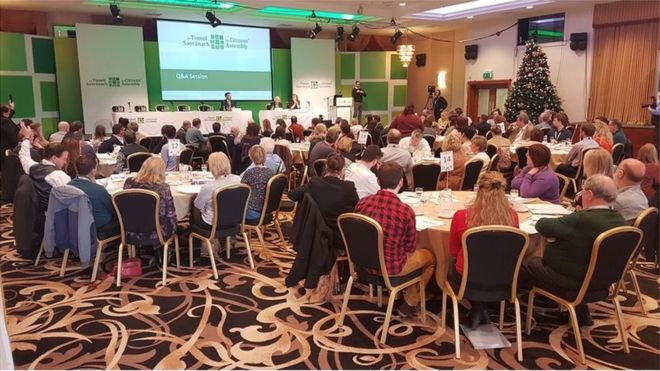
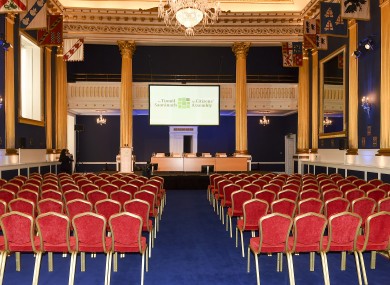
The Citizens’ Assembly is meeting for a weekend-long session in Malahide, County Dublin.

Speaking at the meeting, Dr Brendan O’Shea, a member of the regulatory body for general practitioners, said financial constraints were leading some women to carry on with unwanted pregnancies.

Meanwhile, a speaker from the HSE’s Sexual Health and Crisis Pregnancy Programme, Janice Donlon, said that between 2010 and 2012 an average of 821 women on the island of Ireland were sent abortion pills annually.

Cork obstetrician and gynecologist, Professor John Higgins, said over 2014 and 2015, the Protection of Life During Pregnancy Act had facilitated 26 terminations.

Most arose from a mother’s life-threatening physical illness, with just three involving the threat of suicide.

Consultant Perinatal Psychiatrist, Anthony McCarthy, quoted international research on the damaging effects of pressurising women in crisis pregnancies.

The specialist at the National Maternity Hospital said that the surveys consistently found that women who are pressurised to have an abortion, or not to have one, suffer significant mental health problems because of that.

The chair of the assembly, the Supreme Court Judge Mary Laffoy, told members their meetings between now and March will be their most difficult as they debate the issue.

On Saturday morning, the assembly heard an address on the history of the Eighth Amendment.

The amendment, introduced in 1983, essentially gives constitutional protection to an unborn child.

Outside the meeting, a small group of protestors staged a demonstration.

Prof Eoin Carolan of UCD said that although abortion had been illegal in Ireland since 1861, the 1983 amendment made it clear for the first time that the right to life applied to the unborn.

Prof Carolan recalled that in 1992, the Supreme Court ruled in the X case that abortion is allowed where there is a real and substantial risk to the life, as distinct from the health, of the mother and where the risk could only be avoided by the termination of her pregnancy.

He said that the risk could be from either a threat of suicide or because of a physical condition.

http://www.bbc.com/news/world-europe-38117838

Source: BBC

26-nov

The current regime will be laid out but not critiqued.

THE CITIZENS’ ASSEMBLY will today get to down to the business of speaking about Ireland’s abortion regime but will not deal with comments on or criticisms of the current regime.

Instead, this second weekend of the 100 person assembly will hear factual presentations from legal and medical practitioners about abortion in Ireland.

For example, Janice Donlan of the Crisis Pregnancy Programme will give details of the prevalence of terminations amongst Irish women.

Professors John Higgins of Cork University Maternity Hospital and Anthony McCarthy of the National Maternity Hospital will speak about the implementation of the Protection of Life During Pregnancy Bill and how it works in practice.

McCarthy is one of the medical professionals who assesses women in Ireland who are seeking legal abortions on the grounds of being suicidal.

Another speaker tomorrow, Professor Mark Sheehan of Oxford University, will provide the members with different ways of approaching ethical issues.

He will not being dealing with the ethical arguments surrounding the issue at hand.

The Eighth Amendment of the Constitution is the first issue of five to be tackled by the assembly and today’s meeting follows an initial gathering in October in which the members were given a broad outline of the process.

Since that meeting, 11 of the members have been replaced by people from a substitute list of 99 others.

Most have been replaced due to personal commitments while one member said they left because their past advocacy work had not been revealed.

Members have agreed to a request that they will not discuss their work as part of the assembly on social media but no specific sanction has been put in place should this be broken.

The assembly’s proceedings will be streamed online but some of the roundtable discussions involving the members will be kept private.

Question and answer sessions between the members and speakers will however be public.

Supreme Court Judge Mary Laffoy who c

The assembly’s secretariat has outlined that members will make clear during a public session the specific issues they wish to hear about in relation to the Eighth Amendment.

Interest groups who wish to present to the assembly have been asked to indicate their desire to do so during the ongoing submission process.

Their participation or otherwise will, however, be based on requests made by the members and under the discretion of Chairperson of the Assembly Justice Mary Laffoy.

Submissions

The submissions process on the issue of the Eighth Amendment is ongoing until 16 December. So far, about 600 submissions have been made, most of which have come from individuals.

These have not yet been published online but this will be done in due course.

The assembly’s secretariat has made clear that editorial decisions will not be made on these submissions although some may not published if, for example, they are considered offensive.

Specific materials will be sent to the members as part of the process.

One member has requested the materials be sent to them by post while the remaining members will receive their materials electronically.

It’s envisaged that the issue of abortion will be discussed on four separate weekend-long meetings each month until March when a recommendation will be made to the Oireachtas.

This recommendation will be made following a vote or series of votes by the assembly members.

If a change is recommended, the government must decide if a referendum is required.

Whether or not a change is proposed, the assembly’s recommendation will be more precise than simply stating whether or not a referendum should be held.

This weekend’s meeting of the Citizens’ Assembly is being held in the Grand Hotel, Malahide.

http://www.thejournal.ie/citizens-assembly-meeting-3-3102535-Nov2016/

Source: The Journal

25-nov2

Longtime pro-abortion activists Bill and Melinda Gates today received the highest honor the Untied States can bestow upon a citizen who is not a member of the U.S. military. Obama today awarded two doezn recipients of the Presidential Medal of Freedom and those recipients included the abortion activists.

The Presidential Medal of Freedom is “presented to individuals who have made especially meritorious contributions to the security or national interests of the United States, to world peace, or to cultural or other significant public or private endeavors,” and Obama apparently believes dedicating one’s life to promoting abortion is a part of that list.

According to the Gates Foundation grant database, the Foundation gave Planned Parenthood of America, the International Planned Parenthood Federation, and Planned Parenthood of Western Washington about $71 million from before 2009 through 2013. Additionally, the Gates Foundation gave $46.1 million to Marie Stopes International in 2012 alone.

Much of this giving is focused on Africa, Asia, and Latin America, where abortion-providers like Planned Parenthood, Marie Stopes, and Ipas seek to overturn pro-life laws and sometimes even provide illicit abortion drugs.

While Gates Foundation funds cannot be earmarked for abortion, the fungibility of money makes it easier for these organizations to provide abortion internationally.  In other words, every dollar the Gates Foundation gives to Planned Parenthood for distributing birth control or building an abortion-friendly clinic frees up a dollar in Planned Parenthood’s budget to spend elsewhere.

In 2012, Melinda Gates was criticized for promoting abortion and population control at an international meeting.

The same year, she was criticized for hosting a Family Planning Summit in London with two of the biggest pro-abortion groups in the world, the UN Population Fund and International Planned Parenthood Federation.

More recently, the Gates Foundation is funneling more money into global programs promoting population control and abortion after a group warned that international family planning goals are not being met.

The Gates Foundation promised to give an additional $120 million to Family Planning 2020 programs that support “the rights of women and girls to decide when and how many children they want to have,” the news website All Africa reported in 2015. Both Planned Parenthood and Marie Stopes International, two of the largest abortion businesses in the world, are partners in the global Family Planning 2020 initiative, according to a press release from the initiative.

http://www.lifenews.com/2016/11/16/obama-awards-presidential-medal-of-freedom-to-abortion-activists-bill-and-melinda-gates/

Source: LifeNews