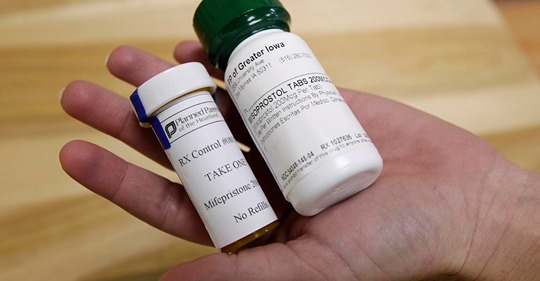
In this excerpt from Choice Words, Annie Finch’s anthology of abortion poems, stories, and essays, she reflects on how literature on abortion is necessary on both a personal level and a larger societal one.

We count on writers to illuminate our feelings, to help us claim and integrate the unacknowledged parts of ourselves and the aspects of others that feel alien or threatening, and to play out the complexities and paradoxes of our thoughts.
Shutterstock

I had an abortion in 1999.

Searching for literature to help me absorb my experience, I realized that I had rarely read anything about abortion (and I have a Ph.D. in literature). I was astounded to discover that there was no major literary anthology about one of the most profound experiences in my life and that of millions of others. A physical, psychological, moral, spiritual, political, and cultural reality that navigates questions of life and death, abortion should be one of the great themes of literature.

My anthology, Choice Words: Writers on Abortion, which was published recently, was the result of the 20-year search that grew out of this initial sense of shock and loss. As I put out calls for poetry, novels, short stories, and drama and reached out to writers and scholars for recommendations and leads, I discovered that major writers had indeed written about the subject, but that much of the literature was hard to find, unpublished, or buried within larger literary works. The project was dispiriting at times, and I had nearly given up when a traumatic presidential election and an enraging Supreme Court appointment renewed my energy to complete the book.

Over the years, it grew to encompass lyric and narrative poems, plays, short stories, tweets, memoirs, flash fiction, rituals, journals, and excerpts from novels—writings that invoke grief, defiance, fear, shame, desperation, love, awe, tenderness, sorrow, regret, compassion, hope, despair, resolve, rage, triumph, relief, and peace. Writers from the 16th through 21st centuries, across ethnicities, cultures, genders, and sexualities have written on the topic of abortion, including writers of diverse backgrounds and voices—sharing how class, patriarchy, race and ethnicity, wealth, poverty, and faith traditions impact our understanding and experience of abortion.

Some of the pieces included are moving first-person accounts ranging from contemporary high schoolers in Pakistan to feminist legends such as Audre Lorde and Gloria Steinem. Others express the imaginative literary vision of major writers such as Margaret Atwood, Ruth Prawer Jhabvala, Ursula LeGuin, Gloria Naylor, Joyce Carol Oates, Anne Sexton, Ntozake Shange, Leslie Marmon Silko, Edith Södergran, Amy Tan, Mo Yan, and so many more.

These stories depict the collective courage of our struggle to gain back reproductive freedom and make clear that bodily autonomy is necessary to human freedom and integrity. They describe the tragic emotional and physical toll of cultural, political, and religious attempts to force us to have children, to force us to have abortions, or to surround our reproductive choices with shame, silence, and isolation. These are the words we need to learn from now.

We count on writers to illuminate our feelings, to help us claim and integrate the unacknowledged parts of ourselves and the aspects of others that feel alien or threatening, and to play out the complexities and paradoxes of our thoughts. That is one reason literature has such a vital role to play in the conversation about abortion right now. The political arguments have been made repeatedly; in some ways there is nothing else left to say, and yet so much more needs to be said.

These writings on abortion bring exact insight, body-knowledge, compassion, strength of will, and intuitive blessing to bear. They don’t provide simple answers, but they do offer patterns:

Abortion as an act of love 

In a perceptive and forward-thinking article, “Abortion, Killing, and Maternal Moral Authority,” the philosopher Soran Reader points out that mothers choose abortion as a loving act of caretaking, whether for existing children or for the child they choose not to have. That our current social structure surrounds abortion with the opposite stereotype shows the gulf between women and those who make the laws and precepts. Yet if the many accounts of violence suffered by women at the hands of government and religion incite anger and grief, note the glimmers of light emerging from the shadows, the premonitions of the way it could be better. With courage and tenderness, it is possible to support empowering and respectful abortion amid loving community.

Though suspicion and discomfort about women and about death combine into a toxic cloud around the act of abortion, the harrowing experiences described in some literary works are caused not by abortion itself but by its control, compulsion, criminalization, censoring, or condemnation. Whether the outcome is unnecessary death, as in the contributions by Langston Hughes and Amy Tan, or the shame and alienation caused by enforced silence, it is the loss of sovereignty over the truth of one’s own body that haunts and destroys. Reproductive choices are uniquely individual and complex—and should therefore never be legislated by anyone for another. Abortion is normal; violent control over it is not.

Abortion as symbol and archetype 

Like death and birth, abortion has huge symbolic power that can enlarge a writer’s canvas. For some writers, abortion is not so much the topic as a way of talking about a different topic; for example, a connection between putting oneself ahead of a pregnancy and moving to the center stage of one’s own life is evident in numerous pieces including those by Rita Mae Brown, Angelique Imani Rodriguez, and Lindy West. Male writers have often used abortion as a symbol for sterility and alienation. Langston Hughes’s “Cora, Unashamed” can be seen to continue this tradition, though in a way made more nuanced and complex through issues of race.

Only freedom is nonviolent—and freedom depends on justice 

There is violence in anything that forces reproductive choices against a person’s will. While in the United States and most of Europe we think of the freedom to have an abortion as a basic liberty, there are millions of women struggling desperately not to have abortions—usually of female babies. Choice is only possible when there is reproductive justice, and differences based on poverty, wealth, politics, ethnicity, class, religion, marital status, age, geography, or nationality unjustly restrict reproductive freedom. Yet for all the dazzling variety of differences that patriarchy exploits to justify imposing reproductive injustice, the cross-cultural truth-telling in this book exposes core similarities among the injustices themselves. To recognize such widespread patterns can be as bracing and illuminating as it is horrifying.

Reproductive freedom can be emotionally complex 

While my personal view is that access to safe, legal abortion is a fundamental human right, I chose to include many poignant expressions of grief and regret over the choice to terminate a pregnancy, or ambivalence about the ethical and spiritual nature of abortion. There is no contradiction here. The fact that we may have negative emotions about a particular abortion doesn’t mean that abortion is wrong. The possibility of negative feelings is part of the responsibility of choice.

Feelings about an abortion can evolve 

The aftermath of abortion is as various as the experience itself, and recovery can be a dynamic and changing process. As Ava Torre-Bueno’s valuable book Peace After Abortion explains, the need some of us feel for emotional healing after an abortion may offer a doorway to confronting other, far older wounds that have nothing to do with abortion. Several contributors told me of the peace of mind they found in writing about an abortion thirty, forty, or even fifty years later; some felt that this anthology gave them permission to write about it for the first time. But by contrast, some of the writings describe moving on nearly immediately—with a flirtatious dance in a lesbian bar, a glass of wine in Bulgaria, or a pastrami sandwich in Greenwich Village.

The role of connection and support 

Many writings portray the crucial importance of a caring supporter. On the other hand, the absence of such support can be wrenching. One subtle, sad discernible truth is that the patriarchy’s wounding of women and gender nonconforming people resonates down through the generations, compromising our ability to tend and cherish one other during our life-and-death moments.

My vision for the role of Choice Words takes the form of three concentric circles: individual experience, collective understanding, and social change. On the individual level, I hope the book will be helpful to people who are dealing with abortion in their own lives or who seek to understand it more deeply, offering compassion, support, companionship, and insight.

But this is only a beginning. I felt this deeply during the editing process, when my prolonged and diligent hunt for literature from some writers whose perspectives badly need to be heard—including imprisoned and transgender writers—yielded nothing. As Gillian Branstetter of the National Center for Transgender Equality told me, “stigma and silence make it difficult for any person to talk about their abortion, and it is frequently worse for people who feel excluded from the conversation—including transgender men and nonbinary people. That is just why their stories are so important.”

Many are beginning to recognize that control of sexual and reproductive autonomy is integrally related to other forms of authoritarianism and exploitation. Literature on abortion can be used for book club discussions as we take the first step towards change, raising awareness; it can be used as a source text for abortion healing circles and consciousness-raising groups as we take the next step towards change, healing ourselves; and it can be used as the focus of community discussions across ideological lines.

I wrote these words sitting in the main reading room in the Library of Congress at a profoundly challenging time for reproductive rights in the United States and in many other parts of our planet. Yet I am heartened and moved by the continuity of this chorus of literary voices across eras and continents.

Today’s circumstances are driving new voices to speak up without hesitation or shame about the central importance of reproductive justice for human rights all over the world. To bring the power of literature to bear on the topic of abortion at this hinge time in the resurgence of our full and complete human rights has been my privilege and my joy.

Edited by poet Annie Finch, Choice Words: Writers on Abortion was published by Haymarket on April 7, 2020. Twenty years in the making, the literary anthology is a collection of essential poems, stories, and essays that reflect our collective struggle for reproductive freedom. 

Source: https://rewire.news/article/2020/05/01/why-we-need-literature-on-abortion/

The Christian right is likely to score big wins from a majority-Republican Supreme Court.

Supreme Court Hears Arguments In Case

Margot Riphagen of New Orleans dresses as a birth control pill pack while dancing in front of the US Supreme Court during oral arguments in Sebelius v. Hobby Lobby March 25, 2014, in Washington, DC. Chip Somodevilla/Getty Images

Next Wednesday, the Supreme Court will hear a pair of cases, Little Sisters of the Poor v. Pennsylvania and Trump v. Pennsylvaniawhich could write the final chapter in a multi-year struggle over whether employers with religious objections to birth control may deny insurance coverage of contraceptives to their employees.

With two Trump appointees occupying seats on the Supreme Court, the Court is now far more conservative than it was four years ago, when a similar birth control case reached the justices. It is likely, in other words, that religious conservatives can look forward to a big win in the Pennsylvania cases — one that would mean many individuals could be left without birth control coverage.

The question of whether people with a religious objection to a particular law must follow that law is now a mainstay of the Supreme Court’s docket. The Court will hear another case in its next term presenting the question of whether people with anti-LGBTQ religious beliefs may discriminate against same-sex couples, and it last took up a case involving religious objections to contraception in Zubik v. Burwell (2016).

But the Zubik case largely fizzled after Justice Antonin Scalia’s death left the Court divided 4-4 on which side should prevail. Now, however, the Supreme Court has five solidly conservative Republicans, so there will likely be a majority ready to grant expansive legal exemptions to religious conservatives.

The specific legal issue at stake in the Pennsylvania cases is slightly different from the one at issue in Zubik, largely because the current administration is extraordinarily sympathetic to religious conservatives. Past Supreme Court cases asked whether religious objectors may defy federal regulations requiring most employers to provide contraceptive coverage to their employees — or, at the very least, to participate in some minimal way in a government program that provides birth control coverage to workers.

The Pennsylvania cases, by contrast, involve challenges to Trump administration regulations giving many employers broad exemptions from the general rule that employee health plans must cover contraception. Under these regulations, employers that are not publicly traded may refuse to provide birth control coverage if they object to birth control, either on religious grounds or due to a “sincerely held moral” conviction.

Nevertheless, there is a fairly high chance that the Supreme Court will rule that broad exemptions for religious objectors are mandatory, regardless of whether the incumbent administration supports those exemptions. It is less clear, however, whether the exemption for “moral” objections will be upheld.

What’s happened in the legal fight over religion and birth control so far

Until about six years ago, religious objectors stood on very weak ground if they sought to deny a right to their employees. As the Supreme Court held in United States v. Lee (1982), “when followers of a particular sect enter into commercial activity as a matter of choice, the limits they accept on their own conduct as a matter of conscience and faith are not to be superimposed on the statutory schemes which are binding on others in that activity.”

Thus, an employer generally could not impose its religious views on third parties that do not share those views.

The turning point came in Burwell v. Hobby Lobby (2014), after regulations promulgated under the Affordable Care Act began requiring insurance plans to cover contraception. Hobby Lobby held that the federal Religious Freedom Restoration Act (RFRA) allows many employers that object to birth control on religious grounds to exclude contraceptive coverage from their employees’ health plans.

Hobby Lobby was hugely significant as a matter of legal doctrine, as it effectively eradicated the old rule that religious objectors many not undercut the rights of third parties. But the Court’s opinion in that case appeared to be fairly limited in scope. Justice Samuel Alito’s opinion for the Court leaned hard into the fact that, rather than requiring all employers to provide birth control coverage directly to employees, the Obama administration could have achieved the same goal more indirectly.

Under this indirect approach, an employer could “self-certify that it opposes providing coverage for particular contraceptive services.” Once that happened, the government could make a separate arrangement with the insurer that runs the employer’s health plan, which would ensure that the employer’s workers receive coverage for birth control.

After the Obama administration took up the Supreme Court on its suggestion that it use this more indirect method of providing contraceptive care, some religious employers objected to the process the Supreme Court appeared to endorse in Hobby Lobby. The result was a second round of litigation, which culminated in the Zubik decision.

Yet with the Court apparently split 4-4 on the proper outcome in Zubik, that decision did little more than punt the case back to the lower courts. The broader question of whether employers can wield their religious objections to deny birth control coverage to their employees remains unresolved.

The two sides in the Pennsylvania cases want the Supreme Court to decide vastly different questions

The striking thing about the briefs in the Pennsylvania cases is that the two sides want the justices to resolve very different issues. The states challenging the Trump administration’s regulations push for a narrow, highly technical decision tossing out those regulations because the administration did not jump through some required procedural hoops.

Meanwhile, both the Trump administration and an order of nuns that hope to preserve the administration’s broad exemption for religious objectors ask the Court for the same sweeping victory that religious conservatives sought in Zubik. (The order of nuns, known as the Little Sisters of the Poor, are not an original party to this lawsuit, but a federal appeals court permitted them to “intervene” in the case, thus giving them many of the same rights to litigate the case as an actual party.)

As a general rule, federal agencies must go through a process known as “notice and comment” before a new regulation can take effect. Under this process, the text of a proposed regulation is made public so that anyone can comment on it, and the administration normally must respond to these comments before the new rule can take effect.

But the Trump administration bypassed notice and comment when it created the strong exemptions for religious and moral objectors at the heart of the Pennsylvania case, although it did retroactively put the exemptions through notice and comment after they were already in effect.

According to a federal appeals court that struck down the exemptions, this backward process is not allowed. Though the administration argued that it could bypass notice and comment because of “the urgent need to alleviate harm to those with religious objections to the current regulations,” the lower court rejected this argument.

“All regulations are directed toward reducing harm in some manner,” Judge Patty Shwartz explained for the lower court. So if harm reduction were sufficient reason to bypass notice and comment, that process wouldn’t need to exist.

If the states convince the Supreme Court to embrace a similar rationale, that will delay resolution of the larger issues presented in the Pennsylvania cases, but it probably won’t do so for long. The Trump administration could always reinstate broad exemptions by going through a proper notice and comment period. And even if Trump leaves office before this process is complete, religious objectors could still file a new lawsuit claiming they have a statutory or constitutional right to deny contraceptive coverage to their employees.

Meanwhile, both the Trump administration and the nuns argue that the broad exemptions supported by the administration are mandated by law. As the nuns claim in their brief, the RFRA “not only permits, but affirmatively requires, the Final Rule.”

Indeed, the Trump administration argues that the very same self-certification process that the Court appeared to endorse in Hobby Lobby does not provide enough protection to religious objectors. “As became clear in litigation following Hobby Lobby,” the administration claims, “some employers hold the sincere religious belief that participating in a process by which their employees receive contraceptive coverage ‘makes them complicit in providing [that] coverage,’ even if the coverage is actually paid for by other parties.”

And so, the administration claims, these religious employers have an absolute right to refuse to participate in any way in a regime that helps provide contraceptive coverage to others, even if it means than many individuals will be denied access to birth control coverage.

The Court might rule that the administration’s “moral” exemption goes too far

Given the Supreme Court’s Republican majority, and the way the two parties have polarized on the question of religious exemptions for conservative Christians, there isn’t much doubt how the Pennsylvania cases will be resolved. Though there is an off chance that the Supreme Court will agree that the Trump administration didn’t follow the proper notice and comment procedure, it is very likely that five justices will back a broad exemption for religious objectors.

That said, it is unclear where the Trump administration derives the power to create a freestanding exemption for people with “sincerely held moral” objections to birth control. Shwartz’s opinion leaves open the possibility that the RFRA may permit the administration to create religious exemptions — provided that it jumps through the appropriate procedural hoops first. But the Religious Freedom Restoration Act is the Religious Freedom Restoration Act. It’s not the Moral Freedom Restoration Act.

Alternatively, the administration argues that the power to create a moral exemption flows from the Affordable Care Act, which allows a federal agency to provide “comprehensive guidelines” regarding which forms of women’s preventive care shall be made available in employer health plans.

But the purpose of the Affordable Care Act is to expand coverage, not to give the federal government the power to deny coverage to certain workers. And the Court’s Republican majority is often wary of arguments that would give a federal agency broad power to set national policy without sufficient guidance from Congress on what that policy should be.

So while there are likely to be five votes in favor of a broad religious exemption, the fate of the Trump administration’s novel “moral” exemption is less certain.

Source: https://www.vox.com/2020/4/29/21225609/birth-control-supreme-court-religious-liberty-trump-pennsylvania-little-sisters?fbclid=IwAR0TPOcnZxRie_RfZ7AAgku80ZFKhJISLuLh-bHSyky0_WFCYSUzWryAfKU

Sarah got a glimpse earlier this month of what a world without legal abortion might look like.

Out of work and unexpectedly pregnant, Sarah, 20, had her appointment cancelled when Texas halted most abortion services as a way to preserve medical resources to fight the coronavirus pandemic. Desperate, she searched for a doctor who might offer the procedure under the table, or a pharmacist who might illegally fill a prescription for abortion-inducing pills. She had no car or money, so making the 15-hour drive to New Mexico, the site of the closest provider, was out of reach. But for Sarah, keeping the pregnancy wasn’t an option.

“One way I can get it safely done, and another I could put my life on the line,” said Sarah, who asked that her real name not be used. “It’s so scary.”

As the coronavirus’ death toll continues to grow, another public health crisis is emerging. At least eight states have restricted abortion as part of directives banning “non-essential” medical procedures. In Texas, all of the state’s abortion providers were forced for stop offering services for more than four weeks. It marked the first time a state has banned legal abortion since Roe v. Wade legalized the procedure nearly 50 years ago.

For advocates on both sides of the issue, the experience offered a preview of a world without the landmark Supreme Court ruling.

julie-burkhart.jpg
Julie Burkhart, Trust Women Foundation. JULIE BURKHART

“One thing is just crystal clear to us, and that’s that this is a little peek through a ‘post-Roe’ window,” said Julie Burkhart, the founder of Trust Women, a network of clinics that provide abortions.

As clinics in Texas were forced to turn women away, providers in neighboring states were overwhelmed with patients. At Trust Women, Burkhart’s patient-care coordinator worked nearly 100 hours in one week, attempting to schedule a 400% increase in appointment requests at its Kansas and Oklahoma locations. Some days, her clinics have nearly run out of supplies, Burkhart said.

Planned Parenthood’s clinics in Colorado, New Mexico and Las Vegas reported a seven-fold increase in patients from Texas while the procedure was unavailable in the state.

Many of those patients traveled long distances to get there. Texas patients traveled nearly 2,000% farther to get to the nearest clinic, according to a study from the Guttmacher Institute, a reproductive health research organization. If abortion access were shut down in every state that sought to halt services amid the coronavirus pandemic, the average one-way driving distance to the nearest clinic would have risen 3,625%, to 447 miles from 12, according to data from Guttmacher shared exclusively with CBS News.

One operator, Whole Woman’s Health, began taking patients at five in the morning to try and accommodate everyone. A parking lot full of out-of-state license plates was a scene that Amy Hagstrom Miller, Whole Woman’s Health’s founder, said was reminiscent of stories her mentors had told her of delivering abortion services before Roe v. Wade forced all 50 states to offer the procedure.

“It reminds me of that, this desperation we’re seeing from our patients,” Hagstrom Miller said.

amy-hagerstrom-miller-whole-womens-health.jpg
Amy Hagstrom Miller, Whole Woman’s Health.

A world without Roe is something Hagstrom Miller and many other providers have been forced to consider. A majority-conservative Supreme Court has made abortion rights more vulnerable than they’ve ever been. A decision on June Medical Services v. Russo is expected in June, and abortion-rights supporters say it could render Roe virtually meaningless. More than a dozen similar cases are making their way through the judicial process that could have the same effect: overturning Roe or eroding it to a point that the right to an abortion in the United States exists in name only.

Without Roe, states would be able to decide for themselves whether to legalize abortion. Abortion-rights group warn the effect would be a patchwork of access and service availability determined by a patient’s zip code.

“This is exactly what you would see in a post-Roe world,” said Nancy Northup, the chief executive officer of the Center for Reproductive Rights, one of the country’s biggest law firms defending abortion access. “You’d see these very same states shut off access. It’s terrifying.”

Texas Attorney General Ken Paxton, who says he’s been “pro-life” since college, said the state’s decision to suspend abortion has nothing to do with his personal beliefs. But Texas — and every other state that’s tried to halt the procedure amid the pandemic — has a long history of regulating abortion. They’re home to some of the country’s most restrictive policies, like a 24-hour waiting period and state-mandated counseling.

carol-tobias-nrlc-700x976.jpg
Carol Tobias, president of National Right to Life.NATIONAL RIGHT TO LIFE

For anti-abortion rights activists, overturning Roe is the first step to nationally criminalizing pregnancy termination completely.

“We’re well positioned to go into all 50 states and start trying to change those state laws,” said Carol Tobias, the president of National Right to Life, the country’s biggest anti-abortion rights group. “Ultimately, we can amend the Constitution. That’s a long way down the road, but I think reversing Roe v. Wade and having a state by state battle is going to happen much sooner.”

Because the recent abortion bans have happened within the context of the virus outbreak, the impact has been greater than would be the case in a ‘post-Roe’ world. The economic devastation caused by the outbreak has caused some families to hold off on parenthood.

“We’ve been hearing from women who’ve said, ‘In any other circumstance I would continue this pregnancy and have my baby,'” Burkhart said. “But at this point they’ve made the decision within their family, that an abortion would be the best thing.”

Those making the long treks to neighboring states aren’t just stymied by additional cost, but also increased exposure to the virus.

“It’s many times worse than some of the post-Roe landscapes we’ve imagined because of the public health crisis,” Hagstrom Miller said.

In a surprise legal filing, Texas allowed abortion to resume on April 22 along with certain other medical procedures.

For Sarah, the news was almost too late. In the nearly month-long stretch that abortion wasn’t available, she wasn’t able to raise the nearly $1,200 she expected it would cost to pay for gas for a borrowed car and get the procedure done in New Mexico.

Now, nearly 19 weeks pregnant, Sarah is trying to get to a clinic near her before she hits 20 weeks, when Texas prohibits abortion procedures, coronavirus or not.

“I have rights,” Sarah said. “I can’t be a mother right now, and right now, I have the right not to be.”

Source: https://www.cbsnews.com/news/abortion-ban-roe-v-wade-providers/?fbclid=IwAR3HcYl5Js0_bIhm5FRUBG6Riyqd7B4KYLrqBGFa8ype8CTUPWX50SOnvZY#app

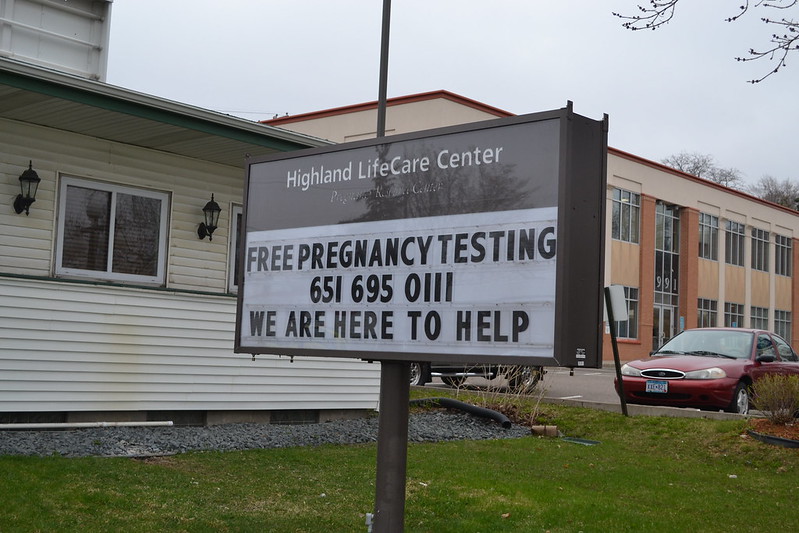
This juxtaposition of open crisis pregnancy centers and closed abortion clinics proves that these closures have nothing to do with coronavirus—and everything to do with the desire of lawmakers to control women’s bodies. (Sophia Powers)

Earlier this month, lawmakers in states like TexasOhio and Alabama ordered all non-essential medical procedures to be postponed until the COVID-19 pandemic subsides—including all abortion procedures.

Over the weeks that followed, the legality of abortion in these states has been in constant limbo—in Texas, for example, changing at least five times in two weeks.

Women in need of abortions in these states have been caught in the crosshairs, left hanging with closed signs and locked doors. Today, they face a world where abortion access is limited.

Crisis pregnancy centers (CPCs), on the other hand, have been allowed to remain open in some of the very states that have banned abortion and forced clinic closures during the coronavirus pandemic.

Ironically, these centers, by definition, should be deemed non-essential as because they do not provide life-sustaining medical support. In fact, they only function to encourage women to continue their pregnancies.

CPCs are biased—often based on religious ideologies instead of medical training. CPC staff provide false information about pregnancy to women in an attempt to keep them from having abortions, and no CPC will refer women to an abortion provider. In fact, some CPCs may force women to watch anti-abortion films, slide shows, photographs and hear biased lectures.

This juxtaposition of open CPCs and closed abortion clinics proves that these closures have nothing to do with coronavirus—and everything to do with the desire of lawmakers to control women’s bodies and force them to have children they don’t want and often times can’t afford.

In an email, NARAL Pro-Choice America spokesperson Amanda Thayer condemned the anti-abortion centers.

“Anti-choice organizations are and have always been consumed with ending legal abortion by any means necessary, and that they’re exploiting the COVID-19 pandemic to push their unpopular agenda illustrates there is no low they will not sink to,” Thayer said. “Amid a global pandemic, they are actively pushing disinformation and bucking science to suggest that abortion is not essential or time-sensitive care.”

According to an email by Thomas Glessner, president of anti-abortion organization the National Institute of Family and Life Advocates (NIFLA), the pregnancy centers remain open because “abortion is more harmful than COVID-19.”

Glessner’s comment is not only insulting, but it also ignores the fact that the coronavirus has caused over 30,000 deaths across the United States.

Hypocrisy: Crisis Pregnancy Centers Remain Open While Abortion Clinics Forced to Close
This Crisis Pregnancy Center (CPC) isn’t a medical clinic, but a “counseling” center. CPCs exist to try to keep women from getting abortions, and they have been known to use underhanded tactics to achieve that goal. (Brianne / Creative Commons)

Republican lawmakers in Alabama, Arkansas, Ohio, Oklahoma, Tennessee, Texas, Louisiana and Iowa have all limited elective medical procedures, including abortions. In defense, they claim they want to preserve hospital beds and PPE for those on the frontlines of the COVID-19 crisis.

In retort, abortion providers say that unlike elective surgeries, access to safe reproductive care can’t be delayed—especially in light of alarming reports that the virus will continue into the summer. Abortions are time-sensitive procedures, as some women have medical conditions that can make each additional day of a pregnancy life-threatening—and some states prohibit abortions beginning as early as 20 weeks into a pregnancy.

Pro-choice abortion clinics exist to support women and allow them to make fully informed choices about their reproductive health.

And since the onset of COVID-19, there has been an increase in deaths by women attempting to cause abortions themselves instead of utilizing safe practices that abortion centers provide.

Nancy Northup, president and CEO of the Center for Reproductive Rights, called Texas’ attempts to ban medical abortions “unconstitutional.”

“None of it is medically justified, all of it is unconstitutional, and women are being thrown into a state of fear and uncertainty” said Northup.

In late March, the Center for Reproductive Rights—alongside the the Lawyering Project and the Planned Parenthood Federation of America—sued Texas Gov. Greg Abbott and other state officials to ensure that patients can continue to access abortion services during the COVID-19 pandemic. (Since then, these pro-choice groups have withdrawn their request for the Supreme Court step in to halt Texas’s efforts to restrict abortions during the pandemic, but new legal battles in Louisiana and Tennessee began Tuesday.)

“These emergency abortion bans are an abuse of power and part of an ongoing effort to use sham justifications to shut down clinics and make an end run around Roe v. Wade,” said Northup. “These same states have tried to ban abortion access for years; no one should be fooled that this is warranted by the current crisis. We will use every legal means to ensure that abortion care remains available during this critical time.”

Source: https://msmagazine.com/2020/04/16/hypocrisy-crisis-pregnancy-centers-remain-open-while-abortion-clinics-forced-to-close/?fbclid=IwAR0Oc8R8cASDT8kcEQlCcEJN5Ysab4–CqRAsK3aWQfS_W8tEqGWPKgLGYs

The number of women unable to access contraception, experiencing unintended pregnancies and facing gender-based violence will skyrocket as the COVID-19 pandemic continues over the coming months, according to a new United Nations Population Fund (UNFPA) report.

“This new data shows the catastrophic impact that COVID-19 could soon have on women and girls globally,” Dr. Natalia Kanem, UNFPA Executive Director said in a press release. “The pandemic is deepening inequalities, and millions more women and girls now risk losing the ability to plan their families and protect their bodies and their health.”

New data released by UNFPA, the UN’s sexual and reproductive health agency, predicts that over 47 million women could lose access to contraception, resulting in 7 million unplanned pregnancies if the lockdown continues for six months.

Keep up to date with our daily coronavirus newsletter by clicking here.

As a result of the COVID-19 pandemic, health facilities are becoming overrun by patients with the virus, resulting in fewer resources or time available for women seeking out medical attention for their sexual or reproductive health. Disruptions in global supply chains are also causing a shortage of contraceptives, particularly in the lowest-income countries, according to the report.

The report also predicts that 31 million additional gender-based violence cases can be expected over the coming months as victims of domestic violence are trapped at home with their abusers. Already, data from around the world suggests that lockdown has significantly increased domestic violence rates.

Women’s reproductive and sexual health in low to middle-income countries are more likely to be affected by the pandemic, the report notes. The disruption to prevention programs could result in an additional 2 million female genital cutting cases as well as 13 million additional child marriages in the coming decade that would otherwise have been averted.

“Women’s reproductive health and rights must be safeguarded at all costs,” Dr. Kanem. “The services must continue; the supplies must be delivered; and the vulnerable must be protected and supported.”

Source: https://time.com/5828383/covid-19-threatens-womens-sexual-reproductive-health/

Justice Brett Kavanaugh may be preparing himself — and the country — for a revolutionary effort to overturn abortion-rights precedents. Photo: Jabin Botsford/Bloomberg via Getty Images

Amid all the painful memories and dramatic confrontations that enlivened the confirmation hearings on Brett Kavanaugh’s Supreme Court nomination, there wasn’t much question about the single most important underlying issue. It was whether the putative justice would — as his fans hoped and his enemies feared — become the crucial fifth voice who would enable a major rollback or complete repudiation of the constitutional right to an abortion. Since Kavanaugh was able to dodge questions about particular hypothetical cases as risking a prejudgment, a lot of the skirmishing over how he’d deal with the 40-plus-years of an established right to choose came down to questions about the weight he accorded to stare decisis, the principle by which legal precedents — and particularly those laid out by SCOTUS itself — are binding on lower and later courts.

Susan Collins, the pro-choice senator who ultimately clinched Kavanaugh’s confirmation, placed great stock in his assurances that Roe v. Wade was “settled law” and an important precedent. (She and others, however, didn’t seem to distinguish sufficiently between the judge’s lower-court rulings that were absolutely bound by SCOTUS precedents and the relative freedom of the court itself to “correct” its own constitutional interpretations). She even compared this survivor of an unprecedented Federalist Society vetting process to famous Republican-appointed SCOTUS apostates on abortion rights — the very “betrayals” the vetting process was intended to make impossible.

In any event, Kavanaugh is now on the Supreme Court, and a decision on the first big abortion-rights case (June Medical Services v. Russo) is expected to come down this term. Because the Louisiana law in question directly contradicts the last landmark SCOTUS decision on abortion, Whole Women’s Health v. Hellerstedt (with Kavanaugh’s predecessor, Anthony Kennedy, serving as the swing pro-choice vote), and was teed up by anti-abortion activists to serve as a starting point for the reversal of the broader abortion-rights cases (Roe and also Planned Parenthood v. Casey), the question of Kavanaugh’s respect for precedent will soon be put to the test.

That is why his concurring opinion in this week’s very peculiar SCOTUS decision, Ramos v. Louisiana, is tantalizing. The whole decision is fascinating, showing a fractured Court dealing with a precedent (allowing for non-unanimous verdicts in state criminal trials) nobody would defend on its merits. It was, as Slate’s Mark Joseph Stern observed, “a mess of epic proportions”:

It split 3–1–1–1–3 on thorny disputes over precedent, constitutional interpretation, the Bill of Rights’ protections for noncitizens, and the contemporary relevance of a law’s racist roots. The justices used Ramos to shadowbox over long-running debates, including abortion, giving every court watcher some tea leaves to obsess over. In doing so, they proved once again that the Supreme Court has never been more divided — and that these simmering debates will soon rupture into full public view.

Though all the five opinions accompanying the decision were interesting, Kavanaugh’s was arguably the most significant, as the New York Times’ Linda Greenhouse suggested:

Justice Kavanaugh’s 18-page concurring opinion, which no other justice joined, included a list of 30 of “the court’s most notable and consequential decisions” that overturned earlier rulings — a kind of “30 ways to leave your lover” inventory of decisions that occupied the ideological spectrum from Brown v. Board of Education to Citizens United.

“Indeed,” he observed, “in just the last few terms, every current member of this court has voted to overrule multiple constitutional precedents.” Hey, overturning precedent is so commonplace these days as to be virtually painless. Look, everyone does it. I can, too.

But after this cheerful assault on the sanctity of constitutional precedents, which should have terrified Susan Collins if she read it, Kavanaugh went on to present a three-part test for his willingness to discard the handiwork of his predecessors. The precedent in question had to be (1) “grievously and egregiously wrong,” (2) causing “significant jurisprudential or real-world consequences,” and (3) not something that created “reliance interests” that an overruling would “unduly upset.”

Kavanaugh seems to be creating a framework for how he will approach cases where the right to an abortion is called into question — a framework that is consistent with different outcomes. I cannot read his mind, and don’t know what sort of implicit strategy the conservative majority on the Court has for dismantling this and other progressive precedents. But it’s pretty safe to say that any Federalist Society member in good standing would consider the entire chain of precedents dating back to Roe as “grievously and egregiously wrong,” and that an observant Roman Catholic like Kavanaugh would probably believe legalized abortion caused “significant real-world consequences.” “Reliance interests” is a flexible concept, but it might enable someone like Kavanaugh to support a gradual rather than abrupt reversal of the right to choose to give women a chance to prepare for a return to 1972, the year before Roe was decided.

The fact that the rest of the Court also wrestled with how to frame their views on stare decisis in Ramos is an indication that all nine Justices are preparing for a big throwdown. Greenhouse calls it “a Supreme Court in crisis.” While it may be overshadowed by the coronavirus or the 2020 elections, the Court’s crisis may soon be our own.

Source: https://nymag.com/intelligencer/2020/04/kavanaugh-signals-how-hell-approach-abortion-rights-cases.html

“I think that it is easy if you’re looking at the headlines to think that clinics are closed or that courts are closed.”

The text line will help bridge the gap between young people, legal advocates, and an abortion fund that can help with financial assistance for abortion care and travel.
Shutterstock

Minors in 21 states are required by law to get their parents’ permission before having an abortion. But for many, that’s not possible.

Instead, they have to navigate their county’s legal system to petition for a judicial waiver of parental consent while dealing with their state’s various abortion restrictions, which might include gestational limits and forced waiting periods. The COVID-19 pandemic has put legal abortion even further out of reach for many, as Republicans in some states are trying to close abortion clinics as a response to the virus outbreak, while some clinics are temporarily closing or consolidating their services.

But advocates in North Carolina have introduced a new way to help minors maneuver through reproductive health-care restrictions. The Carolina Abortion Fund partnered with the state’s ACLU to create a text line that helps minors maneuver this confusing web of medically unnecessary restrictions and get the legal and financial assistance they need—even amid the chaos of a pandemic.

The line, called Text Abby, is confidential, free, and available every day from 9 a.m. to 12 p.m. Mars Earle, director of engagement at the Carolina Abortion Fund, told Rewire.News the line soft-launched at the beginning of April. Earle began working on the line after being approached by two groups: If/When/How, a reproductive justice legal organization, and Jane’s Due Process, which helps young people in Texas navigate parental consent laws on abortion care and birth control.

Around ten groups convened to talk about what it’s like for minors to get an abortion and petition for a judicial waiver of parental consent, Earle said. They learned that North Carolina abortion clinics often didn’t have many resources for minors; most clinics provided abortion care to only a small number of minors each year, most of whom came to the facility with parental consent or a waiver already in hand.

“The question then became, do our young people know that this is an option for them?” they said. “And what is happening for young people that may be wards of the state or are detained?”

The text line, Earle said, was a good place to start answering those questions and “take the temperature” of minors’ needs. It’s a resource that minors will be able to find through clinics or online.

“We’re redoing our websites [so that] if you Google ‘minor abortion in North and South Carolina’ we’re trying to be the first thing that pops up so that accurate information is there,” Earle said. For years, the top Google results for searches related to abortion care have included anti-choice clinics that lie to pregnant people and don’t offer a full range of reproductive health services.

When a young person texts the line, the first response they receive is from Elizabeth Barber, a reproductive freedom fellow at the ACLU of North Carolina. Sometimes people reach out because they’re having a pregnancy scare, and Barber will refer them to online resources about when or how to take a pregnancy test.

“Almost always people do not know what the requirements are for minors in whatever state they are,” she said.

She expected one to three people would text the help line each month, but she’s had that many people reach out every day. “We’ve been overwhelmed by the response we’ve gotten,” Barber said. “I think that just speaks to the need, and I think that it speaks to how desperate people are for help right now, or maybe all of the time.”

She doesn’t know whether the high frequency is related to the COVID-19 pandemic, she said, but it has played a role in abortion access for some of the young people she’s texted. While the line is only meant for minors in North Carolina, Barber has received texts from people in South Carolina, Georgia, and Tennessee. “Some people [outside of North Carolina] have had extra difficulty finding clinics that can help, because some clinics are operating under limited schedules or limited offerings in light of COVID-19,” she said.

Restrictions on abortion impact teens more, Barber said, because they might not have access to money or transportation. In addition to those barriers, young people might have to miss school and find transportation to a courthouse to file a petition for judicial waiver. In some cases, they have to do all of this without their parents knowing.

In states where officials are trying to use the COVID-19 pandemic as an excuse to halt legal abortion, young people face even more barriers that might prevent them from getting care.

Though abortion clinics in North Carolina are operating under their usual schedules, Barber is worried that the pandemic will affect whether young people who need abortion care pursue judicial bypass. The process is intimidating even outside of a pandemic because it requires youths to interact with the legal system and have a hearing with a judge. Most don’t know it’s free and confidential, and that they are entitled to an attorney to represent them at no cost.

“There’s a lack of information,” she said. “I think that it is easy if you’re looking at the headlines to think that clinics are closed or that courts are closed.” Even if someone knows where to start the judicial bypass process, Barber said they might run into additional obstacles like limited court hours or limited clerk’s hours.

She said that’s why the text line is helpful, especially during the pandemic. “It’s important that there is easy access to a real live person who can help you find answers, whether you’re in North Carolina or if you’re in another state,” Barber said.

Jessica Goldberg, the youth access counsel for If/When/How, told Rewire.News the idea for Text Abby came from a meeting held in North Carolina in fall 2018 as part of its Youth Access Strategic Initiative. She said the ACLU of Utah also developed a judicial bypass project after their staff attorney attended the National Judicial Bypass Convening in 2018.

What often stops advocacy organizations from creating a teen text line or something similar is a lack of time and resources.

“Many of the stakeholders we help bring together are already working to help young people access abortion care, but they are doing it in silos and on a case-by-case basis,” Goldberg said. “These meetings give advocates the time and space to focus specifically on access for young people, enable them to dig into the barriers to access specific to people under 18, and allow them to get to know the other folks in their state who are also doing this work.”

The text line will help bridge the gap between young people, legal advocates, and an abortion fund that can help with financial assistance for abortion care and travel. Earle said the line was modeled after one operated by Jane’s Due Process, and another run by the ACLU of Illinois.

Text Abby is the first step toward making abortion more accessible for minors in North Carolina. Before the Carolina Abortion Fund launched the line, Earle helped a minor in South Carolina get an abortion, but it wasn’t easy. The minor, who was referred to the Carolina Abortion Fund by Jane’s Due Process, was too far along to access abortion in South Carolina, where the legislature has implemented a range of restrictions.

The Carolina Abortion Fund had to transport her from South Carolina to two cities in North Carolina to help her get a judicial waiver and then an abortion. “So it was people in Texas, North Carolina, [and] South Carolina who all rallied together to get her a lawyer, get her waiver, get her fully funded, and then actually drive her to all these locations,” Earle said. “But she got the care she wanted.”

During the pandemic, Earle said the text line will be there to provide support, because one of the Carolina Abortion Fund’s values is “slowing down and meeting people where they’re at.”

“That’s what we’re hoping this service can be,” they said, “even if they don’t need us beyond just someone to talk to you for a minute or so—that human connection and witnessing.”

Source: https://rewire.news/article/2020/04/24/why-teenagers-seeking-abortion-care-are-texting-abby/

Providers say they’re trying to work around restrictions that limit telemedicine abortion.

Bottles of the abortion-inducing drug RU-486. | Charlie Neibergall/AP Photo

Abortion providers say they’re seeing heightened demand for telemedicine abortions during the coronavirus pandemic, and providers are preparing for a growing number of virtual visits as social distancing measures continue.

These clinics are looking to video call apps like Facetime and AI-powered chatbots to make prescribing abortion medication almost entirely virtual during the pandemic. Some providers are dialing back in-person visits and forgoing ultrasounds and pelvic exams they’ve typically required before prescribing abortion pills virtually.

But while much of the health care system has quickly shifted to online visits in recent weeks with encouragement from the Trump administration, abortion providers say longstanding federal and state restrictions will ultimately limit how much of their care can be provided online.

FDA rules mean most patients must still pick up pills to terminate a pregnancy in-person, sometimes driving across state lines multiple times to do so. In some states, patients must still make two separate in-person trips, one for a consultation and another to pick up the pills.

One nonprofit that’s studying whether abortion medication can be safely mailed to patients, cutting down on in-person visits, said it’s now seeing more patients. Gynuity Health Projects, which operates its FDA-reviewed trial in 13 states, reported a 30 percent increase in virtual visits at some clinics between February and March as shelter-in-place orders took hold. Patients can receive the abortion drugs without ever having to leave their homes after a video consultation with providers participating in the trial.

The trial is “particularly well suited to a lot of these stay-at-home orders” said Erica Chong, a director at Gynuity.

Twenty-one Democratic state attorneys general, along with Democratic lawmakers and abortion rights advocates, have pushed the FDA to loosen restrictions on abortion drugs during the pandemic, arguing that abortion is an essential service that can’t be put off like elective procedures during the health crisis. But the agency under the Trump administration is unlikely to approve the request.

“By blocking this critical service, the government is forcing women to have to go outside of their homes and expose themselves to the virus,” said New York Attorney General Tish James.

Conservative lawmakers and activists opposed to abortion have also lobbied the FDA to maintain the limits, warning that the few women who may experience complications from the pills will be a burden on medical resources during the pandemic.

“With hospitals pushed to their limits by the Covid-19 health emergency, we should minimize, not increase, unrelated pressures on health care providers,” said Sen. Cindy Hyde-Smith (R-Miss.).

Abortion providers have been prescribing abortion medication virtually for years in some states. Under some state laws, patients must take the pills in a doctor’s office or clinic under the supervision of a provider who watches through a video hookup. Generally, patients must also submit results from an in-person ultrasound or pelvic exam before they can get a virtual prescription.

The drugs are safe and effective in just the first 10 weeks of pregnancy. And federally funded research has found that medication abortions administered remotely have no higher risk of complications those conducted in-person.

But of the eighteen states that had existing bans on virtual abortions, many have sought to cut off abortion access entirely during the pandemic. They say it would endanger public health and use up scarce medical gear to have patients coming into clinics for the procedure. Those states haven’t eased off their telemedicine restrictions.

Abortion providers say they’re expecting to see more patients from Texas, Arkansas and other states that adopted pandemic abortion bans requesting telehealth appointments. However, many of those patients must travel to a state that allows telemedicine abortions even for a virtual appointment. Providers in some of those states have asked the courts to loosen those bans during the health crisis, arguing the limits pose a health risk by forcing patients and doctors to sometimes travel long distances for in-person consultations that could otherwise be done from home.

“It’s quite a hardship,” said Julie Burkhart, the president of the Trust Women network that operates clinics in Oklahoma and Kansas. “We’ve seen people drive hours and hours and hours for a medication abortion.”

Planned Parenthood said it doesn’t yet have the data to know whether more of its patients are receiving telemedicine abortions, but it’s taking steps to make the process easier. While patients must video chat with abortion providers and pick up the medication from inside a clinic, its affiliates are piloting a new AI-driven chatbot that texts patients after they’ve taken the medication to cut down on non-urgent visits.

Social distancing has also pushed abortion providers in states that don’t require ultrasounds to rethink whether imaging or pelvic exams are always medically necessary before prescribing the medication. Twelve states require that providers perform ultrasounds on each abortion patient, according to research nonprofit the Guttmacher Institute. But providers in other states may forgo those measures if they believe they have enough data to safely prescribe medication and that an in-person examination could put a patient at risk, said National Abortion Federation Medical Director Alice Mark.

“It’s something many, many of our clinics are looking into right now because that’s obviously a point of contact within the clinic,” said Mark, who is an obstetrician.

Carafem, a clinic with locations in Georgia, Tennessee, Illinois and the Washington, D.C., area, plans to sign up more of its providers for the Gynuity trial to test home delivery of abortion medication, said Chief Operations Officer Melissa Grant. The Gynuity trial has drawn many patients to Carafem from Alabama, where laws are more restrictive.

“As long as you have technology available, we have connection and we have enough medical providers, it would be feasible to potentially serve significantly more clients,” Grant said.

Source: https://www.politico.com/news/2020/04/23/abortion-clinics-expanding-virtual-options-during-pandemic-203768?fbclid=IwAR0x98BlupcZVzIlIvJ9LJGnvp4isB34-Sr627eMriTqpdgfd4btpECSrtY

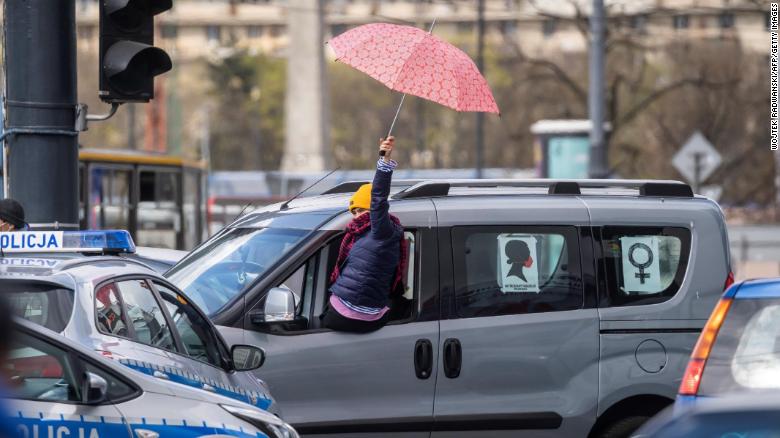
A woman drives her car during a protest of Polish women’s rights activists using their cars and bicycles to block central Warsaw against a draft legislation that would ban the abortion of foetuses with congenital birth defects, on April 14, 2020. – Poland’s parliament is expected to debate fresh efforts to further tighten what is already one of Europe’s most restrictive abortion laws. (Photo by Wojtek RADWANSKI / AFP) (Photo by WOJTEK RADWANSKI/AFP via Getty Images)

Marta Gorczynska got in her car and started driving.

She didn’t have a destination as she passed through Warsaw’s mostly deserted streets, but, just before noon last Tuesday, she got a text with directions: go to Rondo Dmowskiego.
Gorczynska, a human rights lawyer, was among a throng of protesters that used their vehicles to defy Poland’s lockdown and block the main roundabout in the capital, honking their horns and shouting slogans against a citizen’s bill to tighten what are already some of the most restrictive abortion laws anywhere in Europe.
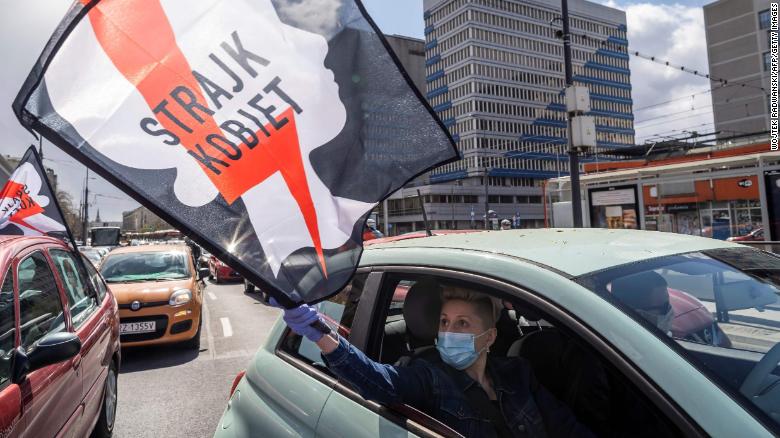
Some were holding black umbrellas — a symbol of Poland’s abortion rights movement — while others had “Women’s Strike” posters taped to their windows. Demonstrators dressed head-to-toe in black, and wearing face masks, circled on bicycles. Police shouted over megaphones, warning that assemblies were illegal during the pandemic and urging the women to go home.
As governments across Europe continued to grapple with the worst health care crisis of the modern era, Polish lawmakers debated draft legislation last week that would ban abortion in the case of fetal abnormalities — one of the few remaining circumstances in which the procedure is still allowed in the majority Catholic country.
Ultimately, Poland’s lower house voted to send the bill to a parliamentary commission for more work. But the timing, which was slammed by human rights campaigners, presented a fresh challenge for women’s rights activists who have been fending off an abortion ban for years: how to protest in the time of coronavirus.
Women protest from their cars with umbrellas, a symbol of the abortion rights movement.

“We saw this as an attempt by the government to use the lockdown to push for this controversial law, because, as history shows, all these attempts of the government to amend the abortion law have always triggered a lot of demonstrations,” Gorczynska said, referring to a nationwide “Black Monday” strike in 2016 that drew millions.
“If there was no lockdown, thousands of women would have been on the streets. So we were using other tools, especially online ones.”
Those who couldn’t come out found other ways of demonstrating. Protesters rallied around hashtags like “black protests” and “women’s hell” on social media, sharing photos of themselves in black and white or holding abortion pills in their palms. Others hung posters from their balconies or went out for their daily exercise with messages of resistance taped to their backs.
But the abortion bill is part of a wider problem, according to campaigners and academics who say that Poland’s ruling nationalist Law and Justice party (PiS) is using the pandemic to continue chipping away at democracy and tightening its grip on power.
“What’s happening now is the next stage in the destruction of our new democratic state,” Anna Materska-Sosnowska, a political scientist at Warsaw University, told CNN. She pointed to 11th hour changes to how Poland votes and proposals to extend the length of presidential terms as worrying signs of what’s ahead.
The government is still planning to hold a presidential election on May 10, though a majority of Poles — not to mention opposition politicians — want to postpone it because of the outbreak.
On March 28, the PiS rammed a bill through the lower house that would allow the election to go ahead by postal ballot, even though the country’s top court previously ruled that no changes can be made to the electoral code within six months of the vote. The bill has now moved to the senate for debate.
CNN has made several attempts to reach out to the PiS and the government for comment.
Materska-Sosnowska fears that changes to the electoral process would put the integrity of the vote at risk. While opposition candidates have had very limited opportunities to campaign, President Andrzej Duda, an ally of the PiS, has unfettered access to airtime and is ahead in the polls.
Protesters wave flags and hold posters emblazoned with a red lightning bolt.

The European Union’s parliament said Friday that holding the elections in the middle of the outbreak could endanger lives and was “totally incompatible with European values.” The parliament also singled out Poland’s ally Hungary — which recently passed a law allowing Prime Minister Viktor Orban to rule by decree indefinitely — for criticism.
The EU triggered “Article 7” disciplinary measures against Poland after the PiS launched an assault on the independence of the country’s judiciary, but the move has led nowhere.
On Monday, opposition lawmakers began talks with politicians from the junior party in the PiS’s ruling coalition about delaying the vote, hoping to capitalize on growing divisions in the alliance.
Draginja Nadazdin, the director of Amnesty International Poland, suggested that if the coronavirus was a test of whether governments are committed to human rights, then Poland was failing.
“If you want to use the coronavirus as a kind of test, to gauge how the government supports human rights, neither Poland’s approach to abortion, neither its approach to free and fair elections, nor its approach to the right to health, are good signals,” Nadazdin told CNN.
Campaigners in Poland worry that women’s access to health care is already being curtailed, with or without the latest bill.
Justyna Wydrzynska, an activist with Aborcyjny Dream Team, a charity that helps Polish women with access to abortions, says their hotline, which normally receives around 10 calls a day, started ringing off the hook after the government announced border closures to stop the spread of the virus.
Many of the callers were concerned that they would no longer be able to obtain abortion pills, which are illegal in Poland, and others feared they would not be able to reach clinics abroad in time to have procedures.
Abortions in Poland are only permitted in the case of some fetal abnormalities, rape, incest or a threat to the mother’s health. And even in cases when an abortion is allowed, many Polish women still struggle to find hospitals that will perform the procedure.
Wydrzynska was assisting one woman who had to cross the Polish border by foot into Germany, where she caught a train to Berlin and then flew to the UK. After the journey to London, she had an ultrasound and decided not to go through with the procedure.
“It’s incredibly stressful,” Wydrzynska said, adding that European countries who previously assisted with abortion procedures have told the charity they can no longer provide services to foreigners. “What can we say to them … we hope it’s not the end of the story.”
Protesters against the bill practicing social distancing.

And Poland isn’t alone — women’s access to abortion has become one of many healthcare provisions thrown into jeopardy globally.
In several US states, lawmakers have tried to introduce new restrictions on abortion, citing public health concerns. Some Republican governors, including Greg Abbott in Texas, have argued that abortion is a non-essential medical procedure and should be delayed during the pandemic to conserve personal protective equipment and other life-saving gear.
Critics have accused these states of exploiting the coronavirus crisis to limit women’s access to abortion, and the bans have ended up in the courts.
When it comes to women’s rights in Poland, protesters there say they’ll continue to fight — lockdown or not.
“It was even more important to show our strength, to show solidarity and to show that this lockdown doesn’t mean that we have our hands tied,” Gorczynska said.

Legal precedent means very little to judges and justices personally opposed to abortion rights, as we’ve seen during the COVID-19 outbreak.

The U.S. Court of Appeals for the Fifth Circuit once again put a halt on nearly all abortions in Texas, issuing a ruling Monday allowing the state to enforce Gov. Greg Abbott’s (R) COVID-19 ban.
Shutterstock

It seems each day brings new developments on abortion rights in the time of COVID-19. It’s maddening and has left me with one lingering question: Will this shit ever end?

The U.S. Court of Appeals for the Fifth Circuit once again put a halt on nearly all abortions in Texas, issuing a ruling Monday allowing the state to enforce Gov. Greg Abbott’s (R) COVID-19 ban.

The decision represented a course correction for the conservative appellate circuit that had just a few days prior ruled abortion care could continue in Texas. Meanwhile, a federal court in Oklahoma on Monday issued a permanent injunction blocking that state’s COVID-19 abortion ban. Attorneys for the state of Oklahoma promptly appealed that injunction to the U.S. Court of Appeals for the Tenth Circuit. All the while litigation continues in six other states as advocates push back against Republicans’ attempts to weaponize the COVID-19 pandemic in their war on abortion rights.

So when will this shit end? That’s not a rhetorical question. Just one year ago, anti-choice lawmakers in Alabama passed a total abortion ban in an attempt to bait the freshly Trumpfied federal courts into overturning Roe v. Wade. Any day now, a court in Missouri will decide if the state’s only abortion clinic must close. Just a month and a half ago, my colleague Imani Gandy and I were at the U.S. Supreme Court for oral arguments in June Medical Services v. Russo, the poster child for bad-faith anti-choice attacks on abortion rights.

In June Medical Services, the Roberts Court will decide if they should uphold a Louisiana admitting privileges requirement—otherwise known as a clinic shutdown law—identical to a Texas admitting privileges requirement the Court previously declared unconstitutional in 2016. Since those arguments, Louisiana officials have tried to use COVID-19 as an excuse to ban abortion, prompting yet another lawsuit. Meanwhile, yet another lawsuit challenging the state’s web of anti-abortion restrictions is working its way through the federal courts. That brings the number of active lawsuits in Louisiana to protect abortion rights and access to three. Three lawsuits challenging three different attacks on abortion rights and access by Louisiana lawmakers, all happening at the same time.

So I ask again, in all sincerity: Will this shit ever end? Because while anti-choice lawmakers are smearing abortion providers in court filings as profiteering predators unable to advocate in court for their patients and using COVID-19 as yet another ruse to defund Planned Parenthood, pregnant people from Texas have been forced to travel hundreds of miles to Colorado, New Mexico, and Nevada for abortion care, or forgo care altogether.

While attorneys from the anti-choice litigation firm the Thomas More Society accuse providers of wasting personal protective equipment and insist that abortion clinic protesters are performing an “essential” service in harassing patients and providers, clinics struggle to stay open.

There have been glimmers of good news. Some states have used the COVID-19 outbreak to reaffirm that abortion is essential health care, because well, it is. And while Fifth Circuit conservatives have gone rogue, other federal courts considering similar bans have so far done their jobs, seen these COVID-19 bans for the nonsense that they are, and have prevented states from enforcing them. 

That’s all good news. But it’s good news tempered through the lens of a cascading attack on abortion rights that has only become more brazen as anti-choice lawmakers grow increasingly confident they’ve placed enough judges on the bench to re-criminalize abortion. That confidence is not misplaced. Here’s Fifth Circuit Court Judge James Dennis dissenting from Monday’s decision to once again allow the Texas COVID-19 ban to take effect.

This Circuit thus once again does not apply the applicable rules of law because of the subject matter of the case, and, equally troubling, ignores the words of its own ruling from less than two weeks ago. I again echo the words of a colleague in dissent in a case now before the United States Supreme Court: “It is apparent that when abortion comes on stage it shadows the role of settled judicial rules.”

Roughly translated, that passage of Dennis’ dissent poses a pretty basic question: Will this shit ever end? 

Dennis makes the point that when it comes to abortion rights, precedent means very little to judges and justices personally opposed to abortion. That’s true for the Fifth Circuit judges like Kyle Duncan, a Trump appointee who allowed the Texas ban to take effect, and it’s true for the conservatives on the Supreme Court. On Monday, Justice Brett Kavanaugh went out of his way to question the role of precedent in abortion rights case in a concurring opinion in a case having nothing to do with abortion rights. The opinion, like others issued by fellow conservative Justice Clarence Thomas, sends a clear signal that abortion rights precedent is on the ropes. And anti-choice lawmakers are listening.

So if precedent means little when it comes to abortion rights as Dennis suggested this week, then the answer to my question at the top of this piece is “yes.” The bad faith attacks on abortion rights will end as soon as the conservatives on the Roberts Court issue a ruling overturning Roe v. Wade entirely. And not one moment before then.

Source: https://rewire.news/article/2020/04/22/when-will-these-attacks-on-abortion-rights-end-you-wont-like-the-answer/