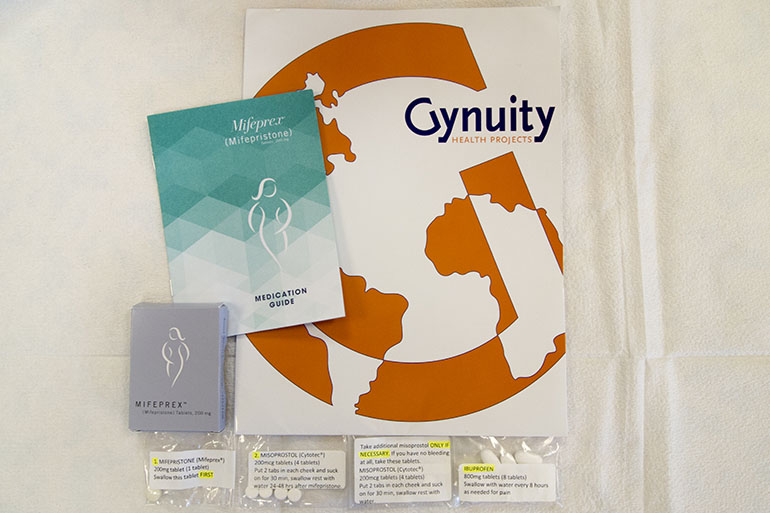
OLYMPUS DIGITAL CAMERA

When the abortion pills arrived in her mailbox this summer, she felt anxious but also in control, knowing she could end her pregnancy entirely in the privacy of her own home.

“I was happy that I was going to be able to do it myself and I did not have a nurse there or doctors there staring at me and judging me,” she said, asking to be identified only by her middle name, Marie, because she did not want people outside her immediate family to know about her abortion.

Marie is part of a small but closely watched research effort to determine whether medical abortions — those induced by medicine instead of surgery — can be done safely through an online consultation with a doctor and drugs mailed to a woman’s home.

At a time when access to abortion is being restricted on many fronts, advocates say being able to terminate a pregnancy through telemedicine and mail-order drugs would provide a welcome new option for women. Opponents of abortion find the concept dangerous and deeply disturbing.

The idea builds on a trend that is helping women obtain birth control more easily. A growing number of smartphone apps and websites now make it possible to get prescription contraceptives without visiting a doctor’s office first. The pills Marie and the other women received through the study are not allowed for sale in pharmacies and are usually available only at hospitals and abortion clinics.

Australia and the Canadian province of British Columbia allows women to get abortion pills by mail after consulting with a physician or other health care provider via phone or the internet. Several international organizations offer mail service in countries where abortion is otherwise unavailable or severely restricted. The oldest group, Women on Web, based in the Netherlands, has provided abortion medications to about 50,000 women in 130 countries since 2006. The service is not available in the United States, and the Food and Drug Administration warns against buying the drugs over the internet.

Having the pills delivered to her home in Hawaii meant that Marie could avoid the cost and time of traveling by plane to the nearest abortion clinic, over 100 miles away in Honolulu or Maui. Once she received them, she set the package aside for a week in her bedroom, waiting until she could schedule time off from her job at McDonald’s.

The first pill, as expected, had little effect. The next morning, with her mother at her home to watch her toddler, she took the second. Almost immediately, the bleeding and cramping began. Within three hours, her eight-week pregnancy was over. She described the pain as a five on a 10-point scale. That night she cooked dinner for her family, and the next day she went back to work.

The study Marie participated in is being conducted in four states — Hawaii, New York, Oregon and Washington. It is being funded and organized by Gynuity Health Projects, a nonprofit research group focused on reproductive health services that seeks to improve women’s access to medical abortions. The FDA has allowed the experiment. Women learn about it when contacting the abortion clinics in the study and other health providers who are aware of the trial and the website telabortion.org.

Danco Laboratories, the company that makes the pills, has no plans to seek wider distribution of the medication either through mail-order pharmacies or physical pharmacies, a spokeswoman said. It would have to seek the FDA’s permission to do so; the agency can also ask companies to change how their drugs are distributed.

“Abortion is a politically charged issue in this country, and there is an extra degree of caution,” said the spokeswoman, Abby Long, explaining that research would be needed to support changing the drug’s distribution.

Of the first 12 women who participated in the study, all in Hawaii, 11 reported they had no complications and one did not take the pills, researchers said. Ten who completed surveys afterward said they were satisfied with the service and would recommend it to a friend, according to the researchers.

“It’s absolutely an important step forward to expanding access to abortion that is safe and effective and creating options for women,” said Susan Wood, director of the Jacobs Institute of Women’s Health at George Washington University, in Washington, D.C. She was not involved in the study.

Anti-abortion groups are outraged by the experiment.

“We have grave concerns about handing out dangerous, life-ending drugs without medical supervision because women face great risks for chemical abortions,” said Kristi Hamrick, spokeswoman for Americans United for Life.

Carol Tobias, president of the National Right to Life Committee, also raised safety concerns.

“If pills are sent through the mail, who are they supposed to call if they have a problem?” she said.

“There are serious downsides from the pills,” she said, adding, “and just talking to someone over a computer and sending pills in the mail, to me, that is just reckless.”

The process does not allow women to avoid the doctor’s office entirely. Using a video hookup on a home computer, a woman first consults with a doctor (or other clinician such as a nurse practitioner) at one of three participating abortion clinics who evaluates her medical history and explains how to take abortion pills and what to expect afterward. She must then get medical tests including ultrasound and bloodwork.

If the tests show she is eligible for the study, the clinic sends her a package with pills and instructions via overnight mail. After taking them, she has some additional tests, such as an ultrasound to verify that the abortion is complete and also a phone consultation to review the results.

Access to abortion has been declining steadily in the United States as dozens of clinics have been forced to close under new state restrictions. In Texas, the number of clinics fell to 18 in 2015 from 41 in 2012. Five states have just one clinic that offers abortions.

Medical abortions require women to take two drugs that together induce a miscarriage. The first, mifepristone (marketed as Mifeprex), is typically taken in a doctor’s office or clinic while the second, misoprostol, is given to the woman to take at home the next day.

In the United States, the FDA has approved medical abortion pills for use only in the first 10 weeks of pregnancy, while surgical abortions can be done later than that.

Medical abortions make up a quarter of all abortions in the country. About 2.8 million women in the United States have used mifepristone to terminate a pregnancy since the drug’s approval in 2000, according to Danco Laboratories, its manufacturer.

The American abortion study using overnight mail comes nearly a decade after Iowa became the first state to offer medical abortion counseling via telemedicine from a physician. But in Iowa and the three states that followed — Alaska, Maine and Minnesota — women must still go to a clinic that stocks mifepristone to receive the pills.

If the study shows the telemedicine and mail approach works, that could encourage the FDA to stop restrictions on mifepristone, Gynuity’s principal investigator, Dr. Elizabeth Raymond, said.

“All kinds of dangerous drugs are prescribed and available at pharmacies, including drugs for heart disease and Viagra,” she said. “There is no justification for why this safe drug should not be in pharmacies now.”

But even if the FDA were to lift its restriction on where abortion pills are dispensed, 19 states ban the use of telemedicine for abortion and require a physician to be physically present when consulting a woman, according to the Guttmacher Institute, a reproductive rights research group.

“While this has the potential for being the future of abortion delivery for a good segment of the population, that vision might not be fulfilled due to the politics around the issue and restrictions in many states,” said Jessica Arons, president and chief executive of the Reproductive Health Technologies Project in Washington, an advocacy group.

http://khn.org/news/abortion-by-mail-delivers-promise-for-better-access-but-political-questions-remain/

Source: Kaiser Health News

13-nov

President-elect said he would stick to his anti-immigration and border wall policies in interview with CBS’ 60 Minutes programme which is due to air later today

DONALD Trump admitted he is prepared to make women travel hundreds of miles for an abortion in a shock first interview.

The President-elect was speaking from his opulent New York apartment for the first time since sweeping to the White House last week.

And he told worried Americans: “Don’t be afraid.”

In a wide-ranging interview the 70-year-old businessman said:

  • His plans for abortion law could see the practice banned in some states.
  • He will “immediately deport” up to three million illegal immigrants.
  • Gay marriage laws are “fine” with him.
  • Barack Obama had “a great sense of humour” in the pair’s meeting last week.

But it was his pro-life comments to host Lesley Stahl that provided most shock on CBS’ 60 Minutes Show.

Trump vowed to appoint pro-life Supreme Court judges – a move that could see a key piece of US law overturned.

Roe v Wade means all US states have to allow abortion.

If the 1973 law was dismissed, it would see states re-take the right to make their own abortion law.

Following the revelation, a shocked Stahl asked Trump: “But then some women won’t be able to get an abortion?”
Trump replied: “Yeah, well, they’ll perhaps have to go, they’ll have to go to another state.”

He later appeared to backtrack by adding there is “a long way to go”.

Trump also used the interview to insist he will “immediately” deport up to three million illegal immigrants.

During his successful bid for the White House he had called Mexicans “rapists” and “criminals”.

The President-elect said he would kick out those who had criminal records and insisted he would build a wall on the US’ southern border.

He added:  “What we are going to do is get the people that are criminal and have criminal records, gang members, drug dealers, where a lot of these people, probably two million, it could be even three million, we are getting them out of our country or we are going to incarcerate.”

But despite his startling words, Trump urged Americans to have faith in him following his surprise election triumph.

He said: “Don’t be afraid. We are going to bring our country back. But certainly, don’t be afraid. You know, we just had an election and sort of like you have to be given a little time.

“I mean, people are protesting. If Hillary had won and if my people went out and protested, everybody would say, ‘Oh, that’s a terrible thing.’

“And it would have been a much different attitude. There is a different attitude. You know, there is a double standard here.”

The 70-year-old later pledged to leave same-sex marriage law alone.

He added: “It’s done. It – you have – these cases have gone to the Supreme Court. They’ve been settled. And I’m – I’m fine with that.”

Trump met with outgoing President Barack Obama on Thursday after a bitter build-up to the election in which the two men traded personal insults.

But he insisted the 90-minute meeting between the two was productive and praised Obama’s “great sense of humour”.

The former Apprentice host even admitted he is considering keeping some part of the President’s landmark healthcare programme.

He said: “I mean it was – just – in fact, it was almost hard breaking it up because we had so many things to say.

“And he told me – the good things and the bad things, there are things that are tough right now.

“We never discussed what was said about each other.

“And that’s strange. I’m actually surprised to tell you that. It’s – you know, a little bit strange.”

https://www.thesun.co.uk/news/2176754/trump-says-he-will-immediately-deport-up-to-three-million-illegal-immigrants-and-insists-he-will-build-a-wall/

Source: The Sun

12-nov-2

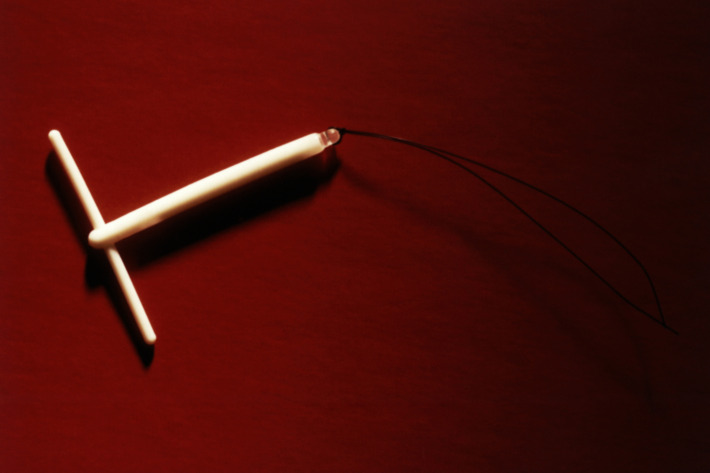
Last night, as it became more and more apparent that Donald Trump was going to be elected the next president of the United States, you may have seen one message (well, besides total despair) appearing on your social media feeds over and over: Get an IUD and get one now. The reason? Donald Trump has run on an aggressively pro-life platform, while VP pick Mike Pence has a dismal record of limiting women’s health care while he was governor of Indiana.

Right now, birth-control pills are free under the Affordable Care Act — something that Trump has said he wants to ask Congress to repeal on the first day of his administration. It’s a possibility that abortion access will be even further restricted, meaning that an Intrauterine Device is an easy way to protect yourself against an unwanted pregnancy for at least five years. (Plus, many insurance providers do currently cover the devices, which can otherwise cost several hundred dollars.)

As Erin Gloria Ryan pointed out in a Daily Beast piece urging women to get IUDs last week, “a Trump-Pence administration will surely Make Birth Control A Huge Pain In The Ass Again.”

Now their administration is a very real thing. If you want to go the IUD route before January, here’s a comprehensive guide to the five different kinds to choose from.

http://nymag.com/thecut/2016/11/why-you-should-get-an-iud-before-trump-becomes-president.html

Source: NYMag

U.S. President Barack Obama signs the Veterans Health Care Budget Reform and Transparency Act, meant to streamline funding for Department of Veterans Affairs medical care in the East Room of the White House in Washington on October 22, 2009. With him from left are Speaker of the House Nancy Pelosi, D-CA, Sen. Daniel Akaka, D-HI, and Sen. Tim Johnson, D-SD. UPI/Roger L. Wollenberg (Newscom TagID: upiphotos970740) [Photo via Newscom]

“Thanks to the Obama Administration women will still be able to access the birth control they need to plan their families, and cancer screenings they need to stay healthy.”

*The following is an opinion column by R Muse*

While the nation was preparing to wax emotionally about the terror attacks on 9/11 and Donald Trump was gaining appreciation for “political correctness” in assailing Hillary Clinton’s “bucket of deplorables” remarks, they missed a very important announcement from the Obama Administration. As has been the case throughout his tenure in the Oval Office, Barack Obama took unilateral action to protect women’s constitutional rights from a rabid and toxic religious Republican attack on Planned Parenthood. It is curious why there has been little to no reporting in the main stream media, because the President’s announcement of a brilliantly simple new rule was actually, as Vice President Joe Biden would say, “a big f*cking deal.”

The “BFD” is a new rule regarding Title X funding that affects the most basic preventive health care and family planning services for over 4 million low-income Americans, 85 percent of whom earn under $23,500 annually. About a third of those patients are served by Planned Parenthood that receives roughly $70 million annually in Title X grants for contraceptives and cancer and sexually transmitted infection screenings. Of course Title X forbids using even one penny for abortion services for any reason.

The Department of Health and Human Services new rule simply says that states are forbidden from withholding Title X family planning money for any reason whatsoever “other than a provider’s ability to deliver services to program beneficiaries in an effective manner.” The bottom line is that theocratic Republican states can no longer even vote to defund Planned Parenthood just because some of its clinics offer abortion services.

Planned Parenthood’s president, Cecile Richards, said:

This will make a real difference in so many people’s lives. Thanks to the Obama Administration, [low income] women will still be able to access the birth control they need to plan their families, and the cancer screenings they need to stay healthy.

The President’s action sent Republican Diane Black (R-TN) into apoplexy, even as she is leading yet another expensive House committee investigation into the fabricated and wildly debunked videos produced by a religious cabal opposed to women’s healthcare and constitutional rights. Black said that the President’s action protecting women’s constitutional rights to choose their reproductive care is a dirty stunt the religious right and United States Conference of Catholic Bishops (USCCB) are not going to stand for. Ms. Black forgets that America is not governed by the Vatican, and that the U.S. Constitution still forbids Congress from enacting religious edicts. She said in a statement:

We must use the full force of Congress and grassroots strength of the [Catholic] pro-life movement to defeat this absurd rule and prevent the Obama Administration from carrying out political favors and prop up a scandal-ridden abortion provider.”

First, Planned Parenthood is not scandal-ridden like the religious fanatics that fabricated the hoax videos. In fact, two of the theocrats with the evangelical outfit that produced the highly-edited and thoroughly debunked videos, Center for Medical Progress, were indicted by a Texas grand jury that also cleared Planned Parenthood of any wrongdoing whatsoever. Of course, neither Diane Black nor any other religious Republican will ever mention, much less investigate, the scandal-ridden Center for Medical Progress because religious organizations typically enjoy free reign to lie, cheat and steal; particularly if their motivation is punishing women.

Second, and this is a main reason religious Republicans despise President Barack Obama; defending a woman’s Constitutional right to choose her own reproductive care is not a political favor. It is the President of the United States job and sworn duty to defend and protect the Constitution and by extension the American people, including women, it was created to serve. It is not an exaggeration to claim that without Barack Obama in the White House over the past nearly eight years, what few rights women have earned and fought for as American citizens would have been obliterated by patriarchal Republicans and their USCCB and evangelical masters who made it their duty to destroy one state at a time.

Right now, even as Republicans are attempting to demonize and destroy Planned Parenthood, it is the principal organization “on the front line fight” against the devastating effects of the Zika virus on pregnant women that causes “severe, lifelong birth defects.” In fact, the Centers for Disease Control (CDC) said “the primary strategy to reduce Zika-related pregnancy complications is helping women avoid or delay pregnancy through robust family planning and birth control.” Planned Parenthood has been distributing Zika prevention kits and educating women in neighborhoods where the virus is spreading like wildfire. Not surprising in the theocratic South with the most “high-risk states for the mosquito-borne and sexually transmitted virus – Florida, Louisiana and Texas – religious Republicans have voted to block funding for the only organization working to control the infectious disease, Planned Parenthood. President Obama’s “new rule” puts an end to that anti-woman atrocity.

The new Title X rule becomes permanent after a 30-day public comment period, which experts say is certain, and it means a quick end to religious Republicans attacks against Planned Parenthood. As Planned Parenthood’s president said,

“This rule makes it clear that politicians cannot ignore the law as they pursue their [religious] agenda to stop women from getting the care they need.”

The new rule also makes it abundantly clear that President Obama is still leading the fight to protect women’s rights and this time he used a stroke of his pen to permanently protect Planned Parenthood and millions of America’s poor women.

http://www.politicususa.com/2016/09/13/stroke-pen-president-obama-permanently-protects-planned-parenthood.html

Source: Politicus USA

Punitive abortion laws – like in South Korea – violate human rights. In recent weeks, the government has threatened to toughen penalties on medical providers who perform abortions illegally. Women’s groups and experts are fighting to make the government back down on this threat.

Rather than further penalizing providers, the government should fully decriminalize abortion. It should remove penalties for women who seek abortion and for medical providers of abortions.

At present, the law treats abortion as a crime, but sets out exceptions. Women may only legally obtain an abortion in cases of rape or incest, if the parents cannot marry legally, if continuation of the pregnancy is likely to jeopardize the pregnant woman’ health, or when the pregnant woman or her spouse has one of a limited number of designated hereditary disorders or communicable diseases.

Women who are married must have their spouse’s permission to obtain an abortion. Any abortion, regardless of motivation or context, is prohibited after 24 weeks of pregnancy. A woman who gets an abortion is subject to up to one year of imprisonment or fines up to 2 million won, and healthcare workers who provide abortions can face up to two years in prison.

In spite of these restrictions, abortion is widely available in South Korea, and prosecutions for abortion arerare. But that doesn’t mean there isn’t a problem.

When abortion is illegal, the risks increase for women. South Korea’s punitive laws on abortion mean that manyabortions performed in the country take place illegally. This forces women and girls who seek abortions into a legal no man’s land where abortion care is unregulated, clandestine, and riskier than if it were legal.

According to 2008 data, an estimated13 percent of maternal deaths worldwide are due to unsafe abortion, and the World Health Organization estimates that 47,000women die from unsafe abortions each year. Restrictive abortion policies are associated with higher numbers of unsafe abortions.

In South Korea, the generally high quality of medical services may mitigate that risk. But the fact remains that neither women, nor their doctors, should have to sneak around. Under international human rights law, which South Korea has pledged to uphold, denying a woman access to abortion can constitute cruel, inhuman and degrading treatment, and violate a range of other human rights.

The South Korea government’s recent interest in restricting abortion may be linked to the country’s falling birthrate, which are far below the level necessary to sustain current population levels, and are contributing to the country’s rapidly aging population. But cracking down further on abortion is neither a practical nor a legal approach to increasing the birth rate.

Research around the world shows that when governments restrict abortion, women still have abortions — they just have more dangerous ones. According to a UN report, the average unsafe abortion rate was more than four times greater in countries with restrictive abortion policies in 2011 than in countries with liberal abortion policies.

If the government’s main goal is to increase the birthrate, there are many steps to make it easier for people to decide to have children, or to have more children. Enhanced access to pre-natal and obstetric care, generous parental leave for both women and men, measures to ensure equality and lack of stigma for single and unmarried parents and their children, free or subsidized child care, and improved access to high quality free education for children are just a few strategies that might encourage increases in the birth rate. The government has taken smallsteps in this direction, but could do much more.

If the government disapproves of the number of abortions being performed, there are effective ways to address that too, which do not involve violating women’s right to make their own reproductive choices. There will always be situations in which women and girls need access to abortions, but the number of abortions required can be reduced by providing good sexuality education and easy access to family planning information and services, including free contraceptive supplies, for everyone, including adolescents.

It’s time for South Korea to fully respect women’s rights. Pregnant women and girls need to be able to make decisions about abortion, without the threat of criminal penalties. The South Korean government can and should design a set of measures to improve access to family planning services and to make life easier for those who choose to have children.

But it shouldn’t make its punitive abortion law even worse.

By Heather Barr
Heather Barr is a senior researcher on women’s rights with Human Rights Watch.

http://m.koreatimes.co.kr/phone/news/view.jsp?req_newsidx=217614

Source: The Korea Times

9-nov-3

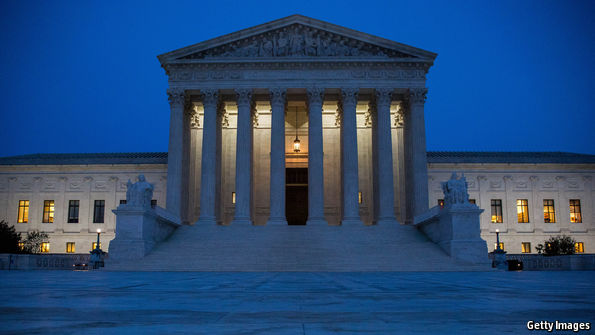
THERE are two ways to think about the future of the Supreme Court in the wake of last night’s stunning upset in the presidential race: taking Donald Trump at his word when he says he will load the bench with conservatives, or, in view of his penchant for changing his mind, taking these promises with a shaker full of salt. Neither offers much solace to liberals.

Mr Trump has pledged to appoint highly conservative justices who will uphold gun rights, walk back the 18-month-old decision allowing gays and lesbians to wed and “automatically” overturn Roe v Wade, the 1971 ruling recognising a right to abortion choice. On the campaign trail, Mr Trump provided more information about his intentions with regard to the nation’s highest court than any presidential candidate has ever divulged: not one list of potential nominees but two, totalling 21 souls he says merit a shot in one of the Supreme Court’s nine seats.

That is 21 more names than previous applicants for the White House—including Hillary Clinton—have made public. Mr Trump released his first list of 11 names in May to shore up support for his budding nomination and to reassure conservatives that he could take just as hard a line on replacing Antonin Scalia, the arch-conservative justice who died in February, as his nearest rival, Ted Cruz. Publicising the roster, which was curated with the help of the Federalist Society and the Heritage Foundation, two solidly conservative think tanks, was a highly unorthodox move, and it’s likely Mr Trump knew very little about any of the potential nominees. But the stunt had its intended effect: the conservative base coalesced around Mr Trump and the real-estate magnate took the mantle of the Republican party.

The original Trump Eleven were all white judges, six sitting on federal circuit courts and five on state supreme courts. In line with what would become a promise to “drain the swamp” in the final weeks of his campaign, none hailed from inside the Washington beltway. That is a remarkable slight to the DC Court of Appeals, an institution where many presidents have fished for nominees. Of the eight justices currently on the Supreme Court, three once served on the DC court: the liberal Ruth Bader Ginsburg and conservatives Clarence Thomas and John Roberts, the chief. Barack Obama’s pick to replace Mr Scalia, Merrick Garland, is the DC circuit court’s chief judge.

Late in September, Mr Trump added ten more potential picks to his Supreme Court wish list. This list was more diverse. It included more women and three people of colour, including Amul Thapar, a Detroit-born judge of South Asian descent; Federico Moreno, a Florida judge who hails from Venezuela; and Robert Young, the black chief of Michigan’s supreme court. It also featured Mike Lee, a senator from Utah who refused to endorse Mr Trump and who called on him to quit the race following revelations about his treatment of women in October. Mr Lee has said he is happy serving in the Senate and is not interested in taking a seat on the Supreme Court.

Nobody knows who Mr Trump will actually tap for Mr Scalia’s empty seat. Mr Trump himself might have little clue. In the course of his business career, the president-elect has shown a remarkable ability to dodge and parry and reverse himself on everything from the war in Iraq to immigration policy to Mr Obama’s birthplace. Notably, Mr Trump never said he would choose one of the 21 people on his lists: he said the names should be viewed as “a guide” he would consult when sitting down to make his selection. They are “representative of the kind of constitutional principles I value”, he said. Time will tell whether those principles make their way into an actual Trump nominee.

But with Republicans in control of both houses of Congress and the White House, there is only one barrier to Mr Trump seating a justice of his choice: the Senate filibuster, a maneouver that permits the minority party to prolong debate and block votes as long as the majority is weaker than 60 votes. Senate leaders told The Economist over the summer that this last line of defence will be erased no matter which party takes the chamber in the November election. With their successful nine-month stonewall of Mr Garland now looking like a brilliant move to preserve a half-century-long conservative tilt on the Supreme Court, Republicans will have no reason to bow to a Senate rule that hamstrings their new president. Expect the filibuster to dissolve and Mr Trump to have his way with the empty chair—one way or another.

Meanwhile, last night’s vote may have changed retirement plans for Ruth Bader Ginsburg, 83 and Stephen Breyer, 78, the elder liberals on a court that is destined to swing to the right. If they hang up their robes over the next four years, the Supreme Court may be unrecognisable a generation down the road.

http://www.economist.com/blogs/democracyinamerica/2016/11/nominator-chief

Source: The Economist

9-nov

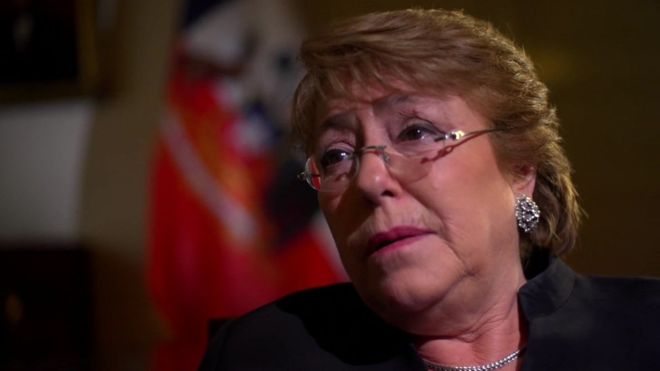
Chile is one of only six nations in the world where a woman can be prosecuted for having an abortion whatever the circumstances. Its first female president, Michelle Bachelet, is trying to change that, against stiff opposition.

“I believe that women should have legally the possibility of making their own choices. In this country until now this is criminalised – if you interrupt your pregnancy, you will go to jail. And I believe this is not fair,” Ms Bachelet told me.

“Women could be in an unhealthy situation because of rape, et cetera, and there might be women who don’t want babies in that situation.”

First elected in 2006 and now back as president after Sebastian Pinera took the reins for four years, Ms Bachelet has made it her mission to change her country’s restrictive abortion laws.

The changes would decriminalise abortion at up to 12 weeks:

  • if the mother’s health was at risk
  • if the foetus would not survive the pregnancy
  • if the mother had been raped

And if the mother was under 14 years old, the limit would be extended to 18 weeks.

The proposal has been passed by the country’s Congress, but needs Senate approval to become law.

‘Powerless’

Urban Chile seems a modern and sophisticated place.

You see gay couples holding hands and a strong alternative street culture.

But some old attitudes endure.

Despite being illegal in Chile, abortions do take place.

Those who can afford it turn to underground private clinics or personal contacts to get them Misoprostol, known as the abortion drug.

But if you are poor, your options are limited.

Paola and Andrea, in their early 40s, both had planned pregnancies and then found they were carrying fatally damaged foetuses.

Paola said she had felt “like a walking corpse, and like my son’s coffin. It was torture”.

She said abortion must be a very painful experience, but not as much as forcing that baby to be born.

The best advice Paola’s doctor could give her was to pray.

She was not allowed an abortion; neither was Andrea, even though her life was under threat.

Both had to carry their babies for months and give birth to them – without any hope they would live.

Andrea told me: “I felt powerless, having to live this process after having my daughter declared unviable.

“I suffered unnecessarily and so did my family.”

Later, the president told me she had watched some of her friends go through the same thing.

“There are some people who might be able to live with that, and that’s OK, but there’s a lot of people who really are destroyed emotionally afterwards, and their lives are changed forever. So that’s why we do believe they should have the possibility to decide by their own, what they prefer.”

States where abortion is completely illegal:

  • Chile
  • The Dominican Republic
  • El Salvador
  • Malta
  • Nicaragua
  • The Vatican

Previous governments have tried to liberalise the law, but President Bachelet’s bill has already gone much further down the legislative process than any before.

But the proposal remains very controversial, with opposition led by the Church.

At the beginning of September, it organised a rally in the capital, which attracted support from tens of thousands of people.

One of them, Gloria, was raped at the age of 12 by a cousin, and made to have an abortion by her family.

She never recovered, and has tried to take her own life several times.

Gloria told me: “In my case, if I had the choice, I would have had my daughter. But it wasn’t my choice.

“Abortion scars you for life – before and after.

“Nothing good comes out of abortion – nothing, nothing.”

‘Women are still dependent’

In Chile, many conversations lead back to the country’s violent past, when the democratic government of Salvador Allende was overthrown by a coup led by Gen Augusto Pinochet.

The general banned abortion in 1989, in one of the last acts of his military government.

Despite being predominantly Catholic, Chile had allowed pregnancy terminations until then.

Human rights lawyer Lorena Frias told me the military dictatorship still cast a shadow over Chile’s attitude to personal freedom and to abortion.

“Even 20 years after the dictatorship, human rights is not part of the political agenda,” she said.

“This makes it more difficult to argue in terms of international standards in favour of women.

“In Chile, women are still dependent.

“Women do not have the decision over their bodies, over their own financial things, over their own liberty, so it is more difficult to push forward the abortion agenda.”

Despite the controversy, President Bachelet appears to have most of the public behind her.

And she is hopeful Chile’s women will soon have choices available to them that their mothers were denied.

http://www.bbc.com/news/world-latin-america-37336279

Source BBC

6-nov-2016

The Patriarch of the Russian Orthodox Church, the Head Mufti of Russia and the Children’s Ombudswoman support the removal of abortions from Russia’s mandatory health insurance, but officials and doctors say that a ban will only move the procedure underground.

On Sept. 27, Russian Orthodox Patriarch Kirill signed “The citizen’s petition for banning abortion.” Promoted by conservative Orthodox activists, the petition supports the position that life begins at conception and reads in part: “We, citizens of the Russian Federation, speak in favor of terminating the practice of legally killing infants before birth.”

The move by the patriarch has once again brought the controversial topic of abortion to the fore in Russian society.

It would be hard to call the patriarch’s support of the petition unexpected. Like many branches of Christianity, including the Catholic Church, the Orthodox Church considers abortion murder.

In his Twitter account, journalist Ivan Davydov responded (in Russian) ironically to bloggers who were surprised or outraged by Kirill’s words:

“Judging by the public’s reaction, it seems that many expected the patriarch to speak in favor of a sexual revolution. He was really disappointing.”

A ban, but not a ban

Immediately after the patriarch’s signature on the petition was announced, his press secretary, Alexander Volkov, made a statement tempering the move.

“This petition is not about a ban, but about removing abortions from the mandatory health insurance system,” Volkov said, adding that Kirill “signed the petition in order to attract society’s attention to the issue.”

Vladimir Legoida, head of the Synodal Department for Church-Society Relations and the Mass Media, clarified the Orthodox Church’s position to the TASS news agency: “The most important demand today is to have abortions removed from the mandatory health insurance system so that people who do not support abortions do not have to pay for them out of their pocket,” Legoida said.

Legoida also went a step further, noting that he hopes a future ban on state-funded abortions will become the first step towards a society completely free of abortions.

Allies against abortion

On the subject of abortion, Russia’s official Christian and Muslim representatives agree. Chief Mufti of Russia Talgat Tadjuddin expressed his support for Kirill’s position, calling abortion “infanticide.”

New Children’s Rights Ombudswoman Anna Kuznetsova also added her voice to those calling for a ban. “The entire civilized world has long been speaking against the phenomenon of abortion; we support this position,” Kuznetsova said, noting the importance and effectiveness of state policy in preventing abortions. According to Kuznetsova, last year 67,000 women were dissuaded from taking this step.

A dangerous move for women

The Russian Health Ministry, however, does not support either banning abortion altogether or removing it from the list of procedures covered under the mandatory health insurance system. Health Minister Veronica Skvortsova told radio station Gorvorit Moskvi (Moscow Speaking) that the introduction of limits on abortions could be dangerous for women.

“There are certain nuances that are related to the possibility of abortions becoming clandestine, especially for people with low incomes, for minors,” said Skvortsova. According to her, the Health Ministry’s objective is to prevent an increase in infant mortality and maternal deaths, which could appear if such restrictions are introduced.

Other critics of a ban on abortion echo Skvortsova’s statement that restricting the procedure will not end it, but only drive it underground, making abortions more dangerous for women.

Victor Radzinsky, president of the Russian Society of Obstetricians and Gynecologists says that past attempts to ban abortions did not result in an end to the procedure. “In the Soviet Union abortions were banned between 1936 and 1955. People died from sepsis,” Radzinsky said.

http://rbth.com/politics_and_society/politics/2016/09/29/could-russia-ban-abortions_634405

Source: RBTH

Polish lawmakers approved Friday a government plan of bonuses for families that have a disabled child born to them, as part of a policy aimed at curbing the number of abortions.

The “For Life” plan, to take effect next year, provides for a one-time payment of 4,000 zlotys ($1,000) upon the birth of a disabled child or one with a life-threatening disease.

Government member Elzbieta Witek said the money is intended as the “first step” of government support for families with disabled children. Such families have long been demanding higher government provisions, which currently stands at 1,300 zlotys a month for a parent taking care of the child full-time.

The conservative Law and Justice government, under the influence of the Catholic church, is seeking to ban abortions of deformed or sick fetuses, or even those with no chance of survival, to make possible their baptism and burial.

Poland’s law bans abortions except for cases when the woman’s life or health is threatened, the pregnancy results from rape or incest or the fetus is irreparably damaged. But under the general anti-abortion climate and threat of prison terms, doctors often refuse to perform the admissible abortions.

Government figures say that 1,040 abortions were performed last year, while experts say some 150,000 abortions are done illegally and secretly.

The government says that most of the legal abortions are performed on fetuses with genetic defects like Down syndrome and says that should be stopped.

The parliament, dominated by the ruling party, voted 267-140 in favor of the plan with 21 abstentions.

By: THE ASSOCIATED PRESS

http://abcnews.go.com/International/wireStory/anti-abortion-poland-offers-payments-disabled-newborns-43299898

Source: ABC News

Demand for abortion pills on the rise

American women are ending pregnancies with medication almost as often as with surgery, marking a turning point for abortion in the United States, data reviewed by Reuters shows.

The watershed comes amid an overall decline in abortion, a choice that remains politically charged in the United States, sparking a fiery exchange in the final debate between presidential nominees Hillary Clinton and Donald Trump.

When the two medications used to induce abortion won U.S. approval 16 years ago, the method was expected to quickly overtake the surgical option, as it has in much of Europe. But U.S. abortion opponents persuaded lawmakers in many states to put restrictions on their use.

Although many limitations remain, innovative dispensing efforts in some states, restricted access to surgical abortions in others and greater awareness boosted medication abortions to 43 percent of pregnancy terminations at Planned Parenthood clinics, the nation’s single largest provider, in 2014, up from 35 percent in 2010, according to previously unreported figures from the nonprofit.

The national rate is likely even higher now because of new federal prescribing guidelines that took effect in March. In three states most impacted by that change – Ohio, Texas and North Dakota – demand for medication abortions tripled in the last several months to as much as 30 percent of all procedures in some clinics, according to data gathered by Reuters from clinics, state health departments and Planned Parenthood affiliates.

Among states with few or no restrictions, medication abortions comprise a greater share, up to 55 percent in Michigan and 64 percent in Iowa.

Denise Hill, an Ohio mother who works full time and is pursuing a college degree, is part of the shift.

Hill, 26, became extremely ill with her third pregnancy, sidelined by low blood pressure that made it challenging to care for her son and daughter. In July, eight weeks in, she said she made the difficult decision to have a medication abortion. She called the option that was not available in her state four months earlier “a blessing.”

The new prescribing guidelines were sought by privately-held Danco Laboratories, the sole maker of the pills for the U.S. market. Spokeswoman Abby Long said sales have since surged to the extent that medication abortion now is “a second option and fairly equal” to the surgical procedure.

“We have been growing steadily year over year, and definitely the growth is larger this year,” Long said.

Women who ask for the medication prefer it because they can end a pregnancy at home, with a partner, in a manner more like a miscarriage, said Tammi Kromenaker, director of the Red River Women’s Clinic in Fargo, North Dakota.

GAME CHANGER

Medication abortion involves two drugs, taken over a day or two. The first, mifepristone, blocks the pregnancy sustaining hormone progesterone. The second, misoprostol, induces uterine contractions. Studies have shown medical abortions are effective up to 95 percent of the time.

Approved in France in 1988, the abortion pill was supposed to be a game changer, a convenient and private way to end pregnancy. In Western Europe, medication abortion is more common, accounting for 91 percent of pregnancy terminations in Finland, the highest rate, followed by Scotland at 80 percent, according to the Guttmacher Institute, a nonprofit research organization that supports abortion rights.

In the United States, proponents had hoped the medication would allow women to avoid the clinics that had long been targets of protests and sometimes violence.

But Planned Parenthood and other clinics remain key venues for the medication option. Of the more than 2.75 million U.S. women who have used abortion pills since they were approved in 2000, at least 1 million got them at Planned Parenthood.

Many private physicians have avoided prescribing the pills, in part out of concern that it would expose their practices to the type of protests clinics experienced, say doctors, abortion providers and healthcare organizations.

At the same time, the overall U.S. abortion rate has dropped to a low of 16.9 terminations per 1,000 women aged 15-44 in 2011, down from 19.4 per 1,000 in 2008, according to federal data. The decline has been driven in part by wider use of birth control, including long lasting IUDs.

In March, the U.S. Food and Drug Administration changed its prescribing guidelines for medication abortion. The agency now allows the pills to be prescribed as far as 10 weeks into pregnancy, up from seven. It cut the number of required medical visits and allowed trained professionals other than physicians, including nurse practitioners, to dispense the pills. It also changed dosing guidelines.

The changes were supported by years of prescribing data and reflect practices already common in most states where doctors are free to prescribe as they deem best.

Ohio, Texas and North Dakota took the unusual step of requiring physicians to strictly adhere to the original guidelines. Many abortion providers were reluctant to prescribe the pills under the older guidelines, which no longer reflected current medical knowledge, said Vicki Saporta, President and CEO of the National Abortion Federation.

Randall K. O’Bannon, a director at the anti-abortion National Right to Life organization, criticized the new guidelines but said his organization had no plans to fight them.

“What they did was make it more profitable,” O’Bannon said. “It will increase the pool of potential customers.”

Planned Parenthood said both types of abortion typically cost from $300 to $1,000, including tests and examinations. The group charges a sliding fee based on a patient’s ability to pay, regardless of which type of abortion they choose.

VARIED ACCESS

Despite a landmark U.S. Supreme Court ruling that abortion is a woman’s right, access varies widely by state. Some states maintain restrictions on both surgical and medication abortions; others have worked to increase access.

In rural Iowa, where clinics are few and far between, Planned Parenthood is using video conferencing, known as telemedicine, to expand access.

The way it works is, a woman is examined in her community by a trained medical professional, who checks vital signs and blood pressure and performs an ultrasound. The information is sent to an off-site doctor, who talks with the woman via video conference and authorizes the medications.

Since the telemedicine program began in Iowa in 2008, medication abortions increased to 64 percent of all pregnancy terminations, the highest U.S. rate.

In New York, Hawaii, Washington and Oregon, a private research institute, Gynuity Health Projects, works with clinics to send abortion pills by mail to pre-screened women.

“Medication abortion is definitely the next frontier,” said Gloria Totten, president of the Public Leadership Institute, a nonprofit that advises advocates.

And in Maryland and Atlanta, the nonprofit organization Carafem opened centers in the last 18 months that offer birth control and medication, but not surgical, abortions. It promotes its services with ads that read: “Abortion. Yeah, we do that.”

(Reporting By Jilian Mincer; Editing by Michele Gershberg and Lisa Girion)

http://www.reuters.com/article/us-usa-healthcare-abortion-exclusive-idUSKBN12V0CC

Source: Reuters