As an obstetrician-gynecologist, I have a busy obstetrics practice where I provide prenatal care, deliver babies and treat mothers after they give birth.

I also provide abortion care. I believe patients deserve the full spectrum of reproductive healthcare options.

I came to this work because of my passion for young people, one that is deeply connected to my personal experience with teen pregnancy. Prior to finishing high school, I learned I was pregnant. As a result of fear and lack of resources, by the time I confided in my mother and grandmother, I had no choice—I was going to be a mother.

Becoming a mother as a teenager came with many harsh realities. I love my children with all my heart, but I know that everyone should be able to make the decision to parent for themselves. I have been in the shoes of many of the young people I see in my clinic, and it’s important for them to know that regardless of their decision, that I am here to support them.

I support the Women’s Health Protection Act because it would help ensure that access to care does not look differently depending on your zip code.

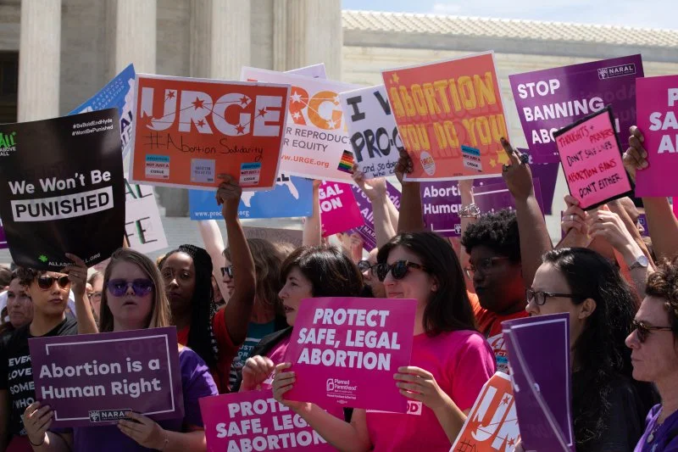
(Copyright NARAL Pro-Choice America)

(Copyright NARAL Pro-Choice America)

In states like California or Maryland, today a patient can access abortion care without the state forcing medically inaccurate information on them, or making them endure a medically unnecessary waiting period.

This is what care should look like. Unfortunately, today that is not the case for my patients in Alabama. Just last year, the legislature passed a near total ban on abortion; under that ban, a physician could be sent to prison for 99 years for performing an abortion.

This law, should it ever go into effect, would threaten doctors like myself with prison for providing ethical, medically appropriate care. There is no other area of medicine where politicians threaten physicians with prosecution for doing their jobs. Thankfully, the ban was blocked, and abortion remains legal in Alabama, as it is in every other state. I am proud to continue to provide patients with compassionate, quality care when they enter our doors, but I know all too well that getting to our doors is too hard, as a result of decades of medically-unnecessary restrictions that have slowly chipped away at access.

It is not unusual for patients to travel up to eight hours, or from as far away as Louisiana and Florida—because so many other providers have been forced to shut their doors. Then, they are required to wait an additional 48 hours before I can provide the care they need due to a state-imposed waiting period. I know of people who have slept in their cars as a result of this mandatory delay period, because they had no other options.

The state also requires that my patients receive outdated materials as part of so-called “counseling” that are filled with misinformation that I then need to correct. We are required to do ultrasound examinations, even when they are unnecessary and provide no medical value.

These restrictions only add needless costs and delays. Their effects on my patients are painful for me to see.

Alabama also bans abortion after 20 weeks post-fertilization; patients needing care after that point have to travel out of state, making care even more expensive. Young people in Alabama have to navigate an onerous, time-intensive process to have an abortion if they cannot involve a parent. I have cared for a 12-year-old victim of incest who faced many delays before finally getting judicial approval for the abortion she needed. Even though I met her in her first trimester of pregnancy, she was nearing Alabama’s legal limit by the time she navigated all of these hurdles.

Additionally, over the years, Alabama Women’s Center has been forced to comply with onerous, medically unnecessary building requirements. For example, we were forced to outfit our clinic as an ambulatory surgical center having to install 24-hour lighting. Having 24-hour lighting does not make abortions safer, as we do not see patients after 5 p.m. What it does is make abortion care expensive to provide.

Because I practice full spectrum obstetrics and gynecology, I have hospital admitting privileges like the ones at issue in June Medical Services v. Gee, currently before the Supreme Court. I can say unequivocally that admitting privileges are unnecessary for provision of abortion care and nearly impossible for an abortion provider to obtain. For admitting privileges, hospitals require a provider to maintain a certain number of hospital admissions and major surgical cases.

Given the fact that abortion is incredibly safe, hospital admissions are rare making these numbers nearly impossible to meet. On the rare occasion that a patient requires hospitalization following an abortion procedure, there are already procedures in place to facilitate transfer and ensure continuity of care. The transferring physician calls the receiving physician, gives pertinent background information and arranges transport. This is no different than the protocols followed by pediatricians or other medical professionals who do not have privileges to admit patients to a hospital.

I currently have a highly qualified board-certified physician who works with me who cannot get admitting privileges because they will never attain the number of admissions or major cases in a two-year period to meet the hospital’s requirement. In fact, in 2018, the National Academies of Sciences, Engineering and Medicine (NASEM) published a comprehensive study affirming that abortion is extremely safe and the biggest threat to patient safety is the litany of medically unnecessary regulations that raise costs and delay procedures, ultimately putting women’s health at risk.

They confirmed what we already know: that access to safe abortion care all too often depends on where you live and how much money you have.

Alabama is a state with unconscionably high maternal and infant mortality rates. According to the Alabama Department of Public Health (ADPH) nearly two-thirds of Alabama counties lack hospitals that offer obstetrical care. Moreover, the number of pregnancy-related deaths across the country has steadily increased. In Alabama, Black women are nearly five times more likely to die from pregnancy-related causes than white women.

There are many pre-existing conditions that can be made worse by pregnancy, and other serious health conditions can be caused by pregnancy. We know that racial disparities in health care are exacerbated by policies that make accessing health care more challenging. Without access to abortion, maternal mortality rates will rise even more.

By attempting to criminalize practitioners who provide abortion care, the abortion bans we have seen enacted in Alabama and other states, threaten those women and communities that are already suffering from lack of health care providers, and compound the complex scenarios that obstetricians routinely balance as they try to make the best decisions they can about managing complicated pregnancies.

Every patient, regardless of where they live or how much money they have, deserves access to abortion care. Though Alabama’s all-out abortion ban has not taken effect, patients are already suffering from the cumulative effect of years of medically unnecessary restrictions.

I wish you all could hear how worried patients are. One told me of the nightmares she had prior to coming to the clinic about being turned away and denied services because of these restrictive laws.

The bottom line is this: Abortion care is healthcare! The Women’s Health Protection Act would bring needed federal protection for my patients and safeguard their right to abortion care. Health care in any specialty should be patient-centered, and medical decisions should remain between the patient and her physician—without political interference.

The following is the testimony of Dr. Yashica Robinson, Physicians for Reproductive Health Board Member and Medical Director of Alabama Women’s Center, from this week’s House Energy and Commerce Health Subcommittee hearing on the Women’s Health Protection Act, which would protect access to abortion and other reproductive health care nationwide.

Source: https://msmagazine.com/2020/02/12/abortion-care-is-health-care-and-we-must-protect-it/?utm_source=facebook&utm_medium=post&utm_campaign=actionfacebook&utm_content=ms-feb2020&fbclid=IwAR0FJzSGyztbsumxBaAh71NhI2f1J2dUlP6o9R8b-FoHHVAAc_xkVg-Iu9s

On February 6, Republican lawmakers — with Governor Ron DeSantis’s blessing — moved forward on a draconian piece of anti-abortion legislation. It is all but certain that DeSantis will sign the parental consent bill and put into law the requirement that minors must obtain parental consent prior to obtaining an abortion.

Terrie Rizzo, chair of the Florida Democratic Party, blasted DeSantis and Republican lawmakers:

“Governor Ron DeSantis and Florida Republicans have just set into motion their plan to dismantle abortion rights in Florida. We know they will not stop with this bill, flimsily masked as a bill to protect children, in their desire to rob women of our rights to our own bodies.

As long as Republicans are in power, they work to take away abortion rights. The only way to protect the rights of women now is to vote the Republican party out of office in November and make DeSantis a one-term governor.”

Floridians Demand A Right To Privacy: In 1980, Florida voters created a state constitutional right to privacy. Nine years later, the Supreme Court of Florida ruled the state’s newly enacted parental consent law on abortion was unconstitutional — it violated our state constitution’s privacy rights.

In 2012, voters were asked to weaken their own rights on privacy and, unsurprisingly, flatly rejected the idea. Now the State Senate continues to move a new parental consent bill that Republican lawmakers’ hope will finally undo the will of the people. Floridians believe that women have the right to make decisions about their own bodies and our laws should reflect it.

Source: https://www.floridadems.org/news/the-republican-plan-to-dismantle-abortion-rights-in-florida-has-begun?fbclid=IwAR0V5Z83CXcJHhlHCKmbx9VqwGEgGTqn7ENDUALu0YuFFvvL9eCiDBmg1QQ

Anti-choice legislation advanced in Oklahoma and Arizona last week, and a Mississippi Republican proposed a bill even more extreme than the state’s near-total abortion ban.

The Oklahoma bill stipulates that a doctor would lose their license for one year if they’re found to have provided abortion care. Shutterstock

This week, we take a look at an Oklahoma bill that would punish doctors for providing abortion care, Arizona legislation to funnel taxpayer money to anti-choice groups, and a total abortion ban in Mississippi. 

Oklahoma 

The Oklahoma House passed legislation last Thursday that would strip doctors of their medical licenses if they provide abortion care. The bill’s sponsor called it part of the ongoing effort to end legal abortion in the state, the Associated Press reported.

The bill, HB 1182, stipulates that a doctor would lose their license for one year if they’re found to have provided abortion care, with an exception for when a patient’s life is at risk. The 71-21 vote to approve the bill came after four hours of debate, according to the AP. Oklahoma Rep. Cyndi Munson (D-Oklahoma City) called the anti-choice legislation “dangerous.”

The legislation, if passed by the state senate and signed into law by Gov. Kevin Stitt (R), is likely to face a court challenge.

Mississippi 

Less than a year after Mississippi passed a near-total abortion ban that’s been blocked by the courts, a Republican lawmaker has introduced a total abortion ban. According to the “Human Life Protection Act,” or HB 627, a physician who provides abortion care would be subject to up to two years in prison and $10,000 in fines.

The legislation shares a name with the total abortion ban passed by Alabama last year, and like that ban, it would end legal abortion, with an exception to prevent a serious health risk to the pregnant person. (The health risks would need to be confirmed by two doctors.) Rep. Randy Boyd (R-Mantachie) filed the legislation in the state house last Thursday, and it has been sent to the judiciary committee; the bill has no co-sponsors yet.

Arizona 

Arizona Republicans advanced a proposal to fund anti-choice organizations’ efforts to dissuade people from abortion care. The legislation, which was approved last week by committees in the state senate and house, promises $1.5 million dollars a year to set up a “family health pilot program” to “support childbirth as an alternative to abortion”

The legislation, SB 1328 and HB 3288, would require the department of health to contract with a nonprofit to run a statewide system to provide “direct services, support services, social services case management and referrals to the biological or adoptive parents of children under two years of age, including unborn children.” Money dedicated for the program “may not be used for abortion referral services or distributed to entities that promote, refer or perform abortions,” according to the bill.

A similar bill, pushed by the right-wing Center for Arizona Policy, failed in the senate last year after two Republicans opposed it. The center describes the proposal as similar to the Texas Alternatives to Abortion program, which gives taxpayer money to deceptive anti-choice pregnancy centers.

The legislation would also provide funds to maintain Arizona’s information and referral telephone line—on the condition that the service is barred from giving information about abortion, or referrals to any entity that provides abortion services. Although the service received only three calls in 2018 related to abortion, according to the Arizona Mirror, the Center for Arizona Policy and its allies in the legislature have blocked funding the last few years.

Michigan

In late January, Michigan House Rep. Beth Griffin (R-Mattawan) and 30 co-sponsors introduced a bill that would force doctors to tell patients about the unproven concept of “abortion reversal.” Such legislation is based on the medically dubious—and potentially dangerous—idea that a person can stop a medication abortion after they have already taken the first pill in the two-pill regimen.

HB 5374 is now in the house committee on families, children, and seniors. Michigan Gov. Gretchen Whitmer (D), a supporter of abortion rights, would likely veto the bill if it reaches her desk. Republicans control both chambers of the Michigan legislature.

Dr. Sarah Wallett, chief medical officer for Planned Parenthood of Michigan, said the idea is “pseudo-science, and it is a demonstrated danger to patients to even suggest it as a ‘reversal’ option,” in a statement to the Holland Sentinel.

“Legislators under the guise of helping women want to force physicians like myself to do something that (as a highly trained medical professional) I know to be harmful,” Dr. Wallett continued. “This is infuriating. Legally requiring physicians to lie to and endanger their patients is abominable.”

Lawmakers in five states (North Dakota, Nebraska, Oklahoma, Kentucky, and Arkansas) passed “abortion reversal” laws last year.

Source: https://rewire.news/article/2020/02/10/oklahoma-republicans-want-to-suspend-abortion-providers-medical-licenses-spotlight-on-the-states/

Fighting for the Right to Make Decisions About Your Own Body

Credit: Courtesy

As the 47th anniversary of Roe v. Wade approaches on January 22, our attention should be directed toward maintaining and enhancing reproductive and sexual health care that best addresses the needs of diverse people. Anti-abortion movement advocates and politicians anticipated the 1973 U.S. Supreme Court decision that legalized abortion, and the movement has successfully worked to create obstacles to both abortion care and contraception.

Roe itself, often shorthanded as providing “the right to choose,” faces significant threats. But reflecting on how we arrived at the current state of reproductive policy reveals that the crisis of access to reproductive care is widespread and experienced unequally. According to the Guttmacher Institute, an “unprecedented wave of bans” on abortion in 2019 resulted in 25 new laws, mainly in the South and Midwest. I advocate for defending Roe and intervening in the policies and practices that continue to erode this landmark decision and intentionally institute reproductive inequalities.

Historically in the U.S., reproductive- and sexual-health-care policies have been shaped by social, political, and legal contests over gender, class, race, sexuality, immigration, and religion. Abortion care may be legal, but for many women and girls, it is effectively inaccessible.

Some barriers have high media visibility, such as the 2003 federal law prohibiting a medical abortion-care procedure when then-President George W. Bush approved the Partial-Birth Abortion Ban Act. Also highlighted were the bombing of abortion clinics, the murder of doctors and clinic workers, and the installment of anti-abortion U.S. Supreme Court judges. But innumerable low-visibility practices and policies in many states curtailed abortion-care access, including a lack of abortion-care providers in many regions, insurance bans, government-mandated waiting periods, and medical procedure limitations. Low-income women and women of color are most affected by these constraints and have fewer resources to work around them.

A range of federal funding restrictions contribute to unequal access to reproductive information and care. The Global Gag Rule, established in 1984 as the Mexico City Policy, prohibits U.S. funding for organizations that provide or even discuss abortion. This logic is now applied within the U.S. to restrict Title X funding. The nonprofit Planned Parenthood and other holistic reproductive-care providers have turned down this federal funding to avoid complying with the silencing of abortion-care information. By so doing, they provide safe, legal, low-cost reproductive care.

Federal bans on Medicaid funding for abortion care, with exceptions to save the life of the pregnant woman or in cases of rape and incest, were established by the 1976 Hyde Amendment and are reenacted annually. The amendment also applies to women in the military, Native Americans, Alaskan Natives, federal prisoners, and Peace Corps employees, and it is meant to shrink the reach of Roe. A movement to repeal the Hyde Amendment has been led by women of color for decades, and in 2016, the Democratic National Committee Platform supported it. This is expected to be featured during the 2020 presidential election.

This is a critical time to resist policies that restrict reproductive options. Public health decision-makers, voters, and everyday women and girls, by joining coalitions, can raise their voices. Legal collaboration can look like the multistate coalition of 22 attorneys general, including California’s Xavier Becerra, who filed a December 2019 amicus brief in the U.S. Supreme Court. They support a constitutional challenge to a Louisiana law that requires abortion care providers to have local hospital admitting privileges; an identical Texas law was struck down by the Supreme Court in 2016.

Collaboration for women’s rights is also supported by reproductive justice advocates. The SisterSong Women of Color Reproductive Justice Collective defines reproductive justice as the human right to maintain personal bodily autonomy, have children, not have children, and parent the children we have in safe and sustainable communities. This framework requires that equitable policies be built by working from the grassroots with those who have the least access to reproductive health care. The Intersection of Our Lives, formed by the National Latina Institute for Reproductive Health; In Our Own Voice: National Black Women’s Reproductive Justice Agenda; and National Asian Pacific American Women’s Forum found in a 2019 poll that “84 percent of women of color voters believe that candidates should support women making their own decisions about their reproductive health.”

Reproductive justice, as a theory, strategy, and set of practices, acknowledges the decisions that women, men, gender nonbinary, and transgender individuals make about their bodies and lives, setting their options within families and communities. This framework mobilizes us to focus on how power operates: U.S. policies have not applied evenly to all people, and appeals to “choice” do not reach the majority of low-income women and women of color or address the disparities in our society.

Activists for reproductive justice, in coalition with allies, provide dynamic ways to enhance our reproductive rights and health. The personal and political stakes are high, and there are many ways to raise awareness of the threats to women’s rights and support reproductive justice. March, protest, lobby, educate, collaborate, and, above all, vote.

Laury Oaks chairs UC Santa Barbara’s Department of Feminist Studies.

Source: https://www.independent.com/2020/01/14/threats-to-roe-v-wade/?fbclid=IwAR2qJQDMkeQy9eHvpf9pSTmT1yRZJ6VRrR185ij2GuWjHRfKlgg0ehVTrd8

The answer: Republicans expect a conservative state Supreme Court will ignore precedent and uphold a parental consent law.

State Sen. Kelli Stargel, R-Lakeland, speaks during a Senate Rules Committee hearing regarding SB 404, known as the “parental consent” bill, at the Capitol, in January in Tallahassee. The bill requires girls under the age of 18 get a parent’s consent before having an abortion (Associated Press I Aileen Perilla) [AILEEN PERILLA | AP]

The Florida Senate is poised to approve legislation this week that would require minors to obtain parental consent before receiving an abortion — even though the Florida Supreme Court decided decades ago that restriction violates the Florida Constitution. Why pass legislation that is unconstitutional? Because Gov. Ron DeSantis and Republican lawmakers are confident the conservative justices who now dominate the court will ignore precedent and uphold an abortion restriction that will jeopardize the safety and health of some pregnant teenagers.

This assault on abortion rights is an election-year effort by Republican lawmakers to energize conservative voters without embracing more extreme restrictions. For example, legislation that would ban abortions after a fetal heartbeat is detected is not moving. But Gov. Ron DeSantis mentioned his support for the parental consent bill last month in his State of the State address. And the Senate, which last year stalled similar legislation that passed the House, is going first this time and expected to vote along party lines Thursday to approve SB 404. Expect a court fight, but don’t count on the Florida Supreme Court to protect the constitutional rights of pregnant teenagers this time.

This issue has been long settled. The Legislature passed a similar parental consent law in 1988, and a year later the Florida Supreme Court ruled it was unconstitutional and violated the state Constitution’s right to privacy. That privacy right has not changed. What has changed is the court is more conservative, and it has demonstrated it has no qualms about going off in a new direction. Already this year it has decided it was wrong for the court to consider the intent of the voters when evaluating constitutional amendments, and it concluded the court also was wrong to require juries to unanimously recommend death sentences.

There is no need for the state to interfere with this most personal of decisions. Florida already has a parental notification law, and there is no indication that the abortion rate is significantly rising. There were 12,000 fewer abortions in 2018 in this state than there were a decade ago, and more than nine of every 10 abortions were in the first trimester. Requiring parental consent will put more teenagers who do not have close relationships with their families in a more desperate situation.

The supporters of the legislation note pregnant teens who can’t seek their parents’ permission can seek a judicial waiver to obtain an abortion and that a lawyer may be appointed to represent them. But going to court can be intimidating for anyone, particularly for a teen who already is in crisis. Abortion rights supporters also point out that clerks for many circuit courts are not particularly prepared to help a teen inquiring about the judicial waiver process.

One by one, the Senate already has rejected virtually every change proposed by Democrats such as Sens. Janet Cruz of Tampa and Darryl Rouson of St. Petersburg that would have made the parental consent legislation marginally more workable. Expect Thursday’s debate to be vigorous, but don’t expect minds to change. This attack on abortion rights is on the fast track to the governor, who will sign it into law. The question is whether the conservative justices on the Florida Supreme Court will decide those rights are still protected by the privacy amendment to the state Constitution. What was once a given is no longer certain.

Source: https://www.tampabay.com/opinion/2020/02/03/why-would-the-florida-senate-approve-an-unconstitutional-abortion-restriction-editorial/?fbclid=IwAR2g7gE8LKtr5CDmDAoJWnCJmWau8k1w67yryA2F_MXtHTHDC3cm5ZWTS4s

Anti-choice lawmakers in Kansas push a constitutional amendment to ensure abortion restrictions stay in place.

In a 28-12 vote last Wednesday evening, the Kansas State Senate approved a constitutional amendment that would give the legislature the power to regulate abortion access.
Shutterstock

Kansas

Less than a year after the Kansas Supreme Court declared access to abortion a “fundamental right,” the state’s Republican lawmakers are advancing a constitutional amendment to reverse the ruling and ensure they can continue to restrict that right.

In a 28-12 vote last Wednesday evening, the Kansas State Senate approved a constitutional amendment that would give the legislature the power to regulate abortion access. If the ballot measure passes the house with a two-thirds majority, the amendment will go before voters in August. Without the constitutional amendment, state Republican lawmakers fear decades of anti-choice restrictions could be invalidated, along with future efforts to make abortion care inaccessible, the Topeka Capital-Journal reports.

Reproductive rights advocates are urging members of the Kansas House to reject the anti-choice amendment. The house has 84 Republican members, which is the exact number of votes needed for a two-thirds majority: the amendment would need the support of every single Republican, unless it wins over any anti-choice Democrats.

The amendment would not need to be approved by the state’s Democratic governor. Still, Kansas Gov. Laura Kelly, an abortion rights supporter, came out against it in a Thursday press conference, saying the anti-choice amendment would “throw the state back into the Dark Ages,” the Associated Press reported. “I fear for a future in which the legislature chooses to stand between a woman and her doctor,” Kelly said.

The Kansas proposal is modeled on an anti-choice constitutional amendment approved by Tennessee voters in 2014 that opened the floodgates for anti-choice legislation. Five years later, the Tennessee legislature is considering a near-total abortion ban.

“The constitutional amendment to ban abortion approved by the Senate tonight is a vehicle to take away the rights of Kansas women and would put their health and safety in harm’s way,” Julie Burkhart said in a statement Wednesday. Burkhart is founder and CEO of Trust Women Foundation, which operates a clinic in Wichita. “Shame on the Kansas legislators who proposed and supported this flawed and dangerous constitutional amendment.”

Utah

Utah’s Republican-controlled legislature could soon consider a so-called trigger law that would outlaw abortion if conservative justices on the U.S. Supreme Court strike down Roe v. Wade.

State Sen. Dan McCay (R-Riverton) told KUTV that he plans to introduce an anti-choice bill that would ban abortion, except for rare circumstances, and automatically go into effect if the Court overturns Roe. “It will basically say, if the Supreme Court upholds that abortions can be banned at the state level, then we will ban them,” McCay said.

With a state government entirely in the hands of Republicans, Utah could join eight states with “trigger” bans. (Nine additional states have unenforceable pre-Roe abortion bans on the books, according to the Guttmacher Institute.)

Indiana  

An Indiana State Senate committee approved a bill last Wednesday to require medication abortion patients be told they can bring their fetal tissue to a local hospital or clinic for disposal. The bill, SB 299, received the support of every Republican and two of three Democrats on the committee, according to the Times of Northwest Indiana.

A 2016 Indiana law, upheld by the Supreme Court last year, already requires abortion providers to either bury or cremate fetal tissue, instead of treating it like other medical waste. SB 299  would go farther, forcing providers to inform patients receiving a medication abortion that they have the option to collect the tissue they expel and bring it back to the clinic to be buried or cremated. Around 40 percent of Indiana abortions in 2018 were medication abortions, the Times reported.

“I opposed this bill because it is unreasonable to think that women are going to collect the remains from an early-term abortion and bring them back to the clinic. Transporting bodily remains in improper ways is a biohazard,” said state Sen. Jean Breaux (D-Indianapolis), the only committee member to vote against the bill, in a Thursday tweet.

Fetal burial laws stigmatize abortion care and impose medically unnecessary regulations, reproductive rights advocates say. Such legislation can increase costs for abortion care providers, according to an Associated Press report.

South Dakota

In a grim new proposal, South Dakota lawmakers want to give abortion patients the chance to see their aborted fetus. A dozen Republicans introduced the measure, SB 87, last Tuesday. The bill says abortion patients must be informed beforehand that they “may request to view the aborted fetus after the abortion is performed up until the time the hospital, clinic, or medical facility disposes of the aborted fetus.”

The measure would add to the biased counseling that patients in South Dakota are forced to undergo before receiving abortion care.

Source: https://rewire.news/article/2020/02/03/kansas-republicans-fundamental-right-abortion-spotlight-on-the-states/

Jane’s Due Process executive director Rosann Mariappuram and four other reproductive justice leaders break down how we can bring comprehensive and affordable abortion care to the most marginalized among us.

A pro-choice march in Washington, DC, May 4, 1992. One protester carries a placard that reads “My Mind, My Body, My Choice.”Alfred Gescheidt/Getty Images

Earlier this month, we commemorated 47 years since Roe v. Wade legalized abortion in the United States. But those of us in communities and states across the country who are fighting for true reproductive equity and justice know that we can’t just pick up the fight when it’s making headlines. We have witnessed first-hand the escalation of attacks on abortion care and reproductive health even with the landmark ruling in place—and we know that, unsurprisingly, those attacks have disproportionately impacted people struggling to get by, women of color, young people, immigrants and LGBTQ+ folks.

So leaders and activists of color in the reproductive justice space are here, together, reflecting on the barriers to reproductive justice—discriminatory restrictions, financial and geographic barriers, stigmatizing hurdles for young people who need abortion care, mass anti-abortion misinformation campaigns—and on our collective vision for removing them. We refuse to accept Roe alone as the standard for reproductive justice and health equity—instead, we must fight for a future that includes all of us.

Terrelene Massey, Executive Director, Southwest Women’s Law Center, New Mexico

I’ve seen first-hand how Indigenous women and communities face too many barriers to have our basic needs met—and that includes access to reproductive health care. Since 1976, the Hyde Amendment has prohibited the use of federal funds to cover abortions for those who access health care through Medicaid or the Indian Health Service. Hyde and other intersecting, discriminatory policies have worked together to hack away at the full promise of Roe v. Wade for Indigenous people.

We’re fighting for a future that includes all of us, and leaves no one—including Indigenous people and those of us living on reservations, Indian land and in rural areas—behind. Our work must do more than sustain abortion rights as they are. Reproductive health care must be affordable and geographically accessible for the most marginalized communities, and to achieve this vision for all of us, we must follow the lead of the Indigenous women and people most impacted by this fight.

Rosann Mariappuram, Executive Director, Jane’s Due Process, Texas

Despite the legal protections granted by Roe v. Wade, young people in the U.S. still have to navigate a complicated web of restrictions to access abortion care. Anti-choice lawmakers in Texas and other states have put up legal barriers that make teens travel for hours to reach the closest clinic, pay out-of-pocket because of insurance bans on abortion, and force teens to listen to state mandated “counseling” that is medically inaccurate and designed to shame and stigmatize abortion care. And never during the passage of these anti-choice laws are the voices of young people centered. This is what Roe looks like in real life for large swaths of the country. This is why we must do better by young people.

Young people deserve honest, accurate information about sexual health and family planning, as well as access to birth control. When a teen makes the decision to have an abortion, they should be able to access the care they need without facing barriers like parental consent and notification laws. Teens who call or text our 24/7 hotlines receive confidential information on abortion and birth control options, including how to obtain a judicial bypass. As the only organization of its kind in the country, Jane’s Due Process is determined to center the needs of the teens we serve. We are fighting for a future that recognizes the power of young people and centers them in conversations about reproductive health care.

Cherisse Scott, Founder and CEOSisterReach, Tennessee

In my own life and throughout my years as a reproductive justice advocate in the south, I’ve watched and experienced first-hand how anti-abortion extremists have waged an all-out information and public health war targeting vulnerable women, girls and individuals who give birth. On top of abortion bans, coercive birth control practices, mandated policies obstructing access to comprehensive reproductive and sexual health education, and fake clinics target Black and Brown communities intentionally to control our births. Their lies, propaganda and disingenuous care for our lives and families pose one of the most significant threats to abortion access we have seen in my lifetime. As they work to dismantle Roe v. Wade, we continue to educate our base to protect and prepare themselves. It is an important service as our administration refuses to protect the very lives it claims to care for.

Our fight for a Roe v. Wade that works for all of us, no matter where we live, how old we are, or how much we make, must include standing up to the thousands of fake clinics across the country that are targeting marginalized people who seek care. However anyone may feel about abortion, we can all agree that everyone should have access to accurate information, quality medical care and the full range of pregnancy-related services. The decision to become a parent is too important—we can’t allow it to be taken away by politically-motivated bullies and moral scam artists

Nancy Cárdenas Peña, Texas State Policy Associate Director, National Latina Institute for Reproductive Health, Texas

Over the last several years, states have become the battleground for abortion restrictions. The recent wave of abortion bans coupled with existing restrictions like the Hyde Amendment disproportionately impacts people of color and people with low incomes, including Latinas struggling to make ends meet. When Texas passed a law in 2013 that erased a critical health care safety net of clinics across the state, Latinas in border communities lost their access to abortion care and other healthcare. Texas shows us that a right to abortion on paper—what the decision in Roe guaranteed—is not enough.

There is no justice until all of us can get the care we need in our communities with dignity and respect. Our vision for Roe will be realized when all of us—no matter our income level, zip code, or immigration status—have equitable access to health care. Women of color have been organizing in states like Texas for decades to ensure reproductive justice for all and this is a fight we know we can win—and a fight we must win.

Jan Robinson Flint, Executive Director, Black Women for Wellness, California

Across the country, Black women and girls in particular face the most formidable threats to maternal health, health equity and abortion access. We face rising maternal death rates, higher rates of criminalization and incarceration, and far too many additional barriers to freedom and autonomy over our bodies and lives. All of these barriers and oppressions interact to exclude us from the full promise of Roe v. Wade and subject far too many of our families and communities to vast, life-threatening health disparities.

At Black Women for Wellness, our vision of Roe v. Wade is one that guarantees equitable, real access to abortion and reproductive health care for all, and a society in which Black women and mothers can access the full range of resources they need to thrive. This requires a thoughtful, holistic understanding of reproductive health that includes not just pregnancy and abortion, but also maternal health, sexual health, and dignity and justice for incarcerated people. We’re as committed as ever to closing the health disparities gap experienced by Black women and girls, and raising the level of health services for all women.

Source: https://www.colorlines.com/articles/reproductive-justice-advocates-speak-we-must-fight-future-includes-all-us-op-ed

Presidential candidates’ abortion rights stances are top of mind heading into next week’s Iowa Democratic caucuses, according to Google analytics.

In a recent town hall, Pete Buttigieg affirmed his support for abortion rights when an anti-choice activist asked him why Democrats don’t court voters opposed to abortion.
Win McNamee/Getty Images

People in Iowa Are Researching 2020 Candidates’ Abortion Stances

Abortion and health care were the top 2020 election issues Googled by people in Iowa over the past week, as candidates for the Democratic nomination for president make a final appeal to voters before the February 3 Iowa caucuses.

Former Vice President Joe Biden, businessman Andrew Yang, former South Bend, Indiana, Mayor Pete Buttigieg, and billionaire activist Tom Steyer were the candidates whose abortion rights stance were searched the most over the past week, Axios reported. U.S. Sens. Elizabeth Warren (D-MA), Amy Klobuchar (D-MN), and Bernie Sanders (I-VT) were the candidates for whom health care was the top search on Google.

Biden‘s position on abortion rights came into question last year when he went back and forth on the discriminatory Hyde Amendment, which bans federal funding for abortion except in rare circumstances. Eventually, Biden decided to oppose the anti-choice budget amendment. “If I believe health care is a right, as I do, I can no longer support an amendment that makes that right dependent on someone’s ZIP code,” Biden said in June, according to CNN.

The Democratic Party didn’t incorporate Hyde abolition into its official platform until the 2016 election.

In a recent town hall, Buttigieg affirmed his support for abortion rights when an anti-choice activist asked him why Democrats don’t court voters opposed to abortion. He said last year he would back the expansion of medication abortion if elected as president, though he warned of the “unintended consequence of setting people up for a criminal investigation or even jail” since self-administered abortion has been outlawed in some states.

Yang’s reproductive rights platform is unabashedly pro-choice. He pledges to nominate federal judges who support abortion rights, codify Roe v. Wade protections into federal law, undo the Trump administration’s domestic and global “gag rules,” and repeal the Hyde Amendment.

Steyer on his campaign website said his administration would “fight for full reproductive justice.” At a Planned Parenthood Action Fund event in Iowa this week, Steyer said there’s “compromise on [reproductive justice]. There is no middle ground. We need to fight. This is a question of right and wrong.”

What Else We’re Reading 

NARAL President Ilyse Hogue told the Elite Daily she would listen to young people in determining how to defend and expand reproductive rights during the 2020 election cycle and beyond. “The whole idea of reproductive freedom and abortion access—as central to a conversation about how do we create gender equity—came from young people,” Hogue said in a report published this week. “Justice is a journey, it’s not a destination.”

Kaiser Family Foundation research published recently shows “small shares of Democrats (6%), independents (4%), and Republicans (7%) say reproductive health issues such as birth control and abortion are the most important issues for the 2020 presidential candidates to talk about.” Forty-three percent of respondents called abortion and contraception “very important” issues in the 2020 election, while 14 percent called reproductive health care “not important.”

Wisconsin voters believe Sanders and Biden are the two Democratic candidates who could beat President Trump in the 2020 general election, a Marquette University Law School poll found.

Source: https://rewire.news/article/2020/01/31/iowans-want-to-know-where-these-candidates-stand-on-abortion-campaign-week-in-review/

HHS Secretary Alex Azar Image: Associated Press

On Thursday, Alex Azar, the Secretary of Health and Human Services released a statement in which he called his agency the “Department of Life,” an overt nod to the many anti-abortion measures that the Trump administration has championed to weaken abortion and reproductive health access throughout the country and around the world.

Department of Life! It would be laughable if it weren’t so terrifying, or such an accurate description of the anti-abortion policies that the agency has pushed in recent years, from pressuring Title X-funded clinics to stop making abortion referrals to threatening to pull federal funding from states like California if they continue to require health insurance plans cover abortions to eagerly pursuing complaints about abortion providers under the guise of religious freedom and civil rights protections.

“It is really rich for an agency that was a primary architect of putting children in cages at the border to call themselves the ‘Department of Life,’” NARAL Pro-Choice America’s President Ilyse Hogue wrote in a statement. She added, “This is just another in a long line of dark and dystopian moves from Donald Trump and the anti-choice movement attacking our reproductive freedoms.”

Timed to coincide with Friday’s annual anti-abortion March for Life—during which Donald Trump, the first president ever to appear in person at the protest, attempted to pretend that he’s a Christian and again ranted about Democrats wanting to kill babies right after they’re born—Azar’s statement described the Trump administration as “the most pro-life administration in this country’s history.” We are proud to be ‘the Department of Life’ and will continue protecting life and lives while upholding the fundamental freedoms and inherent dignity of all Americans,” Azar wrote. In another sign of how much HHS has embraced the March for Life, an email was recently sent to all HHS staff that glowingly described the March for Life as the “largest annual human rights demonstration in the world.” Per Politico reporter Dan Diamond:

HHS, under the Trump administration, has been stocked with anti-abortion religious zealots, from Azar to Roger Severino, the director of HHS’ Office of Civil Rights and the former director of the DeVos Center for Religion and Civil Society at the Heritage Foundation. In 2018, a moderator at the Evangelicals for Life conference described HHS as “a true bright spot in this administration when it comes to protection of life and protection of conscience.” For everyone who cares about abortion access and reproductive health, they unfortunately weren’t wrong.

Source: https://theslot.jezebel.com/hhs-is-the-anti-abortion-department-of-life-now-accord-1841204285?utm_medium=sharefromsite&utm_source=theslot_facebook&fbclid=IwAR3cDz80M72T6nIa1ibHFrdDF9y66GNK9grw4TfmcJ_3oeNIAEUVg-WA2xI

The 47th anniversary of Roe v. Wade, the Supreme Court decision that legalized women’s right to choose abortion, was Jan. 22. While religious anti-abortion forces have been trying to overturn it ever since, the threat has never been greater —  especially with woman-hater, racist, anti-LGBTQ2+ Trump in control of the state.

Women Strike for Equality Day, Aug. 26, 1970, New York City. Women of Youth Against War and Fascism, including Sue Davis, were in the march.

Women Strike for Equality Day, Aug. 26, 1970, New York City. Women of Youth Against War and Fascism, including Sue Davis, were in the march.

Trump took a bold step on Jan. 24 by being the first acting president to address the so-called “March for Life” in Washington, D.C. The reactionary, white supremacist march has been organized by the Catholic Church-backed, misnamed “Right to Life” for the last 46 years and since 2017 reinforced by white evangelicals.

“Unborn children have never had a stronger defender in the White House,” Trump stated. Too true. Contrast that with his administration’s plan to reduce funding for food stamps, which means free school meals for nearly a million poor children are in jeopardy and up to 5.3 million people, including thousands of children, could be cut from the program. (cbsnews.com, Dec. 10) Other government services which assist low-income children are at risk.

In his attack, Trump made the preposterously false claim that Democrats support infanticide and bragged that he will withhold federal money from California if it does not drop a requirement within 30 days that private insurers cover abortions.

Both the Guardian and the New York Times called Trump’s appearance an election appeal — which ironically coincided with the final formal argument in the Senate for his removal from office. The Guardian, calling it “a sign of desperation,” stated: “Trump is well aware, of course, that evangelicals don’t seem to give a damn about moral deficiencies — just as long as he cracks down on women’s reproductive rights they’ll continue to support him. So that’s exactly what he’s doing.” The Times reported that 80 percent of white evangelical voters helped crown King Trump in 2016.

Refuting Trump, Alexis McGill Johnson, acting president and CEO of the Planned Parenthood Action Fund, said in a counterstatement: “[W]e’ll be standing with the nearly 80 percent of Americans who support abortion access. We’ll never stop fighting for all the people in this country who need access to sexual and reproductive health care, including abortion.”

Protest outside misogynist Supreme Court, May 21 2019.

Protest outside misogynist Supreme Court, May 21 2019.

Right-wing attacks

Meanwhile, there are at least four ways the blatantly patriarchal Trump administration is using state power to attack women and other gender-oppressed people.

On March 4, the legal case, June Medical Services LLC v. Gee, comes before the Supreme Court. The case is identical to one plank of a Texas law the Supreme Court ruled unconstitutional in 2016, Whole Woman’s Health v. Hellerstedt. The disputed Louisiana law, Act 620, would prevent doctors from providing abortion care in the state unless they have admitting privileges at a local hospital. The goal of the law is to limit the number of abortion clinics (as happened in Texas) and restrict access to surgical abortions.

The Center for Reproductive Rights is arguing against the Louisiana law  — backed by dozens of medical, legal and other organizations promoting rights for women, LGBTQ2+, various nationalities and people with disabilities. It seems the Fifth Circuit Court of Appeals flouted the Supreme Court when it upheld the Louisiana restriction. Should the court overturn its own decision — thanks to Trump appointees Neil Gorsuch and Brett Kavanaugh — the case could be used by anti-abortion state legislators to limit access to surgical abortion across the country.

Anti-abortion state legislators introduced a record number of near-total abortion bans, so-called “reversal laws” and other restrictive legislation in 2019. Undoubtedly emboldened by Trump’s braggadocio, they are continuing to introduce bans this year even in states like New Hampshire where there is a strong pro-choice majority.

Another legislative anti-woman ploy is passage of “abortion reversal” laws based on the pseudoscience that medication-induced abortions can be reversed and the myth that people who have abortions often regret their decision. New research, published the week of Jan. 13 by the journal Social Science & Medicine on emotional responses post-abortion, shows that 99 percent of women don’t regret their abortions after five years. The Guttmacher Institute, which conducts in-depth research on reproductive needs, corroborated that no evidence shows abortion is responsible for mental health problems. (rewirenews.com, Jan. 15)

But what cannot be quantified are the effects of Trump’s Department of Health and Human Services, stacked with anti-abortion, misogynist bigots who issue and promote anti-reproductive health care rulings like “conscience clauses” and the “domestic gag rule.” The latter was designed to reduce access to reproductive health care, particularly abortion, by exercising state power over some of the most in-need, vulnerable people in this country: the 4 million low-income women and gender-oppressed people enrolled in Title X.

By significantly adulterating Title X of the Public Heath Services Act, passed in 1970 during the Nixon era, the revamped regulations do not allow Title X providers, as of Aug. 19, to conduct abortions alongside other services or offer patients referrals for abortions. All Title X recipients are poor people of color, youth, rural residents, im/migrants, people with disabilities and survivors of domestic violence. (For background, see WW article, “While rate of abortion declines/Title X gag rule will only increase need for abortion.,” Oct. 4)

The primary target of these changes was Planned Parenthood, the largest private provider of comprehensive reproductive health services, serving about 40 percent of more than 1.5 million women and gender-oppressed people who need contraception, testing for cancers, treatment for sexually transmitted infections and abortions. Planned Parenthood stood up to the Trump-Pence assault by opting out of Title X on Aug. 19.

The most important question is: How is the gag rule affecting Title X patients? The Guttmacher Institute cannot provide such data. It would be difficult, if not impossible, to get DHHS authorization to survey all 4 million Title X patients and clinics that opted in.

How many clinics have been forced out of Title X, denying convenient, timely, affordable access to abortion and other medical services? How many patients are unable to find licensed health centers that address their needs, excluding abortion? How many patients can’t afford to travel for reproductive care? How many need an abortion but can’t afford to travel? (That can cost hundreds of dollars on top of surgical fees.)

Reproductive justice now!

While anti-abortion politicians and activists cite blatant misinformation and outright lies that also stigmatize and slut-shame to promote their views, Guttmacher supplies facts to refute them: (1) Safe, legal abortion is common and at its lowest rate since Roe in 1973. (2) State restrictions are not driving the recent decline in abortion. The decrease is due to long-lasting, more effective contraception.

Many pro-choice groups, promoting medical, legal and civil rights for women and gender-oppressed people, issued statements on Jan. 22 recognizing Roe:

Destiny Lopez, co-director of All* Above All denounced the Dec. 20  DHHS ruling mandating separate billing for abortion care. That ruling and Roe “remind us abortion rights in theory are not enough. We must also fight [for] equitable access to …  safe, healthy and autonomous decisions about our lives, bodies and futures [which are part of] the fight for dignity and equity.” She added: “[R]esearch has shown that someone who wants an abortion but is denied …  leads to a significant increase in household poverty. Health insurance that respects our decisions and upholds our health must cover abortion.”

The struggle for reproductive rights in the early 1970s.

The struggle for reproductive rights in the early 1970s.

Andrea Miller, president of the National Institute for Reproductive Health: “[W]e’re writing a new playbook for abortion access by focusing on passing proactive laws to protect and expand access to abortion at the state level. … In 2019 alone, more states passed proactive protections for abortion rights and expanded access than in any previous year.”

Voto Latino spokeswoman Sandra Sánchez wrote in defense of abortion rights for people of color, low-income folks and the LGBTQ2+ community: “[W]e’re  . . . fighting to ensure that all Latinxs have access to abortion. … Research shows 73 % of Latinx voters want to see SCOTUS uphold the right to abortion, and 87 % say they would support a loved one who received one — because that’s what our community does, we support each other. … No politician should be able to take that away.”

Yamani Hernandez, executive director of the National Network of Abortion Funds: “[H]elp end abortion stigma by sharing loving and bold messages about abortion. It’s up to us to break cycles of shaming and oppression. When we envelop people having abortions in the fierce love and power that’s built in community care, we bring the world one step closer to ending the harmful stigma that isolates us from each other — and our collective power.”

Kimberly Inez McGuire, executive director of youth-focused and -led Unite for Reproductive and Gender Equity, was quoted in Truthout: “McGuire expressed a frustration heard and repeated over and over by activists, advocates and social-justice minded legislators and academics. In real life, the ‘promise of Roe’ never reached those who needed it most: the poor, youth, people of color, LGBTQIA people and rural populations.”

Source: https://www.workers.org/2020/01/45823/