Even as Republican-dominated legislatures passed laws designed to shut down clinics from coast to coast, some states saw an uptick in abortion clinics.

[Photo: An illustration of 4 state stamps.]

New York, New Jersey, Maine, and Massachusetts saw marked upticks in abortion clinics over the past decade as Republican legislative majorities in many states systematically shut down clinics. Shutterstock

In a decade in which dozens of abortion clinics were shut down by medically unnecessary state laws, around 14 states—mostly in the Northeast and West—have seen an increase in clinics, according to data from the Guttmacher Institute.

While the latest Guttmacher data is from 2017, other research, including a recent Abortion Care Network report focusing on independent clinics, indicates that clinics continue to close at an alarming rate. These closures include abortion clinics in states with Democratic-majority legislatures, like Whole Woman’s Health in Illinois, which closed in June, the same month Gov. J.B. Pritzker (D) signed a landmark pro-choice law.

Many states passed strict regulations as Democrats lost legislative majorities throughout the decade, though they clawed back some of those majorities in 2018. Across the United States, state lawmakers passed 394 abortion restrictions between 2011 and 2017. In 2019, these increasingly took the form of near-total abortion bans, despite their unpopularity and unconstitutionality.

The Guttmacher data indicates that states where the number of clinics increased also passed fewer restrictions on abortion. Of the eight states that added more than one clinic between 2011 and 2017—Connecticut, Maine, Maryland, Massachusetts, New Jersey, New York, Vermont, and Washington—none passed a single law restricting abortion. Many of the restrictions passed in other states are targeted regulations of abortion providers (TRAP). The reduction of abortion clinics in many states demonstrates the effectiveness of TRAP laws in reducing the availability of abortion.

Perhaps unsurprisingly in a decade marked by Republican domination on the state level, one of the biggest expansions was achieved not through political means but through technology and the work of organizers. Starting in 2016, Maine Family Planning (MFP) used its telemedicine program to bring abortion to Maine health-care centers in its network that had previously been limited to providing other reproductive health services.

“Using telehealth technology to provide abortion care meant that we could offer medication abortion at an additional 17 MFP sites, many located in underserved areas,” Deirdre Fulton-McDonough, director of communications at Maine Family Planning, told Rewire.News. “Patients who would otherwise have had to drive long distances to access services, potentially having to arrange for time off work or child care, were now able to access care much closer to home. At the time, Maine was just the third state where abortion was available via telemedicine, and we are proud of how this program helped knock down barriers to access especially for low-income and rural Mainers.”

Maine’s expansion of abortion services reduced the number of women of reproductive age living in counties without an abortion clinic from 55 to 24 percent from 2014 to 2017.

Many of the states, including Maine, that saw increases in clinics passed laws codifying abortion rights and adding other protections. In 2018, Maine elected a Democratic governor, Janet Mills, ending eight years under Republican Gov. Paul LePage, an abortion rights foe. Mills signed a law in June allowing more health-care providers, such as trained nurse practitioners and physicians’ assistants, to perform abortions. Think Progress reported that the bill could increase the number of abortion clinics in Maine that provide aspiration abortion from three to as many as 18. While many Maine family planning clinics already provide medication abortions up to 11 weeks’ gestation, aspiration abortions—the most common form of surgical abortion—can be performed up to 14 weeks.

Andrea Irwin, executive director of the Mabel Wadsworth Center in Bangor, Maine, said pro-choice laws in her state meant the clinic could focus on other reproductive services, including ensuring affirming abortion and prenatal care for transgender men, transmasculine people, and other groups of pregnant people beyond cisgender women.

“We’re really fortunate to be able to look at these other aspects beyond abortion care,” she told Rewire.News.

Also in New England, Vermont’s Democratic-led legislature codified abortion rights and advanced a 2022 referendum on a pro-choice constitutional amendment. Vermont added three clinics between 2011 and 2017.

Lawmakers in New York, where the number of clinics increased by 19 from 2011 to 2017, passed the Reproductive Health Act in 2019. The law repealed criminal abortion statutes, permitted abortions after 24 weeks in some situations, and clarified that trained nurse practitioners and physicians’ assistants can provide abortion services.

After Massachusetts repealed an outdated abortion ban in 2018, legislators introduced a variety of pro-choice laws in 2019, but the bills are still pending. Massachusetts added seven abortion clinics between 2011 and 2017.

On the opposite coast, Oregon Democrats passed the Reproductive Health Equity Act in 2017, a law that not only codified Roe v. Wade but required insurers to fully cover reproductive health care and barred discrimination against transgender and gender-nonconforming people in reproductive health coverage. The state was one of the first to defend the right to abortion against President Donald Trump, who has nominated more than 150 federal judges since taking office. From 2011 to 2017, Oregon added a single clinic.

Several of the states where clinics increased also added state funding for abortion services, required private insurers to cover abortion, or both. Maine, for example, passed a law in June that required all insurers cover abortion and provided state dollars to fund abortions through Maine’s Medicaid program. And in New Jersey, which added 17 abortion clinics between 2011 and 2017, Democratic lawmakers restored funding for Planned Parenthood in 2018.

California, which added one clinic during that time frame, announced in 2014 that insurers cannot refuse to cover abortion. Only 3 percent of California women of reproductive age live in a county without a clinic.

Source: https://rewire.news/article/2019/12/23/these-states-have-more-abortion-clinics-today-than-they-did-a-decade-ago/

Abortion clinics that aren’t connected to large national organizations like Planned Parenthood provide more than half of all abortions.

Imagini pentru Indie Abortion Clinics Can’t Be Replaced, but They’re Dying Out

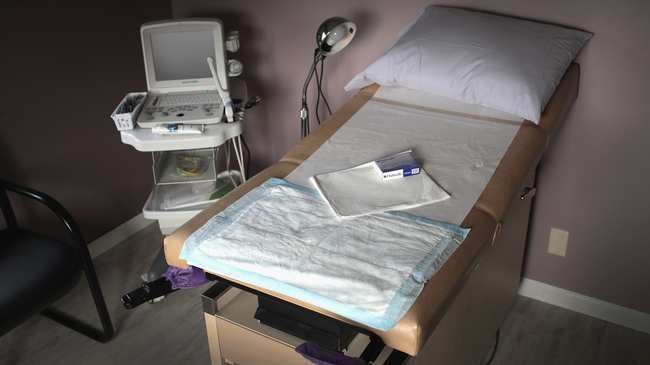
AN EXAMINATION ROOM IN A WHOLE WOMEN’S HEALTH CLINIC IN SOUTH BEND, INDIANA. PHOTO BY SCOTT OLSON/GETTY

Laurent Delli-Bovi is used to operating her Brookline, Massachusetts, abortion clinic in a state of financial precarity. Women’s Health Services, which has been around for almost 28 years, has been in the red for the last 13 of them.

Delli-Bovi, the clinic’s medical director, said those years have mostly consisted of “robbing Peter to pay Paul”: putting off paying some bills in favor of more urgent ones. The independent clinic runs on a “day-to-day” basis, its future never guaranteed.

But recently it’s become untenable. After losing a chunk of grant funding earlier this year, WHS will have to close within the next three months unless it either finds a new funding stream or locates a larger clinic network, hospital, or individual donor to acquire the clinic. In the meantime, WHS is trying to get by on the funds it’s raised through a GoFundMe its staff launched on December 2—as of this writing, the clinic has raised about $15,400 of its $250,000 goal. The purpose of the GoFundMe, Delli-Bovi said, is to buy time.

“Truthfully, we’ve been living this way for a very long time,” Delli-Bovi said. “The difference now is that we haven’t received any of the funding we need to offset our debts. There really isn’t a way forward for us.”

Independent clinics are clinics that aren’t connected to national organizations like Planned Parenthood. And most of them are familiar with the circumstances Delli-Bovi describes: According to a new report from the Abortion Care Network, a national association of independent abortion providers, 39 indie abortion clinics closed in 2018 and 2019, and the total number of indie clinics in the United States has fallen by more than 32 percent since 2012, as a states have enacted hundreds of anti-choice laws making it harder for people to access abortion, as well as more difficult for clinics to operate. This has had devastating effects, as indie clinics provide 58 percent of all abortions.

Though larger clinic networks aren’t immune to the effects of state- and federal-level abortion restrictions, they tend to hit independent clinics like WHS even harder, even when those clinics are located in blue states like Massachusetts that are not hostile to abortion rights. When the Trump administration announced that providers receiving money from Title X, the nation’s only federally funded family planning program, could no longer refer people for abortions, all 31 indie clinics in the Abortion Care Network left the program, giving up millions in federal funding.

Planned Parenthood left the Title X program as well, but since it’s a nonprofit, the organization is eligible for many grants and alternative funding streams that indie clinics—most of which are for-profit businesses—are not. And Planned Parenthood’s staff and infrastructure mean it has the capacity to raise millions of dollars each year in private donations.

“By virtue of being independent, these indie clinics aren’t connected to a large organization or larger system that can provide a safety net, or centralized marketing, communication, and fundraising,” said Jay Thibodeau, the communications director at the Abortion Care Network. “Every individual clinic is on their own when it comes to making sure that donors and volunteers know about them. When you’re operating this way—essentially as a small business—you’re much more vulnerable because you don’t have that scaffolding of support.”

Thibodeau said another factor that makes indie clinics more vulnerable to closure is the fact that they are often one of just a handful of providers in their states—or, in the case of Kentucky, North Dakota, and Mississippi, the sole provider—which makes it easy for anti-choice lawmakers to tailor legislation targeting them.

This type of legislation is known as a TRAP law, which bury abortion clinics under costly and medically unnecessary regulations. In 2013, more than half of the abortion clinics in Texas shuttered when they weren’t able to comply with HB2, a TRAP law which required providers to have admitting privileges at nearby hospitals. Many of the clinics that closed their doors were indies that couldn’t afford to meet the requirements, and most of them haven’t been able to reopen, despite the 2016 Supreme Court decision that declared the law unconstitutional.

The services indie clinics provide often can’t be replaced if they close. According to the Abortion Care Network report, more than 82 percent of indie clinics offer both medication abortion and in-clinic abortion care, whereas just 44 percent of non-indie clinics offer both options. Most non-indie clinics only provide medication abortion, a procedure only available to patients in their first trimester of pregnancy.

And though the vast majority of abortions occur in the first trimester, when barriers to abortion or unexpected complications result in the need for an abortion later in pregnancy, it is more likely patients will receive that care from an indie clinic: Sixty-nine percent of all clinics that provide abortion services after 16 weeks are indies. After the 22-week mark, they make up 94 percent.

“Independent abortion providers are a key part of the ecosystem of abortion access, and are essential parts of their communities,” said Bonyen Lee-Gilmore, the director of state media campaigns at Planned Parenthood Federation of America. “They serve the lion’s share of patients in need of safe and legal abortion nationwide—and when state politicians chip away at abortion access, independent providers can carry the heaviest burdens while fighting with fewer resources.”

Because WHS is the only non-hospital clinic in the state to provide abortions later in pregnancy, Delli-Bovi has had to staff the clinic with anesthesiologists and build an ambulatory surgical center in order to comply with the mandate—a $1.5 million undertaking. These costs have made the everyday demands of running an independent abortion clinic too expensive to sustain, Delli-Bovi said. And since low-income people make up a large percentage of the patients the clinic serves, WHS sometimes doesn’t take any money for its services. “No one gets turned away if they can’t afford to pay,’ Delli-Bovi said.

Alison Dreith, the deputy director at Hope Clinic in Illinois, said that much like WHS, her clinic has been in the red for the last decade due to waiving the costs of patient procedures. Because it borders Missouri, a state with just one remaining—and endangered—abortion clinic, Hope Clinic has seen a surge of patients, more than half of whom are Missourians.

“We know patients are dealing with so many hurdles to get to us,” she said. “We don’t want to be another one.”

If WHS is forced to close its doors in the coming months, that means the only option for patients seeking abortion after the first trimester will be a local hospital, where the cost of the procedure will be much higher, or a clinic out of state. “We’re not financially sustainable, but we’re worthy of being sustained because of the people we take care of,” Delli-Bovi said.

“I think it’s the same struggle everywhere—no one is in this business to make money,” she continued. “It’s a completely non-remunerative business. People do it because they’re committed to the care.”

Source: https://www.vice.com/en_us/article/qjdp4x/independent-abortion-clinics-are-closing-thanks-to-abortion-restrictions?fbclid=IwAR3zfmG_lQkcRcDbyVd89QIYFIHBj4rekuxYpiw9XD1KCXTmxEmxZG8cY2g

The crisis pregnancy center, called the Resource Center, displays on its website and on tabling signs that it offers abortion and birth control information—but that information is misleading at best.

[Photo: Two students speak during a presentation.]

Because of how established the Resource Center is with locals, I knew I would need to create my own campaign specific to this center if I wanted students and Greeley residents to understand its deception. This is how the Truth4Greeley campaign began. Courtesy of Abigail Hutchings

I graduated from the University of Northern Colorado (UNC) in Greeley, Colorado, in May. During my internships as a student, I learned about crisis pregnancy centers, also known as “fake clinics” or “anti-abortion counseling centers.” These centers, which are unregulated, often offer free services in order to appear to be comprehensive health clinics, but instead they try to keep people from seeking abortion care and birth control options.

I realized that one had been hiding under my nose less than a mile from campus: The Resource Center, frequently known in its publicity materials as “Tests4Greeley.”

The center, which advertises access to complimentary pregnancy and sexually transmitted infection testing, is well funded by the community, with support from around 60 churches in the area and a $150,000 donation in 2014 from the prominent Monfort Family Foundation. Because of the foundation’s standing with locals, I knew I needed to create my own campaign specific to this center if I wanted students and Greeley residents to understand its deception. This is how the Truth4Greeley campaign began this fall.

The first step in the process was gathering stories from students who had gone to the center for the free testing they saw advertised. I began with a post to my Facebook page, asking my UNC friends if they had any experiences with the center. Almost immediately, I received messages from current and former students who had been given a mountain of medically inaccurate propaganda as the Resource Center’s staff tried to shame them about their lack of faith, sexually active lifestyle, sexual orientation, and more. They had no idea going in that this was a religious organization, let alone an anti-choice one; that disclosure is absent from any advertisements. As word of the campaign spread around campus, the volume of stories I received only continued to grow.

One student recalled after a visit with a counselor, “She told me that when I sleep with someone, I sleep with every person they have ever slept with. She then began to try and calculate with me how many people that would be. She purposely struggled to calculate this number to show me just how ‘outrageous’ my ‘number’ was …. This woman made me feel shame for something that I should never feel shame for. This response was something that was completely inappropriate especially considering she knew the history of my sexual abuse and assault.”

Another student who went to the center for an STI test said she was handed a pamphlet on why oral sex is wrong after disclosing her sexually active lifestyle, she then recalls that the staff members present were “basically telling me that everything I’m going through could be solved with Jesus. … She was trying to make me feel like what I did was something I needed to ask for forgiveness.”

I knew that stories alone might not be enough to sway the minds of the Resource Center’s supporters, so I needed to hear what they said directly. I recruited a colleague, Isabel Serafin. Serafin, a current UNC student, later approached the center equipped with a vial of a pregnant friend’s urine and her phone set to record audio.

Serafin’s appointment lasted nearly two hours. During that time, Resource Center staff told her that contraception is dangerous, condoms are ineffective, and that she would likely die from the abortion pill. They also showed her animated videos of abortions that ended with the disclaimer: “not intended to constitute medical advice or replace the individualized counsel of a doctor.”

Though Serafin made it clear that she did not want to continue her pregnancy, she left with a Bible, a religious DVD on abortion, a “Before You Decide” magazine riddled with inaccurate information, prenatal vitamins, a onesie, and more than 20 pamphlets outlining why sex outside of marriage is wrong, tips for a successful pregnancy, a Biblical guide to adoption, abortion timelines, referrals to local churches, and more.

“I just kept thinking about all the kids who were going in there completely unaware of the nature of the situation they were walking into,” Serafin said. “I kept thinking of how unsettling and even scary it would be to be facing the possibility of a real pregnancy, only to have that compounded by the clinic’s fear tactics. Young college students who are usually by themselves out here don’t need to be ambushed with that extreme religious rhetoric.”

“I just want the clinic to be transparent and honest about their services and what they do, especially if they are to advertise on campus,” Serafin continued.

The Resource Center’s website and tabling signs display that it offers abortion and birth control information, but it doesn’t make clear that the information is misleading at best and outright false at worst. Its Statement of Principle states it will never “recommend, provide, or refer for abortion or abortifacient” or “recommend, provide, or refer single women for contraceptives (married women seeking contraceptive information should be “urged to seek counsel, along with their husbands, from their pastor and physician).”

After our campaign started, the Resource Center added a page to its website titled “medical credentials” that pushes back against claims that it is a “fake clinic.” It also added two testimonials, in a clear response to our student stories.

As reported in the Colorado Sun, there are more than 50 of these anti-abortion fake clinics like the Resource Center throughout the state. They outnumber abortion providers and Planned Parenthood clinics, and in five rural counties, the only pregnancy center or clinic available is faith-based.

It is also important to note that because anti-abortion counseling centers like this only pose as medical facilities and do not charge for their services, they are generally not subject to the Health Information Portability and Accountability Act (HIPAA). In other words, they may not be subject to medical privacy laws, and they are not legally required to receive a patient’s consent before revealing their identity or releasing their personal health information for any reason.

As a young woman looking forward to determining the course of my own life, I know one of the most important things will be deciding if and when to have children. Those decisions need to be made with truth—which is not what the Resource Center provides.

Source: https://rewire.news/article/2019/12/20/meet-the-college-student-exposing-an-anti-abortion-counseling-center-in-colorado/

Six states require providers tell patients they might be able to “reverse” their abortions. It’s not clear if that’s true — but the study suggests “abortion reversal” is dangerous.

Cover: The abortion drug Mifepristone, also known as RU486, is pictured in an abortion clinic February 17, 2006 in Auckland, New Zealand. (Photo by Phil Walter/Getty Images)

Cover: The abortion drug Mifepristone, also known as RU486, is pictured in an abortion clinic February 17, 2006 in Auckland, New Zealand. (Photo by Phil Walter/Getty Images)

There’s no conclusive evidence that it’s possible to “reverse” a medication-induced abortion, but six states have laws on the books that require abortion providers suggest it might be an option anyway.

Now, a study published last week is raising questions about the dangers of even attempting an “abortion reversal.” The study, which sought to determine whether medication abortions can be halted with a hormone, instead ended early after three women started hemorrhaging so much blood they went to the ER.

Despite these findings, multiple state legislators are standing by laws mandating providers tell patients about the possibility of reversing their abortions. VICE News reached out to dozens of lawmakers who had supported that kind of legislation in Arkansas, Idaho, Kentucky, Nebraska, South Dakota, and Utah. VICE News also reached out to legislators in North Dakota and Oklahoma, where court challenges have temporarily blocked similar laws from going into effect.

Just five of those legislators replied to inquiries. Four were adamant that there’s no need to amend the laws.

“It is up to the woman to decide if she wishes to take the risk. So for me, you know, it’s informed consent,” said Oklahoma state Sen. Julie Daniels, who sponsored a law requiring abortion clinics post a sign about abortion reversal, with contact details for an anti-abortion group.

Daniels, a Republican, told VICE News she had “no regrets at all for authoring this bill.”

“There are many procedures that could have harmful effects,” she said. “I think it’s troubling that if ever we’re attempting to save a child, that these things become so important, but for other medical procedures, we take it as part of the risk that something might not go correctly. But for those of us who propose trying to save the child, we appear to be held to a higher standard of perfection.”

Typically, in a medication abortion, a patient would end her pregnancy by taking doses of two drugs, mifepristone and misoprostol, several hours apart. But if a woman regrets her abortion after taking mifepristone, proponents of abortion reversal say she can skip the misoprostol and instead try progesterone.

While those supporters have published a few studies that they say show that progesterone can work, abortion reversal is not recommended by the American College of Obstetricians and Gynecologists. Experts have also said that one of those studies was poorly designed. Another involved just seven patients.

So researchers from the University of California, Davis, had planned to enroll 40 women in what’s thought to be the first randomized, double-blind study on abortion reversal.

The women who participated in the UC Davis study took mifepristone before receiving either progesterone or a placebo. (All of them were ultimately set to undergo surgical abortions.) But the study only enrolled 12 women before three of the patients started bleeding from their vaginas so severely they had to be taken to the ER in ambulances. One woman even needed a blood transfusion. Of those women, one had taken progesterone.

The study concluded that patients who take mifepristone on its own, regardless of whether they use progesterone afterward, could be at “high risk of significant hemorrhage.”

“We don’t have any evidence that disproves the possibility that abortion reversal exists,” the study’s lead researcher, Mitchell Creinin, told VICE. “But I do have evidence that not completing the regimen as it’s designed is dangerous.”

South Dakota Republican Rep. Fred Deutsch said he still supported his state’s law, which mandates that doctors give patients a statement telling them that it may be possible to “discontinue” an abortion after taking mifepristone.

“I think it’s part of informed consent,” Deutsch told VICE News in a phone interview. “We have a whole list of items that we require physicians to provide women. For example, a woman must be informed that an abortion will terminate the life of a whole, separate, unique human being.”

In response to a question about the research he had relied on when deciding to support South Dakota’s law, Deutsch emailed links to studies that examined the efficacy and safety of misoprostol — the second drug typically taken in a medication abortion, and the drug that women who may wish to “discontinue” their abortions are not supposed to take. (Multiple studies have found that misoprostol taken alone can effectively and safely induce an abortion early in pregnancy. Using mifepristone in combination with misoprostol is more effective and generally has fewer side effects.)

“We reviewed a host of studies pertaining to both drugs. I provided you links to the drug you apparently weren’t inquiring about,” Deutsch told VICE News via email when asked why he felt misoprostol’s safety was relevant to whether doctors should tell patients about a drug regimen that doesn’t involve it.

Deutsch did not reply to a request for the studies he’d looked at involving mifepristone.

Of the legislators who backed an abortion reversal bill and returned VICE News’ inquiries, only Utah state Rep. Timothy Hawkes, a Republican, said that he would be open to revisiting his state’s law. In Utah, abortion patients must receive a printed statement on how mifepristone may not end a pregnancy. While the UC Davis study “raises concerns,” Hawkes said, he still wants to do more research into this issue.

Instead of repealing the abortion reversal law entirely, Hawkes suggested amending it to include information about the potential dangers of attempting the regimen.

“We would want a woman in that situation to have access to all of that information. Is it reversible, if the science supports it? Yes, that’s good information for the woman to have,” Hawks said. “Does it raise a risk of severe vaginal bleeding that could lead to other complications? Well, that would be good information to have as well.”

“I’m no expert on the state of the medical research on this issue, either way,” he went on.

The UC Davis study has already triggered at least one attempt to repeal an abortion reversal law: Nebraska Democratic state Sen. Megan Hunt has announced that she plans to author legislation that will roll back her state’s measure when the legislature opens for its 2020 session in January.

“When we talk about procedures that are experimental, untested, we’re not talking about the morality of life,” Hunt said. “It’s possible to be an anti-abortion, Christian, right-wing conservative and oppose this bill because it’s not really about saving a child. It ends up being about hurting a mother.”


Source: https://www.vice.com/en_us/article/k7een3/an-abortion-reversal-study-left-women-hemorrhaging-state-lawmakers-still-support-doctors-telling-patients-about-the-treatments?fbclid=IwAR10BGumnOF4XhHB17SKcH7XPqvF_N-8TLoi8E9f2dEP4aV9WN5wzRWQHYo

European court orders UK government to reimburse mother and daughter forced to travel to England for abortion

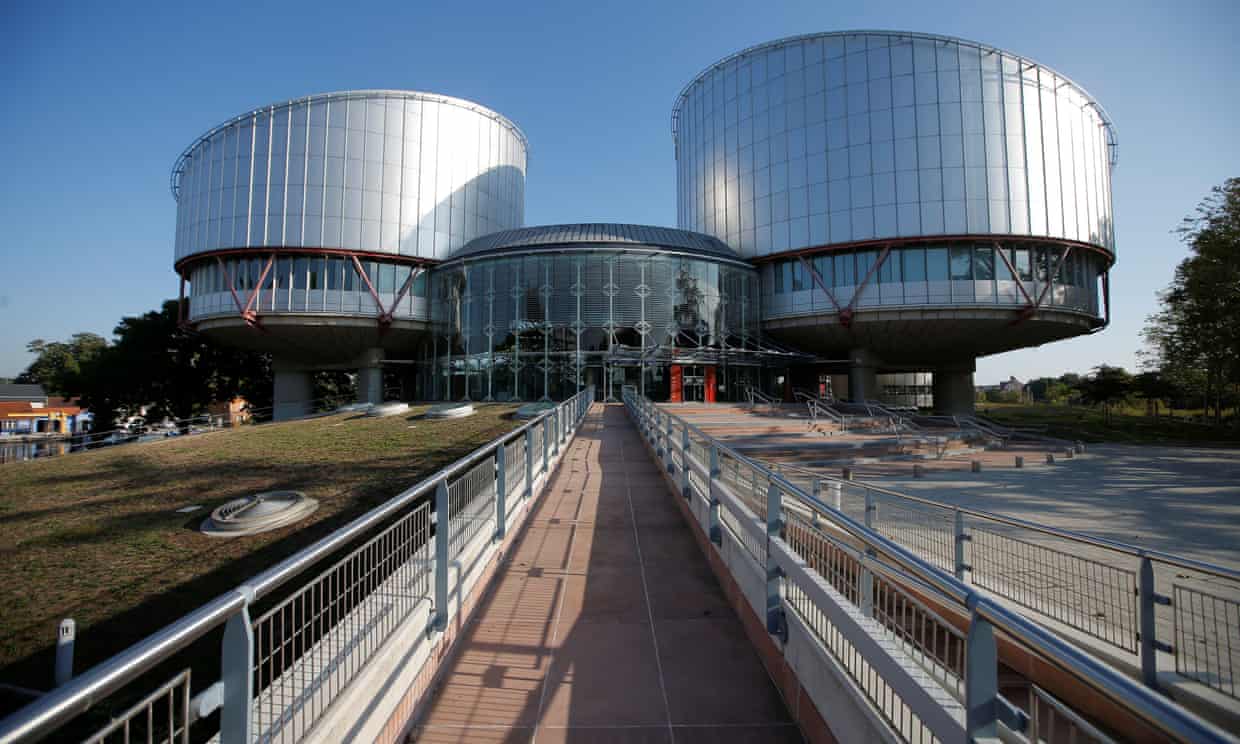
The building of the European court of human rights issued a written decision on Thursday. Photograph: Vincent Kessler/Reuters

The building of the European court of human rights issued a written decision on Thursday. Photograph: Vincent Kessler/Reuters

A mother and daughter from Northern Ireland who were forced to travel to England for an abortion are to be compensated by the government over their costs.

The European court of human rights has instructed the government to reimburse the women for the cost of travel and the termination at a private English clinic seven years ago.

Known only as A and B, the pair began legal proceedings after they were forced to raise £900 to make the trip for A to have the termination.

Northern Ireland was up until recently the only part of the UK where abortion was illegal except in extreme circumstances, such as a direct threat to a mother’s life.

In July the Labour MP Stella Creasy introduced legislation through the House of Commons that will ensure regulations for free, legal and local abortion services in Northern Ireland by 31 March 2020.

In their battle for compensation A and B pursued an application to the European court of human rights, claiming that forcing them to pay for a termination in England breached their rights to a private life under article 8 of the Human Rights Act and article 14 in terms of discrimination.

As a result of a written decision by the ECHR published on Thursday the pair will not only receive the full costs of the treatment and travel but also their legal costs in the case.

Angela Jackman, a partner at A and B’s lawyers, Simpson Millar, said: “A and B’s application to the European court has finally resolved through a friendly settlement between the parties. Terms include payment of compensation by the UK government to A and B, and a contribution towards their legal costs.

“This is a very important case, which proved instrumental in raising widespread awareness of the discrepancy in access to NHS-funded abortion services for women in Northern Ireland.”

Jackman, who is also senior law lecturer at the City Law School, added: “A and B’s tenacity in pursuing litigation for over six years is deeply commendable and they have appreciated the consistent support they received throughout.

“Of course, they are relieved that after almost seven years they are finally able to have closure on these difficult issues. “

Emma Campbell, the co-convenor of the Northern Ireland-based Alliance For Choice campaign group welcomed the decision to compensate the two women.

She said compensation should be followed by a “general state apology” to the thousands of women in the same predicament as A and B over decades in Northern Ireland.

On whether more Northern Irish women might now come forward seeking compensation as well for being forced to travel to England for private non-NHS terminations, Campbell said: “A and B went through a long hard battle in the courts but if other women did come forward looking for compensation then we would put them in direct contact with the proper legal representation.”

A and B were only able to afford the treatment and travel costs due to the extra financial support of the charity Abortion Support Network.

Source: https://www.theguardian.com/world/2019/dec/19/northern-ireland-women-win-abortion-costs-compensation-case?fbclid=IwAR3Zm0ohMdIHPGeRlDmN7Gr6p48NlZEHKSzTPHDDSoYEodRuj4XsOYfduHU

McLeod-Mia_2

COLUMBIA — With a Senate showdown looming over a measure to essentially outlaw abortions in South Carolina, a Democratic lawmaker wants to make sure women who would be forced to bring unwanted pregnancies to term are compensated for them.

State Sen. Mia McLeod on Wednesday prefiled legislation arguing that women compelled to give birth against their will are “gestational” surrogates who have a right to be paid for their services.

“Clearly the state has indicated it has a vested interest in this issue, so if that is the case, and if we are about to do what would be required under the fetal heartbeat bill, then surely there would be some provisions made for the women and girls who are forced to carry these babies to term,” McLeod said of her South Carolina Pro Birth Accountability Act.

Last month, the Senate Medical Affairs Committee voted 9-6 along party lines to advance a bill that would prohibit abortions as soon as a heartbeat is detected by ultrasound — sometimes as early as five weeks into a pregnancy.

Providers who violate the law or fail to determine whether a heartbeat is present before ending a pregnancy could be jailed for two years or fined $10,000. Lawmakers included exceptions for victims of rape or incest up to 20 weeks pregnant with verification from law enforcement.

House approval for the bill, H. 3020, came in April, and Gov. Henry McMaster has said he’ll sign it with or without the exemption for crime victims.

Eight states have similar laws on the books, but all of them are facing legal battles due to the 1973 Roe v. Wade ruling by the U.S. Supreme Court that legalized abortion. McLeod said her proposal is the first of its kind in the nation.

The financial impact of her proposal isn’t yet clear, but she said it likely would run into the millions of dollars.

Under her bill, compensation would take several forms, including automatic eligibility for public assistance programs, income and other tax credits; health insurance until a child turns 18; and state paid funeral and burial expenses if a woman or the fetus die during the gestational period, labor or delivery.

“It’s not a tongue-in-cheek kind of bill. It took a lot of thought and a lot of preparation because no other state has introduced anything remotely similar and it certainly warrants a very thoughtful and deliberate discussion and debate, and I hope that we’ll have that,” McLeod of Columbia said. “Every year, there is some bill that seeks to take from women. This is a way to give them a real chance at life.”

Ann Warner, CEO of Columbia-based Women Rights’ Empowerment Network, said McLeod’s measure is a byproduct of unnecessary legislation.

“This bill makes the point that legislators are not only wasting our precious time and resources with these extreme abortion bans; they will also create multiple new problems for people in South Carolina,” she said.

The concept of gestational surrogacy is not unique to McLeod. During House deliberations last year, several reproductive rights groups and advocates, including former gubernatorial candidate Marguerite Willis, said such a provision should be enacted alongside the “fetal heartbeat” bill.

“As a matter of constitutional law, a state may not force a citizen to serve in any capacity without fair payment or to take a citizen’s property without just compensation … a woman’s uterus is not unlike rental property, as a commissioning couple agrees to pay a gestational surrogate certain compensation for carrying a fetus to term and giving birth to a child,” McLeod’s bill says.

McLeod’s bill also targets absentee fathers by allowing jail terms of up to three years for men who accrue more than $5,000 in missed child support payments.

State Rep. John McCravy, R-Greenwood, and lead sponsor of the fetal heartbeat bill, said he wouldn’t support McLeod’s proposal if it comes to a vote in the House.

“There are many crisis pregnancy centers across our state that already offer help and assistance with prenatal, adoption and/or child care,” McCravy said, referencing the CrossRoads Pregnancy Center in his district.

“Not only is material and spiritual help already out there, but I believe most people recognize the infinite blessing of life given by our Creator,” he said.

McLeod, who underwent two high-risk pregnancies, said the bill is personal for her.

“We have no regard for the children born in this state, regardless of whether abortion is an available option and we don’t often think about the impact on the mom. If the fetal heartbeat bill were to have passed, I could have easily been one of those women who might not be around right now,” she said.

Source: https://www.postandcourier.com/politics/sc-lawmaker-wants-payment-for-women-deprived-of-abortion-right/article_a4ea14e4-1dc8-11ea-9c78-0bf0937ce9c8.html

A Minnesota pharmacist said he could not give Andrea Anderson the emergency contraceptive because it goes against his “beliefs,” a lawsuit claims.

Andrea Anderson is suing CVS and a local pharmacist for refusing to fill her prescription for emergency contraception.

Andrea Anderson is suing CVS and a local pharmacist for refusing to fill her prescription for emergency contraception.Ellie Leonardsmith

A Minnesota woman is suing a former local pharmacist and CVS for allegedly refusing to fill her prescription for a morning-after pill.

Andrea Anderson filed the suit on Monday in Aitkin County District Court claiming she was denied the drug ella because of a pharmacist’s beliefs and was then lied to and misled when she tried to get the medication at another location.

On Jan. 21, 2019, Anderson, a mother of five, called her doctor and had a prescription for an emergency contraceptive sent to the Thrifty White Pharmacy in McGregor.

But she was told by the pharmacist “that he would be unable to fill her prescription,” the complaint states. The pharmacist, George Badeaux, said he could not give her the medication due to “personal reasons” and his “beliefs,” and he also tried to discourage her from trying to obtain the drug at another store.

“He did not clarify what his beliefs were or why they interfered with his ability to perform his job as a medical professional,” according to the complaint.

Andrea Anderson, a mother of five, had to drive more than 50 miles in a snowstorm to have the prescription filled at another location

Andrea Anderson, a mother of five, had to drive more than 50 miles in a snowstorm to have the prescription filled at another locationEllie Leonardsmith

Ella is an emergency contraceptive that is to be taken as soon as possible or within five days of unprotected intercourse or a known contraceptive failure, according to a FDA data sheet.

Knowing that such medications work best the sooner they are taken, Anderson called a CVS in Aitkin to try and have the prescription filled and was told that the store did not stock the drug. The CVS pharmacist also told Anderson that she had called a nearby Walgreens but that it also did not have it in stock.

Anderson, however, called the Walgreens herself and was told that it did have ella in stock and could fill the prescription. She had to drive more than 50 miles in a snowstorm the following day to obtain the medication, according to the suit. Anderson did not become pregnant.

She is claiming sex discrimination and is seeking damages.

CVS Pharmacy said in a statement Friday that it is “committed to providing access to emergency contraception, whether it is at the pharmacy counter for patients who have a prescription for it, or in our store aisles where we have sold over-the-counter emergency contraception for several years.”

The company continued: “We have policies and procedures in place to help ensure that customers seeking emergency contraception receive prompt service. We will review and investigate the allegations made in the complaint.”

A woman who answered the phone at Thrifty White Pharmacy told NBC News that Badeaux was “no longer employed there” and declined to comment further.

In a statement, Anderson accused the pharmacists of ignoring her health needs.

“Like anywhere, there are challenges to living in a rural area,” she said in a statement posted on her attorney’s website. “But I never expected that they would include the personal beliefs of our local pharmacists, or that they would hold — and wield — such enormous decisionmaking power over my life.”

Her attorney Jess Braverman, legal director of Gender Justice, a Minnesota-based nonprofit, said in a statement that the Thrifty White pharmacist denied Anderson her prescribed medication because of “his own personal beliefs about emergency contraception – which he decided are more important than our client’s health, and more important than her own right to decide if and when she gets pregnant.”

Source: https://www.nbcnews.com/news/us-news/woman-s-doctor-prescribed-morning-after-pill-pharmacists-refused-fill-n1101586?fbclid=IwAR2ypQqAqNKRGpU837fOQpA9v1w2-_bm-szcHupgrKLVBZnAg5r8LESqAAg

Independent abortion clinics lack the visibility, institutional support, and financial resources of other providers, like Planned Parenthood.

[Photo: An illustrated map of the United States on a yellow background depicting states with independent abortion clinics.]

In some states, including Wyoming, Louisiana, and Alabama, independent abortion clinics are the only sources of abortion care, meanwhile they are the last clinics remaining in four states: Kentucky, Mississippi, North Dakota, and West Virginia. Shutterstock

A new report details the crucial role independent abortion clinics play in ensuring access in parts of the country most hostile to abortion rights—and the struggle for them to stay open.

Anti-choice state-level restrictions have led to a decrease of over 32 percent in the number of independent abortion clinics in the United States since 2012, according to the Abortion Care Network report. As of November, 26 independent abortion clinics have closed this year—double the number that closed in 2018.

Independent abortion care providers represent about 25 percent of facilities offering abortion care nationwide, yet they provide a little more than half of abortion procedures, according to the report. Three out of five people in the United States who receive abortion care do so at an independent clinic, and these facilities provide about 58 percent of all abortion procedures, compared to 37 percent at Planned Parenthood, 3 percent in hospitals, and 1 percent in private physician’s offices.

In some states, including Wyoming, Louisiana, and Alabama, independent abortion clinics are the only sources of abortion care. Six states have only one abortion provider, and independent providers operate the last clinic remaining in four of those states—Kentucky, Mississippi, North Dakota, and West Virginia. Planned Parenthood operates the only clinics in the other two states, Missouri and South Dakota.

“Meaningful abortion care in the United States truly depends on independent abortion care providers,” Nikki Madsen, executive director of the Abortion Care Network, told Rewire.News. “Independent abortion providers have been providing the majority of care since Roe was established. The vital role they play in making abortion access a reality in this country is really an untold story.”

Though 88 percent of abortions are performed in the first trimester, barriers to accessing abortion care, like forced waiting periods, bans on insurance coverage of abortion, or needing to travel to receive care, can cause people to seek abortion care later in pregnancy, said Alison Dreith, deputy director of Hope Clinic for Women, an abortion clinic in Granite City, Illinois. For those needing abortion care after the first trimester, many turn to independent clinics, which operate 62 percent of clinics that provide abortions after the first trimester.

“Patients seeking care have to face so many burdens to get to us, whether it’s travel or arranging child care—add the rising cost of their procedure as they get later in pregnancy, and continuing to have to save up that money because it is not covered by insurance,” Dreith said.

Independent clinics represent 69 percent of all clinics that provide care at and after 16 weeks of pregnancy and 77 percent of clinics providing care at and after 19 weeks of pregnancy, according to the report. In Arkansas, Nevada, Oklahoma, and Georgia, the only providers of surgical abortion are independent clinics, and without them, abortion access in these states would be limited to medication abortion within the first ten to 11 weeks of pregnancy.

“When there are increased barriers, people need more access to later care,” Madsen said.

Increased state regulations on abortion providers since Republicans came into power in state legislatures a decade ago have forced many clinics to shut their doors, Madsen said. This year alone, state legislatures in the South and Midwest have passed 58 abortion restrictions, and lawmakers in five states have passed near-total abortion bans, though none are in effect.

Medically unnecessary targeted regulations on abortion providers, or TRAP laws, hit independent clinics especially hard because they are not financially able to make the changes necessary to comply, Madsen said. Lawmakers in 11 states have banned private insurance coverage for abortion except in cases of life endangerment, so independent clinics are working to keep costs low for their patients, while also dealing with increased costs of security in hostile regions where protesters often harass patients and staff.

“It’s a combination of factors, and it’s not simple, but it is a targeted effort by politicians and extremists to close clinics,” Madsen said.

Independent abortion providers also lack the visibility, institutional support, and financial resources of other providers, like Planned Parenthood. While Planned Parenthood health centers are 501(c)(3) nonprofits, which allows them to engage in some lobbying efforts, 85 percent of independent clinics are not, which limits their ability to influence policy decisions.

“All of our staff are front line staff,” Dreith said. “They are seeing patients every day, and so we oftentimes don’t get to talk about our unique experiences to legislators. Then when it comes to these new policies, we are first to shut down, because we also can’t raise the funds to offset the cost of fixing our building or otherwise complying with that law.”

Because they lack the resources of other, larger providers, independent clinics rely on volunteers and community support to stay open.

“This is why we need the public and communities to get involved because they really need their community’s support,” Madsen said.

Source: https://rewire.news/article/2019/12/11/untold-story-independent-abortion-clinics-are-closing-at-a-rapid-pace/

A federal appeals court ruled against the ban, which would have restricted abortion after 15 weeks.

Anti-abortion and abortion-rights activists demonstrate outside the US Supreme Court in Washington, DC, on January 18, 2019

On January 19, 2019, protesters advocating for and against abortion access demonstrate at the U.S. Supreme Court in Washington D.C. Saul Loeb/AFP/Getty Images

A federal appeals court blocked Mississippi’s 15 week abortion ban on Friday, simultaneously affirming abortion access in the state, and paving the way for further legal challenges to current federal abortion regulations.

Jackson Women’s Health Organization — the only abortion clinic left in Mississippi — sued the state in 2018 to block the law banning the procedure; a judge ruled in the clinic’s favor that year.

Friday, the Fifth Circuit Court of Appeals supported that ruling after the clinic argued that no medical evidence shows a fetus would be viable 15 weeks into a person’s pregnancy, causing the ban to violate the US Supreme Court cases Roe v. Wade and Planned Parenthood v. Casey, both of which say states can’t ban abortion before a fetus is viable; Planned Parenthood puts viability at about 24 weeks.

Mississippi argued the law was a regulation and not a ban, and therefore not subject to the Supreme Court rulings. But the court found the law placed an undue — and therefore unconstitutional — burden on women’s right to an abortion before viability. Appeals court judges wrote:

In an unbroken line dating to Roe v. Wade, the Supreme Court’s abortion cases have established (and affirmed, and re-affirmed) a woman’s right to choose an abortion before viability. States may regulate abortion procedures prior to viability so long as they do not impose an undue burden on the woman’s right but they may not ban abortions. The law at issue is a ban. Thus, we affirm the district court’s invalidation of the law.

The ruling on the law, which did not include exceptions for cases of rape or incest, means that Mississippi’s current abortion regulations will stay in place for now. According to the Guttmacher Institute, a research organization that focuses on reproductive health and rights, the state currently requires ultrasounds be taken before an abortion, that those seeking an abortion wait at least 24 hours and be counseled before the procedure, and that there be a medical need for abortions after 18 weeks.

The ruling will affect not just Mississippi, but Louisiana as well, which passed a 15 week abortion ban that would take effect only if Mississippi’s law was upheld.

And although the state of Mississippi has lost its appeal, it could petition for the Supreme Court to hear the case, setting the stage for another direct challenge to Roe v. Wade.

Gestational bans are part of a longer term anti-abortion strategy

The loss for Mississippi comes on the heels of a federal judge blocking an even more restrictive abortion law in the state — a so called “heartbeat bill” that bans abortions at six weeks, around when fetal heartbeats can generally begin to be detected.

Mississippi is just one of a number of states to pass restrictive abortion bans — others include Ohio, Georgia, Kentucky, and Alabama. By November of this year, state legislatures had enacted 58 abortion restrictions; 25 of those would ban some or most abortions, according to the Guttmacher Institute. None of the gestational age bans enacted by nine states this year have taken effect, however, as all have been blocked or stayed by the courts.

This, as Vox’s Anna North and Catherine Kim have explained, is by design: anti-abortion activists hope a challenge to one or more of these laws will be heard by the US Supreme Court. Under President Donald Trump, that court’s conservative majority has been strengthened by the additions of Justices Neil Gorsuch and Brett Kavanaugh, and state lawmakers are passing abortion bans with the explicit goal of the Supreme Court gutting or overturning Roe v. Wade.

In Iowa, Rep. Shannon Lundgren, acknowledged a 2018 abortion ban she was managing on the Iowa House floor ran in opposition to settled law, but said, “It is time for the Supreme Court to weigh in on the issue of life.”

And the conservative allies of lawmakers like Lundgren have been equally candid. Last year, the Alliance Defending Freedom (ADF), a nonprofit that has opposed abortion and LGBTQ rights, told an Evangelicals for Life Conference in Washington DC that it is focused on gestational age ban legislation to start legal battles that could eventually end Roe v. Wade.

“I can guarantee you that they will not be able to ignore a 15-week limitation, which is in essence limiting abortion to the first trimester,” Denise Burke, senior counsel at ADF said at the time. “We’re kind of basically baiting them, ‘Come on, fight us on turf that we have already set up and established.’”

Thus far, these efforts have been unsuccessful: but in October, the Supreme Court signaled it is willing to hear cases that challenge settled abortion law. It plans to hear June Medical Services v. Geea case that centers on a Louisiana law mandating abortion providers have admitting privileges at a local hospital.

While the case does not address gestation, it could also undo Roe v. Wade and severely restrict abortion access. Should justices uphold the law, whether abortions are banned at 15 weeks would become irrelevant, as there would be few — if any — legal providers available to conduct the procedure at any stage of pregnancy.

Source: https://www.vox.com/policy-and-politics/2019/12/14/21021658/mississippi-abortion-ban-15-weeks-appeals-supreme-court

Feminists are winning the war of ideas, but Republicans still hold power and keep stripping women of their rights

U.S. President Donald Trump vs The Women's March (Getty Images/Erik McGregor/Pacific Press/LightRocket/Chip Somodevilla)

U.S. President Donald Trump vs The Women’s March (Getty Images/Erik McGregor/Pacific Press/LightRocket/Chip Somodevilla)

o understand the baffling, chaotic times we live in, one can do no better than to look at the disconnect in the U.S. between polling on what are often deemed “women’s issues” and the actual state of play in the world of politics. Feminist ideas are increasingly popular. But, because Republicans have wildly disproportionate amounts of power, women are actually losing rights.

Abortion rights are more popular than ever, with 77% of Americans in an NPR/PBS poll saying they want Roe v. Wade to be preserved.

But, by this time next year, it’s  likely Roe v. Wade will be toast. With Brett Kavanaugh replacing Anthony Kennedy on the Supreme Court, it was just a matter of time. Kennedy was the deciding vote in 2016’s Whole Woman’s Health vs. Hellerstedt, in which the court ruled that states can’t ban abortion by drowning clinics in medically unnecessary and impossible-to-meet regulations. But in shameless and unprecedented fashion, the court is retrying that same abortion ban (though in a different state) in March. By June, it’s almost certain that the court will allow states to shut down all their abortion clinics, for the first time since 1973.

Similarly, support for birth control is rising, with an all-time high of 92% of Americans supporting its use and 71% believing the government should require insurance companies to cover contraception. But the Trump administration has been quietly undermining women’s access, using federal red tape to shut down birth control grants to nearly 900 public clinics, and attempting to redirect that money to groups that argue abstinence is the only legitimate birth control. The administration has also tried to roll back rules requiring insurers to cover contraception.

The #MeToo movement, which was started by activist Tarana Burke in 2006 but really blew up after Donald “Grab ‘Em by the Pussy” Trump was elected and Harvey Weinstein’s long history of sexual abuse was exposed, is also relatively popular, with polls consistently showing more than half of Americans support it.

Yet Republicans — who control the Senate, the Supreme Court, and the White House — see it very differently. In fact, Republicans are growing increasingly hostile towards the #MeToo movement. In 2018, a majority of Republican voters agreed that “women who complain about harassment often cause more problems than they solve,” casting the victims as the victimizers.

This helps explain how Kavanaugh got confirmed to the Supreme Court in the  first place, despite more Americans believing the woman who accused him of attempted rape, Christine Blasey Ford, than believing his denials. Republicans control the Senate and know full well their voters are inclined to lash out at women who have the courage to stand up to abuse, rather than supporting them.

Then there is perhaps the most dramatic example of all: In the 2016 election the first female major-party candidate for president, Hillary Clinton, won the popular vote by nearly 3 million ballots cast. But, because the American electoral college system overweights the votes of people living in rural areas, Trump — a misogynist who bragged about sexual assault on tape — won the presidency anyway.

The gap between the popularity of feminism and the actual power of feminism was illustrated in January 2017, when the number of people who hit the streets of Washington for the Women’s March utterly swamped that of Trump’s inauguration the day before, drawing three times the number of people. And that’s not including the millions across the country who turned out for solidarity marches in other cities, leading to quite possibly the largest political demonstration in American history.

Feminists are winning the war of ideas. But feminists are losing in the halls of power, where “Mad Men”-era views that women should be silent and servile are winning the day.

It’s all a bitter pill, because, as these poll numbers show, the hard work of feminists over the past decade to move the needle of public opinion has really paid off.

Younger readers may not remember this, but back when I was a fledging feminist blogger in the era of the George W. Bush administration, things looked bleak for women both in the world of politics and in the national discourse. Feminist rhetoric was often timorous, afraid to speak too bluntly about issues like abortion or rape for fear of running off moderates. Younger women felt sidelined by the major organizations, and there were frequently articles in the mainstream press in which older feminists accused younger women of not caring about their own equality. Meanwhile, progressive politics was in thrall to the “What’s the Matter with Kansas” theory that Republicans only pretended to oppose women’s rights in order to win the votes of benighted rubes, and would never actually act on it.

I’d like to think I played a role in changing that, being an early adopter of feminist blogging that took a different approach of being both cheeky and confrontational — and also by taking sexism seriously. While male pundits clucked over feminists who thought Republicans would taking reproductive rights away, feminists bloggers raised the alarm over the Bush administration’s all-out assault on women having non-procreative sex. We raised awareness of rape culture and introduced ideas like “affirmative consent” as a way to counteract it. We insisted that it wasn’t that women holding themselves back in the workplace, but that discrimination was still a live issue. We bashed sexist dating manuals and those who claimed that women don’t make as much money as men because we don’t work hard enough.

We were laughed at and trolled and abused and ignored, but we kept plugging away. And by 2009, we were winning. Feminist blogs were wildly popular. Democrats started to be unapologetically pro-choice. The first woman to become speaker of the House managed to do what Democrats had failed to do for decades — pass a comprehensive health care bill, which mandated that contraception be covered by insurance. Feminist bloggers published a manifesto against rape, titled “Yes Means Yes,” that would reshape the national conversation on consent. The idea that “abstinence-only” was a legitimate ideology had turned into a joke. The idea that young women were indifferent to politics was dying. And the feminist bloggers who had once been relegated to the fringes were getting mainstream jobs, at such a pace that, over the next decade, the blogs would be shuttered, victims of their own success.

It would be a lie to say that we were surprised by the backlash. If there’s one book that every Generation X and millennial feminist has read, it’s probably “Backlash” by Susan Faludi. We knew what to expect. Plus, those of us who had blogs spent ungodly amounts of time dealing with unhinged trolls — men whose desire to control women manifested in online stalking — so we weren’t unaware that a lot of men really, really did not like the idea of women’s equality.

(We also were aware of the liberal men who pooh-poohed our experiences and said trolls were just a handful of guys and nothing to worry about, a line that held right up until those trolls elected a president.)

Sure enough, the backlash came — and it was brutal. Arguably, the anti-feminist backlash of the teens was the single most important reactionary movement of the time, the one that did more than any other to lay the groundwork for the election of a confessed sexual assailant to the White House.

Maybe the first sign was the sudden surge of attacks on reproductive rights. Women gave Barack Obama his 2008 win — 53% of women voted for Obama vs. only 49% of men — and unsurprisingly, Republicans in state legislatures decided to take their anger out on women. Starting in 2010, Republican-controlled states went nuts restricting reproductive rights, passing laws to block women from getting abortions and deprive women of affordable contraception access. In some parts of the country, abortion clinics were shuttered at an alarming rateleaving huge numbers of women in “abortion deserts” that required lengthy drives to the nearest clinic.

The war on contraception, which many of us hoped would be over with the election of Obama, only heated up in this frenzy of misogyny. On multiple occasions, congressional Republicans had a standoff with Obama, threatening to shut down the government to try to force him into cutting Planned Parenthood off government grants for affordable birth control.

Things also got ugly over the Obamacare rule requiring insurance companies to cover contraception. Even though government-mandated insurance coverage of birth control had previously been uncontroversial, the right-wing media swung into action in 2012 on this rule in the Affordable Care Act to suddenly and dishonestly pretend the government was asking taxpayers to bankroll hot young sluts to have sex with men who clearly aren’t the Fox News demographic. That’s no exaggeration — for days on end, Rush Limbaugh railed about how Sandra Fluke, a Georgetown law student who had testified in support of the new rule, was a “slut”  who wanted “to be paid to have sex.” He even demanded  that Fluke provide him with videos of her private life as masturbation material.

Limbaugh’s tone was emblematic of what the anti-feminist backlash of the teens looked like. The face of misogyny was no longer pious Christians claiming that feminism was a threat to “the family.” Now it was vulgarians who gleefully used sexist slurs and didn’t even bother to pretend they wanted women on their knees for Jesus. It was a Trumpian kind of sexism.

So even as traditional anti-choice forces tried to pass off their latest bans on abortion as done in the name of “protecting” women, the actual right wing was in a full-blown lady-hate uproar, culminating in utterly false accusations that women were getting abortions as part of a scheme to sell “baby parts” on the open market. Unsurprisingly, there was also a rise in terrorism against abortion clinics over the decade, kicked off by the murder of Dr. George Tiller in 2009, with the deadliest incident being a 2015 shooting at a Planned Parenthood clinic in Colorado that left three dead.

Outside the reproductive rights debate, the anti-feminist backlash was equally bleak, with a well-funded right wing apparatus churning out a constant stream of shady articles and video segments mocking alleged rape victims and sympathizing with their accused attackerscheering sexual harassment and claiming that men were under attack by a shadowy feminist conspiracy to emasculate them. Meanwhile, a growing online movement of misogynists, such as the “men’s rights activists” and “incels,” was becoming ever more radical and increasingly embracing fascism and white nationalism as the answer to their anger at feminist gains.

Gamergate was perhaps the most perfect distillation of what the anti-feminist backlash looked like in the past decade. There were efforts at the time to claim that Gamergate was merely an explosion of anger over “corruption” in the video game press (no, really, that’s what they said), in truth it was an eruption of virulent misogyny that started in the video game community and spread across the internet. Sexist video game players, assured in their belief that video gaming “belonged” to them, were furious at feminist critics for their articles and videos arguing that T&A-heavy games that presented women as bimbos and sex objects were misogynistic. Those gamers spent months — years,  really — raging endlessly online about it and subjecting those feminist critics to unreal amounts of abuse.

Breitbart and other right wing media glommed onto Gamergate because they knew that it wasn’t just about video games, but about this growing and boiling rage in many men over the fact that feminists were winning the argument. These were men who liked the prevailing system, where they could be condescending and cruel and treat women like objects and unpaid servants without consequence, and also knew they couldn’t defend that point of view any longer. Gamergate gave them another option: Give up trying to make coherent arguments, and instead resort to outright trolling, bad faith, harassment and other abusive tactics meant not to win with reason, but to exhaust your opponents into submission.

No wonder the 2016 election was dominated by the chant, “Lock her up!” A lot of men were angry as hell at women and wanted to bring them to heel, and didn’t really care how it was done any longer.

But you know what? Feminists didn’t give up. On the contrary, unlike during other backlash periods, feminists, armed with social media, were able to fight back, instead of being forced to cede ground to a male-dominated media that is inclined to side with the backlashers.

In the face of rising attacks on abortion rights, feminists started an online movement to “shout your abortion” and rallied around Texas legislator Wendy Davis, who became a feminist hero by filibustering a law meant to shut down most abortion clinics in Texas. Rather than being browbeaten into silence, anti-rape activists created headline-worthy performance art  and held hands while Lady Gaga sang at the Oscars. The #MeToo movement blew up and thousands of men were finally held accountable. Rather than let Trump’s win scare them into the shadows, Democratic women turned out in droves to run for office, making 2019 a record-setting year for women in Congress.

The backlashers, using profane language and trying to affect a derring-do trollish attitude, clearly thought they could make feminism uncool. At this, they failed. Beyoncé is a feministPractically every famous woman in Hollywood has joined hands under the #MeToo banner. Rep. Alexandria Ocasio-Cortez has the potential to be the next Obama-style political star. Feminist blogs may be gone, but that’s because we took the act mainstream. Trump may be president, but the place to be that January was the Women’s March.

In 2009, people made fun of feminists for supposedly not being cool. In 2019, anti-feminists are far more likely to lash out at feminists with the angry resentment the terminally uncool have for hipsters.

Still, there is no doubt that, thanks to an electoral system that gives far more voting power to rural, white-dominated areas than the more diverse, urban areas where most Americans live, we are a feminist-sympathetic country being ruled by a misogynist minority. The country may hate Trump, but he is still the most powerful man in the world. We’re all learning the hard way that feminists can do the work, make the case and win the people over — and still the patriarchy keeps on winning, because it holds a disproportionate share of power in a rigged system.

Source: https://www.salon.com/2019/12/14/the-2010s-in-feminism-two-steps-forward-and-a-big-shove-back/